Travels with Samantha Slide Show Page 9
by Philip Greenspun
Seven o'clock and I'm walking back from a waterfall through
moss-carpeted forest. There is still plenty of light, but the high
clouds and thick forest make the trail a bit mysterious. Following
standard procedure in these woods, I am singing a Mozart aria to
apprise the bears of my presence. Thirty yards away, a
cinnamon-colored form rises up out of the tall grass. The form takes
shape as a charging grizzly bear/music critic. Starting from a dead
stop, he closes the 30 yards between us in a few seconds without
apparent strain. I raise an arm, say "hey, bear" in a normal tone
(yes, and pitch) of voice as I move down the steep hillside clutching
tree trunks for balance with my free arm. The 350-pound adolescent
stops on the trail ten feet above me and stares straight into my eyes
for five seconds. I could have sworn he was laughing.
 More...
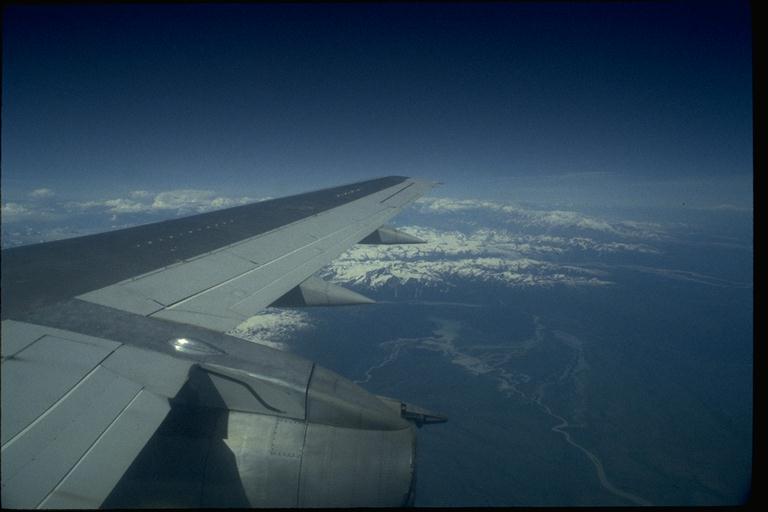
Flying over the Alaska Peninsula's stark mountains
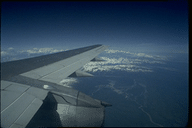 [BIG]
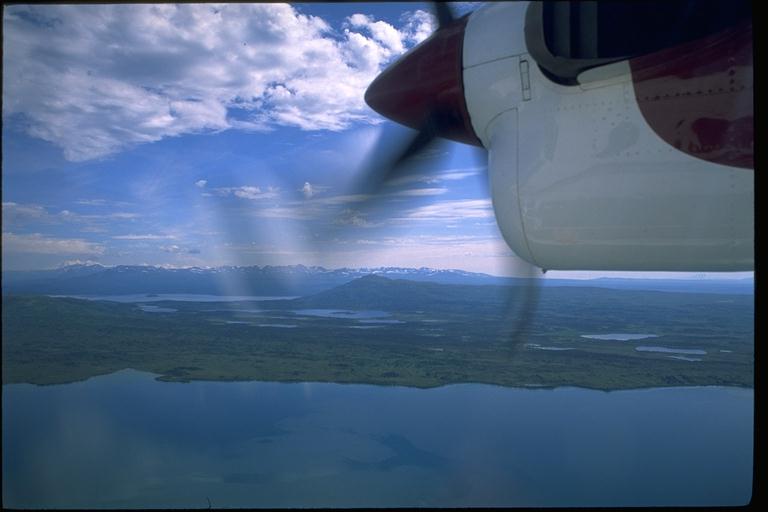
and then in a float plane
[BIG]
and then in a float plane
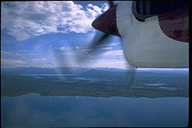 to Katmai National Park (Chapter X)
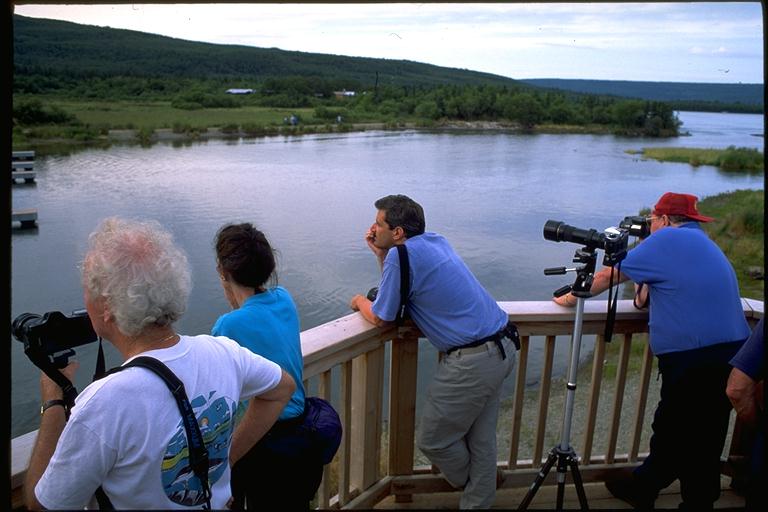
was a relief. Here was a community of perhaps 100 people and 20 bears.
People watch
to Katmai National Park (Chapter X)
was a relief. Here was a community of perhaps 100 people and 20 bears.
People watch
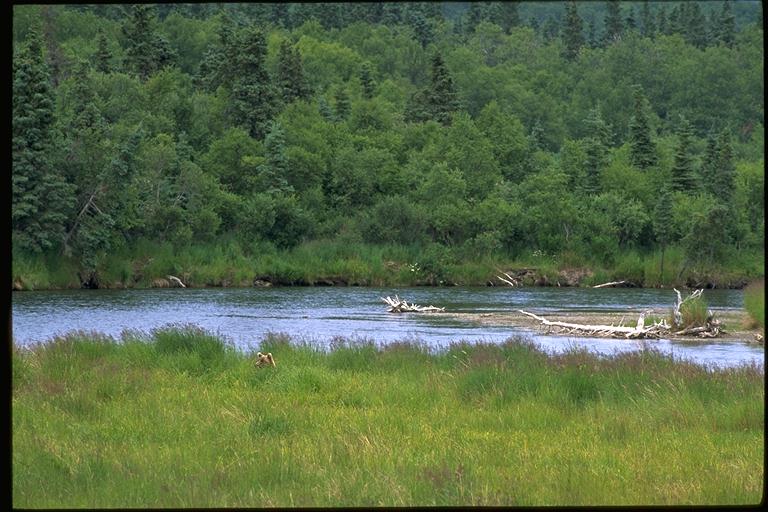
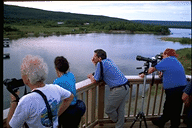 and the bears just get closer
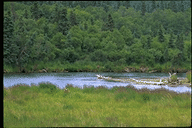 [BIG]
and closer
[BIG]
and closer 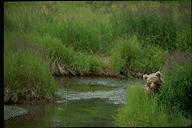 [BIG]
and closer
[BIG]
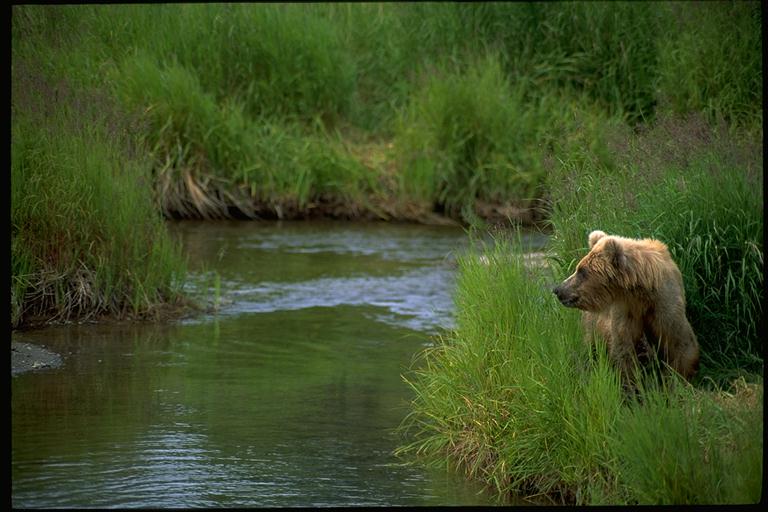
and closer
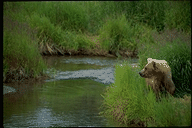 [BIG].
They look pretty peaceful don't they?
Katmai National Park is home to the world's largest grizzly bears,
commonly referred to here as the Alaskan Brown Bear. Because of their
rich salmon diet, they grow to over 1000 lbs in weight, making them in
fact the world's largest land predator. Brooks Camp, where I stayed,
is the overnight home of about 150 people and 20 bears, who live in
closer contact with each other than anywhere else in the world. Bears
are normally solitary animals but here they've established a wolf-like
dominance hierarchy. As many as 15 bears congregate around Brooks
Falls to grab salmon as they try to jump over the falls to reach
spawning grounds upstream.
More...
Next Page
 Slide Show Cover Page
 [BIG]
and then in a float plane
[BIG]
and then in a float plane
 to Katmai National Park (Chapter X)
was a relief. Here was a community of perhaps 100 people and 20 bears.
People watch
to Katmai National Park (Chapter X)
was a relief. Here was a community of perhaps 100 people and 20 bears.
People watch
 and the bears just get closer
 [BIG]
and closer
[BIG]
and closer 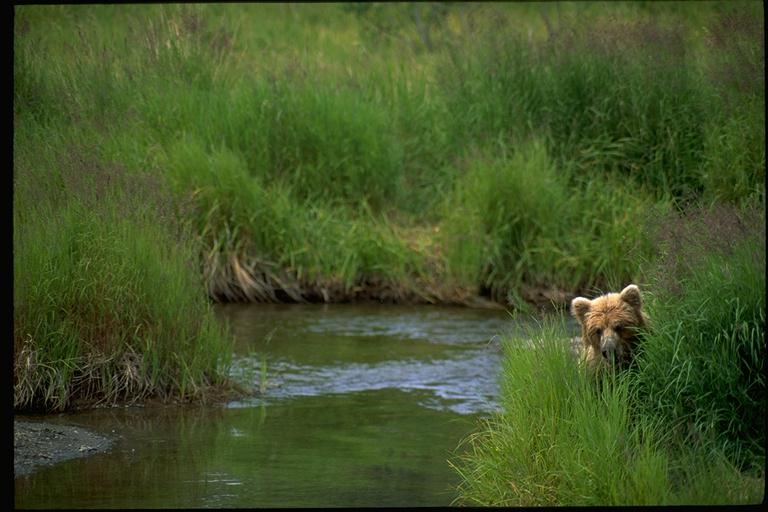 [BIG]
and closer
[BIG]
and closer
 [BIG].