This is about a January 2-12, 2026 trip on the Celebrity Ascent from/to Fort Lauderdale via the following ports:
- Tortola, British Virgin Islands
- St. Johns, Antigua
- Barbados
- St. Lucia
- St. Kitts
TL;DR: It’s a big ship, but you feel like family. The officers and staff are warm and friendly. The food is much better than on Royal Caribbean. The ship orchestra and the house band (Blue Jays with Jessica Gabrielle) were superb.
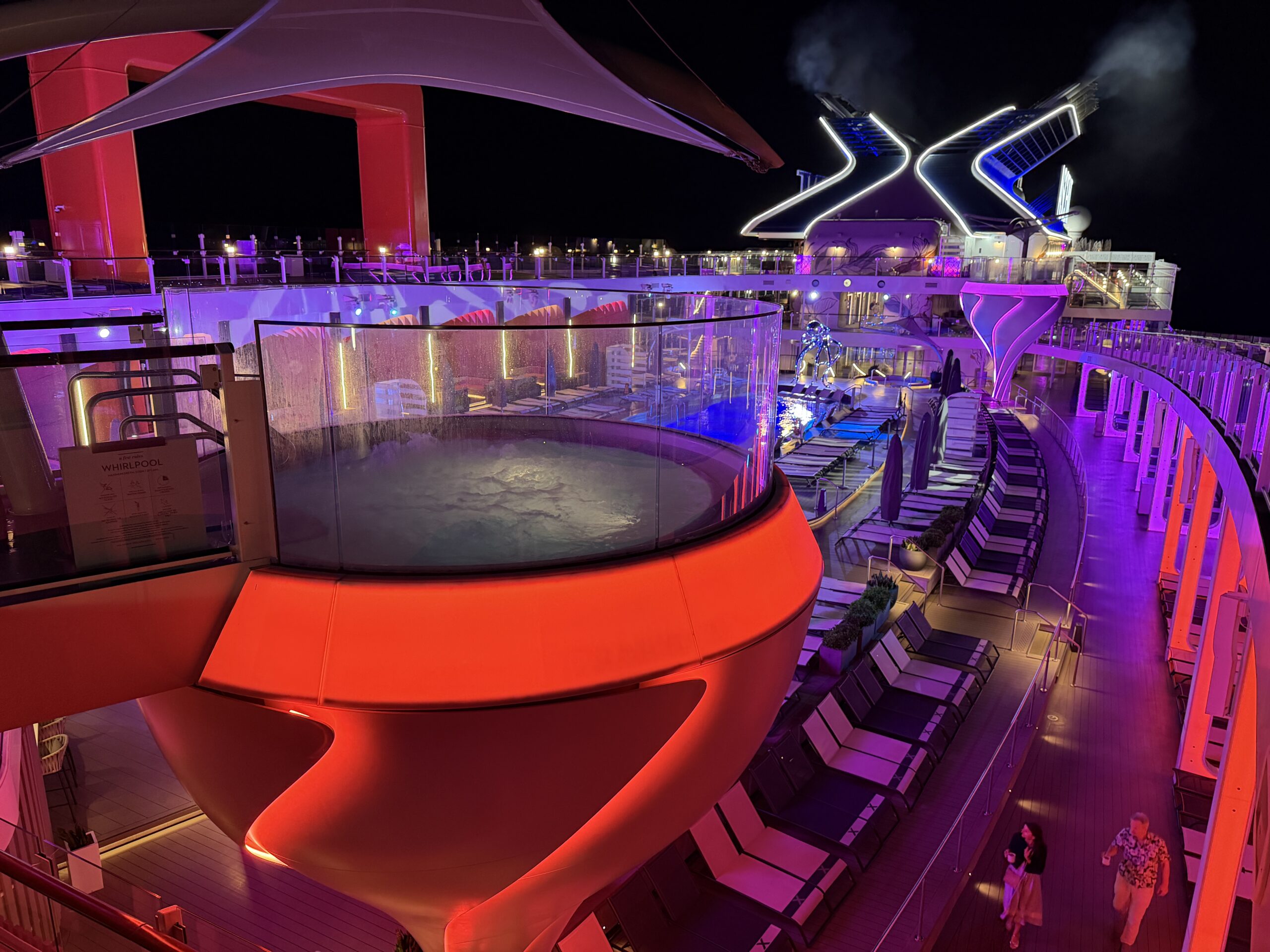
The Machine
Celebrity Ascent was completed in 2023 by Chantiers de l’Atlantique at a cost of $1.2 billion and holds about 3,300 passengers on a typical cruise, plus 1,400 crew. She’s notable for having a “Magic Carpet” that can slide up and down the ship, serving as a restaurant or bar most of the time, but also an embarkation platform for the ship’s tenders at ports where there isn’t a pier.
I don’t think she’ll win any beauty contests, but Ascent is very functional! In St. Lucia:
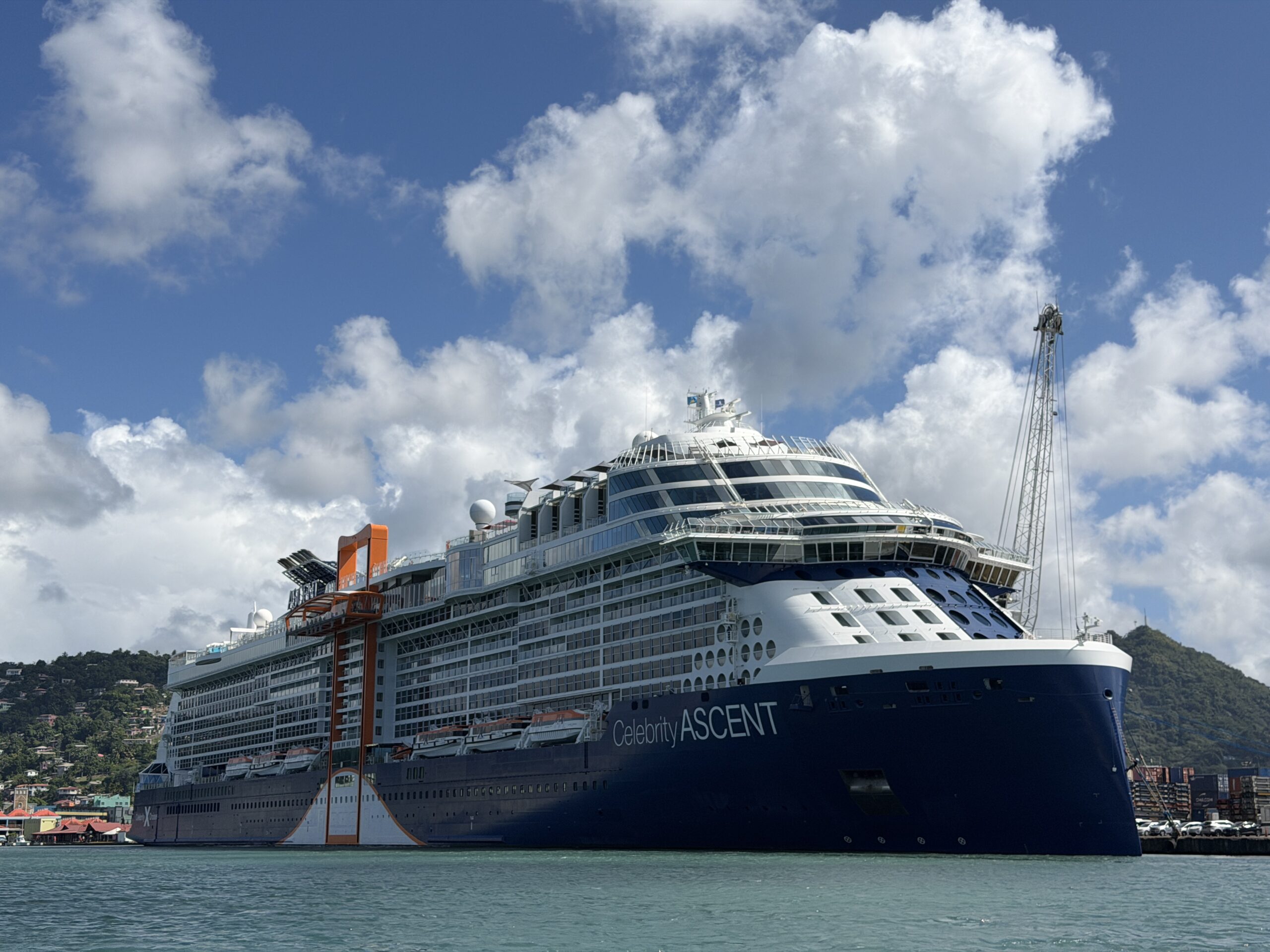
Note that there is no place on board to land a helicopter. If someone gets sick and needs to be evacuated, only the Coast Guard or one of the private contractors that the Europeans like to use can extract someone from the ship with a hoist.
Despite the potential of Starlink, Internet service actually provisioned was too slow for work (see Celebrity Starlink Wi-Fi Internet (3 Mbps at $1,000 per month)).
With 73,000 hp of Wärtsilä diesel power (five engines total), I’m not sure that Greta Thunberg will want to be a customer. That said, the hull design is 22 percent more fuel efficient than older ships. How is it possible to advance the art of naval architecture, already relatively mature during the Second Punic War (2,250 years ago)? The efficiency doesn’t come from an improved hull shape, but from pushing air out at the bow and, thus, enabling the ship to ride on a cushion of air rather than clawing at the draggy water. Prof. Dr. ChatGPT, Ph.D. Naval Arch. explains:
Modern cruise ships sometimes use air lubrication systems (ALS) that pump compressed air through tiny openings in the hull—usually along the flat bottom.
1. Reduced Skin-Friction Drag
- Water is ~800× denser and far more viscous than air.
- Replacing direct water–steel contact with air–water contact drastically lowers friction.
- Skin friction accounts for 50–80% of total resistance at cruise speeds.
2. Lower Fuel Consumption
Typical real-world savings:
- 5–10% fuel reduction on large ships
- Sometimes higher on wide, flat-bottomed hulls (like cruise ships)
Many modern ships include air lubrication, including vessels from:
- Mitsubishi Heavy Industries
- Wärtsilä
- Silverstream Technologies
Some notable cruise lines have retrofitted ALS systems to existing ships to improve efficiency.
Air-bubble (air-lubrication) systems have a longer history than most people realize—they date back over half a century, but only became practical for cruise ships fairly recently.
Air lubrication always worked—but it needed:
- Cheap, efficient electrical power onboard
- Sophisticated control software
- Environmental pressure (fuel cost + emissions)
- Better hull designs to keep the air where it belongs
Cruise ships finally ticked all the boxes.
The Stateroom
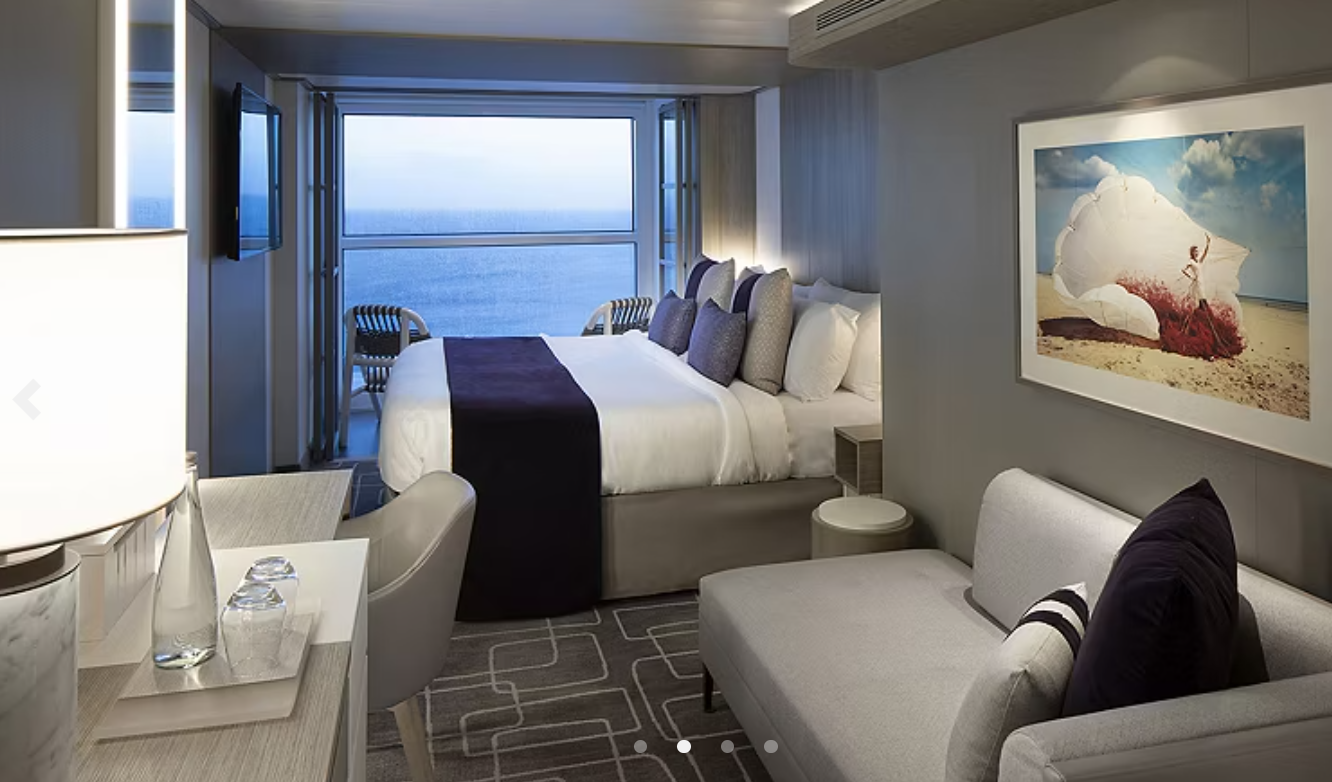
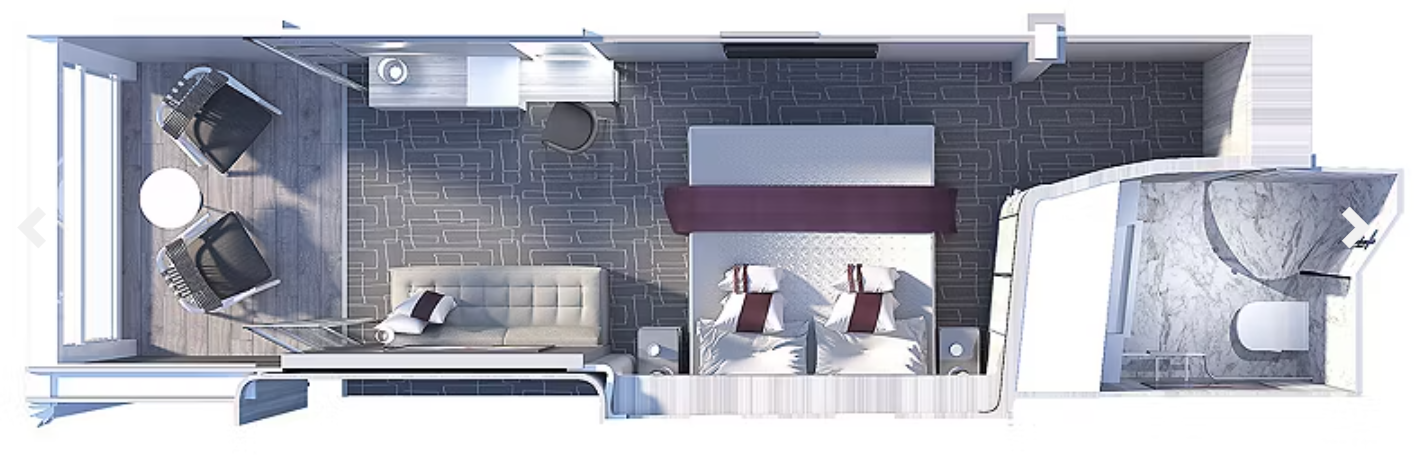
Booking about three weeks before departure we got literally the last room available on the ship, other than an inside cabin. We had a Concierge Class 285-square-foot stateroom including the veranda, which ends up becoming part of the room because of the top glass panel’s ability to slide vertically. It’s a clever design. Our room was laid out like the photo below, except that we had the two halves of the bed split with a night table in between. We could have used outlets on both sides of the bed, but found an outlet on only one side. The bathroom felt spacious.
The in-room HVAC doesn’t dehumidify as much as one would expect, nor does it bring significant fresh air into the room when the veranda window is sealed. Humidity without the window open would range from 50-65% (how do they avoid mold?) and CO2 levels in the middle of the night would go over 1,300 ppm (a real nightmare for Greta Thunberg!). Data from an Airthings Wave Enhance:
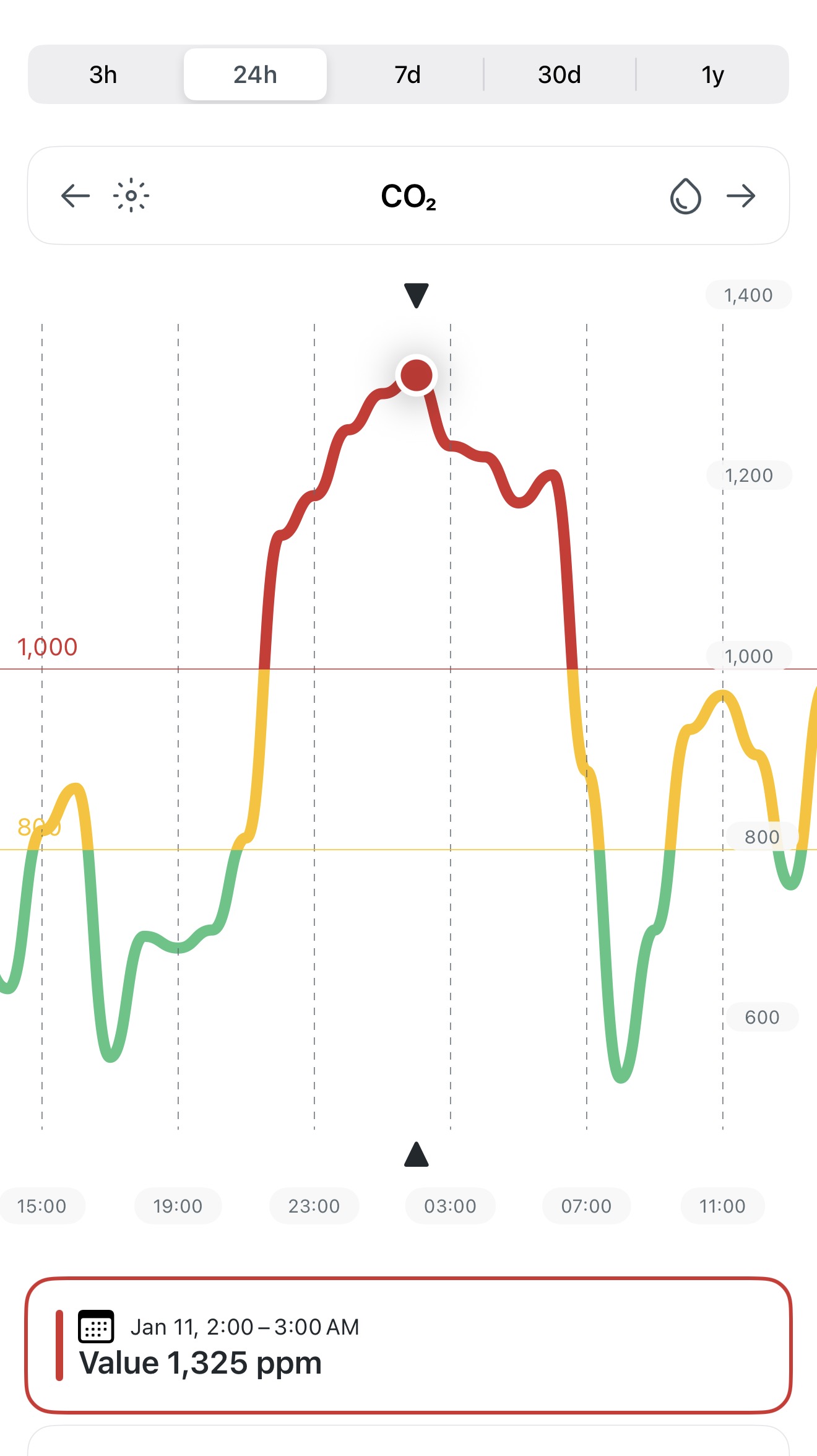
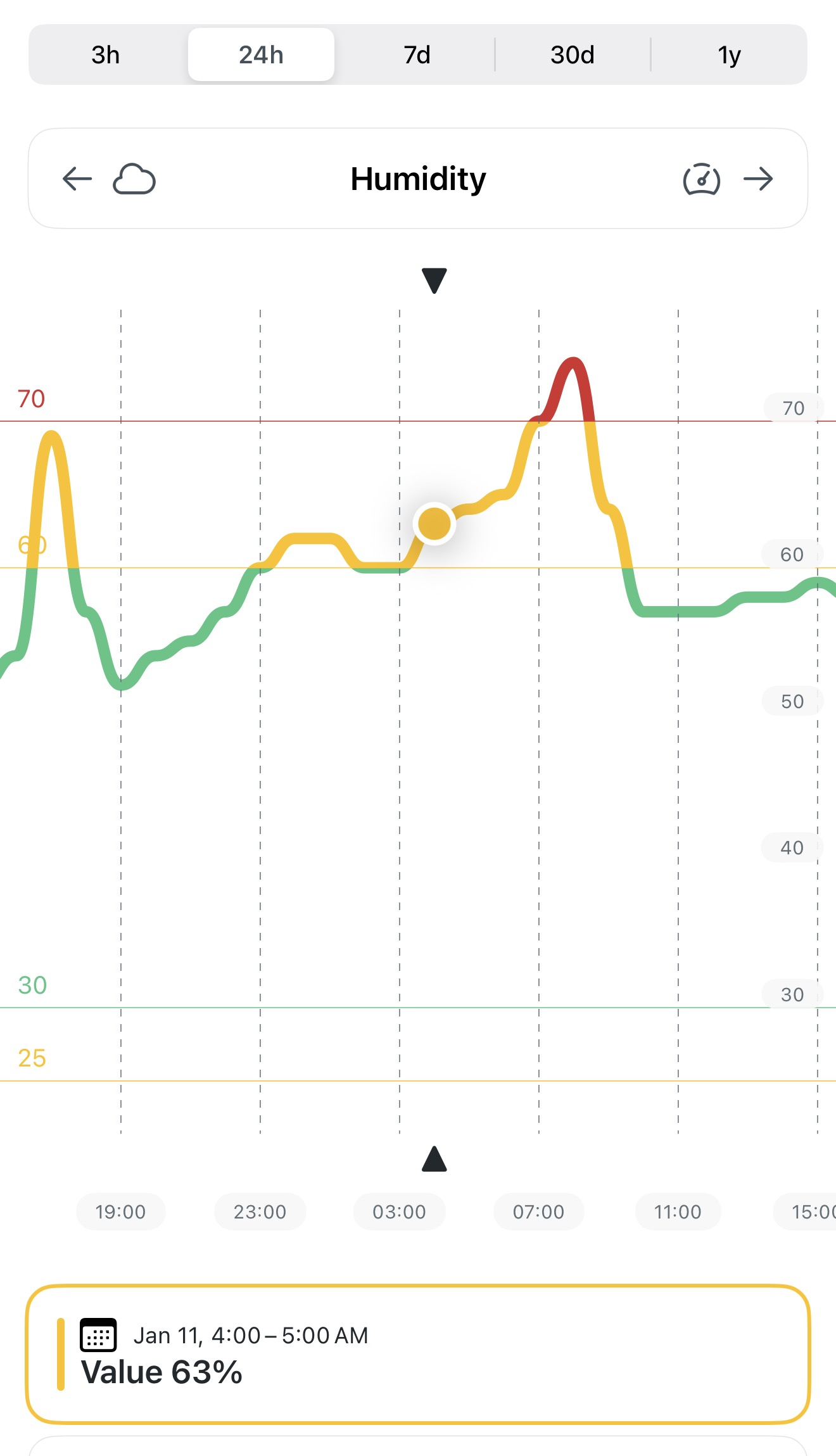
(I’ve seen CO2 go to 1,000 ppm in some hotels in humid environments, such as Miami. The ASHRAE standard is 800-1,000 ppm. CO2 by itself isn’t harmful (up to 5,000 ppm is tolerated in submarines), but is an indication of how much fresh air is coming in. Atmospheric CO2 is about 430 ppm. In my old Harvard Square condo (crummy 1880s construction) with just one person in the bedroom (me), the CO2 level reached 700 ppm in the middle of the night.)
The Passengers
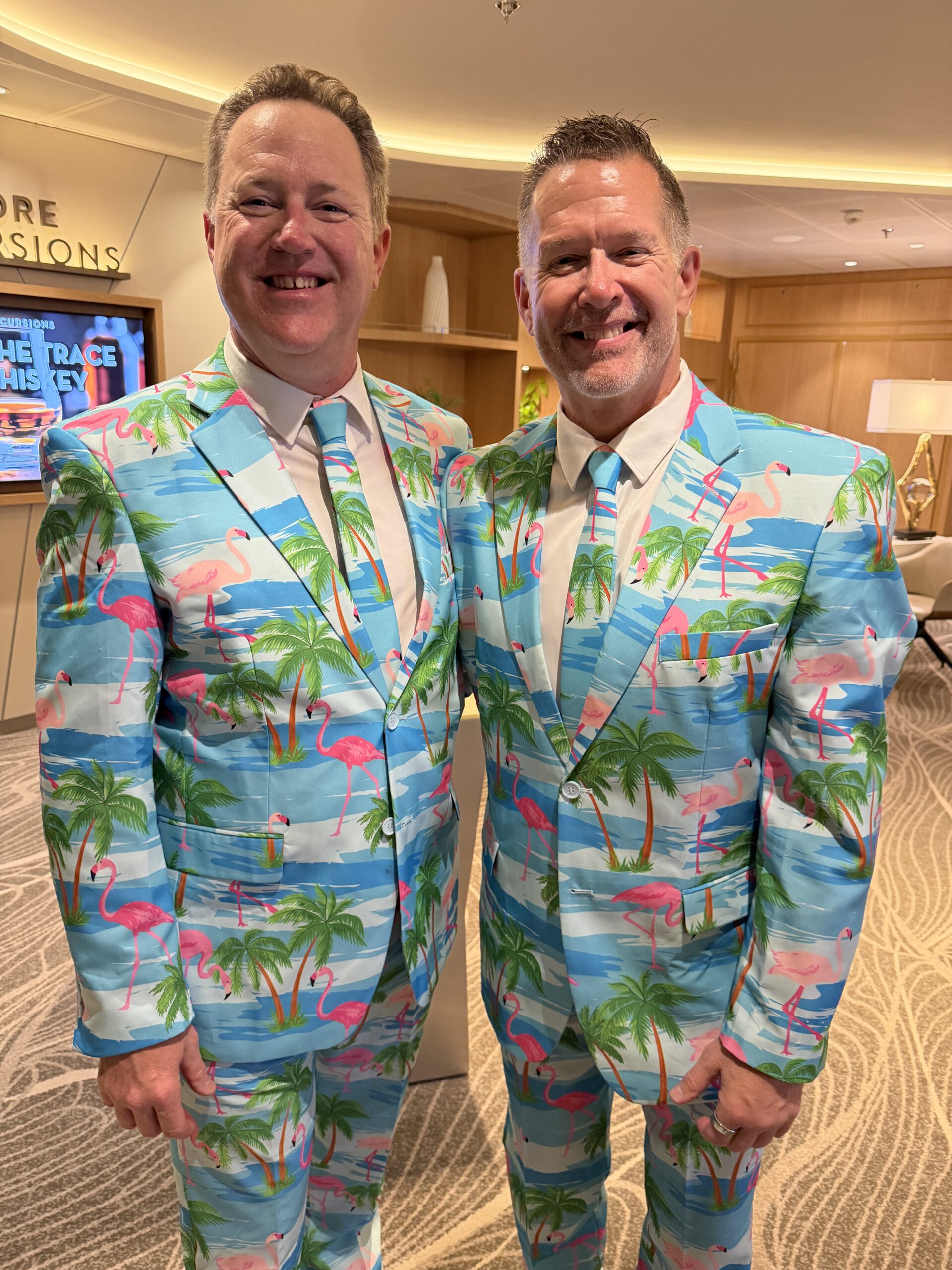
Typical passengers seemed to be the same kinds of folks who would move into the The Villages (the most active over-55 active community in the U.S.?). Here are a couple of brothers who were, I think, traveling with their parents (flamingo suits from Amazon):
Exercise on Board
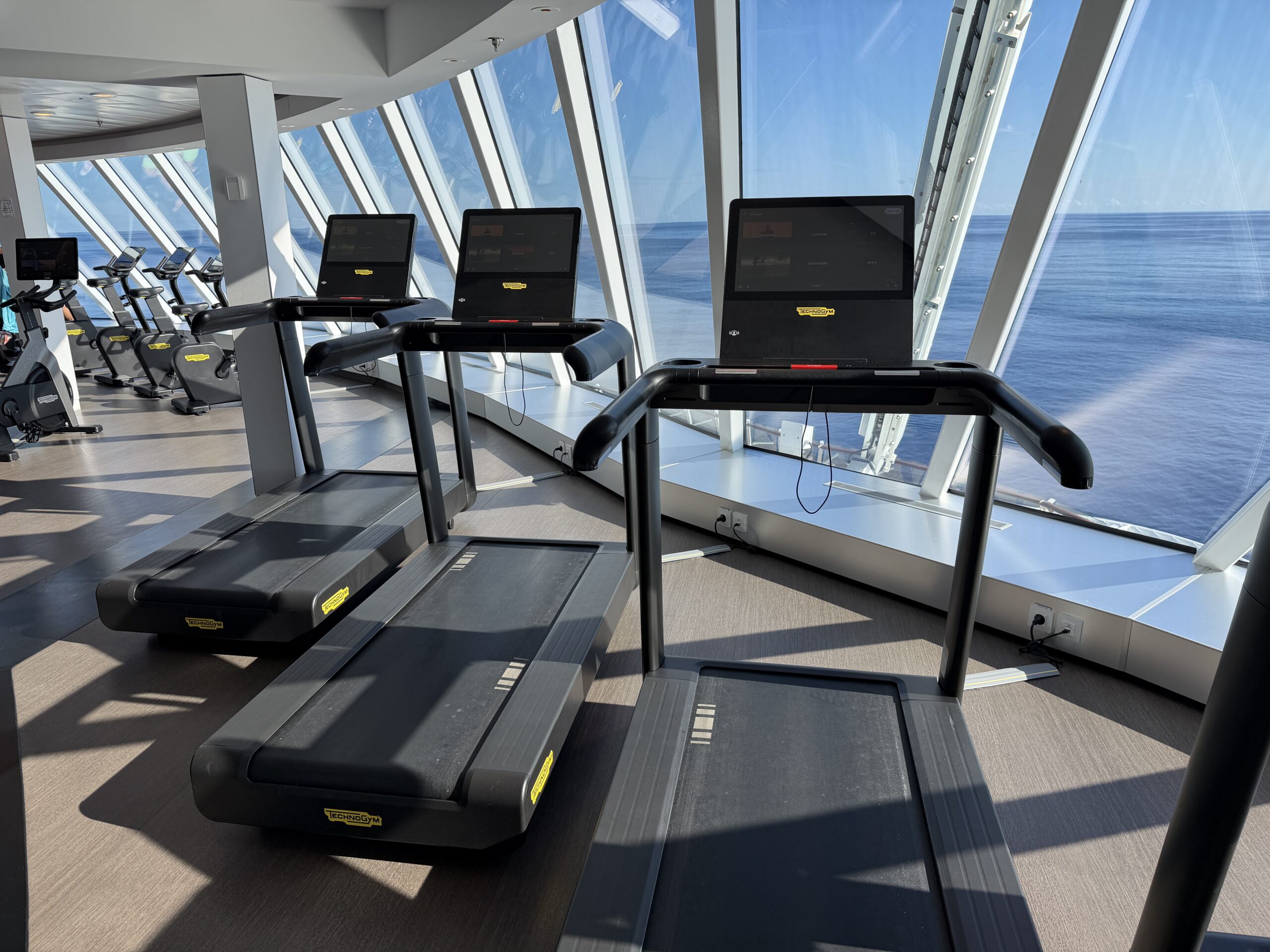
There is a beautiful and never-crowded gym on Deck 15 looking straight out at the sea in front of the ship:
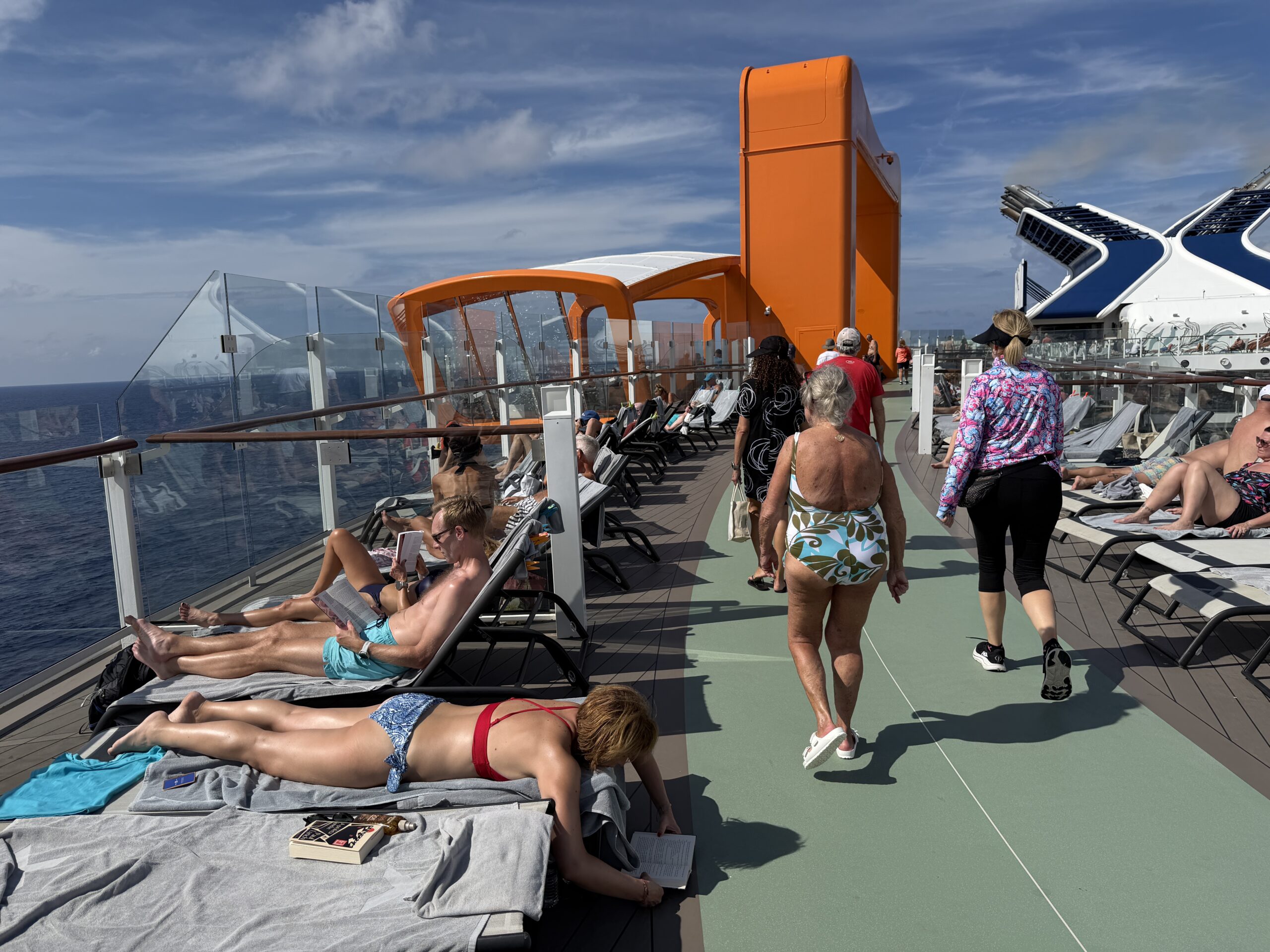
Ascent lacks the “walking/jogging track all the way around Deck 5” that was a conventional exercise solution on older ships and instead has a bizarre serpentine track on (crowded) Decks 15 and 16 that is also used by people getting to and from lounge chairs. The lack of the conventional all-around-the-ship track was my biggest disappointment, which I guess means that everything else was at least pretty good!
Here’s the track. Notice that it isn’t shaded, unlike the typical round-the-ship track, and it is surrounded by clutter and people. (The Magic Carpet is in the background in its higher position.)
Food
The food is a significant step-up from what’s offered on Royal Caribbean, the parent company of which acquired Celebrity in 1997. This is good and bad, I guess, I lost weight during every Royal cruise and gained some weight on this Celebrity trip.
One important source of weight gain was that, unlike almost anyone in the U.S. and certainly unlike anyone on Royal, the baker for Ascent was able to make a high quality croissant. These were hard to resist at breakfast. (Fortunately, they were just as bad as Royal at making donuts! The worst Dunkin’ does a better job.) Then at about half the other meals in the buffet they had addictive bread pudding. There was always an option for Indian food at the buffet (4 or 5 dishes plus bread) and typically at least two or three other Asian choices.
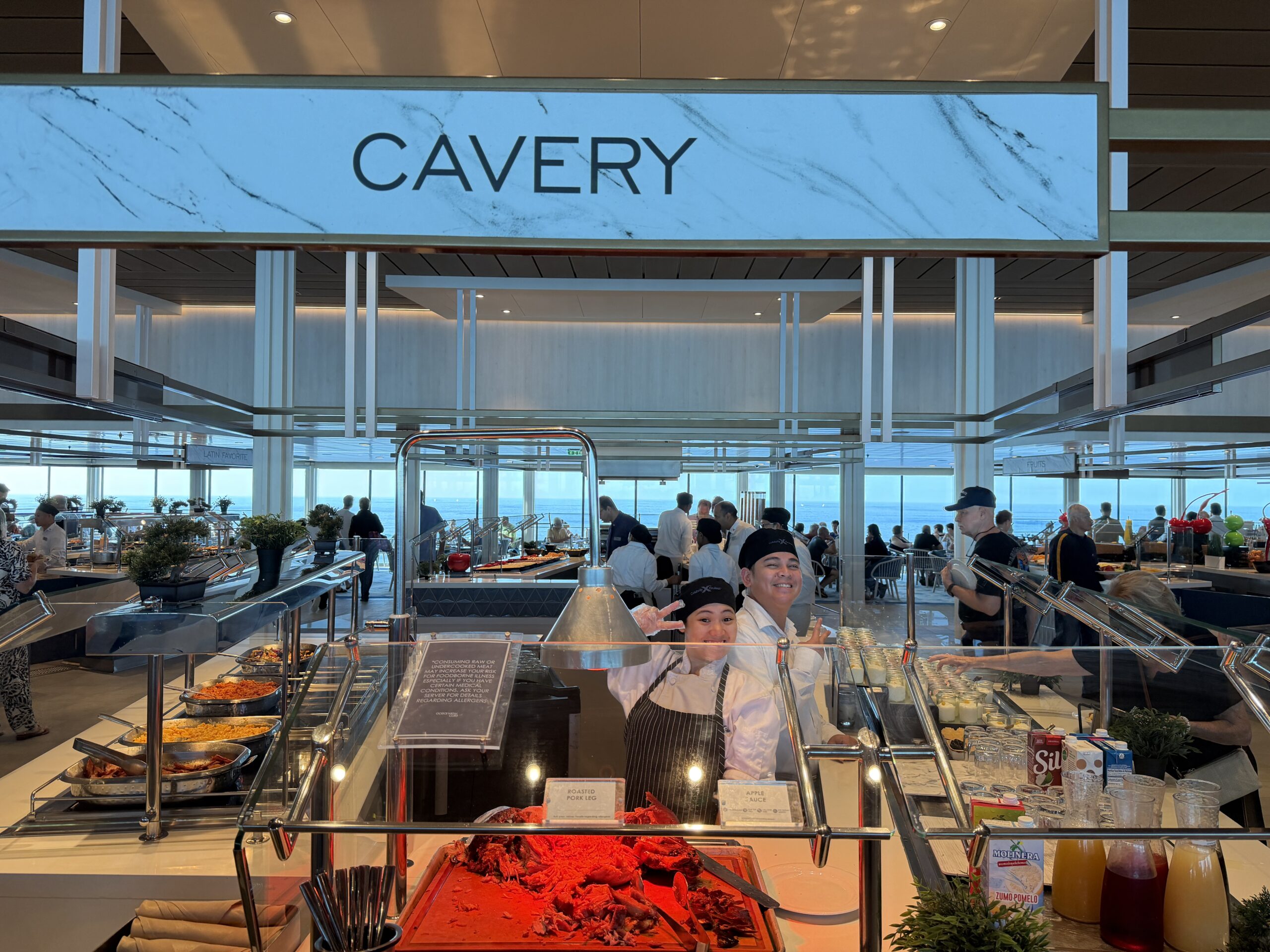
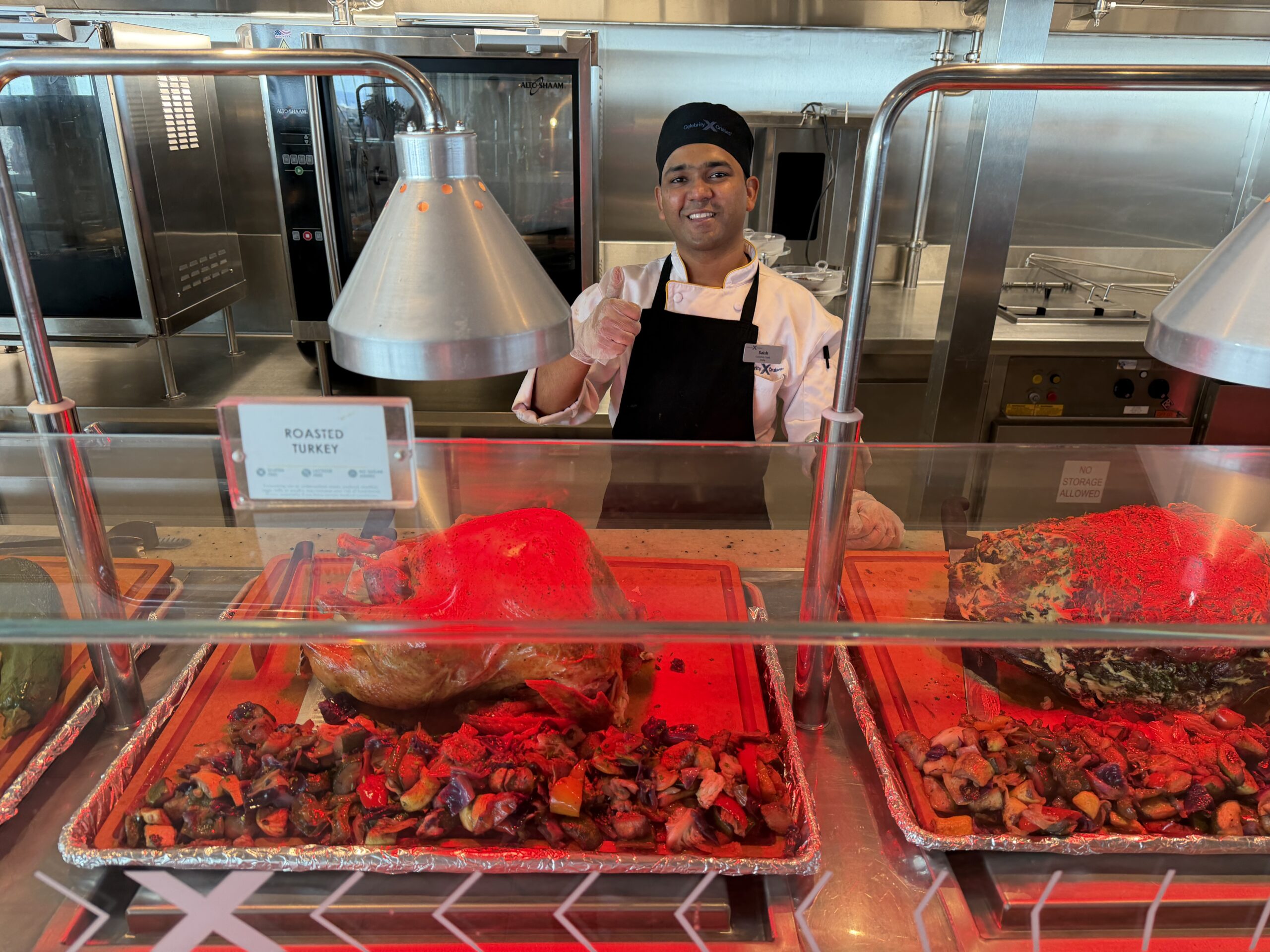
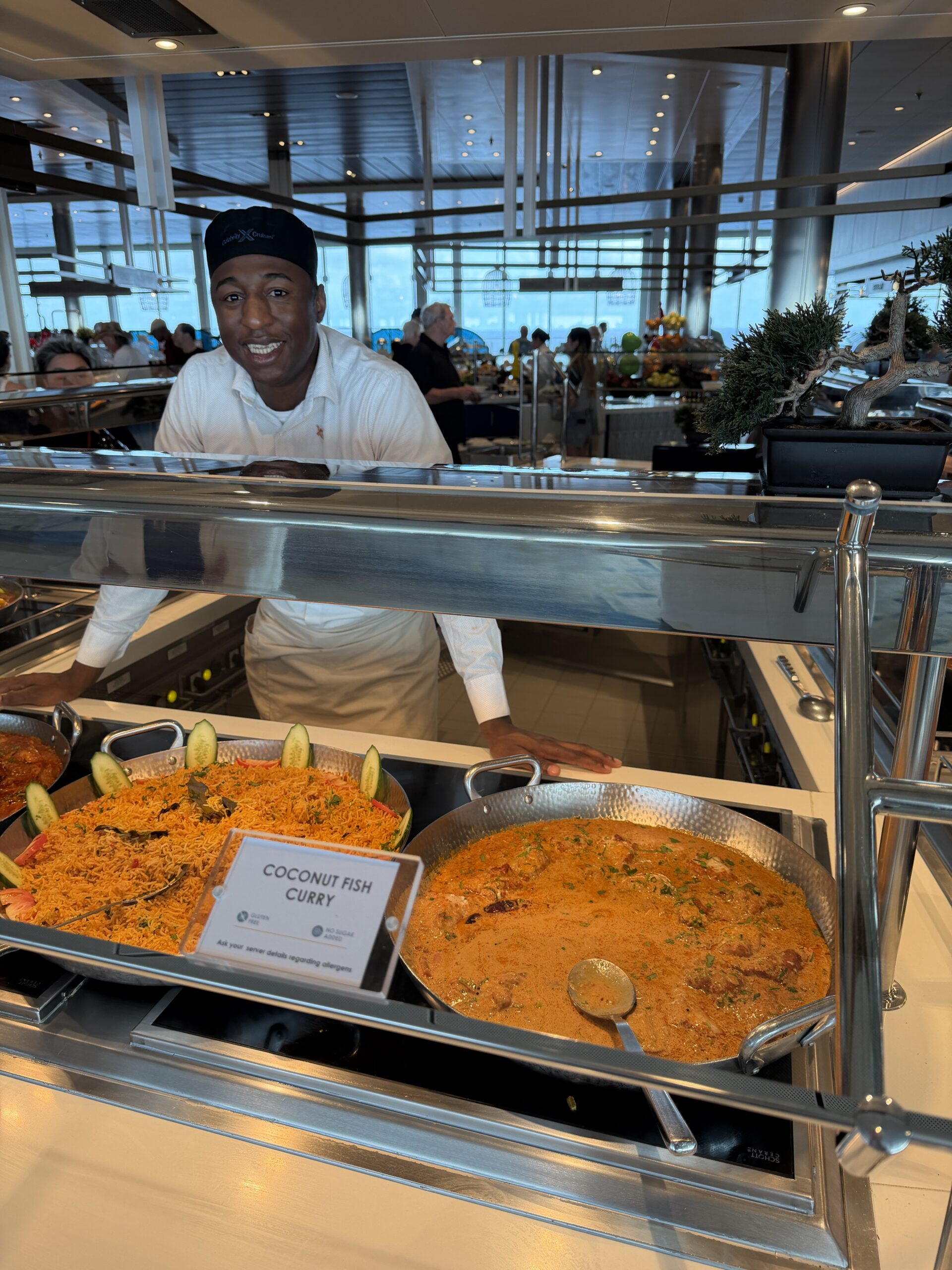
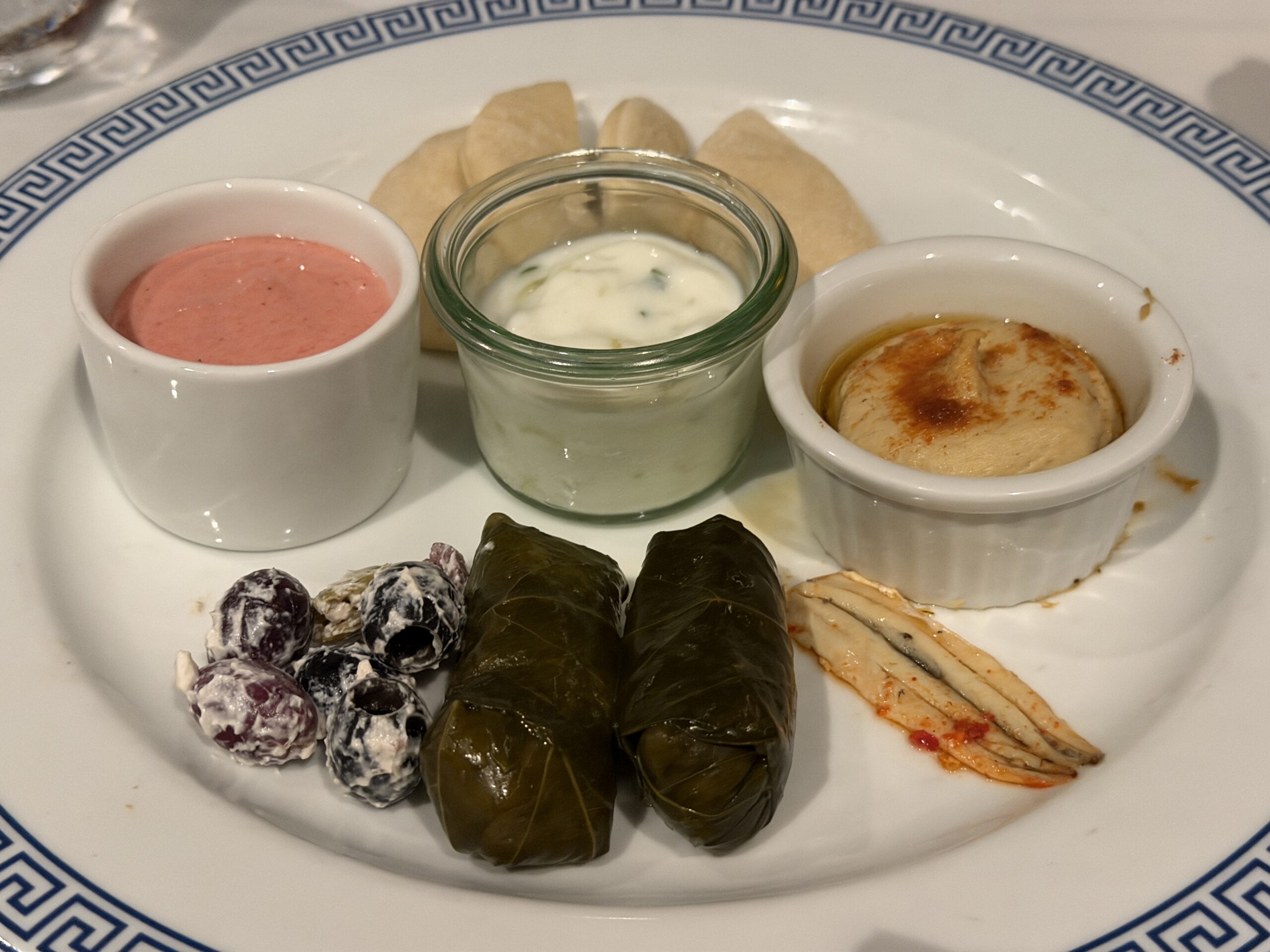
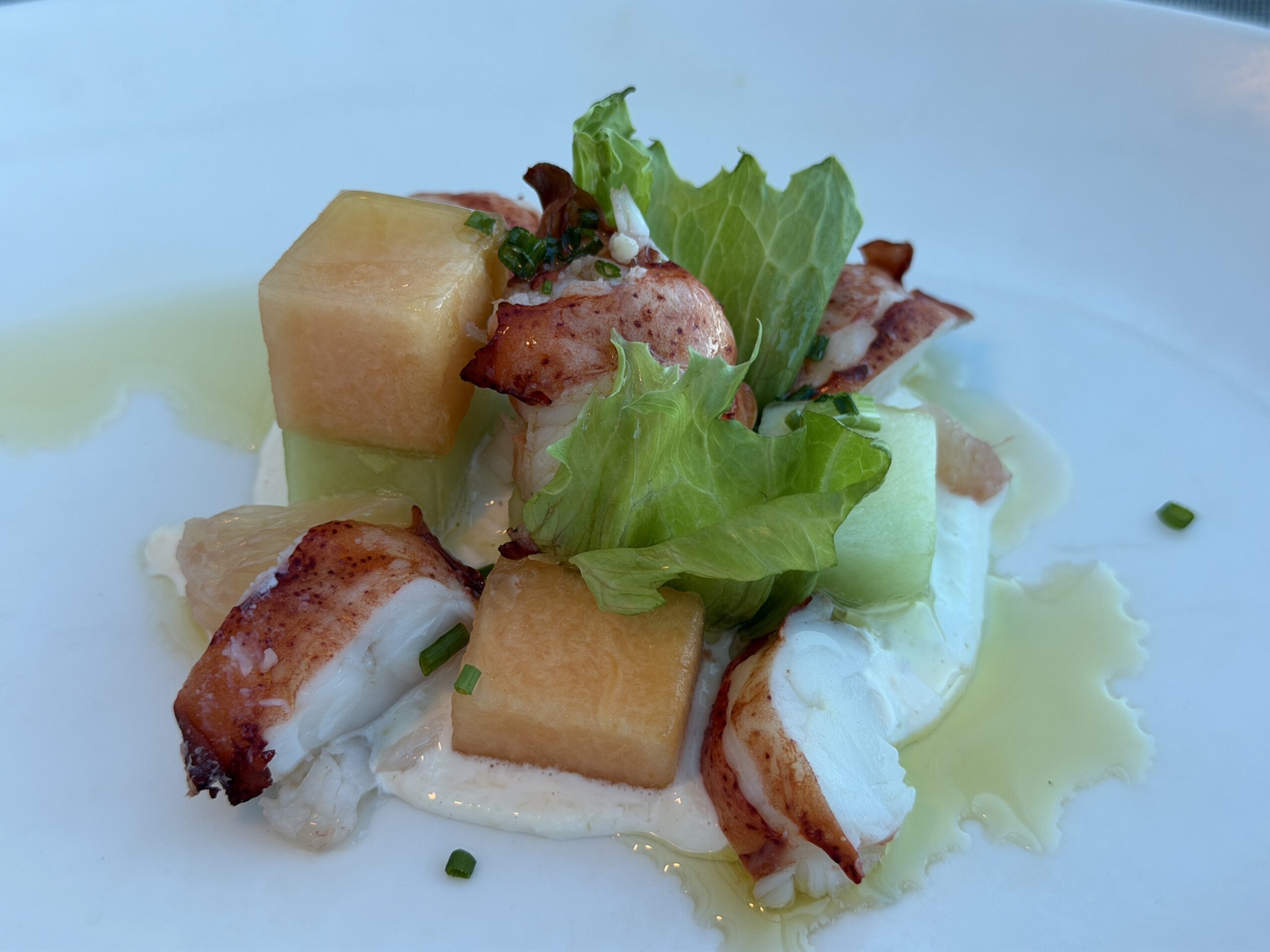
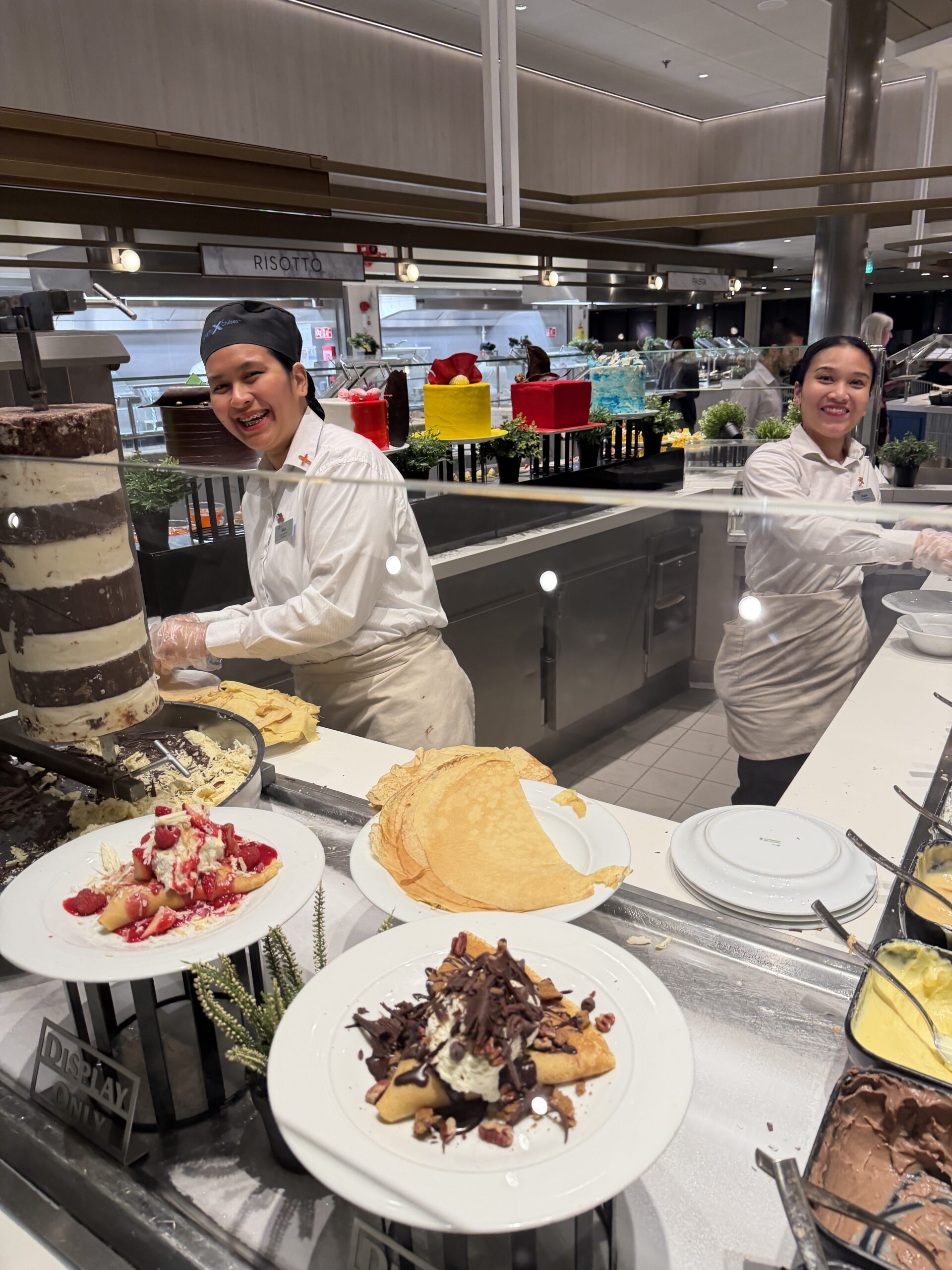
A friend who owns some superb restaurants did the Retreat class on Celebrity and said that the dedicated restaurant for those elite passengers exceeded his expectations. We hit the specialty steak restaurant on Ascent and were somewhat disappointed. They can’t have a gas grill on board for safety reasons and, apparently, don’t know how to use induction and a cast iron pan. The steaks are, therefore, rather soggy. We ate in the main dining room and buffet restaurants after that.
The Pool
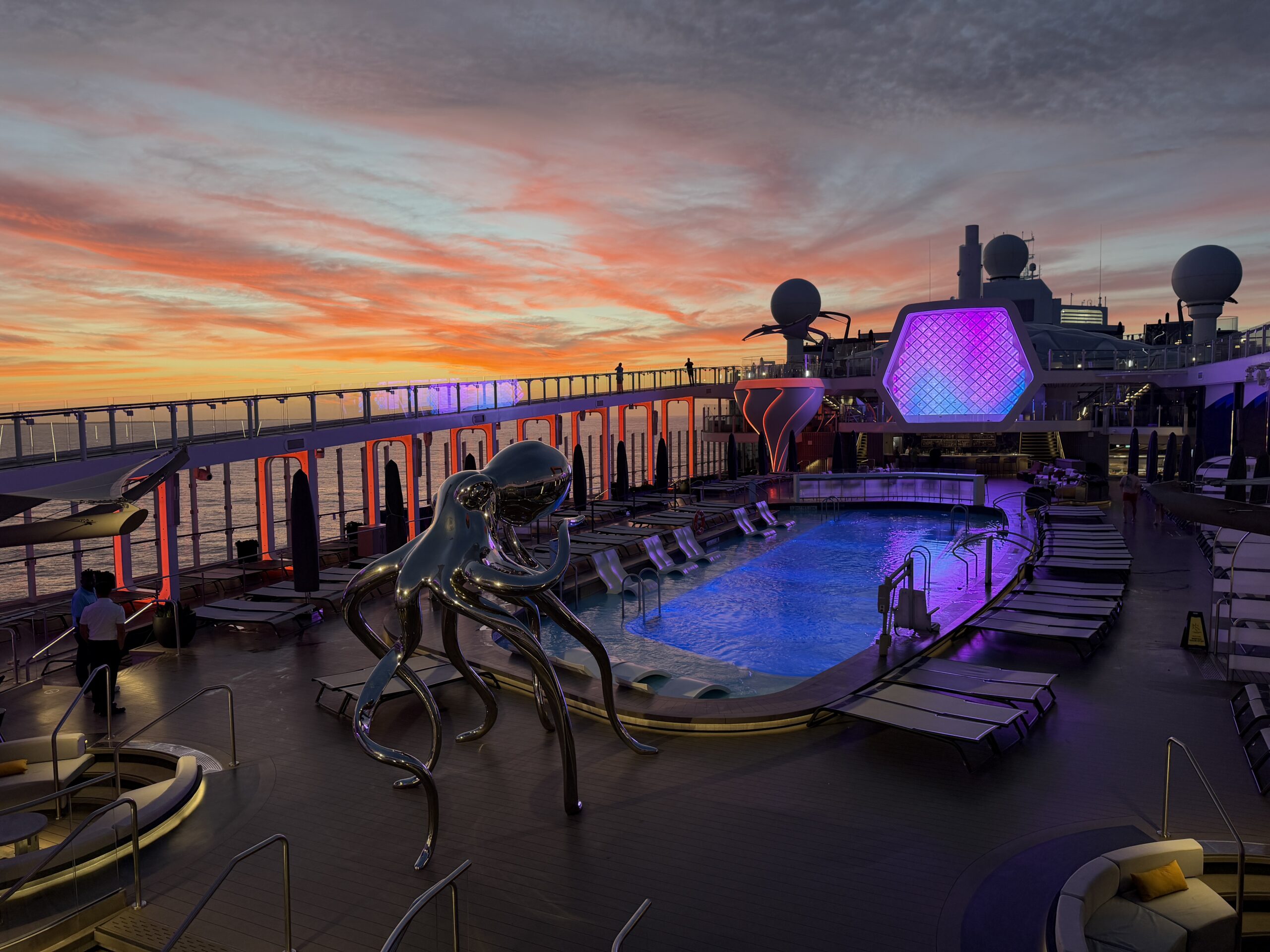
There’s an indoor solarium pool for Alaska and European cruises. Here’s the outdoor pool (big enough for water aerobics and kids to goof around; not really big enough to swim for exercise (though it emptied out towards sunset so maybe one could)):
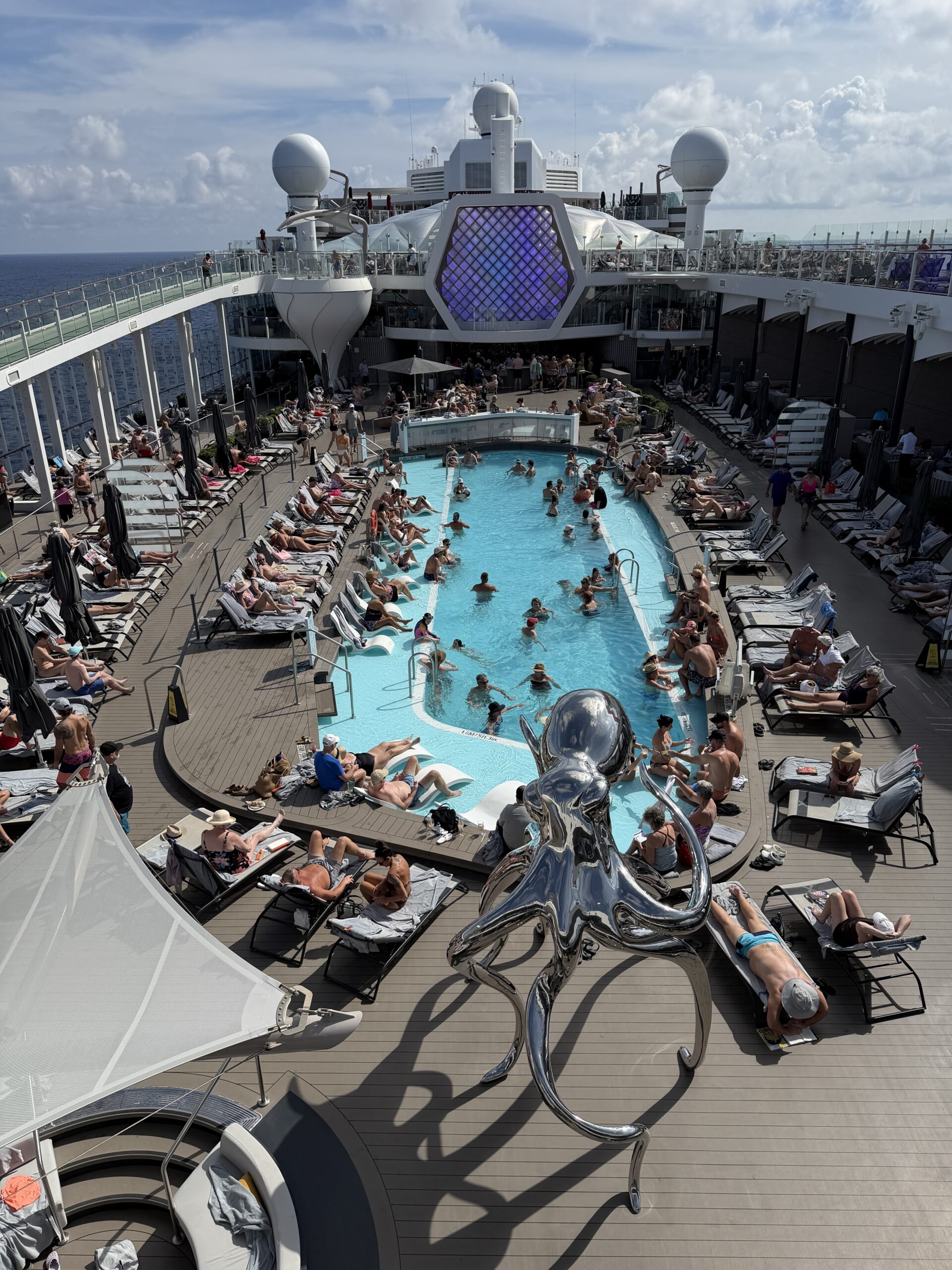
Still open and empty because everyone is dressing for dinner?
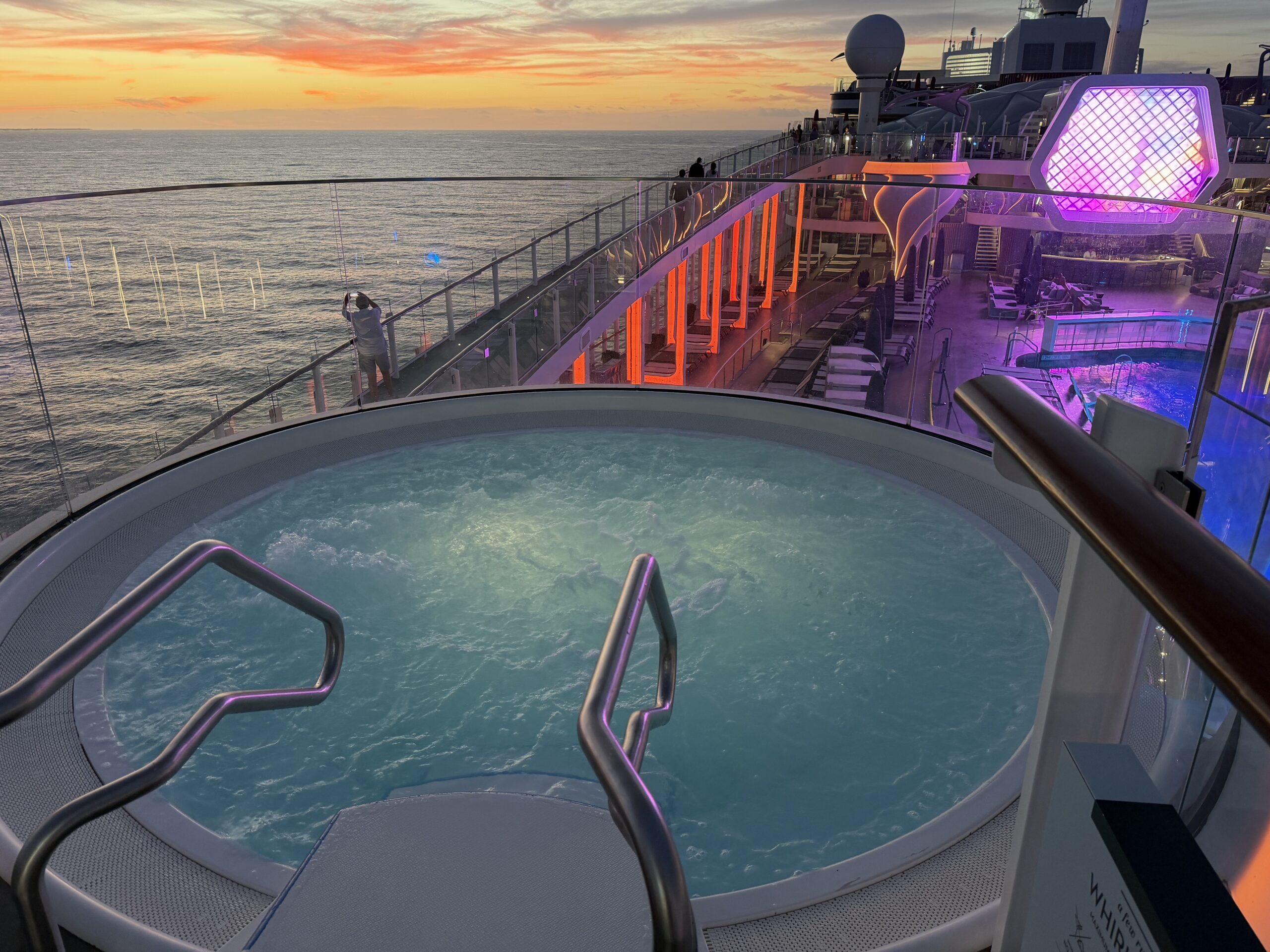
There are some hot tubs, but they’re not quite hot enough (i.e., you could comfortably sit in one for an hour):
The Spa
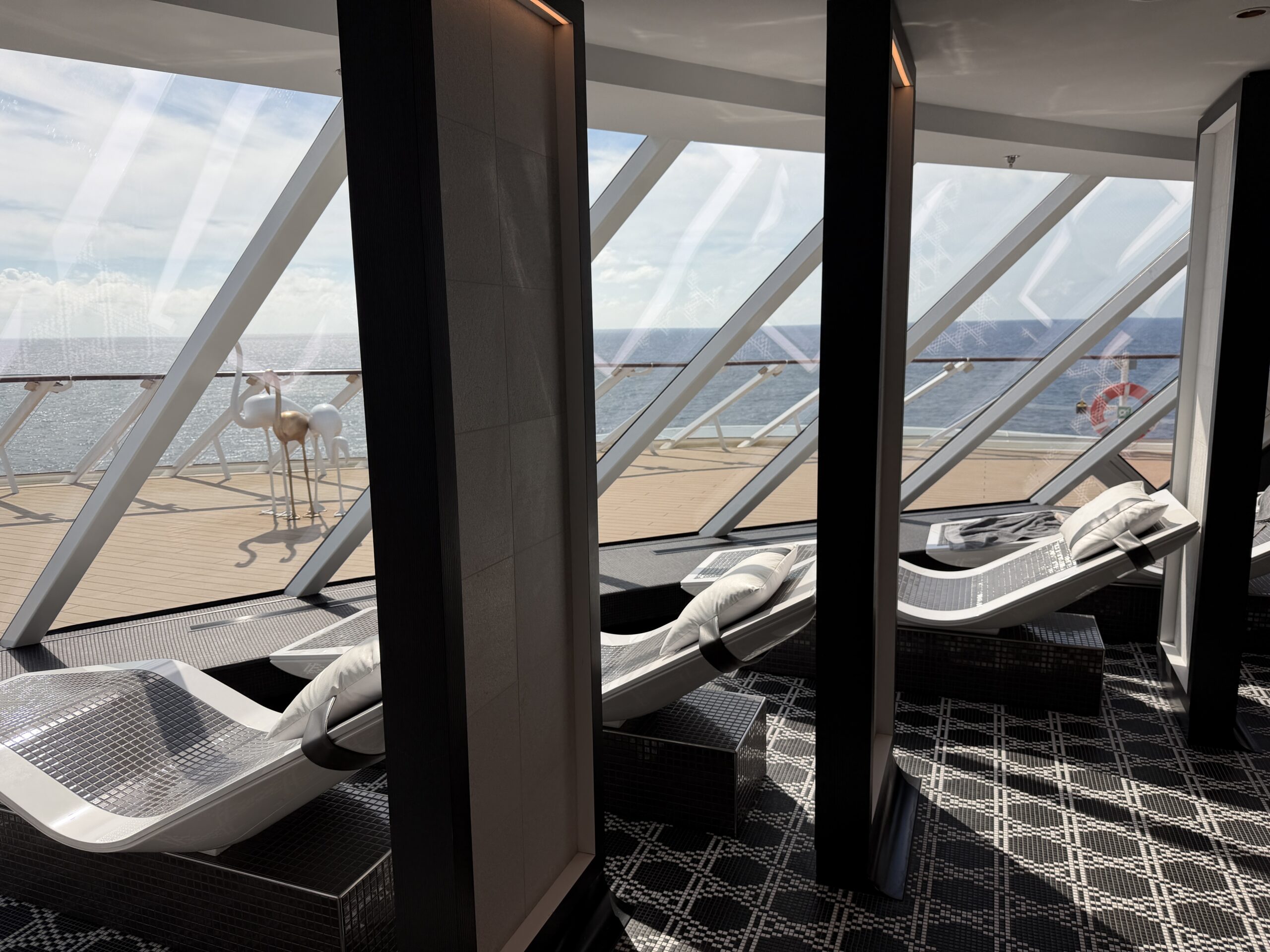
If you’re doing an Alaska cruise it probably would make sense to pay for Aqua Class, which includes access to these heated loungers looking out at the sea (not all that appealing on a Caribbean cruise!). The SEA Thermal Suite:
Sports under the Stars
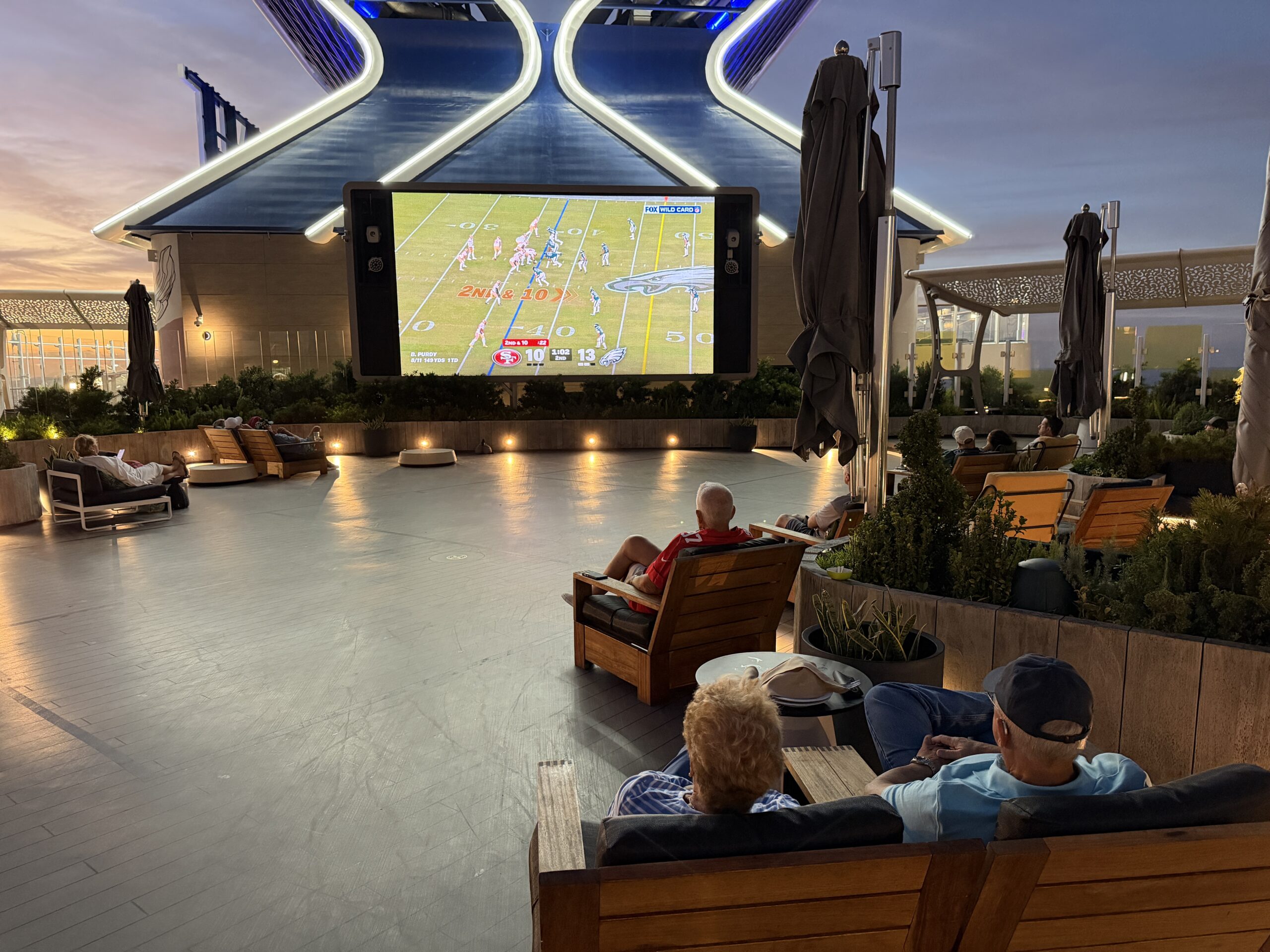
Our cruise coincided with NFL playoffs and people enjoyed the big screen experience in the “Rooftop Garden”:
Entertainment
The resident musicians, singers, and dancers were all great. I personally wish that cruise lines would do full plays or musicals rather than assemble songs from disparate sources and string them together, but apparently I’m a minority of one and attention spans dictate that shows last for just 45 minutes. Some of the guest stars were fantastic, notably Stephen Barry, an Irish singer with a fun attitude. Steve Valentine did a mind-bending Vegas-quality magic show. The technical aspects of the theater were up to Broadway standards or beyond.

Some of my favorite shows were ones where the ship’s orchestra got together with one of the singers from a smaller group and just played music. I’m more of a classical music fan, but the high level of talent live was compelling.
For Kids
There is a small Camp at Sea for kid kids, which some of the youngsters on board seemed to like. My 16-year-old companion rejected the Teen Club, finding only boys playing videogames.
Unlike on Royal Caribbean, there weren’t many under-18s on board. That said, I never saw a child or teen who seemed bored or unhappy. They were loving the food, the scenery, the pool, etc.
The Bridge
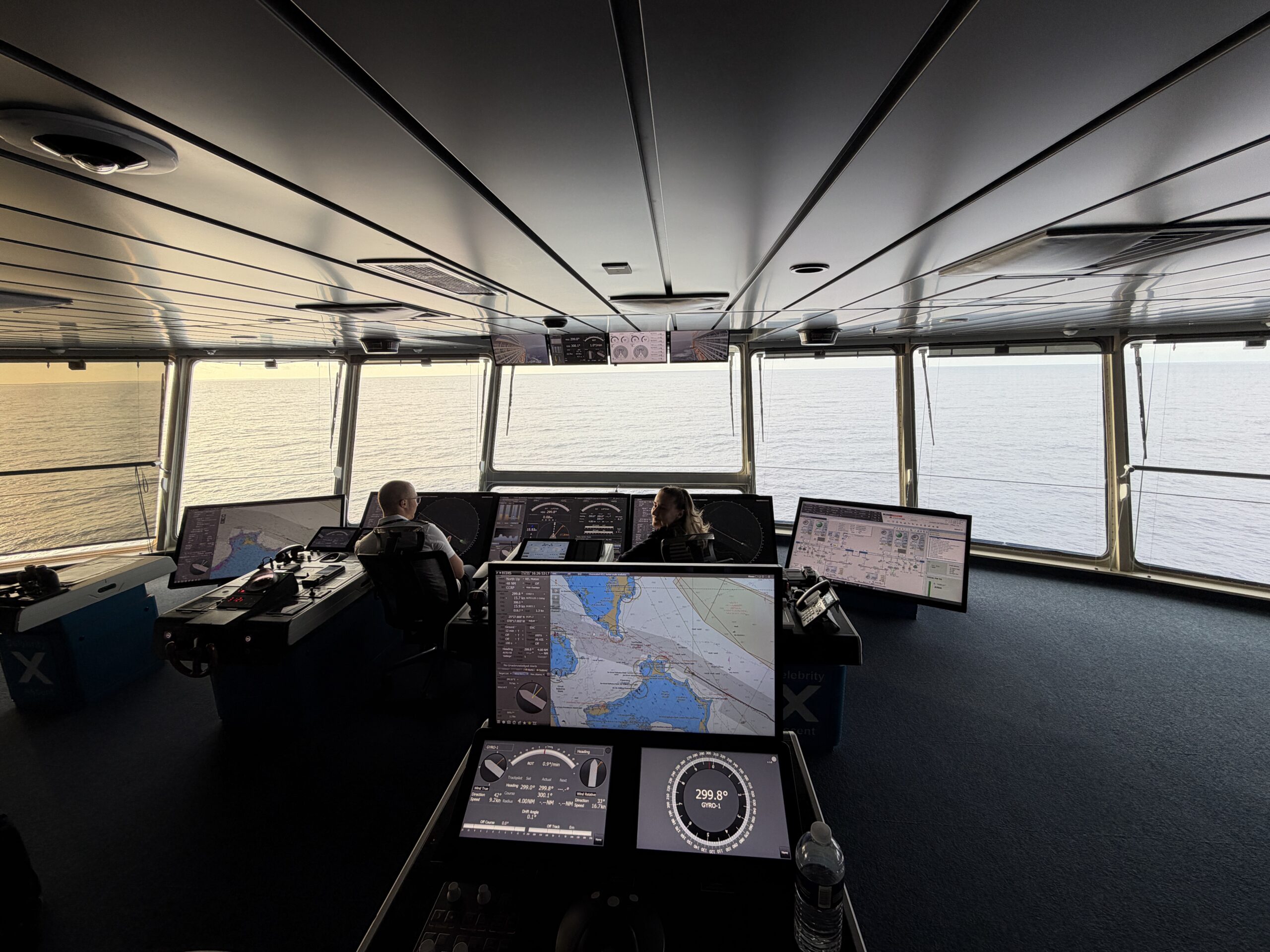
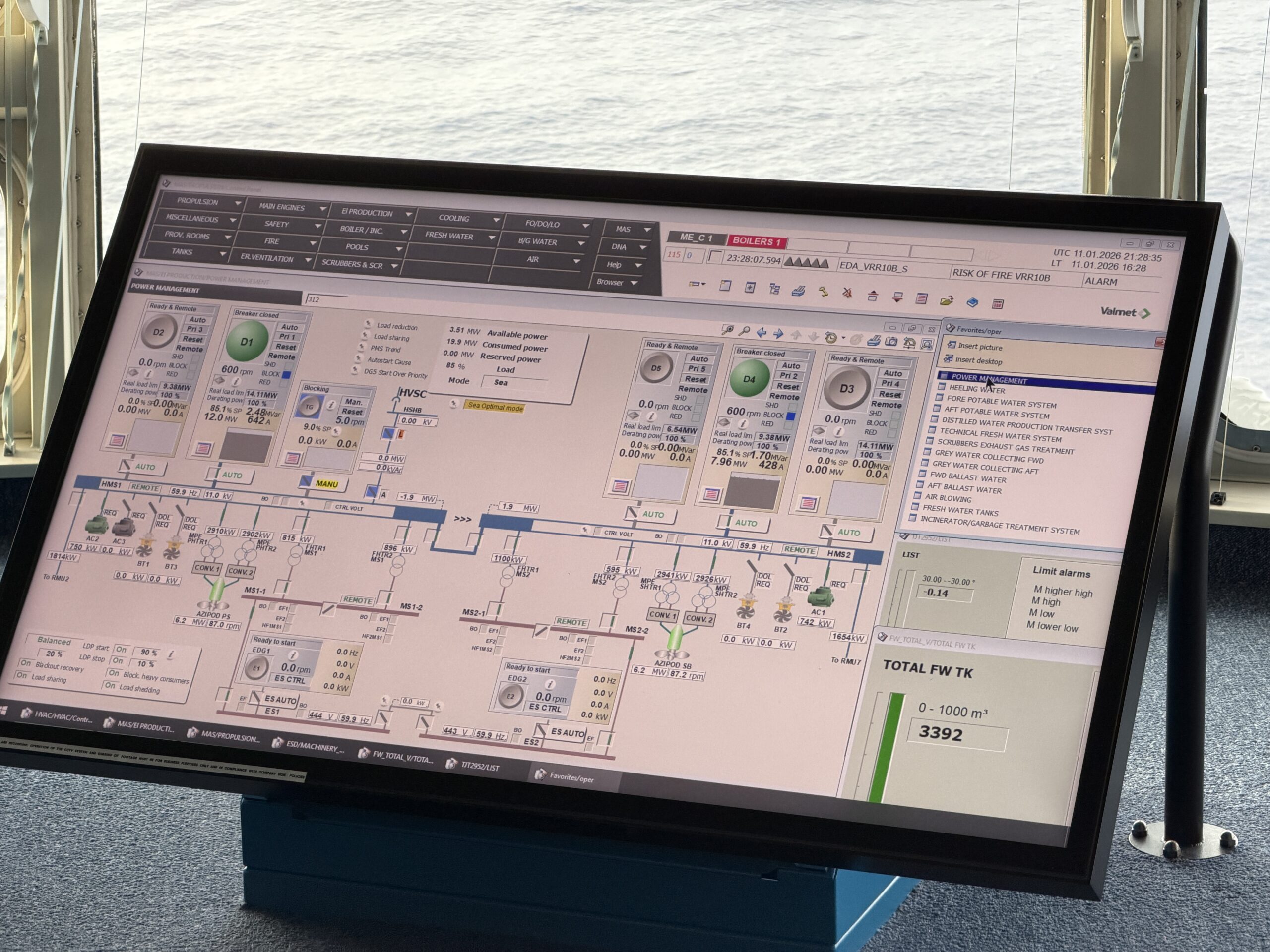
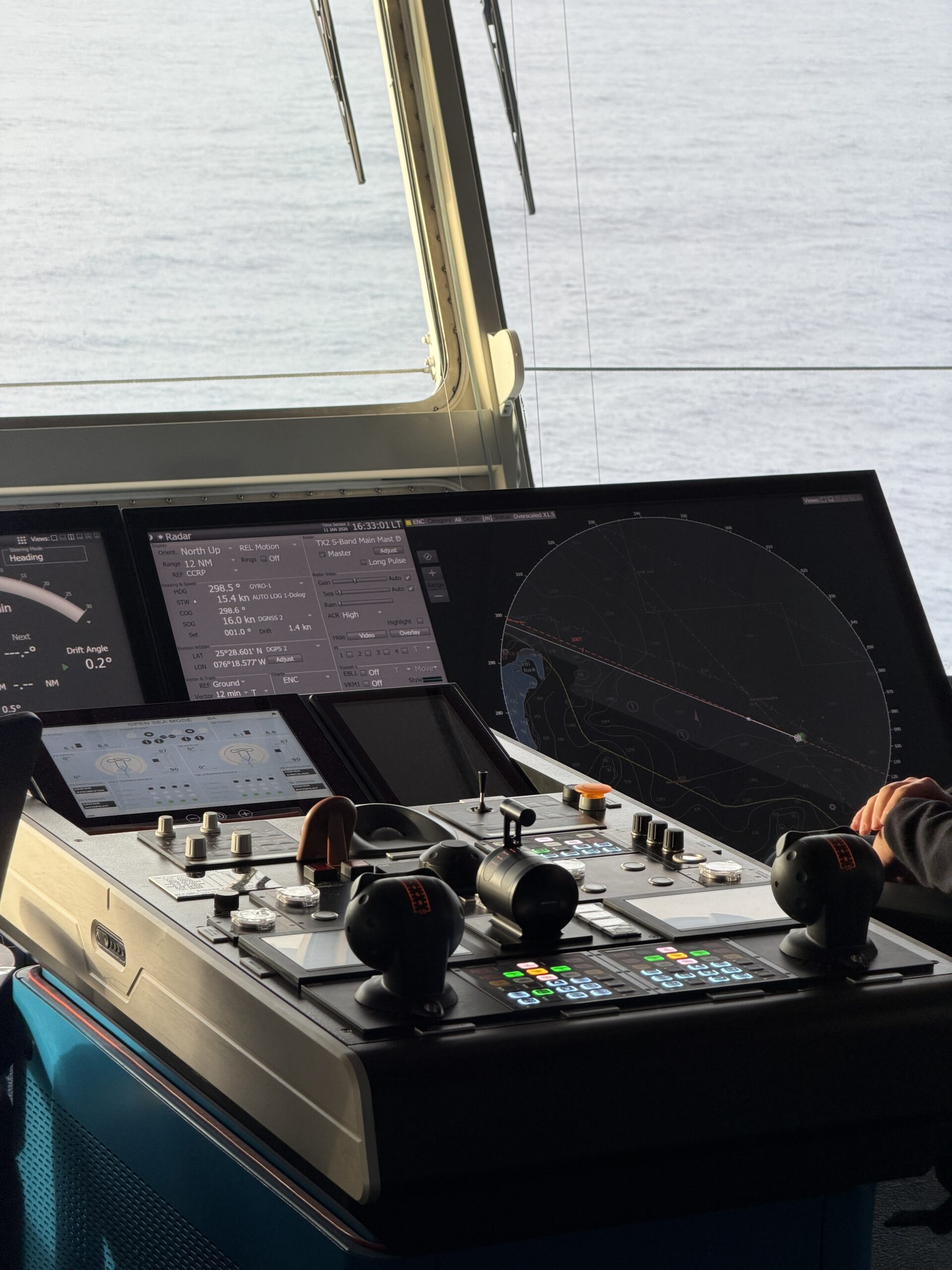
The bridge is worth seeing. It’s a masterpiece of ergonomics. Apparently, the captain takes direct control of the Azipods when docking. I had expected a joystick and a computer to figure out what to do with the bow thrusters and the Azipods, but that’s not how it is done.
The Dancers (Bear+Woman)
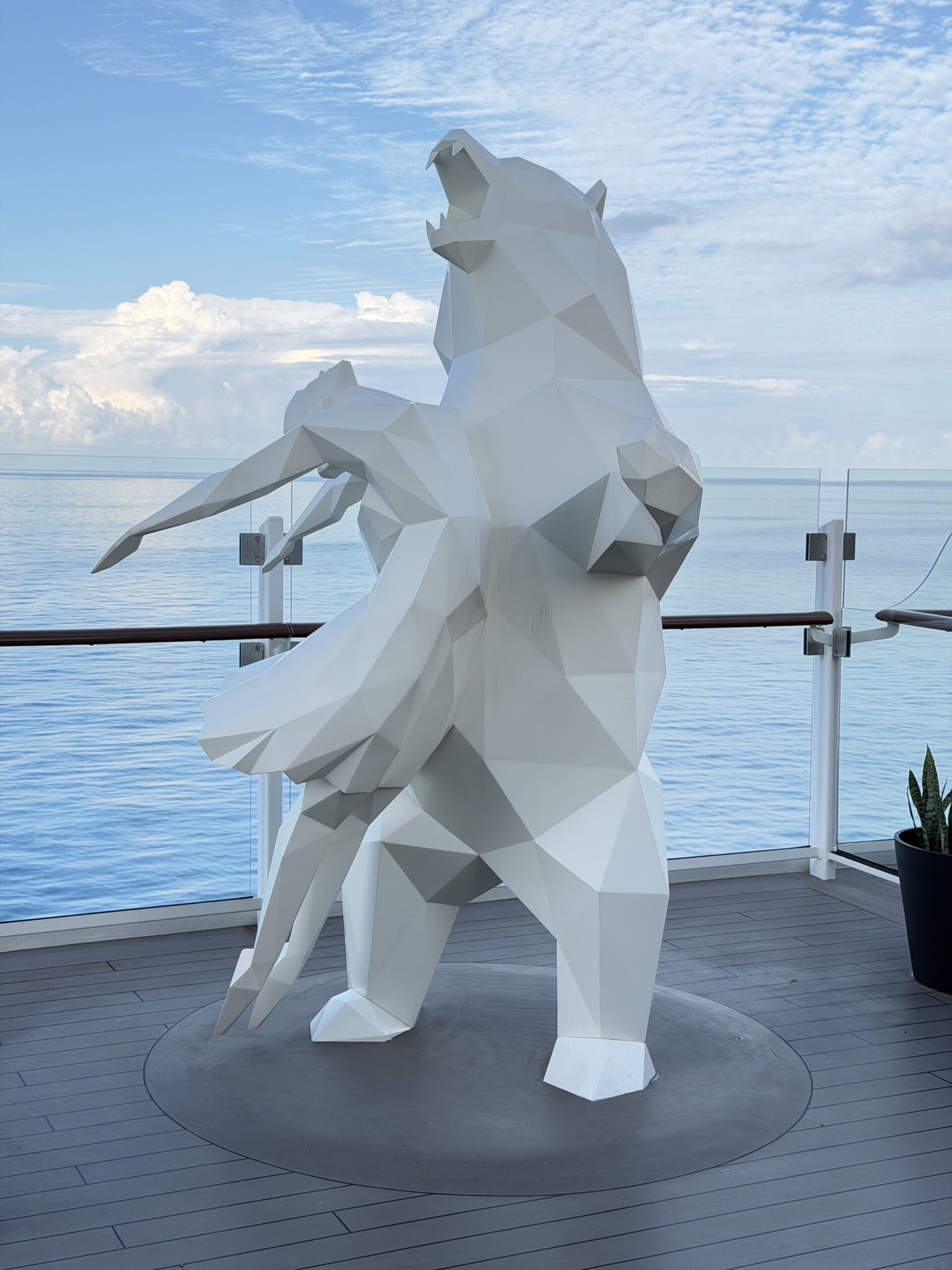
Art imitates life (“Based on May 2024 surveys, approximately 31% to 37% of women in the US and UK indicated they would prefer to be alone in the woods with a bear over a strange man, with higher rates among younger women (up to 53% for 18-29 year olds in the UK).”):
Conclusion
The whole trip cost about $8,000 including all of the extras, such as Internet and a couple of shore excursions, but no drinks package and only a few extra-cost drinks. We could have done it for less if we’d booked farther ahead or chosen a more basic room. It worked out to $800 per day for great scenery, fun entertainment, more food than I should have eaten, and an introduction to five islands, three of which were entirely new to me and the other two that I hadn’t visited for more than 20 years.
I will remember the warmth of the Celebrity crew. Everyone seemed genuinely interested in welcoming and taking care of us.
[For the cruise haters: We could have flown to a Caribbean from FLL, stayed in a hotel, picked restaurants, and flown back, for about the same price (or 50 percent more for the same level of luxury?). The boat ride itself has value to me, however. I love to be on deck when arriving or departing. It’s a different kind of understanding of how the Caribbean is put together geographically and culturally than one might get from being airdropped by Airbus A320.]
> Humidity without the window open would range from 50-65% (how do they avoid mold?)
Maybe this depends on the ship’s specific HVAC and where it goes? I recently read this article written by a crew member:
https://wandereatwrite.com/working-on-cruise-ships-pros-cons/
> Most crew members work inside the ship though, and in addition to living in a floating metal can of recycled air for months on end, the dry air and dust will definitely affect your health.
> After a couple of years on ships, my eyes were completely wrecked to the point that I could no longer wear contacts without my eyes turning bloodshot and I had to have laser correction to remove the chapped top layer of my cornea as well as to restore my vision.
That is messed up.
I have a tough time believing that the air in a cruise ship could be dry. There is quite a bit of moisture in the adjacent ocean. To the extent that air is recycled it should become more humid, I would think, because humans generate a lot of humidity. Humans breathe water vapor out. Humans sweat water out that then evaporates into vapor. Humans take showers. So… the fresh air that a ship might bring in is humid and recycled air is even more humid.
@philg
That would be my expectation too, though I’ve never taken hygrometer readings on cruise ship where the crew lives/works. Maybe she spent her time in cold climates. I used to live near the ocean on the East Coast, and during the winter my skin was drier than winters in Wyoming at 7000′. If I developed blood-shot eyes from contacts, I would go to a doctor, who probably would recommend artificial tears and switching to eyeglasses. There was some disconnect with medical care, apparently. Don’t they advise crew of any unusual environmental conditions and precautions to take? (Even then, I dated a woman who refused to wear her thick eyeglasses in public, no matter what.)
OAG: Humans are highly suggestible. If someone told her that the air in the ship was dry she could easily have decided that it was true. How many people are going to be nerds and bring a CO2/humidity/VOC meter with them?
(See also, on the subject of human suggestibility, all of the Bostonians, New Yorkers, and Californians who are still wearing surgical masks indoors and outdoors as a protection against aerosol viruses.)
@philg
You would be surprised how many AQM nerds there are, especially after the pandemic. I asked the only race that I hate, AI, what it thought:
A) Is the air on a cruise ship typically very dry?
Yes…[blah, blah, blah, lies, lies, lies]
Then on a fresh session:
B) Is the air on a cruise ship typically very humid?
Yes…[blah, blah, blah, hallucination, hallucination]
> subject of human suggestibility
Conclusion: AI just tells you what it thinks you want to hear, however that works into the current theory of human suggestibility. As Dire Straits said in Industrial Disease, a very apropos tune, “Two men say they are Jesus, one of them must be wrong.”
P.S.
E. Holmes told me to tell you to stop telling everyone her secrets on selling to investors.
Your appreciation for a good croissant and recognition of their scarcity in the US makes it even more lamentable that you didn’t patronize Madrid bakery while in Providence.
The 10-year-old and I actually DID make it to Madrid! Right before our pinball experience. It was good, but we didn’t try the croissant (went the cake route).
That’s a lot of money for us blog commenters. Surprised Greenspun hasn’t run into Marc Merlin. He was on the Groove cruise. Wonder what they do all day on the bridge, if machine vision detects passengers falling overboard, if the compass is GPS.
I went on a couple of Celebrity cruises, courtesy of my late Mother-in-law (thank you MJ) and even then Celebrity had the reputation for superior cuisine. A high point of the cruise was the competition of the pastry chefs, featuring displays of chocolate and pastry molded into fantastic confections, all consumed by the audience at the end of the show.
The entertainment back then had the charm of live performance but was at the summer stock level. Sounds like they’ve upped their game. There are a lot of talented people out there.
The secret to dodging boat bloat — salads.
My impression of St. Kitts and St. Lucia were of places where much of the vaguely restive population wouldn’t mind being somewhere else. ‘Belongers’ they call themselves. Great snorkeling in St. L,, Aruba, Cayman Islands.
On St. Maarten we met a Frenchwoman who was there on the Dutch side to ‘get away from the Parisians’.
It seems to be a law of nature that once you are safely away from the dock and headed out over the bounding main, all hell will break loose back home. Suddenly long-dormant deals go nuclear, delayed closings are scheduled, and you find yourself at every port-o-call desperately seeking a working fax machine. On Island time. So if you need to scare up some business, book a cruise. Comatose clients will awaken from the dead, demanding your immediate attention. Cruise of the Living Dead!
You seem to enjoy cruises. So how about something like this: https://www.storylines.com/
Thanks Tom, seems interesting. Units available from $600K-$10M. The lowest-end one has no view out but a CCTV link with views outside. Looks like Phil might be able to park his helicopter on the helipad, not sure how many parking spots are available for that.
The idea is great, but it doesn’t seem practical with kids and dog!
Ahh, Waterworld: https://en.wikipedia.org/wiki/Waterworld