Wall Street Journal: Americans can’t afford to live in America because house maintenance costs too much

Happy National Home Improvement Month for readers who, like me, have been dumb enough to buy rather than rent. Also, Happy National DIY Day.

Previously, on this blog:

This month in the Wall Street Journal, “The Typical U.S. Home Is 44 Years Old—And Needs Tons of Work”:

More recent new construction hasn’t replaced America’s graying housing stock, meaning the age of the median home is a record 44 years, according to the Harvard Joint Center for Housing Studies.

The cost of home maintenance, even after accounting for broader inflation, has jumped. Structural repair costs grew by about 14.1% in real terms between 2022 and 2024, according to the Federal Reserve Bank of Philadelphia. Plumbing jumped by 23.6%. The increase reflects the rising cost of individual parts and labor, and the larger size of necessary repairs.

This is on top of the rising costs of home insurance, property taxes and homeowners association dues, which are making it prohibitive for many to simply own a home, not to mention buy one.

The newspaper says “it [is] prohibitive for many to simply own a home, not to mention buy one” and at the same time tells us that the U.S. should have increased immigration, i.e., more demand for a relatively fixed supply of houses.

Our shabby/old house by Palm Beach County standards is 23 years old and that puts us in the top 25 percent of home youth:

Getting close to my 4% number:

Financial advisers traditionally suggested setting aside 1% of a home’s value annually for upkeep, but many now argue that isn’t enough. While 1% may cover routine upkeep, 2% to 3% provides a more realistic cushion for expected maintenance, home-improvement projects and unexpected repairs, particularly for older homes, said Angie Hicks, co-founder of home-services company Angi.

The Americans who were most eager to lock themselves into their homes during coronapanic will now bear a heavy burden:

Forty-nine percent of all improvement spending is now for necessary replacements like HVAC that owners can’t delay, said Rachel Drew, director of Harvard’s Remodeling Futures Program. The financial burden is particularly heavy in regions like the Northeast, where homes tend to be older.

Speaking of old, the article highlights the inability of folks in the Northeast to adapt to changed circumstances:

Mindy and Joseph Mevorah own an 88-year-old colonial [“more than 3,500-square-foot”] in Sands Point, a New York City suburb with plenty of old homes that is often considered an inspiration for “The Great Gatsby.” The house is due for a new coat of paint, a task they know to approach with caution. … “A new brick next to an old brick would look terrible,” said Joseph, 66. … The Mevorahs have stayed in their home for 29 years … They have a pool that could be a draw for future grandchildren. … When replacing their copper gutters a few years ago, they considered switching to aluminum, which would have been cheaper, but ultimately stuck with copper to preserve the home’s integrity. After all, they expect to be there for many years to come.

A 66-year-old in Florida whose kids were grown wouldn’t stay in a 3,500-square-foot wreck of a house. The Floridian would recognize that different kinds of real estate are suitable for different phases of life and likely move to a condo or small new house.

Circling back to the immigration theme… how can end-of-career financially comfortable Americans who struggle to afford house maintenance imagine that the U.S. can afford to house tens of millions of additional welfare-dependent low-skill immigrants?

Full post, including comments
Asian hate in Kansas

Happy Asian American and Pacific Islander Heritage Month to those who celebrate…

“Over 100,000 Pounds of Invasive Fish Pulled from One River to Help Restore Native Ecosystem” (Journal of Popular Studies, January 27, 2026)

Kansas wildlife officials have removed more than 100,000 pounds of invasive Asian carp from the Kansas River over the past four years … They are known for growing quickly, consuming massive amounts of food and crowding out native species that rely on the same resources.

#Science: Immigrant animals make us worse off by “growing quickly, consuming massive amounts of food and crowding out native species that rely on the same resources” while immigrant humans make us better off (don’t breed, consume food, or crowd out natives from resources such as health care).

Sad to say, but it seems that the haters in Kansas hate Asians almost as much as the Harvard admissions office (deemed racists by the U.S. Supreme Court, a rare distinction!).

Full post, including comments

How were race-based congressional districts supposed to work in our open-borders age?

The Supreme Court recently ruled against a race-based congressional district in Louisiana. It was developed under the Voting Rights Act of 1965 (VRA) in order to give Black voters a chance to elect a candidate of their choice. 1965 was the same year that we opened our borders via Hart-Celler. I’m curious to know how the laws were ever supposed to work together. It seems that the VRA envisioned a majority-minority split between just two groups: white and Black. After Hart-Celler, though, a state could easily have the following:

  • a white minority (under 50%)
  • an Asian-American minority (we’re informed that all varieties of Asians, including Indians and Samoans, can be lumped together under AANHPI, Asian American and Native Hawaiians/Pacific Islander) that wants to elect a fellow Asian-American, such as the noble Ted Lieu (proof that not everyone from Taiwan believes in a government that spends only 18% of GDP, including state/local)
  • a Black minority that wants to elect someone like Kamala Harris
  • a Hispanic minority that wants to elect someone Hispanic
  • an Arab minority that wants to elect a fellow Muslim Arab (BBC: “This month, the Midwestern city of 28,000 has reached a milestone. Hamtramck has elected an all-Muslim City Council and a Muslim mayor, becoming the first in the US to have a Muslim-American government. Once faced with discrimination, Muslim residents have become integral to this multicultural city, and now make up more than half its population.”)

If the VRA isn’t specifically limited to one racial group, which it doesn’t seem to be, who decides which of the above minorities will get its own district and which will see its votes diluted and its dreams denied?

Loosely related, in the Department of Diversity is Our Strength:

Full post, including comments

Lionel Shriver on why an American or European might oppose immigration on nonfinancial grounds

We’re informed that low-skill migrants make a country rich. If this is true, could there be any rational basis for opposing open borders? From Lionel Shriver’s A Better Life, a conversation between a Honduran and the 27-year-old son in her Brooklyn host family (“Big Apple, Big Heart” program):

“America is rich.”

“America is broke—thirty-three trillion dollars in debt, and a couple trill more every year.”

“Los inmigrantes take small money.”

“Small money adds up.”

“You is crowded? This house, three bedroom with nobody. In Honduras, thirty, forty people live here, no hay problema.”

“Okay, no, I’m not personally crowded.”

“You no pay. You no crowded. Why big feeling?”

“The ‘big feeling’ has to do with home. Home isn’t only a place; home is a big feeling. That you belong. That you can understand the people around you, and they can understand you, because you’re mostly the same.” Nico was struggling for a definition that didn’t stray into the tar pit of race. He resorted to Google’s conversation mode. “It’s about feeling comfortable and welcome and not having to try very hard. It’s a place where people laugh at your jokes, and you laugh at their jokes. You can sing some of the same songs. You watch some of the same TV programs. You know you can trust most people, and you know how to recognize the people you can’t trust. When your home fills up with people from somewhere else. Who speak different languages so you can’t understand each other. Who think different things. Who have no deep connection to your home, no ‘big feelings’ for your home. No history there. Who often . . .” Here he hesitated; this was awkward face-to-face, but he remembered Palermo’s unflattering characterization of her brother as only braving negative sentiments about people behind their backs. “Who often come to your home to take advantage, to see how much they can take. Well, then your home doesn’t seem like a home anymore. It seems like anywhere. It makes you sad.”


Of course, rich people in the U.S. can escape the above by moving, e.g., to an all-white ski town in the winter and an all-white beach town in the summer. The only migrants they’ll encounter are deferential service workers (i.e., servants). It is the middle-class resident of Dearborn, Michigan who might be forced by economics to stay in a neighborhood that has become almost entirely Arab-Muslim. It is the middle-class resident of Elmhurst, Queens who doesn’t have the resources to move away when every other family on the block speaks primarily Mandarin.

(I recently met a reasonably-rich-via-trust-fund older lady who’d moved after decades in Key Biscayne, Florida. It was mostly non-Hispanic white when she moved there. It’s now over 70 percent Latinx. Despite being a lifelong Democrat, she unashamedly said that she’d moved to Florida’s Treasure Coast because she was tired of hearing Spanish spoken all the time and not being able to communicate with everyone she encountered in a shared language (she hadn’t learned significant Spanish). ChatGPT: “Key Biscayne went from almost entirely non-Hispanic in 1960 to a Hispanic-majority community by ~2000, and today is roughly two-thirds Hispanic.”)

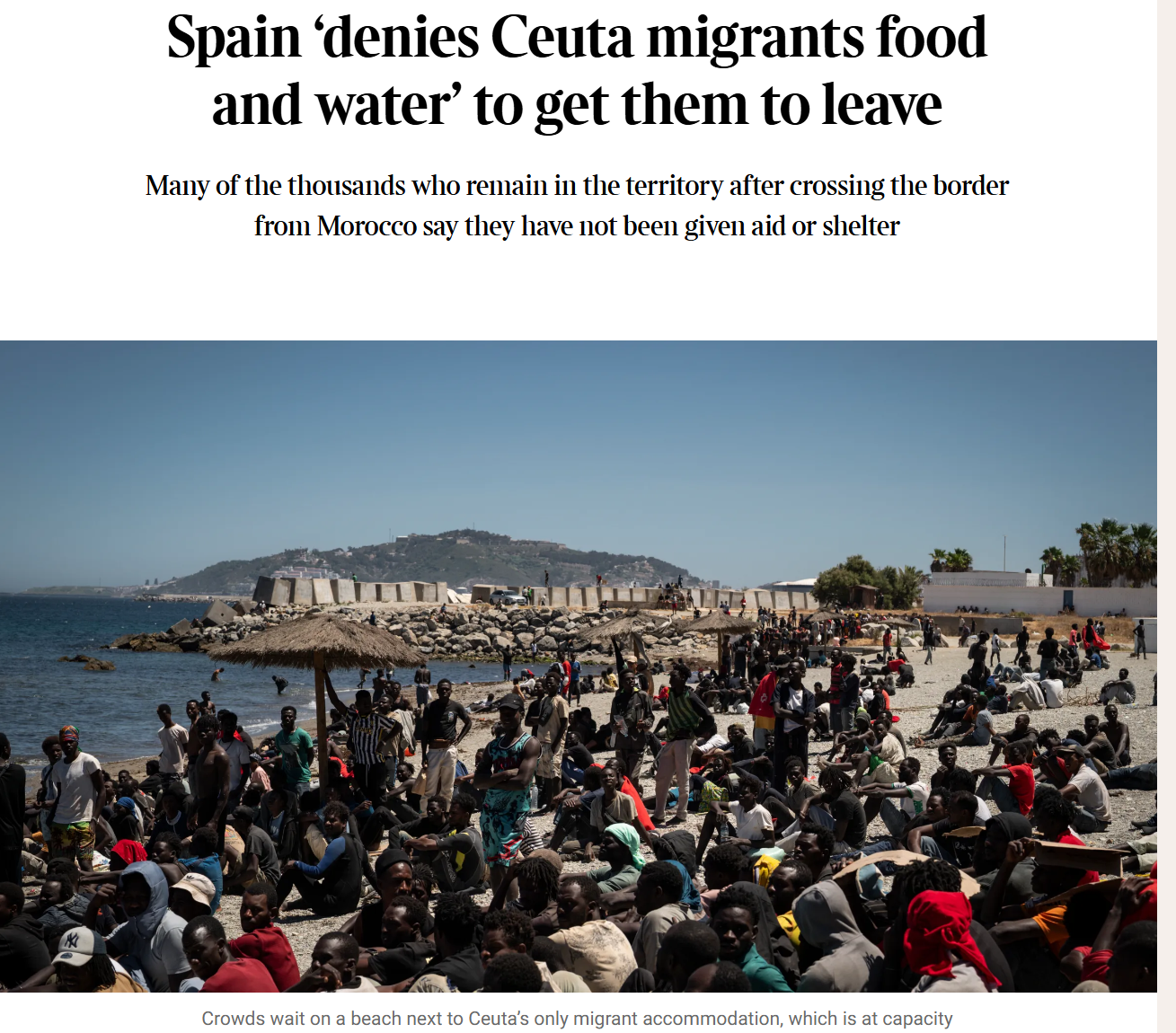
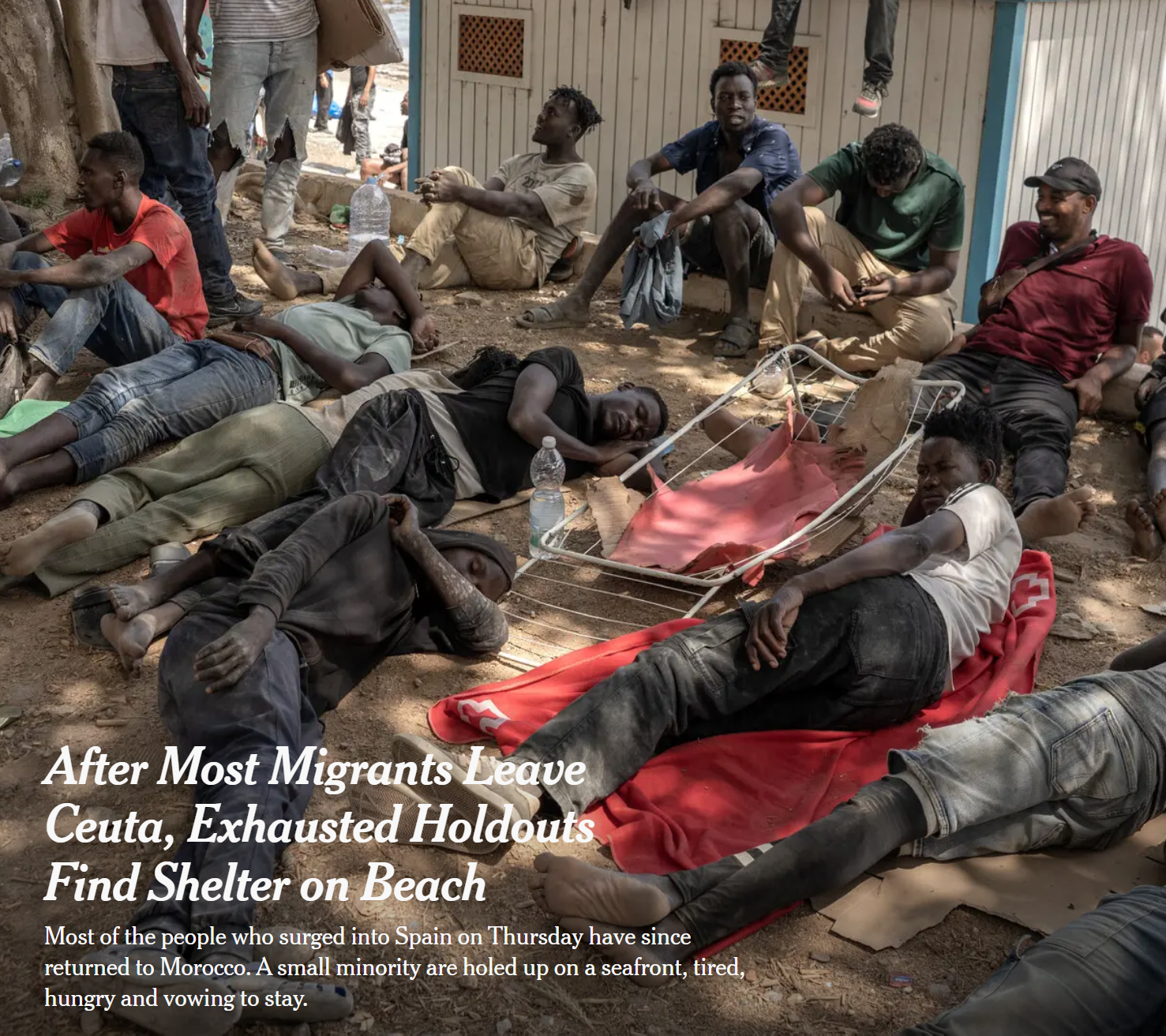
Loosely related, a visualization of migration into Europe. It would be interesting to see one for the 70+ million migrants who’ve entered the U.S. since 1976 (Pew).

It is possible to see a visualization of “illegal immigrants” (the undocumented, in other words), but only since 2020. And the people who’ve transformed the U.S. in the most profound ways have been legal immigrants.

Related, legal immigrants admitted by qualified government experts under laws passed by our wisest citizens (Congress):

Full post, including comments

Statistics on taxes paid by the undocumented

Happy Tax Week for those dumb enough to work and pay federal personal income tax (about half of us, as Mitt Romney famously noted)…

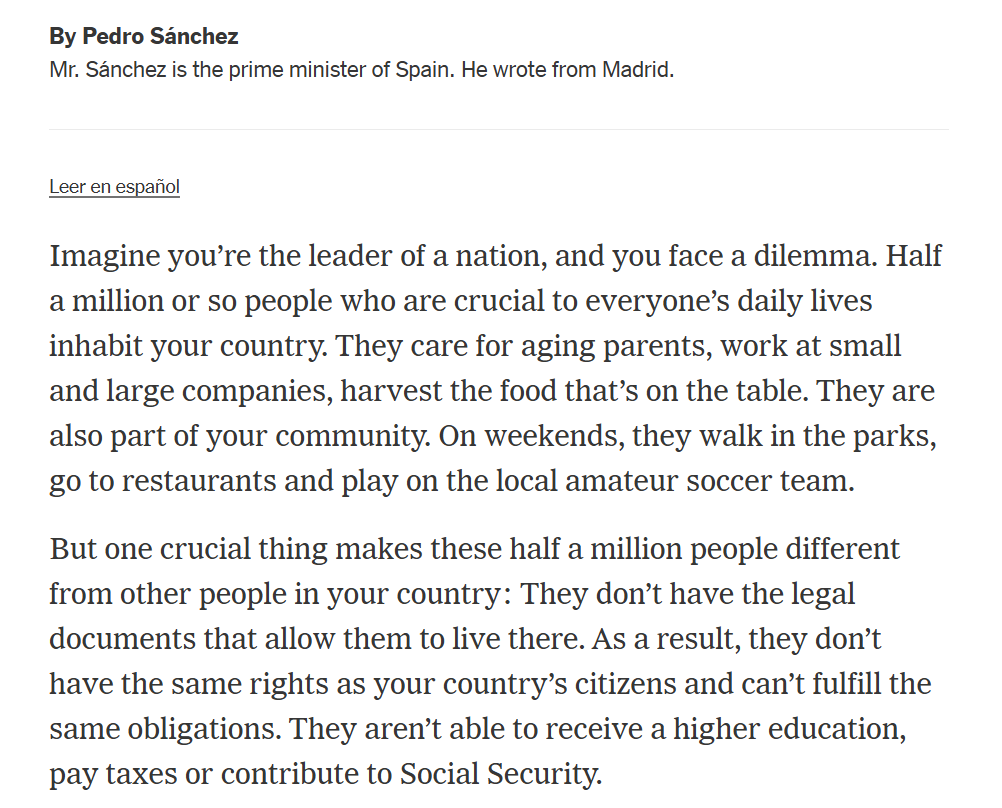
I hope that all of you put extra postage on your tax payments this year since the money needs to go all the way to Somalia and Diego Garcia. Maybe with enough undocumented low-skill migrants our economy will be so rich that none of the native-born will have to pay taxes? There are some statistics hidden in “To File or Not to File: Undocumented Immigrants Face a Tax Return Dilemma” (New York Times):

The federal treasury could take a hit. Many undocumented immigrants have taxes withheld in every paycheck, but experts worry some could shift into under-the-table jobs. Others with less formal earnings may now skip filing a tax return — and therefore not pay federal taxes at all. The Yale Budget Lab, a nonpartisan research center, projected lost tax revenue of about $300 billion over a decade.

Yale estimated that we were being enriched by 22 million undocumented migrants in 2016, which would mean a population of approximately 30 million enrichers today without legal immigration status. If we divide $300 billion by 30 million and then by 10 years we get $1,000/year paid by each enricher into a welfare state where each dependent family costs nearly $100,000 per year (some data in pre-Biden dollars). A different study in the same article works out to about $2,000/year paid per undocumented migrant:

Before the agreement between the I.R.S. and ICE, unauthorized immigrants paid roughly $60 billion annually in federal taxes, according to an estimate by the Institute on Taxation and Economic Policy, a progressive think tank. Much of it went to Social Security and Medicare, which are programs that undocumented immigrants cannot benefit from.

(I think the last sentence is factually incorrect, despite the NYT’s claims of checking facts. As soon as an undocumented immigrant’s anchor baby turns 21, the undocumented migrant is immediately eligible for a green card and, thus, immediately eligible to receive Social Security and Medicare.)

The New York Times repeats the absurd statistic that the number of undocumented migrants in the U.S. has barely grown over the past 30 years, even during the Biden-Harris administration’s open border period (see the Yale study: “There’s a number that everybody quotes”):

About 14 million undocumented immigrants lived in the United States in 2023, the latest available estimate, and about 70 percent of them were in the labor force, according to the Pew Research Center, a nonpartisan think tank.

Department of Undocumented Migrants Aren’t Getting Welfare:

But last year’s Republican tax law cut off the child tax credit, which had been available to families if a child was a U.S. citizen.

(A cash handout from federal taxpayers (“the chumps”) isn’t “welfare”, apparently.)

The child tax credit by itself is $2,200, $1,700 of which is “refundable” (i.e., if you don’t owe any tax because you don’t work or have a low income then you get $1,700 anyway). So the child tax credit alone is larger than even the largest estimate of taxes paid per undocumented migrant.

Full post, including comments

Wall Street Journal upset that a place at Duke opens up for an American

As 18-year-olds and their parents manage their grief over the stack of rejections received from elite colleges, here’s a Wall Street Journal article for those who were rejected by Duke (95 percent rejection rate): “He Had a Full Ride at Duke—Until America Cut Him Off”.

(This article could also be inspiring to Americans graduating next month from Duke with crushing student loan debt. They can sleep easier knowing that some of the money they borrowed and must pay back (unless Kamala Harris is defrosted and elected?) was used to give “a full ride” to a migrant.)

The villain of the article is Donald Trump, of course, referenced 6 times. Here’s a peculiar Trump reference. The South Sudanese are so smart that they thrive at Duke, but they aren’t smart enough to realize that any migrant is an enricher. They refused to accept a migrant on the grounds that he was Congolese rather than South Sudanese:

Trump’s displeasure with South Sudan began when it refused to accept a man being deported by the U.S. The man was Congolese, South Sudanese officials said, but the administration didn’t want to take no for an answer.

South Sudan has a GDP per capita of less than $400. We’re informed that migrants are an economic boon to any nation. Why doesn’t South Sudan want to become richer by accepting migrants from Congo?

A separate question: if migrants enrich the U.S. as a whole, why are migrants at Duke being funded by American students paying tuition at Duke? Shouldn’t full tuition for migrants be paid with federal tax dollars on the grounds that every migrant makes the U.S. better off?

Full post, including comments

Schrödinger’s job market: “strong” and “slow” at the same time (NYT)

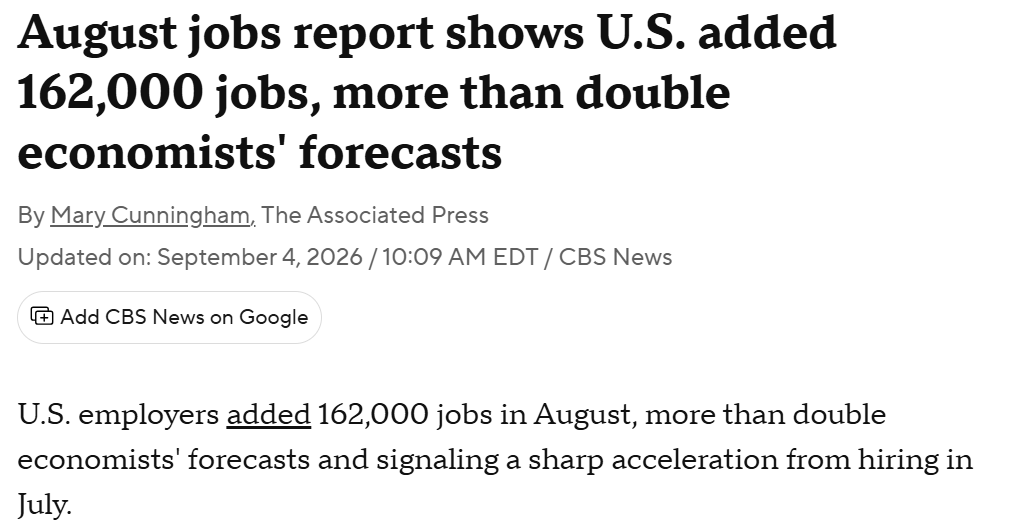
Home page of the New York Times today, the job market is “strong” (top story) and “slow” (just below):

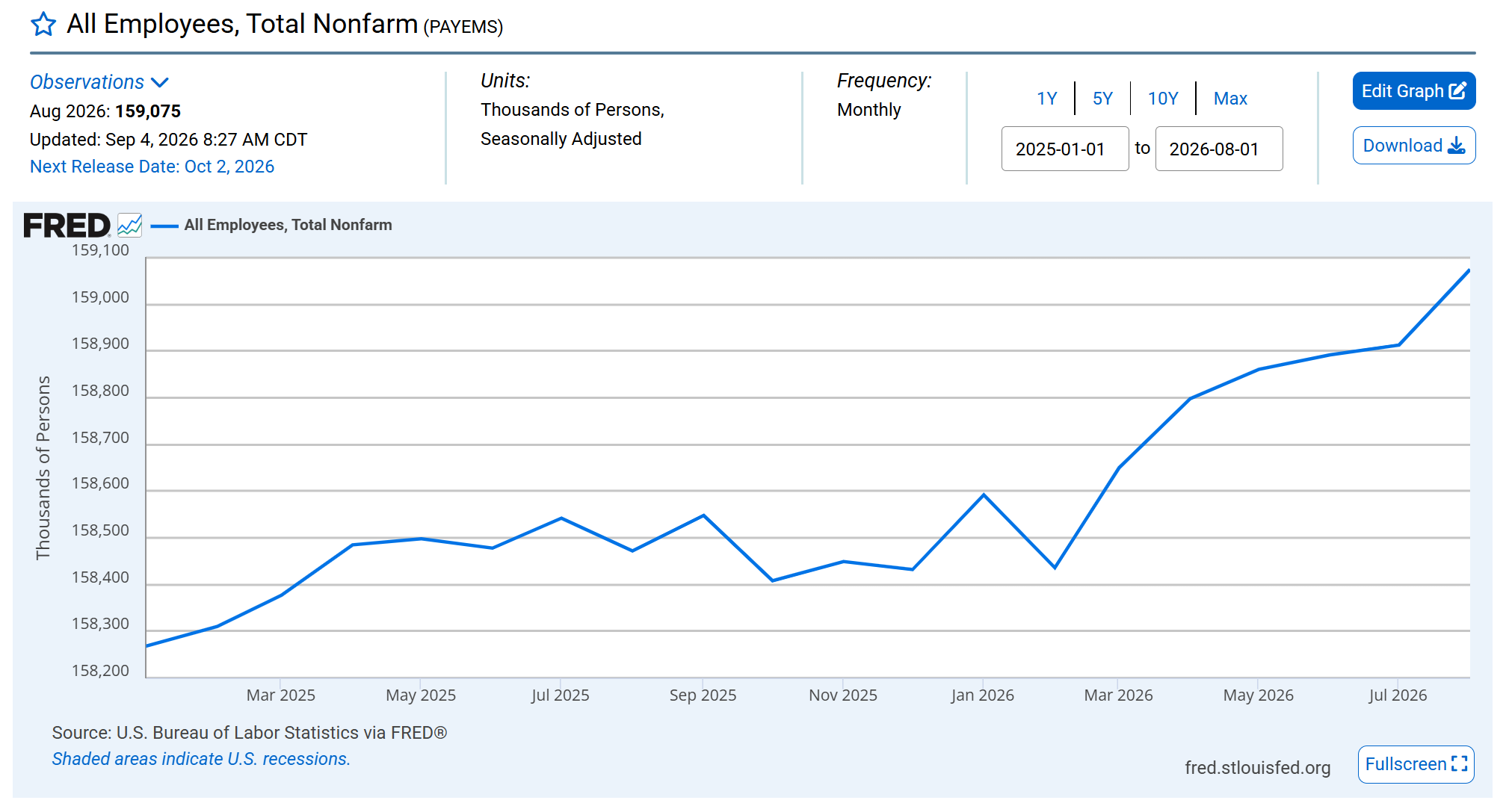
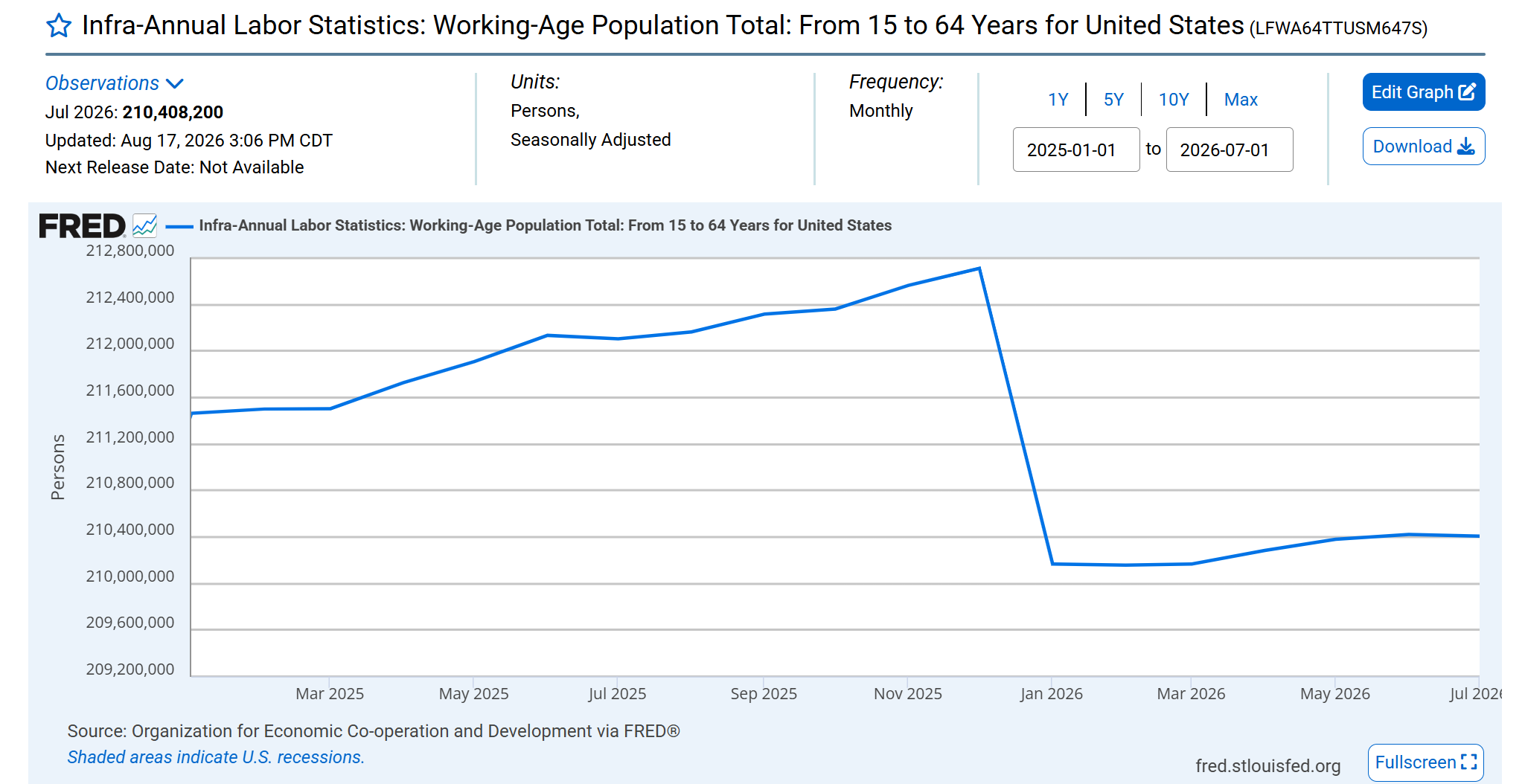
We were informed that Donald Trump’s border closure would destroy the U.S. economy (see U.S. economy defies Science and Immigrants expand our economy, but millions of immigrants exiting the U.S. don’t shrink our economy) and that native-born Americans aren’t willing to work. Yet the number of workers in the U.S. keeps growing even as the number of migrants shrinks and also as the number of federal government jobs shrinks.

Details:

The labor market put in a strong showing in March, as wintry weather receded, strikes concluded and businesses started looking beyond the significant uncertainty of President Trump’s first year in office.

[We had certainty under the capable steady hands of Joe Biden and Kamala Harris. Now we have frightening uncertainty]

  • Health care dominance: Even factoring in the addition of 31,000 jobs from workers ending a strike in California, the sector continued to lead gains, adding 76,000 positions. Manufacturing, which has been trending down for three years, added 15,000 jobs and construction grew by 26,000.
  • Federal government still contracting: The federal government shed another 18,000 jobs in March and is down a total of 355,000 positions, or 11.8 percent, since reaching a peak in October 2024.

Separately, we’ve been told that Donald Trump’s “without any plan” war against Iran would destroy both the world economy and the U.S. economy. Do investors agree with the wise prophets at the New York Times and CNN? Compared to the no-war situation a year ago, U.S. stocks are up 22% in nominal terms (19% in real dollars if we use official BLS CPI):

Full post, including comments

How was the immigration of Ayman Mohamad Ghazali supposed to make Americans better off?

As we solemnly observe International Day to Combat Islamophobia, let’s consider the ways in which the U.S. has been enriched by some Islamic immigrants who’ve recently made the news…

Hezbollah was designed a Foreign Terrorist Organization by the U.S. in 1997. Ayman Mohamad Ghazali was a Shiite Muslim from the Lebanon, a country in which nearly all of the Shiite Muslims polled say that they support Hezbollah. If that weren’t enough, Ayman Mohamad Ghazali had at least two brothers who were active Hezbollah fighters (CBS; see below) and “Ghazali was flagged by a government watchlist for his contact with suspected Hezbollah members, but was not said to have been a member himself” (CNN, via Wikipedia). Lebanon is one of the world’s most violent countries and 150,000 Lebanese were killed by fellow Lebanese in neighbor-to-neighbor violence during a civil war that began to wind down in 1990 (“religious diversity” was the cause, according to Wikipedia).

He was admitted to the U.S. by the Obama administration and later given citizenship by the Obama administration. Let’s suppose that Ayman Mohamad Ghazali had never loaded up a truck with explosives and tried to kill 140 preschoolers. How was his immigration to the U.S. supposed to make Americans better off? The rationale doesn’t seem to have been economic. Ayman Mohamad Ghazali’s education and job skills enabled to him to earn only $20,000 per year in 2024.

New York Times:

A Restaurant Worker Was a Quiet Presence. Then He Attacked a Synagogue.

Court records [from his wife’s divorce lawsuit] show Mr. Ghazali was earning about $20,000 a year from his job at Hamido.

CBS:

A freelance journalist working for CBS News in Lebanon learned from sources there the two brothers were both members of a Hezbollah rocket unit in southern Lebanon.

We could ask the same question about Mohamed Bailor Jalloh, who waged jihad in the same month as Ayman Mohamad Ghazali. Mohamed Bailor Jalloh killed a Black Army helicopter pilot, thus directly demonstrating the falsehood of accusations that elites are replacing American Blacks with immigrants. Mohamed Bailor Jalloh was from Sierra Leone, a country that rivals Lebanon for violence. The Sierra Leone civil war claimed up to 70,000 lives and resulted in 2.5 million people being displaced (roughly half the population at the time). Let’s supposed that he hadn’t waged jihad. How was he going to make Americans better off? Why didn’t we denaturalize and deport him after he was convicted and imprisoned for being an ISIS supporter? We thought that he was going to change his mind?

I already asked How was the immigration of Ndiaga Diagne supposed to make Americans better off?, who donned a “Property of Allah” shirt and killed Americans in Austin, Texas a couple of weeks before Ayman Mohamad Ghazali’s jihad.

Finally, we can ask about the parents of Emir Balat and Ibrahim Kayumi, two U.S.-born Islamic State jihadists. What skills did the parents bring from Afghanistan and Turkey that we thought the U.S. was going to be improved via their presence?

Related:

Full post, including comments

How was the immigration of Ndiaga Diagne supposed to make Americans better off?

New York Post:

The gunman behind Austin’s possible terror-related mass shooting entered the US and cemented his legal immigration status under Democrat administrations — despite a growing criminal record.

Senegalese national Ndiaga Diagne, 53, arrived in America on March 13, 2000, on a B-2 tourist visa during the Clinton administration, a source familiar with his immigration history told The Post on Sunday.

Diagne — who killed two people and wounded 14 more during his rampage outside a Texas bar early Sunday — then became a lawful permanent resident on an IR-6 visa in June 2006 when he married a US citizen, the source said.

He then went on to lodge a string of other arrests in the Big Apple between 2008 and 2016 — but that didn’t stop him becoming a naturalized US citizen on April 5, 2013 — around the start of former President Barack Obama’s second term, sources said. Those three arrests are sealed, sources said.

Let’s supposed that Ndiaga Diagne had never donned his “Property of Allah” shirt and murdered/wounded people in Austin. In that ideal hypothetical world how was his permanent presence here in the U.S. going to make existing Americans better off? In other words, what is the rational basis for our legal immigration system?

(Maybe the answer can be found in Is U.S. immigration policy a form of animal hoarding?)

Related:

Full post, including comments

Bad Bunny’s nuanced views on immigration

“Bad Bunny uses Grammy Award win to protest ICE” (CNN, February 2026):

Accepting the award for best música urbana album, Bad Bunny began his speech saying, “Before I say thanks to God, I’m gonna say: ICE out!”

“How Bad Bunny Did It” (The Atlantic, February 2026):

Bad Bunny is articulating the surreal and sad feeling of seeing his homeland transformed by internet-supercharged globalization. The U.S. territory’s economy has long relied on tourism, but in recent years, a wave of laptop-toting mainlanders lured by the balmy climate and notoriously loose tax laws has driven rent increases and threatened to wash out the local identity. Bad Bunny’s new album, Bonilla wrote, is a “lament for a Puerto Rico slipping through our fingers: betrayed by its leaders; its neighborhoods displaced for luxury developments; its land sold to outsiders, subdivided by Airbnb and crypto schemes and repackaged as paradise for others.”

(The gringos at The Atlantic characterize Puerto Rico as having “notoriously loose tax laws”, but “How Puerto Rico Became the Newest Tax Haven for the Super Rich” (GQ 2018) and other sources make it clear that Act 20 and Act 22 are, in fact, tightly specified.)

Separately, if you want to enjoy Bad Bunny’s Super Bowl performance, but don’t understand el idioma de los conquistadores (or the way that Bad Bunny pronounces this language), here’s a recital in the English language:

The “We Accept EBT” sign on the set was a nice touch. It wasn’t inclusive, however, for viewers in Minnesota. Why not an additional “Waxaan aqbalnaa EBT” or “Halkan EBT waa laga aqbalaa” sign? (the majority of Somali-headed households are on SNAP)

In other NFL news, our home town of Jupiter, Florida was indirectly featured recently by Bill Belichick’s young associate:

Related:

Full post, including comments