I was gathered with friends, mostly from Brookline, Maskachusetts, to celebrate the marriage of a widow to a widower. In keeping with the spirit of this joyous occasion, I surveyed everyone on how they would have voted if they’d been on the jury in the Lindsay Clancy case.
All of the women except one young hater (conservative) would have voted to acquit (“not guilty by reason of insanity”, but the insanity was temporary and, therefore, the government would have no reason to detain her further). A Joe Biden Democrat in his mid-60s married to a Mamdani/AOC Democrat also voted to acquit (i.e., liberal male is the functional equivalent of “female”). A Brookline resident whose politics are driven by hatred of and contempt for Republicans and Trump also voted to acquit (“she’s already been punished enough”).
The remaining men all voted to convict Lindsay Clancy of at least some degree of murder. “Someone like that needs to be removed from society,” said a young man. “There has to be a consequence. Jeffrey Dahmer was psychotic, but he was still convicted,” said the boy’s father.
Half of the group were MDs and all had harsh words for the psychiatrists and psychologists who pumped Lindsay Clancy full of various medications (that said, nothing she was on had a known side effect of psychotic violence and it was unclear what she was actually taking from among the pills that she’d been prescribed).
(Based on my skimming of press coverage of the trial, I personally would have voted to convict her of the lowest degree of murder available. Her attempt to kill herself after the murders was certainly evidence of irrationality if not insanity and a first-degree murder is supposed to be rationally planned, I think. Maybe I would have voted differently if I’d heard all of the evidence and been instructed by the judge in the law.)
Based on this survey, I don’t think the Commonwealth will be able to convict Lindsay Clancy unless prosecutors can contrive a means of excluding female Democrats from the jury or, perhaps, reduce the maximum charge to something minor.
Update: I sat next to an 86-year-old lady on JetBlue SFO-FLL. She wasn’t a phone addict like everyone else and, therefore, we had a conversation. When the Lindsay Clancy trial was mentioned on her seatback TV, I asked Rhoda how she would have voted. “You put away a rabid dog so you have to do the same with a rabid person.”
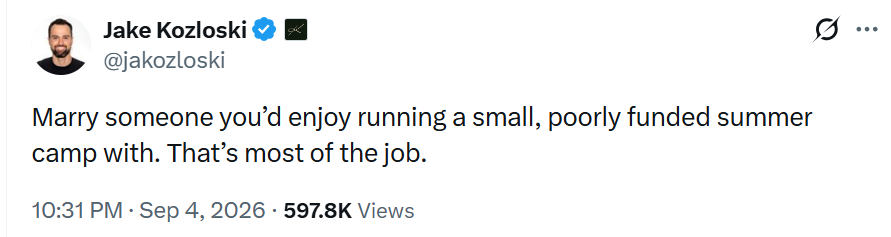
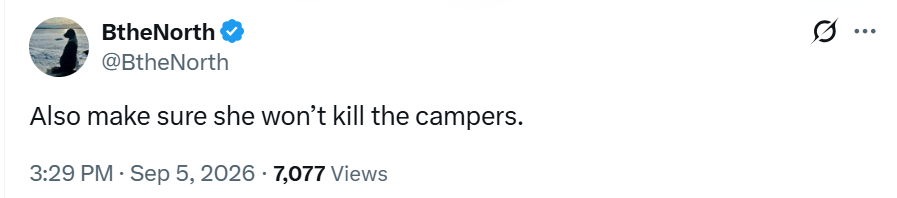
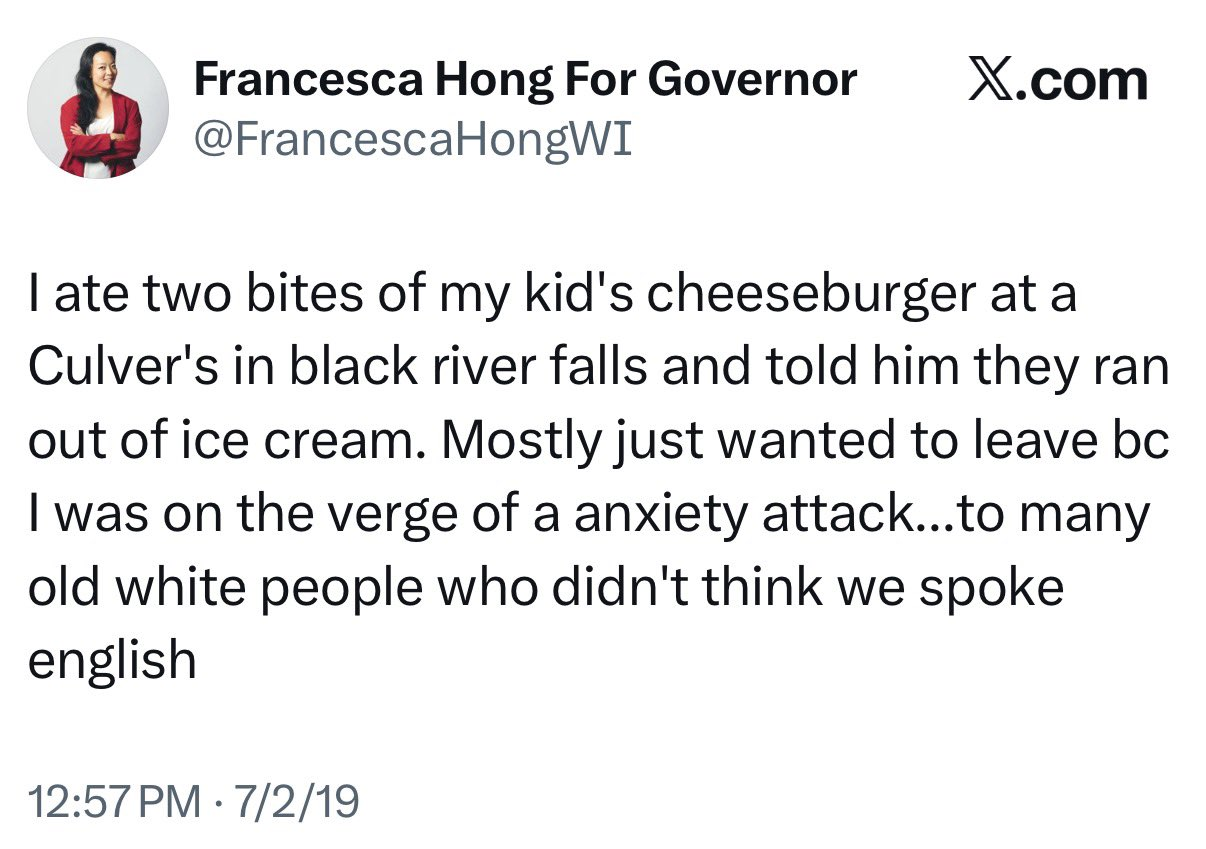
Loosely related, a sad-funny X exchange:
Separately, the gathering of these Brookliners was actually in Silicon Valley. To make everyone from Massachusetts feel at home, the locals were kind enough to engage in outdoor masking (Menlo Park; under-nose Faucism):
(Quite a few indoor maskers, of course, as well, e.g., in retail establishments. There was, unfortunately, a serious dearth of social justice signage. People in Silicon Valley, apparently, care primarily about themselves and their money, unlike the virtuous folks in San Francisco and the East Bay.)
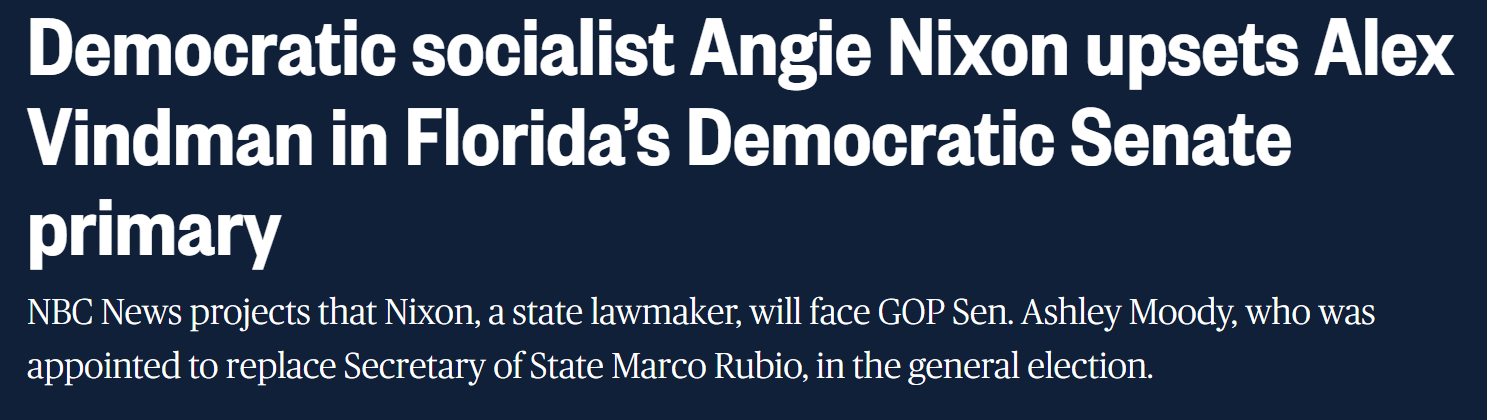
Vindman, a retired lieutenant colonel and Iraq War veteran who rose to prominence as a witness during President Donald Trump’s 2019 impeachment hearings, was viewed as a heavy favorite against Nixon, a member of the Democratic Socialists of America, heading into Tuesday’s contest.
Vindman raised $16 million for his campaign, a significant number for a Democrat in red-leaning Florida, while Nixon brought in just over $900,000.
Unlike Marco Rubio and his successor, Ashley Moody, the “socialist” wants to help the Arabs who call themselves “Palestinian” achieve their military goals:
Nixon is an advocate for cutting U.S. aid to Israel, a controversial position in a state with the country’s third-largest Jewish population. Her stance put her at odds with members of her own party at times and was in contrast to Vindman, a Jewish immigrant born in Soviet Ukraine.
Nixon introduced a resolution in the state House calling for a “de-escalation and ceasefire in the state of Israel and occupied Palestine.” She also said she would have supported a congressional resolution in July that would have stripped $3.3 billion in military aid to Israel.
“I would have voted in support of that, because we cannot continue to send money to countries that are violating international law, that are violating human rights, that are actively destroying,” she said Friday on WMNF radio of Tampa. “Throughout my adult career, I have fought for the safety and the well-being and the humanity of all people. And me stating this does not make me antisemitic at all.”
(I had no idea that Vindman was Jewish, incidentally, until tonight!)
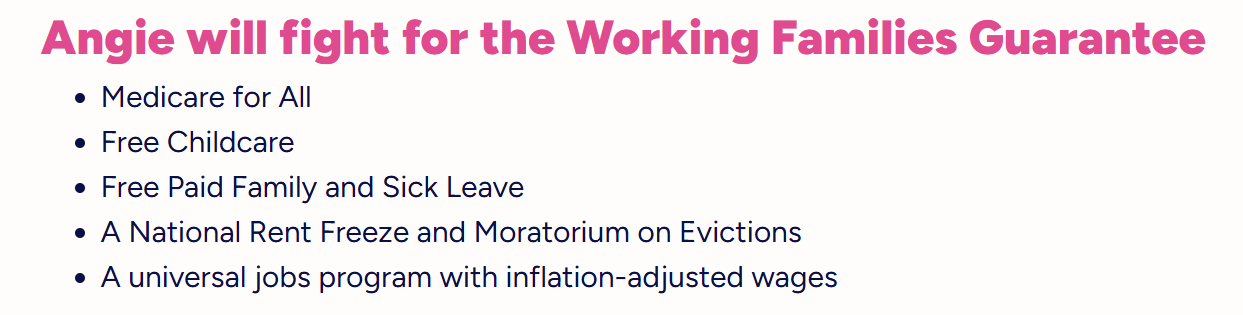
What does Angie Nixon promise? Everything will be “free” rather than “taxpayer-funded”:
I suppose that for the 50 percent of America’s eligible voters who don’t pay federal income tax, almost everything that the government does is “free”.
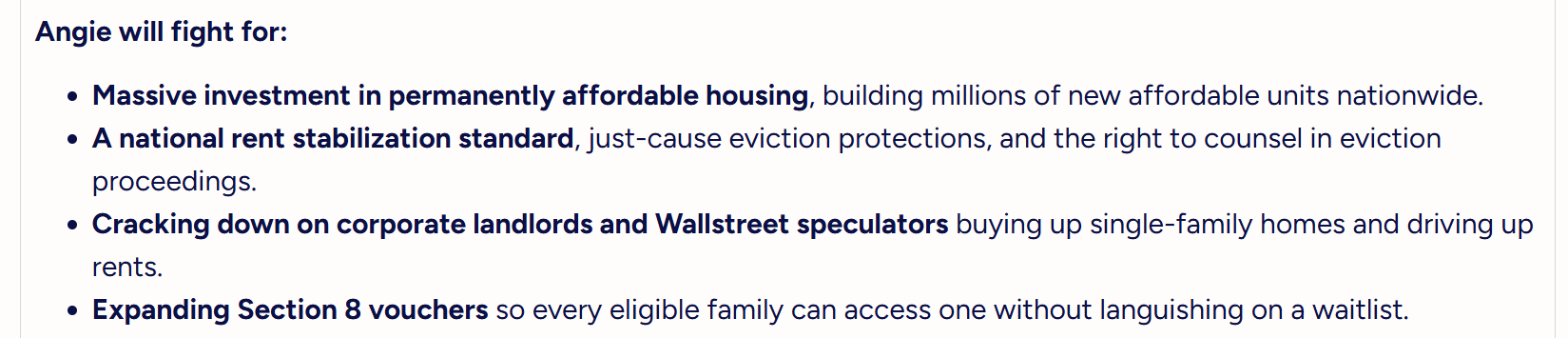
Here’s something that I can agree with Angie Nixon on: “Expanding Section 8 vouchers so every eligible family can access one without languishing on a waitlist.” If housing is a human right then everyone who refrains from work should get a “free” house. If housing is not a human right then why does anyone in the U.S. get a free house? It makes no sense to say that Person A should get a free house worth $6000/month on the market while Person B, identically situated, gets nothing (either a place on a waiting list or a rejection note that the waiting list is full).
Angie Nixon doesn’t agree that “No data center is illegal on stolen land”:
No new construction of data centers before there are real federal guardrails put in place, including environmental review and community input requirements.
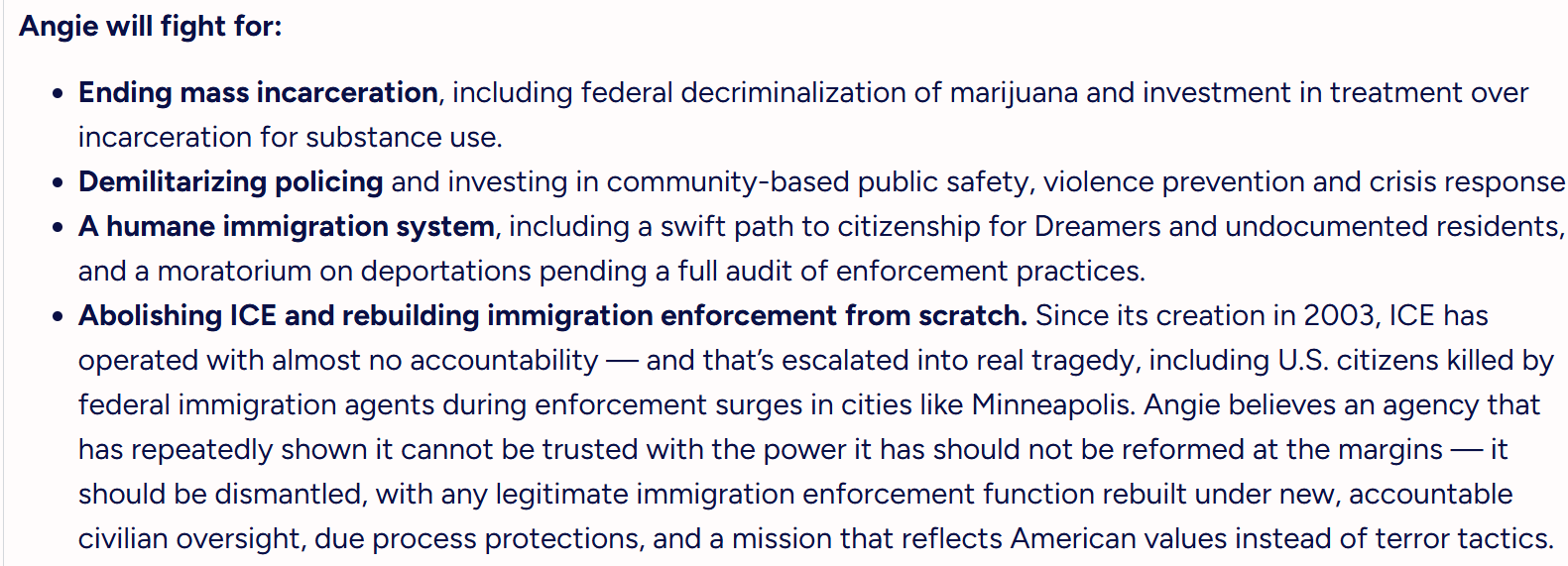
No human will be illegal and nearly all will be able to vote soon (“swift path to citizenship”):
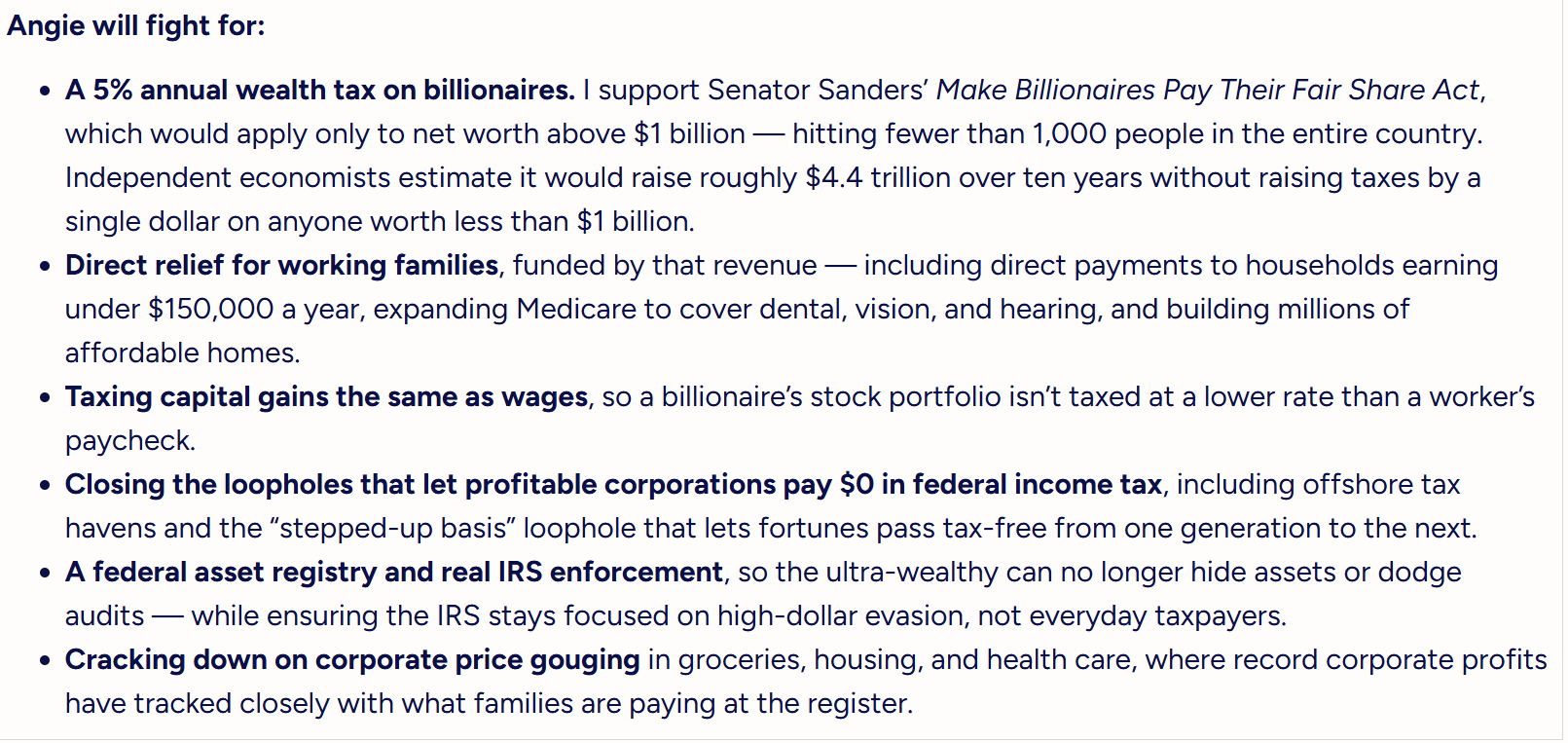
Where California has a one-time 5% tax on noxious billionaires, Angie Nixon will hit them every year for 5%:
(As previously noted, I disagree that Angie Nixon and similar can be called “socialists” because under Soviet socialism every able-bodied adult was required to work.)
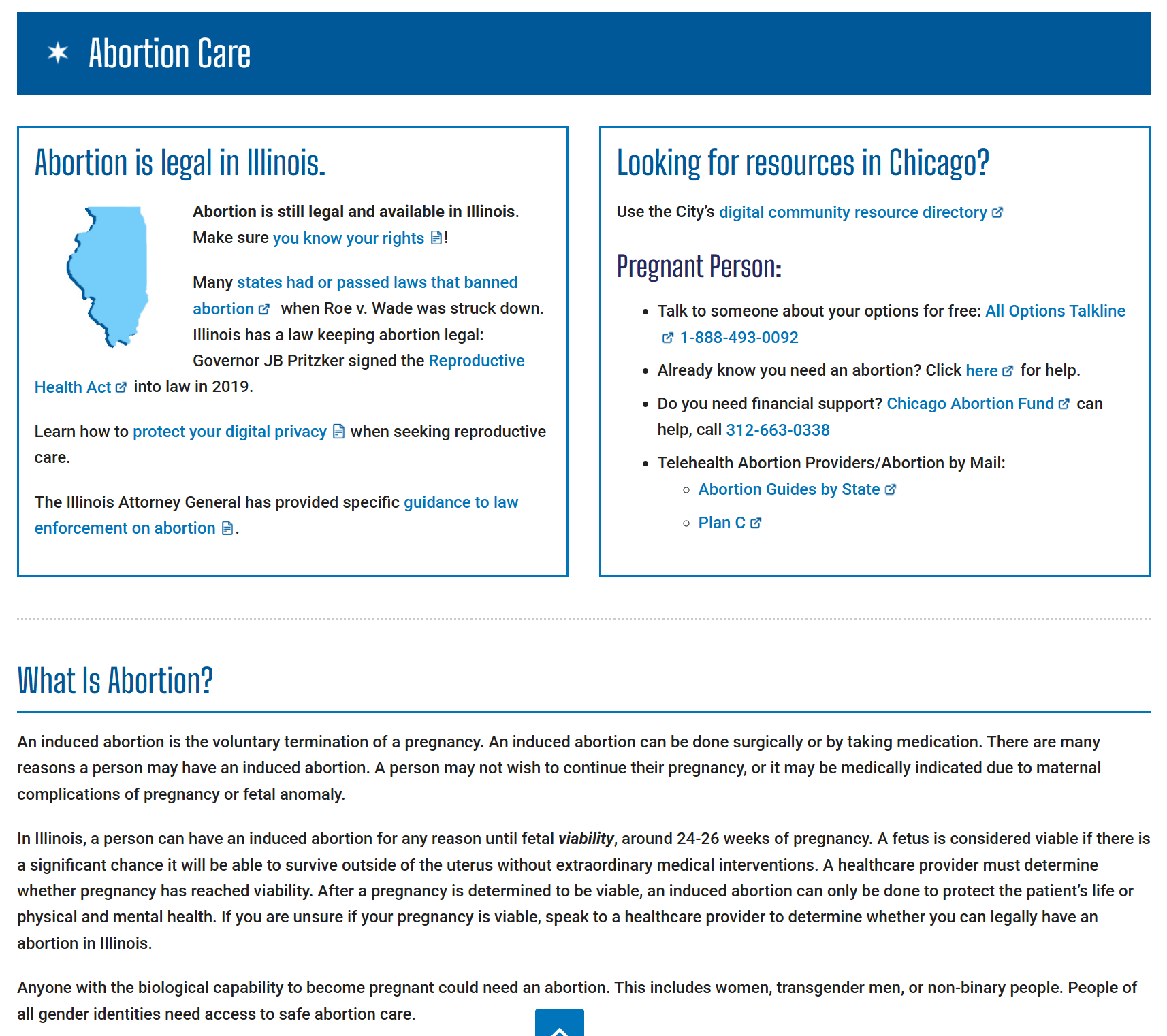
As in Maskachusetts (old law; updated recently as noted below), a pregnant person’s pregnancy can be terminated in Illinois at any gestational phase via abortion care if the pregnant person’s mental health can be thus protected . (Given that any child has the potential to “drive a parent crazy”, any pregnancy in any pregnant person can be subjected to abortion care at any time.) Here are the rules explained by the City of Chicago, which notes that “People of all gender identities need access to safe abortion care.”
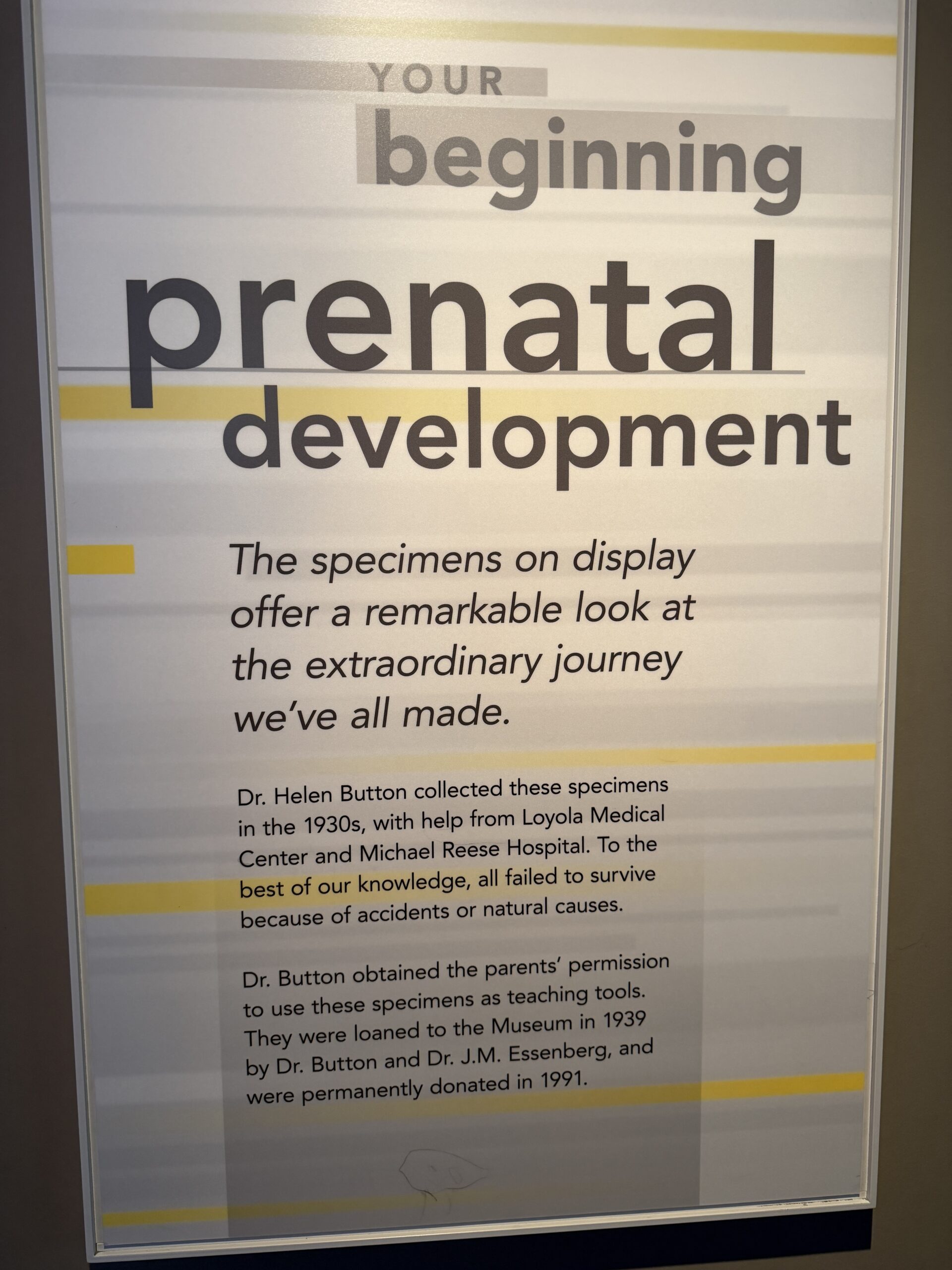
The Griffin Museum of Science and Industry has an exhibit on “prenatal development” featuring preserved “specimens”:
The “specimens” can also be characterized as “fetuses”:
The museum strays from Illinois law and principles, however, in a slide show in which the legal-to-abort-at-any-time collection of cells is described as “another human being” or “this baby”:
ChatGPT’s mind is subtle enough to handle the apparent contradiction:
Yes, the exhibit uses “baby” in the ordinary prenatal sense, while Illinois law uses different categories for determining legal protection. That is a real linguistic tension, but not a formal legal contradiction. Immediately before delivery, a healthy 30-week fetus may colloquially be called a baby and could, under the statutory health exception, legally be subjected to an abortion intended to cause fetal death. Were the same child delivered alive instead, intentionally causing its death would not be abortion care and could be prosecuted as murder.
Under current Massachusetts law, abortion is legal for the first 24 weeks of pregnancy. It is allowed after that only if a physician using best medical judgment says it is necessary to preserve the life, physical or mental health of the woman, because of a lethal fetal anomaly or diagnosis or because the fetus wouldn’t likely survive outside the uterus.
Under the new language, abortion would be legal at any point in pregnancy for any reason. It would leave it to health care providers whether or not to perform an abortion.
The state Senate adopted the measure Friday, sending it to Democratic Gov. Maura Healey, who has signed other laws strengthening abortion rights.
The governor is a childless white women. She’s surrounded by apparently white women whose average total fertility is statistically minimal. The progressive overlords couldn’t find any token People of Color to help them celebrate the expanded abortion care availability?
Related:
Kermit Gosnell, a Black man unjustly imprisoned in Pennsylvania for conduct that, with minor tweaks, would have been perfectly legal in Maskachusetts both before and after this new law
Polls are about to close in Wisconsin’s primary election. According to polls, Francesca Hong is the highest quality Democrat in the entire state. Will the election results confirm this anointment?
Democrats in Maine voted in overwhelming numbers for a man whose brain was found to be 100% non-functional by the VA (thus qualifying him for 100% disability; of course, democracy ultimately required that the person chosen by voters be disappeared by party elites). Democrats in Wisconsin are, if the polls are correct, voting for a person whose brain required treatment in a mental hospital (Wikipedia):
Hong lives in Madison, Wisconsin, with her son. She works part-time as a bartender. She was previously married to Matt Morris, with whom she opened Morris Ramen. In a 2025 interview, Hong said that she experienced a mental health crisis at age 18, was hospitalized for a week, and was diagnosed with bipolar disorder.
You can’t spit in the street in the U.S. anymore without hitting a college graduate and, yet, Wisconsin Democrats want their state to be ruled by someone who wasn’t able to complete college (and not because she was, like Michael Dell or Bill Gates, too busy with a successful startup) and who was diagnosed with a mental health condition that requires lifelong treatment (admittedly this could have been a misdiagnosis under our “often in error; never in doubt” health care system).
Separately, if she’s elected will she send the fearsome Wisconsin National Guard (which put on an amazing display of firepower, including artillery and aerial refueling of F-35s, at EAA AirVenture (“Oshkosh”) Airshows 2025) to destroy Israel and liberate Palestine from the river to the sea, as depicted on her shirt below?
Could Israel defend itself against the Wisconsin National Guard with Francesca Hong as its commander in chief? It seems like it would be tough to sneak a German-built submarine into Lake Michigan without someone noticing passage through various locks:
I would be excited for this gal to win the general election for two reasons: (1) Wisconsin is home to some billionaires who might move to Florida and increase our tax base (not income or estate, since we don’t have those, but property and sales tax), and (2) I would love to see her come to Oshkosh and mix with the EAA AirVenture crowd to learn just how bad “to[o] many old white people” can get:
(Democrats don’t want a governor who can distinguish between “to” and “too”?)
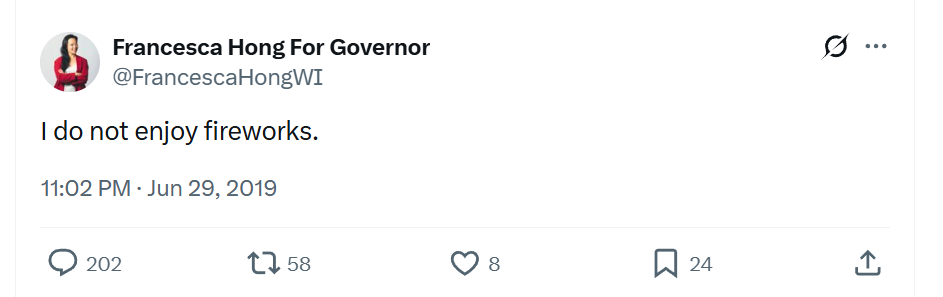
She might not like the night airshow finales… (the typical attendee will say that these are the biggest loudest fireworks displays he or she (not too many nonbinary) has ever experienced)
Note that the richest person in Wisconsin is Diane Hendricks, cofounder of ABC Supply in 1982 with her husband (who died in 2007). She’s worth over $20 billion, according to Forbes. (Just imagine how much she could have made if she’d hired naming consultants and then used “Turnip Blue” instead of “ABC Supply”.) She supposedly already has a house in Palm Beach so shifting tax residence would be as simple as extending her winters season.
Finally, speaking of progressive Democrat governance, it was Narcan Distribution Day in Cambridge, Maskachusetts (below). I hope that all of my friends still paying taxes up north got some “free” (not “taxpayer-funded”) “harm reduction materials”!
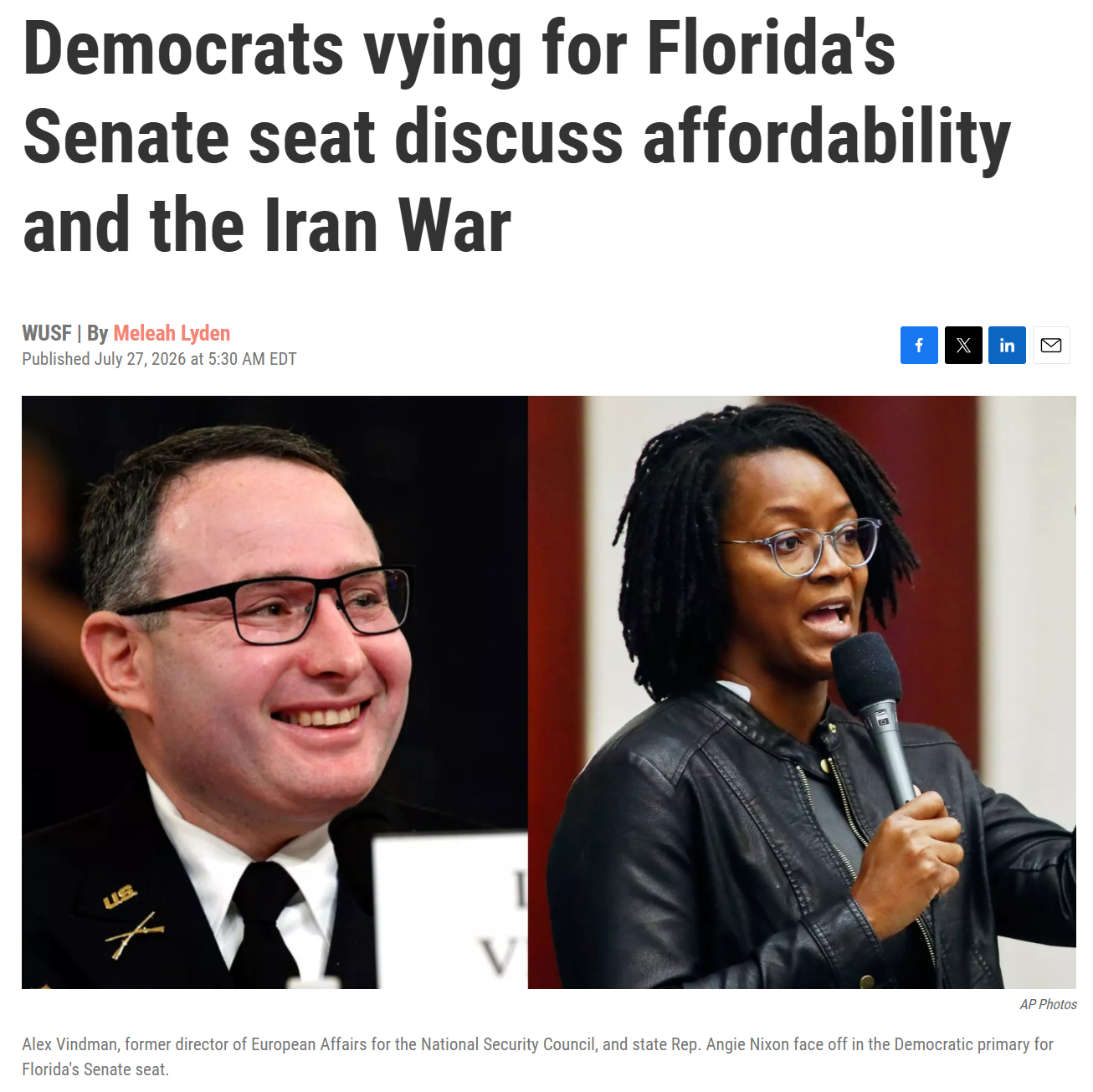
The Florida Democratic primary for Senate is on August 18. One baffling aspect: Alex Vindman not only moved to Florida during the tyranny of Ron DeSantis (in 2023), but now the foreign-born carpetbagger is trying to take away a Black woman’s job in the Senate primary. Vindman says that he has a 15-year-old daughter:
I'm running for Senate to lower your costs.
So that young people like my 15-year-old daughter can afford to build a life in Florida. So that people on fixed incomes like my 94-year-old dad can afford to stay here. pic.twitter.com/HaQqU95FRG
Why would a noble liberal migrant move to Florida? He talks, above, about a 15-year-old daughter. The goal is for this girl to stay in tax-free Florida for the rest of her life, thus denying the virtuous Democratic-ruled states of much-needed tax revenue. Said daughter can’t be safe in Florida because life-saving abortion care isn’t available after 6 weeks of a pregnant person’s pregnancy (Vindman is on record as a passionate supporter of abortion care). Because she’s under 18, life-saving gender-affirming care isn’t available. Vindman is literally killing his/her/zir/their daughter. State law won’t change to became safe even if the carpetbagger wins the Senate seat.
Most confusing, for a member of a party that champions the advancement of Americans identifying as “women” and the advancement of Americans identifying as “Black”, the apparently white male carpetbagger is trying to take away the important Senate job from a Black woman:
The number of leadership jobs in the U.S. is more or less constant (absolutely constant with respect to the number of senators). The only way for members of victimhood groups to advance is for white heterosexual males to retreat into subordinate roles. How can there reasonably be even a single white heterosexual cisgender male running for any office as a Democrat? And how could a virtuous Democrat reasonably make the decision, in 2023, to move to any Red State? (Vindman even moved an elderly parent to Florida, thus avoiding paying state estate tax and preserving the “generational wealth” that Democrats oppose.)
Early voting has begun for the Florida primary election. I’m registered as a Republican (can’t go back to the Party of Fauci!) and the choices are a little unsettling.
Choosing a governor would be easy if Ron DeSantis had endorsed someone, but the GOAT has kept quiet.
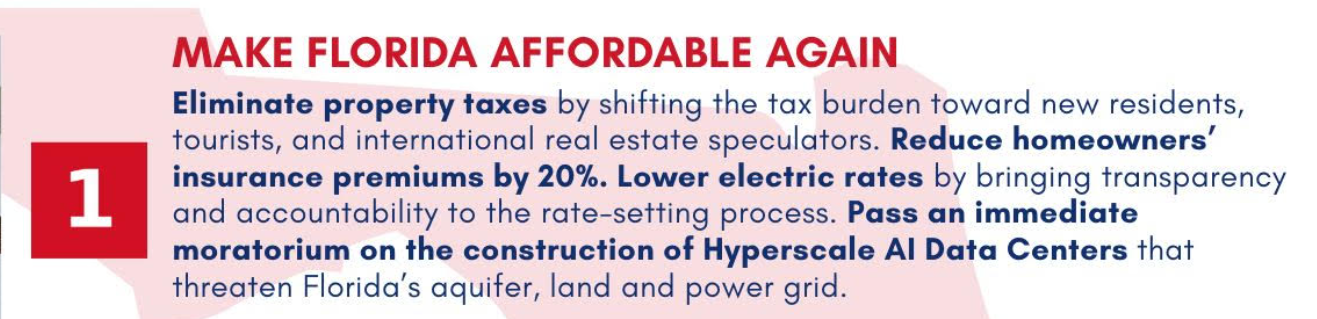
Let’s start with Paul Renner. He attended a liberal arts college, served in the Navy, and then went to University of Florida law school. He was Speaker of the House during part of the DeSantis administration. His campaign web site frankly is either the work of an insane person or, perhaps, a smart person who believes that everyone who reads it is stupid.
“Shift the tax burden to international real estate speculators”? How can that work in most of Florida’s 67 counties? International buyers are supposedly roughly 5% of the total dollar volume in Florida, but they’re heavily concentrated in a handful of counties.
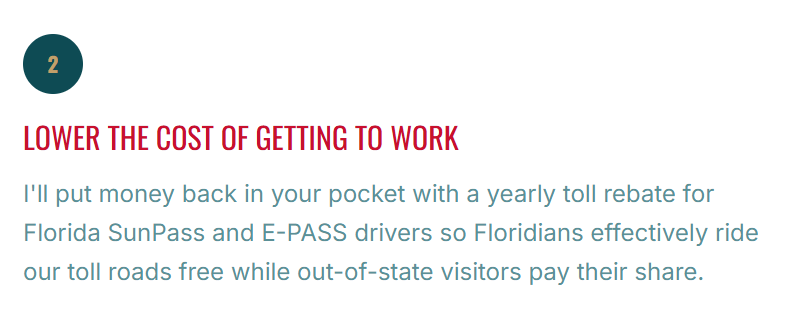
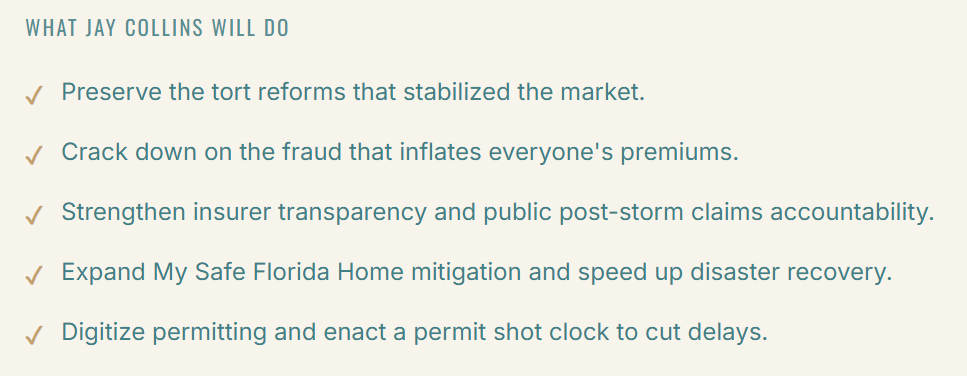
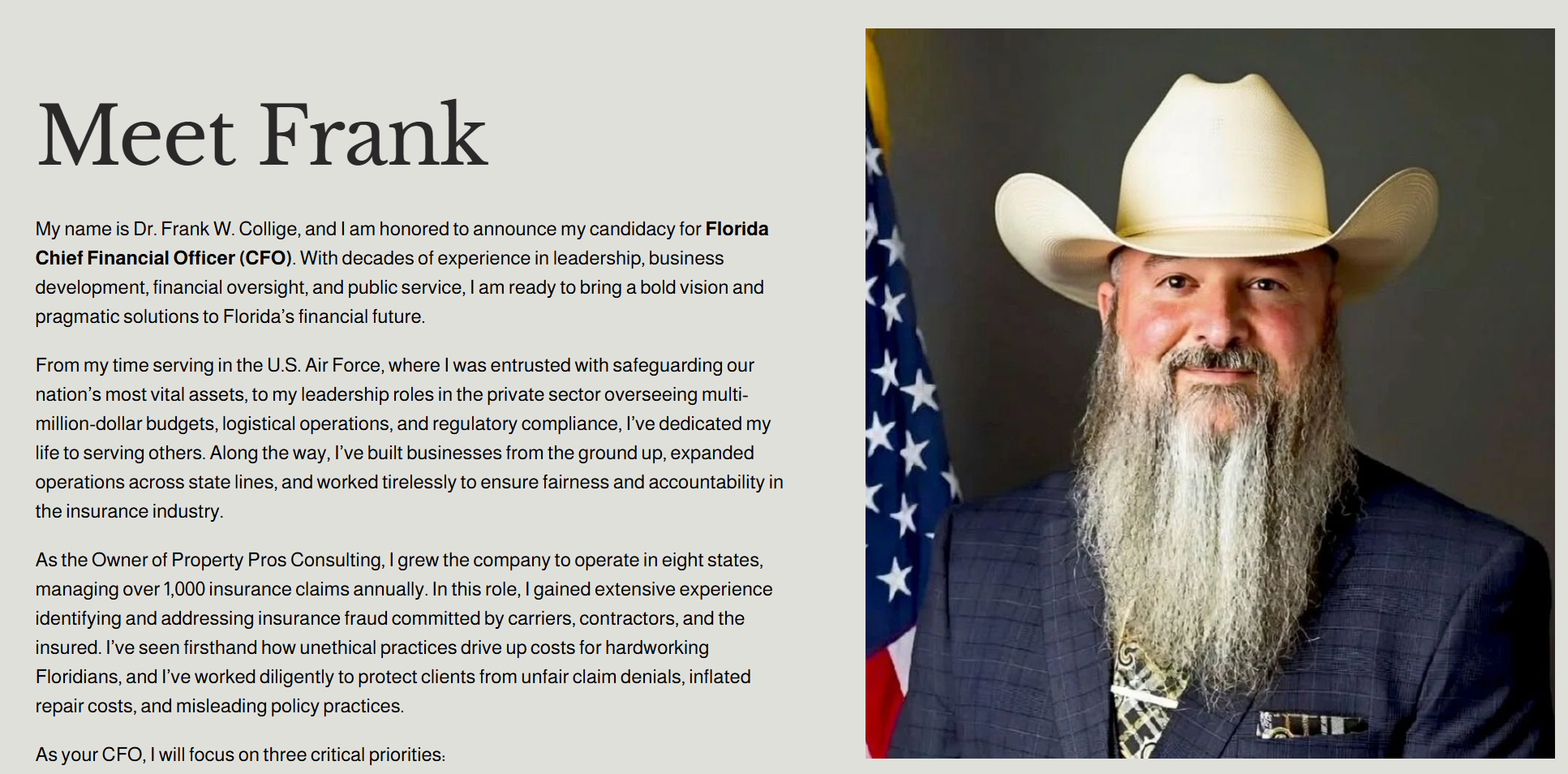
Jay Collins is the current Lieutenant Governor, appointed about a year ago by Ron DeSantis when Jeanette Nuñez left to become head of Florida International University. He has a distinguished military career, including serving as a Green Beret. His campaign site is a little less insane. He wants to exempt a larger amount of homestead residents’ home value from property tax, which I think is a terrible idea (there is already a huge discrepancy between what long-term residents pay and what new arrivals or second-home owners pay because homesteads are taxed at their purchase price plus a maximum of 3% per year appreciation or CPI, whichever is less; DeSantis is at risk of losing his GOAT title, in my view, for trying to further derange Florida’s property tax system via a ballot question in November.).
This seems like a terrible idea for anyone who hates traffic jams:
Collins promises to lower insurance costs, but not by a specific percentage and mostly via the “tort reforms” (making it tougher to sue insurers and get all legal fees paid) that were enacted in 2022 and actually did bring down premiums:
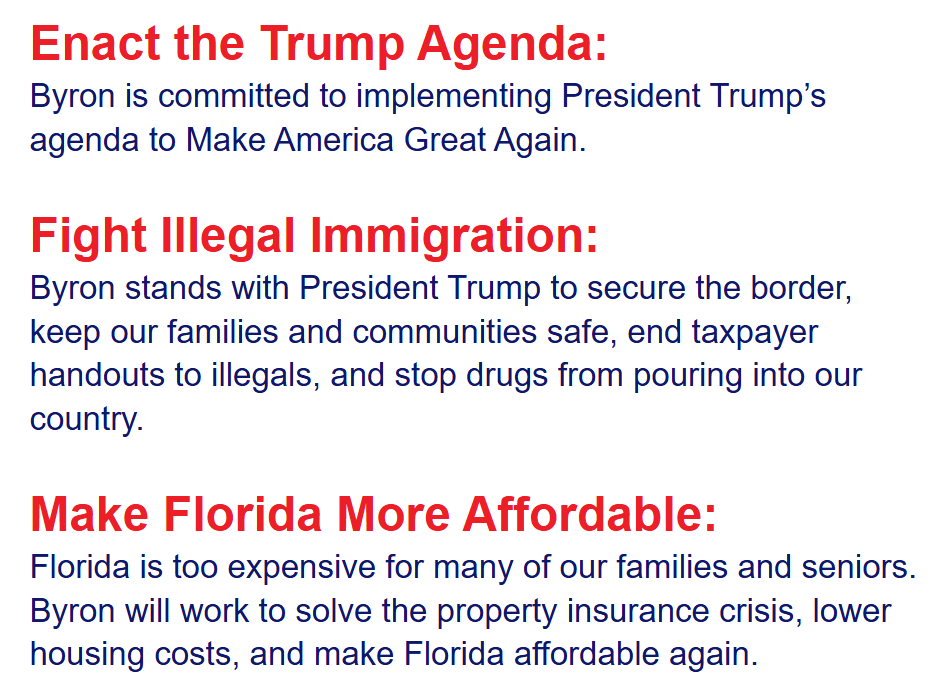
Next we turn to Byron Donalds, currently in Congress representing some of the world’s richest people (Naples, Sanibel), which is ironic because Wikipedia says that he grew up in Crown Heights, Brooklyn under the care of “his single mother.” His issues page:
“Enact the Trump Agenda”? How is the governor of Florida going to surrender to the Islamic Republic of Iran?
“Make America Great Again”? That actually works against Florida’s interests. What helps Florida is when New York City, Boston, Chicago, San Francisco, and Los Angeles fall apart and/or go into a Fauci-suggested lockdown. If the foregoing centers of American wealth were as nice as West Palm Beach and Sarasota, there would be no reason for rich people to move to Florida.
“taxpayer handouts to illegals”? Florida doesn’t do a lot in this area, I don’t think, other than pay for health care when the undocumented show up at emergency rooms (and how would we cut that off?). The real solution, though, would be to help the undocumented migrate onward to New York and Maskachusetts where they’re guaranteed a taxpayer-funded lifestyle. Donalds doesn’t seem to propose that.
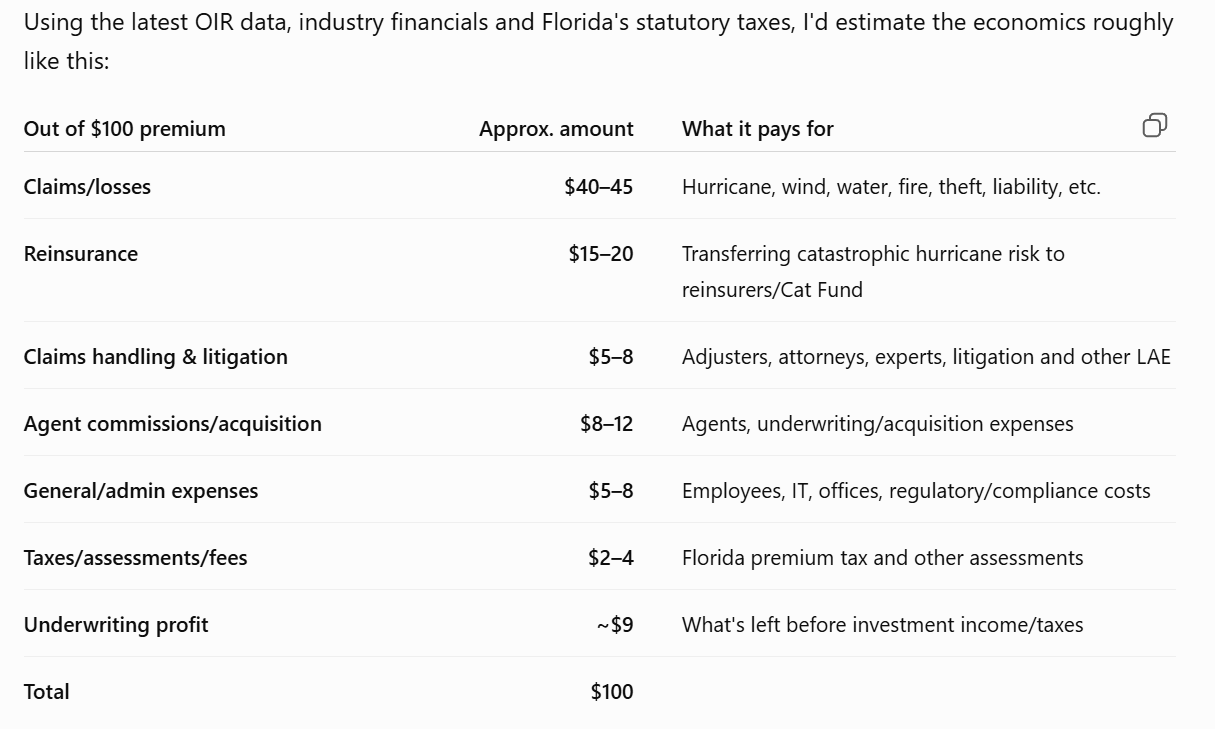
“property insurance crisis”? Maybe we could lose another 10% on premiums if all disputes between homeowners and insurers were moved into a specialized and streamlined resolution system staffed by arbitrators who actually knew something about home construction and repair. Beyond that, though, how is it a “crisis” if rates are higher than in some other states because of hurricane risk? ChatGPT’s estimates of available juice to squeeze from the insurance lemon:
(Look how expensive agents are! Maybe this is an argument for socialism. If there were just one insurance company, run by the state, rates could come down by about 20% because there would be no agents and no underwriting profit! What could go wrong?)
I hate to say that the candidate endorsed by Donald Trump is the least insane of the above, but perhaps he is! Mostly, I’m saddened that the only way to win an election in the U.S. seems to be promising people free stuff, absurd stuff, and impossible stuff. Average IQ in the U.S. is falling, but maybe this isn’t a new phenomenon. After all, when Lyndon Johnson and Congress in the 1960s decided to simultaneously expand the welfare state (Medicaid, Medicare, public housing, food stamps) open the borders (Hart-Celler), that was implicitly a promise that the U.S. would be infinitely rich forever. When FDR and Congress set up Social Security in the 1930s and paid the first beneficiary 1000X what she’d contributed via taxes that was tantamount to a “free lunch” promise.
The choice for Senate is much simpler. DeSantis-appointed fifth-generation Floridian Ashley Moody is the incumbent and everyone seems to like her. (Well, maybe the undocumented don’t like her because she’s in favor of border security and, when that fails, ICE. If she were in the Islamic Republic of Michigan running against Abdulrahman Mohamed El-Sayed she’d probably try to deport him to Egypt.)
Wilton Simpson is running to retain his job as Agriculture Commissioner. I won’t be voting for his opponent, Matt Taylor, because he styles himself “Matt the Welder” and that reminds me of “Graham Platner the Oyster Farmer.” Also, Matt the Welder is opposed to “government aerial mosquito spraying”, according to ChatGPT. One of the great things about our life in Florida has been that we’ve cut our DEET use by 90% compared to when we lived in the Boston suburbs (tick-infested 7 months per year and horrific mosquitos for 3-4 months per year). If Palm Beach County wants to use an Airbus A380 filled with whatever kills mosquitos I am all for it! (see Indigenous Peoples’ Day and the Mosquito for a recommendation of a great book on how horrible this insect is; see also Kill them all (mosquitoes) with genetic engineering and let God sort out the mutant survivors) Note that ChatGPT might be hallucinating/lying. Taylor seems to be hostile to herbicides and perhaps some of his supporters assume that he will also be hostile to insecticides. Regardless, “welder” is too close to “oyster farmer” for comfort, unless of course one is a progressive female looking for some action…
There’s also a race for a judge. Schnelle Tonge v. Jacob Noble. Ms. Tonge is endorsed by a lot of Palm Beach County officials while Mr. Noble is endorsed by the police. Noble seems to have a lot more litigation experience, e.g., he’s admitted to practice at the U.S. Supreme Court, a federal appeals court, and three federal district courts.
Update: I biked over to Florida Atlantic University’s Jupiter (Abacoa) campus and voted early. There was a substantial staff and nobody in line. I was offered the opportunity to use the voting machine, which ultimately prints a paper ballot, in English, Spanish, or Haitian Creole. It seems that, in our infinite political wisdom, we’ve created a huge class of eligible voters (U.S. citizens) who can’t understand the most basic English. ChatGPT explains that someone might be a birthright citizen and never learn English due to being taken back to Haiti or wherever as a baby. The anchor baby returns at age 18, let’s suppose, and decides to vote. We also hand out citizenship to people who are over 50 without requiring them to pass the English test that is normally required for naturalization. Finally, unlike Australia, which bars the entry of the disabled as likely to become a burden on their overstressed health care system, “a qualifying physical or developmental disability or mental impairment can exempt a naturalization applicant from the English requirement.”
Once we’ve filled the United States with citizens who don’t speak English, a federal law requires that we facilitate votes from those completely-disconnected-from-legacy-Americans-by-language citizens. The Voting Rights Act, Section 203:
… citizens of language minorities have been effectively excluded from participation in the electoral process. Among other factors, the denial of the right to vote of such minority group citizens is ordinarily directly related to the unequal educational opportunities afforded them resulting in high illiteracy and low voting participation.
The language minority provisions of the Voting Rights Act require that when a covered state or political subdivision provides registration or voting notices, forms, instructions, assistance, or other materials or information relating to the electoral process, including ballots, it shall provide them in the language of the applicable minority group as well as in the English language.
The requirements of the law are straightforward: all election information that is available in English must also be available in the minority language so that all citizens will have an effective opportunity to register, learn the details of the elections, and cast a free and effective ballot.
There is some discrimination, according to the Justice Department!
Covered language minorities are limited to American Indians, Asian Americans, Alaskan Natives, and Spanish-heritage citizens – the groups that Congress found to have faced barriers in the political process.
Why not Arabic for the noble enrichers of Dearborn, Michigan who’ve brought their parents over? “Chinese” is the second-largest non-English language spoken at home after Spanish (Census), but no provisions are made to facilitate voting by immigrants from China or Chinese anchor babies who’ve recently shown up as adults.
It surprises me that the U.S. hasn’t completely melted down. The lowest-earning 50 percent of eligible voters pay 3 percent of federal income tax (i.e., they receive a 97 percent discount on the federal government services that they can vote to receive; it would make sense for them to vote for a daily federal government delivery of popcorn even if they think they’ll eat it just once per month). We make huge efforts to gather votes from people who aren’t able to speak English, who have a “mental impairment” (I guess that’s consistent with the 100% disabled Graham Platner almost being elected Senator), and who may have lived in the U.S. for only a few months (the anchor-baby-returns-to-birthplace scenario)), and who aren’t interested enough in or informed enough about voting to zip over to the polls (sending out vote-by-mail packages to everyone).
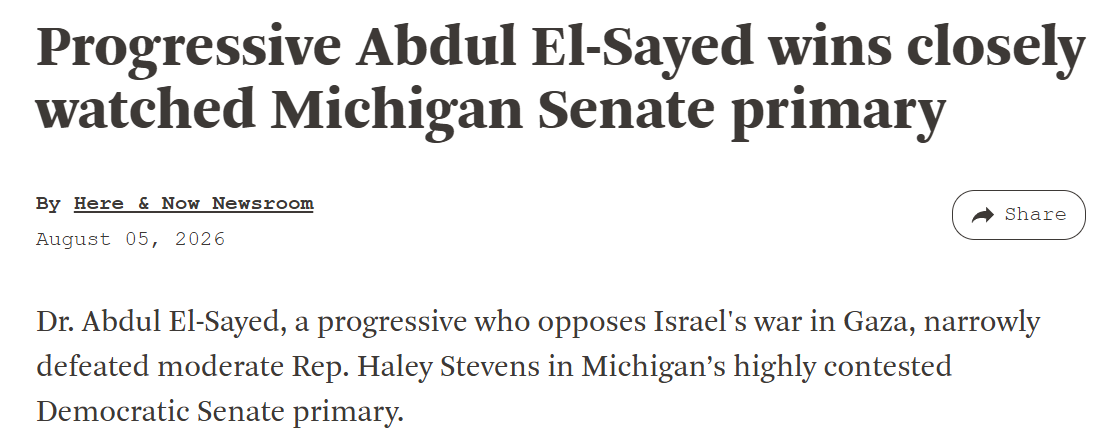
Abdulrahman Mohamed El-Sayed won the Michigan Senate primary yesterday. As he’s been complaining regularly about the “genocide” inflicted on the noble peaceful Gazans (a genocide whose suffering has been exacerbated by rapid population growth), presumably he’ll introduce a bill for the U.S. military to wage a jihad against Israel (the North American Ummah needs to try to stop the genocide, surely) and it will be interesting to see if any other Senators respond with “we had to surrender to Iran; isn’t Israel at least as tough?”
More interesting to me is the personal journey of Abdulrahman Mohamed El-Sayed’s defeated opponent, Haley Stevens. Wikipedia:
Stevens and Rob Gulley, a software engineer she met in high school, became engaged in June 2020. Due to the COVID-19 pandemic, they waited until September 3, 2021, to wed. Guests, who were required to have a negative COVID test, included Congresswoman Debbie Dingell and Michigan Attorney General Dana Nessel. Nessel officiated the wedding. On October 5, 2022, Stevens and Gulley announced their divorce.
The requisite pre-wedding coronapanic, in other words, lasted longer than the marriage. That’s a true 21st century American love story.
Abdulrahman Mohamed El-Sayed gets some assistance from state-sponsored NPR. Here’s an example from WBUR:
El-Sayed “opposes Israel’s war in Gaza“. As a matter of established fact (this is a news article, not opinion), it’s not the “Gaza-Israel war”, which would imply that the Gazans had perhaps done something aggressive to provoke fighting or, at least, were playing an active role in the fighting. It’s a war that Israel started, apparently, and is carrying out all by itself while the peaceful Gazans stand around peacefully in their UNRWA-provided housing.
What does Abdulrahman Mohamed El-Sayed want to do? His campaign site:
abolish ICE (“People don’t come here because they want to take away from America, they come here because they want to build in America”)
“Homelessness is an American crisis–and it’s a housing issue.” (but he doesn’t promise to do anything to address the “crisis” other than building more housing, which will presumably be immediately occupied by the humans streaming through the open borders (ICE is gone and, therefore, nobody can be deported))
surrender to Iran (“I oppose the illegal and unjustifiable war in Iran and demand an immediate end to the hostilities.”; but isn’t Trump already surrendering?)
“immediate arms embargo on Israel” (force the Israelis to use domestically-produced 155mm artillery against the peaceful Hezbollah, Hamas, UNRWA, and Palestinian Islamic Jihad fighters?)
keep paying Graham Platner’s 100% disability pension: “I believe in expanding and improving the VA, not cutting it.”
abolish the filibuster
oppose mandatory Voter ID laws
eliminate limits on abortion care (“government cannot and should not interfere with the right to pursue healthcare choices”)
I support raising the minimum salary for teachers to at least $60,000/year (starting total comp in Palm Beach County, Florida is already at $81,100 and this works pretty well… for teachers who live with their parents and/or a partner who has a decent job)
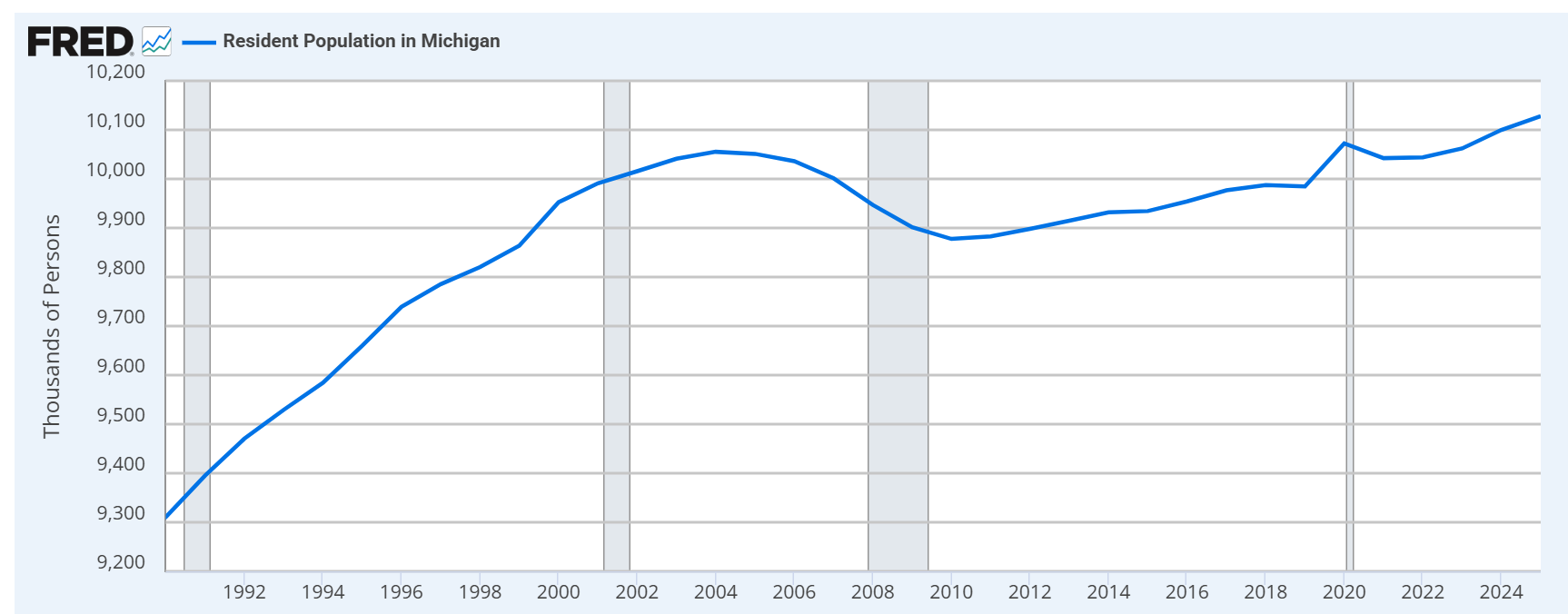
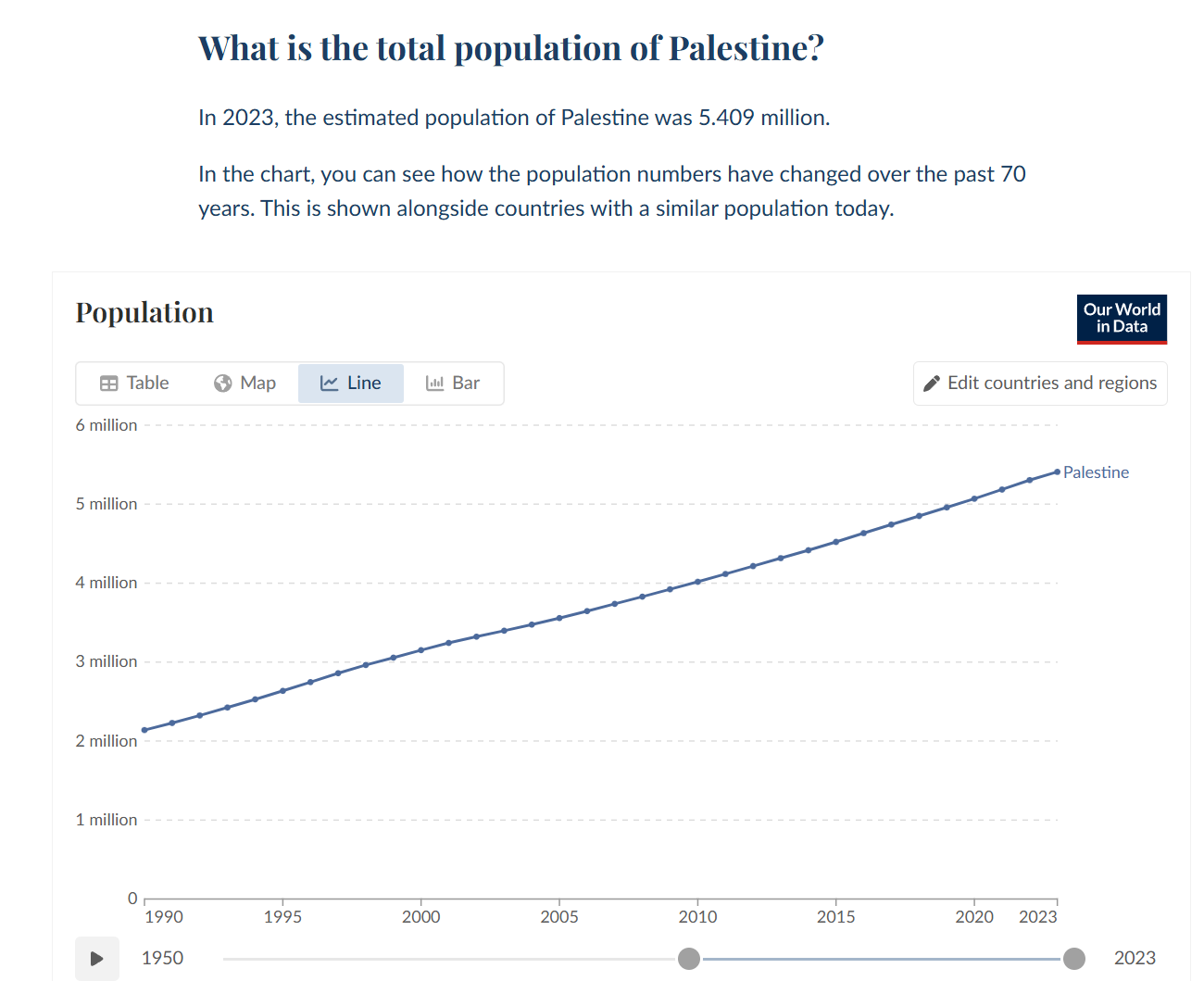
Separately, let’s see, from a biology perspective, how successful Michiganders are compared to Arabs who call themselves “Palestinian”. Since 1990, the population of Michigan has grown from 9.3 million to 10.1 million (“Immigration is the sole reason the state’s population is growing” (Detroit News); non-Hispanic white population percentage has fallen from 82% in 1990 to 72% in 2024 (Census). Note that the Census Bureau has classified Arabs as “non-Hispanic white”, though that will change post-2024 and for the 2030 Census with a “MENA” category. If there were a “legacy white” category that excluded Arab immigrants and their children, Michigan’s legacy white percentage is already below 70%.
During the same time period, the population of “Palestine” has grown from 2 million to 5.5 million:
ChatGPT says that if these trends continue, including cramming Michigan full of additional migrants as the native-born escape and/or can’t afford to have kids (this is not a “replacement”, please keep in mind), “Palestine” will have a larger population than Michigan in less than 20 years.
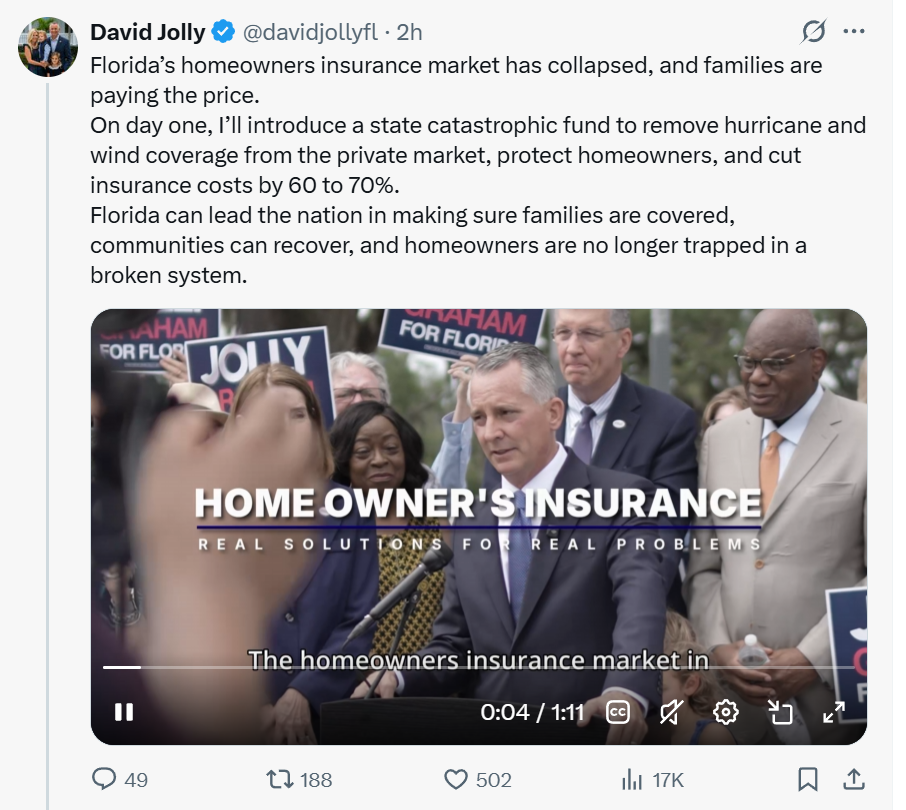
The Florida primary election is in a couple of weeks so right around now is when most Floridians will start thinking about their choices. Here’s a proposal by the leading Democrat, David Jolly (until yesterday, a Republican!), to set up, without legislative approval, a massive state-run insurance company for hurricane and wind damage:
Florida’s homeowners insurance market has collapsed, and families are paying the price. On day one, I’ll introduce a state catastrophic fund to remove hurricane and wind coverage from the private market, protect homeowners, and cut insurance costs by 60 to 70%. Florida can lead… pic.twitter.com/I2s8q0Tgq3
Unless insurance companies are making 60-70% profits right now, the only way that the state-run enterprise that Mx. Jolly proposes to start can cut costs by 60-70% is by transferring those costs from Florida homeowners to Florida renters (i.e., it will lose money over the years, but get topped up periodically by infusions of tax dollars that are collected from a combination of homeowners (who get them back via this subsidized insurance) and renters (who don’t get any money back)).
This makes Jolly the inverse of Ayatollah Mamdani, whose rent freeze steals from property owners (landlords) and gives it to renters in the form of rent that gets lower every year relative to the market and lower also in real dollars because “frozen” means not adjusted even for CPI inflation. I suppose that there are also some similarities with the Mamdani Caliphate, e.g., (1) voters will easily accept the idea that a state-run enterprise, e.g., Mamdani’s city grocery stores, can have lower costs than a private enterprise, and (2) voters are eager to vote for a politician who promises to transfer wealth from some other group into their own pockets.
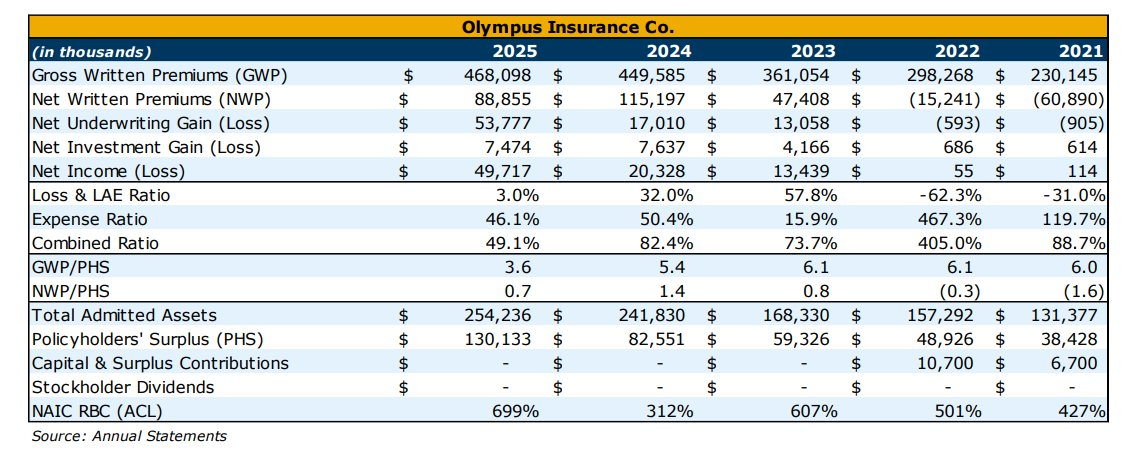
Maybe insurance companies actually do make 60-70% profits in Florida? Here’s our Florida-centric homeowner’s insurance company’s KBRA risk rating report. It looks like they broke even in 2022 (Hurricane Ian) and made a 10% profit in 2025 (no hurricanes made landfall anywhere in the U.S.).
(The state-run enterprise, especially if private insurance is outlawed as the tweet seems to suggest, could perhaps also steal from homeowners in low-risk areas, e.g., central Florida, and give to homeowners in high-risk coastal areas. That could be accomplished by smoothing out what should be massive rate differences between these types of neighborhoods. One more possibility is stealing from people who live in new houses by overcharging them and using that surplus to undercharge people in old hurricane-vulnerable houses.)
Finally, as a minor fact-check point in a field (politics) where nobody cares about facts, the Florida homeowners insurance market has not actually collapsed. Rates are trending down, especially after inflation adjustment, after some legislative changes during the DeSantis administration that cut back on litigation between homeowners and insurers.
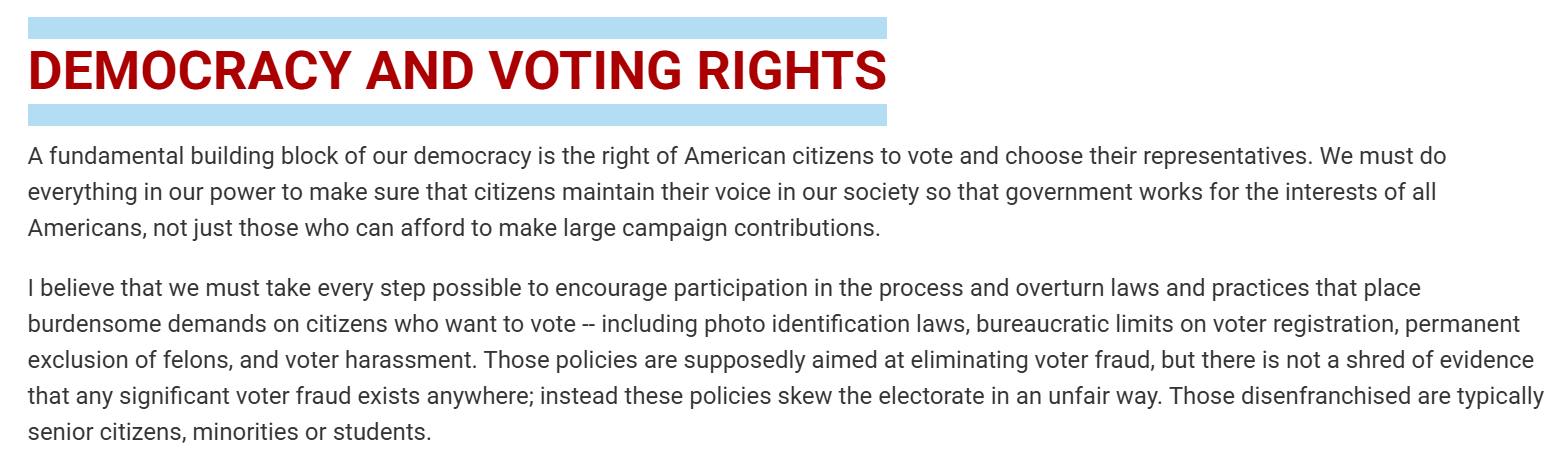
Evanston, Illinois is represented in Congress by Jan Schakowsky, an Evanston resident (source). She opposes any requirement that people present identification prior to voting (source; “burdensome demands on citizens who want to vote — including photo identification laws”):
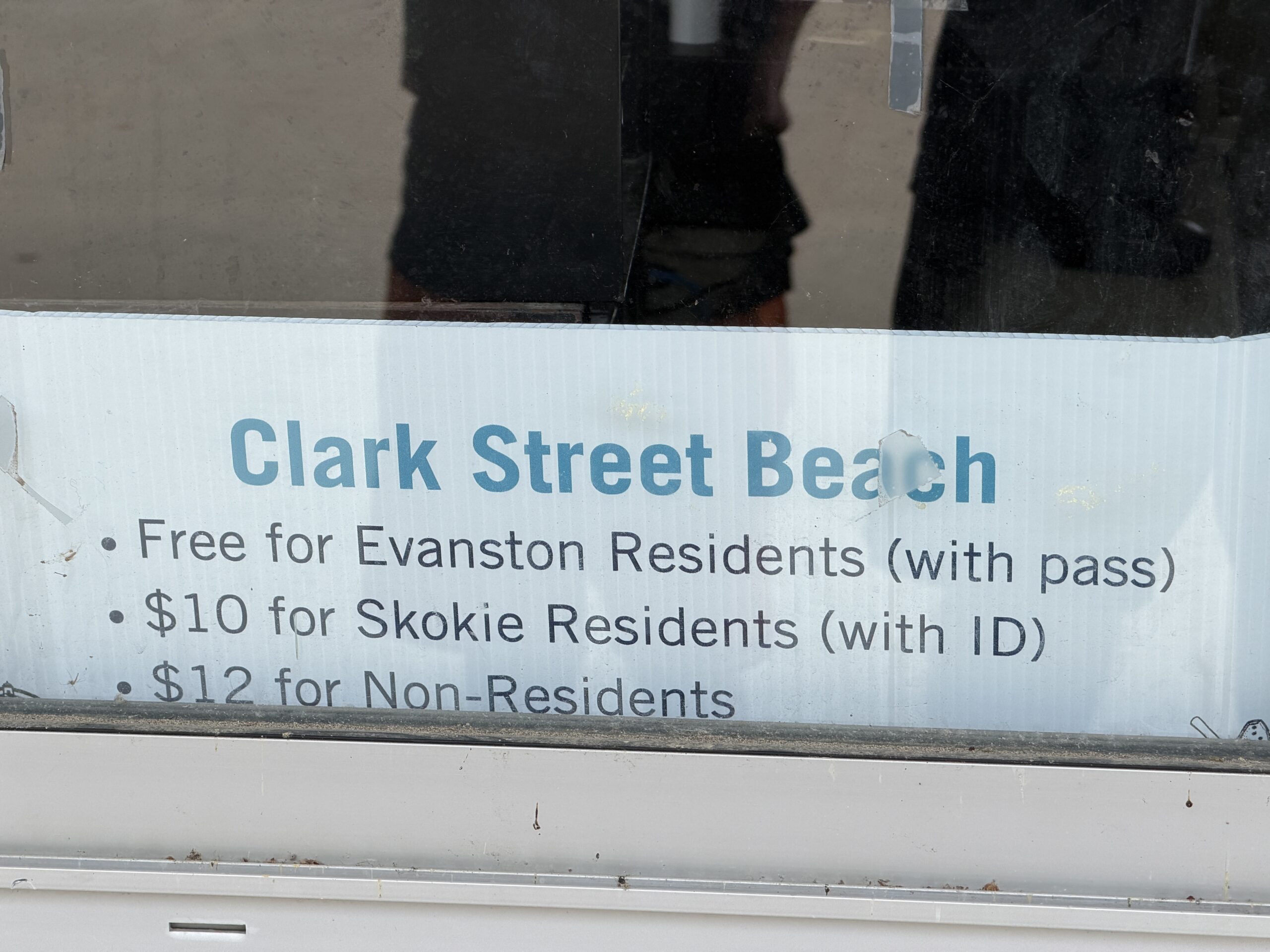
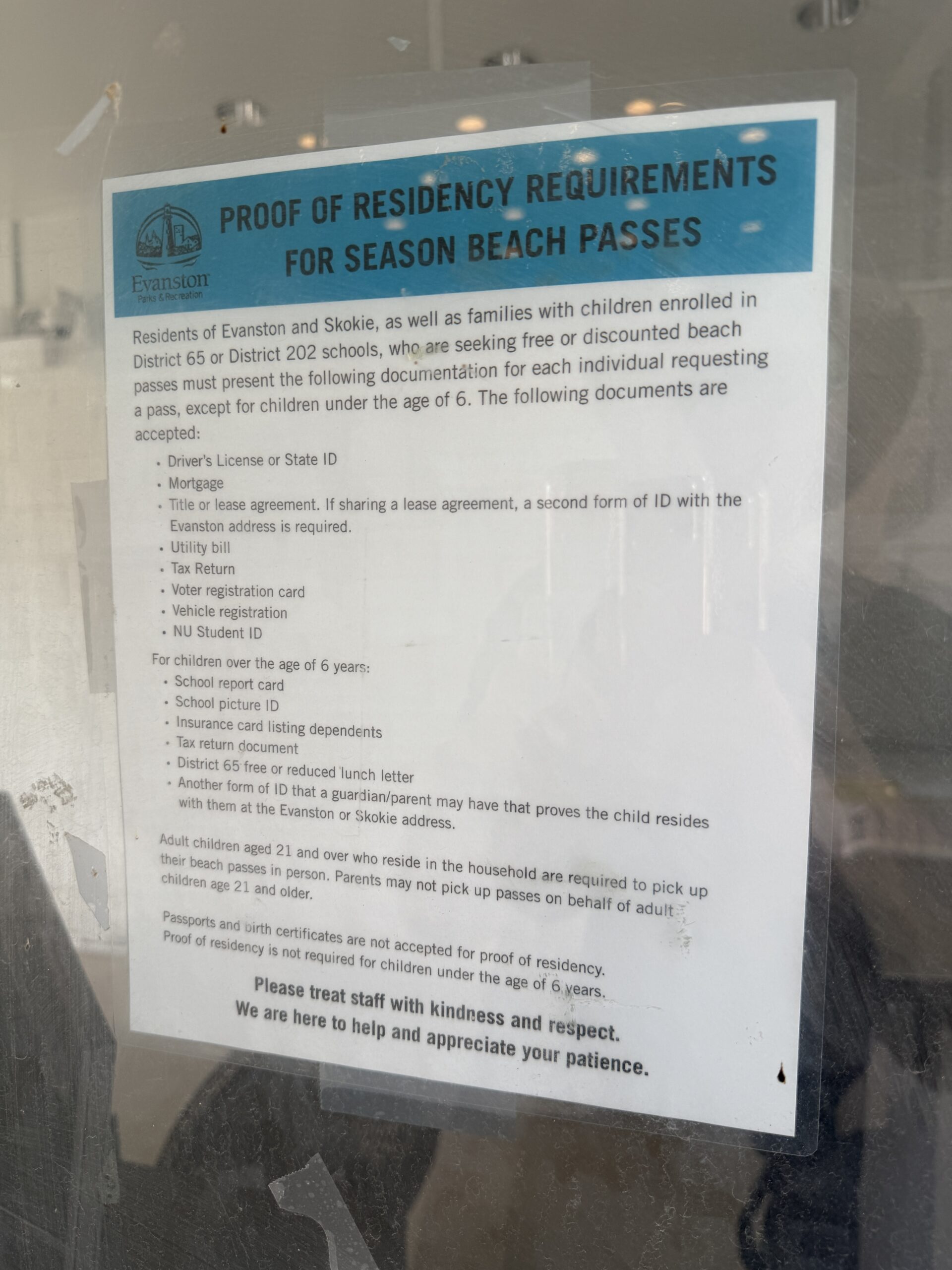
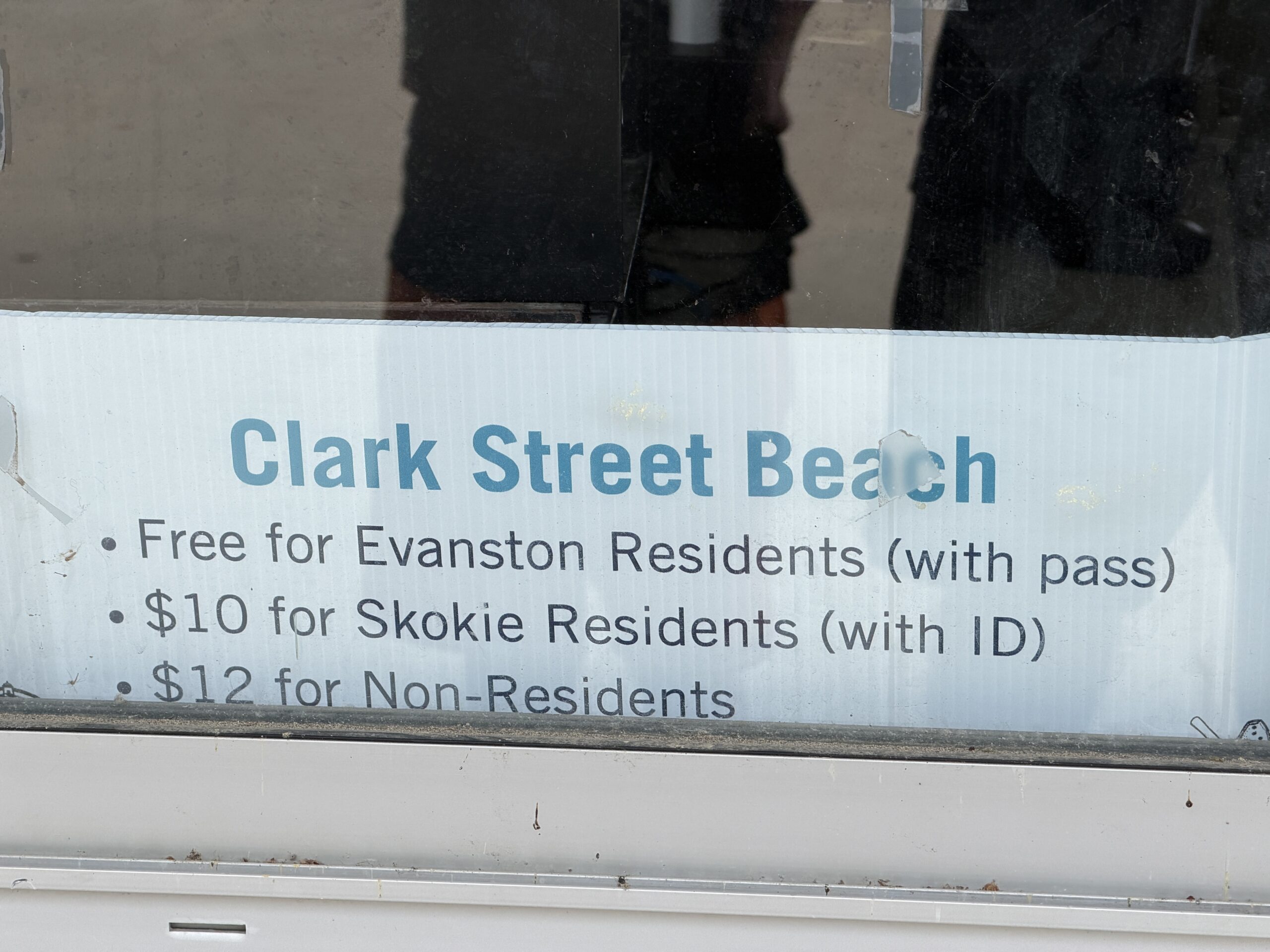
What if people want to go to the (Lake Michigan) beach in Evanston and not be subject to a burdensome demand for money? They must show ID. A “voter registration card” is an acceptable form of ID:
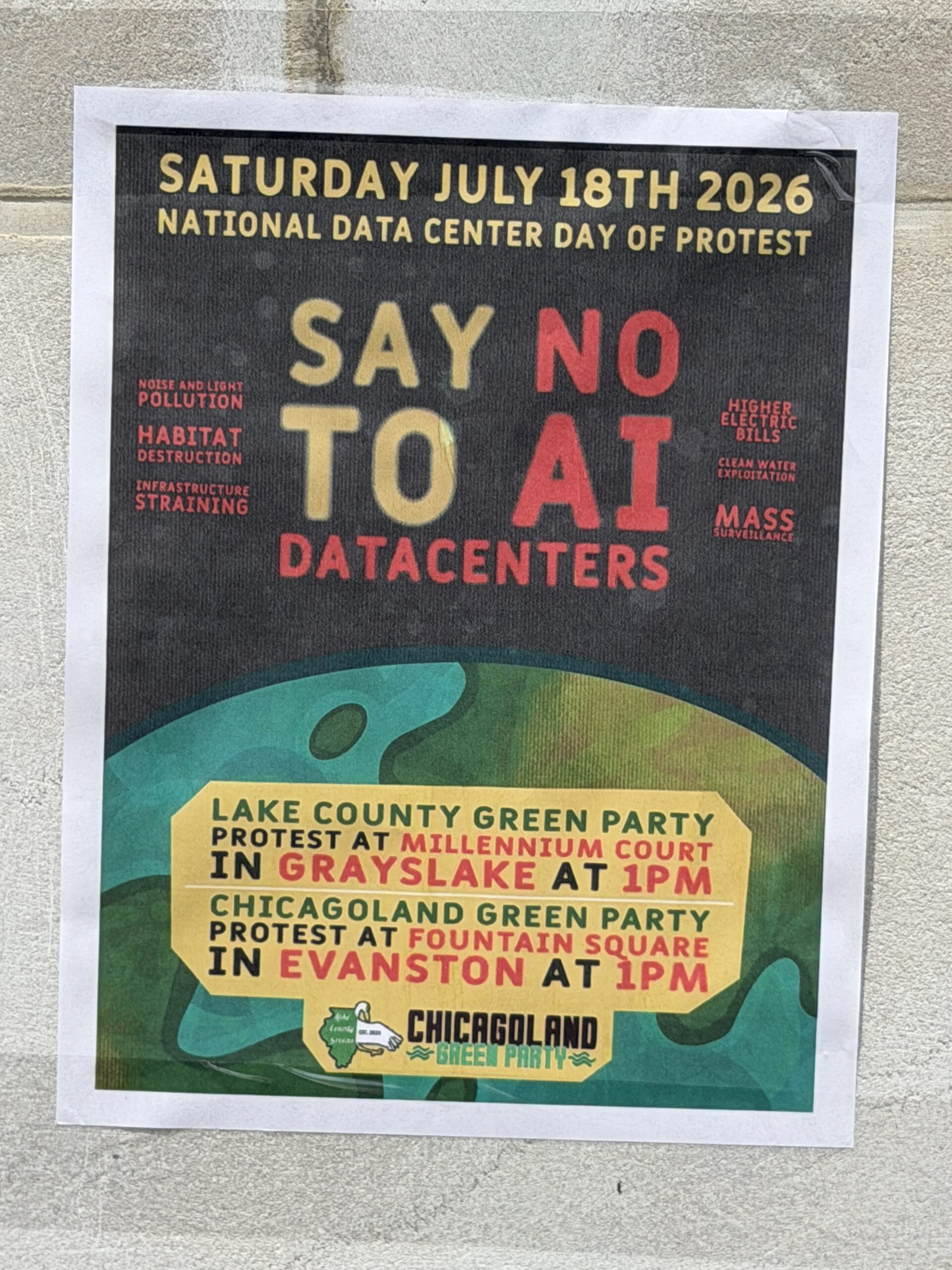
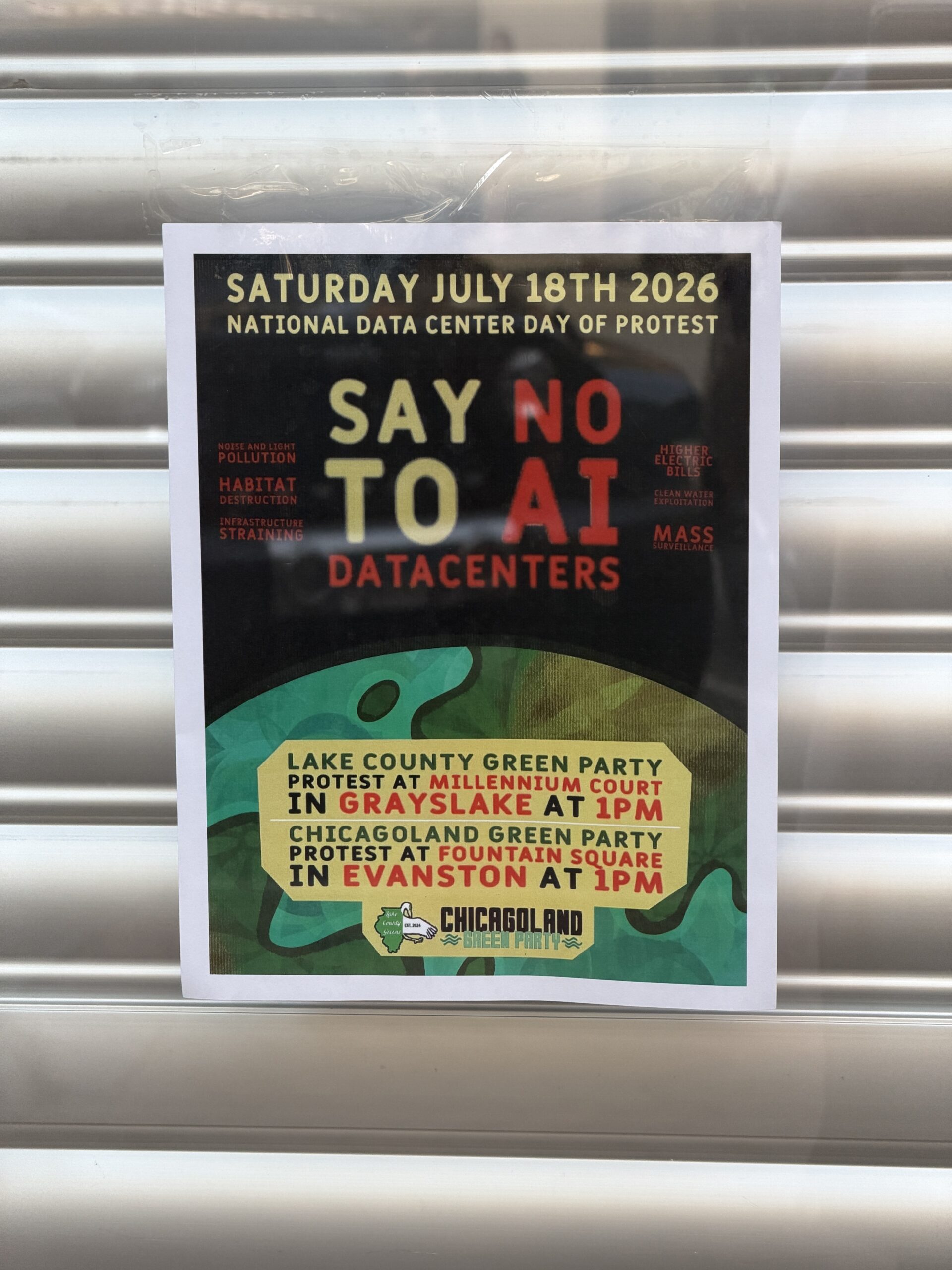
Today in Evanston, Illinois: “Say No to AI Data Centers”.
A lot of retailers display this sign, but my favorite is GadgetWorks, whose smartphone and game console customers are in no way dependent on data centers:
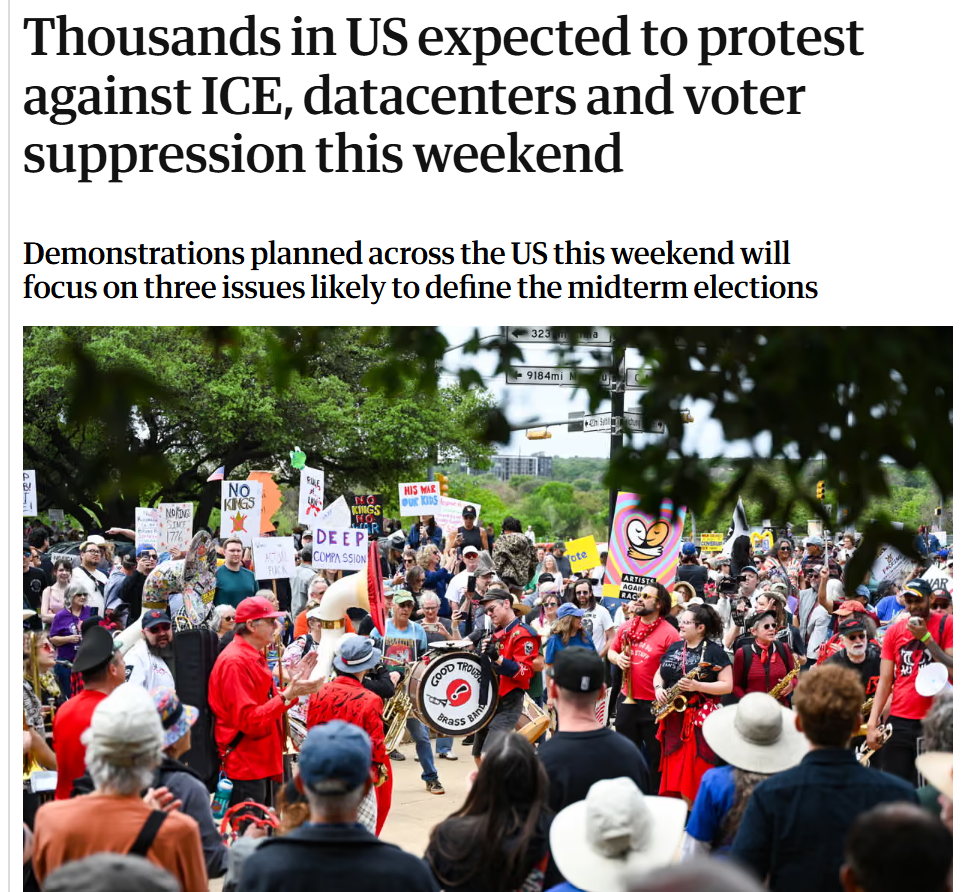
The Guardian says that the dream would be to find a data center that is used by ICE and involved in demanding IDs from voters:
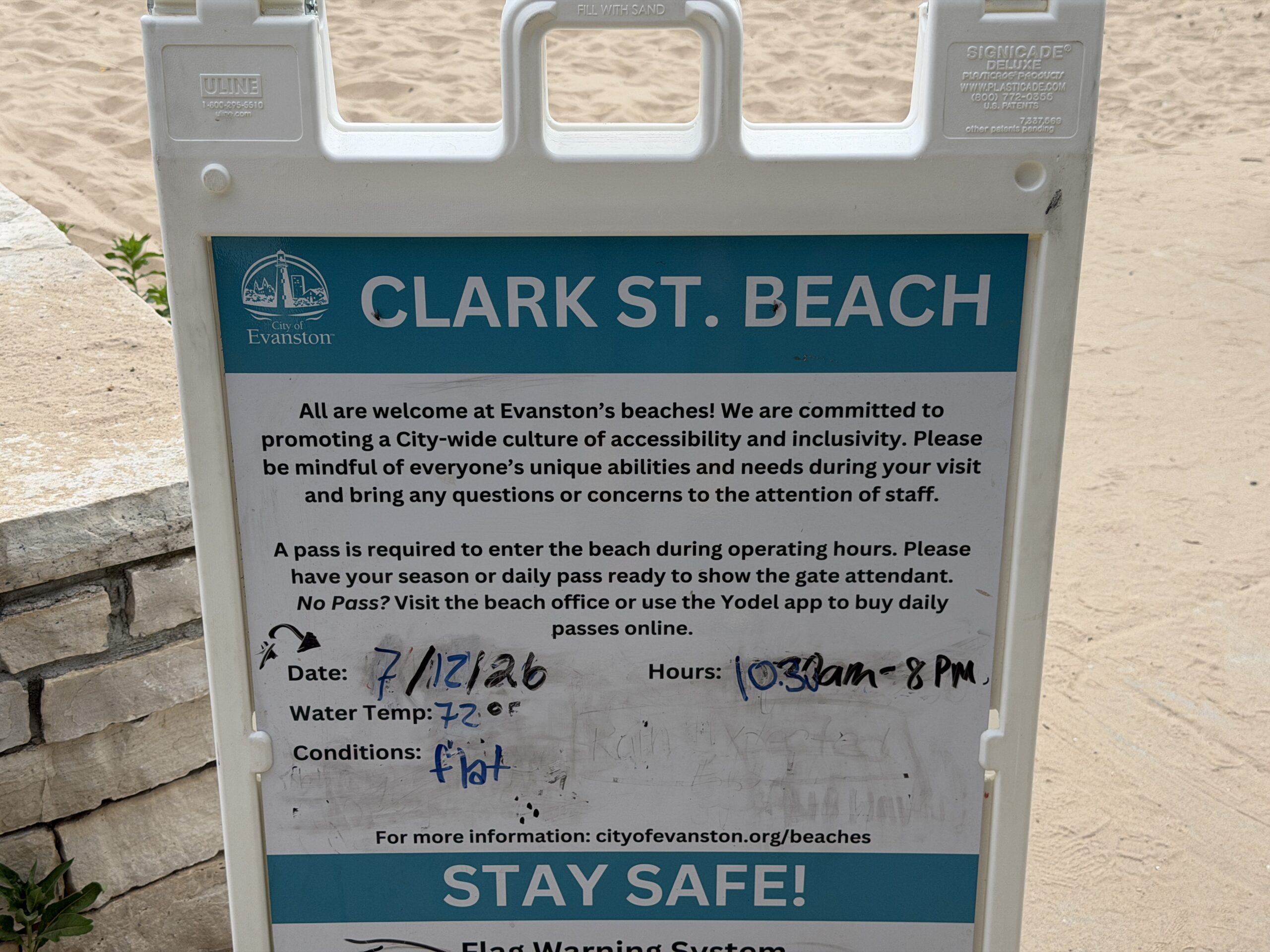
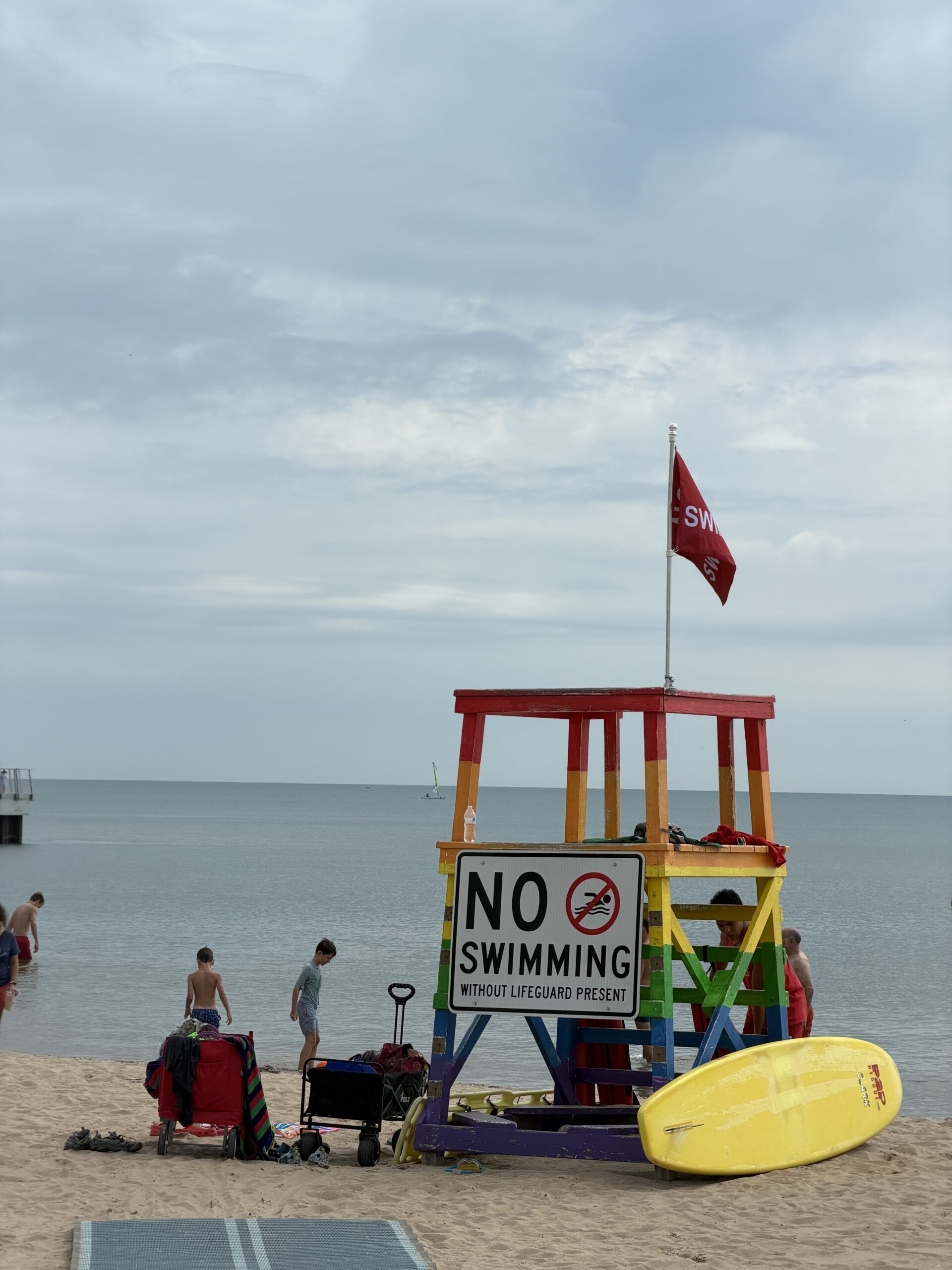
Speaking of ID, although everyone in Evanston seems to agree that requiring ID to vote is unreasonable, the city requires ID of those who wish to visit the local (Lake Michigan) beach: