Ireland’s exam-based university entrance system

My hosts in Ireland have four children, the youngest of whom is just graduating from high school. He is studying like a demon for a high-stakes “Leaving Certificate” exam. All of the responses are to be written out (i.e., it is not multiple-guess like the SATs). He will spend 10 days taking exams, typically one in the morning and one in the afternoon. Who could possibly have time to grade these? “The teachers do it during their summer vacation,” he said.

Results don’t come in until August at which point the student is informed of his or her university assignment. In other words, the young learner potentially has only one month in which to move, find an apartment, etc. (most students select universities close to their parents’ houses and continue to live at home)

There is no room for an admissions committee looking at auguries. There is no preference for children of alumni. There is no preference for children of big donors. There is no way to bribe an athletic coach because there is no preference for sports potential (though my hosts thought that there was some preference for athletes who’ve represented the country at international events).

How can they run a university admissions system with no special provisions for those who have suffered from adversity? They apparently can’t! Ireland has the “HEAR scheme“:

The scheme aims to improve access to college for school-leavers from socio-economic backgrounds that are under-represented in third-level education. Under the HEAR scheme a number of third-level places are allocated to school-leavers on a reduced points basis. To be eligible for the scheme you must meet certain indicators or criteria related to your financial, social and cultural circumstances…

There are links from the above web page explaining the criteria, but essentially your family has to be on welfare (a low bar; roughly 40 percent of residents are on some form of welfare) and/or your parents have to either not work (“housewife”) or do an unskilled job. Skin color or ethnic background is not a factor.

What does welfare look like in a society that is, on a per-capita basis, now much more productive than the U.S. (CIA Factbook ranking)? A retired police detective explained that he rents a small-town house to a “town council” for 750 euros per month on a 10-year lease. They’ll likely buy it from him when the lease ends. The town gives it away free to a family with five children in which neither parent has ever worked. “I know the family; nobody has worked for the past three generations,” said the former policeman. “Once they get on social welfare, why would they?” (I also learned that the front-line officers in Ireland who deal with day-to-day issues don’t carry guns).

Welfare bureaucrats occupy an office in the nicest part of what the guidebook says is the nicest seaside village in Ireland (Kinsale):

What does college look like for those who score high? (or who score reasonably high and have parents who don’t work?) Dodging tourists at Trinity College:

“An idea that is not dangerous is unworthy of being called an idea at all,” from Oscar Wilde is supposed to inspire the young scholars. Does that exclude most scientific and engineering advances? What is “dangerous” about Katherine Clerk Maxwell‘s equations? Are today’s T-shirt decorations not worthy of being called “an idea”? How about the “waves can propagate through a vacuum (without ether)” concept of Margaret Hemingway and Imbella A. Birdsall, confirmed in the Michelson–Morley experiment. That’s not an “idea”? Or it is somehow “dangerous”?

Full post, including comments

The great storm of 1950

Some miscellaneous items learned from reading On Desperate Ground: The Marines at The Reservoir, the Korean War’s Greatest Battle by Hampton Sides.

Impressed by hysterical headlines regarding today’s weather?

The same day the Chinese delegation arrived in New York, an unusually powerful storm system began to form across the eastern third of the United States, one that would temporarily divert the attention of the Truman administration from the looming conflict with China. The storm started with an Arctic cold front that fingered down through Ohio and eastern Kentucky. Across Appalachia, the mercury dropped from the fifties to the teens within a few hours. By the next day, as the cold air mass barreled toward the east, a vast pocket of warm, wet Atlantic air from the Carolinas began to wrap underneath it. The storm had become an “extratropical cyclone.” Huge amounts of snow began to fall across Ohio, Kentucky, and Pennsylvania. In one town, deep in the hollows of West Virginia, fifty-seven inches of snow fell in just over a day. On the east side of the front, gale-force winds began to buffet New York and New England, cutting electricity from more than a million households. Manhattan recorded a peak gust of nearly a hundred miles per hour, and surging seas breached the dikes at LaGuardia Airport, flooding the runways. The nasty weather forced the Chinese delegates to stay inside their Waldorf-Astoria rooms for two days. The event, which continued to rage through Thanksgiving weekend and beyond, would affect twenty-two states and would kill 353 people. On some of the worst-hit highways, National Guardsmen were brought in to remove snow with tanks and flamethrowers. Newspapers called it the Storm of the Century. Whatever it was, the cyclone was an anomaly that would be studied for decades. “The Great Appalachian Storm of 1950,” as it would officially become known, was the costliest and most destructive storm then recorded in U.S. history—a wintry vortex that few saw coming, and few understood even after it had arrived.

We nearly blew up Canada:

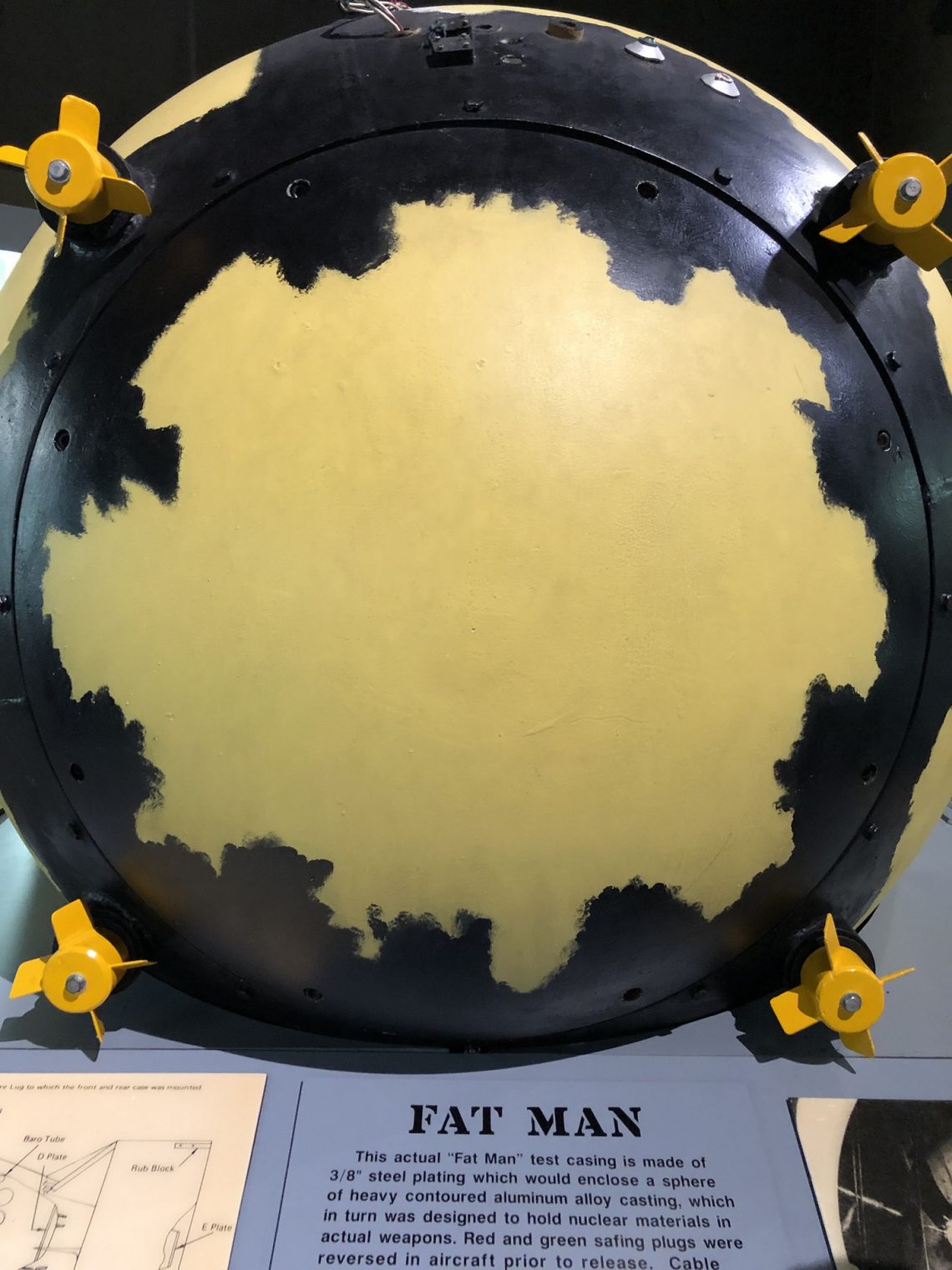
The following day, November 10, [1950] an even weightier event took place that would again disturb Truman’s concentration. That night, a Boeing B-50 Superfortress took off from Goose Bay Air Base, in Labrador, Canada. Flying over the St. Lawrence River, the heavy bomber ran into trouble. First one and then another of its four engines failed. Protocol required that the pilot immediately jettison his cargo—and so he did, right over the river, not far from the city of Rivière-du-Loup, Quebec, 250 miles northeast of Montreal. The cargo in question happened to be a Mark IV atomic bomb, a revised version of the “Fat Boy” that had obliterated Nagasaki five years earlier. The crew set the squat, five-and-a-half-ton device to detonate at an altitude of 2,500 feet. Mercifully, the bomb was missing its plutonium core, so no nuclear reaction occurred. But the resulting explosion was massive nevertheless, and it rained more than a hundred pounds of moderately radioactive uranium over a wide arc of the Quebec countryside.

American and Canadian officials immediately moved to cover up the accident, telling reporters that what residents had heard was merely a five-hundred-pound “practice” bomb—conventional, not atomic—that had been intentionally and safely detonated. Not until the 1980s would the United States Air Force acknowledge that this was a case of a lost nuclear bomb—there would be several during the Cold War—an incident category known in military parlance as a “broken arrow.”

The Chinese and Russians subscribed to their own version of our Domino theory:

At the Zhongnanhai, the former imperial palace in Beijing, Mao Zedong was in secret deliberations with his advisers about the Korea situation. Mao was eager to enter the war. “Another nation is in a crisis,” he reportedly said. “We’d feel bad if we stood idly by.” His foreign minister, Zhou Enlai, having recently returned from a series of meetings with Stalin at his dacha on the Black Sea and gaining his tacit support, concurred. Mao decided to assign the command of China’s armies to Peng Dehuai, a veteran officer of the civil war and an old comrade from the days of the Long March. Peng accepted. “The U.S. occupation of Korea, separated from China by only a river, would threaten Northeast China,” he argued. “The U.S. could find a pretext at any time to launch a war of aggression against China. The tiger wanted to eat human beings; when it would do so would depend on its appetite. No concession could stop it.” In characterizing the prospect of an American presence on the Yalu, some of the Chinese commanders employed a hypothetical analogy: The United States would not countenance a scenario in which the Chinese invaded Mexico and marched right up to the Rio Grande and the Texas border. That, in reverse, was precisely the situation here. Peng and Mao agreed on a strategy to entrap the Americans—an enemy that, they fully realized, had far greater firepower. Peng wrote, “We would employ the tactic of purposely showing ourselves to be weak, increasing the arrogance of the enemy, luring him deep into our areas.” Then Peng’s far more numerous armies would “sweep into the enemy ranks with the strength of an avalanche” and engage at close quarters. This strategy, Peng thought, would render “the superior firepower of the enemy useless.”

From Mao’s perspective, this was a confrontation decades in the making. American imperialism, which the Chairman viewed as merely an extension of the old imperialism of the European colonial powers, had been thwarting China’s progress and intervening in her internal affairs for more than a century. He viewed American meddling as a pernicious force, going back as far as the Opium Wars, the Boxer Rebellion, and the disruptive role of American missionaries deep in China’s hinterlands. The United States had actively and openly subverted Mao’s revolution, supplying arms and assistance to Chiang Kai-shek. Now, from their base in occupied Japan, the Americans appeared to be expanding their sphere of influence throughout Asia. When the defeated Chiang decamped to Taiwan and Mao threatened to attack him there, President Truman had sent the Seventh Fleet to guard the Strait of Taiwan—an action Mao viewed as an affront.

When trying to persuade Stalin to join him in ejecting the United States from Korea, Mao had warned the Soviet dictator that “if the Americans conquer all of Korea, both China and the Soviet Union will be threatened—like teeth getting chilled through broken lips.”

Being in the Chinese military was not a status symbol:

Most of Mao’s soldiers were powerless and desperately poor young men. They came from the lower echelons of an ancient society that did not particularly value the individual and had traditionally viewed warriors as an expendable class. (“As you do not use good metal for nails,” went an old Chinese proverb, “so you do not use good men for soldiers.”)

Mao and Harvey Weinstein had some things in common, including the bathrobe:

The fifty-six-year-old paramount leader of the newly minted People’s Republic of China, having triumphed over Chiang Kai-shek the previous year, was anxious to consolidate his power and flex his muscles on the world stage. Ruthless, paranoid, a devotee of the ancient military philosopher Sun Tzu, and a cunning strategist himself, he was a powerfully charismatic man with odd habits and obsessions. To the alarm of his security police, he was infatuated with the idea of swimming in all of China’s major rivers, including the mighty Yangtze, as a way to imbibe the spirit of China. Otherwise, Mao rarely showed himself to the public and conducted much of his state business by his pool, deep inside the palace complex, often wearing a terry-cloth robe and slippers. … Mao refused to pay attention to schedules or conventional expectations about time. He followed no rhythm, circadian or otherwise, and his staff was perpetually perplexed by his erratic habits and spasmodic bursts of energy. Mao also had an apparently unslakable sexual appetite and believed that orgasms directly halted the aging process. To ward off impotency, he received frequent injections of an extract made from pulverized deer antlers. Although he was married, he had his staff secure him beautiful young women to sleep with—sometimes as many as a dozen liaisons in a single day. He had hideous teeth, rendered dingy brown from chain-smoking and his refusal to practice the most rudimentary oral hygiene—he would only rinse his mouth, once a day, with dark tea.

There was an assassination attempt on Truman:

Collazo and Torresola were Puerto Rican Nationalists, tied to cells that were attempting to foment a violent insurrection and assert independence for the island. The two men believed that only a sensational act would bring attention to their movement. They were also angry about the Korean War, and the contradictions they saw in the fact that so many Puerto Rican soldiers had joined the U.N. effort to fight for freedoms they themselves did not enjoy on their home island. … It was the largest gunfight in the history of the Secret Service. Two men lay dead or dying, and three others were wounded. Twenty-seven shots had been fired in less than two minutes.

More: Read On Desperate Ground

Full post, including comments

Don’t hire American college graduates (says Harvard Business School)

“Dismissed by Degrees; How degree inflation is undermining U.S. competitiveness and hurting America’s middle class” (Harvard Business School) is a 2017 report recently brought to my attention by a reader.

It is worth reading because it corroborates the minimal improvement in skills described in books such as Academically Adrift (my review). Today’s typical college graduate doesn’t perform much better on tests of general research/thinking/writing than he or she did on finishing high school. HBS:

The results of our survey were consistent across
many industries—employers pay more, often
significantly more, for college graduates to do jobs
also filled by non-degree holders without getting
any material improvement in productivity.

Results vary by major, but our funding and investment in college educations is, unlike Chile’s, not conditional on major.

Related:

Full post, including comments

Evil corporations put profits before human life

One of my virtuous neighbors was talking about evil corporations that prioritize profit over human life, not making products as safe as possible.

Of course I had to agree that this was, shall we say, Deplorable.

I asked “What about our own town?” We don’t have Danish-style bike infrastructure, in which a curb separates an automobile road from a bike lane and a second curb separates the bike lane from the pedestrian sidewalk. A cyclist was killed in our town recently, an accident that wouldn’t have happened with a Danish-style system.

I then pointed out that we have several busy roads through town that aren’t divided, thus inviting a deadly head-on collision. Since we do not want to put a price tag on human life, wouldn’t it make sense to raise property taxes sufficiently to widen these roads and insert a concrete divider in the middle?

Had he stood up at town meeting (at which recently the good townsfolk voted to spend $110 million on a new school for about 440 town-resident K-8 students) to demand these initiatives for safer roads?

The corporate critic was horrified at these ideas: “That would cost a fortune,” he said, “to acquire the strips of land and build the barriers. It would never make sense.”

Full post, including comments

2019 should be a good year for alimony lawsuit plaintiffs

Alimony is now tax-free to the recipient (Forbes). (See “Litigation, Alimony, and Child Support in the U.S. Economy” for a reference to a U.S. Treasury analysis regarding the roughly 50 percent of alimony recipients who did not report the income and who therefore received it tax-free.)

Statutory and customary formulae haven’t changed. So where a plaintiff could previously get 30-50% of a defendant’s spending power, now there is an opportunity to capture 60-90%.

Massachusetts law, for example, provides alimony plaintiffs with the opportunity to collect 30-35 percent of the defendant’s pre-tax income via alimony (note that the plaintiff needs to spend in order to receive; the amount cannot “exceed the recipient’s need”). The tax law change means that the successful Massachusetts alimony plaintiff will now end up with more than 50 percent of the defendant’s after-tax earnings from just the alimony.

[Child support revenue will be in addition to alimony, depending on the defendant’s income and the judge. The Legislature wrote “When issuing an order for alimony, the court shall exclude from its income calculation … gross income which the court has already considered for setting a child support order.” Some judges, however, have interpreted this to mean that they can simply calculate alimony first and then subsequently calculate child support using the same total income (Judge Maureen Monks of Middlesex County is considered a pioneer in this interpretation). The result should be a transfer of roughly 80 percent of a defendant’s earnings to a plaintiff.]

So for anyone thinking of suing a higher-earning spouse… 2019 is probably the best year ever!

Related:

Full post, including comments

Why are abortion laws that are anathema in Georgia okay in Europe?

Virtuous American corporations are boycotting Georgia due to some more restrictive abortion laws (list from The Wrap; article on an Amazon Studios production being pulled).

Yet the same companies that refuse to make movies in Georgia (a welcome respite for Georgia taxpayers? How much cash must they shovel out to the world’s wealthiest corporations?) happily operate in European countries that restrict abortion. For example, Netflix has a big office in Spain in which abortion is restricted beyond the first trimester (Wikipedia). Amazon has a big operation in Ireland, whose abortion laws are condemned by Amnesty International (see below; Amazon also operates in Northern Ireland where abortion is even more restricted).

If abortion is the litmus test for movie studios, why do they continue to operate in California? This chart shows that California bans abortion after “viability” (about 21 weeks with modern technology) whereas Massachusetts allows abortion up to 24 weeks. Why not pull up stakes and move to Massachusetts? (save a ton of money on personal income tax; similar winner-take-all divorce/custody/child support system) Or drive just a few hours east to Nevada, which also allows abortion to 24 weeks, and skip out entirely on state income tax? (family law plaintiffs should sue before leaving California, though; Nevada caps child support at $13,000 per year for a single child and starts from a presumption of 50/50 shared parenting)

All around the world there are countries with restrictive abortion laws (map). Why is it only U.S. state laws that get these virtuous corporations to speak up and vote with their checkbooks?

(Separately, if the idea is to help adult women in Georgia who are seeking abortions, how does it help to reduce their employment opportunities? Wouldn’t a woman in Georgia who wants an abortion at 23 weeks be better off with a movie production job with a paycheck that will enable her to hop a flight to New York or Massachusetts or fill up a car with gasoline for the drive to Florida? (see above chart))

Related:

  • “Amazon relocates operations to new Belfast Titanic Quarter site” (abortion is generally illegal in Northern Ireland (BBC), yet Amazon chooses to operate there despite the fact that it would be practical to do everything from the less restrictive Republic of Ireland and drive across the soft border as necessary)
  • Georgia family law: with child support revenue capped at less than $30,000 per year for one child, it is bad state in which to profit from a casual sexual encounter with a movie star
Full post, including comments

Mothers acquiring cells from babies

She Has Her Mother’s Laugh: The Powers, Perversions, and Potential of Heredity by Carl Zimmer:

In 1996, Lee Nelson proposed that microchimerism might make some mothers sick. With half their genetic material coming from their father, fetal cells might be a confusing mix of the foreign and the familiar. Nelson speculated that being exposed to fetal cells for years on end could lead a woman’s immune system to attack her own tissues. That confusion might be the reason that women are more vulnerable to autoimmune diseases such as arthritis and scleroderma. To test this possibility, Nelson and Bianchi collaborated on an experiment. They picked out thrity-three mothers of sons, sixteen of whom were healthy and seventeen of whom suffered from scleroderma. Nelson and Bianchi found that the women with scleroderma had far more fetal cells from their sons than did the healthy women.

But maybe this can be good?

It’s also possible that being a chimera can be good for your health. Bianchi’s first clue that chimerism might have an upside came in the late 1990s, when she was searching for fetal cells in various organs. She discovered a mother’s thyroid gland packed with fetal cells carrying Y chromosomes. Her gland was badly damaged by goiter, and yet it still managed to secrete normal levels of thyroid hormones. The evidence pointed to a startling conclusion: A fetal cell from her son had wended its way through her body to her diseased thyroid gland. It had sensed the damage there and responded by multiplying into new thyroid cells, regenerating the gland.

What about getting genes from a baby that is not genetically one’s own?

As chimerism rises out of the freak category, it also raises unexpected ethical questions. Somewhere around a thousand children a year are born to surrogate mothers in the United States alone. As Ruth Fischbach and John Loike, two bioethicists at Columbia University, have observed, the rules for surrogacy are based on an old-fashioned notion of pregnancy. They treat people as bundles of genes. As a society, we are comfortable with a woman nourishing another couple’s embryo and then parting ways with it, because she does not share the hereditary bond that a biological mother would. If the pregnancy goes smoothly, the surrogate mother is supposed to leave the experience no different than before the procedure. But Fischbach and Loike observed that a surrogate mother and a baby may end up connected in the most profound way possible. Cells from the fetus may embed themselves throughout her body, perhaps for life. And she may bequeath some of her cells to the child. This is not merely a thought experiment. In 2009, researchers at Harvard did a study on eleven surrogate mothers who carried boys but who never had sons of their own. After the women gave birth, the scientists found Y chromosomes in the bloodstreams of five of them.

More: Read She Has Her Mother’s Laugh: The Powers, Perversions, and Potential of Heredity

Related:

Full post, including comments

Does it make sense for Boeing to rebrand Embraer?

“Boeing drops Embraer name from Brazil commercial jet division” (Reuters):

Boeing Co on Thursday said that after taking over Brazilian planemaker Embraer SA’s passenger jet unit, it will call the division Boeing Brasil – Commercial, dropping one of Brazil’s most iconic company names.

The name change comes after Boeing agreed to pay $4.2 billion to buy 80% of Embraer’s operation making passenger jets with fewer than 150 seats. Embraer will retain a 20% stake. That division is still Embraer’s most profitable and considered a gold standard of Brazilian engineering.

Boeing has not made a decision yet about whether to rebrand the small and mid-sized planes, which currently carry the Embraer name followed by a model code.

Given the recent 737 MAX debacle, a far worse failure of engineering design than anything Embraer has ever done, does this rebranding make sense?

Full post, including comments

Human Chimeras

Some more interesting stuff from She Has Her Mother’s Laugh: The Powers, Perversions, and Potential of Heredity by Carl Zimmer… It turns out that Biology 101 contains a lot of simplifications (lies!).

Wikipedia: “A genetic chimerism or chimera … is a single organism composed of cells with distinct genotypes. In animals, this means an individual derived from two or more zygotes, …

How can this happen to a human and how does that interact with our “science is settled” attitude regarding DNA tests? Zimmer gives some examples:

In 2001, a thirty-year-old woman in Germany discovered she was a chimera while she was trying to get pregnant. For the previous five years, she and her husband had been trying to have a baby. They were fairly certain the problem didn’t lie with her biology, because she had gotten pregnant when she was seventeen and had had regular menstrual cycles ever since. A fertility test revealed that her husband had a low level of viable sperm, and so they made plans for IVF. As a routine check, the woman’s doctors took blood samples from her and her husband. They looked at the chromosomes in the couple’s cells, to make sure neither would-be parent had an abnormality that would torpedo the IVF procedure. The woman’s chromosomes looked normal—if she were a man. In every white blood cell they inspected, they found a Y chromosome. Given that she had given birth, this was a weird result. And a careful exam revealed that all her reproductive organs were normal. To get a broader picture of the woman’s cellular makeup, her doctors took samples of her muscle, ovaries, and skin. Unlike her immune cells, none of the cells from these other tissues had a Y chromosome in them. The researchers then carried out a DNA fingerprinting test on the different tissues, looking at the women’s microsatellites—the repeating sequences that can distinguish people from one another. They found that her immune cells belonged to a different person than her other tissues. It turned out that the woman had had a twin brother who died only four days after birth. Although he was unable to survive on his own, his cells took over his sister’s blood and lived on within her.

In 2003, a woman in Washington State named Lydia Fairchild had to get a DNA test. Fairchild, who was then twenty-seven, was pregnant with her fourth child, unemployed, and single. To get welfare benefits, state law required that she prove that her children were genetically related both to herself and to their father, Jamie. One day, Fairchild got a call from the Department of Social Services to come in immediately. A DNA test had confirmed that Jamie was the father of the three children. But Fairchild was not their mother.

When Fairchild was rushed to a hospital to deliver her fourth child, a court officer was there to witness the birth. The officer also oversaw a blood draw for a DNA test. The results came back two weeks later. Once again, Fairchild’s DNA didn’t match her child’s. Even though the court officer had witnessed the child’s birth, the court still refused to consider any evidence beyond DNA.

In Boston, a woman named Karen Keegan had developed kidney disease and needed a transplant. To see if her husband or three sons were a match, her doctors drew blood from the whole family in order to examine a set of immune-system genes called HLA. A nurse called Keegan with the results. Not only were her sons not suitable as organ donors, but the HLA genes from two of them didn’t match hers at all. It was impossible for them to be her children. The hospital went so far as to raise the possibility she had stolen her two sons as babies. Since Keegan’s children were now grown men, she didn’t have to face the terrifying prospect of losing her children as Fairchild did. But Keegan’s doctors were determined to figure out what was going on. Tests on her husband confirmed he was the father of the boys. Her doctors took blood samples from Keegan’s mother and brothers, and collected samples from Keegan’s other tissues, including hair and skin. Years earlier, Keegan had had a nodule removed from her thyroid gland, and it turned out that the hospital had saved it ever since. Her doctors also got hold of a bladder biopsy. Examining all these tissues, Keegan’s doctors found that she was made up of two distinct groups of cells. They could trace her body’s origins along a pair of pedigrees—not to a single ancestral cell but to a pair. They realized Keegan was a tetragametic chimera, the product of two female fraternal twins. The cells of one twin gave rise to all her blood. They also helped give rise to other tissues, as well as to some of her eggs. One of her sons developed from an egg that belonged to the same cell lineage as her blood. Her other two children developed from eggs belonging to the lineage that arose from the other twin. When Lydia Fairchild’s lawyer heard about the Keegan case, he immediately demanded that his client get the same test. At first, it looked as if things were going to go against Fairchild yet again. The DNA in her skin, hair, and saliva failed to match her children’s. But then researchers looked at a sample taken from a cervical smear she had gotten years before. It matched, proving she was a chimera after all.

More: Read She Has Her Mother’s Laugh: The Powers, Perversions, and Potential of Heredity

Full post, including comments

Why do they allow shirt-pulling in soccer?

One of the joys of traveling in Europe is being forced to watch what they call “football” (i.e., soccer). Tonight is the UEFA Champions League final. From a high level, it looks to me like a group of adults acting out a scene more familiar from preschool: running around a field grabbing each other’s shirts.

Why is shirt-grabbing allowed in this game? Doesn’t it degrade the quality of the experience for all involved? The skills of a soccer player are supposed to be kicking, passing, seeing openings, etc., not grabbing someone else’s shirt, no?

Full post, including comments