Should our new Congress declare war on Venezuela?

We have a new (better?) Congress as of today.

The Uber driver who picked me up recently in “North Bethesda” (Rockville!) happened to be an immigrant from Venezuela. His parents and siblings remain in Venezuela’s “second city”, as he phrased it, of Maracaibo. They are short of food and medicine, both of which he ships to them monthly. “Sometimes it gets through. Sometimes it gets stolen by the army or police.”

I asked him what, in an ideal world, the U.S. government would do to help his family and their fellow Venezuelans. He wanted to see a U.S. military invasion that would remove the current government.

On the one hand, our most recent invasions-followed-by-nation-building efforts haven’t worked out so well. On the other hand, we invaded the Dominican Republic in 1965 and managed to get back out (Wikipedia).

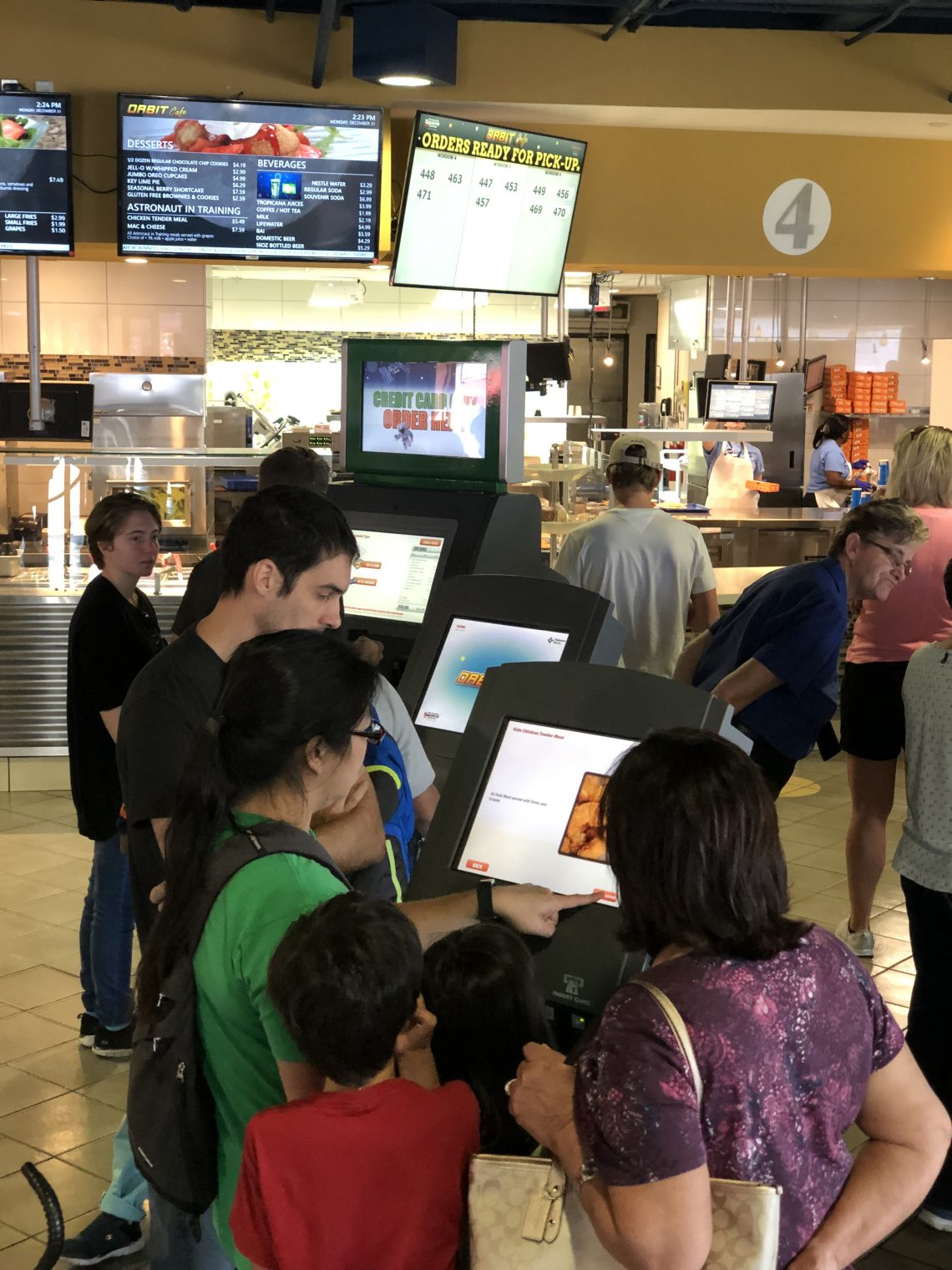
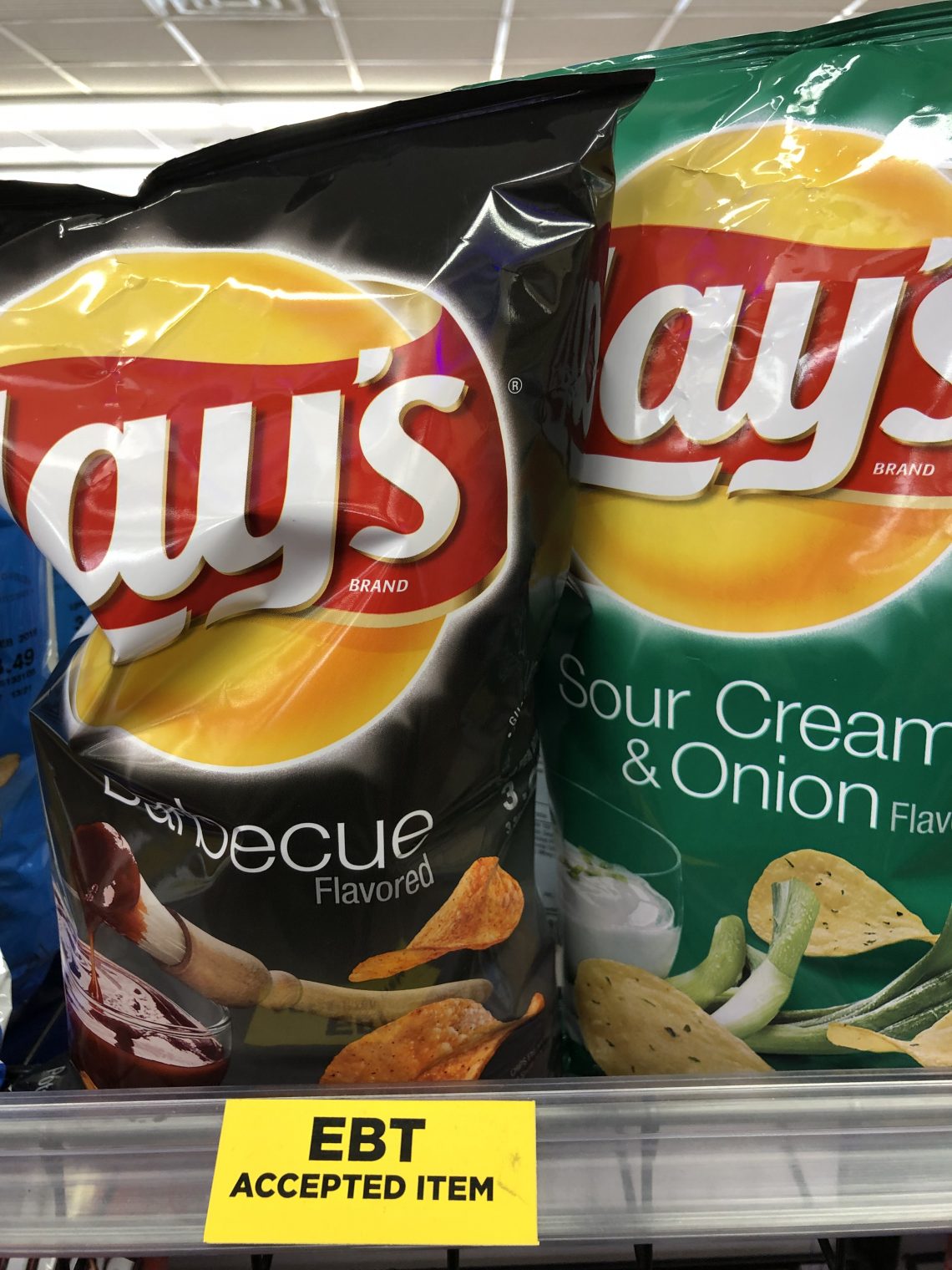
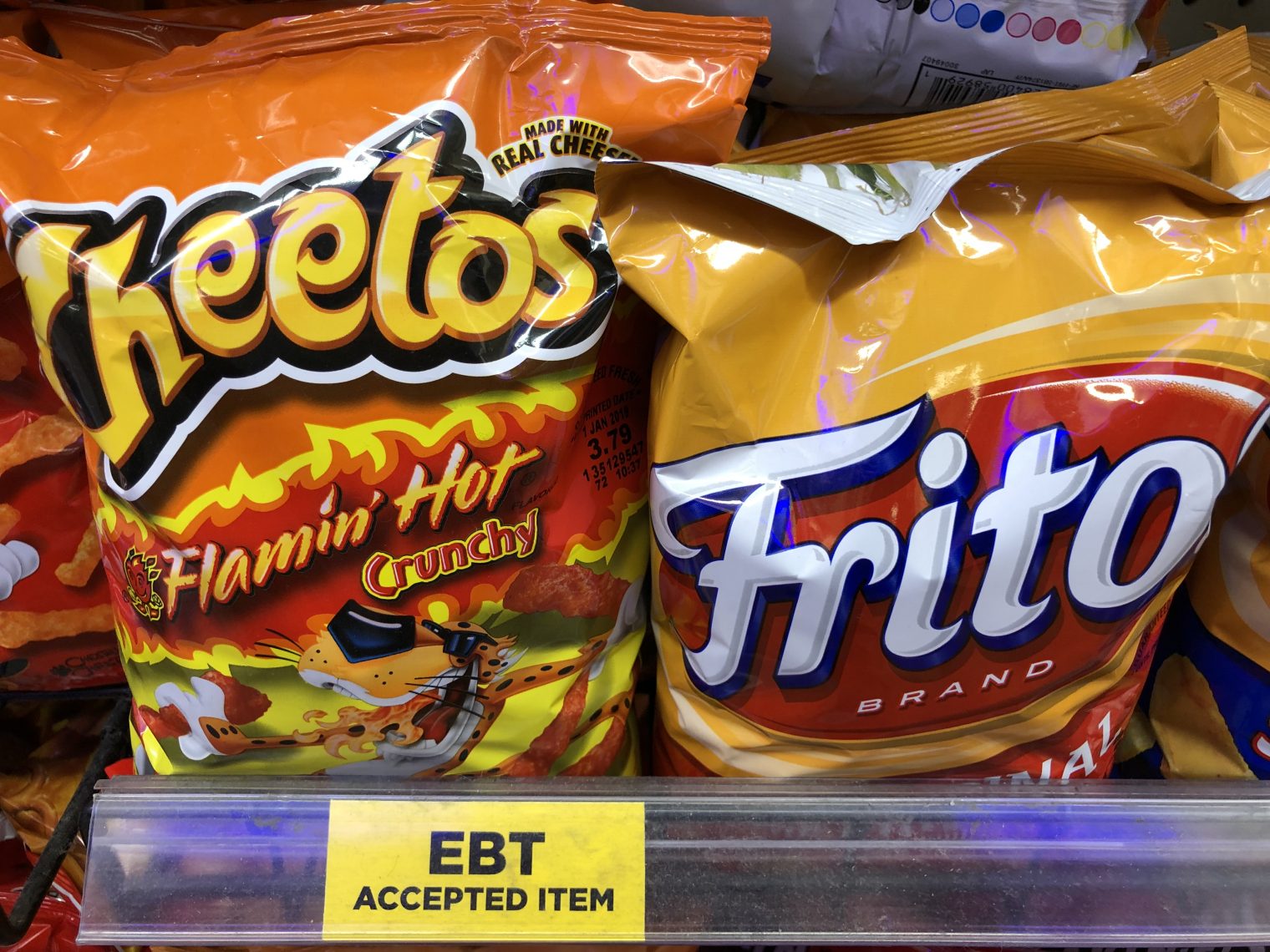
We claim to be humanitarians, which is why we provide free housing, health care, food, and smartphones to low-income immigrants and their children. But, in theory, we could help all 32 million people in Venezuela to a much greater extent at a much lower cost than what we’re providing to tens of millions of welfare-dependent immigrants (at least one million in New York City alone, according to the nytimes).

If we don’t care about helping the vulnerable then obviously there is no need for us to bother. But then why do we spend $1.2 trillion on welfare? If we do care about helping the vulnerable, why don’t we set Venezuela back on its feet? How much resistance would current members of the Venezuelan military and police put up if we said “Staring Monday you’ll all be getting paychecks in dollars”? Are these folks truly fanatically devoted to their current way of doing things?

Plainly we couldn’t promise “free elections” since Venezuelans did freely vote for the current government (see Hugo Chavez: Great politician; poor administrator).

And probably we wouldn’t be successful in meeting expectations. Foreign Policy says “Venezuela was considered rich in the early 1960s: It produced more than 10 percent of the world’s crude and had a per capita GDP many times bigger than that of its neighbors Brazil and Colombia — and not far behind that of the United States.” The author is a brilliant “geoeconomics” expert, but apparently economists aren’t interested in long division because the article doesn’t include the word “population.” The population of Venezuela was 7.6 million in 1960 and dividing oil revenue by 7.6 million resulted in “per capita rich”. The same oil reserves divided by 32 million, of course, yield a disappointingly smaller number.

So of course we probably don’t want to invade Venezuela. But if we don’t, why do we say that our government acts in a humanitarian manner? Who needs help right now more than Venezuelans?

And if we don’t want to use our military for this, why do we need such a huge military? What other country would our new Congress want to invade?

Full post, including comments

Aspiration for Democrats: a government voted into office by people who can’t find the Post Office

A California Democrat on Facebook posted a link to “College students say they can’t send in their absentee ballots because they don’t know where to buy stamps” (Business Insider) and added the following:

Post Office policy is to deliver your ballot whether it’s stamped or not – so don’t let your lack of a stamp stop you from voting.

He is well beyond college age so I’m not sure how many of these stamp-ignorant Millennials might be reached by his post.

My response:

It will be awesome to see these folks, who are unable to find a post office, denounce Trump voters as “stupid.”

Happy Election Day to everyone! My ballot here in Massachusetts is nearly all candidates running unopposed, but I would be interested to hear from readers in states where not everyone agrees on the One True Path.

[My Facebook feed today is filled with friends bragging that they voted, often complete with a photo of an “I voted” sticker as proof. Most of these folks live in states such as Massachusetts or California where the outcome of the election is not in doubt, but these folks often describe their actions in heroic terms and add some trash talk about how people in other countries don’t get to vote (where is that true?). My Facebook friends are living through (and heroically acting in) dramatic times:

It is not the Democratic Party on the ballot today, but democracy itself.

More than perhaps ever before, your vote matters a great deal

Probably more is at stake, then, than during the 1860 election in which Abraham Lincoln ran as an anti-slavery Republican?]

Full post, including comments

Barbara Streisand may be moving to Canada after today…

… but not Mexico?

“Barbra Streisand Can’t Get Trump Out of Her Head. So She Sang About Him.” (nytimes):

How are you feeling these days?

I want to sleep nights, if we take the House I’ll be able to sleep a little bit better.

And if they don’t?

Don’t know. I’ve been thinking about, do I want to move to Canada?

Escaping the tyranny of Republican rule makes sense, but why does Streisand want to go to the Frozen North (TM)? If she likes the LA climate, Mexico offers a variety of upscale neighborhoods with similar sunny warm and dry weather.

Related:

  • Worthwhile Canadian Initiative: “Canada is a whiter country than the US. We have a much larger Asian population and a much smaller Black population.”
Full post, including comments

Election outcome predictions?

Folks:

What are your election outcome predictions?

So much of the ballot in our town is taken up by candidates running unopposed that I haven’t put much effort into considering Massachusetts outcomes.

We have three ballot questions, though. Let me go on record with guesses regarding those.

Nurses want state-set staffing minimums. Nearly everyone in Massachusetts is somehow dependent on the health care industry, so I think this will fail. Max Weber would agree with my prediction, I think.

Question 2 is about forming a commission to complain about Citizens United (nothing is worse than free speech when people say stuff that the righteous don’t want to hear). I predict that this will fail due to its obvious futility. (Though maybe it will win because it enables people to show their righteousness while wasting only a few $million?)

Question 3 is about whether people who attempt to interfere with a biological male using the women’s locker room, for example, should be imprisoned for one year (a longer sentence than the typical Nazi war criminal served). I predict that the “Yes” votes win (preserve the current law, which allows those who fail to keep up with the LGBTQIA times to the pokey). There is no cheaper way to feel virtuous than voting in favor of something that will purportedly help the transgendered.

I haven’t studied the close Democrat/Republican races too closely (I am unable to vote in them), but my general assumption is that most Americans want a planned economy so they’ll vote for Democrats unless a corrupt or similarly flawed candidate is put forward. Then, on the other hand, Americans are fearful of change, so they’ll vote for incumbents. So I will guess that Democrats win 80 percent of the “close” races in which neither candidate is incumbent, 95 percent of the close races in which a Democrat is the incumbent, and only 50 percent of the close races in which a Republican is the incumbent.

Readers: What are your best guesses right now?

Full post, including comments

Nerds help to heal the world…

… by voting for Democrats. From “Letter from [MIT] President Reif: Consoling each other and helping to heal the world”:

As our nation once again confronts heartbreaking mass violence, sending this annual reminder of MIT’s policies against harassment may feel to some as inconsequential and almost irrelevant.

By reminding us that violence, racism, harassment and bullying are out of bounds – period – our policies can help lead us from error. Yet they cannot lead us towards the light: the essential duty to treat each other with respect, sympathy, decency, humility and kindness; the responsibility each of us has to make sure that everyone at MIT can truly feel at home; the challenge of finding a way to repair our fractured nation. This work we must do for ourselves.

Our policies also demonstrate that official statements matter – for good or ill. For instance, a recent draft of a government policy would redefine gender in a way that would erase the dignity and lived reality of well over a million transgender Americans, including many members of our MIT community. And next week in Massachusetts, the civil rights of these Americans are up for a vote.

Is there a political party that an MIT community member could vote for that would oppose this effort by the Trump Administration?

Ultimately, nothing we do or say at MIT can reverse the fact that, from Pittsburgh to Jeffersontown, Charleston to Orlando, a baseball field in Maryland to the Boston Marathon, fellow human beings have been targeted and killed for being themselves.

“Orlando” is a reference to Omar Mateen’s shooting rampage? Is there any evidence that he targeted the Pulse nightclub because it catered to a gay clientele?

Full post, including comments

What it takes to welcome refugees and other immigrants

Our Towns: A 100,000-Mile Journey into the Heart of America by James and Deborah Fallows identifies the presence of refugees and immigrants as a sign of an American town’s success. What’s the price of success?

When the Sioux Falls public schools opened their doors in 2013, the biggest single group of these students, about one-third of the total (according to school district figures), were the 700 Spanish speakers, many of whom arrived in migrant worker families. As for the other two-thirds, when we visited, there were 259 Nepali speakers, 135 who spoke Arabic, 129 Swahili, 101 Somali, 93 Amharic, 84 Tigrinya (a Semitic language from the Horn of Africa), and 77 French. A very long tail of other languages included many I’ve never heard of, and I have been studying languages and linguistics all my life. Mai Mai had 27 speakers in the city, Nuer had 7, and then there were Grebo, Lingala—the list goes on.

The school programs start in the classroom and extend to tutoring, summer school, free lunches, and bus passes. They also look to whole-family success. Home-to-school liaisons do things like help schedule parent-teacher conferences and round up translators. Sometimes, translation involves the children’s game of telephone, where speakers pass on a message from one language to the next and the next, and then back again. Such details are fundamental to keeping the entire system working.

Where do you start acculturation with the ocean-deep discrepancies among the children? In refugee-rich Burlington, Vermont, one school’s population includes the daughter of the principal and a little boy whose life experience is so raw that he pees in the corner of the classroom because he can’t imagine a toilet in a restroom.

Although the authors are unreservedly positive about the benefits that low-skill immigration bring to Americans, the facts that they relate do not seem to support this perspective. Many of the “immigrant-rich” or “children-of-immigrant-rich” cities that they write about are remarkable for their poverty and lack of economic growth. For example:

The city’s population had long been more “majority minority” than the entire state’s—San Bernardino is now about 60 percent Hispanic, versus about 40 percent for California—and significantly poorer. The median household income in the city is under $40,000, versus over $60,000 for the state and over $50,000 for the country. San Bernardino is the poorest city of more than village size in California. When things went wrong for the country as a whole in 2008, they went worse for San Bernardino. Because its population was so poor to begin with and had lost so many previous sources of income, the debt levels on its real estate shot up during the subprime bubble of the mid-2000s and then home values fell extra hard, making the city one of the foreclosure centers of the country. Its unemployment rate neared 20 percent at the worst, and even as it improved it remained nearly twice the national level. In 2014, a WalletHub ranking put it dead last on a ranking of job prospects in 150 metro areas.

“We have one of the poorest communities in the nation, fifty-four percent of the population on some kind of public assistance. And our public school system is requiring that our taxpayers further invest dollars that they don’t have, for students just to barely get an entrance requirement for community college. That’s tragic. I couldn’t take that anymore. You’ve got to fix it.”

(The chapter on San Bernardino does not mention its most famous immigrant, Tashfeen Malik, or child of immigrant, Rizwan Farook, or the most famous recent event in San Bernardino, i.e., the 2015 shooting.)

Don’t feel bad for everyone in San Bernardino, though: “This city with a per capita income of $35,000 ended up paying its public safety workers total compensation of about $160,000 apiece, or about $40,000 more than the statewide average.”

Allentown, Pennsylvania is described as having gone from mostly white to “more than 40 percent Latino” and simultaneously to “a bombed-out-looking, high-crime shell of what had been until the 1980s an architecturally attractive and commercially successful downtown area.” Ultimately the city is restored to some extent with huge tax breaks that have drawn in development dollars and projects from other cities and towns in Pennsylvania. The FBI got interested in why certain developers happened to be favored in this public-private partnership and six local officials pled guilty to corruption. In October 2018, the mayor was tried, convicted, and sentenced to 15 years in prison.

How dramatic has the change in American demography been?

The history of the student population is very different from that of the staff. Since the late 1980s, the demographic composition of Dodge City’s [Kansas] students has dramatically changed. According to one estimate we heard from city officials, the Hispanic population in grades K–12 would have been about 20 percent in the 1980s, and is nearly 80 percent today. First Mexicans, then waves of others from Central American countries like El Salvador, Honduras, and Guatemala. Dodge City is, in effect, a “port of entry,” says Robert Vinton, the director of the Dodge City Migrant Education program, even though it is nearly seven hundred miles north of the border. The high school is about 70 percent Hispanic, with another 7 percent designated as “other,” which includes African and Asian immigrant populations; the rest are Anglo. In the high school, 36 percent of students are English-language learners.

Each August, some twenty or thirty new immigrant students are likely to show up. They continue to dribble in through May. The latest wave came from Guatemala, many of whom—even at the high school level—were entering a classroom for the first time and were illiterate. At home, conditions are often poor, and many families arrive with a rough history.

Among the social services I saw: counseling for students who are pregnant, who are already moms, who have incarcerated parents;

More than 50 percent of the students (not all of them migrants) in the DCPS are enrolled in well-established English-Language Learner (ELL) programs. The recently arrived Guatemalans have brought a new linguistic twist. While Guatemala is officially a Spanish-speaking country, roughly twenty-four indigenous languages are spoken there as well. For some who arrive in Dodge City, an indigenous language is their sole language. This forces the same kind of telephone-game translation system I saw applied in Sioux Falls, where a series of interpreters hot-potato a conversation from English to two or three other languages and back again.

In Dodge City, there are some illiterate teenage children arriving who “don’t know how to hold a pencil,” Vinton told me.

Deborah Fallows rides with “Sister Roserita Weber and Sister Janice Thome, nuns of the Dominican Order of Peace” as they serve the immigrants and children of immigrants in Dodge City, Kansas. There are “single moms” with up to six children. There are women trying to get Green Cards based on having been domestic violence victims (see “Au pair to green card” for how this works when done right). There is a family that needs a free ride from “a school’s summer free-lunch program to their trailer.”

Sometimes it seems that immigrants themselves are a resource to be mined by an otherwise failing town. The Rust Belt’s Rust Belt town of Erie, Pennsylvania, for example, is now 10 percent refugee:

I went to visit the starting point for Erie’s continuing flow of new arrivals: the field office of the U.S. Committee for Refugees and Immigrants (USCRI). It was already beginning to bustle before 9:00 a.m. on a hot August morning. A woman wearing a bright African cloth wrapped at the waist, with two little children beside her, was sitting on the concrete step in front of the building, waiting for something or someone. Clusters of others, mostly talking quietly in Arabic, were waiting inside in the stuffy reception area. A few of the staffers behind the reception windows were greeting everyone who came in. Along the narrow halls, there were day-care rooms, and there was a play area outside. Beyond some parked strollers and water dispensers, a language lesson was in progress; the instructor was juggling a meld of English grammar and culture for a dozen or more men and women seated at long tables.

Part of that summer bulge was the Zkrit family, who arrived in Erie early in June. In 2012, Mohammad Zkrit was living in Aleppo, Syria, with his young wife, Yasmine, and their two small daughters, and was working in a fabric factory. Then one day, his neighborhood was bombed by the forces of Bashar al-Assad. His house was destroyed, and he was injured.

After three years in Jordan, they were offered the chance to resettle in the United States. Zkrit, thirty-six, and his wife, twenty-six, and their growing family of four young children boarded a plane in Amman bound for Chicago and, ultimately, Erie.

The Fallowses visited in 2016, which means that Mr. Zkrit had been in the U.S. for about one year. How was a guy with experience in “a fabric factory” going to fare in the labor market of a state with no fabric factories? It turned out that he was unemployed, unable to command even the minimum wage of $7.25 per hour. Also, he did not speak English. Through an interpreter, however, he told the authors how happy he was in Erie and the U.S.: “America is my dream country.”

[Mr. Zkrit, with his lack of English, is not the most challenging refugee in Erie from a job placement perspective. The authors also write about “at least twenty-four deaf refugees from Nepal who live in Erie now.”]

How can a town survive with 10 percent of its population being unskilled unemployed refugees with four kids each? I wonder if the answer is harvesting federal subsidies. Our poorest cities often have sparkling new hospitals, built by mining elderly citizens for Medicare dollars. Could it be that Erie is mining refugees for the Federal Welfare that attaches to them? Each refugee is entitled to housing, health care, and food, all of which will be funded nationally, but purchased in the local economy.

The authors are negative on Donald Trump and imply that anyone who votes for him would be doing so out of “resentment,” “fear,” or “grievance.” They’re especially dismayed by Trump’s opposition to low-skill immigration. Yet their book shows that only a crazy rich country could possibly afford to run both low-skill immigration and a comprehensive welfare state.

More: Read Our Towns: A 100,000-Mile Journey into the Heart of America

Full post, including comments

ADS-B should sequence airplanes at nontowered airports?

I flew the Cirrus recently to Gaithersburg, an airport that supposedly sees only 131 operations per day (airnav). On the flight from Allentown, Pennsylvania to KGAI, the controllers did not even once tell me to look for a nearby plane. I was pretty much alone in the sky at 6,000′.

Things were different within 5 miles of the destination airport. I arrived on a gusty bumpy Tuesday at 1 pm and became the fourth airplane in the pattern as this non-towered airport. I departed behind a Pilatus PC-12. The Pilatus crew waited for a small plane to land before they could depart. I asked a plane on downwind to extend slightly so that I could get out with my IFR clearance (i.e., there were at least four airplanes operating at 5 pm when I departed). Given the active flight school at KGAI and the fact that I have nearly always found myself with company in the traffic pattern there, I question the 131/day number (since there is no control tower, the statistic may not be authoritative).

There is some structure to the traffic pattern at an airport that makes it a bit easier for pilots to identify each other, but self-sequencing is not always successful. AOPA’s Air Safety Institute: “Eighty percent of the midair collisions that occurred during ‘normal’ [not formation or aerobatics] flight activities happened within ten miles of an airport, and 78 percent of the midair collisions that occurred around the traffic pattern happened at nontowered airports.”

Americans have spent billions of dollars over the last twenty years on ADS-B, partly sold as a way to avoid midair collisions. I’m wondering now, though, if ADS-B solves the wrong problem and/or the non-problem of enroute traffic conflicts.

Maybe it was too advanced an idea in the 1990s when ADS-B was conceived (with an implementation date of Jan 1, 2020!), but I wonder if it would make sense for ADS-B gear to sequence airplanes at nontowered airports. Why couldn’t the pilot press a button on the transponder and have the ADS-B software say “You are Number 3 for Runway 32. Number 2 is turning right base. Number 1 is on final”?

Full post, including comments

Why does the U.S. accept refugees from Bhutan?

I’ve recently finished Our Towns: A 100,000-Mile Journey into the Heart of America by James and Deborah Fallows. James is a Cirrus pilot and the couple traveled around via light airplane so I thought that there would be some interesting material for pilots (presumably reflecting the general public’s lack of interest in the details of flying, not too much ink is spilled on the subject of flying per se).

The authors describe a country where nearly every corner is packed with immigrants of all types, including asylum-seekers and refugees:

Like Sioux Falls, Burlington[, Vermont] has been a resettlement city for refugees for decades. It, too, has refugees from all over the world, and it, too, has embraced the sense of becoming a richer, better city for having them. During our first days in Burlington, I sat in on a workshop at the Vermont Refugee Resettlement Program (VRRP) in Burlington, where nearly twenty very newly arrived Bhutanese were learning the cultural ropes for their new jobs. Get to work on time. Check bus schedules on holidays. Call your boss if you are sick. Be friendly to your colleagues. Smile. Sit with workmates at lunch, even if language is a barrier. Wear deodorant and clean clothes every day.

The authors are enthusiastic about the potential of a planned economy (“public-private partnerhip”), especially when applied to the challenge of bringing in low-skill immigrants:

Miro Weinberger, mayor at the time we visited, is himself an example of Burlington’s draw for its particular kind of human capital. Weinberger’s parents, from Long Island, moved north during the Vietnam War “to opt out and find a different value system,” Weinberger told us. He is one of many forty-something children of that migration who stayed in Vermont. “You’ll hear a lot about public-private partnerships,” he told us on our first visit. “This is a place where it’s really true.” In Vermont, these efforts—to teach nutrition and sustainability courses in the schools, to find work for some of the Burmese and Bhutanese refugees being resettled in the area, to foster tech start-ups—are often called “social responsibility” efforts, a part of the brand we came to think of as being classically Burlington.

What is hard to understand is why people from Bhutan qualify as refugees. (Or at least did in 2013 when the authors visited.)

The U.S. Department of State says that Bhutan is as safe as anywhere on Planet Earth (travel page). Lonely Planet says “Bhutan is a remarkably safe destination, almost completely devoid of the scams, begging and theft that affects its neighbours.”

The described Vermont Refugee Resettlement Program is part of a larger organization that is funded about 90 percent by tax dollars. The public housing, Medicaid, food stamps, and Obamaphones consumed by the Bhutanese in Burlington are funded by tax dollars. Why are taxpayers funding refugees from a country that they would otherwise be dreaming of being wealthy enough to visit (Bhutan charges a minimum of $200-250 per tourist per day, depending on the season, plus airfare from the U.S. isn’t cheap!).

[If the public-private partnership yields the Bhutanese only a low-wage job or if demand for workers who don’t speak English proves weak, the folks described will be lifetime dependents on U.S. taxpayer-funded welfare (means-tested public housing, Medicaid, and food stamps, for example).]

Maybe there is an argument for filling the U.S. with immigrants from Bhutan, but why are they “refugees”?

Readers: Are there other luxury tourist destinations from which a person can come to the U.S. as a “refugee”?

Related:

  • “In Bhutan, Happiness Index as Gauge for Social Ills” (nytimes): “In 2015, his staff members released a study that showed 91.2 percent of Bhutanese reporting that they were narrowly, extensively or deeply happy, with a 1.8 percent increase in aggregate happiness between 2010 and 2015.”
  • “Vermont job creation lagging nation’s by considerable margin” (Burlington Free Press, October 31, 2018): “Unlike in Vermont, the U.S. economy has been adding jobs at a very respectable rate. To show how far Vermont is lagging the nation, consider that Vermont now has the same number of jobs it had in early 2015.” (not too many employers required fluency in Dzongkha, as it happened?)
Full post, including comments

Artwork of victimhood strategy proves unprofitable for our local museum

The deCordova museum hit the financial wall recently and is being absorbed by a more successful nonprofit. From the press release:

Like many non-profits, deCordova has an endowment that has not grown over time to keep pace with the organization’s needs. The endowment currently covers only 7% of the annual operating costs, compared to a national average of 22% for art museums, and up to 70% for some museums in the Boston area. While the Museum has expanded and diversified its revenue sources, it was not enough to support even a dramatically pared down operating budget.

Integration with The Trustees will provide deCordova with long-term fiscal stability, but that’s not the only reason this integration makes sense.

The museum’s main strategy recently could be characterized as the “the artwork of victimhood.” From “Expanding Abstraction: New England Women Painters, 1950 to Now”:

This exhibition presents a vital yet lesser-known history of abstract painting in New England by showcasing the work of women painters with strong connections to the region. Despite their relative exclusion from mainstream and male-dominated conversations on postwar abstraction, these artists have made significant contributions to the field.

From Dana C. Chandler Jr.’s “The Ghetto”:

Since the 1960s Dana C. Chandler Jr. has been committed to addressing social inequities fostered by racism in the United States. His art confronts the stark realities of poverty, incarceration, and oppression as well as leadership and empowerment in African-American history and contemporary life.

Well, you get the idea. How could they have run out of money given this virtuous program? The museum is surrounded by Millionaires for Obama. If these folks are as committed to social justice as they say, why wouldn’t they open their checkbooks, as well as their hearts?

Full post, including comments