Must-see Cinema: Wedding Crashers

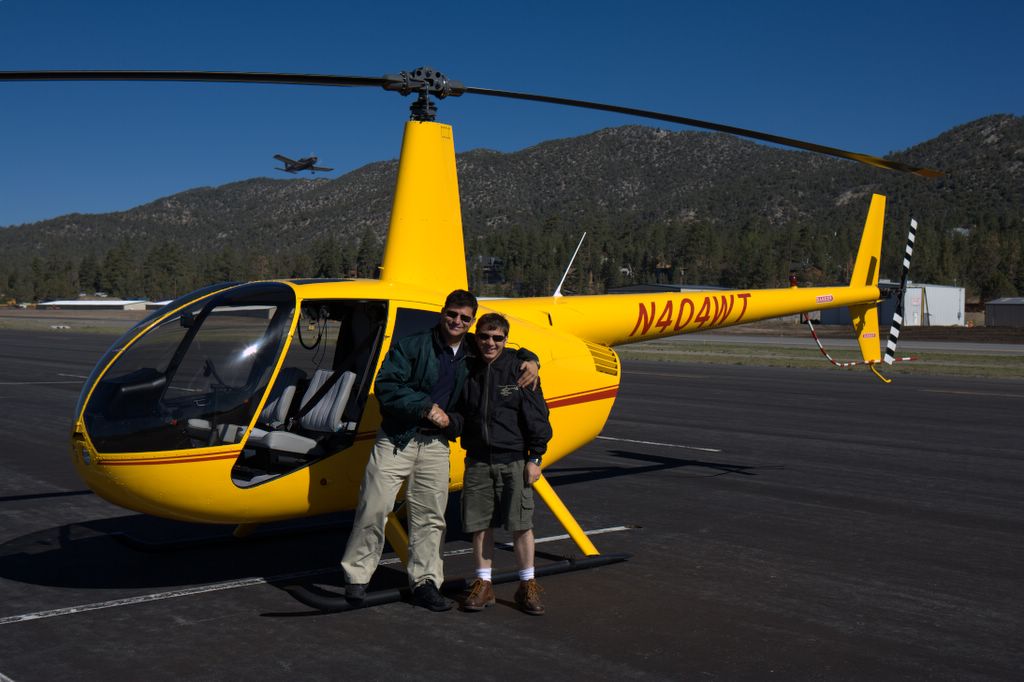
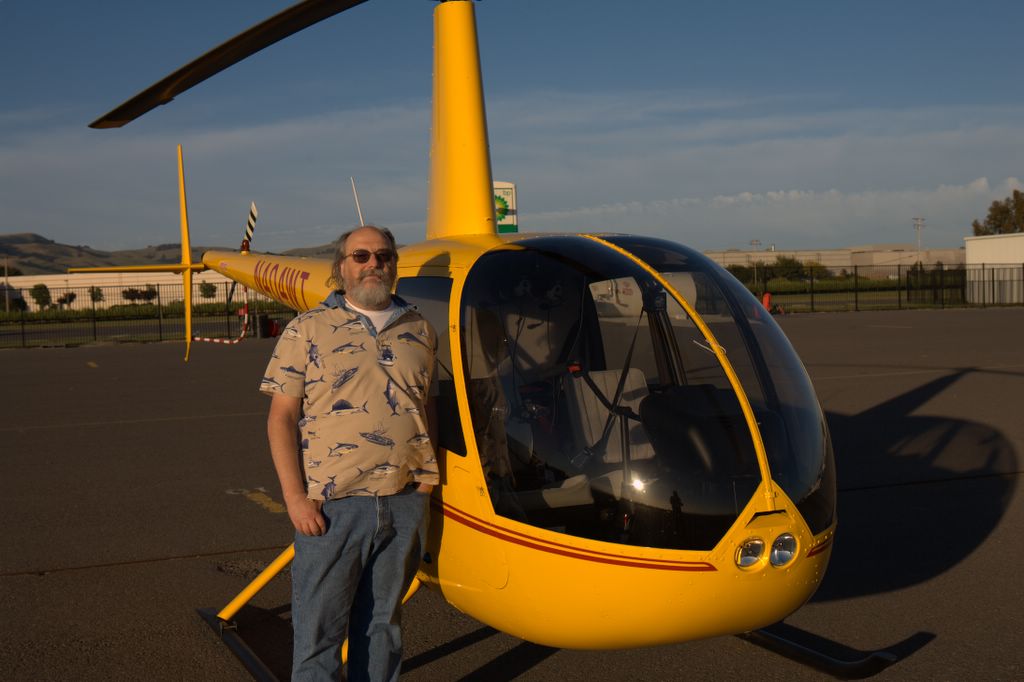
Alex and I arrived back in Anchorage today after a great week in Homer and a couple of fun helicopter lessons out of Girdwood (not too many other helicopter schools where you see moose and glaciers on the way to practicing autorotations).


First stop was downtown where a lawyer friend had just returned from finalizing a divorce.  As it happens divorces are finalized in the same building where civil marriages are performed.  She and her client walked by a happy set of families all dressed up for the big ceremony.  A moment later they were alone in the elevator.  The just-divorced man said “I should really tell that groom to go into his bedroom and put his nut-sack into the dresser and then slam the drawer 10 times if he wants to know what it will feel like 13 years from now.”


So when it came to choosing a movie for the evening it had to be “Wedding Crashers” at the Regal Fireweed.  Marion and I laughed until we cried.  Highly recommended if you’re an Owen Wilson fan.

Full post, including comments

Folks I met in Homer today

Here’s a chronological list of folks whom I talked to in Homer yesterday…


  • Mike, the Buddhist from New Hampshire who runs the Good Karma Inn dog-friendly bed and breakfast, an expert on the Vietnam War in which he served
  • the guy down the street who was packing up his venerable Volvo station wagon for a drive north to the Kenai River where he, his girlfriend, and their 13-year-old Husky would dip-net all night for salmon (limit of six per Alaska resident per day) on which they would subsist; he works all winter on the Alaska Marine Highway ferries that ply the sometimes horrifically rough water between Homer, Kodiak, etc.
  • the folks in line at the Post Office who were complaining about how beastly hot it was down in Seattle last week when they were visiting
  • the young folks who had been working at a hotel at the entrance to Denali National Park but hated the manager so they’d all quit four days ago and had come down to Homer and set up a tent city on the Spit; all had instantly become gainfully employed in various hotels and restaurants
  • a nice guy from Mexico City who was here working illegally; he had hoped to get a job on a crab boat but couldn’t find one.  Fortunately the U.S. Air Force had hired him, indirectly one supposes, for a $32/hour job doing some construction at a base near Fairbanks.  He was planning to move to Hawaii in October and get a job.  “I have lost a lot of jobs because I don’t have papers but there is always work.”
  • Arlee (sp?), a massage therapist working on the Spit who had majored in massage at University of Alaska Anchorage and plans to return to medical school.  She fed Alex and me homemade cookies, peaches, and water.
  • Chelsea, a cute 10-year-old girl from Anchorage who is a mixture of Indian, Eskimo, Mexican, and some general European.  Her mom, half Indian and half Eskimo, comes to the Spit every summer to run a native crafts shop.  During the school year she teaches native crafts in the Anchorage schools.  I asked Chelsea what she wanted to be when she grew up.  “A teacher.”  We agreed that this was ideal.  A union job.  A government job.  Summers off.  Admonished to read lots of books and study hard Chelsea said “No.  I only want to watch TV.”
  • A young kayak guide and her boyfriend who were soon moving to the Olympic Peninsula so that he could attend a school for building wooden boats (not too far from where Ahmed Ressam entered the U.S. with his trunk full of explosives intended for LAX).
  • Vince, a pilot for the big cargo ships that sail up the Cook Inlet and dock in Anchorage.  During his off days he has managed to build a couple of kit airplanes, the latest of which is an almost finished Glasair Sportsman 2+2
  • Some folks at Maritime Helicopters who had just ferried a brand new Bell 407 helicopter back from the factory in Montreal.  “Be careful taking tourists up and landing them on glaciers; they tend to fall into crevasses.”
  • Brad Feld and his wife Amy, a traditional MIT/Wellesley couple who come up here from Boulder, Colorado every summer.  Our dinner table was probably the only one in Homer that contained no hunters or fishermen/women.
  • Doug Epps, bush pilot and his wife and inlaws.  Brad and Amy had flown with Doug last season.  I had flown with Doug on Monday morning in his Cessna 172 on floats.  We flew across the bay, landed in some pristine lakes, flew down a glacier, and then spotted a humpback whale swimming in the middle of the bay on the way back to Homer’s downtown float plane lake.
  • A guy at the Petro who was paying $260 to fill up his motorhome and boat at the same time.  “Goddamn Bush.  He isn’t doing a single thing for us.  He should have bombed all of those people in Iraq and gotten out.”

Today:  biking, drive to Girdwood, and a helicopter lesson.  Saturday:  the Merrill Field 75th anniversary party.

Full post, including comments

Reading about fatcats and fat folks in Homer

The July/August issue of Atlantic Monthly has a small story on “top ten deadbeat Congress members”:


“According to federal statute, if a lawmaker misses a day of work while Congress is in session, he or she must forfeit that day’s pay.”


Senator John Kerry apparently wasn’t following the law.  He missed 146 days of work in 2003 and 2004 but pocketed the $90,933 in salary to which he was not entitled.


Today’s Anchorage Daily News carries a story from my home state of Maryland.  The story is about a 625-lb. gentleman named John Keitz who has not gotten out of bed since 1998.  [Note to men who’ve been divorced or dumped by their mates: Mr. Keitz’s wife Gina has stuck by him throughout his difficulties in getting up.]  My favorite part of the story…


“Every time Keitz must be moved, a major public drama ensues. … Two months ago, it took a whale sling from the National Aquarium in Baltimore and a flatbed truck to haul him out of his house.  A television news chopper monitored from above.”

Full post, including comments

Big Bang by Simon Singh

I just finished Big Bang; The Origin of the Universe by Simon Singh.  As with Singh’s books on crypto and Fermat’s Last Theorem this is just about as good as science writing for a general audience gets.  Singh is British and assumes that an intelligent reader can handle a fair amount of real physics (he himself has a Ph.D. in physics) and does not try to spice things up with an excessive focus on the personalities of the scientists (most of whom don’t actually have much personality, of course, or none that would be recognized by Paris Hilton).


One of the interesting tidbits in the book for me was about Ralph Alpher, who provided the mathematical and theoretical basis for the Big Bang theory, notably for the formation of hydrogen and helium out of a soup of protons, neutrons, and electrons.


“Alpher’s academic career had started promisingly in 1937, when, as a sixteen-year-old prodigy, he received a scholarship to the Massachusetts Institute of Technology.  Unfortunately, while chatting to one of the institute’s alumni, he casually mentioned that his family was Jewish — and the scholarship was promptly withdrawn.  … The only way that Alpher could get back on the academic track was by holding down a day job and attending evening classes at George Washington University, where he eventually completed his bachelor’s degree.”


Back in 1978 I was holding down a day job (Fortran programming for some scientists; a job that is probably still available today!) and attending G.W.U. at night.  Then in 1979 I transferred to M.I.T., precisely the reverse of Alpher’s path.


[Due to a lack of good experimental data, e.g., an observation of the cosmic microwave background radiation predicted by Alpher and his collaborators Gamow and Herman, their Big Bang theory was ignored and all three guys abandoned cosmology.  Alpher went to work at G.E. and Herman went to work at G.M.  Gamow was a tenured professor at G.W.U. and drifted into seemingly more promising areas.]


Another fun part of the book is the recounting of Pope Pius XII’s 1951 endorsement of the Big Bang theory against the Steady State model, many decades ahead of the average physicist.


I finished the book at the Beluga Lake Lodge in Homer, Alaska while Jewel’s brother Nikos was setting up to play some of his songs.  The weather here seems to be reliably sunny and 65-70 degrees.  Almost everyone in Homer has a beautiful view to the south across Kachemak Bay and to a range of mountains that climb to about 7000′ high and are dotted with snow and glaciers.

Full post, including comments

Schedule for return from Alaska to Boston

For friends and family…  here’s my schedule for returning from Alaska:


  • July 16: Merrill Field 75th anniversary party

  • July 17: Anchorage to Whitehorse

  • July 18: Whitehorse to Ft. St. John or somewhere else down the Alaska Highway

  • July 19-22: Jackson, Wyoming; Julian flies in to join us for the trip home

  • July 23: Minneapolis

  • July 24 or 25: return to Boston with stop in Chicago for lunch with Marcia

That’s the plan anyway.  If there is a freak high-pressure system guaranteeing clear weather over the coast it is possible that I’ll fly Anchorage-Juneau-Vancouver (this is actually completely out of the way compared to a Great Circle route from Anchorage).  Any bad weather over the interior might close off the mountain passes and force some extra days on the ground at various points.

Full post, including comments

Anchorage Daily News

Today’s Anchorage Daily News is typical for the summer tourism season.  The top story on the front page is headlined “As things went wrong, hike became a deadly adventure” and recounts the death of 20-year-old Hezekiah Kelley, who lived in the Anchorage exurb of Wasilla.  Mr. Kelley and his cousin Richard went off on a quick hike on Saturday afternoon and got lost.  It was cloudy and rainy enough to induce hypothermia.  Hezekiah died on Monday morning.  Shortly afterwards a ranger in a helicopter spotted Richard.


The front page of the Alaska section starts off with “3 bodies are found in Cessna”, a story about three very experienced pilots from South Carolina who rented a 1973 Cessna 207 in Anchorage and disappeared after departing the Homer airport on Friday afternoon.  The weather was reasonably good so it is unclear how they ended up crashing into “a steep mountainside of a tiny island near the mouth of the Cook Inlet.”  The Alaska section also has continued coverage of “Bear that killed 2 was healthy male”, noting that “The Huffmans’ campsite was clean, with food in bear-proof containers and an unused firearm in the tent.  The [Anchorage] couple had been on a rafting trip and was in the tent when the attack occurred.”  The Huffmans were in the Arctic National Wildlife Refuge that has been the subject of controversy over whether to permit oil extraction.

Full post, including comments

Nunavut, Normal Wells, Dawson City, Eagle, Anchorage

We managed to make it out of Nunavut and broke out of the clouds over Great Bear Lake.  We stopped for fuel at Normal Wells, an oil and gas town on the mighty Mackenzie River in the Northwest Territories (no road access).  We proceeded to Dawson City, Yukon, famous for its party atmosphere.  Dawson City is marvelously endowed with government funds in the best Canadian wilderness tradition.  The buildings are restored, Parks Canada is everywhere and in period costume, there is a school and a health clinic and an indoor swimming pool.  This was my first tourist town of the trip.  In Kugluktuk the last tourist had been through in April and he wasn’t there to sightsee, unless you count the sights that can be seen through a rifle scope.


Tourism in the far north is nice because it brings together young and old.  Mostly the youngest North Americans, notably Quebecers, are drawn to a life in the Yukon, either year-round or for a summer service-industry job.  Mostly the oldest North Americans are the ones with enough time to take a drive that far away (Dawson City is a two-day drive from Anchorage and probably a three-day drive from any large city towards the south).  The cruise ship companies have built hotels in Dawson City and offer it as a side excursion via bus and river boat from Anchorage or Juneau.  Instead of a paddlewheel steamer they’ve brought in an Australian-made catamaran that blasts from Dawson City down the Yukon to Eagle, Alaska every morning and then returns against the current in the afternoon.  Dawson City is also the starting point of the Dempster Highway, a gravel road that crosses the Arctic Circle on its way to Inuvik and supplies windshield cracks to nearly every vehicle in town, including my rental car.


I left “the Bunkhouse”, Dawson City’s one dog-friendly downtown hotel, around noon in my rental car for the drive to Dredge #4, one of the world’s largest wooden bucket dredges, now preserved by the Canadian national park service.  In the U.S. there would have been a big “no dogs” sign at the site.  In Canada the rangers in the ticket trailer offered to dogsit while I took the one-hour tour.  Basically what happened in Dawson is what happens everywhere that there is gold in the streams.  The big nuggets are mined out within a few years by guys using hand tools, including the famous standard gold pan, and then only small bits remain (early 1900s in the case of Dawson).  The Canadian government didn’t want to lose population and sovereignty over the Yukon so it accelerated the process of granting vast concessions and bringing in industrial dredges that can efficiently sift for the oatmeal-size pieces of gold.  The dredges scarred the creekbeds but they kept Dawson City alive at a town for about 70 years until its economy could be rescued by senior citizens in motorhomes.  This dredge is a fabulous piece of machinery with massive electric motors and steel-on-steel rotating surfaces (grease causes gold to float out the back of the dredge so it isn’t used in some of the most critical locations).


After my tour the rangers suggested that I continue driving the “unmaintained gravel” loop road to King Solomon’s Dome, which turned out to be quite passable in a standard car.  Coming down from the scenery I stopped for a soda at the Goldbottom Creek family mine, which offers electricity-free cabins and tourist goldpanning.  A guy from Quebec demonstrated the technique of shoveling some creekbed into a pan and then swishing the lighter pieces out until all that remained was some sand among which he found a few flecks of gold.


The coolest people that I met in Dawson were a young couple who were camped out by the Yukon River waiting for some friends.  They had a silky Border Collie and were planning to take two canoes, four people, and two dogs up the Dempster Highway to the Porcupine River then paddle down to the Yukon and pull out on the Alaska Pipeline haul road about a month later.  There they planned to hitchhike with their two canoes and two dogs down to Fairbanks.  Unfortunately I met them late Saturday night as they were applying first aid to a puncture wound on Alex’s back and my finger inflicted by a Pit Bull (visiting from New Jersey so once again the U.S. proves to be the source of all violence in the world).  The unleashed Pit Bull, owned by an aging hippie driving back to New Jersey in his white van, was initially friendly but as soon as he got excited decided it was time to kill and was not easily discouraged.  It had been so long since I had witnessed a real dog fight that I forgot not to try to pull the Pit Bull off with my hands so I got bit as well.  Eventually some hard kicks to the (small) Pit Bull’s back and stomach convinced him to let go.  Alex stopped bleeding pretty quickly but 36 hours later he is still sore (as is my finger).  I picked up hydrogen peroxide and Neosporin in Eagle, Alaska about 12 hours later.


Eagle is right on the Yukon and has 120 people, several churches, and two airports.  This is the town where Roald Amundsen, in the winter of 1905/06, sledged down from the Arctic Ocean to send a telegram announcing his successful Northwest Passage in Gjoa.  (Amundsen of course later went on to additional fame by being about the 13th mammal to arrive at the South Pole, the first mammal over the Pole being his lead dog Etah, a Samoyed.)


Because of the Yukon Queen II catamaran that arrives every day from Dawson it is possible to clear U.S. Customs at either the downtown uphill 1800′ grass/gravel/dirt/crossroad strip or the 3600′ gravel runway two miles out of town.  “Just fly over the town before you land,” Chuck, up for a month from Anchorage said on the phone, “and I’ll come out and clear you in.”  It was a beautiful, though slightly bumpy, ride up the Yukon River valley at about 1500′ above the river and 1000′ below the nearest mountain peaks.  That’s one thing that I love about Alaska flying.  You can look down, sideways, or up and see interesting sights.


Eagle has some historic military buildings from its days as Fort Egbert and a bunch of mushroom pickers working in town temporarily.  They walk through the woods and/or bogs all day collecting Morel mushrooms and sell them for $500 or more in the evening to a local businessman who dries them and ships them out.  Some of these folks are very strange characters indeed, with craggy features from living hard in the wilderness for many decades.


I left Eagle at around 12:30 for a flight to Anchorage.  This would have been an easy flight in a Piper Malibu with its ability to climb above the 15,000′ clouds and, at 24,000′, pick its way around any high cumulus buildups.  In an unturbocharged unpressurized plane, however, this required following the highways through passes underneath the clouds.  The Cirrus can’t handle ice and the freezing level was around 8000′ so ice would have been a distinct possiblity at the 10,000’+ minimum enroute altitudes on the instrument routes.  Also thunderstorms were forecast and you wouldn’t want to blunder into one while flying blind.  So you’re in a mountain pass, which fortunately tend to be wide in Alaska due to having been carved by glaciers rather than rivers, and there are mountains on either side, scattered clouds below and next to you in some places, rain showers reducing your forward visibility to 5-10 miles, and an overcast layer right at the tops of the nearest peaks.  For the flatland pilot this is terrifying.  I put the flaps in and pulled the power back so that I was going slow enough to evaluate every next step and so that my turning radius would be reduced if I decided to go back.  One thing that was odd about this flight is that the views to the southern coastal mountains were sunny and clear, revealing beautiful icefields and glaciers.  It always seems like the only bad weather in a region is right where one is intending to flying.  Unfortunately in Alaska it is tough to get complete information.  The Flight Service folks have Webcams in many of the most important passes and can tell you whether they appear open but most of the state’s weather is not measured by ground stations or RADAR.  If you go off an established route you are truly on your own.


Coming out of the mountains into the “Anchorage Bowl” was like returning to civilization.  RADAR, approach control, control towers, etc.  All the comforting bureaucracy to which a New England pilot becomes accustomed.  I landed at Merrill Field, which is smack in the middle of downtown Anchorage, and taxied over to the Ace Hangars.  This little cooperative has self-serve gas pumps ($3.35/gallon for members), a pilot’s lounge with high-speed Internet, and motel rooms for rent above the hangars.  You can stay right next to your airplane!  The guys at Ace gave us a lift to my friend’s house by the water where Alex was reunited with his Husky/Border Collie friend Bobbie.


Thus ends our little trip from Boston to Anchorage via Yellowknife and Kugluktuk.  We left on Wednesday morning and arrived a week later on Sunday afternoon, making it an 11-day trip with about 35 hours of flying for a total of maybe 4000 nautical miles. The Cirrus is holding up quite well except for one distressing incident an hour from Yellowknife in which the entire Avidyne Primary Flight Display “red-screened” for 15 seconds but then came back to life.  Once again the latest in software technology proves to be less reliable than what mechanical engineers designed 50 years ago.

Full post, including comments

Kugluktuk, Nunavut

Due to freezing rain and snow forecast for Inuvik, NWT, Alex and I came to Kugluktuk, Nunavut yesterday from Yellowknife.  Kugluktuk is 67 degrees 49 minutes north latitude, i.e., well above the Arctic Circle.  The town’s 1300 residents get all of their supplies in via air or by barges that come up the Mackenzie River, east through the Amundsen Gulf of the Arctic Ocean, through the Dolphin and Union Strait and into Coronation Gulf.  Sealift is possible only after the August breakup of the ice.


The Canadian Flight Supplement, equivalent to our FAA Airport Facilities Directory, shows that the 5500′ gravel strip here has 100LL fuel for sale.  I decided to call and verify.  “Yes we do have Avgas,” Alameda said, “How many barrels do you want?”  If you want less than 55 gallons or you don’t carry your own pump you’re kind of stuck.  “There are some guys doing an aerial survey up here who are using Avgas and have a pump.  They might sell you some of theirs.”


The hotel in Yellowknife was full, Inuvik was inaccessible to a plane without good de-icing gear, so I decided to launch.  It was a beautiful day filled with Arctic light and a few puffy clouds spreading over the rock-and-lake-studded tundra.  During the 2.5-hour flight I did not see another airplane or any sign of human influence on the ground aside from one small mining town.  The Cirrus SR20 can be run “lean of peak” with remarkable fuel efficiency:  8.5 gallons per hour at 140 knots.  I made it all the way from Yellowknife to Kugluktuk on less than half of the Cirrus’s tanks.  Frugality turned out to be unnecessary because just after I landed Denys taxied in with his Piper Navajo, festooned with magnetic survey gear.  Yellowknife and the lands to the north turn out to be home to some of the world’s richest diamond reserves, unproven until the early 1990s.  Folks fly around in bizarre aircraft looking for anomalies that indicate the presence of kimberlite pipes.  Denys and his crew filled N707WT, drove me to the town’s only open hotel (closed as of tonight for two weeks’ holiday), and brought me back here to the airport today.


Kugluktuk is an easy place to make friends if you’re traveling with a dog.  The “Copper Inuit” here have been making full use of modern technology.  The entire town, like most towns in Nunavut, is blanketed with a wireless Internet.  Travel in winter is via snowmobile, in summer via powerboat or four-wheeler.  Everyone is enthusiastic about hunting and eating “country foods” such as dried caribou, seal meat, or dried Arctic Char.  The local newspaper is filled with statistics on animals hunted for food or their hide.  The saddest number for me was the CDN$80 average price paid for a seal skin; it was painful for me to think about a wild animal killed for such a low price.


The teachers working in the government building invited me in for coffee and showed me their translation projects.  The Inuktitut language had mostly died out, except among some elders, and the territorial and federal governments are trying to revive it.  The kids, however, are not said to share the bureaucrats’ enthusiasm for the ancient tongue.  They’d rather speak English.


Folks in town pitied me for having to live in “the south”.  “How can you live in a place where all of the land is restricted and you can’t just go where you please?” they asked.  Here one can got for hundreds of miles in almost any direction without running into private property.  If you want to build a cabin you apply for permission from the tribal council and pay a minimal annual rent on the land (don’t try this if you are white).  “What did I like about Boston?” they asked.  “It is easy to find experts from whom to learn,” was my reply.  “But we have the Internet,” they responded.


Thanks to Irene, Corey, and Carey, Kugluktuk can be a very comfortable place to stay.  They run the Coppermine Inn, which is also the town’s only restaurant (superb home-made pies!).  The town offers beautiful views of the bay from almost every street.  The bugs haven’t come out yet this year (end of June is usually the beginning of the season of mosquitoes so numerous that you inhale them by mistake and so big that they ought to have navlights).  It would be a great place to return in April to run around in snowmobiles and look at the northern lights.


Everything was going swimmingly until I went back to the airport.  The public forecast had been for a nice sunny day.  A cold front, however, had swept down from the northwest and brought low ice-filled clouds and rain mixed with snow grains.  Right now it is 3 degrees C, about 1400 overcast, and the rain is coming down sideways.  Willie Laserich, the German bush pilot legend, came in a couple of hours ago from Cambridge Bay in his de-iced Twin Otter and said that he wouldn’t be willing to proceed southwest (my direction) even in his vastly more capable airplane.  Hans, who runs the flight service station and quasi-control tower here, is keeping us supplied with hot dogs, ginger ale, and high-speed Internet.  Maybe in another 8-12 hours things will clear and we can move on to Norman Wells or Dawson City, Yukon…


(Personal note: I’ve now visited every Canadian territory and province.  Before this trip I had never been to Manitoba, Saskatchewan, or Nunavut.)

Full post, including comments

AP News story on future careers in engineering

A friend in Silicon Valley sent me this article on career choices for engineers in the U.S.


[If you’re looking to transition out of coding you might consider opening a helicopter flight school in Edmonton.  The economy here is booming due to the high price of oil (Alberta actually has more petroleum reserves than Saudi Arabia but they require some work to extract, unlike in the Persian Gulf).  There is one CFI here with a Robinson R22.  He charges CAD$500 per hour!  The price in the U.S. is closer to USD$200 or only about half.]

Full post, including comments

Edmonton today; Yellowknife tomorrow

Quick trip update for friends and family…  The trip to Edmonton was uneventful except for some strong headwinds in flight (almost 40 knots) and gusty surface winds (20 knots gusting 25 was typical for most of the landings from Winnipeg and onward).  Jeff Foster, the Cirrus authorized service guy here in Edmonton, turned out to be quite the craftsman like a lot of aviation mechanics.  The plane seems to be holding up very nicely after 60 hours on the clock.


The weather forecast for the next couple of days is pretty good so Alex and I should be able to make it to Yellowknife and Inuvik as planned.  I booked the last dog-friendly room in Yellowknife a few hours ago and if we can’t find one in Inuvik we’ll just pitch the tent next to the airplane and eat granola bars (if living out of one’s car is a badge of honorable poverty among singer/songwriters what can one say about living out of an airplane?).


Nearly everyone in Canada has asked about Alex.  Aside from the dog-curiosity the main difference between a Canadian city and a U.S. city seems to be that the Canadians have groups of working-age men hanging around downtown.  Unlike the U.S. the Canadians have a welfare system for men of working age and furthermore that welfare system has no time limits.  So a lot of guys choose to let others pick up the slack while they hang with their buddies and drink beer.


Aviation here is fairly similar to the U.S. but slightly less formal and much less busy.  One can listen to an MP3 track all the way through on a Center frequency before being interrupted by a radio call from an airliner checking in.  At the aviation museum here in Edmonton one of the guides talked about how crazy busy the Edmonton airport was during WWII when they were doing training here and also ferrying 8000 planes over to the Russians.  “We had 850 operations [takeoffs and landings] one day during the peak!” he noted.  For comparison Logan airport in Boston has 2000 operations per day and Teterboro, NJ, a NYC-area airport for private planes, has nearly 600 per day.


I will be spending the rest of the night spraying permethrin into my clothing to repel the mosquitoes and other nasty bugs up there in the NWT.

Full post, including comments