“Where Was Nurul Amin Shah Alam?” (New York Times, May 11, 2026):
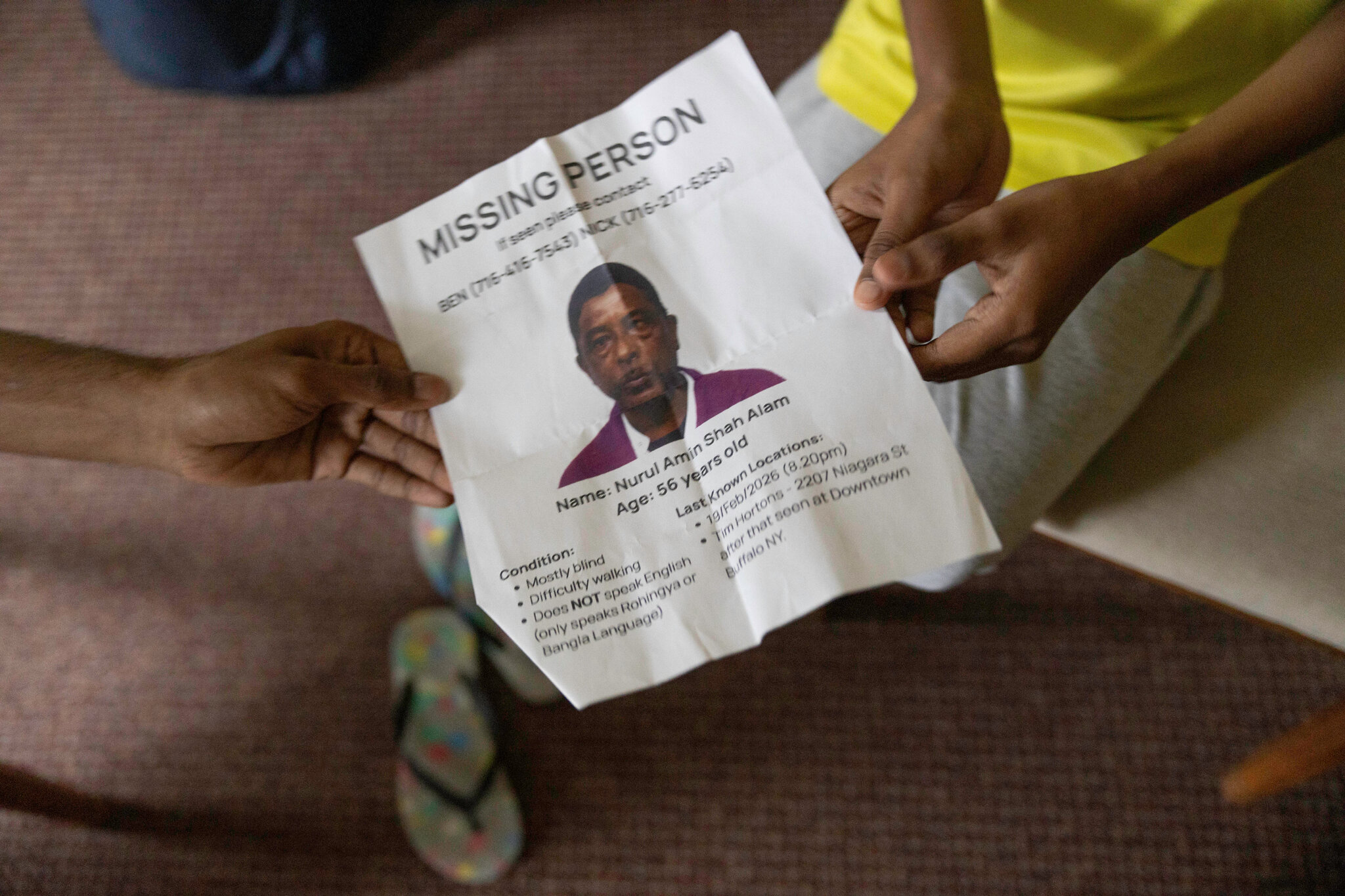
Nurul Amin, a 56-year-old grandfather despondent over broken American promises … he spoke no English, and was illiterate.
As a Rohingya, he was part of a Muslim minority essentially stripped of Myanmar citizenship decades ago and subjected ever since to an increasing repression of rights, the burning of mosques, the destruction of villages, even what the United States has called genocide.
After traveling more than 8,000 miles, Nurul Amin and part of his family arrived in the United States on Christmas Eve. Faisal bent down to touch the snow that symbolized their new reality: Buffalo.
“Very exciting,” he recalled.
Buffalo has benefited from the presence of families like Nurul Amin’s. Immigrants, including a Bangladeshi wave moving up from New York City, and refugees, including people from Myanmar, have revived dying neighborhoods, diversified the culture and spurred the city’s first growth since 1950, when it had more than double the current population of 278,000.
“You can’t have economic growth without population growth,” the mayor, Sean M. Ryan, said in an interview. “And the new Americans have been Buffalo’s economic lifeblood.”
Caseworkers for one of the city’s resettlement agencies, Jewish Family Services, moved the family to the ever-changing Black Rock neighborhood, where they settled into the top floor of a gray, Depression-era house.
Via the magic of federal welfare dollars, e.g., for Medicaid, SNAP, and public housing, even someone who speaks no English, is disabled, and can’t read can generate economic growth in the Rust Belt. Much of the money is skimmed off by taxpayer-funded nonprofit do-gooders:
Caseworkers for one of the city’s resettlement agencies, Jewish Family Services, moved the family to the ever-changing Black Rock neighborhood, where they settled into the top floor of a gray, Depression-era house. A caseworker helped them to adjust.
Donald Trump is the bad guy here:
Even worse, the president’s executive order also meant that Nurul Amin’s three older sons and their families in Malaysia would not be coming to the United States.
(This would have been an additional 20 immigrants who didn’t speak English?)
The hero of our story had a problem with the police that might have stemmed from the police officers’ inability to speak the Bangla and Rohingya languages that the new Americans we’re welcoming speak:
The two police officers who responded found a short, stocky man in the backyard and an aluminum shed with its door yanked off. They repeatedly ordered him to drop the poles, their voices rising with each new command, but he did not seem to understand. Where he came from, people in paramilitary uniforms represented oppression. … Nurul Amin became agitated. He began walking toward the officers, swinging the curtain rods and saying words they didn’t understand. Within 45 seconds of the officers’ arrival, there came the electrified crackle of Tasers. … He didn’t understand them any more than they understood him, as he recited, over and over, a prayer for help.
The jail is fully set up to accommodate Muslims, but the jailers might not have been fluent in the Bangla and Rohingya languages.
It is unclear if he knew how to use the commissary, or had access to halal food. “Information about special diets is provided to each incarcerated individual via the inmate handbook,” a spokesman for the Erie County Sheriff’s Office said in an email. But Nurul Amin could not read.
State-paid criminal justice officials try to avoid doing anything that would result in them losing federal welfare dollars via the migrant’s deportation:
Another Buffalo February set in. Nurul Amin had spent 12 of his 14 months in America behind bars.
His son Faisal was working part-time as a housekeeper at a downtown hotel. His son Yassin was in the fifth grade. They and their mother were living now in a cramped apartment across from the old Polish Catholic church, on Buffalo’s east side, where many of the city’s 2,000 Rohingya residents had settled.
Finally, the Erie County district attorney, Mike Keane, offered to end the case if Nurul Amin pleaded guilty to two misdemeanors. “My decision was the result of a comprehensive evaluation of his conduct, criminal history, acceptance of responsibility, medical condition, time served in pre-trial custody, and the proposed resolution,” Mr. Keane later said. “I also considered the significant collateral consequences that would result from a felony conviction — including mandatory deportation.”
(Had Nurul Amin Shah Alam been deported, the Buffalo economy would have shrunk.)
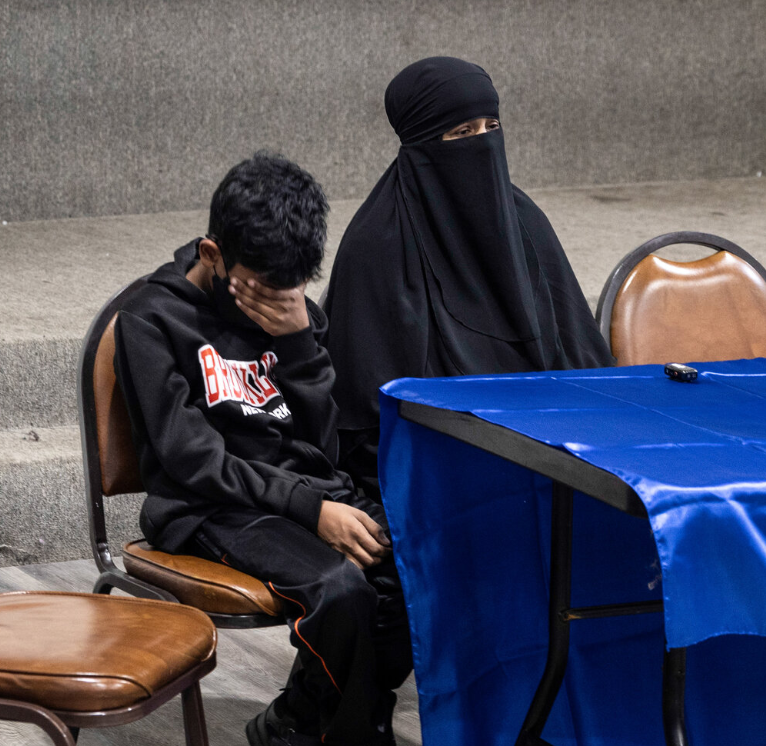
The wife and youngest son:
The tale of a man who might have lived happily among fellow Muslims in Malaysia has a sad ending. Border Patrol picks him up when he’s released from jail, but then decides that they can’t deport him because the state officials didn’t convict him of a felony. They drop him off in Buffalo at the home that taxpayers had previously been providing.
In its telling, the refugee who did not speak English agreed to be dropped off near his last known address, though a call to his family or lawyer would have revealed that the family now lived on the other side of the city. In its telling, the agreed-upon drop-off point was a coffee shop “determined to be a warm, safe location.”
At 8:19, a white van pulled into a darkened parking lot on Niagara Street, near the Tim Hortons with only its drive-thru open. A short man got out. He had no cellphone, no identification, no English skills, no reading skills and no true understanding of where he was.
The Department of Homeland Security would answer such criticism, in part, this way: “Another hoax being peddled by the media and sanctuary politicians to demonize our law enforcement. This death had NOTHING to do with Border Patrol. Mr. Shah Alam passed almost A WEEK AFTER he was released by Border Patrol.”
The refugee moved past the inaccessible Tim Hortons. Past the drifts and piles of shoveled snow. He raised his black hood and disappeared into the Buffalo mist.
Loosely related, I had ChatGPT check the above headline and our AI Overlord wasn’t happy at all.
“Disabled illiterate” is harsh headline language. It may be factual, but it foregrounds deficits and can sound contemptuous unless those facts are central to the story.
The suggested corrected headline assigns blame:
“Immigration system mishandles case of disabled, illiterate Rohingya man”
Maybe ChatGPT is correct. In our infinite wisdom we have set up a system where a Swiss physician fluent in four languages, including English, is barred from immigration while we preferentially admit people who can’t read and are comfortable only in a Rohingya- or Bangla-speaking environment in which women are covered in burqas.
Related:
Phil’s blog has been an emotional rollercoaster today, first his fan evokes horror, nausea from immigrants as horded animals, then reading about Nural…overwhelming sadness…one glycerine-like tear is streaking down my face. It’s OK though, I have weed for any PTSD, and my nurturing tradwife to hold my head as I sob.
> ‘You can’t have economic growth without population growth,” the mayor, Sean M. Ryan’
Citations needed, as they say. I’m not even sure which direction his implication is. But I have inherent trust Mr. Ryan’s economic expertise based on his law degree, and his agenda. Someone mentioned myth making last week, the NYT is really asking us to immerse ourselves in one here. Damn, outrage! (Don’t worry readers, again, I’ve got weed for the PTSD thanks to Progressivism.)
My wife reminded me of “GIGO” which she learned at school. Garbage in, garbage out. Back to engineering ideas, doesn’t the act of reading such a disingenuous article in the NYT just reduce the headroom for rational thought? Understanding of engineering really is a valuable skill to have in life, as its purpose is to modify the environment through general scientific principals towards better adaptation.
I actually don’t get emotionally overwhelmed at the occasional outrageous, pointless story like this because I heavily filter the “””news”””. If my power amp is distorting, I might turn down the master at the preamp. A week ago I heard on the news “Trump is confident that the Iranian War is nearly at an end. ‘Making good progress.'” Off went the radio. This morning I heard, “Trump is confident that the Iranian War is nearly at an end. ‘Making good progress.'” Off went the radio. No druggie crutches required. This generally works unless the problem is brought to me, which I struggle to engineer out of my life, since I continuously feel more and more immersed in chaos. Humor helps, but it’s substantial effectiveness is being stretched as well. Au revoir, and remember, eschew Internet obfuscation.
When people don’t catch my mistakes in thinking, I feel like I’m not being read. (Feedback principle.) Or, we could look at it like you are just taking my advice and removing my garbage from your input. 🙂 BYE
> You can’t have economic growth without population growth,” the mayor, Sean M. Ryan, said
Please explain “per capita” to this moron and his ilk.
Anon: I think that from a politician’s perspective the goal might be aggregate growth because that turns into a larger tax base to fund various Ponzi schemes, e.g., pensions and health care for retired government workers. Without dramatic growth they’d have to tax the upper-middle-class at 70% of income instead of 50% (federal personal income, state personal income, property tax, sales tax, gas tax, estate tax, hotel and restaurant tax, airline ticket tax, etc., etc.).
@philg importing low-wage workers to keep afloat Ponzi schemes just kicks the can down the road 20-40 years, until it’s their turn to rake in entitlements funded by someone else?
The Rohingya’s will save Social Security.
“mayor, Sean M. Ryan”
Aahh…the Irish. Ryan’s ancestors arrived in Buffalo 175 years ago, so why not the Rohingyas today?
Your story seems to suggest he is “missing.” Is it possible he is actually hiding under the black rags worn by his wife (shown in your picture), perhaps performing some sort of Rohingya erotica on her that she finds enjoyable, so much so that she hasn’t clued in the authorities?
The irony here is not that Nurul Amin is an immigrant, nor that Mayor Sean M. Ryan believes immigrants add value to the community. The real irony, is that the NYT framed the story in a way that primarily portrays Nurul Amin, and his family, as a victim while emphasizing the administration as lacking compassion or mercy.
George, of course the NYT story has it exactly right. Please don’t gaslight us.
This is madness. Why the hell did they get refuge in the US especially if they were already refugees in Malaysia?
Did not one of those NGOs teach him how to read, write and speak English?
Maybe “late Malasian settlers” is the right qualifying phrase here.
Anon, as someone who proudly leads an NGO, I’d like to let you know assuredly that our mission is NOT to bring people like you to America (based on your comment). We actively seek people who don’t speak English because they bring diversity, enrichment and many other very important attributes, but perhaps most importantly: they help replace white supremacists, racists and Jews, Christians who have brought such destruction upon America.
What brave policemen you have. Worth every penny of their compensation. Took only 45 s to taser a mostly blind man with difficulty walking and using curtain rods as a walking aid.
I also do not agree with this type of immigration. But there is a human dimension that this post sarcastically ignores. A person is violently handled, arrested without cause for more than a year, and possibly left for dead just because the police did not bother to understand him. What a pathetic society. Care for nothing else but their own ones and immediate neighbours. Understand nothing about the world at large.
Jack, you are correct that folks in the U.S. have one objective: caring for their own ones and immediate neighbors. But you are incorrect that folks in the U.S. “understand nothing about the world.” It’s too bad that Myanmar is just one of the many shithole countries in the world, but no one in the U.S. has any obligation to fix it (we’ve learned repeatedly over the past 100 years that shitholes aren’t fixable). Likewise, we have no desire or obligation to take in unassimilable people from said shithole countries like this guy, who dresses his “wife” (slave) in head-to-toe black rags. You are of course welcome to host them in your home, but please save your sanctimony for others.
He wasn’t arrested without cause, and the tasing was the result of him trespassing, waving huge sticks at the police. He bit two officers in the course of his resisting arrest. He was not handled roughly. Do you think that if you were in an extremely foreign place, say Khazakstan or western China, you would understand what the police want if they were shouting at you while you are waving sticks at them? Is biting the police acceptable in Burma or Maylasia? I don’t think it is…in fact, I think he would have been dealt with much more harshly. Everything the DA charged him with was justified and he should have been convicted.
Tony Doe, you rule. Well said!
Myanmar shithole, you rule too!
@Myanmar Shithole You appear to have poor reading comprehension, as I wrote that I also did not agree with this type of immigration. And how bad Myanmar is or how poorly his wife dresses is irrelevant here, unless you believe those are causes for a death sentence.
@Tony Doe I think it was a bad decision to trespass and wave sticks at the police. There are a lot of details we don’t know, and I wouldn’t be too quick at believing the police’s version. Regardless, what kind of policemen feel threatened by a 56-yr man with poor vision who walks with difficulty? That the only chance at subduing this person is to punch and taser him after less than one minute? With the aggravating factor that his handling by the justice system resulted in a de facto death sentence. Seems to me that these cops had too many doughnuts and too little training in deescalating a situation. Deport him, but all means. But don’t arrest him for a year and then release him into the elements. That is just careless and inhumane.
The NYT explains why the unfortunate refugee didn’t submit to the people with guns: “ Where he came from, people in paramilitary uniforms represented oppression”.
He apparently changed his strategy of running from oppressors, “where he came from” to running at them. FAFO. When jack-booted thugs point Glocks at me (armed with a spork or not), I comply. Someone should have informed him during intake into our country that in America, BIPOC have access to civil rights attorneys, which are the golden ticket to prosperity.
In non-failed states, people in uniform usually represent repression of acts of trespassing and thievery. Not just in Burma/Myanmar.
What I really want to know is this: did the officer read Nurul Amin his Miranda rights in Rohingya before the arrest? If not, then clearly we are faced with a major social divide and inequality — it is time to add “Intro to Rohingya” to police academy training.