Happy National Immigrant Heritage Month to those who celebrate (and if you don’t celebrate, you’re an irrational hater because diversity is our strength and immigration has made Native Americans vastly better off than if Europeans had come only to trade; Biden proclamation).
“Who Killed the Florida Orange?” (Slate; a paywall-free version):
In 2003, the mighty Florida orange industry produced 242 million boxes of fruit, with 90 pounds of oranges per box, most of which went on to become orange juice. Now, not even 25 years later, the United States Department of Agriculture was forecasting a pitiful 12 million boxes of oranges, the least in more than 100 years, the worst year since last. A decline of more than 95 percent.
In 2005, Florida first got signs of a new affliction in its groves called citrus greening disease. It also has a Chinese name, Huanglongbing, or HLB, because it came from China, where oranges also came from in the first place.
Citrus greening disease is caused by a bacterial infection that is delivered by the gnawing of the Asian citrus psyllid. (It’s now believed the psyllid first turned up near the Port of Miami in 1998.) The flea-sized psyllid bites the leaves and transmits the disease, which slowly chokes out the tree’s vascular system from the inside, taking years to finally show itself. By the time a tree is displaying symptoms—three to five years, in most cases—it’s too late.
The orange tree came from China and the insect that has killed almost all Florida orange trees also came from China. Why hasn’t the Chinese citrus industry been destroyed? ChatGPT:
Because HLB originated in that region, China has had more time to adapt practices, including: Using clean nursery stock; Routine tree replacement cycles; Managing psyllid populations
China has many small, dispersed orchards rather than vast contiguous monocultures
Growers often accept shorter productive lifespans and replant more frequently; Florida’s model relied on long-lived, high-yield groves—HLB breaks that model.
Lower labor costs make intensive management and replanting more feasible
Even in China: It prevents the kind of high-margin, long-lived grove model that Florida once had
In other words, citrus might go back to being a luxury item for the rich, though Spain (#FreePalestine) and California are still largely uninfected. The article claims, without citing any #Science, that Roundup weed-killer is substantially responsible:
Then came the 1970s, and a new technology arrived: the herbicide glyphosate, created by Monsanto. The citrus industry adopted it early, and zealously, taking to it like water, spraying it all over the ground until not one sign of non-citrus life remained. When new complications came, they sprayed more. Acreage grew to 832,000, with record yields, and Florida was king, producing 78 percent of all United States citrus.
Up and up it went, and why not? The process got more mechanized through the back half of the American Century—out with the cover cropping, in with the monocrop, packed tight as can be. One innovation followed the next. Frozen concentrate fell behind the novel idea of “not from concentrate”—no longer did they squeeze it and freeze it. And they were unaware, or unconcerned, that that chemical was wreaking havoc on the soil, weakening the trees’ defenses, leaving them extremely vulnerable to disease.
What made pre-psyllid-immigration Florida such a great place to grow oranges?
A citrus grove must be planted in sand, which occurs naturally, by some geological miracle, in central Florida. (The miracle, specifically, was the Appalachian Mountains, which eroded and deposited sand there over millions of years.) The trees won’t take in wetlands, in mucky soils. But that sand itself is also in high demand for cement, for construction, for building shoulders for highways, for filling in wetlands for development. Up here, Dantzler pointed, was a sand mine, which had torn out groves and gotten to mining beneath them. “There’s a crazy market for sand,” he said.
Sandy land itself is the easiest property to develop. Wetlands are still often protected from a development standpoint, and so, in addition to infill, require pricey, lengthy permitting. Sandy uplands, hiding beneath every citrus tree, are low-regulation and ready to build on.
So, while the growers were losing money hand over fist, housing developers were coming through with godfather offers to buy them out, convert them to row housing, and sell, sell, sell. Flags of every homebuilding giant flew on vanquished ground: DR Horton, Lennar. At nearly every intersection there were signs for cheap housing—no money down, homes in the low $200,000s, yes, for real, in 2026. Bunting and grand openings and exclusive offers abounded.
This part of central Florida is 100′ above sea level and essentially immune to hurricanes (hence Disney’s decision to locate Disney World in Orlando). The reduced wind spec of 140 mph (compare to 160-170 in Jupiter and 170+ in Miami) enables building cheap wood-frame asphalt-shingled houses, just as builders throw together up north (120 mph ultimate design wind speed in the Boston suburbs). I was able to find a 1424 sqft. 3BR, 2BR house with a hideous garage door in front for $254,490. Lennar doesn’t say that it is concrete block, so I think that means “cheap wood”. (Our MacArthur Foundation-built development includes garages in the back of each house, served by alleys, even for townhouses.)
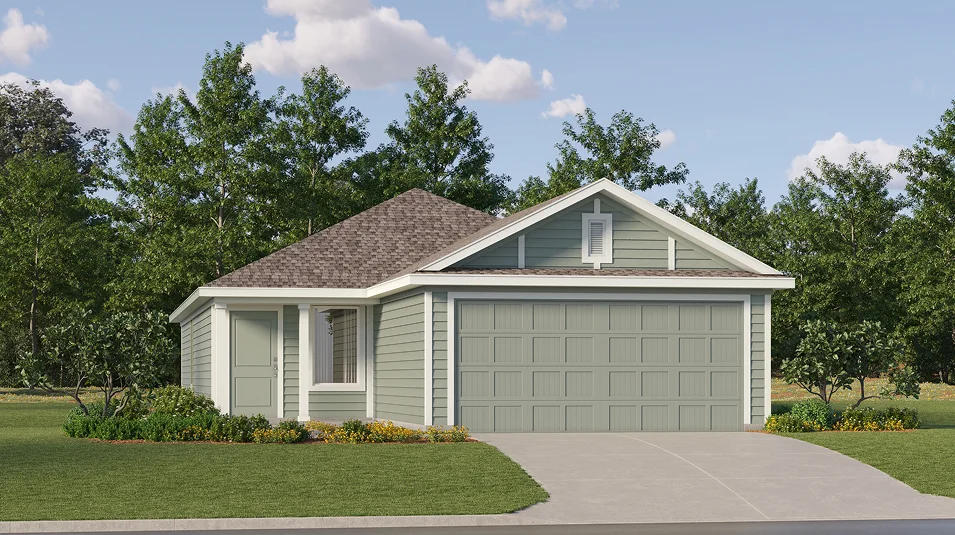
Here are the amenities:

It’s in the middle of nowhere, so it is tough to imagine what kind of job a person would get.
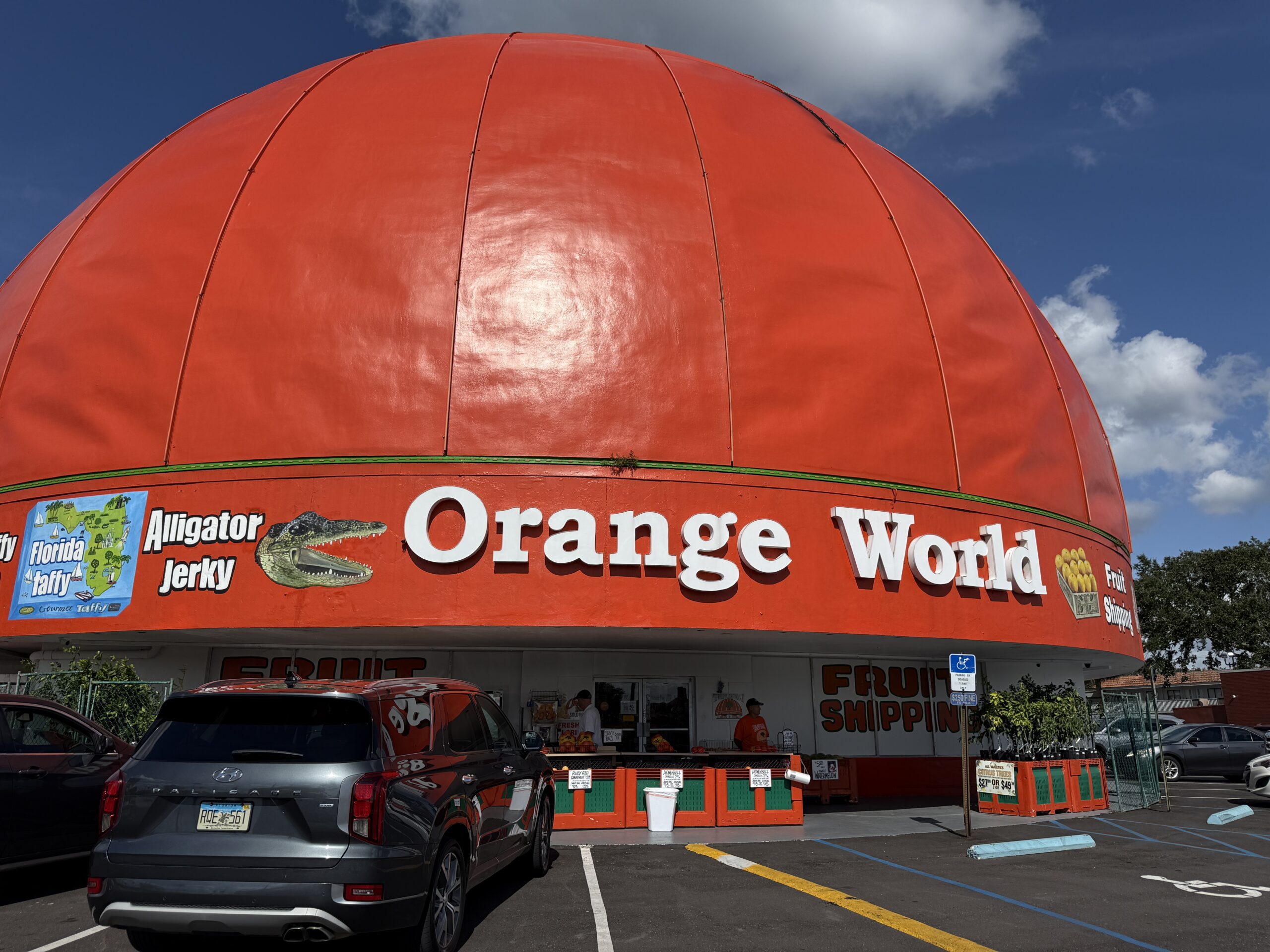
Eli’s Orange World in Kissimmee, November 2024:
That’s a pretty sorry floorplan, with 6 tiny windows & no facade besides a garage door. No-one uses a garage anymore. Seems like the kind of place for someone who’s just waiting to die.
How come you this time did not post pictures of noble Muslim immigrants in hijabs running the Orange World? Because it is not in Texas? Or did you find 10 discrepancies?
In addition to the lack of noble Muslim male child rapists, I also missed pictures of their “wives” (slaves) dressed in head-to-toe black rags.
Even though that $254K Lennar home might be in the middle of nowhere, it’s (somewhere) near Lake McLeod!
What will the poor drink for breakfast?
Let them drink Tang.
> In the Middle East, more than half of Tang’s annual sales happen in just six weeks around Ramadan, where families gather each evening to share a meal, seasonal treats, and often, a pitcher of Tang!
— Mondelez Intl., Tang Facts
Does the consumption of Tang during Ramadan tend to moderate or exacerbate the noble Muslim males’ natural tendency to rape children and enslave their wives, while dressing them in head-to-toe black rags?
Nah, you might get a sugar buzz if you eat it from the jar. Sounds like yours has been spiked with meth. Why don’t you invite a police over to run a field test on it? (Be sure to invite CPS for a welfarc check on the fam.)
Seems much like the accursed phylloxera wine louse.