In case you were wondering whether to take investment advice from me, 15-20 years I confidently predicted that Honda and Toyota would jump in and take the EV market away from Tesla as soon as Tesla had run out of early adopters. Honda and Toyota were so much more experienced and better at making cars than Tesla that of course they’d be able to make better electrically-powered cars. (Honda is, apparently, able to design a better electric car than what Ferrari is offering, but that’s like being a dwarf among midgets.)
Honda, the maker of our beloved Odyssey that hasn’t been updated since the 2018 model year, is doing especially poorly. “Honda Posts First-Ever Annual Loss After Pullback From E.V.s” (NYT):
The automaker reported a net loss of $2.7 billion for the fiscal year that ended March 31. Earnings were weighed down by more than $9 billion in restructuring charges and write-downs after a retrenchment of its E.V. strategy. It is the first loss that the 77-year-old company has reported since listing on the Tokyo Stock Exchange in 1957.
“The business environment and customer demand have changed beyond our expectations,” Toshihiro Mibe, Honda’s chief executive, said in a news conference in Tokyo on Thursday. “We were not able to respond flexibly enough.”
Is there a comic-book villain who can be blamed?
On Thursday, Mr. Mibe said the company would nix its 2040 target of selling only electric and hydrogen-powered cars. That target was based on the Biden administration’s environmental policies in the United States, the company’s biggest market, he said.
“A year ago, there was a drastic change. We have seen a shift from a focus on the environment to the opposite,” Mr. Mibe said. Honda’s previous target, he added, “is now not realistic.”
Hmm… if Joe Biden was virtuous and wise who might be “the opposite” in terms of virtue and wisdom levels?
Greta Thunberg (pre-Queers for Palestine version) won’t be happy with the recovery plan:
For now, Honda said, it will double down on gasoline-electric hybrids, introducing 15 next-generation, high-efficiency models, including larger vehicles in North America, by 2030. Combined with plans to cut costs and accelerate development, this push is intended to restore Honda to record profits by the end of the decade, Mr. Mibe said. The company is also forecasting a return to profitability this year.
If Tesla is close to cracking self-driving and Honda hasn’t even begun to try (the 2026 Odyssey has the same feeble driver assistance features as the 2018 Odyssey), how could Honda conceivably compete? Maybe some sort of monster pseudo-military vehicle like the G-Wagen? Here’s one in military green at the Stuart, Florida airport:

People have demonstrated a willingness to pay huge $$ for this truly terrible car. Speaking of huge $$, one of our neighbors apparently bought a Maybach EV:
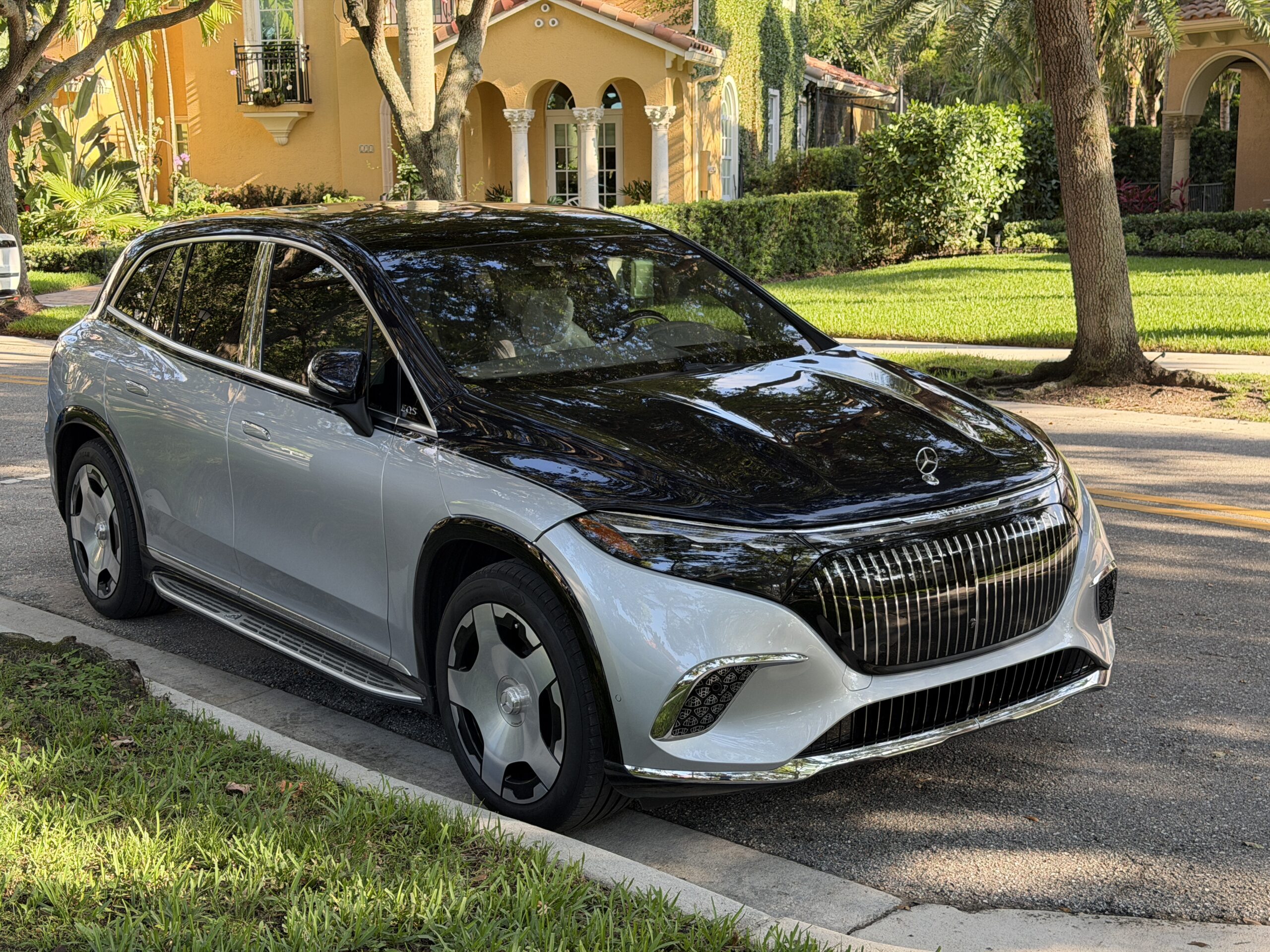
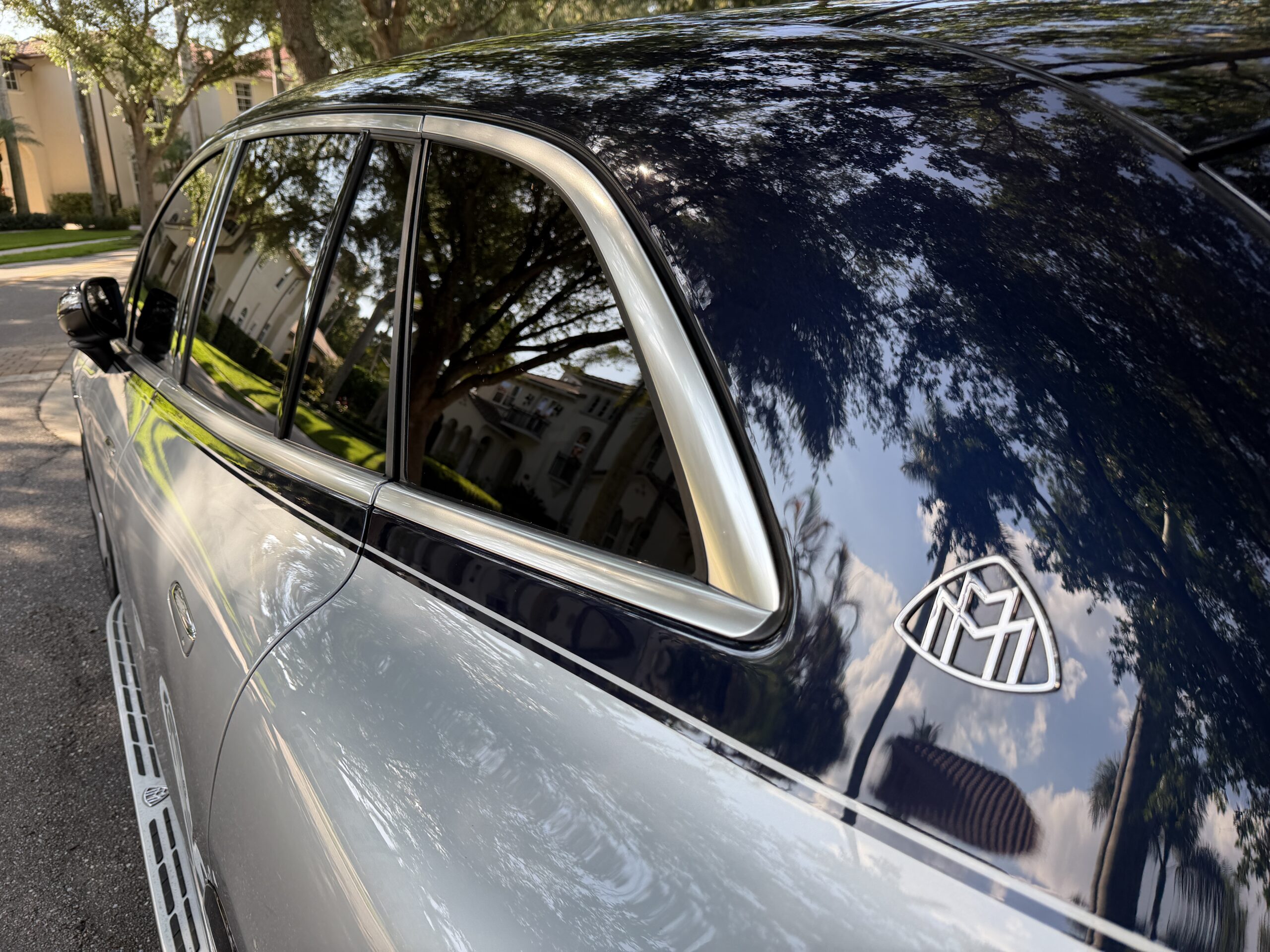
Imagine being rich enough to spend $200,000 on an EV that can’t drive itself and will be worth $30,000 after a year or two. (See Mercedes EQE review for my own attempt at living with a Mercedes EV.)
Will it truly be possible for Honda to muddle through to profitability and significance with slight improvements on the Accord, Civic, CR-V, etc.? The stock market doesn’t seem to think so. Tesla is worth more than 10X what Honda is worth (and at least 6X Toyota’s market cap).
Our own Honda seems to be giving up. At five years of age and 62,000 miles, the dealer said that the rubber boots on the lower control arms, which protect the ball joints, are cracked and should be replaced soon ($1100 plus $130 for an alignment that is necessary after the replacement). They also want $70 to replace the pollen filter for the ventilation system, $160 to cleaning the A/C evaporator (is that a thing?), and $230 for “Platinum Fuel Induction Service (GDI). ChatGPT says that the filter should be regularly replaced, but it is a $20 part that can be replaced with no tools (behind glove box) last three suggestions are fraud. ChatGPT says that the second two suggestions are fraud:
Yes, “A/C evaporator cleaning” is a real thing, but I would do it only if you have symptoms.
It usually means spraying a foaming cleaner or disinfectant into the evaporator case or intake area to reduce mold/mildew smell. It can help if the A/C smells musty, especially at startup or after the car sits.
But if your Odyssey’s A/C smells fine and drains normally, this is not a routine “must do at 62,000 miles” service.
Verdict: Real service, but mostly for odor/mildew complaints. I’d skip unless the vents smell musty.
Your Odyssey’s V6 is direct-injected, so in theory intake-valve carbon buildup can be an issue on GDI engines because gasoline does not wash over the back of the intake valves the way it does in port-injected engines. But a dealer “fuel induction service” can mean a lot of things:
- Fuel-tank additive
- Throttle-body cleaning
- Intake cleaner misted through the intake
- More involved intake-valve cleaning
For $230, it is probably not a true walnut-blast intake-valve cleaning. It is likely a chemical cleaning package. If the van starts smoothly, idles smoothly, has no check-engine light, no misfires, and fuel economy is normal, I would not consider this urgent.
Verdict: Plausible but likely optional upsell. I’d skip unless there are drivability symptoms, or unless Honda’s maintenance schedule specifically calls for it, which I do not think it does as a routine 62k service.
My thoughts: Hondas are still competitive on their body designs and people accommodations. Most people still like them. But if you hold onto your car for a long time, don’t expect legendary reliability. Honda drive trains used to be very well engineered, but I think they lost their way:
1. They adapted their 1.5 liter engine (previously used in a one of their smaller cars) to a turbo and began using it in much heavier vehicles. If you look at a tear down of this engines the bearing are too flimsy for the amount of output this engine is being called to produce. This will not be a long lived motor.
2. They went solely with direct injection in most of their product line rather than both port and direct injection like some of the other automakers have done and are changing to. This leads to gasoline contamination in the oil if you are a short trip driver, and if you are one to hold onto their cars for many mile (>60k), you will probably have to have an expensive intake valve cleaning service at some point.
3. Their cylinder shutdown technology can result in stuck oil rings with high oil burning and fouled spark plugs at high mileage.
4. Prices for their hybrids are not competitive with the rest of the market.
Honda seems to have been in cost cutting mode rather than excelling engineering design in the past 10 years. Don’t think their current drive trains are going to have as legendary a life as many of their previous designs.
RE: your dealer quoted costs for service:
-The rubber boots on the lower control arms are cracked and should be replaced: yes this needs to be done, but if the joints are still good you may only need to have the boots replaced and not the whole driveshafts. Make sure you get OEM parts.
-They also want $70 to replace the pollen filter for the ventilation system: you should be able to replace this yourself in 10 minutes for $20 or so. Most of these filters are behind the glove box. Your owners manual or YouTube should have replacement instructions.
-$160 to cleaning the A/C evaporator: You can buy AC cleaner inexpensively at a parts store. You spray it down the air intake plenum just below the windshield wipers on the outside of the car.
-$230 for “Platinum Fuel Induction Service (GDI).: this is a great money maker for the dealer. If the car runs fine I would just add a bottle of Techron to the gasoline tank every 3k miles. And if you use Tier 1 fuel (Costco and most major brands) they already contain this detergent additive. If you are going to spend any money for fuel system service and plan to keep the car a long time, it might be more important to put the $230 toward intake valve cleaning (the valves can be checked with a boroscope).
> And if you use Tier 1 fuel (Costco and most major brands) they already contain this detergent additive.
This isn’t going to keep the intake valves clean, by the way.
> the valves can be checked with a boroscope
Before and after, to check the effectiveness of their work? Good idea. It does seem like they aren’t screwing him over on the need to do the fuel induction cleaning, maybe on the price. I might ask them what exactly they are going to do. BG makes an on-purpose machine to do this work. It might be worth it if they use that — if they are just going to spray a can of something into the intake, maybe not.
If I was going to keep this van, I probably would be looking for a reputable independent mechanic specializing in Honda. I wouldn’t scrap it just yet, either — what’s going to replace it is probably even worse. Have a look on Ody Club’s website — people often have the exact same maintenance problems.
As for the economics of Honda, Tesla, and electric cars…where does one begin? Wouldn’t Tesla’s valuation tank if the long term prospects for electric vehicles is uncertain? Honda only sells 40% of its vehicles in the U.S. — what about other countries going back on their environmental promises? How do we get back to maintaining quality in the analog world when people are increasingly obsessed with their digital dystopia?
And, why the hell does an obsensibly off-road vehicle G-Wagen have such low-profile racing tires? Never mind, I can answer that one, I remembered why the owner bought that thing.
Due to Honda past legendary reliability I am not familiar with any Honda reliability issues.
I think tha Honda needs to add hatches, trailer and offroad packages to all its SUV line up by default, starting with HR-V and use its proven engine and gearbox solutions. Maybe improve HR-V low gear power and looks and add locable bed to its Ridgeline line. I’d buy those just for fun.
In 2015, I purchased a Honda Ridgeline RT from the original owner, 47K miles, $14K, in very good condition. Still only have 79K miles on it, hoping to go 300K! One problem is that about four years ago every dashboard warning light illuminated and has remained on. I’ve just left it that way. Seems to run fine.
I never had a Honda die of old age on me. 300K miles seems like a very reasonable goal.
The media says people are keeping their cars longer while at the same time they’re being designed with planned obsolescence. It must be just cheaper to keep burning thousands on rubber boots than bother with a new car.
>Neo Hippy
>> And if you use Tier 1 fuel (Costco and most major brands) they already contain this detergent additive.
>This isn’t going to keep the intake valves clean, by the way.
That is correct, since in direct injection no gasoline washes along the intake valves. But the Tier 1 fuel or Techron will clean your fuel injectors over time, and act very similar to the fuel injector service.
>> the valves can be checked with a boroscope
Clarification: The boroscope check would not be to see if it needed fuel injection service. It would be used to see if there were excessive deposits on the intake valves wherein they might need walnut blasting/cleaning.
It’s weird that engine designers didn’t anticipate gasses from the PCV system causing carbon build-up on the intake valves on the single-injection GDI. Don’t they have computer models? Or maybe they did and the bean counters said, “Ignore it.” Seems like some manufacturers are still cutting corners. When GDI came out, I was worried about the durability of the injectors, right in the combustion chamber.
I’ve seen people inspect the valves/injector from inside the cylinder by articulating the head of the scope, going through the spark plug and looking backwards.
>Neo Hippy
Some of the manufacturers have added dual injectors for quite awhile. In particular Toyota has the had the D4S dual injector system for many years, Ford has been using dual injectors on some of their EcoBoost engines. BMW has upgraded their B58 engine in the past few years to add port injection. Even Hyundai has started putting it in some of their Smartstream engines.
It’s more costly adding a second set of injectors and modifying the software algorithms to use it. No wonder some of the automakers are avoiding it. But it does provide benefits-it avoids intake valve deposits, it theoretically it can produce more power in certain situations (direct injectors alone are limited to a short duration window in the injection cycle and can max out on fuel delivery), it avoids diluting the oil during cold start wherein the direct injected fuel is sprayed onto the cylinder walls and forced into the crankcase.
If you lease a car for a three year period, you may not own the car long enough to experience the valve deposit issue. But if you like me are a long term owner, beware. The symptoms can be unusual and hard to diagnose too.
FYI, I believe the auto industry is pushing the oil industry for better oils that leave fewer deposits as the crankcase vapors travel from the crankcase through the PCV to the intake.
I have a 2012 Honda Fit with 142K miles. I would like to buy a new one but I can’t. Although Honda still produces them, they don’t sell them in US. They claim sales declined because Americans want big vehicles. Salesmen didn’t push them because there’s not much profit in a small car like this. Well, there’s no profit at all if I drive mine until its wheels fall off and then buy a Toyota or Kia instead.
Honda from a financial point of view is quite a lackluster company. It trades in nominal terms about where it did 20 years ago and at a discount of about 50% to its book value indicating at minimum the market does not think that its assets are worth what they are carried at. Its debt is in excess of its equity indicating financial risk. It like most of the rest of the automobile industry seems worth steering clear of from an investing point of view. Note also Stellantis and more recently Ferrari. Both controlled by the Agnelli family holding company Exor. Exor trades at a big discount to the sum of its parts and can be bought on the Amsterdam Stock Exchange. Perhaps a bargain or more likely support for the Buffet chestnut that the bad economics of an industry will always prevail over a reputation for investing brilliance. Tesla of course is the big exception. Prof. Damodaran (“The Dean of Valuation”) of NYU Business School has a lot of material on his website & YouTube valuing Tesla.
Keep the car, replace the cabin air filter yourself, and find a reputable independent Honda shop to look at it and give you a better deal on the control arm boots.