Happy “we’re still right our 2 percent annual inflation target” day to everyone from the BLS. Let’s look at part of the CPI that used to be deflationary and that is now inflationary: personal computers. June 25, 2026 invoice for 1.5 TB of RAM that my friend bought for his home PC:

The IBM PC was born with 16 KB (base) of RAM in Boca Raton 45 years ago (announced August 12, 1981). From the Boca Raton Historical Society:
In 1967 Thomas John Watson Jr., then Chairman of the Board, announced that IBM would open a large-scale manufacturing plant at Boca Raton to produce its System/360 Model 20 midsized computer. In December 1966, IBM announced its purchase of 550 acres west of what is now I95, south of Yamato Road and east of Military Trail. IBM was the first company to build an industrial site in the scrubland of the west. The original site eventually grew from 620,000 square feet to 3.6 million square feet in more than 40 buildings. The main complex was modeled after IBM’s research center located in LaGaude, France on a rugged slope just ten miles from Cote D’Azur. Marcel Breuer and Robert Gatje, the famed architects who created the LaGaude building adapted the design for Florida’s flat terrain and hot sun.
In August 1981, IBM launched a new product that put the city of Boca Raton on the map. A small engineering team led first by William Lowe and then by Philip “Don” Estridge, secretly developed a personal computer (code name “Acorn”) that was to be ready for market within one year. Under pressure to meet an incredibly tight deadline and with autonomy from management unprecedented in IBM history, a small team created a personal computer that became the standard for the PC industry. Rather than develop all the parts internally, the team, incorporating an “open architecture,” quickly pulled together existing resources from outside companies. Microsoft provided the operating system (DOS) and BASIC programming language; Intel the 8088 microprocessor chips; Tandon the disk drive; Zenith the power strips; SCI Systems the circuit board; and Epson the printer. The open architecture allowed for add-on components to the internal system. Also for the first time, IBM sold this product through outside sources; Sears, Roebuck, and Company and Computerland, were the official retailers for the PC.
The success of the IBM PC resulted in the rapid growth of IBM Boca Raton. Staff size grew to over 10,000 to keep pace with the demand for the PC. IBMers eagerly accepted positions at Boca Raton for, within IBM ranks, it had gained a reputation for being a place of exciting and revolutionary work.
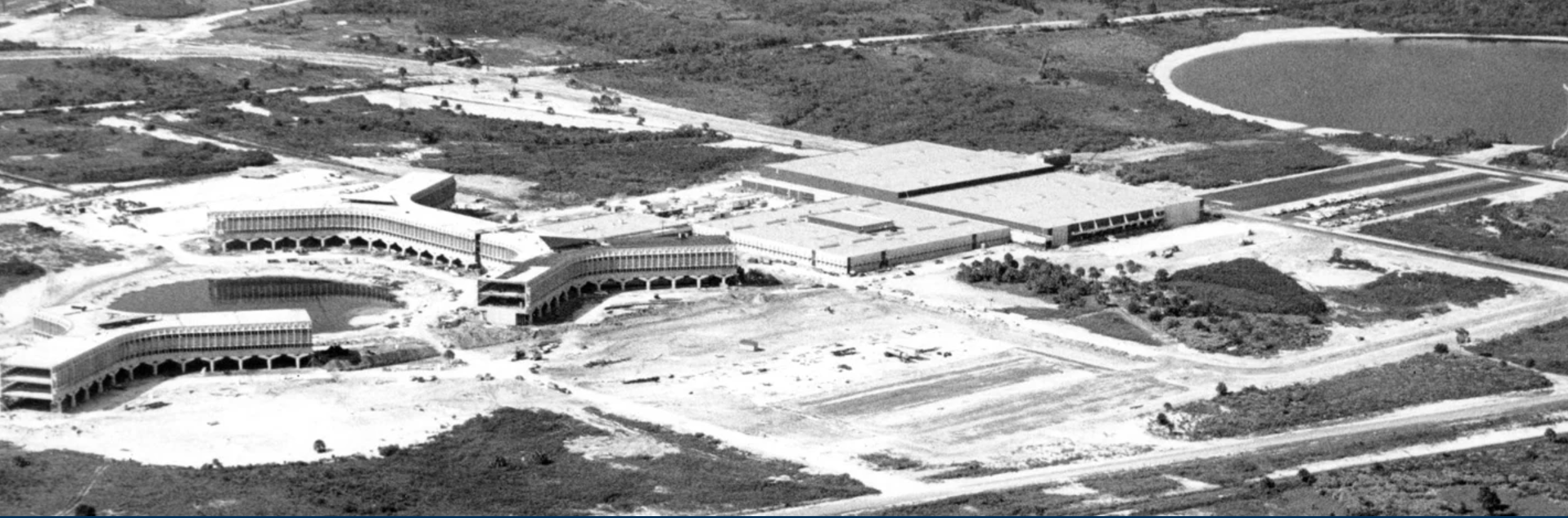
IBM shrunk and the buildings are now the Boca Raton Innovation Campus (BRIC). I visited with a neighbor who is a car expert (senior engineer for a Big Three manufacturer) back in March for Cars and Coffee Palm Beach. What do the buildings look like today?
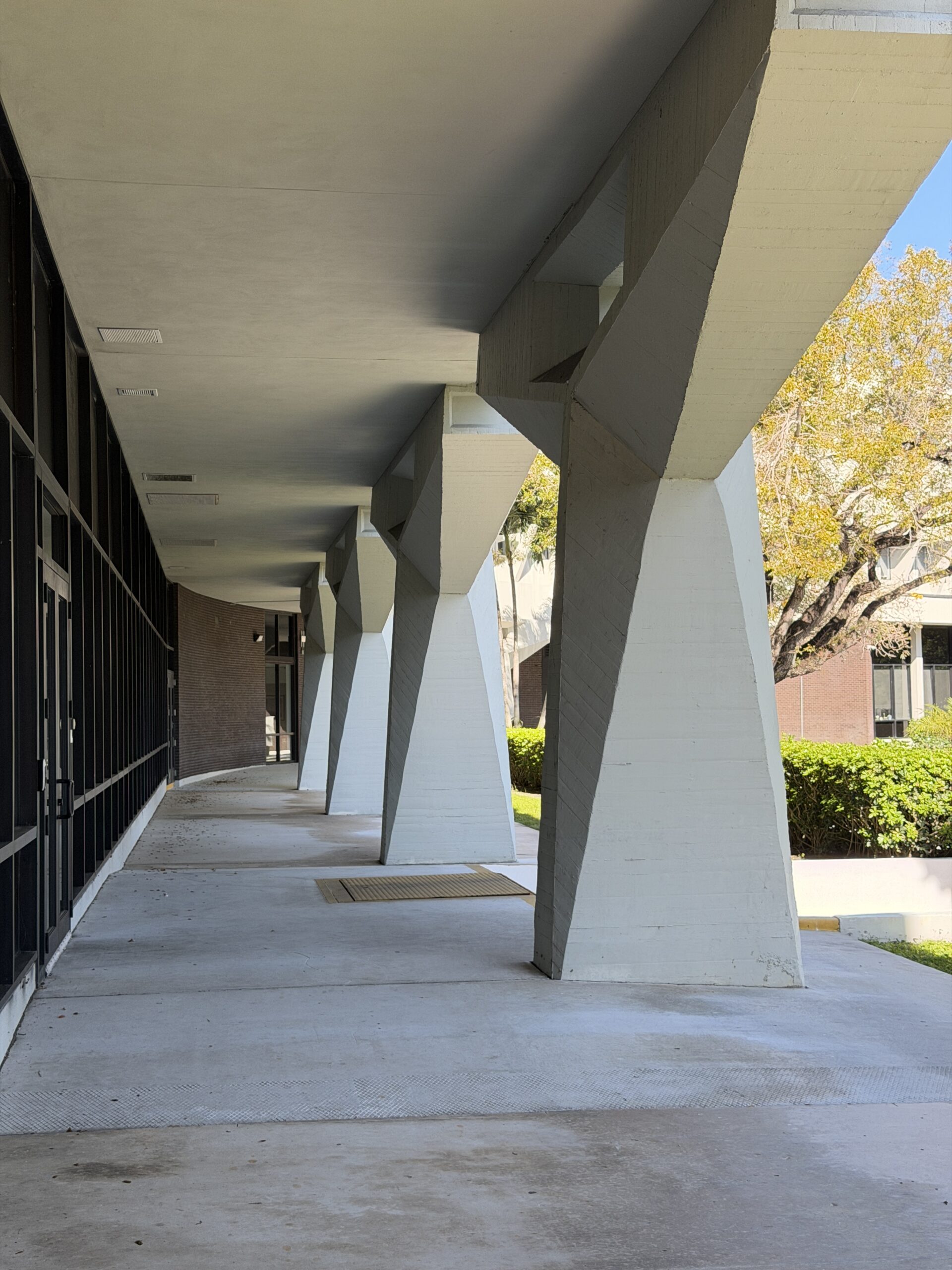
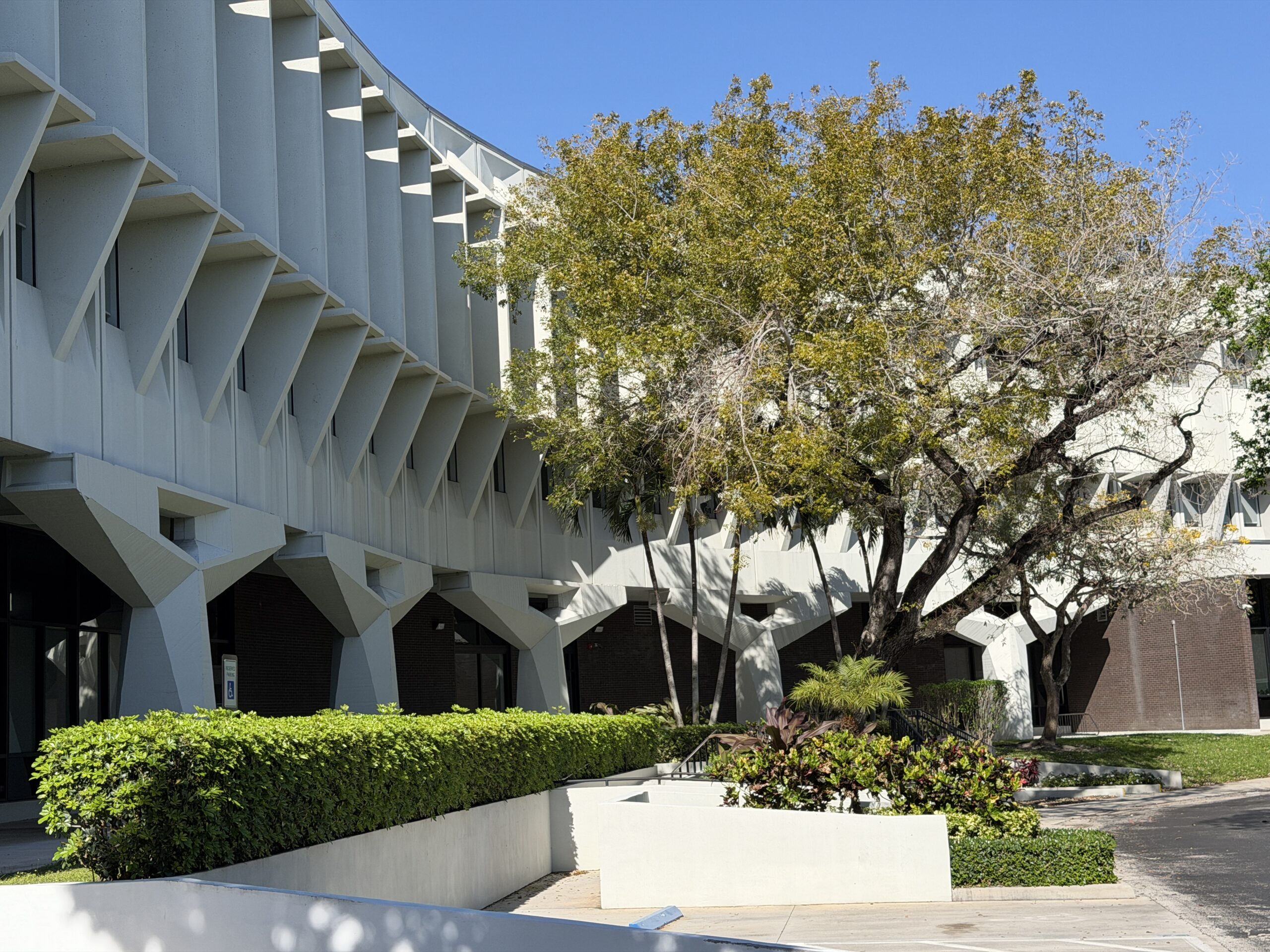
Practical advice: use the bathroom before you arrive because the BRIC landlords don’t open up the buildings and let people use the real restrooms, ask for donations, present the history of the PC, or show off what is being done today in their 1.7 million square feet of space. There is a McDonald’s within walking distance and, for the ladies, a Starbucks in a mall across the street. Also, bring your own coffee because the food and drink vendors usually had lines. Budget about 1.5 hours to see the 500+ cars and chat with some of the owners. Perhaps 2,000 people show up (it was free for spectators and $15 for those showing off their cars).
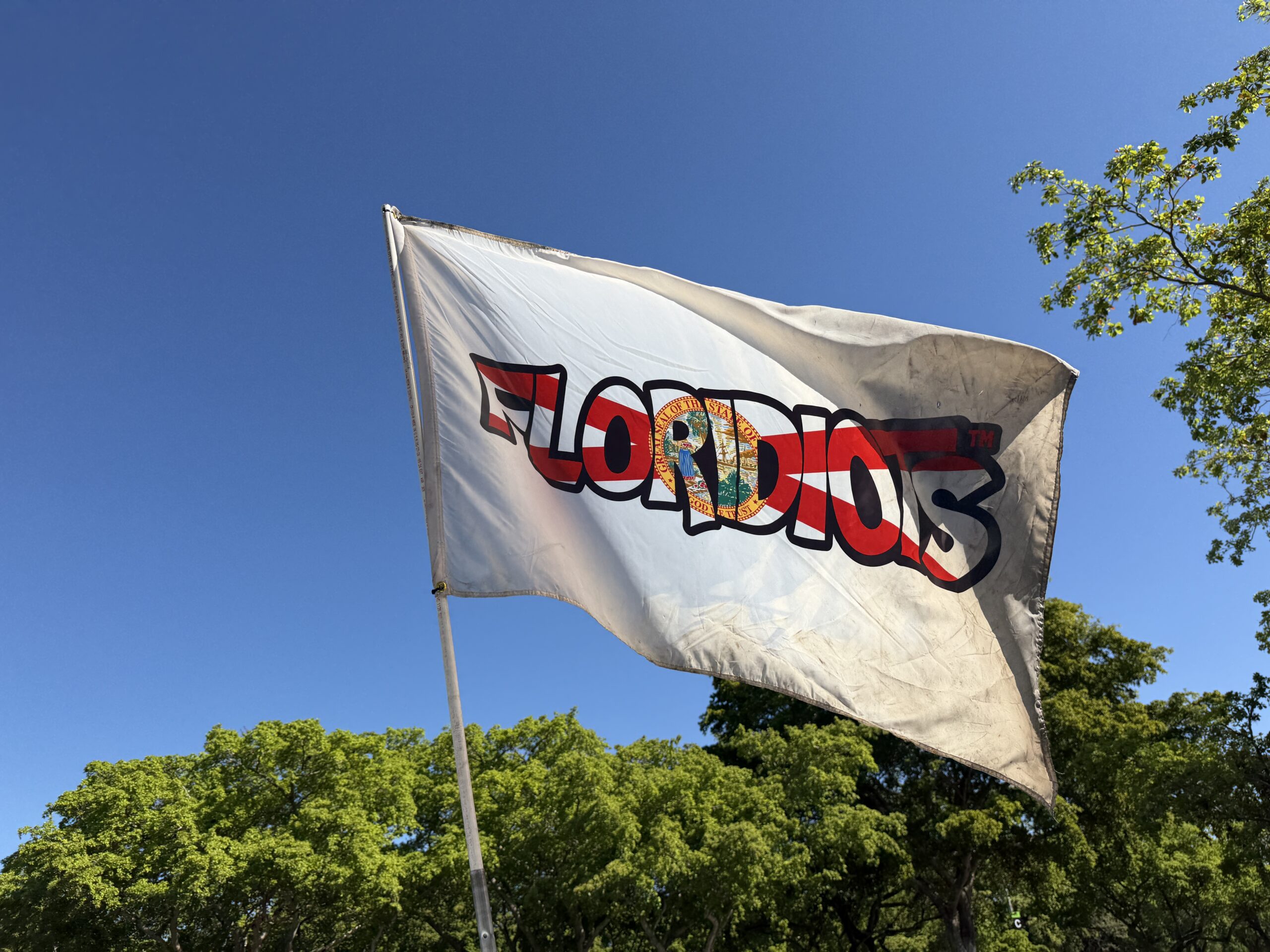
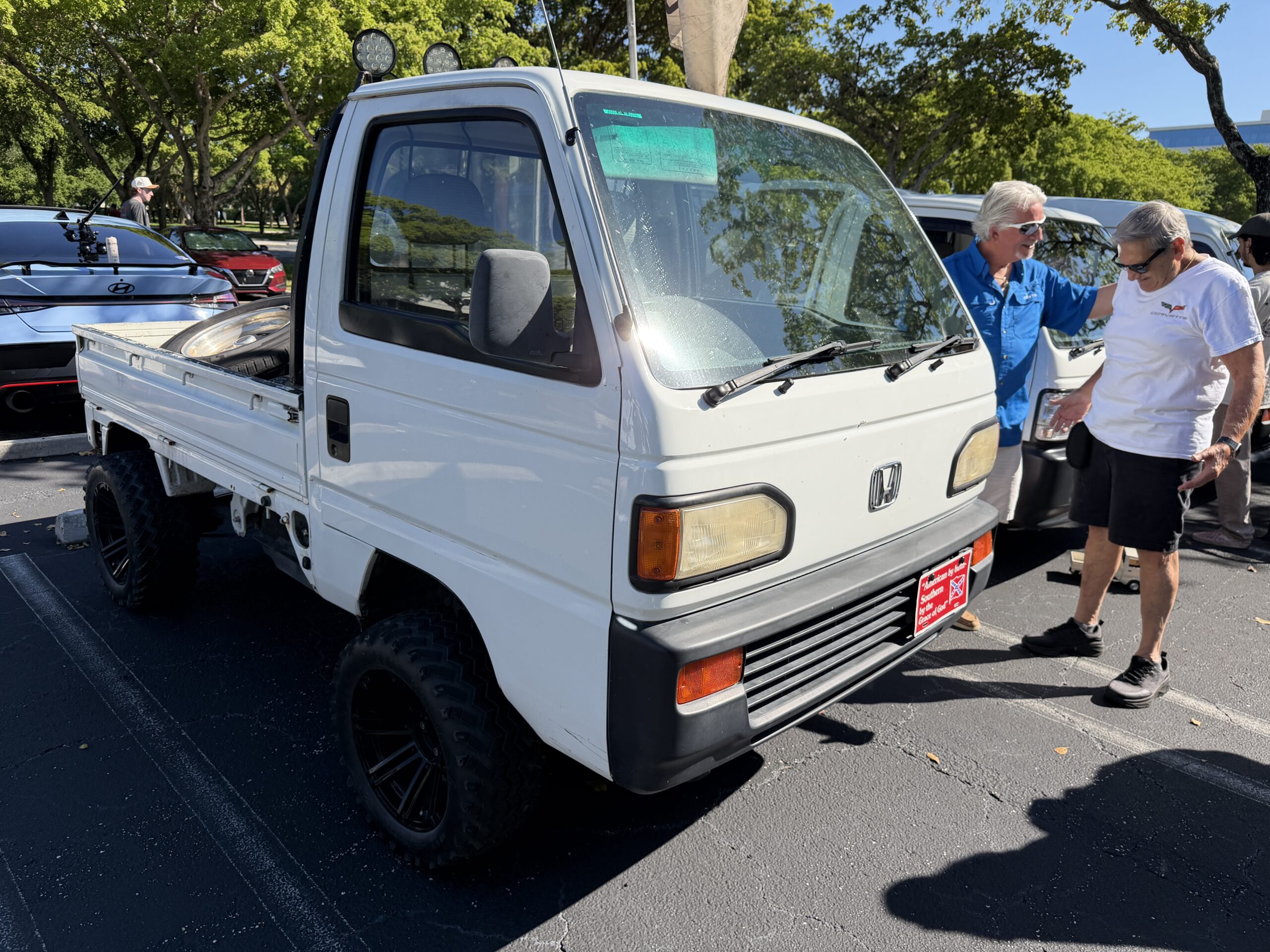
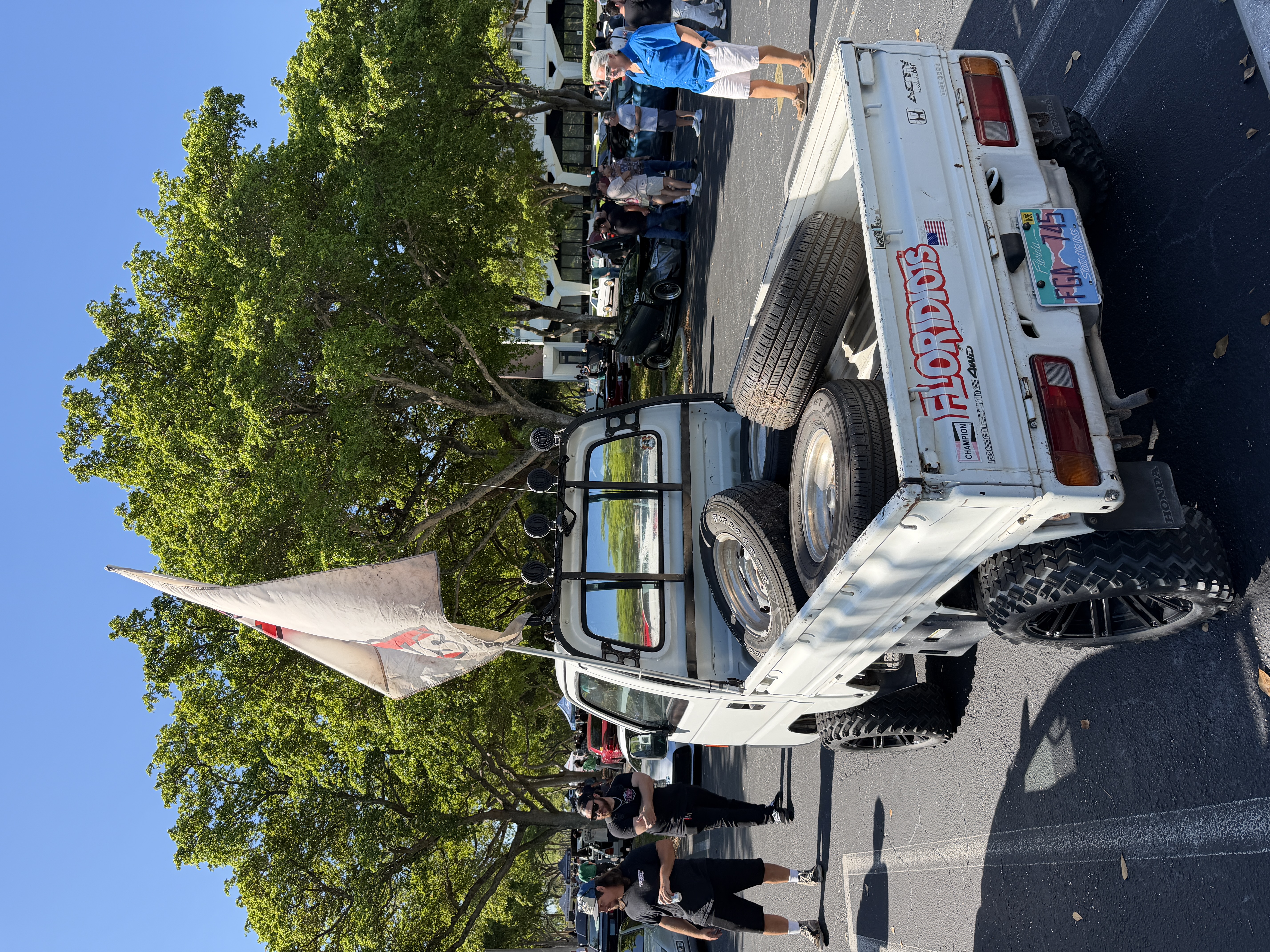
Northerners will appreciate this Kei car, which sported “Floridiots” bumper sticker and flag plus a Confederate flag on the front bumper:

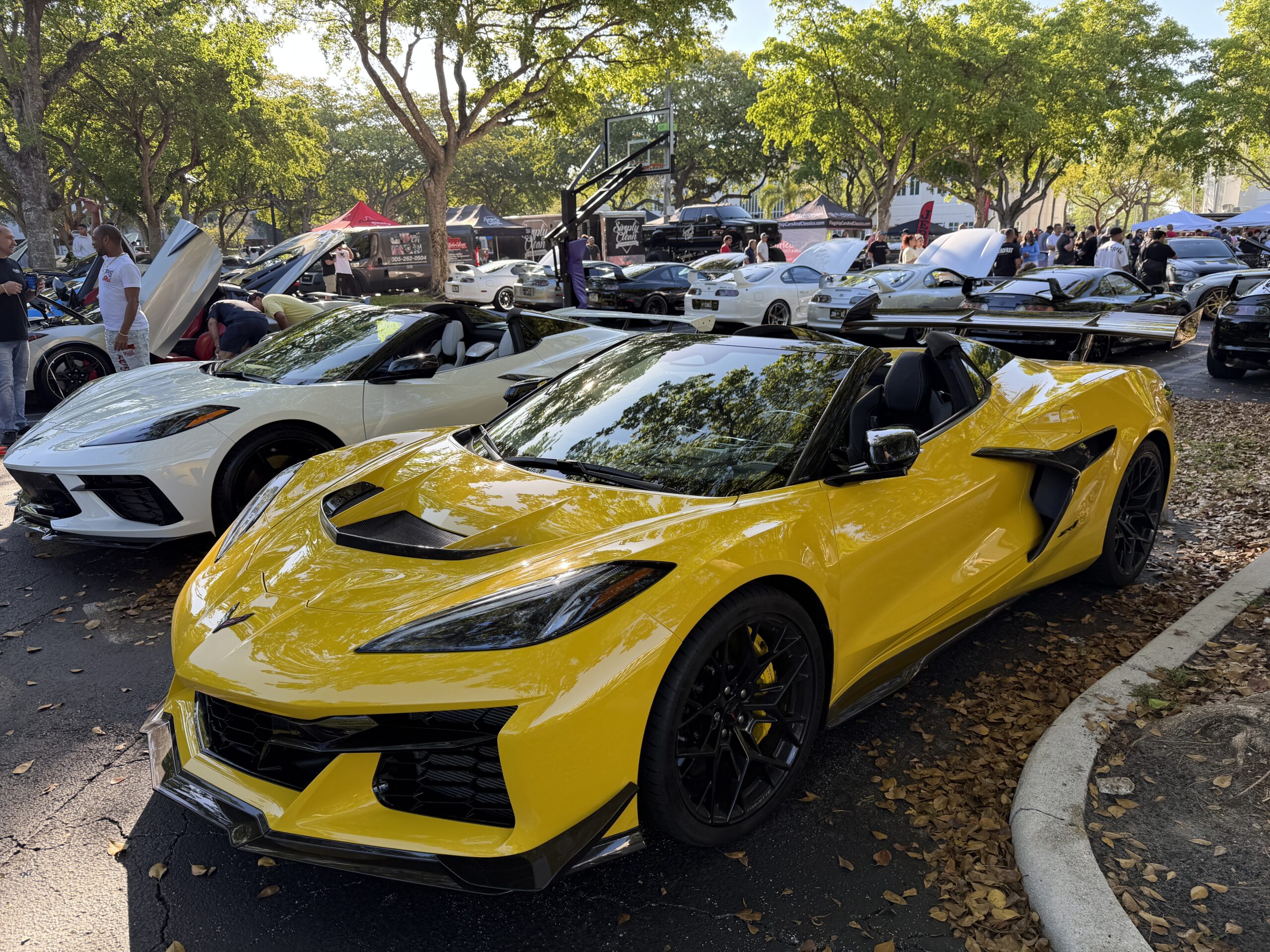
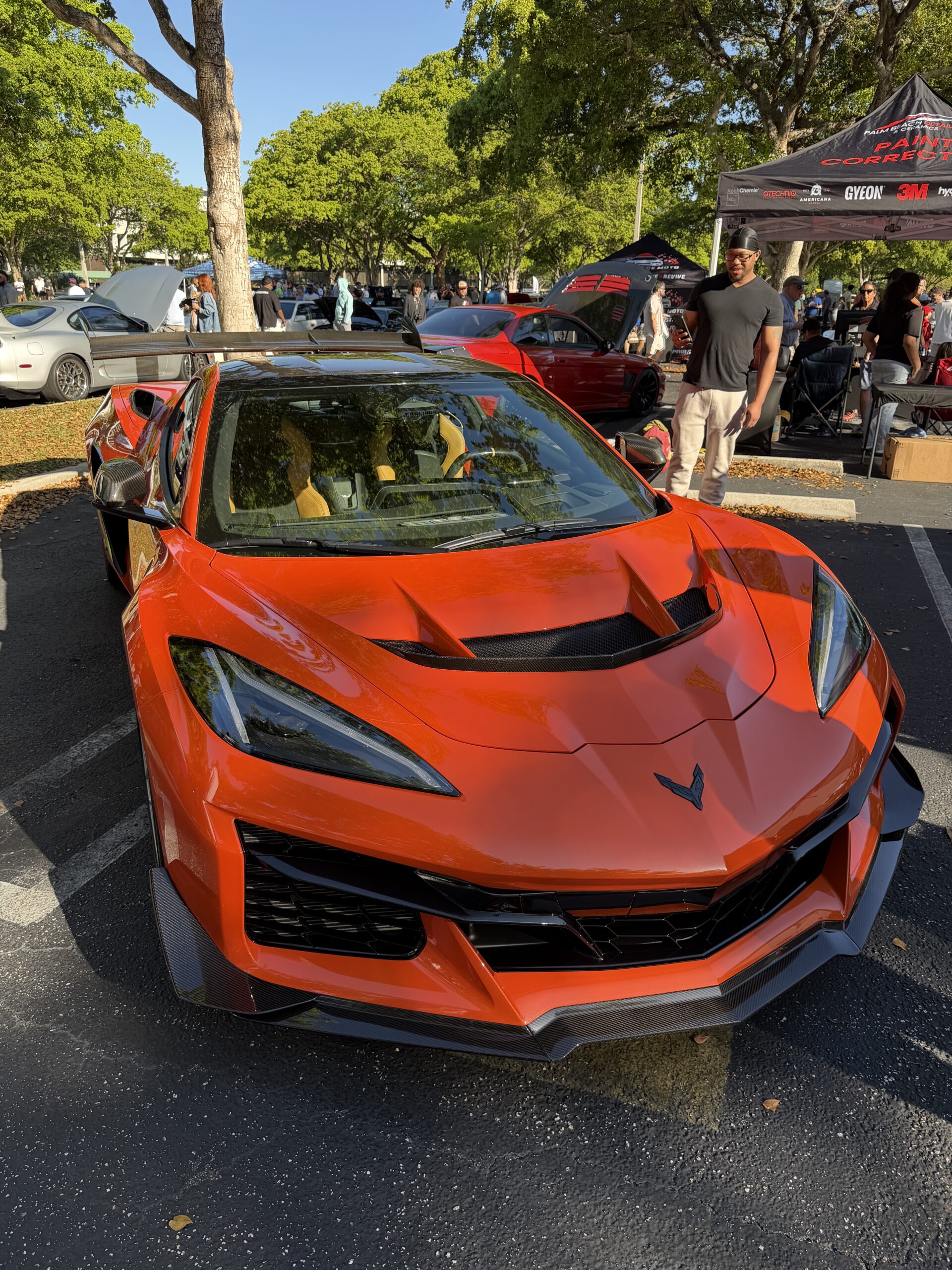
The 1,064 hp Corvette ZR1 was almost impossible to get in March 2026, but there were two at the event.
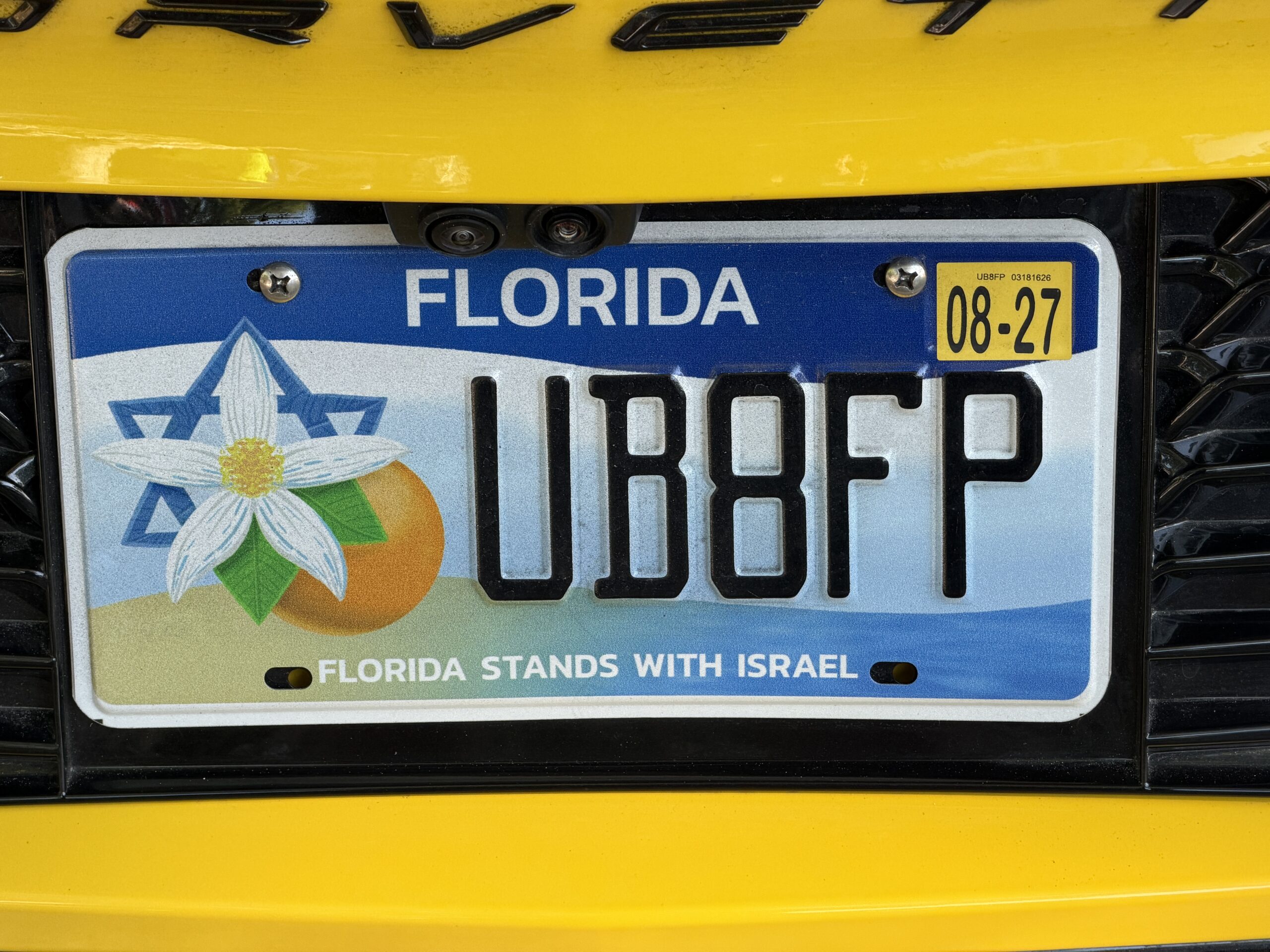
Note the “Florida Stands with Israel” plate, consistent with Palm Beach County’s status as the world’s #1 investor in Israeli bonds. If this $200,000+ car were in Maskachusetts it is tough to know whether it would be keyed first by an inequality zealot or a pro-Hamas zealot.
Here’s the other ZR1:
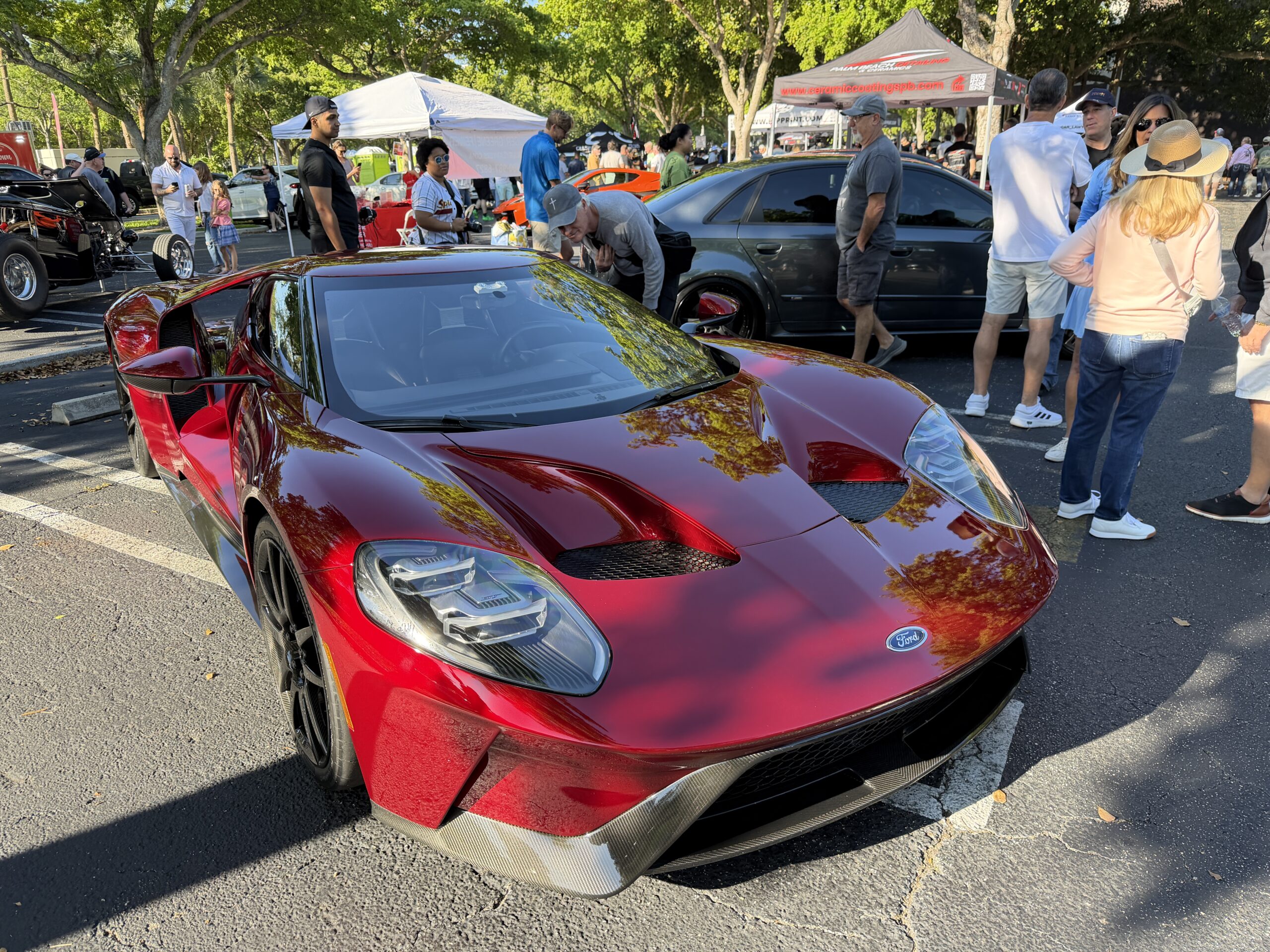
If a real Chevrolet is too pedestrian, maybe you’d like to see this $1 million fake Ford (a GT that, instead of being made in the Islamic Republic of Michigan by Ford is made in the Islamic Republic of Canada by Multimatic, which also makes the fake Ford Mustang GT3 and GT4).
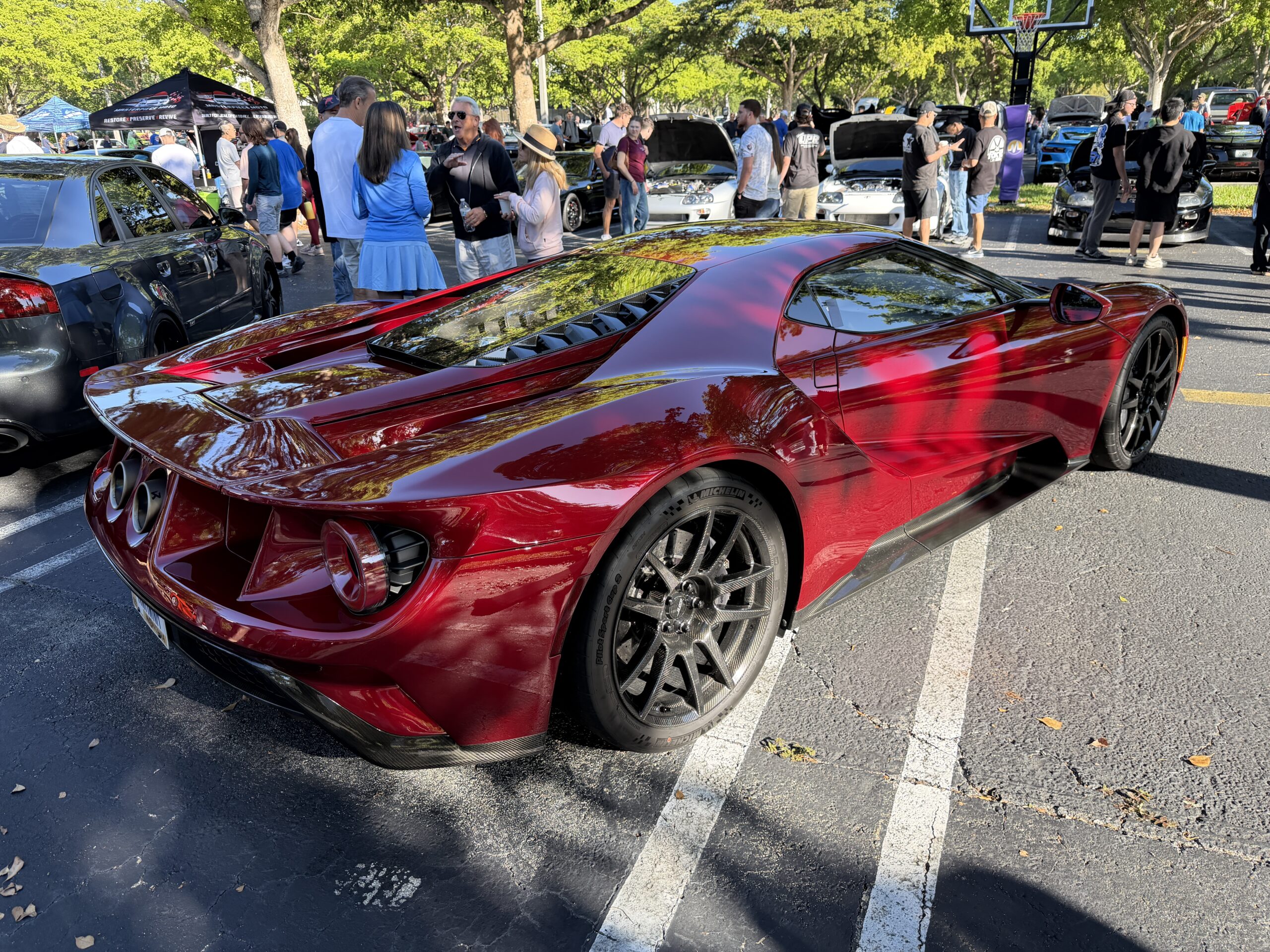
My favorite part of this 12 mpg machine is the “EcoBoost” logo on the engine (660 hp out of 3.5 liters of V6):
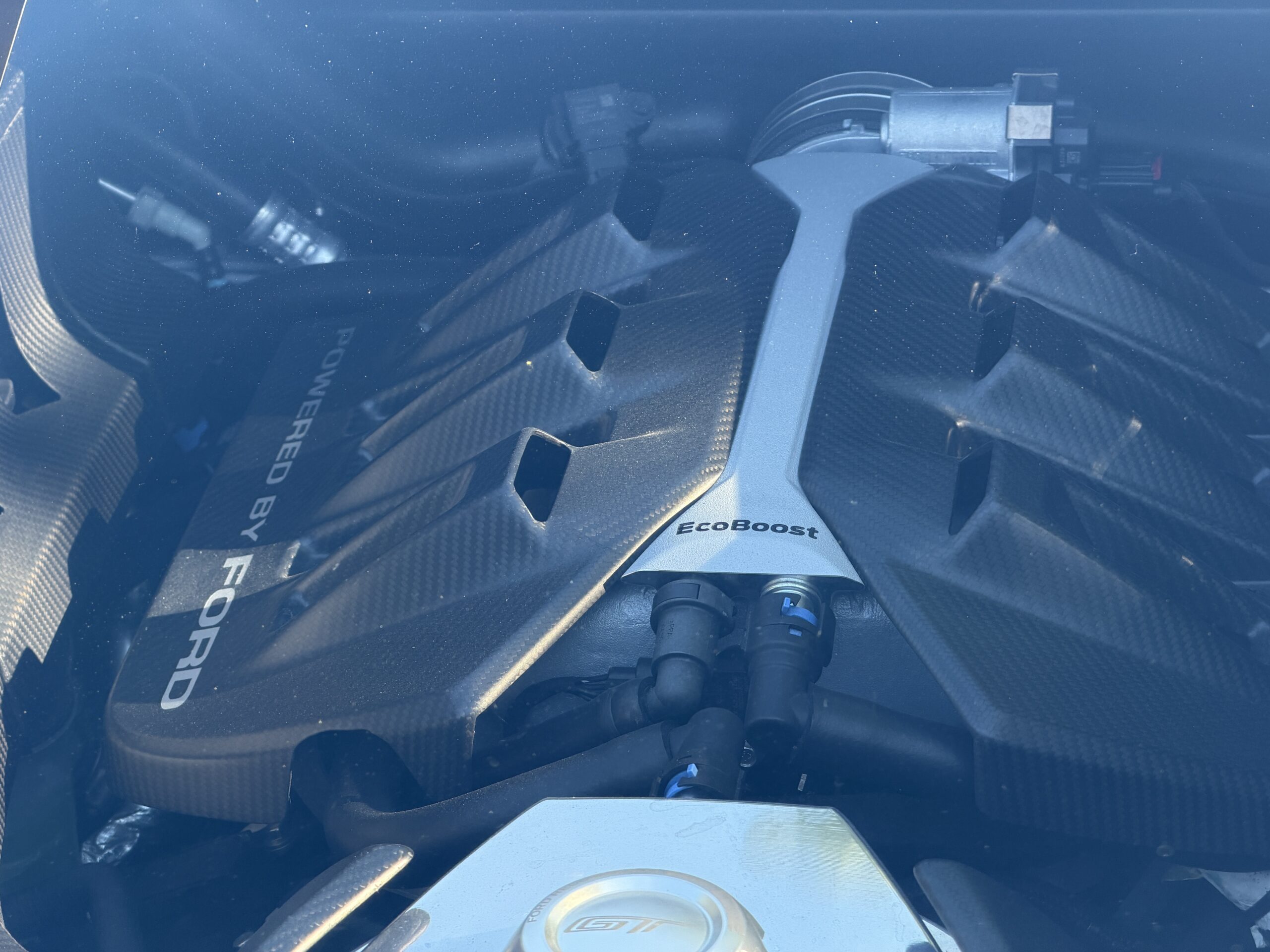
Maybe Chevrolet should slap an “Eco” label on the 12 mpg 670-hp Corvette Z06?
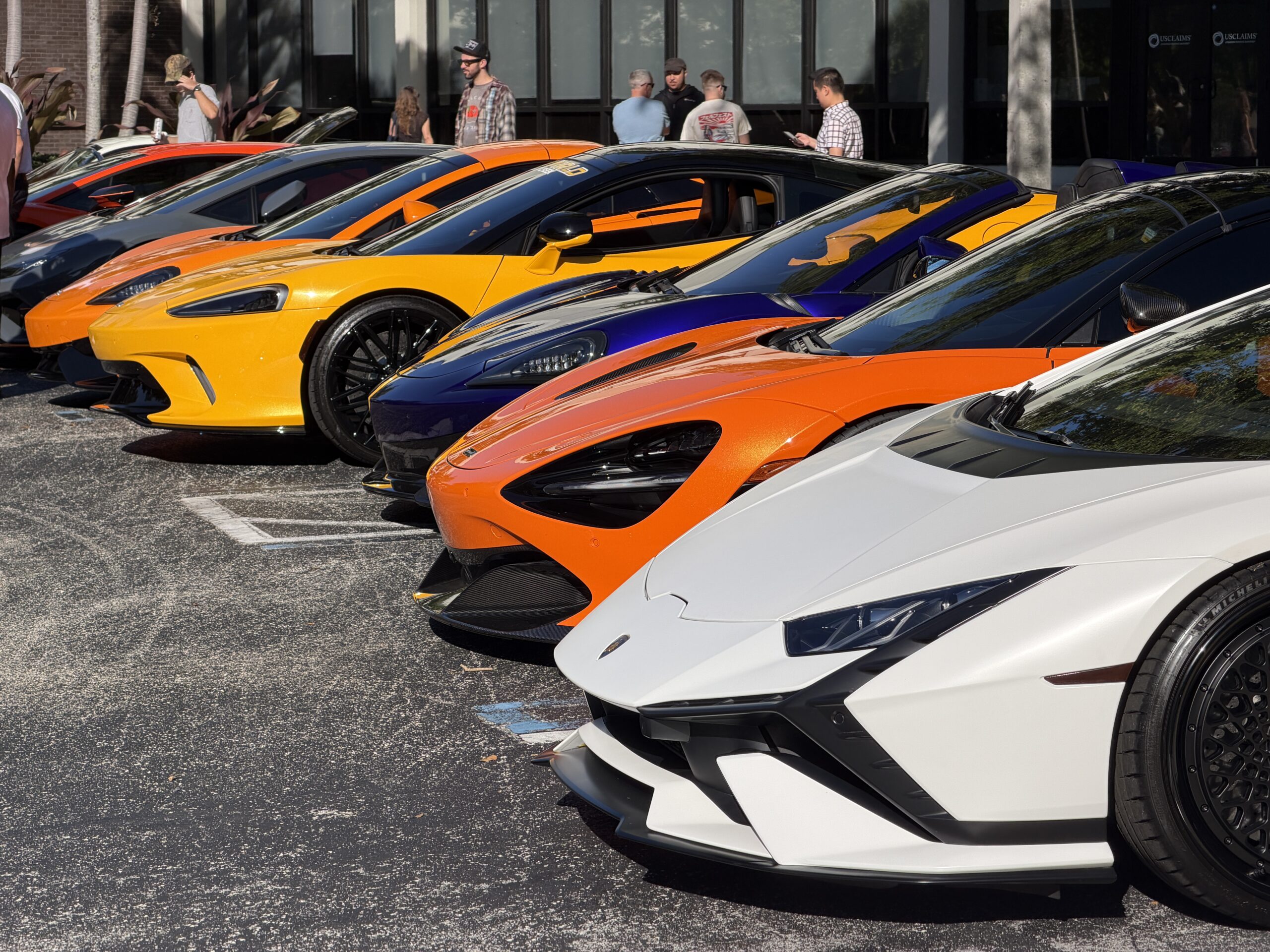
McLaren and Lamborghinis were everywhere, but we saw only a handful of Ferraris.
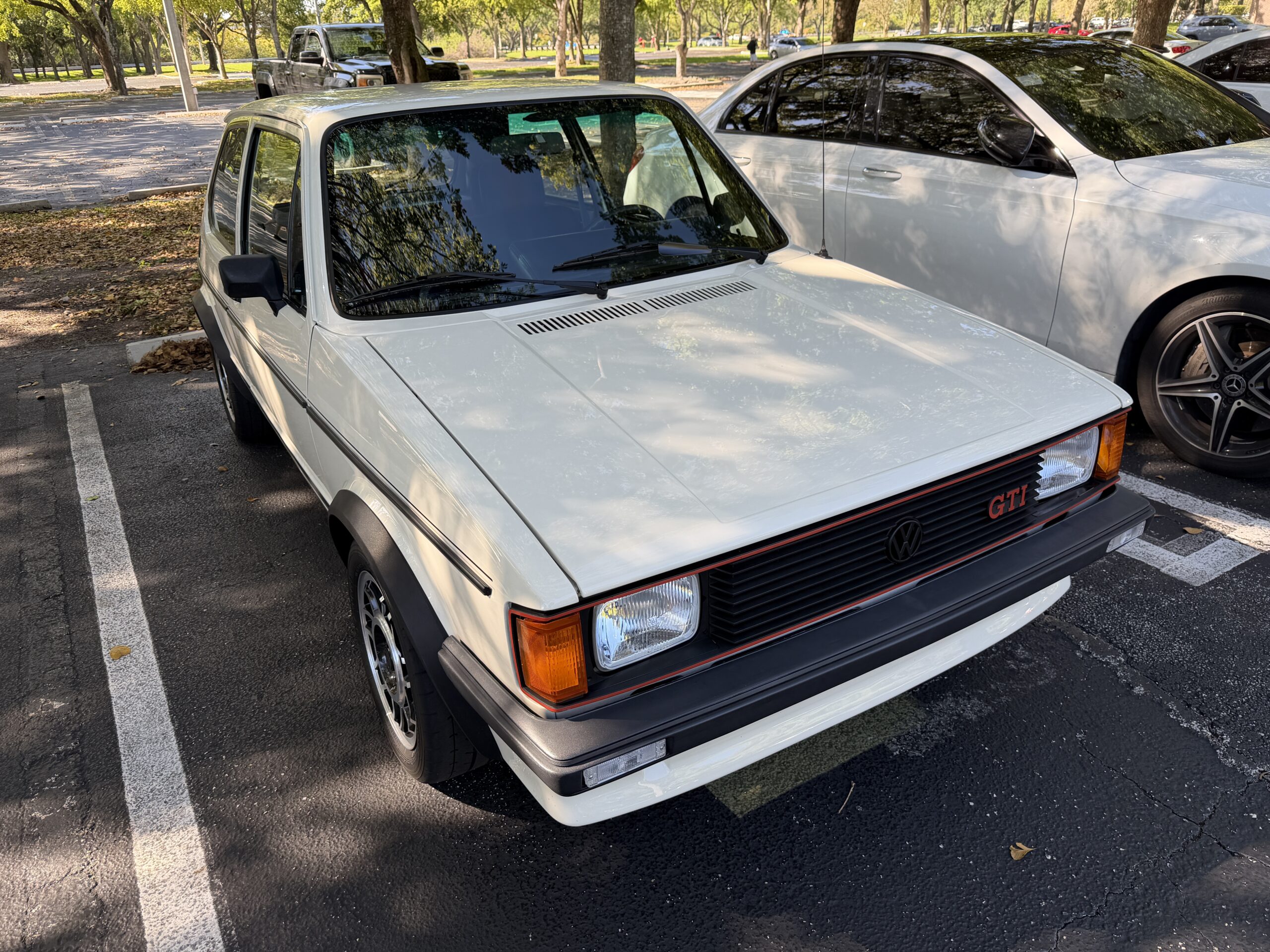
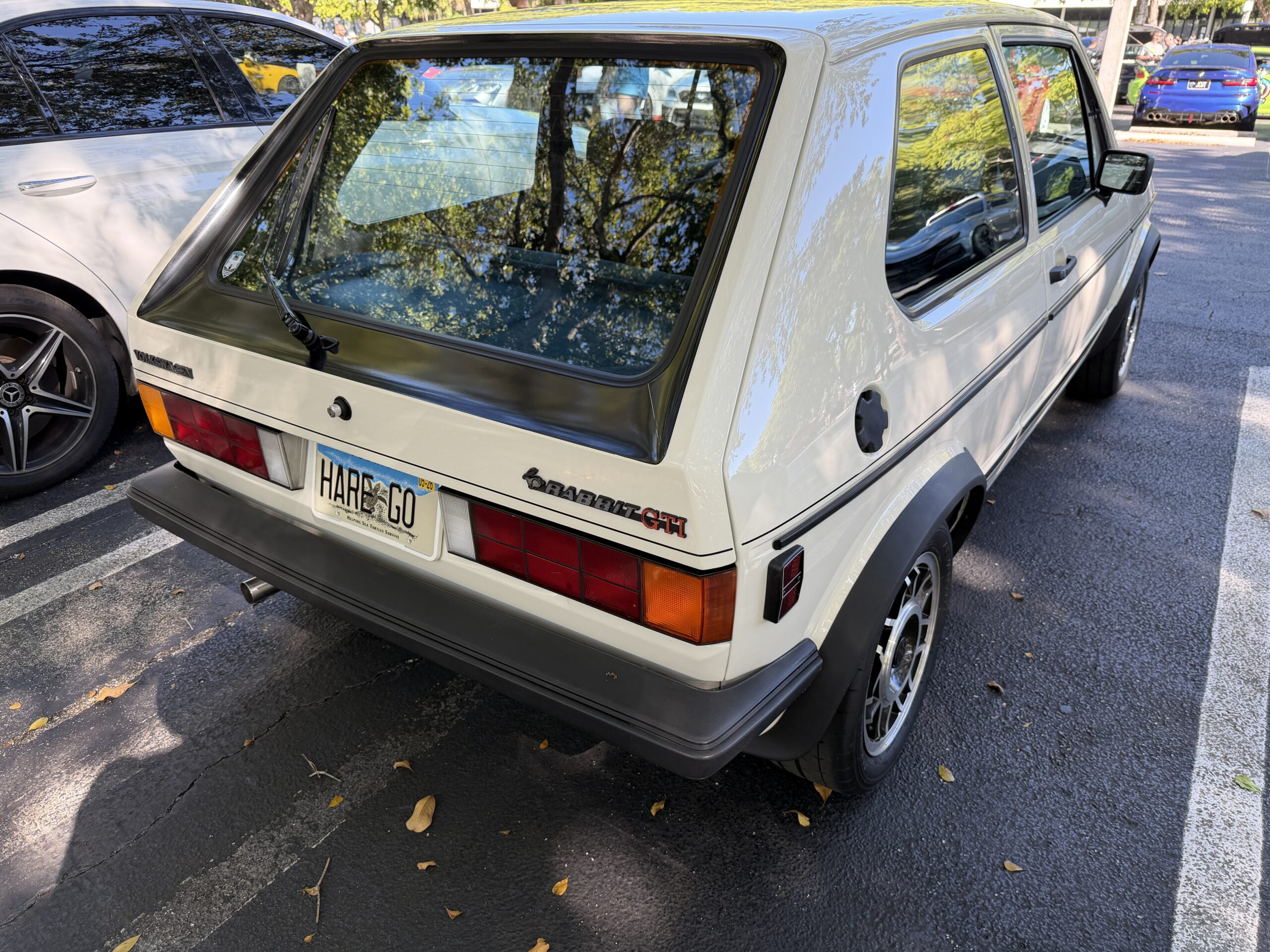
At the other end of the performance spectrum, a Volkswagen Rabbit GTI:

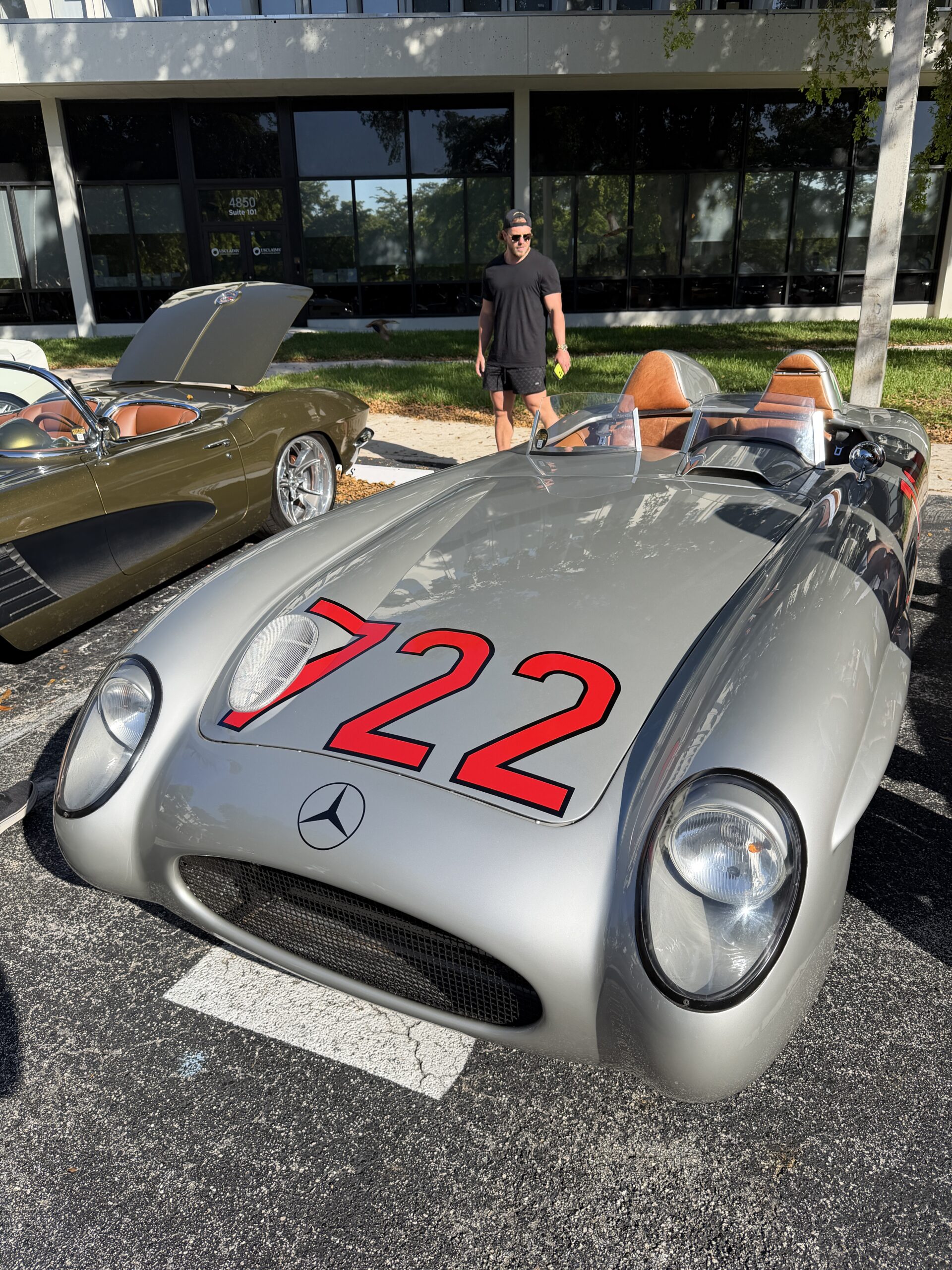
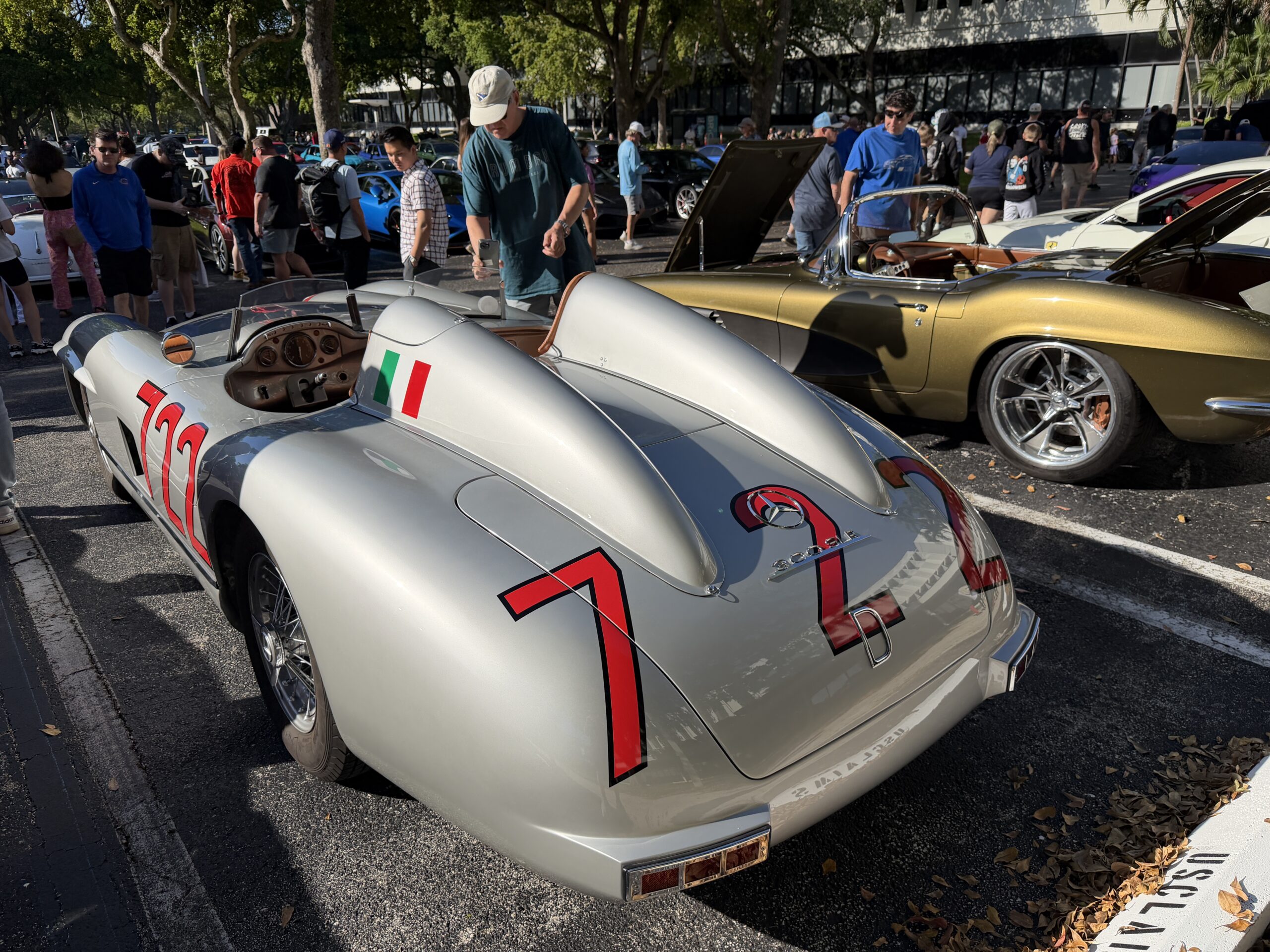
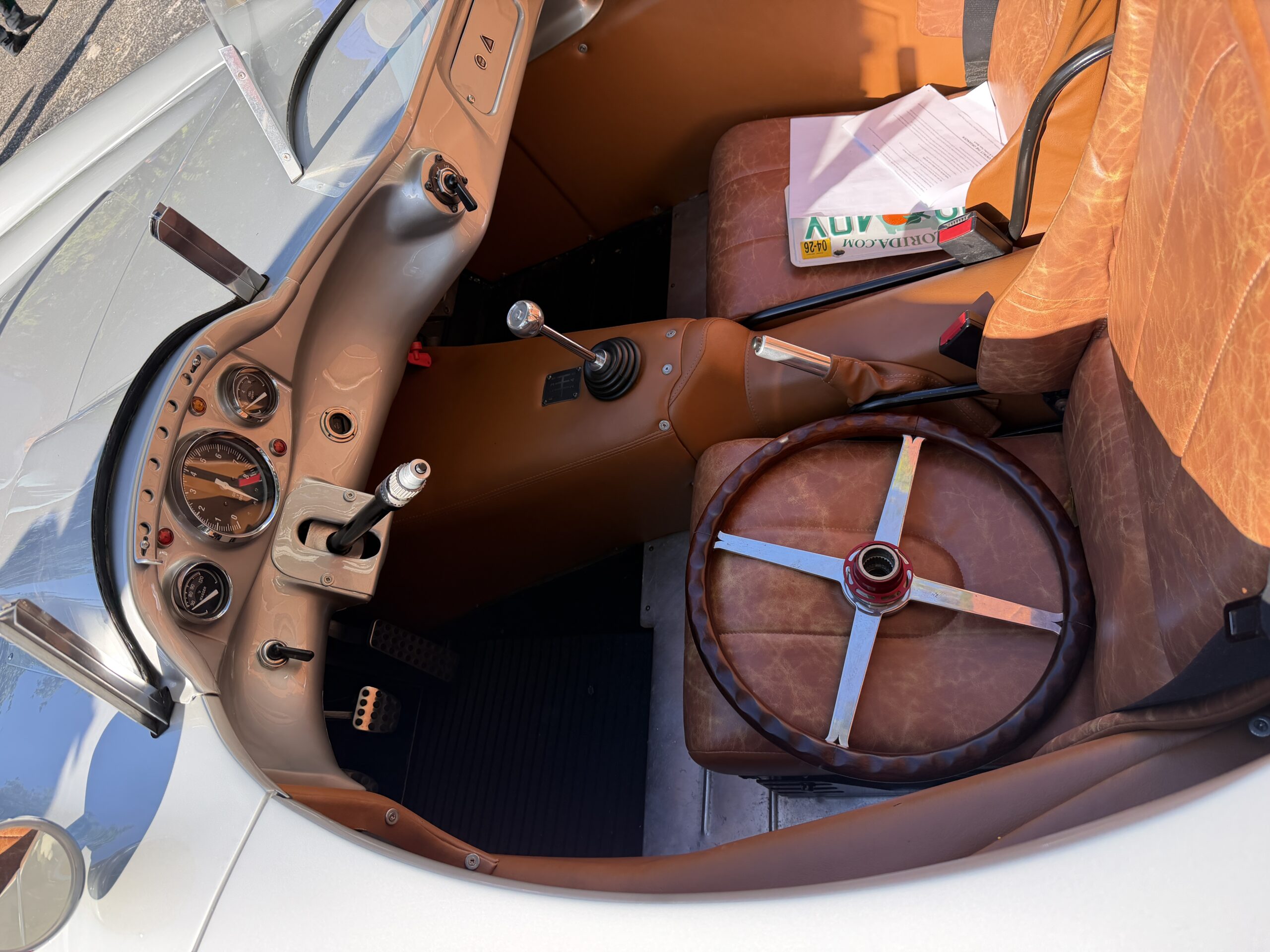
A replica (I think) Mercedes 300 SLR, complete with removable steering wheel (impossible to get in/out without removing it):
A Mercedes sedan converted to Tesla power:
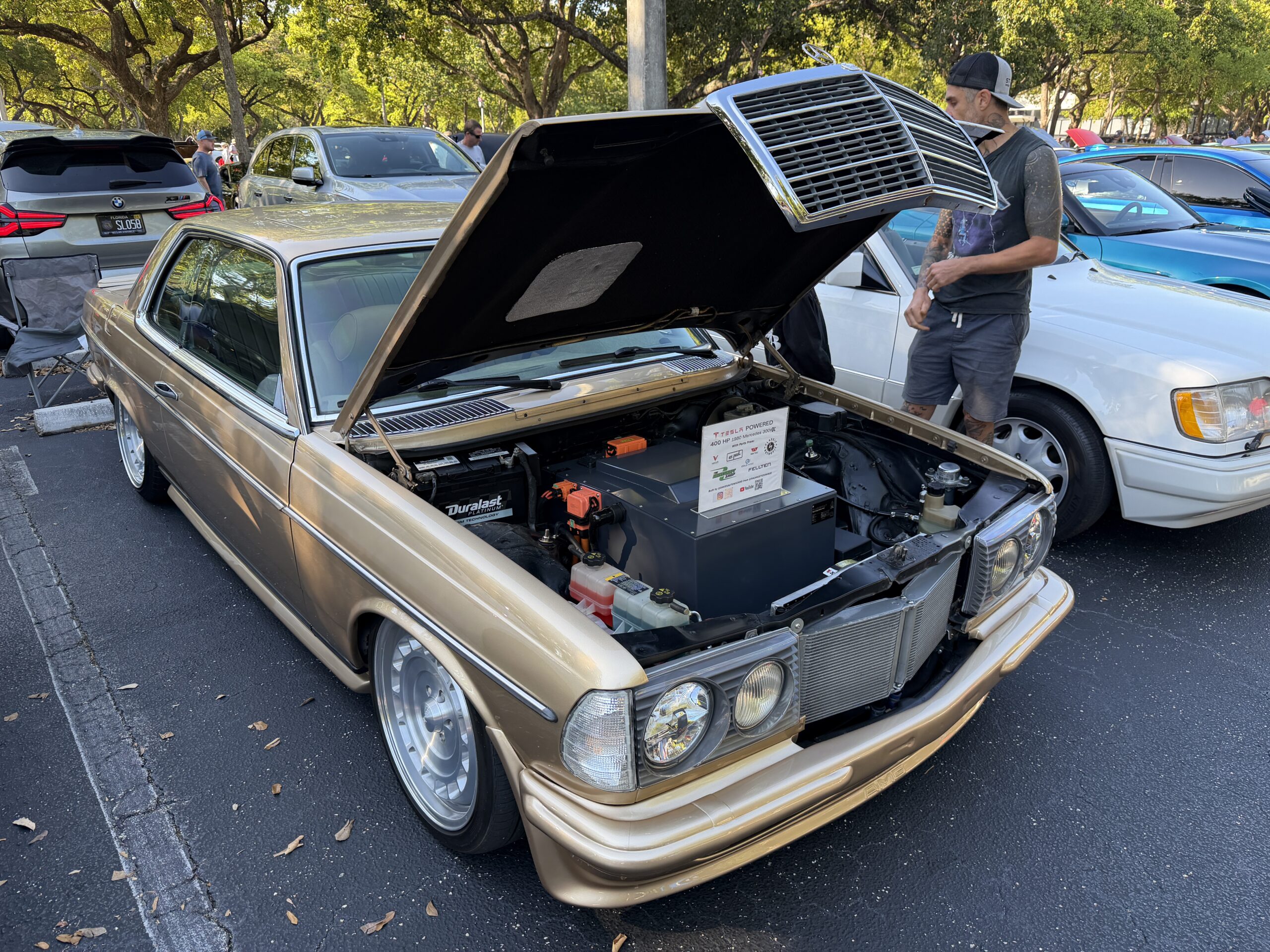
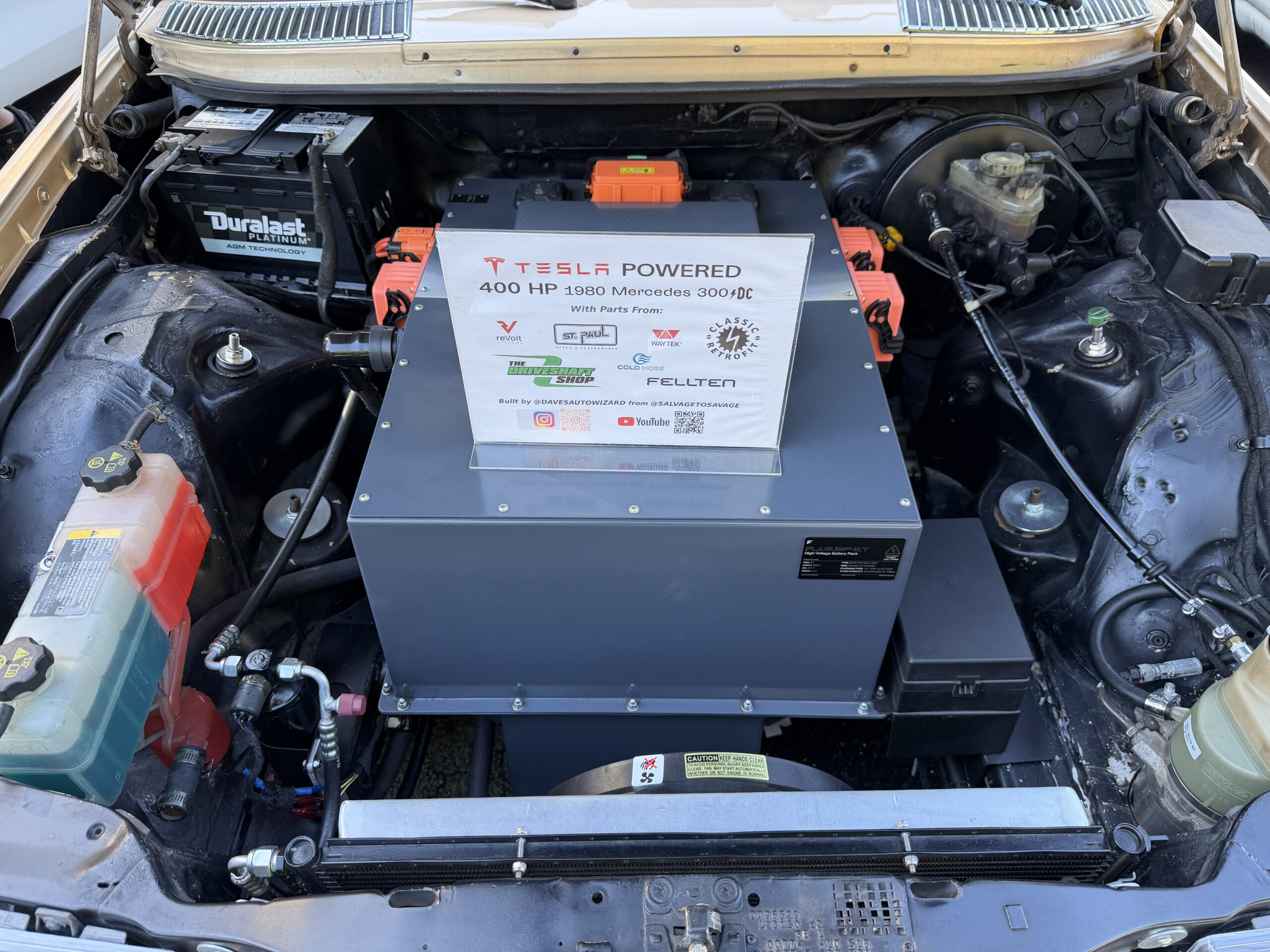
(Maybe this will become much more common as old Teslas become more numerous and less valuable.)
Here’s a 1976 Pontiac that cost $6,746, which the BLS says is roughly $40,000 in today’s mini-dollars:
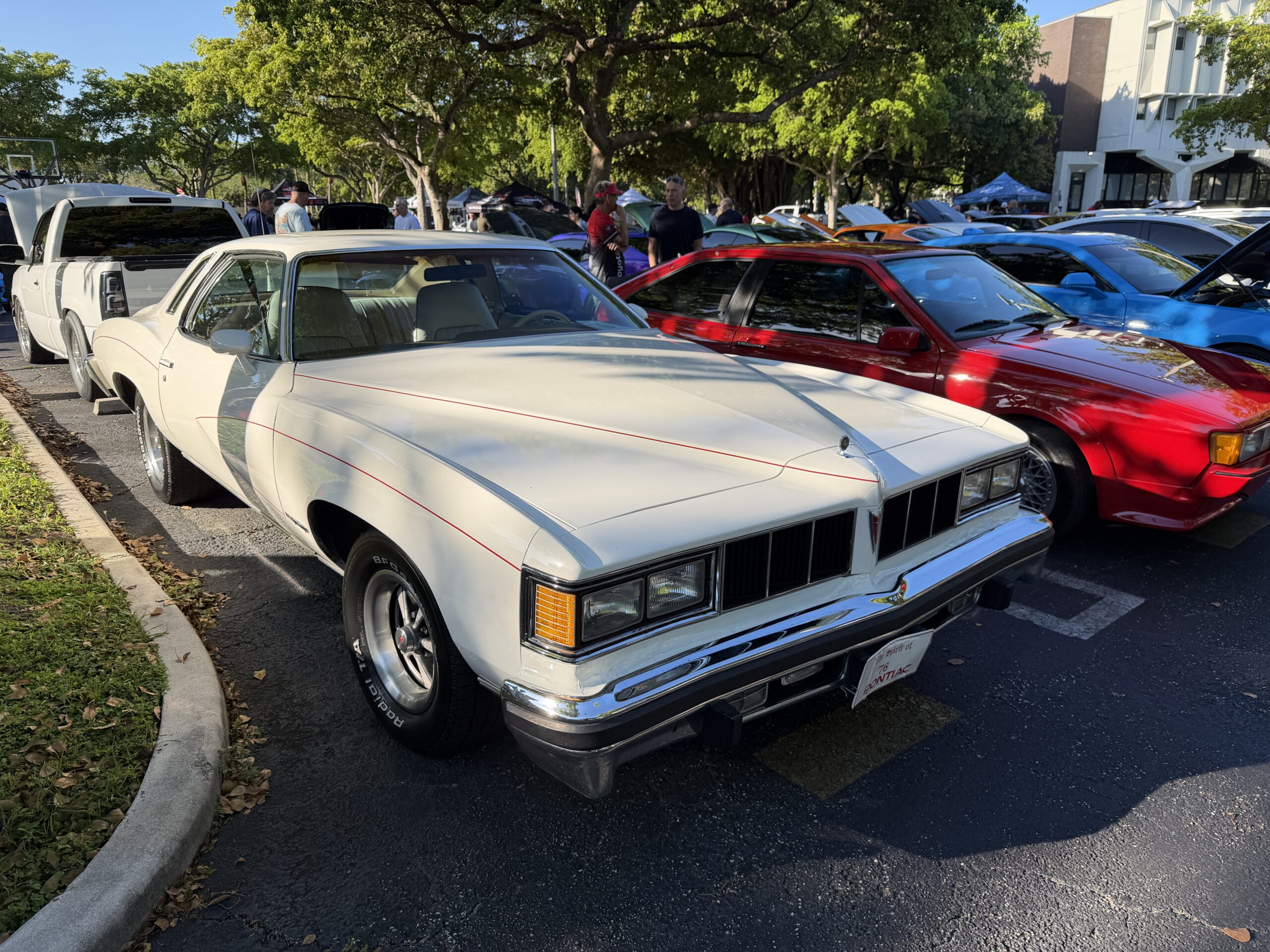
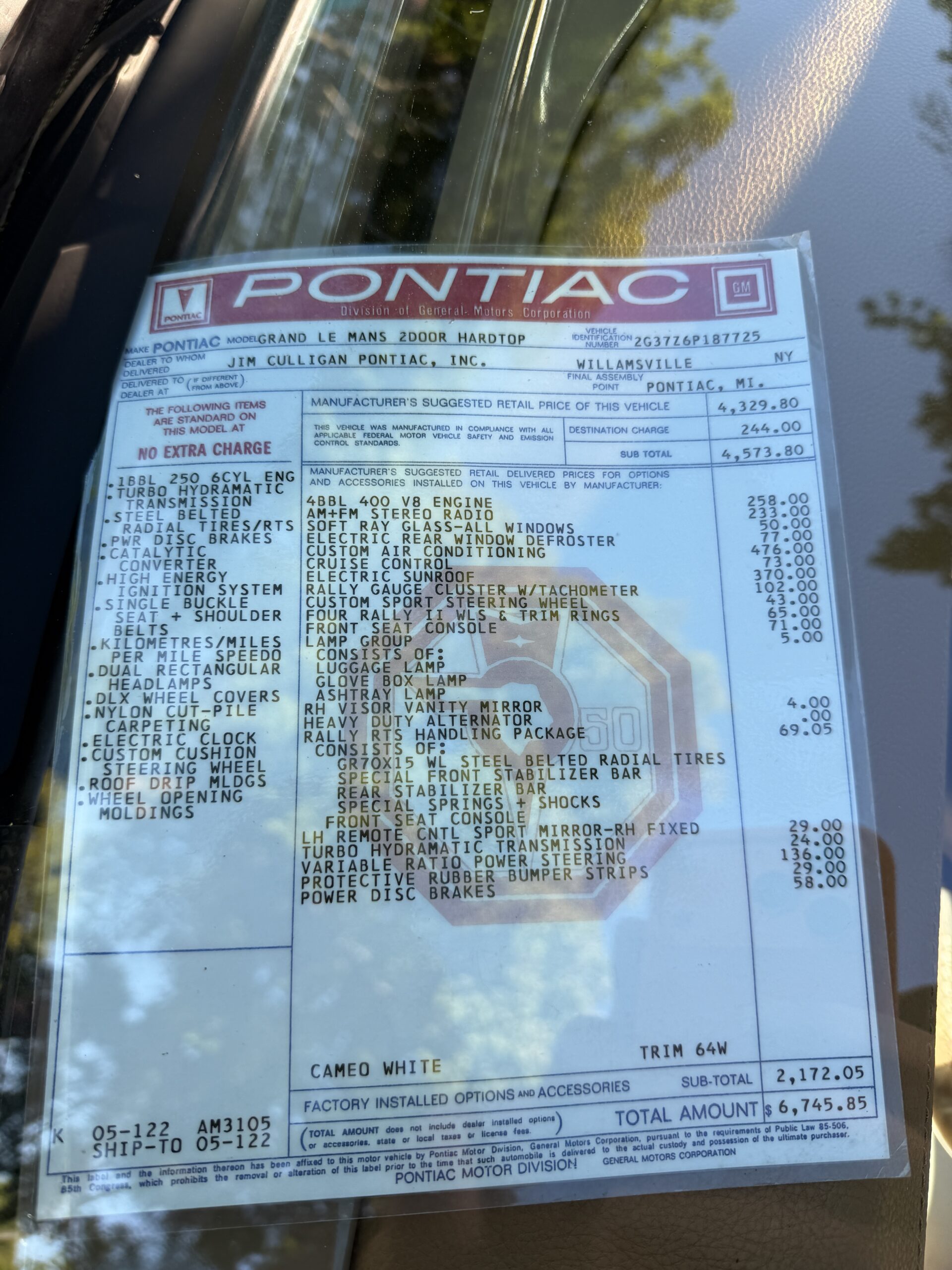
Maybe the closest modern equivalent is a Toyota Camry, which starts at about $32,000 including (an outrageous) destination charge?
Do you really need to drop a modern muscle car drivetrain into a motorcycle? Yes:
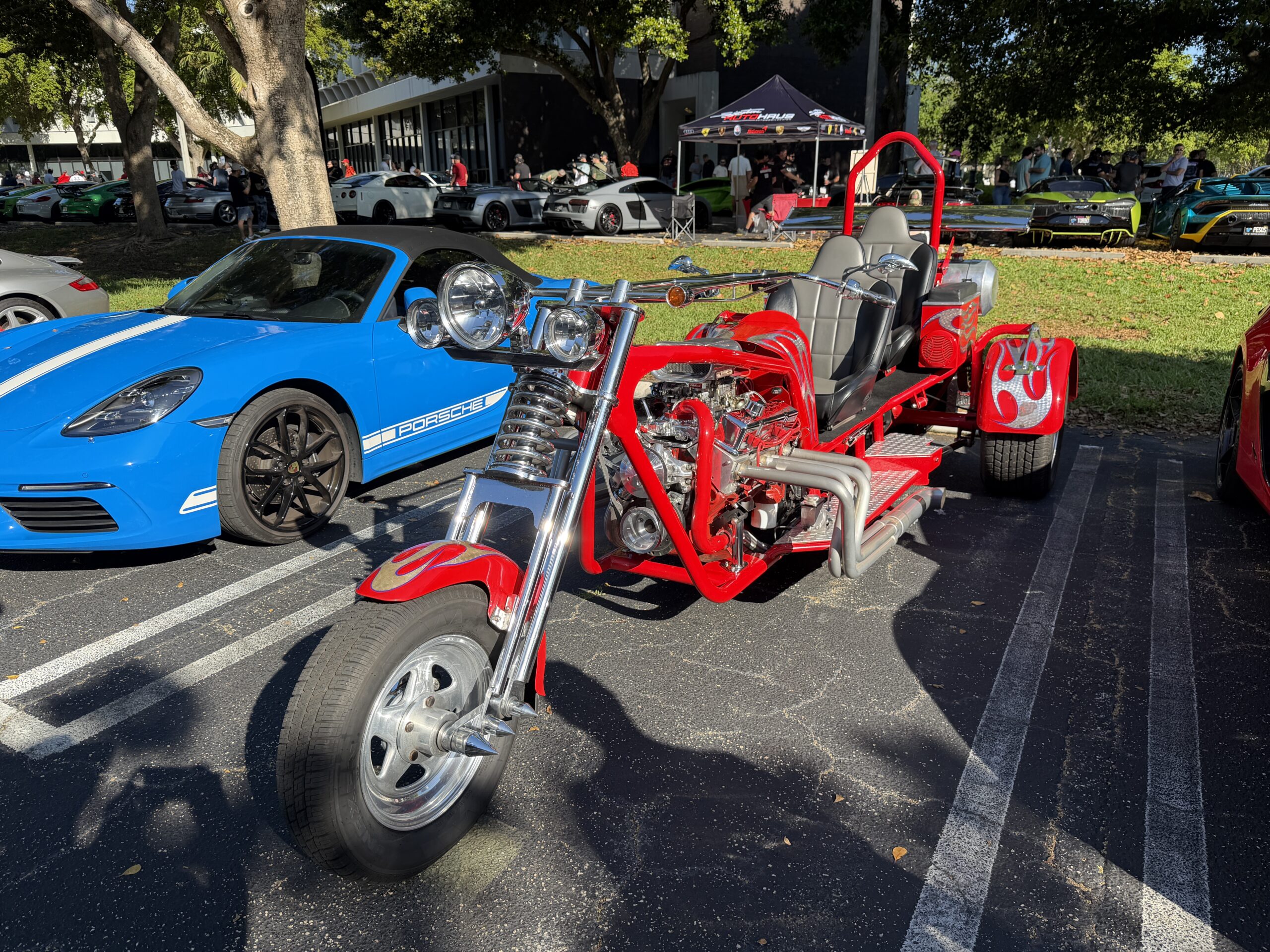
It’s a great event, but I think something more needs to be done to commemorate our best desktop friend!
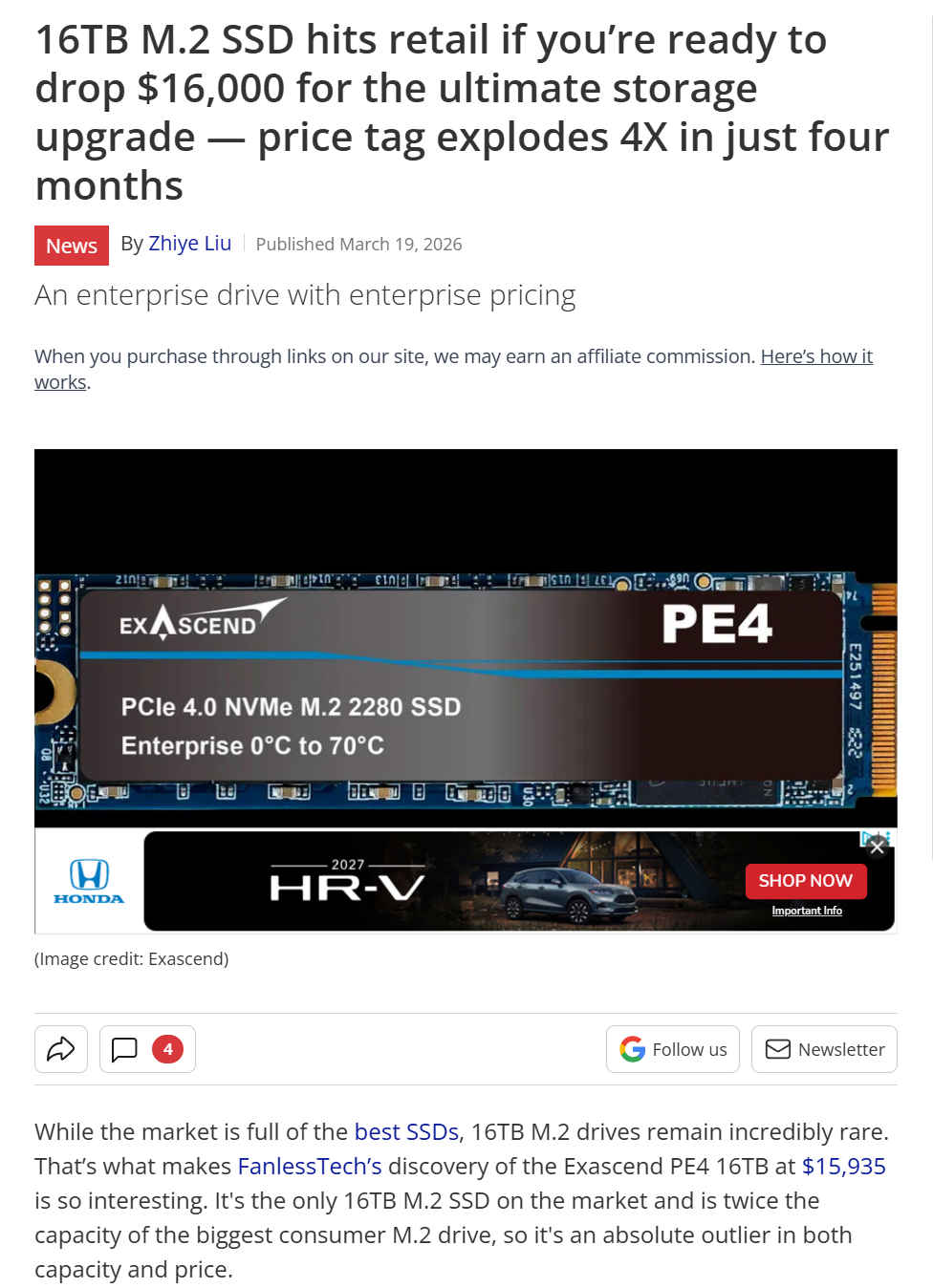
(I like to do everything in the dumbest way imaginable so I held off on buying more SSD back in October 2025 when building my new desktop PC. I figured that I would be able to get 16 TB on an M.2 stick, rather than merely 8, and that the price would keep falling. Instead, the 8 TB Samsung 9100 that I did purchase has more than doubled in price and 16 TB limped into the market in March with a price of $16,000 (below).)
At the risk of hitting a spam filter for linking this, I bought two of these in September last year for $250 each:
https://www.microcenter.com/product/692365/VENGEANCE_RGB_64GB_(2_x_32GB)_DDR5-6000_PC5-48000_CL30_Dual_Channel_Desktop_Memory_Kit_CMH64GX5M2M6000Z30_-_Gray
Now $1500 each. I also bought two 4TB SSDs that have quadrupled in price and a video card that has increased about 50% as well.
Every lucky. Very unexpected.
I’m a Dumb Ass that knows little about computers, but what in gods name does your friend do with his “home” PC that he needs to spend $50,400 dollars on RAM for a PC?
DA: well, he does work from home and does engineering simulations. He says he uses the RAM! The quote in the original post was the cheapest he could find. One quote was $137,000!
“engineering simulations”
Right. I smell a climate modelling PC. Are you harboring a verboten climate scientist Phil? We turned off all the measuring equipment, so the results probably won’t be that accurate.
OAG: Even a 64-core CPU isn’t MIMD enough for computer-aided climate doomerism, is it?
4% annual increase in housing subsidized by a 3% decrease in hotel rooms. Warsh gets to avoid a criminal investigation, thanks to room service no longer being included in the price. Why would someone buy 1.5TB of CPU RAM for a home PC? You’re supposed to be running language models on a GPU, people.
@Philip, The IBM history you quoted reflects the good old days. Things started to change in the 1990s, when IBM began acquiring other companies, and even more so in the 2000s, when it eventually started increasingly outsourcing work while continuing its aggressive acquisition strategy.
IBM would acquire a company, extract as much value from it as possible, and eventually allow the business to deteriorate to the point where it was no longer strategically valuable. At that point, IBM would either sell it, at a loss, or outsource it and effectively put it into maintenance mode.
Lotus is one of the most obvious examples, but there are many, many others. Sadly, RedHat is now heading down the same road.
And don’t even get me started on the mess IBM made of its hardware business.
IBM whatever it touches, it eventually turns into sh*t.
IBM became a third-rate company after Harvard MBA treatment by Lou Gerstner , who randomly killed IBM PC and OS2 businesses and kept it concentrating on mainframes.
The 1976 Pontiac window sticker is a modern reproduction, probably from WINVOICES.COM.
GM window stickers in the 1970s were printed using impact line printers (IBM 1403 or similar), which even with fresh ribbons and diligent maintenance, couldn’t produce the crisp, uniformly black, perfectly aligned letterforms seen in the photo.
Fascinating. I had no idea! Too bad I don’t have the VIN for my parents’ 1970 Chevelle wagon. We couldn’t afford A/C apparently so we had a dark green car with black seats in the DC summer…