Because I’m incredibly lazy, one of the first additions that we made to our house in 2022 was an InSinkErator under-sink instant hot water dispenser (Home Depot):
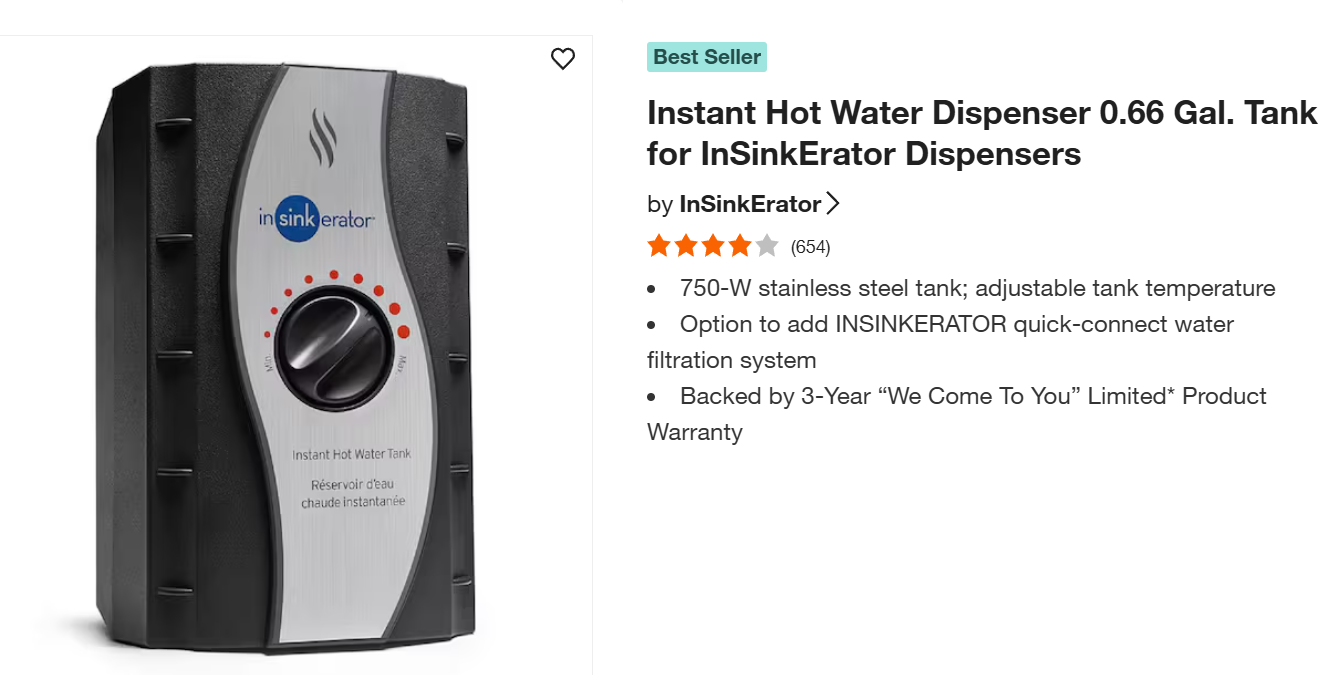
It failed in 2023 (leak under the sink, quickly caught thanks to our Chinese brothers and sisters at Govee) and InSinkErator offered to come out to replace it or send me a replacement and do the labor myself in exchange for a new 3-year warranty. I chose the latter option not because it was easy, but because I thought it would be easy (it actually wasn’t too challenging since all of the connectors were the same and no wrench was required).
The tank failed again this month, not with a leak, but by failing to heat. I called InSinkErator again, having a dim memory of the above conversation. They came back with “the warranty on the replacement expires in November 2026” and, again, offered to send me one more device and extend the warranty to 2029. The device retails for $300 right now at Home Depot ($400 at Amazon) so I’ll take this win-by-losing. (Imagine if the device had lasted just another few weeks!) Given that both adults in the household work from home and we use the instant hot water for cooking as well as making tea, the device probably made over 1,000 gallons of near-boiling water before dying. That sounds pretty good until you reflect that a standard domestic hot water heater will make the same quantity of hot water every week or so and last for 8-10 years. Admittedly, the whole-house hot water heater isn’t heating to as high a temperature. ChatGPT says that the higher temp can lead to more scale build-up and also that packing everything into a compact enclosure shortens the life.
We had the opposite consumer experience with our noisy unloved Bosch 300-series dishwasher the other day. This was installed by the previous owner shortly before we moved in. It’s almost $1,000 for a new one, which is absurd considering that a higher-rated-by-Consumer-Reports-and-quieter Chinese Midea MDT24P7CST is $700 (Midea is now rated #3 in reliability among dishwasher brands by CR, just behind Bosch/Thermador and Miele; I wonder if Miele will continue to be able to charge $4,000 for a dishwasher that is $2,000 in Europe and that doesn’t perform better than whatever Midea cooks up for its next generation). The racks began to fail probably about a year ago, but we didn’t notice until just recently when rust stains began to appear on the dishes. The plastic coating on the steel tines is worn away. Bosch has a five-year warranty on the racks and decided that we didn’t qualify even though the machine is likely right at the five-year mark. We could get new racks for around $300, I think, including shipping, but I decided that it would be a fun project for the kids to use a Dremel tool and a hand file to remove the rust then apply Plasti Dip ReRACK ($21; smells like 1970s model airplane glue), which is supposedly good for about a year.
(We’re apparently not efficient in our use of dishes and pots/pans because we fill and run the machine 2-3 times per day. Adjusted for vacation time away from the house, this is about 800 runs per year and the Federales say that 215 runs per year is the average (source). Miele aims for its machines to last 5,600 cycles, which they say is 20 years (it would be 7 for us). Some older Bosch literature says that they aim for 4,000 cycles over 10 years and our machine is probably close to the 4,000-cycle number. So our racks, perhaps, failed right on schedule. This makes me wonder why the dishwasher manufacturers don’t put a cycle counter display on the unit. Customers might feel better about a failure and an expensive out-of-warranty repair if they could see that a machine had saved them from handwashing 3,286 times, for example. The LG ThinQ app shows that we’ve used our washing machine more than once per day, on average, in the past couple of months, but doesn’t give a grand total for the lifetime of the machine. Our ghetto-class Bosch 300 doesn’t connect to Wi-Fi or the app, but ChatGPT says that even those with new machines and the Bosch app can’t see a lifetime cycle count.)
Readers: what dishwashers do you love? The Bosch that we have claims to generate 48 dBA of noise (that’s in a test chamber). In our open kitchen/family room it is way too loud and interferes with conversation, TV-watching, etc. As noted above, the machine is running for 4.5-6.5 hours on an average day (2-3 cycles at over 2 hours each). Cleaning performance is okay, but seems to have gotten weaker over time (circulation pump feebling out? The machine was serviced with a new one about three years ago; ChatGPT says that the top-of-the-line Bosch Benchmark has exactly the same pump/heater as our $900 one). It isn’t completely dead, but I’m considering euthanasia (have to find a Canadian to help?) because there is no fix for the loudness. An appliance sales guy absolutely loves his Cove (Sub-Zero) dishwasher, but a friend has one and she says that she can hear it running from a kitchen table 15′ away (not obtrusive, but audible). Consumer Reports hasn’t tested the Cove for cleaning or noise, but gives the brand a low rank in reliability (that’s based on a survey). Some people love Miele, but as noted above they mark them up to insane numbers here in the U.S. (Bosch, by contrast, is a similar price in Germany and the US). LG makes big claims for their one-hour wash, Consumer Reports found that LG cleaned better than Bosch, and Yale Appliance (big YouTube channel) says that LGs have the lowest first-year service call rate, but some online reviews say that LG was noisy for them and CR gives LG low marks for reliability and satisfaction. We have a Monogram range and Monogram makes huge claims for the low noise level of their latest ZDT900 dishwasher, but nobody has reviewed it (CR gives Monogram low marks for both reliability and owner satisfaction). Does anyone have a dishwasher that they love for (a) true silence, and (b) cleaning performance on the one-hour cycle?
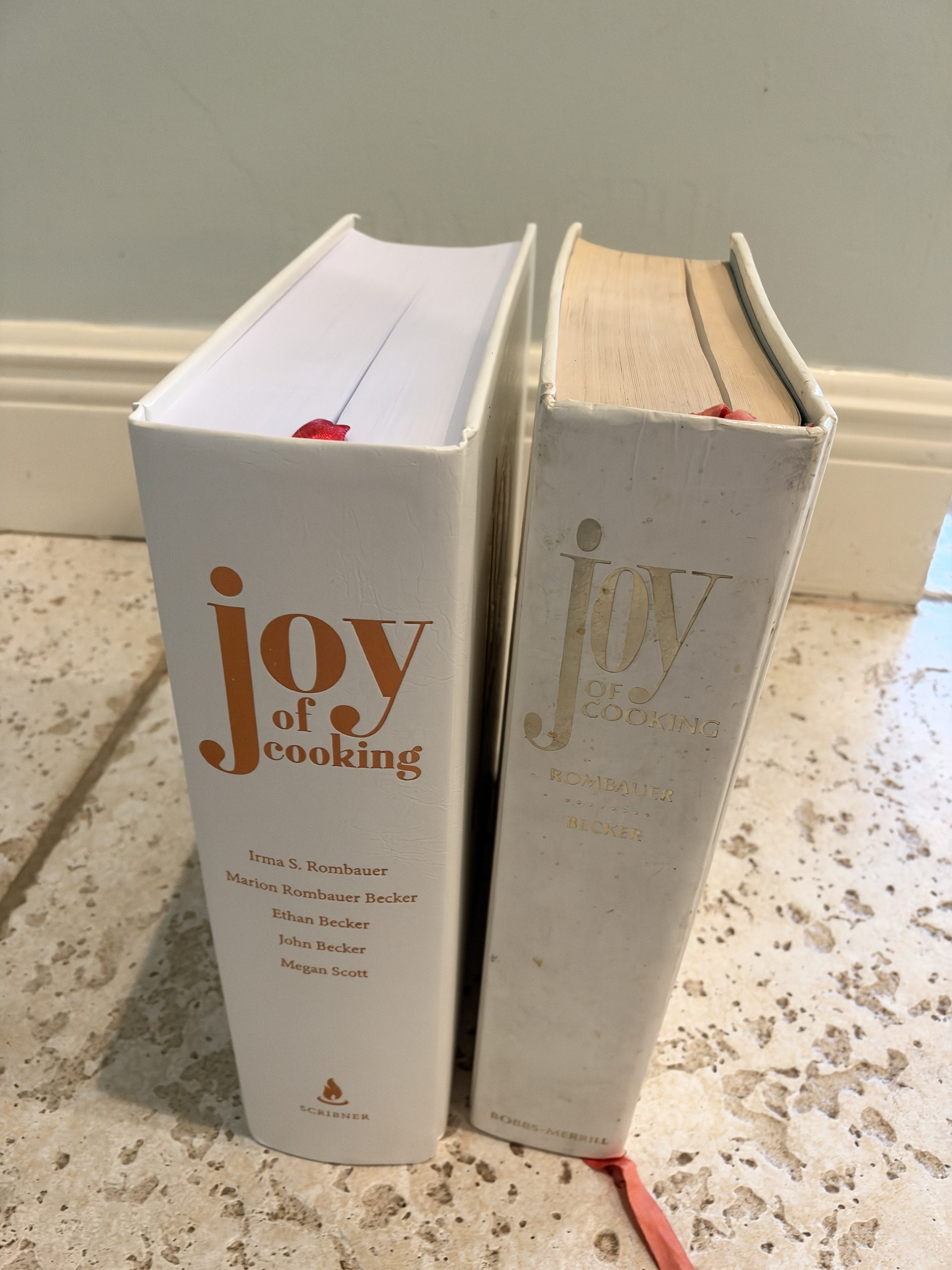
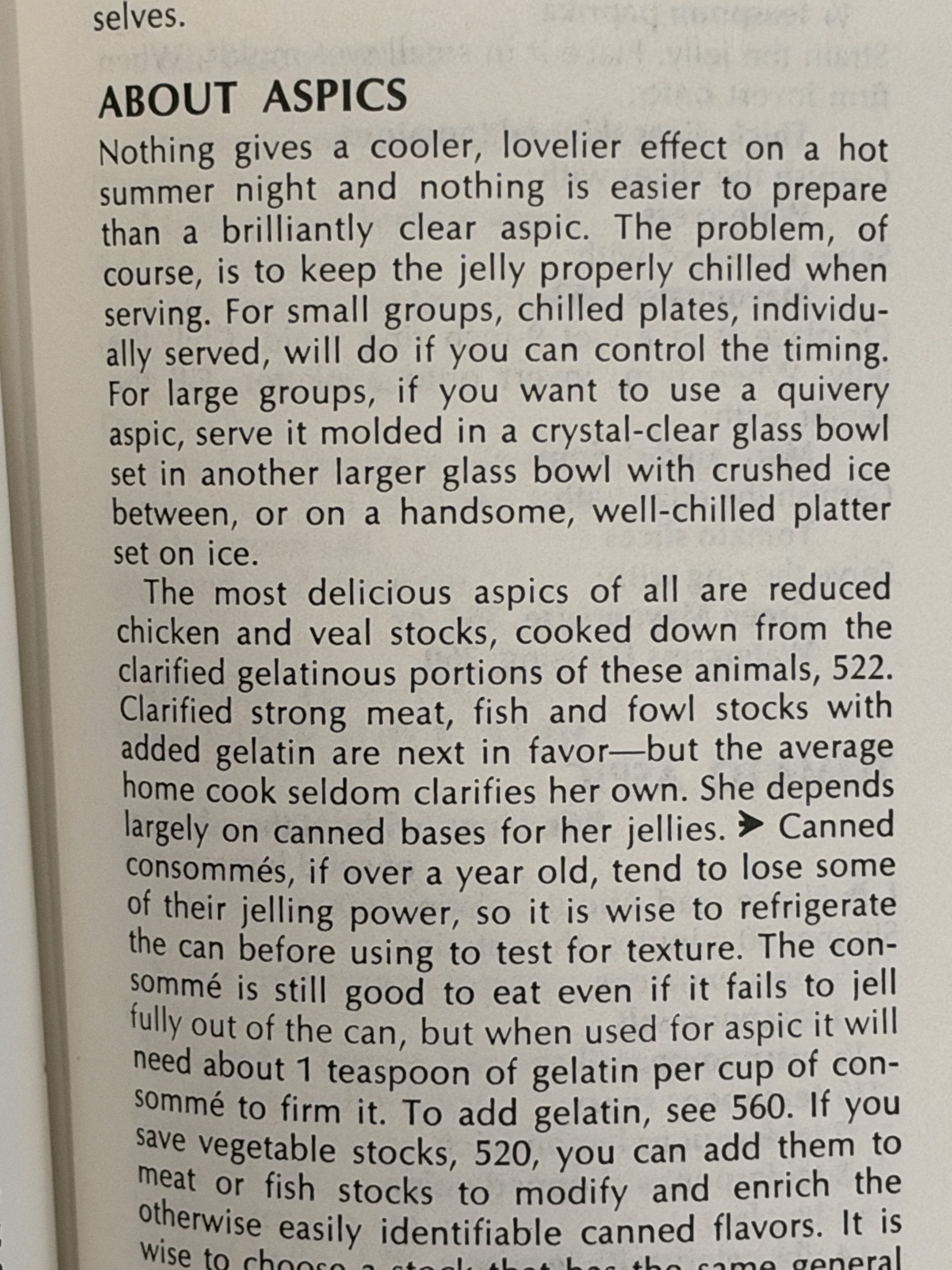
Finally, as long as we’re talking cooking, I thought the kids might want to get some explicit instruction in cooking from The Joy of Cooking, but then realized that the 1975 book on the shelf (1) had ten pages about aspics that might not engage them, (2) wasn’t printed on acid-free paper, and (3) had some issues with binding separation. The 2019 update is quite a bit plumper, despite the aspic section having been reduced from 10 pages to 1. It’s amazing how much can be communicated compared to online recipes (10 pages per recipe vs. 10 recipes per page?).
Maybe you should remove the noise constraint and run the dishwasher exclusively at night. Depending on the limiting factor (too few dishes or too little dishwasher room), you can factor in the cost of paper plates, more dishes or a second dishwasher.
When my dishwasher started doing a worse cleaning job, I cracked her open and was horrified to see the state of the filter. It was almost completely blocked by a paper label and other detritus. So, contra much advice about not needed to rinse dishes, that’s what I do now. But, anyway that might be a more likely culprit than an actual motor failure.
The filter is a quite clever design which has a filter wiper whose direction is controlled by the flow of water to wipe stuff off the filter and send the debris out with the waste water.
Running at night makes sense for efficient families, but we’re running it 3X per day. So we’d have to stack up dishes all day and then set alarms for the middle of the night to unload and reload.
Our Bosch filter is almost completely clean (I brush/rinse it out once/month).
> Our Bosch filter is almost completely clean
That’s the easily accessible filter, I assume. I’m talking about a cylindrical, thin, perforated metal filter that you access by pulling out the dishwasher and digging into the guts. This is on a Kitchenaid.
ChatGPT says that the Bosch doesn’t have anything like this. I guess I haven’t pull off the drain-pump cover and looked for tiny hard items to pull out with tweezers. I did that once before when the performance degraded suddenly. Little fragments can sit in there and jam an impeller.
We have two Bosch 800 Series. VERY quiet. So much so we need to use the little LED light to see when the cycle is done. I also have a Gaggenau 400 Series in our NYC apartment which is essentially a Bosch in different brand wrapper with some extra sound deadening. I think the reason there is so much standard deviation on individual installations sound levels experienced is the resonance of the cabinetry it is installed in. Crappy, thin plywood installs with decent space between the unit and panels create harmonics and almost a Passive Speaker system. I had that with an under-counter drink fridge and I used the automotive sound deadening material and it’s the quietest fridge ever now.
I like the Bosch / Gaggenau lines because they are easy to repair oneself. Tons of online parts support for very low prices.
In short, kind of like people who buy expensive home theater equipment and wonder why it sounds like crap, you really need to deal with the acoustic environment first. A cheap system in a well planned acoustic room will sound 100x better than an audiophile system in a boxy, untreated drywall room.
Ken: I think that our house was reasonably well built, though the dishwasher is installed in a part of the counter that separates the kitchen from the breakfast table (i.e., there is no full wall behind it). I’ve never seen the dishwasher out so I don’t know if it would be possible to put some sound-deadening material behind it, which would be an awesome idea. Now that I look more carefully at the installation environment, there is a 1/2″ gap (early Tesla body panel gap?) between the widest part of the dishwasher at the top and the left side cabinet enclosure. This expands to about a 3/4″ gap for much of the dishwasher’s height. So if the left side of the dishwasher is generating noise it has a direct path into the kitchen. The gap on the right side is minimal. I might try to stuff some foam in there and measure the noise level with and without the foam. I guess I’d have to pick the same number of minutes into the cycle for consistency.
Gaggenau, incidentally, doesn’t measure nearly as quiet as Bosch Benchmark (same internals?) in the lab. The top-of-the-line Gaggenau is rated at 42 dBA vs. 38 for the quietest Benchmark (39 if you get a Benchmark without the recessed handle, for some reason).
It is fascinating and always entertaining reading Phil’s blog. I mean that sincerely. It is a collection of truly random posts that outshines in randomness his complaints of what the West has become. All of the random people of the West wouldn’t even be able to hold a candle up to it.
It’s like “I woke up in the morning. I realized France was burning, so I did a novel and interesting calculation on how much their security apparatus cost. Then I took my plane to Boston, where I saw a man walking with a mask outdoors. This immediately caused me great fury. Then I opened Google Maps and set a route for the nearest independent bookstore where I knew I would have a good time looking at the gay books.
After a good day travelling around the entire USA to visit the specific places I hated, I flew back home and replaced the dishwasher”
Thank you, Anon! Small correction: the outdoor maskers of Boston and San Francisco don’t cause me “great fury”. They delight me, especially when the wearer has a full beard. That reminds me to wonder why outdoor maskers are much less common in NYC (unless you count Islamic female outfits). New Yorkers were devoted followers of Faucism. Did they just collectively decide to go back to wallowing in filth, including aerosol virus filth?
Regarding cookbooks:
Shouldn’t you introduce them to a more scientifically oriented book like one of Kenji’s. And you/they might enjoy reviewing what people were eating back in the 50’s: The Gallery of Regrettable Food (https://www.amazon.com/Gallery-Regrettable-Food-James-Lileks/dp/0609607820)
P.S., we used to run dual KitchenAid top of lines. Good cleaning, but loud and broke down in 5 years. Also, a failed experiment with a Paykel Drawer Dishwasher over the years. One side was the Paykel drawer and the other a KitchenAid. The drawer one just didn’t work with big family and constant loading and unloading.
I rented a house with a Paykel Drawer and was enraged by the machine. The water in New Zealand must be completely different if people there think that the Paykel actually washes dishes.
Consumer Reports rated a Paykel at 2/5 for wash performance (Bosch is mostly at 4/5 and LG sometimes hits 5/5, which Samsung also hits but CR readers hated Samsung for reliability and overall satisfaction). If we wanted to celebrate the Rejectors of Fauci and All Things Trump we could get 5/5 wash performance and reasonable quiet from Asko (HQ in Sweden; manufacturing in Slovenia). Mediocre reliability and owner satisfaction, though (worse than LG; higher than Samsung).
That’s a very unappetizing brand for a hot water heater. Those of us in the water recycling capital of the world learned to affiliate the water from our in sink erators with a certain odor but probably not the Boston fans.
The InSinkErator tank that people are mostly buying, I think, is the newer digital one. It’s $609 for the tank alone (plus another $500-600 for the faucet): https://www.fergusonhome.com/product/summary/1750327
Add the plumber’s fee and it could be $2000?