My Facebook friends love to post about the evils of states requiring ID to vote. This will, in their view, disenfranchise black voters because black Americans are not competent to obtain ID (unclear where this knowledge comes from since, except for selfie time at Black Panther, none of these folks are ever seen in company with African Americans).
You may be required to show your ID when you check in at your polling place, the state says, under these circumstances … The poll worker has “a reasonable suspicion” that leads them to request ID
In other words, a poll worker can make an arbitrary decision, potentially based on skin color, to demand ID.
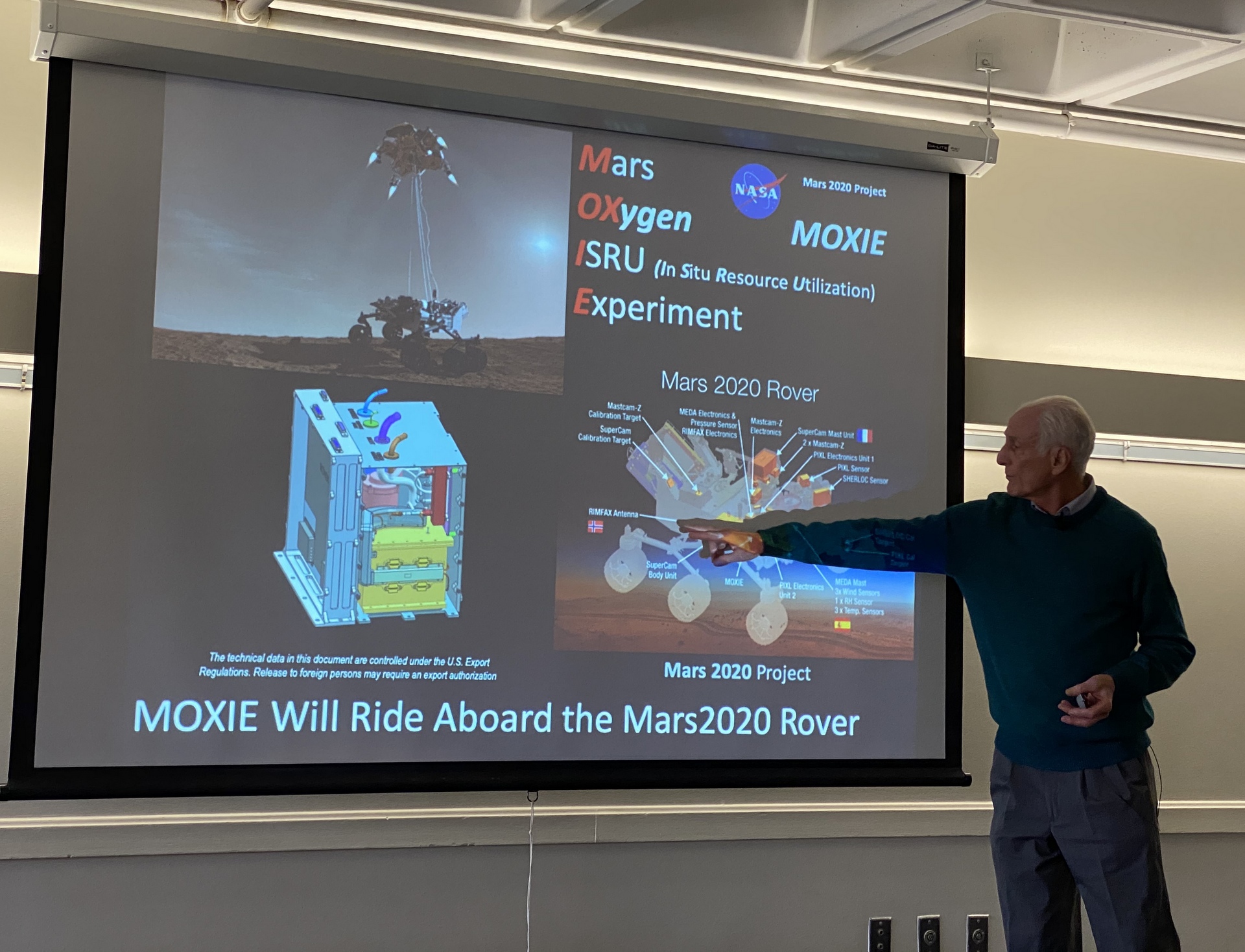
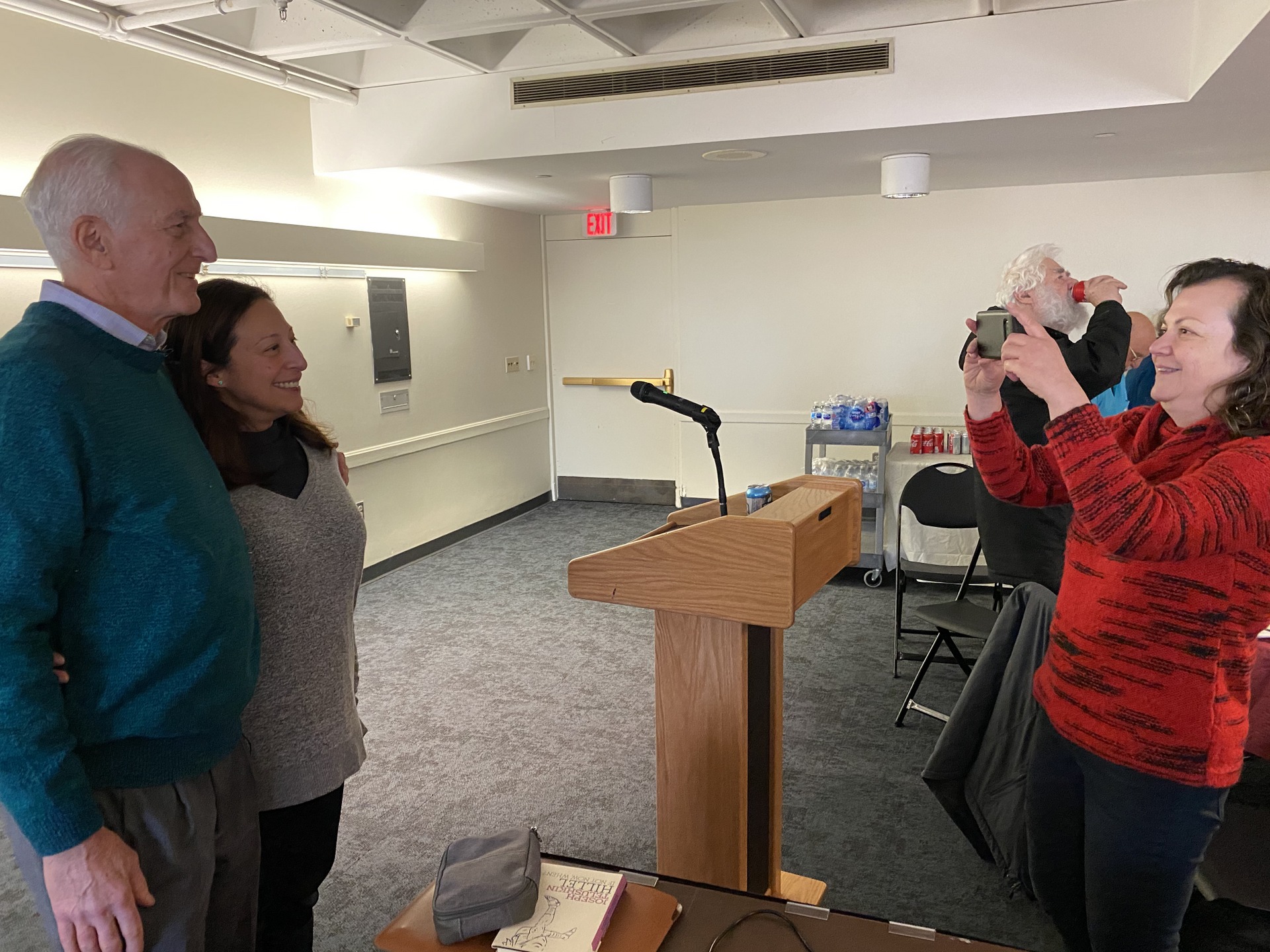
From a Valentine’s Day talk by Jeffrey Hoffman, an astronaut-turned-professor who is now part of an effort to mine oxygen out of the Martian atmosphere…. If the MOXIE system works and Blue Origin gets humans to Mars, they can come back without having had to pack 80 percent of their rocket fuel for the trip home.
Professor Hoffman explained that, though there is plenty of water in the Martian crust it takes too much energy to extract it. Thus, the plan is to “mine” the atmosphere, which is 96 percent CO2 (should be toasty warm from the greenhouse effect, except that atmospheric pressure is comparable at the Martian surface to what we have at 100,000′ above sea level).
Hoffman and collaborators’ experiment will launch in July 2020 and land in February 2021. The Mars journey will also be 7 months for humans, kind of like being on a cruise ship in Asia right now. The shocking news for movie fans is that The Martian is not scientifically accurate. The dramatic wind that forces an evacuation and is blowing stuff around would have to move at 1,000 mph to have enough force, given the thin atmosphere. In fact, the highest recorded winds on Mars are roughly 60 mph.
As with other astronauts I’ve talked to recently, Hoffman is not a fan of centralized government-run rocketry. Regarding the SLS, which promises to cost taxpayers $20 billion at least: “Maybe they will launch it a few times. It is Saturn V technology.” In his view, SpaceX and Blue Origin are where the innovation happens. The government “monopoly” had cost us decades of potential progress.
One thing I learned: this next Mars mission will include a helicopter! Also, landing on Mars is a combination of the worst features of the Earth and Moon. There is the friction from entering the atmosphere, as on Earth, but not enough atmosphere to slow down with wings or a regular parachute.
Sidenote: Hoffman first came to MIT because of Walter Lewin, whose physics lectures are now securely in a memory hole due to #MeToo issues.
Hoffman flew on five Shuttle missions, logged 1,211 hours in space, and did multiple spacewalks, including one to fix the Hubble telescope. An example of “bravery”? Perhaps not. There’s a talk on real bravery today at 4 pm:
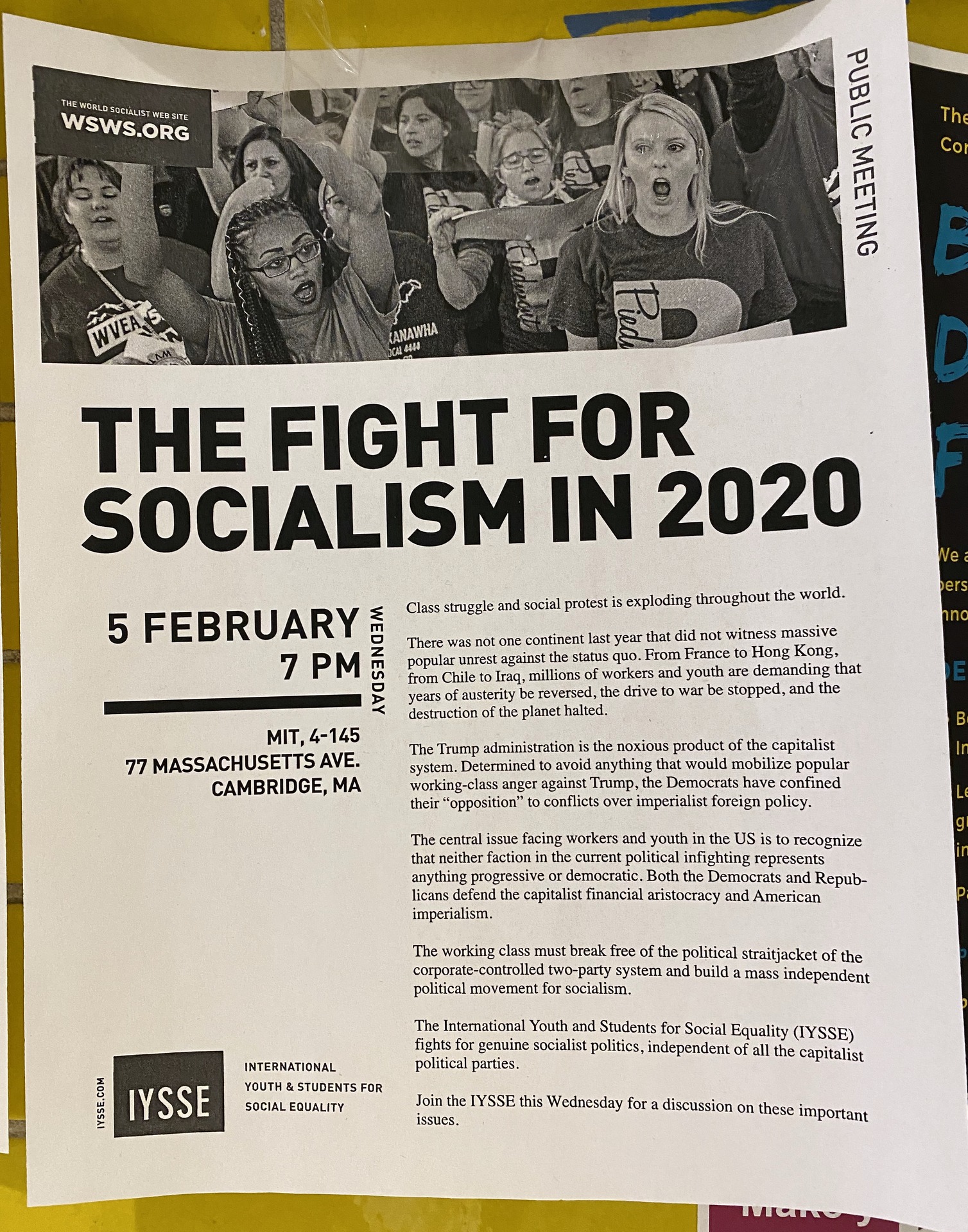
What else do we find in the corridors at MIT? “The Trump administration is the noxious product of the capitalist system” (but didn’t most of the Wall Street capitalists support Hillary?)
A poster on “ethnomathematics”:
(If these “traditional and indigenous societies” are doing interesting stuff, why isn’t it just “mathematics”? Why do they need a special numbers nerdism ghetto?)
We crashed a Valentine’s Day party for a group of PhD students in Electrical Engineering and Computer Science. Hollywood-style background:
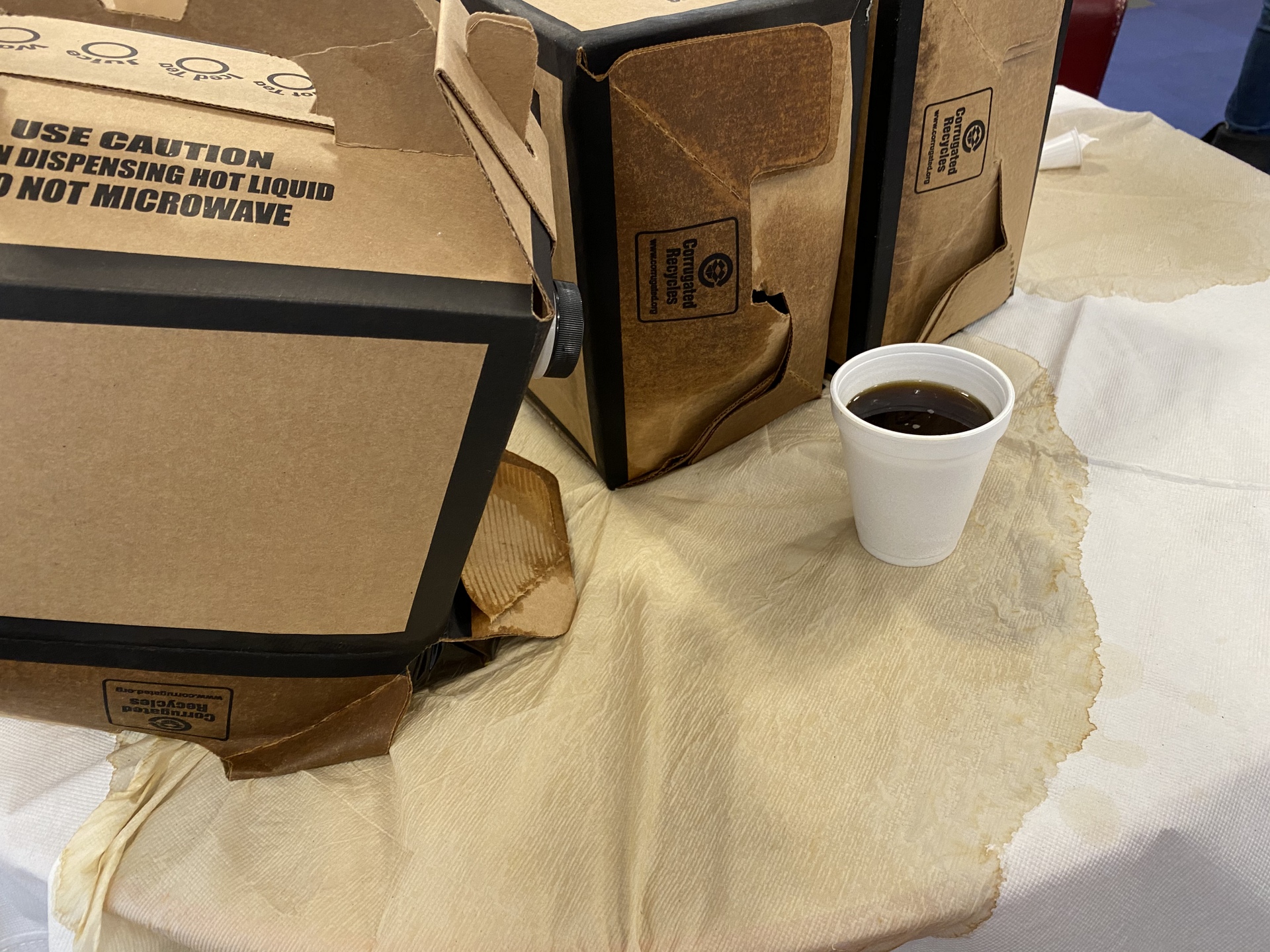
The future engineering PhDs pour themselves coffee:
Circling back to Professor Hoffman… As with other retired astronauts I have met, this guy is incredibly fit and sharp at age 75. Makes one wonder why humans age at all. If we can live to 75 with hardly any deficits accumulating, why can’t we live to 750? If nearly all of us drop dead by 100, why don’t we drop dead at 10? Most of our cells have to go through at least one replacement cycle by age 10, right?
If you’re interested in instrument flying, I’m giving a talk on Wednesday (March 4) at 7 pm, MIT Room 35-225. The topic is IFR and also planning for trips over the mountains, over water, etc. Same general idea as the videos linked from our ground school. It should be comprehensible to non-pilots, but it is designed for people who have studied at least some of the VFR topics and done at least a lesson or two.
Pizza will be served by the hosts (MIT Flying Club).
“I don’t think people realize what is coming. The virus is reported to have almost a 20 percent infection rate. On the cruise ship, one asymptomatic person infected 600 people. Our health system covers about 1 million people. We have 54 ICU beds. The numbers just don’t work.” He continues: “On top of this, this will be a supply crisis. Our health system reverts back to the medieval when we don’t have common medications. Penicillin is not made in the US anymore. There is going to be a huge shortage of needles. China supplies everything, and they are shut down.” Is he stockpiling? “Oh yeah.”
This conversation occurred last week. Our anonymous hero was shadowing the radiologists.
Separately, I was at a dinner party on Friday evening in a West LA house that Zillow estimates is worth $3.6 million. The guests on previous occasions spent about 90 percent of their time displaying their virtuous concern for others: Trump-hatred, wanting to help the vulnerable, social justice, etc. During this dinner, however, 90 percent of the conversation was about the rich white guests’ personal fears of contracting the coronavirus, whether to modify travel plans to minimize the risk, etc. (They mixed in a bit of Trump hatred by talking about how the $5 trillion/year Federal government would be powerless to do anything regarding coronavirus due to incompetent leadership by Trump and Pence. They have almost total faith in the power of the Federal government to solve problems, but only if the correct President and VP are installed at the top.)
[At least one Bernie supporter from 2016 had moved into the Elizabeth Warren camp. To judge by the dinner crowd, Warren’s appeal is strongest to women who don’t work and feel aggrieved that some people earn and/or have a lot of money. Bernie’s message is fundamentally about optimism that a slightly tweaked government (just one little tax on billionaires!) can deliver on every American’s dream while Warren is skimming off the most resentful subset of Bernie 2016 supporters?]
Given the large number of destitute people wandering around Los Angeles and/or camping on the sidewalk, I’m not too surprised that rich white people in LA have their personal welfare as Priority #1. But until coronavirus hit, there was some kind of social taboo about giving voice to this priority. Fear of death, apparently, has caused people to abandon any feeling of shame regarding selfish concern.
This is the month when non-Asians find out if they got into Harvard College. What happens when the world’s smartest mostly-white people pour themselves some water by opening a tap and letting gravity fill up a cup? Apparently, the result has been dramatic enough to generate some sales for Brother label maker tape:
(From Smith Campus Center, formerly “Holyoke Center”.)
(Separately, how is it that these folks vote on a Saturday? If that makes sense, why don’t all of the states do it? If it doesn’t make sense, why does South Carolina do it?)
Yeoman suburbanites west of Boston voted overwhelming to build themselves the most expensive, on a per-student basis, school ever constructed in the United States (see betterlincolnschools.wordpress.com ). It will be 2.5X the cost, per town-resident student, of Newton North, a nearby high school that was formerly the high-water mark for lavish government spending.
At $600/square foot for a combination of renovation and new construction, I figured that it was set up so that there was no possibility of a cost-overrun. Here’s an email from the school superintendent:
Last night, the Lincoln School Building Committee met to review the outcomes of going out to bid for the construction portion of the Lincoln School project that is slated to begin in June. As construction bids have come in for the school building project, the total bid value has exceeded our budget for the project by 3.5 million dollars. This is forcing us to make some significant cuts from the 100% design to remove elements from the project. These cuts are going to be hard and feel frustrating, and perhaps dispiriting, at this juncture in the project. However, this is the process working – we are confronting the real costs of the project now, before work has begun, so we are sure we are building within the budget the community has provided. This is not unlike what would happen if a homeowner was planning a big kitchen remodeling project, and when they received quotes from contractors, the quotes were all higher than what the homeowner had budgeted. Tough choices to cut some aspects of the project would need to be made. Maybe the counters will be Corian instead of quartz, the island will be 10 sq./ft. smaller, and the old refrigerator will be kept until it needs to be replaced. While it is disappointing to have to make these decisions, the homeowner will still be getting a wonderful new kitchen.
They already took $15-20 million out of the construction budget via an Enron-style accounting maneuver (letting a third party company buy the solar panels in exchange for an agreement to purchase power at above-market prices for 30 years). This was necessary because state law limits the amount that a town can borrow as a percentage of property value and Lincoln was trying to go over the limit. Somehow this off-books borrowing from the solar panel vendor doesn’t count and the town therefore managed to move forward as the most indebted town in the state, but not over the limit.
The town committee volunteers/experts predicted that property prices would rise once people heard about the fancy new school building and they’d be able to borrow more. Instead, however, property prices have fallen since the vote to approve the school (i.e., the market may value the new school building at $0). So the town can’t borrow more for what the school superintendent compares to a Whole Foods heater-uppers new kitchen.
I think this is of more than local interest because of the human psychology involved. First, there is the faith that an upgraded building housing the same teachers and students using the same curriculum will yield superior academic outcomes. Then, there was the in-person town meeting Vote of the Righteous in which retirees who had no chance of ever sending a child to the Palazzo of Education enthusiastically voiced their support for saving Planet Earth by bulldozing the existing school (sections that were 25-year-olds and sections that had been renovated 25 years earlier) and creating a Net Zero structure in its place.
What is most interesting for explaining decisions in the rest of the country was that people were able to come together to agree to spend the money, but later fought amongst themselves regarding how to pay for the spending. Massachusetts enables towns to use a progressive property tax structure such that owners of lower-value property pay a lower rate. Would a town of self-described “progressives” vote for progressive property tax? It turned out to be a tougher question than Hillary v. Trump and depended quite a bit on whether one occupied a higher-than-median-value home!
Another passionate discussion ensued regarding approving the construction of more housing and commercial structures in the town. This was now vital to increase the property tax base since (a) the density of the town wasn’t sufficient to support a $110 million (with solar panels) school building, and (b) the property values of the existing houses had fallen (“Lincoln home values have declined -0.1% over the past year and Zillow predicts they will fall -0.7% within the next year.”; compare to nearby “Cambridge home values have gone up 1.7% over the past year and Zillow predicts they will rise 1.2% within the next year.”).
What happens when people who enthusiastically support U.S. population increase via migration ponder the prospect of population growth within their own town? At a minimum, any project needs to be built far away from their own homes. And, they wonder, without quoting any numbers, if the per-pupil spending at the school is $25,000/year plus capital costs of $250,000 per student, how can they make sure that the occupants of the new housing don’t breed additional children that might further drive up school spending? As the average property tax per household will settle in at about $20,000 per year, if there is even one school-age child in a household, the result is a net drain on the town treasury.
A great example of the fiscal outcomes of democracy in action!
When at Universal Orlando… see a movie! My Irish friend and I saw Knives Out, in which Daniel Craig speaks in a Southern accent that no Southerner since the 19th century (or ever?) has used.
Despite the anachronistic accent, this is perhaps the most modern Hollywood film. It concerns an extended multi-generational family of native-born Americans. They are mendacious and lazy. One even might be a Trump supporter and Wall advocate! All seek to live off the money earned by the patriarch. Their fertility is low, with a one-child maximum.
On the other side of the scale is a hard-working migrant from Latin America. Her mother is undocumented, but somehow she and a sister are citizens. So that the mom can be a completely heroic “single mom,” no father is mentioned nor appears.
It’s a mystery so I don’t want to spoil the rest!
It is worth seeing just to see how thick Hollywood is willing to lay on the “immigrants are better than natives and the U.S. will be better off once the natives have been replaced” message.
[There is a technical inaccuracy. The citizen migrant is supposedly concerned that her undocumented mother will be deported. But the citizen is over age 18 and therefore has an automatic right to bring in her parents (including a father, if one can be identified) via chain migration.]
While flying between the Bahamas and Florida at 8,000′, we were mostly outside of gliding range from land. However, we were often within gliding range of a ship (but we wouldn’t have known this if we’d been flying in or over clouds). Since 2002, ships have been broadcasting their location via the Automatic identification system (AIS). Aviation caught up in 2020 with the similar ADS-B system. For safer overwater flights in light aircraft, why not combine these two? Given the AIS information, onboard avionics could plot a path that keeps the aircraft within gliding range of at least one ship whenever possible. Given the ADS-B information, augmented with a distress button (not built into the current system, sadly), a ship’s crew would know when to start a rescue effort.
What’s the best case for modern electronics and communications currently? The people in an aircraft would to make it out of the aircraft, get their hands on an EPIRB, activate the EPIRB. The centralized group of people looking at the EPIRB signal would have to find the closest ship via AIS, then succeed in contacting the ship, etc.
Would integrating AIS and ADS-B be a good idea? I can’t find anything on the Web to suggest that it has been done or contemplated.