Here are a couple of books that I have enjoyed reading recently….
Dept. of Speculation is a beautifully crafted novel about a university teacher in New York City whose husband is having an affair. Some samples of the writing:
Advice from Hesiod: Choose from among the girls who live near you and check every detail, so that your bride will not be the neighborhood joke. Nothing is better for man than a good wife, and no horror matches a bad one.
The baby’s eyes were dark, almost black, and when I nursed her in the middle of the night, she’d stare at me with a stunned, shipwrecked look as if my body were the island she’d washed up on.
And that phrase—“sleeping like a baby.” Some blonde said it blithely on the subway the other day. I wanted to lie down next to her and scream for five hours in her ear.
They have finally found a house, a brownstone with four floors and a garden, perfectly maintained, on the loveliest of blocks in the least anxiety producing of school districts, but now she finds that she spends much of her day on one floor looking for something that has actually been left on another floor.
Survival in space is a challenging endeavor. As the history of modern warfare suggests, people have generally proven themselves unable to live and work together peacefully over long periods of time. Especially in isolated or stressful situations, those living in close quarters often erupt into hostility.
The Buddha named his son Rahula, which means “fetter.” The Buddha left his wife when his son was two days old. He would never have attained enlightenment if he’d stayed, scholars say.
The husband sets up their old telescope. There is almost no light pollution here. The wife looks up at the sky. There are more stars than anyone could ever need.
The renowned Margaret Atwood has given us a linked set of short stories: Stone Mattress :
:
Before she finally cut him off, Gwyneth was in the habit of changing the bottom sheet to signal that at long last she was about to dole him out some thin-lipped, watery, begrudging sex on a pristine surface. Then she’d change the sheet again right afterwards to reinforce the message that he, Sam, was a germ-ridden, stain-creating, flea-bitten waste of her washing machine. She’d given up faking it – no more cardboard moaning – so the act would take place in eerie silence, enclosed in a pink, sickly sweet aura of fabric softener.
Irena should have cut him some slack in view of how close they were once, but no, Irena has a heart of asphalt, harder and drier and more sun-baked every year. Money has ruined her. His money, since it’s because of him that Irena and the other two are rich enough to afford those lawyers of theirs. Top-quality lawyers too, as good as his; not that he wants to get into a snarling, snapping, rending contest among lawyers. It’s the client who’s always the cracked-bone hyena’s breakfast: they take bites out of you, they nibble away at you like a sackful of ferrets, of rats, of piranhas, until you’re reduced to a shred, a tendon, a toenail. So he’s had to ante up, decade after decade; since, as they rightfully point out, in a court case he wouldn’t stand a chance.
She’s had enough of men for a while. She’s made an inner memo to renounce flirtations and any consequences that might result from them. She doesn’t need the cash, not any more. She’s not extravagant or greedy, she tells herself: all she ever wanted was to be protected by layer upon layer of kind, soft, insulating money, so that nobody and nothing could get close enough to harm her. Surely she has at last achieved this modest goal.
But old habits die hard, and it’s not long before she’s casting an appraising eye over her fleece-clad fellow-travellers dithering with their wheely bags in the lobby of the first-night airport hotel.
She’d chosen her acceptances with an eye to the medical condition involved, and once married she’d done her best to provide value for money. Each husband had departed not only happy but grateful, if a little sooner than might have been expected. But each had died of natural causes – a lethal recurrence of the heart attack or stroke that had hit him in the first place. All she’d done was give them tacit permission to satisfy every forbidden desire: to eat artery-clogging foods, to drink as much as they liked, to return to their golf games too soon. She’d refrained from commenting on the fact that, strictly speaking, they were being too zealously medicated. She’d wondered about the dosages, she’d say later, but who was she to set her own opinion up against a doctor’s? And if a man happened to forget that he’d already taken his pills for that evening and found them neatly laid out in their usual place and took them again, wasn’t that to be expected? Blood thinners could be so hazardous, in excess. You could bleed into your own brain. Then there was sex: the terminator, the coup de grace. Verna herself had no interest in sex as such, but she knew what was likely to work. “You only live once,” she’d been in the habit of saying, lifting a champagne glass during a candlelit supper and then setting out the Viagra, a revolutionary breakthrough but so troubling to the blood pressure. It was essential to call the paramedics in promptly, though not too promptly. “He was like this when I woke up” was an acceptable thing to say. So was “I heard a strange sound in the bathroom, and then when I went to look …” She has no regrets. She did those men a favour: surely better a swift exit than a lingering decline.
The Advanced Life wing [of a retirement home] is on a more frequent schedule; twice a day, she’s heard. Ambrosia Manor isn’t cheap, and the relatives would not take kindly to ulcerating rashes on their loved ones. They want their money’s worth, or so they’ll claim. What they most likely want in truth is a rapid and blame-free finish for the old fossils. Then they can tidy up and collect the remnants of the net worth – the legacy, the leftovers, the remains – and tell themselves they deserve it.
Note that the title story appeared in New Yorker and the full text is available online.
In my car I’m listening to Cleopatra: A Life , which is great for the context it provides on everyday life in ancient Egypt. The book also provides some contrast to modern media, which tends to portray women as powerless victims (see, for example, this article from today’s New York Times on gender gaps in the tech industry (footnote: the author doesn’t mention that if a woman in the main tech centers of California or Massachusetts wanted to have the spending power of a male tech entrepreneur she would simply need to have sex with three male tech entrepreneurs and then harvest the child support); also see this article about off-campus rape).
This New Yorker article on graphene was interesting. It shows just how long it takes for ideas to go from the lab to the local Walmart and also reminds us that newspapers invert their usual fondness for bad news when it comes to science. We hear about exciting new developments but we don’t hear about the practical problems. If you’re trying to finish writing a book, this one-page piece by Column McCann should be inspirational. “Can AIDS be Cured?” explains how the HIV virus can remain dormant in the human body and why it is so tough to eradicate (maybe a lot of viruses do that also? Lyme disease?).
Finally, if you’re a photographer and a parent check out Shutterfly’s ABC book template (under “Kids”). For about $20 (and one night staying up until 2:30 am poking through your photo library looking for images that are the right orientation and content), your toddler can have a custom book. (Feel free to supplement with any of my photos that you can find through my /stock engine.) “M is for Mindy the Crippler“…
Full post, including comments 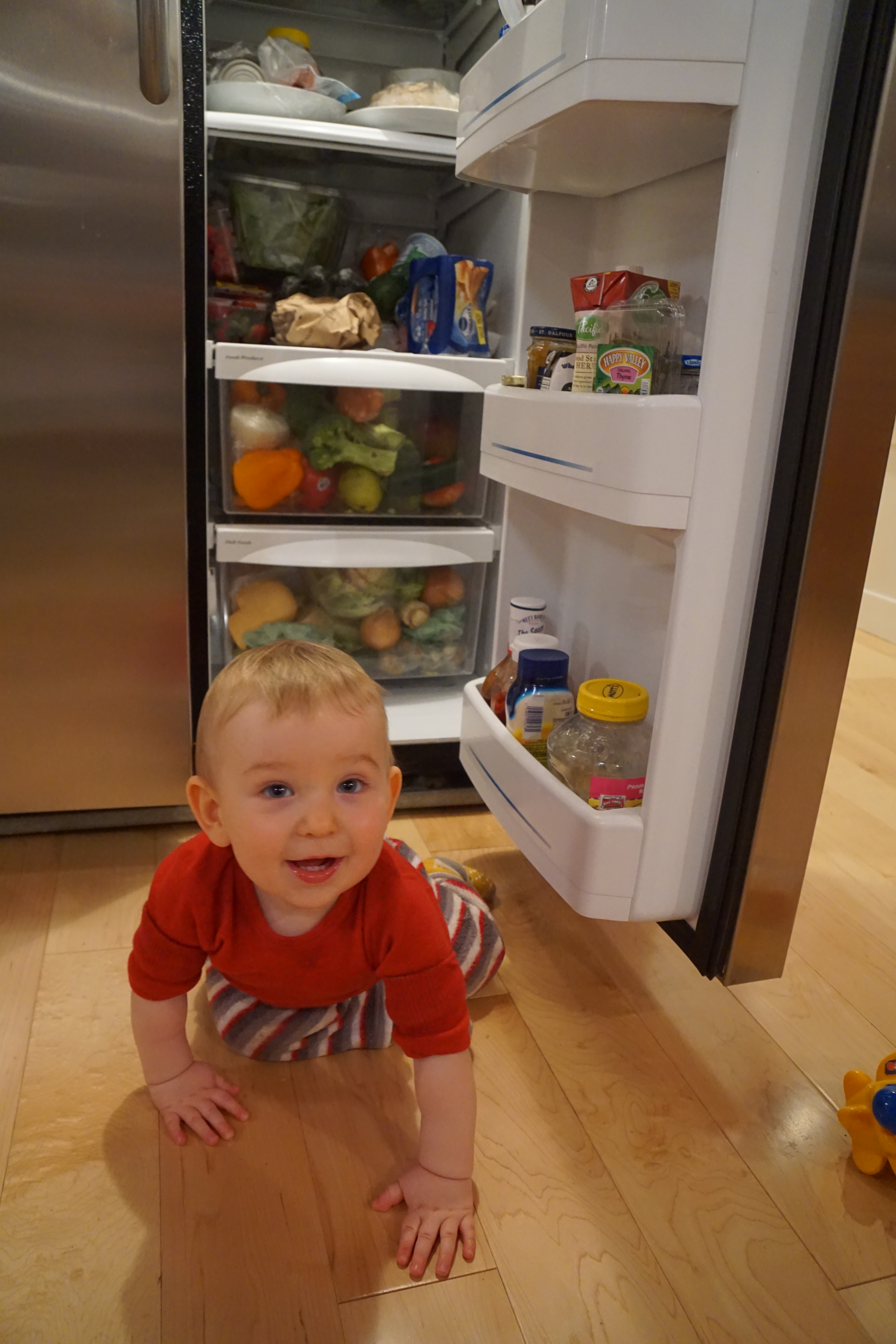
 that my friend Gary loves is the best option).
 that seems like an old Donvier with a motor to do the turning and a nozzle. I had hoped for a scaled-down version of what one sees in cafeterias. I poked around and discovered that those cost $6000. The question is why? How do they work? http://www.instructables.com/answers/How-do-soft-serve-icecream-machines-work/ talks about freezing, whipping, pressure, etc., which sounds complex but if the Japanese could design breadmakers to cost $200 why aren’t soft serve machines more affordable?