Fuller Craft Museum

If you’re headed to the Cape, don’t forget to stop in the Fuller Craft Museum in Brockton (quick stop off Route 24). They have some great exhibitions right now, including a large collection of glass art from MIT. According to Wikipedia, the museum’s architecture and gardens inspired the Louisiana modern art museum in Denmark.

Reasonably good for kids (we went with a 4-year-old and she was losing interest after about 45 minutes).

Full post, including comments

Cost to renovate Longfellow Bridge compared to its construction cost

The Longfellow Bridge here in Cambridge, built in 1906, is going to be partially shut down for the next three years. The project is forecast to cost about $260 million, though previous construction cost forecasts in Massachusetts have been optimistic (e.g., the Big Dig was originally planned at $2.8 billion but ended up costing close to $15 billion). The project has already generated some controversy due to the fact that Governor Deval Patrick imposed a rule that excluded non-union workers from contributing (Boston Globe editorial).

I was interested to know how the cost of renovating the bridge compared to the cost of its construction but none of the news articles on the subject of the bridge project mentioned the original cost. Nor does Wikipedia. I found a “Cambridge Bridge Commission Report” on archive.org that on pages 53 and 54 summarizes the cost. The “total paid for new bridge” was about $2.5 million. In today’s dollars that’s approximately $65 million. In other words, assuming that this project comes in within its budget, renovating the bridge will cost roughly 4X what it cost to build.

If you’d like to play with the figures, I hired Cristian Blendea of Bucharest, Romania (via Guru.com) to prepare an Excel spreadsheet with all of the numbers from the book: Longfellow-Bridge-Construction-Cost

[When the project is all done, the current four lanes for cars (two in each direction) will be reduced to three (just one lane from Boston to Cambridge), so if examined in terms of cost per lane of travel, it was $16.25 million to construct and will be $86.67 million to renovate, a 5X increase in cost.]

Full post, including comments

Civil Forfeiture in New Yorker magazine

The latest New Yorker magazine includes an article on civil forfeiture. Back in 1995 I took a class at Harvard Law School called “Advanced Criminal Procedure.” An example civil forfeiture case that I can remember involved a man who drove his wife’s car to a shady part of town looking for a prostitute. The police didn’t have enough evidence for a successful criminal prosecution but they took the wife’s car via civil forfeiture, arguing that the car was involved in prostitution. The wife appealed, pointing out that she certainly did not authorize the use of her car for such a purpose, but lost. The appeals court ruled that the government had the right to take her car.

Now that adult children are moving in with parents in increasing numbers, the case of the elderly Philadelphia couple whose 31-year-old son made three $20 marijuana deals from the front porch should be cautionary. I would rate this as another argument in favor of renting rather than owning a home (see previous posting on the subject). An owned house is a irresistible target for a variety of predators, including the government (gradual via property tax) and the police (sudden via civil forfeiture). Insurance cannot protect against these kinds of risks.

If Mary and Leon Adams had purchased a basket of stocks in 1966 instead of the house they would be a lot better off today. A jealous neighbor cannot plant a marijuana seed in a Vanguard portfolio and then call 911. A wastrel child cannot deal drugs while standing on top of a record in a Fidelity Investments relational database management system.

Full post, including comments

Friends of Acadia National Park Charity Auction

I spent a couple of days on Mount Desert Island (“MDI” to the Rockefellers) and was invited to join the swells of Bar Harbor and Northeast Harbor at the Friends of Acadia annual benefit auction.

About 500 people attended the event, held in a tent on the lawn of the Asticou Inn. Many of the waitstaff seemed to be speaking with Eastern European accents. Our table included the owner of one of the island’s larger hotels and we asked him why, in a time of supposedly high unemployment, there weren’t Americans who wanted to spend the summer on MDI. “I offer pretty high wages and housing, but Americans still aren’t interested,” he noted. “I had a single mom working for me for a few months but then she figured out that she could collect more from public assistance if she quit. Americans can usually obtain a comfortable material lifestyle by moving in with their parents or collecting Welfare. Why would they want to be on their feet serving two meals per day?”

Men wore salmon- and orange-colored pants with navy blazers and boat shoes without socks. Nobody seemed to have a problem bidding over $40,000 for a Willys Jeepster (photo below) or a week’s vacation in Antigua. Out of 500 people attending I noticed just one black person and no Asians.

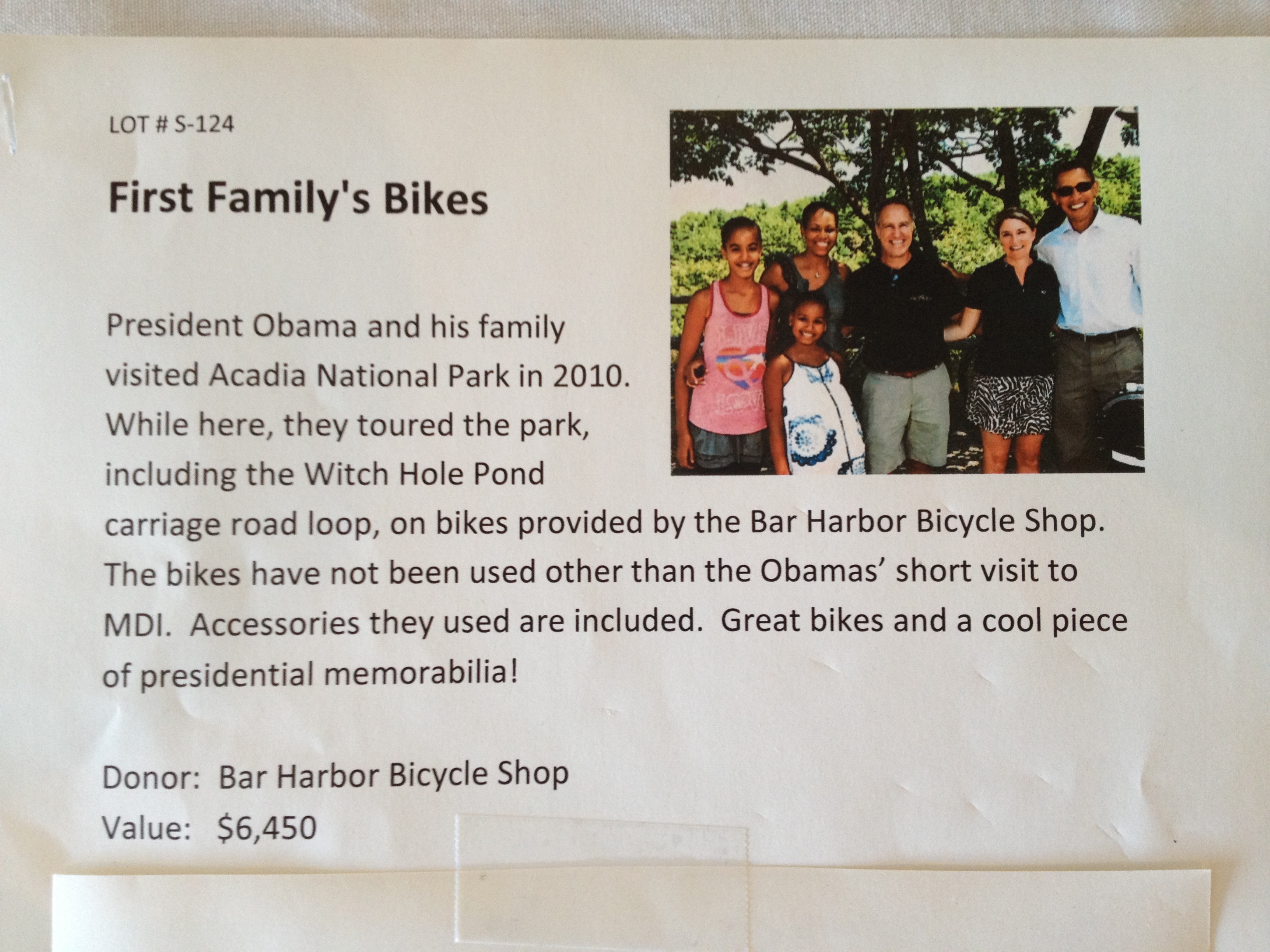
The least obvious auction item was a set of four bicycles that the Obama family had rented during a brief visit to the national park in 2010. They sold for $7000. Asked why someone would pay that much for bikes that the Obama family had touched, a woman at our table said “Probably they are going to re-sell them at a profit to liberals in Cambridge.” Upon returning home I asked a Cambridge neighbor how much she thought the four bikes might have sold for. She estimated their auction value as $50,000.

[My best MDI moment was reading a Mo Yan novel while looking out at a moored yacht and think “Mo Yar” would be a good name for a sailboat maker (see Philadelphia Story for definition of “yar”).]


Full post, including comments

A varied weekend of flying

I spent a long weekend making two trips in the Cirrus SR20. The flights included an instrument approach down to 500′ overcast at the untowered airport in Bar Harbor, Maine, operations at a busy towered airport (Hanscom), and short-field operations on the 2500′ runway at Block Island, Rhode Island. It included running into someone we knew at an airport (California instructor Jeff Moss training a new jet owner from Texas).

My host in Maine is an accomplished pilot who owns and operates a single-engine turboprop. He has a college-age daughter who would be any parent’s treasure. Despite the fact that my friend has ample funds with which to have purchased this child an airline ticket or even a jet charter, he sent her back to Hanscom Field with me in the Cirrus. How often does one have an opportunity to find out how one’s friends truly evaluate one’s level of skill and responsibility? It reminded me of being a 200-hour pilot working on my instrument rating in Alaska. My instructor had more than 5000 hours of flying time… on skis. In addition he had been an FAA employee for decades, supervising air taxi operations. When he asked me to give his wife a ride to a nearby airport I felt much more proud than when I had passed my Private checkride.

It is definitely simpler to stay home and/or drive a Honda Accord everywhere that one needs to go. But I’m happy that I have challenged myself and invested enough time with flight training that friends will trust me with their children.

Full post, including comments

Federal government spends more money debating backup cameras for cars than it would have cost to install them?

The federal government has been planning since the reign of King Bush II to require that automakers include a backup camera as standard equipment (to cut down on the roughly 17,000 people per year who are injured in “backover” accidents). I’m helping a friend who is shopping for a new car (she needs to move her two kids and maybe some extra children a few miles within a city so naturally her first choice is a pavement-melting SUV) and decided to check to see if all new 2014 cars would have backup cameras. This April 15, 2013 story says that the Obama Administration is still debating the rule.

Given the pace at which technology becomes cheaper and government workers become more expensive I’m wondering if now we are actually spending more as a society on arguing about these cameras than they would have cost to install. It seems that perhaps 30 percent of new cars won’t have the cameras in 2014.

If the camera and screen add $50 to the cost of making a car and the 2012 sales rate of 14.5 million is sustained, that is $217.5 million that would be spent on the backup cameras for those vehicles that lack them. The U.S. Department of Transportation budget was $79 billion in 2011 (Wikipedia) but it is tough to know how much of that was spent on making rules for backup cameras. Given that members of Congress are engaged in this debate and also journalists and members of the public, and that the debate has been ongoing for at least 10 years (George W. Bush signed the law (text of H.R. 1216, the Cameron Gulbransen Kids Transportation Safety Act of 2007) requiring cameras back in 2008, but presumably the law came out of a previous debate), it doesn’t seem inconceivable that $217.5 million has been spent arguing. Let’s not forget travel expenses for advocates of the law who flew to Washington, D.C. to try to get audiences with bureaucrats and members of Congress.

What do folks think? Will Americans spend more arguing about this hardware than the Chinese will charge us to build a year’s worth of the devices?

[Note that this is not an argument against the spirit of the 2007/2008 law. The automobile market is already so heavily regulated and, in some cases subsidized with federal tax dollars, that there is not really an obvious argument to be made against any additional regulation. As a parent I certainly don’t want any of my kids to be backed over because a car maker saw an opportunity to sell a $2000 option package and a consumer didn’t have the $2000 to spend on the package that included the camera. I think the cameras will pay for themselves over time, even if no lives were saved, because drivers won’t back over/into as much stuff (economic analyses of the law that I’ve seen concentrate on the cost of each life actually saved, but ignore the costs of property damage and injuries). I would, however, say that this does show a weakness in the American political system. Congress could write “There shall be a backup camera in every car starting in 2011, covering at least whatever a driver can’t see with the mirrors, and the screen will be at least 3″ diagonally.” Instead the law will say “This authorizes bureaucrats to engage in an endless debate, during every minute of which they draw fat salary and pension benefits at taxpayer expense, about the best way to regulate each and every detail of backup cameras. If they can’t conclude their debate by 2010 then they can pay themselves for an additional five or ten years to continue studying the issue and talking to their pals in the auto industry.”]

Full post, including comments

Grades at Yale since George W. Bush’s time

George W. Bush graduated from Yale in 1968 with a C+ average (source: CBS News). How might he have done today?

The July/August 2013 Yale Alumni Magazine points out that “Sixty-two percent of all grades awarded by Yale College in the spring of 2012 were As or A-minuses. Comparing that with 50 years ago, when only ten percent were in the A range, some faculty believe Yale has a grade-inflation problem.”

Perhaps Yale students today are simply better prepared due to the increased competitiveness of getting into an elite school (larger and more mobile world population; women now eligible for admission; roughly same number of slots). Or maybe Yale students spend more time studying than did their counterparts in the 1960s, contrary to the conclusions reached by Babcock and Marks in http://www.nber.org/papers/w15954.pdf (“Using multiple datasets from different time periods, we document declines in academic time investment by full-time college students in the United States between 1961 and 2003. Full-time students allocated 40 hours per week toward class and studying in 1961, whereas by 2003 they were investing about 27 hours per week. Declines were extremely broad-based, and are not easily accounted for by framing effects, work or major choices, or compositional changes in students or schools. We conclude that there have been substantial changes over time in the quantity or manner of human capital production on college campuses.”)

Full post, including comments

Tesla success shows what a bad investment the GM/Chrysler bailout was

Consumer Reports has rated the Tesla sedan the best car that they’ve ever tested (list). Tesla has a market capitalization of about $14 billion (July 22, 2013). According to Wikipedia, Tesla seems to have required about $1 billion in debt and equity funding.

The GM/Chrysler bailout required roughly $85 billion in taxpayer funds (Wikipedia). Instead of preserving these relics we could have instead have had nearly 85 startup automobile manufacturers on the same scale as Tesla. Wouldn’t that have been a lot more interesting and more likely to push forward the automotive state of the art?

Let’s consider the suspension. GM and Chrysler sell vehicles with springs and shock absorbers, more or less the same system that carried Henri Fournier to victory in the 1901 Paris-to-Berlin race in an automobile made by Mors (source). What would nimbler upstart car vendors, forced to compete with each other and unable to tap into the federal river of cash, be likely to do with suspension? One hint is provided by Levant Power. They make an active shock absorber that can push against the spring if necessary to preserve vehicle composure. The shock can also generate electricity from the pounding action of the road on the wheels. See this video for a demonstration of ride over bumps (the company says that more videos are coming soon). I’m not sure how much funding went into Levant, but I am betting that it was less than $85 billion and they are the only company that seems to be doing anything practical to address my main complaint with my 6-year-old sedan (review). Note that Bose has a Web page devoted to its 33-year-old effort to build active suspensions but for whatever reason (maybe because they don’t have to compete too hard!) car makers never bought it (and it does seem a lot more complex than Levant’s idea).

Whenever a company or a government finishes spending a ridiculous amount of money on something the PR folks say “Look at this great thing you got for your money!” Somehow hardly anyone ever asks “What could we have gotten if we’d spent the money on something else instead?”

Full post, including comments

Book Review: Frozen in Time

If you want to feel better and stop complaining about your own life, Frozen in Time: An Epic Story of Survival and a Modern Quest for Lost Heroes of World War II is a great book to read. The story concerns a crazy American who bankrupts himself, the author, and the U.S. taxpayer in an attempt to dig a Coast Guard airplane (Grumman Duck) out of a glacier in Greenland. The plane crashed during World War II while rescuing the crew of a B-17 bomber. They in turn had crashed while trying to rescue the crew of a military version of the DC-3 cargo plane.

As someone who has flown piston-powered aircraft in the Arctic (e.g., from Boston to the Arctic Ocean at Kugluktuk in a Cirrus SR-20 and then south to Alaska!) I found the descriptions of similar activities during World War II fascinating. These guys took crazy risks due to their inferior-by-modern-standards navigation equipment and avionics.

If you’re suffering from the maladies of modern life, e.g., being stuck in traffic while commuting and/or handing over 50 percent of your wages to local, state, and federal governments, this book will show you how much worse things could be. The lucky guys in this book were stuck on the ice for months; the unlucky ones died.

The U.S. Air Force comes out looking good in this account. They truly spared no expense and effort in supporting these guys on the ice, e.g., with B-17 flights and supply drops every day with flyable weather.

Full post, including comments

Helicopter pilot review of No Easy Day

I just finished listening to No Easy Day: The Firsthand Account of the Mission That Killed Osama Bin Laden as an audiobook. For those curious about the Osama bin Laden raid about one quarter of the book will be interesting and the rest may be skimmed. The author, Matt Bissonnette (the pseudonym “Mark Owen” appears on the cover), was a passenger on the Blackhawk that crashed in bin Laden’s front yard. The crash has been previously attributed to vortex ring state (see previous post) and Bissonnette’s account seems to confirm this. He describes the helicopter as rocking and then yawing sharply to the right, as though suffering from loss of tail rotor effectiveness (Wikipedia).

Much of the rest of the book concerns Navy SEAL training and missions in Iraq and Afghanistan. As a American citizen you’ll be simultaneously awed that some of us are willing to endure so much physical discomfort and risk and dismayed that so many tax dollars are spent to fight against a handful of barely literate guys with a few hundred dollars worth of Chinese-made weapons. Owen describes how SEAL tactics have evolved from “flying to the X” (dropping in on a house by fast-roping down from a helicopter) to “patrolling to the X” (landing a few miles away and walking quietly in the dark). Much of the tactical advantage of the SEALs seems to come from their use of infrared lasers and night-vision googles. They light up the house with a bunch of bright IR beams, quietly enter, and shoot people in their beds. When they are lucky, people in adjacent bedrooms don’t even wake up from the sound of the silenced rifles that the SEALs typically use. What is difficult to understand why a market has not developed for an automated system that uses a CMOS sensor and a bit of software to sound an alarm when swept by an IR laser. One would think that Afghans and Iraqis would be willing to pay a reasonable price for a machine that they could place in a window and that would wake them up when U.S. forces come to visit.

[Wikipedia says that the U.S. military was upset about the book’s publication on the grounds that it revealed secret SEAL tactics. To the extent that the guys we are constantly at war with did not previously appreciate the importance of infrared lasers I would have to agree with the Pentagon.]

Finally the book has a few stories from Bissonnette’s childhood in a remote Alaskan village.

Full post, including comments