Lloyd Blankfein, who amassed a fortune of more than $1 billion while working at Goldman Sachs, was a supporter of Hillary Clinton, and therefore justice, back in 2016 (Business Insider). It made sense to Mr. Blankfein to have higher income tax rates, at least for individuals and corporations that did not push activities offshore (with help from Goldman?), to fund a larger welfare state.
If helping 50 percent of Americans with fatter government paychecks and welfare checks (Hillary) is good, then helping 80 percent (Bernie) has to be better, right?
Lloyd Blankfein warned on Twitter that Mr. Sanders was “just as polarizing” as President Trump.
Bernie Sanders has proposed a wealth tax on the richest Americans, blasted big businesses for turning huge profits while paying little in taxes and said he believed billionaires should not exist.
“If I’m Russian, I go with Sanders this time around,” he wrote, referencing that country’s efforts to support Mr. Trump in 2016.
(i.e., to discourage working class Americans from referring to The International Jew, a Wall Street billionaire Jew says that U.S. election outcomes are determined from a foreign capital; nobody would ever make the leap in reasoning from “The most important things in the U.S. are controlled by Putin and his buddies” to ” The most important things in the U.S. are controlled by international Jewish financiers”)
I was amazed when my electricity bill went down after I got the car, rather than up. This is because in California, EV owners get access to a special electricity pricing plan that is much cheaper at night and more expensive in the afternoons. Charging the car at night is of course a win, but I also moved things like pumping the pool to the night, and so the overall bill dropped. And of course my gasoline bill went to zero for this car.
In other words, Californians who struggle to pay rising rents and afford a 10-year-old Ford Focus pay the rich guy’s electric bill, at least for his Tesla and also for part of the pool pump. What better way to fight inequality?
(In Massachusetts, no similar deal is available and thus it costs about the same to buy “fuel” for Tesla, per mile, as it does to fuel an efficient gasoline-powered car of the same size.)
Good news and bad news for a friend’s 12-year-old…
Bad: he was sentenced to read a book by his teachers in the Brookline (Massachusetts) Public Schools.
Good: One of the choices was on an aviation theme. Maybe this won’t be a painful distraction from video games and learning about technology. Perhaps it will be Fate is the Hunter?
Reality: the assigned book, Fly Girl, turns out to be more about skin color than aviation.
From the Amazon page:
All Ida Mae Jones wants to do is fly. Her daddy was a pilot, and years after his death she feels closest to him when she’s in the air. But as a young black woman in 1940s Louisiana, she knows the sky is off limits to her, until America enters World War II, and the Army forms the WASP-Women Airforce Service Pilots. Ida has a chance to fulfill her dream if she’s willing to use her light skin to pass as a white girl. She wants to fly more than anything, but Ida soon learns that denying one’s self and family is a heavy burden, and ultimately it’s not what you do but who you are that’s most important.
Related:
Bessie Coleman, a non-fictional pilot who identified as a black female
“It is crucial to recruit and attract more women at all levels in the department, but also that more of our women math majors consider going into graduate school in mathematics,” says Michel Goemans, department head and professor of mathematics. “Last year only 13 percent of our graduate applicants were women, and this is clearly not enough. The department is happy to support the activities of the MIT Women in Mathematics, and this group helps create a vibrant, supportive community in which more and more female students might pursue or continue a career in mathematics.”
[Let’s ignore the issue of whether this say-gooder is guilty of promoting gender binarism. Let’s also ignore the issue of why the say-gooder does not use MIT’s massive endowment to become a “do-gooder” and hire the women that he/she/ze/they says he/she/ze/they wants to hire.]
I wonder if the focus on female victimhood is a sign of antipathy toward mathematicians of color. Why not focus on the underrepresentation of black and Hispanic mathematicians, for example? Could the motivation be that the white/Asian mathematicians would rather share an office with a white woman from a wealthy family than share with an African-American from the ghetto?
Advocating for “women” is less likely to expose the advocate to ridicule for not having any friends or relatives who are in the featured victim class. Since even the most hidebound human who identifies as a “man” is likely to have a mother and/or sister, there won’t be the awkward search for a friend of color with whom to attend Black Panther and get a selfie.
The article is also fun for revealing the existence of gender traitors:
Staffilani recalls that when she invited female mathematicians to speak with MIT women, sometimes the offer was declined. Invited academics preferred to be seen as “mathematicians” rather than be singled out as “female mathematicians,” separate from men. It’s a dilemma Staffilani says she understands; gaining extra notice as a woman — or any underrepresented group in a particular field — doesn’t feel like “equality,” she says. … she was surprised when a female physicist asked the room, “Why do we want diversity?”
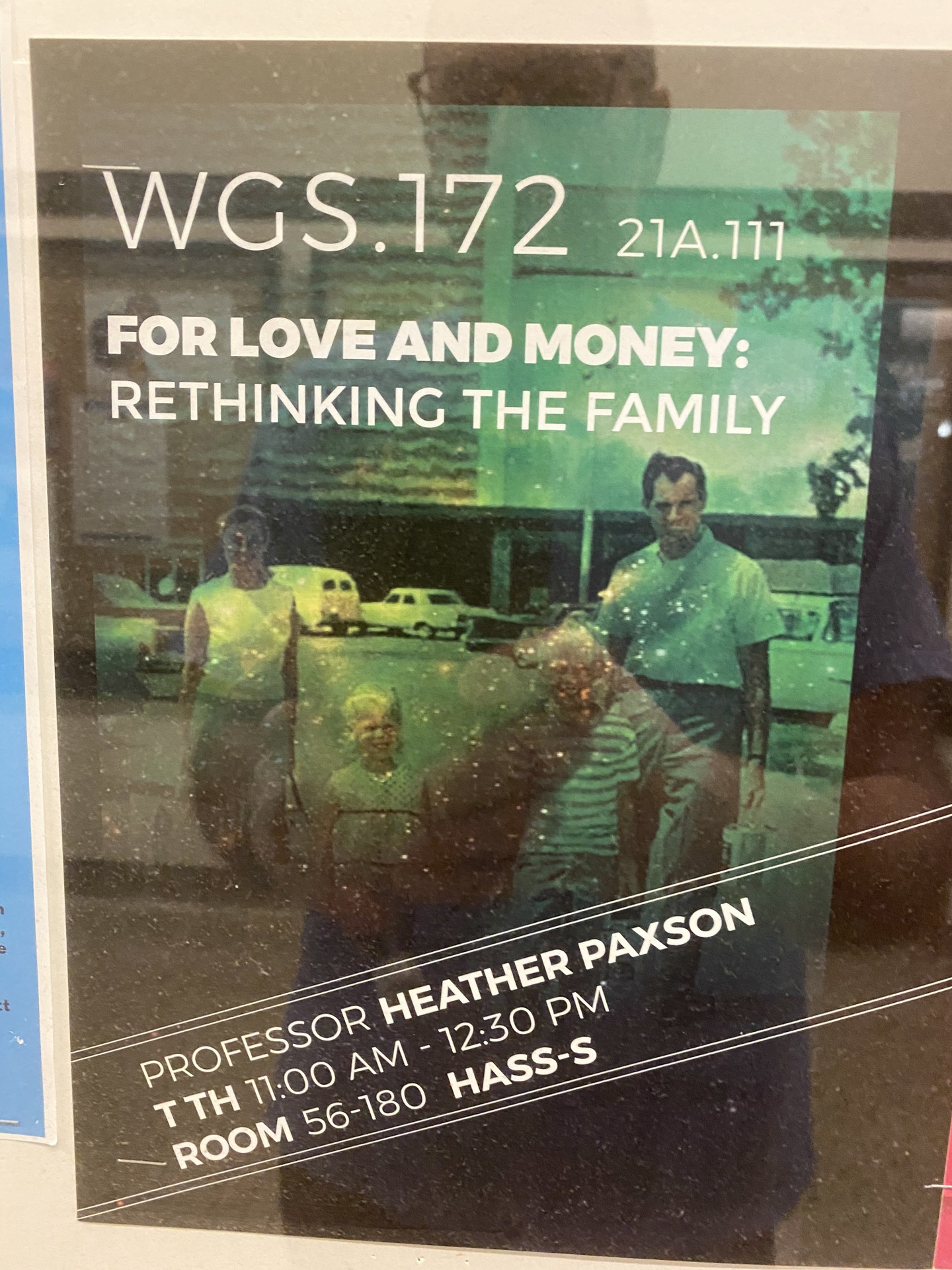
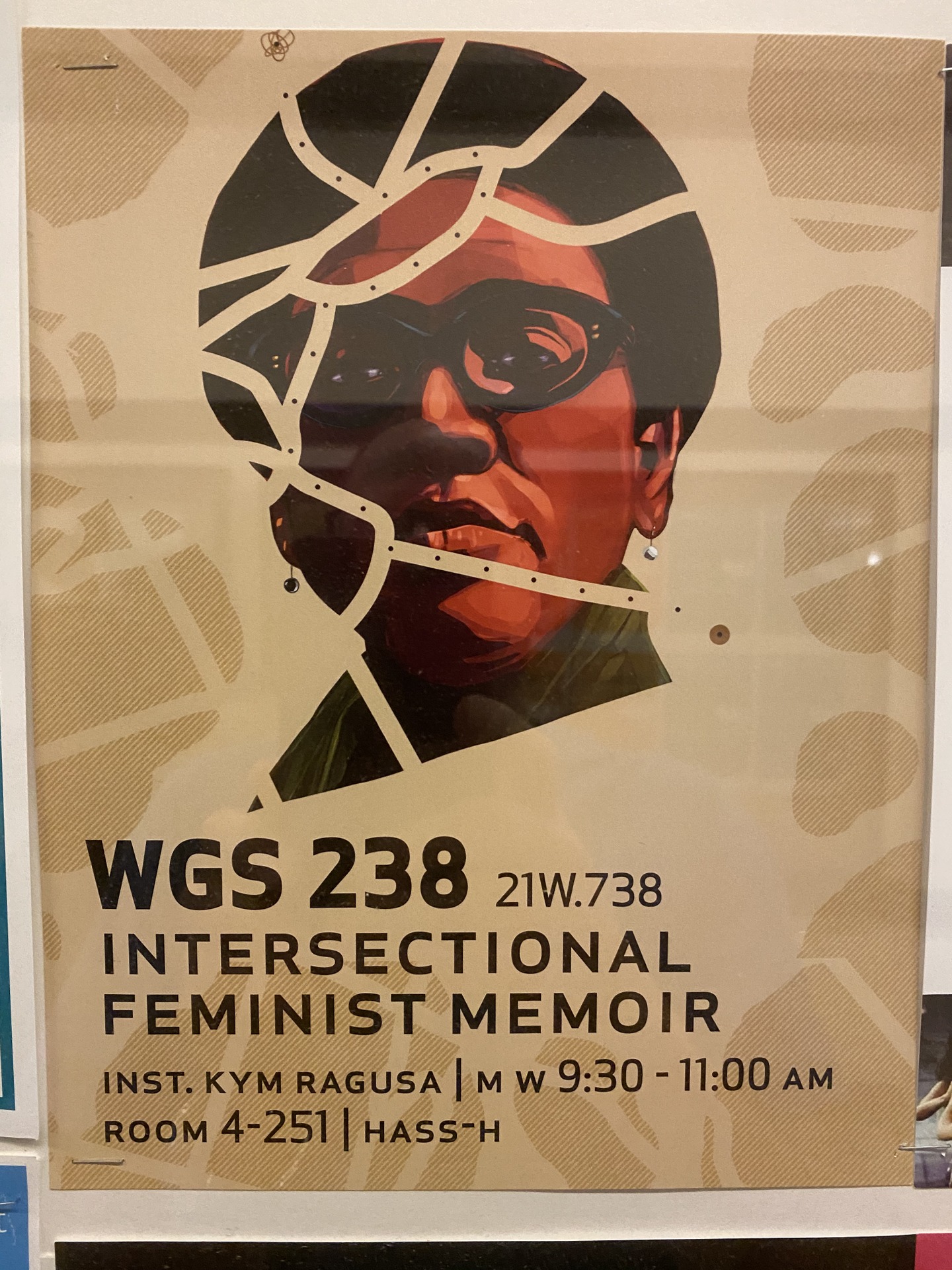
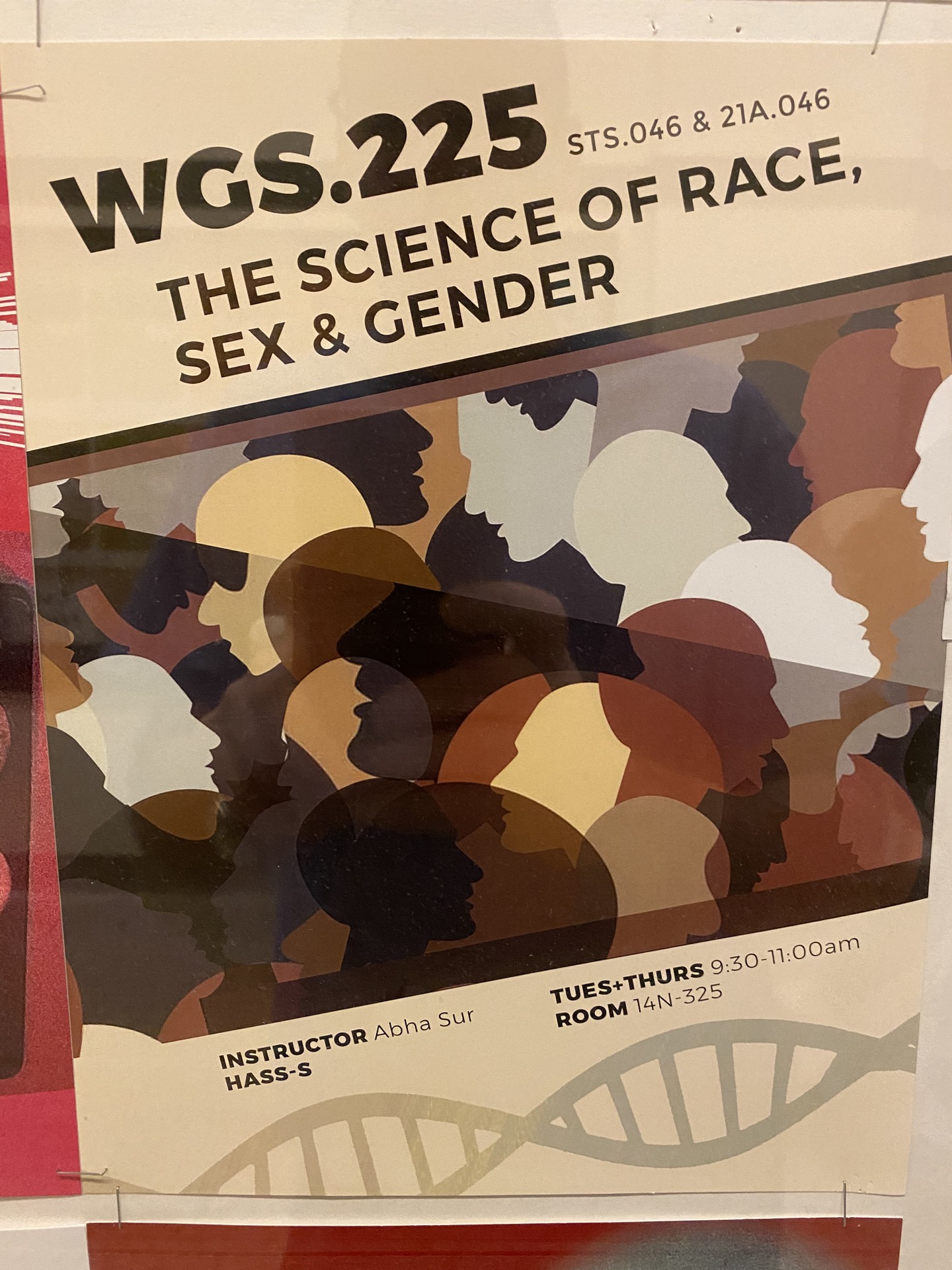
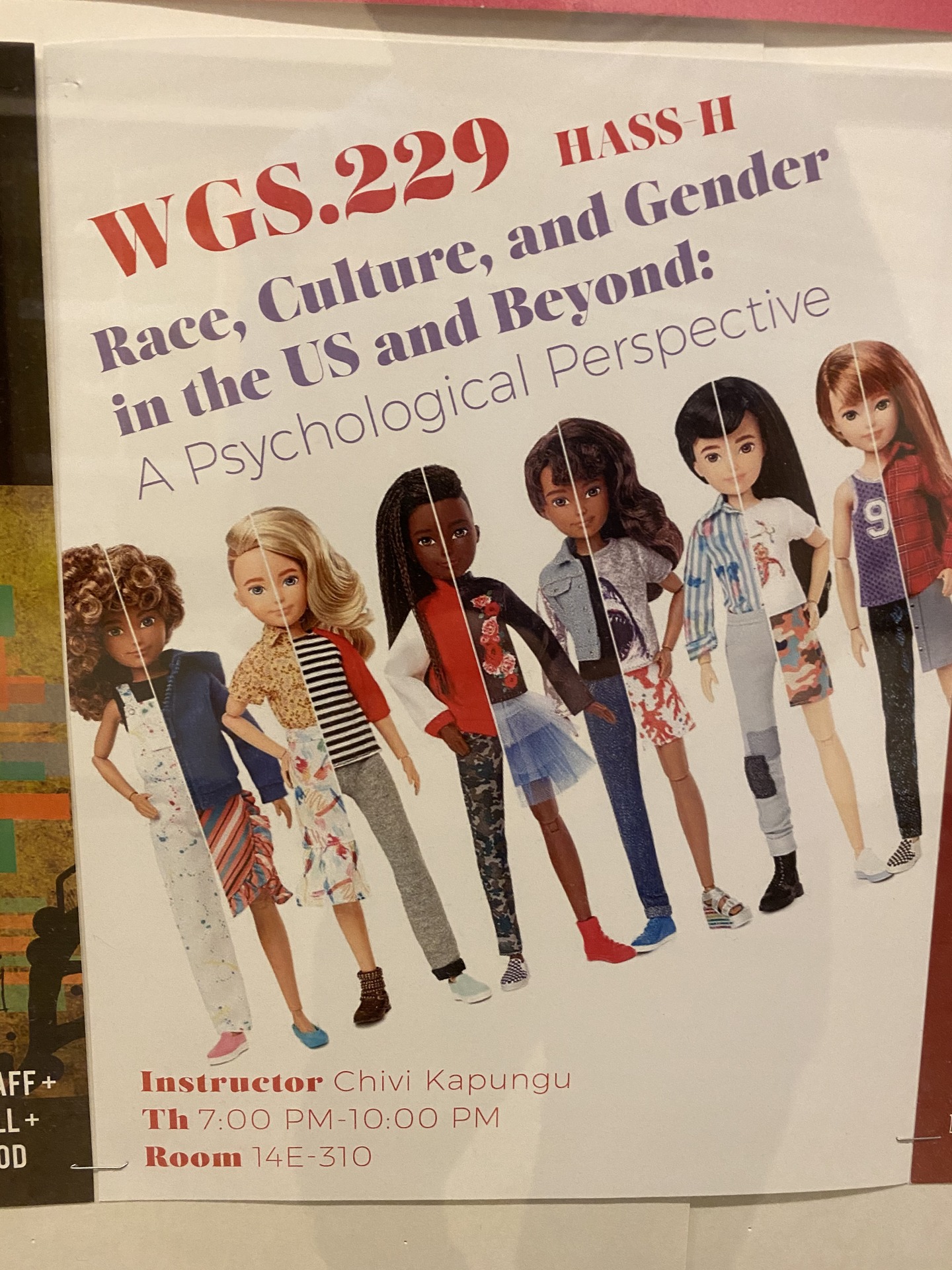
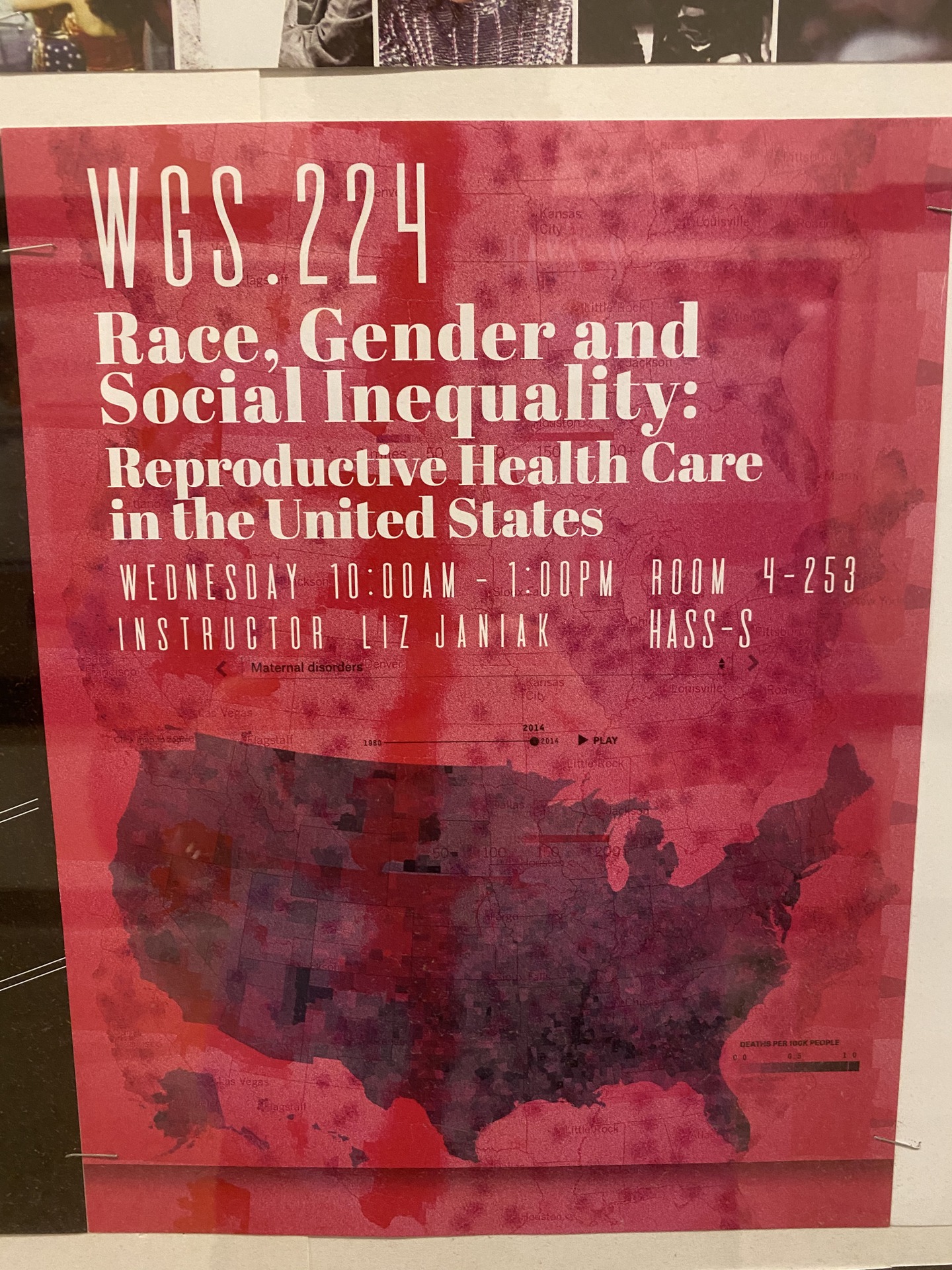
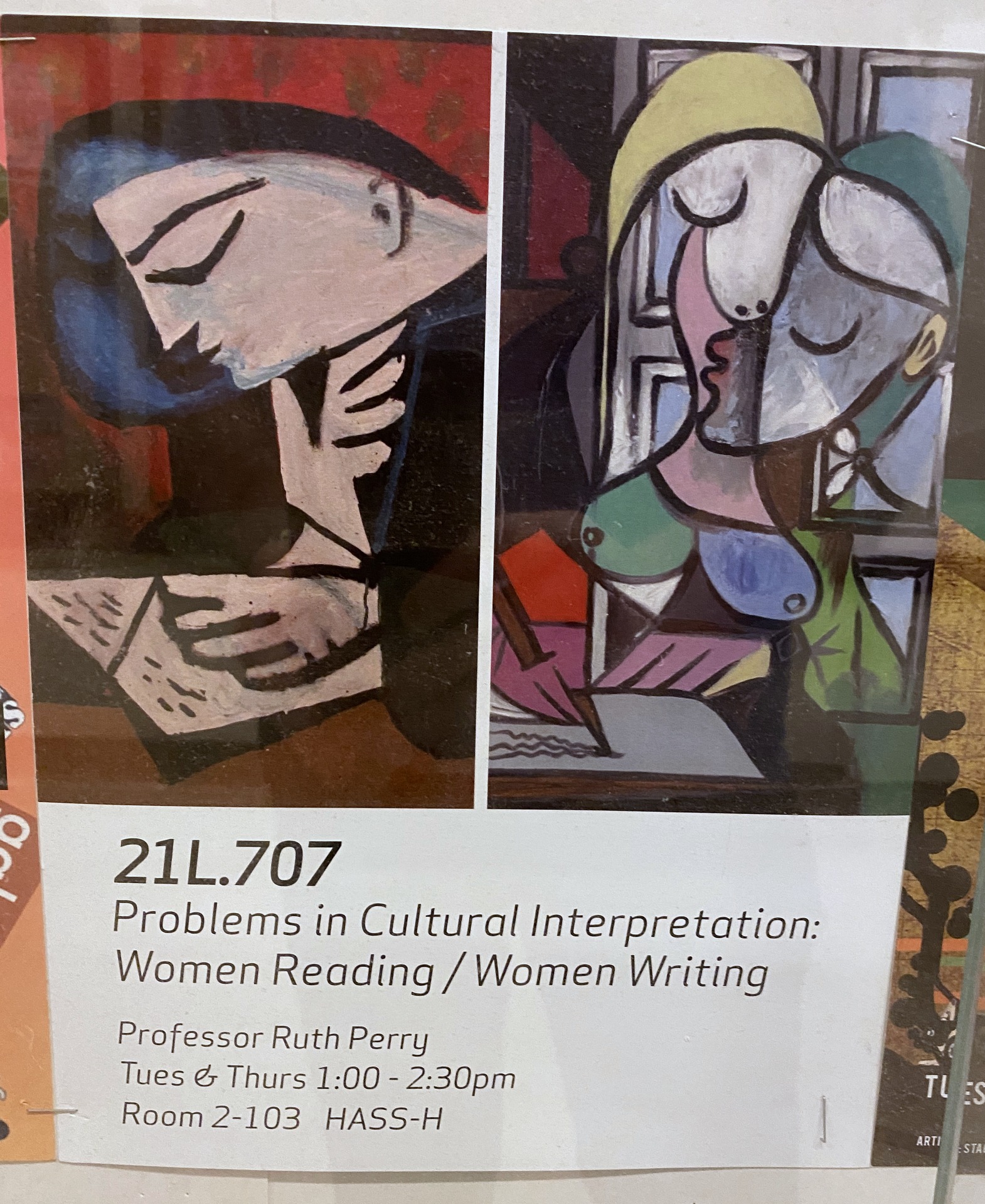
Speaker of diversity, let’s have a look at the folks MIT has selected to teach subjects featured on the “Women’s Studies” poster board in the Infinite Corridor (if you visit the teachers’ biographical pages, you’ll find them referred to using “her” and “she” as pronouns):
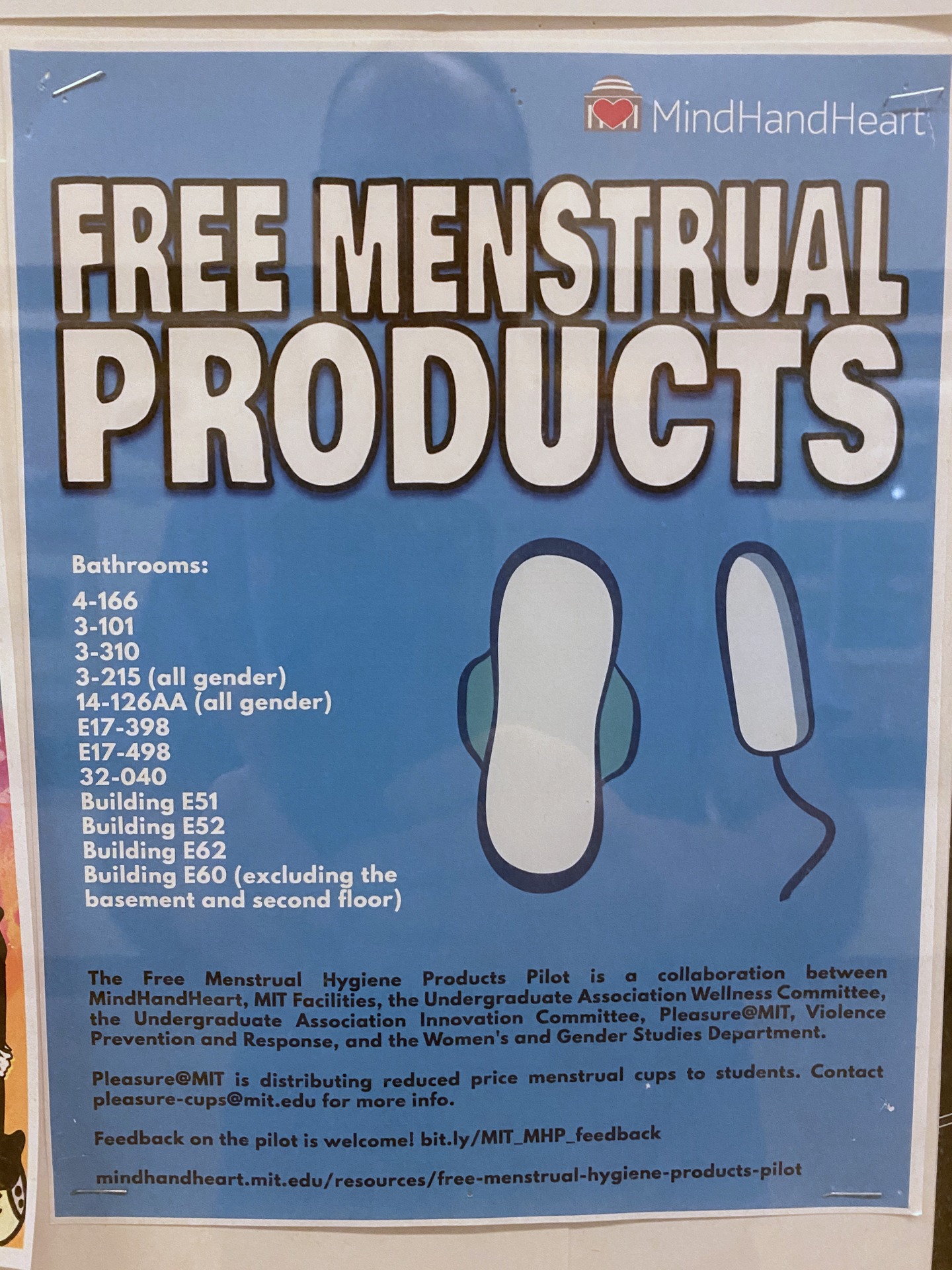
Another initiative of the Women and Gender Studies Department:
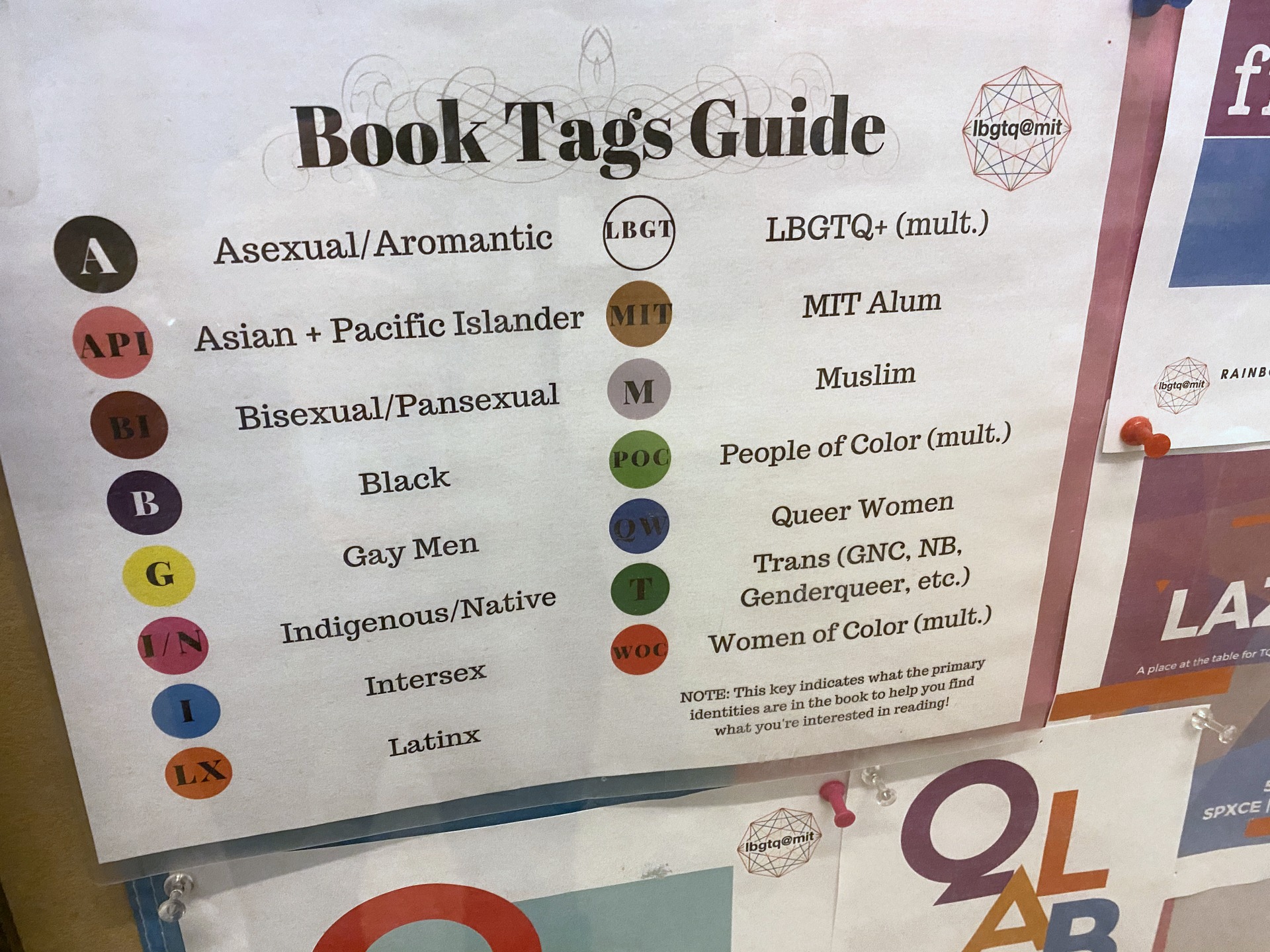
Within the same poster board, some tips on organizing your bookshelf:
Nearby, a poster remembering MIT’s most famous donor:
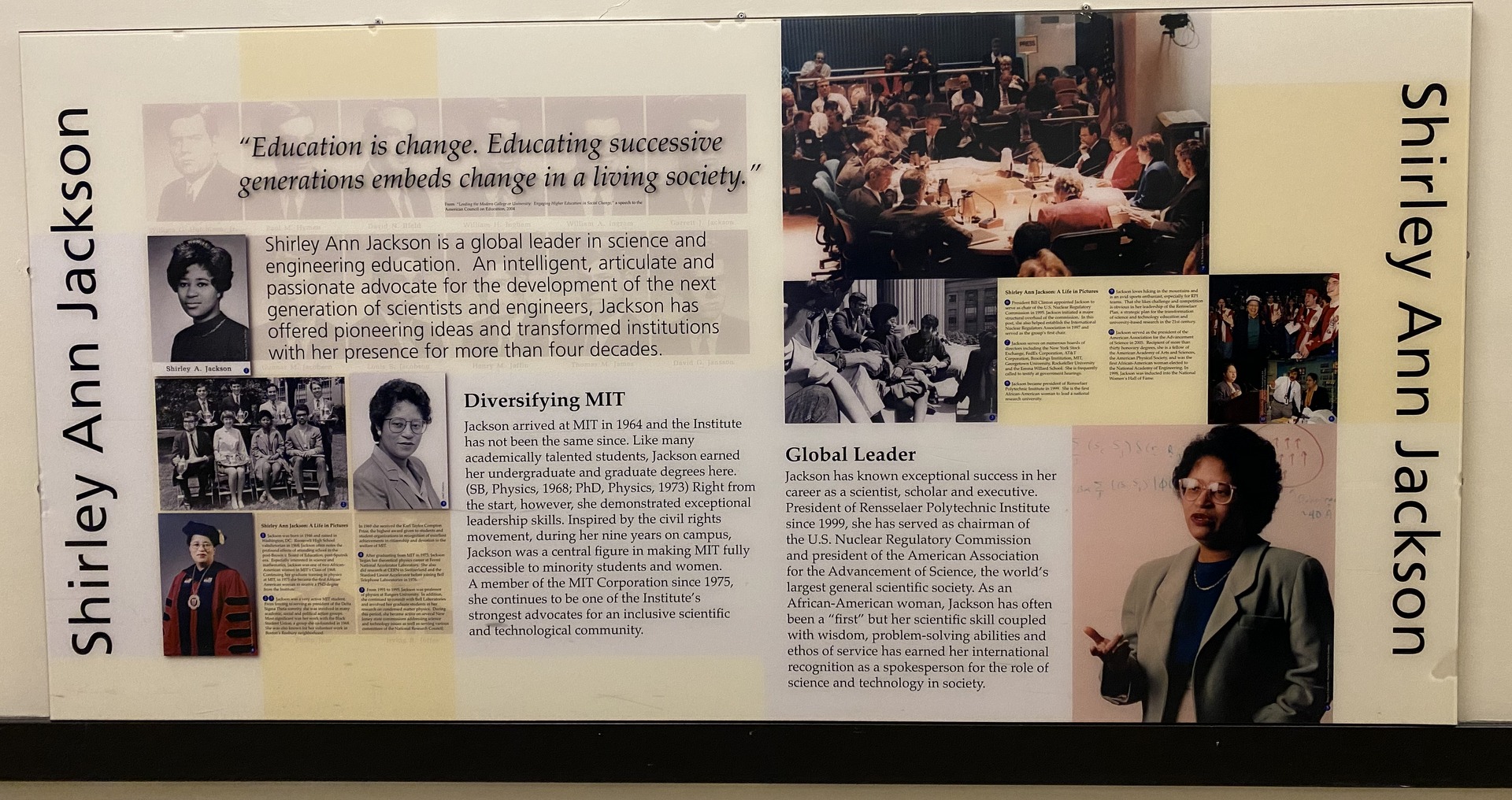
There is room in the Infinite Corridor to provide the biography of one MIT graduate:
Whenever someone tries to get me to share his/her/zir/their enthusiasm for helping migrants, I offer to pay all of the expenses to bring a migrant to the say-gooder’s house. So far, this hasn’t cost me anything, but apparently sometimes this kind of offer is accepted.
This June, I participated in Safe Place for Youth’s Host Home Program, short-term “interventions” for unhoused young people, ages 18 to 24. In December, stuck in L.A. traffic, my ears had pricked up. Marlene and Michael Rapkin were on the radio describing an inspiring three months they’d spent as two of Safe Place’s initial cadre of hosts.
“Welcoming the stranger” is one of my core Jewish values, and I’d helped with the annual homeless count.
But could I take in someone off the street? What with a recent divorce, my kid’s stint in rehab and college expenses, I’d been renting out a guest bedroom to make my monthly nut. But when a tenant canceled, and I learned that Safe Space offered a small stipend to offset hosts’ household expenses, I challenged myself to “walk the walk” of my social justice values.
If she is enticed by the “small stipend” handed out by the homeless industry, this divorcée perhaps should have planned her foray into California family law more carefully…
I offered to house any of the youths I’d met except that heavily tattooed couple. She had the word “cured” in bold block lettering on one cheek and “More Love” above her brow; his forehead read “Less Hate”; alas, a skater beanie obscured “Less.” … Then I learned that Keyawna and Jesse had been living — sweltering — in their 2008 Kia. I’ve complained that my marriage broke up because my spouse and I shared a bathroom.
How much do multi-color tattoos over a substantial portion of a human body cost? Would the homeless couple have had a decent nest egg if they’d stuck with their factory skin color?
But if the city can’t accommodate artists from economically diverse backgrounds, then only the privileged will get to create. I was also certain face tats were job killers, until Keyawna explained that they fit their “brand,” and most were Jesse’s designs. He’s a visual artist; she’s an aspiring rapper and soul singer. … She told me later they’d hidden their valuables from me too.
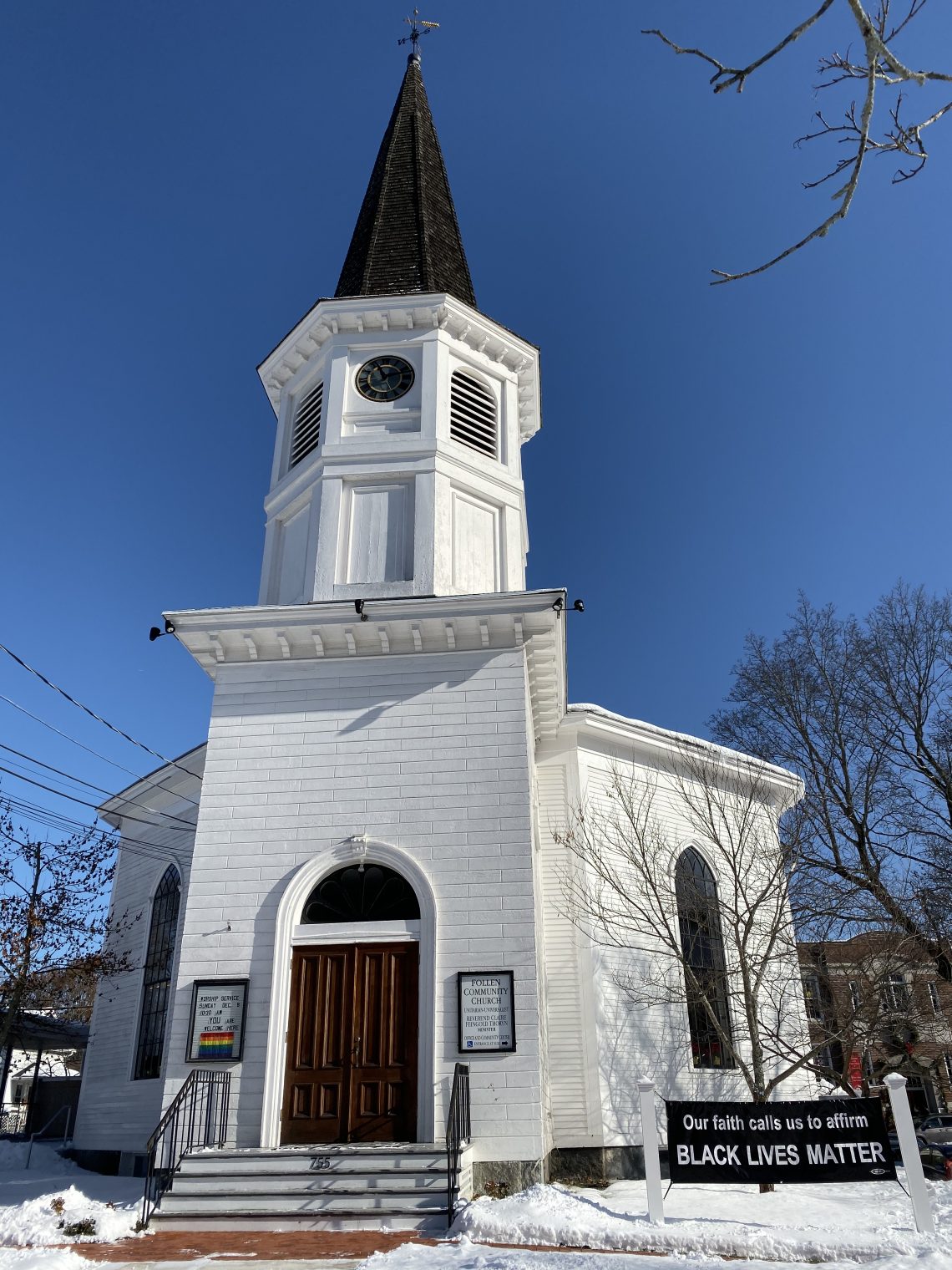
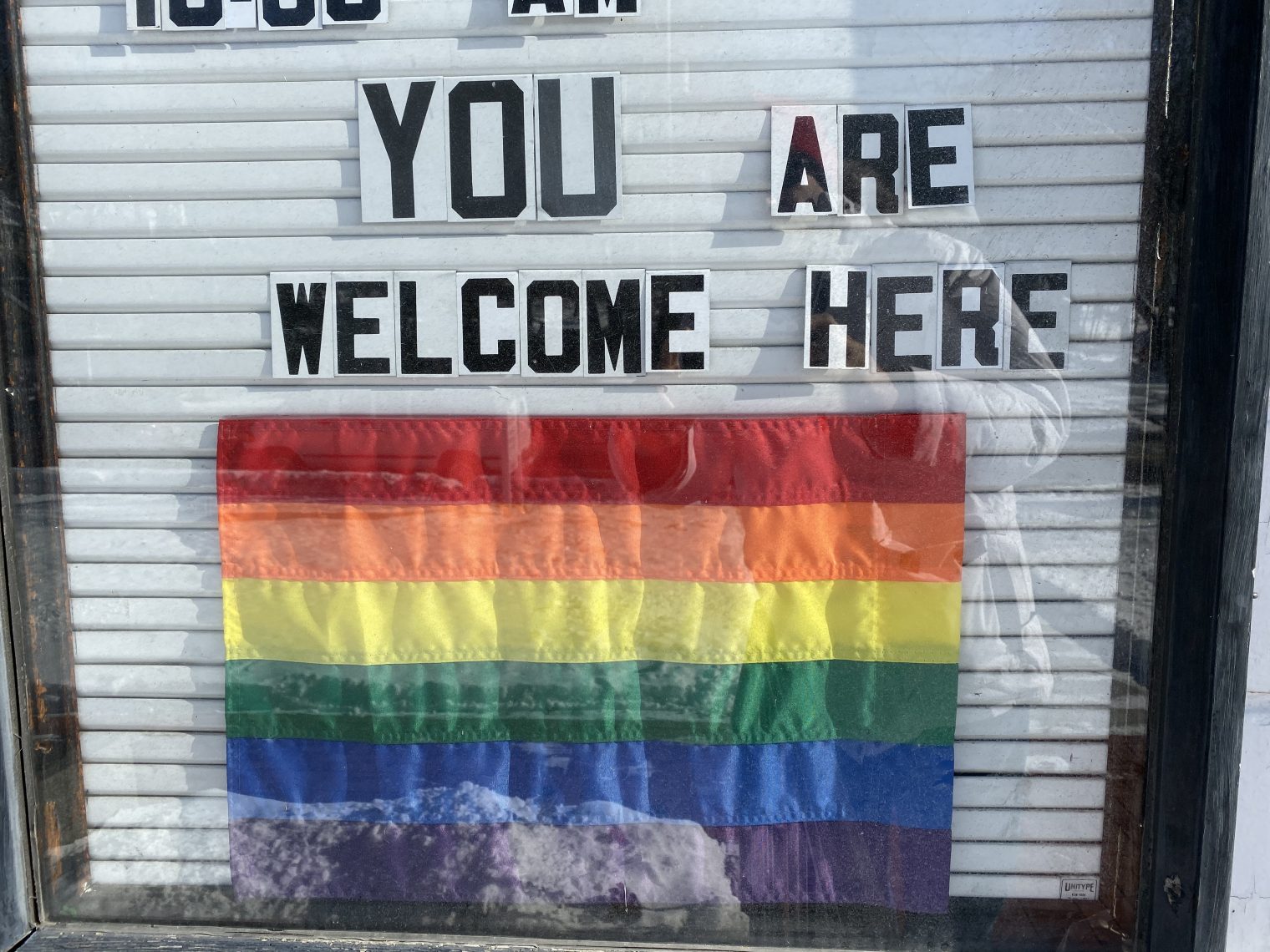
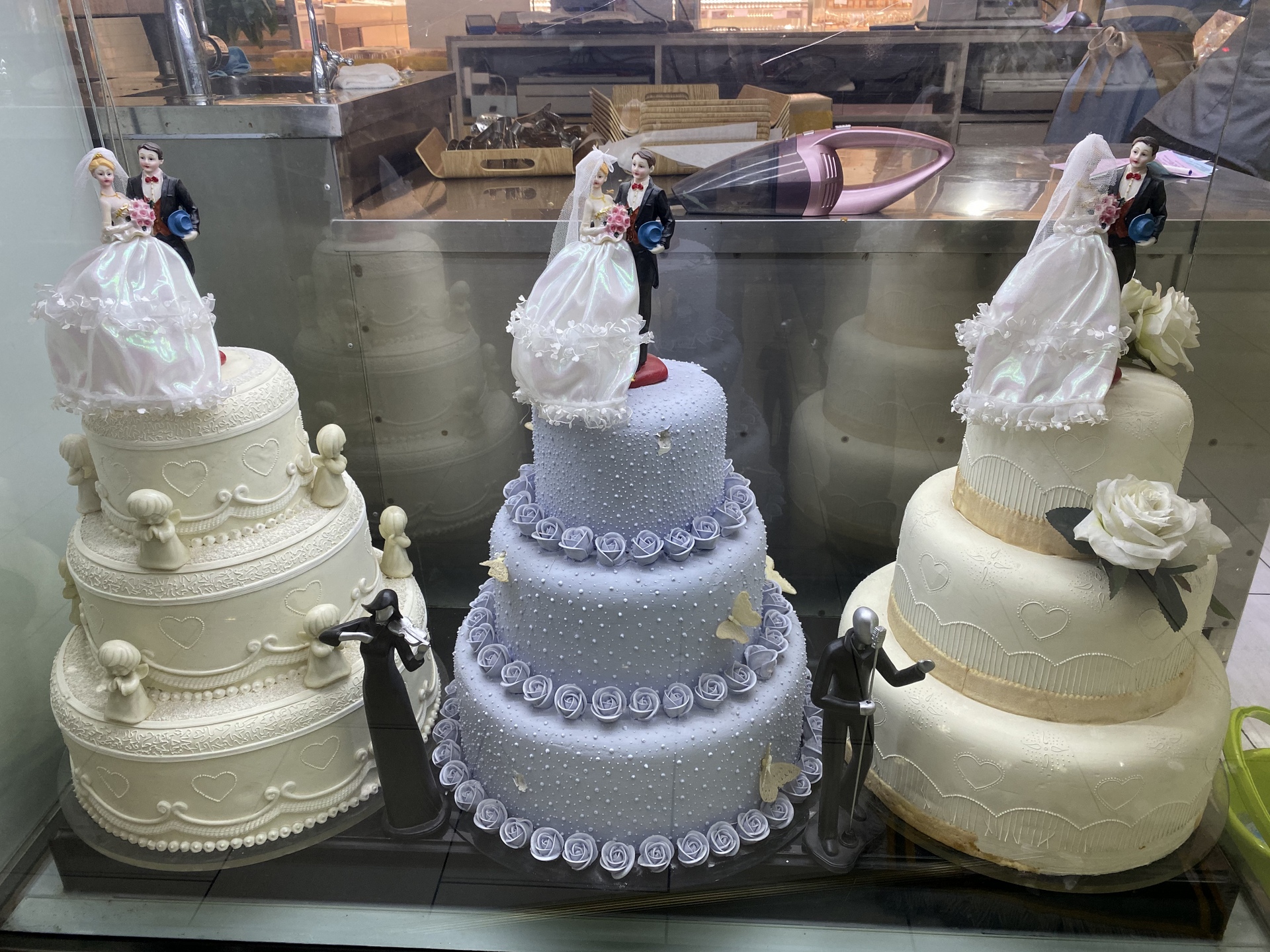
I was in China at the time that he posted this. Although I agreed that having to find a non-Christian wedding cake supplier might be burdensome for an American, it occurred to me that I was surrounded by people for whom the adoption of rainbow flag religion would be a significant change.
If you want to be a warrior for this cause, you could come over here to China and liberate 1.4 billion people from the tyranny of mixed-sex marriage (link to “China’s parliament rules out allowing same-sex marriage”). Also, I have not seen a single all-gender restroom since landing in Shanghai. So you could pack a suitcase with rainbow flags and introduce the whole religion here! Note that it is illegal to be a single parent here and, since, same-sex marriage is not available, that means that a same-sex couple cannot reproduce (unless wealthy enough to pay for a child’s education, health care, etc. privately).
Why not copy the Gates Foundation with its “All Lives Have Equal Value” mantra? There are people in the U.S. who receive suboptimal health care, but the Gates Foundation folks concluded that, if all lives have equal value, the same amount of dollars and effort would go a lot farther in Africa. If “All LGBTQIA+ Lives Have Equal Value,” then wouldn’t it make sense to concentrate one’s lobbying in a country where same-sex marriage is not available at all, rather than one where same-sex marriage might entail some hassle?
A high-calorie hate parade in a Suzhou cake shop:
A righteous friend (another cisgender heterosexual male, I think) answered in the negative:
sadly, I think in this case we need to fight it here to keep our own house safe. then we can go deal with other nations. I am unhappy to say that, but it would be a shame to be off fighting for right in a foreign land, and then suddenly discover that you are no longer welcome back home….
I poked at him:
in the US, it seems that at worst a same-sex couple might have to patronize a cake shop run by the righteous. In China, the unhappy couple wouldn’t be able to get married at all (and if they traveled to Massachusetts on the spectacular Hainan Airlines for $650 round trip, as I just did, their MA marriage wouldn’t be recognized back home I don’t think). The Gates Foundation realized that the greatest need was overseas. Why isn’t the same true for the rainbow flag evangelists?
He responded:
a persons ability to BE an evangelist, and work a foreign country on issues like this, is 100% dependent upon that person having a strong place to stand in their home nation. the fastest way for the Chinese (or whomever) to sabotage the ability of americans to work in China on this (or any issue) is to attack them in the US, and I do not know if we get to blame China for the current difficulties here in the US, but those difficulties are certainly happening.
Me (jetlag is a great motivation to prod the Facebook righteous!):
couldn’t you make the same argument for the Gates Foundation then? Until every American has perfect health care, they shouldn’t be trying to improve things for the world’s poorest? (separately, do you truly think the “difficulties” faced by an American same-sex couple are in any way comparable to the challenges overseas? In the US, a same-sex couple in which neither adult works can have four children, live in public housing, be on Medicaid (MassHealth here), and shop with food stamps (SNAP/EBT). In all 5 states (subject to public housing waiting lists) they can live an entirely taxpayer-funded same sex lifestyle, regardless of whether this proposed bill passes.)
Him:
if someone was threatening the gates foundation with the ability to exist, then yes, absolutely. but we all know that is not the case, they are a very richly endowed and powerful operation, so they do not have this problem.
Me:
I didn’t realize that this bill proposed the extermination of same-sex couples and their children. In that case, it is brave of opponents to take a stand against the US military and police state! (Like the NYT and CNN here in China. They bravely cover the crimes of Donald Trump, but don’t say anything about Hong Kong. Once Trump is fully impeached they will have a sufficient base of virtue to say something on the topic of Hong Kong.)
Him:
I do NOT think that the problems of same sex couples in other nations are the same as those in the US. In some countries, they would simply be executed. But, my point is not at all about making such a measurement of one vs. the other. I was pointing out that the ability of a US person to take the fight to other nations is very much based upon their ability to be at least somewhat secure in their selves here in the US.
Me:
like NYT/CNN! When the last Republican dies of old age or moves to Mexico (Canada having already been claimed by the Trump-resisting Democrats), they will then feel secure enough to cover events in Hong Kong in their China-distributed content.
Despite this learned exchange, the question in my mind remains live. Instead of trying to ferret out the last pockets of resistance to rainbow flagism in the U.S., why wouldn’t it make sense for LGBTQIA+ warriors to proselytize to the large populations worldwide that have never heard the Good News?
(Separately, I think it would be interesting to go to China with a male friend and go into a series of cake shops asking for an “Adam and Steve” themed cake for our upcoming nuptials. Ideally, get it all on video!)
Related:
“The Struggle for Gay Rights Is Over” (Atlantic): For those born into a form of adversity, sometimes the hardest thing to do is admitting that they’ve won. … Despite evident progress, however, many gay-rights activists are hesitant to exult in their victories. To listen to some movement grandees is to think that the situation has actually never been worse. … If you had told gay activists 10 or even five years ago that their energies would center upon campaigns related to various foods—forcing pious pastry chefs to make cakes and boycotting Chick-Fil-A, or “hate chicken,” because its Christian owner has donated money to efforts opposing same-sex marriage—most would have considered their missions complete.
Community members including transgender locals and trans allies have inundated the Seattle Public Library with calls and emails, asking the library system to cancel an upcoming event hosted by the Women’s Liberation Front— a self-described “radical feminist organization” that has publicly espoused what critics call anti-trans views.
The group’s event, titled “Fighting the New Misogyny: A Feminist Critique of Gender Identity,” is publicized as “a critical analysis of gender identity” that will “make powerful arguments for sex-based women’s rights,” according to the event page. The event, scheduled to be held Feb. 1 in the Microsoft Auditorium at the Seattle Public Library – Central Branch, has placed the library at the center of a firestorm over how it can maintain its commitment to evolving ideas of intellectual freedom, provide access to information for the entire community, and be an inclusive space where all patrons feel safe and welcome.
Sometimes the best way to be inclusive is to exclude!
The library bureaucrats had only the best of intentions in selecting the kind of speech that would be allowed in this taxpayer-funded venue:
Marcellus Turner, chief librarian for the Seattle Public Library (SPL), said in a statement that the event request from the Women’s Liberation Front (WoLF) was initially processed because it was labeled as a women’s-rights talk.
What if government bureaucrats are too busy to censor and deplatform on their own? Help is available from Alabama:
WoLF is not listed as a hate group in the Southern Poverty Law Center’s extensive documentation of such groups in the U.S.
Below, the proposed venue in which attendees may be triggered by hearing that “Women are female and men are male. It’s just not complicated,” from “Kara Dansky, a lawyer, WoLF board member and a scheduled speaker at February’s event.” If anyone needs to run out to find a safe space, he/she/ze will have a $166 million palace of hardcopy books in which to seek shelter. What turned out to be a Rem Koolhaas homeless shelter opened three years before the Amazon Kindle was launched from the same city (2004 and 2007):
Related:
“Is LGBTQIA the most popular social justice cause because it does not require giving money?“: “Seemingly at least half of the retail stores in Seattle have an overt expression of support for the LGBTQIA community, e.g., a rainbow flag. Americans identifying as LGBTQIA are not half of the population, right? Why would stores managed and staffed by cisgender heterosexuals hang rainbow flags outside of Pride Month? Maybe folks in Seattle are unusually big-hearted and sympathetic to the vulnerable and victimized? Evidence against that theory is the enormous population of homeless who wander the streets and receive no assistance or attention from passersby. The good citizens of Seattle will step over a homeless person to get into a Tesla and drive to the rainbow flag shop. I didn’t see any store with a sign admonishing customers to do more or care more for the homeless or the poor.”
American newspapers are tireless advocates for what are essentially middle class welfare programs: affordable housing, Medicare for all, etc. These proposals won’t help the poor, all of whom are already eligible for taxpayer-funded housing, taxpayer-funded health care (Medicaid), taxpayer-funded food (SNAP), and a taxpayer-funded smartphone.
For the 290 salaried male newsroom employees working at The Post, the median salary is $116,065. For the 284 salaried female newsroom employees, it is $95,595.
(Separate question: if women are less expensive to employ and work just as effectively, why does a profit-oriented guy like Jeff Bezos hire any men at all?)
In other words, it turns out that the folks who author the news in D.C. are earning close to the income limit for affordable housing for a family of 4 in D.C. If they get a pay raise they end up in the slavery zone for an American: not rich enough to afford a decent apartment in a nice area, not poor enough to qualify for any subsidies. The result is an apartment in Rockville or a house in Frederick and 2-3 hours of daily commuting.
So it is possible that they advocate for a planned economy and lavish middle-class handouts for purely altruistic reasons, but this advocacy is also consistent with their personal situation.
Related:
“Median price for D.C. single-family home grows by double-digit percentage in one year” (keep in mind that the $810,000 median single family home price for the entire District includes quite a few neighborhoods in which a diversity-promoting Washington Post reporter wouldn’t be willing to reside; “thanks, but that neighborhood is just a bit too diverse…”)