Icon A5 update from NBAA 2015

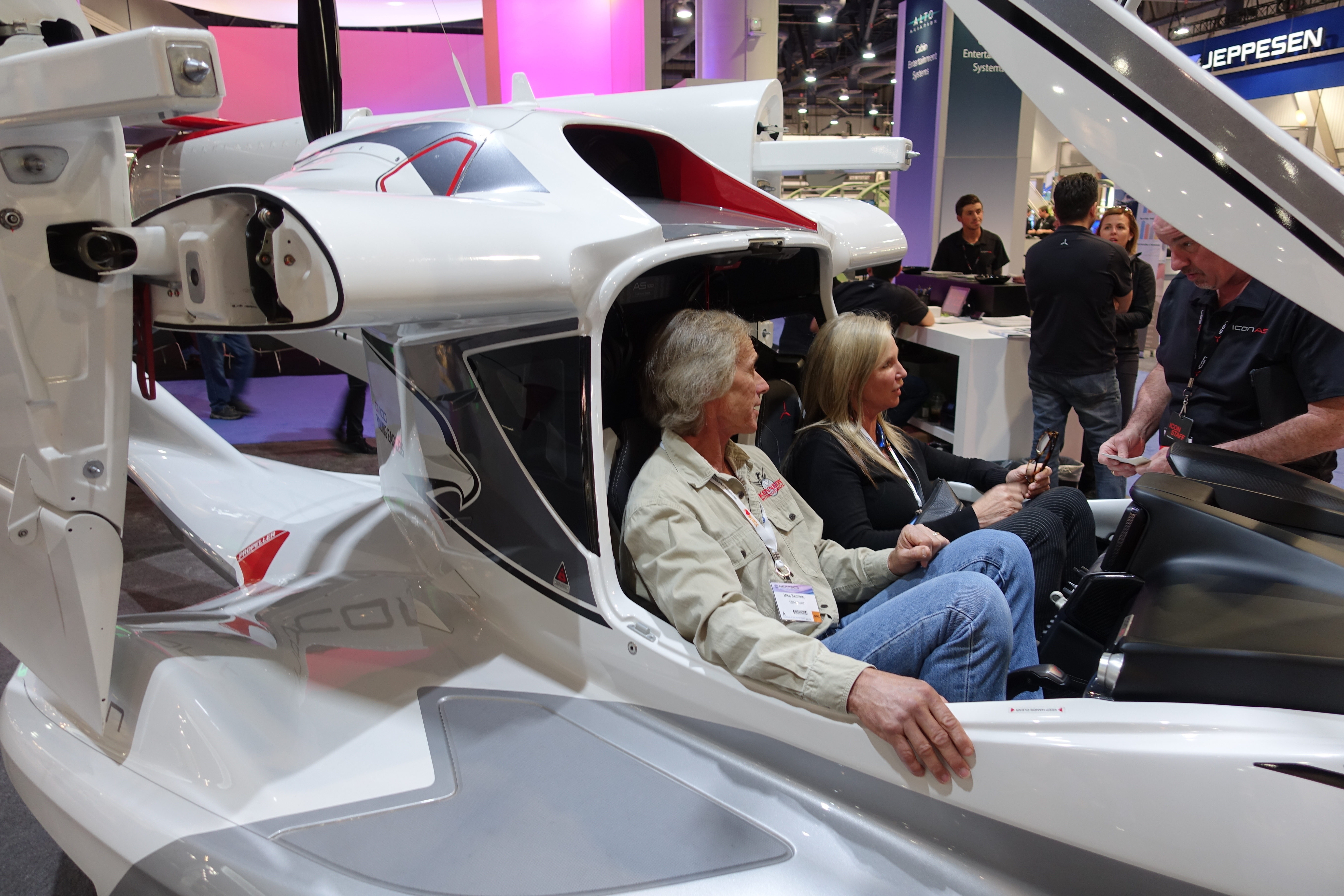
The Icon A5 seaplane that I wrote about in 2010 was on display at NBAA in Las Vegas. The price has gone up but at $250,000 it still costs less than an annual inspection on a more typical NBAA show aircraft. They had cut the price of a deposit from $5,000 to $1,000 as a “show special” (press release) and, for an aircraft ordered today, were promising delivery in 2019.

Icon is going to be selling more amphibious seaplanes to inexperienced pilots than any manufacturer in the history of aviation. Amphibious seaplanes are often fatally crashed when pilots land in the water with the wheels down (“dig in and flip”). Modern GPS units and software are smart enough to warn a pilot approaching terrain or an obstacle, making an exception for “lined up to approach a runway in the database.” Icon hasn’t shown any interest in tweaking this software to the point that it could warn the pilot about approaching a body of water with the wheels down.

It still looks like a nice toy, but a heavy two-seater with a 100 hp engine needs a fairly long water runway. This won’t be like an Aviat Husky on floats, getting off the water in a claimed 6 seconds from a floating start.

Icon was silent regarding the number of these planes that have actually been delivered.

DSC01643

Full post, including comments

How could high speed rail be secured in the U.S.?

$28 million of our tax dollars are being ladled out for Maryland to study the extent to which American government workers can import and operate the latest Japanese maglev train (Washington Post). Of course it would be nice for lobbyists to zip from New York to Washington in one hour, but I’m wondering if what works in Japan can work in the U.S.

During my last visit to Japan, a couple of years after 9/11, there was still hardly any security screening for passengers on domestic flights, not any care taken to keep car or truck bombs away from regional airports. The security risks within that society simply didn’t merit the expenditures of time and money that we spend.

Let’s look at our current technology for 300 mph travel: the Airbus, Boeing, or Embraer. We have airports that are fairly easy to secure with a fence and then vehicles that protect themselves by climbing thousands of feet above potential attackers. A high-speed rail system, on the other hand, would seem to be as challenging to protect as a border. As a practical matter what could be done to keep explosives, projectiles, and other threats away from hundreds of mile of track on which a 300 mph vehicle rides? And are we up to the challenge? If not, should we be spending a lot of money on a technology that is not practical to implement in the society that we actually have?

Full post, including comments

Smartest Kids in the World Review

In order to make it easier to find the various portions of my review of The Smartest Kids in the World, which is important reading for anyone who doesn’t live in Finland, I’m posting this index to what I wrote about/excerpted from this book:

Related:

Full post, including comments

If California can’t run WiFi at a new airport terminal, can it run high-speed rail?

At least a subset of Californians are enthusiastic about spending what will probably be over $100 billion in taxpayer funds on high-speed rail (previous post). The high-tech train would be built and run by the government. My recent experience with a much simpler technology in California was the following:

  • attended conference of computer programmers, each equipped with a crazy complement of devices, at Chaminade, a privately-run hotel and meeting space. Internet was fast and reliable, even with 200 people in the same room checking the Web, streaming YouTube, etc.
  • visited the International Terminal at SFO, recently constructed at a cost of $1 billion, and tried to use the government-run WiFi network, which was intermittent and delivered about 56 kbps in average throughput, despite the terminal being nearly empty on a Sunday evening.
  • boarded a privately-run JetBlue and used the FlyFi service (the “free”/included in the ticket tier) in which data go up to a ViaSat satellite (see Exede). Service was much faster and more consistent than in the terminal, but did not have the same throughput as at the hotel

Airports have among the best economics of anything that state and local governments do. The runways are all paid for with federal dollars, collected from airline ticket taxes and airplane fuel taxes. The airport gets to charge crazy high rents to retailers and airlines (the full range at SFO) plus charge each passenger an additional $4.50 per flight segment, collected by the airline and hidden in the ticket price (faa.gov). It is so profitable to run an airport that Providence, Rhode Island and Manchester, New Hampshire have aggressively targeted Boston-area passengers by offering lower fees than Massport (Logan, Worchester, Hanscom). The airport authority can also pay employees salaries, benefits, and pensions that are 2-3X above the market-clearing rate (see the Boston Herald for how a garage attendant at Logan in 2012 could make a base salary of $55,000 per year or $94,000 per year with overtime; also “Massport’s payroll soars past $100M despite gov’s call for belt-tightening” from 2014).

What can we infer from this? That government is less efficient at private industry when it comes to a tech-related activity? Given that the Las Vegas airport has awesome WiFi, at most it seems reasonable to say “the California government is incapable of running WiFi.” Or, as one of my crazy rich Facebook friends noted, “The tragedy of the commons. The privileged class has excellent service via their cellphones, while the poor who have only wifi devices must cope with this living hell.” (he is retired from one of the most successful startups in world history and now spends full-time helping Democrats get elected) Personally I cannot see how this is a “tragedy of the commons” any more than being a Verizon subscriber. As with a mobile phone system, every passenger who was in the area of the terminal where I did my study had paid handsomely to be there.

Full post, including comments

Big data and machine learning

Continuing the report from my sojourn among some of the most capable programmers in Silicon Valley…

“You look like someone who might know awk,” said a top software engineer at one of the biggest web companies, where a 12 petabyte data set is a common starting point for analysis. “I think that was a polite way of saying that I had gray hair,” she continued. “Big data is ‘batch processing’ or ‘stuff that requires more work than can be done interactively.’ I’ve seen young programmers for whom big data is their first encounter with batch processing. It is like watching a dog eat peanut butter. It takes them a while to learn that machine learning is simply dividing things into bins and then clustering.” What are her secrets? “Transform everything into tab-delimited text files and use standard Unix tools. This results in much faster run times than code using the shiny new tools and data structures. My favorite algorithm is the gradient boosted decision tree mostly because I like to hear people trying to say it without getting tongue-tied.”

An artificial intelligence specialist said that, from her perspective, machine learning is fundamentally changing programming: “hundreds of lines of code to drive nVidia CUDAs instead of millions of lines of code. AI is both freedom from programming and freedom from understanding. Google is replacing PageRank with RankBrain and when this is complete they won’t know why certain pages are offered as the best results.” In her view a “future-proof skill set does not involve much coding background; it will be more about statistics and domain knowledge.” Some tools to learn? The Torch library and lua.

Is Deep Learning all hype? Perhaps not. The recognition rate on standard image sets has gone up dramatically recently. “There are no new ideas,” said one hardware/software expert. “The guys in the 60s were pretty smart. They just didn’t have fast enough hardware.” Could it be that the Singularity is in fact within sight? The best market-based evidence for this seems to be that people who teach at Singularity University are being offered $20,000 speaking engagements at corporate events.

Full post, including comments

Pilatus news from NBAA 2015

Here’s a report from Las Vegas on things relevant to Pilatus pilots that were announced, presented, or discussed at NBAA.

The Pilatus PC-12 is close to the bottom end of what constitutes a “business aircraft” these days. New regulations tend to be applied across all sizes of aircraft and thus every regulation lifts the cost of operating a light aircraft closer to the cost of operating a Gulfstream. “Go big or go home” has cause nearly all of the very light jet designs to fizzle. The PC-12 has some unique capabilities, however, such as being able to operate from short, dirt, and/or grass runways, and therefore was more prominent at NBAA than similarly priced turbojets.

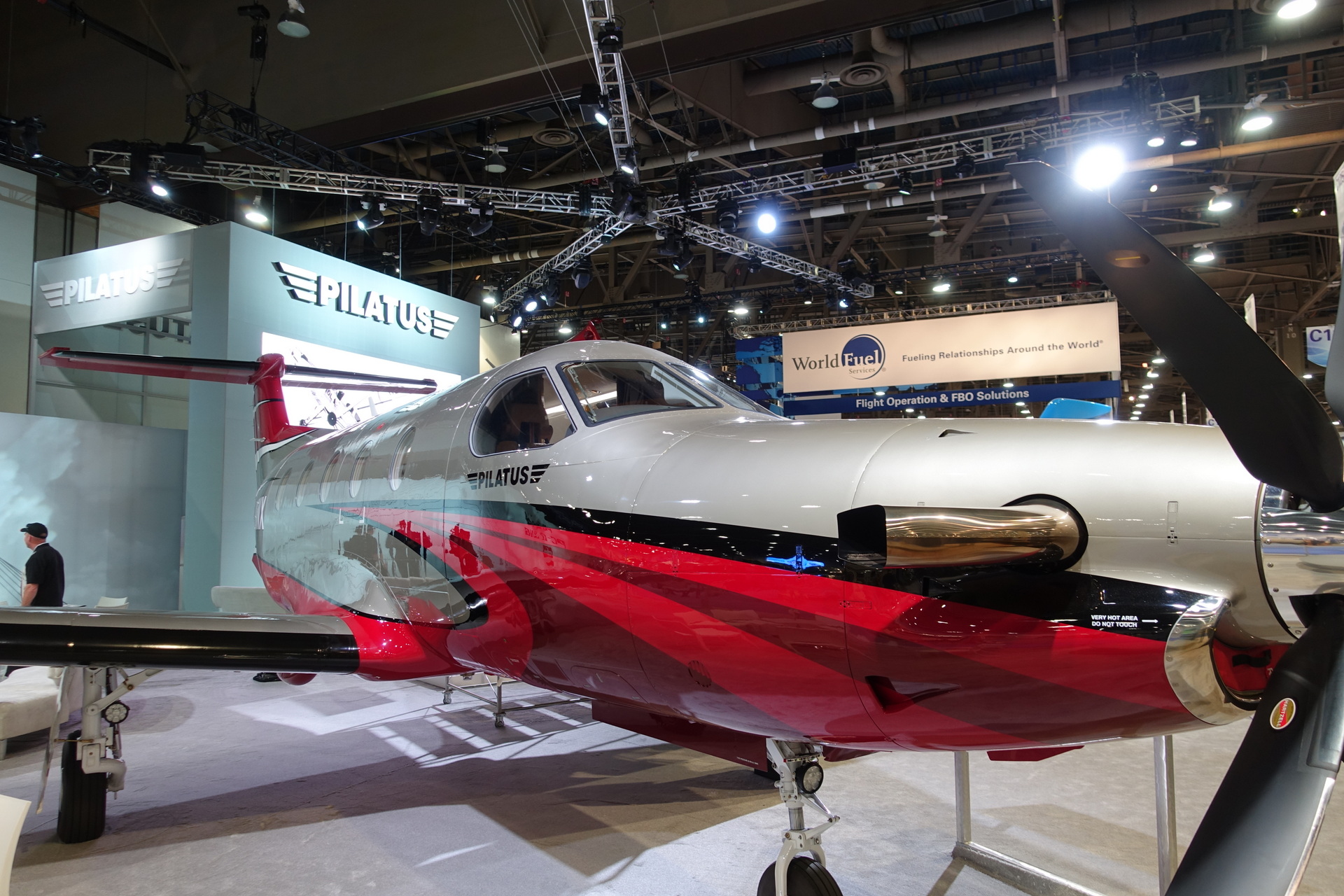
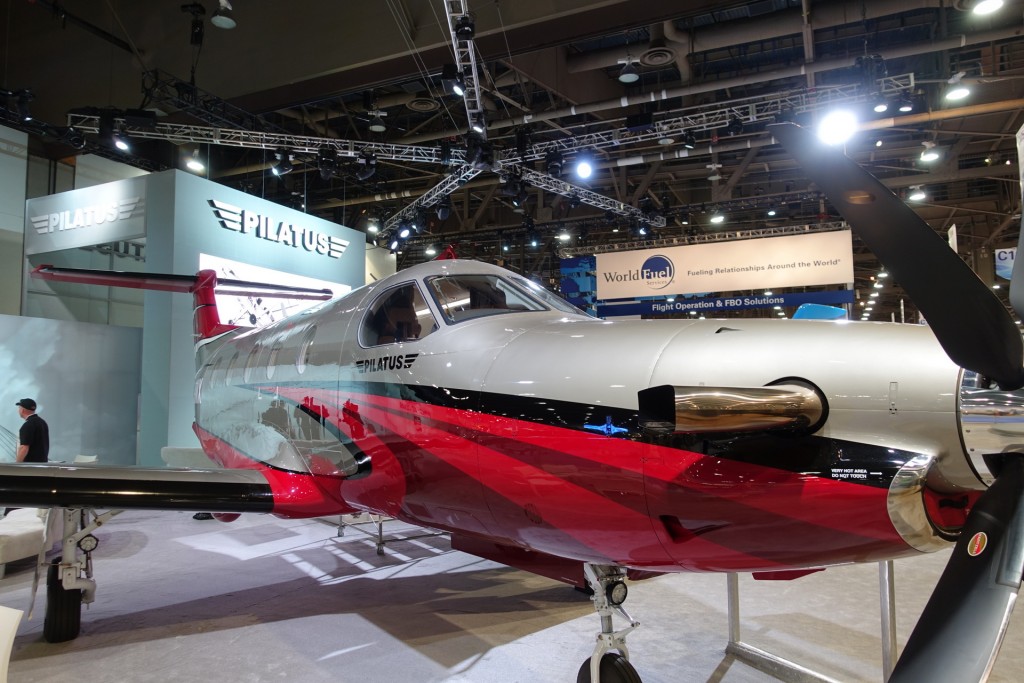
Pilatus set up an enormous booth at the Convention Center with a PC-12 that had been taxied over from KLAS in a caravan of airplanes driving on closed-off public roads at night. They also brought a mock-up of the PC-24 jet, whose certification is expected in 2017. The cabin volume is larger in the PC-24 compared to the PC-12 and this is most apparent in the spacious cockpit. Stretch out and relax! (as long as someone else is paying for the aircraft!)
DSC01613

What’s new for 2016 in the PC-12? The plane now ships with a 5-blade Hartzell composite prop, which reduces cabin noise by about 2 dB and improves performance slightly. The new prop, a flush main door handle, reconfigured antennae, and some gap seals result in a 5-knot improvement in cruise speed (to a claimed 285 knots). The prop is available as a retrofit for about $68,000 after trade-in of the old 4-blade prop.

Nearly all significant advances in airplanes have started with an improved engine. General Electric announced an “Advanced Turboprop” to be delivered in 2019 for a Cessna clean-sheet competitor to the PC-12. The new engine will offer a FADEC, perhaps 15 percent better fuel efficiency than the PT6 in the PC-12, a longer time-between-overhaul, and no hot section inspection at the midpoint.

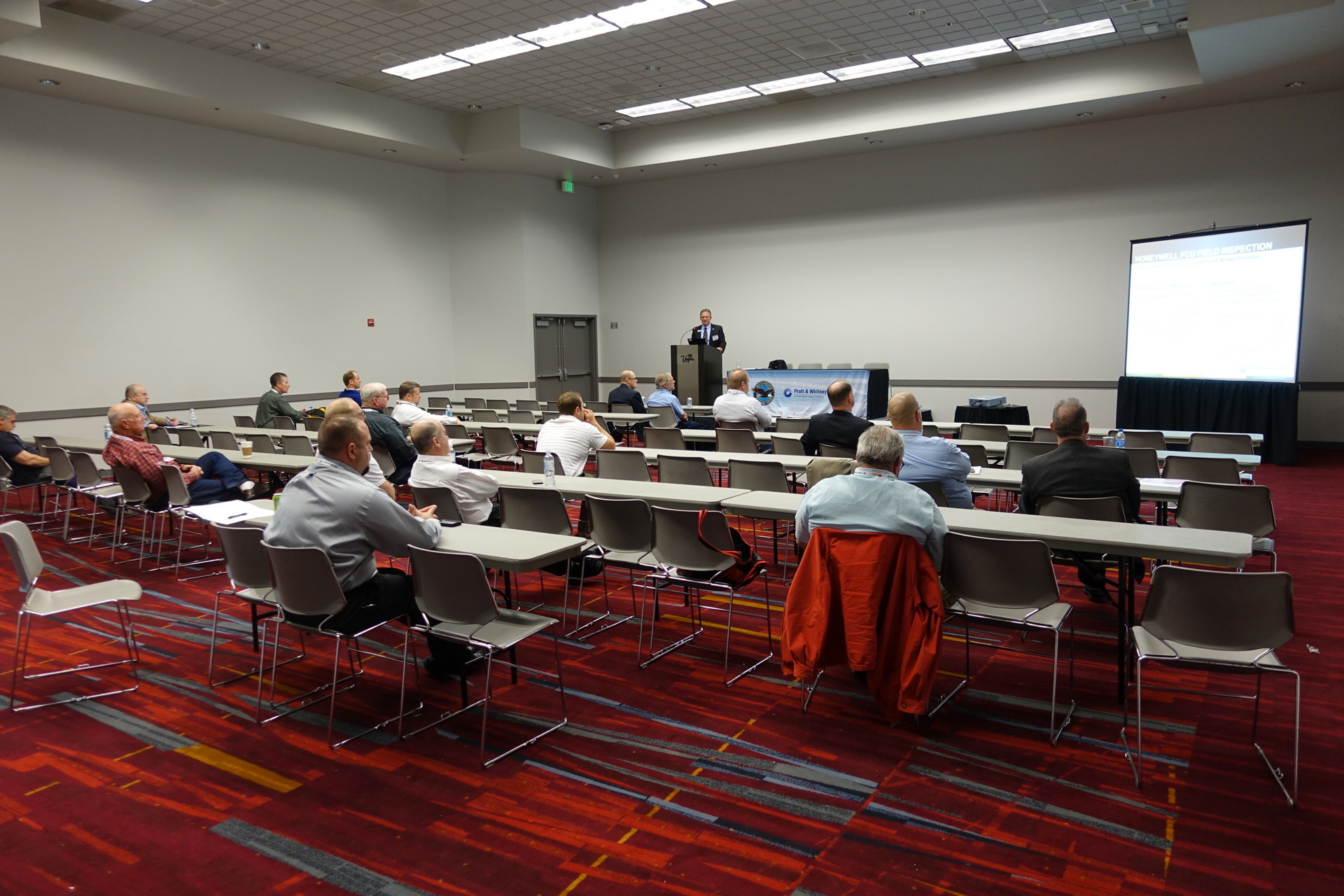
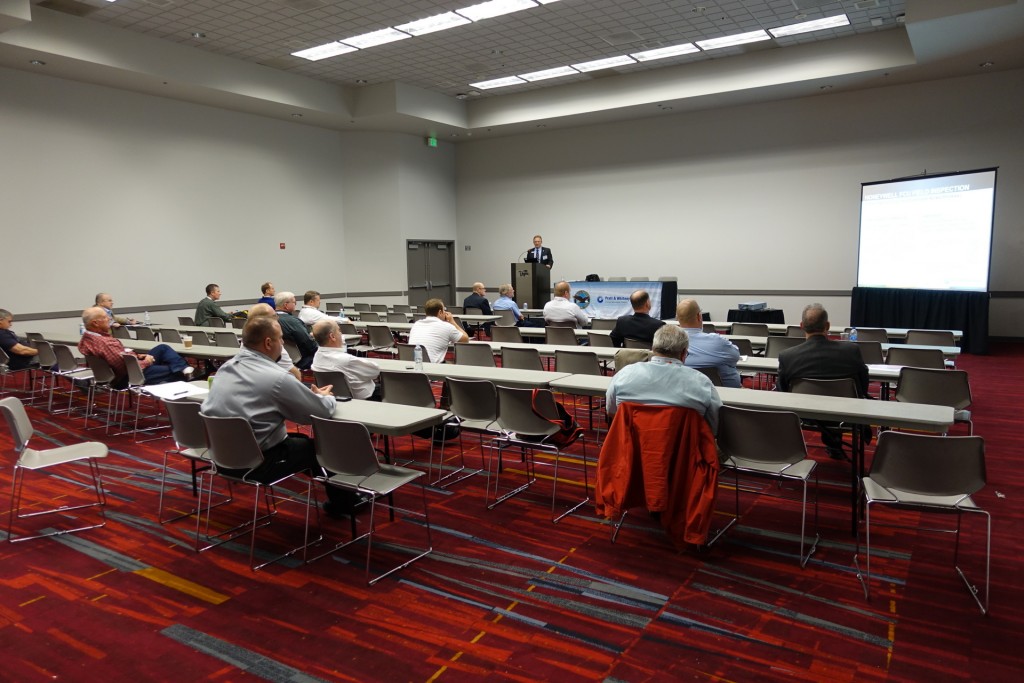
Judging by the Maintenance and Operation seminar put on by Pratt & Whitney, the PT6 is performing pretty well for a dinosaur. With 51,000 engines built so far I expected the room to be packed but in fact it was nearly empty:
DSC01585

When all of the owners and operators are wandering the show floor instead of coming to the M&O seminar, you know that a product is bulletproof!

The presentation was by Craig Huisson, general manager of PT6A customer service. It was all business from the first slide: Here are the five things that you can do to make the next overhaul cheaper. The subsequent slides were mostly of the following form: “Here’s a part that failed. Here’s how we redesigned it. Here’s what you can do to check for a similar failure.” Huisson didn’t mention how great Pratt was, what the mission statement might be, or the inferiority of competitors. However, it was apparent from the slides that Pratt has tried to learn something from every failure, even ones that did not result in an engine shutdown. Huisson asked operators in the audience for ideas as to how Pratt could support them better. He took careful notes, promised publications in response, and handed out his business card for follow-up. If Pratt can add a FADEC to all of the low-power PT6 engines by 2019, GE is going to have a tough time competing!

[Practical tips: (1) The superstitious practice of running ITTs well below the top of the green arc, e.g., below 720 in the climb and below 700 in cruise, is actually helpful to the engine–temperature is the enemy; (2) do a lot of compressor washes (Pratt is hoping to make this easier so that an A&P mechanic is not required) to avoid corrosion; (3) borescope inspection every 200 hours, coinciding with the fuel nozzle cleaning. ]

The Pilatus Maintenance and Operations seminar was standing-room-only, despite only 1350 airframes having been produced. The structure was more or less the opposite of what Pratt had set up. We watched a video of the PC-24’s first flight. We learned the Pilatus mission statement, which takes up nearly a full page. We learned that Pilatus is better than other turboprop manufacturers and tries to do everything so much better that the company establishes a new category of aircraft: “Pilatus Class.” An example of this above-and-beyond approach was that the company recently made “pilot information manuals” (more or less what the pilots have up front) available on its web site. The presenter was seemingly unaware that Cirrus had managed to do this more than 10 years earlier or that, as noted in my review of the PC-12, unlike other manufacturers, Pilatus leaves pilots with manuals in which much safety-critical information, such as proper airspeeds to fly, is buried in a supplement in a separate binder (a consequence of changing the aircraft’s gross weight without following the industry-standard practice of revising the manual).

In later discussions with other PC-12 operators who’d been in the room, one said “They spent the whole meeting blowing smoke up our ass about how great Pilatus is. I didn’t learn anything about maintenance or operations.” One big challenge in maintaining the PC-12 is that anything involving electronics doesn’t seem to have been designed for maintenance. If a warning light comes on intermittently and a maintenance shop can’t duplicate the behavior in a hangar there is generally no information logged by the aircraft about the signals present at various locations that led up to the warning light. The mechanic is left to wonder “Is it a bad wire connection? Is it a bad board full of relays and logic?” This leads to a certain amount of hopeful board-swapping more or less at random. Board swaps tend to introduce additional problems because the Pilatus pool of spare boards contains many that were previously returned by customers as broken. A board that works fine during a bench test at Pilatus can be are stamped “good” and shipped out to a different customer. In a world where computers and memory are cheap there should be almost no situation in which an airplane can’t self-diagnose, e.g., “at 12:32:47Z there was a mismatch between information on Board A and information in the central warning system, therefore replace Wire A127” or “the signals on Board B should have resulted in Relay B4 closing but the output of that Relay indicates that it did not close, so replace Replay B4 and/or Board B.”

Practical good news from the meeting: The $15,000 pitch trim actuator that formerly needed to be replaced every 5 calendar years can now be run for 7 years as long as you don’t fly more than 3400 hours during those 7 years. The “ultimate life of the airframe is now up to 50,000 hours.” It costs about $100 per hour to go from 20,000 to 25,000 hours ($500,000 for the first phase of the extension program). If you actually have some reasonable prospect of burning through 50,000 hours the per-hour cost of the extension programs can fall to as low as $50.

What about quieting down the cabin? The folks at EAR, a subsidiary of 3M, say that sound-proofing materials are getting better every year and that they recently took 5 dB out of a Gulfstream cabin compared to the previous design with no increase in weight. It costs them between $50,000 and $100,000 to design a kit for an aircraft, so if there is enough interest from Pilatus operators we could see 4 dB of noise reduction within the cabin. Combined with the 5-blade prop that would make the PC-12 as quiet inside as some business jets, albeit still about 6 dB noisier than being inside a newer Airbus or Boeing. (See my PC-12 review for some measured dBA levels.)

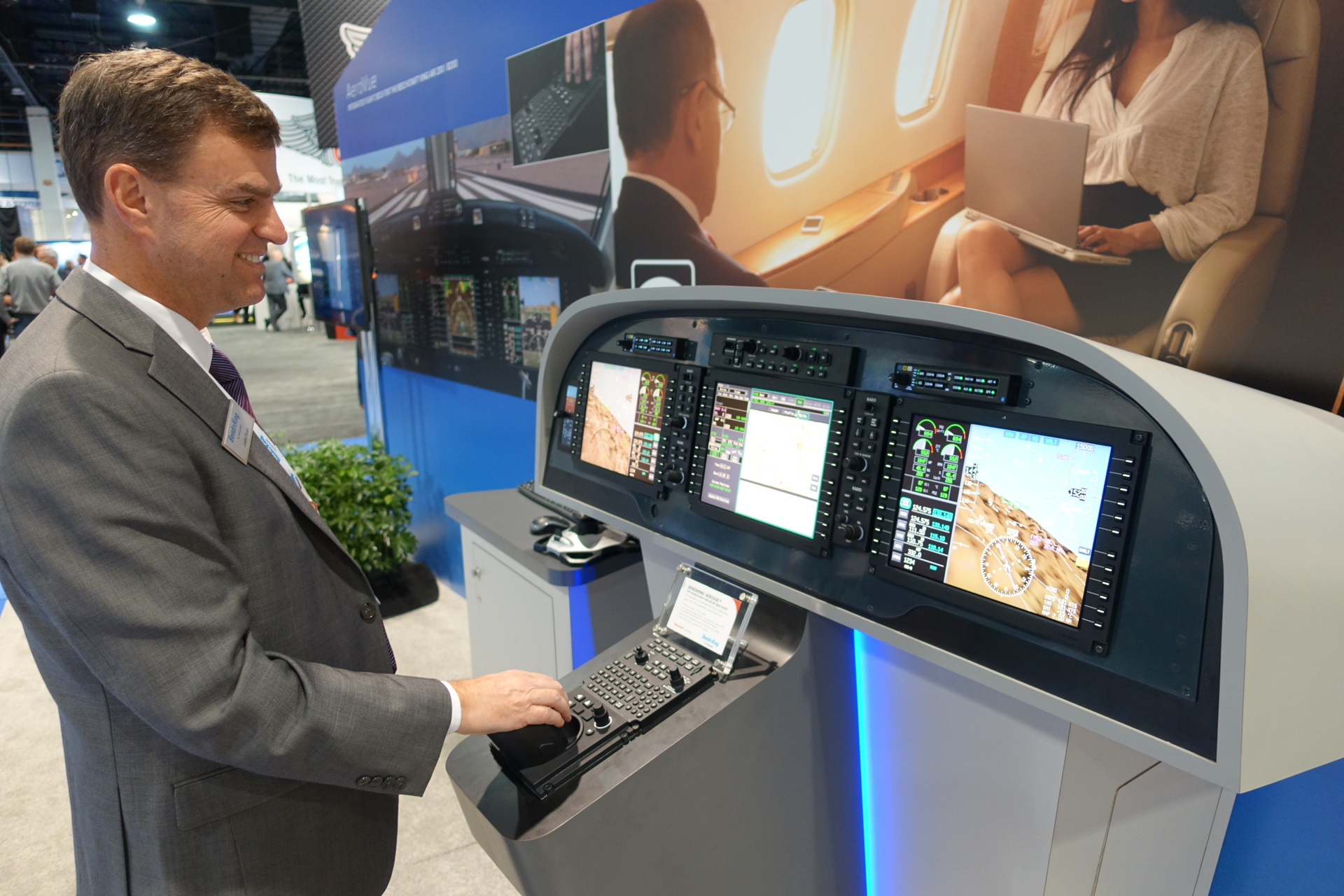
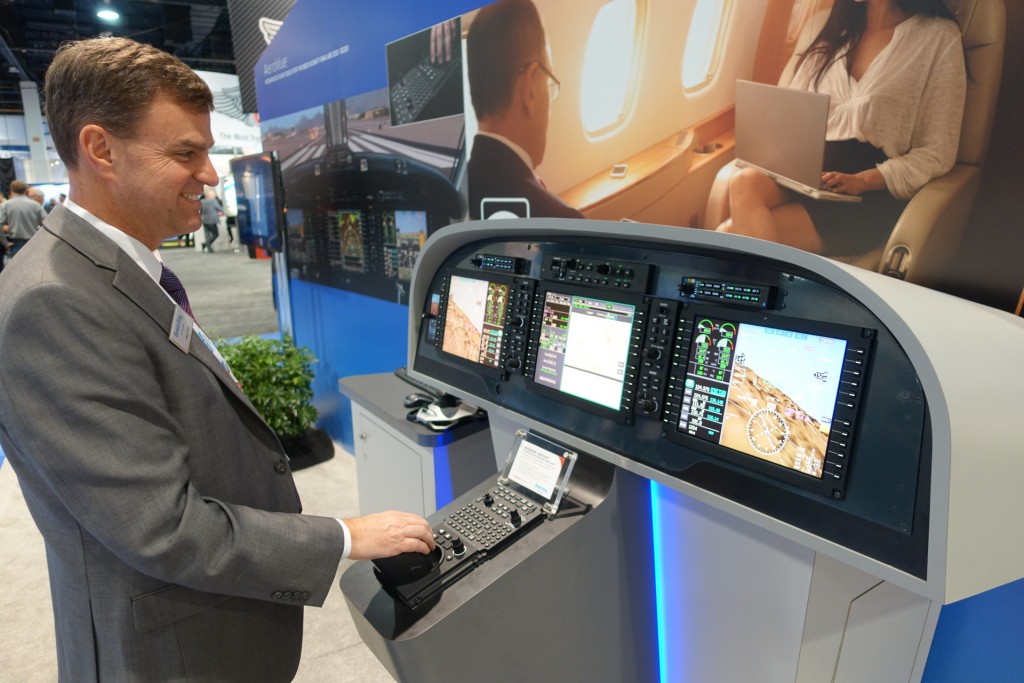
What if you want a cabin filled with the noise of “Whoa, look how cool my avionics are”? The Garmin G600/GTN 650/750 option remains available at roughly $180,000, notably from J.A. Air. This is a simple-to-operate system for pilots accustomed to all things Garmin and leaves the EIS (engine and fuel) display as well as the King 325 autopilot. IS&S was at the show with a beautifully-painted-by-Hillaero PC-12 that had been modernized with three big screens and autothrottles. This should be certified by the spring of 2016 and cost about $300,000. The autothrottle system knows all of the torque and ITT limits, e.g., for hot-and-high takeoffs. It looks like a great system but it leaves the legacy AHARS systems in the airplane and each is $25,000 to exchange in the event of failure. IS&S replaces the EIS display but leaves the King 325 autopilot. It looks beautiful but weekend pilots accustomed to Garmin may find the interface challenging to learn. Honeywell showed its AeroVue system, currently announced for the King Air and some jets but a natural to put into the PC-12 due to the fact that a related system is factory equipment on the latest PC-12 NG airplanes. This system fits the Pilatus panel a lot better than the Garmin G600. The screens are bigger and there is less unused space. AeroVue includes a modern autopilot. It is unknown whether Honeywell will actually do this for the PC-12 and also unknown what Honeywell will charge for an annual avionics warranty. Finally, Sandel showed its crazy-clean and crazy-cheap Avilon flight deck for the King Air. The press release says “a guaranteed fly-away price of $175,000” and the salespeople talked about a 5-day install. This seems comparable to what Garmin has priced at $400,000 (a G1000 for the King Air) and a month of install time. It might be a very strong competitor if released for the PC-12.
DSC01530

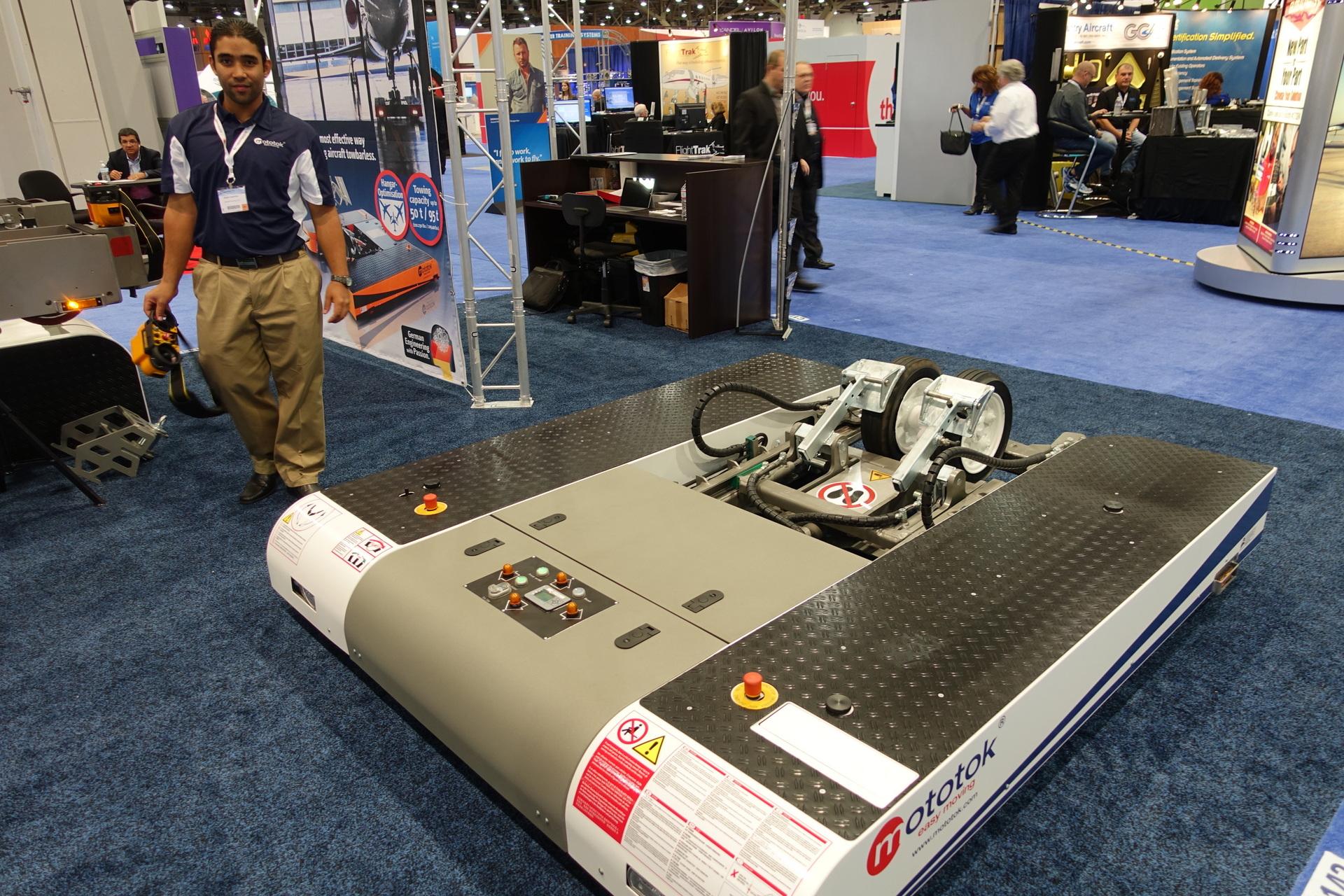
When the trip is over and you want to have the coolest conceivable tug to push the PC-12 back in the hangar?Mototok is the German solution suitable for an Al Gore-class private jet. If you’re rather spend $5,000 on a remote-controlled tug, the American equivalent for light aircraft that I saw at the show is AC Air Technology (fun videos, especially of the Robinson R44 helicopter).
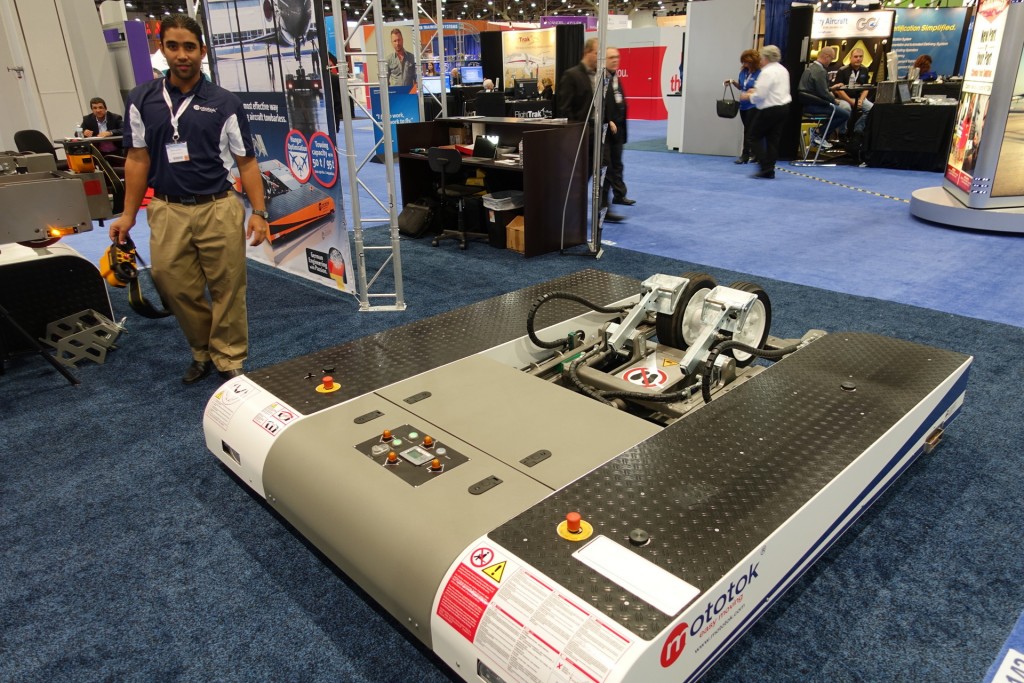
DSC01624

Full post, including comments

What’s on the minds of computer programmers today? Security, security, security

After spending 48 hours with some of the world’s most skilled programmers (Hackers Conference), it was possible to make some generalizations about what’s on their minds. About half of the time blocks included a session on security, consistent with Zurich’s prediction that, by 2019, the cost of securing the Internet will exceed the value of the Internet (previous post).

What would it take to have real assurance that the systems we bring into our businesses and personal lives won’t be turned against us? Some of the participants suggested that we will need to start by simplifying the hardware. It would be better to sacrifice some processor performance to obtain a processor simple enough to understand. “Start with the 8051 and build out from there,” was one theme. Looking at the PDP-10 manual on saildart.org, one expert commented “The errata sheet for a modern processor is probably longer.” [The PDP-10 was a powerful mainframe of the 1960s.]

After that we would need much simpler operating systems that (1) were small enough to understand, and (2) provided true isolation among programs and protection against malicious code. Perhaps something like MULTICS. Participants agreed that Google’s Chrome OS was probably the best current desktop option from a security standpoint.

A Distributed Denial of Service (DDOS) attack to the tune of 400 Gbits/second was described as “trivial” and the result is that “nobody can be up if someone wants them down.” Are standalone Internet publishing businesses that depend on advertising overvalued as a result? The revenue stream can dwindle as readers install ad-blockers or turn their attention to Facebook. The revenue stream can be cut off any time by a DDOS attack.

Where there are challenges, of course, there is opportunity. Some folks noted that insurance companies writing computer security policies were taking wild guesses at the risk and that it should be possible for a company staffed with security/software experts to make money simultaneously insuring and analyzing/securing.

Related:

Full post, including comments

How to get a free car: lease an electric car (but sadly, not a Tesla)

While visiting California this month I learned that it is possible and practical to get a free brand-new car. Start by having an above-average income, a good credit rating, and a house that consumes at least $300/month of electricity (California is among the most expensive states in the U.S. for electricity so the last requirement is not challenging to meet). “We got a Fiat 500E for $129/month,” said a software engineer, “and having an electric car in the household enabled us to get a different rate plan from PG&E that saved us more than $100 per month. The lease rates are low because the leasing company is entitled to all of the tax credits.”

Can it work for apartment-dwellers? A software engineer at one of Silicon Valley’s most profitable companies earns many times the median California household income of $61,000 per year (Census), but still not enough to purchase a house. He pays $70/month to lease a Chevy Spark and can charge it at work. (He likes the car, but says that it might not be practical in the Northeast due to the fact that using the heater eats into the 80-mile advertised range.)

Both electric car owners report negligible additional costs, e.g., for maintenance or energy.

What do readers think? Is this the future for upper-middle-class Americans? Free electric cars funded by taxpayers and lower income customers of the same electric utility?

[And what if you can’t afford a house or an apartment? In one conversation I learned about two ways for Californians to get free or nearly-free housing. Son #1 of the person to whom I was speaking was a software engineer making a well-above-median income. He was living with, but not married to, an artistically-inclined girlfriend who earned a modest amount. She therefore qualified to purchase a $3 million apartment in a brand-new building in San Francisco… for $270,000. She can’t live there for a day and turn around to sell it for $3 million, but her income could rise to $1 billion per year and she wouldn’t have to move out. She could move to Los Angeles and keep the place as a personal vacation destination (the monthly maintenance fee is comparable to the cost of one night in a local hotel). None of this would be available if the happy couple had gotten married prior to the purchase. Young folks: Keep this in mind if you’re partnered with someone and there is a big income disparity; you’re saying goodbye to a lot of valuable government handouts if you marry. Son #2 also worked in the tech industry and was frugal so he’d saved up enough to purchase a house without a mortgage. The house cost about five years of after-tax income. He was married for one year to a person with an Ivy League education in a field with a BLS median pay of roughly $70,000 per year. After a California divorce, his former-partner-for-one-year is now the owner of this house and thus well-positioned for the free electric car deal (above).]

Related:

Full post, including comments

If helping migrants is a moral imperative, what about non-migrants from the same countries?

Bureaucrats in Brussels have been telling European countries reluctant to accept immigrants from Africa and Islamic countries that they have a moral obligation to do so. If someone has the physical stamina to cross the land and/or sea and make it to a European shore then that person has the right to asylum. But if it is a moral imperative to save Syrians and Afghanis from the situations prevailing in their home countries, why is the moral imperative limited to those who show up in Europe? If a person is elderly and/or physically disabled, shouldn’t that person have at least as strong a moral right? If so, shouldn’t the Europeans be flying 747s (max passenger configuration up to 660) and A380s (max passenger capacity 853) to airports in Afghanistan and picking up anyone who wants to leave? Why limit the offer of European residency to those who are strong enough to trek over mountains? Similarly, for Syria and north Africa, shouldn’t the Europeans send passenger ferries to pick up anyone who wants to depart and can show that he or she is from a war and/or poverty zone?

In short, if accepting asylum-seekers is a moral question, how can it be legitimate to filter by physical stamina and capability? Shouldn’t the Europeans be favoring the physically weak instead?

Full post, including comments