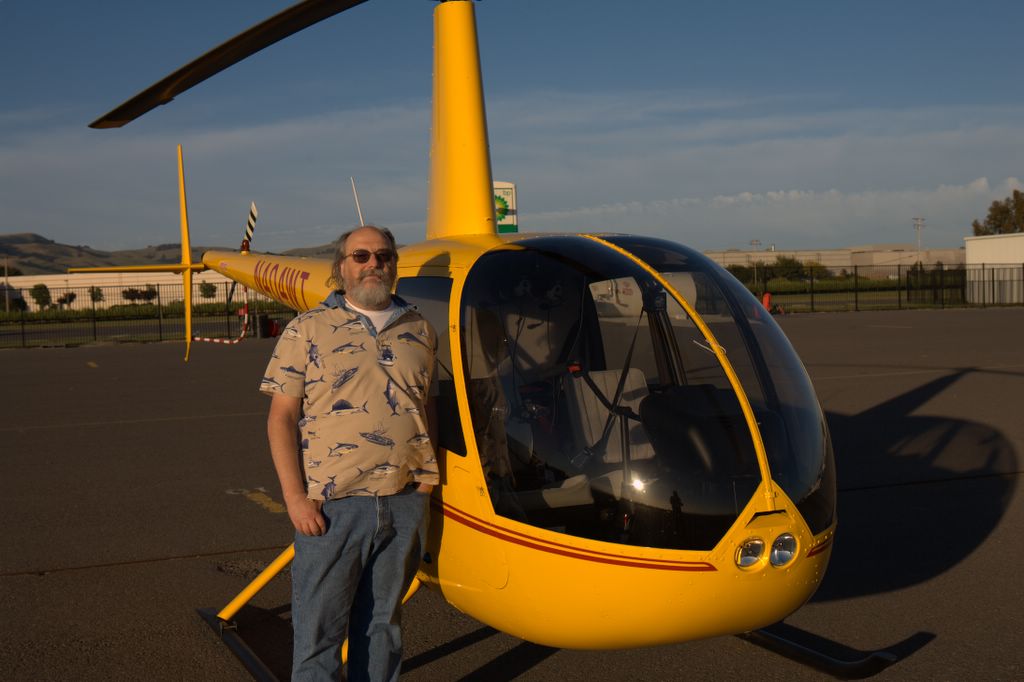
News items from Washington, D.C. trip

I visited Washington, D.C. over the weekend to attend my parents’ 50th wedding anniversary party. Due to a soaking rain that was parked all the way up and down the East Coast, I decided to fly commercial rather than take the paint off the leading edges of the Cirrus’s wings. Flying on Delta gives one a lot more time to read the newspaper than flying the Cirrus. One interesting posting was from a New York Times article on the disappointing financial results of Warren Buffett’s NetJets fractional jet company. Buffett is a big advocate for aviation:

Mr. Buffett, as well-known for his frugality as he is for his wealth, has famously pooh-poohed expensive cars, fast boats, sprawling estates, gleaming baubles and other trappings of wealth in favor of much more modest accouterments — except for jets, which he has made no secret of adoring. Private jet travel, Mr. Buffett has said, is worth much more than a large home or a fancy car. Zipping about in jets, he said, can change the quality of your life.

The other article was the cover story of Saturday’s Washington Post: “D.C. Wants HIV Testing for All Residents 14 to 84”. The article points out that “D.C. has the highest rate of new AIDS cases in the country” and that the federal Center for Disease Control is encouraging routine HIV testing. This seems strange to those of us who were around in the 1980s. When HIV was first identified as the cause of AIDS, quite a few Americans put forward the idea of widespread testing and then various sorts of steps to quarantine those who were infected. These advocates for testing were attacked as hardhearted and the politically correct public health official approach to the problem was to behave as though everyone were infected and not test anyone, even those in high-risk groups. For some reason, the public health bureaucracy seems to have come full circle and now advocates the testing that they once opposed.

Full post, including comments

We’re Giving a Talk on Helicopters on Thursday Night

On Thursday (June 22) evening at 7 pm, my friend Paul Cantrell and I will be giving a talk entitled “What Every Airplane Pilot Should Know about Helicopters”. The talk is free and open to the public. It is sponsored by the Federal Aviation Administration and hosted by Wyotech in their Griffin Building at 150 Hanscom Drive, Bedford, MA 01730. It will last until 9 pm and should include a walk-around of a Robinson R44 helicopter.

Full post, including comments

Russian perspective on art collecting

On the JetBlue flight out to California, I tore a page out of the May 29, 2006 New Yorker. The item, by Lillian Ross, is about Roustam Tariko, a Russian guy who was rumored, inaccurately, to have been the purchaser of a Picasso painting that sold last month for $95 million at Sotheby’s.

“Italian aristocrat with big gallery in London calls to sell me paintings. So I escape in my Boeing Business Jet [ed: 737 airframe with fancy interior], converted, with expensive everything. I live mostly in my plane. I go and go and go in freedom. .. Art dealers from all over world are now asking me to buy Picassos, other Impressionists. … But I do not buy them. I’d rather invest in my freedom, rather than in my walls.”

Full post, including comments

Hot, High, and Heavy in a Helicopter

My main activity this week was taking delivery of a new Robinson R44 helicopter, which a friend and I are going to use for some video and still photography on the West Coast before bringing the machine back to East Coast Aero Club at Hanscom Field (Bedford, MA) to serve as a $299/hour trainer for folks who don’t want to deal with the weight constraints and ultraresponsive handling of the R22.

Mechanically and cosmetically the helicopter has been more or less flawless so far. One fuel drain has been leaking and the engine is very slow and reluctant to cool down in the hot (30-40C) ambient temperatures here in Southern California.

I wanted to see how the machine would perform at high altitudes, which is where a lot of helicopter pilots get into trouble. In the thin air, you need more power to keep the (rotary) wing flying. The non-turbocharged engine, however, begins to lose power output as soon as you climb above sea level. The slower you go in a helicopter, e.g., when approaching to land, the more power you need. This combination leads to a lot of accidents when folks slow down trying to land at a high altitude airport.

Our experiment involved filling the helicopter up with maximum fuel and loading three guys, including myself, into the cabin. We proceeded to depart the Los Angeles Basin for Big Bear, which is at 6700′ above sea level but sported a density altitude of 8600′ (helpful digital sign in the runup area), thanks to the hot temperatures. The other two guys were Lib and Gareth, local flight instructors from Universal Air Academy in El Monte, California, who have a lot of experience going up to Big Bear. I was on the controls.

We flew a shallow approach to the runway at Big Bear, with the intention of flying a low approach only and never getting below the 20-knot (approx) airspeed that is the boundary of “effective translational lift” (ETL), a speed at which the rotor system is getting clean air and operates much more efficiently than in a hover. The discipline of saying “we are not going to slow this helicopter down or do a real landing” is important. Most problems in aviation stem from overcommitment to a challenging plan, e.g., landing in a crosswind or on a short runway.

We had lots of reserve power available, according to the gauges, and we climbed out nicely from our low approach. For the next approach, we decided to attempt landing. If you don’t have enough power, you can always slide the helicopter onto the runway at 20 knots. With good technique and smooth control inputs, however, it should be possible to arrest the descent into a hover. I did manage to get the ship down to a 2′ hover over the runway, with 1″ (out of 21 and change) of manifold pressure to spare. We taxied into the ramp and had breakfast at the locally renowned airport restaurant.

Our next stop was the big airport at Palm Springs. The Atlantic FBO there has an outdoor swimming pool and Jacuzzi for visiting pilots. We had a salad at the adjacent restaurant, then began to feel physically ill from the 100-degree heat. We borrowed a car from Atlantic, a white Chevy Cobalt, and decided to kill some time at the nearby airplane museum, packed with airworthy WWII military planes. As I turned left onto the four-lane moderately high-speed local road, an SUV came up on our tail and tailgated us for awhile, honking repeatedly. I stayed in the left lane, however, because we didn’t know exactly where the airplane museum was. After about three quarters of a mile, we pulled off into the left turn lane and the SUV driver pulled alongside, continued honking and gave us the finger. He appeared to be over 80 years of age. Lib and Gareth were almost doubled over with paroxysms of laughter.

We went back to El Monte. Bryan Robinson, a 10,000-hour pilot originally from Scotland (no relation to Frank Robinson, the engineer behind the R22 and R44), took me out to practice settling with power and autorotations. Bryan is truly the master of all things rotary-wing and has flown almost every kind of fancy jet-powered helicopter. His favorite helicopter? The little R22, because it is the most responsive. Bryan lent me his new Toyota Prius so that I could do some shopping. If you don’t need to keep bicycles inside the vehicle, which is what attracts me to minivans, the Prius seems like an almost ideal car.

Full post, including comments
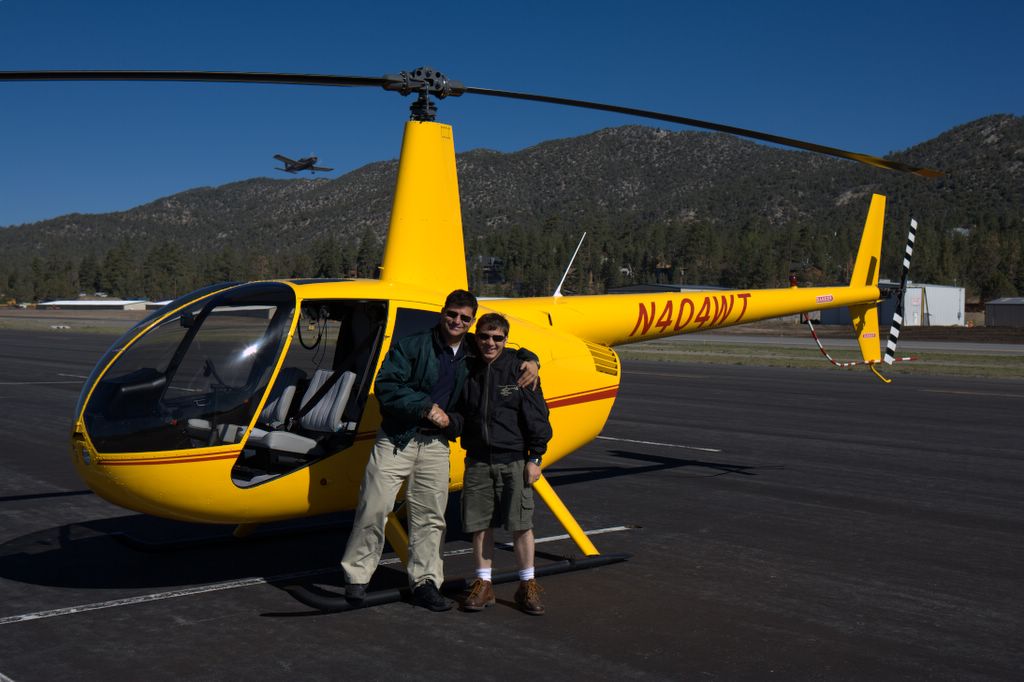
Harvard Class of 2001: lawyers, lobbyists, legislative assistants

I spent last weekend at a wedding where the bride and groom were both members of the Harvard Class of 2001. Harvard builds a strong class spirit and ensures that most of a graduate’s friends will be from the same class by maintaining freshman-only dorms in the Yard (the impact on academics is negative because there are no upperclassmen from whom to learn study habits or get help with homework, but this isn’t a big deal at a school where “A stands for average”).

Five years after graduation, what are these bright young expensively educated people up to? Although the bride and groom were in medicine and business, a plurality of their classmates had gone to law school and/or were working in Washington, D.C. as lobbyists or legislative assistants. With so many of America’s best and brightest making the personal choice to go into fields that, at best, transfer money from one pocket to another, I thought “Thank God we have immigrants, since if we had to rely on these folks for economic growth, we’d be toast.”

[Camera nerds: If you’re curious to see how an EOS 5D performs in the low available light of a church or restaurant, check out my slide show from the wedding: medium-sized or huge.]

Full post, including comments

WWTD? (What would Thoreau do? Fly a helicopter)

Last weekend I drove out to the Berkshires for a wedding. It was my first roadtrip since buying the helicopter and I was struck by how difficult it was to get an idea of how things were arranged and how people were living. The vast majority of the land in the Berkshires, a branch of the Appalachian Mountains, is inaccessible to the ground-bound due to the fact that it is fenced-off and private or simply that there are no roads. Great Britain has a tradition of “right to roam”, now codified (see http://www.countrysideaccess.gov.uk/), that would enable a sturdy walker to poke around on foot, and citizens of former Communist countries were able to walk most places, but the U.S. has no such tradition.

Henry David Thoreau saw our modern confinement coming in his June 1862 Atlantic magazine essay, Walking:

… most of my townsmen would fain walk sometimes, as I do, but they cannot. No wealth can buy the requisite leisure, freedom, and independence which are the capital in this profession. … I know very well that they have confined themselves to the highway ever since … the walking of which I speak has nothing in it akin to taking exercise, … but is itself the enterprise and adventure of the day. …

Moreover, you must walk like a camel, which is said to be the only beast which ruminates when walking. When a traveler asked Wordsworth’s servant to show him her master’s study, she answered, “Here is his library, but his study is out of doors.” …

When we walk, we naturally go to the fields and woods: what would become of us, if we walked only in a garden or a mall? …

There are square miles in my vicinity which have no inhabitant. From many a hill I can see civilization and the abodes of man afar. The farmers and their works are scarcely more obvious than woodchucks and their burrows. Man and his affairs, church and state and school, trade and commerce, and manufactures and agriculture even politics, the most alarming of them all—I am pleased to see how little space they occupy in the landscape. …

At present, in this vicinity, the best part of the land is not private property; the landscape is not owned, and the walker enjoys comparative freedom. But possibly the day will come when it will be partitioned off into so-called pleasure-grounds, in which a few will take a narrow and exclusive pleasure only—when fences shall be multiplied, and man-traps and other engines invented to confine men to the public road, and walking over the surface of God’s earth shall be construed to mean trespassing on some gentleman’s grounds. To enjoy a thing exclusively is commonly to exclude yourself from the true enjoyment of it. Let us improve our opportunities, then, before the evil days come.

Are Thoreau’s “evil days” here? For the ground-bound, certainly, but I don’t feel them when I’m up in an aircraft. In more or less the entire United States, it is possible to fly anywhere one wishes for the simple pleasure of looking. We members of the public have lost some airspace to the military, for training. We have lost some as a result of fears of additional attacks by angry Muslims. We have lost some as a result of politicians being paid off by corporations who did not want their captive audience seeing advertisements from banner towing airplanes (Disney grabbed airspace above its theme parks and the professional sports owners grabbed the airspace over stadiums; they’d been trying for years, but the FAA’s staunch resistance was too great until the September 11th attacks enabled the transfer of public property on the grounds of security).

Thoreau would today be arrested if he tried his old trick of walking around the beaches of Massachusetts, which, unlike in most states, are owned right down to the low tide waterline by the private property holder. Upon his release from jail, would he come down to our flight school (not far from his home in Concord) and learn to fly a helicopter?

Full post, including comments

Maurice Sendak on “Where is Max now?”

The April 17, 2006 New Yorker magazine carries an interview with Maurice Sendak, author and illustrator of Where the Wild Things Are, whose protagonist is a young boy named Max.

“My God, Max would be what now, forty-eight? He’s still unmarried, he’s living in Brooklyn. He’s a computer maven. He’s totally ungifted. He wears a wolf suit when he’s at home with his mother!”

[Note: “Computer maven” is New York-speak for “programmer” or “computer expert”.]

Full post, including comments

Updated Slide Show Software Released

http://philip.greenspun.com/photography/slide-show?size=small&spec_file=/photography/exhibits/alaska-trip-2005.ss

demonstrates a new version of the slide show software developed by Shimon Rura, Julie Melton, and myself.  If you “view source” you’ll get documentation and a link to a .tar file.  The new version is designed for easy reskinning.

Full post, including comments