2026 was my first time at a fun Palm Beach County event: the Barrett-Jackson car auction. It’s a three-day event and I attended on Day 2. The crummiest cars are auctioned on Day 1. By Day 2 there are still a lot of nice cars in tents on the South Florida Fairgrounds (just west of PBI/DJT airport) and some reasonably interesting cars are being auctioned. Day 3 is a Saturday and presumably jammed because the local authorities had everything in place for dealing with a massive traffic snarl.
Prep: You won’t need sunscreen because almost everything is under either a tent or inside a building. There were no biting insects, despite recent wet weather, so you don’t need insect repellant either. General admission tickets were readily available at the gate, with no waiting mid-morning, for about $50. Consistent with Florida norms, children 12 and younger are free (1 kid per adult admission; both parents need to show up if it’s a welfare-or-super-rich-sized family). there is supposedly a “clear bag policy”, though women were carrying sizable conventional (non-clear) purses. Expect to spend about four hours if you’re not a professional/bidder.
Gemini says that Scottsdale is the biggest auction, with the most people and the most cars. Palm Beach has about 1/3rd as many cars and is second for “high-profile, high-dollar sales”. Las Vegas is similar in size to Palm Beach and the Columbus event is “focusing on custom cars and hot rods”.
Here’s what the main auction looks like:
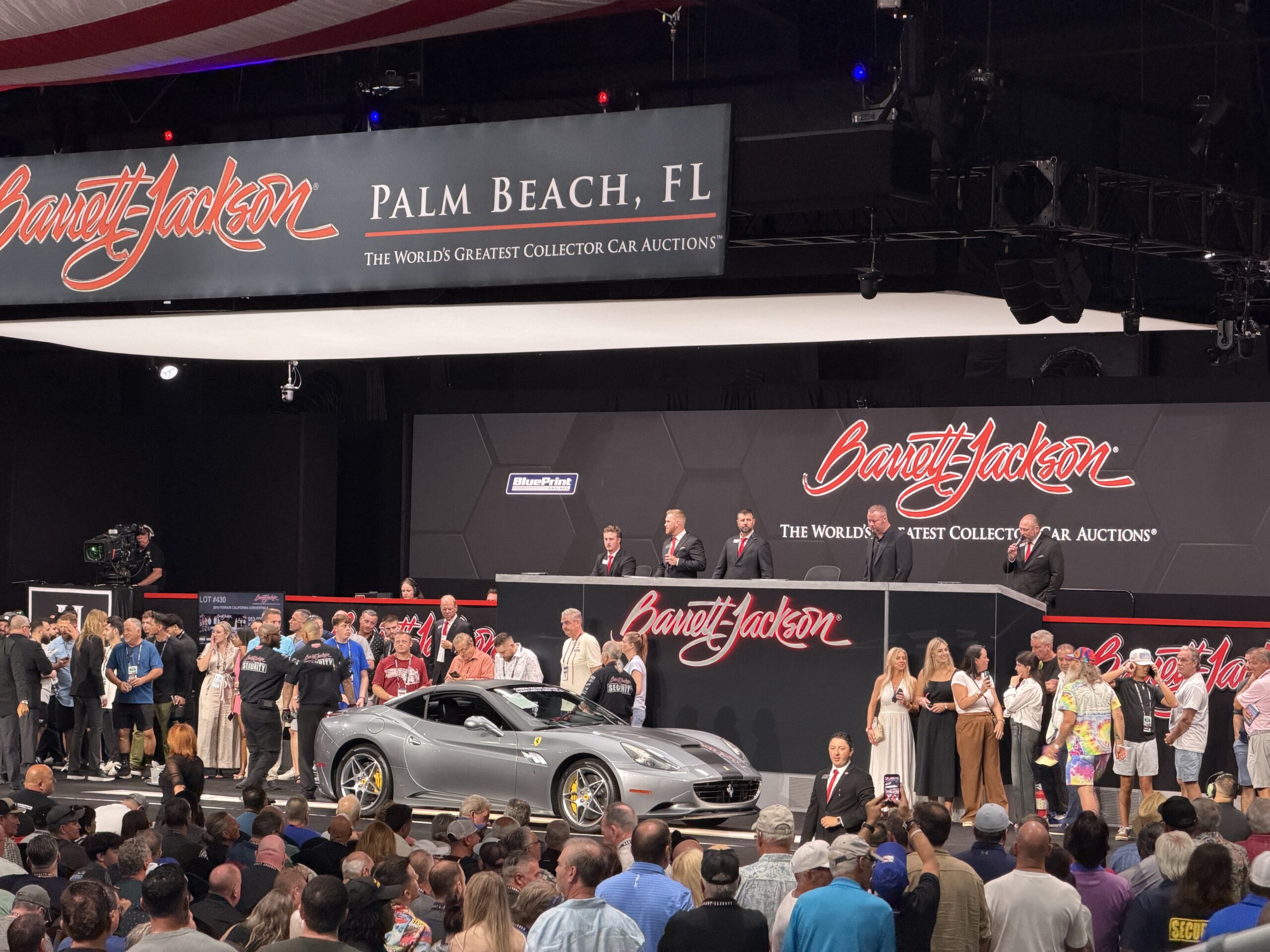
The seats in the center seem to be reserved for those who’ve registered as bidders.
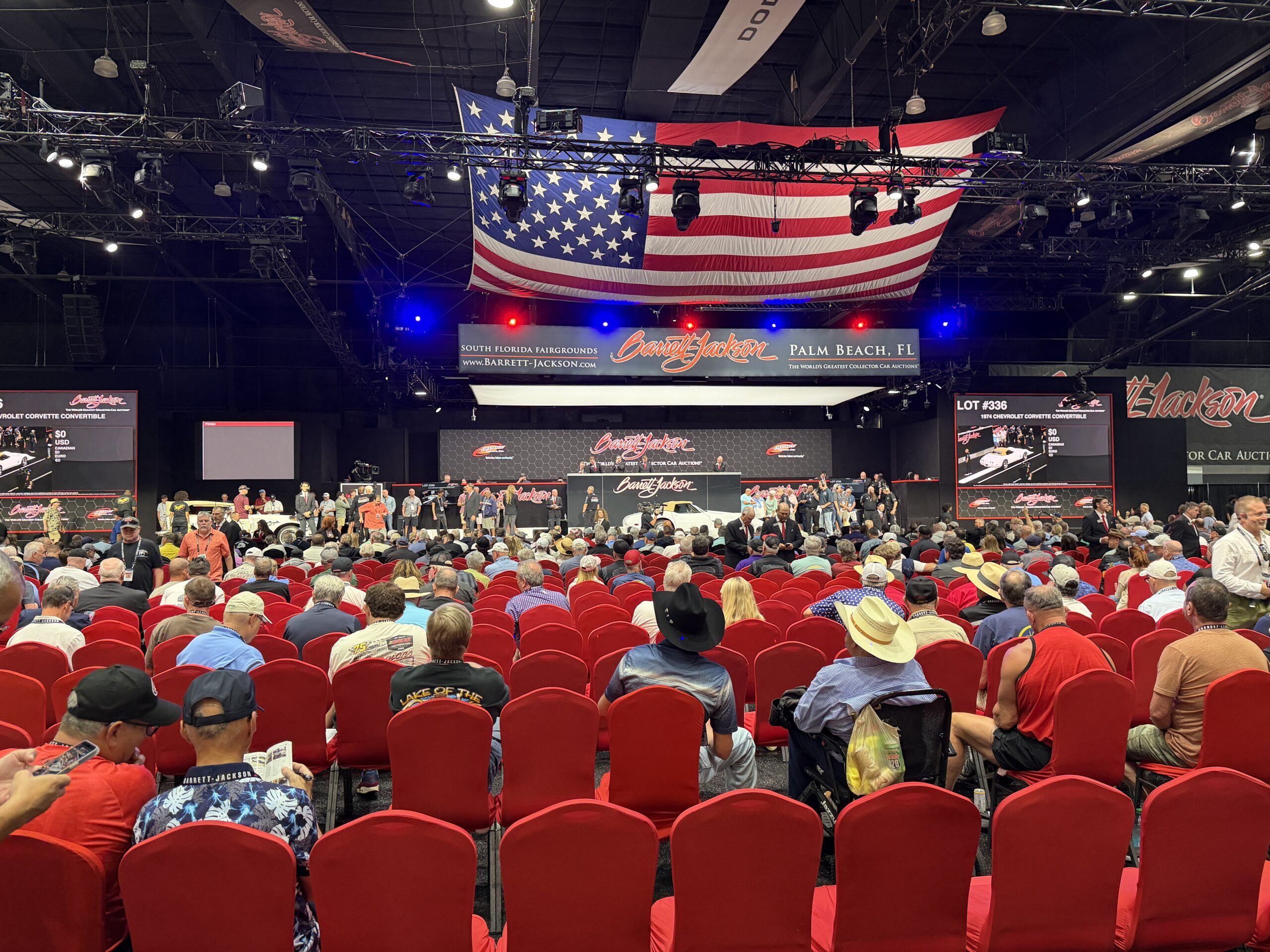
Here’s what it sounds like:
I would love to interface recordings of this guy to Indians who call us up trying to sell us insurance, home improvement, etc. How about an app that would instantly connect a call to auction audio?
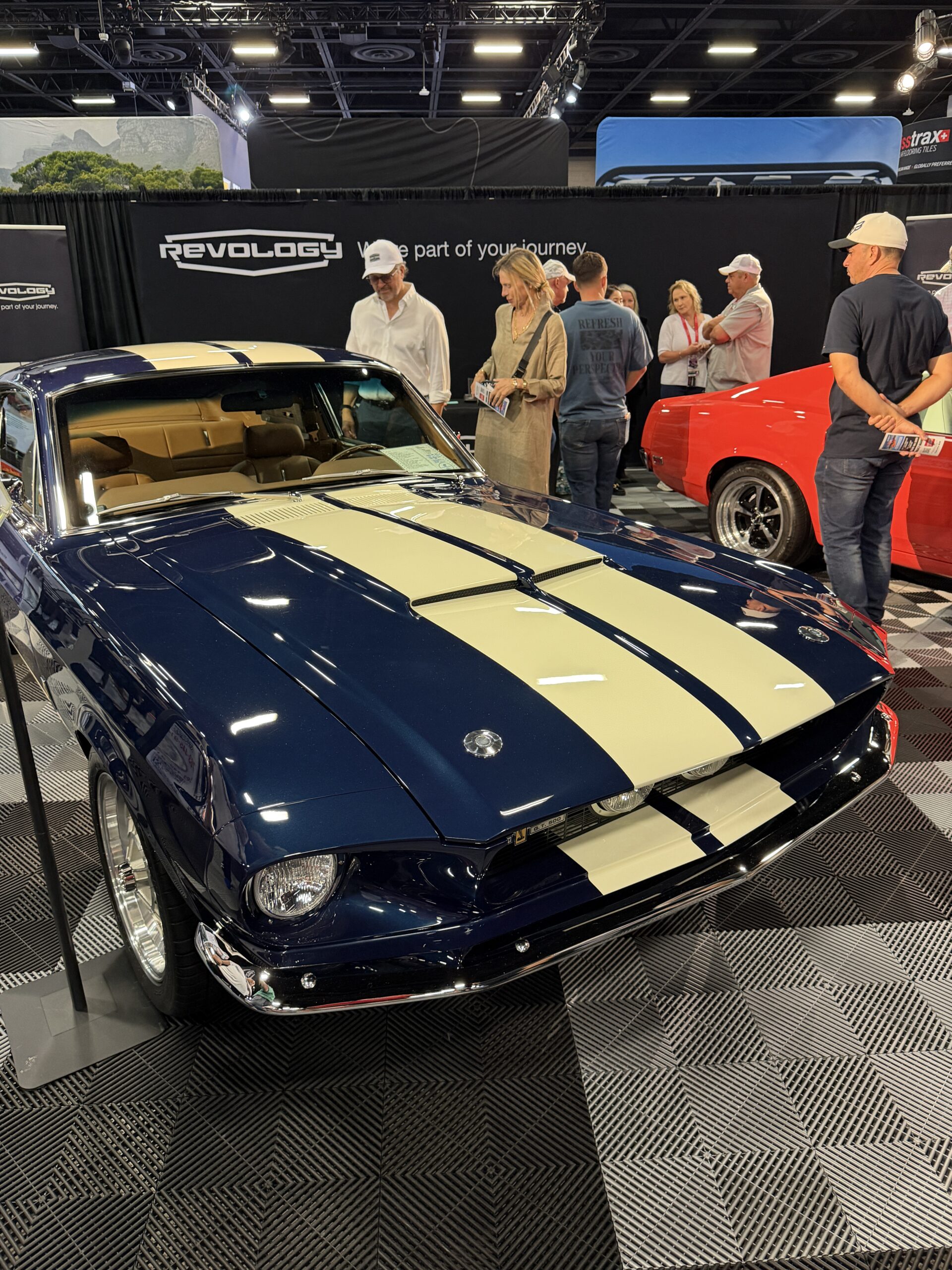
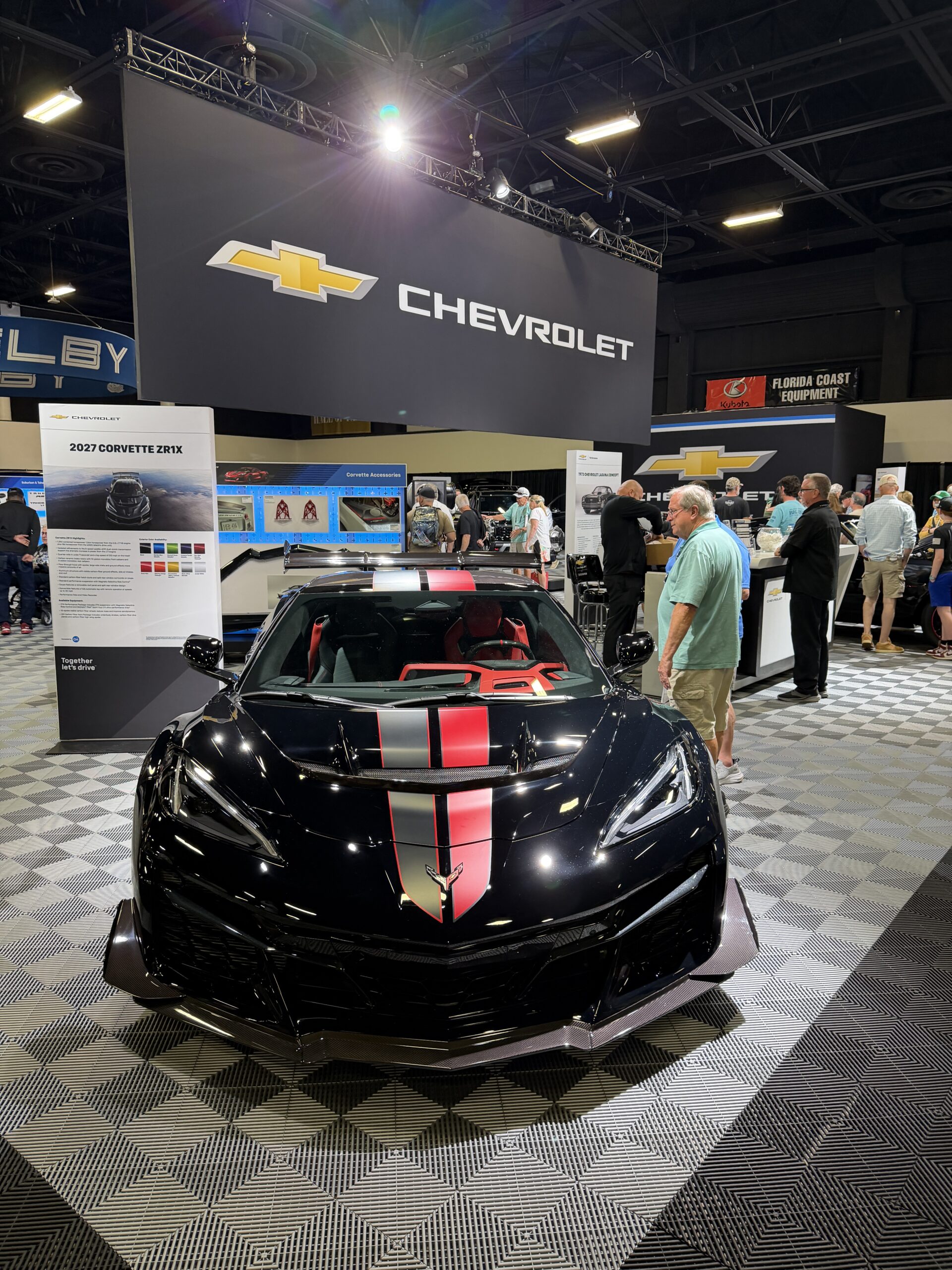
You walk into the event through a vendor area. Chevrolet and Dodge have big areas, but a company that makes 80 cars per year, Orlando-based Revology, also shows up:
A German company was pitching $500+ heavy foam blocks on which to park one’s car, claiming that the softer-than-concrete material extends tire life:

ChatGPT begs to differ:
Tire pressure (e.g., 32–40 psi) dominates the contact behavior
The deformation happens inside the tire, not at the surface interface
If your goal is tire longevity, these are far more impactful: (1) Keep tires properly inflated (or even +3–5 psi for storage), (2) Move the car occasionally, (3) Avoid long-term parking in heat + sun, (4) Use jack stands for very long storage.
For long-term storage (months): some benefit, but minor compared to inflation and movement
ChatGPT says “curved tire cradles are actually better than flat foam” for avoiding flat spots during long-term storage. For most of us, any flat spots will be temporary and the permanent damage is being done by aging. For collector cars that are driven only a few thousand miles per year, ChatGPT says that rubber gets harder as it ages, thus reducing performance noticeably after five years and that manufacturers say to replace tires 6-8 years after manufacturing date (sooner if not garaged). The last four digits of the DOT code might be 1022, which means the 10th week of 2022.
(Claude generally concurs.)
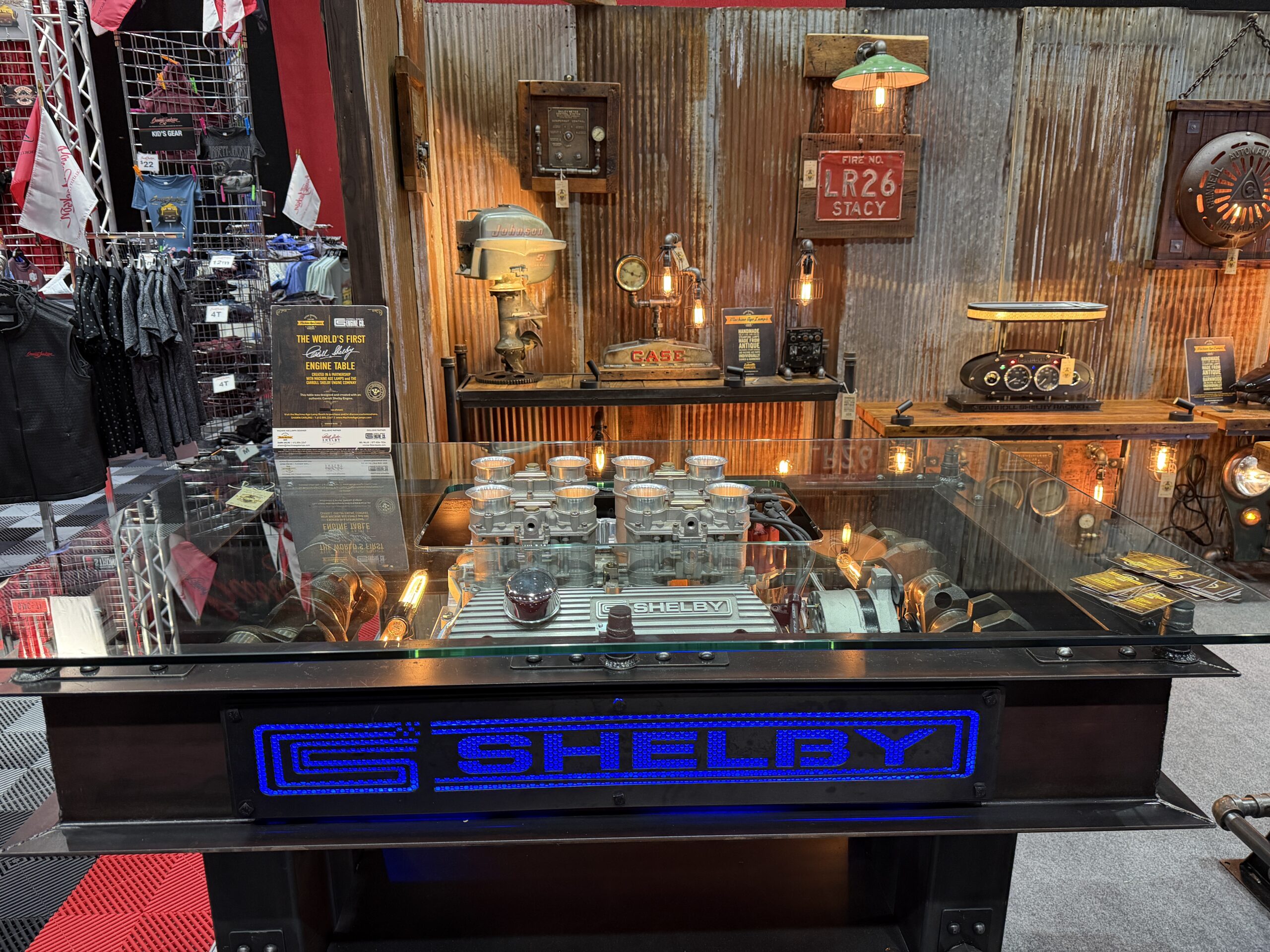
A complete range of home decor was available for the motorhead Deplorable. Imagine being rich enough to permanently park a Carroll Shelby engine in one’s living room as part of a table:


The building behind the main auction building is home to the local model railroad club, which graciously showed up to run their layout.


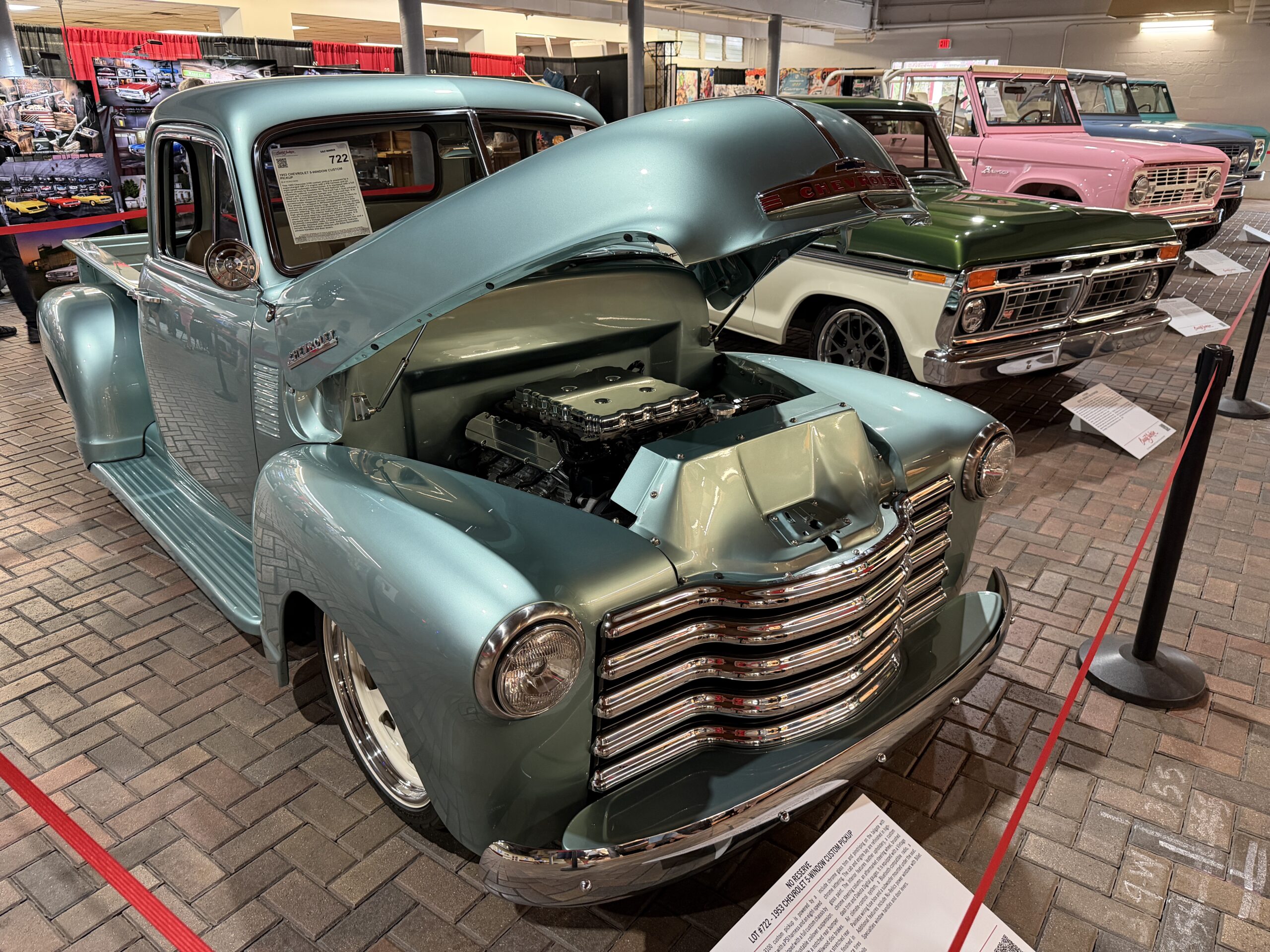
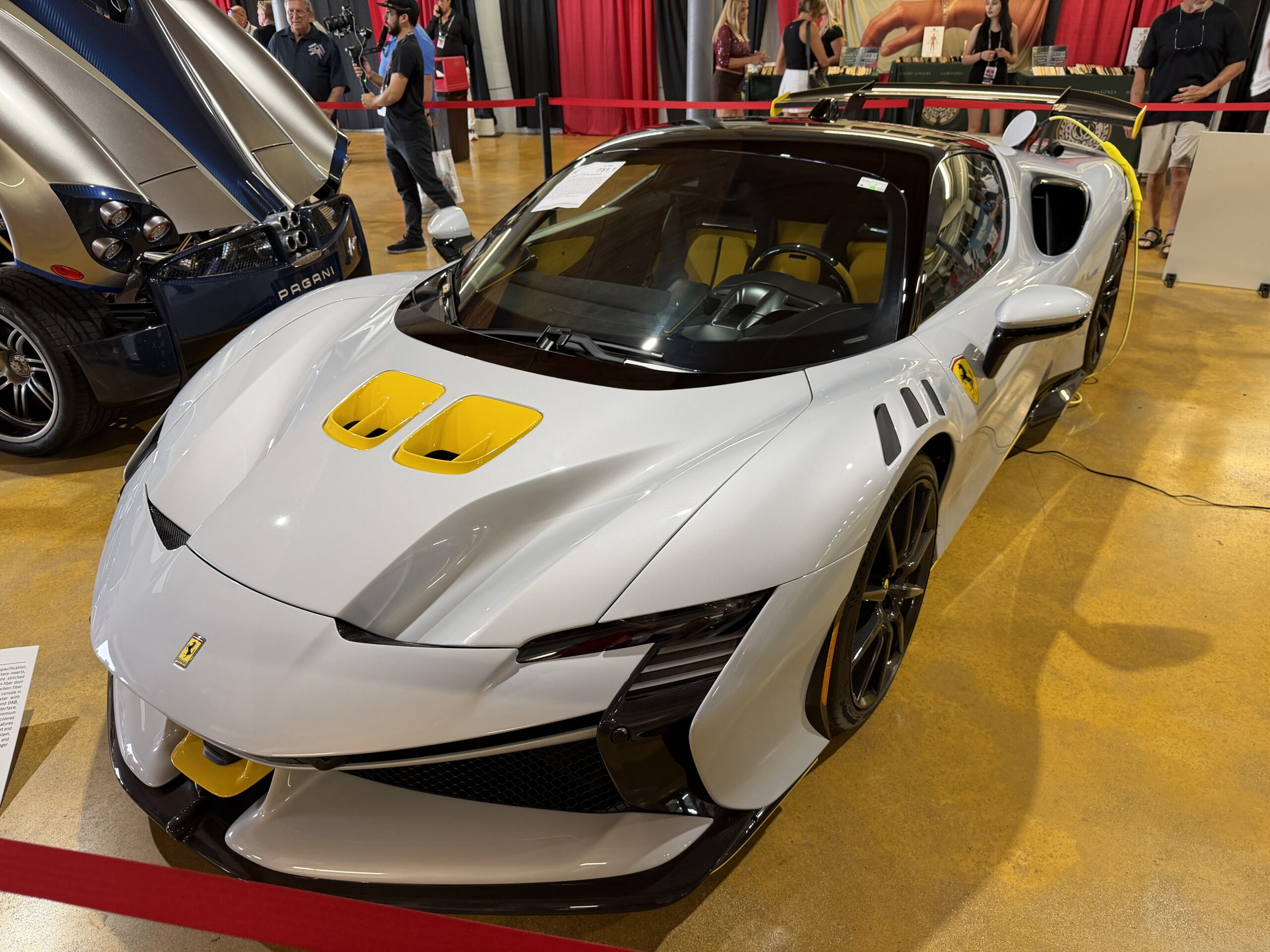
That same building is home to a lot of high-end cars and trucks that get auctioned on the last day:
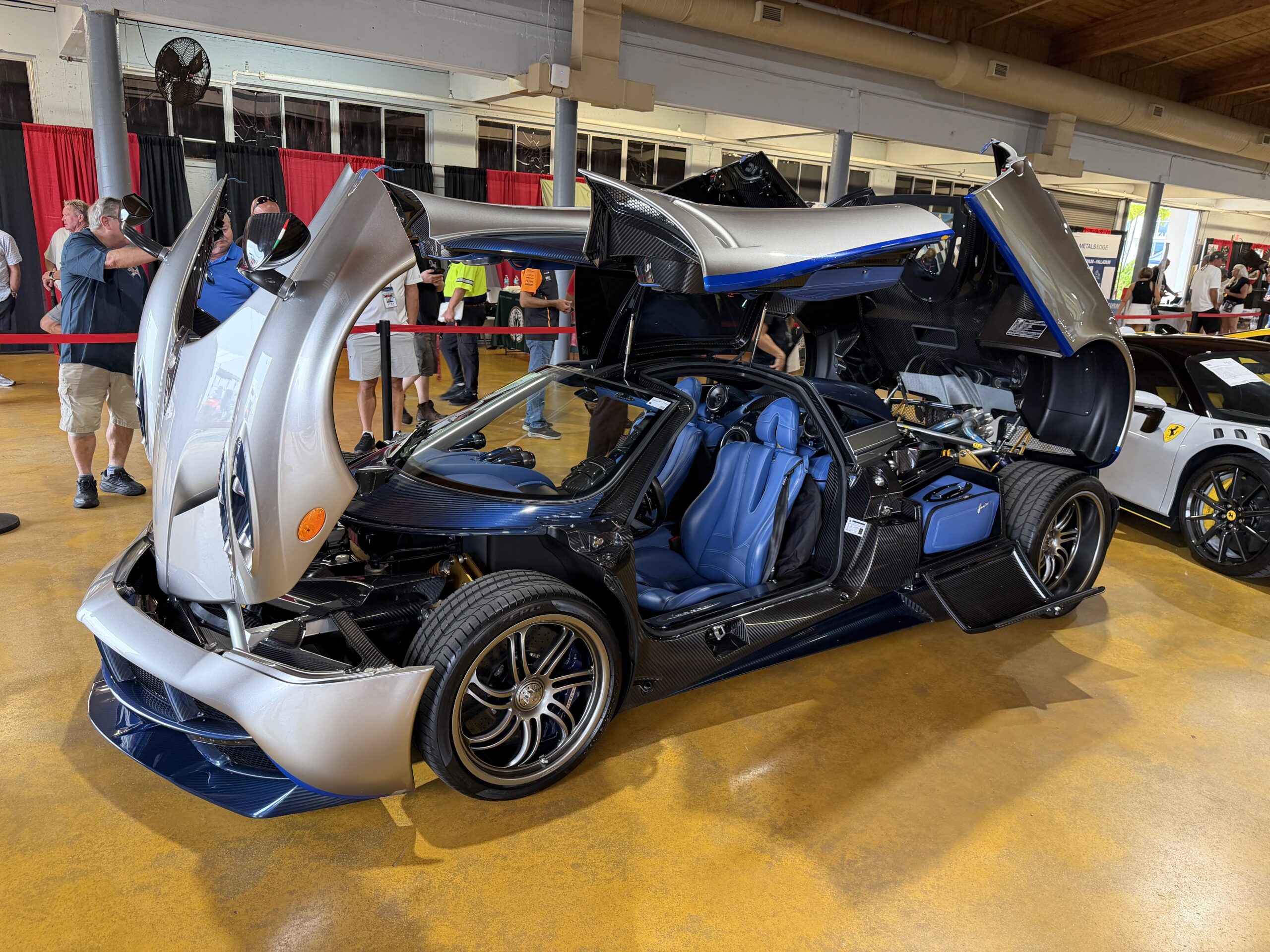
Here’s an exotic Pagani with a twin-turbocharged V-12 that produces 730 hp, just slightly more than the Corvette C8 Z06s that one sees every day in Publix parking lots around here and the Corvette does it with a normally aspirated V-8. (Of course, 730 hp is almost nothing compared to what’s in the ZR1X Corvette, above.) Despite the lack of sliding doors and seats for 8 (Honda Odyssey always wins!), the Pagani sold for $3.2 million, including buyer’s premium.

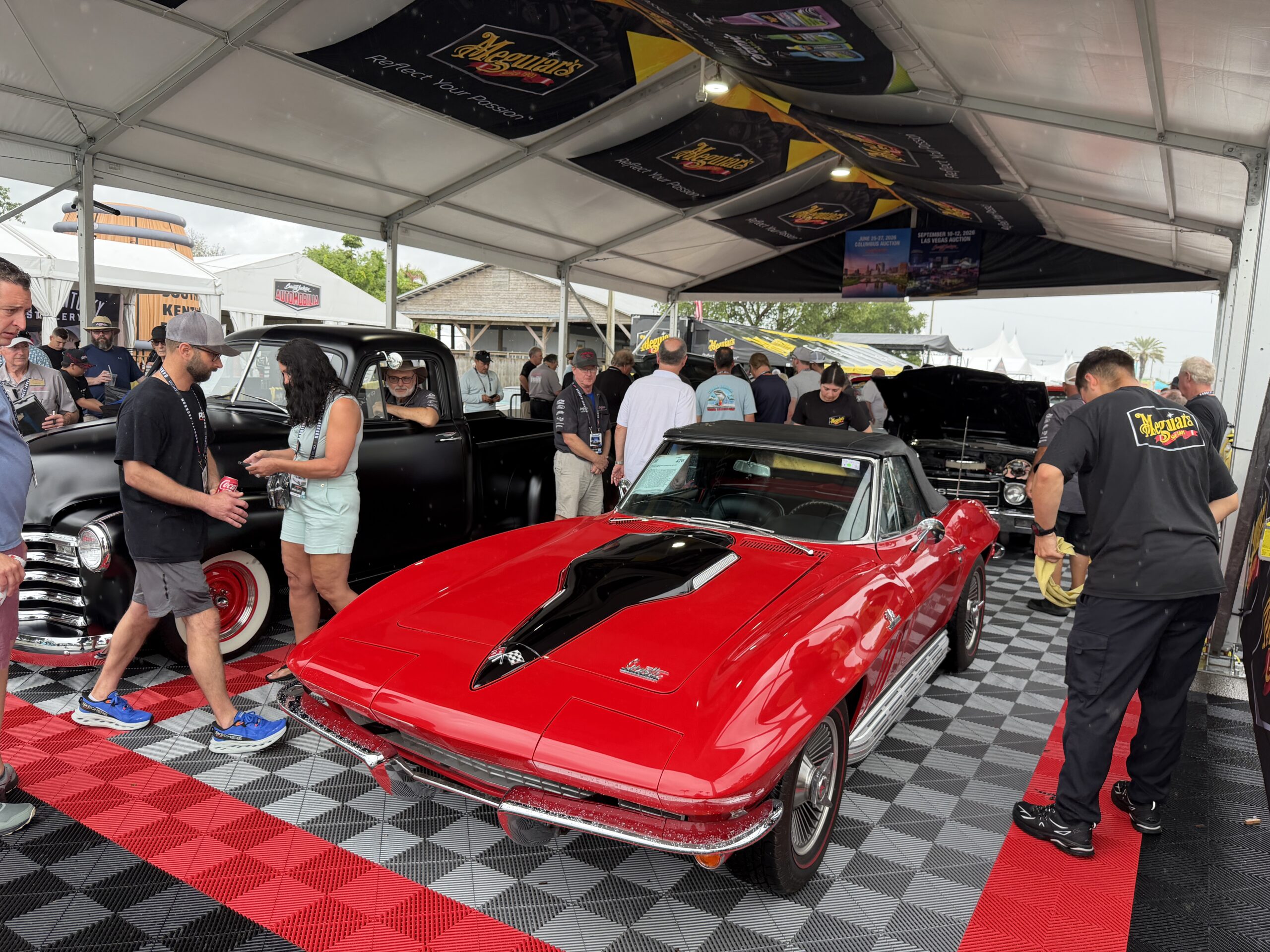
Cars that cost less than $200,000-ish are underneath tents, which was fortunate considering that there was moderate rain for a couple of hours. Occasionally one would hear cars being started. This is part of the caveat emptor inspection done by bidders. It wasn’t hot enough, however, to truly verify A/C capacity.
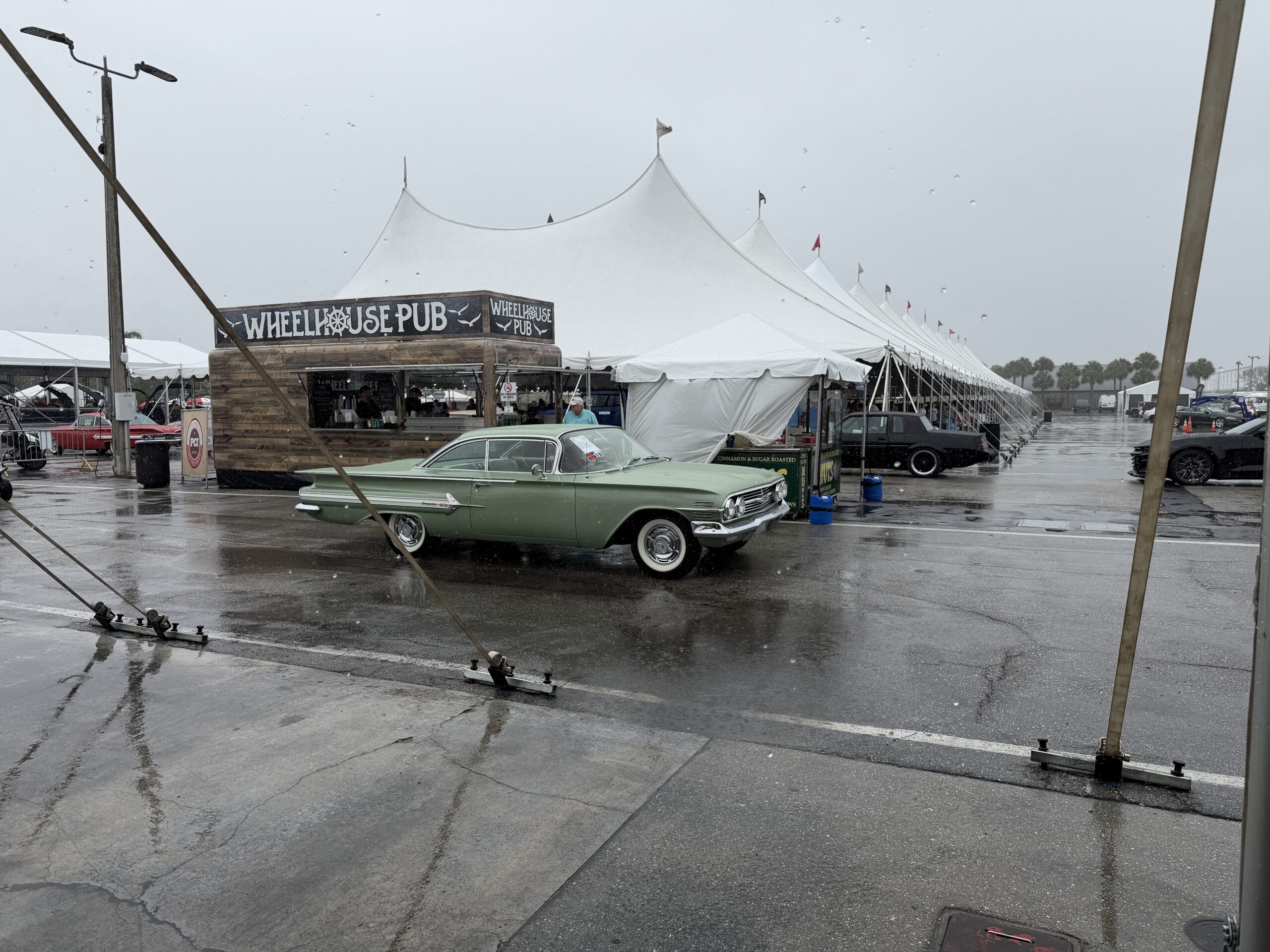
If you’re in the free parking areas it could be 10,000 steps to go into the event, wander through all of the tents and return to your own car through the main auction building. The pro move:

I’m still high on the idea that we need the Chevy El Camino and Ford Ranchero brought back for people who want to carry bicycles conveniently in low-crime areas such as our part of Florida and without guzzling gas like a standard pickup. Hard pass on this one, though, due to lack of factory A/C or Vintage Air.
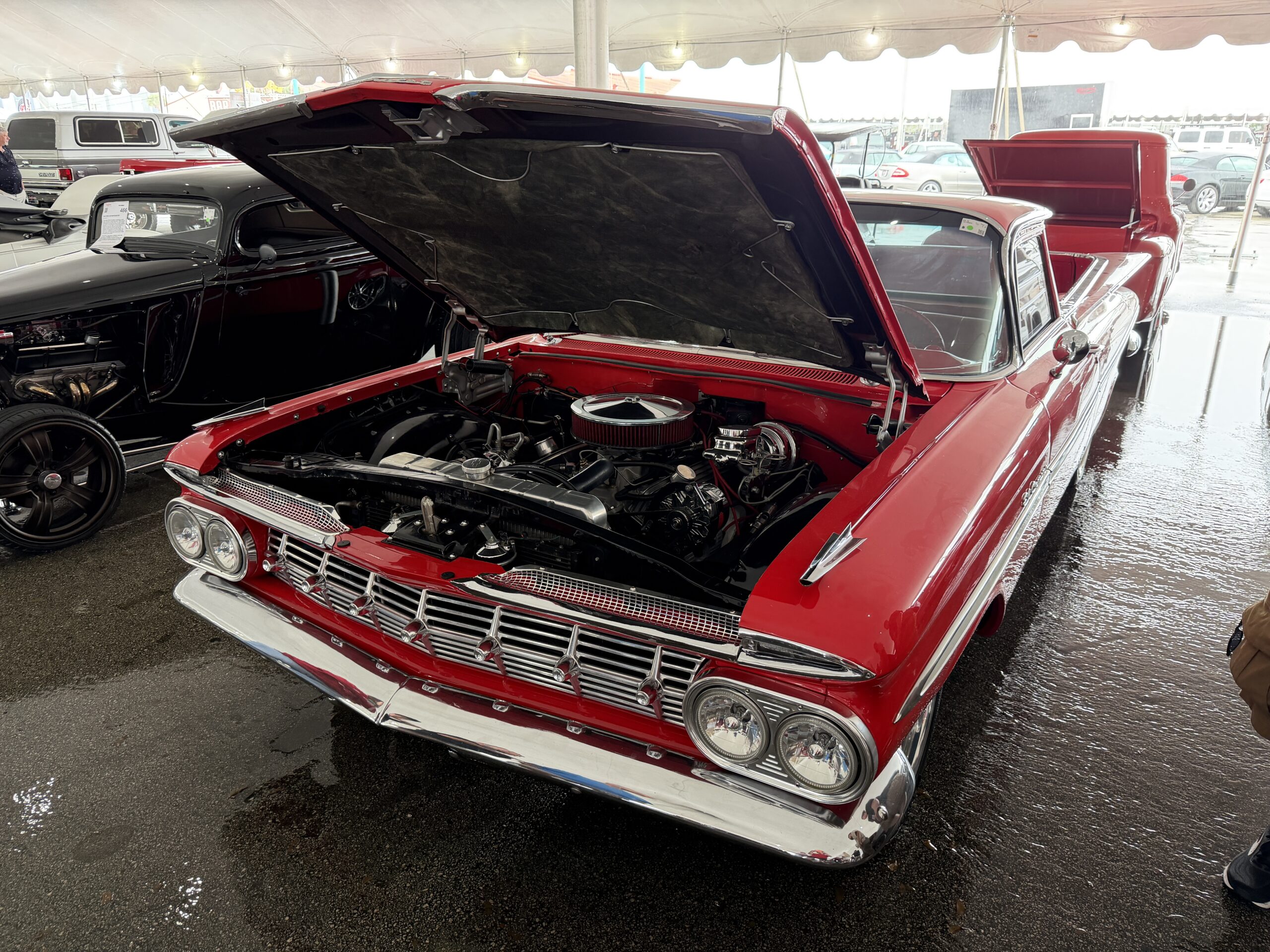
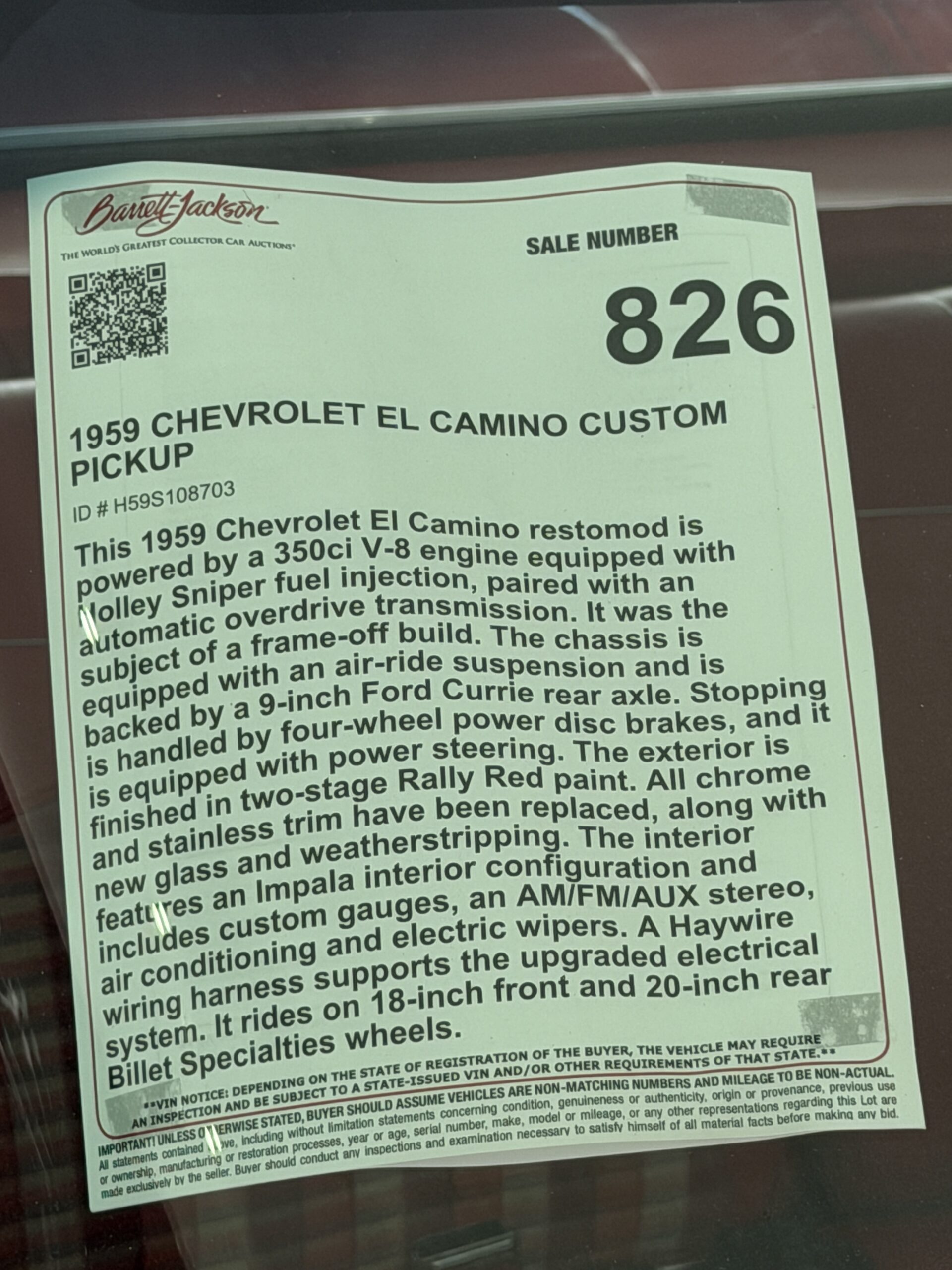
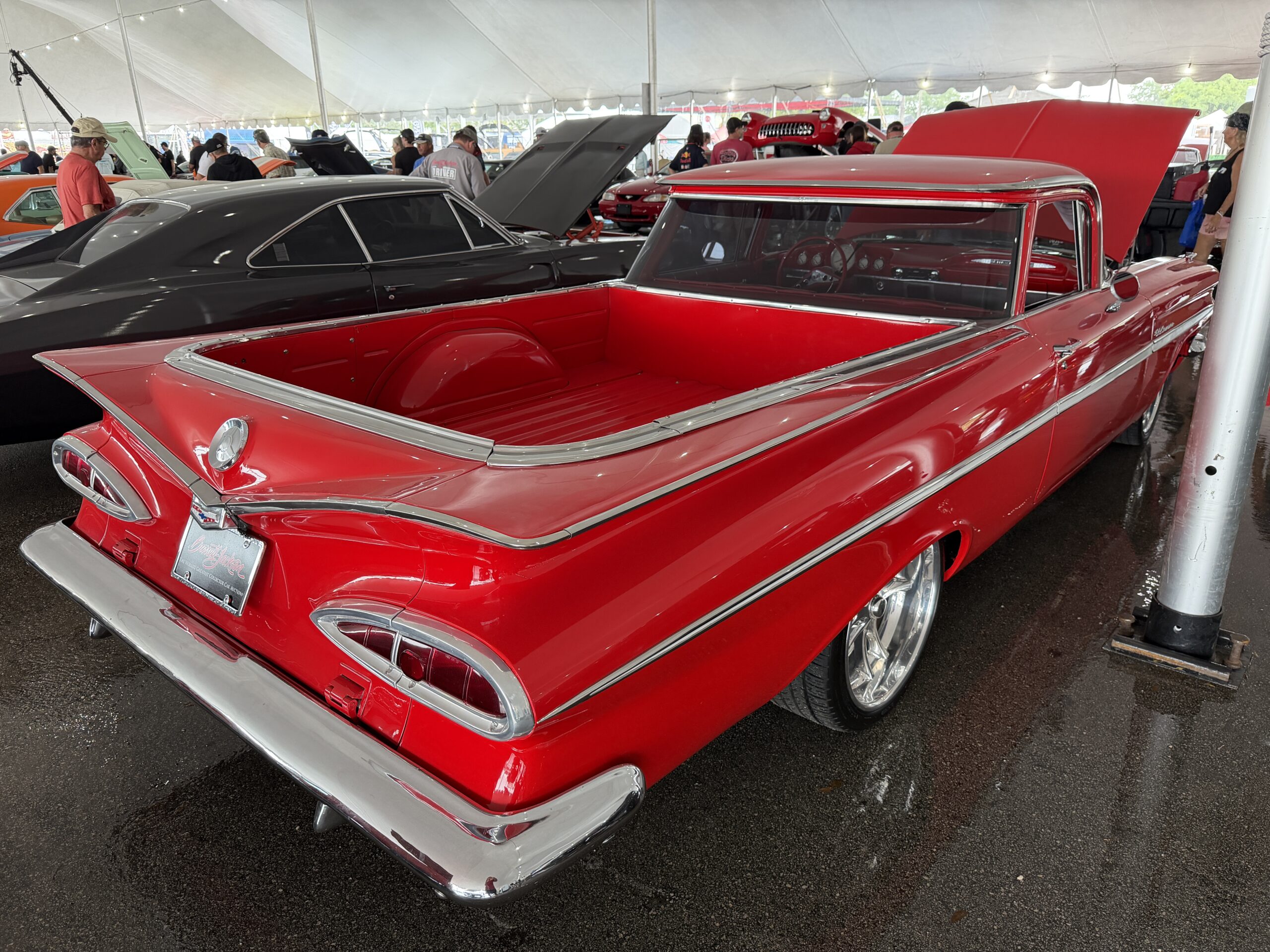
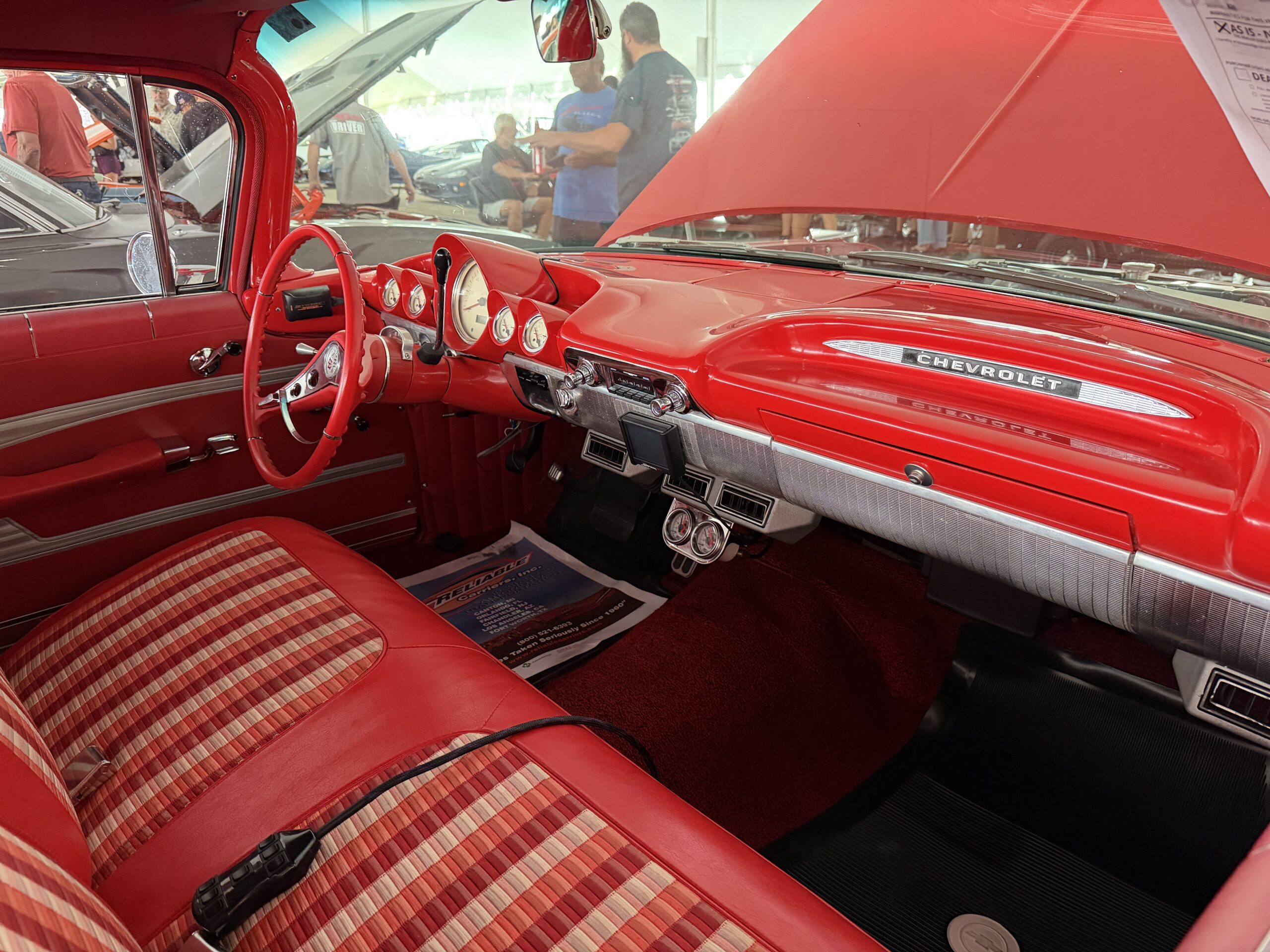
ChatGPT says that it would be $1,500-$3,500 for labor to install a $2,330+ A/C kit, plus additional money for refrigerant. (If Greta Thunberg and Ayatollah Mamdani become co-presidents, the Vintage Air system could be rendered useless due to its reliance on R-134a refrigerant, banned for new cars starting in 2021).

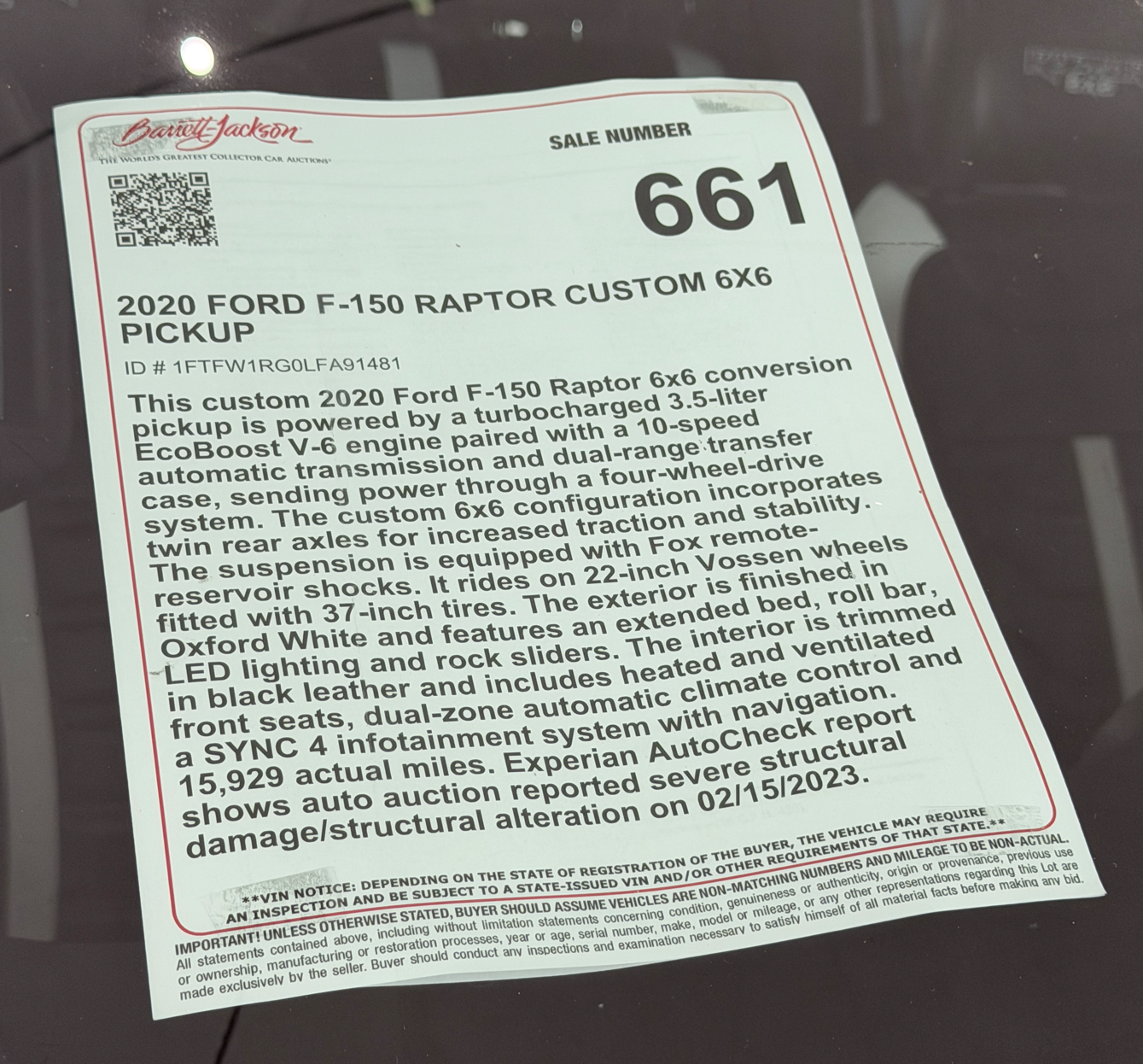
If carrying the latest generation of e-bikes, maybe what is needed is an extra axle on a full-size pickup:

The rap sheet for this 6×6 says that it suffered “severe structural damage/structural alteration”. I hope that was the conversion and not an accident!
A 1963 Chevrolet Corvair, from the pre-1965 suspension redesign, for Ralph Nader fans. The engine is truly tiny 80 hp affair, mated to a two-speed(!) automatic transmission.
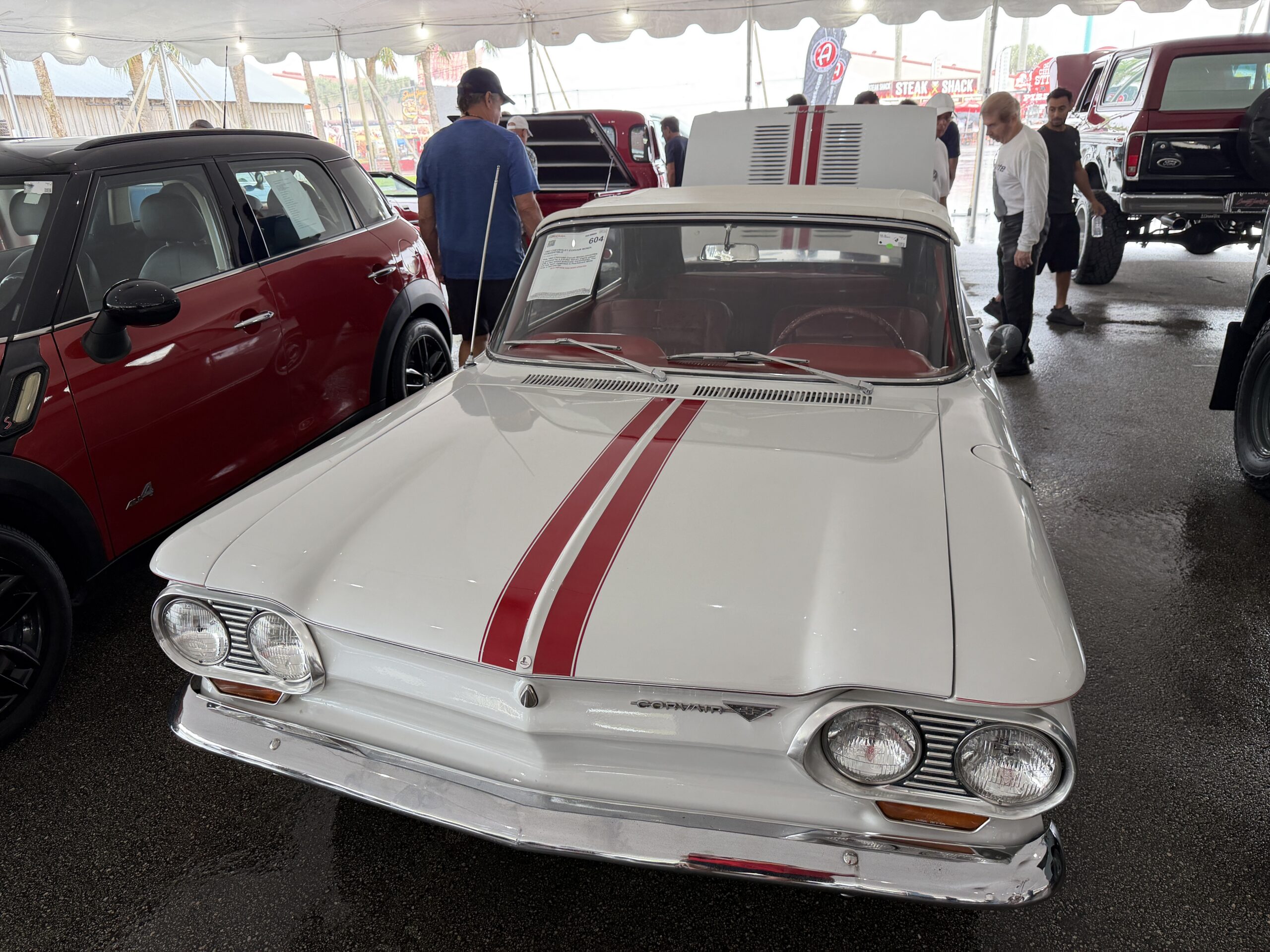
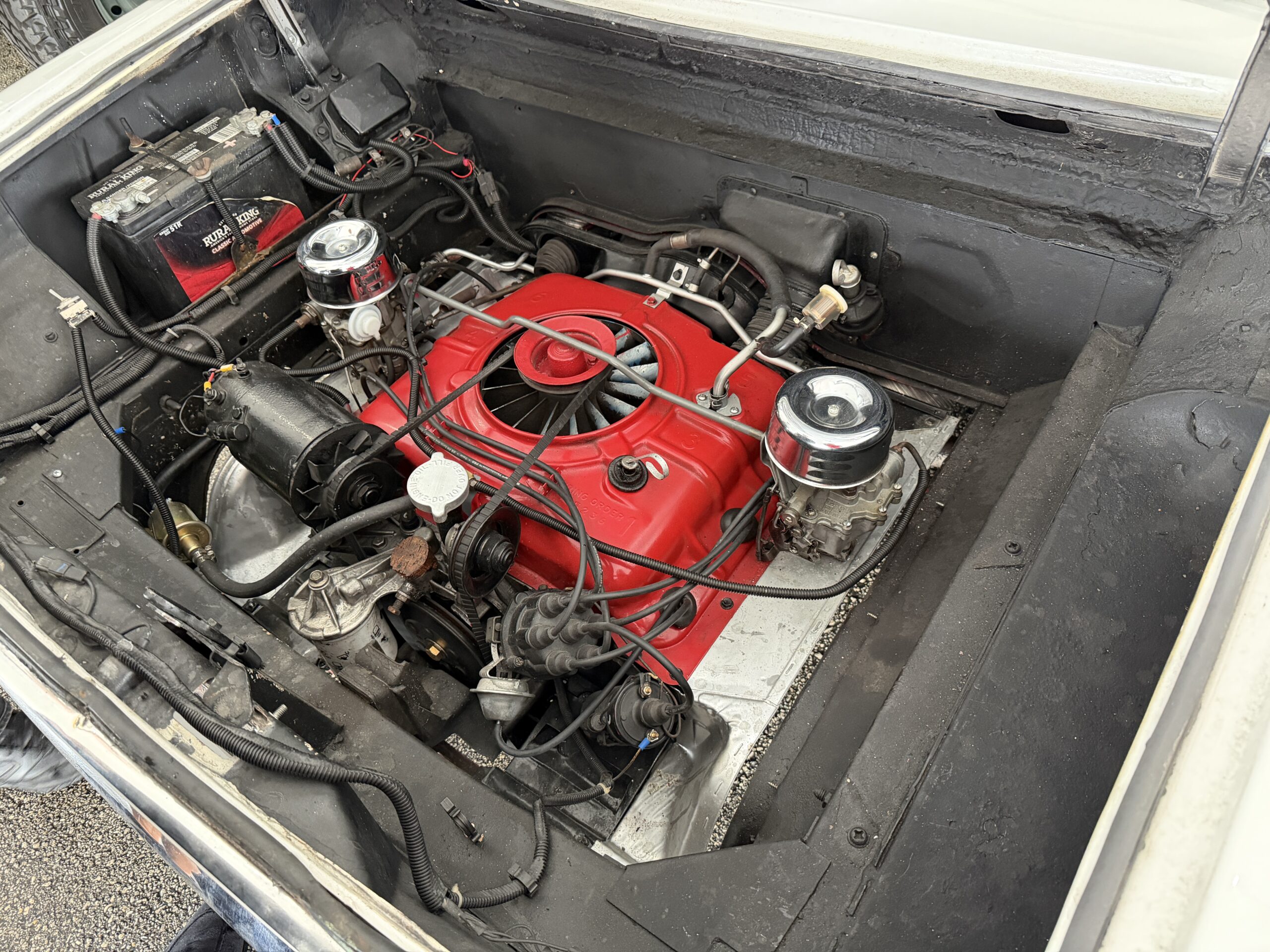
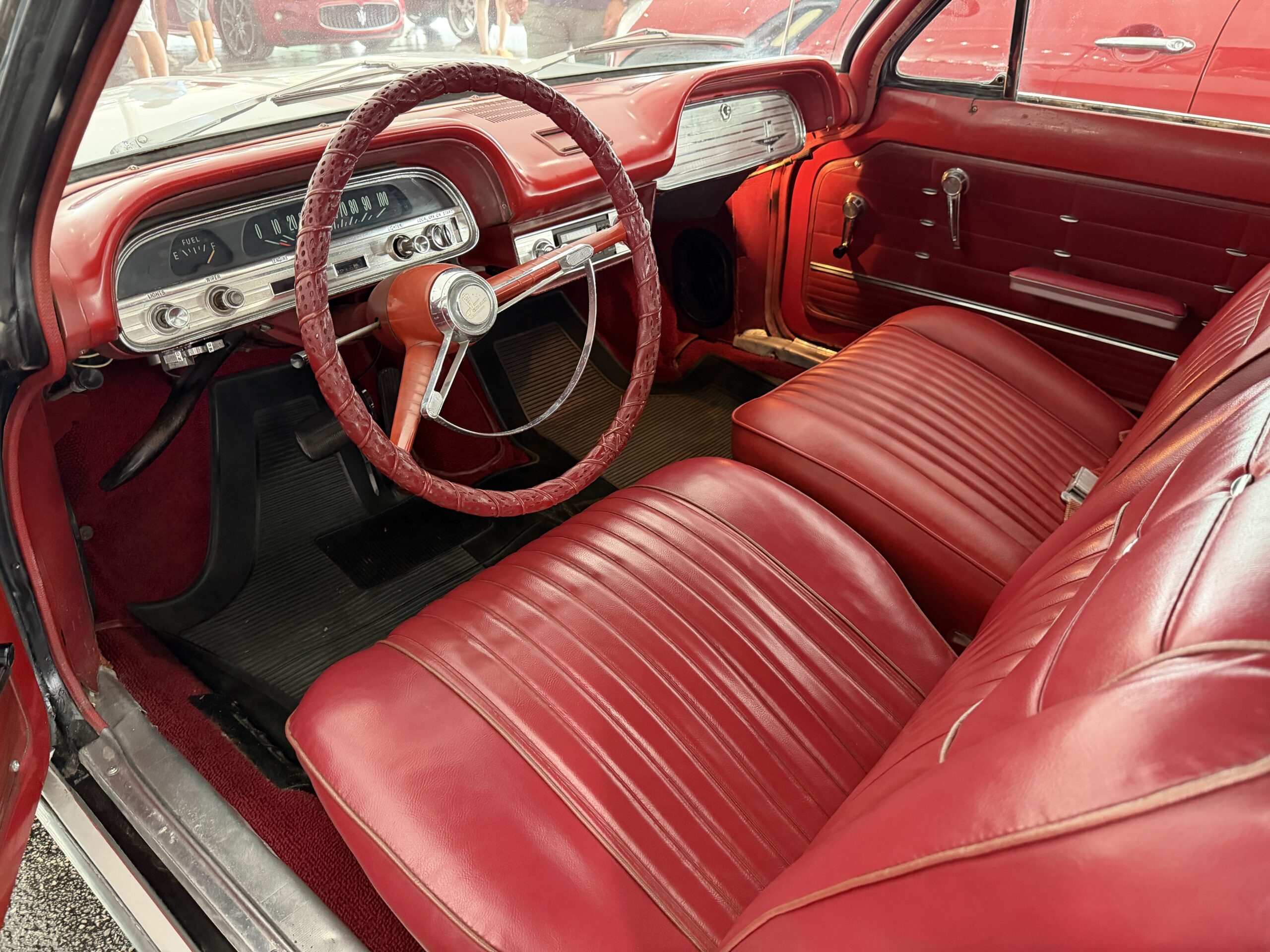
If one registers at the Barrett-Jackson web site, it is possible to learn that this Lot 604 sold on Day 3 for $30,000.
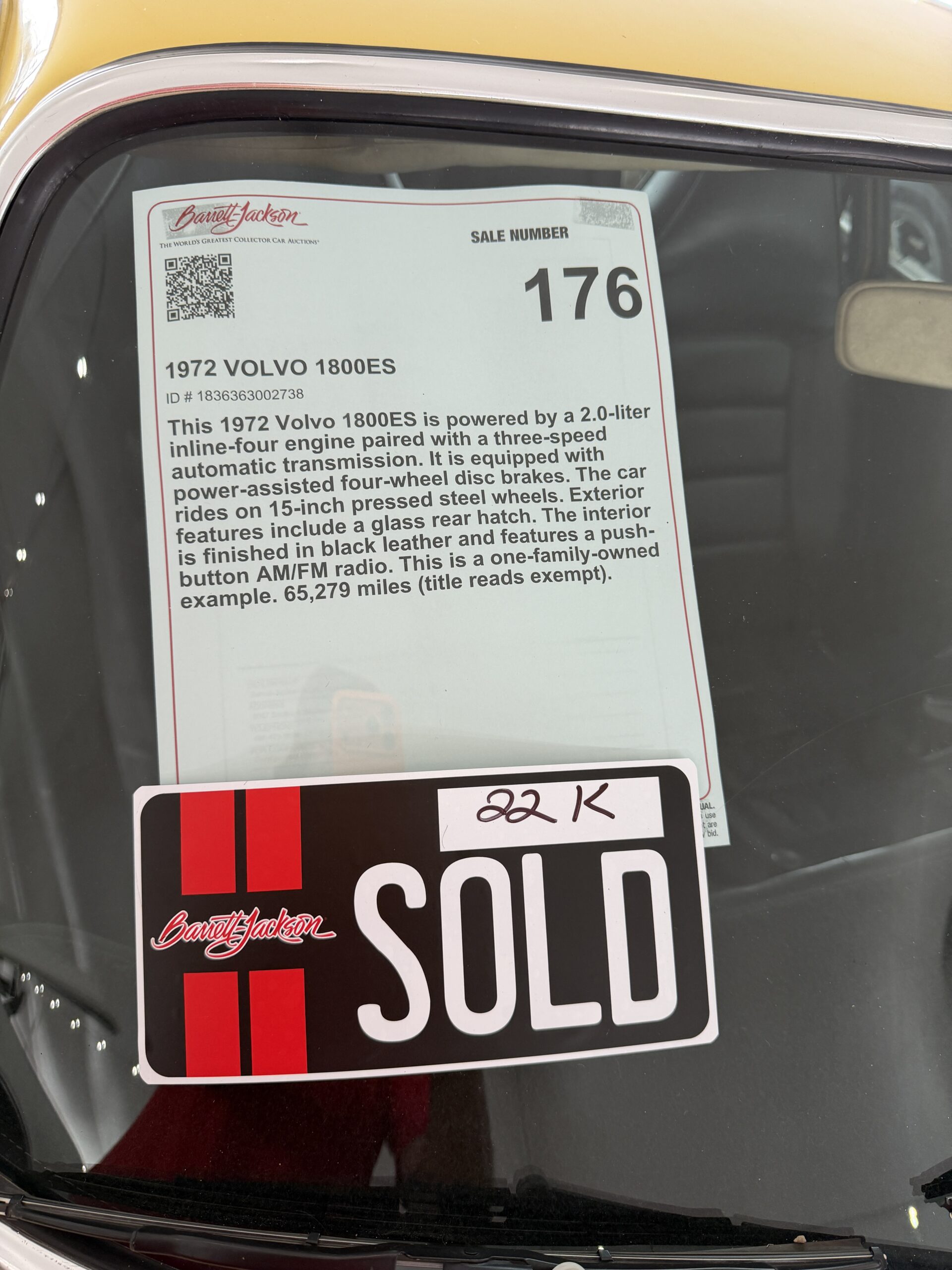
For older Maskachusetts residents who can’t abandon their loyalty to Volvo, a 1972 1800ES that sold for $22,000 (it actually cost the buyer an additional 10% in “buyer’s premium” to Barrett-Jackson; bidders literally give 110%). Less than half the horsepower of our Honda Odyssey and more than half the weight for Volvo’s version of a “sports car” (admittedly, other “sports cars” of the era were also absurdly feeble by today’s standards). The result was a 0-60 time of 11.3 seconds vs. 6.4 seconds for the latest-generation Odyssey (2018-; Car and Driver).

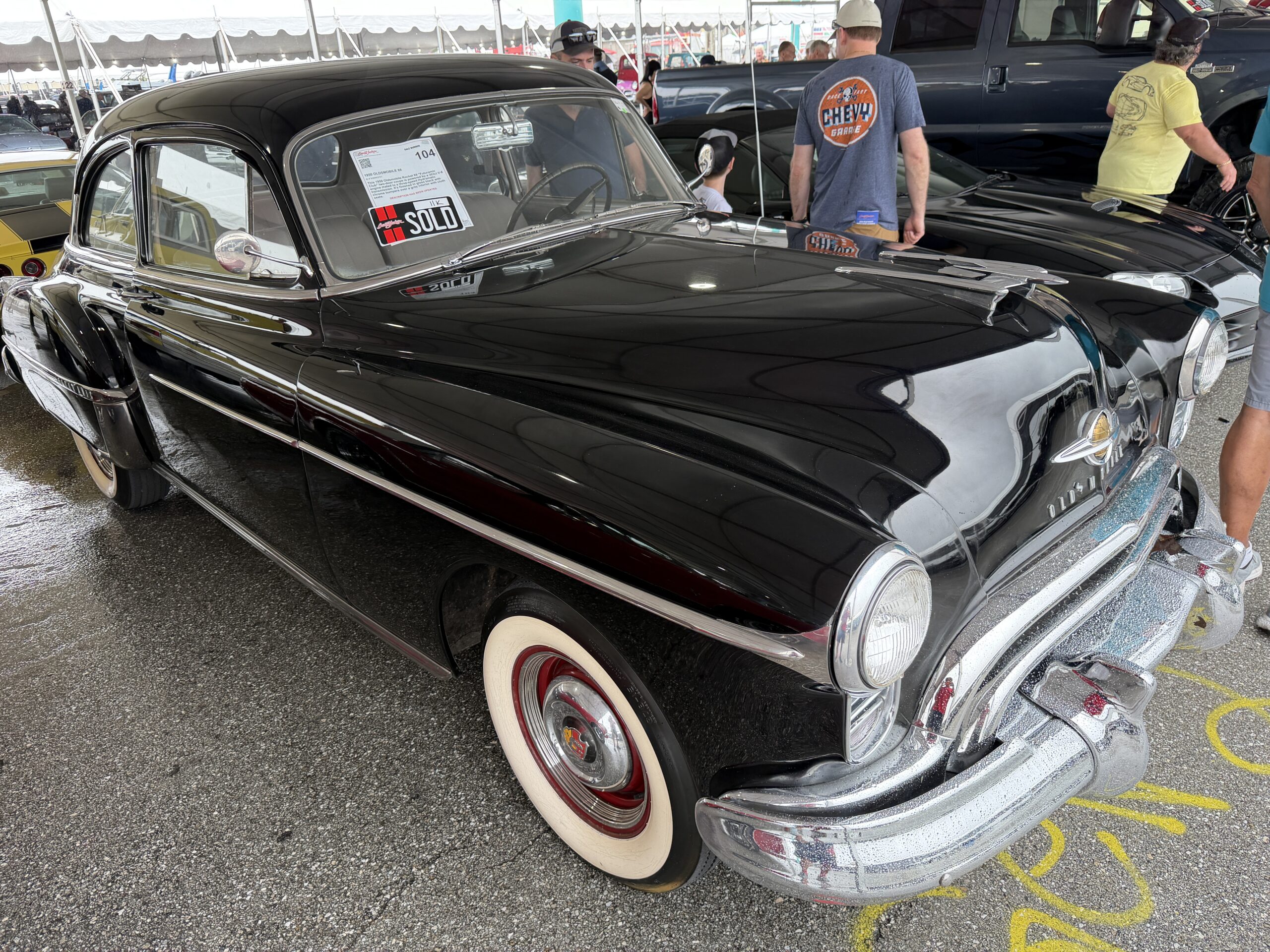
Here’s an $11,000 1950 Oldsmobile that runs at least well enough to make it from tent to auction venue and back. Ideal for shipping up to its likely birth home in the Islamic Republic of Michigan where the black paint and lack of A/C won’t be a serious liability:
For about the same price, one can bask in the glory of British engineering and craftsmanship in this 1983 Rolls-Royce (original cost over $110,000, equivalent to $365,000 in today’s mini-dollars), with brand-new A/C compressor:
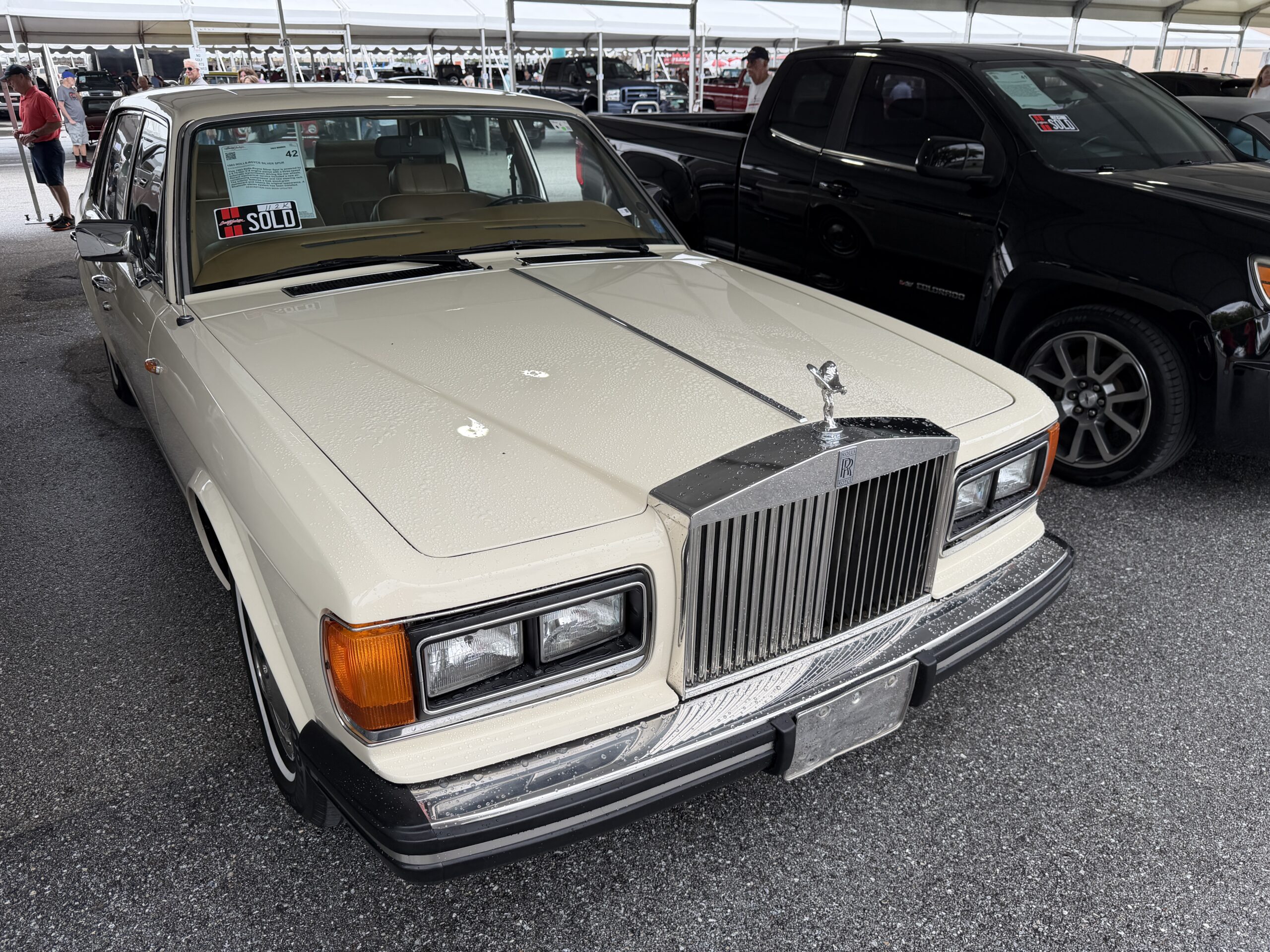
(British cars seem to be the depreciation champs. A Jaguar XJ Portfolio from 2012 that likely cost $90,000 with tax sold for $10,000. In 2026 dollars, that car could have cost the buyer $130,000 new.)
In other British items, a 1964 Lotus Seven that has been upgraded with disc brakes and an engine that was made by diligent precise Japanese people (Toyota), in place of the original British drum brakes and English Ford engine:

The car was painted to reference this TV show:
Imagine a reboot of The Prisoner today. Half of the pedestrians in London would be wearing burqas. The iconoclast’s car would be a Tesla Cybertruck?
The Chick-fil-A is next to where they’re prepping cars for entry to the auction:
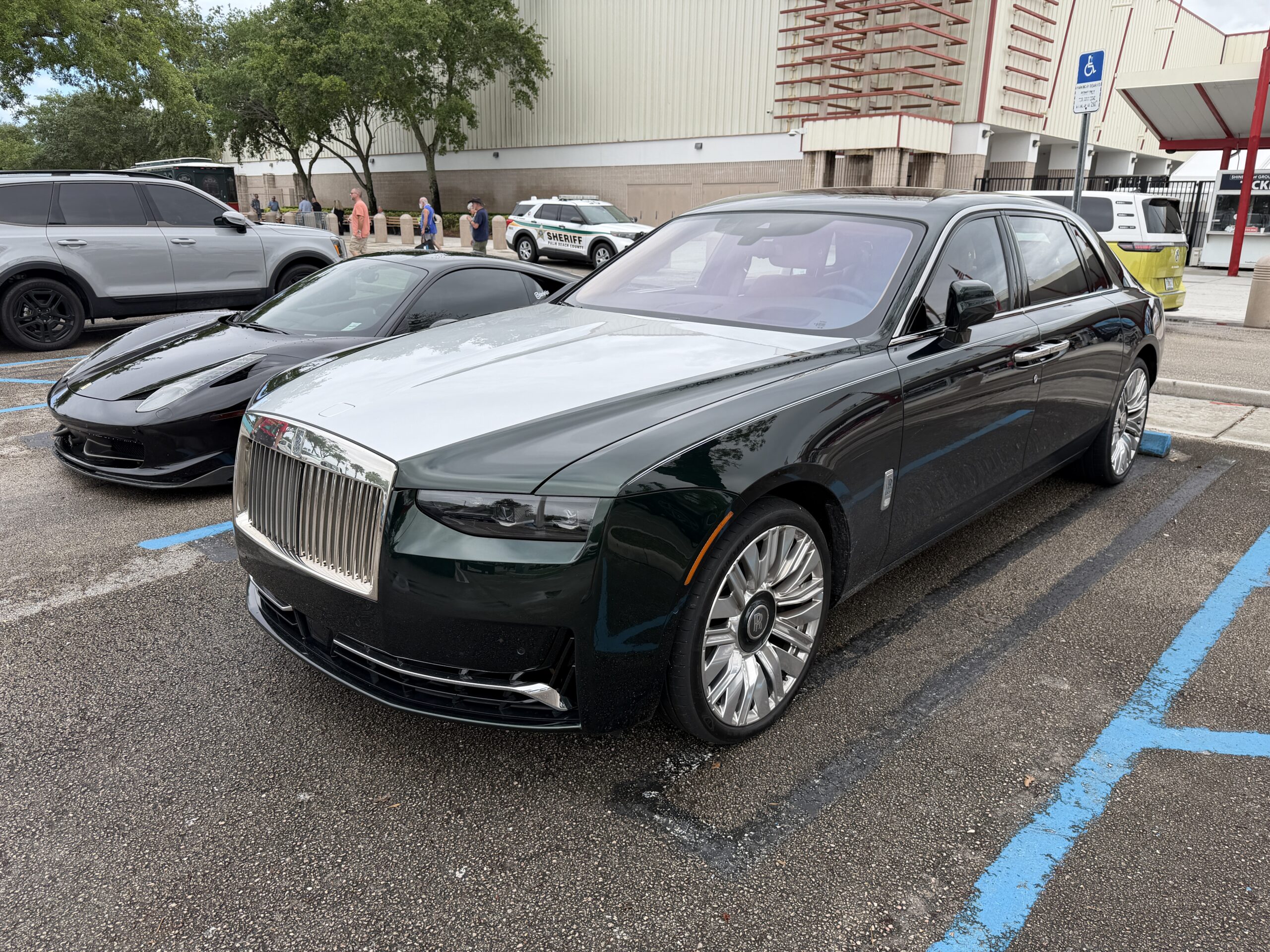
On the way out, one couldn’t spit in the inner parking lots without hitting a Rolls-Royce, Ferrari, or G-Wagen:

Everyone there was super friendly and answered my questions, no matter how dumb. I would definitely go again.
“Imagine a reboot of The Prisoner today.” At least the response to a Briton claiming be a free man remains the same, diabolical laugh.
Cool auction, I’d try bidding for something just for fun.
Love how professional auctioneers speak.
“A German company was pitching $500+ heavy foam blocks on which to park one’s car, claiming that the softer-than-concrete material extends tire life”
Always a pleasure seeing your engineering mind at work, sniffing out and exposing BS in a few breezy steps. Cheers
My most significant sportscar experience was a short ride in a P1800 sometime in the 70s. My cousin drove, his dad was the owner. I can still remember it clearly.
Volvo P1800 was the Swedish name, in case you wonder. So cool.
“Move the car occasionally…”
Last month, a coworker drove a flat bed from FL out to San Diego with a friend of his to retrieve a ’68 Chevelle sitting untouched in storage since his 1989 discharge from the Marine Corps, at $200+ per month.
A few months ago, I attended a large, fun car show and Mecum auction in Kissimmee. Much less costly than WPB at just $20.
Eww…rich people want to drive *used* cars? My ’25 Prius is kind of low-end I suppose, though I got it new. Do they at least change the seats out in the salvage-title rebuilds? I mean, use your imagination. Gross.