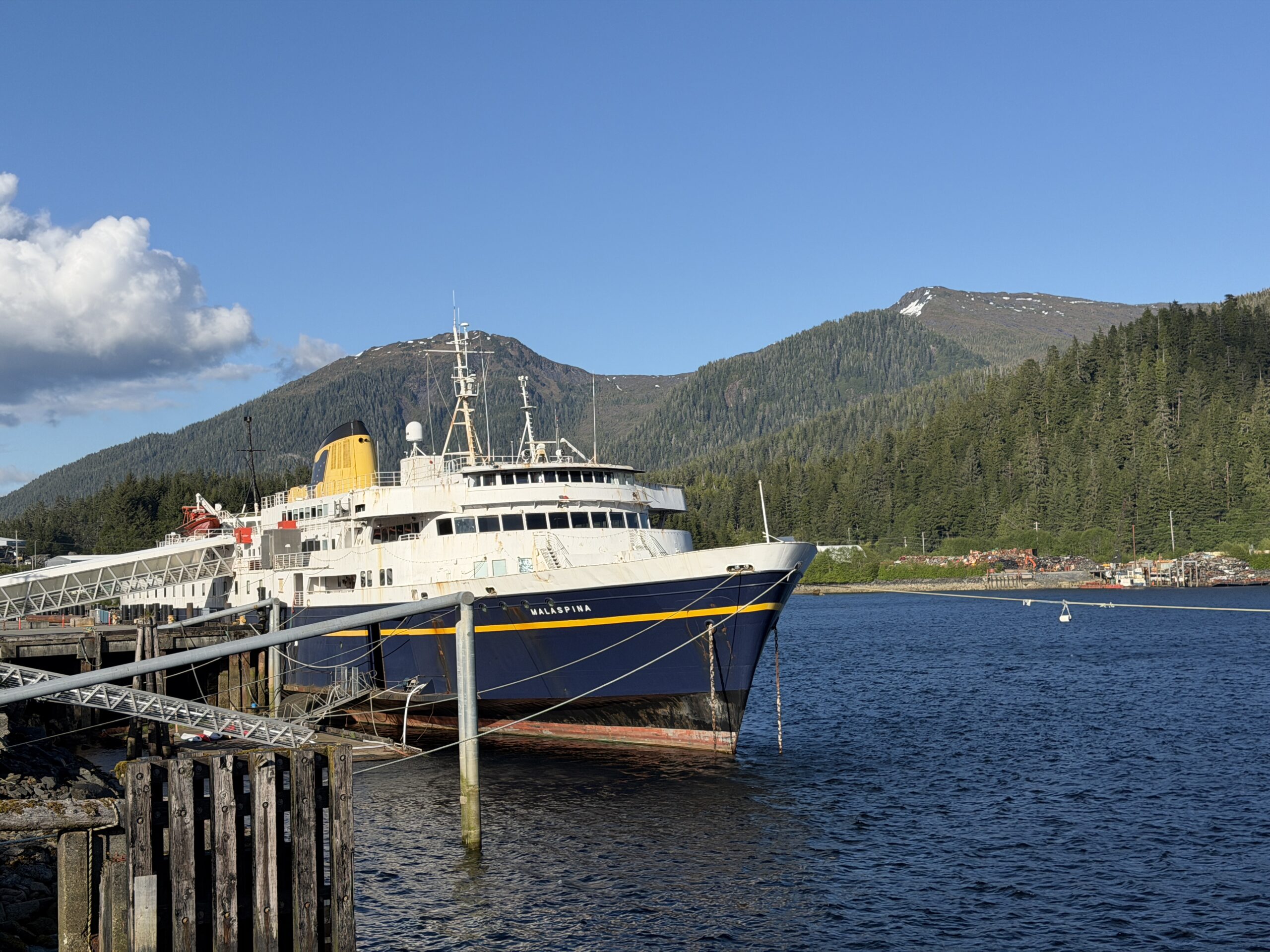
We stopped into Ketchikan, Alaska, our last port in the Great Land. The first thing I found was the MV Malaspina, an Alaska Marine Highway ferry launched in 1963 that I took in 1993. She’s a Jones Act survivor that remained in service through 2022. Her sister ship, MV Matanuska, was launched in 1962 and remains in service! Malaspina is used as seasonal housing now:
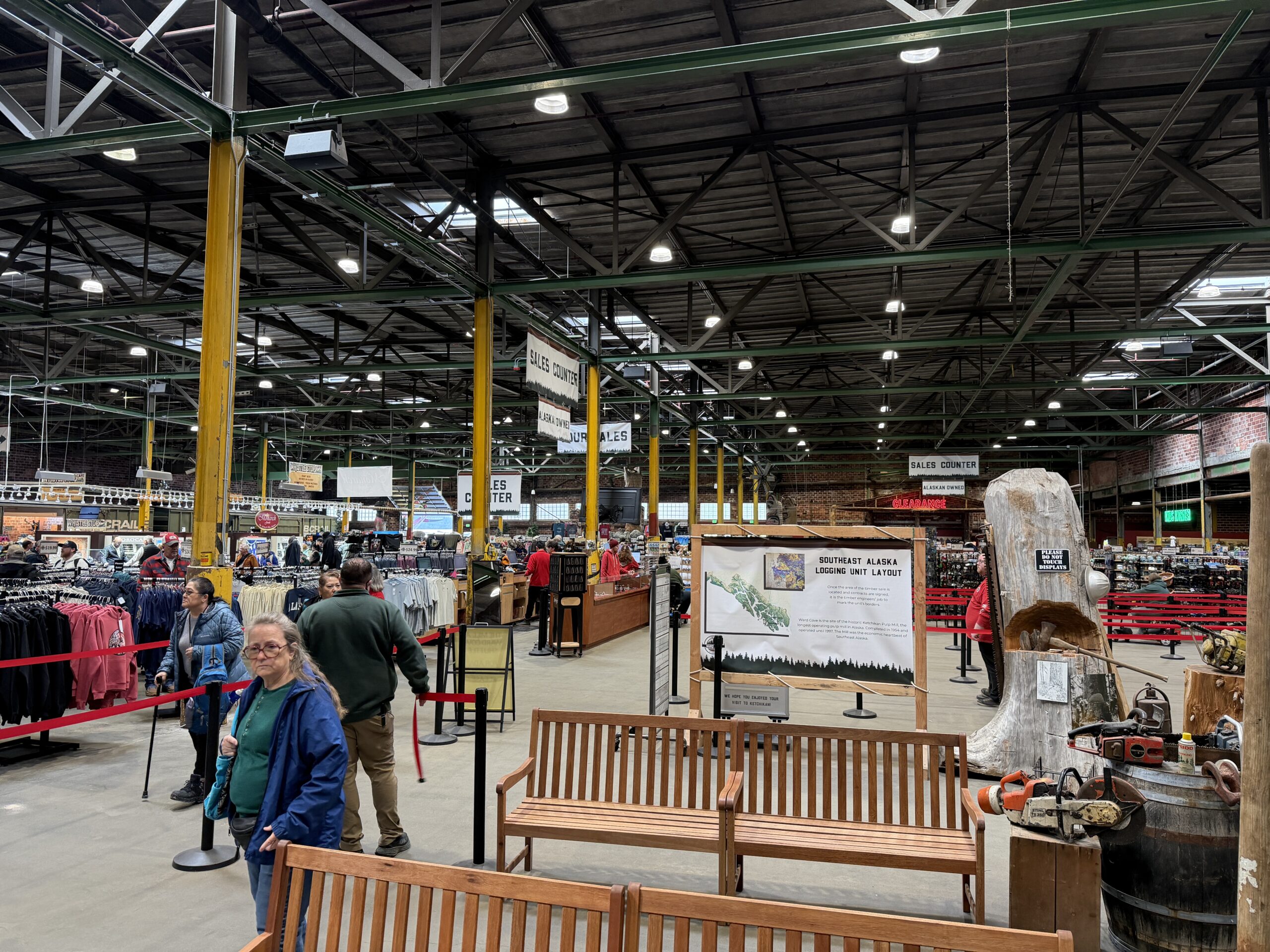
A former paper mill at the Ward Cove cruise facility has been turned into a massive souvenir mall:
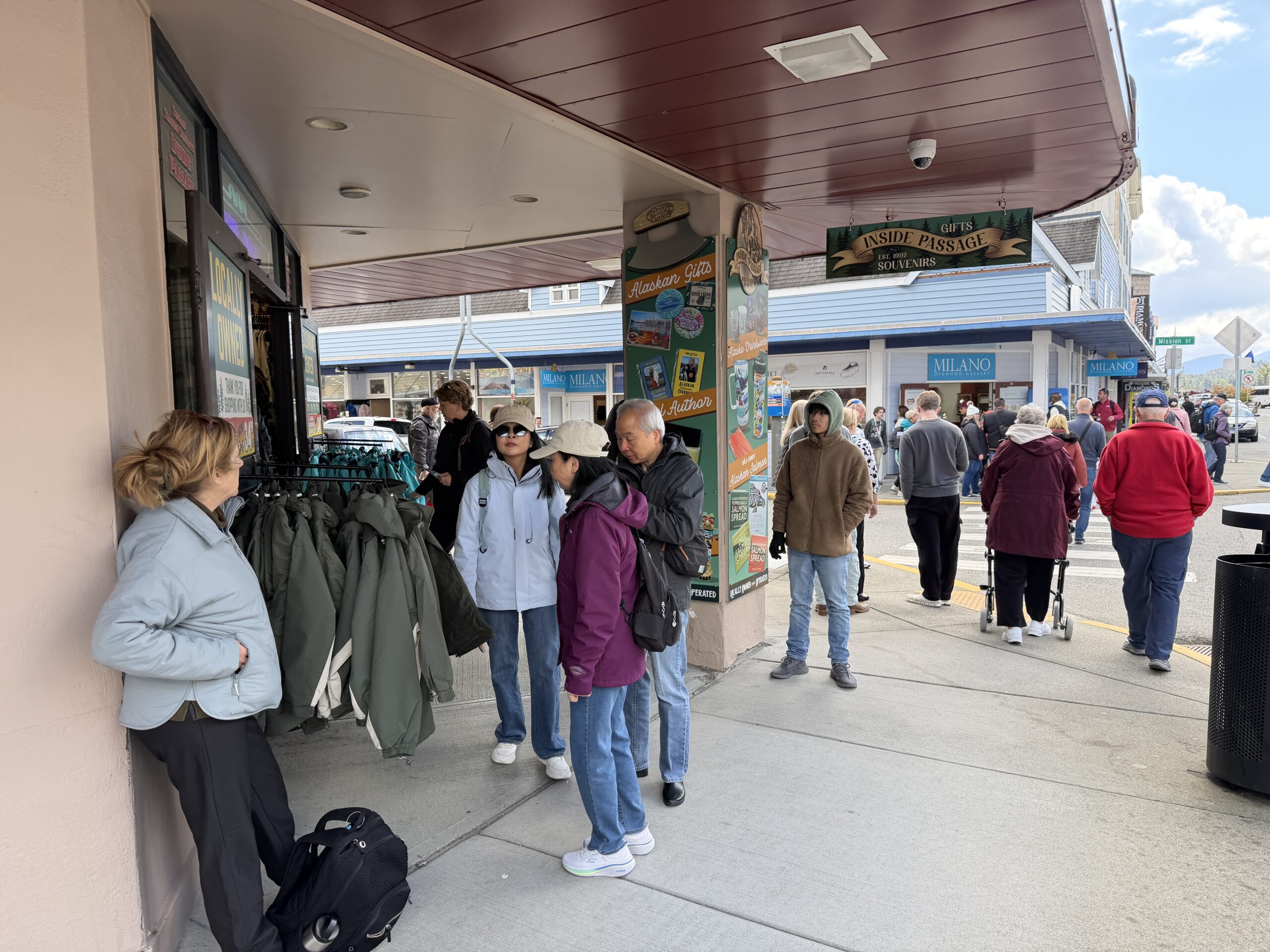
Downtown was mobbed, as you might expect from 19,000 cruise ship passengers being unloaded into a town of about 8,000.
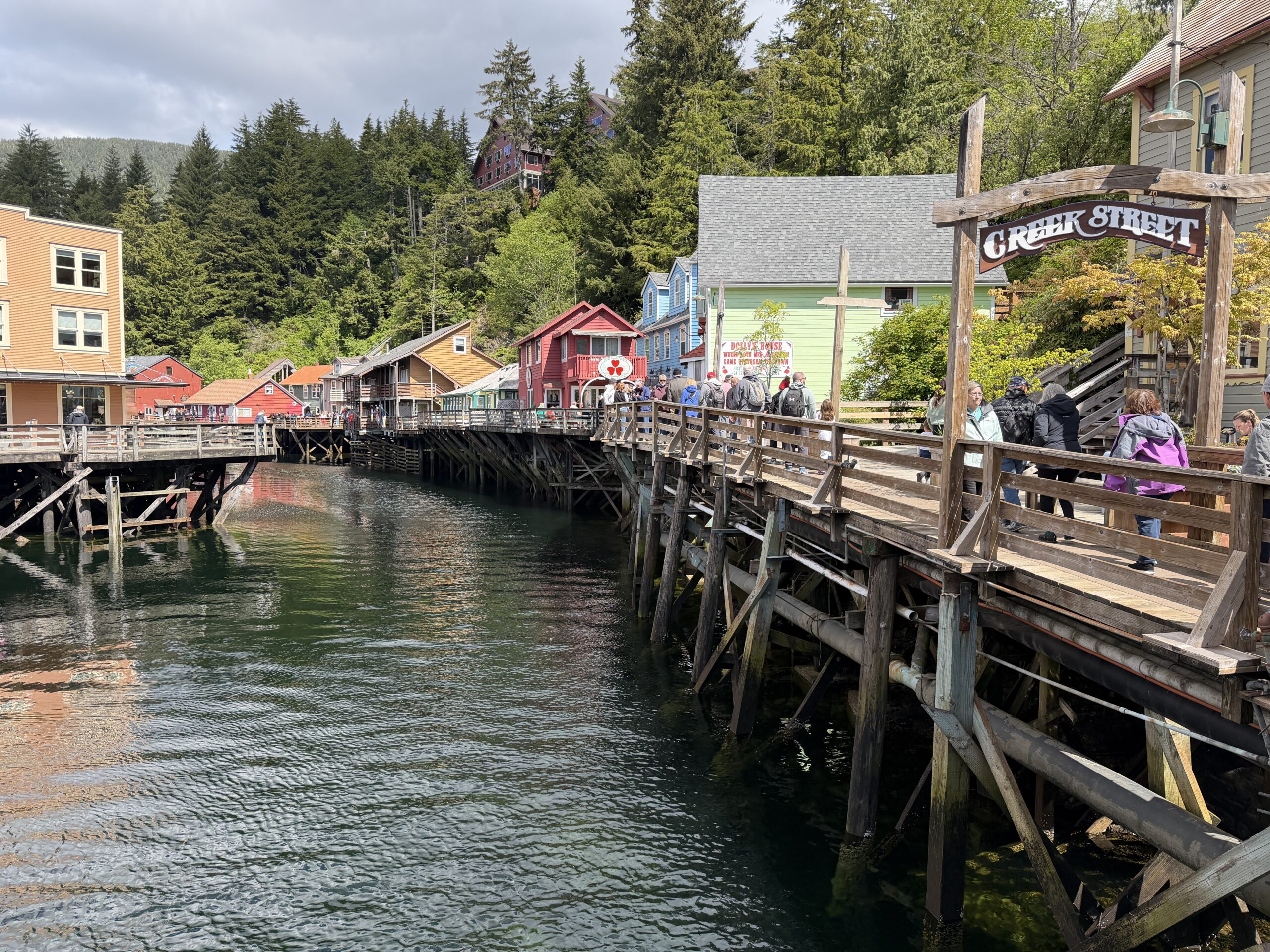
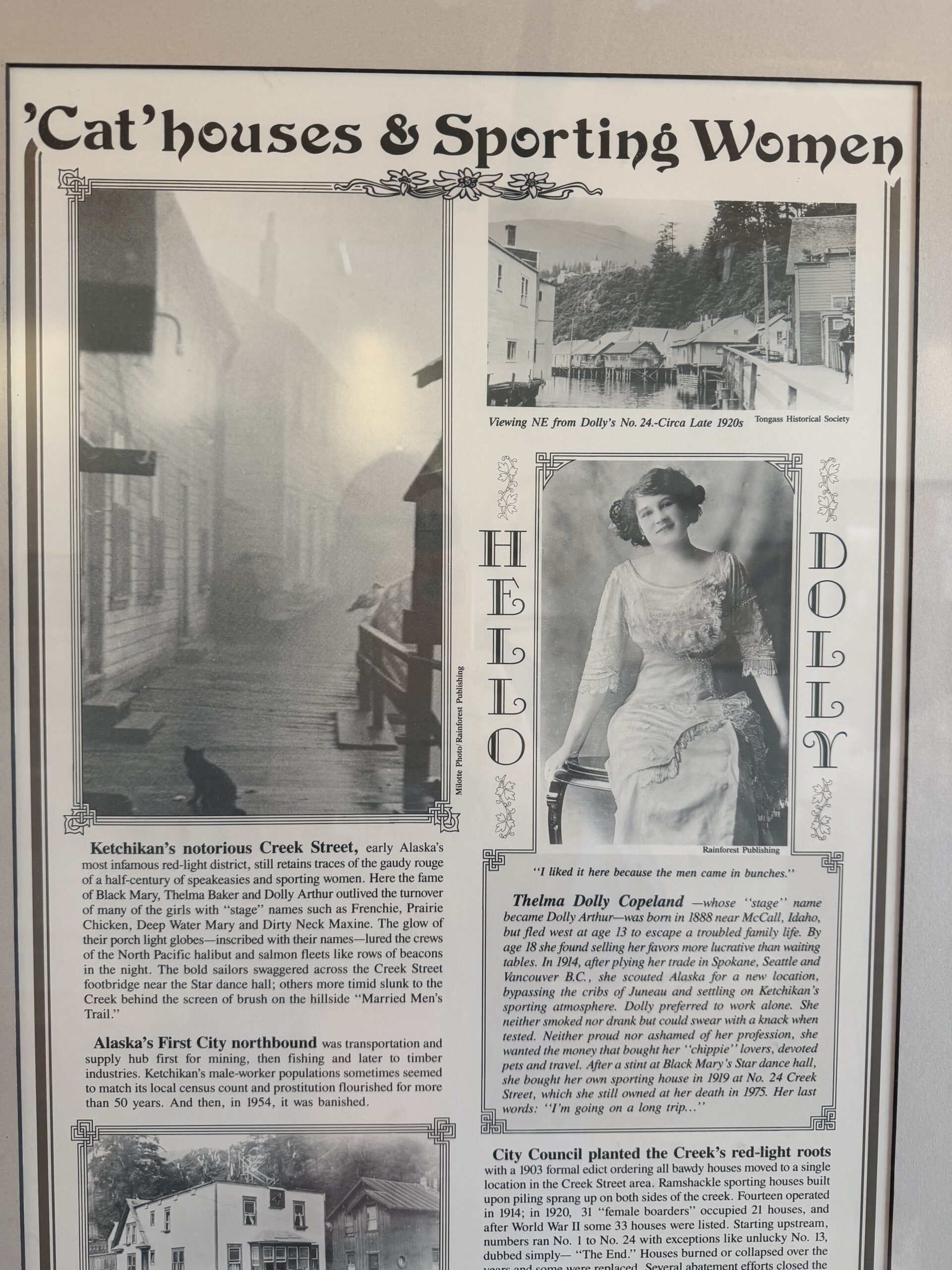
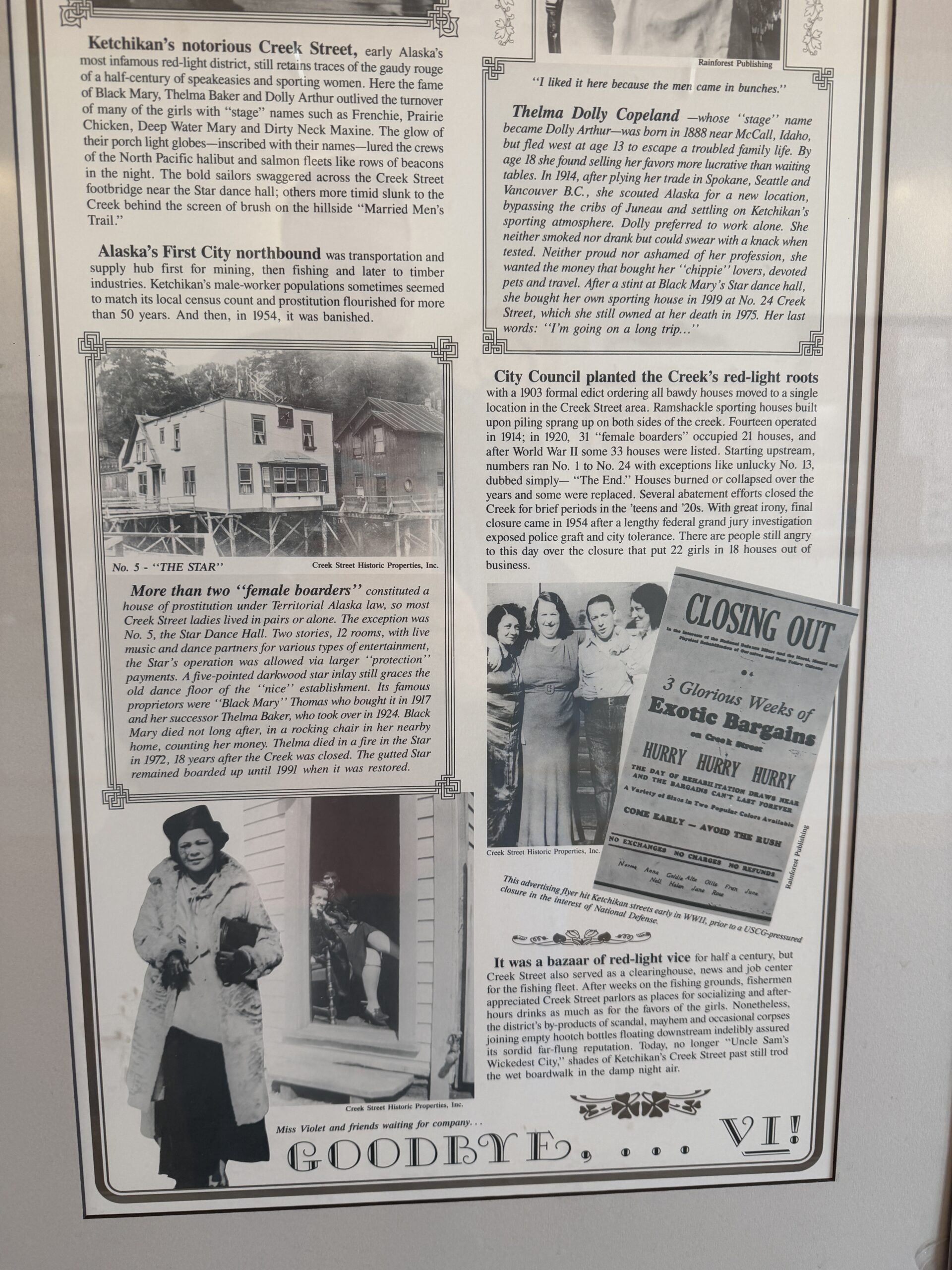
What used to happen on Creek Street (above right)?
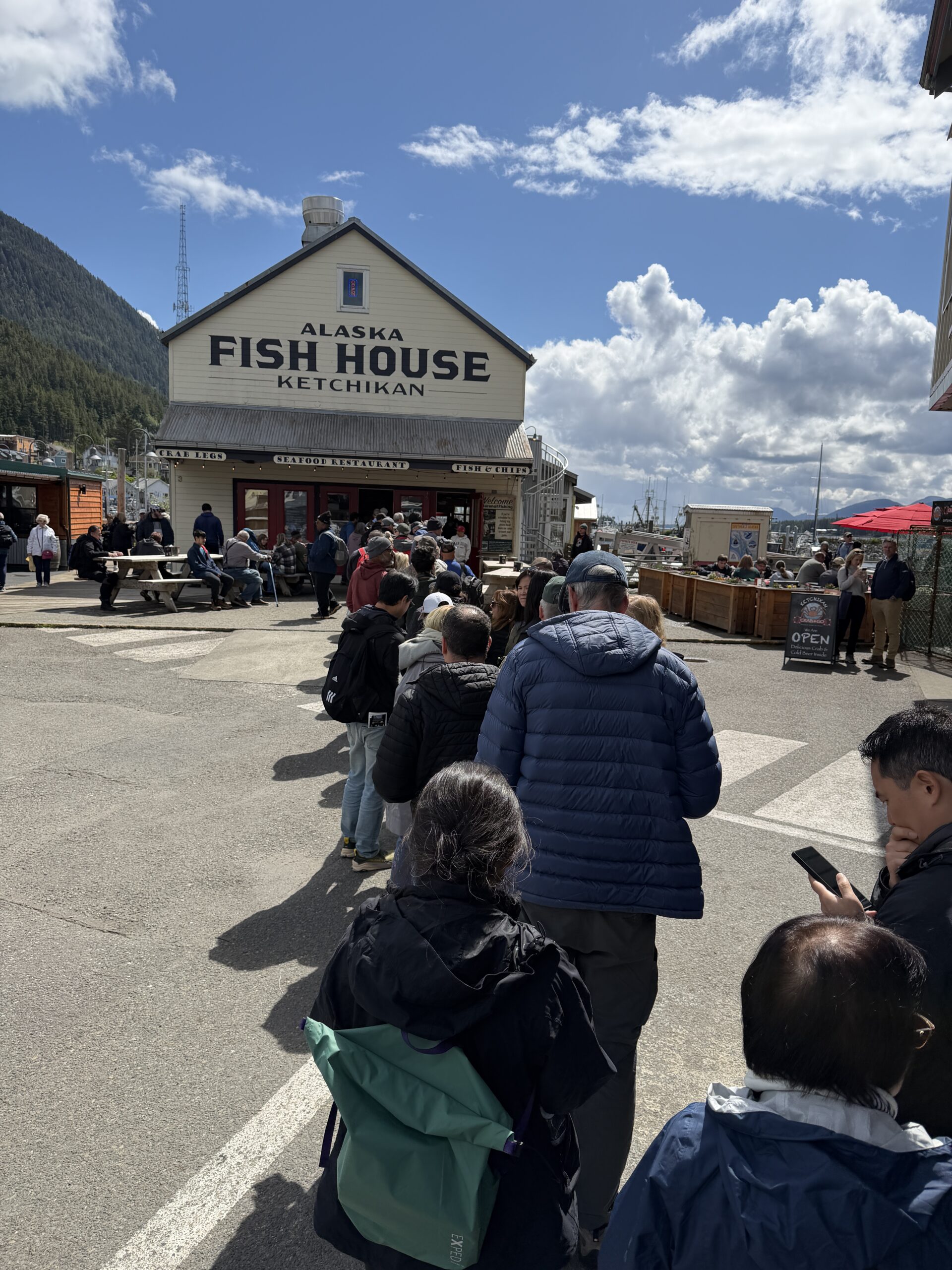
Tired of cruise ship food? Here’s the line for lunch at 11:17 am. Keep in mind that all 19,000 tourists have been on unlimited 6 meals per day plus 24-hour room service.
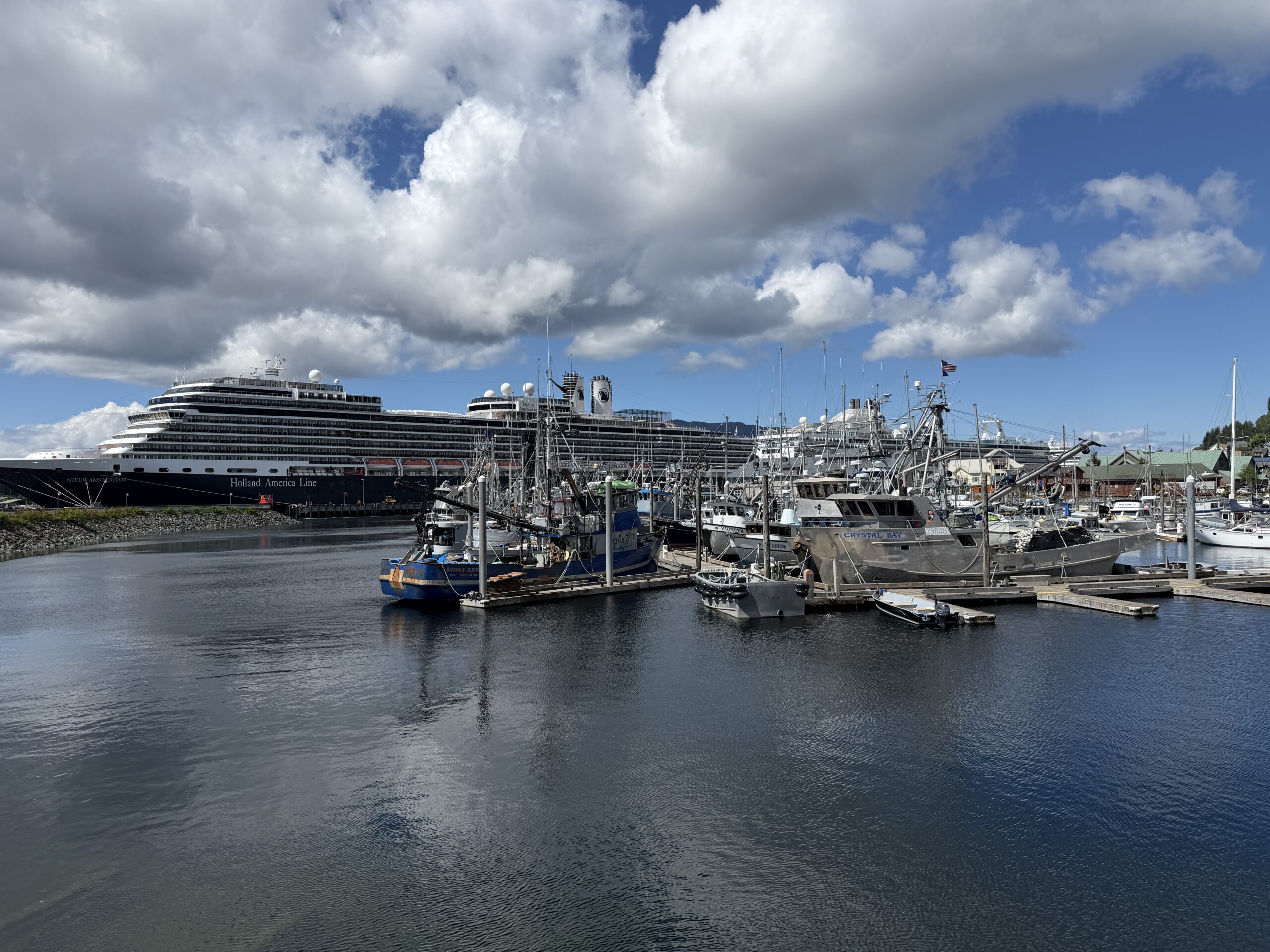
Commercial fishing boats with the real money-makers behind them:
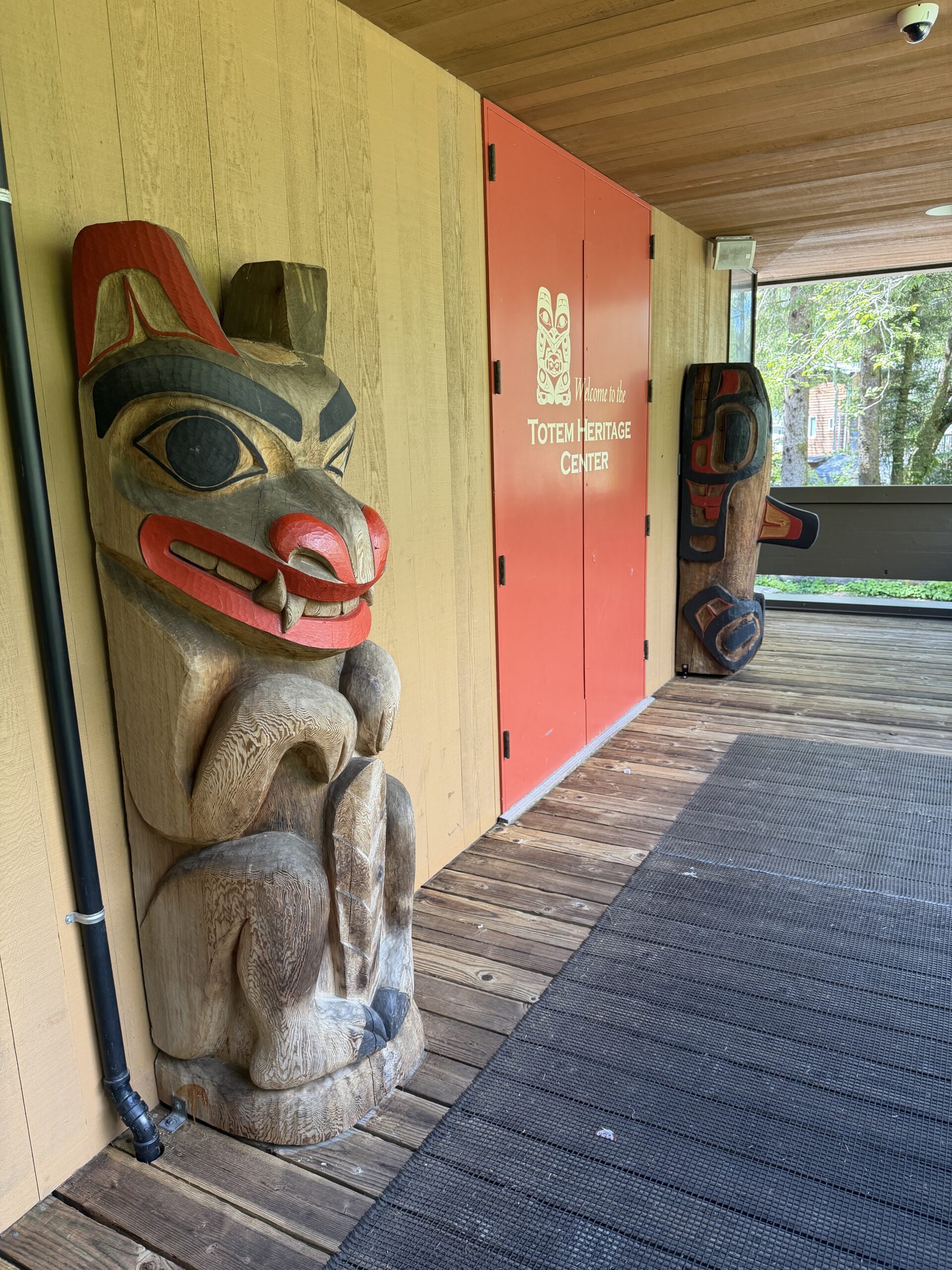
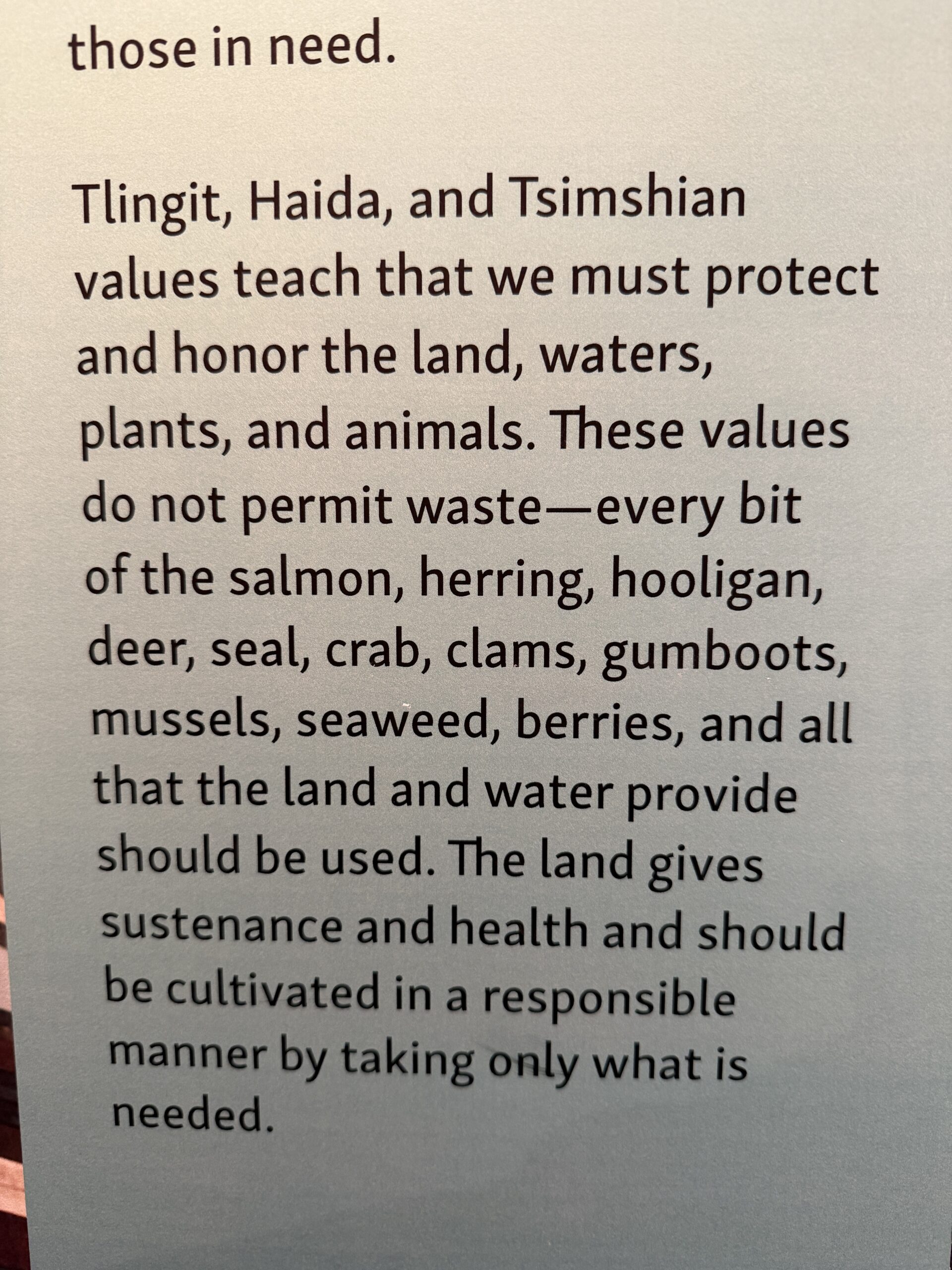
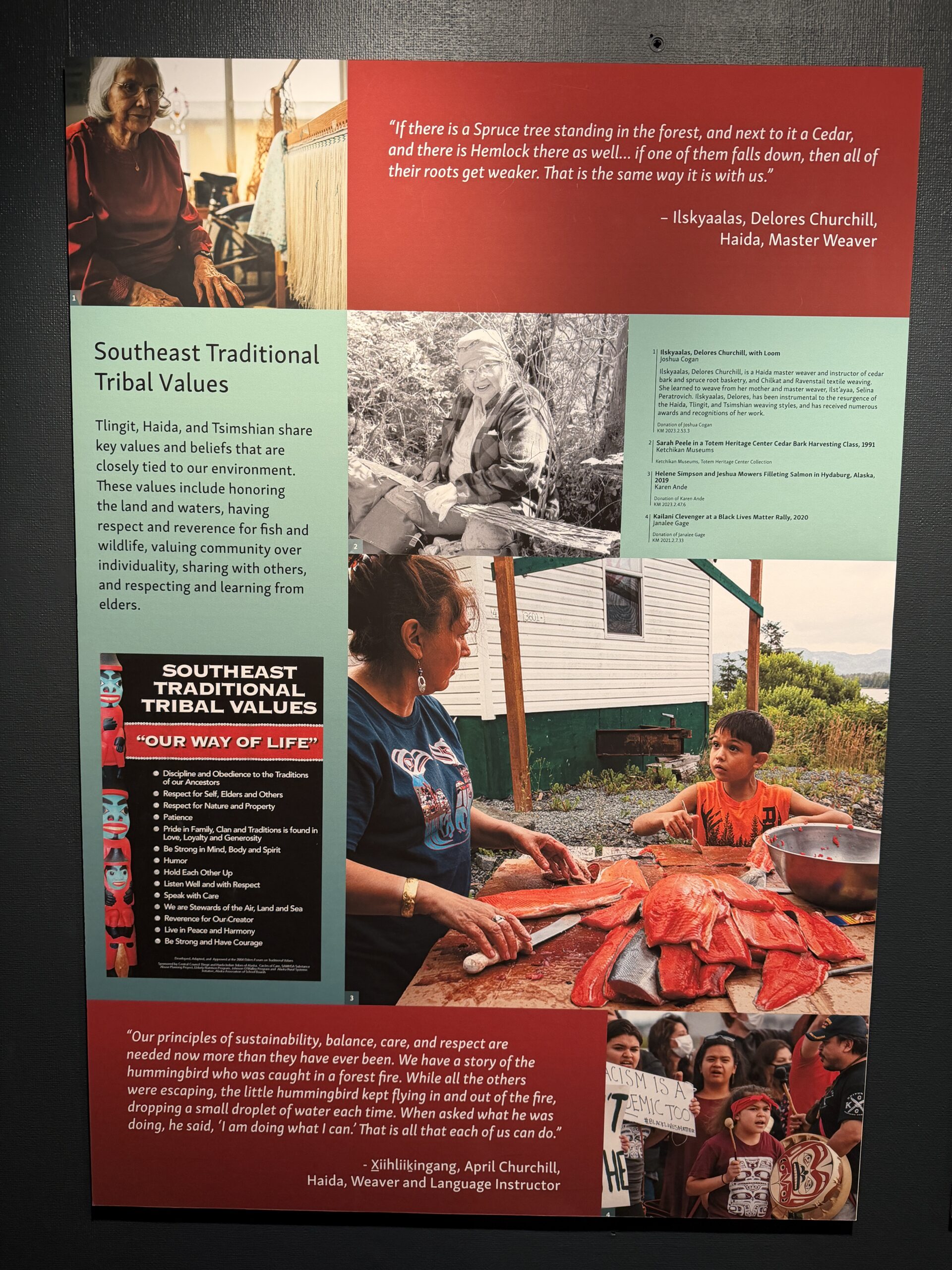
Walking for 20 minutes to the Totem Heritage Center, run by the city, gets one away from most of the cuise ship crowd. The museum reminds us that Native Americans are natural stewards and protectors of the environment from the rapacious white man. Curiously, when I was in Alaska in 1993 the clearcut forests on Native Corporation land was pointed out as a contrast to the National Forest, in which white administrators wouldn’t permit clearcutting.
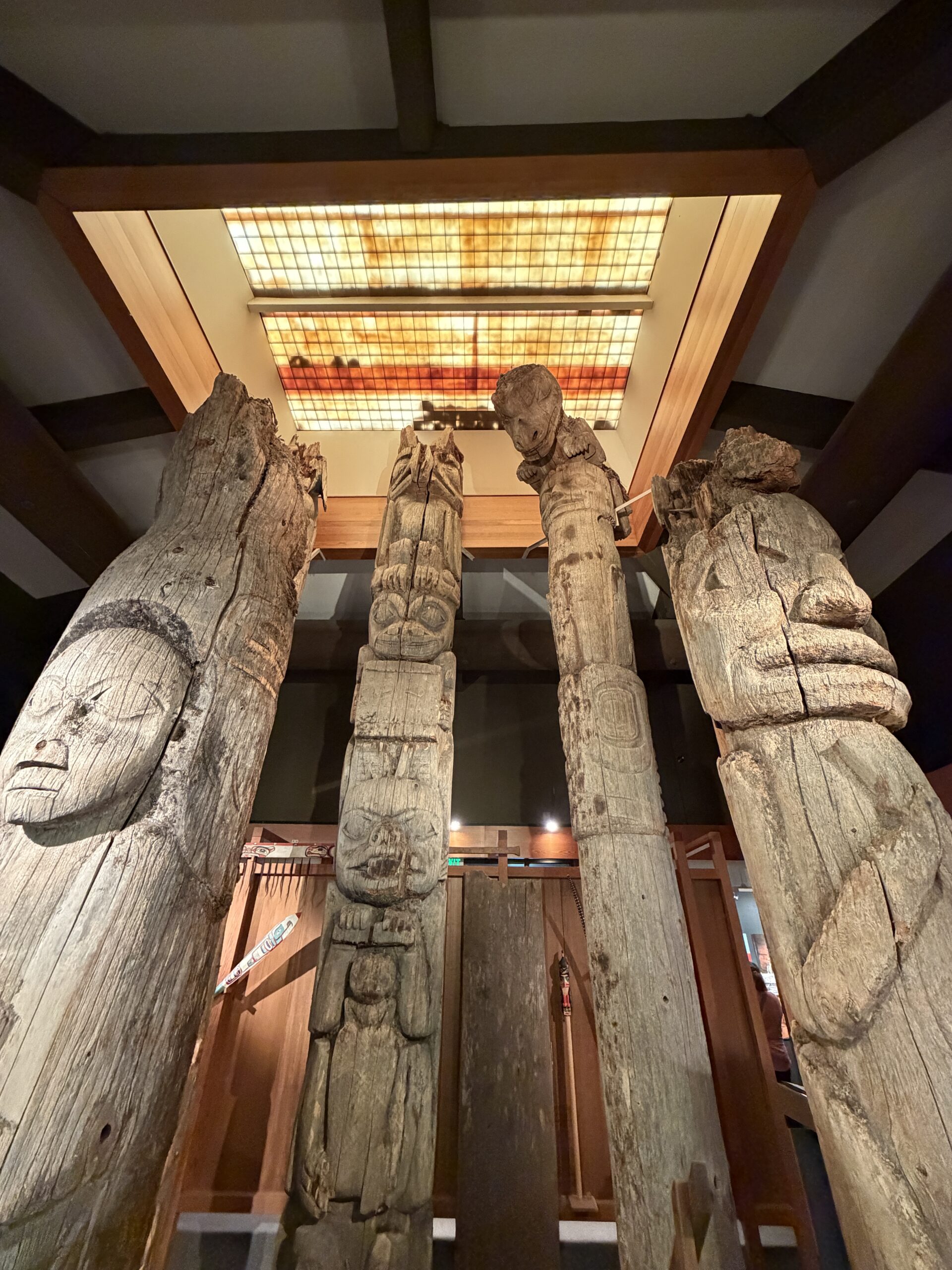
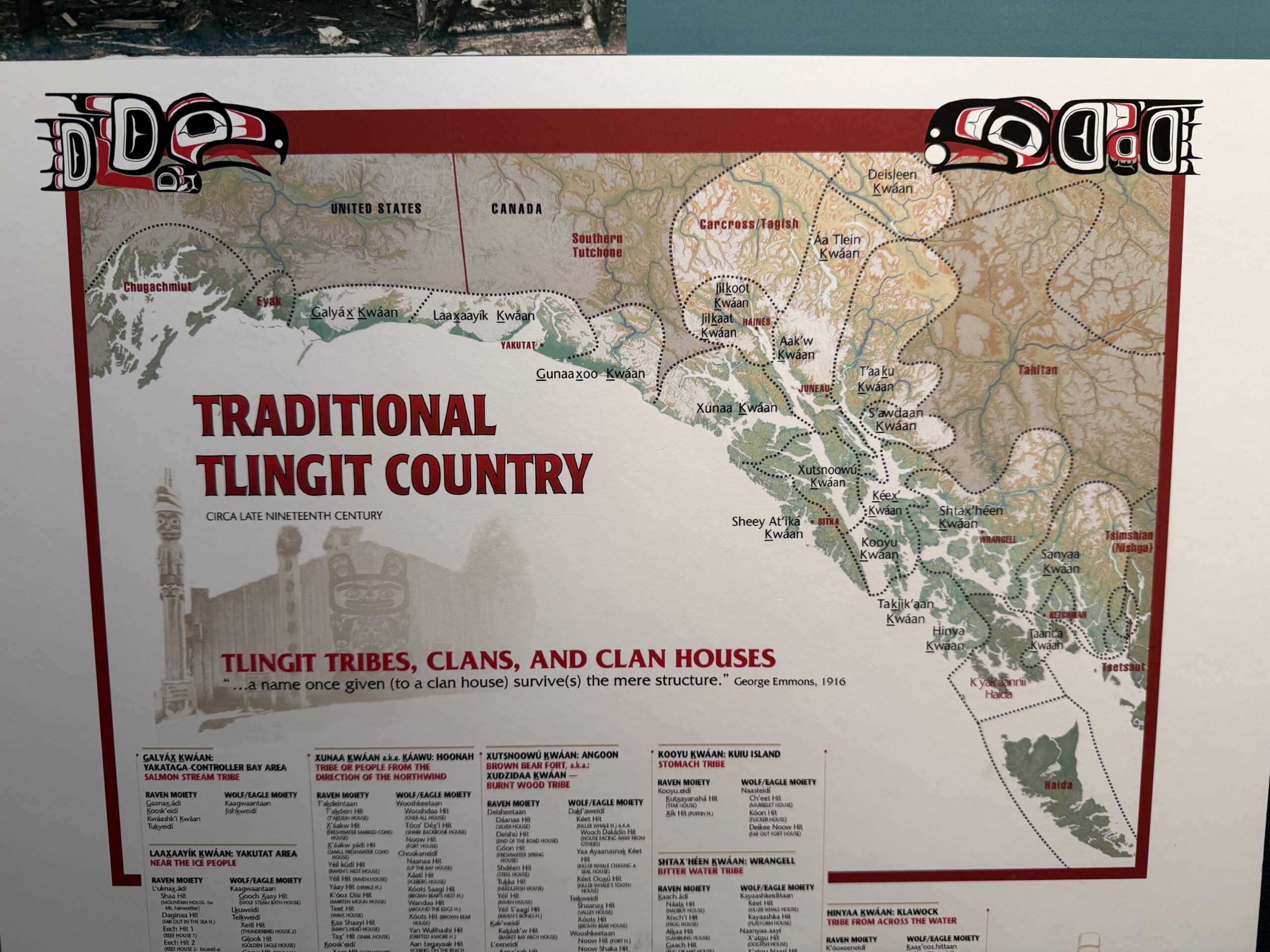
There was quite a bit of fragmentation in the “late nineteenth century”:
White do-gooders today want young Native Alaskans to invest a huge amount of time and energy in learning their ancestral languages, now of no practical value:
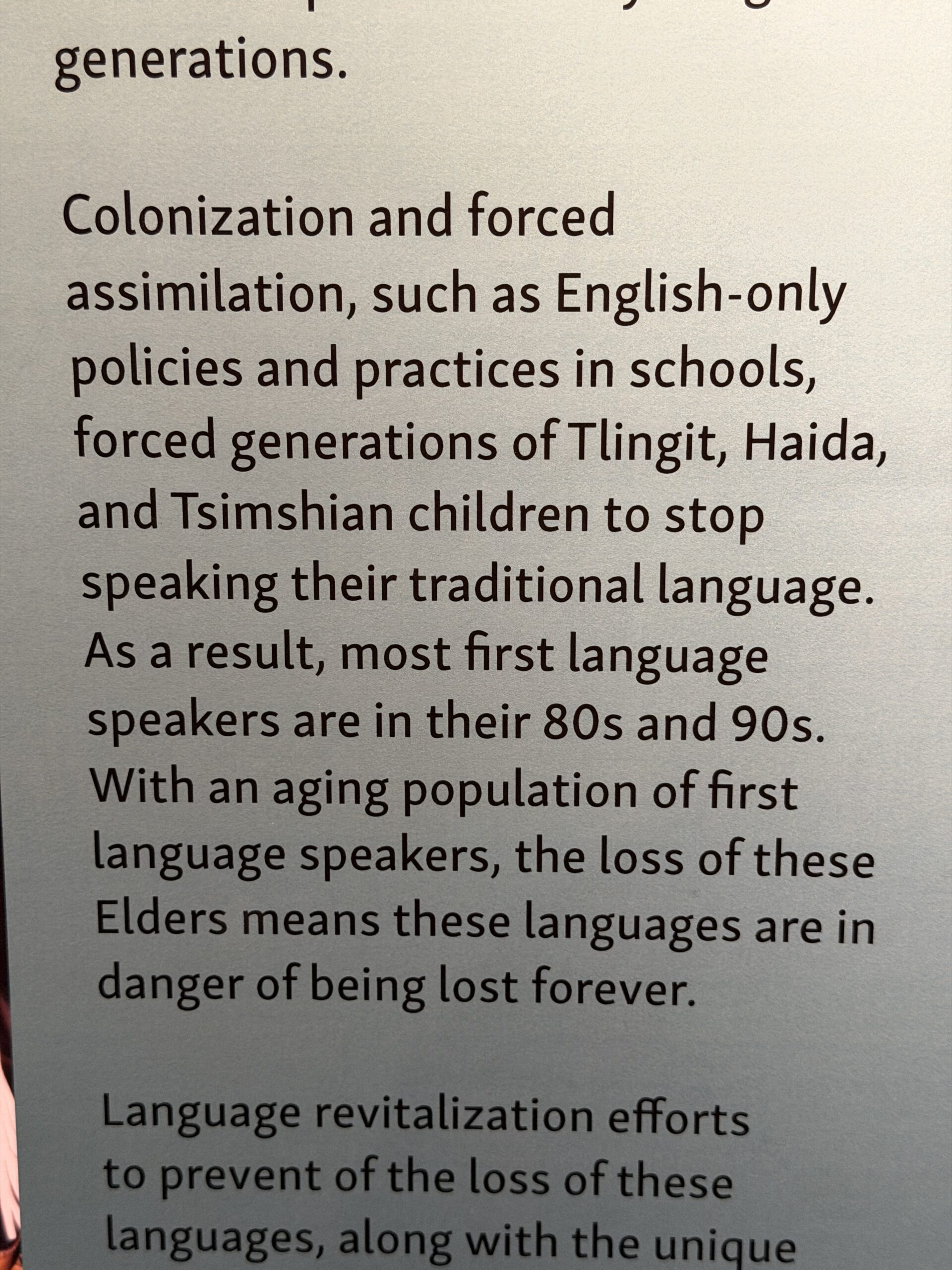
I asked a local native what he thought about this. “It would be a lot better to learn Spanish or Chinese,” he said, “after learning English. Or maybe Arabic.” He pointed out that things were simpler in his youth when the white man wanted Indians to learn English and white culture. “There are so many immigrants from India, China, Vietnam, Latin America, the Middle East, and God knows where else that, in addition to our native culture we have to learn about languages, religions, and cultures from 10 or 15 different countries just to get through a day in the U.S.”
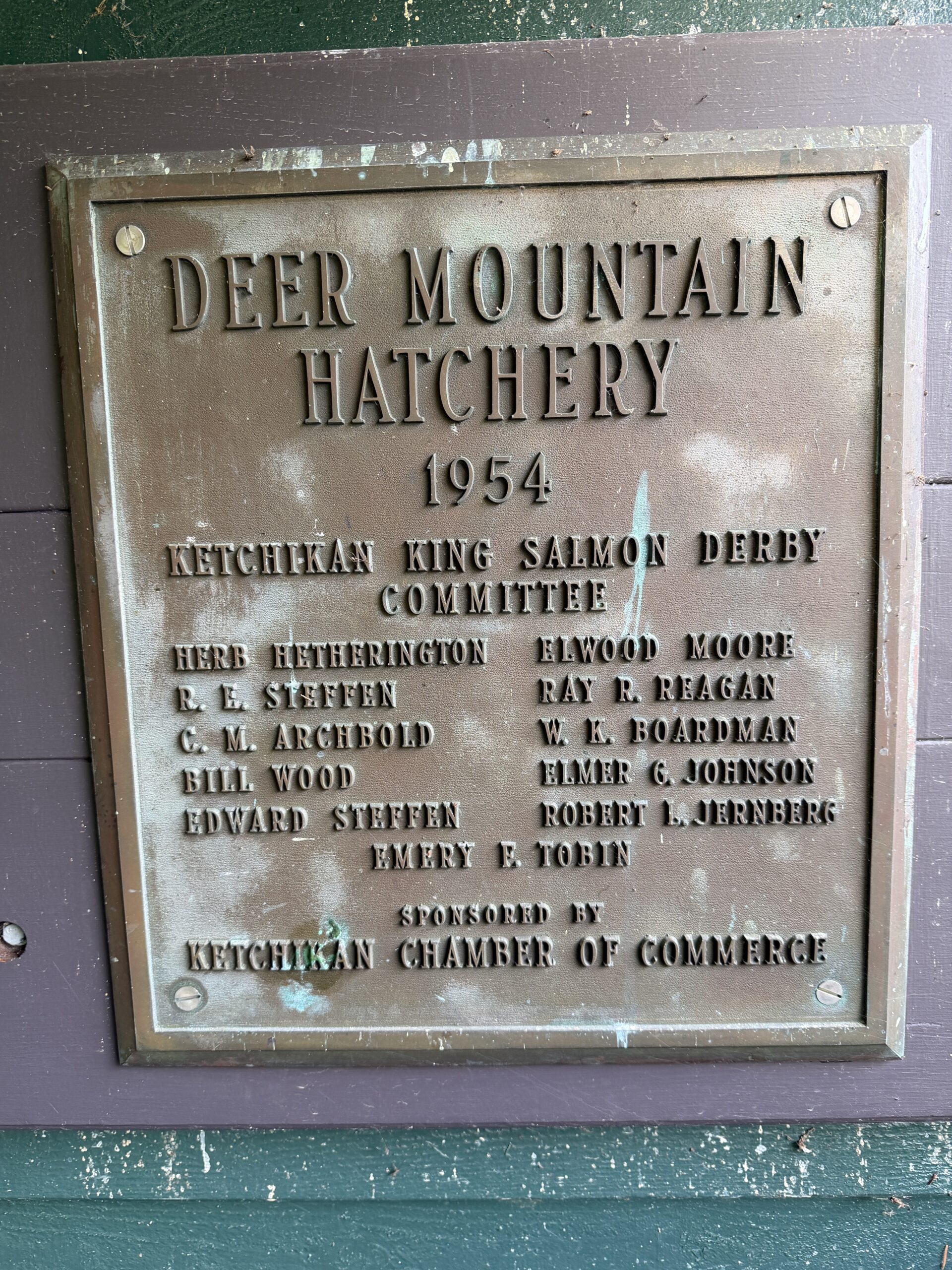
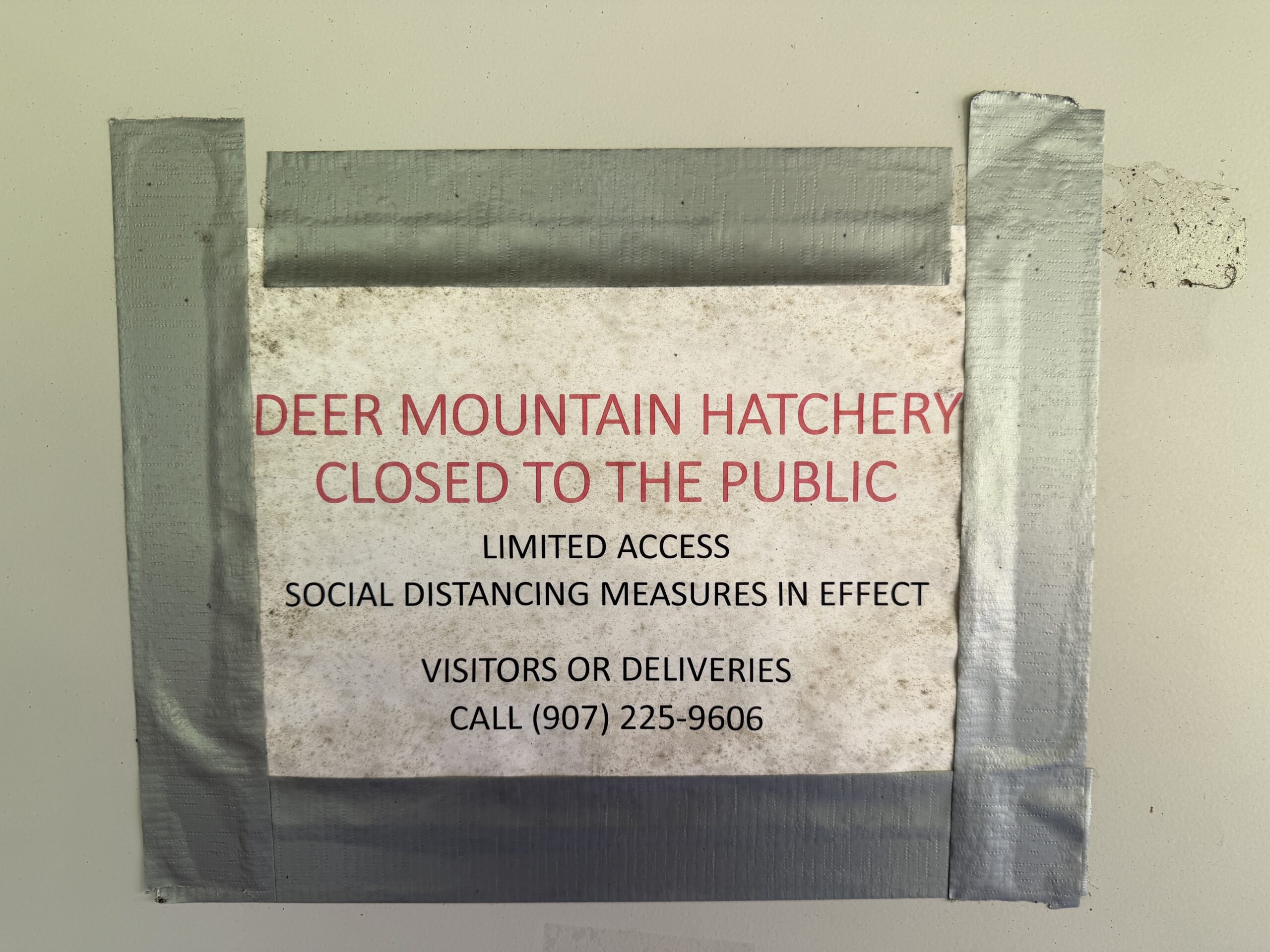
Speaking of keeping traditions alive, the local salmon hatchery is still closed for coronapanic:
A short walk down a creek passes by the Trail of Tears, updated for the 21st century: Married Man’s Trail.

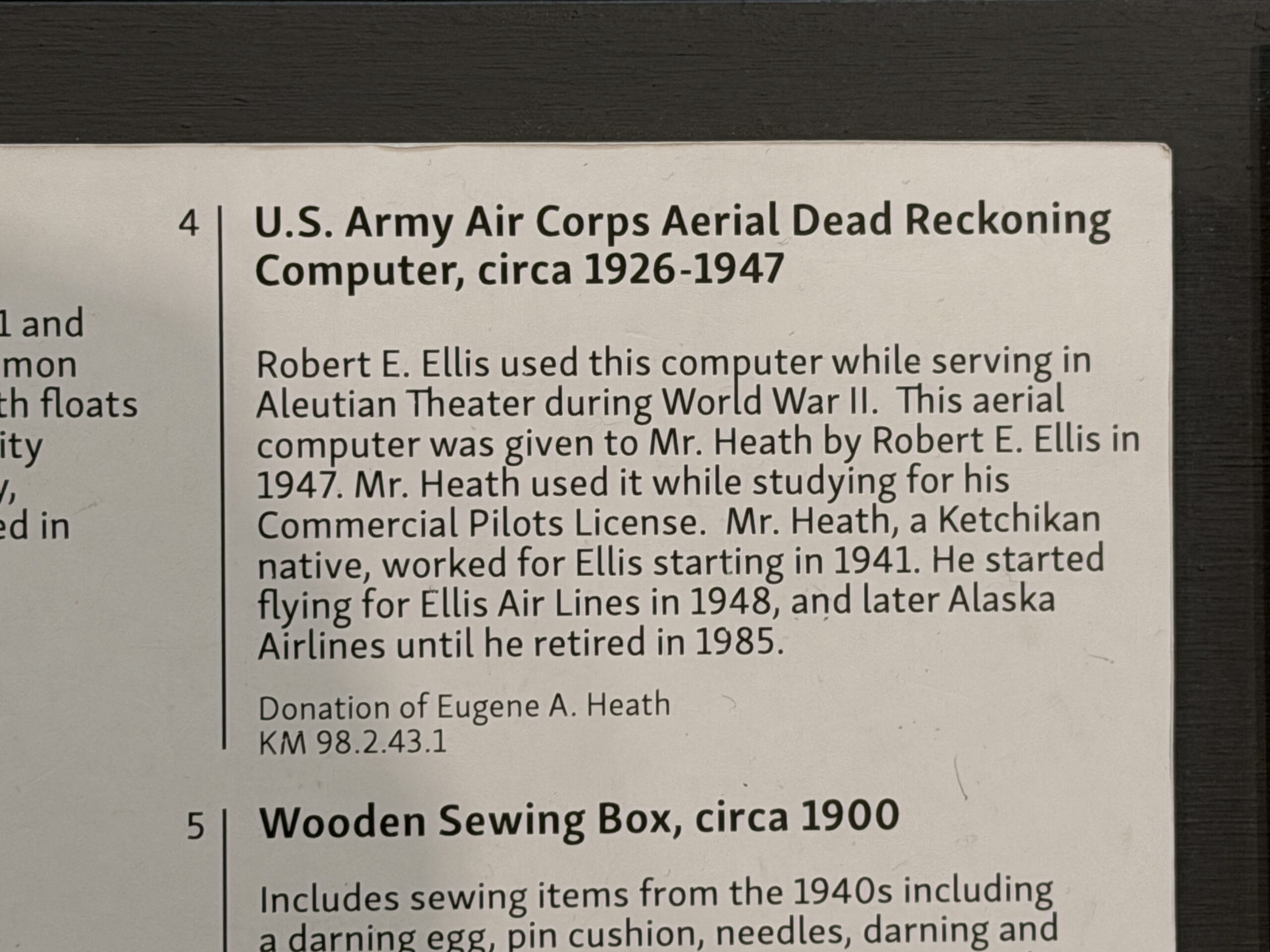
The second facility for the city museum welcomes visitors with a land acknowledgement and pilots with an E6-B.
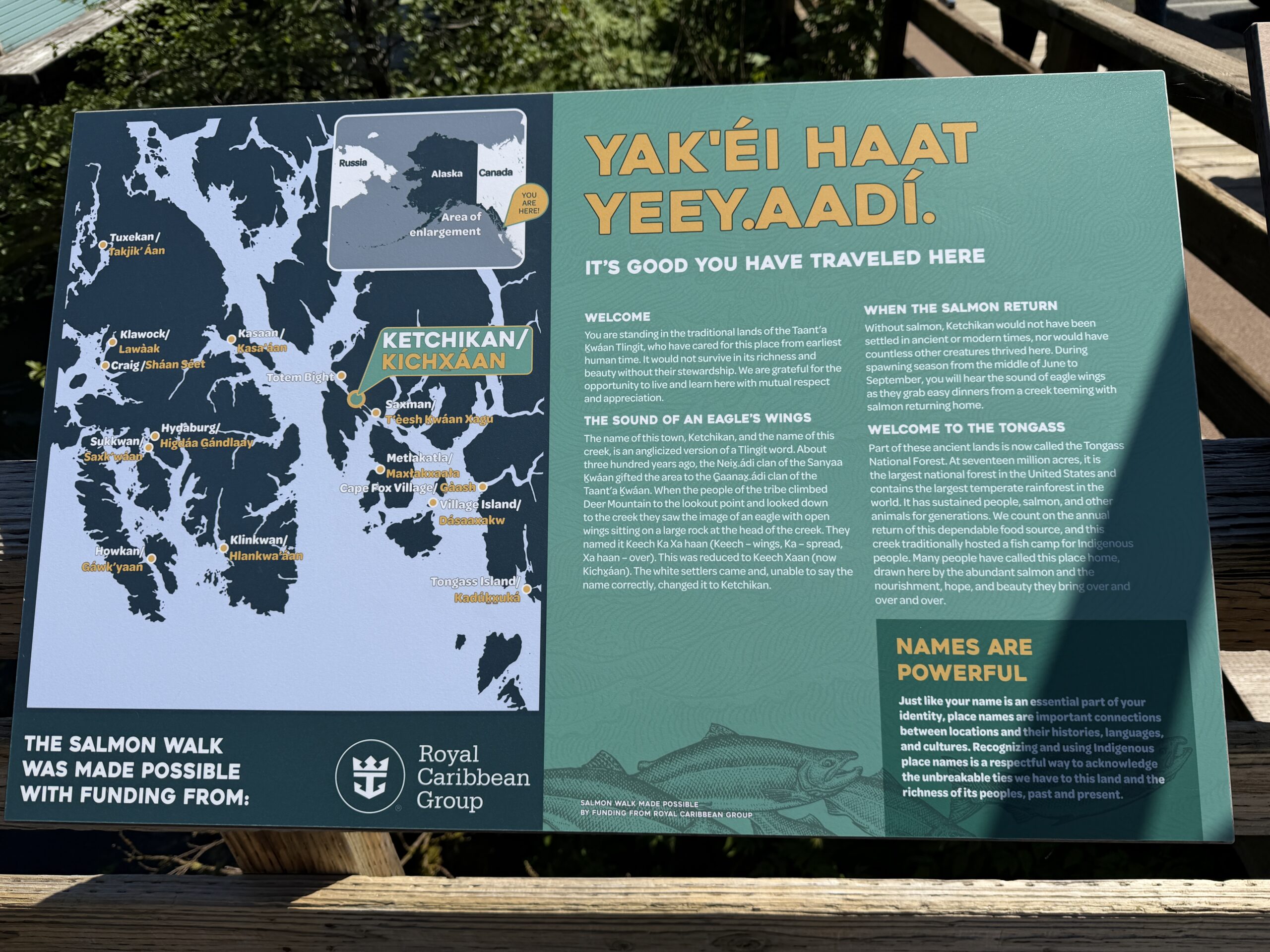
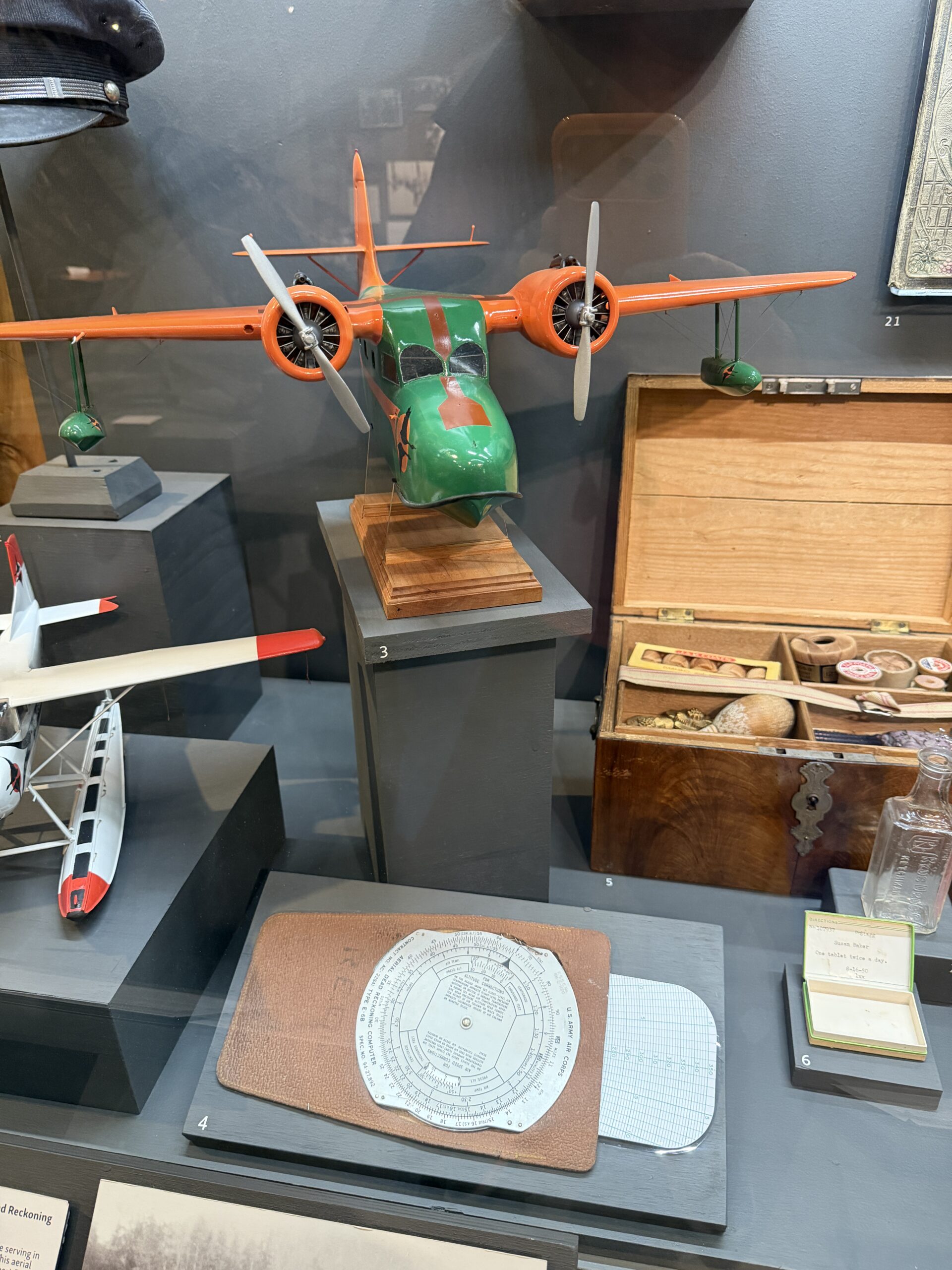
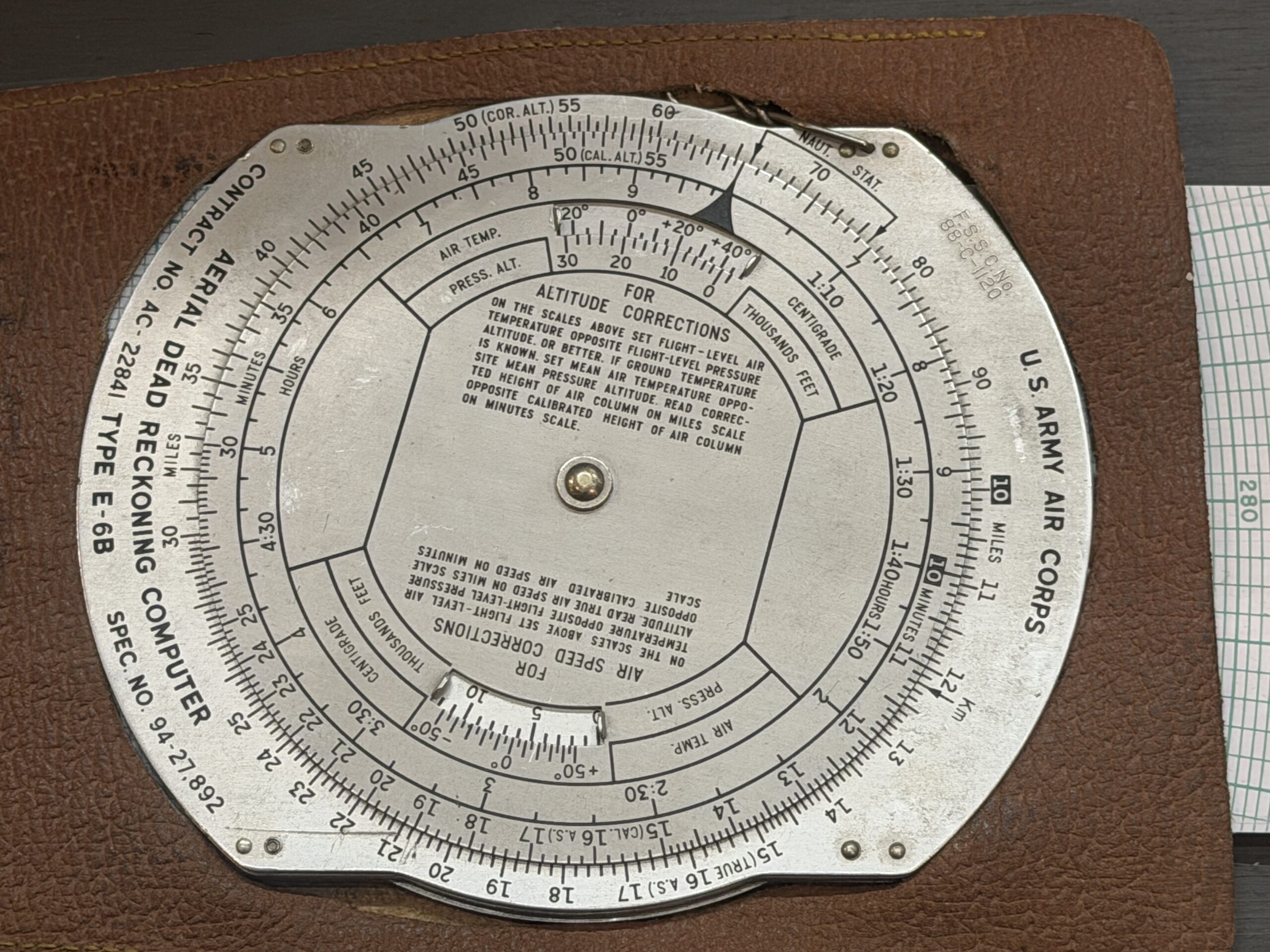
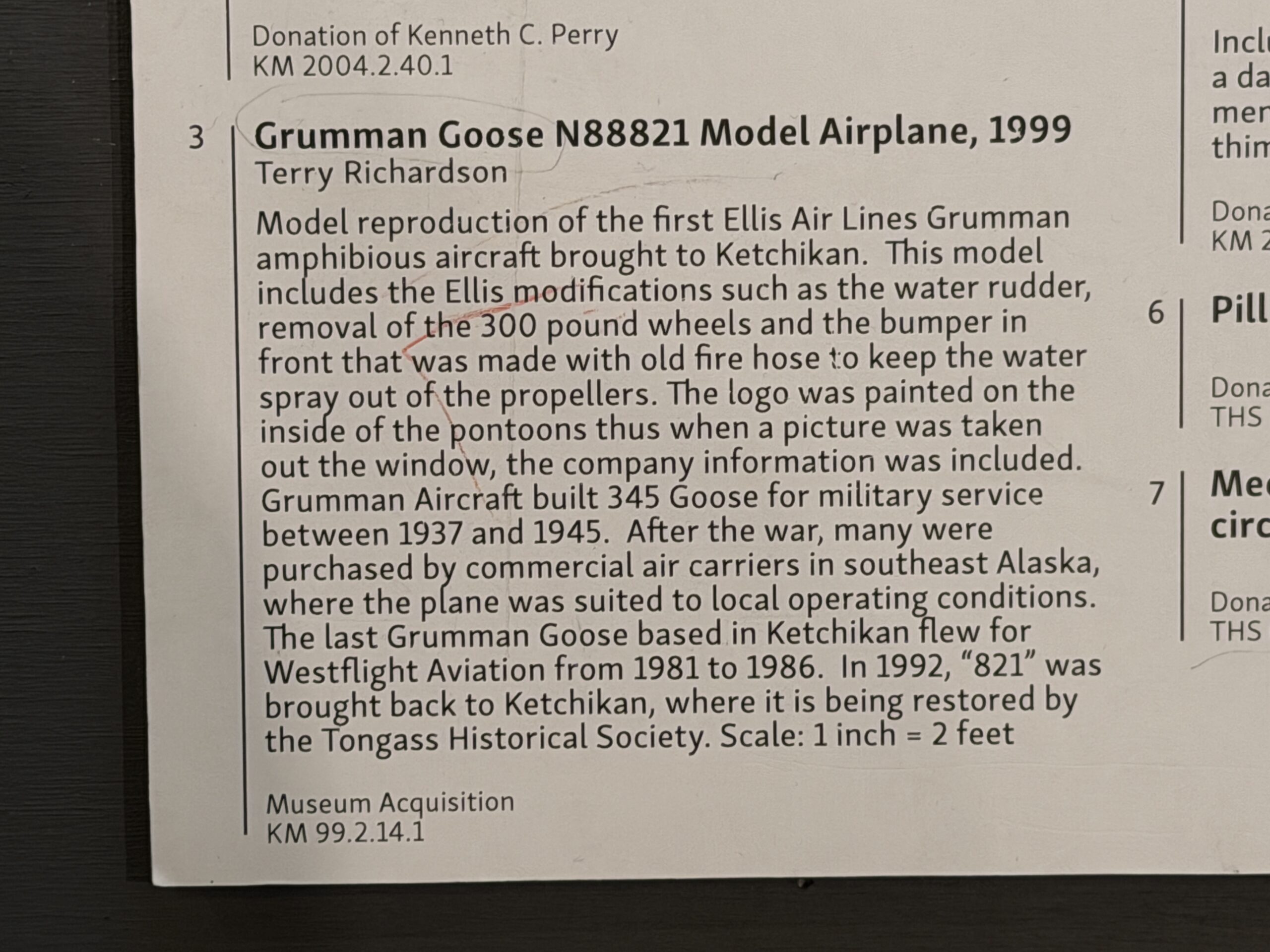
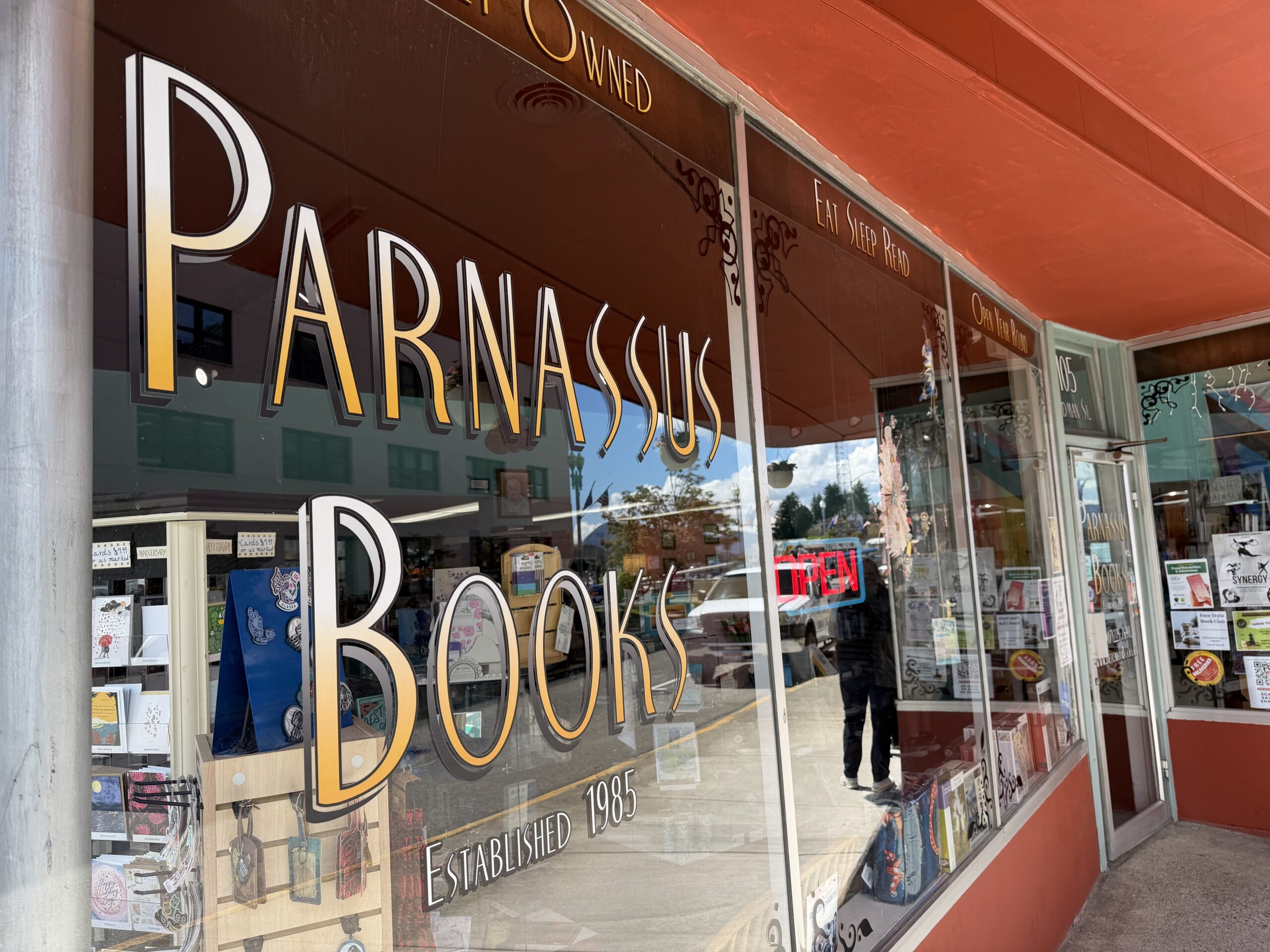
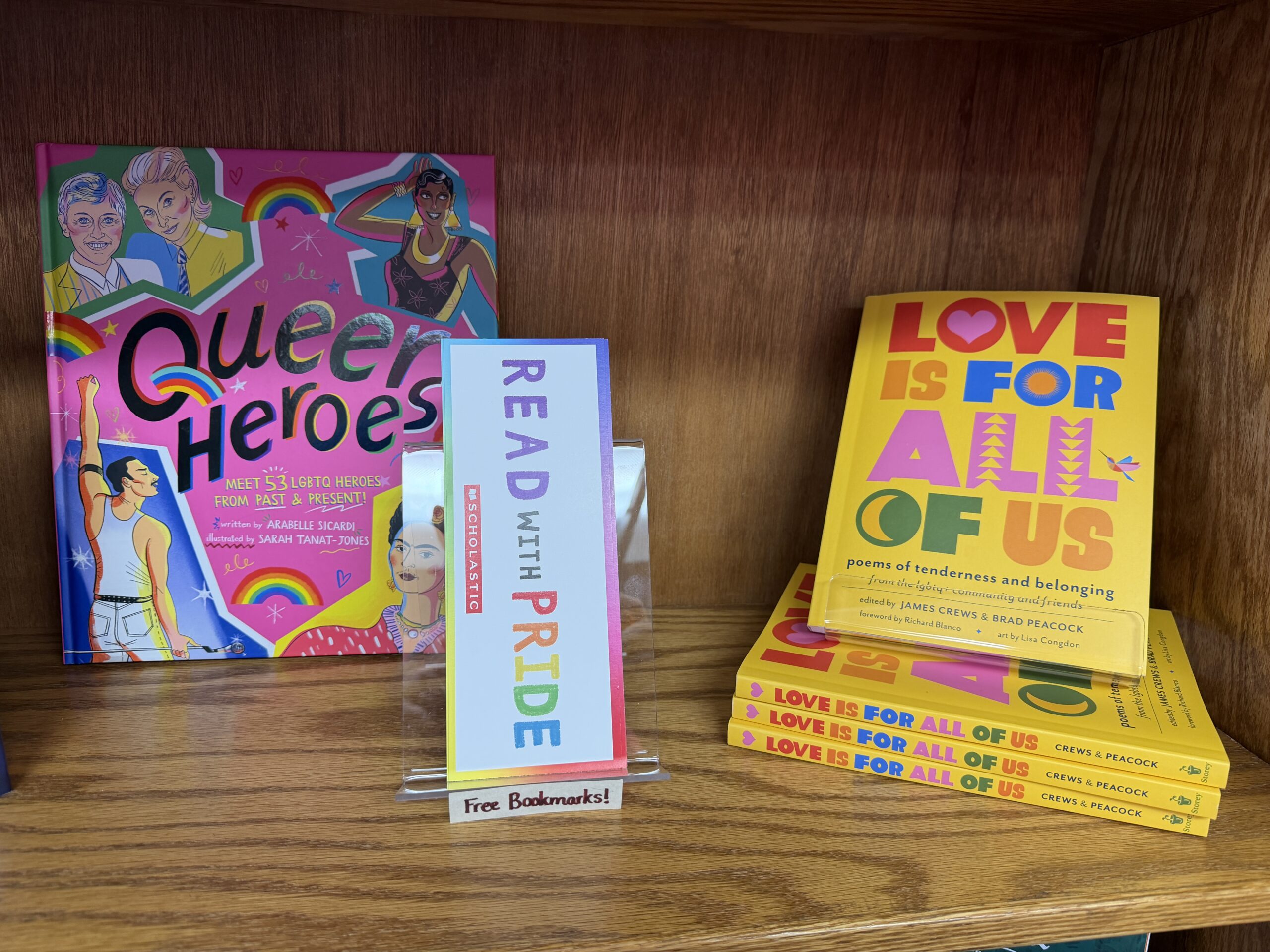
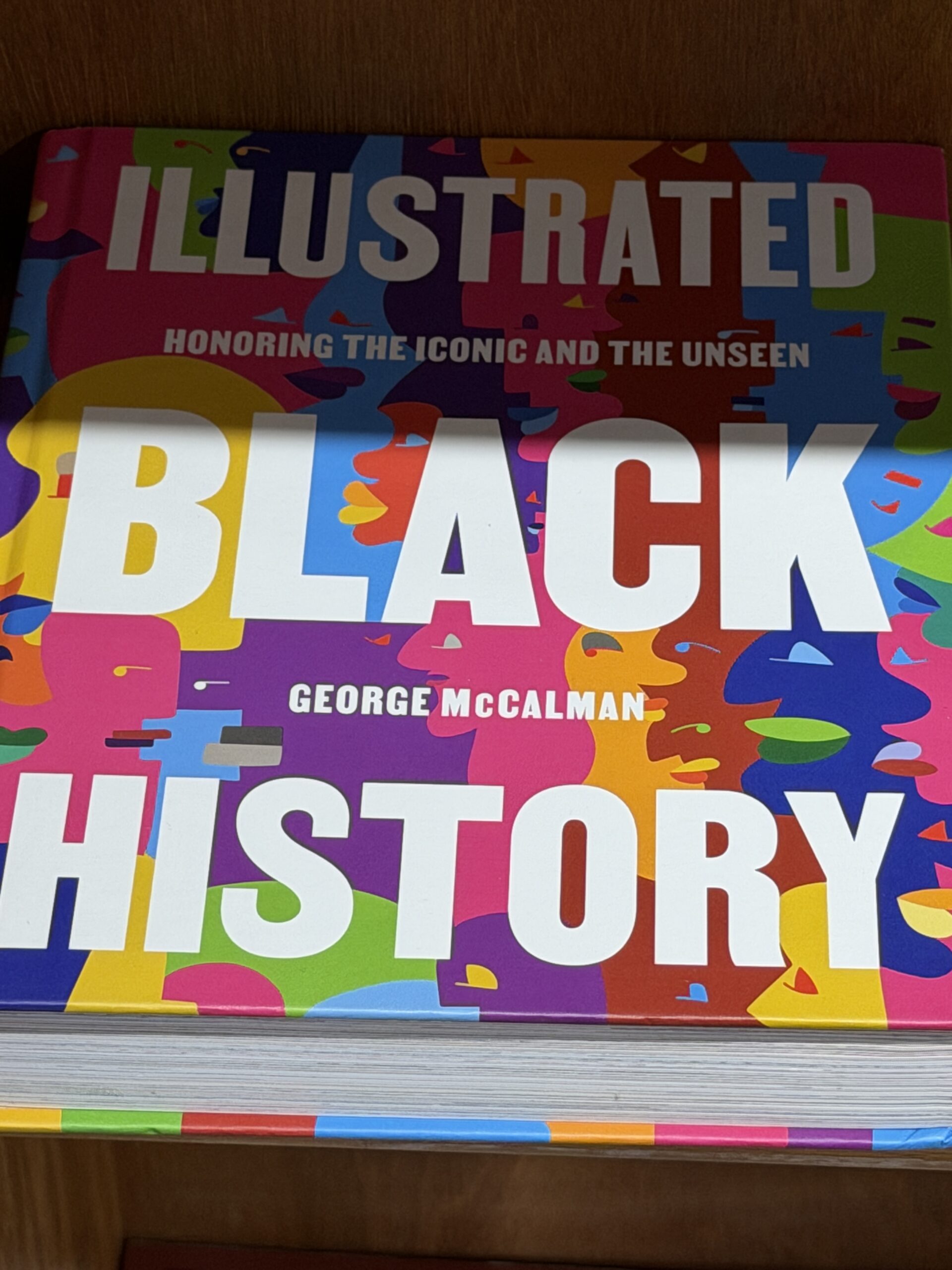
The local bookstore is next door and is ready in case a Black or indigenous (Palestinian?) 2SLGBTQQIA+ customer comes in:

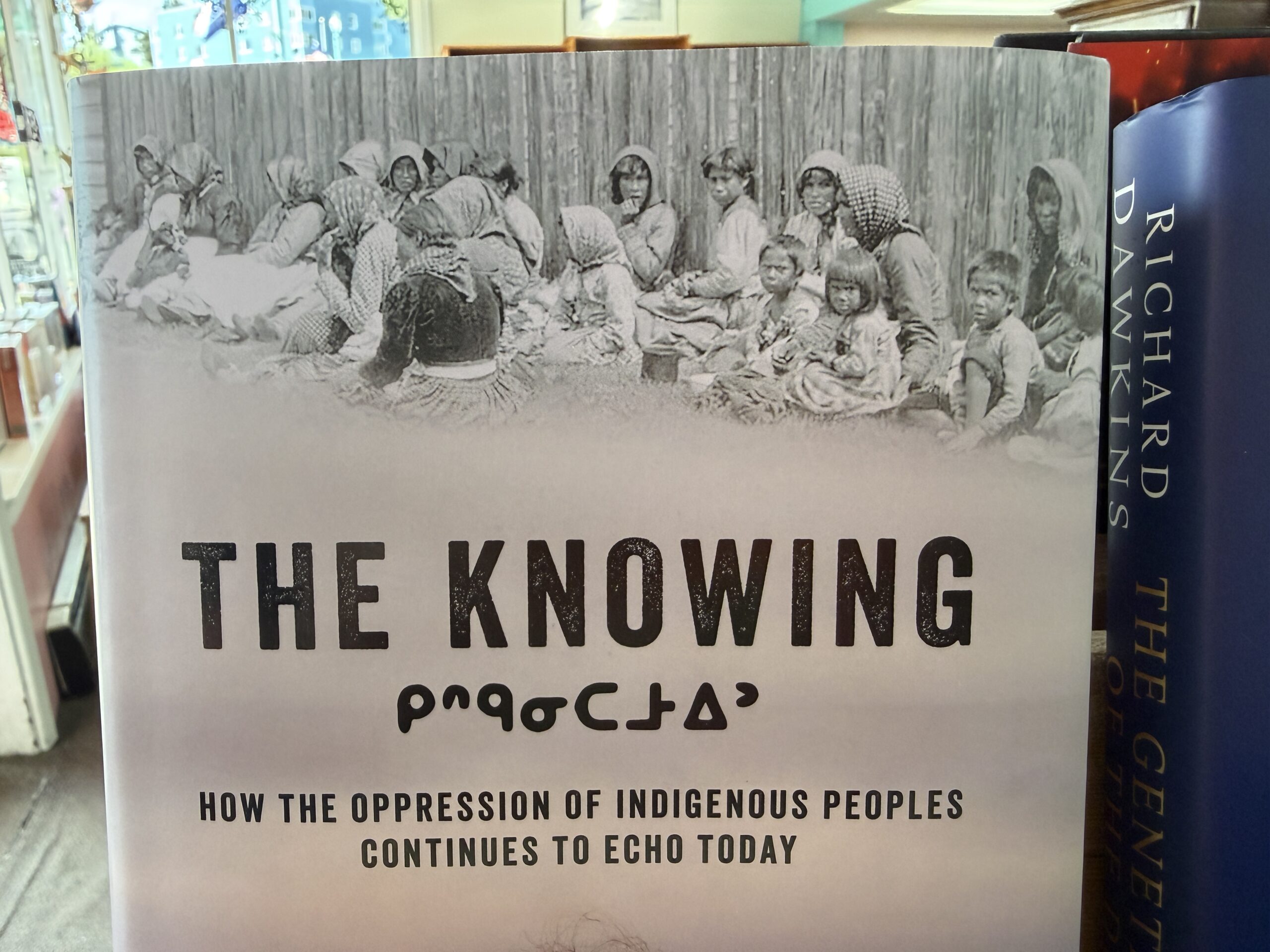
Meanwhile, the store features a work by John Muir, a renowned racist (“advocated for white supremacy and promoting the race through eugenics, which called for forced sterilization of Black people and other minority groups”) who founded an anti-immigrant organization (“From 1989 – 1996, the Sierra Club had a national policy to greatly limit immigration”).

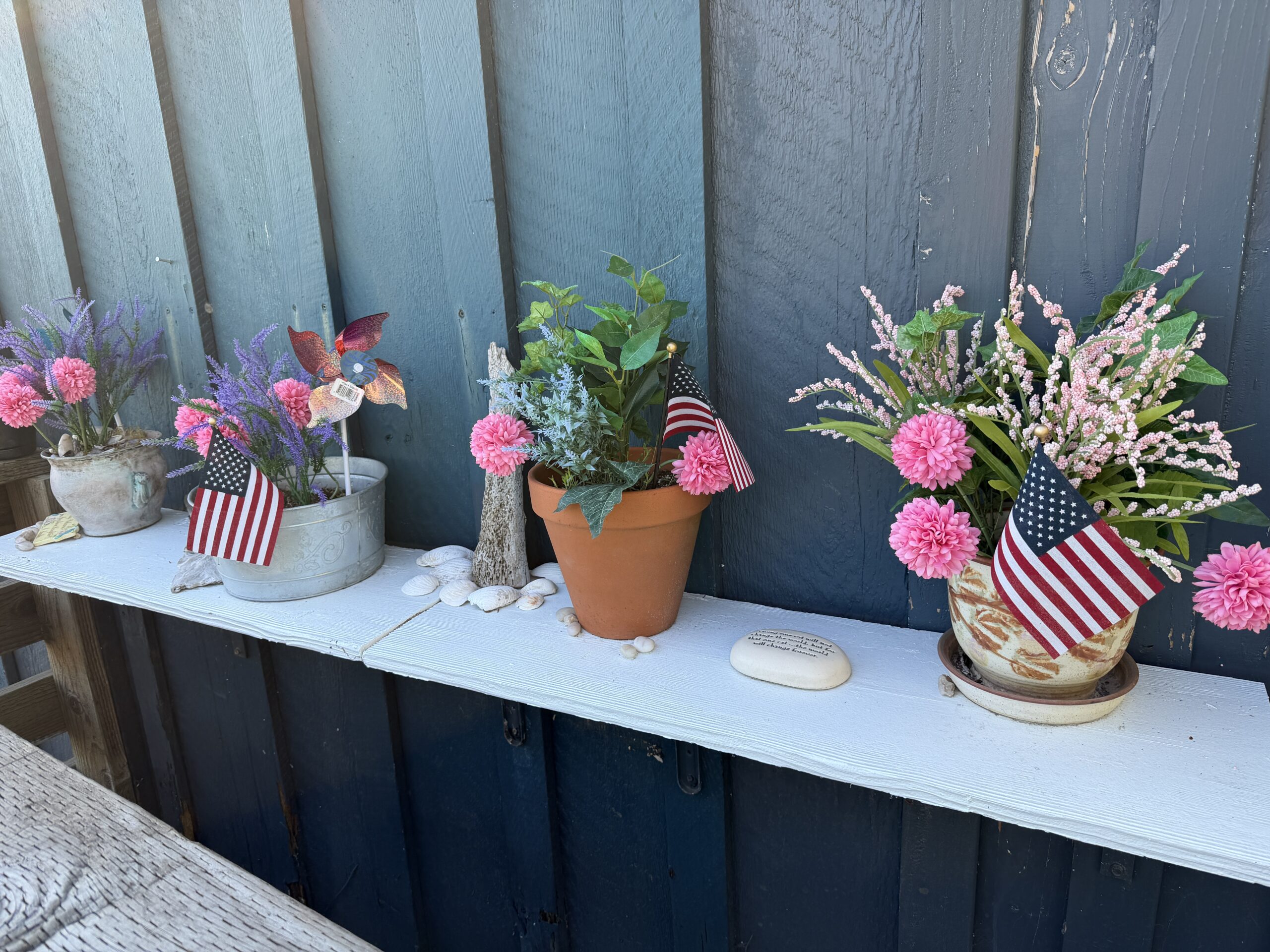
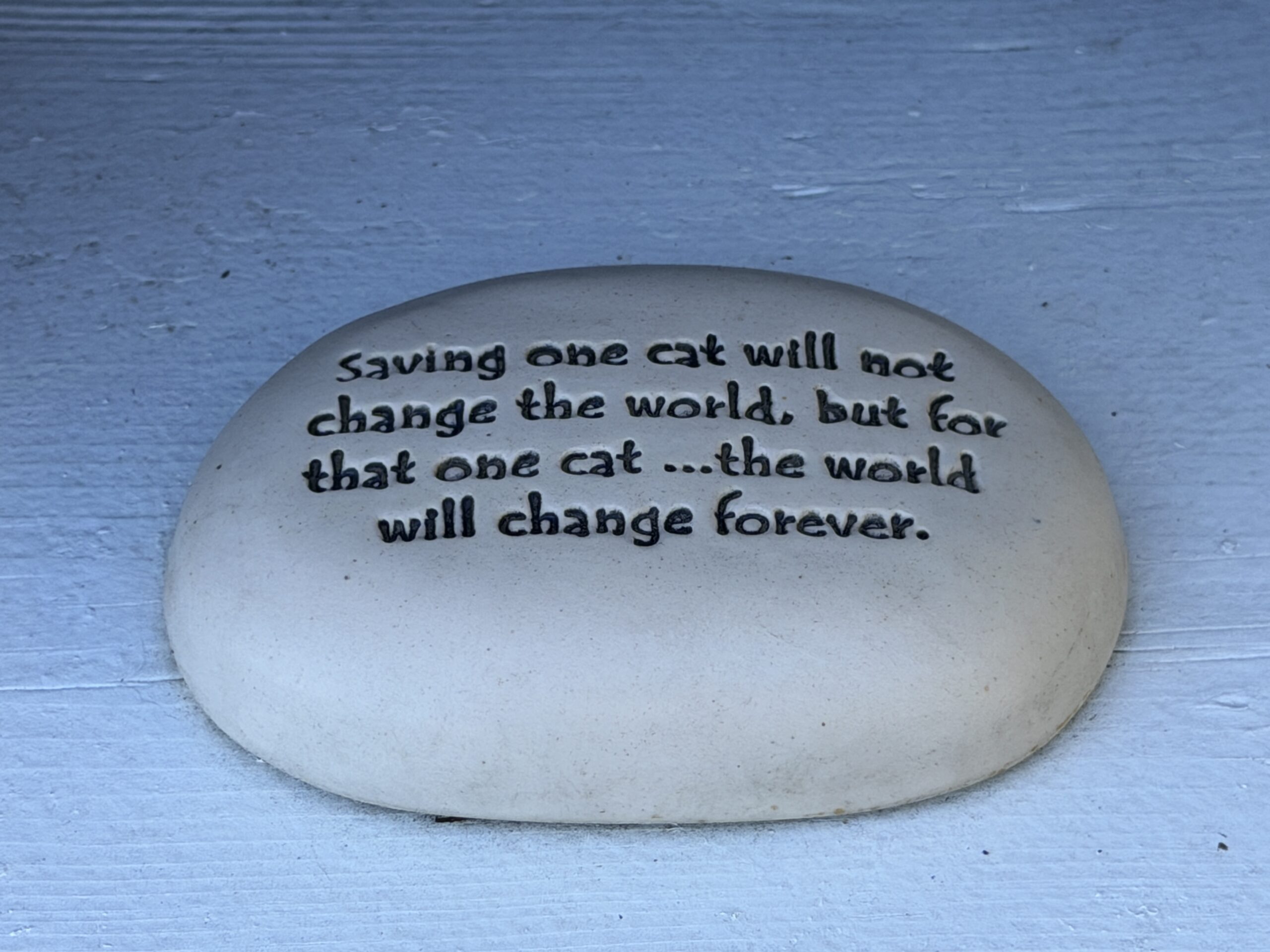
The kindness section of town: “Saving one cat will not change the world, but for that one cat … the world will change forever.” (Mindy the Crippler, our golden retriever, might adjust this slightly…)
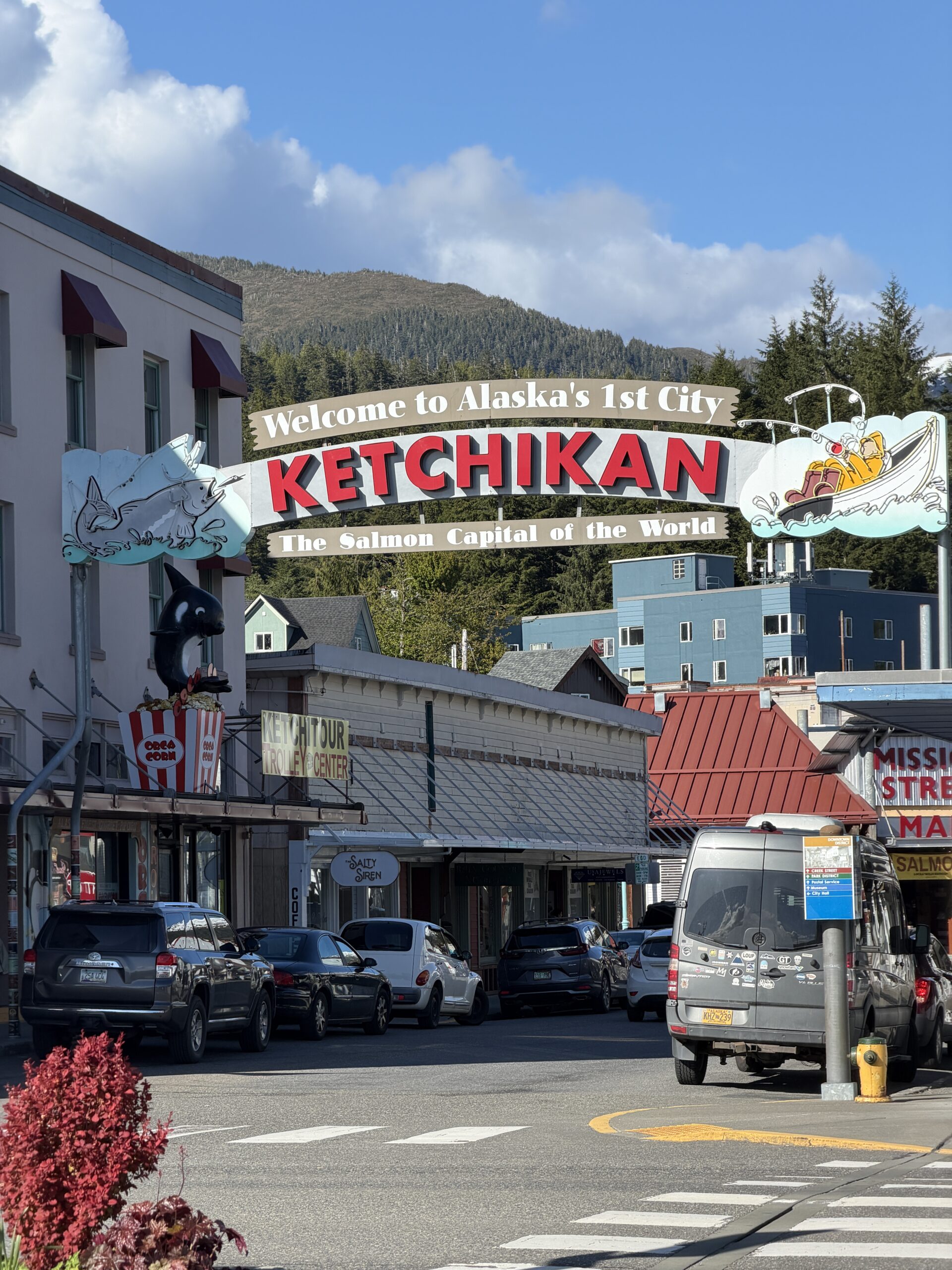
The main shopping drag isn’t a bad place to prepare for Christmas:
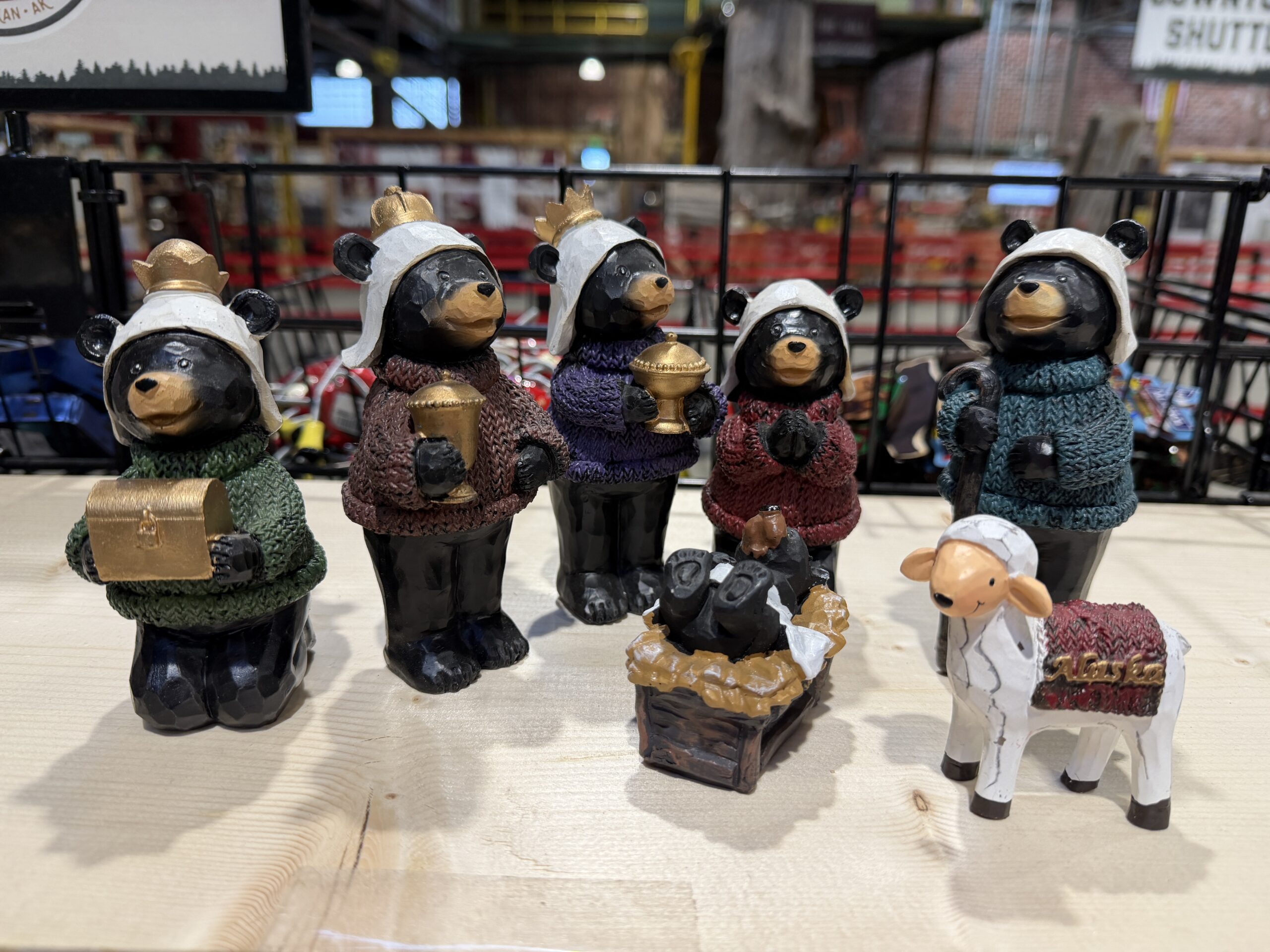
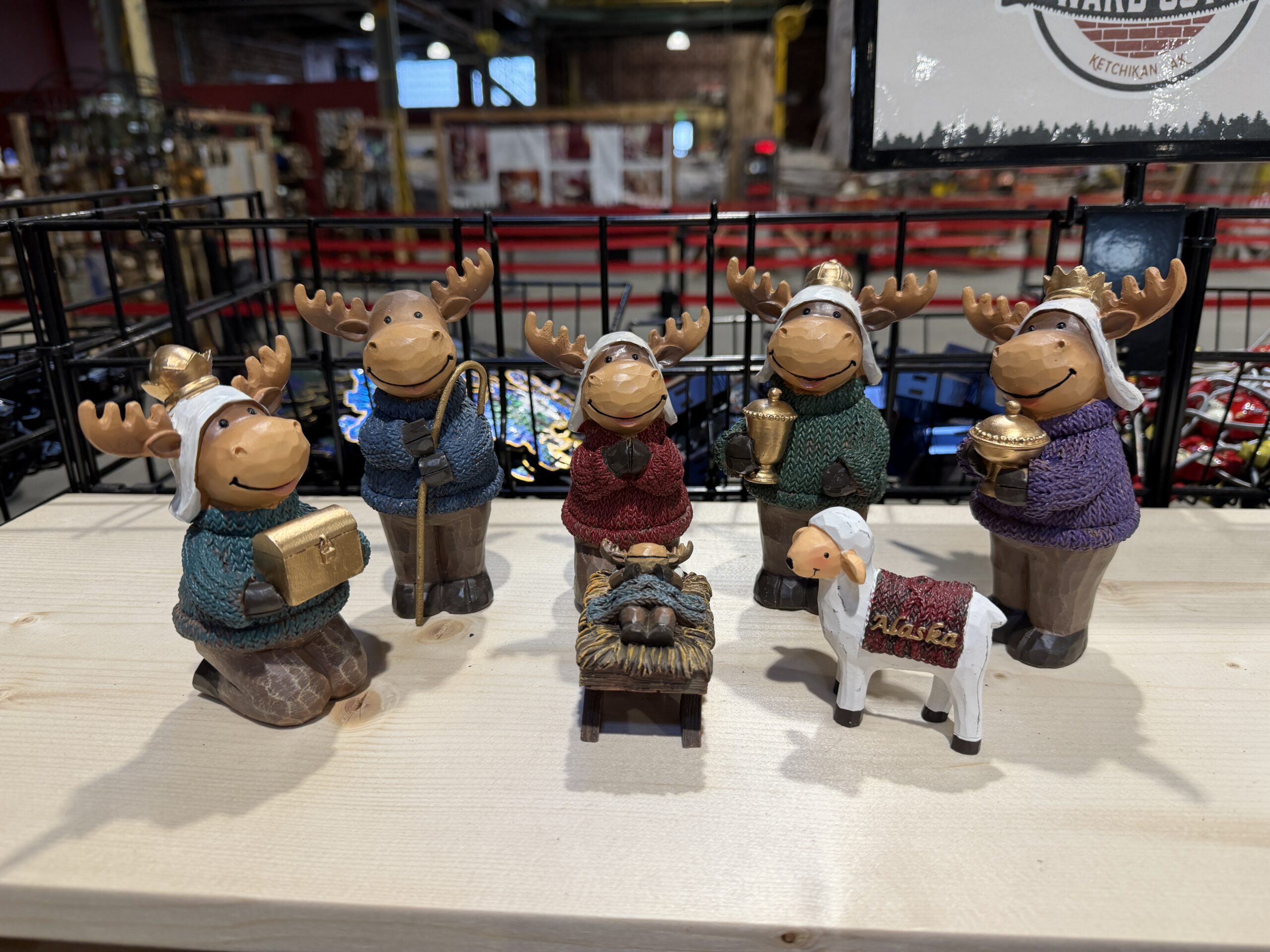
It also works for hunting and gun nuts:
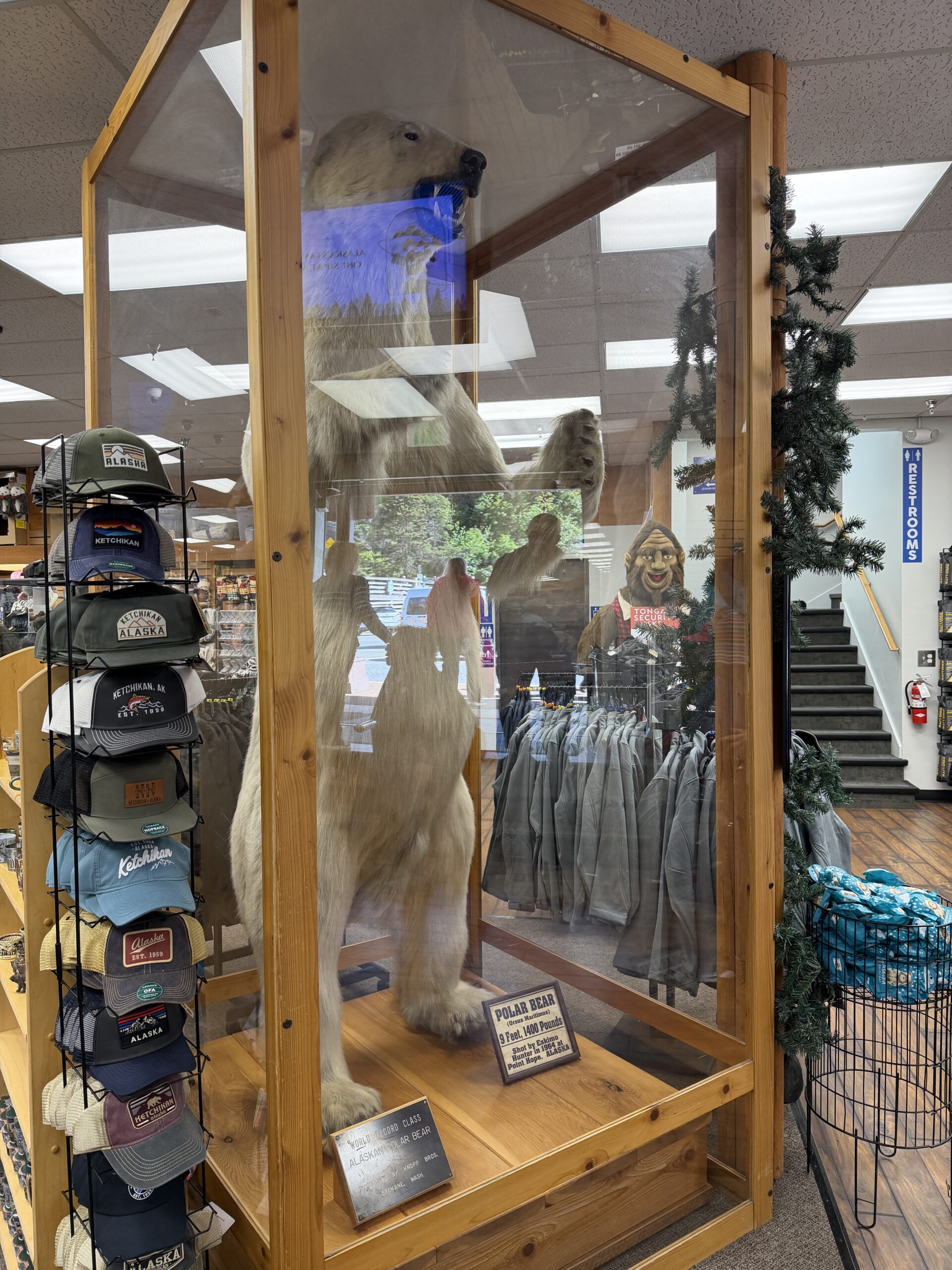
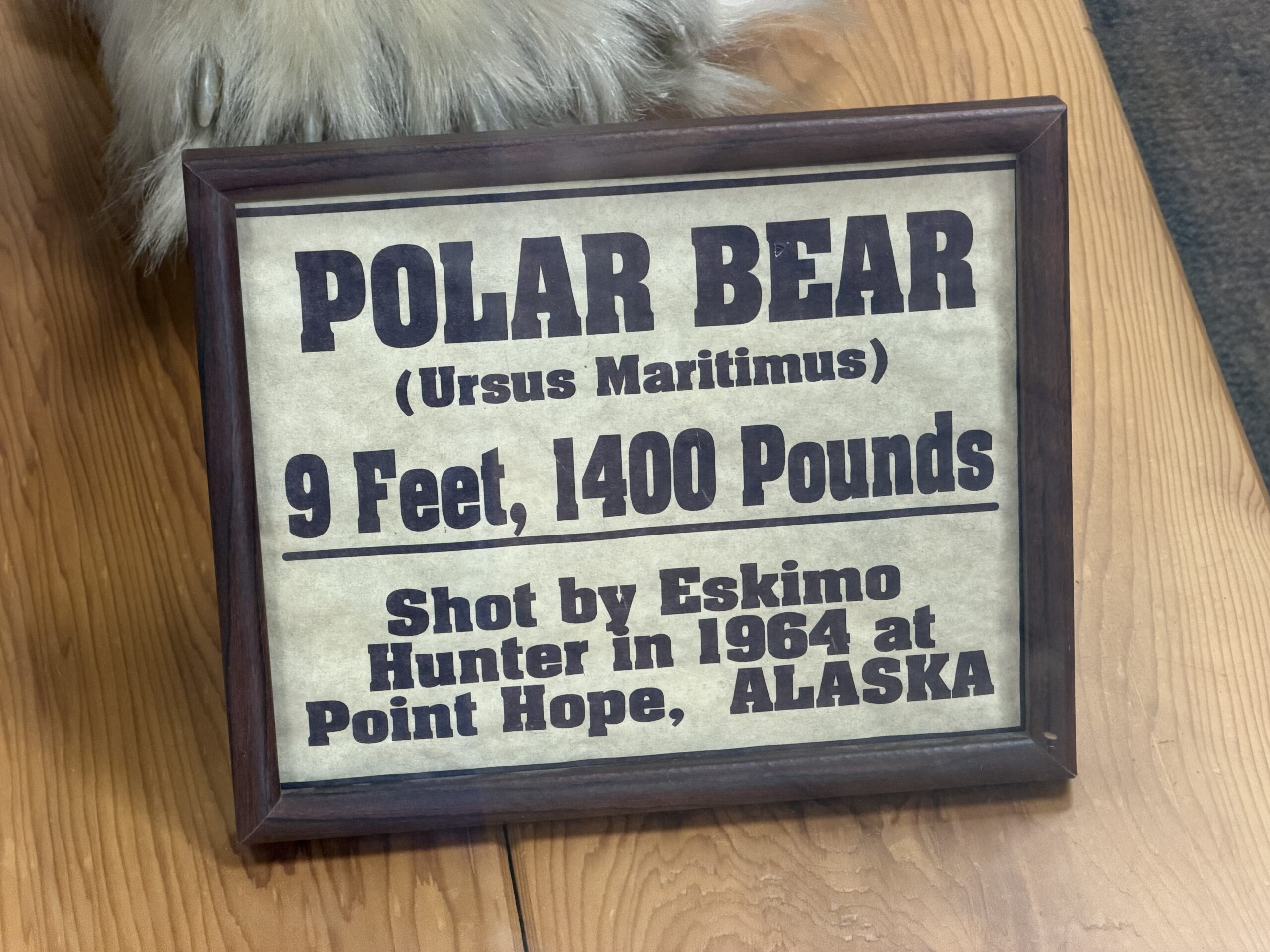

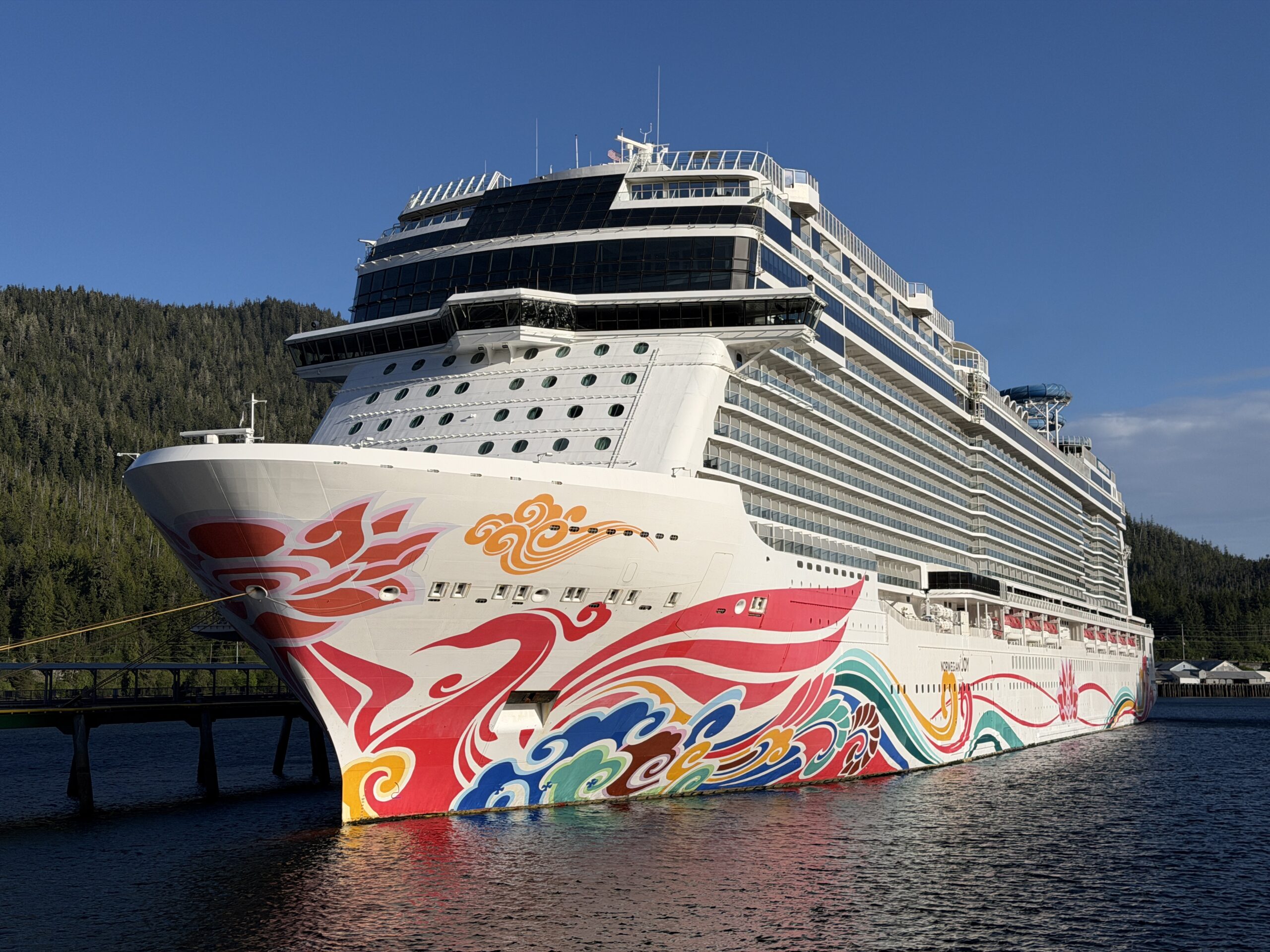
Back to our ship for the 1.5-day trip to Victoria, British Columbia:
What had ChatGPT recommended?
Norwegian uses Ward Cove, not the downtown Ketchikan docks. Ward Cove says the complimentary shuttle runs between Ward Cove and downtown Berth IV and takes about 20 minutes each way.
Do not assume Rainbird Trail is available. The Ketchikan Gateway Borough says Rainbird Trail is indefinitely closed because of the August 2024 landslide.
For a forest walk, I’d look at Ward Lake / Frog Pond instead. Ward Lake Trail is described as a mostly flat lake-circumference trail, wide gravel, with bridges over Ward Creek. AllTrails lists Ward Lake as a 1.5-mile loop near Ward Cove, generally easy, about 44 minutes. That means you could combine: Ward Cove → Ward Lake/Frog Pond area → shuttle downtown → Creek Street/totems → ship
This was useless advice. The trailhead suggested by ChatGPT is a 3-mile walk from the cruise dock along a main road and there aren’t rental cars available at Ward Cove. As it happens, the rest of the family enjoyed a fishing excursion in a 6-passenger boat (plus the captain’s two Australian shepherds). It was too early for salmon, but they caught some rockfish and then had a bbq on an island. I didn’t join because it would have been much sitting in an uncomfortable boat (spoiled by the Norwegian Joy!).
Trail of Tears.. Married Mans’ Trail.. LOL
Meh, I don’t know…when I was single I cried more tears into my Chunky beef stew than the 3 Michelin star food Mrs. Hippy makes. She does spend some of our money on Sierra Club dues. Muir would probably lobby for the old sign. Kind of like putting the head of your slain enemies on pikes.
Please post your views on homelessness in Victoria vs other cities, eg: San Francisco. A decade of the Trudeau govt blessing us with ~1M newcomers per year (and 3-5M “temporary” foreign workers) has surely enriched us. Yet the median house price in Victoria rose to $1.2M, while the median income only rose to $50K (ie: impossible for most to buy a home). It remains a mystery why so many are now living on tents on the streets of Victoria …
Th eulogization of the so-called indigenous people is one of the great insanities of the modern world. So, in Prof. Keeley’s great “War Before Civilization,” here referring to a Maori native of New Zealand taunting the preserved head of an enemy chief:
“You wanted to run away, did you? but my [war club]overtook you; and after you were cooked , you made food for my mouth. And where is your father? he is cooked. And where is your brother? He is eaten. And where is your wife? there she sits. A wife for me. – and where are you children. . . . “?
And imagine how much more interested the lads would be if they were reading about reality, there is lots in the Prof. Keely’s book about the “indigenous” people of North America, than the usual malarky.
Getting on another boat to go fishing after sitting in a cruise ship sounds pretty boring. Too bad Greenspun followed a language model to a dead end instead.
lion: Are you sure that you read the original post? I note at the end that I explicitly rejected and did not follow ChatGPT’s advice (and did not “get on another boat”, which was not, in any case, part of ChatGPT’s advice).
> Are you sure that you read the original post?
Since when was that a prerequisite for commenting on the internet? Doing so myself:
> invest a huge amount of time and energy in learning their ancestral languages, now of no practical value
I’m sure many Jewish kids think the same thing when their bar mitzvah or bat mitzvah approaches. It doesn’t make it true. English is such a horrid language anyway, lexically overloaded, borrowed, pompous, ambiguous, and irregular (think of the words “diversity” and “freedom”). Blech. We should have dumped it after the American Revolution.
NH: The bar mitzvah analogy sounds reasonable until you reflect that an American Jew who gets through a bar mitzvah cannot speak, write, or understand Hebrew, a non-Indo-European language. A 13-year-old can learn to read Hebrew with about 30 hours taken away from Xbox time. He/she/ze/they would need over 1,000 hours of study and practice to be able to hold a conversation in Hebrew.
> There are so many immigrants from India, China, Vietnam, Latin America, the Middle East, and God knows where else that, in addition to our native culture we have to learn about languages, religions, and cultures from 10 or 15 different countries just to get through a day in the U.S.
Can’t speak about other places, but definitely contemporary Indian culture is where native Americans will not naturally fit. From my limited exposure to the native American culture, it’s very close to the Adivasi culture in India:
https://en.wikipedia.org/wiki/Adivasi
Although, pre Mughal India has a history of assimilating other cultures based on Nature, like Zoroastrians from Iran, the contemporary India, having learned how to exploit people from their British and Mughal masters, has not treated the Adivasi’s fairly. The government, heavily influenced by the British, with many vestigials, has done a poor job at assimilating them:
https://www.jstor.org/stable/4419895?seq=1
So poorly, that it has been identified by other external powers and some of Adivasis have had to resort to terrorism on their own land, like the linked abstract mentions. Therefore, it’s no suprise if the native Americans would find the contemporary Indian “culture” very different from theirs, although it’s originally based on similar ideas as native American culture.