Continued coverage of the town that supports EAA AirVenture…
“‘I haven’t known happiness’: Congolese refugees in Oshkosh share resettlement experiences” (Oshkosh Northwestern, Feb. 17, 2025):
“I haven’t known happiness since coming here,” Zawadi said in Swahili, still calmly.
“The people are good [here], but the systems are not,” Zawadi said through her daughter Jeannette, who translated in English.
There was also a brief pause on federal grants that was eventually rescinded two days after it was initially issued last month.
For context, refugees like Zawadi and Tuliya, the mother of the second Congolese family, rely heavily on resettlement agencies like Christian humanitarian organization World Relief, which relies heavily on federal grants and funding.
One of the things that makes groups such as World Relief so vital is they pay immigrants’ housing, utilities and other essentials for their first 90 days in the U.S., hoping they will eventually find a job and land on their feet after those initial three months.
How much profit potential is there for World Relief in and around Oshkosh?
World Relief Wisconsin serves 660 immigrants in the Fox Valley area. According to Regional Director Gail Cornelius, World Relief Wisconsin is serving 125 new immigrants in the Fox Valley region alone, having already helped nearly 350 new residents in 2024.
Winnebago County government has since contracted World Relief to handle that initial 90-day resettlement of immigrants in the county, agreeing to reimburse the agency up until April.
But World Relief Wisconsin serves approximately 660 clients through its Fox Valley office alone, and the organization is just one of 10 resettlement agencies in the entire country.
The latter’s family has been in Oshkosh since last August and was settled by World Relief in a house with a monthly rent of $1,800. But Zawadi is still learning to speak English, leaving Jeannette, at 22 years old, as the only working member of the family of eight.
The family is still eligible for Refugee Cash Assistance, a federal program that provides temporary financial relief to refugees who recently arrived to the U.S. But it’s unclear whether the recent executive orders have put a pause to that program, too.
Americans who can’t afford to have children are funding Africans to have at least seven kids (the father was left behind in Africa, so this is a “single mom” with seven children, apparently happy to share one house; see “Densely packed invasive anoles outcompete natives”:”The Cuban newcomers also tolerate much denser living conditions, while green anoles don’t. This allows the invasive species to take over more territory.“).
Some birthright citizenship action in a different family of migrants:
Eventually, she, her husband and two children were resettled in Manitowoc by World Relief in 2021. Now, their family has moved to Oshkosh and grown with the addition of two kids.
A common theme for African refugees is the system’s refusal to acknowledge their qualifications.
Zawadi also speaks Swahili, Kinyarwanda and Kibembe and was a successful entrepreneur while moving her family through Botswana, Tanzania, Malawi and Zimbabwe.
Americans who can’t afford to have children paid an African family to have four children, so far, and then be less happy/successful compared to if they’d stayed in Africa.
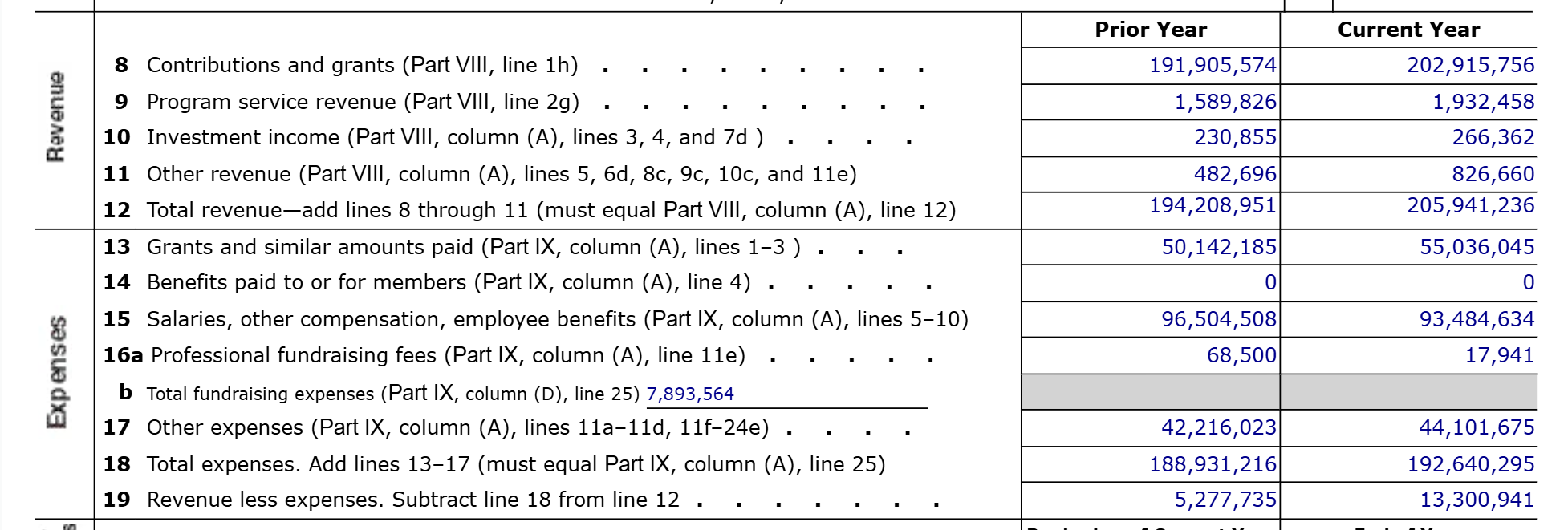
How fat do the do-gooders at World Relief get? Based on their Form 990, they take in about $202 million/year in money (nearly all taxpayer funds?) and pay out $93 million to employees.
Note that none of the above-mentioned refugees are seen at the airport during AirVenture. So far all of the people we’ve seen serving as volunteers have been white native-born Americans. This is mostly true of those working at restaurants, picking up trash, servicing porta potties, etc., as well, though there are perhaps some Latinx working at Latinx-themed food kiosks.
Wisconsin has attracted the worst migrants before. But this time it will be different!
https://www.aclu-wi.org/news/blog-national-disgrace-wisconsin-incarcerates-more-black-people-anywhere-else/
https://www.tmj4.com/news/local-news/study-ranks-milwaukee-as-worst-city-for-african-americans
However, if Wisconsin is indeed the most racist and inhospitable state, then why are World Relief comrades sending refugees there? Urgently forward me $202 million and I will advise on which of the other 49 states are more suitable. (Also accepting bids from said 49 states).
> “The people are good [here], but the systems are not,”
Yeah, as opposed to those systems you people engineered. You know the ones that led you to flee your shithole country, dumbass? Don’t let the exit door to Mexico hit you in your wide American fed ass. I hope someone is throwing money to save the mountain gorillas, a species worth saving. Translate this: “Romanes eunt domus”.
> Americans who can’t afford to have children are funding Africans
I can afford to have them, but didn’t want them to be slaughtered by immigrants.
We really ought to be more charitable to World Relief (I thought they made toilets and urinals, learn something new every day). They were successfully audited using GAAP, so you know they legit. Bunch of dangling audit trails, but nothing is perfect, no? Looks like most of the salaries are for mental health counselors for immigrants faking anxiety. I’m sure the Save the Mountain Gorilla Foundation spends at least 1% of their income on their mission too, so be sure to contribute if you have…
[Ordinary Average Guy’s outrage tokens exceeded. Please insert 25 Biden inflated dollars to continue or press “Exit” to go on a beer run.]
If helping Congolese people is the goal, wouldn’t it be at least 10x more efficient to send $ to Congo than to pay to for Congolese to live on welfare here? To keep a Congolese family with 8 kids here likely costs $200k/yr (housing food school medical etc) Half that amount could cover 10 families in Congo,,where the gdp per capita is less than $1000/yr.
Here is what I don’t understand. All illegal migrants say they are leaving their country in search of a better life or because they fear for their safety. But are we really saying there are no employment opportunities anywhere in their country that they can move to, and are we really saying that there isn’t a single safe region where they could relocate to in their home country?
If the answer is “yes” then wouldn’t that imply that virtually everyone in that country is unemployed and unsafe? And if that is the case, does it follow that everyone should migrate?
According to the 1951 UN refugee convention:
1. Refugees from Congo are not required to return to Congo and seek shelter in other parts of Congo (a country of the same size as the Eastern USA).
2. Refugees are not required to stay in safe countries of Botswana, Tanzania, Malawi or Zimbabwe, even if they were “successful entrepreneurs” there.
3. Economic hardship on the other hand does not qualify for refugee status. There has to be some story about a threat of violence.
So yes, everybody in a war region can apply for refugee status. Host country, however, could have additional requirements.
BTW, weren’t a lot of earlier Congolese refugees ethnic Hutus who tried committing genocide in Rwanda, failed and fled to Congo? How many current refugees in the world are of type “Tribe A tried to defeat tribe B, failed and had to flee”?
How many current refugees in the world are of type “Tribe A tried to defeat tribe B, failed and had to flee”?
See also, Somalia. I have for instance read that Ilhan Omar is the daughter of a losing Somali warlord. (She also appears to be doing immigration shenanigans, e.g., marrying her brother.)
But where does all the money from learing center go?
https://thekenyatimes.com/opinions/a-construction-boom-redefines-the-horn-of-africas-white-pearl/