One of the many interesting talks at EAA AirVenture (“Oshkosh”) 2026 was by James Schreiber, a U.S. Navy veteran-turned-IBM-patent-lawyer with a passion for seaplanes.
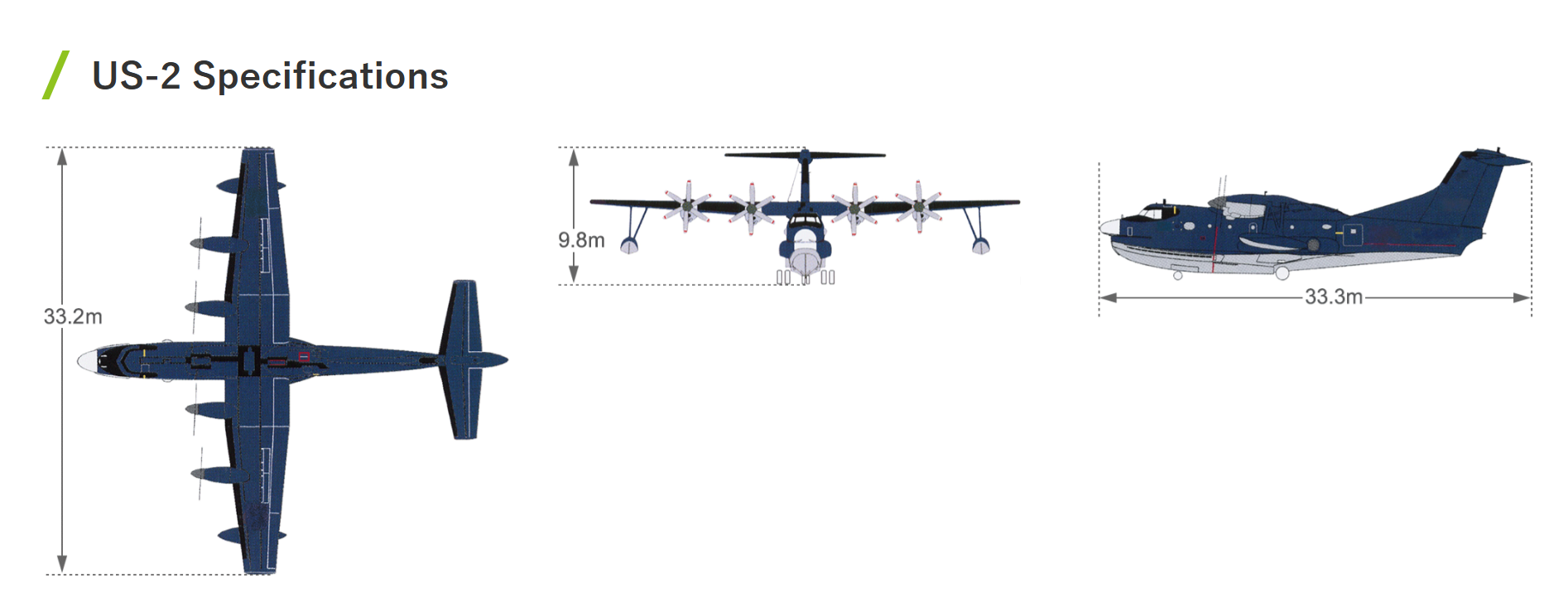
First, there is no reason that seaplanes can’t be part of a modern navy. The ShinMaywa US-2 is a four-engine monster with tremendous range in service with Japan (source):
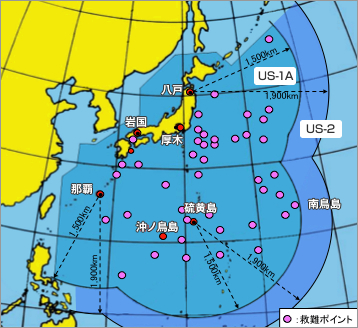
Here’s the radius of search and rescue action:
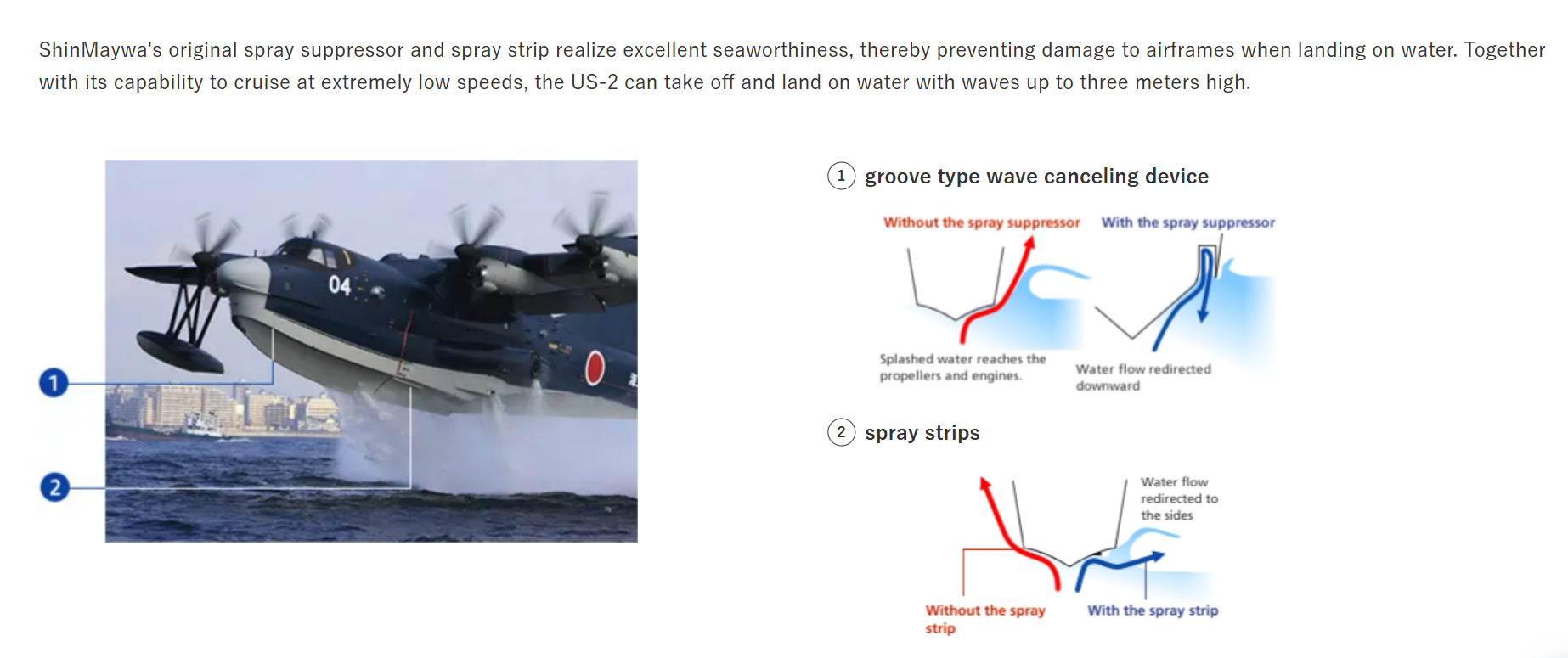
Contrary to what we tell MIT students, a seaplane actually can land in real waves (up to about 10′ in this case):
(If the Canadians weren’t sending so many of their tax dollars to Hamas, they could have purchased water bombing versions of this magnificent 120,000+ lb. beast and preserved U.S. air quality.)
We learned that one of the most interesting periods of our U.S. Navy was the 1950s. The USAF had gained ascendancy in government and the doctrine was to destroy our enemies via strategic bombing from land-based airplanes, such as the then-new B-52 (considered a short-term solution at the time, a stopgap until the glorious age of supersonic bombers), and ballistic missiles. The Navy’s funding requests for new aircraft carriers were denied and, thus, the Navy tacked (so to speak) toward submarines and sea-based airplanes. The Navy had designs for jet-powered fighters, bombers, and transport seaplanes. The Convair F2Y Sea Dart is the most famous example, a supersonic fighter that first flew in 1953. For raining down destruction on our enemies (back when we actually wanted to win wars!), the Martin P6M SeaMaster first flew in 1955. For moving troops and vehicles from harbor to harbor, the Convair R3Y Tradewind, which first flew in 1954 (a little heavier than the above-mentioned Japanese seaplane and, therefore, potentially even better for our brothers, sisters, and binary-resisters trying to fight fires in Canada with whatever funding scraps they have left over from serving as the Palestinians’ logistics arm).
Part of the 1950s rationale for a fleet of sea-based aircraft was that they’d be more challenging for the enemy to find and target than runways and monster-sized aircraft carriers. Perhaps that rationale is even more, uh, rational today? Let’s consider our gradual surrender to the Islamic Republic of Iran (can’t be called a “war” because we apparently don’t have any ambition of winning, in which winning would be defined as destroying the Islamic Republic’s oil and electricity industries so that they wouldn’t be able to rebuild and run weapons factories). The ships of the Iranian Navy that were larger than an aircraft were quickly destroyed by the U.S. On our side, our fixed bases, such as Muwaffaq Salti Air Base in Jordan, have proved vulnerable to Iranian missiles.
Readers: What do you think about resurrecting the 1950s idea?
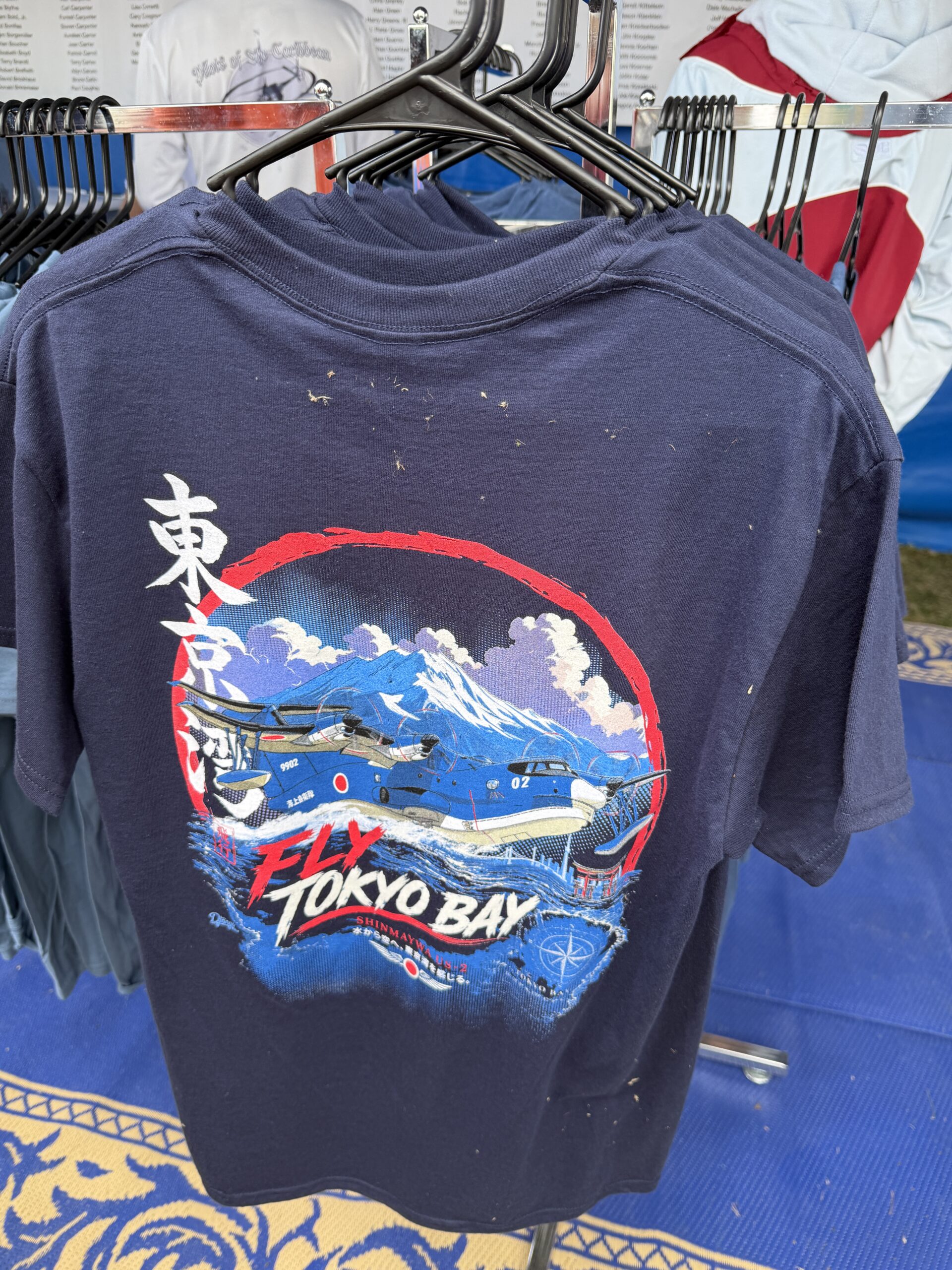
An awesome T-shirt from the Seaplane Pilots Association (not in their online shop yet):
Leave it to the hawkish set and their wars for territory to exploit the untapped potential of technology. And the rich in their pursuit of luxury and more play time…routing around the pesky non-playable characters in the general public.
https://en.wikipedia.org/wiki/REGENT_Viceroy
Brought to you by the Nationalsozialistische State of Scroat Island, no less.
For more information on this topic and others, please watch the following informational video. Written by a Portuguese speaker, with knowledge of about 100 English words, much more than his counterparts in the Isle of Scroat. Much cleaner cut, too.
Boys from Brazil? Shee-it, clones of Adolf are much nearer, nestled in the charming quaint towns of Naragansett Bay. <<<3 RI lol
Meh, I blame two-faced “doves”. Recall the movie The Day the Earth Stood Still
https://en.wikipedia.org/wiki/The_Day_the_Earth_Stood_Still
> That evening, a government agent escorts Klaatu to Barnhardt. Klaatu tells Barnhardt the people of other planets are concerned about Earth’s aggressiveness now that humanity has developed rudimentary atomic power and that if Klaatu’s message is ignored, Earth could be “eliminated”. Barnhardt agrees to gather scientists from around the world at the saucer; he suggests that Klaatu provide a demonstration of his power beforehand.
We should have learned our lesson with Vietnam and Afghanistan, regarding “democracy-building”. Time to chuck that idea. I mean Nazi’s were nice enough to work with to rebuild. These people…nah. Maybe once Iran has been eliminated (using some old-fashioned B-52s in part), it could be a nice large for-profit “refugee camp”, and take care of some domestic issues as well. For that process, see the movie Escape from New York:
https://en.wikipedia.org/wiki/Escape_from_New_York
> The film is set in 1997 and concerns a future crime-ridden dystopian United States, which has converted Manhattan Island in New York City into the country’s sole maximum security prison.
“Welcome to your new desert home, thieving Somalian Fish. The U.N. has a nice tent for ya next to a fine Palestinian fam.”
Yeah, yeah, there is still the oil. The Europeans’ endless thirst for oil does need to be quenched. Let our non-U.S. “partners” in the U.N. and NATO figure out how to get it out of country. They can have, oh hell let’s be generous, 10% of the proceeds, the other 90% goes to America. What about refugee “guests” that break the night curfew and attack the oil infrastructure? Anyone who stands still is a well-disciplined refugee “guest”, as the saying goes.
Sea warplanes could be a great force multiplier for existing navy, doubt that they could replace hulls in the water.
Blockchains, that’s the ticket.