It’s Academic Integrity Day here on this blog… (see Plagiarist Claudine Gay getting paid $3.1 million/year after “resigning” from Harvard)
The smartest people in the Islamic Republic of the UK hired Jason A. K. Arday to hold a professorship at Cambridge University in 2023, which is a huge appointment (what we call “assistant professors” they call “mere lecturers”). He’s been in the news recently for Claudine Gay-style plagiarism combined with an unusual life story. From “Icarus in the Faculty Lounge” (The Atlantic):
According to a cover letter that his agent sent to publishers at the time [2023], Arday’s book, to be titled Great and Unfortunate Things, would be “an awe-inspiring tale of near mythic proportions.”
That now appears to be an understatement. Arday’s story was indeed astonishing: As a toddler, he was diagnosed with autism and developmental delays; he didn’t fully speak until the age of 11; he learned to read and write only as an adult. Arday’s parents are Ghanaian immigrants [enrichers!]
Arday’s grad-school alma mater, Liverpool John Moores University, which first received direct complaints about the dissertation last fall, did its own investigation and cleared Arday of wrongdoing. “A confidential procedure was conducted,” the university told me in a statement. “Professor Arday’s PhD still stands.” But some of Arday’s other academic papers had potential problems too—and they seemed much worse than the mere borrowing of language. Quotes from structured interviews that Arday claimed to have performed closely resembled those used by other researchers; parts of some interview responses also reappeared across different studies under Arday’s name, attributed to different people. This duplication, if deliberate, would be something other than plagiarism—it would be academic fraud.
Might this be Donald Trump’s fault?
Some of the people who were going after Arday had a political agenda. Cofnas, the philosopher who put Arday’s dissertation through a plagiarism checker last month, argues for a “hereditarian revolution” based on the idea that innate differences in intelligence and other traits exist across racial groups. (He also claims that “the humanities and much of the social sciences have been slain on the altar of DEI.”)
Everyone loves an abuse survivor:
The doctors who assessed him as a toddler told his mother that “there’s no one in there” and that he was “no better than a vegetable.” Even his speech therapist wasn’t optimistic that he’d ever learn to talk. (At one point, she also physically abused him, the memoir says.) As a boy, Arday rocked and hummed and banged his head until he bled; he slammed cupboard doors and smeared his feces on the walls. Yet still, eventually, he started to verbalize.
Arday is nearly deaf in one ear; he’s dyslexic; he finds simple math befuddling; he has “marked difficulties” with memory, reading, and processing skills. As a teen, he was beaten so severely by a group of kids his age that he became an epileptic. To make his way through secondary school while—by his own account—illiterate, he needed ample help: support assistants who sat beside him in class and took notes on his behalf.
(What good are “notes” if a person is “illiterate” (unable to read)?)
By the time Arday started on his master’s degree, he writes, he was reading at about the same level as his 3-year-old daughter.
Money was tight, so after each day of teaching, Arday writes, he had to work an overnight shift in a supermarket, from 11 p.m. to 5 a.m., and then a morning shift as a cleaner from 5:30 to 7:30. The only time he had left to write his dissertation was when he was commuting between London, where he lived, and Liverpool, where he taught. On those semiweekly five-hour rides, the book explains, he would open up his laptop on the plastic seat-back table and start typing out his thesis, hunt-and-peck style.
As his dissertation deadline approached, Arday started having blurry vision; medical scans revealed a brain tumor. After it was removed, he had a ministroke and lost his short-term memory. “I’d worked on my thesis for over thirty months, and now I was reading it as if for the first time,” he writes. As one might expect, his thesis defense did not go smoothly. One examiner was suspicious of his work: “I am struggling to see that there is any original contribution here,” she said, according to the book. But Arday, who often likens himself to Rocky Balboa, managed to fight back, and in the end, he passed. (The memoir brings up the fictional boxer in about a dozen different contexts.)
(Note that Rocky is now a Florida resident (Journal of Popular Studies) and stopped paying taxes to Gavin Newsom in 2024)
More troubles follow in the years ahead: Arday’s brain tumor returns; he splits up with his wife; he suffers autistic burnout during the coronavirus pandemic and can’t get out of bed. He decides to kill himself by jumping off a bridge, but at the very last minute, he listens to his favorite song, “Take It to the Limit”—delaying his attempt just long enough for a member of his family to rescue him. “In the end,” he writes, “my decision to listen to the Eagles likely saved my life.”
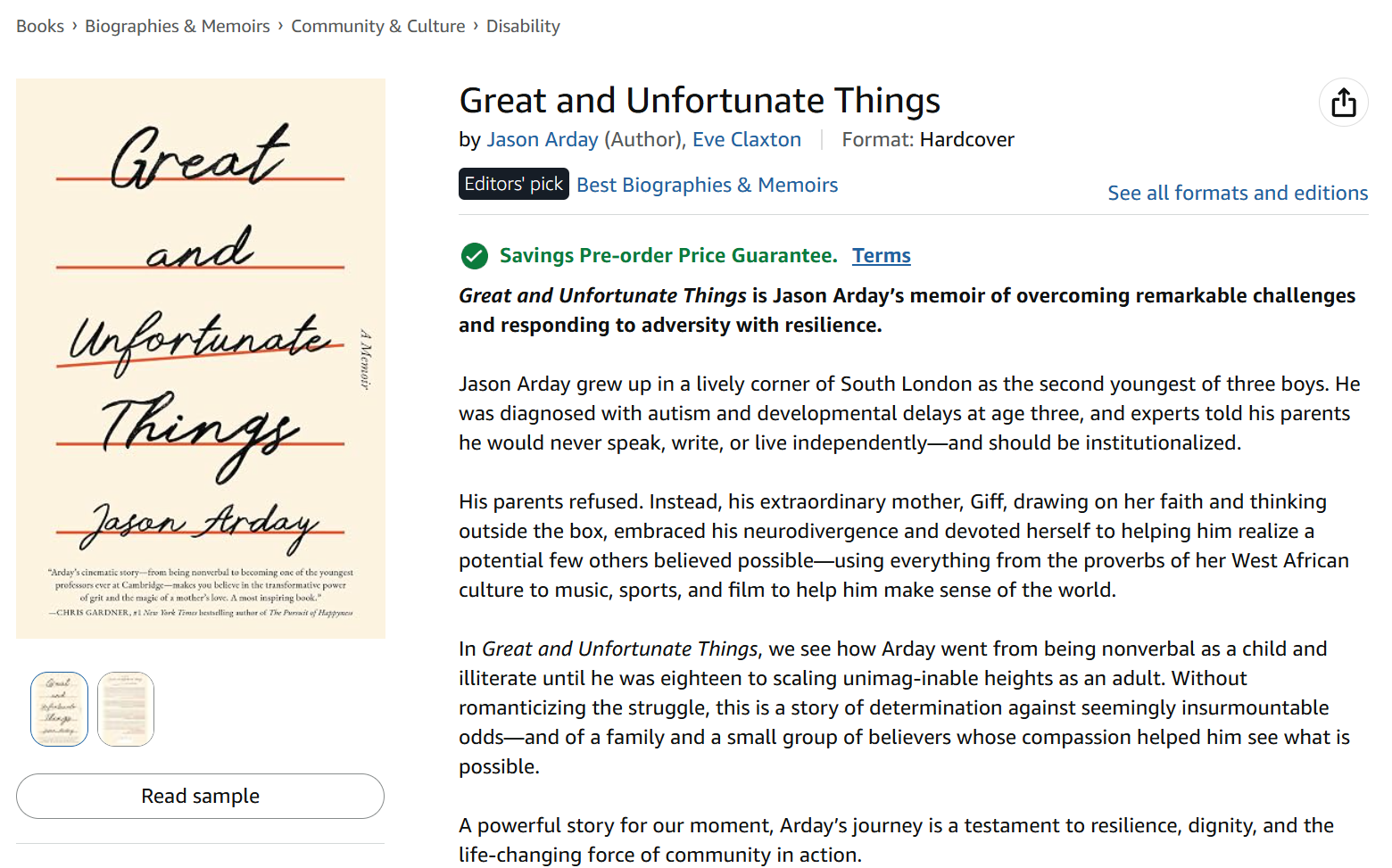
I reached out to the book’s fact-checker [at Simon & Schuster] to ask whether this and several other stories from the book had been verified, but she did not respond. … the book’s release is still on track and that it has even been designated as an “Editors’ Pick” on Amazon
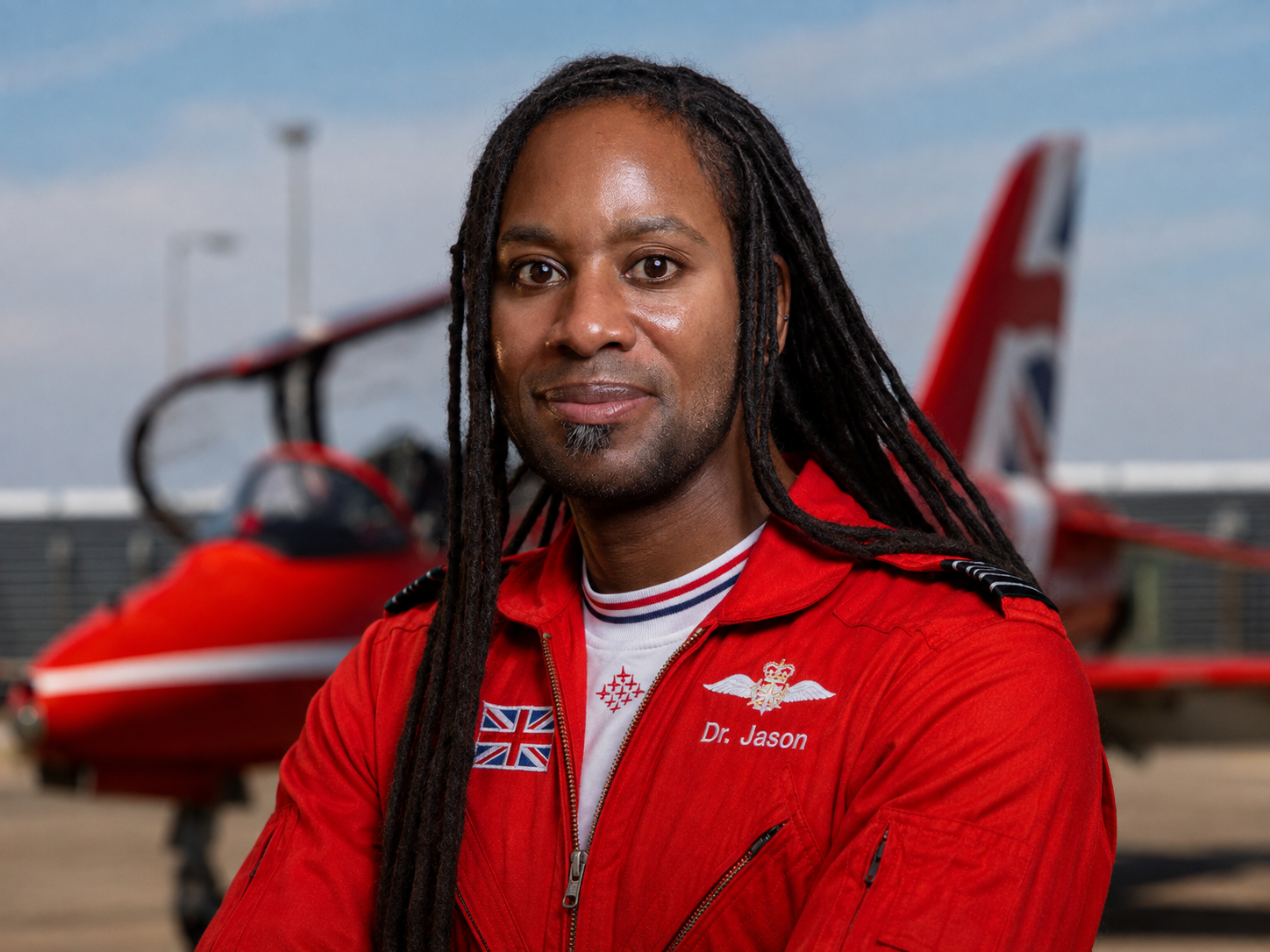
This wasn’t part of the book proposal, but it seems that Prof. Dr. Arday, Ph.D. was also an RAF Red Arrows pilot:
The Professor’s PhD thesis is available online. I downloaded it and asked ChatGPT to “evaluate the quality of research and writing”. Some excerpts from the full interaction:
The biggest problem is the sample and selection mechanism. There are only four intervention participants, selected from 46, and selection expressly included whether the candidates demonstrated characteristics that the researcher thought “resonated with the study’s aims and objectives” and a desire/capacity to improve their teaching. … More seriously, the researcher was a lecturer at the university attended by the subjects and already had relationships with them.
There is also no convincing counterfactual. There is:
no control/comparison group,
no random assignment,
only four highly selected subjects,
an intervention that the researcher helps facilitate,
and outcomes that are overwhelmingly based upon the subjects’ own narratives and perceptions.The thesis itself eventually admits a crucial point: it cannot determine with certainty whether improved reflective practice would have occurred naturally rather than because of the peer-mentoring intervention.
Contribution to knowledge: This is probably the weakest part of the intellectual case for a PhD.
Writing quality: This is much easier to judge: the prose is substantially below the standard I would expect in the final, examined copy of a PhD thesis from a British university. The problems aren’t occasional typos. They’re pervasive. Even the title contains an erroneous apostrophe… Throughout the thesis there is a characteristic tendency to take a simple proposition and turn it into an elaborate nominalized construction. … Most problematic is the repeated use of inflated pseudo-technical expressions that obscure ordinary ideas.
The prose also affects the scholarship: This is more important than cosmetic proofreading. The convoluted language sometimes makes it difficult to determine exactly what proposition is being asserted and how strongly.
Should Arday have been given the big job at Cambridge?
Cambridge’s published criteria for its highest professorial level say that a Professor at Grade 12 should demonstrate: “outstanding achievement in research and research leadership assessed by reference to international levels of excellence”… Against that benchmark, Arday’s 2023 record looks unusually thin.
Cambridge’s February 2023 announcement … emphasizes his work on race … and, very explicitly, the importance of his appointment to Cambridge’s efforts to increase representation of people from disadvantaged and ethnic-minority backgrounds.
Asked to place Arday in a percentile of people in the same field, ChatGPT grudgingly estimates “somewhere around the 30th–50th percentile overall” (i.e., quite a few people with PhDs in education/sociology are far dumber than Dr. Arday!).
Here’s the Amazon page showing that this is, according to their experts in Seattle, among the world’s “Best Biographies & Memoirs”:
Throw out your Life of Johnson. It’s not among the “Best Biographies”.
Related:
- “Jason Arday taught me. Here’s what I learned” (Fiona Brown in Unherd): “Before Arday arrived at Roehampton, university leaders enthusiastically told us of his amazing backstory: how he only learned to speak at 11 and write at 18, and how excited they were to have him teaching us. … I can honestly describe Arday’s teaching as terrible. He rarely used the PowerPoint slides. Instead, he usually sat casually on a desk, giving his generalized views on racism … Roehampton is a very diverse university, both in terms of racial background and neurodiversity, and takes inclusion seriously. More than two-thirds of the class were either black or from other non-white backgrounds. Most were women… In the end, Arday gave me 70% for my essay. That sounds good — except that my average for the year was 75%, meaning my overall result was dragged down. … In our meeting, I explained that 70% was a low mark for me and asked him to provide feedback. Suddenly, his friendly, confident demeanor changed. I now saw a side of him I’d never seen before: angry, but also scared. Arday implied that I was racist, and said that the only reason I wasn’t happy with 70% was due to my “white privilege”.”
It’s insane. Here’s a story a friend of mine wrote about that s guy.
https://substack.com/@validscience
> It’s Academic Integrity Day here on this blog
From the archives:
https://philip.greenspun.com/blog/2023/07/20/a-lover-of-diversity-lockdown-static-climate-and-democracy-is-demoted-at-stanford/
“Demoted,” LOL.
His mother is a mental health nurse.
His brother is a “neurodivergent educator of Computer Science, AI, EdTech and STEM”.
Are children of mental health professionals more likely to claim to have mental issues?
I have to admit, I seem to have misplaced the world I used to live in.
(I tried to run ShatGPT on Phil’s Ph.D. thesis to compare and contrast real genius. “115MB scanned PDF exceeds 5MB limit.” All my “success” only buys me 5MB upload.)
Doctor Arday did contribute to the English language, introducing a redundant apostrophe to plural words which already have an ‘s’. Cool, but a little bit more cognitive workload to rule out a possessive using context. Right there in the apparently un-proofread *title*:
> An exploration of peer-mentoring among student teachers’ [sic] to inform reflective practice
within the context of action research.
…
> ‘Let the Dreamers’ [sic 2X] dream… Excuse me… while I kiss the sky…’ (Jimi Hendrix)
I mean, there is *some* genius to this work, in the same way that fake Somalian day care scams are “genius”. Maybe a bit of motive in this one:
> ‘All for freedom and for pleasure… Nothing ever lasts forever… Everybody wants to rule the world…’ (Tears for Fears)
That wacky Mandela and his 7 hills of Rome in South Africa, also in there, and gave me a chuckle. The only quote I didn’t find was:
Many rivers to cross
And it’s only my will that keeps me alive
I’ve been licked, washed up for years
And I merely survive because of my pride
— Jimmy Cliff
Prescient, wasn’t he?
Phil, as I read your post, I was incredibly proud, not only of course of our Genius Dr. Jason A. K. Arday, but also of you for bringing this very important story to your deserving readers’ attention.
As you can of course imagine, many thoughts have flooded my Big Brain in recent hours, as befitting someone of my stature and pay at Harvard. First, of course Dr. Arday is someone who reminds me in so many ways of a younger Myself (except, perhaps that I am not as accomplished at running Marathons, with Dr. Arday having run 30 marathons in 35 days…wow!). Second, I hope that Cambridge University can recover some semblance of respect among Premier Academics like me (with a PhD in Black Studies Plagiarism, after all) and appoint Dr. Arday as President of Cambridge, and of course award him a large pay raise (as Harvard fittingly did for me when they found I was a black fraudster). Wouldn’t that be a fitting end to this fairy tale story?
Thank you, Claudine, for everything that you’ve done for humanity. Your idea is a great one. “The Chancellor of the University of Cambridge is The Right Honourable Chris Smith, Lord Smith of Finsbury” says https://www.cam.ac.uk/about-the-university/how-the-university-and-colleges-work/people/chancellor
It would be ideal if Prof. Arday were first granted a life peerage by King Charles (a big friend to the Palestinians), perhaps at the next Ramadan Iftar dinner at Windsor Castle. Then the head of Cambridge could be “Lord Arday”.
Phil, I have one word: Yes. And, if I may be so bold as to also suggest (my Big Brain is always working!)…perhaps, Inshallah, at said Ramadan Iftar dinner at Windsor Castle, we can also celebrate the new Palestinian Homeland from the River Nile to the Caribbean Sea, which they’ve been seeking for seven millennia Wouldn’t that be a special twofer for humanity!
Phil, sadly your fantastic idea for Jason A. K. Arday cannot be realized because today we mourn the loss of his life, just one of the many daily tragedies we endure, all resulting from the pervasive, Cruel Racist ideologies that prevail at Cambridge University and so many others of our institutions.
I also posted the following yesterday on your prior post, which was such a wonderful homage to me, and, by extension Jason:
As I reflect on the gifted brilliance of Jason A. K. Arday and his too short life, I am saddened that Cambridge University couldn’t have lived up to the Highest of Moral Standards manifested by Harvard, where someone like myself (and Jason too), the Singularly Greatest World Scholar of Plagiarism was elevated to President of the University, and given a large pay raise to $1.5m too. So sad to watch how the cancer of Racism kills people and destroys our Societies.
I sense some r-r-racism going going on around here.
Racism against the qualified WASP man that should have held Arday’s job?
This is what you get for following DEI. In an effort to demonstrate their commitment to DEI principles, workplaces, universities, and government institutions are forcing themself into oblivion instead of academic excellence.
There was a time when academic integrity was regarded as a fundamental principle of higher education, sadly, that’s gone. However, I have a solution: every student entering higher education must be forced to watch “Dead Poets Society” [1], not some DEI B.S.
That said, I wonder, if “Dead Poets Society” is remade today, would the message the same? Would they use all white acters?
[1] https://en.wikipedia.org/wiki/Dead_Poets_Society
Alas, the link to Arday’s magnificent thesis seems to be dead now.
I tested it just now and it worked! Let me know if you want me to email you my copy.
Here’s a Dropbox link also: https://www.dropbox.com/scl/fi/nfzffcs22qcf5hb83sut5/Arday-PhD-thesis.pdf?rlkey=s9p9yy2vak29ym50u12xaphdo&dl=0
Wayback Machine (web.archive.org)
https://web.archive.org/web/20260808154647/https://researchonline.ljmu.ac.uk/id/eprint/4552/1/158222_Jason%20Arday_%20Final%20PhD%20Thesis%20Vesrion%20Final%20Draft%20Oct%202015.pdf
The Internet never forgets (as much as we want it to forget some things, like Claudine Gay.)
Well, Arday is no longer with us. Sad situation all around with all parties involved.