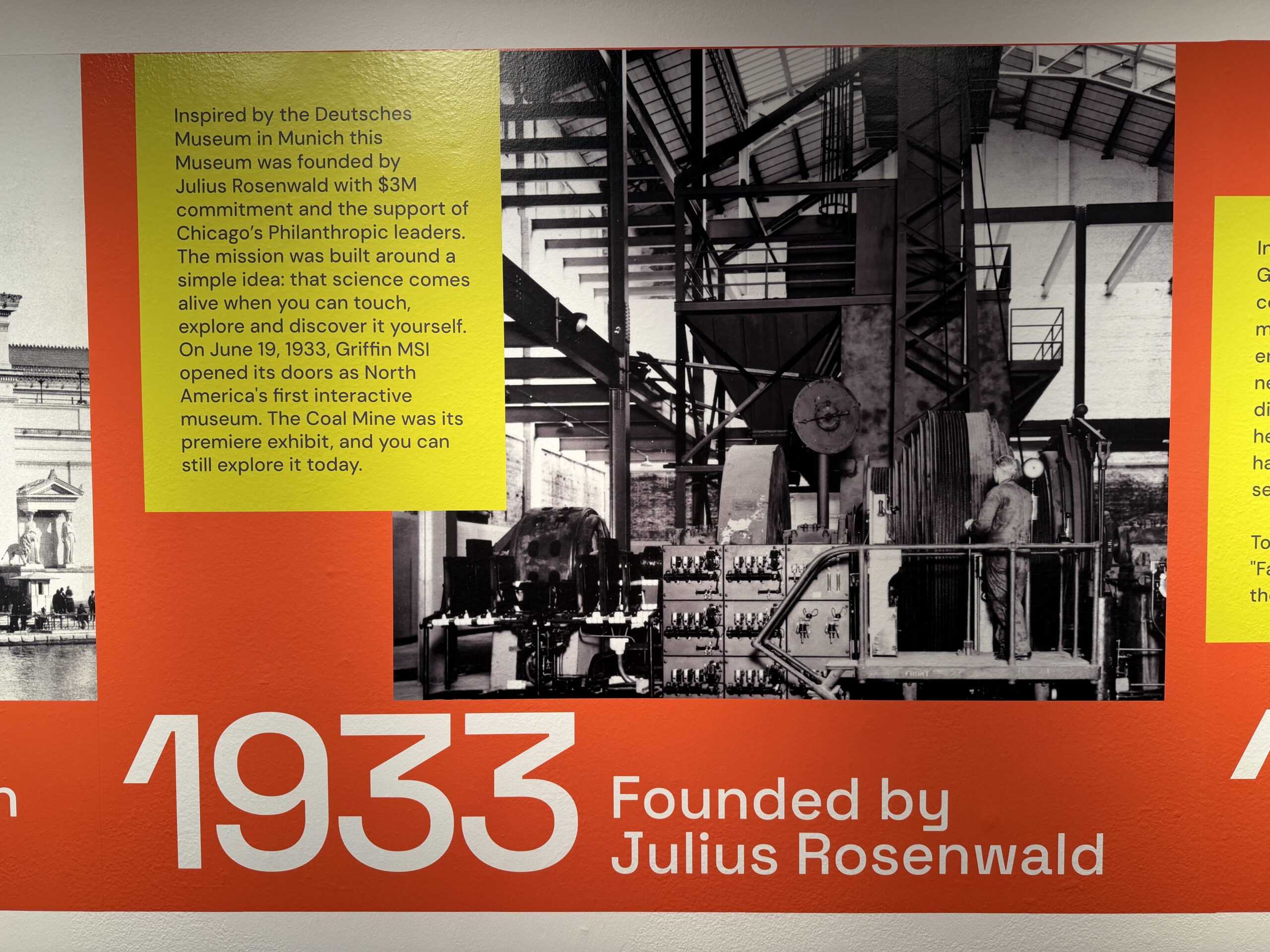
The Griffin Museum of Science and Industry was founded by a Jew, Julius Rosenwald:
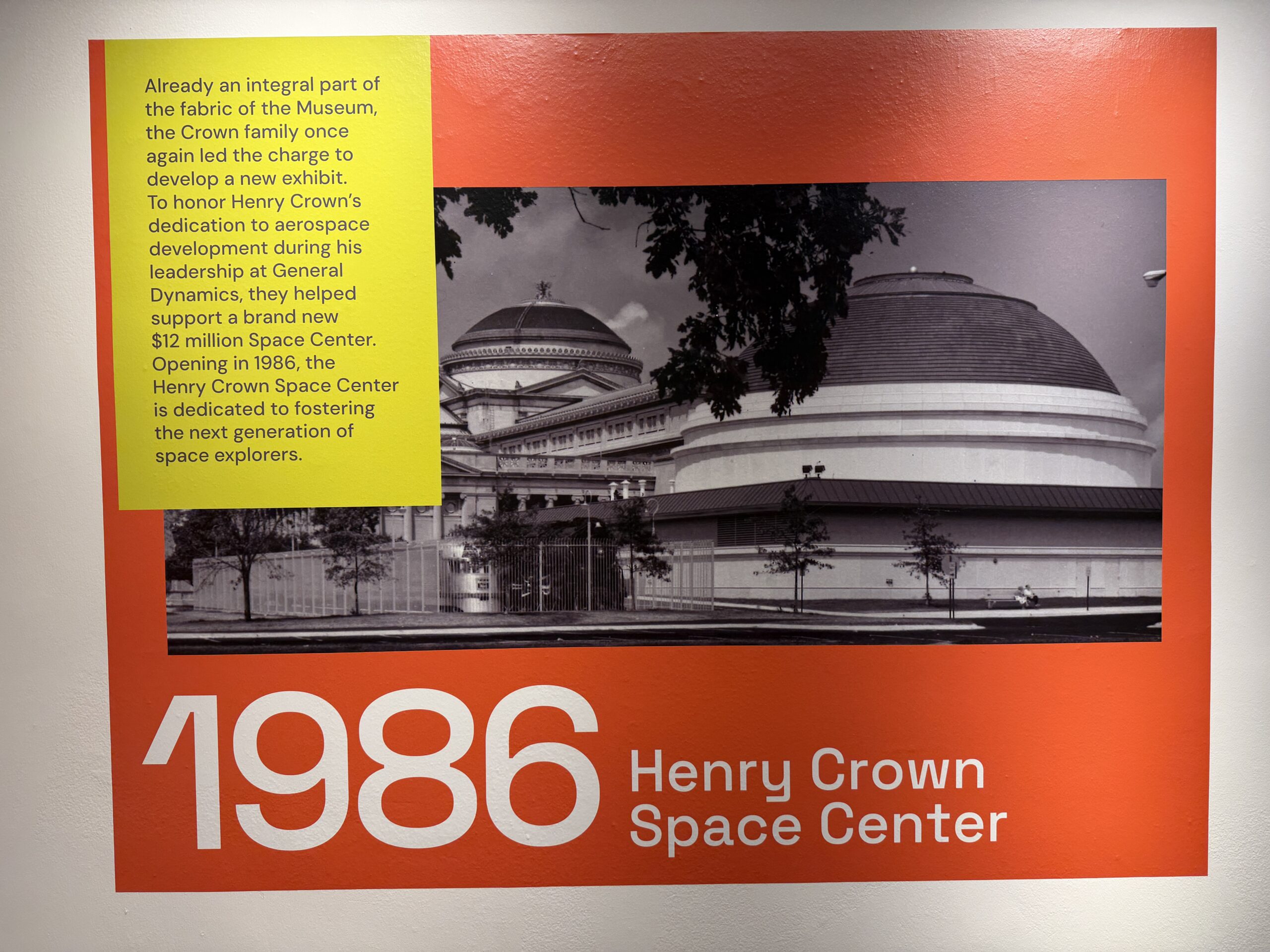
Funding for a major expansion was provided by a Jewish family led by Henry Crown (“Henry Krinsky”):
(Ken Griffin provided the latest slug of funding for the museum, shortly before coronapanic and the peaceful BLM riots led him to relocate to Miami and Griffin is not, to my knowledge, Jewish.)
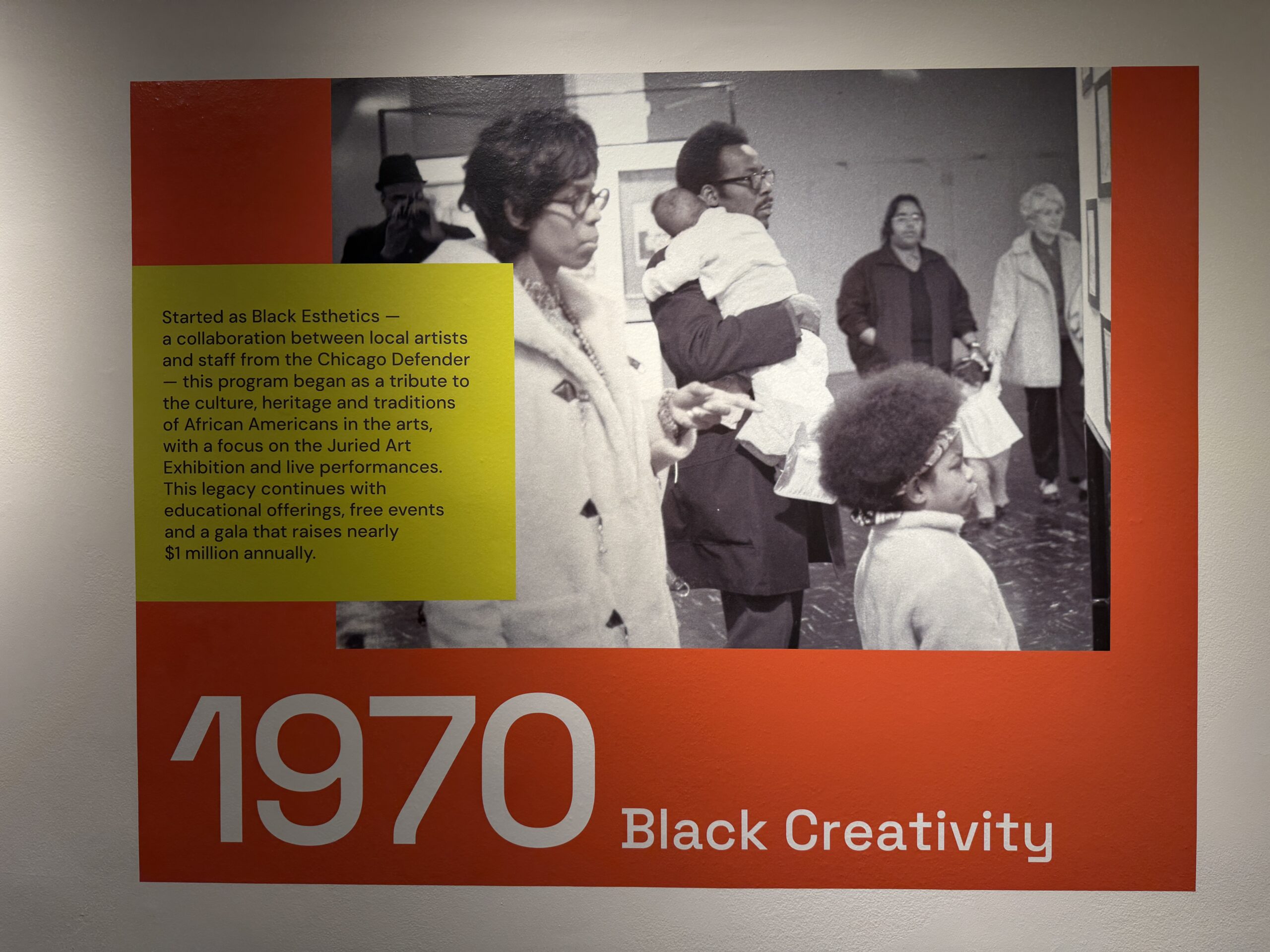
Does the Museum celebrate Jewish achievements in scientice, engineering, and industry? No! Since 1970, the museum has been specifically focused on a celebration of “Black Creativity”:
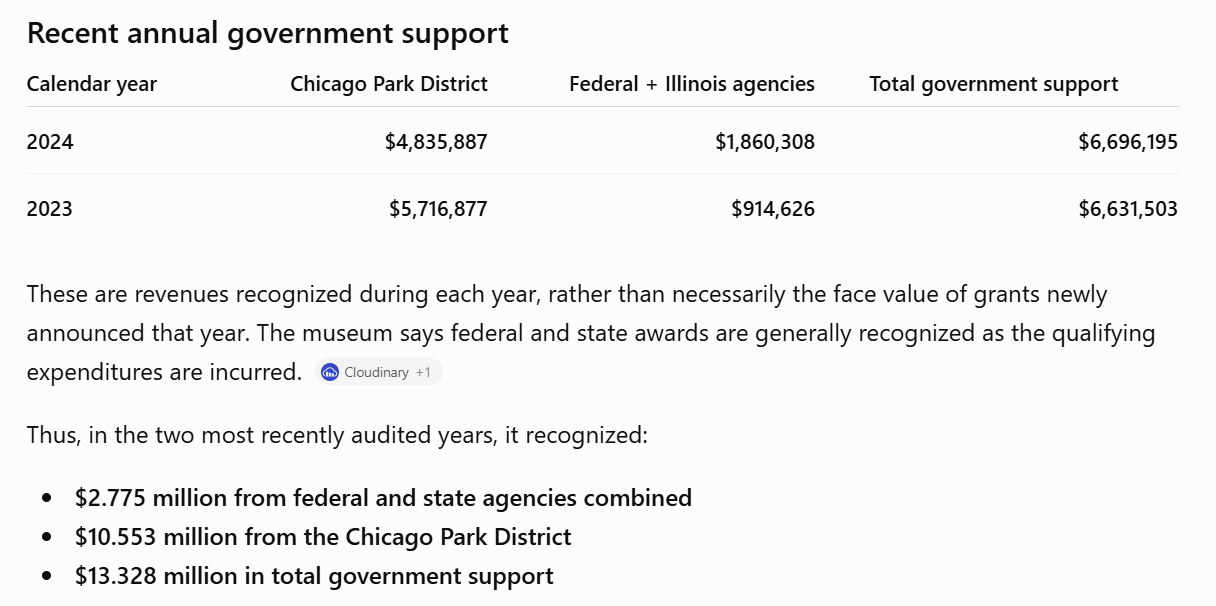
As with other nonprofit organizations’ race- and gender-related programs, I can’t figure out how this is legal. The museum is partly supported by tax dollars, e.g., the taxes that Ken Griffin didn’t have to pay because he gave $125 million (in pre-Biden dollars) to the museum. The museum also gets some state and federal grants. They wouldn’t be allowed to have a “white cisgender heterosexual male creativity” exhibit, right? ChatGPT:
Why don’t they run up against the 14th Amendment as Harvard did in Students for Fair Admissions v. Harvard? Because they don’t discriminate in who can pay $26 to come in and see a discriminatory exhibit? It’s $15 for kids, but note that the price could also be $0 times 8 if you present your EBT card:

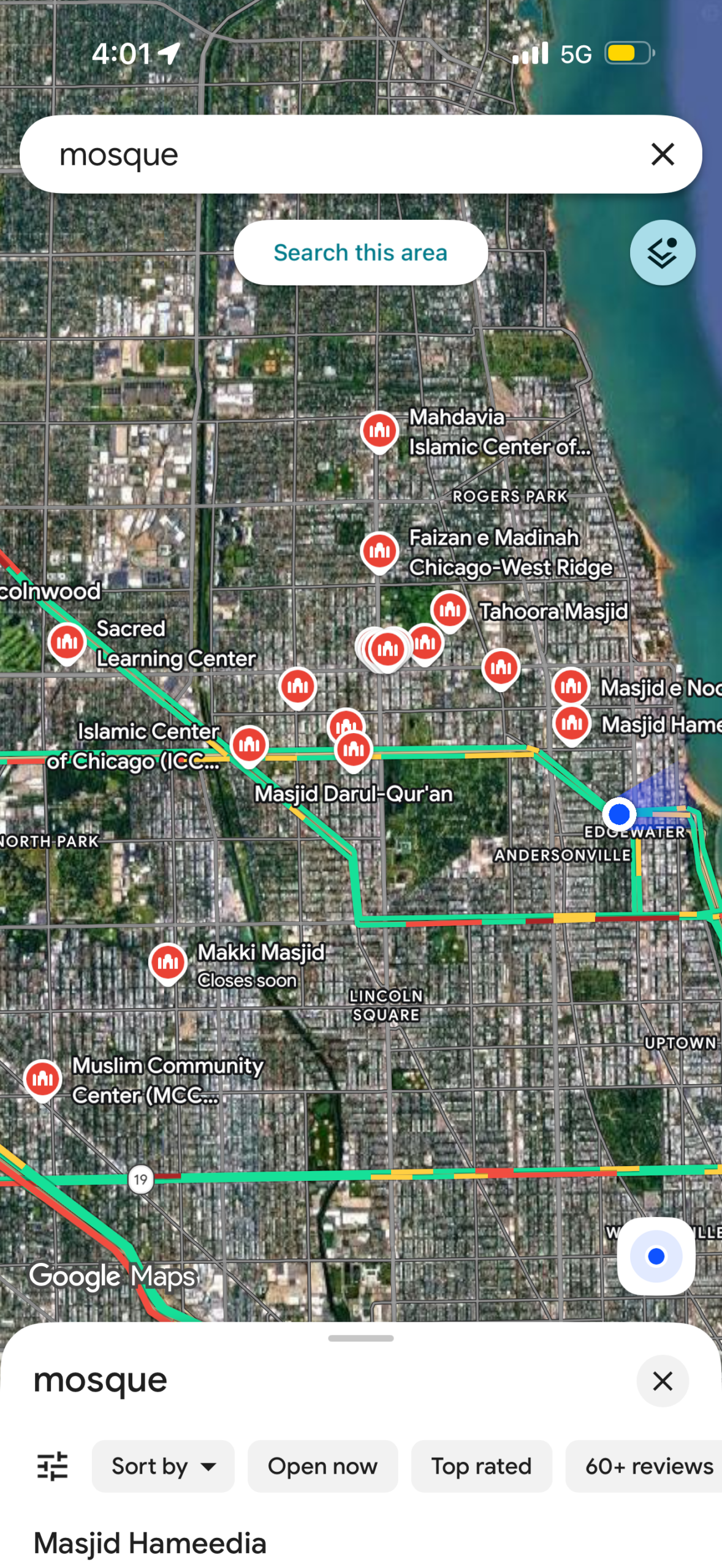
Black creativity seems only loosely related to today’s visitors. ChatGPT says that the Black population of Chicago is declining even faster than the city’s overall population decline while the percentage of Chicago residents who are Asian or Hispanic is growing (but it isn’t fair to characterize this as a “replacement”). Our Venezuelan Uber driver from O’Hare enthused over the fact that Spanish is now spoken everywhere in the city, a huge change in his experience from when he arrived in 2019. As we were driving in from Oshkosh we passed mosques and women in burkas. Here’s the map of mosques on the north side of the city:
What do the Muslim, Indian (“Asian”), and Hispanic taxpayers who visit the museum see? A bronze relief showing Black Creativity in various domains:
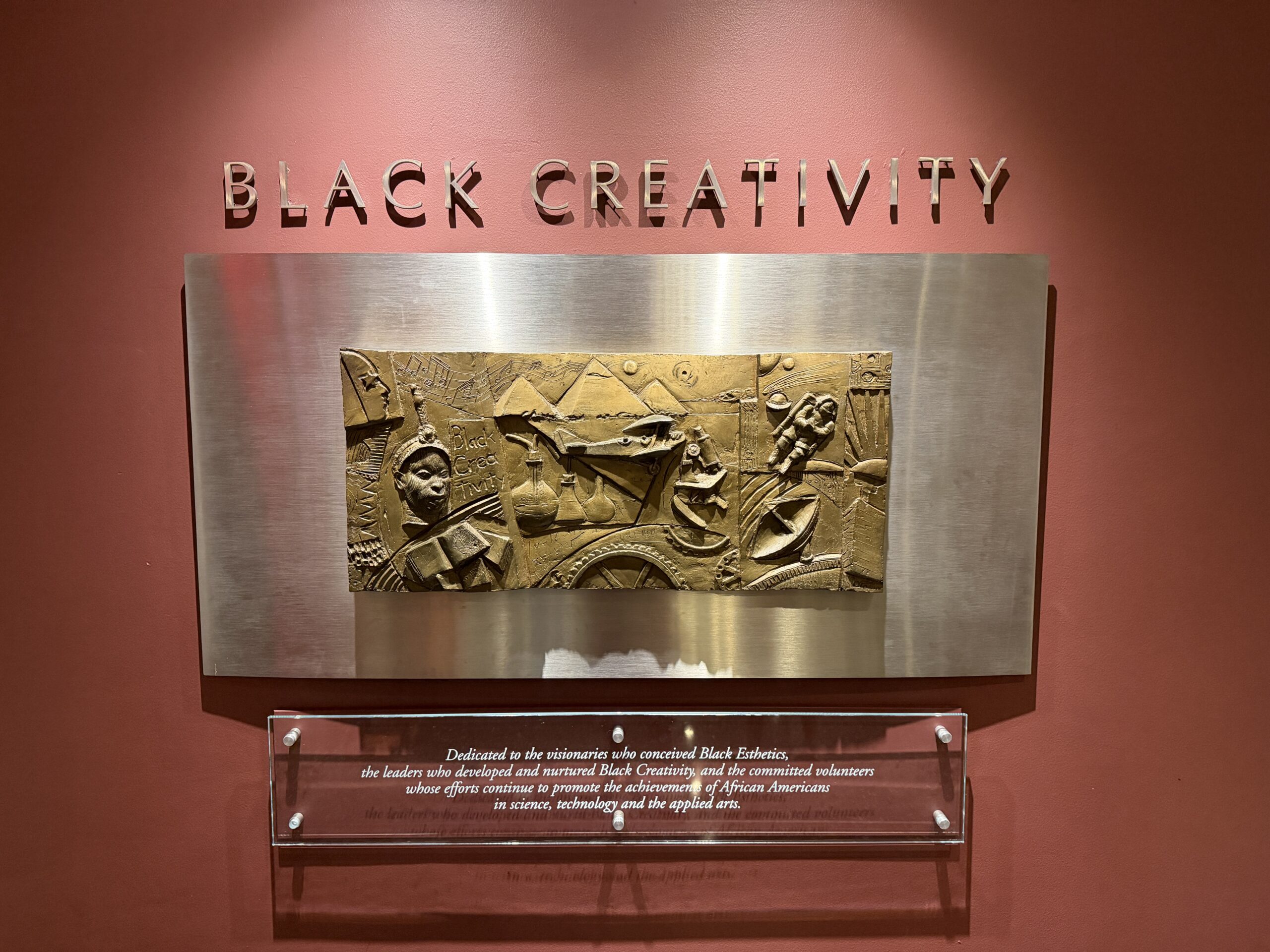
(There are no relief sculptures celebrating Muslim, Indian, or Hispanic creativity.)
I asked ChatGPT “Explain to me how the depicted items are examples of Black creativity”. Excerpts:
Pyramids (top center) – These almost certainly refer to ancient Egypt. Some museums emphasizing Black history present ancient Egypt as part of Africa’s cultural heritage. Historians agree Egypt was an African civilization geographically
Flasks and laboratory glassware (center left) – … They likely honor African American scientists, engineers, inventors, and physicians.
Wheel/gear (bottom center) – This suggests engineering, industry, machinery, and technological innovation.
Of course, I followed up with “Were the people who designed and built the pyramids Black?”
Most Egyptologists would not simply describe the pyramid builders as “Black” in the modern American sense. Some Afrocentric scholars argue that ancient Egyptians should be regarded as Black Africans.
“How about the microscope? Was that invented or improved by a Black person?”
Looking closely at the relief, I think those are laboratory flasks (Erlenmeyer or Florence flasks) rather than a microscope. [there is clearly a microscope in the relief! AI is not as smart as we think?] If the artist had intended a microscope, it would not be accurate to associate its invention primarily with Black inventors. The microscope was developed in Europe in the late 16th and early 17th centuries. There are, however, many notable Black scientists and inventors associated with scientific instruments and laboratory research more broadly.
“I see an airplane there. Was aviation a Black invention?”
I think it is intended as a symbol of a field of achievement rather than a claim that the airplane itself was invented by Black people. However, Black Americans have made important contributions to aviation … the Tuskegee Airmen … Guion Bluford became the first African American in space. … Mae Jemison was the first African American woman in space.
“How is it an example of “Black creativity” to operate a machine designed and built by non-Black people?”
the airplane represents aviation as a discipline, and “Black creativity” includes designing aircraft components, advancing aerospace engineering, pioneering aviation, piloting, maintenance, research, or other creative work within that field.
“I drive a Honda Odyssey, but didn’t design or build it. Does that make me creative?”
Simply using a product that someone else designed and built does not ordinarily make you creative with respect to that product. If you drive a Honda Odyssey from point A to point B, most people would not say that is an example of your creativity.
“why is operating an airplane an example of “Black creativity” if I don’t get credit for operating the Odyssey?”
Black creativity” includes contributions such as advancing aviation through research or leadership,
“What fundamental innovations in aviation are Blacks responsible for?”
There have been many important Black contributors to aviation, but if you mean fundamental innovations that changed aviation as a whole, the list is relatively short. … the Tuskegee Airmen demonstrated the effectiveness of Black military aviators
“It was “creative” for the Tuskegee airmen to fly airplanes designed by non-Blacks and previously flown millions of hours by non-Blacks?”
The Tuskegee Airmen … demonstrated exceptional flying and leadership under combat conditions. They disproved racist assumptions that Black Americans were incapable of serving as military pilots.
““exceptional flying and leadership”? So they were better pilots and leaders than all previous WWII pilots?”
The Tuskegee Airmen included many highly competent military pilots who served successfully in combat. Their historical significance comes from several factors: They were the first Black military aviators in the U.S. Army Air Forces. … They flew hundreds of combat missions in Europe.
“What was “exceptional” about their flying and leadership compared to non-Black mediocrities such as Bob Hoover, Richard Bong, and David McCampbell?”
The Tuskegee Airmen are primarily notable because they successfully completed combat missions despite institutional discrimination. When I used the word “exceptional,” I was referring to the fact that they met demanding combat standards under adverse circumstances—not that they were uniquely superior to all other WWII aviators.
“How were they “exceptional” if they weren’t better at flying and leadership than other wwii pilots?”
“Exceptional” can mean either: (1) Better than almost everyone else, or, (2) Worthy of special recognition because of unusual circumstances or historical significance. I was using it in the second sense, but I can see why that was unclear.
If we’re evaluating pure flying skill or combat leadership, historians generally do not rank the Tuskegee Airmen as uniquely superior to the best fighter groups of WWII. There were many outstanding fighter units and aces in the U.S., British, German, Soviet, Japanese, and other air forces.
So if someone told me that I shouldn’t be able to drive a minivan and then I drove one to Publix anyway, that would make me an “exceptional driver” like Max Verstappen?
If someone wrongly told you that you were incapable of driving a minivan because of your race, and you then drove one to Publix safely, that would disprove their stereotype. It would not make you comparable to Max Verstappen as a driver.
(I tried some of the above with Grok and its answers were consistent with ChatGPT. It cited the Tuskegee Airmen as examples of “creativity” in aviation and praised them for “exceptional skill”. At the same time, it said that they were no more skilled than the average USAAF pilots of the day, but that they’d overcome prejudice described in a 1925 memo. Pressed a little, it said that despite decades of intensive efforts to recruit Black pilots (“deliberate outreach, scholarships aimed at underrepresented groups, mentoring programs, recruiting at HBCUs, and periodic adjustments intended to increase Black representation”), 2% of current military pilots are Black (vs. 14% of the population) and that the reason for this is that Blacks score 1 standard deviation lower on Test of Basic Aviation Skills and Air Force Officer Qualifying Test. These tests are highly correlated with the ability to complete pilot training, says Grok, and that actually if the U.S. military operated in a race-neutral manner the percentage of Black pilots would be around 1%. At the same time, though, Grok says that any statement that Blacks on average aren’t as suited to being military pilots must be considered irrational prejudice.)
Oh well, despite this lengthy exchange I still can’t figure out why an Arab, Indian, Chinese, or Venezuealan taxpayer wants his/her/zir/their tax dollars to be spent on promoting a single racial group’s creativity going back to the pyramids.
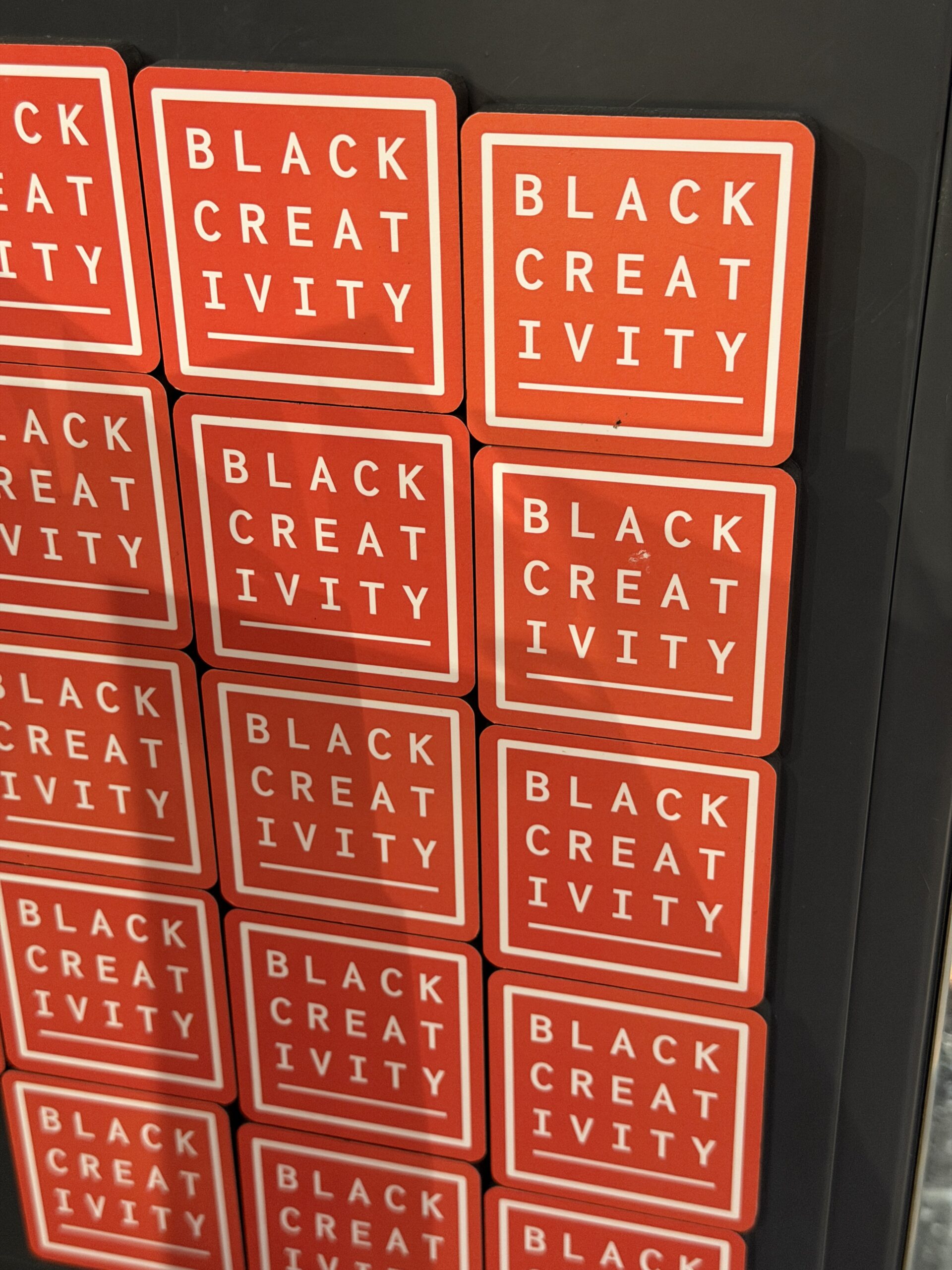
Exit through the gift shop and pick up some Black Creativity fridge magnets:
Man, why dey ain’t include no ebonics exhibit in the current Black Creativity show at the Griffin Museum of Science and Industry ’cause that whole program be focused on Black folks’ art, inventions, and STEAM achievements like science, tech, engineerin’, and all that creative innovation? Ebonics just how we talk everyday and our cultural dialect, which really fit with the museum’s science-and-industry vibe or the juried paintings, sculptures, and career showcases they puttin’ on. So they stickin’ strictly to visual art and those tech contributions instead of addin’ any language or dialect displays.
Why is there a wheel there? Wheel was not used in sub-Saharan Africa. It was invented in Mesopotamia. Mother of all Iraqi inventions!
Miss the days when the blog was a reprint of painstakingly manually generated text from novels. Even though GPTspun is vastly superior to any bio writer, it’s enough to know the blog is all generated by a transformer model.
Thank you, Claude.
“The pen is a virgin, but the printing press is a whore”. Filippo de Strata
“Brothers, nobody should say or think: ‘What is the sense of bothering with copying by hand when the art of printing has brought to light so many important books; a huge library can be acquired inexpensively.’ I tell you, the man who says this only tries to conceal his own laziness.” Johannes Trithemius
Another reason to hope for the AI bubble crash?
Looks like “black hacking” to me. Splicing their stuff into the narrative. “Afroturfing”? They also seem to be copying Trump, randomly Capitalizing Words.
To be fair, “deez nuts” is culturally appropriated from blacks and riffed on using “white creativity”.
Speaking of peanuts (actually a legume), looks like they need a bas-relief jar of peanut butter on the plaque. You know, George Washington Carver… Oh wait, “Carver is often mistakenly credited with the invention of peanut butter. By the time Carver published ‘How to Grow the Peanut and 105 Ways of Preparing it For Human Consumption’ in 1916, many methods of preparation of peanut butter had been developed or patented by various pharmacists, doctors and food scientists working in the US and Canada.” (Source: Wikipedia) Carver was a professor at Tuskegee.
A shamefully neglected chapter in the history of space flight: https://www.youtube.com/watch?v=6H8TJv0C58Q
Difficult to watch anything from Ken Burns, the guy who has made a life’s work of characterizing Western Civilization (and American in particular) as Racist and Evil. Has this low-IQ negative clown every made a film that celebrates why Americans exist in the Exalted and Great way in which we do, and how this is directly attributable to the Great Thinkers of Western Civilization? Answer: no. He is like the Barack Hussein Obama of film makers (hate, lie and divide).
For those not in on The Old Negro Space Program “film”, it’s a mockumentary (ridicules Burns’ films).
Do people on EBT really ever go to museums?
Do you want them to?
This post reminds me of old Star Trek episodes where Kirk debates with some talking computer, pointing out the faults in its logic until the computer overheats and explodes.
Soon, the woke folks training and developing AI models will make sure unicorns are treated equally and given the same recognition for their creativity. Because clearly, no one should be left out, not even mythical creatures.
Speaking of AI, consider this scenario: someone uses AI to write an academic paper on a particular subject, and later, others use AI to write papers on the same subject. Given how AI works, wouldn’t there be a high risk that all of those papers contain similar language, ideas, or structure and therefore trigger plagiarism concerns?
If that happens, should everyone be flagged for plagiarism, or only those who submitted their papers after the first person?
Did they have an exhibit for Percy Lavon Julian, chemist from Chicago who developed economical corticosteroids(possibly the 2nd most important drug discovery after penicillin)?
> developed economical corticosteroid
C’mon, you know that was done by our Big Pharma overlords. Corticosteroids have become a crutch for Drs., treating the symptoms, not the cause. Also see the dumbass M.D.s that handed out pencillin for colds (hopefully as a placebo and not a treatment), creating drug resistant bacteria. Marijuana is a drug that grows like a weed, and they completely ignore the pharmacological uses and capitalize on the racist uses of prohibition. I’ve talked to doctors about weed, their advanced training in psychopharmacology usually generates “Weed bad. It makes your heart beat faster. Der, der, der, duh.”
> In 1952, D.H. Peterson and H.C. Murray of Upjohn developed a process that used Rhizopus mold to oxidize progesterone into a compound that was readily converted to cortisone…Percy Julian’s research also aided progress in the field.
Not a resounding endorsement of Julian’s contributions. Maybe the exhibit should show Julian handing a test tube to Peterson, then rinsing it out in the sink. Julian is light-skinned, his contributions could still be attributed to white creativity. Now weed production and distribution, that has many black contributors.
David Blackwell for sure deserves mention in any list of top American mathematicians. Was he mentioned in the exhibit? Aren’t top achievers are “unicorns” in any population? If this exhibit woke up at least one genious it is worth it. I recall riding the subway and seeing a black, head covered but with bright eyes mom bringing her ten year old or so daughter from what it seemed to be a far school, probably for gifted.The girl was playing with the Rubic cube. All of a sudden she put all colors together, as I was watching. It was seemed to be unexpected for her and her mom. She mixed the colors up and put them back together, fast. 2% percent of 40 million people is stll large amount of talent, pity if it is not tapped. And if 2/100 of thise 2 percent are near geniuses, it still makes hundreds of unicorns.
Julius Rosenwald dedicated the vast bulk of his considerable philanthropic funds to the Black community. 5000 schools for Blacks in the segregated South, funds for Black intellectuals, gifted Blacks, etc. It is completely reasonable for a museum he funded to have a great deal of content about Black people.