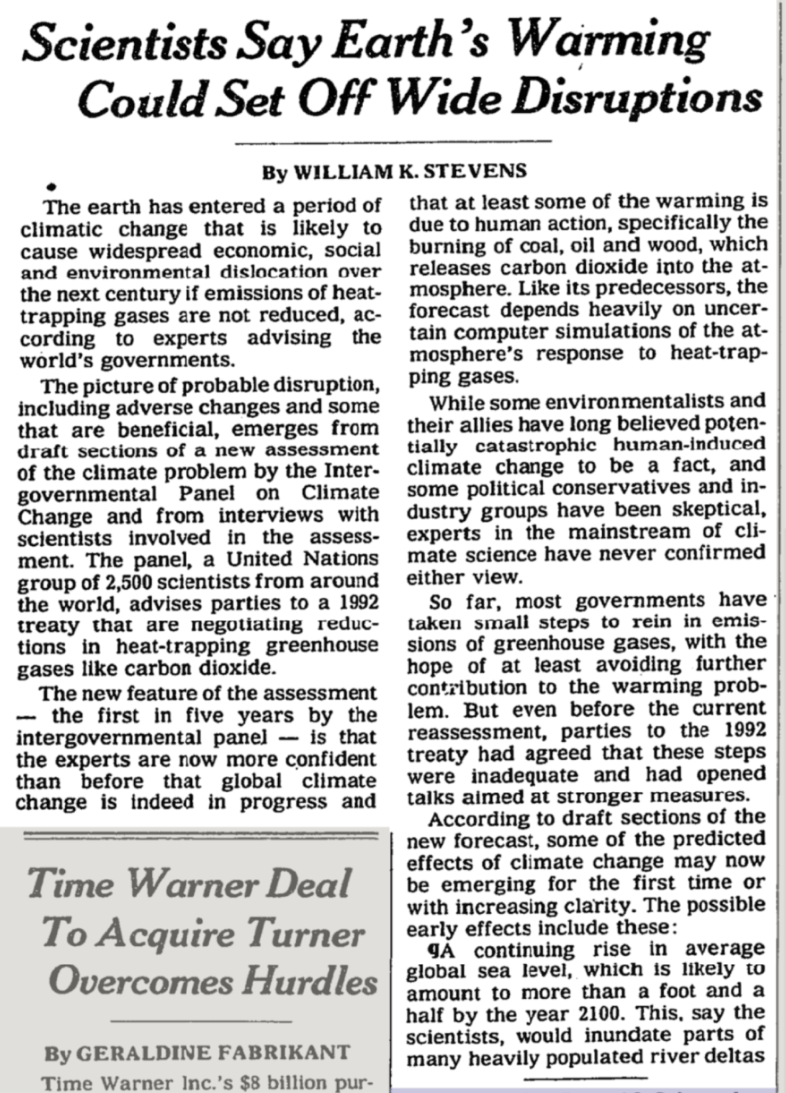
Americans in the Northeast are making plans to come down to Florida this winter, either 183 days (the “skip on state taxes” plan) or just a shorter break from misery. They might want to consider this New York Times article from 31 years ago, “Scientists Say Earth’s Warming Could Set Off Wide Disruptions” (September 18, 1995):
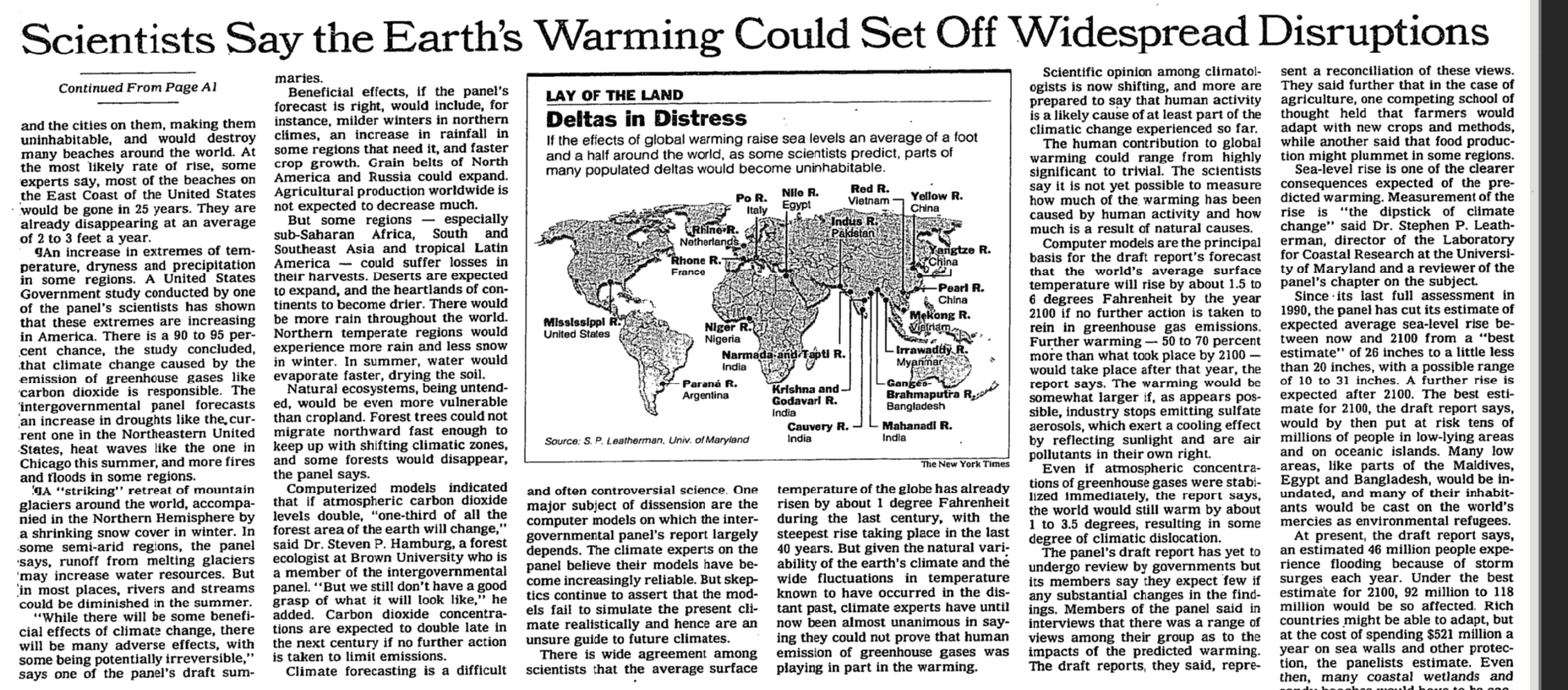
A continuing rise in average global sea level, which is likely to amount to more than a foot and a half by the year 2100. This, say the scientists, would inundate parts of many heavily populated river deltas and the cities on them, making them uninhabitable, and would destroy many beaches around the world. At the most likely rate of rise, some experts say, most of the beaches on the East Coast of the United States would be gone in 25 years. They are already disappearing at an average of 2 to 3 feet a year.
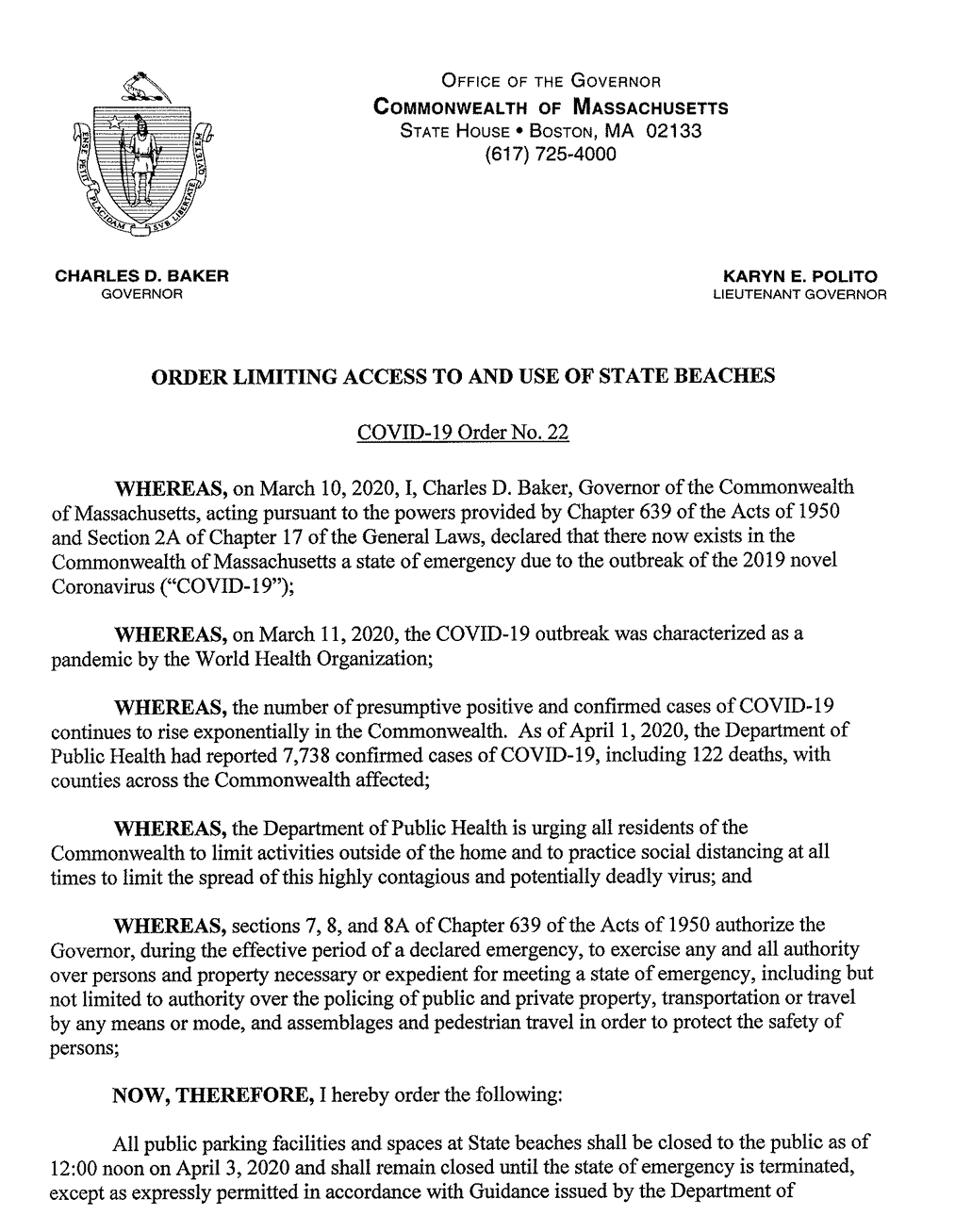
The NYT’s “experts” were sort of right. It did become impossible to go to a lot of East Coast beaches in 2020, but that was because Science made it illegal (#StayHomeSaveLives), not because the beach had physically disappeared.
Maskachusetts COVID-19 Order No. 22, issued 25 years after the NYT article predicted beach closure:
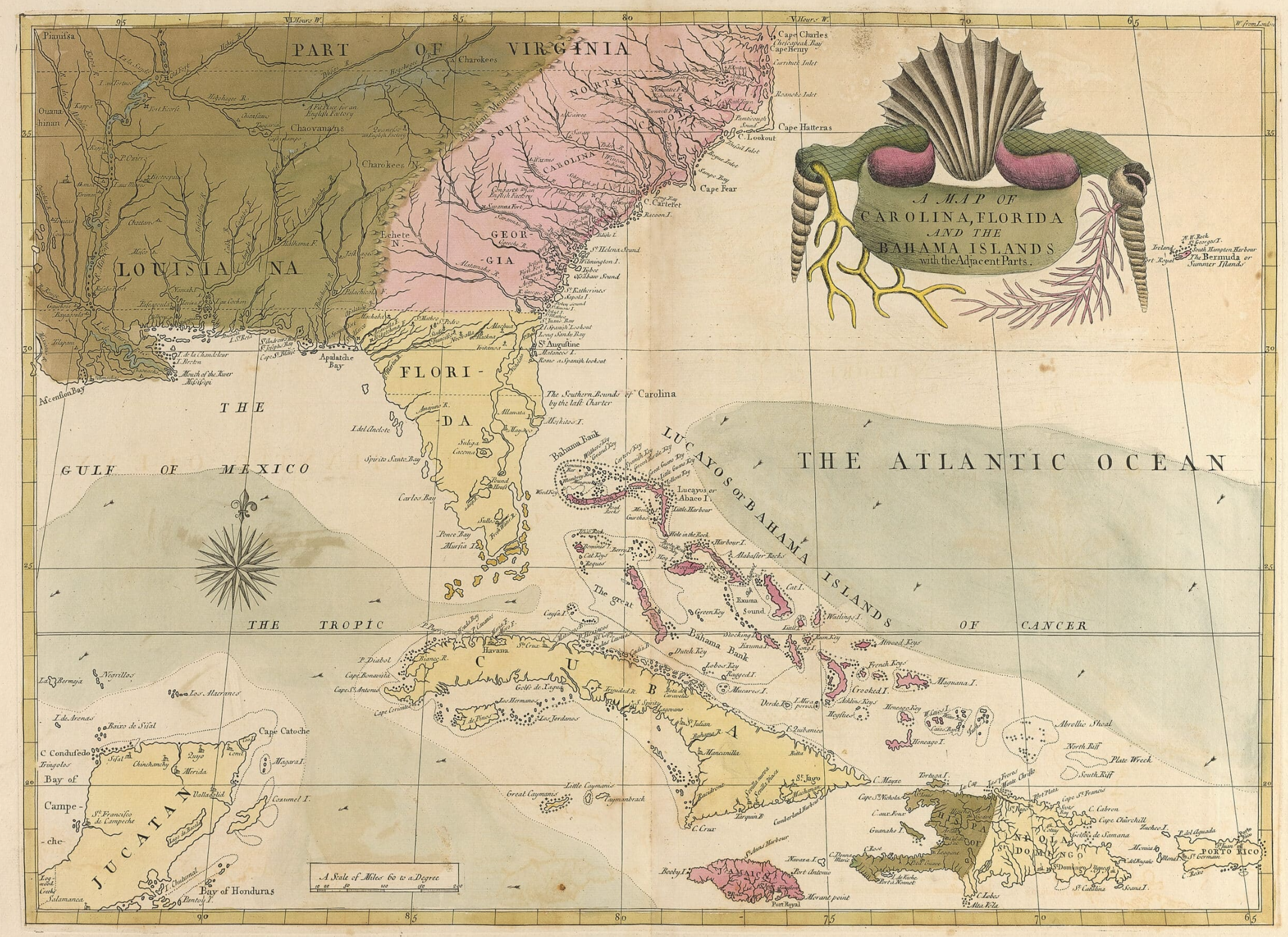
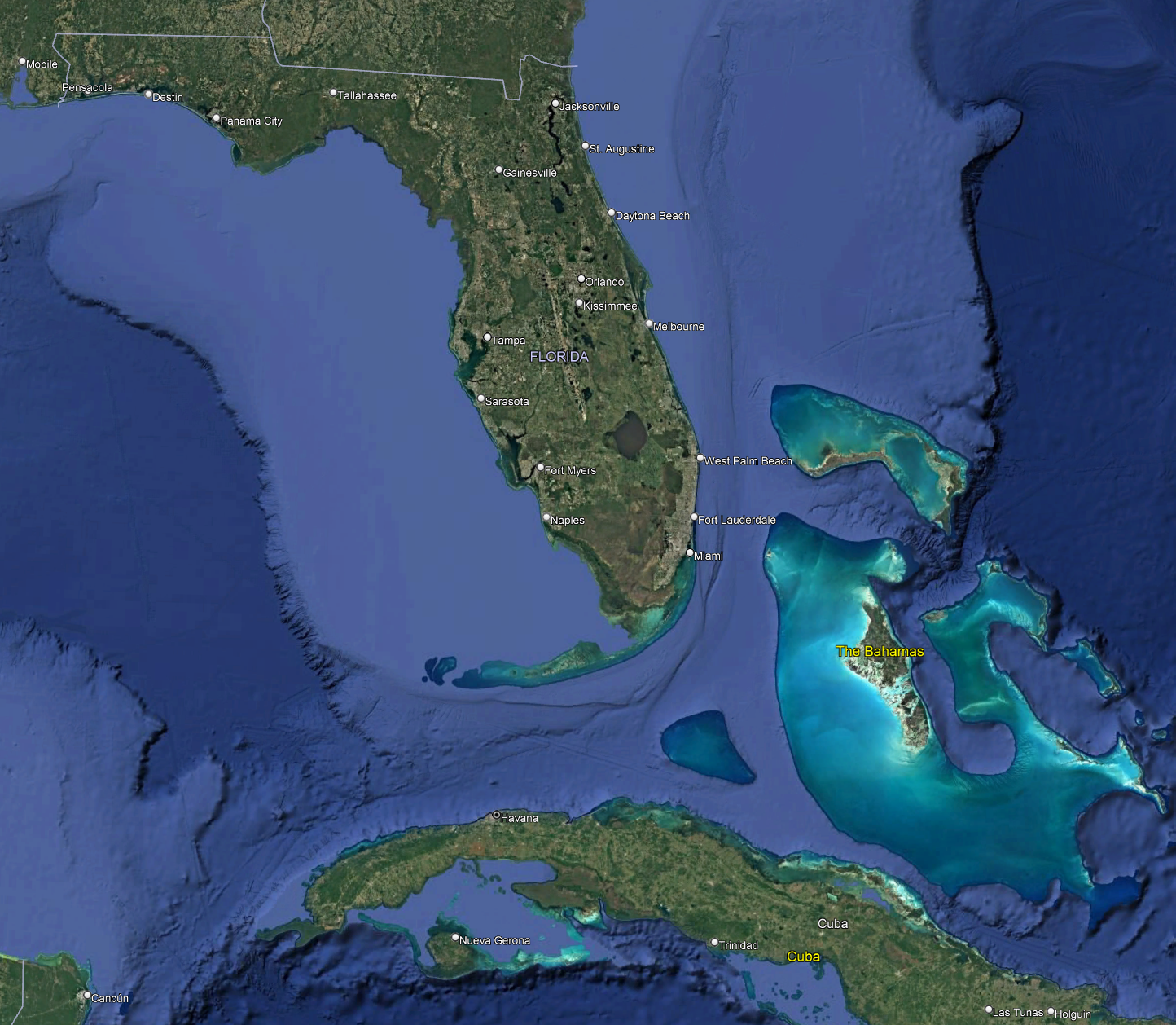
How has Florida’s shoreline changed over time? Here’s Catesby’s map from circa 1729:
Compare to today (Google Earth):
Loosely related, but I had to mention this in case it jinxes us with a repeat of Hurricane Andrew (1992; Category 5 landfall, 25-mile-wide swath of destruction south of Miami), “The Atlantic Just Broke a 60-Year Record” (ScienceAlert):
September 12th became the furthest into the year we have ever gone without a hurricane in the Atlantic basin since the advent of modern satellite tracking in 1966 – by a day.
“El Niño is being supersized before our eyes,” explains António Guterres, the Secretary-General of the United Nations.
“The science leaves no room for doubt: the planet is in uncharted waters, and those waters are heating up.”
Phil, I’m a Dumb Ass who doesn’t know what Science is, but I took an arithmetic class in third grade (the last grade I attended) and it covered a branch of Higher Mathematics called Graphing.
I found the attached graph online, but I am having difficulty understanding it and hoping you could help? Looks like sea level has never been lower in the past 100 million years and that it has oscillated wildly over that period (native Americans causing Climate Change?). Were the beaches in Florida wiped out dozens times recently and no one told us? How do I square this with #Science we are told to trust by Dr. Anthony Fauci?
https://pubs.usgs.gov/pp/p1386a/gallery2-fig43.html
DA: Interesting chart that you cite, but the timescale is quite expansive. Wasn’t sea level considerably lower during the recent (geologically) Ice Ages?
Phil, I’m not a Scientist but I used a magnifying glass to look at the purple line on the graph for the past couple million years. Remarkably, sea level has oscillated dramatically and has been both higher and lower. I can’t imagine who was causing Climate Change during that period? And, who was causing it over the past 100 million years? I’m stumped!
Beach nourishment, aka bringing more sand to the beach, is cheating. Also, we said that it “could set off wide disruptions.” Could it? Sure. Could it not? Also, sure. What are we, boardwalk psychics?
2500: One seldom sees sand being dumped on a beach so I would have guessed that nourishment had happened only on a handful of the most touristed beaches. ChatGPT: “A good statewide number is about 32% of Florida’s sandy oceanfront beaches.” That’s way higher than I would have thought!
Why so many and why didn’t it have to be done before Florida was developed? ChatGPT: “Mostly because a beach is not a permanent pile of sand. It is a moving reservoir of sand, continually shifted offshore and onshore, and up and down the coast. … What changed is that people built fixed infrastructure around this moving system. Florida has 66 coastal barrier inlets, many stabilized or maintained for navigation. Jetties can interrupt longshore sand transport; dredged inlets can trap sand in channels and shoals or remove it from the coastal system. Seawalls and dense development can also prevent beaches and dunes from naturally migrating landward. DEP explicitly says that inlet management is intended to replicate the natural drift of sand interrupted by improved or altered inlets. … “The shoreline is no longer allowed to move, so we will move sand instead.””
It happens a lot in SoCal. Some of us think it’s because of jetties, some blame the damming of rivers, and others are something, something El Nino.
Anyway, America is so rich it can bring sand to the beach!
1729 maps aren’t so bad in the AI era. 40 years ago, there was a lot of desire not to use destructive methods to restore old photos. Now, they can’t replace old photos fast enough with destructive replicas.
Re: Sea level rise and COVID-19 Order No. 22…
Hindsight is 20/20 and 2020, respectively. Is Cali still supposed to fall into the ocean someday?
—
I used to put all the things I liked about this woman surrounded by curly braces inside a Javascript file. I feel bad about it in hindsight. Now I know it’s wrong to objectify women. — Anonymous Nerd
Phil, thank you so much for your Clarion Call to save the Evil Right Wing Fascists in Florida! I’m told that Climate Change is Existential and of course I believe it.
On a related note, my Joey called my attention to Orange Man’s deal with Greenland today. It seems obvious to me with my background in Medicine, and also a PhD, that Greenland will soon be nothing more than a bucket of Worthless Melted Glaciers. Your thoughts?
It is good to hear from you, Prof. Dr. Jill, Ph.D. I hope that the beach mansion you and Joe share in Delaware hasn’t been washed away yet.
I hate to say anything good about that horrible horrible horrible man in the White House (I think even Joe will remember his name), but this Greenland arrangement sounds pretty good for everyone except the Greenlandic people who will continue to be colonized by some of the planet’s weakest humans. The Islamic Republic of Denmark will have to bear the welfare state costs and the U.S. will do whatever it wants militarily (which we would have had to pay for if we owned it). Instead of being able to get jobs at OpenAI and Nvidia, the Greenlandic people will have access only to the EU.