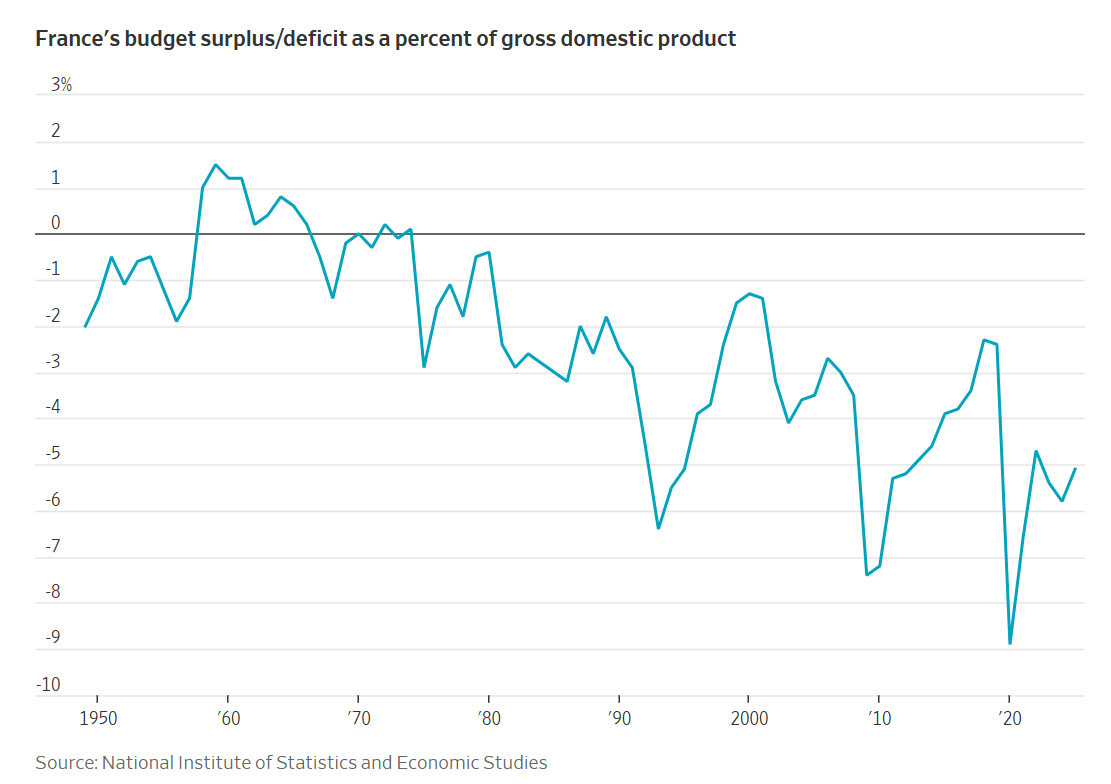
The French, just like us, have been trying to cheat their way to greater wealth/consumption via government borrowing (WSJ):
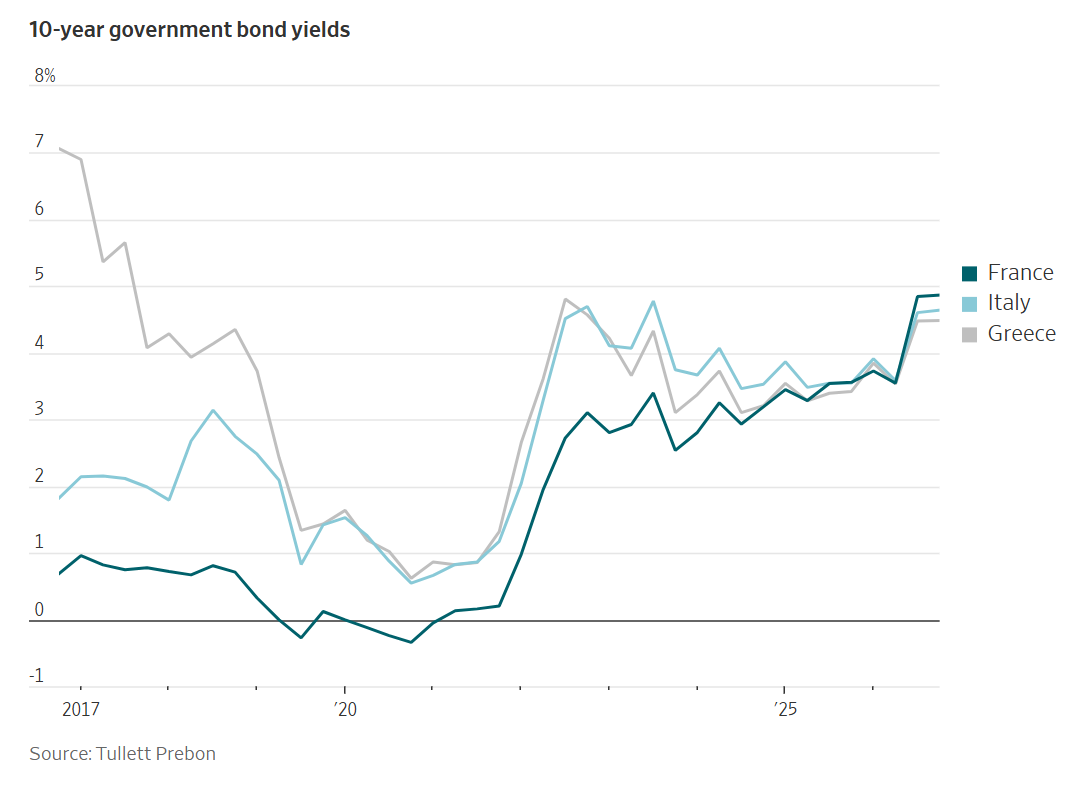
And, just as with the U.S., investors are beginning to demand to be paid for the possibility of inflation/default.
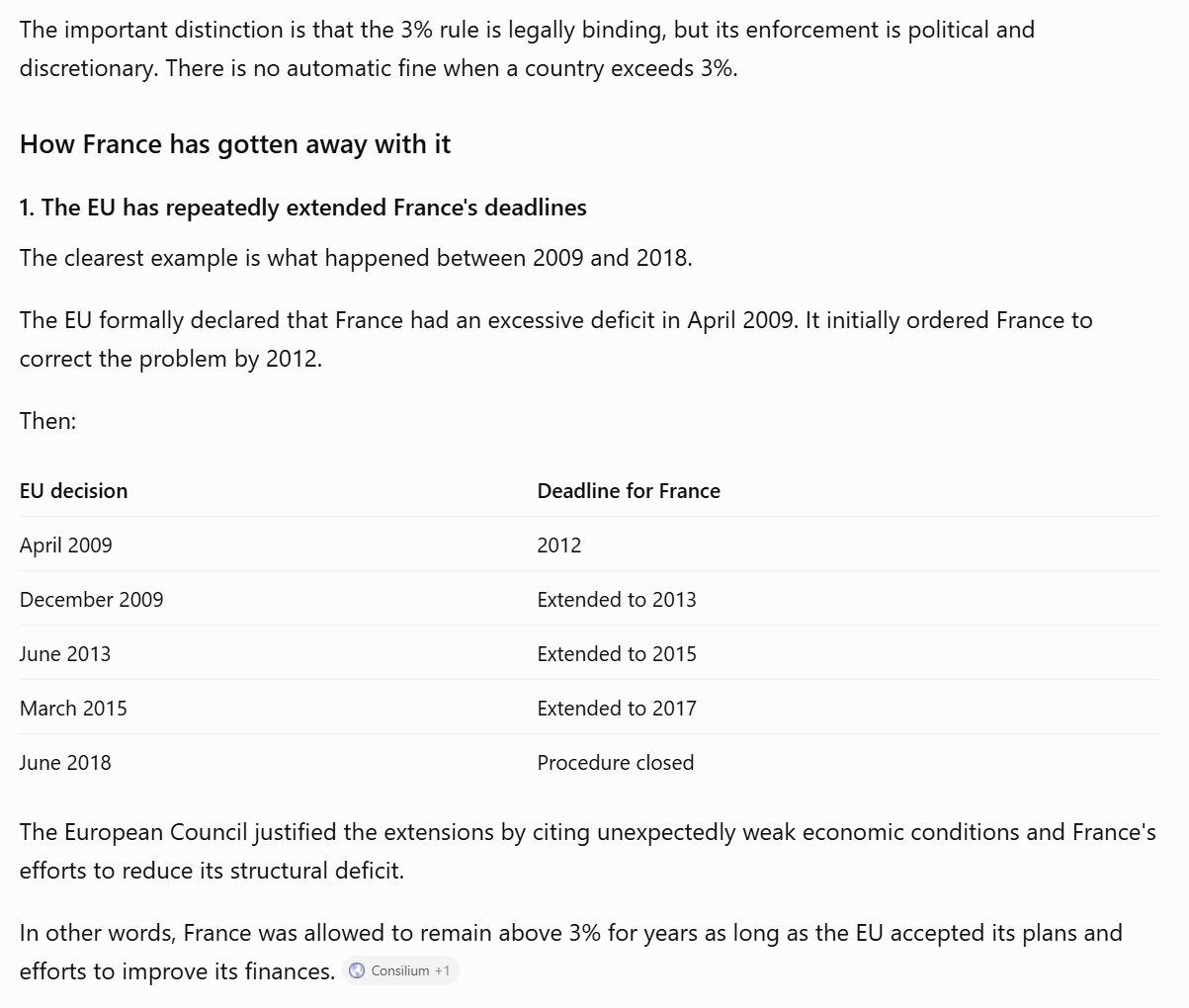
We were informed that inflation was impossible because of the Eurozone rules regarding deficit spending (no more than 3% of GDP). How has France been able to avoid compliance? ChatGPT:
Another good excuse: coronapanic.
The EU suspended normal fiscal requirements during COVID. From 2020 through 2023, the EU activated its general escape clause, allowing governments considerable flexibility to run deficits in response to the pandemic and subsequent economic disruption.
They made an affirmative decision, in other words, to make the kids whose schools had been closed (nothing like the 18-month closures in Democrat-run U.S. cities, though) pay for it all.
We’re informed that low-skill immigrants make a country rich. France is roughly 25 percent immigrants and children of immigrants. Why isn’t France rich enough that tax revenues can fund both current government spending and also pay down some debt?
Finally, with the “French” in the streets (they’re “protesting” according to the New York Times and BBC and “rioting” according to Fox), what rational investor would locate a factory there rather than in Poland, Hungary, or Switzerland? Who reads a “France’s violent protests involve ‘second- or third-generation’ immigrants” headline and decides that the long-term trend is positive?