The government can’t find the 22 million undocumented, but it will find and track every coronafected human inside the U.S.?

The technocracy here in the U.S. seems to be pinning its hopes for beating coronaplague on testing and contact tracing. Example: “Here’s A Way To Contain Covid-19 And Reopen The Economy In As Little As One Month” (Forbes, by a Boston University econ professor). Excerpts:

The solution is PCR group-household testing of all American households every week. Doing so will require running only 6 million tests per week, which is eminently and imminently feasible. … all household members can spit into a single container and deliver or mail that container to a test-collection site with a filled out label detailing all contact information of all household members. … If a household tests negative, each household member would be notified to go to their local pharmacy to receive a green wristband coated to change to red after one week. After one week, everyone in the household would provide a new sample and be re-group tested.

This system is voluntary. But if you choose to have your household tested and receive your green wristband, you’ll be permitted by your employer to return to work, by your teachers and professors to return to school, and by proprietors to enter their restaurants, shops, cafes, etc. You’ll also be allowed to frequent the beach, attend concerts, go to the movies, …

Any household that tests positive will be required by the local board of health to quarantine in place for two weeks and then be re-tested. Households that don’t voluntarily get tested will be free to come and go as they wish. But without their green bracelets, they will have a hard time entering into workplaces and other establishments. Employers who hired the untested could face legal liability. The same holds for any business serving the public who lets someone onto their premises without a green bracelet.

So it will be sort of like the First Amendment free speech guarantee. You can say that you’re opposed to race-based or gender-ID-based hiring (“affirmative action”), for example, but not if you want to get or keep a job/paycheck. Under the new public health regime, even those without jobs will find that what had been their Constitutional rights can be kept only if they never want to leave their house to shop for food, get on an airplane, meet friends at a restaurant, send a child to school, etc.

Let’s assume that the Constitution does not get in the way of building the glorious police state envisioned by the technocrats. Do we think that this can be accomplished successfully by the U.S. government?

Yale estimates that there are roughly 22 million undocumented immigrants in the U.S. Our government can’t find any of these folks, presumably, because otherwise they would have been deported. Yet now we’re saying that we can leave our houses and go to work if and only if the same government is able to find and then precisely track every American who ever becomes infected with the coronavirus?

And what about those 22 million soon-to-be-Americans whose documentation is not quite in order. Do they answer the phone and open the door to the friendly government testing and tracing agents? Do they supply a biological sample so their DNA can be extracted and parked in a database? Do they give the government agent a list of all places visited, with dates and times, and the names of everyone else who was there?

(It will be like “I live in constant fear that Trump will deport my Latina mother-in-law who lives at 1837 3rd st, LA 90023, blue house. She gets off work at 6.”?)

Is it credible to think that this hyper-efficient government operation will materialize and that Americans, including the undocumented, will cooperate with it?

(How does this play out on Facebook? A rich (via marriage) white woman (Ivy League PhD and college professor) in Manhattan, noting that her neighbors, especially the young healthy ones, were ignoring social distancing directives:

The combination of this protracted, seemingly endless sheltering with the better weather means that unless new regulations are put in place to indicate some sort of progress or at least some sort of action plan on the part of officials to facilitate and catalyze progress (yes, we all know that means more testing, contact tracing, etc), people are just going to break the same old regulations we’ve had for the past two months.

I asked

There are roughly one million undocumented immigrants in New York. Why do they open the door and cooperate with the friendly government testing and tracing agents?

She responds:

it seems you are claiming that undocumented immigrants are responsible for propagating the corona virus.

I clarified:

That wasn’t my claim. In your post you talk about a technocratic solution, testing and tracing, that requires all residents of the city to cooperate with government officials. The residents will supply samples from which DNA can be extracted. The residents will give the government agents detailed information about everywhere they’ve been and everyone they’ve interacted with. My point was that not all residents of NYC may be equally eager to cooperate with this dream of technocratic coronaplague control.

She comes up with a new epidemiology theory:

well, then easy: it’s up to the documented people to comply in order for their “documentary herd immunity” to help protect the undocumented and vulnerable. The terms here are metaphorical as well as literal/ technical.
In any event, the undocumented are largely the ones still hustling out there and, eg, doing the deliveries to keep the lives of many of the documented comfortable and sheltered.

I.e., you can have a substantial share of the population, which is in fact the most likely to contract the coronavirus, be outside of the testing and tracing umbrella, and still eliminate the coronavirus because the people who cooperate (and therefore don’t get infected) will provide a “documentary herd immunity”.)

Full post, including comments

Can the positive experience of Hong Kong with clean disposable paper masks translate to Americans using filthy reusable face rags?

I was an early believer that Americans could mask up and #LeaveHomeSaveLives. This belief was substantially based on the positive experience that Hong Kong, Taiwan, Japan, and China have had with keeping various viruses under control. Beginning in May, with coronaplague well past peak in the U.S., a lot of governors began to share my enthusiasm for masks. The Massachusetts face rag order went into effect on May 6.

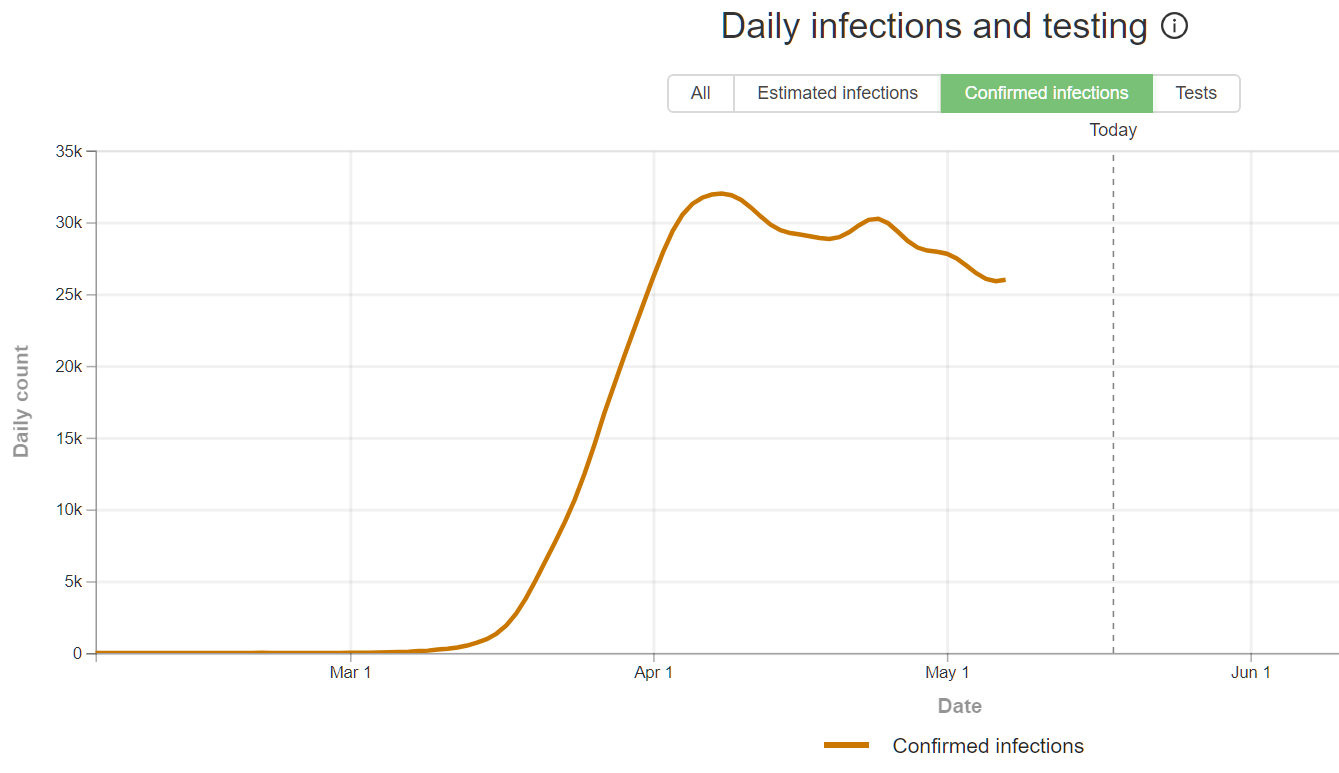
(peak was April 8; Professor of Epidemiology Donald J. Trump said the plague would be on the decline by Easter; Easter was April 12:

data from the IMHE prophecy site.)

However, since the disposable paper masks that are favored by health care workers and Asian consumers aren’t readily available, Americans are primarily using filthy cotton face rags that they wash periodically and touch all of the time (retrieving from pocket or cupholder, even if not when on face). Facebook post from a humanities professor friend:

After sewing my own three ply face masks, and buying a few not so great ones locally, I just got a pack of masks from a T-shirt company in San Francisco that actually seem quite good. They are three ply (Correction: just realized they are four ply, even better), with two lightweight inner cotton layers, and a heavier (doubled) cotton/poly blend outer fabric, and are big enough to cover the whole face. They also tie on, so feel more secure than having elastic over the ears, and also have a way to easily insert filters too. There’s lots of people selling masks, but these are the best I’ve found so far, so figured I’d pass it along.

Even Shutterfly is selling cloth masks, despite there being no photo customization option:

WHO says that masks work only if the wearers have ready access to the very things that Americans don’t have access to: sinks for handwashing and/or hand sanitizer. This is easy in the Shanghai Metro. Use any station’s clean restroom. But how can it be done in New York City or Boston, the plague centers of the U.S., especially if most places that actually have public restrooms are now closed?

Three questions, then:

  1. Do we think that the governors’ orders to “rag up” will affect coronaplague transmission?
  2. If “yes”, will transmission be reduced or increased by these saliva-soaked occasionally washed rags?
  3. Will there be any way to figure out whether our guess was correct? What data can we look at in June, for example, to figure out if the Massachusetts May 6 “rag up” order had any effect?

Related:

  • Danish professor of microbiology explains why we are stupid (ordinary folks will incubate the virus in their warm moist face rag, then touch it, then leave virus on surfaces that others will touch)
  • “I Wear My Face Mask in the Car” (make sure to watch at 2:25 when Bill Gates comes in)
  • My favorite question, from a latter-day female-identifying Socrates… What I don’t get: If masks work, why aren’t we back at work? If masks don’t work, why are we being asked to wear them?
Full post, including comments

A typical American hospital during coronapanic

The author of Medical School 2020 gave me an update on his training hospital. They have roughly 1,100 beds. They have admitted 24 Covid-19 patients since the plague began. There are currently 7 Covid-19 patients in the hospital. Residents have been working week-on/week-off due to the shortage of cases from which they might learn. “We’re allowed to do elective surgeries as of this week,” he said, “and I thought there would be a huge backlog, but there isn’t. We’re still not busy.”

Related:

Full post, including comments

Do countries with better medical systems have higher Covid-19 death rates?

Asked for his theory on why death rates from Covid-19 varied so much from country to country, a Dutch friend said that he thought that countries that had “better” health care systems, in the sense that they were able to keep more “zombies” alive, would end up with a higher death rate. “Nigeria doesn’t have a lot of 90-year-olds on permanent life support,” he pointed out, “so coronavirus is going to have a tougher time killing people there.”

Full post, including comments

Update from the Massachusetts License Raj

As in the early decades of Indian independence, all business activity in Massachusetts is forbidden except what is specifically permitted. Our state’s License Raj has released an update: “When can my business reopen?”

Although barbershops can reopen on May 25, flight schools are specifically forbidden from reopening: “TBD – not Phase 1. Comprehensive plan is being developed” (i.e., government officials are spending taxpayer funds on a “comprehensive plan” for an activity in which only a few hundred residents of Massachusetts participate).

The best news for those who are passionate about optimizing health: Medical marijuana shops are still considered “essential” and can conduct business as usual (maybe because stoners are the best at following WHO guidelines regarding proper use of face masks?).

Own a residential summer camp? Your business is finished. We start “Phase 1” on May 25. You’re in “Phase 3,” to which no date is attached. Whale watch boat where all of the tourists are outside in the seabreeze and sun and you can set capacity at any fraction of the Coast Guard max number? You’re done. Phase 3.

The governor and his subordinates did not address the stay-at-home mom’s question that I cut and pasted previously:

What I don’t get: If masks work, why aren’t we back at work? If masks don’t work, why are we being asked to wear them?

Full post, including comments

American-style lockdown…

From Atlantic, “Dear Therapist: My Boyfriend Had an Affair and Now We’re Stuck at Home Together”:

I found out during the stay-at-home orders that my boyfriend of eight years has been cheating on me with a co-worker for at least four months (that I know of). He lied to me by saying that he was going out for errands, but he was really meeting with her in a parking lot. She is married.

What do patients get when they swipe their Visa card at the therapist’s office?

And how does he reconcile his love for you with, presumably, having sexual contact with another person during a global pandemic and potentially infecting you with a deadly virus?

(I’m disappointed that the therapist did not ask “Were they both wearing homemade masks?”)

How about an update to “Not All Who Wander Are Lost” for the Cower-in-Place age: “Not All Who Are ‘Running Errands’ Are At Target”?

Related:

Full post, including comments
Why can’t we get ice cream during coronashutdown?

The only way that I am able to demonstrate my usefulness to children is taking them to ice cream shops. Recently, however, this has been a failure. On the first warm Sunday of what we here in Massachusetts jokingly call “spring”, it took 30 minutes to get a few cups. Where the shop previously would have had perhaps 4 or 5 people working behind the counter, only 2 soldiered on, perhaps unaware that unemployment now pays much better than scooping obesity. They had no soft-serve, which is what my customers actually wanted, and wouldn’t put the ice cream into cones, but would put cones into a bag and let customers reconfigure their ice cream once in a secure location.

Earlier this week, I took the kids to Bob Lobster, a seaside shack with picnic tables (closed off with yellow tape against a virus that survives only 30 seconds in sunlight; people are supposed to eat in their cars) that is walking distance from 2B2. There is a tempting ice cream cone sign outside. They had no ice cream to sell. I said “After we get back to Hanscom, I’ll take you to McDonald’s on 128 and we can get McFlurries.” McDonald’s had no ice cream to sell.

What’s going on? If sales at fast food outlets are down at least 50 percent, why don’t they have ice cream? Is it that all of the workers are at home soaking up unemployment and there aren’t enough to clean the soft serve machines?

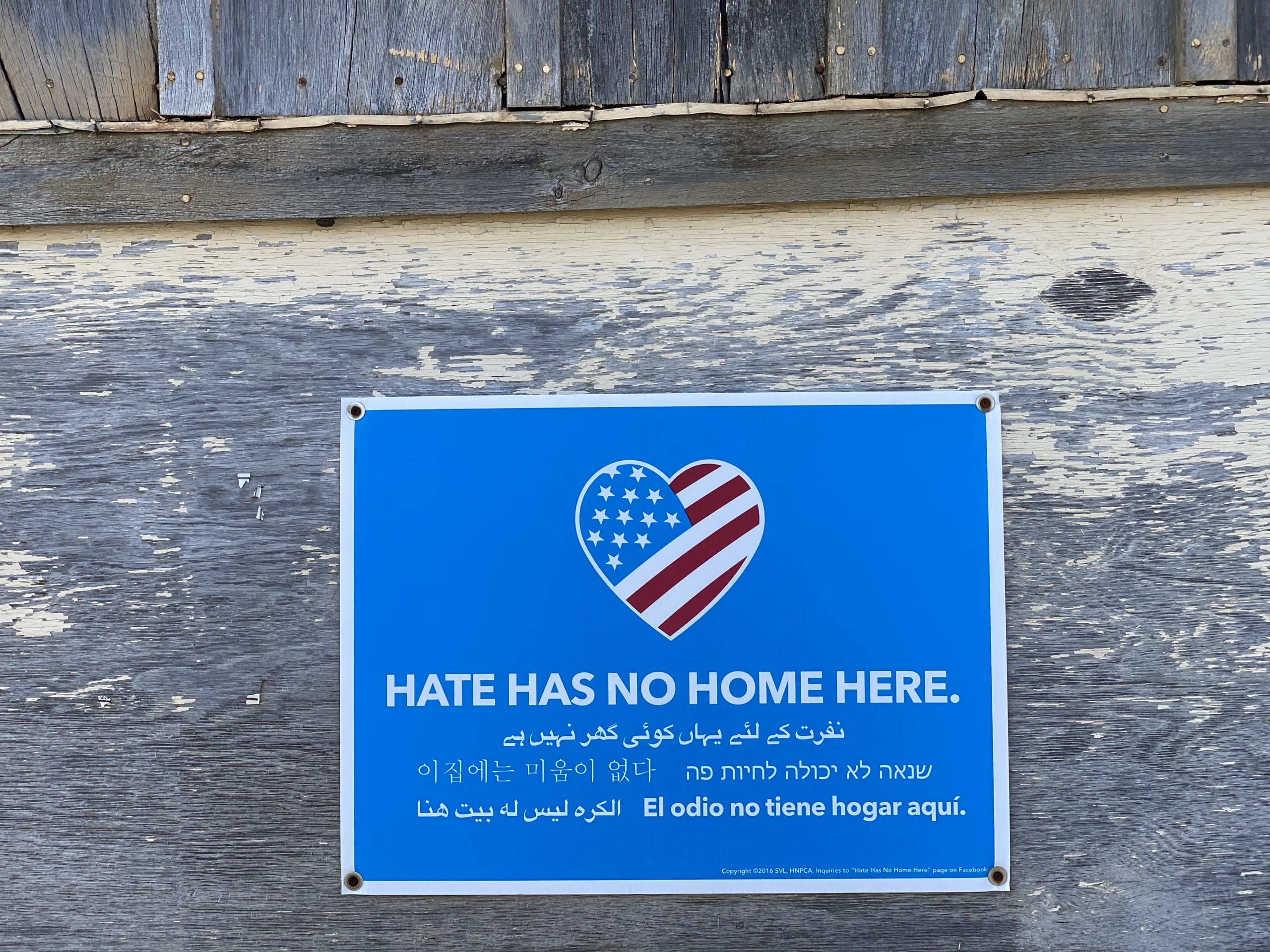
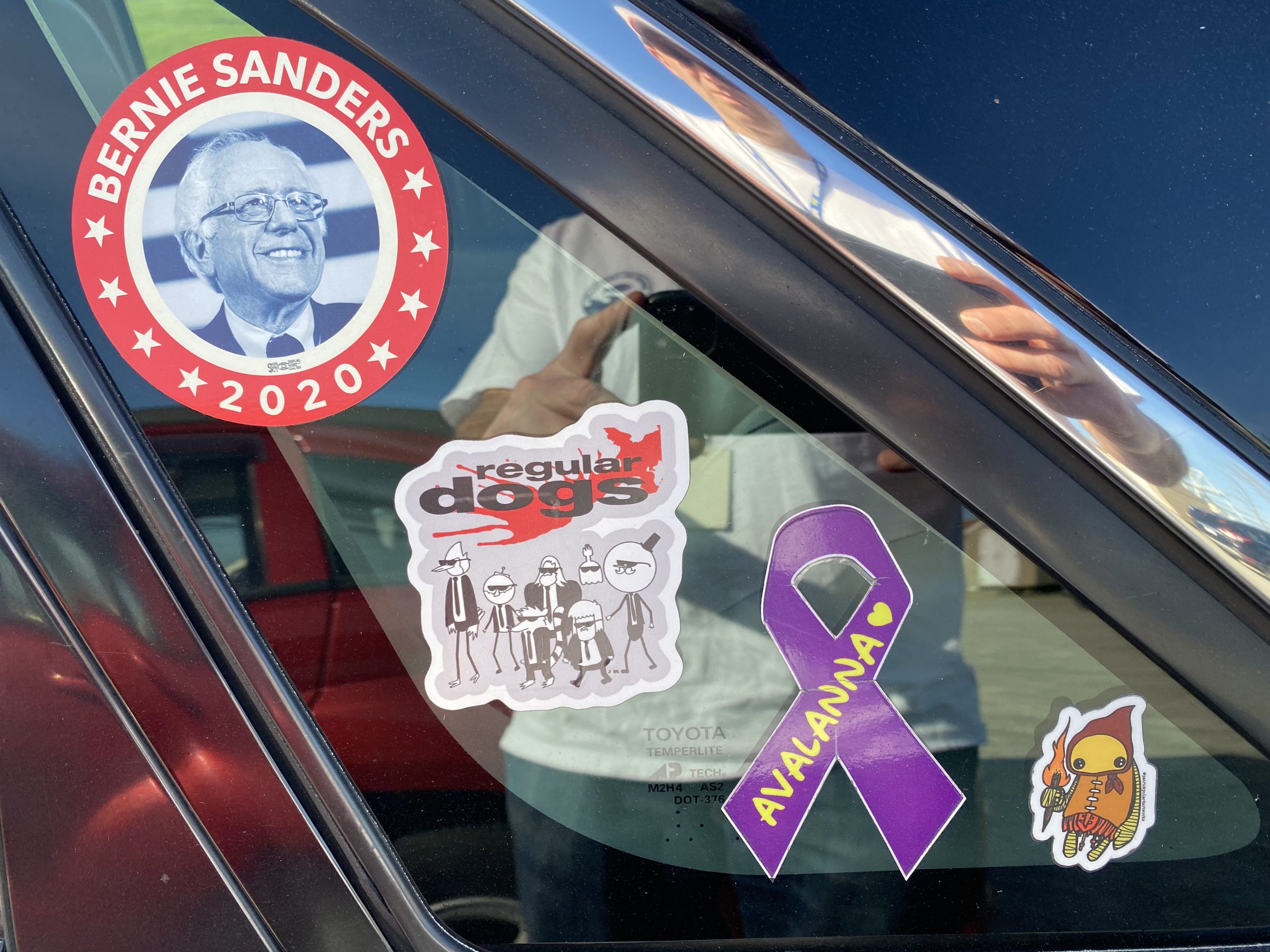
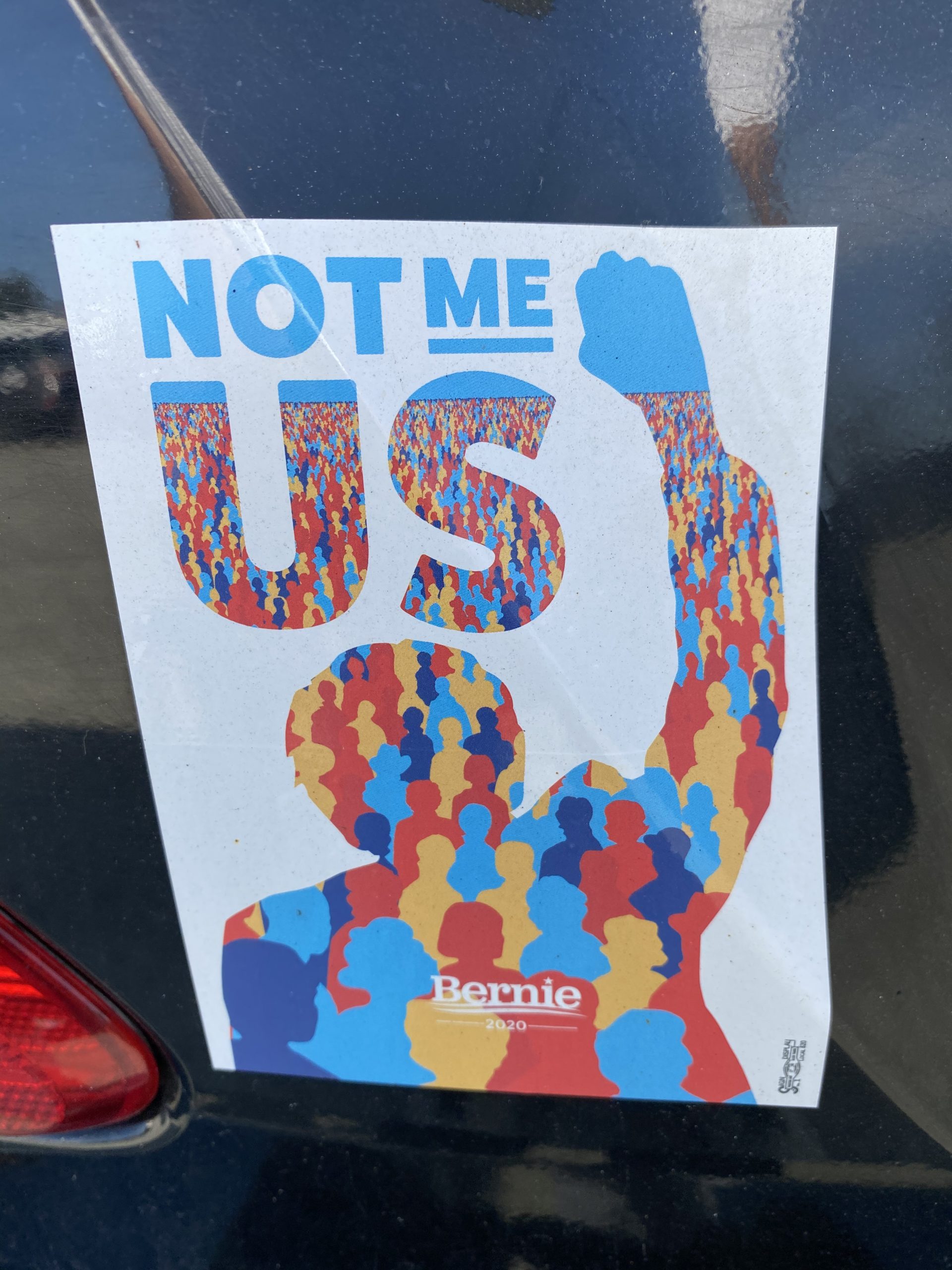
A few snapshots from the trip. All of the bumper stickers are from one car.

Update: Success in Maynard, MA! With a minimal wait, we obtained four legal cups of take-out ice cream with edge-of-the-law cones stuck on top (not legal to serve ice cream in a cone, apparently).

Full post, including comments

Security clearances during the coronapanic

A friend from graduate school needs a security clearance for some work that he is doing (I guess I can’t ask what!). An investigator telephoned me to check out his story and mine. She said that this would have been an in-person interview (which she prefers) during ordinary times, but that it was all phone-based due to coronaplague.

When our enemies have mined out all of our secrets five years from now, will that turn out to have been a hidden cost of the shutdown?

Full post, including comments

Plague-proof the U.S. with nursing home and hotel pairings?

One of my bored-in-quarantine activities is mocking Facebook friends for their faith in various Utopian government-run schemes for winning the war against the evil coronavirus. Most of these schemes require a perfectly efficient government, the elimination of the Constitutional rights of healthy young people, and a perfectly compliant population (including the 22 million undocumented).

Usually they respond by defriending me, because the only thing more offensive than someone who doesn’t hate Donald Trump is a Holocough Denier. Occasionally, however, they’ll ask “What would you do, then?”

My first response is “I’m sure that ‘Do nothing’ would be a better plan than what U.S. state and federal governments have done.” Then I will disclose my favorite plan, which is to pair eldercare facilities with hotels so that all of the workers in a nursing home, for example, could move into the associated hotel as soon as a plague was declared, receiving battle pay for their 24/7 quarantine. In non-plague times the hotel could receive regular guests. Presumably there wouldn’t be too many left by the time the plague was upon us, so there would be hardly any non-staff guests to kick out. Any worker that didn’t want to suffer through the quarantine could leave, forfeiting the battle pay and, at least for the duration of the plague, the job at the nursing home.

The advantage of the above scheme is that nursing homes could be much better protected than they are now and have been during coronapanic. Currently, workers come and go every day, with no possibility of testing for the virus itself, and get a basic forehead temperature check when they report for work. A single asymptomatic infected worker could easily wipe out an entire nursing home. A second advantage is that it would be safe to run the rest of the society, including schools, for anyone under age 60 and in reasonably good health. Data from mass.gov:

It is true that some people younger than 60 died, but 98.3% had “underlying conditions.”

How much of a hit would an economy take it everyone over 60, plus those with a serious health condition, retreats into bunkers? Workers over age 40 are considered to be of such low quality by employers that the government has to force companies to hire and retain them.

I thought that this was an original idea, but of course a friend pointed me to an interview with Knut Wittkowski (“For 20 years, Wittkowski was the head of Biostatistics, Epidemiology, and Research Design at The Rockefeller University’s Center for Clinical and Translational Science”):

The ideal approach would be to simply shut the door of the nursing homes and keep the personnel and the elderly locked in for a certain amount of time, and pay the staff overtime to stay there for 24 hours per day.

It is essentially the same as my idea, but with cots instead of comfortable hotel rooms.

(The rest of the interview is packed with heresy against the Church of Shutdown:

Governments did not have an open discussion, including economists, biologists and epidemiologists, to hear different voices. In Britain, it was the voice of one person – Neil Ferguson – who has a history of coming up with projections that are a bit odd. The government did not convene a meeting with people who have different ideas, different projections, to discuss his projection. If it had done that, it could have seen where the fundamental flaw was in the so-called models used by Neil Ferguson. His paper was published eventually, in medRxiv. The assumption was that one per cent of all people who became infected would die. There is no justification anywhere for that.

Knowing that the epidemic would be over in three weeks, and the number of people dying would be minor, just like a normal flu, the governments started shutting down in mid-March. Why? Because somebody pulled it out of his head that one per cent of all infected would die. One could argue that maybe one per cent of all cases would die. But one per cent of all people infected does not make any sense. And we had that evidence by mid-March.

Scientists are in a very strange situation. They now depend on government funding, which is a trend that has developed over the past 40 years. Before that, when you were a professor at a university, you had your salary and you had your freedom. Now, the university gives you a desk and access to the library. And then you have to ask for government money and write grant applications. If you are known to criticise the government, what does that do to your chance of getting funded? It creates a huge conflict of interest. The people who are speaking out in Germany and Switzerland are all independent of government money because they are retired.

One third of all deaths in New York State were in nursing homes. One could have prevented 20,000 deaths in the United States by just isolating the nursing homes. After three or four weeks, they could have reopened and everybody would be happy.

That would have been a reasonable strategy. But shutting down schools, driving the economy against the wall – there was no reason for it. The only reason that this nonsense now goes on and on, and people are inventing things like this ‘second wave’, which is going to force us to change society and never live again, is that the politicians are afraid of admitting an error.

It is a good thing that this guy is retired. He is definitely never going to get funding again!)

It is probably too late to do anything about coronaplague, but I wonder if we could implement this system in time for the next virus that turns out to be smarter than humans. I’m not sure that it would cost any money to have it ready to go. One thing that is cheap during a plague is hotel rooms. I would think that a hotel near a nursing home would be happy to have a contract guaranteeing them 75 rooms paid for during the duration of any plague on condition that they evict the general public. Who pays for the hotel rooms during the plague? Medicare! They’re going to be saving a ton of money during a plague due to the deaths of beneficiaries and the shutdown of ordinary health care, so let them use some of these savings to isolate the nursing home workers.

Full post, including comments