Karen has COVID-19 (California current case rate surpasses South Dakota’s)

California can legitimately claim to be the Land of Karen. No group of Americans has ever been more active in proclaiming their own superiority on a wide range of political issues. When coronaplague hit, therefore, it was only natural that California Karens dominated Facebook with tales of their superior shutdown and greater vigilance regarding masks. Their heroic and intelligent human action kept the virus from doing what it had done in other states.

When Californians weren’t celebrating their own achievements in prevailing in their self-declared war on coronavirus, they would spend a lot of time gleefully highlighting the high rate of plague in South Dakota, whose governor dared to deny their most cherished belief, i.e., that humans are in charge of the virus and can decide how prevalent infection will be. While the plague raged in South Dakota, the Media of the Church of Shutdown was packed with articles about the stupidity of South Dakotans, Republicans in general, and Kristi Noem in particular.

Today’s plague map from the CDC (cases within the preceding week/100,000 population):

The righteous of California were the 4th most plagued Americans, with 101 daily cases per 100,000 (averaged over the preceding 7 days). Wicked mask-denying never-shut South Dakotans? 66/100k. Righteous masked-and-shut folks in Maskachusetts? 68/100,000. Trump voters in Florida? 50 cases per 100,000.

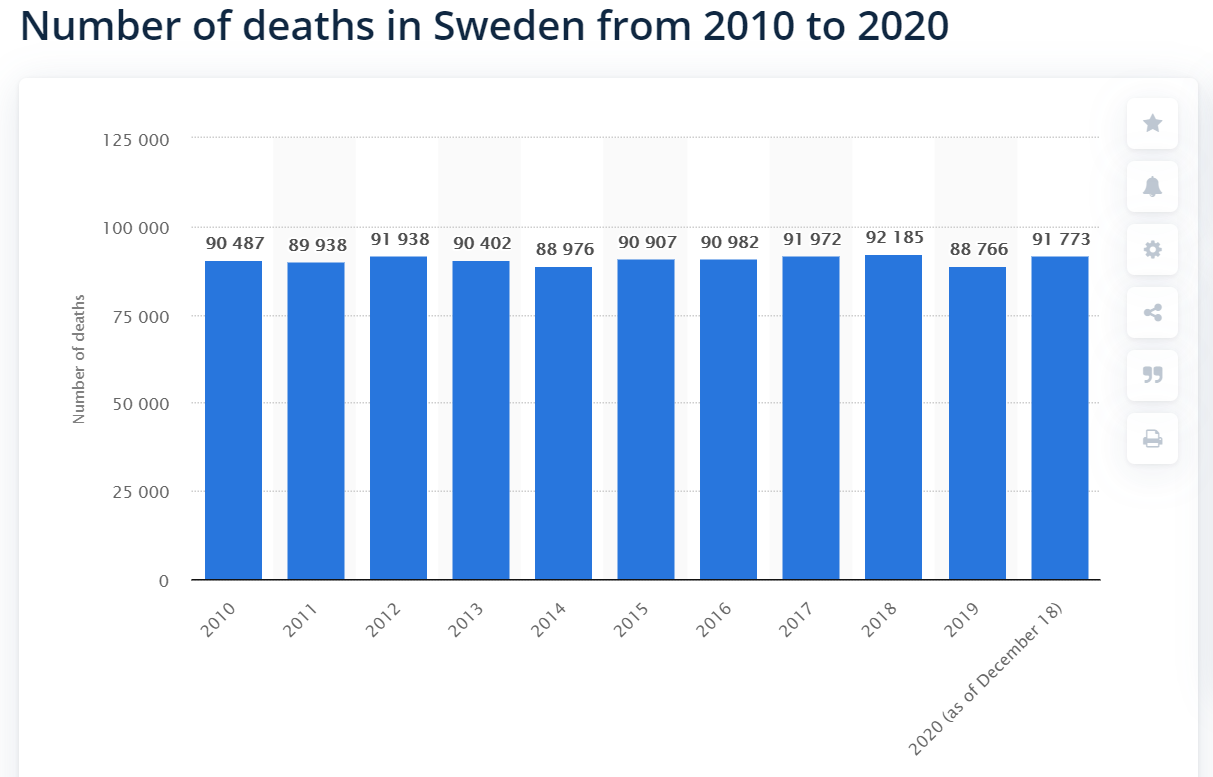
Californians, in other words, are proving the Swedish MD/PhDS right, i.e., continental non-Asian countries can shut down if they want, but they probably won’t be special when the final stats are tabulated.

Who wants to bet on the number of U.S. media articles that will point out that the California current case rate, despite more than half a year of masks, exceeds that of no-mask-order South Dakota or that of no-masks-at-all Sweden?

Related:

Full post, including comments

Immigrants versus Black labor circa 1900

“Effects of Immigration on African-American Employment and Incarceration” (NBER, 2007):

For white men, an immigration boost of 10 percent caused their employment rate to fall just 0.7 percentage points; for black men, it fell 2.4 percentage points.

That same immigration rise was also correlated with a rise in incarceration rates. For white men, a 10 percent rise in immigration appeared to cause a 0.1 percentage point increase in the incarceration rate for white men. But for black men, it meant a nearly 1 percentage-point rise.

How was it different in the early 20th century? I’m reading Rising Tide: The Great Mississippi Flood of 1927 and How it Changed America and the chapter on cotton plantations along the Mississippi has some relevant passages:

[Senator LeRoy] Percy declared: “The South must not be dependent for its prosperity upon the negro. There is not enough of him, and what there is is not good enough.”

Immigrants were then pouring into America by the millions, filling northern cities and factories, providing cheap, good, white labor. Percy decided to recruit Italians. In the 1870s, Delta planters had made a concerted effort to bring in Chinese from Hong Kong and from the labor gangs of the intercontinental railroads. The Chinese had left the fields, many opening tiny grocery stores, over fifty in Greenville alone.

in 1904 Percy boasted to the Manufacturer’s Record that Italians were “in every way superior to the negro…. If the immigration of these people is encouraged, they will gradually take the place of the negro without their being any such violent change as to paralyze for a generation the prosperity of the country.”

So far I recommend the book, most of which is about the efforts to understand and control the river.

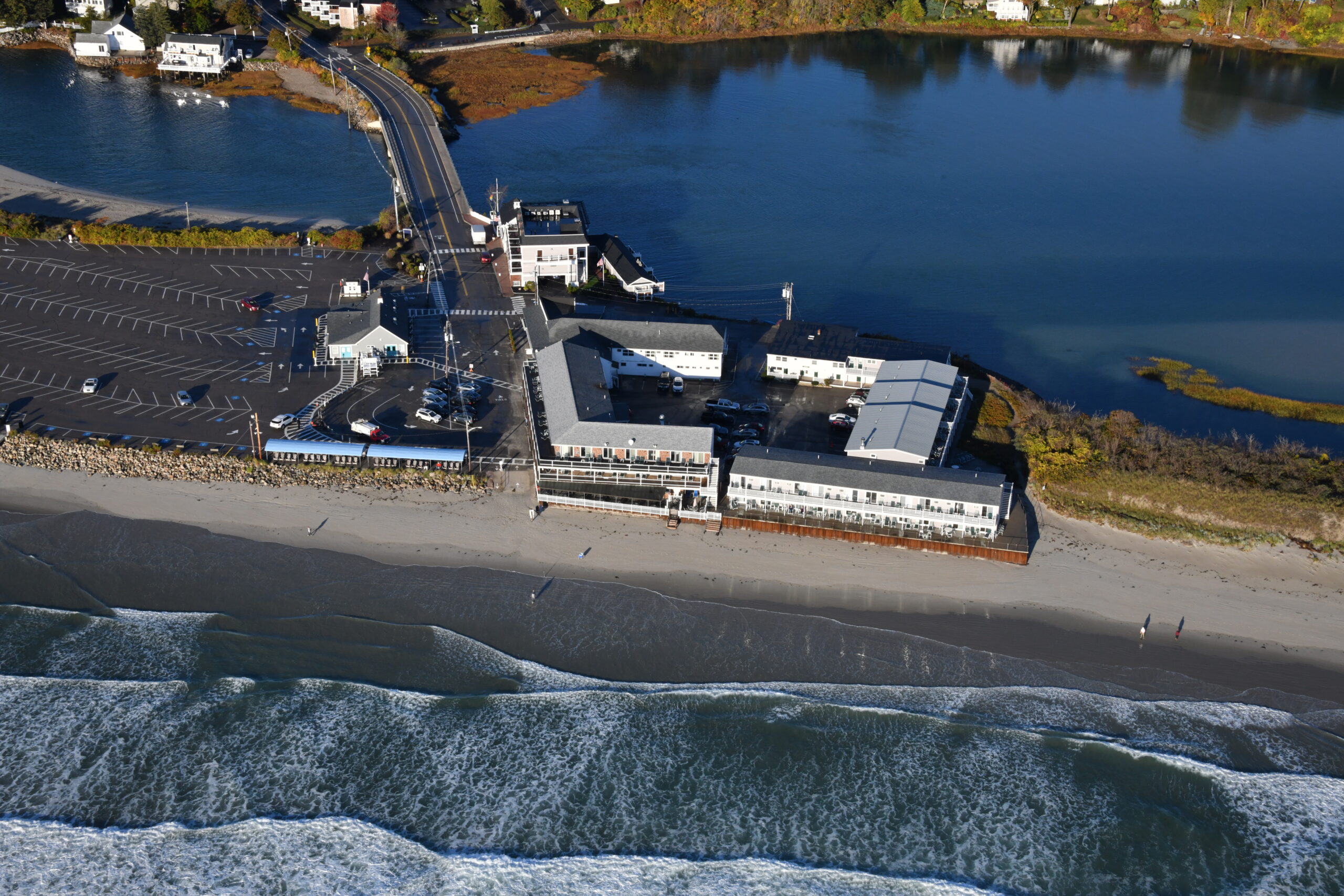
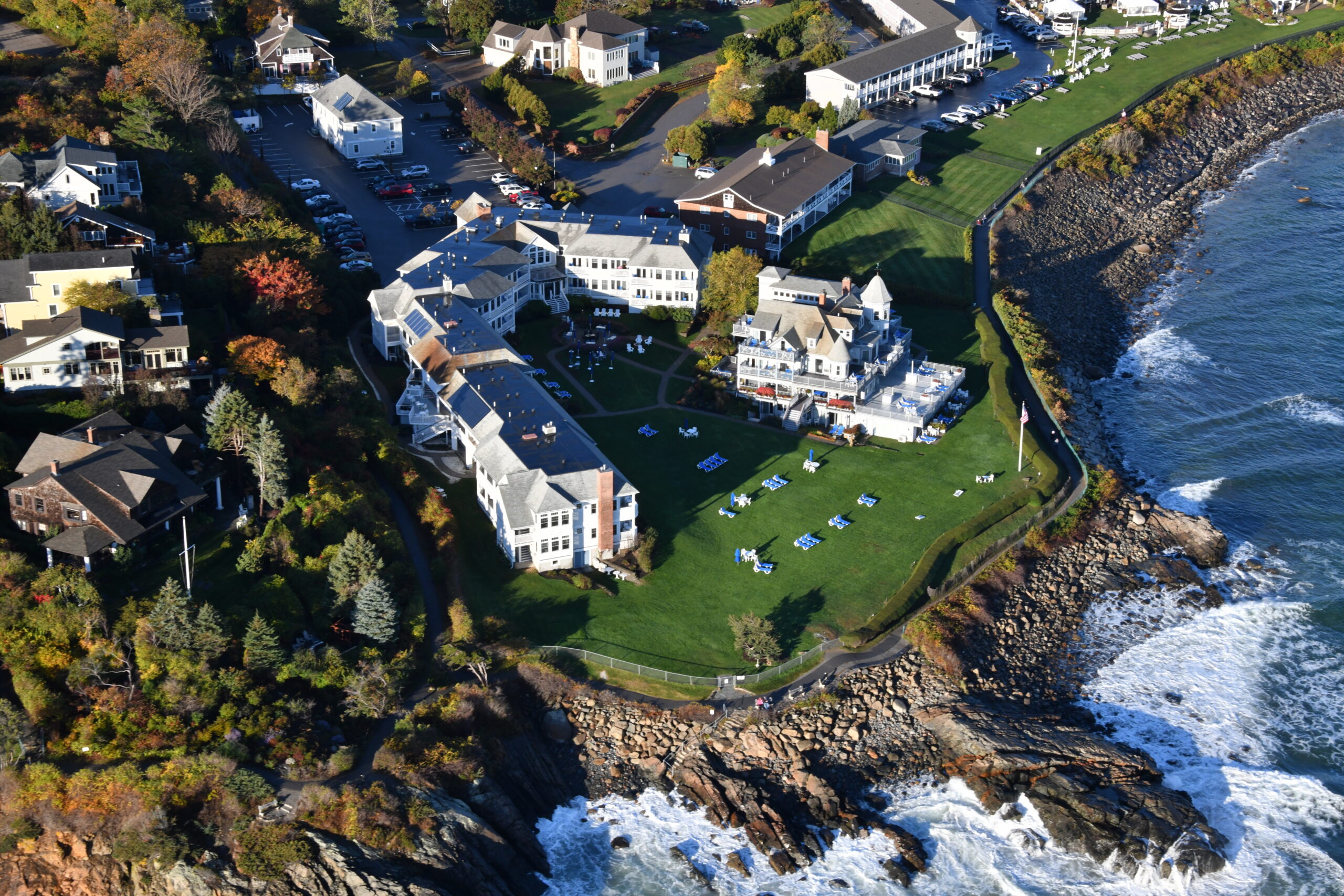
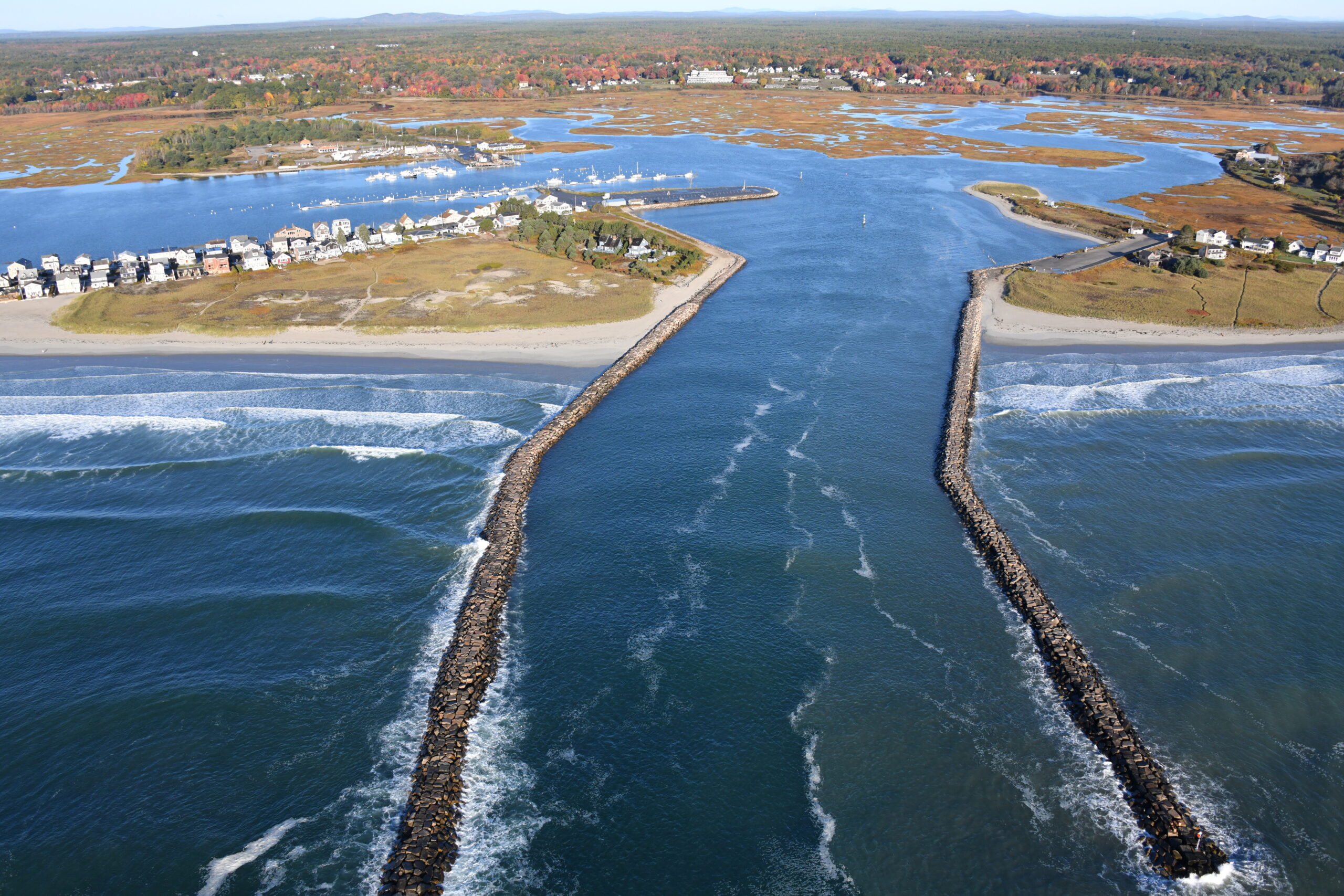
Some photos taken from a Robinson R22 helicopter that I was ferrying from Los Angeles to Boston in December 2005, four months after Hurricane Katrina came through New Orleans. These include the FEMA trailers.

the Superdome…

the low-lying neighborhoods:

Full post, including comments

A 2012 novel about the victims of COVID-19: Big Brother

Aside from killing the very old and frail, COVID-19 has a reputation for targeting the morbidly obese. And, of course, obesity will kill far more Americans than unmitigated COVID-19 ever could have, even in the most lurid/absurd scenarios painted by folks calling themselves “scientists”.

Who thought about this before 2019? Lionel Shriver, author of the awesome novel The Mandibles (see previous posts). Back in 2012, she wrote Big Brother, about a woman who finds that her brother has suddenly become huge.

The book is also notable for inventing a plausible business success.

Some excerpts:

We are animals; far more than the ancillary matter of sex, the drive to eat motivates nearly all of human endeavor. Having conspicuously triumphed in the competition for resources, the fleshiest among us are therefore towering biological success stories.

I didn’t hold many opinions. I didn’t see the point of them. If I opposed the production of nongerminating disease-resistant corn, it would still be sold. I considered most convictions entertainment, their cultivation a vanity, which is why I rarely read the newspaper. My knowing about an assassination in Lebanon wouldn’t bring the victim to life, and given that news primarily aggravated one’s sense of helplessness I was surprised it was so widely heeded.

He lowered himself into the bucket seat with the delicacy of a giant crane maneuvering haulage from a container ship. When he dropped the last few inches, the chassis tilted to the right.

Shriver is married to a jazz musician and, based on my conversations with some Manhattan-based jazz experts, she has captured their thoughts. From her jazz musician character:

“Personally I blame jazz education. Sonny, Dizzy, Elvin—they didn’t get any degrees. But these good doobies coming out of Berklee and the New School—they’re so fucking respectful. And serious. It’s perverse, man. Like getting a Ph.D. in how to be a dropout.”

Shriver foresaw not only COVID-19, but the iPhone 12:

I wasn’t sure what my brother got up to while I was at work. I think he spent a fair bit of time on the Web, the great time-killer that had replaced conspicuously passive television with its seductive illusion of productivity—

Perhaps I overemphasized the value of keeping busy and might have learned to relax more, but I did find it disturbing how, especially with the assistance of media gizmos, it was possible for time and time and more time to pass in the process of doing absolutely nothing.

We condemn the morbidly obese for their lack of self-control, but are most of us any better?

“You gained a few pounds yourself. You like to drop those, too?” “Yes, as a matter of fact.” “So why don’t you? Or why haven’t you?”

I frowned. “I’m not sure. Ever since Fletcher became such a goody-goody, it’s seemed almost like my job to be the one who’s bad. My coming home from the supermarket with a box of cookies has provided a release valve. If we only stocked edamame, you’re right: we’d lose the kids to Burger King for good.” “Pretty complicated for learning to skip lunch, babe.” “Well, maybe it is complicated.” “So for me it’s even more complicated, dig?” He was getting hostile. “You can’t even lose thirty pounds, and I’m supposed to lose—I don’t know how many.” “I don’t need to lose thirty pounds, thank you. More like twenty, at the most.” “Don’t worry, if this is a contest, you get the gold star.”

Shriver points out that our collective obesity masks our individual obesity: “If everyone is fat, no one is fat.”

This isn’t tackling as big an issue, so to speak, as The Mandibles, but I recommend Big Brother.

Related:

Full post, including comments

Social Justice Christmas Gifts

What Would Jesus Give this Christmas? Here are my ideas…

The GayBCs, a book for 4-8-year-olds.

A is for ALLY.
A friend who is there
to stand up for you
with strength, love, and care.

B is for BI.
You can shout it out loud:
“I like boys and girls,
and that makes me proud!”

C is for COMING OUT.
You’re ready to share
what you feel deep inside;
it’s okay to be scared.

Note to computer programmers: Nobody wants you to share what you feel deep inside.

The book gets 4.5 stars on Amazon.

(Should S be for Sashay if we are trying to teach away from stereotypes?)

How about this one…

H is for HATER

Who won’t buy the GayBCs

And don’t forget to “Queer Your Screen Time”. From a companion document:

What if you don’t have a 4-8-year-old who needs to learn about LGBTQIA+ terminology? From https://shop.ocasiocortez.com/ … dress like Goya Employee of the Month AOC in a $58 sweatshirt:

Miss your inexpensive and plentiful Ubers? Also from AOC, a $28 hat to demonstrate your advocacy of open borders for low-skill migrants:

You might also want this $30 T shirt from Ilhan Omar:

A $34 “Justice from Detroit to Gaza” T shirt from Rashida Tlaib:

Readers: What are your best ideas for social justice gifts?

Full post, including comments

The Dr. Jill Biden stories are preparing Americans for her rule?

A big selling point for the Democrats is the assertion that elite technocratic rule yields superior results compared to rule by ordinary folks. Democrats #FollowScience by citing experts with credentials while Republicans cite common sense. A Republican, for example, might remember “Rising Obesity in the United States Is a Public Health Crisis” (2018; “Obesity accounts for 18 percent of deaths among Americans ages 40 to 85…”) and conclude that denying children a year of gym class, making it illegal for kids to run around together, locking down adults next to their refrigerators (15 lb. weight gain typical), and shutting down activities that resulted in a few thousand steps per day of incidental walking would kill far more people than could conceivably be saved via a lockdown. The uncredentialed Republican wouldn’t need to try to run a calculation of lost life-years, but simply look around at obese neighbors and say “parking these folks next to the fridge for a year is the worst idea ever.”

The Ed.D that Jill Biden obtained is a credential “for certified teachers already possessing master’s degrees who seek to become administrators.” (maryville.edu) The master’s degrees themselves are worthless in terms of improving teaching ability and outcomes (Washington Monthly; Baltimore Sun; CPRE: “on average, master’s degrees in education bear no relation to student achievement”).

Why would Mx. Biden insist on being called “Dr.”? He/she/ze/they would not be referred to as Dr. under the conventional American newspaper style guide (MDs who support Donald Trump aren’t “Dr.” either; e.g., see this 2018 NYT article in which Ben Carson, MD, a neurosurgeon, is referred to as “Mr. Carson”).

What if the answer is that faithful Democrats are being prepared for Jill Biden’s rule? In order to be a legitimate ruler in Democrat voters’ eyes, she needs some sort of technocratic expertise and the Ed.D credential is a demonstration of that. “Smart enough to have sex with a married Congressman” is not an obvious qualification for managing a $5 trillion enterprise. With the EdD highlighted, American Democrats can feel comfortable being governed by a senile Joe Biden following Dr. Biden’s science-informed instructions. Joe won’t have to yield to President Harris, but can instead govern in the same sense that Woodrow Wilson governed following his stroke (see “When a secret president ran the country” (PBS)).

From March 2020, the factory of future primary care non-EdD “doctors” for the “underserved” (that’s what the M3s say that they’re planning to do; where the U.S. finds plastic surgeons and dermatologists is a mystery).

Related:

Full post, including comments

No pictures of convicted criminals getting the COVID-19 vaccine?

Our media and my Facebook feed are both jammed with images of health care workers getting vaccinated against COVID-19 (but a lot of them should be among the roughly one third of Americans who’ve already had the infection).

“Mass. Prisoners Among The First To Get COVID Vaccines” (WBUR):

Among those first in line for the COVID-19 vaccine in Massachusetts are correction workers and the nearly 13,000 people incarcerated in jails and prisons in the state.

Massachusetts is one of six states to specifically include prisoners in the first phase of vaccinations…

Why no photos of happy convicts?

(Separately, does this make sense? Why aren’t prisoners likely to be among the 100+ million Americans who’ve already had at least an asymptomatic infection? Would it be more efficient to find Mask Karens whose phone mobility data show that they’ve been hiding in bunkers and give them the vaccine first? (also weight the virtuousness of their Facebook posts and assume that those who’ve been promoting mask use are the least likely to have become immune the natural way))

Full post, including comments

Geochron to liven up the dead wall space of a flat screen TV

Loyal readers (both of you?) may remember how upset I have been that the U.S. has filled up with flat-screen TVs and most of them sit dark and ugly most of the time. One dream that I’ve had for a long time is turning them into digital photo frames when not in use, but the crummy software on these TVs has so far made that impossible (I have yet to find a TV that can be programmed to turn itself on at 8:00 am every day, show slides, and turn itself off at 10 pm (functioning as a TV, of course, at some point in the middle if someone wants to watch something)).

Enter the Geochron Atlas 4K. For $450, it paints a flat-screen TV to look like the 1970s Masters of the Universe dream mechanical Geochron (still available for about $3,000). This is a great Christmas gift for the brother/sister/binary resister who has everything. The 4K Geochron (which I verified does work on our old Panasonic 1080p plasma TV). has a bunch of data overlays, e.g., weather and satellite tracks, that you would never be able to get on a mechanical Geochron.

The Atlas 4K is about the size of a stack of 5 iPhones (imagine the delight!). It has an RJ45 jack on one side for wired Internet and an HDMI male plug on the other for the image output. Power is via USB.

The remote control seems to be RF-based (at least I was able to control it through a closet door and around a corner). It would be a lot nicer if one could connect to this from a smartphone on the same WiFi network, but there is no app or provision for this. Configuration via the remote control is the most tedious part and the little remote can always be lost, run out of battery power, etc.

The company seems to be keeping up with current American obsessions. For example, the July 21, 2020 software (automatically downloaded via WiFi; see changelog) will optionally show a COVID-19 plague status overlay. (We should ask for a virtue layer, in which countries with maximum mask compliance and shutdown are highlighted in green while Sweden and South Dakota are bright red for heresy.)

Our kids went nuts for this and asked a lot of questions, so we’ve already gotten $400+ in value out of it. (It is actually $399 through December 17 with “HOL2020” according to a marketing email that I recently received.)

The world is a detailed place. If this is mounted somewhere that people can walk up to it, might we have found a great use case for an 8K tv (now only about $2,400 for 65″)?

Related:

Full post, including comments

With Trump almost gone, New York Times journalists can spend all day watching porn

“The Children of Pornhub” (NYT, Nicholas Kristof, December 4) shows what a great newspaper can do once the hated dictator is almost gone. The journalist reports on various searches that he did on a porn site.

(But maybe Facebook is the real source of porn depicting teenagers? From a Guardian article:

In the last three years, Facebook self-reported 84m instances of child sexual abuse material. During that same period, the independent, third-party Internet Watch Foundation reported 118 incidents on Pornhub.

)

Full post, including comments

Testing the first jets

Hitler’s Jet Plane: The ME 262 Story (by Mano Ziegler, a Luftwaffe pilot, included with Kindle Unlimited) has some interesting parts, especially regarding just how brave a person would have to be to be a test pilot in World War II Germany.

Wolfgang Späte shows up and starts flying with minimal prep:

Continuing his test programme a few days later, he lost power in both engines at 9,000 feet. From an examination of the earlier flight data – principally in flying at slow speeds – it could be seen that he had throttled the engines back gradually to 2,000 revs. At the end of this experiment he attempted to regain thrust by pushing the throttle levers backwards and forward repeatedly, but neither engine responded, the rev counter remaining at 2,000. A brownish-black banner of smoke streamed astern from the jets. The engines would not restart and after several more desperate attempts to regain control he had lost so much height that his only alternatives were abandoning the aircraft or crash-landing. Suddenly he recollected Wendel’s instructions for such an eventuality. Wendel had once told him that in this predicament the thrust levers had to be restored to neutral and the engines restarted by the same procedure as if on the ground. At this juncture this advice was clearly not without its perils. If Wendel’s advice was wrong, Späte would have lost so much altitude during the attempt that it would be too late to escape by parachute and he would be forced to crash-land. This might succeed but an explosion was a possibility. Fortified by the philosophy ‘Nothing is known for sure’, Späte decided to stake all on Wendel. Meanwhile the aircraft had sunk down to 4,500 feet and Späte had no more time to lose. Putting the thrust levers to neutral, he made an injection of fuel and pushed the left throttle very slowly forward. Suddenly there came the short explosive sound that was music to his ears, accompanied by an increase in speed which confirmed that the left turbine had ignited. The engine rev counter climbed to 4,500, a little later to full thrust. The altimeter read only 1,350 feet, but already Späte no longer needed to concern himself with the question of baling out or crash-landing. On one engine he could maintain at least this height. The starboard engine responded similarly and he made a normal landing. This extremely unsettling state of affairs for pilots was typical of what had to be endured when the powerplant of a new aircraft was not unconditionally reliable.

Why did the engines quit?

The investigation into Späte’s almost disastrous flight came up with the explanation that if the Me 262 yawed when running at low revs, the strong lateral airflow could stop the compressor wheels and extinguish the ignition flame.

In other words, the same issue that resulted in the death of America’s first female-identifying Navy fighter pilot (Kara Hultgreen, who mistakenly tried to fix a bad approach with rudder instead of aileron, resulting in the shutdown of one of her F-14’s engines), though the German test pilot was exploring the flight envelope, not trying to land.

Luftwaffe general Adolf Galland’s book is quoted in this one, regarding a May 1943 flight:

The – at the time – fantastic speed of 850 kph in level flight meant a jump of at least 200 kph ahead of the fastest piston-engined fighter anywhere. Moreover, the aircraft could stay up from fifty to seventy minutes. For fuel it used a less costly diesel-type oil instead of the highly refined anti-knock kerosene which was becoming ever harder for us to obtain. First the works chief test pilot demonstrated one of the two warbirds in flight. After it had been refuelled I climbed in. With numerous hand movements the mechanics started up the turbines. I followed the procedure with great interest. The first engine ran smoothly. The second caught fire. In a trice the turbine was in flames. Fortunately we fighter pilots are used to getting in and out of a cockpit rapidly. The fire was soon extinguished. The second Me 262 caused no problem. We set off down the 50-yard wide runway at ever increasing speed. I had no view ahead. These first jet aircraft were fitted with a conventional tail wheel in place of the nose-wheel gear which the type had in series production. Additionally one had to step on the brake suddenly. I thought, the runway is not going to be long enough! I was going at about 150 kph. The tailplane rose at last. Now I could see ahead, no more feeling that you are in the dark and running your head into a brick wall. With reduced air resistance the speed increased quickly. I was over 200 kph and some good way from the end of the runway when the machine took off benignly. For the first time I was flying under jet power! No engine vibrations, no turning moment and no whipping noise from an airscrew. With a whistling sound my ‘turbo’ shot through the air. ‘It’s like having an angel push you,’ I said later when asked what it was like.

As noted above, the first planes literally could not be flown while rolling on their mains and the tailwheel. Pilots had to raise the tail by stepping on the brakes suddenly to get initial lift.

Hitler had the terrible idea of using the Me 262 as a bomber rather than a fighter, which slowed down development and production to some extent.

In the Messerschmitt factories and SS-run bomb-proof assembly plants there now began the hectic programme to follow the new plans for turning out the Me 262 fighter as a fast bomber. To extend its range two supplementary fuel tanks of 250 litres each were fitted beneath the pilot’s seat. In the fuselage a 600-litre tank went behind what had been previously the main tank. This additional tank was the counterweight for the two 250-kg bombs slung below forward of the fuselage. Under normal circumstances aircrew would probably refuse to fly an aircraft cobbled together in this manner, even if the air force found it an acceptable addition to the fleet. Even without the possibility of encountering enemy aircraft it was problematic to fly the Me 262 bomber. Meticulous attention had to be paid to how the aircraft was manipulated. The particular problem was the rear 600-litre fuel tank. If this tank was full the aircraft was dangerously unstable without the bombs because the centre of gravity was too far back. Before dropping the bombs, however, the pilot had to ensure that the tank was empty. If he forgot this in the excitement of the moment or was forced to jettison the bombs in an emergency, the Me 262 became very tail-heavy and assumed an attitude out of the horizontal in which control could be lost. In turn the speed would drop to 700 kph or less, at which the aircraft was easy prey for a fighter. It was weakly armed in any case because two of the four machine-guns in the nose had been removed for weight reasons. Finally the Me 262 bomber had no bombsight and the pilot had to use the reflecting gunsight (Reflexvisier or REVI) for bomb-aiming in horizontal flight or a shallow dive. The instrument would have been useful in a steep dive but this form of attack was too dangerous to attempt.

The author describes Allied bombing raids as highly effective in disrupting German engineering, tooling, and construction of aircraft. Allied fighters are also reasonably effective in shooting down the Me 262. Pilots who bail out often slam into the empennage and break bones, a good illustration of why the ejection seat is important.

What were the engines like? The book quotes Dr Anselm Franz, who came to the U.S. and become VP of Avro-Lycoming (Werner von Braun and his 1,600 friends at NASA were not the only Germans advancing “American” technology):

Taken as a whole, the 004 jet bears great similarity to the modern jet engine. It consisted of an eight-stage axial flow compressor, six single combustion chambers, a single-stage axial turbine which drove the compressor and a jet with an adjustable needle which was built from the beginning for the later addition of an after-burner. A special regulator had been developed which at higher revolutions kept the selected revolutions and the corresponding gas temperature constant automatically. This regulator was mounted together with other equipment on the upper side of the compressor housing. The starter motor was located in the compressor intake hub. The contract specified a thrust of 600 kg at full throttle, but a large reserve was expected.

Materials were terrible compared to those that go into modern jet engines, thus leading to time-between-overhauls of 25-35 hours (125 hours for Frank Whittle’s designs in Britain). TBOs today are 5,000+ hours.

Willy Messerschmitt is an interesting Silicon Valley-style entrepreneurial figure in the book. He overpromises and underdelivers. The business thrives in the early years of the war, a reminder of how the National Socialist German Workers’ Party gave a big boost to industry.

It’s an interesting book for folks interested in the history of technology. It seems so obvious to us today that the jet fighter is better than the piston-powered fighter. But throwing major resources into the jet fighter wasn’t obvious to a lot of Germans, even though they saw the Me 262 flying with turbojet engines in July 1942.

More: Read Hitler’s Jet Plane: The ME 262 Story.

Related:

Full post, including comments

Captain Tammie on Southwest 1380

Second post regarding the book Nerves of Steel

Earlier:

Continuing the “anti-Sully” theme (Sully having portrayed himself as a single-pilot hero):

Commercial aviation is a team sport. When a crew gathers for a flight, all crew members’ names are on the paperwork, but knowing the names is not the same as meeting the people and getting to know them. The trick is in figuring out how to turn five strangers into a team in five minutes or less.

Captain Tammie gives full credit at all times to Darren Ellisor, her co-pilot, and flight attendants Rachel Fernheimer, Seanique Mallory, and Kathryn Sandoval.

Captain Tammie is Pilot Flying for the first leg (the co-pilot is then “Pilot Monitoring”):

The first leg of our flight together that day, from Nashville to LaGuardia, was smooth—though I confess my landing at LaGuardia was a little more Navy than I would have liked. We rolled out, exited the runway, and made our way to the gate.

Why land firm at LGA? See My visual approach, and Asiana’s.

The Southwest 1380 emergency begins much more violently than a simple engine failure:

We had been airborne for about twenty minutes and were passing 32,500 feet when it felt like a Mack truck hit my side of the aircraft. My first thought was that we had been hit—that we’d had a midair collision. Darren and I both grabbed the controls and watched as the left engine instruments flashed and wound down. A moment later, truly the tiniest slice of a second later, we couldn’t see anything. The jump seat oxygen masks and fire gloves went flying from their storage compartments and bounced around in the cockpit with other loose items. The aircraft began to shudder so violently that we couldn’t focus our eyes. The cockpit filled with a cloud of smoke, which made me think there was a fire, but the fire alarm wasn’t ringing. It was like being inside a snow globe that someone was shaking, hard. Just as suddenly, a deafening roar enveloped us. We couldn’t see, we couldn’t breathe, and a piercing pain stabbed our ears, all while the aircraft snapped into a rapid roll and skidded hard to the left as the nose of the aircraft pitched over, initiating a dive toward the ground.

They didn’t know it at the time, but the left engine had come apart.

The initial sensation of being hit by a truck was brought on when a piece of a turbine fan blade in the left engine broke off and caused catastrophic engine damage. The explosion caused the leading edge of the engine cowling to disintegrate—I heard pieces of it were found scattered across the Pennsylvania countryside—and the rest of the cowling around the engine to roll back like a banana peel. It remained attached at the aft end of the engine, flailing around in the wind. What was once sleek and aerodynamic was now more like a barn door swinging in a hurricane. Shrapnel from the explosion took chunks out of the leading edge of the wing and the tail, ripped a panel open underneath the wing, and severed hydraulic lines around the engine. A fuel line was also cut above the cut-off valve, so we had no way of shutting off the fuel that was flowing out of the left fuel tank. A piece of debris hit the window at row 14, causing it to fail and blow out, which is what generated the deafening roar and the sudden loss of pressure in the cockpit and the cabin. If you’ve ever been in a car when someone rolls down the window at sixty miles an hour, the noise is unpleasant. I don’t have words to adequately describe the ear-drum punishment of a five-hundred-mile-per-hour experience.

A good qualitative aerodynamic explanation:

The combined damage on the left side of the aircraft is what caused the violent shuddering, because instead of an engine under the left wing, we now had what amounted to an anchor. The huge asymmetry (the difference between a dead and severely damaged engine on the left and a healthy engine on the right producing thrust) immediately pushed the nose of the aircraft hard to the left. That rotation caused the outside wing to generate more lift than the wing on the inside of the turn, which made the aircraft roll rapidly toward the bad engine.

Due to the extra drag and loss of half the thrust, the aircraft descended 18,000′ in the first five minutes, even without the pilots trying to dive. The aircraft has a strong desire to turn left (it is no longer an ambiturner).

Captain Tammie on the PA:

“We are not going down,” I said. “We are going to Philly.”

As in the Oshkosh talk that she and Darren Ellisor gave, she gives the most credit to those who chose to take risks when they could have avoided any additional risk:

Oxygen masks were dangling from the overhead compartments, but only a few people had them on correctly. [Sound familiar?]

Seanique, Rachel, and Kathryn strapped on their portable oxygen bottles, put on the masks, and unbuckled from their jump seats. Then they began the dangerous process of moving through the cabin, helping people secure their oxygen masks and assuring them that we had a destination—we were going to Philadelphia. It’s important to me that you know the extreme risks these women took in that setting to unbuckle and get out of their seats. Some might think they were simply doing their job; they did more than their job that day. They would have been justified to stay seated, as they were placing their own lives at risk to do otherwise. Setting aside concerns for their own well-being, all three women chose to get up. With the rapid depressurization, they knew there was a hole in the aircraft somewhere (they didn’t know where at first), and it was possible that at any moment some other part of the aircraft might tear away and take them with it. As they stumbled down the aisle, they took a beating. They were struck by flying debris. They sustained strained backs and bruised ribs from bouncing off the seats, and the oxygen bottle straps lacerated their necks. Everyone on board had been affected by the rapid depressurization just as Darren and I had been, with shooting pain in their ears and the terrifying feeling of not being able to breathe. But one by one, shouting over the din while they also paused to help people, the attendants went from seat to seat, yelling, “We’re going to be okay! We’re going to Philly!”

She also credits passengers Andrew Needum and Tim McGinty for unbuckling and trying to rescue Jennifer Riordan, who had been pulled partly out of the aircraft during the window failure and depressurization. As long as the aircraft’s speed and altitude were such that Riordan couldn’t be pulled in, anyone with a brain would have known that there was a risk to unbuckling and a 10X risk of getting near the failed window.

Captain Tammie explains why she and Darren Ellisor swapped roles:

In an emergency situation it’s the captain’s responsibility to land the plane, regardless of whose turn it is to fly, so I took over the controls.

After seeing all of the damage, Captain Tammie selects a non-standard lower-drag higher-speed landing configuration of Flaps 5 rather than Flaps 15, which is standard for a single-engine approach. (27L at KPHL is 12,000′ long, enough for the Space Shuttle)


When I tried to level off, I realized I couldn’t add enough thrust to maintain airspeed and altitude. The amount of rudder it took to keep the aircraft in balanced flight now became the limiting factor in how much power I could add from the right engine. If I added too much, I wouldn’t have enough rudder authority to overcome the asymmetric thrust, and it would push the nose to the left, causing even more drag. So there was a point at which adding power became detrimental, …

I had Darren select Visual Flight Path on my HGS (Heads-up Guidance System) so I would have a 3-degree glide path reference for my approach to the runway. Because we don’t typically land Flaps 5, even when practicing single-engine approaches, the sight picture as I looked at the runway would be very different from what I was accustomed. With the lower flap setting, the nose of the aircraft would be higher than normal, but the symbology in the HGS combiner glass would be familiar. We also would be flying about 50 knots … faster than normal, which would also change the sight picture. But since I use the HGS for every approach, I wanted a little slice of normal for this anything-but-normal approach. With the decision made to head directly for the airport rather than take extra time to work through more checklists, I had one more 90-degree right turn to go to line up with the runway. That is when things took a turn for the worse. I had already made a 90-degree right turn when I was over the city and heading east, but I had done that while still descending and with the right engine at idle power. Now, heading south, I had added power to slow our descent. When I put in the controls to make the final right turn that would line us up with the runway, absolutely nothing happened.

There was nothing I could do about the weight of the aircraft or the extreme drag hanging off the left wing. My only option was in the palm of my right hand. The answer was clear, but it was not what I wanted. I was already concerned about the energy state and my ability to even make it to the runway, so the last thing I wanted to do was pull power on my good engine and sacrifice airspeed and altitude. But it was clear that I didn’t have a choice. The aircraft simply would not turn right with all of the drag pulling the left wing backward and all of the thrust from the good engine pushing the right wing forward. I made the decision. I eased the right throttle back, stood on the right rudder, and fed in some ailerons (input that tells the aircraft which way to turn). And it worked! As the nose slowly swung around to the right, and we were finally headed toward a nice long piece of concrete, I called for landing gear down. We were getting close, but we weren’t there yet.

Due to the high drag and single engine, the crew has one chance for a landing (i.e., go-around not an option).

The plane slowed as we descended toward the runway. At seven hundred feet we were doing 170 knots, or 194 miles per hour. We touched down at 165 knots, or about 30 knots faster than normal, but 15 knots slower than my target. The usual margin for error in approach speed is only 5 knots below the target airspeed. However, had I held my speed, we would not have made the runway.

So many things had gone wrong that day, but so many things had gone right too. The distance between the explosion and Philadelphia was just the right distance for us to have made it to Philly. We couldn’t have made an airport any farther away. My inclination to use Flaps 5 had turned out to be the right choice. Everything had gone as well as it possibly could have in the circumstances, right down to the moment when we lowered our gear and turned in. Nothing was perfect, but everything worked.

Trigger warning: Don’t read the next quote if you #FollowScience when it comes to COVID-19:

When the airstairs arrived, I helped people

Full post, including comments