Renovate a 10-year-old Buderus gas boiler?

We have a 10-year-old Buderus GB142 wall-hung gas boiler that is suffering from myriad corrosion issues. The HVAC service folks recommend either dumping in $3,300+ for a “major renovation”, including replacement of the manifold and everything connecting to the boiler, or spending $15,500 (minus $2,750 in rebates under the poor-renters-should-subsidize-rich-homeowners political theory that prevails in Massachusetts) on a new 150,000(ish) BTU high efficiency system.

Does anyone have experience with these beasts? Are they worth fixing? Are we going to pay $3,300 now and then $15,500 a year from now when something else blows up?

Also, if we do decide to replace, Lochinvar or Bosch? (presumably we don’t want to go back into the Buderus money sinkhole, though on the other hand Bosch liked them well enough to buy them!)

Note that my glorious plan to replace this with an old-style standard efficiency boiler ($2,000 part every 20 years) seems to be impractical. It has to go into a small closet (no basement in this house due to architectural genius back in the 1960s) and the latest code would require fan-driven make-up air. So it wouldn’t be any cheaper than having a high-efficiency unit, according to the HVAC guys (and, for some reason, everyone who comes out to fix boilers on Christmas Day or crawl around in attics in July seems to identify as male; where is Hillary to address this injustice?).

[Separately, this is a great illustration of why official CPI is grossly understated for homeowners. The cost of maintaining a house has skyrocketed (very labor-intensive in a country where a worker can cost $30,000/year in health insurance premium before the first dollar of wages has been paid). The cost of paying real estate taxes has gone up dramatically (and about to go up 30% more in our town due to the approval of a $110 million school project (to renovate a school building occupied by 440 town-resident K-8 students!)). None of this is reflected in CPI (background) because they look at what we would pay to rent our house if we could find a landlord sufficiently passionate about losing money to want to buy it, maintain it, and rent it out.]

Update: Readers commented about what a rip-off the above quote was, for the Lockinvar 155,000 BTU boiler and associated fittings. So I got a competitive quote from a regular plumbing contractor who is excellent: $20.750. And I got a second quote from a friend’s heating guy: $15,000 plus or minus. Apparently this is the price in the Boston suburbs. We decided to go with the HVAC company’s $15,500 plan. Typical Americans can’t afford to live in America, is my conclusion. It just looks like we can because we’re using legacy infrastructure that hasn’t worn out or fallen down yet.

Full post, including comments


Divorce, custody, and child support in Cuba

Our guide in Havana said that Cuba has one of the world’s highest divorce rates and attributed this phenomenon to the real estate shortage. “People have to live with their in-laws and that leads to a lot of unhappiness.” Wikipedia backs her up on the ratio of divorces to marriages, which is indeed slightly higher than in the U.S.

(Since Cubans marry much younger than people in other countries, could the high rate simply reflect that people married at 18 are more likely to split up than people who marry at age 30?)

“Divorce was a scandal in the old days,” she explained. “Now it is easy because we have no money to fight over, just babies and always the mother keeps them.” What about the right to occupy, rent-free, real estate? The guide explained that the mother can always win that one too, but the right may not be permanent. “There were a lot of women coming to Havana from the east and marrying older men with nice houses, having a baby [double hand gesture of swollen belly], and then taking the house. Now they have the right to stay until the child turns 18, but they won’t own it if the man owned it before the marriage.”

What about child support profits after meeting a higher-income Cuban in a bar? “She can get paid if she knows who the father is,” the guide explained, “but she can’t get an apartment, only about 2 CUC per month maximum. [$2/month].” The child support formula is based on the father’s official earnings, which would be only $20-60/month and is a much smaller percentage of after-tax income than in the U.S. A child support plaintiff could collect $2/month, for example, from a physician earning $60/month (a 1/15th share), but wouldn’t get a share of the physician’s side-job earnings. Compare to New York or Wisconsin, where a plaintiff’s tax-free share of the doctor’s after-tax earnings will be roughly 1/3rd.

In looking at the above numbers, remember that Cubans don’t pay rent, tax, health insurance, college tuition, etc. That’s all included in the package of Cuban citizenship (into which immigrants are not invited!). Also, the $20/month that someone might earn is sufficient to purchase staple foods at subsidized prices via ration cards. Cubans who desire luxury items such as mobile phones need a second job, but those who are content with a basic standard of living apparently can survive on the official salaries.

Related:

Full post, including comments

Aeronautical Decision-Making 101: Runway Length

If you’re planning on flying the family somewhere for Christmas…

A couple of months ago at our flight school office one of our Private students was slaving away on preflight planning like it was 1970. She was preparing a navigation log of headings and times taking into account forecast wind and magnetic variation. All computations done on an E6B slide rule, of course!

I asked why she was doing this, given that nearly all of the planes in our rental fleet have a panel-mount certified GPS with moving map and, should that fail, we’re in an environment completely covered by Air Traffic Control radar. She explained that her instructor failed the GPS on every cross-country flight and made her do everything old-school. Her day job is engineering so this effort isn’t overtaxing her brain, but will it contribute to practical safety?

I shared with her a text message exchange that I’d had a few days earlier with a rental customer for the Cirrus SR20. The guy holds a Commercial Pilot certificate with Instrument rating. He has 750 hours of flight time.

Background: FAR 121 requires that airline crews that include two professional full-time highly proficient pilots (well, except when I was flying the CRJ!) be able to land within 60 percent of the available runway.

Me: How much fuel do you want in the plane for your flight on Saturday?

Him: Top off, please.

Me: You’re going to fly for six hours? Where are you going?

Him: Albany.

Me: That’s a one-hour flight. The plane cruises faster and lands more smoothly if you’re not right up near the max landing weight of 2900 lbs.

Him: There’s no fuel available at the airport.

Me: There’s no fuel at Albany? The crosswind runway is 7200′!

Him: I’m going to 5B7. I’m taking my son to visit Rensselaer.

Me: That’s a 2670′ runway in “poor” condition with obstacles. The Cirrus needs about 2100′ to land over a 50′ obstacle so you’d be flying your son with less safety margin that what is required for an airline crew and making it more challenging by going in heavy. The A/FD says “TRANSIENT ACFT CALL (518) 596-5947 FOR FIELD CONDS PRIOR TO ARR.”. The airport is unattended. If you blow a tire there, how long before the plane gets back out?

Him: <not convinced that this airport is a bad idea

Me: Incidentally, East Coast Aero Club has a 3000′ runway minimum with a handful of exceptions such as Block Island.

Him: I didn’t know that. It’s too bad. I was thinking of going to South Albany (4B0) instead.

Me: 4B0 is 2853′ with a displaced threshold in both directions, so really more like a 2700′ runway. KALB is 8500′ for the big runway, has fuel cheaper than the reimbursement rate, no fees if you buy a handful of gallons, and is actually a shorter drive to RPI than either 5B7 or 4B0. The FBO at KALB can fix the plane if something goes wrong and have you back in the air two hours later. Why would you want to go to an unattended airport with a short runway instead?

Him: I thought it would be easier than dealing with an FBO.

I still can’t grasp why a high-time-by-GA-standards pilot wouldn’t see the safety advantage of an 8500′ runway in a massive clearing over a 2700′ poor condition runway that is surrounded by trees. Nor can I fathom why someone wouldn’t want the option of support from an FBO that underprices its services (Million Air at Albany is surely not hoping for an influx of piston-powered aircraft tanking up with 20 gallons of 100LL!). There is always the possibility of a tire or spark plug failure.

A passenger would likely have been safer going to Albany with the student pilot (if it were legal) than with this Commercial-IFR guy with an aversion to FBOs.

Maybe as instructors we should take students to some bigger airports and deluxe FBOs to highlight the value offered by both? It’s great that the U.S. has lots of little airports, but it usually doesn’t make safety sense to use them when a big airport is actually closer to the ultimate destination.

Full post, including comments
Does Cuba need immigrants to revitalize its economy due to a low native birth rate?

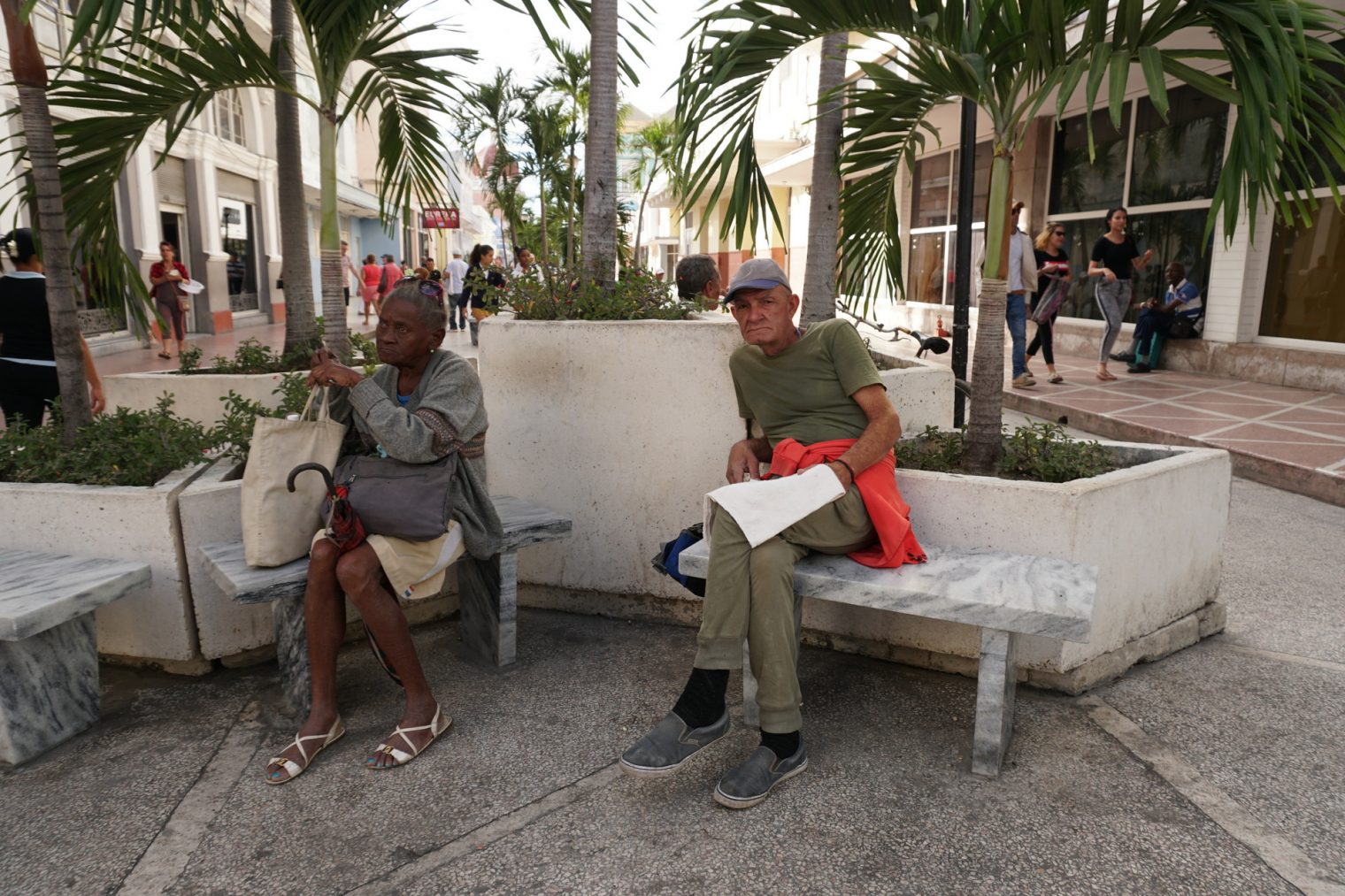
The CIA Factbook says Cuba has a population that is falling in size (growth rate -0.27 percent) and older (median age 41.8; older than the U.S. at 38). This is consistent with what our guide in Havana told us, i.e., that since the fall of the Soviet Union the typical Cuban family can afford only 1 or 2 children. This is despite women going into their at first marriage when just over 18 years old, according to our guide (consistent with some published, but older, statistics that I could find, also with this NYT article that quotes a woman married at 17 (divorced her husband when she was 35)).

Relaxing on a Wednesday in Cienfuegos (on the southern shore)

Politicans in Europe and the U.S. say that a flood of young immigrants, regardless of lack of education, local language proficiency, and job skills, will boost an economy with an aging population. Should Cuba be trying to get its share of the caravans of young Spanish speakers making their way through Mexico? (they previously grabbed Che Guevara from Mexico after he made his way north from Argentina)

[From 1960 to the present, Cuba’s population did grow, though not as fast as the U.S. population. The guide explained her theory for why there was more growth in the old days: “Back then we had no electricity, phone, or TV set so we make a lot of children.”]

Full post, including comments

Cruise-o-nomics

The officers of Empress of the Seas were kind enough to host a Q&A session with passengers.

The life of an officer is 10 weeks on, 10 weeks off. The company is responsible for air transport to and from the officer’s home, wherever that happens to be on Planet Earth. There were no American officers on our ship and an American would be at a big disadvantage relative to a European. The typical European country doesn’t tax money earned elsewhere and, in any case, the officer can always choose to locate in a tax-free jurisdiction for his or her land home. The European officer with a family is not an attractive target for a divorce lawsuit due to the elimination of alimony (Germany, and similar) and/or the low caps on child support revenue ($2,000 to $8,000 per year per child, depending on country; see Real World Divorce). The land-based partner of a cruise ship officer cannot substantially live on the officer’s salary following a divorce.

(There is not a huge temptation for a heterosexual officer to stray while on board. All of the officers on our ship were men and the majority of crew members at all levels are male. There are apparently few women who are willing to be away from home for stretches of 6 months or more.)

Our ship is the smallest in the Royal Caribbean fleet. The captain explained his plan to catch up: “Every time we go into dry dock we will add 6 feet to the length. Over time we will grow into the largest ship.” (Empress of the Seas is being refitted in February 2019 in Freeport, Bahamas. Given that everything will need to be shipped in, I was shocked that it was more cost-effective to do this work in the Bahamas rather than in the U.S. There must be some spectacular inefficiencies in the American shipyards! In what other manufacturing or technical area is the Bahamas competitive?)

Why are all of the new ships big? The officers explained that the path to real profits starts with ships that hold at least 3000 passengers. That isn’t practical for these Cuba excursions due to the small piers that are available.

One thing that is not big on cruise ships is the draft. The captain explained that ocean liners, which are engineered with a deep draft to challenge big waves, can’t get into most of the Caribbean ports. The Queen Mary had a draft of 39′, the Queen Mary 2 is at 34′. Even the 6,000-passenger Oasis of the Seas draws only 31′ and the Empress of the Seas has a 24′ draft. There seems to be a mismatch, however, between how cruise ships are designed and how they are used. People are crossing the Atlantic and Pacific on these tall and shallow-drafted machines. We went through about 8 hours of dramatic (for a landlubber) rocking when sideways to what looked like a modest swell. Seasick bags were deployed in all of the elevator lobbies. This is despite the ship being equipped with stabilizers.

Full post, including comments

Merry Christmas (again) to the Sea Turtles

Last Year: https://philip.greenspun.com/blog/2017/12/25/merry-christmas-to-the-sea-turtles/

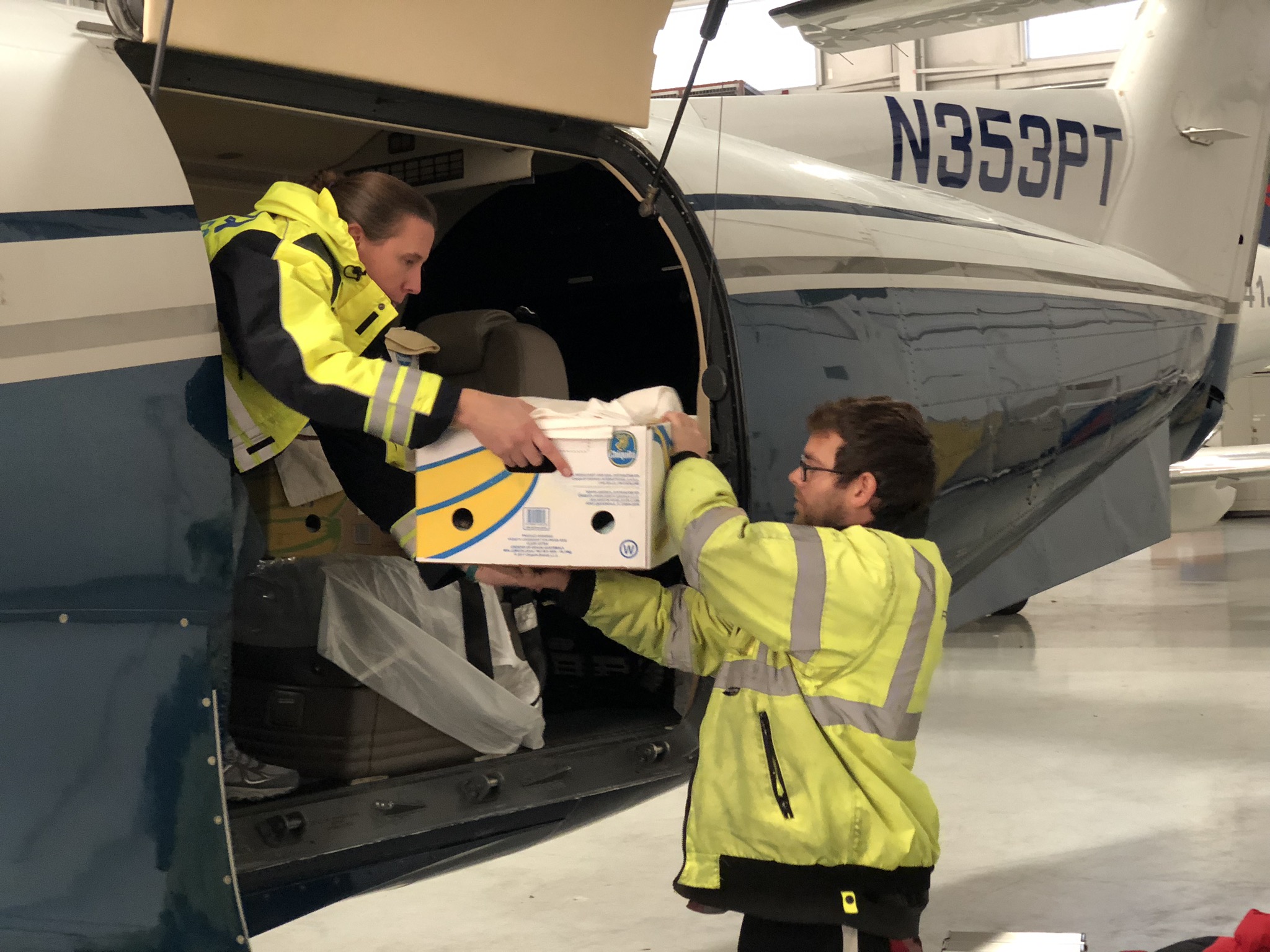
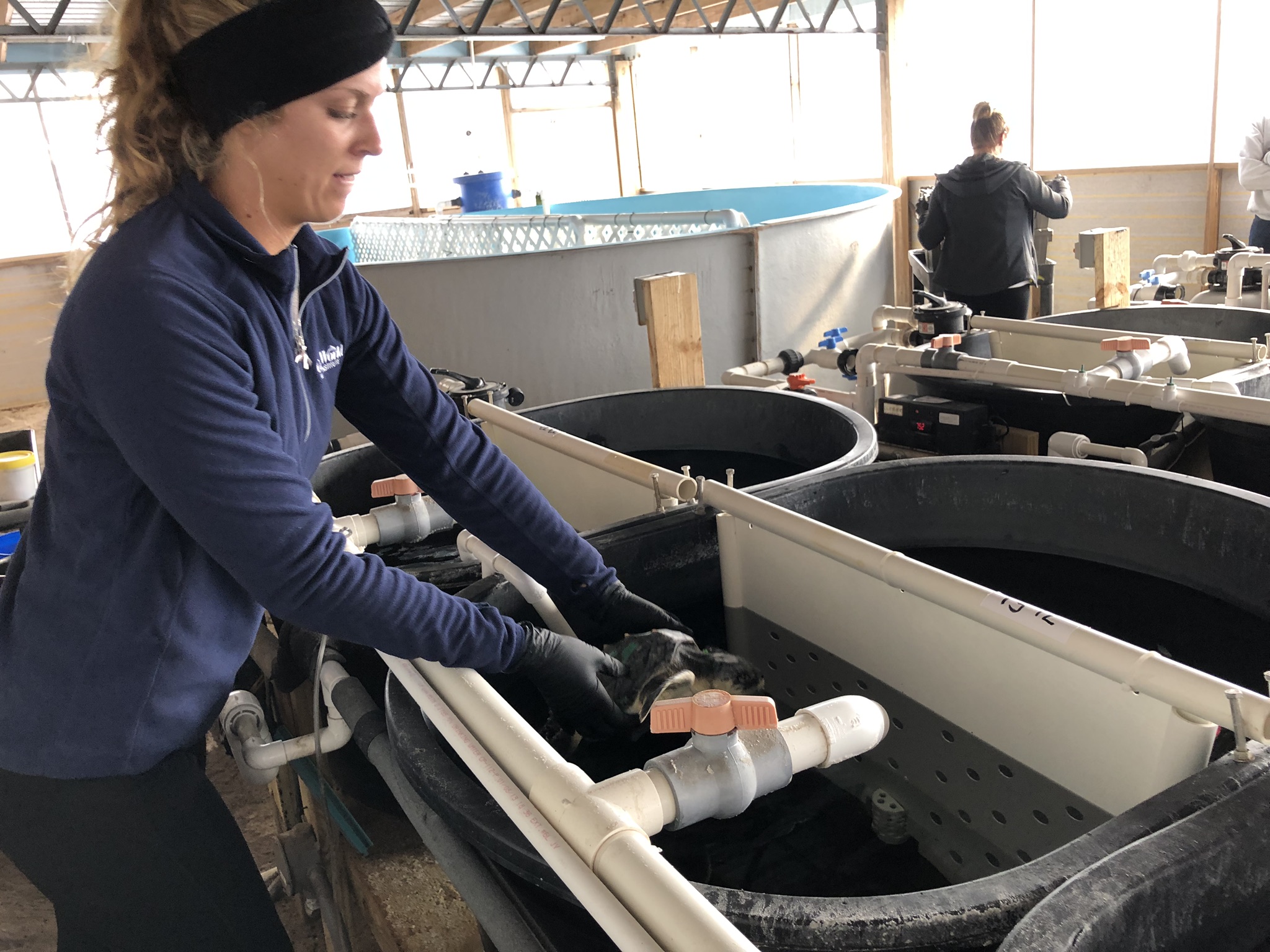
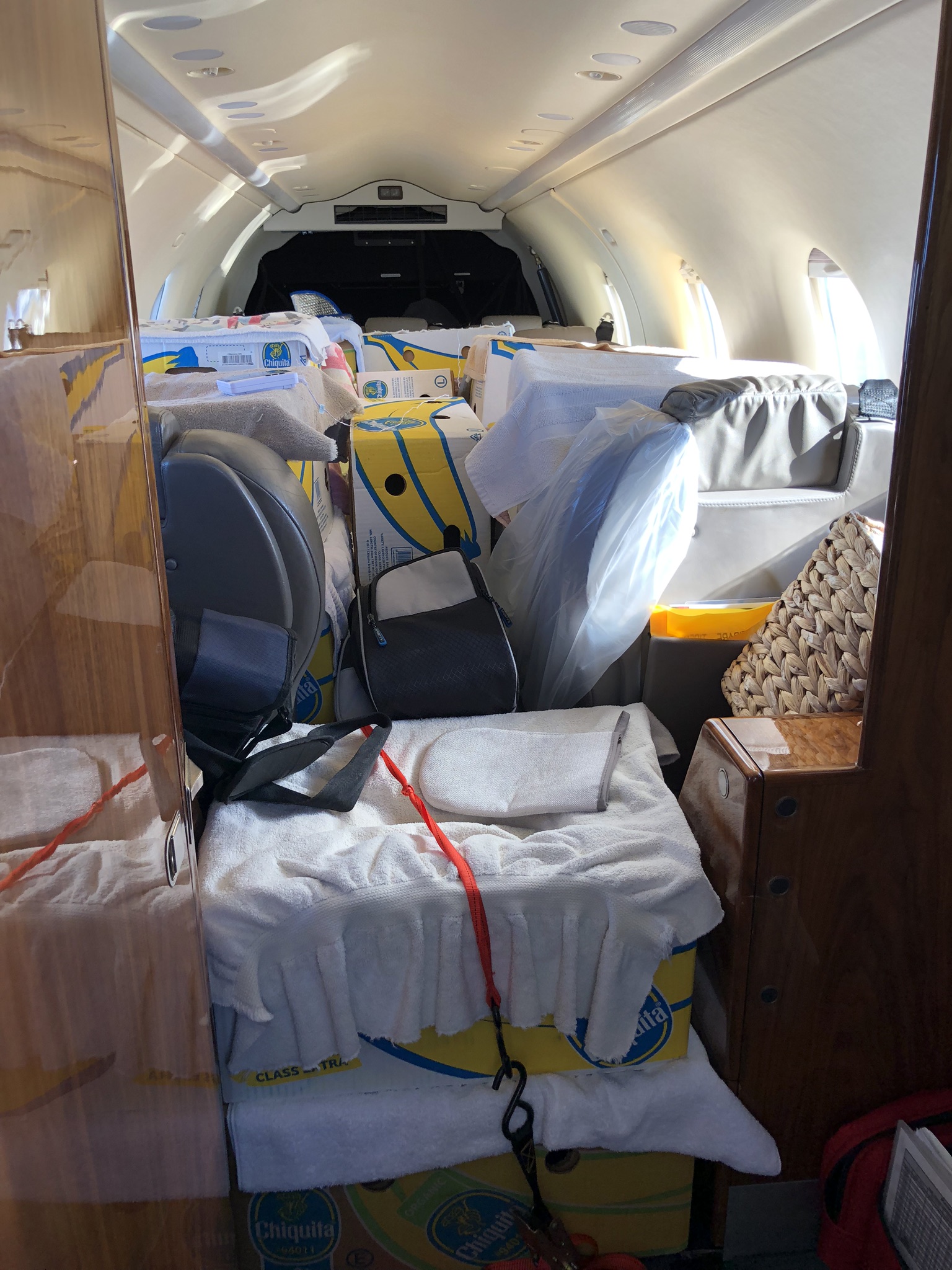
This year: We helped 60 sea turtles make their way from frigid Cape Cod to warm Panama City, Florida. Some photos:

Merry Christmas to everyone!

[Credits: Rectrix at KBED and Sheltair at KECP both provided superb support for loading and unloading. Turtles Fly Too and Kate Sampson of NOAA coordinated everything. Tradewind Aviation‘s superb maintenance and dispatch crew made sure that the Pilatus PC-12 was ready to go. Air Traffic Control gave the turtles a VIP direct clearance at FL220. The New England Aquarium did the initial rehab for the cold-stunned turtles. Gulf World in Panama City continued the rehab and also gave us an awesome tour of their facility (there was minimal damage to Panama City beach from Hurricane Michael, though it was a different story just 10 miles east). ]

Full post, including comments

Arrived in Jacksonville; great demonstration of private airplane versus JetBlue

Good news: I made it to Jacksonville without suffering the indignity of three hours on JetBlue.

Bad news: the trip was officially scheduled to depart on Friday, thus making this a three-day journey.

The Cirrus SR20 was theoretically capable of handling the low clouds and heavy rain of Friday in New England, but not the forecast icing conditions once airborne.

Why not depart on Saturday? The FAA issued an Airmet for occasional moderate turbulence, but that didn’t seem to square with surface winds forecast to gust up to 30 knots in the Washington, D.C. area (usually calm). Boeing crews were reporting moderate turbulence and a Cirrus SR22 in northern Virginia reported “severe” turbulence:

Turbulence that causes large, abrupt changes in altitude and/or attitude. It usually causes large variations in indicated airspeed. Aircraft may be momentarily out of control. Report as Severe Turbulence.

Occupants are forced violently against seat belts or shoulder straps. Unsecured objects are tossed about. Food service and walking are impossible.

Later in the day, the FAA issued a SIGMET for occasional severe turbulence.

So the trip departed Sunday morning and the D.C. overnight was replaced with lunch followed by an overnight on the Virginia/North Carolina border.

So… at least in the winter, it is fair to say that a four-seat airplane is approximately 1/24th the speed of a basic economy airline ticket (and a little slower than a Honda Accord).

Full post, including comments

Christmas versus Hanukkah

Massport enabled a direct comparison of religions with this display at Logan Airport:

10′ Christmas tree and 10″ menorah. That settles it! A hearty Merry Christmas Eve, then, to all readers who celebrate!

If you prefer Islam to Christianity you’ll be pleased to know that Boston’s Museum of Fine Arts has added Islamic verses and symbols to their Christmas Tree:

(“There is no god but God; Muhammad is the Messenger of God” from the Saudi flag, which also features a sword in case there is a need for beheading.  I think the green crescent and star is for the Islamic Republic of Pakistan, but the white stripe doesn’t belong. The red flag is for Turkey.)

Full post, including comments

Art Basel Miami Beach

There is no better contrast than going to Art Basel before getting on a cruise ship.

The venue in the U.S. is adjacent to Miami’s Holocaust Memorial:

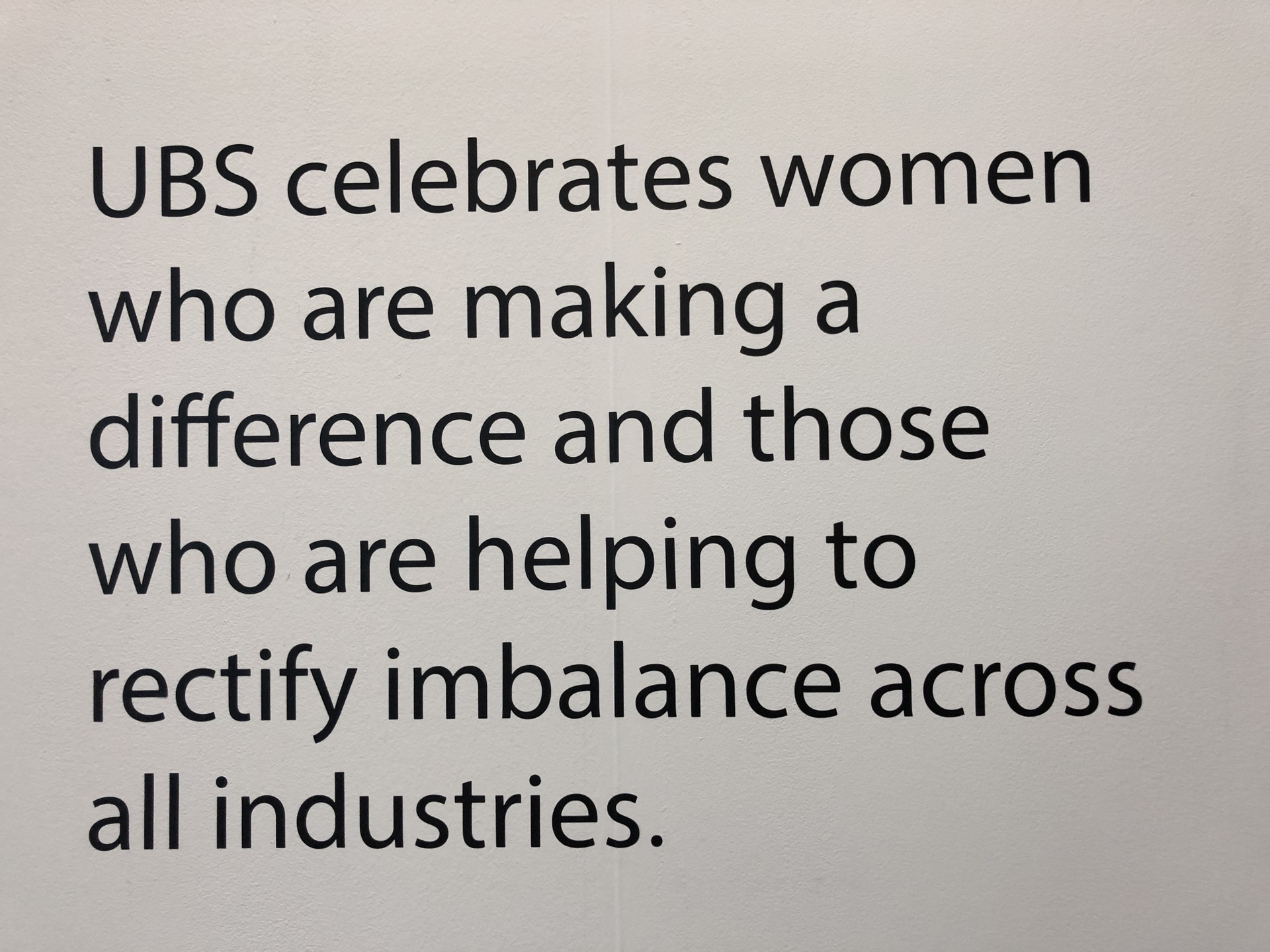
A Swiss bank is a sponsor, but they’re not interested in money per se. It is more about “women are who making a difference and those who are helping to rectify imbalance across all industries”:

A one-day ticket is $60. There is no discount for identifying as female.

Each gallery has its own section of the convention center floor. Just as in a traditional art gallery, a slender person sits typing at a computer and ignores customers. (There is an episode of Absolutely Fabulous in which Edina tells a snobby art gallery clerk something like “drop the attitude; you work in a shop.”)

David Shrigley describes our house (except for the “large” and “fancy” parts):

Ai Weiwei is not impressed with the World’s Greatest Democracy (this was pre-Trump!):

Success does not require spending a lot on art supplies:

Service animals get more unusual every year:

Do not let the kids pack up for your cruise:

The motivation you’ve been needing for that standing desk:

Best-dressed visitor:

Important Hanukkah public service safety message:

They didn’t have enough neon to spell “rainforest”:

If you missed Burning Man, David Batchelor has you covered with LED sculpture:

Some airspeed and attitude issues in Matthew Brannon’s Huey:

Why isn’t the global douchebag circuit dominated by folks wearing Art Basel T-shirts? There is no gift shop! Taschen, however, operates an awesome shop with books that you wouldn’t have seen even if Amazon hadn’t killed your local bookstore. A large-format Hockney celebration and a book of Ferrari photos encased in a mock Ferrari engine ($30,000 complete with exhaust pipe stand, but sold out; the $6,000 engine-cover-only version remains available). Don’t forget the white gloves:

I would go back anytime!

Full post, including comments

If prostitution is legalized, will there be confidentiality provisions?

“Eliot Spitzer snuck me into his apartment in a suitcase: ex-mistress” (New York Post):

The former escort, who got paid up to $5,000 a night, also griped that Spitzer could be a slacker about payments — sometimes writing a check for $10,000, other times paying her in $300 installments.


“We were seeing each other four times a week’’ for sex, said Zakharova, who has previously described leading Spitzer around on a black leash during their bedroom games.

Zakharova said she is now working on book and movie deals about her time with Spitzer.

So the young lady earned up to $20,000 per week ($1 million per year) as a vendor of sexual services, but is potentially able to earn more by writing about the former New York governor‘s preferences in the bedroom.

Could a confidentiality contract between a prostitute and a client be enforced right now? Does the fact that prostitution is illegal in New York render such a contract void?

Suppose that the U.S. legalized prostitution (to go with recreational marijuana?). Would we then also put in default confidentiality provisions? What public interest is served by having sex workers write about their customers? (and how could the truth ever be established, absent video evidence?)

[Instead of working for $5,000 per night, why wouldn’t the young lady have arranged to get pregnant and then sold the abortion or harvested 21 years of potentially unlimited child support revenue offered under New York family law? The Post article explains:

At one point, the gal pal “wanted him to reverse his vasectomy. He told her he would, but he didn’t.”

]

Finally, what does the IRS make of all this? The U.S. resident is on record as saying that she earned $5,000 per night. If she did not declare this as income, does the IRS now go after her on behalf of the U.S. Treasury?

Related:

Full post, including comments