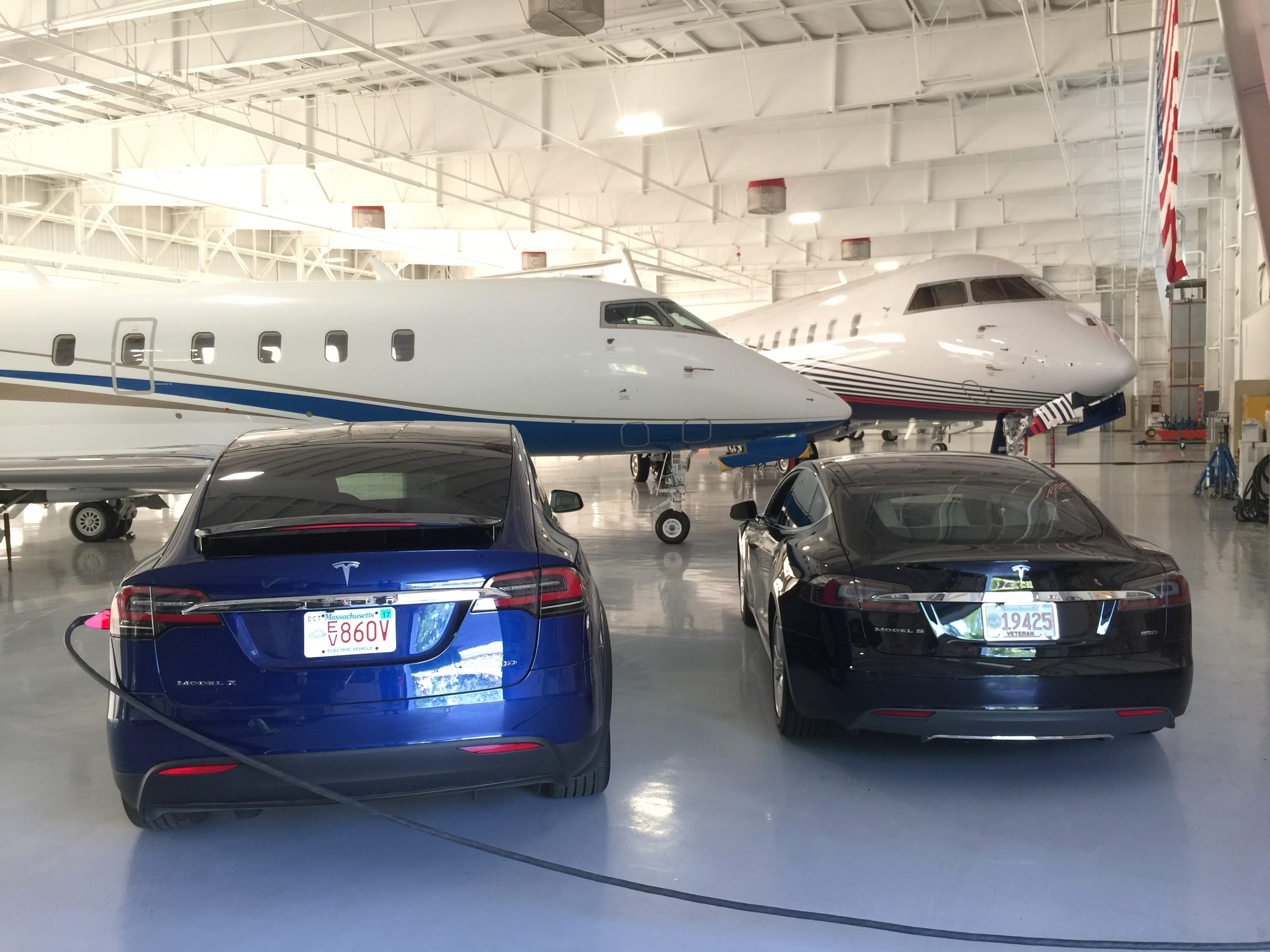
I decided to spend a weekend saving the planet by stealing a Tesla X and driving it around the Boston suburbs. I am absolutely certain that generations from now, people will look back on this weekend, and our family’s trip to a Panipuri party in Newton, as the moment when the rise of the oceans began to slow and our planet began to heal.
Here are some impressions of the healing process.
The tires may be the first thing that you notice when up close to the “Tess-U-Vee”. They’re about the right size for a mid-sized front-end loader.
The windshield is crazy huge, extending up to become a sunroof. Unfortunately this leads to the need for a pop-in sunshade that, if you’re a 6′ tall driver, results in a line across the natural view forward. The expansive windshield also leads to a thick A pillar that blocks the driver’s view of cars coming toward an intersection from the right. This is the worst forward blind spot that I have ever experienced in a vehicle. Driving south into the afternoon sun on a clear day most of the windshield is slightly obscured by a reflection of the grid in a fabric on top of the dashboard.
Highway driving is not especially quiet. Car and Driver says that they measured just 65 dBA, but the road and tire noise seem louder. It is not as quiet as a luxury car; closer to a Honda Odyssey. Ride quality on the roads of Massachusetts (whose condition would lead a German or Dutch road maintenance crew to commit suicide out of shame) was good, but not cushy/luxurious. Perhaps, as with monster gas-powered SUVs, the huge tires and offroad capability have impaired the vehicle’s bump-absorbing ability. A good reminder that we are still in the Model T suspension era rather than the era of active suspension (see also Levant Power).
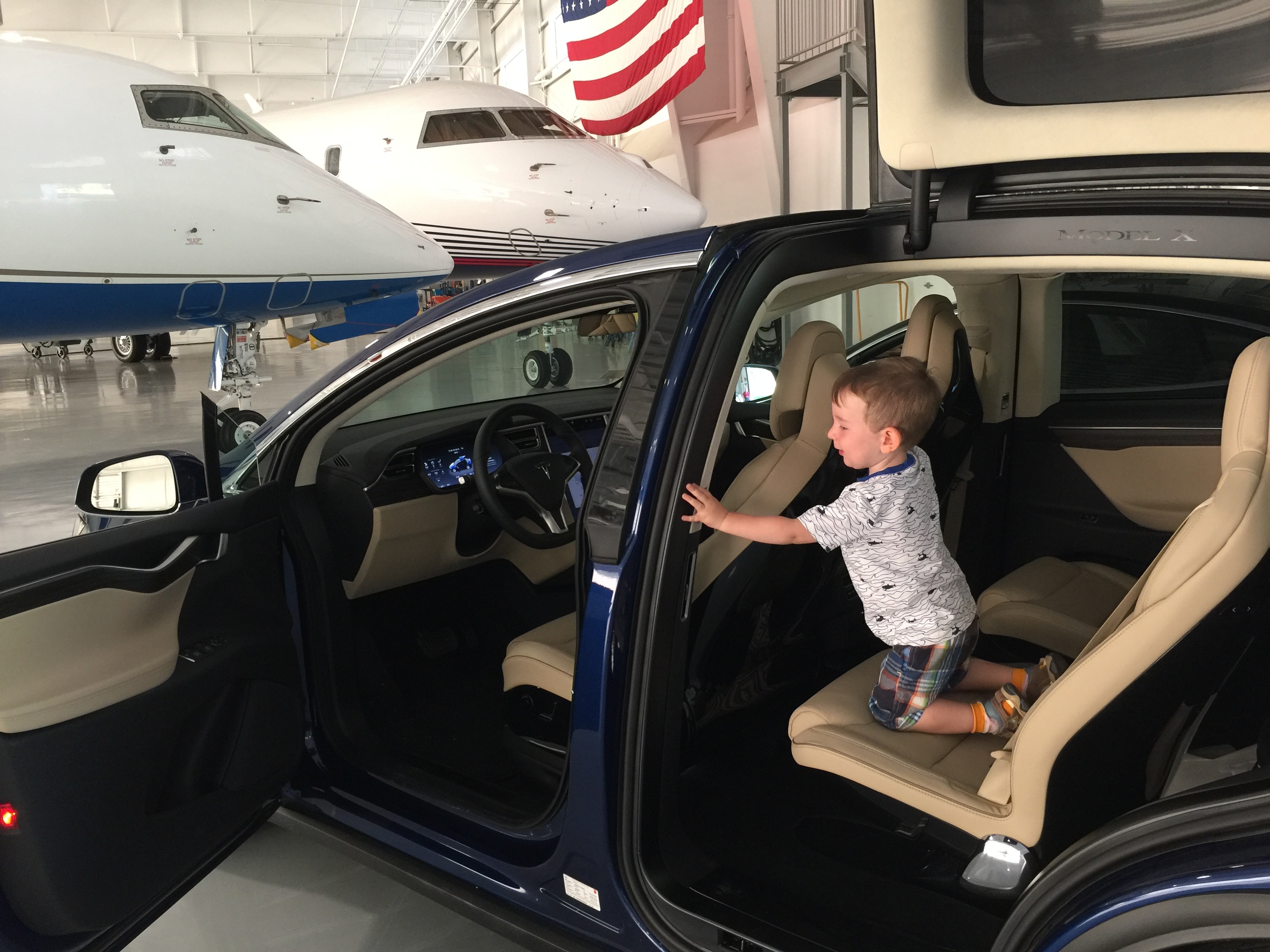
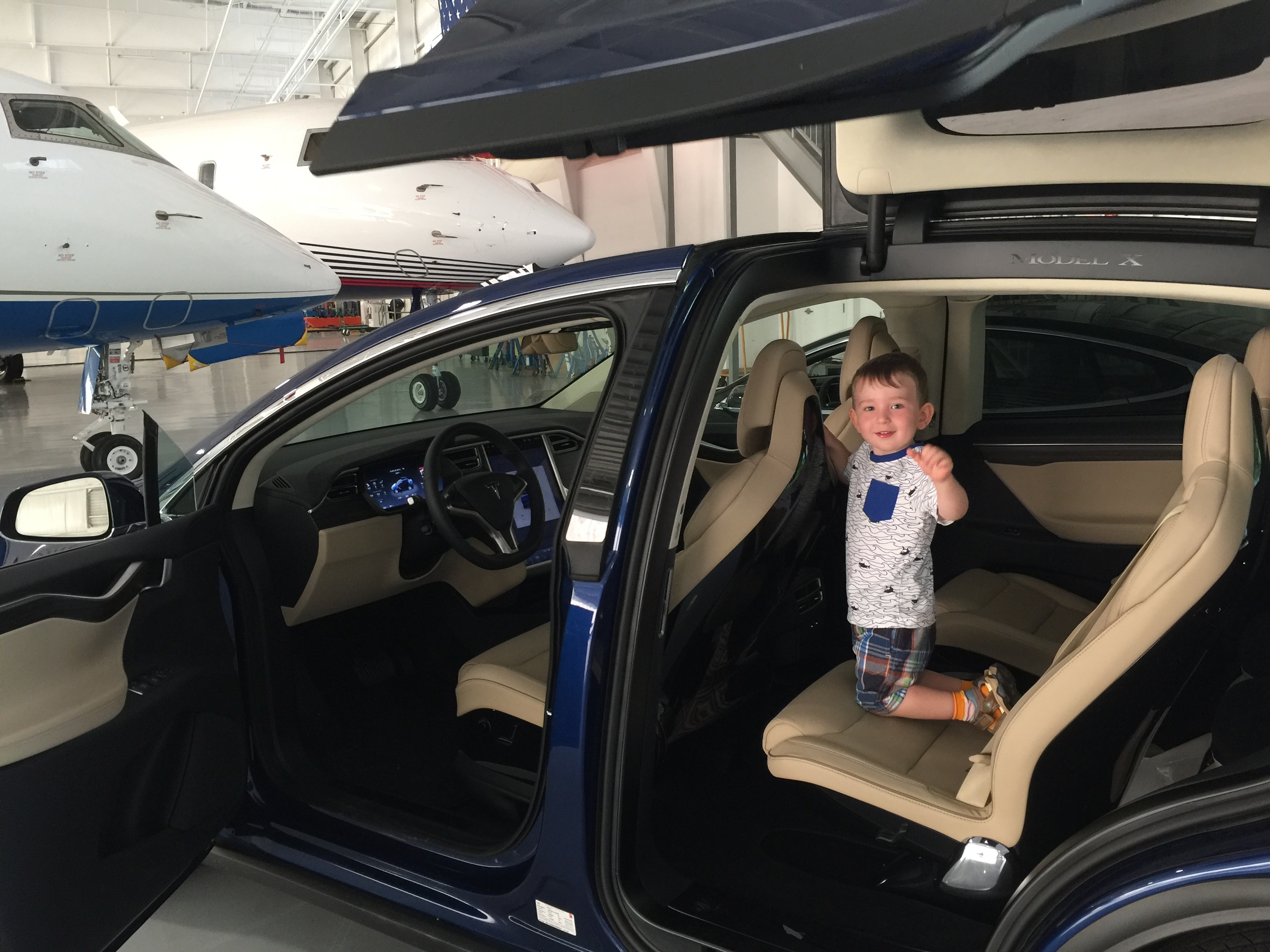
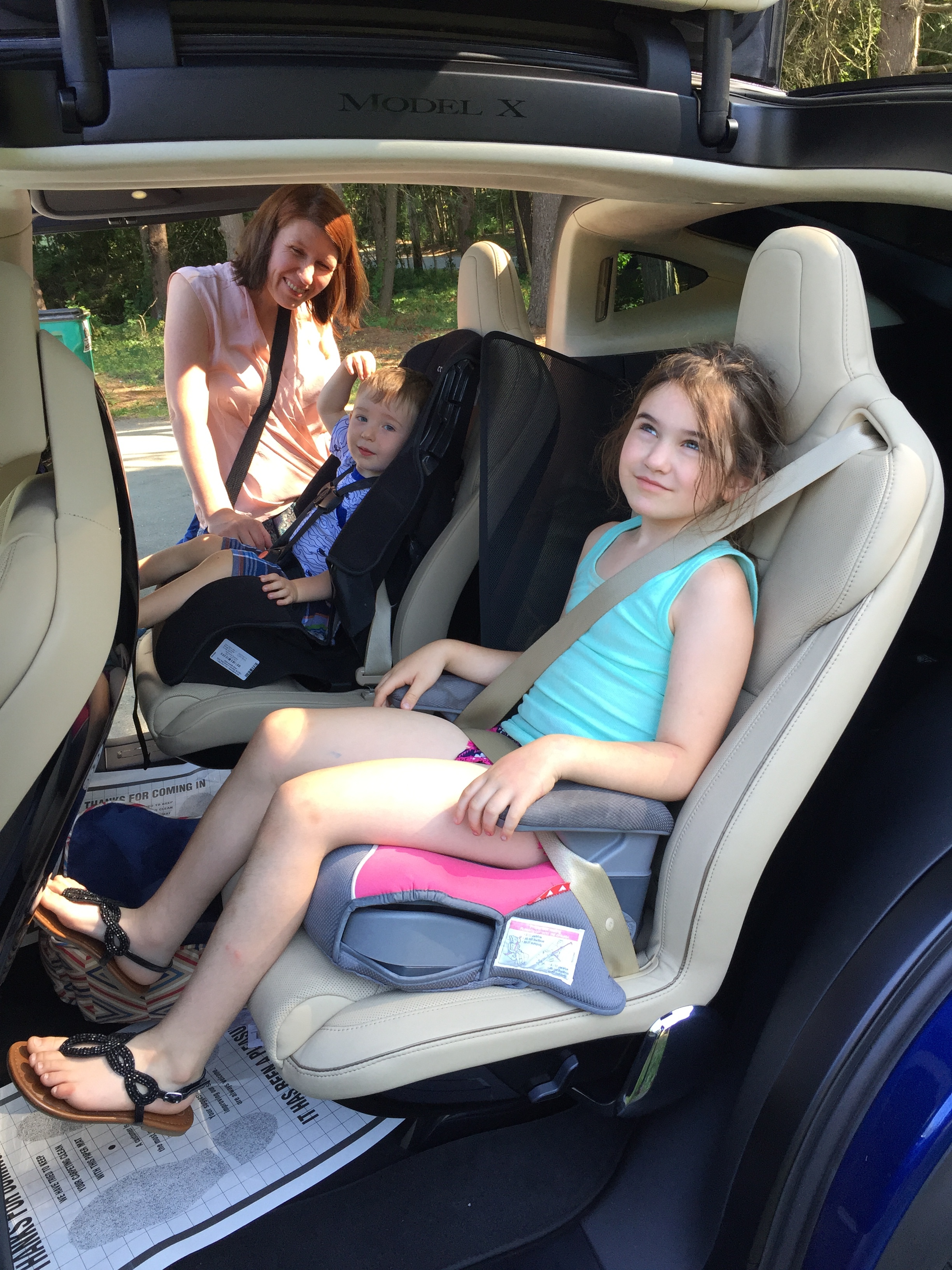
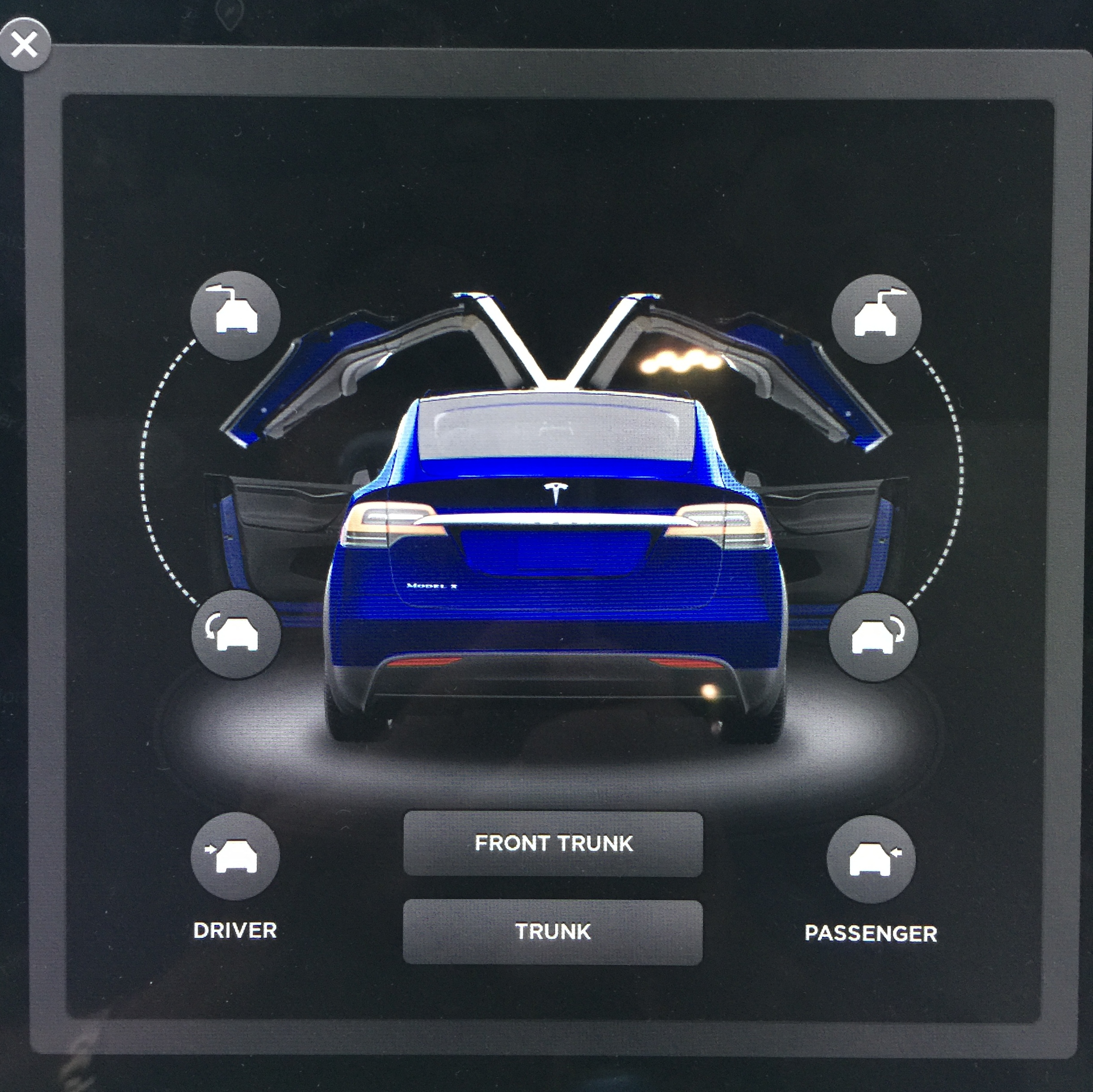
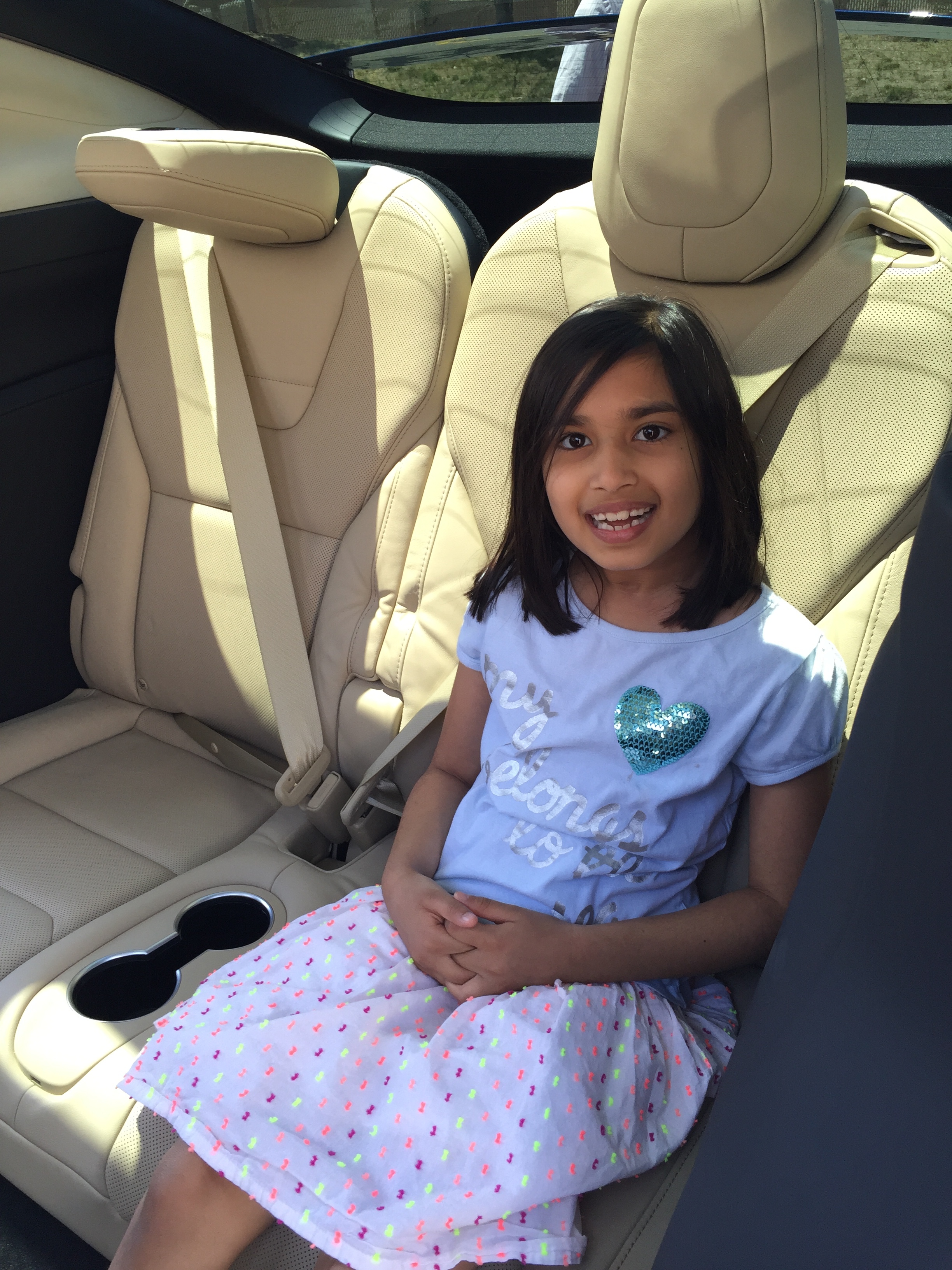
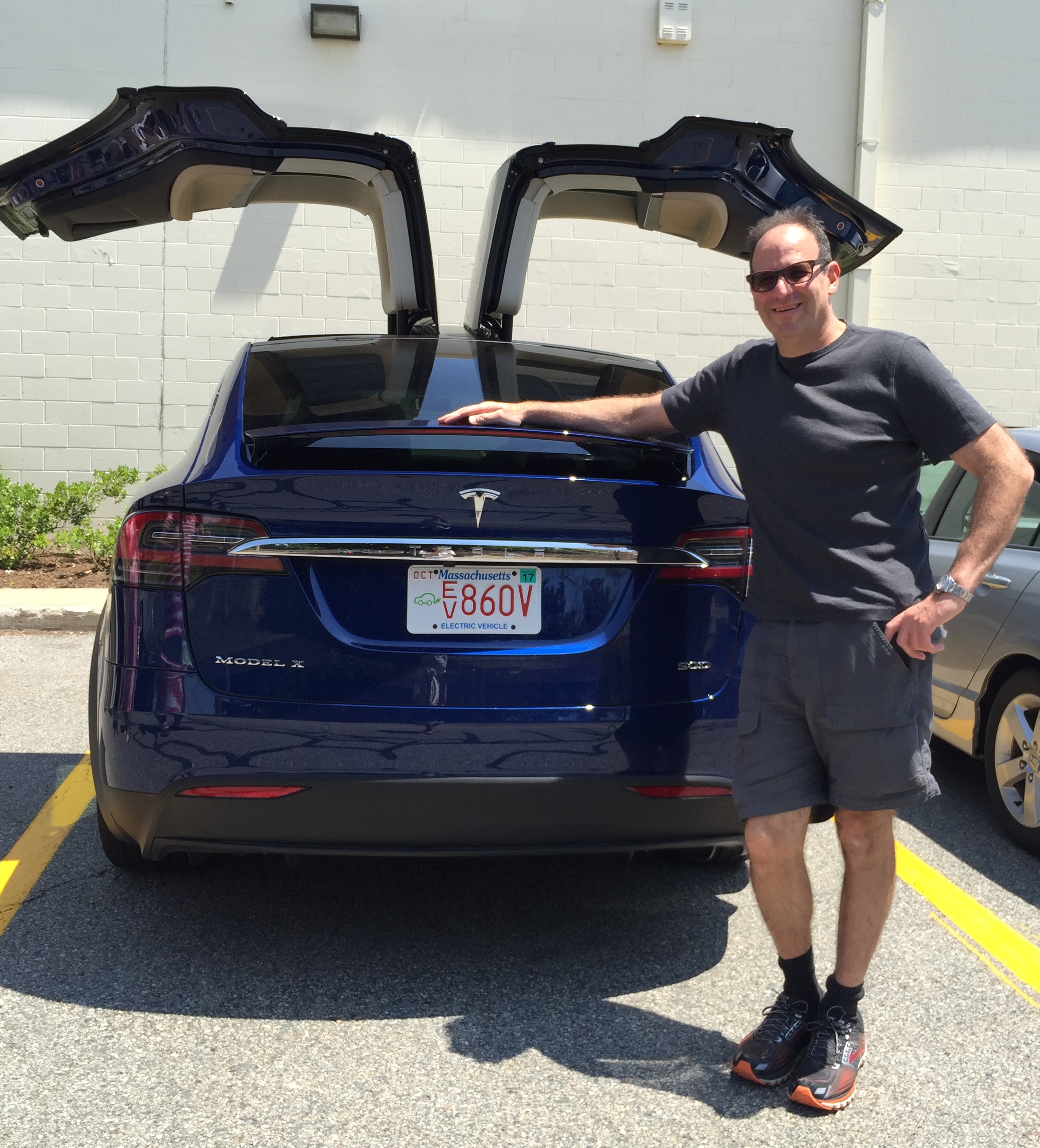
The falcon-wing doors were entertaining for the kids, but domestic senior management hit her head on them a few times. Perhaps one day Tesla will invent a middle door that slides back toward the rear of the vehicle, thus providing completely unobstructed access to the middle seats. Speaking of middle seats, they are slightly narrower than standard booster seats. This makes it challenging for a child to fasten his or her own seatbelt due to the fact that the booster seat covers the receiver.
The monster touch screen in the middle is only moderately intuitive. There is a navigation system branded Tesla/Google and also a Google Maps page. What is the difference? Why do we need both? The owner’s manual is available on the screen, but it is buried behind a lot of clicks (you have to go to “settings” first). There is way too much detail for in-car reading. A PDF version is available online. The phone integration is more impressive. Just as you’d expect when you purchase an expensive device bristling with computer systems you can use your phone to unlock the car, drive it, see where it is parked, etc. With the keyfob in my pocket, me in the driver’s seat, and the vehicle rolling down the highway, the Tesla got upset every 20 minutes or so and displayed a distracting “key not inside” warning. This would go away after a few seconds.
The autosteering feature works but doesn’t inspire confidence. It seems to start turning to follow the road just a split-second later than a human driver would. This is unnerving, at least at first. You need to keep your hands on the steering wheel at all times during autosteering, yet not crank the wheel hard enough to generate what the car thinks is an actual steering input (thereby disconnecting autosteer). I found this to be about the same amount of effort as simply driving. The cruise control for speed, on the other hand, works beautifully.
Acceleration would probably have been amazing if only we could have cleared roughly 1,000 other vehicles from I-95 and I-90 and tested it out. A Citroen 2CV has ample power for the driving that we are actually ever able to do within 60 miles of downtown Boston. Anecdotally, a friend with an Aston Martin says that the Tesla X, even without “ludicrous mode,” is much faster. What if you like to sip a drink while sitting in traffic? You can push back the central armrest pads to reveal two cupholders, but after that you have nowhere to rest your right arm. The Tesla X is not optimized for the drive-through to the same extent as a minivan.
The real-world summer-time range seemed as though it would be about 200 miles (against 257 claimed). If you assume that you never want to let it get below 30, this is a car that can go 170 miles between charges. While I was showing off the vehicle at a party a Nissan Leaf owner said that she gets only about 60 miles of range in a car advertised as having 100 miles: “I had to stop and charge three times going down to Providence in the winter,” she explained. (Each charge takes 30 minutes; it is roughly 50 miles one-way from Boston to Providence.)
As with other SUVs, cargo capacity is limited compared to a minivan. The Honda Odyssey can hold five people in the front and a couple of full-size bicycles, perhaps with front wheels detached, in the back. I think it would be a challenge to get even one bike into the back of the Tesla X and the central seating would be compromised.
What does it cost to save the planet? The 90D Tesla X that I drove had a six-seat interior, the autopilot software upgrade, and a few other options. This worked out to $110,000 retail (would have been over $130,000 as a “P90D” higher-performance model). Is it worth it? If you have $110,000 that you don’t need… sure, why not? It is a good conversation-starter. On the other hand, a $30,000 minivan offers roughly the same level of comfort with a lot more interior room, seating for 8, and more practical doors. With the leftover $80,000 you could buy an airworthy IFR-certified six-seat airplane, e.g., an older A36 Beechcraft Bonanza. Alternatively, you could plant a lot of trees for $80,000! What about saving money by not buying gasoline? The additional sales tax on a Tesla in Massachusetts would be 6.25 percent times $80,000 = $5,000. That’s enough to buy 2100 gallons of gas at current prices, which will power a minivan through roughly 50,000 miles. So even if you had planted an electricity tree in your backyard and recharged your Tesla for free, the extra sales tax alone makes the purchase decision economically irrational. On the fourth hand, most of our economy would shut down if people didn’t buy things for irrational reasons…
Full post, including comments