Here’s an interesting use of video for education: a Burning Man airspace movie. It shows simulated airplanes arriving, departing, and in scenic traffic around the event.
[Non-pilots: I think this video still might be worth watching to see how three-dimensional information is presented.]
Readers: Have you seen similar videos? e.g., for Oshkosh?
“How Etsy Crafted a Tax Strategy in Ireland” is a Wall Street Journal article about the arts and crafts marketplace working to escape U.S., New York State, and New York City tax rates on its $200 million/year in revenue:
In Etsy’s case, it set up a subsidiary in Ireland, the location of its European headquarters, then lent the unit money to be used to buy intellectual property from the U.S. company, according to a person familiar with the situation. The details of how Etsy set up the Irish subsidiary and how it plans to use it to reduce taxes hadn’t previously been known.
Etsy’s U.S. tax bill will increase initially, because the U.S. company made money on the sale of the intellectual property. But the structure is expected to eventually reduce Etsy’s U.S. tax bill because the income associated with the intellectual property held in Dublin will be taxed at the Irish rate of 12.5%, much lower than the U.S. rate.
It turns out that the company is going to pay at least $15 million in additional taxes in the short term, but these could have been avoided if the Irish subsidiary had been set up earlier and the intellectual property transferred when it wasn’t worth so much.
In an effort to win a prize for highest ratio of technology to subject matter interest, I have directed and co-starred in a 4K video. Location: our kitchen. Camera: Sony RX100 IV. Tripod: none. Lighting: Overhead track with LED bulbs from Costco. Then I uploaded two copies to YouTube:
why doesn’t YouTube just refuse to let people upload stuff like this? Or limit them to 720p?
can you see a difference between the versions? Or does YouTube compression render the differences in the original file quality irrelevant?
can you get smooth playback at true 4K? (for me the answer is “yes” with Windows Media Player locally on this Windows 10 desktop, “no” with VLC locally, “yes” with streaming YouTube on Verizon FiOS, “no” with streaming YouTube on Comcast)
An article on a child support lawsuit in Canada may be worth watching. The plaintiff is “Alana Jung, a 25-year-old college student studying early childhood education.” She had sex with a basketball player and now, under the Canadian child support formula, a nationwide system unlike our state-by-state patchwork, she is entitled to a tax-free $1.355 million per year. As there is no fixed age for the termination of child support in Canada (see the Canada chapter of Real World Divorce), she is potentially looking at 25 years of revenue or $33.9 million total. An early childhood educator in Alberta earns about $14.50 per hour (source) pre-tax. Ignoring the tax differential and assuming 1800 hours of work per year, the plaintiff would there collect 1300 years of income under the formula.
The defendant has offered to give her $180,000 per year, which would work out to perhaps $4.5 million until the child ages out of the system. The plaintiff seeks somewhere between $600,000 per year and $1 million per year (up to $25 million in revenue). Supposedly in mid-October a judge will decide what level of profitability is appropriate.
Canadians sometimes express resentment that ownership of a child is more profitable than going to college and working, but in fact children in Canada are less lucrative than children in some U.S. states.
A lot of what I’ve written over the years here concerns the tension between the research economists and psychologists, who say that human behavior is pretty easy to change with incentives, and politicians who say that human behavior won’t be affected by incentives (e.g., Book Review: The Redistribution Recession looks at what happened when politicians offered to give Americans free houses, food, and health care on condition that they not take a W-2 job; Real World Divorce looks at the extent to which Americans will fight for custody of children who yield more cash than going to college and working).
“A Simple Fix for Drunken Driving” is a WSJ article on the same general theme. Psychologists who get paid to treat alcoholics believe that straightforward incentives (not involving paychecks to therapists) won’t affect their behavior:
Among the most enduring of these myths is the idea that no one can recover from a drinking problem without our help. Treatment professionals save many lives that would otherwise be lost to addiction, but we are not the sole pathway to recovery. National research surveys have shown repeatedly that most people who resolve a drinking problem never work with a professional.
Some members of the addiction field can also be faulted for spreading an extreme version of the theory that addiction is a “brain disease,” which rules out the possibility that rewards and penalties can change drinking behavior. Addiction is a legitimate disorder, in which the brain is centrally involved, but as Dr. Higgins notes, “it is not akin to a reflex or rigidity in a Parkinson’s patient.”
In their haste to ensure that people who suffer from substance-abuse disorders are not stigmatized, some well-meaning addiction professionals insist that their patients have no capacity for self-control. Most people with alcohol problems do indeed struggle to make good choices, but that just means they need an environment that more strongly reinforces a standard of abstinence.
This belief has persisted for roughly 25 years after a 1991 paper showing that cocaine users could be “induced to refrain from it when promised a small reward, like $10 for a negative urine test.”
I have been commuting to East Coast Aero Club, about 4 miles away, using a Trek T80+ electric bicycle. The machine was introduced in 2013 and discontinued in 2015 in favor of an improved design where the motor is in the bottom bracket. Fortunately the government assures us that there is no inflation because the new bikes cost $2800-3000 while the old one listed at $2100 (I paid $1300 for a closeout at Cycleloft in Burlington, Massachusetts). What does the beast weigh? Mine is an “XL” frame size and is about 52 lbs. using a bathroom scale. It seems to have started life as a Trek hybrid and was pimped out at a factory in Germany with the BionX hardware that is also available to enthusiastic hobbyists.
The bike comes with a 250-watt motor and a 250 watt-hour battery on the rear rack. Thus you can be a Tour de France rider for about one hour. Unfortunately this does not quite generate Tour de France speeds due to the fact that (a) I weigh 200 lbs., which I suspect is more than the typical pro cyclist, (b) the bike weighs about 35 lbs. more than a Tour de France bike (can be no lighter than 15 lbs.).
The bike is practical for commuting due to a sturdy rack on the back and a built-in lock that blocks the rear wheel from turning (so they can bend all of your spokes but not ride off with the bike). There is an included taillight on the back of the battery but no headlight, contrary to the magazine review cited below. There is a conventional Shimano 21-speed drivetrain that would be useful if the battery died but when commuting I find that the only gears I use are 4-7 on the largest chainring.
You control the motor by putting torque into the drivetrain via the pedals and setting a boost level from 0 to 4. With the boost on 4 your pushes on the pedals are magnified to the point that the bike will go 20 mph when you’re pedaling hard enough to go perhaps 8 mph. The electric boost cuts out at 20 mph by design. It also cuts out if you pull on a brake lever. Trek claims a range of up to 40 miles but that would be with flat terrain, a lightweight owner, and only partial boost. If I set the bike to max boost and go 10 miles over some slightly rolling hills the battery indicates a 50 percent charge. The charger is comparable in size and weight to a typical Windows notebook computer charger and therefore it would be quite reasonable to commute 20-30 miles to work, plug the bike in during the workday, and then ride back home on a fresh battery. The battery can be removed for charging, using the same key provided with the integrated lock, if there is no power outlet near where you park the bike.
What about exercise while watching the motor do all the work? It turns out that you will get as much exercise per minute of riding as on a regular bike. You will get only about one-third or one-half as much exercise as you would riding a regular bike to the same destination, however, because you won’t be riding for very long. The bike is so much more satisfying to ride and results in so many more destinations being accessible (e.g., 10-mile round-trip to the drugstore) that a typical owner should get more exercise than with just a regular bike. This is a substitute for a car rather than a substitute for a road or mountain bike.
Is it fun? Yes! I lent the Trek T80+ to an aircraft mechanic and he had a silly grin on his face as he said “This is what biking should be.” The bike is also nice on hot days because you are guaranteed to have a 12-20 mph breeze at all times.
What about the new stuff? It seems as though the 900-lb. gorilla of the bike world, Shimano, has entered the market with the Shimano Steps system, which is what Trek is using on their latest models. This may prove the point of Crossing the Chasm (that the innovators often don’t end up as market leaders because products that appeal to hobbyists and early adopters don’t necessarily appeal to the mainstream).
Atlantic Magazine’s September 2015 issue has a couple of articles written by old people about how worthless young people are. “The Coddling of the American Mind” writes about students as interested in “microaggressions” as students in Missoulawere in partying:
Last year, at the University of St. Thomas, in Minnesota, an event called Hump Day, which would have allowed people to pet a camel, was abruptly canceled. Students had created a Facebook group where they protested the event for animal cruelty, for being a waste of money, and for being insensitive to people from the Middle East. The inspiration for the camel had almost certainly come from a popular TV commercial in which a camel saunters around an office on a Wednesday, celebrating “hump day”; it was devoid of any reference to Middle Eastern peoples. Nevertheless, the group organizing the event announced on its Facebook page that the event would be canceled because the “program [was] dividing people and would make for an uncomfortable and possibly unsafe environment.”
The article points out that being so thin-skinned that you can’t handle hearing someone talk about something upsetting is an official sign of mental illness (see the “Common Cognitive Disorders” list at the end).
“That’s Not Funny!” is a companion piece by the awesome Caitlin Flanagan (not officially “old” but a different generation than today’s college kids). She goes to a convention where colleges book comedians to come to the campus:
I saw ample evidence of the repressive atmosphere that Rock and Seinfeld described, as well as another, not unrelated factor: the infantilization of the American undergraduate, and this character’s evolving status in the world of higher learning—less a student than a consumer, someone whose whims and affectations (political, sexual, pseudo-intellectual) must be constantly supported and championed. To understand this change, it helps to think of college not as an institution of scholarly pursuit but as the all-inclusive resort that it has in recent years become—and then to think of the undergraduate who drops out or transfers as an early checkout. Keeping hold of that kid for all four years has become a central obsession of the higher-ed-industrial complex. How do you do it? In part, by importing enough jesters and bards to keep him from wandering away to someplace more entertaining, taking his Pell grant and his 529 plan and his student loans with him.
But which jesters, which bards? Ones who can handle the challenge. Because when you put all of these forces together—political correctness, coddling, and the need to keep kids at once amused and unoffended (not to mention the absence of a two-drink minimum and its crowd-lubricating effect)—the black-box theater of an obscure liberal-arts college deep in flyover territory may just be the toughest comedy room in the country.
These articles make for fun reading (especially Flanagan’s) but are they covering representative behavior on campus? If American college kids were spending this much time arguing about microaggression, wouldn’t Fortune 500 companies be expanding a lot faster in Asia and Germany so that they could hire young people who were more work-oriented? (Companies could stay in the U.S. and hire older workers rather than recent college graduates but we are all apparently comfortable with age discrimination by U.S. employers (since the media doesn’t bother to cover it).)
[Separately, when will we find a college that shows a genuine commitment to diversity by encouraging older people, e.g., in their 40s or 60s, to enroll as full-time students? How is a group of (mostly American) 18-22-year-olds “diverse”?]
“Carly Fiorina’s Record: Not So Sterling” is a New York Times article beating up on Carly Fiorina for failing to light the fires of innovation in between the cubicles of Hewlett-Packard. Certainly that does not seem to be the strongest part of her resume, but this is the newspaper that celebrated Ellen Pao and expressed confidence that she should have been promoted to a variety of jobs ahead of all of the men on the planet.
Separately, the people who took over from Fiorina at HP haven’t had any better success, have they? She never did anything as monumentally stupid as Leo Apotheker’s acquisition of Autonomy, for example (HP’s lawsuit against Autonomy’s executives, Michael Lynch and Sushovan Hussain, is still going, trying to recover some of the $5 billion of shareholder wealth squandered). Perhaps HP is simply tough to grow in a world where Apple owns the hipsters, Microsoft owns the desktop and workgroup, and IBM owns the core IT functions. (Note: I joined HP Labs as an 18-year-old (so long ago that Northern California had running water, no traffic jams, vaccinated children, etc.). I helped Russell Kao implement a prototype minicomputer that implemented the new HP Precision Architecture, subsequently part of the Intel Itanium CPUs.)
Readers: Is the fact that Fiorina is a Republican the reason that she is being judged by the NYT so much more harshly than other women?
Big cities have the most generous welfare systems. In Cambridge, Massachusetts, for example, it may be possible to get free housing in an apartment whose market value is $60,000 per year or more. People with low income can also live in city-owned apartments in otherwise very expensive Manhattan neighborhoods (nytimes). The luckiest official poor can even live in brand new buildings for the rich (nytimes).
Big cities offer a lot of opportunities for jobs that leave no official trace. Two-career couples hire nannies and pay them in cash, for example. People offering services that are illegal are also paid in cash.
The Redistribution Recession looks at the extent to which Americans retired to their sofas when offered more generous welfare starting in 2009. What if the switch is instead to working in the cash economy, thus collecting both wage income and welfare?
Readers: (1) have you seen an uptick in people wanting to get paid in cash in order to preserve or obtain welfare benefits? (2) do government agencies that hand out free housing, free food, free health insurance, free heating oil, free mobile phones, etc. have any realistic way of figuring out which recipients are actually comfortably employed in the cash economy?
“The Work versus Welfare Trade-Off” (shows that welfare in Massachusetts was worth $42,515 per year after tax in 2013, which works out to a total of about $80,000 per year in total after-tax spending power for a nanny making $17/hour in cash)
A friend who is older, but not quite old enough for Medicare, is on Obamacare through the Mass Health Connector site. It took about 20 phone calls to get her established and it was supposed to be free, but lately they have decided that she needs to pay $5 per month. So every month they mail her a hardcopy bill and every month they want to receive a hardcopy check.
I am on Obamacare too, though without a subsidy. The web site didn’t make it at all clear that I would have to pay for the first $2,000 of my medical care. One would think that after more than $1 billion in IT spending (the Massachusetts site is built by the same contractor as the federal site) the comparison shopping tool would have shown total likely payments under the various plans, but it did not. I went to see the doctor a few weeks ago. There was no way for the front desk workers to find out that I had to pay out of pocket due to the deductible and collect the money at the time of the visit. They, or their billing service, submitted a $250 bill to Harvard Pilgrim. Harvard Pilgrim then knocked this down to $188 for undisclosed reasons, but paid the doctor nothing due to the deductible. I was informed of this via a hardcopy letter sent in the U.S. mail. Now the doctor will have to chase after me for $188 via hardcopy bills sent in U.S. mail.
Speaking of U.S. mail, I have the insurance set up on autopay from the government’s site. Despite this, every month I am sent a hardcopy bill via U.S. mail that says “do not pay.”
We went to the hospital recently with our 10-day-old baby. His color is now perfect so he shouldn’t need a bilirubin test but the protocol calls for one anyway due to the fact that the earlier results were not ideal. After a 30-minute wait he was tortured with a heel stick. Then the nurse managed to get a drop of his blood in her eye while doing the test. Now she will be tested for HIV every year for 10 years, despite the fact that the mother was tested for HIV prior to the child’s birth and would, if asked, agree to have another HIV test. After the blood incident the staff at the hospital wanted to have a doctor talk to us for permission to look up the mother’s medical records (the baby was born at the same hospital). But no doctor was available and we had to leave to get to the pediatrician for a scheduled checkup. On the way out they were looking at various screens from the IT system and also some printouts saying “But we need to know your name and phone number.” There was confusion as to the baby’s name and the mother’s name that took a while to sort out.
Mother’s summary: “We can’t have another child. I can’t handle another touchpoint with the American medical system.”
 . Tripod: none. Lighting: Overhead track with LED bulbs from Costco. Then I uploaded two copies to YouTube: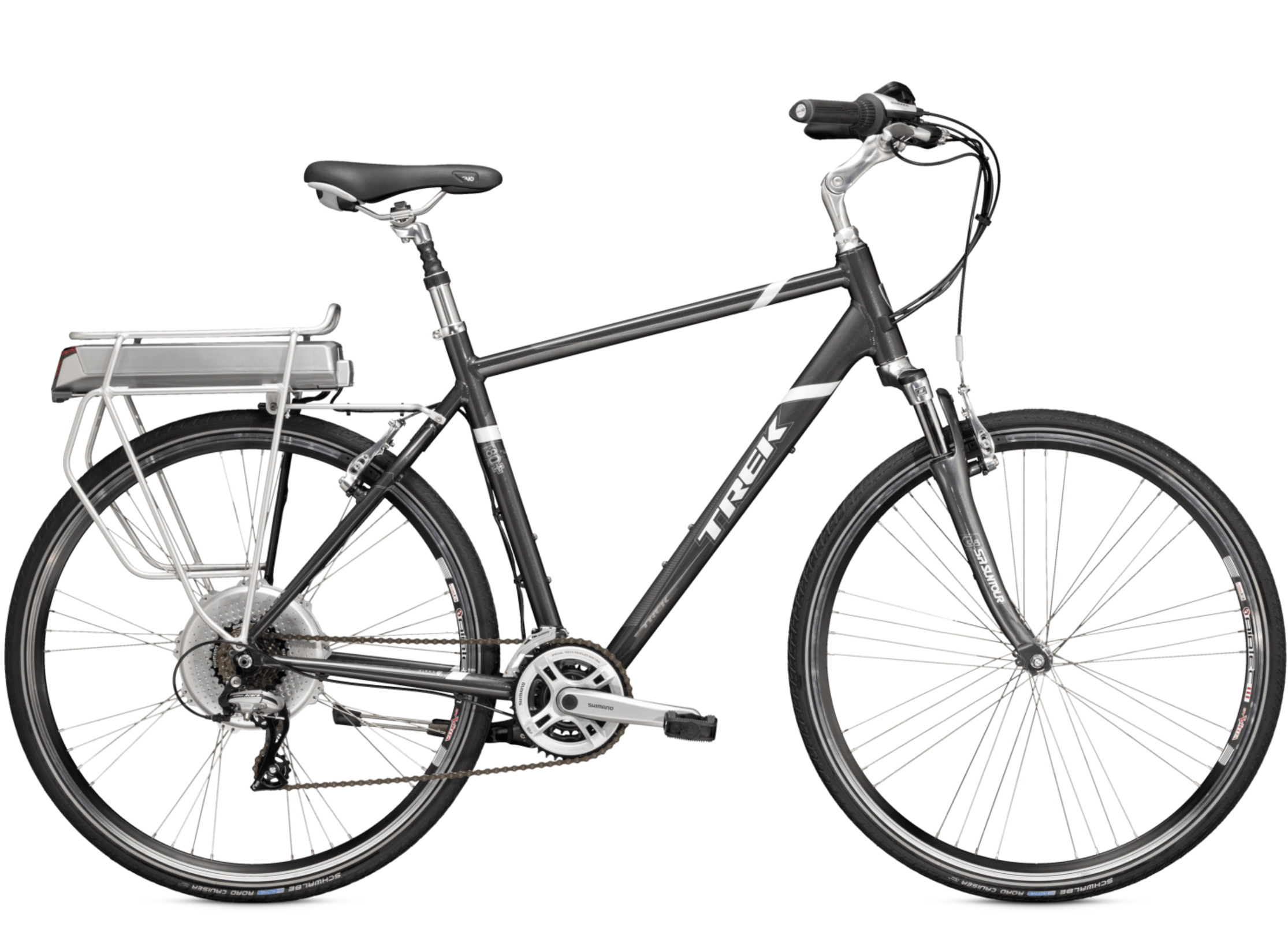
 (that the innovators often don’t end up as market leaders because products that appeal to hobbyists and early adopters don’t necessarily appeal to the mainstream).