Grok and ChatGPT inhabit parallel universes when asked about justice for the Cornell Victim

A low-income woman is about 5X more likely to suffer sexual assault than someone from a family that sends children to Ivy League colleges. ChatGPT:

Pooling 2017–2022, the annual rape/sexual-assault victimization rate for people living in households earning under $25,000 was 3.8 per 1,000. For households earning $100,000–$199,999, it was 0.9 per 1,000, and for households earning $200,000 or more, 0.8 per 1,000. In other words, the lowest-income group had roughly 4–5 times the annual rate of the highest-income groups. Those figures are for persons age 12+, not women alone, but women constitute the large majority of rape/sexual-assault victims…. The women statistically at greatest risk are disproportionately low-income women, not women at elite universities.

The passion for what happens at elite colleges is explained by a University of California professor in Why America’s professional elite are so interested in sex acts at universities. What about the fact that New York’s governor and attorney general are now going after the fraternity brothers accused in Lucy Craig’s civil lawsuit seeking “compensatory and punitive damages”? (given the deep pockets of the defendants, e.g., Cornell University, and the punitive damages angle might she end up becoming the first billionaire rape victim?)

Using the conventional terminology of our greatest contemporary poets, e.g., Kanye West, I asked AI the following question:

If a hood rat girl said she was raped would the governor and attorney general be involved?

Grok:

No. A routine report from a poor woman in Ithaca or the Bronx would not get the governor and the attorney general.

ChatGPT:

Possibly, but there’s no solid basis to say that the governor and attorney general would not have intervened if the complainant were a poor or socially marginalized woman.

(Certainly the men will be getting a fair trial by a jury of 12 who are all wearing #IAmJaneDoe T-shirts. Maybe the defense attorneys will be searching desperately for a Haitian immigrant?)

Here’s a reminder that whatever the Cornell students were up to in 2024, it was all financed by taxes extracted from the working class:

The heavy partying at ultra-expensive institutions like Cornell is being financed by untold billions of non-market government-backed loans that let students take what amounts to a four-year cruise – parties, sports, even occasional lectures. I would guess none of the participants were electrical engineering majors.

Most adults don’t have all-night ketamine bacchanals because they have to work in the morning. But 18-21 year olds are given all the privileges of adulthood without and of the responsibility. Don’t treat them like Roman aristocrats and then wonder at their decadence.

Regarding the likely majors of the participants, from Missoula: Rape and the Justice System in a College Town (a.k.a. majoring in partying and football) (2015):

Nobody is raped in the physics lab in Missoula if for no other reason than nobody Krakauer followed took a physics course to begin with

Now that there is a person definitively associated with the incident (Lucy Craig’s name was apparently made public by incompetence within the New York State court system), I wonder if there will be any Deplorables dressing up like her for Halloween. If so, what would the costume look like? If commercially marketed, would it be labeled “Cornell Student”, “Jane Hoe”, “#IAmJaneDoe”? (I don’t think that Lucy Craig’s name or precise likeness from social media could be used for commercial/advertising purposes without her permission.)

From the above, mentioned Krakauer book, on the profits to be made via civil lawsuits enabled by a rape allegation:

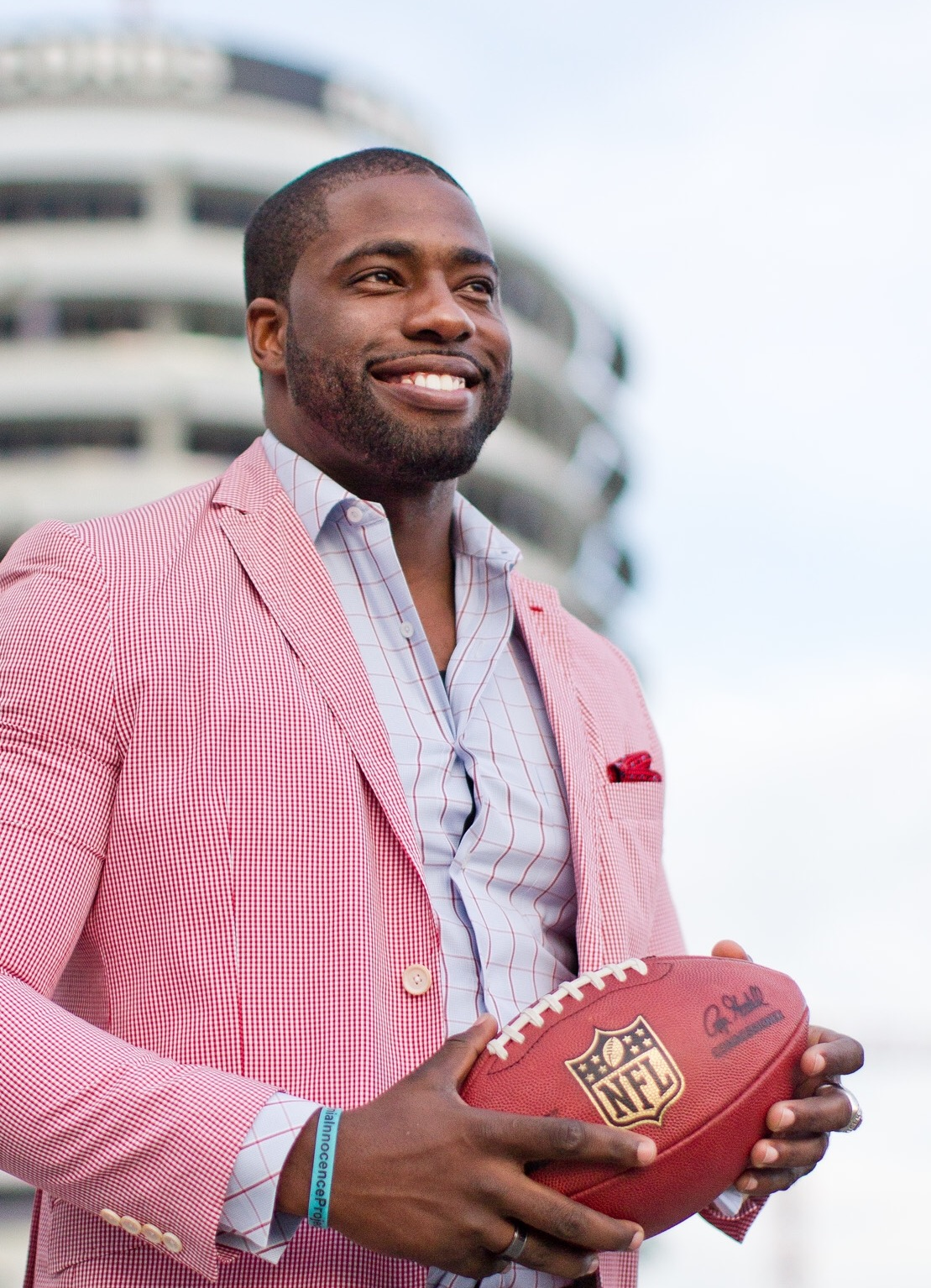
In 2002, [Brian] Banks was a junior at Polytechnic High School in Long Beach, California, a six-foot-four, 225-pound linebacker on an extraordinary football team. … Banks was aggressively recruited by some of the nation’s top college football programs and accepted a scholarship offer from the University of Southern California. … While attending summer classes before his senior year at Long Beach Poly, Banks had a chance encounter with a sophomore named Wanetta Gibson that, according to Banks, culminated in consensual sex. According to Gibson, Banks raped her. In a note Gibson wrote to a friend, which became a crucial piece of evidence, she said Banks “picked me up and put me in the elevator and he took me down stairs and he pulled my pants down and he rapped [sic] me and he didn’t have a condom on and I was a virgin and now Im [sic] not.” When interviewed by the police, Wanetta Gibson told a more detailed version of the same story, and Brian Banks, who was seventeen years old, was charged with forcible rape. Were he convicted, he could be sentenced to life in prison. Like thousands of other defendants ensnared in the criminal justice system, … Banks agreed to plead no contest to the rape charge, spend at least five years in prison, remain on probation for an additional five years, and register as a sex offender. While Brian Banks was serving his time, Wanetta Gibson and her mother filed a lawsuit against the Long Beach Unified School District, claiming that lax security at Poly High School created an unsafe environment that led to her being raped. The suit was settled out of court, with the school district agreeing to pay Gibson $1.5 million.

… her conscience began to bother her. In March 2011, a few years after Brian Banks was released from prison, he logged onto Facebook and saw he’d received a friend request from Wanetta Gibson, his accuser. … Banks asked if she would meet with him in the presence of a private investigator, Freddie Parish, whose son had been a teammate of his at Poly. Gibson agreed, and during their meeting she admitted what Banks knew to be the truth all along: He had not raped her. Unbeknownst to Wanetta Gibson, Parish was secretly recording the conversation. … Brian Banks’s conviction was reversed in May 2012. Thirteen months later, the Long Beach Unified School District won a $2.6 million default judgment against Wanetta Gibson to recoup the settlement she had received, plus interest and damages.

Here’s Banks, who enabled Wanetta Gibson to “make bank”:
Who wants to bet that Wanetta Gibson put the $1.5 million she received into an S&P 500 index fund and that, therefore, California taxpayers/the school district were able to recover their money plus interest? Separately, if we assume that Ms. Gibson was represented by an attorney who took a fact percentage of the $1.5 million via a contingency fee, why wouldn’t the school district try to recover some of the taxpayers’ money from the attorney?

Finally, here’s New York Republican Mike Lawler, chairman of the House Middle East and North Africa Subcommittee, telling Muslim-Americans “Any of our daughters could be Jane Doe”. Isn’t that rather insulting? How many immigrants from Somalia or Afghanistan believe that their daughters would be voluntarily consuming 10+ drinks containing alcohol and then going, without a male relative escort and without a burqa or even hijab, to a fraternity party hosted by non-Muslims?
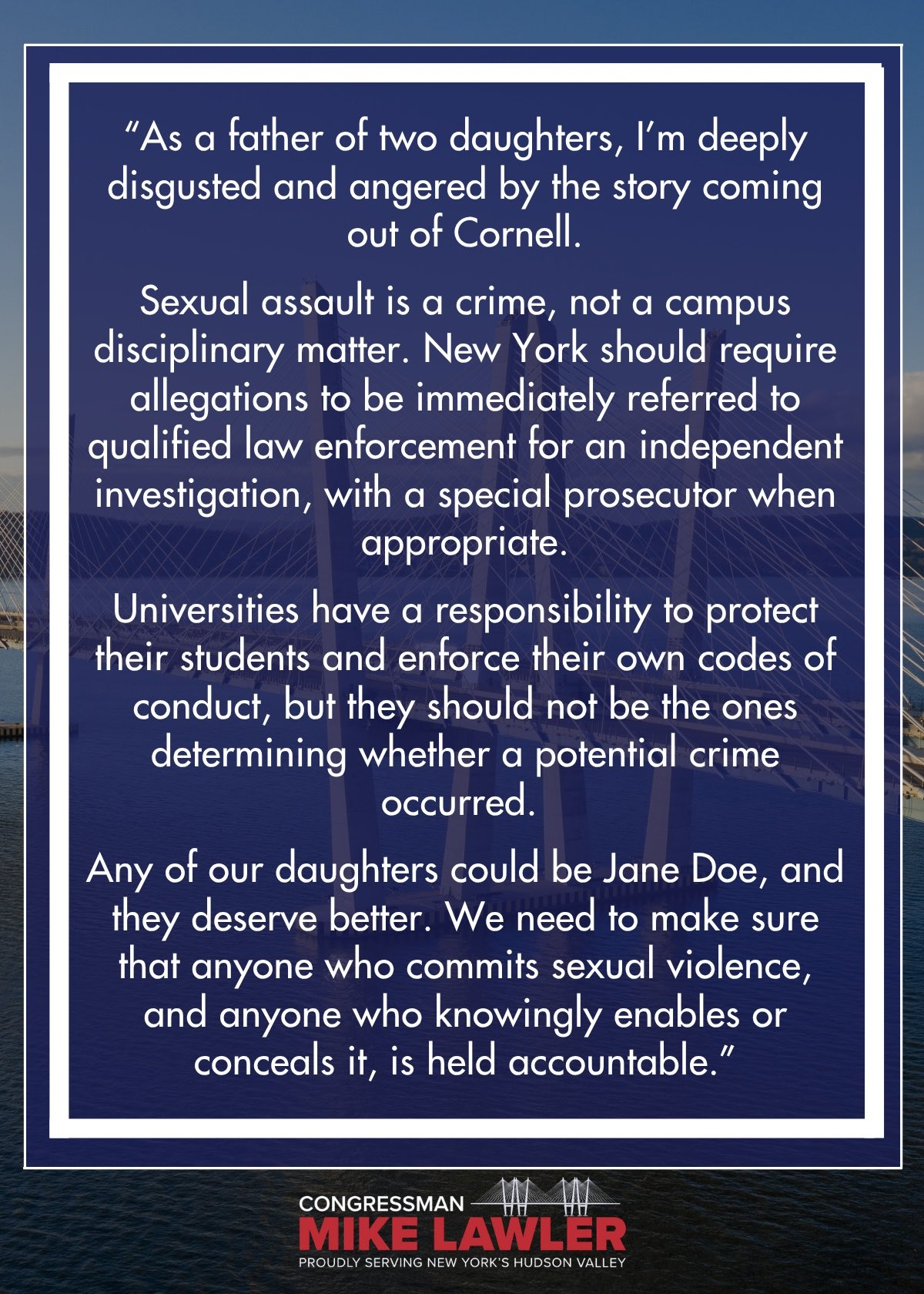
Part of the Plaintiff’s own account of her voluntary actions, tough to square with the Quran and the Hadiths:

Full post, including comments

Potential Maskachusetts jurors surveyed regarding Lindsay Clancy verdict

I was gathered with friends, mostly from Brookline, Maskachusetts, to celebrate the marriage of a widow to a widower. In keeping with the spirit of this joyous occasion, I surveyed everyone on how they would have voted if they’d been on the jury in the Lindsay Clancy case.

All of the women except one young hater (conservative) would have voted to acquit (“not guilty by reason of insanity”, but the insanity was temporary and, therefore, the government would have no reason to detain her further). A Joe Biden Democrat in his mid-60s married to a Mamdani/AOC Democrat also voted to acquit (i.e., liberal male is the functional equivalent of “female”). A Brookline resident whose politics are driven by hatred of and contempt for Republicans and Trump also voted to acquit (“she’s already been punished enough”).

The remaining men all voted to convict Lindsay Clancy of at least some degree of murder. “Someone like that needs to be removed from society,” said a young man. “There has to be a consequence.  Jeffrey Dahmer was psychotic, but he was still convicted,” said the boy’s father.

Half of the group were MDs and all had harsh words for the psychiatrists and psychologists who pumped Lindsay Clancy full of various medications (that said, nothing she was on had a known side effect of psychotic violence and it was unclear what she was actually taking from among the pills that she’d been prescribed).

(Based on my skimming of press coverage of the trial, I personally would have voted to convict her of the lowest degree of murder available. Her attempt to kill herself after the murders was certainly evidence of irrationality if not insanity and a first-degree murder is supposed to be rationally planned, I think. Maybe I would have voted differently if I’d heard all of the evidence and been instructed by the judge in the law.)

Based on this survey, I don’t think the Commonwealth will be able to convict Lindsay Clancy unless prosecutors can contrive a means of excluding female Democrats from the jury or, perhaps, reduce the maximum charge to something minor.

Update: I sat next to an 86-year-old lady on JetBlue SFO-FLL. She wasn’t a phone addict like everyone else and, therefore, we had a conversation. When the Lindsay Clancy trial was mentioned on her seatback TV, I asked Rhoda how she would have voted. “You put away a rabid dog so you have to do the same with a rabid person.”

Loosely related, a sad-funny X exchange:

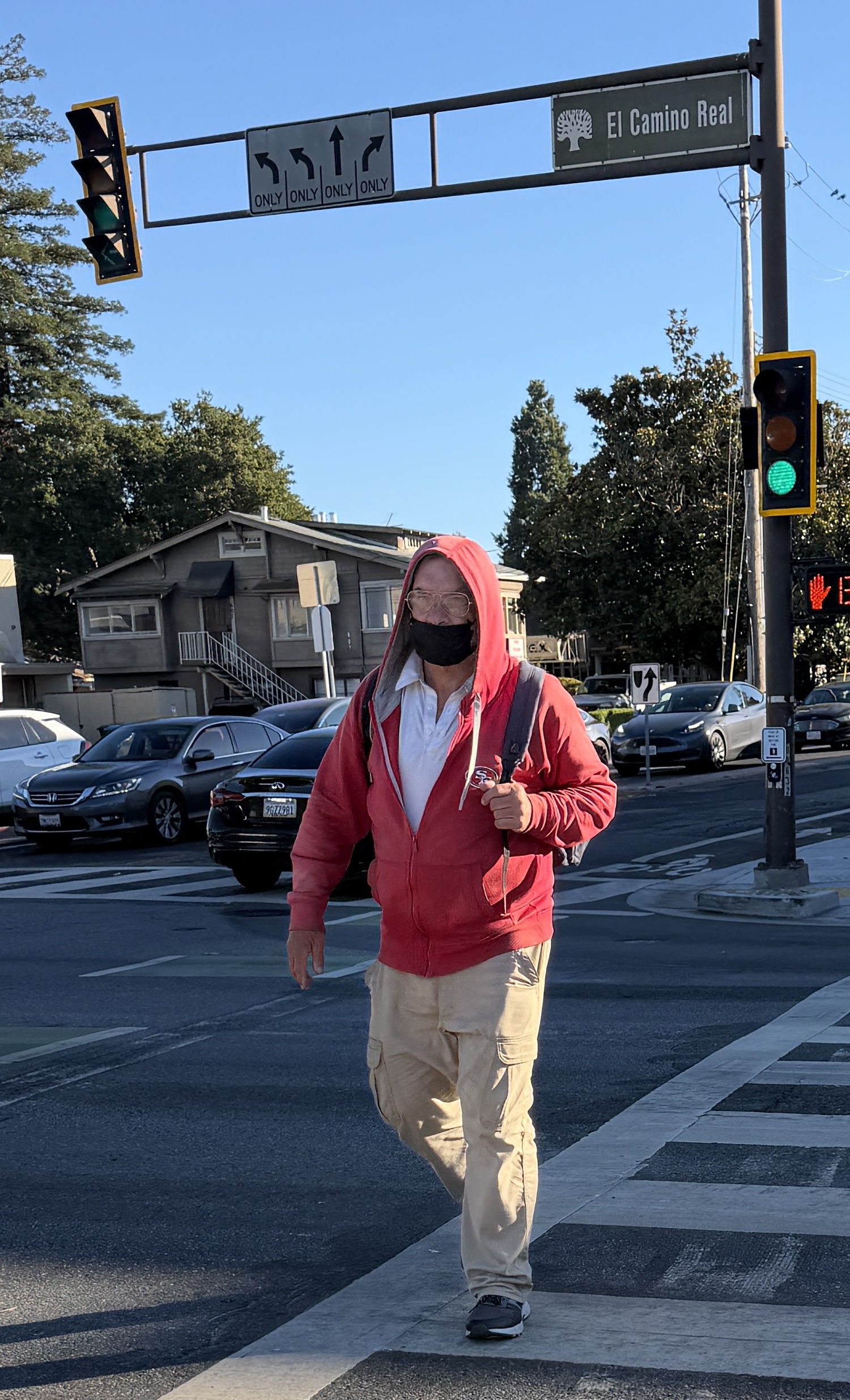
Separately, the gathering of these Brookliners was actually in Silicon Valley. To make everyone from Massachusetts feel at home, the locals were kind enough to engage in outdoor masking (Menlo Park; under-nose Faucism):

(Quite a few indoor maskers, of course, as well, e.g., in retail establishments. There was, unfortunately, a serious dearth of social justice signage. People in Silicon Valley, apparently, care primarily about themselves and their money, unlike the virtuous folks in San Francisco and the East Bay.)

Full post, including comments

With birthright citizenship upheld, will Democrats now say that Supreme Court orders should be followed?

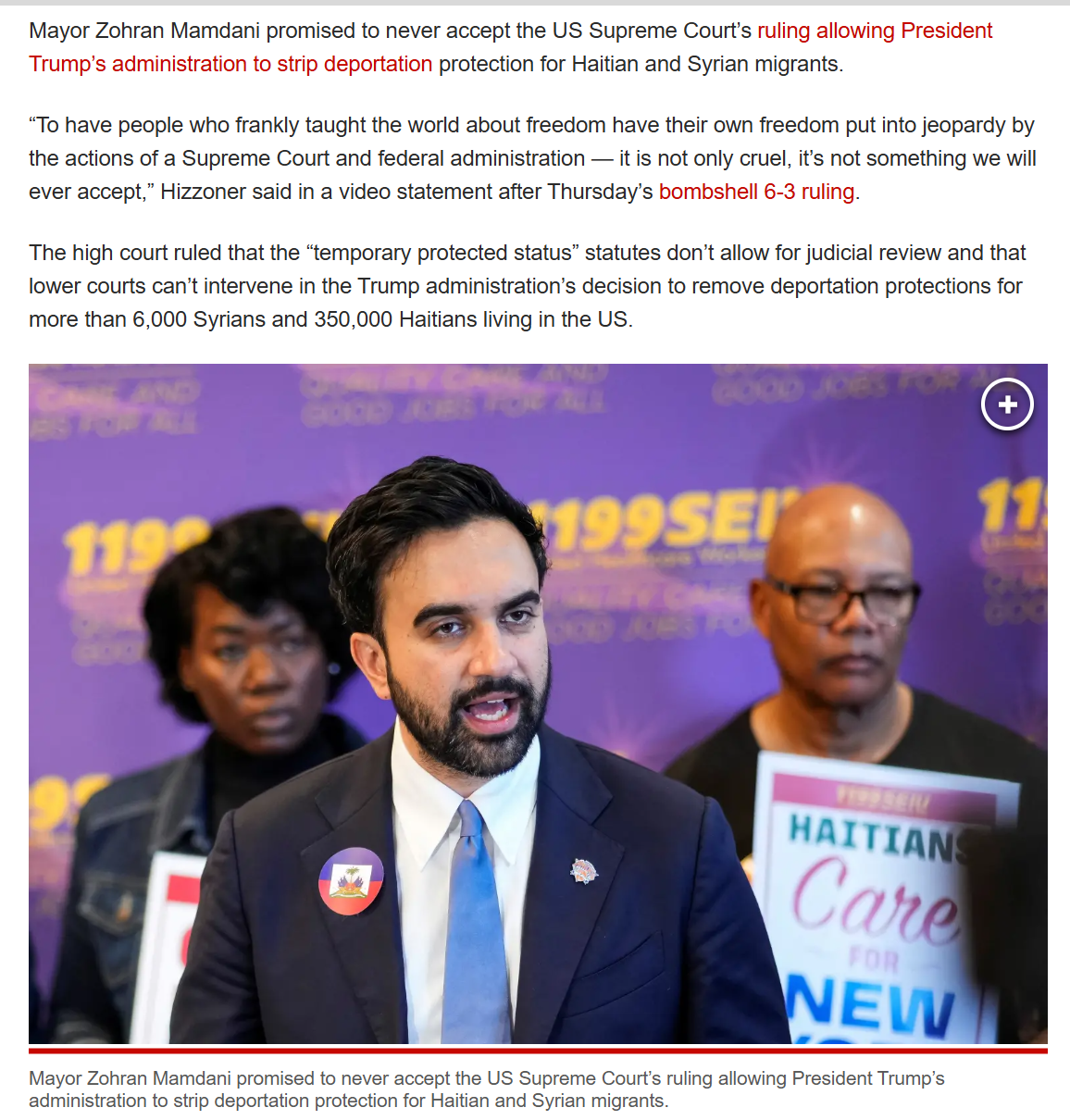
A lot of Democrat officials have said that the U.S. Supreme Court’s rulings are illegitimate and should not be followed, e.g., the recent ruling that allows temporarily protected Haitians to be sent home after 16 years in the U.S. Example from a Democrat thought leader: “it’s not something we will ever accept”.

The representative for the High-IQ (TM) crowd in Maskachusetts said, a few weeks ago, that the Court is “corrupt” (Ayanna Pressley has been characterizing the Court with this epithet for some years, according to an X search):

We know a guy in Boston who married a Honduran lady. His wife’s pregnant relatives would come to visit a few months before any baby was due. They’d show up alone at a high-end Boston hospital, e.g., Beth Israel, give birth, tell the staff “I’m undocumented”, and go home with a U.S. citizen and without ever seeing a bill from the hospital (costs covered by taxpayers). Except for three haters, the Supreme Court today agreed (Trump v. Barbara; what did Barbara do that was so bad?) that this should continue. Does that mean the Democrats who previously complained that the Court was illegitimate will now say that it is legitimate?

(Maybe there are four haters on the Court, actually. Brett Kavanaugh, the convicted rapist/murderer of Prof. Dr. Christine Blasey Ford, Ph.D., said that Congress could limit birthright citizenship by statute, but that El Presidente couldn’t do it via executive order. I guess that means Amy Coney Barrett was the deciding vote in favor of virtue, love, kindness, etc. Finally, given that 100% of the females on the Court voted one way and 80% of the males voted another, maybe this suggests a question for Alan Turing’s original male-female Turing Test (“imitation game”). Ask the person of unknown sex (there were just two back then) “A migrant walks across the U.S. border and pushes out a baby. Do you give the baby four generations of taxpayer-funded welfare or take the position that it is the parents’ responsibility to take care of their children and descedants?”)

Full post, including comments

Real estate lawyer competition among our AI overlords

As part of preparing my old Harvard Square condo to turn over to its next owner, I decided to look at not only the smoke detectors in the unit (2019, 2023, 2023), but also the hardwired smokes in the common stairwell and basement. A disturbing pattern emerged in which the hardwired smoke detectors may have been made in 1990(!). I asked four LLMs to figure out who should pay for the new detectors and the insane installation cost charged by an immigrant Brazilian.

Prompt:

Here are our building’s condo docs. There is a common stairwell serving just three of the four units. The smoke detectors in the common stairwell must be replaced. Is that a condo association expense or something that the three unit owners served by the stairwell msut pay for? (when the building was first divided, there were originally only two units on the stairwell side, but one was further subdivided, so now we have three)

Grok handled this well.

The replacement of the smoke detectors in the interior stairwell (the one serving Units 2A, 2B, and 3) is the expense of the owners of those three units only—not a full condominium association/common expense shared by all four units (including Unit 1).
This is explicitly addressed in the recorded amendment to the Master Deed that subdivided the original Unit 2 into Units 2A and 2B (document I0myQ / the one titled “AMENDMENT TO MASTER DEED OF THE 5-7 IRVING TERRACE CONDOMINIUM” that re-recorded a full updated Master Deed, Book 320806, Page 337 et seq.).
On page 17 of that amendment, under the additional provisions / Exhibit-type language dealing with exclusive easements and rights of use, it states (in relevant part):
“12. The interior staircase serving Units 2A, 2B and 3 shall be for the shared exclusive use of said Units and shall be maintained at their expense so that Unit 1 shall not be responsible to pay for such maintenance.”

Gemini gave a similar focused answer.

Based on the Master Deed and Condominium Trust documents for 5-7 Irving Terrace, the cost of replacing the smoke detectors in that specific stairwell is the responsibility of the three unit owners served by the stairwell (Units 2A, 2B, and 3), rather than a general condo association expense.

Gemini’s answer was inferior to Grok’s because it failed to cite the page number in what is a long doument.

Claude’s answer was longer-winded and more confusing than Grok’s or Gemini’s. Claude made the idiotic suggestion of hiring a human lawyer to deal with the question of how to divide up spending an amount, even after absurdly overpaying a Brazilian immigrant handyman, that was less than what a lawyer would charge to provide an answer.

Based on the condominium documents you’ve shared, this is a common expense paid by the association — but with an important nuance.
The 1990 amended Master Deed (the controlling document, which superseded the original) addresses this directly. The interior staircase serving Units 2A, 2B, and 3 is designated for their “shared exclusive use” and is to be maintained at their expense, so that Unit 1 is not responsible. However, the staircase itself and its fixtures are part of the common elements of the building.
Here’s how the relevant provisions interact:
The stairwell is a common element. Building entrances, entrance halls, stairways, and all related systems are explicitly listed as common elements under Section 5 of the amended Master Deed. Smoke detectors wired into the building’s systems would fall under conduits, wiring, and utility facilities — also common elements.
The maintenance cost allocation is split. Under Exhibit C of the 1990 amendment, the interior staircase serving 2A, 2B, and 3 is maintained at the expense of those three units, not Unit 1. Unit 1 is explicitly carved out.
Practically speaking, the smoke detectors in that stairwell would most naturally be treated as a shared cost among Units 2A, 2B, and 3 — not a general common expense chargeable to all four units including Unit 1. This is consistent with the “shared exclusive use” framework: the costs follow the benefit.
The proportional split among 2A, 2B, and 3 would likely be based on their respective percentages of common interest (14.585%, 14.585%, and 33.33% respectively), though you could also argue for an equal three-way split given the stairwell serves all three equally regardless of unit size.
I’d recommend confirming this interpretation with a Massachusetts condo attorney, as I’m not a lawyer and the documents have layers that accumulated over 40 years of amendments.

ChatGPT, Esq. failed spectacularly.

Short answer: almost certainly a condo association (trust) expense, not just the #5 side — unless your documents or wiring show something very unusual.

It provided about two pages of additional text, none of which referenced the relevant section of the Master Deed.

Full post, including comments

Brave fighters against Islamophobia in New York prove law professor’s point

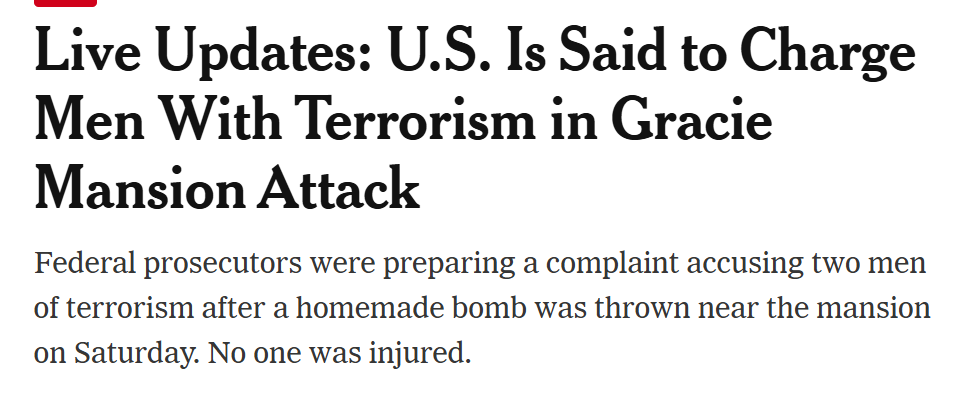
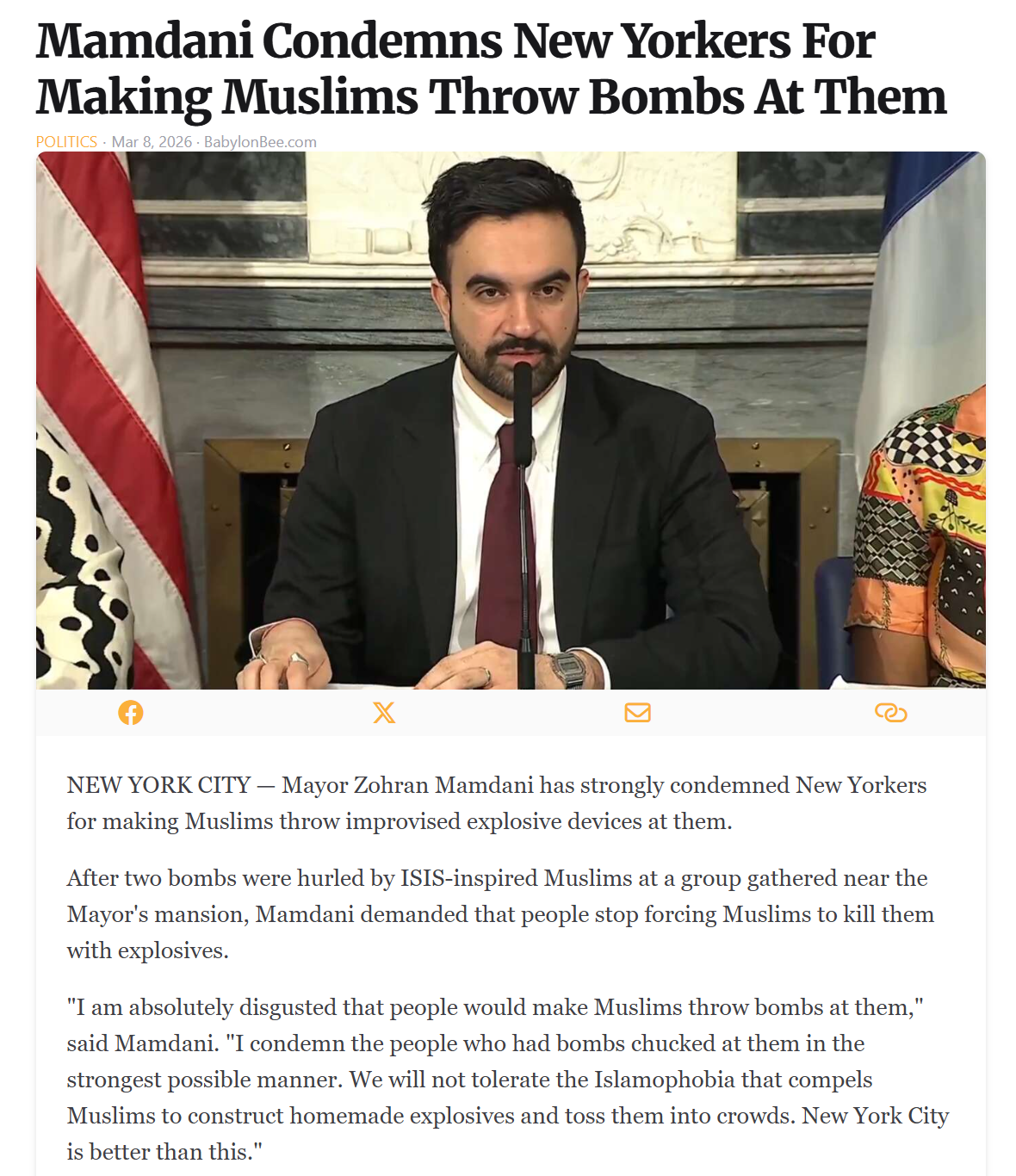
Yesterday, CBS ran a headline communicating to readers that the noble leader of NYC was attacked: “FBI launches terrorism investigation after homemade explosive device ignited outside of NYC Mayor Mamdani’s residence”. The article, however, tells a different story:

New York City Police Commissioner Jessica Tisch told reporters on Saturday that an anti-Islam protest was organized by people associated with Jake Lang, a pardoned Jan. 6 rioter and far-right influencer. A group of counter-protesters, numbering more than 100, also gathered, and two young men from Pennsylvania, angered by the anti-Islam protest, brought the homemade bombs to the gathering, intending to cause harm, law enforcement sources told CBS News.

Videos showing the chaos from the protests, verified by the CBS News Confirmed team, show a man apparently yelling “Allahu Akbar” – or “God is Most Great” – just as a protester, identified as 18-year-old Emir Balat, of Pennsylvania, allegedly throws an “ignited device.”

Jake Lang falsely asserted that some percentage of Muslims living in a non-Muslim society would inevitably choose to wage jihad, as seen in the follow examples:

Thus far, the story seems to be that two Muslim-Americans, both children of immigrants, wanted to show how wrong Mr. Lang was regarding the above. They manufactured bombs and threw them at Mr. Lang and surrounding haters infected with irrational Islamophobia.

Let’s step back for a moment and consider this classic lecture by a law professor:

CNN: “two men arrested in connection with the device admitted to being inspired by ISIS”.

Since, as a practical matter, being a violent criminal isn’t against any New York State or City law, they could have been back out on the street already if they hadn’t talked about ISIS to the police. Instead of being free to work on their next jihad, therefore, they now face the potential of federal terrorism charges and actual prison time.

Lesson from the law prof: “Don’t Talk to the Police”!

Fakely related… (source)

Full post, including comments

How do nonprofits that promise to discriminate get federal money?

A Florida senator whom I wish would retire writes about federal tax dollars being funneled to Jacob’s Pillow Dance Festival in western Maskachusetts (I was there once, part of being a houseguest of some Democrats who have a $2 million lake house nearby and who subscribe):

My response to our elderly senator:

The organization’s December 2024 web page proudly describes the federal funds recipient policies of discrimination that is contrary to the 14th Amendment’s guarantee of Equal Protection. Here are just some of the ways that they promise to discriminate based on race and gender ID:

  • Prioritization of BIPOC Vendors: Conduct focused research and expand the use of BIPOC-owned vendors
  • 83% of the 2024 episodes in our monthly “PillowVoices: Dance Through Time” podcast featured BIPOC artists, and 100% featured women.
  • All of Jacob’s Pillow Dance Interactive playlists featured BIPOC and women artists.
  • off-campus and on-campus programming for low-income, BIPOC Berkshire residents.

How can government money be used to fund activities that should be illegal and unconstitutional if the government itself did it? (I guess we have had government-run race- and sex-discrimination in contracting, with set-asides for women- and minority-owned businesses, but I have never figured out how that is Constitutional.) I have never been able to get a straight answer from any of my lawyer friends as to how the government can operate and fund race discrimination without first repealing the 14th Amendment.

Full post, including comments

Remembering Roy Black

“Roy Black, Defense Lawyer for William Kennedy Smith and Epstein, Dies at 80” (New York Times, July 24, 2025):

Roy Black, a nationally prominent defense lawyer … died on Monday at his home in Coral Gables, Fla. He was 80. … it was the acquittal he won for Mr. Smith — a 30-year-old nephew of President John F. Kennedy and Senators Robert F. and Edward M. Kennedy — that gave Mr. Black a national profile, in a case that tested the outer limits of power and influence.

Today is the 34th anniversary of the acquittal that Roy Black, a legend among Florida attorneys, secured for William Kennedy Smith.

The New York Times description of how that acquittal happened is completely at odds with a law professor’s account. The NYT says that it was a class struggle, perhaps one that the election of politicians from the Democratic Socialists of America could address:

The trial pitted the word of an accuser — later identified in the news media, including by The New York Times, as Patricia Bowman, whom Mr. Smith had met at a local bar — against the word of a member of one of America’s most powerful families. Mr. Black made full use of the disjunction between accuser and accused, eliciting emotional testimony from Senator Edward Kennedy and from his nephew. … In fact, Mr. Black’s strategy in the key cross-examination of Ms. Bowman’s friend Anne Mercer had been to posit the utter unlikeliness that so presentable a young man as Mr. Smith could be capable of rape.

The law professor, Molly Bishop Shadel, of the University of Virginia, tells a different story in Law School for Everyone, lectures from the Great Courses (available on Audible). The damaging cross-examination of Anne Mercer had nothing to do with William Kennedy Smith being “presentable”. Here are some excerpts from the trial transcript, which the professor somehow got a copy of (I can’t find it with Google). The background is that Ms. Bowman called her friend Anne Mercer and asked her to go to the Kennedy Palm Beach mansion (recently sold for $70 million) and retrieve her shoes.

You say you went to the Kennedy home on the early morning hours of March 30th. Is that correct?

Yes.

Your friend says that she was raped. Is that right?

Yes.

What she tells you is that she wants her shoes? Is that correct?

Yes.

Several times, she was worried about her shoes.

Yes.

So you went into the house. Is that correct?

Yes.

Into the house where the rapist is, Right?

I guess you could say that. Yes.

It’s dark in there?

Yes.

You go through the kitchen, right?

Yes.

Into this little hallway?

Yes.

It’s dark in this hallway, isn’t it?

Right.

You meet up with this man who your friend says is a rapist, isn’t that correct?

I was not afraid of him. No. I was not afraid of him.

No, that’s not my question, Miss Mercer. You understand my question? My question is Did you meet this man who your friend says is the alleged rapist?

Yes.

In this dark hallway. Is that right?

Yes.

And you ask him for help. You ask the rapist to help you find her shoes. Is that correct?

Yes.

…

And her turns around and he goes with you out of the house, is that right?

Yes.

Through the dining room to begin with, is that correct?

Yes.

It’s dark in that house, right?

Yes.

You’re walking through the dining room with this man. Is that correct?

Yes.

The man who is allegedly a rapist, right?

Yes.

You go out the door of the dining room don’t you to a little patio area?

Patio.

With this man who is the alleged rapist?

That’s right.

You go out past the patio and onto the law, is that right?

Right.

It’s dark out, right?

Right.

With this man who’s the alleged rapist?

Yes.

You go across the lawn with him, is that right?

Yes.

Towards the beach?

Yes.

As you go across the lawn you get to a place where there are hedges and a concrete wall. Isn’t that right?

Yes.

And you’re still with this man who is the alleged rapist is that right?

Yes.

The four women and two men on the jury (this was in 1991 so there weren’t any nonbinary jurors) deliberated for only 77 minutes before acquitting William Kennedy Smith. The story wasn’t quite over, though…

Taking on the William Kennedy Smith case ended with an added unexpected benefit: his marriage to Lisa Lea Haller. Black and Haller, a cosmetics manufacturer who served on the Smith jury, bumped into each other the night after the verdict in Palm Beach. Soon after, they appeared on the Donahue show together, again by coincidence. Then, nine months later, they crossed paths again at Doc Dammer’s in Coral Gables. Not long afterward, they began dating. Black married Haller in 1995, and the two went to work renovating one of Coral Gables’ most lavish homes, the erstwhile residence of the city’s founder, George Merrick.

At the opposite end of the legal spectrum, here’s a recent deposition excerpt:

Q. Where are you located right now physically?
A. At home in Jupiter, Florida.
Q. Is there anyone in the room with you?
A. Yes.
Q. [after attempt to hide discomposure] Who is in the room with you?
A. Mindy the Crippler.
Q. And who is that?
A. She’s a golden retriever.

Related:

Full post, including comments

Is it unconstitutional to pay federal workers for not working during the shutdown?

The 14th Amendment theoretically provides for Equal Protection. Thanks to the Government Employee Fair Treatment Act of 2019, federal government workers who don’t work during a shutdown are paid in full, just like the government workers unfortunate enough to be declared “essential” and forced to work. What’s “equal” about someone who works 40 hours per week (add 15 hours for commuting in DC? Traffic was horrific when we were there the weekend of October 2-5) getting paid the same as someone who works 0 hours per week and who might be playing Xbox or on vacation at Disney World, in Europe, or in Asia?

Alternatively, if government employees who don’t work get paid shouldn’t Equal Protection require ordinary citizens who don’t work to get paid the same amount after any government shutdown?

What makes the Government Employee Fair Treatment Act of 2019 Constitutional?

Here’s a $20/person museum in Northwest DC that we visited earlier this month (the former home of Marjorie Merriweather Post, the rich heiress/executive who built Mar-a-Lago). Not only do the non-essential federal government workers get paid time off, but they can use that paid time off to go to un-free museums for free (“Federal workers are invited to seek respite and rejuvenation at Hillwood with complimentary admission (with government ID).”). What kind of “respite and rejuvenation” is needed after a person transitions from doing almost nothing in exchange for a paycheck to doing exactly nothing in exchange for the same paycheck?

Full post, including comments

Is every lawyer in the U.S. working for Mahmoud Khalil?

“Immigration judge orders Mahmoud Khalil deported to Syria or Algeria” (Politico):

Lawyers for the pro-Palestinian activist said they plan to appeal the immigration judge’s order, which was revealed in court documents filed Wednesday.

The order from the immigration judge, Jamee Comans, came despite a separate order in Khalil’s federal case in New Jersey blocking his deportation while that court considers Khalil’s legal argument that his detention and deportation are unlawful retaliation for his Palestinian advocacy.

Khalil’s March 8 arrest and subsequent detention in Louisiana was part of the Trump administration’s aggressive crackdown on foreign-born pro-Palestinian academics who were studying or working in the U.S. legally. Khalil, a former Columbia graduate student who helped organize campus protests, was arrested at his Manhattan residence and put into deportation proceedings. He has not been charged with a crime.

In a letter to the New Jersey federal judge, Michael Farbiarz, Khalil’s lawyers said they have 30 days from Sept. 12, the date of the immigration judge’s ruling, to appeal her decision to the Board of Immigration Appeals. The lawyers said they expect that process to be “swift” and that an appeal of the BIA decision, which would go to the 5th Circuit Court of Appeals, is unlikely to be successful, since, they wrote, the appeals court “almost never” grants stays of removal to noncitizens.

If we include the judges and also the tied-up federal government attorneys on this project, is it fair to say that all, or nearly all, of America’s attorneys are working for Mahmoud Khalil?

Related:

Full post, including comments

Can Trump get rid of drug ads on broadcast TV?

“Trump Moves to Crack Down on Drug Advertising” (NYT):

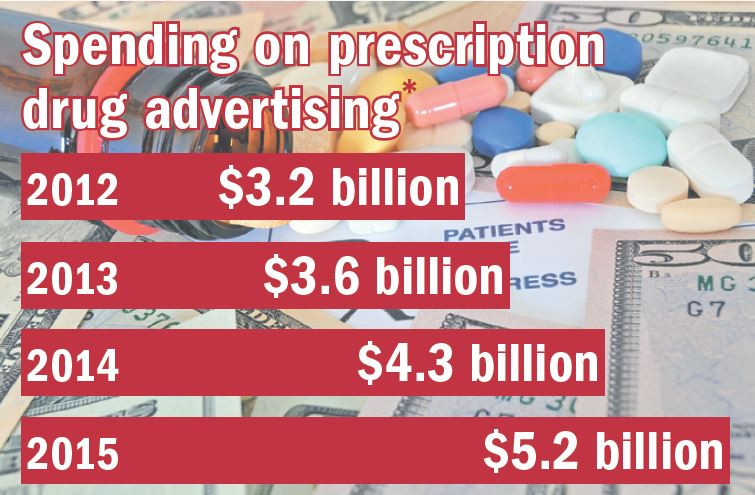
The administration is proposing a return to a 1990s-era policy that kept most drug ads off TV. That could dent the revenues of drugmakers and major networks.

The proposal, which would effectively reverse a 1997 policy change that opened the floodgates to a deluge of TV drug advertising, is likely to be aggressively opposed by the drug industry, which has long had the courts on its side on this issue.

Past efforts to even modestly restrict drug advertising have been blocked by the courts on First Amendment grounds.

I would be delighted if our kids could be spared from having to learn about all of the disgusting diseases that afflict adults when they’re trying to enjoy an NFL game, but it seems as though the Trump plan is not a blanket “no disgusting diseases” policy. The workaround of the First Amendment is to force pharma companies to disclose all of the disgusting side effects of their marginally effective products.

On Tuesday, the administration said that it planned to return “to the status quo policy pre-1997.” It said that companies would no longer be allowed to simply “recite a vague ‘major-risk statement’ and then point viewers to a website, toll-free number, or print insert for more complete information.” Instead, they would have to give detailed safety information in the ad itself.

[the hated sub-dictator RFK, Jr.] likes to point out that the United States and New Zealand are the only wealthy countries that do not sharply restrict prescription drug advertisements.

The F.D.A. has significantly slowed the pace of its warnings to drug companies about ads that do not align with federal rules. In 2010, the agency’s Office of Prescription Drug Promotion issued about 50 warning letters, and it posted at least 20 letters per year through 2013, according to an analysis by the law firm Covington.

In more recent years, the numbers have fallen to five or fewer warning or so-called untitled letters per year, typically telling companies that they overstated the effectiveness of a treatment.

If Trump is successful what would replace pharma ads on TV? It has to be something that is ridiculously lucrative and also mass market. AI is ridiculously lucrative, but everyone with enough money to buy Nvidia’s server chips already knows about Nvidia and the average consumer would buy only a gaming GPU board, no longer a significant source of revenue or Nvidia. Maybe OnlyFans? From Hearst, the company where I built most of my early web publishing software (user activity analysis, catalog shopping ecommerce with credit card billing (same weekend that Amazon launched!), ad serving, content management, nationwide classified ads with auctioning (same month that eBay launched!), etc.), “Inside the Rise of OnlyFans on Campus” (Town and Country):

Remember when coeds made some extra cash stacking books at the library or working a shift at a restaurant? Now, with tuition skyrocketing and talk of entrepreneurship and fast and easy millions in the air, students—including those attending highly selective schools—are turning to a new line of work to pay the college bills.

Loren, 21 and starting her senior year this month, has been doing OnlyFans since her senior year of high school. A natural entrepreneur (she previously ran her own handmade soap company), she saw the sums of money that could be made through online content—especially if she was willing to go topless—and evaluated success within that ecosystem mainly as a challenge involving branding, marketing, and advertising. Could she, a young woman from Olympia, Washington, with the ambition to attend an elite university, game the system? It turned out she could. “My second month on OnlyFans, I made $50,000,” she says. “At that point I couldn’t stop.”

Loren had already been accepted by Boston University—a highly selective, Top 50 institution that charges more than $91,000 per year—as a Presidential Scholar. Her parents (her mother is a doctor, her father a marketing entrepreneur) had saved enough money to make a dent in BU’s tuition, but by her sophomore year Loren told them to keep it. Her OnlyFans income could cover it.

From Harvard in 2017, “Do not get sold on drug advertising”:

The United States and New Zealand are the only countries where drug makers are allowed to market prescription drugs directly to consumers. The U.S. consumer drug advertising boom on television began in 1997, when the FDA relaxed its guidelines relating to broadcast media.

A documentary film on female students responding to increases in college tuition:

Full post, including comments