Potential explanation for the Ukraine situation

A reader comment on Why didn’t Ukraine become a NATO member back in the 1990s? highlighted this 2018 lecture at Yale by a French-Russian-American guy, 83 years old at the time(!), who was formerly a Soviet spokesman. Starting at about 19:00 he summarizes the various insults that the U.S. and NATO have inflected on the post-Soviet Russians. These include the 1998 expansion of NATO, breaking explicit promises made to the Soviets, recognizing the split off of Kosovo from Serbia, rejecting Putin’s proposals to join NATO and the EU, returning nothing for Putin’s assistance post 9/11.

He highlights Thomas Friedman, not for being smart enough to marry the daughter of a billionaire and fret about global warming from inside an 11,000-square-foot mansion, but for a 1998 article about the NATO expansion:

So when I reached George Kennan by phone to get his reaction to the Senate’s ratification of NATO expansion it was no surprise to find that the man who was the architect of America’s successful containment of the Soviet Union and one of the great American statesmen of the 20th century was ready with an answer.

”I think it is the beginning of a new cold war,” said Mr. Kennan from his Princeton home. ”I think the Russians will gradually react quite adversely and it will affect their policies. I think it is a tragic mistake. There was no reason for this whatsoever. No one was threatening anybody else. This expansion would make the Founding Fathers of this country turn over in their graves. We have signed up to protect a whole series of countries, even though we have neither the resources nor the intention to do so in any serious way. [NATO expansion] was simply a light-hearted action by a Senate that has no real interest in foreign affairs.”

The point about “neither the resources nor the intention” reminds me of a question at a Chinese New Year party in Miami: “Why does Joe Biden want to defend the Ukraine border when he won’t defend our own?”

”I was particularly bothered by the references to Russia as a country dying to attack Western Europe. Don’t people understand? Our differences in the cold war were with the Soviet Communist regime. And now we are turning our backs on the very people who mounted the greatest bloodless revolution in history to remove that Soviet regime.

If we are unlucky they will say, as Mr. Kennan predicts, that NATO expansion set up a situation in which NATO now has to either expand all the way to Russia’s border, triggering a new cold war, or stop expanding after these three new countries and create a new dividing line through Europe.

Thanks to Western resolve and the courage of Russian democrats, that Soviet Empire collapsed without a shot, spawning a democratic Russia, setting free the former Soviet republics and leading to unprecedented arms control agreements with the U.S.

And what was America’s response? It was to expand the NATO cold-war alliance against Russia and bring it closer to Russia’s borders.

As he said goodbye to me on the phone, Mr. Kennan added just one more thing: ”This has been my life, and it pains me to see it so screwed up in the end.”

Geopolitics is a complex topic so I don’t think Pozner or Kennan has access to the whole truth (but Friedman does! Marry a rich woman and live under Maryland family law so that she can’t get rid of you without ruinous financial consequences). However, the Pozner lecture is a good refresher for Americans who’ve forgotten everything that we’ve done in Europe during the past 30 years.

Full post, including comments

Why didn’t Ukraine become a NATO member back in the 1990s?

In a comment on MIT weighs in regarding the war in Ukraine, Paul wrote the following:

https://www.nato.int/cps/en/natohq/opinions_190542.htm

sure looks like NATO poking the Russian bear to me.

What’s inside the referenced January 10, 2022 NATO document?

Jens Stoltenberg, NATO Secretary General: On membership. We have reiterated the decision we made at the Bucharest Summit in 2008 and we stand by that decision. We help Ukraine to move towards a NATO membership by implementing reforms, by meeting NATO standards. … Meaning that it is for Ukraine and the 30 NATO Allies to decide when Ukraine is ready for membership.

Let’s ignore for the moment the question of whether it was wise, as Russian forces gathered on the borders of Ukraine, to talk about the inevitability of Ukraine’s future membership in NATO, exactly what the Russians were objecting to. The question for today’s post regards “NATO standards”.

Let’s step back and look at Jens Stoltenberg? Wikipedia says Mx. Stoltenberg is “a Norwegian politician”. He/she/ze/they is not someone with military experience, in other words, and yet he/she/ze/they leads what is supposedly a military enterprise. Below is a 2018 meeting where we can see how mild-mannered he/she/ze/they is compared to Donald Trump, who points out that Germany’s continued fossil fuel purchases from Russia work against the organization’s mission.

Hindsight is 20/20, but if the goal was to have Ukraine as part of NATO, why wasn’t that done in 1994, when the Budapest Memorandum was signed? Putin’s leadership of Russia did not begin until 1999.

NATO in January 2022 said that Ukraine could join NATO “by implementing reforms” and “by meeting NATO standards,” but what was deficient about Ukraine from NATO’s perspective? It can’t be about fighting spirit, can it? There are plenty of countries in NATO that are not renowned for military valor. What “reforms” did Ukraine need? They had already stopped paying Hunter Biden (and, indirectly, “the big guy”, though $2.5 million of this cash was harvested by a retired-stripper-turned-family-court-entrepreneur; see BBC for a summary), right?

If countries that have historically crumbled at the first hint of a foreign invasion can be part of NATO, what was the obstacle to Ukraine’s membership years or decades ago?

Full post, including comments

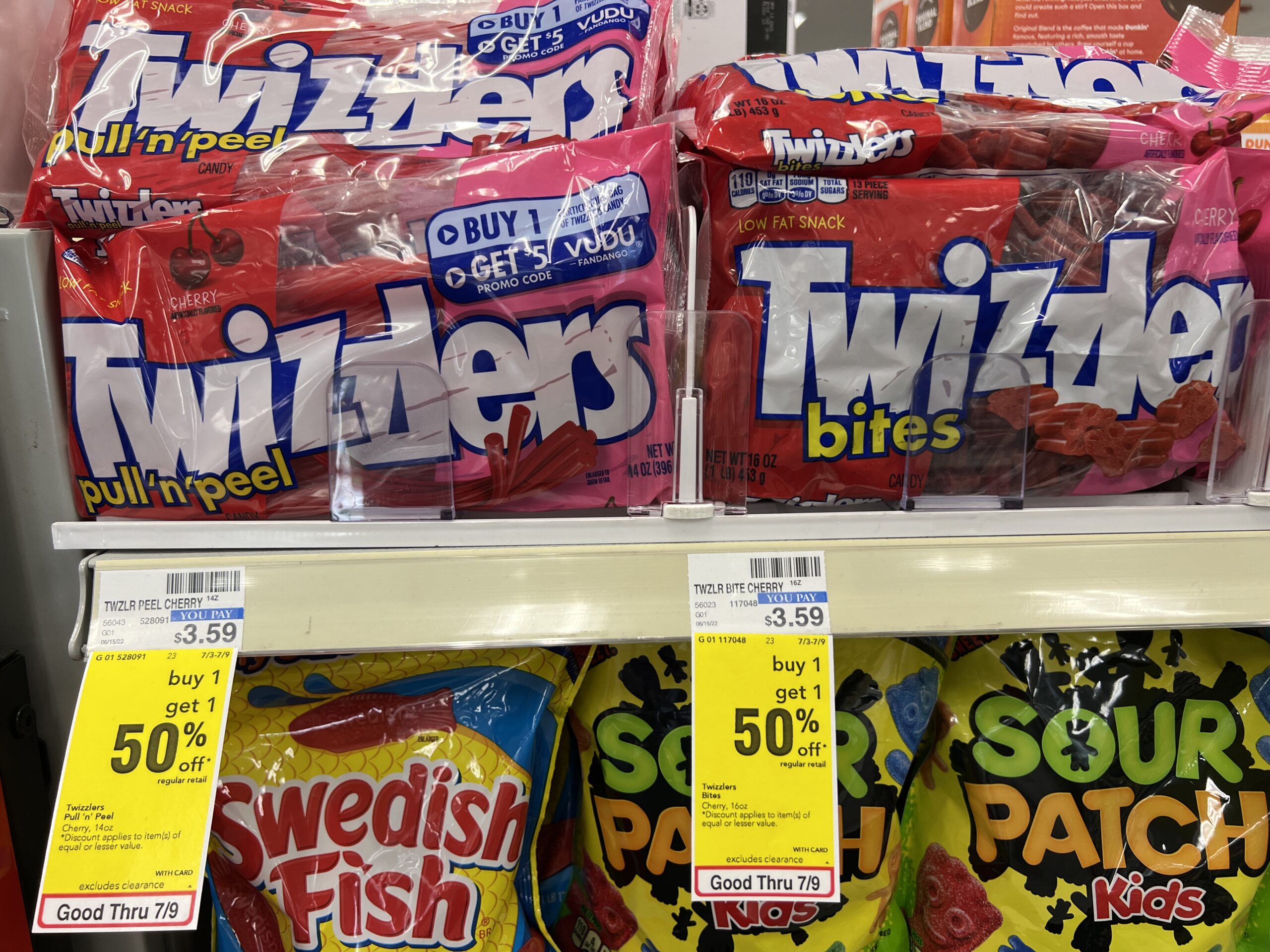
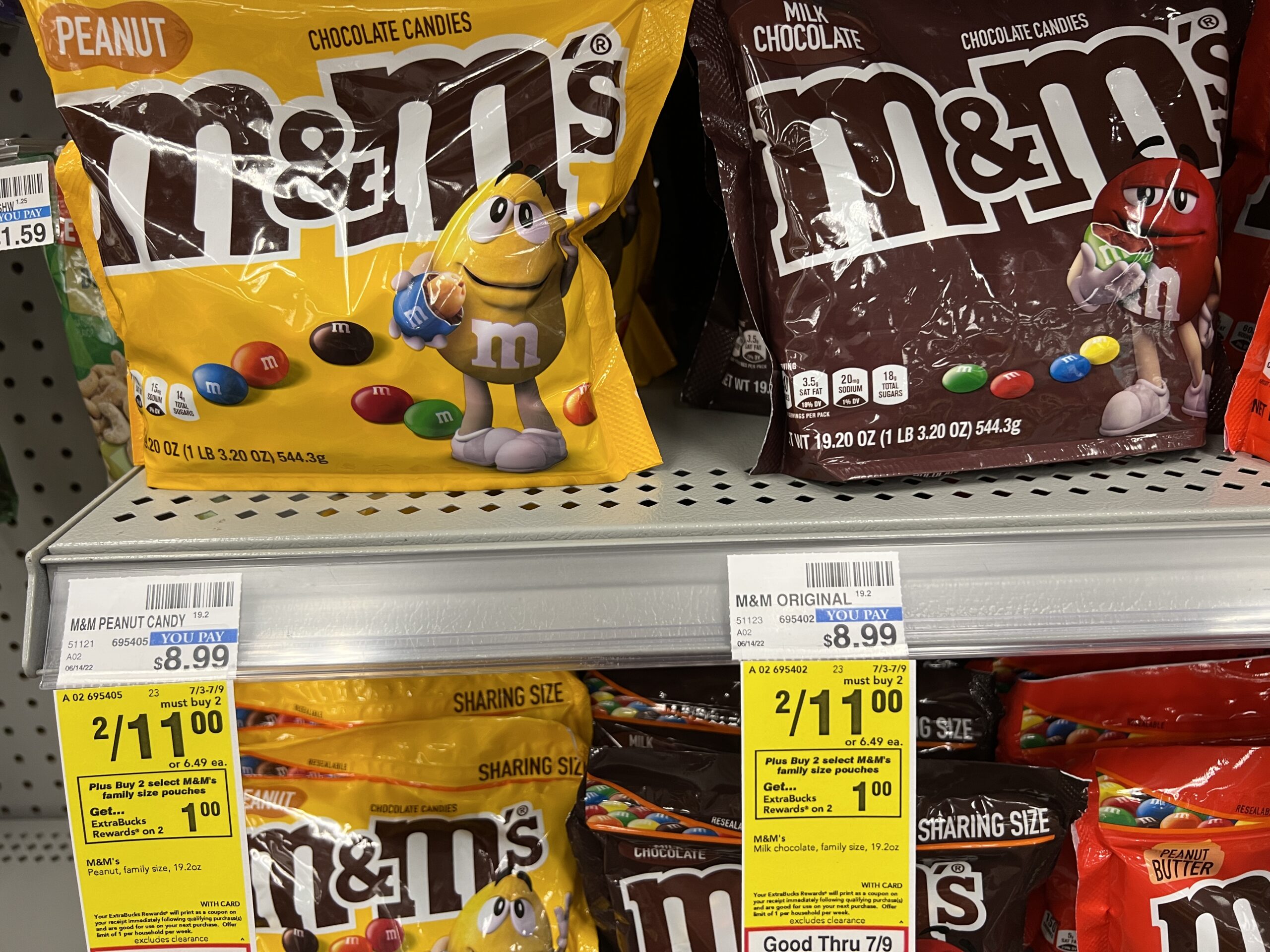
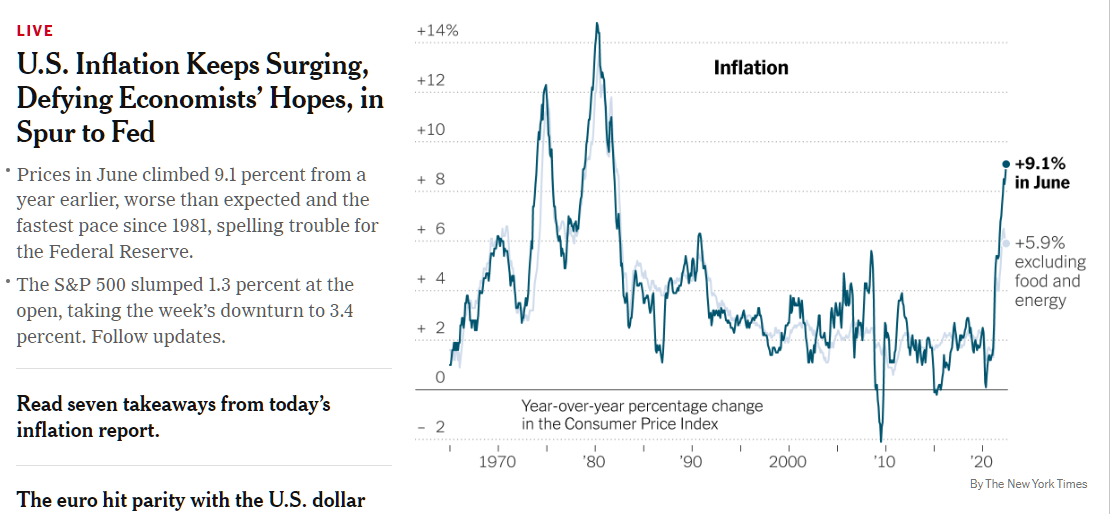
Restaurant closures point to more inflation ahead?

A popular restaurant in booming South Florida, February 22, 2022:

(“Sorry, we are closing for lunch due to staffing. Our new hours of operation are Monday through Saturday, 4:00 pm to 9:00 pm.”)

It took them nearly an hour to put a $28 stew over spaetzle on my table on a Tuesday night (about 80 percent full). Most of this dish would have had to be pre-cooked. The waitress explained “we have only two cooks on the line tonight”.

A few days earlier, I had talked to a restauranteur and chef from Maskachusetts. After several decades, she’d closed her usually-busy restaurant. “I was paying 14-year-olds $20 per hour to wash dishes and I had to train them,” she explained.

With tax and tip, my entrée cost about $36, but what would have been the cost to get food in an amount of time considered normal back in 2019? To me, that’s the inflation that is pent-up in our economy. Maybe the cost to the consumer needs to go to $45, for example, (a 25% bump) in order to give the restaurant enough money to hire additional kitchen staff. The lunch closure, for an Econ 101 student, suggests that whatever the prices that a restaurant can charge to serve lunch aren’t high enough to yield a profit after paying staff to come in during lunch. (A counter-service or fast food restaurant might still be able to survive, though, because their labor cost percentage is lower than at table-service restaurants.)

Full post, including comments

Did the Deplorable explanation for COVID-19 deaths hold up?

Back in September 2021, we looked at a New York Times article that explained the #Science of Deplorability leading inevitably to death from COVID-19. States and counties in which people voted for Trump were subject to high death rates. Cities packed with righteousness (Biden voters) were sailing through whatever SARS-CoV-2 could dish out more comfortably than a New York City hospital executive holed up on the Palm Beach waterfont.

In the comments, Steve wrote “Coastal America (blue states) tend to have mild summers, and long dreary wet winters.” I responded with a throwback to pre-coronascience, suggesting a hypothesis to test:

Maybe Vermont would be a good test for your theory. They have the nation’s highest vaccination rate. They have the nation’s lowest cumulative COVID-19 death rate (still higher than India’s, though, which was portrayed as a world-ending disaster by our media). They enthusiastically voted for Joe Biden in 2020 (largest margin on the NYT chart).

Also, California and Maryland. The NYT says that these states are being spared currently because they’re populated by Democrats. Presumably that isn’t going to change and, in fact, they’ll become more solidly Democratic as Deplorables seeking freedom move to Florida, South Dakota, and other comparatively free states.

If we want to be scientific about this, where “scientific” has its pre-Covid definition of put forward a hypothesis first rather than retrospectively providing an explanation for how it is the fault of the unvaccinated or the Republicans, etc., we need a date and an outcome.

How about if the hypothesis is that Vermont suffers a fall/winter Covid wave that kills at least 50 percent as many people, adjusted for population, as the current wave in Wyoming, singled out for Deplorability in the NYT article? We pick March 1 as the “end of winter” (and September 1 for the start of fall?)? And the hypothesis test is discontinued if some dramatically effective medical treatment for COVID-19 becomes available prior to March 1 (i.e., the treatment that I wrongly predicted would be available no later than March 2021; see https://philip.greenspun.com/blog/2020/04/06/best-guess-as-to-when-the-first-successful-covid-19-therapy-will-be-widely-available/ (I give myself credit only for saying “I’m a big believer that viruses are smarter than human beings.”)). Wyoming has such a small population that it might be challenging to say when the current wave is over. The NYT characterizes Wyoming as a place where people are dying left and right. Your horse or pickup will have to navigate around corpses in Jackson. Yet the Google shows a 7-day average death rate currently of 6 people. Not 6 people per 100,000. 6 deaths per day total in WY. The wave can be declared over when this falls to 1?

California and Maryland have already suffered the loss of quite a few residents tagged to COVID-19. They’re thus more similar to West Virginia, also singled out for Deplorability in the NYT article (relatively high death rate right now on top of a medium cumulative death rate; many evil voters who chose Trump). So the hypothesis for those states can be that they have fall/winter waves that kill at least 50 percent as many people, adjusted for population, as the current wave in West Virginia. We look at deaths from September 1 through March 1 in these states. We say that the current “wave” in WV is over once the number of deaths per day comes down to fewer than 6 per day.

Although true coronascience is done by looking at the data and spinning a retrospective hypothesis, let’s look at the above hypothesis from September 2021 and compare to data received since. What do we find? Is whether a person voted for Donald Trump sufficient to predict his/her/zir/their chance of being felled by the mighty coronavirus?

Note that the New York Times didn’t formulate a hypothesis other than “red states bad” but it did a February 18 update:

It looks like the NYT’s hypothesis might be correct. Supporting Biden, and having neighbors who support Biden, protects a person from COVID-19-tagged death. On the other hand, the above chart is not adjusted for median age. Younger people are more likely to vote for Democrats and much less likely to die from/with COVID-19. There are huge state-to-state variations in the percentage of population over 65 (California is very young, for example, which helps it look good in the COVID Olympics; 15% of population over 65 compared to 21% in Florida). Especially when looking at all counties in the U.S., there would have to also be huge variations in the percentage of over-65s in those counties (just comparing all California counties to all Florida counties, for example, would result in a massive disparity in COVID-19 vulnerability). Rural counties were more likely to vote for Trump and they’re also packed with COVID-vulnerable seniors (19 percent of population compared to 15 percent in urban/metro counties (USDA)).

We might also need to adjust for the type of work being done in these counties. A county packed with work-from-home, welfare-from-home, or cash-alimony-and-child-support-checks-from-home Zoom heroes might be more protected from COVID-19 deaths than a county packed with people whose job requires in-person effort (God forbid!).

Jay Bhattacharya’s fall 2021 tweet reminds us that adjusting for demographics gives a different picture than a raw death rate.

Full post, including comments

Book recommendation: The Great Siege, Malta 1565

Sadly topical, let me recommend The Great Siege, Malta 1565 by Ernie Bradford. For Americans softened by 150+ years without war on our soil, this is a sobering reminder of the nature of war and life in a besieged city. For those who are concerned about the fighting abilities of the innumerate 79-year-old whom Americans elected as our Commander in Chief, the book may provide some comfort. Suleiman the Magnificent, who ordered the siege, was nearly 71 years old at the time. Dragut, “The Drawn Sword of Islam”, who proved to be Suleiman’s best military leader, was 80 years old. Jean Parisot de Valette, who led the defense and gave his name to Malta’s capital, was 70.

Trigger Warning: the book’s author died in 1986, when Science was but poorly understood, and thus the book lacks coverage of how the 2SLGBTQQIA+ and BIPOC communities experienced the siege.

Related:

Full post, including comments

Central Planning Success! (COVID-19 tests are arriving today)

Today is the day that muscular government action brings relief from COVID-19-related shortages. Our “free” (taxpayer-funded) at-home test kits are arriving. From USPS:

These were ordered on January 19, the first day of official availability. They’ll arrive approximately 5 weeks after the tests became generally available at retail in local pharmacies.

Related:

Full post, including comments

Medical School 2020, Year 3, Final Weeks (Emergency Medicine)

Night shift: midnight – 8:00 AM. My resident is a 28-year-old whiz kid with slicked-back hair. An ED nurse rooms our first patient and drops off the paperwork. She teases, “Have fun, he’s here for bugs!” My resident sends me in there alone. “Good luck!”

The 55-year-old is presenting from home complaining that there are bugs crawling all over him. He wants us to write a note agreeing with him, so he can sue his landlord. “The bugs are everywhere. They are crawling inside me now.” I ask him where they are. “Everywhere. See.” He pulls out a zip block bag with a q-tip with ear wax on it. “See the bug.” He denies any drug use except marijuana. He is so convinced that he is convincing. Searching for the bugs, I am almost as confused as he seems to be. 

I present to my attending and resident. Within a few words, my attending has already figured out the problem. She states, “MJ is laced with meth around here. These delusions can be so strong that nothing will change their mind. I’ve had people bring in zip-lock bags with tampons claiming there are bugs. I just hope there are not any bed bugs on him.” We go in to see him together, and try to explain that there are no bugs on him but he may have taken meth. We offer to do a UDS [urine drug screen].” He becomes combative. He storms out of the ED.

My attending summarizes, “EM would be amazing if not for the addicts and psychotics. They suck out your soul.”

[Editor: Maybe she would be happier practicing medicine in a country where the government-run health insurance system doesn’t purchase opioids in tractor trailer quantities?]

My resident asks me what I want to do. I respond that I am not sure. “Well, if you’re debating between EM (emergency medicine) and IM (internal medicine), it’s easy. If you like to perseverate on stuff that probably doesn’t matter and will get better with time, do IM.” He continues, “EM is for people who have ADHD and want to fix things quickly and do procedures. We deal with putting out the fire. I’m not going to be great at everything, but we get the job done. We do eye procedures and central lines. We’re not as good at eye stuff as the opthamologist and we’re not as good at central lines as the intensivist. I had to put in a suprapubic catheter to drain 3 liters of urine [the bladder ordinarily holds no more than 0.5 liters]. I’ve never done that so I looked up the procedure steps and watched it on youtube. I got the job done.”

After a slow few hours, a neighboring resident comes over to our pod and asks if I want to do a lumbar puncture (LP)? A 45-year-old female presented with a several-week history of worsening headaches, gait disturbances, and visual changes. Neurology evaluated and is concerned about the possibility of a rare encephalitis. Neurology is busy so they asked if the ED wanted to perform the LP. After we consent the patient, the attending and resident help me prep the patient and numb her up with lidocaine. We lay her on her left side and ask her to bend over, thereby flexing her spine to open up the lumbar vertebrae. I insert a long spinal needle into her back, slightly off midline, while aspirating on the plunger. I keep hitting bone. After 3 attempts, the resident takes over and also struggles. The attending gets it on the second attempt. “That was hard, she must have some bad arthritis.”

After the last clinical day of M3 year, our entire class gathers in the medical school lecture hall for the M4 lottery. We are each assigned a number and go in order selecting M4 rotations. Straight-Shooter Sally is stressed because she would like to do “Acting Internships” at other institutions. “If I get the wrong order, I won’t be prepared when I have to do my AI.” (For example, someone interested in a cardiology AI would try to do the cardiology rotation at the home institution just prior.)

Statistics for the week… Study: 12 hours. Sleep: 7 hours/night; Fun: 2 nights. House party at Buff Bri’s house to celebrate the conclusion of M3 year. Sarcastic Samantha talks about her job distributing new admissions among the hospitalists.. She explains, “I have to fight with the hospitalists. They act like children. When we get a new heart failure exacerbation in the ED, they whine, ‘Why is it my turn?’ Because you haven’t taken one all week.”

The rest of the book: http://fifthchance.com/MedicalSchool2020

Full post, including comments

MIT weighs in regarding the war in Ukraine

Portion of yesterday’s email from Rafael Reif, president of the Massachusetts Institute of Technology. Note the implication that Russians are suffering just as much as Ukrainians (in bold):

To the members of the MIT community,

Though 4,500 miles separate Kyiv and Cambridge, several factors make the shock of the Russian invasion and its terrible consequences feel very close to home.

I write to let you know how MIT is responding to this catastrophe and to offer some personal reflections.

Caring for members of our community [bold in original]

First in our minds are our students, staff and faculty who are from the region or have family there; we have reached out directly to everyone we are aware of from Ukraine. We have in addition been in touch with our students from Russia, who are also a long way from home in a difficult time. (As always, support is available to all students at doingwell.mit.edu).

A fellow MIT alum pointed out “Catastrophe makes it sound like an earthquake or a tornado.”

Full post, including comments

Eileen Gu plus affirmative action = path for billionaires to ski in the 2026 Olympics?

Originally-American Eileen Gu has been criticized by Americans for getting a Chinese passport and choosing to compete on China’s team at the 2022 Olympics. Let’s look at the BBC as a neutral source:

A San Francisco native who learned to ski on the pristine slopes of California’s Lake Tahoe, she is representing China, not the USA, in the Olympics – a move that has come at a sensitive time for Sino-American relations, and has inevitably placed Ms Gu at the centre of a global debate on geopolitics and representation.

Ms Gu has expressed support for movements Black Lives Matter and spoken out against anti-Asian violence in the US, but remained silent on issues like the mass internment of ethnic Uyghurs in Xinjiang and the arrests of pro-democracy protesters in Hong Kong.

“There’s no need to be divisive,” she told news site The New York Times.

Why would Eileen Gu prefer to represent China? Here’s what New York-based The Guardian US adds to every article displayed in Apple News:

An erosion of democratic norms. An escalating climate emergency. Corrosive racial inequality. A crackdown on the right to vote. Rampant pay inequality. America is in the fight of its life.

Given a choice, what rational person would want to be associated with a country that is packed with enough haters to create so many problems? Gu has personally experienced the Asian Hate that my former neighbors in Maskachusetts bravely put up lawn signs to #Stop: “Eileen Gu calls out ‘domestic terrorism’ of Asian-Americans amid spike in coronavirus-related violence – ‘killing more Asian people isn’t going to kill the virus’” (South China Morning Post):

“This was in San Francisco – supposed to be the liberal bubble within California, which is the most liberal state, in the most liberal country in the world. This was supposed to be the safest place and I felt physically in danger. I grabbed my grandma and we ran out. I was so scared. That moment was definitely a reset because I realised how close to home it hit. That anybody can be affected just because of the way they look or their culture and heritage.”

The superstar athlete’s response to the carping of her inferiors (NBC):

At a press conference after her victory, Gu said she’s trying to be an example for young women and has no interest in the politics or social media debates.

“If people don’t believe me and if people don’t like me, then that’s their loss,” she said. “They’re never going to win the Olympics.”

(Side note: What is the “example for young women”? That their lives too can have value if they win Olympic gold? Also, how does Eileen Gu define the term “women”?)

Let’s look at another recent story and see if it can be combined with the above inspiring tale of a young person who escaped “corrosive racial inequality”, “rampant pay inequality”, and “a crackdown on the right to vote.” “Competing in the Winter Games, Without a Snowball’s Chance” (NYT):

One by one they zigzagged down the mountain, near the end of a line of nearly 90 racers in a snowy giant slalom, looking more like ski hobbyists on a weekend jaunt than world-class competitors.

Many of the skiers were first-time Olympians, brought together by one very pertinent thing they have in common: a shortage of snow in the countries they are representing in Beijing, including Jamaica, Ghana, India, East Timor and Morocco.

“I always say, ‘There is a first league, and there is a second league. We are, for sure, the second league,’” said Carlos Maeder, 43, who is representing Ghana and is the oldest skier at this year’s Games. “Maybe even the third league,” he added, chuckling.

Keenly aware that skiing has been dominated by athletes from richer, colder countries, the International Olympic Committee and skiing’s world governing body have tried to make the sport more inclusive through a quota system that lowers the threshold of qualification.

“I was never going to be competitive,” said Benjamin Alexander, a 38-year-old Jamaican skier and former D.J. He finished last in the giant slalom in a race on Sunday. “The people I was competing against started skiing at 2 and had their first race training at 4 or 5,” he said.

Mr. Alexander started skiing when he was 32.

The typical rich American is a reasonably good skier. The U.S. allows dual passports. East Timor might be happy to give an American billionaire a passport and a place on its Olympic team in exchange for a small (by billionaire standards) cash payment. If not the billionaire then the athletic child of the billionaire. What better way to experience the Olympics than as an athlete? (and, in fact, this year it was the only way for an American to experience the Olympics)

Readers: What could go wrong with the above scheme?

Related:

NYT reader comments on the New York Times article regarding affirmative action for athletes who are not good at winter sports:

I think we should add meat packing and fruit picking in summer heat to the Summer Olympics. Perhaps it will show the world the horrors the migrants are treated in this country.

I don’t think Americans fully grasp what it means to some of these countries see themselves represented in the games. Seriously, the privilege of the comments in this article drives me nuts. Travel the world and you’ll learn that yes, being American is itself a privilege in more ways than you thought you’d be able to comprehend.

(Norwegians have even more privilege, therefore, since they win way more medals?)

A better way to diversify the winter games would be to include more sports that can be learned without fancy facilities. How about snowshoe racing? It’s really just running (in snowshoes) and there are many poor countries with great runners.

This is same thing as space voyeurism at this point except Olympic voyeurism.

I was fortunate enough to watch the bottom tier skaters the other day, stumbling or falling, getting up and finishing with grace and gratitude. Pure joy to be there…and the greatest lesson from the Simones and the Mikealas of the world is that a champions bad day can be someone else’s lifetime achievement. Nothing makes someone more weak and vulnerable than to be crushed because of lack of perfection, it is they who are without hope or faith.

(Paul, Bay Area) How about we simply stop Winter Olympics until we fix the climate ? I love the Olympic Games, winter sports, but it is so incongruous with the climate trends that my heart is not in it.

Nobody is getting into Harvard who can barely read. Penn, maybe. At least back in the day.

Full post, including comments

Medical School 2020, Year 3, Week 40

The second week of EM. As soon as I put my bags down for the second shift (2:00 PM to 10:00 PM) at the physician/nurses station, a code blue is called over the loudspeaker – “Code Blue, Triage.” My PYG3 resident, a 30-year-old mountain biking enthusiast yearning for his upcoming Montana life after graduation in a few short months, waves for me to join as several residents, nurses, and attendings briskly walk over to triage.

A 70-year-old obese female is lying on the floor surrounded by six people. Two are taking turns performing chest compressions. A resident is attempting to ventilate the patient with an Ambu Bag manual resuscitator. We get the patient onto a stretcher, and cart her off to one of our rooms. The ED is divided into a trauma section, triage, a sick section, an observation unit, and a healthier section. Once she is on a bed in the sick section, an attending and her resident prepare to intubate.

The attending hands a GlideScope, a video-assisted laryngoscope to the resident.  Unlike a traditional direct laryngoscope that allows only the intubator to see what is happening, with the GlideScope both the attending and resident can see what’s in front of the scope, The resident then inserts the blade and visualizes the cords, but struggles to get the ETT (endotracheal tube) through the vocal cords. They are tight. He asks for a “boogie,” a long thin bright blue bendable plastic tube that he is able to pass through the vocal cords. He takes the laryngoscope out, threads the ETT over the boogie, and pushes the ETT forward aggressively. The attending asks, “Are you in?” He responds, “Yes, I feel the tube gliding over the [tracheal] rings.” The attending agrees, “I feel you too,” as she removes her hands from the neck.

The respiratory therapist (RT) hands us the tubing connected to the ventilator. Every tube  at initial intubation is hooked in series with an end-tidal CO2 colorimeter. If the ETT is correctly in the trachea (i.e., not in the esophagus) carbon dioxide on exhalation will change the color confirming correct placement. While this is going on, another attending and resident are “dropping lines” including a central venous catheter and arterial line.

We learn that a granddaughter brought the patient after she had trouble breathing with wheezing. The daughter said, “She was just in the hospital for a COPD exacerbation two months ago.” The patient was coding for 20 minutes. My attending asks if the family would like to come in during the code to watch. (Afterwards, she says there is evidence that the family seeing the end-of-life code is helpful for the grieving process.) The granddaughter, daughter, and son-in-law take one step into the room and begin sobbing. They step out after a few minutes. On the next pulse check, the patient is still in asystole. My attending asks if anyone has any other thoughts. “We’ve ruled out other reversible causes of arrest.” After a short pause with silence, she announces, “Time of death – 15:25.” There is a quick debrief afterwards, and then everyone scatters. I help the two nurses get the patient presentable for the family to come into the room for one last farewell. The charge nurse can tell this is my first code. “Oh sweetie, thanks. We cannot forget to clean their bottom.” The other nurse chuckles, “Post-mortem shits. Nothing quite like it.”

Immediately after this a mother brings in her 20-year-old daughter, a bone-thin IV drug user with uncontrolled type 1 diabetes who presents for weakness and confusion. She is found to be in diabetic ketoacidosis (DKA) and is septic from likely bacteremia. She is tachypnic (breathing fast) and becoming more lethargic. The attending states, “We need to intubate her now.” The attending and resident let me intubate the patient. The resident instructs the charge nurse to grab an induction agent and paralytic. We first pre-oxygenate the patient by placing a non rebreather (breathing mask) over her mouth. After two minutes, the attending tells the nurse to push the sedation followed by the paralytic. 

The resident hands me the GlideScope. “Watch the teeth! It’s not a rotation motion, it’s a lift up to the crease between the wall and ceiling.” I struggle with the motion, being too timid. The attending pulls my hands to the sky, supporting the entire weight of her head and neck off the table, pulling into view the vocal cords (pretty much a perfect view… she is an easy intubation). I guide the ETT through the vocal cords. Once through, the RT blows up the balloon. Once intubated, the RT connects her to the mechanical ventilator. 

After a few minutes, the nurse comes out to the station saying the patient is now hypotensive (low blood pressure). The attending asks, “How much fluid has she gotten?” The resident says, “She’s gotten two liters, and she is a tiny skinny lady.” My resident turns to me, “Would you like to place a central line?” I exclaim, “Yes.”. “If you can grab all the right stuff, it’s yours.” I speed off towards “Walmart”, the ED stockroom. I grab a central line kit, sterile ultrasound probe cover, enough suture to weave a sweater, and several pairs of sterile gloves. The resident jokes, “Not bad.” While I was off, he had already grabbed everything we needed. “Let’s get started, the hardest part is positioning everything.”

After we place the patient in Trendelenburg, we open up the kit on a stand. I put a sterile gown on with my resident’s help, and then my gloves. He does it all by himself. We prep the patient. The nurse hands us the ultrasound and we are ready. Okay, show me the internal jugular. I grab the ultrasound and scan up and down the neck. “It’s the plump vessel, next to the pulsing carotid.” I push down with the ultrasound probe, thereby compressing the internal jugular (IJ) vein. “Notice how the IJ nearly compresses on inhalation. She is quite hypovolemic.” The resident hands me all the tools in the right order. I insert the access needle into the IJ under ultrasound-guidance. “Don’t freak out when blood squirts back at you. Hold steady. I’ll hand you everything. We both will freak out if it is pulsatile (indicating we hit the carotid and not the IJ)” Once I get blood return, he hands me the guidewire that I thread through the needle. “Look at the ectopy on tele!” (when the guidewire knocks around in the atrium it can cause aberrant heart beats.) I communicate, “It’s threading easily.” I take the needle out, and he hands me the dilator followed by the flushed catheter. The catheter goes in smoothly, I suture it in place. I struggle placing a sterile covering, a fancy plastic lining that goes over to try to prevent infections. “I’ll do that, this is our signature for nurses.” 

As we walk out, the resident shares, “One of my best friends has type 1 diabetes. I’ve noticed that type 1 diabetics are either extremely health conscious and disciplined, or are complete wrecks and die of massive heart attacks in the 40s.”

I leave exhausted, but am too excited to fall asleep. Type-A Anita has been active on Facebook. She writes about a New York City article citing the rise in divorce rates: “I’m glad the divorce rate is higher. You want to know why the divorce rate was so low back in the Day? It’s because your grandmother did not feel safe to leave the relationship. It means women feel empowered now to leave their shitty husbands because they are not dependent on any man. #StandUp”

[Editor: Type-A Anita is on track to make $400,000 per year in ob-gyn and her fiancé (now husband) is in a much less lucrative career. If she is unwise enough to settle in one of the states that awards alimony, in about 15 years we might find that her opinion on this topic changes…]

Statistics for the week… Study: 10 hours. Sleep: 6 hours/night; Fun: 2 nights. Beers and burgers with Sarcastic Samantha. Mischievous Mary unexpectedly joins midway. She recounts walking away from her Tinder date without introducing herself to the young man because he showed up to the restaurant  in an undisclosed wheelchair.

[Editor: It would appear that the medical school’s heavy investment in diversity and inclusion education is not reaching everyone.]

The rest of the book: http://fifthchance.com/MedicalSchool2020

Full post, including comments