Software ideas for a Web archive?

A friend’s daughter is tasked with developing a Web-accessible archive for a multi-year collection of material that has been generated by an organization within a university. All of the material will be public, so there are no security issues and everything can be indexed by search engines. Ideally all of this can be maintained by non-programmers from Web browsers and minimal technical effort will be required for setup (though perhaps some programming would be useful/needed for an ingestion step).

The material is a mixture of PDFs, images, text, etc. She found some interesting software targeted at this very problem. Examples:

All of these provide for comprehensive tagging of each item, boolean searches, etc. But I wonder/worry that these are overkill. The collection is not especially valuable and I don’t know if people want to take the trouble to craft elaborate queries.

I was thinking that she might be better off using standard WordPress. Every item that is in the archive can become a WordPress post dated whenever the item was created (maybe this can be done via a batch process inserting things into the WordPress tables). She and anyone else involved in the project can tag items with however many tags make sense. At that point users can

  1. search with Google
  2. search by date (WordPress lets you go back and look at posts by date)
  3. search by tag

One advantage for WordPress over the above systems that are built for archiving is that WordPress is much more popular and constantly being improved (changed, anyway!). There are plugin modules available, e.g., to improve full-text searching through PDFs. For those who already have a museum collection organized, there is even a “Culture Object” plugin that is designed to import a collection into WordPress.

Readers: Better ideas?

Full post, including comments

New York Times: Experts as prophets

“Parents, Stop Talking About the ‘Lost Year’” (NYT, April 11, 2021) contains 7 occurrences of the word “experts”

Teenagers and tweens will be fine, experts say — if adults model resilience.

Experts say some of their worries are justified — but only up to a point. There’s no doubt that the pandemic has taken a major toll on many adolescents’ emotional well-being. According to a much-cited report from the Centers for Disease Control and Prevention, the proportion of emergency room visits that were mental health-related for 12 to 17 year olds increased by 31 percent from April to October 2020 compared with the same period in 2019. And there’s no question that witnessing their loneliness, difficulties with online learning and seemingly endless hours on social media has been enormously stressful for the adults who care about them the most.

Yet, as the nation begins to pivot from trauma to recovery, many mental-health experts and educators are trying to spread the message that parents, too, need a reset. If adults want to guide their children toward resilience, these experts say, then they need to get their own minds out of crisis mode.

Despite all of this, Ms. Fagell, much like the dozen-plus other experts in adolescent development who were interviewed for this article, was adamant that parents should not panic — and that, furthermore, the spread of the “lost year” narrative needed to stop. Getting a full picture of what’s going on with middle schoolers — and being ready to help them — they agreed, requires holding two seemingly contradictory ideas simultaneously in mind: The past year has been terrible. And most middle schoolers will be fine.

What factors keep adolescents from tipping from one state to the other? Mental health experts point to a few: their connection to at least one good friend; any underlying vulnerabilities like mood disorders;the adversity in their daily lives; the availability of adults to help them cope with hardship — and whether their parents are keeping it together.

“Social media is mitigating some of the effects of isolation,” he said.

That message, frequently repeated by experts and educators, should offer some relief to the many parents who feel guilty about the amount of screen time they’ve allowed their children this past year.

So much great stuff in here! Facebook, formerly associated with making adolescents (and everyone else) worse off mentally, is now recommended. But that’s a minor joy compared to the idea that people can be “expert” in predicting the effect of something that had never previously happened, i.e., coronapanic and associated mass school closure, the shutdown of social life, travel, jobs, gyms, etc.

Credentials are a big help in prophecy as in other areas. One of Dr. Jill Biden’s colleagues:

Rabiah Harris, a public middle-school science teacher in Washington, has a doctorate in education, which permits her, as the mother of an almost 12-year-old, to take a philosophical view.

(If it is “Dr. Jill Biden,” why isn’t it “Dr. Rabiah Harris”? Her LinkedIn page shows that she has the same Ed.D. degree as Dr. Biden.)

Even more interesting to me than the editors of the NYT thinking that readers would buy into the idea that experts could predict the long-term effects of the Great Panic of 2020-2021-2022-…(?): the experts’ idea that teenagers listen to their parents.

Full post, including comments

Covid spreading among the Mask Karens

Our country is swimming in vaccines, partly shut down (state of emergency continues until morale improves here in Maskachusetts), and populated by Mask Karens. How is coronavirus still thriving?

Earlier this month I saw a father and daughter flying a kite on the Cambridge Common. It was about 5 pm, windy enough to fly a kite, and nobody was within 100′. Both were wearing masks. A little later I went to a friend’s backyard for dinner around a propane fire pit. Except for me, everyone there was vigilant about being masked, including for kids down to age 5 or so. They were concerned about COVID-19, but as with airline travel, the mask protocol made them feel safe enough to leave their bunkers and gather closer than 6′.

But then some people took off masks in order to eat and/or drink. And some people took off masks in order to hear or be heard better. By the end of the evening, nearly every pair of guests had spent a fair amount of face-to-face unmasked time. If they hadn’t had faith in masks, I think they would either have refused the invitation and/or been more careful about staying farther apart.

Speaking of the virus thriving… I know a married couple who spend nearly 24/7 at home together. The husband caught what seemed like a bad cold, got tested for coronavirus, and tested positive. The wife also felt sick, got tested (two-day delay to schedule then three-day delay for result; cost $105 at Emerson Hospital even though testing is supposed to be free due to some fine print (she didn’t have a primary care doc’s referral)). Her test came back negative. She got another test a few days after that, this time from Regional Express, which actually was free. The free test came back within 24 hours… negative. Neither lost taste or smell. Do we guess false positive for the husband? False negatives for the wife due to not enough virus camping out in her nose? They both caught respiratory infections at the same time, but they were different infections?

(I tried to reach the wife every day during this ordeal, offering encouragement such as “We dug a grave for you in th backyard in case you need it.” Most of the time she wasn’t available. I asked, “If you’ve got COVID [presumptively from the husband’s test] and you’re stuck at home, how can you be unavailable?” She responded that she had been in Zoom meetings. “You have COVID and aren’t taking a sick day?” She replied, “Sick days are for wimps.”)

In case you object that it doesn’t make sense for laypeople to diagnose other laypeople via FaceTime, here’s what Herodotus had to say….

The following custom seems to me the wisest of their institutions next to the one lately praised. [The Babylonians] have no physicians, but when a man is ill, they lay him in the public square, and the passers-by come up to him, and if they have ever had his disease themselves or have known any one who has suffered from it, they give him advice, recommending him to do whatever they found good in their own case, or in the case known to them; and no one is allowed to pass the sick man in silence without asking him what his ailment is.

It worked 2,400 years ago, so it should work today!

Full post, including comments

How will the government and media convince parents to give children a non-FDA-approved Covid vaccine?

Now that nearly all U.S. adults are on their way to vaccination (see Fact-checking Donald Trump’s predictions regarding COVID vaccine availability), it is time to get Americans to accept the injection of an “investigational” (non-FDA-approved; see We love our children so much we will give them an investigational vaccine and Facebook fact check) vaccine for their children.

I know a remarkable number of young people who are major Mask and Shutdown Karens and who are generally afraid to leave their apartments due to expressed personal fears of contracting coronavirus. I always ask these folks “Do you personally know anyone who has been hospitalized for COVID-19?” and the answer is almost always “no.” Nor do they know anyone who claims to be suffering from “Long COVID”. In other words, if they weren’t exposed to government and media stories about COVID they wouldn’t know that it existed or was hazardous to anyone their age.

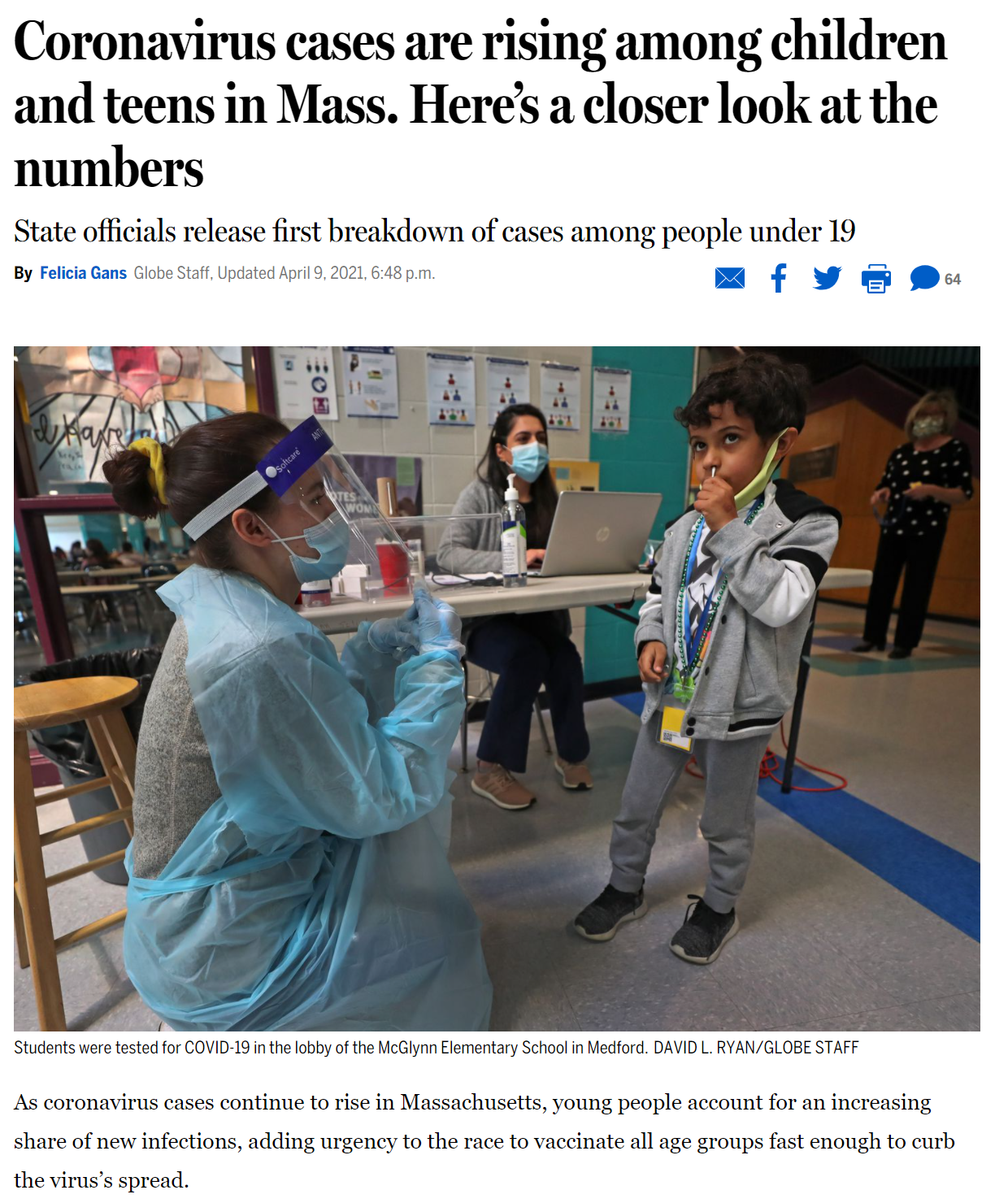
Before people here in Maskachusetts were going to hear the news that public schools would remain shut, the state removed fatality-by-age-group data from the Covid dashboard. Thus, the general public was unable to learn that nobody under age 20 in MA had ever died from COVID-19. I’m wondering if there will now be a ramp-up of stories about children testing positive, being harmed, etc. Here’s a recent Boston Globe story:

Most people wouldn’t read beyond the headline to see a hint as to what might be behind the increase in “cases” (positive PCR tests), i.e., that many Massachusetts schools recently initiated a pooled testing program (test a pool every week, wait for result, then start testing individuals if the result for the pool is positive; due to the days of lag time, “useless” was the rating from a friend who is an expert in public health informatics).

From government-funded media, “Michigan Sees Surge In COVID-19 Among Children” (NPR):

There’s an alarming spike in COVID-19 cases among children in Michigan.

Dr. Bishara Freij is chief of pediatric infectious disease at Beaumont Hospital in Royal Oak, Mich., which is just north of Detroit, and he joins us now.

FREIJ: Children do much better than adults in terms of infection. So their infections are much less severe, and far fewer of them get hospitalized. And certainly, death is pretty uncommon.

FREIJ: … The problem is it’s not predictable who’s going to do OK and who won’t. So I can tell you that most of the kids that have been really sick that we’ve taken care of had been previously well children. You know, they were not the chronically ill patients who happened to get COVID on top of their other problems. And so when we look at them, there’s no way to predict which child is going to have a bad disease. The odds are low, but you cannot say, my child is going to escape because that child is healthy.

Only the vaccinated will be spared!

Can the scientists help? “Vaccinating Children against Covid-19 — The Lessons of Measles” (New England Journal of Medicine, February 18, 2021):

Protecting children against SARS-CoV-2 infection is both an ethical obligation and a practical necessity. We need data from pediatric trials to reassure parents about the safety and wisdom of this approach. We must prepare for disinformation campaigns that prey on parental fears and target communities made vulnerable through histories of medical neglect, health disparities, and racism. … Dare we imagine a campaign that would actually thank children and parents for helping to protect others, as the rubella campaign did, perhaps suggesting that they proudly display their SARS Stars or Corona Diplomas?

(From the same journal: an editorial saying to stop classifying babies as boys/girls on birth certificates.)

I would love to see the “SARS Star” to be affixed to the clothing of a vaccinated person. As a starting point, here’s an idea from a museum:

What word should go in the center, though?

Full post, including comments

Mint a $5 Covid coin showing Jon Brower Minnoch?

I’m wondering if it is time to make a $5 coin suitable for tipping essential workers. The U.S. has a history going back to 1795 with $5 coins; just over 100 years ago, a $5 coin had a quarter ounce of gold in it, which today would be worth $430. The $5 coin wouldn’t blow away if left on the outdoor restaurant tables that are now mandatory. It could also be left on a front step for an Amazon delivery contractor.

What to put on the new coin? With Americans fatter than ever thanks to coronapanic shutdowns (see “How Much Weight Did We Gain During Lockdowns? 2 Pounds a Month, Study Hints” (NYT)), how about Jon Brower Minnoch, an American who was literally great, for the obverse? At 1,400 lbs., Minnoch was the heaviest human ever recorded.

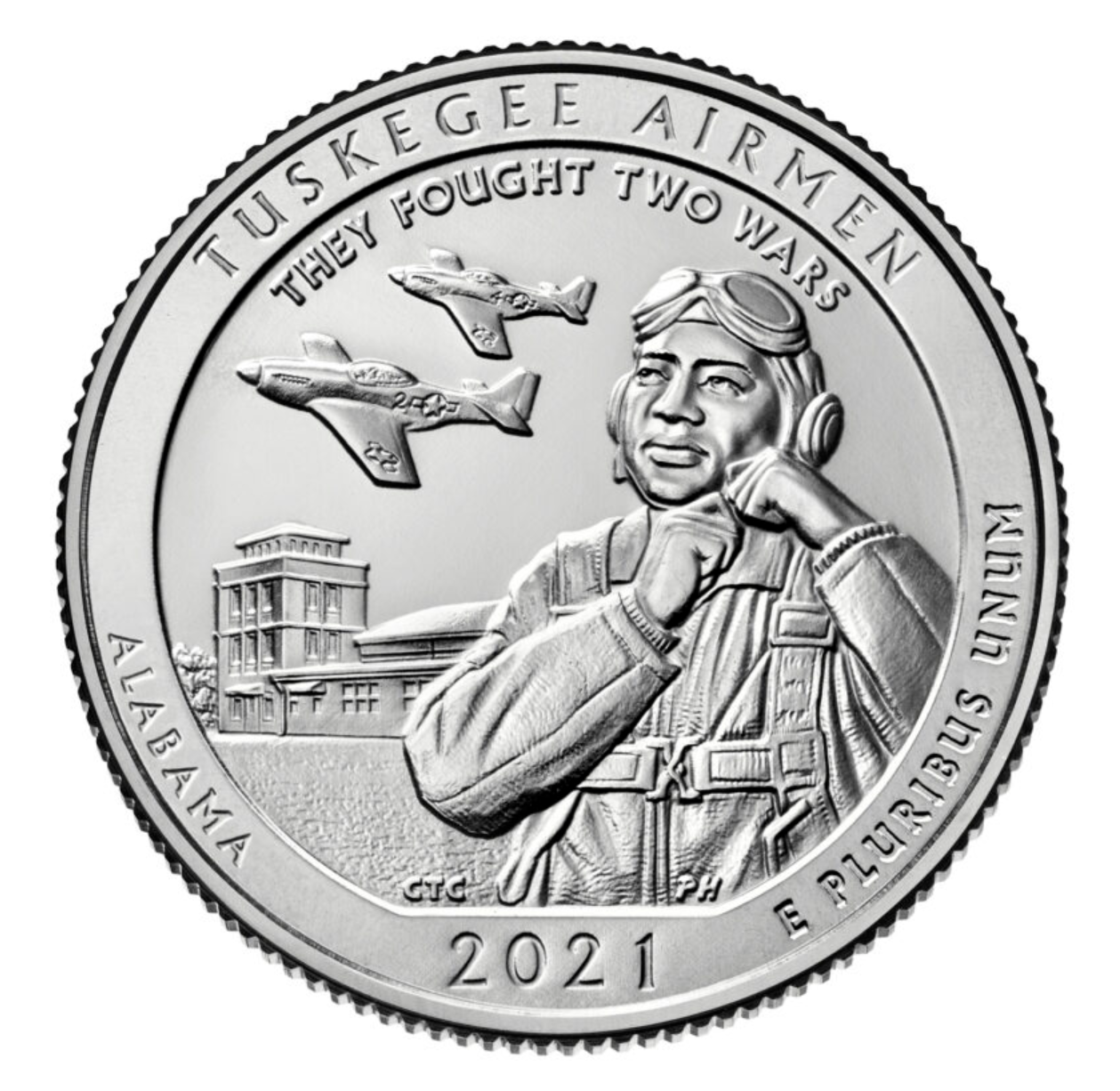
That leaves the reverse. Our greatest scientist (Dr. Fauci) is the obvious choice, but an 1866 law prevents the living from taking up space on U.S. currency. Perhaps a scene of struggle for racial equity. Here’s a recent quarter design:

The U.S. government says the Tuskegee Airmen “fought two wars” (one of which was against racism). (This is the opposite of what Charles McGee said at Oshkosh back in 2019; asked “What was it like to be black in 1940 when segregation prevailed?” he answered “I went to high school in the North and we didn’t have segregation.”)

How about a series with scenes of a modern-day hero? The double-masked soldier for social justice sits at a desk eating Doritos. After looking both ways to make sure nobody is within 100′, the N95-masked hero takes a break from Zoom to add a #StopAsianHate sign in among the rainbow flag, BLM banner, and “In this house we believe…” sign in his/her/zir/their yard. The concerned citizen updates his/her/zir/their Facebook profile picture from #StopAsianHate (a week for this cause is enough) back to #StayHomeSaveLives. He/she/ze/they rolls up his/her/zir/their sleeve to accept the sacrament of investigational non-FDA approved vaccine. As in A Rake’s Progress, the story ends in tragedy. Our Mask and Shutdown Karen, now fully vaccinated, decides to attend a rally demanding justice for the BIPOC and stands closer than 6′ from his/her/zir/their brothers/sisters/binary-resisters in arms. The final scene for the reverse shows the felled-by-a-variant social justice warrior dying in the ICU, attended by a BIPOC physician and BIPOC nurse, an immigrant via the DREAM Act.

Separately, another potential advantage for the $5 coin is that if the $trillions of additional government spending generate inflation, it will be the right denomination for purchasing a drink from a vending machine (already at $3 at the Atlanta Zoo, April 2021; see photo below).

Related:

Full post, including comments

Icebound: a book about the original polar explorer

If you were a school boy/girl/other in the Netherlands you would have learned about Willem Barentsz, who made three voyages to the Russian Arctic while Shakespeare was scribbling out The Comedy of Errors, Romeo and Juliet and the Merchant of Venice (1594-1597). If you weren’t, there’s a great new book: Icebound: Shipwrecked at the Edge of the World, by Andrea Pitzer.

What was known?

The Greeks later determined that the farthest places from the equator where the sun is directly overhead at some point during the year sit at predictable distances north and south of the equator. As a result, along with the equator circling the Earth, they had added one line above and one below, both parallel to it. The northernmost extreme of the sun’s travels was christened the Tropic of Cancer, and the southernmost band the Tropic of Capricorn. And the ancients realized that because of the changes in the sun’s position, there should be another line of latitude closer to each pole, beyond which it would be possible to see the sun at midnight during the summer, and for sunlight to vanish entirely during part of the winter. The Greeks named the Arctic Circle for the polar constellation that should always be visible inside it—Ursa Minor, or Little Bear. The “Arctic” in Arctic Circle comes from arktikos kyklos, or “circle of the bear”—not creatures on the ground but the stars in the sky.

What was conjectured? That there would be an open warm-ish sea once you pushed through the initial ring of icebergs. Thus, it made sense to consider going over the top of Russia to trade with China, the world’s manufacturing superpower in the 16th century.

It is unclear how this idea persisted given that this area was moderately active with humans during the summer months, mostly Russians and Sami people engaged in fishing. Kildin Island was a meeting point and trading post and roughly the limit of non-Russian knowledge.

Any time that it is warm enough for a human to be outside trying to do anything, the polar bears are in the region and hungry. One thing that the Dutch guys never do on any of the three expeditions is run out of ammo:

Slaughter emerged as the instinctive Dutch response to the Arctic landscape, a new theater that would see the same performance again and again with every European wave of arrivals. As historical archaeologist P. J. Capelotti observed about the killing of animals in the high Arctic that accompanied modern exploration, “It’s amazing there’s anything left alive.”

I wonder if polar bears have evolved during the intervening centuries to be wary of humans. Modern tourists on pre-coronapanic visits to the Arctic don’t have nearly the same number of interactions with bear. But perhaps it is just because the polar bear population has been so severely reduced. I couldn’t find any estimate for polar bear population in the 16th century. Even today, people are just guessing at what the numbers might be (unlike coronascientists, though, the wildlife biologists admit that they’re guessing!).

Fighting with the ice pack and the bears at the same time near Nova Zembla, which they’d hoped would be the gateway to the open route to China:

The animal rose up and came for them. They had to abandon the work of turning the ship in order to fight the bear. But before they could kill it, they had to chase it into the water and onto the ice then back onto land again to catch it. After dispatching it, they returned to saving the ship. Whenever things looked bad, there was always something worse waiting to happen.

That last sentence describes the attitude of most of my Facebook friends regarding COVID-19!

Popping vitamin pills in hopes of warding off coronaplague? Maybe think twice…

They hadn’t enjoyed eating the meat from the first bear they’d killed on the voyage, almost a year before. But dwindling rations and the passage of time combined to make them look more keenly at this bear and reconsider. After gutting the animal, they dressed and cooked its liver, which had a much better flavor than the meat they’d eaten before. They were pleased with their meal, but the bear had its revenge when the men started to feel ill. Everyone fell sick, and the cause was clear. Barents and his men had poisoned themselves. Polar bear liver contains enough vitamin A to be lethal to humans. Though the crew had no more idea of the effects of too much vitamin A than they did the lack of vitamin C that caused their scurvy, both wreaked havoc on the castaways’ bodies just the same. Symptoms include drowsiness, headaches, liver damage, altered consciousness, and vomiting. The next morning, van Heemskerck picked up the pot of liver still sitting on the fire and threw its contents out in the snow. Three men soon lay near death. … By June 4—four days after they’d eaten the polar bear liver—most of the crew had recovered, but the skin of the three men who had fallen most violently ill peeled off in layers from head to toe.

I don’t want to spoil the story. Suffice it to say that an unplanned overwintering in the high Arctic will test a group’s resourcefulness. Scurvy turned out to be an even worse enemy than the climate.

Should we hoist a Stroopwafel in Barents’s memory?

Even during his life, Barents had lived a larger life than most humans. He’d been the first to publish an atlas of the Mediterranean, a survivor of nearly ten months in some of the most extreme conditions on the planet, a three-time explorer into the unknown, mapping places no European—and in some cases, perhaps no human—had ever seen. In Barents’s day, the Russians called the sea between Scandinavia and Nova Zembla the sea of Murmans, referring to the Norwegians they encountered there. But in 1853, Barents’s name would come to replace the earlier one, and the waters he sailed three times on his way east would come to be known worldwide as the Barents Sea. Four hundred years later its treacherous conditions would lead some to call it the devil’s dance floor.1

Along with making Zembla legendary, Barents and his men would themselves become famous. By 1600, less than four years after their frozen Twelfth Night feast on Nova Zembla, William Shakespeare would write his own play about the same holiday. Twelfth Night likewise tells the story of a world turned upside down on this strangest of holidays, in which the high are brought low and everything spins topsy-turvy. A not-quite-dead dead twin, cross-dressing, and a plot nested around switched identities lead to a comedy of errors with its own holiday feast at the center—and a reference to Barents. When one character earns another’s disdain, he’s told, “[Y]ou are now sailed into the north of my lady’s opinion; where you will hang like an icicle on a Dutchman’s beard.” In the space of a handful of years, the tale of Dutchmen covered in ice at the northern edge of the world would cross borders to become an international cultural touchstone.

William Barents would become less and less real over time. The gaps left by his biography, and his death, create an emptiness that makes it possible to project or reflect whatever the viewer wants to see. Yet every famous Arctic explorer who endured horrifying ordeals, every adventurer to the North whose story became a bestselling book, every voyager vowing to fill in the map for national glory, every polar adventurer whose exploits were recorded with the newest technologies—from books to telegrams to photos to radio broadcasts to phones to satellite links—has walked in the path first blazed by William Barents. In later centuries, the failure to establish habitable colonies or make successful trade missions wouldn’t count against intrepid explorers. From a monetary perspective in Barents’s era, however, his final voyage was a disaster, so much so that when his wife applied for a widow’s pension from the council of Holland, asking for support for herself and the five children her husband had left behind, she was refused.

A less-known hero from the voyage is the captain, Jacob van Heemskerck (Barents was the navigator).

Van Heemskerck later sailed to [the East Indies] as commander of the fleet and helped shepherd the new Dutch nation as it supernovaed into a vast empire. In less than a century, the goods shipped by Dutch traders would eclipse the combined total of Spain, France, England, and Portugal, with several other European powers thrown in for good measure. Just as he’d outlasted his time in the Arctic, van Heemskerck would survive his southern voyages and return home to take part in the war against Spain that would continue, at greater or lesser intensity, for another four decades. As admiral, he’d lead the Dutch navies against the Spanish fleet near Gibraltar in 1607, dying in battle after losing a leg to a cannonball.

The author closes with a testable hypothesis:

Yet, strangely enough, he was perfectly correct in his assumption. The world to which he belonged set machinery in motion that can now be slowed but not reversed. With some consistency, snow and ice surveys project that by 2040—perhaps as early as 2030—there will be no ice left at the North Pole in summer. By August 2017, the planet had changed so much that a Russian gas tanker equipped for Arctic voyages could travel for the first time without an icebreaker escort, sailing a northern route from Norway to South Korea in two-thirds the time required for the traditional route through the Suez Canal. The open polar sea Barents had forecast will soon exist every year during the hottest months. And the planet will continue to warm. This stupendous change will be the end result of a process in which Barents and his Arctic expeditions were in some ways the opening salvo. Though they returned with a dramatic tale of uninhabited lands and scientific insights, their ships still rode the wave of a tide that would unleash destruction as powerful and enduring as any force in human history. The sea free of polar ice that the Greeks had deliberated over and Barents’s own mentor had insisted was real wasn’t just a figment of their imaginations. The open polar sea that Barents had imagined, the idea for which he’d risked everything, has finally come to pass. He just sailed four hundred years too soon.

Let’s see if the scientific consensus turns out to be correct! I hope that we haven’t all been killed by variant COVID-19 by 2040 and can see if the experts were right. If the CDC lifts its no-sail order, perhaps we can have a comfortable Royal Caribbean cruise from Miami to the North Pole and back by way of Halifax (so as to qualify as an international trip).

Meanwhile… I suggest reading Icebound: Shipwrecked at the Edge of the World.

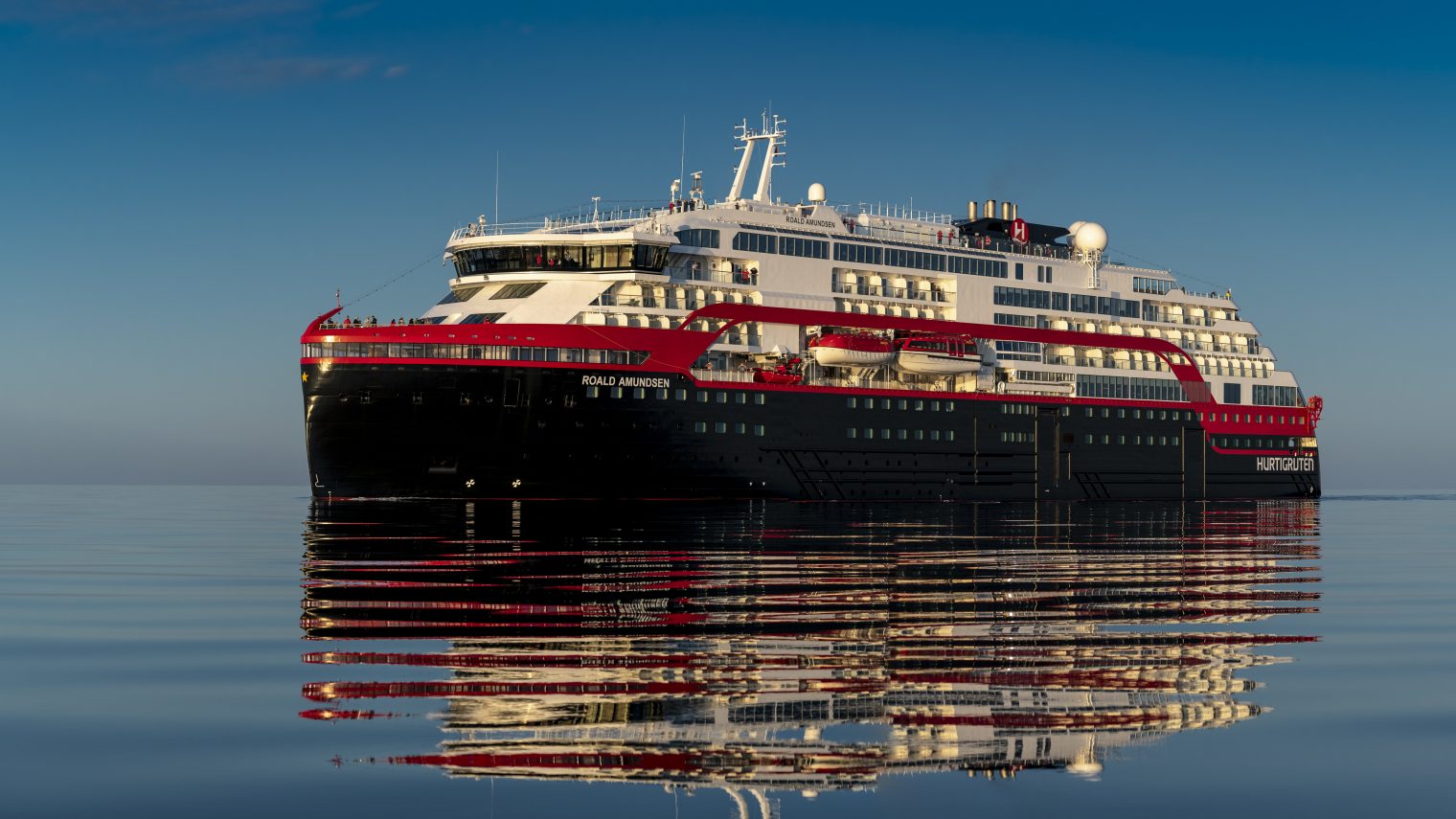
From my own trip to the Arctic, made more tolerable by the presence of a French chef…

Related:

Full post, including comments

Fordlandia: interesting facts about Henry Ford

Fordlandia: The Rise and Fall of Henry Ford’s Forgotten Jungle City, by Greg Grandin, has some interesting facts about Henry Ford that I want to jot down.

Ford was 50 years old when he put together the Model T with the assembly line and began his ascent into legend:

SUCCESS CAME LATE to Ford. Born on a Michigan farm in 1863, he was forty years old when he founded the Ford Motor Company in Detroit, forty-five when he introduced the Model T, and fifty when he put assembly line production into place and began to pay workers a wage high enough to let them buy the product they themselves made. So while he came of age during the early stages of the Industrial Revolution, the America he lived in for the first half of his life was still mostly rural, and the changes he helped set in motion came stunningly fast. Ford didn’t invent the assembly line. He claimed he got the idea of having workers remain at one location and perform a single task from the “disassembly lines” found in Chicago’s and Cincinnati’s slaughterhouses, where butchers hacked off parts as pig and cow carcasses passed in front of them on conveyor hooks. Nor did he conceive the other central idea of modern mass production, that is, making parts as identical as possible to one another so that they would be interchangeable. But Ford did fuse these two ideas together as never before, perfecting the idea of a factory as a complex system of ever more integrated subassembly processes. Most of this innovation took place in Ford’s new Highland Park plant, opened in 1910 and designed by the architect Albert Kahn, who prior to his work with Ford had been associated with the anti–mass production arts and crafts movement.

Ford gave a tremendous amount of work to Kahn, a member of the Jewish tribe that Ford would come to blame for many of the world’s problems. If he didn’t mind Jewish workers, he did object to unionized workers, referring to unions as “the worst thing that ever struck the earth.”

It is difficult to conceive of how much vertical integration Ford achieved in the 1920s:

Ford moved forward with the construction of a new factory complex, which he built along the Rouge River, in the county of Dearborn, near where he was born. When it was finished, the River Rouge would be the largest, most synchronized industrial plant in the world: sixteen million square feet of floor space, ninety-three buildings, close to a hundred thousand workers, a dredged deepwater port, and the world’s largest steel foundry. Ford barges, trucks, and freight trains brought silica and limestone, coal and iron ore, wood and coal, brass, bronze, copper, and aluminum from Ford forests and mines in Michigan, Kentucky, and West Virginia to the Rouge’s gates and piers, and everything was organized to achieve maximum efficiency in receiving the material and getting it to the complex’s power plants, blast ovens, furnaces, mills, rollers, forges, saws, and presses, to be transformed into electricity, steel, glass, cement, and lumber.

Is it an original idea that we Americans with our superior technology and ideas can improve countries south of the border so much that nobody will want to migrate up here and begin living in means-tested public housing, subscribing to Medicaid, and shopping for food via EBT?

It was technology, production, and commerce that made history, and it would be not gunboats or marines that would tame the world but his car. “In Mexico villages fight one another,” Ford said, but “if we could give every man in those villages an automobile, let him travel from his home town to the other town, and permit him to find out that his neighbors at heart were his friends, rather than his enemies, Mexico would be pacified for all time.”

Compare to “The imperative to address the root causes of migration from Central America” (Brookings, 2021), “VP Harris To Work With Central American Countries To Address Root Causes Of Migration” (NPR, 2021), and “How to address the causes of the migration crisis, according to experts” (Vox, 2019).

Ford had a grand idea for upgrading life in one of the most benighted parts of the U.S.:

… Ford made a bid to realize his industrial pastoralism on a large scale in a depressed river valley—not in the Amazon but in Muscle Shoals, along a stretch of the Tennessee River in northwestern Alabama.

He also said he planned to establish a seventy-five-mile-long city, as thin as Manhattan but five and a half times its length. Other chaotic, unplanned cities grew in sprawls, in a “great circle” that trapped residents, never giving them a chance to “get a smell of the country air or see a green leaf.” Those who lived in Ford’s river metropolis, in contrast, would never be more than a mile from rolling hills and farmlands.

Frank Lloyd Wright remarked that Ford’s valley city, imagined above in an illustration published in Scientific American in 1922, was “one of the best things” he had ever heard of. Ford was “going to split up the big factory,” Wright said. “He was going to give every man a few acres of ground for his own.”

(Instead, of course, the U.S. became more urbanized as the population grew from 106 million (1920) to 330 million (today) and a median-earning worker cannot afford an apartment, much less “a few acres of ground” anywhere near a job.).

Extreme climate events are new?

A week earlier [in 1928], he and Edsel had taken the Ormoc out on a trial run down the Rouge River into Lake Erie. But now, a heat wave had settled over lower Michigan, killing scores of people. Defying the Amazon’s dry season from a world away was one thing. Suffering Detroit’s humidity in the flesh was another, so Ford escaped the city by taking off on one of his road trips.

Ford was an early enthusiast for aviation, having first flown in 1927 (including some stick time), according to the author (the Henry Ford Museum page on aviation shows that he began working to build airplanes, however, in 1924 (giving up in 1933)).

Aviation pioneers failed to predict the military uses of aircraft:

The disappointment of Alberto Santos-Dumont’s life was not that he didn’t get credit for inventing flight, though he did resent that the Wright brothers won all the acclaim. His real heartbreak was that he lived long enough to see the machine he helped develop be used as an instrument of death. Santos-Dumont wasn’t an ideological pacifist like Henry Ford, but he did hope that airplanes would knit humanity closer together in a new peaceful community, just as Ford had believed that his car, along with other modern machinery, could bring about a warless world and a global “parliament of man.” Both were of course proven wrong by World War I, which broke the conceit of many like Ford and Santos-Dumont that technology alone would usher in a new, higher stage of civilization. “I use a knife to slice gruyere,” Santos-Dumont said when war broke out in Europe, “but it can also be used to stab someone. I was a fool to be thinking only of the cheese.”

Ford dealt erratically with the fact that, after all his high-handed opposition to World War I, he turned his factories over to war production. He continued to speak out provocatively against war, maintaining his position that soldiers were murderers and quoting Tennyson’s “Locksley Hall” to the end of his days. Yet Ford’s faith in America as a revitalizing force in the world led him to say that he would support another war to do away with militarism. “I want the United States to clean it all up,” he said. No wonder the Topeka Daily Capital said that Ford put the “fist in pacifist.”

Orville Wright, for his part, predicted after World War I that the airplane had made war so terrible that no country would start a future war. The author reminds us of the 1932 war between Bolivia and Paraguay over non-existent oil that killed nearly 200,000 people. Airplanes were used on both sides.

Even the smartest best-connected people failed to predict that the Great Depression would last far longer than any previous economic downturn.

Ford at first restrained himself from using the crash to scold Wall Street and lash out at the money interests. He instead responded in a way many deemed responsible, preaching his gospel of consumer spending as a way out of the downturn. To back it up, he pledged that not only would he continue production at the Rouge full bore but he would raise his daily minimum wage from $6 to $7 a day. Ford seemed well positioned to lead the recovery: he himself had little invested in stocks, so his personal fortune was untouched, and his company, unlike General Motors, whose share price plummeted, wasn’t publicly traded. Yet demand for the new Model A gradually slowed, and inventories backed up. Ford lowered its price, taking the difference out of dealers’ commissions. But by the end of 1930, there was no margin left for any more reductions. The company quietly began to cut production and to buy more and more parts from outside low-wage suppliers—thus beginning the erosion of the fearsome self-sufficiency of the Ford Motor Company. By early 1931, the company had slashed the number of weekly hours of most workers, rendering meaningless Ford’s vaunted Seven Dollar Day. Later that year, the company officially reduced that as well. And then in August the assembly line ground to a halt—Ford had more cars than customers to buy them. Just four years after its introduction in late 1927, the Model A, which Ford had hoped would have as long a run as the T, was history.

The author reminds us that the solution to any economic problem is bigger government!

Of course, his exhortations to self-reliance and patronage of village industries had as little chance of solving the problems revealed by the Great Depression as Fordlandia managers had of taming the Amazon. Yet Ford never relented in his condemnation of the New Deal’s solution to the crisis: the promotion of unionism, government regulation of industry, and establishment of federal relief. Specifically, Ford refused to warm to Roosevelt and his New Dealers.

(See The Forgotten Man: A New History of the Great Depression, by a WSJ reporter, for the opposite perspective! Amity Shlaes says that FDR and bigger government are precisely what dragged out the Great Depression until World War II.)

How new is the idea of using distilleries to make hand sanitizer and/or making fuel in a way that is carbon-neutral?

[in the 1930s] Ford lobbied for Prohibition, saying that Detroit’s distilleries could be converted to make biofuels.

How new is the inability of a typical American worker to afford the kind of housing that he/she/ze/they thinks he/she/ze/they is entitled to?

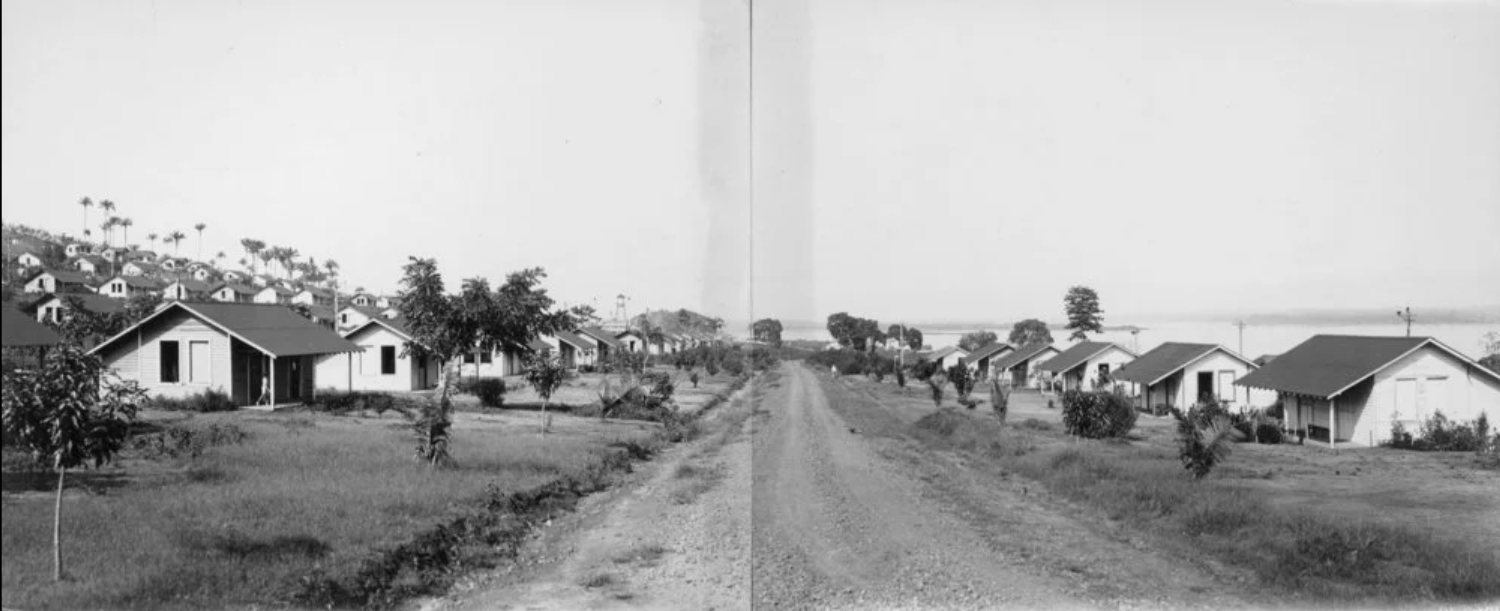
Then he turned to Fordlandia’s housing crisis. The plantation’s original plans from 1928 called for the building of four hundred two-room houses “per Ford Motor Co. drawings,” at a cost of $1,500 each—clearly insufficient for the thousands of workers and their families who had come to the settlement. In truth, this failure to address workers’ housing needs was not that different from what was happening in Michigan. Despite his famed paternalism and acquisition of towns like Pequaming, Ford, except for a small experimental community of 250 homes, largely tried to avoid providing houses for his Dearborn and Detroit workers, believing his high wages would be enough to create prosperous neighborhoods. He steadfastly ignored the city’s mounting housing problems, which had dogged the automobile industry since the beginning of its expansion. Workers lived in overcrowded slums, flophouses, and tenements, most without decent plumbing, electricity, or heat, with African Americans consigned to the worst of the lot.

With a touch more focus on those who identified as “women” or

Full post, including comments

Book review: Fordlandia

Fordlandia: The Rise and Fall of Henry Ford’s Forgotten Jungle City, by Greg Grandin, is on an always-timely subject: grand plans of rich scientists and technocrats encountering nature and human nature.

The subject of the book is Henry Ford’s attempt to bring the benefits of American management to rubber cultivation in the Brazilian Amazon. The resulting town, Fordlandia, still exists, possibly home to as many as 3,000 people. The endeavor was begun in 1928 based on a foundation of false premises, the worst of which was that rubber prices would rise dramatically. There was a lot of enthusiasm for the idea, though, even beyond Ford’s offices:

“If the machine, the tractor, can open a breach in the great green wall of the Amazon jungle, if Ford plants millions of rubber trees where there used to be nothing but jungle solitude,” wrote a German daily, “then the romantic history of rubber will have a new chapter. A new and titanic fight between nature and modern man is beginning.” One Brazilian writer predicted that Ford would finally fulfill the prophecy of Alexander von Humboldt, the Prussian naturalist who over a century earlier said that the Amazon was destined to become the “world’s granary.”

Time reported that Ford intended to increase its rubber planting every year “until the whole jungle is industrialized,” cheered on by the forest’s inhabitants: “soon boa constrictors will slip down into the jungle centers; monkeys will set up a great chattering. Black Indians armed with heavy blades will slash down their one-time haunts to make way for future windshield wipers, floor mats, balloon tires.” Ford was bringing “white man’s magic” to the wilderness, the Washington Post wrote, intending to cultivate not only “rubber but the rubber gatherers as well.”

(Humboldt was a genius, but we can’t win them all! See Humboldt Biography: Climate Change Alarmism Not New.)

The city that Ford built was 18 hours by boat, both then and now, from urban civilization.

Why cultivate rubber in the Amazon? The European colonial powers took the rubber tree seeds and set up plantations in Asia, far away from the pests that had evolved along with the trees in the Amazon. Africa was another possibility, in terms of climate, but Ford rejected this idea:

Latex, thought Liebold, the American-born son of German Lutheran parents, should be cultivated “where the people themselves have reached a higher state of civilization.” Ford’s secretary decided that this ruled out Liberia, a country “composed entirely of Negroes whose mentality and intellectual possibilities are quite low.” “Rubber should be grown where it originated,” Liebold concluded. And that meant the Amazon.

How was it done before in the Amazon?

Hevea brasiliensis can grow as high as a hundred feet, standing straight with an average girth, at breast height, of about one meter in diameter. It’s an old species, and during its millennia-long history there likewise evolved an army of insects and fungi that feed off its leaves, as well as mammals that eat its seeds. In its native habitats of Brazil, Bolivia, Peru, and Ecuador, it best grows wild, just a few trees per acre, far enough apart to keep bugs and blight at bay; would-be planters soon learned that the cultivation of large numbers of rubber trees in close proximity greatly increased the population of rubber’s predators. The extraction and processing of latex, therefore, was based not on developing large plantations or investing in infrastructure but rather on a cumbersome and often violent system of peonage, in which tappers were compelled to spread out through the jungle and collect sap.

Tappers, known as seringueiros, lived scattered along the river, sometimes with their families but often alone, with their huts located at the head of one or two looped rubber trails that ran a few miles, connecting between a hundred and two hundred trees. In the morning, starting before sunrise, when the latex flowed freest through the thin vessels that run up the tree’s bark, the tapper would make his first round, slashing each Hevea with diagonal cuts and then placing tin cans or cups to catch the falling sap. After lunch, and a nap to escape the worst of the heat, the seringueiro made a second round to collect the latex. Back at his hut, he smoked it on a spit over an earthenware oven fired by dampened palm nuts, which produced a toxic smoke that took its toll on tapper lungs, until it formed a black ball of rubber, weighing between seventy and ninety pounds. He then brought the ball to a trading post, handing it over to a merchant either as rent for the trails or to pay off goods purchased on credit.

Americans in the 1920s didn’t have access to as much #Science as we do so they failed to realize that being isolated in an apartment for a year or more is actually the best possible thing for a human …

The workers went months without seeing other human beings, [Carl D. LaRue, a botanist from U. Michigan] said. “The loneliness is appalling.”

Transitioning these lonely natives to the American system would turn them into good Americans:

With a surety of purpose and incuriosity about the world that seems all too familiar, Ford deliberately rejected expert advice and set out to turn the Amazon into the Midwest of his imagination. “What the people of the interior of Brazil need,” he declared at the outset of the project, “is to have their economic life stabilized by fair returns for their labor paid in cash and their mode of living brought up to modern standards in sanitation and in prevention and cure of disease.”

This was a twist on an idea dating back at least to 1850, when Matthew Fontaine Maury, one of the greatest American scientists of his day, proposed transporting the southern plantation economy to the Amazon:

The question Maury asked was whether the Amazon would “be peopled with an imbecile and an indolent people or by a go ahead race that has the energy and enterprise equal to subdue the forest and to develop and bring forth the vast resources that lie hidden there.”

As it turned out, even back in Michigan, Ford had to go to extraordinary lengths to control worker behavior:

But high wages alone were not enough to ensure either factory-floor efficiency or individual responsibility. A better salary could just lead to quicker dissipation through gambling, drinking, and whoring. There was no shortage of temptations in iniquitous Detroit. There were more brothels in the city than churches, and workers often lived crowded in fetid slums, in flophouses that fronted for gambling halls, bars, and opium dens. So Ford conditioned his Five Dollar Day plan with the obligation that workers live a wholesome life.

And to make sure they did, the carmaker dispatched inspectors from his Sociological Department to probe into the most intimate corners of Ford workers’ lives, including their sex lives. Denounced as a system of paternal surveillance as often as it was lauded as a program of civic reform, by 1919 the Sociological Department employed hundreds of agents who spread out over Dearborn and Detroit asking questions, taking notes, and writing up personnel reports. They wanted to know if workers had insurance and how they spent their money and free time. Did they have a bank account? How much debt did they carry? How many times were they married? Did they send money home to the old country? Sociological men came around not just once but two, three, or four times interviewing family members, friends, and landlords to make sure previous reports of probity were accurate. They of course discouraged drinking, smoking, and gambling and encouraged saving, clean living habits, keeping flies off food, maintaining an orderly house, backyard, and front porch, and sleeping in beds. They also frowned on the taking in of boarders since, “next to liquor, dissension in the home is due to people other than the family being there.”

(Henry Ford never imagined groups of unrelated roommates being locked into their apartments for a year or two by state governors!)

Immigrants received additional training:

And though ecumenical in his hiring practices, Ford still charged his Sociological Department with Americanizing immigrants, conditioning ongoing employment on their attending English and civic classes. These courses were intentionally mixed by race and country so as to “impress upon these men that they are, or should be, Americans, and that former racial, national, and linguistic differences are to be forgotten.” Commencement from the Ford school had the graduating workers, regaled in their native dress, singing their national songs and dancing their folk dances and climbing up a ladder to enter a large papier-mâché “melting pot.” On the stage’s backdrop was painted an immigrant steamship, and as Ford teachers stirred the pot with long ladles the new amalgamated Americans emerged in “derby hats, coats, pants, vests, stiff collars, polka-dot ties,” singing “The Star-Spangled Banner.”

The Fordlandia project was predicated on a sweetheart import/export tax deal with the Brazilian government that was repudiated by later-elected politicians. Even if the core agricultural ideas had panned out, the world market for rubber and the tax environment in Brazil would likely have caused the project to fail. The local labor force also did not respond as Ford had hoped.

Rather than a midwestern city of virtue springing from the Amazon green, local merchants set up thatched bordellos, bars, and gambling houses, turning Fordlandia into a rain forest boomtown.

Similarly, when Oxholm did manage to shut down a few bordellos and bars, the proprietors simply set up shop on an island just off Fordlandia’s banks, building their brothels on stilts because the island was half wetlands and prone to floods. It was ironically dubbed the “Island of Innocence” since, as Eimar Franco put it, “no one on it was innocent.”

He also had to deal with the employees who had contracted venereal diseases, running at a rate of about nine a month, in the camp’s bordellos.

Once the workers got hold of cash wages, assuming that they didn’t spend it all in the bars and bordellos, they didn’t want to stay on the plantation after they’d earned enough to support themselves and/or their families for a year. The labor force ultimately riots and destroys most of the town, until eventually the Brazilian military shows up.

Why could drive folks in the verdant jungle to a mostly peaceful protest?

Metal roofs lined with asbestos, chosen by Ford engineers to repel the sun’s rays, in fact kept heat in. The “workers’ houses were hotter than the gates of hell,” recalled a priest who ministered in Fordlandia, “because some faraway engineer decided that a metal roof was better than something more traditional like thatch.” They were “galvanized iron bake ovens,” said Carl LaRue, commenting on Fordlandia’s foibles years later. “It is incredible that anyone should build a house like that in the tropics.”

As in the U.S. today, once babies showed up the parents looked for someone else to pay for their care:

Hundreds of babies were born each year in Fordlandia, creating a whole new set of problems for its managers. Amazon residents were used to giving birth at home under the care of a midwife. Ford doctors frowned on the practice, yet did not want to tie up hospital beds for obstetrics. So they didn’t push the issue until a woman died in childbirth in late 1931. From then on, medical and sanitation squads added a new responsibility to their ever growing list, as they checked women for pregnancy and made sure no illicit midwifery was taking place.

Once born, children needed care. Dr. McClure had hopes that Dearborn chemists would soon find a “satisfactory substitute for cow’s milk with soy bean milk” that could be used to feed infants and toddlers. But until then, Fordlandia’s hospital distributed Borden’s Klim, a powdered whole milk, to new mothers. The staff quickly learned that utensils had to be provided as

Full post, including comments
More corruption from bigger government?

Americans often think that the U.S. is relatively free from corruption because cash payoffs, they suppose, are less common here than in some poorer countries. A friend in the money world, though, points out that we just don’t see the special deals obtained by the connected. “Look at all of the Goldman guys,” he said. “They rotate into government and are ‘forced’ to sell all of their shares to avoid a conflict of interest, so they skip out on paying capital gains tax for 20 years of appreciation. Then they rotate out and give their job to another Goldman executive so that he can cash in.”

Buried toward the end of Fly the Quota Skies is an interesting article on what it takes to do business in New York/New Jersey. “United Settles Charges in Case of Flight Route to Benefit Public Official”. From the Federales:

According to the SEC’s order instituted today, United reinstated a nonstop flight between Newark, N.J., and Columbia, S.C., at the behest of David Samson, the then-chairman of the Port Authority of New York and New Jersey who sought a more direct route to his home in South Carolina. … the SEC’s order finds that United officials feared Samson’s influence could jeopardize United’s business interests before the Port Authority, including the approval of a hangar project to help the airline at Newark’s airport. The company ultimately decided to initiate the route despite the poor financial projections. The same day that United’s then-CEO approved initiation of the route, the Port Authority’s board approved the lease agreement related to the hangar project. United employees were told “no proactive communications” about the new route. … The route ultimately lost approximately $945,000 before it ceased again roughly around the time of Samson’s resignation from the Port Authority.

With each $2 trillion spending bill and the lockdowns that shrink the private economy, the share of the GDP devoted to or controlled by government grows. So these opportunities for corruption also grow.

Readers: What do you think? Will corruption be the sector of the economy that grows fastest over the next decade (as government is expanded by Presidents Biden and Harris)?

Related:

  • “Forget Stocks Or Bonds, Invest In A Lobbyist” (NPR, 2012): In a recent study, researchers Raquel Alexander and Susan Scholz calculated the total amount the corporations saved from the lower tax rate. They compared the taxes saved to the amount the firms spent lobbying for the law. Their research showed the return on lobbying for those multinational corporations was 22,000 percent. That means for every dollar spent on lobbying, the companies got $220 in tax benefits.
Full post, including comments
Derek Chauvin conviction makes us less safe in the long run?

As predicted in How’s the Derek Chauvin trial going?, the jury agreed with the government and the rest of Derek Chauvin’s life will be at taxpayer expense, as planned, but in a prison rather than a squad car or at a desk.

Short-term positive: we don’t all have to pay higher insurance premiums to cover $billions in losses from mostly peaceful protests that would have followed an acquittal ($1-2 billion in damage from last summer’s, according to Wikipedia).

I wonder if the long-term consequences of conviction will be negative for Americans who interact with the police. Once this one bad apple is locked away, nobody will be motivated to consider whether police should be unionized and therefore effectively immune from the consequences of any misconduct short of appearing to kill someone in custody on a video recording.

In the comments to the first Chauvin-related post, I cited an NPR story: “After police officers gained access to collective bargaining rights, there was a substantial increase in the killings of civilians — overwhelmingly, nonwhite civilians.”

Having more non-white police officers won’t help, based on the George Floyd killing, since two of the four officers involved were non-white. My comment regarding those other officers:

[what Chauvin was doing] was plainly something that other police officers in Minneapolis though was okay because three of them were there on the scene and didn’t try to stop Chauvin. Now, however, his brother/sister/binary-resister officers are coming out to say that what Chauvin did was way off the reservation (and we don’t need Elizabeth Warren to tell us how bad that is).

If they can paint Chauvin as a single bad apple then they can keep the system in place indefinitely ($300,000+/year total compensation, practical immunity from almost any wrongdoing via unionization, etc.). They can say “We convicted Chauvin so now #ProblemSolved and #MissionAccomplished.”

Senorpablo’s response:

the fact that ALL FOUR of these guys didn’t have the sense to not kill a guy in broad daylight only emphasizes the level of systemic corruption in law enforcement. Not one of these guys had the sense and stones to prevent Chauvin from killing another man and also ruining his own life? I expect the same authority and power complex that police display towards the public probably exist in their own hierarchy. Police are put on the hero pedestal–we must give them tremendous latitude and we can’t possibly fire them because what they do is so dangerous(it isn’t at all). It’s a great marketing job done by the unions or whomever. It seems like the majority of police training focus on their safety and well being, at the expense of those who they are paid to serve. It’s a completely voluntary job so this seems backwards to me.

If 1-4 guys are convicted and imprisoned, it isn’t “systemic corruption” as Senorpablo put it, but 1-4 guys who are outliers.

The research psychologists say that what we consider to be fundamental personality characteristics are actually artifacts of the environment we’re in. People behave consistently because we tend to see people in the same environment over and over. If the psychologists are right, Chauvin’s behavior was strongly influenced by the environment he was in (unionized police officer in which it is almost impossible to be fired).

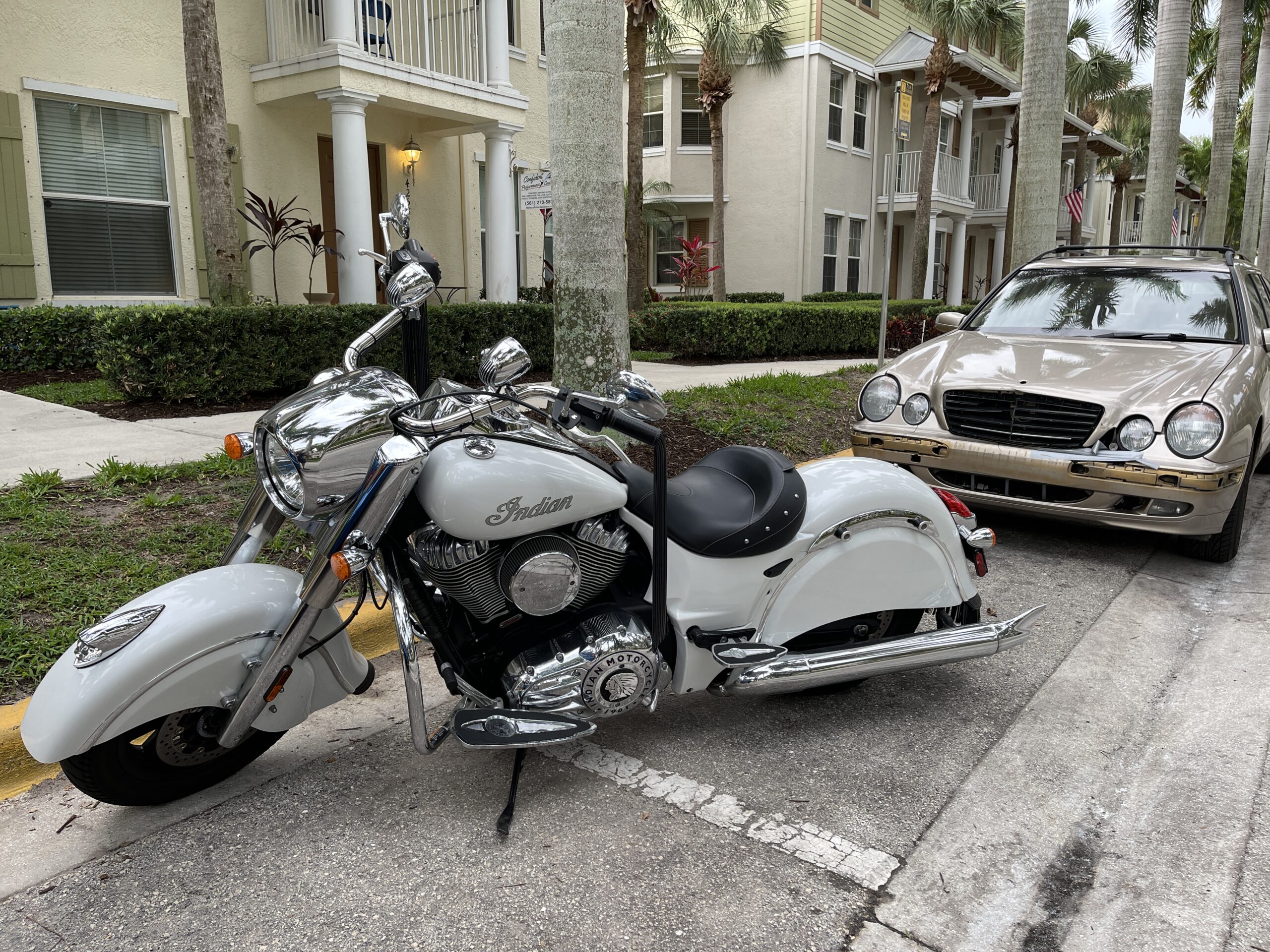
Since Elizabeth Warren was mentioned above, I can’t resist pointing out that she seems to be here in Jupiter, Florida with us:

Related:

  • Shooting of Justine Damond (George Floyd‘s life turned out to be worth more than Justine Damond’s, though Justine Damond had no criminal background (Floyd had been convicted of eight crimes); the city paid out $20 million to Damond’s family and $27 million to George Floyd’s. Imagine if these payments, instead of coming from taxpayers, were funded by reduced raises to the police!)
Full post, including comments