Navy pilots see UFOs that commercial airline pilots don’t

“‘Wow, What Is That?’ Navy Pilots Report Unexplained Flying Objects” (nyt):

The strange objects, one of them like a spinning top moving against the wind, appeared almost daily from the summer of 2014 to March 2015, high in the skies over the East Coast. Navy pilots reported to their superiors that the objects had no visible engine or infrared exhaust plumes, but that they could reach 30,000 feet and hypersonic speeds.

“These things would be out there all day,” said Lt. Ryan Graves, an F/A-18 Super Hornet pilot who has been with the Navy for 10 years, and who reported his sightings to the Pentagon and Congress. “Keeping an aircraft in the air requires a significant amount of energy. With the speeds we observed, 12 hours in the air is 11 hours longer than we’d expect.”

Commercial airliners operate in the same general areas and far more hours per year, yet their pilots don’t report similar stuff.

Could it be the curved canopy of the fighter jets?

Full post, including comments

Don’t bite tumors off other folks’ faces

She Has Her Mother’s Laugh: The Powers, Perversions, and Potential of Heredity by Carl Zimmer:

Tough as they might be, though, Tasmanian devils were in trouble. A singular epidemic was sweeping across the island, not quite like anything veterinarians had seen before. A devil would develop a fleshy growth in or around its mouth. In a matter of weeks, the growth would balloon, and within a few months, the animal would starve or suffocate. These growths were first observed in 1996 in the northeast corner of Tasmania, and over the next few years they spread over most of the island, killing off tens of thousands of devils. By the early 2000s, the species looked like it might become extinct in a matter of decades, killed by a disease scientists didn’t understand. It would take them years to realize that these devils were chimeras, and that their cancers descended from the cells of a long-dead animal.

The DNA fingerprint from tumor cells didn’t match the healthy cells from the same devil’s body. Instead, they matched cancer cells from devils who died dozens of miles away. It was as if all the sick devils had gotten a cancer transplant from a single tumor.

At some point in the early 1990s, [Elizabeth] Murchison’s research showed, a single Tasmanian devil in the northeast corner of the island got cancer. The mutations may have initially arisen in a Schwann cell. The descendants of that original cancer cell grew into a tumor. During a fight, another devil bit off the tumor. The cancer cells did not end up digested in the attacker’s stomach. Instead, they likely lingered in the devil’s mouth, where they were able to burrow into the cheek lining and work their way metastatically into the other tissues in the devil’s head. The cancer cells continued dividing and mutating, until they broke through the skin of the second devil’s face. At some point, that new victim also got bit, and its own attacker took in the cells from the original cancer. A single carrier could pass the cancer on to several other devils if it was especially aggressive, and thus help accelerate its spread. Passing through host after host, the tumor cells gained about twenty thousand new mutations.


Consider this fair warning!

Full post, including comments
Why don’t rock stars have dogs?

An Irish friend who is unaccountably fond of English music and English cars (haven’t the English in Ireland mostly been unwanted immigrants and/or oppressors/exploiters?) took me to see Rocketman. The subject is portrayed as lovelorn and alone in bed, partly due to others’ disapproval of his heavy use of drugs and alcohol and having had sex with a prodigious number of partners. Who would forgive this behavior? Not Elton John’s parents or friends, we learn.

Similar scenes were included in Bohemian Rhapsody.

Why wouldn’t the managers/handlers for these rock stars have set them up with loyal dogs as soon as their popularity began to soar? A golden retriever wouldn’t complain about a pop star’s need to ingest drugs or indulge in Roman Emperor-style sexual exploits. Perhaps a Bernese Mountain Dog on tour would reduce a pop star’s need to rely on groupies for companionship (or at least reduce the groupie count slightly by taking up space in the bed).

Enya has essentially complete control over her life and has organized it around companion animals, though not dogs (The Sun).

How was the movie? Friend’s review: “It glorified cocaine use. His only worry was if he would still be just as good when he came off it. It also glorified therapy. One trip to rehab and he was cured. That’s bullshit. They were always breaking out in song, like a 1950s movie.” He preferred Bohemian Rhapsody. (Wikipedia suggests that the movie was essentially based on the subject’s own perspective: “Elton John and husband David Furnish had tried to produce a film based on his life for almost two decades.”)

I thought the “have ordinary folks break out in song” elements were creative and interesting. I noticed that the discredited practice of heterosexuality was written out of the lyrics. “I miss my wife” in the “Rocket Man” song turns into “I miss my life” in the movie version. (Doesn’t make sense unless sung by a dead astronaut?) Also, as in Gillette’s toxic masculinity video, wisdom in the film comes primarily from the non-white-males, e.g., some African-American musicians helping Elton John realize his true potential as a flamboyant gay singer and a black therapist who turns him sober through the miracle of talking about his childhood (just as victimhood is being celebrated worldwide, we learn that Elton John was a major victim of emotionally abusive parents, at least according to Elton John (the parents are dead so can’t defend themselves); Elton John now describes himself as a “survivor”).

[Elton John was born in 1947 to parents who were both 22 years old at the time (the father in the movie, though, is given an elderly appearance). The standard of parenting back in the 1950s was much less exacting. The movie shows the father completely indifferent to the son’s spectacular success (a fact check), which does not ring true. Mom is passionate about having sex with a neighbor, reminiscent of the Specsavers Golf Course ad]

The dialog is anachronistic. For example, Elton John admits to the group therapy session that he is a “sex addict.” A pop star drenched in naked groupies was not considered an “addict” back in the 1970s, I don’t think.

Readers: Who has seen Rocketman? What did you think? And should every young rising rock star have a companion dog to keep him or her steady?

Full post, including comments

Ubernomics

A recent Sunday afternoon trip to Boston’s Logan Airport:

There was plenty of time to chat with the Uber driver:

He was a 24-year-old U Mass Lowell graduate with a business degree and he’d figured out that revenue was $20-25 per hour before car expenses. He had a day job. Why also drive Uber?

Everyone my age that I know is living for the weekend. They’re on autopilot Monday through Friday and miserable. Even the computer science graduates who did everything right and are working for Raytheon are living paycheck to paycheck.

He volunteered that most of these folks should not be broke. They were spending on Starbucks and other unnecessary luxuries in his opinion. He subsists primarily on Soylent and says a week’s nutrition costs less than one meal out in a city restaurant. The Uber project was partly insurance against an uncertain W-2 market: “Being a white male in corporate America is career suicide.”

The next opportunity to learn from a young person came at the Intercontinental Hotel at the Minneapolis Airport (to make a long story short, I now know that it takes Americans 2.4 hours to perform a Chinese fire drill from a broken Airbus to a working one and this is incompatible with making one’s connection to San Diego). A ripped tatooed guy at the gym offered the workout tip of immediately switching to progressively lighter weights after doing max reps on heavier. Repeat until down to 5 lbs. dumbbells. He volunteered that he was a former meth head. Why the gym passion? “I’m a loser so I have to look good.”

All but two of the Uber drivers whom I met in San Diego were immigrants, but not from Mexico as one might expect given the proximity of the border. Drivers were from Afghanistan, Brazil, Eritrea, Ethiopia, etc. The native-born drivers believed that their hourly earnings would be approximately double if not for the inexhaustible supply of immigrants.

A San Diego weekday afternoon, described by the driver as featuring lighter-than-usual traffic:

And they can do this with gasoline that costs less than $5 per gallon:

Full post, including comments

Titanic Museum, Belfast

Posted on Facebook under “Heard it might be a Boeing 737 MAX on way back from Ireland so decided to take a ship for safety.”:

Could this be the world’s most lavish museum devoted to engineering failure? The science turned out not to be settled, unfortunately. Folks in Belfast do like to point out “She was alright when she left here.”

The museum does disclose how badly the first voyage turned out for most people on board:

This was despite substantial government regulation:

Also despite the latest in wireless communication technology:

Yet the skill of management, engineers, and workers is celebrated:

Is it a bad thing when a country goes from being a world industrial leader to irrelevant compared to South Korea, China, and Japan? Barack Obama says “No problemo:”

Passengers were arbitrarily divided into only two genders:

Not every movie about the Titanic is an unimaginative derivative:

Then, as now, the migration industry was highly profitable for some…

A reminder to be humble…

… considering that the best humans could do lasted less than two weeks against Nature. From notes typed up by a shipyard office worker:

The building is a beautiful work of engineering in itself and includes a gratuitous Disney-style ride:

More: Visit Titanic Belfast

Full post, including comments

On being mistaken for a lawyer

I was down in Washington, D.C. recently to catch the 88th Joseph Henry lecture run by the Philosophical Society of Washington. There was a dinner beforehand to honor Brian Keating, the speaker, and it was officially black tie. I put on a pinstripe suit and walked through the door of the Cosmos Club, which was apparently hosting some other events that night as well. Here’s the exchange:

  • Cosmos Club hostess: “You’re a lawyer here for the American Bar Association event?”
  • Me: “Now why would you say a thing like that to a person you just met?”

It was the highlight of my evening! (For everyone else, though, it was “The Big Bang and Inflation; Glimpsing the Beginning of Time from the Ends of the Earth” (YouTube))

Full post, including comments

Where are migrants released currently?

There have been a bunch of articles about purported Trump Administration plans to release migrants into sanctuary cities.

Here’s a dumb question: Where are they released currently?

From a recent NYT article:

Entering the country at a rate of more than 5,000 each day, new arrivals from Guatemala, Honduras and El Salvador are departing border towns by the busload. While President Trump has made a point of threatening to send migrants from the border to inland sanctuary cities that oppose his immigration policies, it is an empty threat: Migrants are already traveling by the thousands every day to cities across the country — to Atlanta, Chattanooga, Orlando, Richmond, as well as to sanctuary cities, like New York, Los Angeles and Seattle.

After an initial 72 hours or so at Customs and Border Protection processing centers along the border, the vast majority of those entering the country now are released to nonprofit respite centers, where they are fed and clothed. From there, they are booked on Greyhound buses to destinations where they may have friends, family or the hope of a job. They pay top dollar, often $250 to $300 each, usually advanced by family members in the United States.

So Greyhound is now a refugee/asylum-industry profiteer! The NYT article suggests that all of the profits go to the British owners of Greyhound.

The implication is that nearly all migrants are released into “border towns”. Does “nonprofit respite center” mean taxpayer-funded like most other segments of the immigration industry? If so, maybe border towns should actually be happy about keeping released migrants as a cash source.

Where are there good numbers on the states and towns into which migrants are currently released? It would be interesting to see a data visualization and then add Greyhound tickets sold out of those towns as well.

Full post, including comments

Remembering the Marines who fought in Korea

On Desperate Ground: The Marines at The Reservoir, the Korean War’s Greatest Battle by Hampton Sides is a sobering Memorial Day read.

The book tells the story, from the American point of view, of the Battle of Chosin Reservoir.

As with the World War II history that I recently read, the author is not a fan of Douglas MacArthur. He sets an arbitrary date for recapturing Seoul even if it means destroying the city in order to “liberate” it:

As the Marines began to probe the outlying precincts of the city, the human cost of MacArthur’s deadline became more apparent to [Major General Oliver Prince] Smith. He felt the September 25 date was contrived—little more than a political gimmick designed to win headlines. Smith reckoned that his Marines could probably take Seoul by the twenty-fifth, but only by laying waste to large sections of the city, pounding it with artillery, bombing it to cinders. Seoul would be badly scarred, and the civilian death toll could be terrible. Smith knew that there were other, less destructive ways to take the city. Alpha Bowser insisted that the Marines could capture Seoul “with hardly a brick out of place.” They could encircle it, cut the enemy’s supply lines, and methodically ferret out the defenders, block by block. But this kind of fighting would take more time than MacArthur was willing to tolerate. So the big guns were brought forward, and the ritual of “softening up” targets across the city began. This, of course, was but a euphemism for a devastating bombardment that could only strike terror in the hearts of Seoul’s residents. General Almond was pleased to note that the enemy would be pounded to pieces. That a city might be razed in the process appeared not to trouble him.

After destroying a city, MacArthur destroys an American army by ignoring intelligence regarding hundreds of thousands of Chinese soldiers who’d crossed over into North Korea and falling right into a trap set by Mao.

The new plan was for most of Smith’s division to hasten forty miles up the coast, then turn toward the northwest, across the plains and into the Taebaek Mountains—the extensive range that forms Korea’s spine, the so-called dragon’s back. They would move up a narrow road that twisted for more than seventy miles into the highlands, toward a large man-made lake that, according to the old Japanese maps the Americans were working from, was called the Chosin Reservoir. Upon reaching its shores, Smith’s men were to keep marching for the Yalu, which was another hundred miles to the north by way of a patchwork of roads. [MacArthur’s deputy Edward] Almond called for maximum speed, much as he had during the battle for Seoul. From the start, Smith was suspicious of Almond’s plan. Among other things, it meant that his division would be strung along a narrow mountain road for nearly one hundred miles, in a long train of men and vehicles. They would move along this single artery, relying on a supply chain that the enemy could sever at any point. In this desolate country, there were no airstrips, no functioning rail lines, no other ways to receive reinforcements or evacuate casualties. They had only one road in, and, should anything happen, only one road out. The more they progressed, the more they would stretch themselves—and the more their survival would depend upon this fragile umbilical cord.

Upon reaching the village of Sudong, about twenty miles inland at the base of the mountains, one of these patrols met a unit of South Korean troops and found them positively rattled. They reported that they had just engaged in a firefight with the Red Chinese—more commonly referred to, among American commanders, as Communist Chinese Forces, or CCF. When asked how large a force they had encountered, the South Koreans would say only that there were “many, many.” But the South Koreans had captured sixteen prisoners and, upon interrogating them, had learned that they were from the 370th Regiment of the 124th Division of the People’s Liberation Army (PLA)—Mao’s army. They claimed they had crossed the Yalu River in mid-October. These Red soldiers were surprisingly forthcoming with information; they seemed to have nothing to hide. It was almost as though they wanted the U.N. troops to know who they were and where they had come from. They freely indicated that they were part of a much larger Chinese force, numbering in the hundreds of thousands.

[MacArthur’s intelligence chief, General Charles] Willoughby quickly concluded that the Chinese prisoners at Sudong were merely “volunteers,” part of a token force of zealous Communists, probably from Manchuria, who had picked up their weapons and, in piecemeal fashion, streamed down of their own free will to help the North Koreans.

It was a fiction that MacArthur seemed entirely willing to believe, one that provided sufficient cover for him to continue advancing toward the Yalu. The Joint Chiefs of Staff had given him carte blanche to keep on going—unless and until he saw evidence that the Chinese had officially entered the war. And here it was, evidence as clear as one could ever expect to find. MacArthur’s response was to accept Beijing’s propaganda at face value.

At least one American politician appreciated the risks:

young senator from Wisconsin named Joseph McCarthy, … he accused Truman of being in league with known Communists and charged that the Democratic-held White House had presided over “twenty years of treason.” McCarthy would say of Truman: “The son of a bitch should be impeached.” McCarthy inveighed against the Truman administration’s creation of a “Korean death trap,” saying that “we can lay [it] at the doors of the Kremlin and those who sabotaged rearming, including Acheson and the President.”

The late fall temperatures in the mountains (about 4,000′ high) of North Korea fell to -25F and were accompanied by high winds. It was time for General Song Shi-lun to implement Mao’s published strategy:

The enemy advances, we retreat; the enemy camps, we harass; the enemy tires, we attack; the enemy retreats, we pursue.

I don’t want to ruin the suspense, but here are a few high points:

  • the Chinese beat us despite our overwhelming superiority in weapons and equipment
  • aviation was critical to avoiding a complete disaster; General Smith had made building a mountain runway big enough for the DC-3 a top priority
  • the Marines fought tenaciously despite frostbite and every kind of wound

Tempted to despair over today’s headlines?

According to the Pentagon, 33,651 Americans had died fighting in the war, as did 180,000 Chinese. An estimated 2.5 million Korean civilians lost their lives.

I recommend this book as a way to remember the sacrifices of American soldiers in conditions that are unimaginable to a modern-day civilian.

More: Read On Desperate Ground: The Marines at The Reservoir, the Korean War’s Greatest Battle

Full post, including comments

Whites in the American West were settlers or migrants?
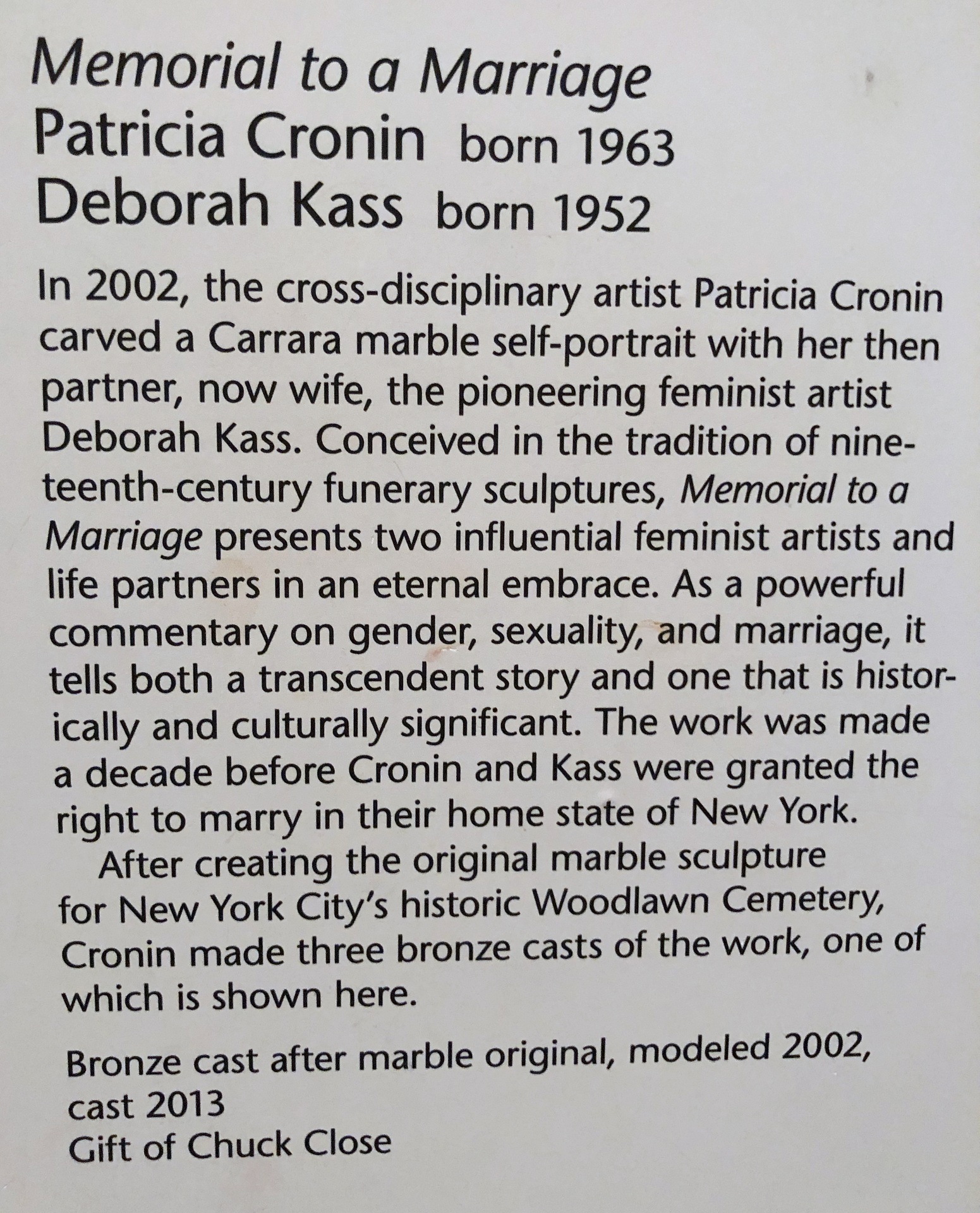
Here’s a book cover that shocked me at the San Diego airport:

The Pioneers: The Heroic Story of the Settlers Who Brought the American Ideal West bears a subtitle that makes me wonder how many Native Americans would agree that the white-skinned folks from the East were “settlers” (the land wasn’t already settled? Shouldn’t they be called “migrants”, “invaders”, or “immigrants”?) and/or were bringing “the American ideal” (but maybe the “ideal” included killing and displacing the natives?).

How did this one get through a major publishing house?

Who has read this book? I’m a huge fan of this author’s The Path Between the Seas: The Creation of the Panama Canal, 1870-1914.

Separately, here’s the first photo that I took after arriving in California:

Full post, including comments