Hainan Airlines review: Awesome, but bring your own coffee
This is based on a recent Boston-Shanghai nonstop round-trip, about 14 hours each way on a Boeing 787.
Airfare was only $650 round-trip, including up to two checked bags, a sign of the lack of demand in November (probably the ideal time for a tourist visit to Shanghai due to moderate weather and minimal rain), and the plane turned out to be only 2/3rds full. (incredibly boring video, intended for toddlers, of the plane pulling in to park)
Hainan has a higher staff-to-passenger ratio at the check-in counters. Even though I arrived right at the magic 2-hour-prior peak moment, the typical 45-minute line to check in was absent. A helpful Chinese woman whose English was good checked me in and had me on my way to security within a few minutes of arriving at the curb.
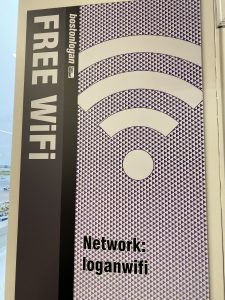
Massport invested heavily in signs promoting free WiFi at Logan:
… and then did the usual American-quality job of provisioning to ISDN speeds:
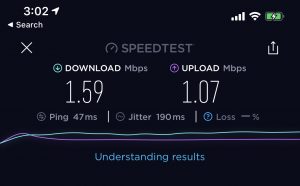
(See below for how this is 1/100th the speed of WiFi at Shanghai Pudong Airport.)
Thanks to the plane being only 2/3rds full, boarding was a lot faster than less stressful than a typical JetBlue or United attempt to board a narrow-body plane with fewer passengers.
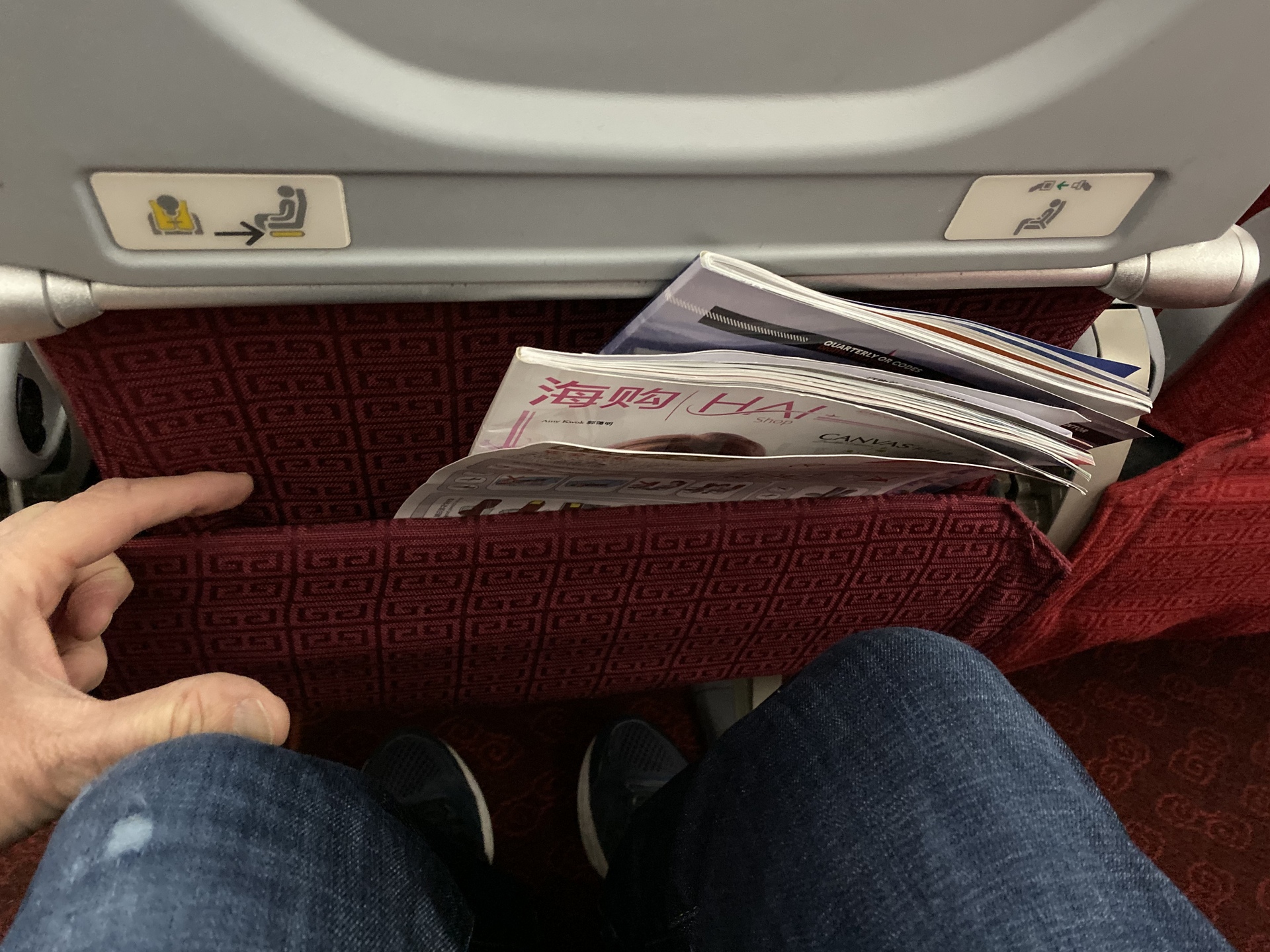
The ordinary economy-class seats are arranged as 3-3-3 and have a reasonable amount of legroom (I’m 6′ tall) and a reasonable recline. I had a whole row of three seats to myself (“poor man’s business class”). Even if the plane had been full, though, it would have been vastly better than sitting in coach on a U.S. carrier. More than 90 percent of the customers are Chinese, so the probability of sitting next to a tall obese person would have been low and, as mentioned above, the legroom is at least as good as on JetBlue and much better than what the typical U.S. carrier provides in coach. Chinese kids are generally cheerful, so the chance of being near a screaming child is also lower than on a carrier catering to Western customers.
The flight attendants begin the flight by standing solemnly near the front of each section and introducing themselves as a group, thanking passengers for entrusting them with this voyage, and expressing the hope that their service will bring us pleasure. They then bow to all of the passengers. All of the flight attendants appeared to be women in their 20s or 30s, elegantly attired in a Chinese-patterned dress. In other words, the people on both flights actually matched the flight attendants you might see in an ad for the airline. From a Hainan web page describing the uniforms designed by Laurence-Xu and introduced in 2017:
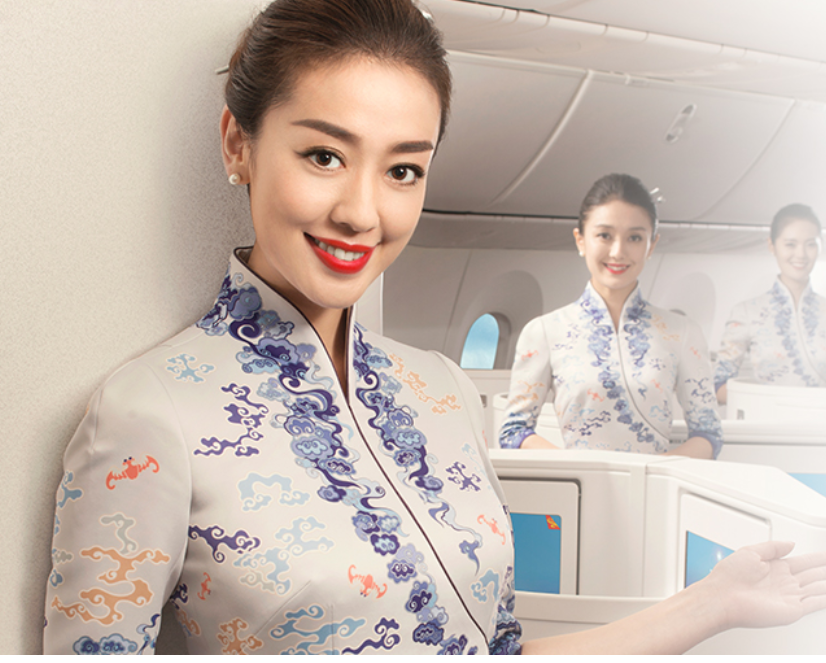
From the same web page:
At the same time as our introduction of the Rosy Clouds uniform line, Hainan Airlines has consulted with renowned make-up artist Mao Geping to create a new look that is both simple and sophisticated. This new style is fresh and clean, enhancing the natural beauty that is already there rather than garishly painting over it. The sandy color of the women’s lipstick echoes the colors of the cabin interior. The pearlescent eye shadow not only matches the blue and grays of the uniform but also the fabric on the seats. Our beautiful new uniforms paired with the elegant women who wear them creates a new professional image of the Hainan Airlines flight attendants.
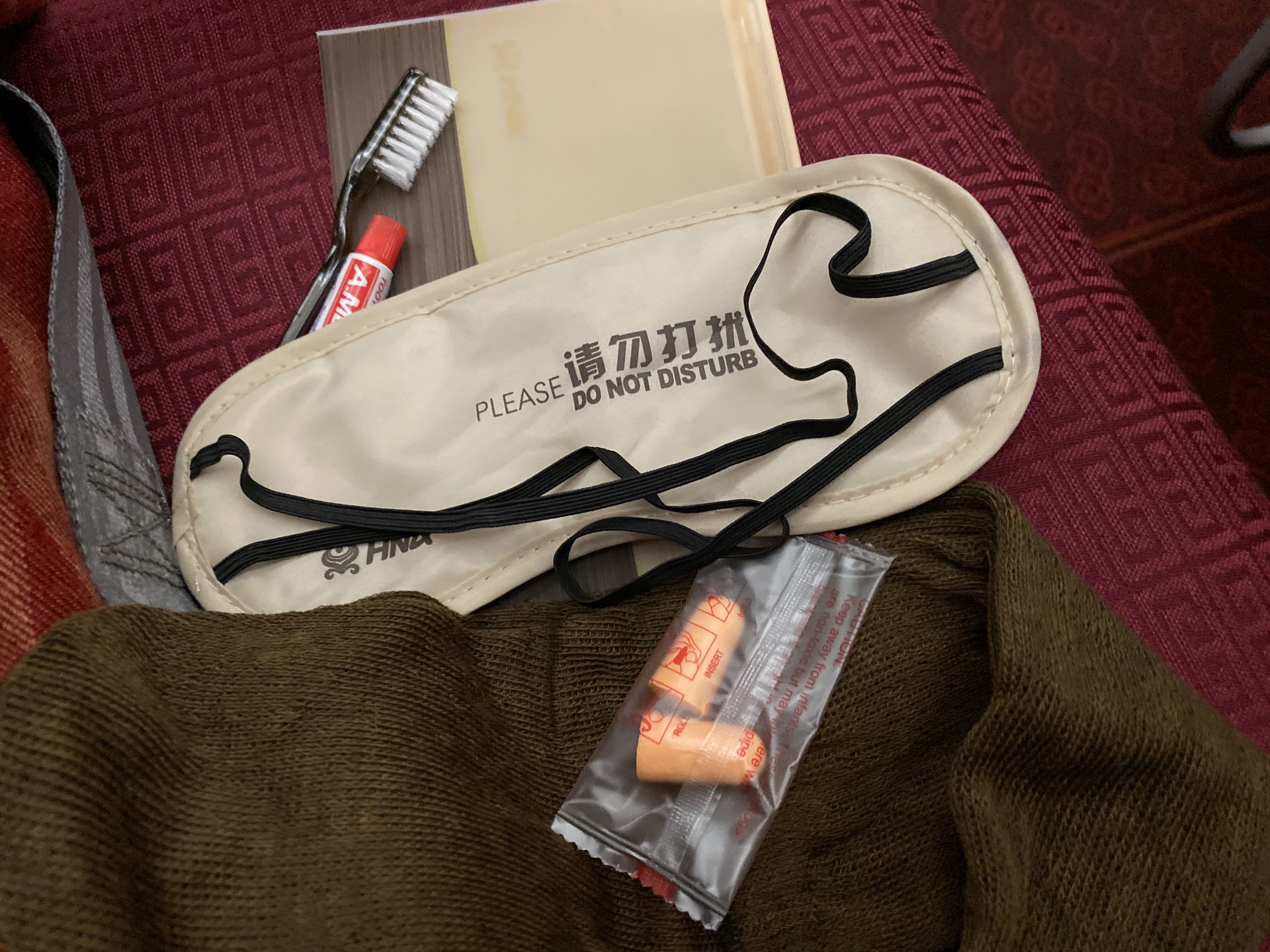
Service is much more soft-spoken and elegant than in the U.S. They do use carts for serving meals from trays, but otherwise everything is done with trays including trash collection. Apparently a Chinese customer does not want to see a flight attendant carrying a trash bag down the aisle. Every passenger is provided with a kit containing a sleep mask, ear plugs, toothbrush and toothpaste, and travel socks. Headphones are offered at no charge.
The plane was configured to deliver WiFi Internet, but the service was not available on our flight. I am not sure how it would have worked given a route that goes over Greenland, Svalbard, and Siberia.
Food service is calibrated to the non-obese and the sleeping: a light dinner, some self-service snacks, sandwiches starting after about 6 hours, and a medium-sized breakfast. Pitchers of green and black tea are prepared for the Chinese customers. A request for coffee yields a cup made with freeze-dried instant coffee. If you’re planning to stay up for the flight and are accustomed to the American diet, it would make sense to bring fruit, nuts, carrot sticks, and cold-brew coffee.
I was expecting the Boeing 787 to be a whole new world of comfort and quiet and the noise control for a composite fuselage does seem impressive. However, the net result does not seem dramatically quieter than the front portion of a Boeing 737, for example (I neglected to bring my sound level meter, and the iOS ones are junk). Cabin pressure at 33,000′ was 4,650′ according to ForeFlight (3.8 psi versus 12.4 psi, for a differential of 8.6 (compare to 7.8 max differential on a Boeing 737, so I am not sure what all of the fuss is about)). Walking up and down the aisle it is plain that there is a “extra noise zone” near the back of the wing and therefore the engine exhaust. Try to avoid a seat around row 46. Seats farther back were actually quieter.
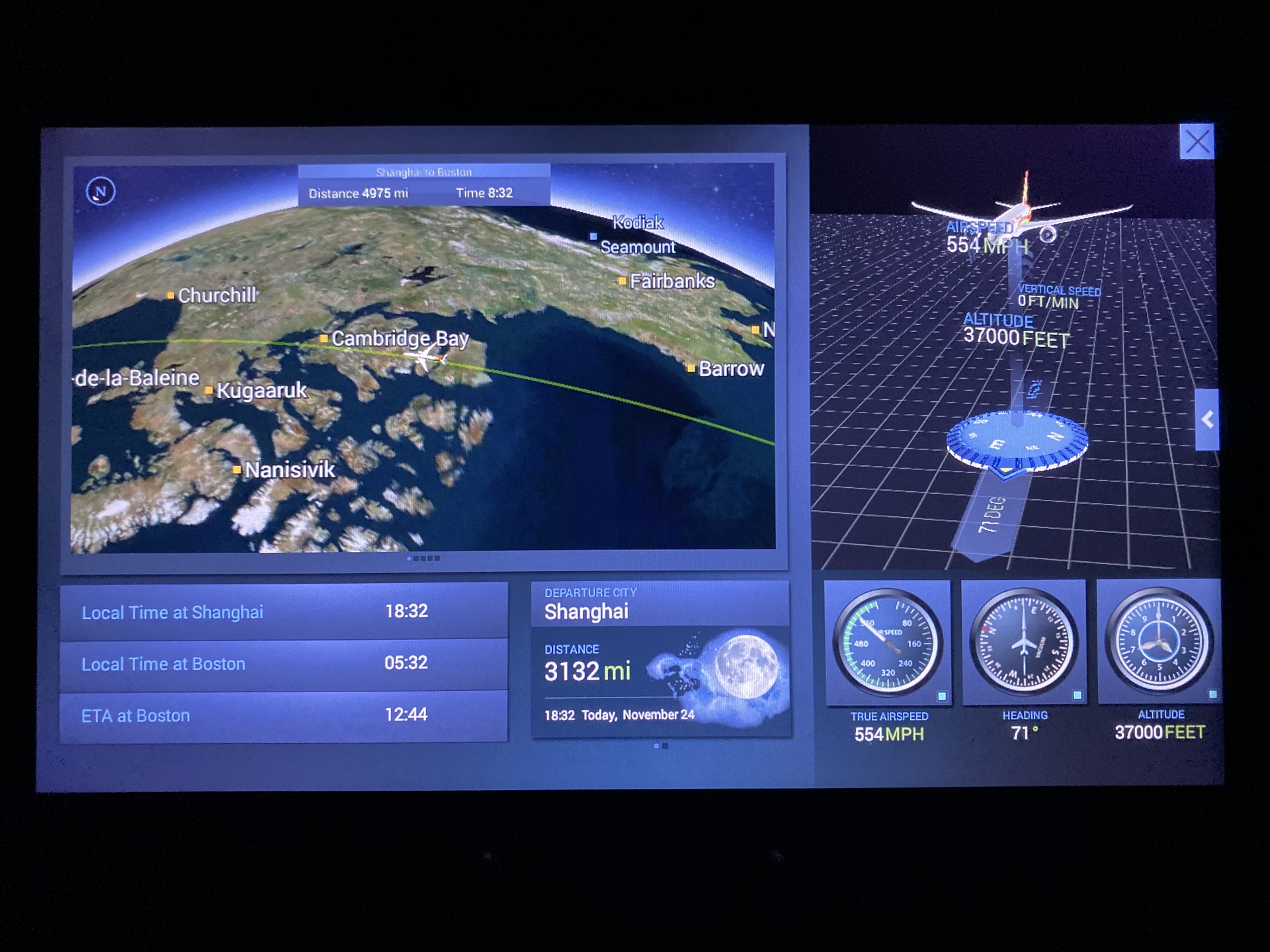
Seatback entertainment offers at least 100 movies and an awesome “3D Airshow” from Panasonic Avionics, much better than anything I have experienced on a U.S. or European carrier (video of the system’s animation of our route). There are power outlets (compatible with U.S. plugs as well as European) and USB A outlets for all of the economy seats.
I had thought that the weather over the Arctic tended to be smooth, but we hit some turbulence over Greenland at 33,000′ and experienced at least a few bumps for about 1 hour out of 12+. Everything in China was kept a bit warmer than in the U.S. and the Boeing 787 was no exception. I was comfortable in a T-shirt and jeans, but consider packing shorts to change into during the flight.
Arrival in Shanghai involves escalators, hallways, and a train. The distances seem vast, on the same scale as Heathrow, but everything is new and shiny. We arrived at what would have seemed like a busy time, around 6 pm on a weekday, but clearing immigration required waiting behind just one other person and took just a couple of minutes. Unlike in the U.S., the folks who check passports and suitcases are not armed. In fact, I did not see anyone in the Shanghai airport with a gun.


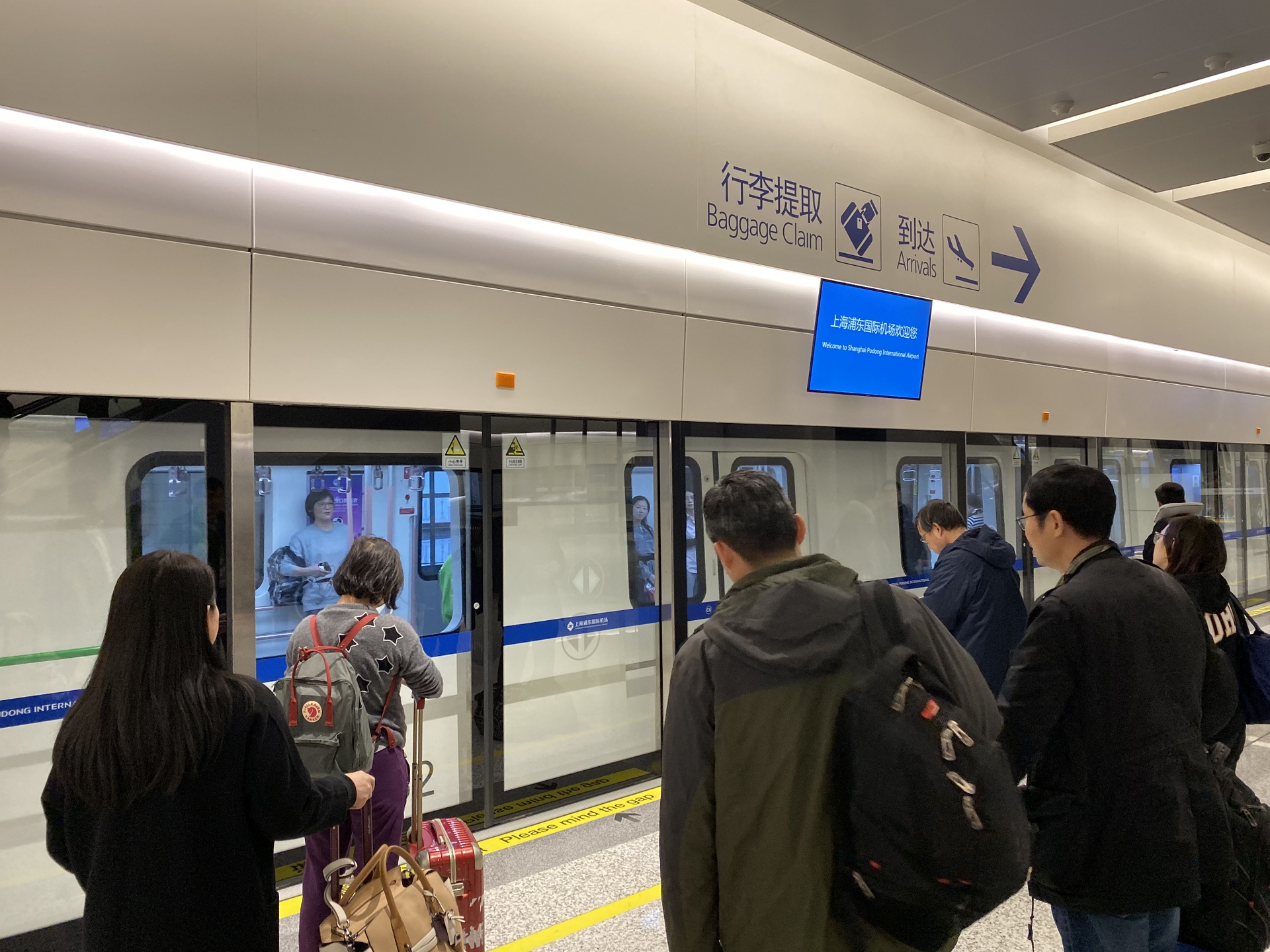

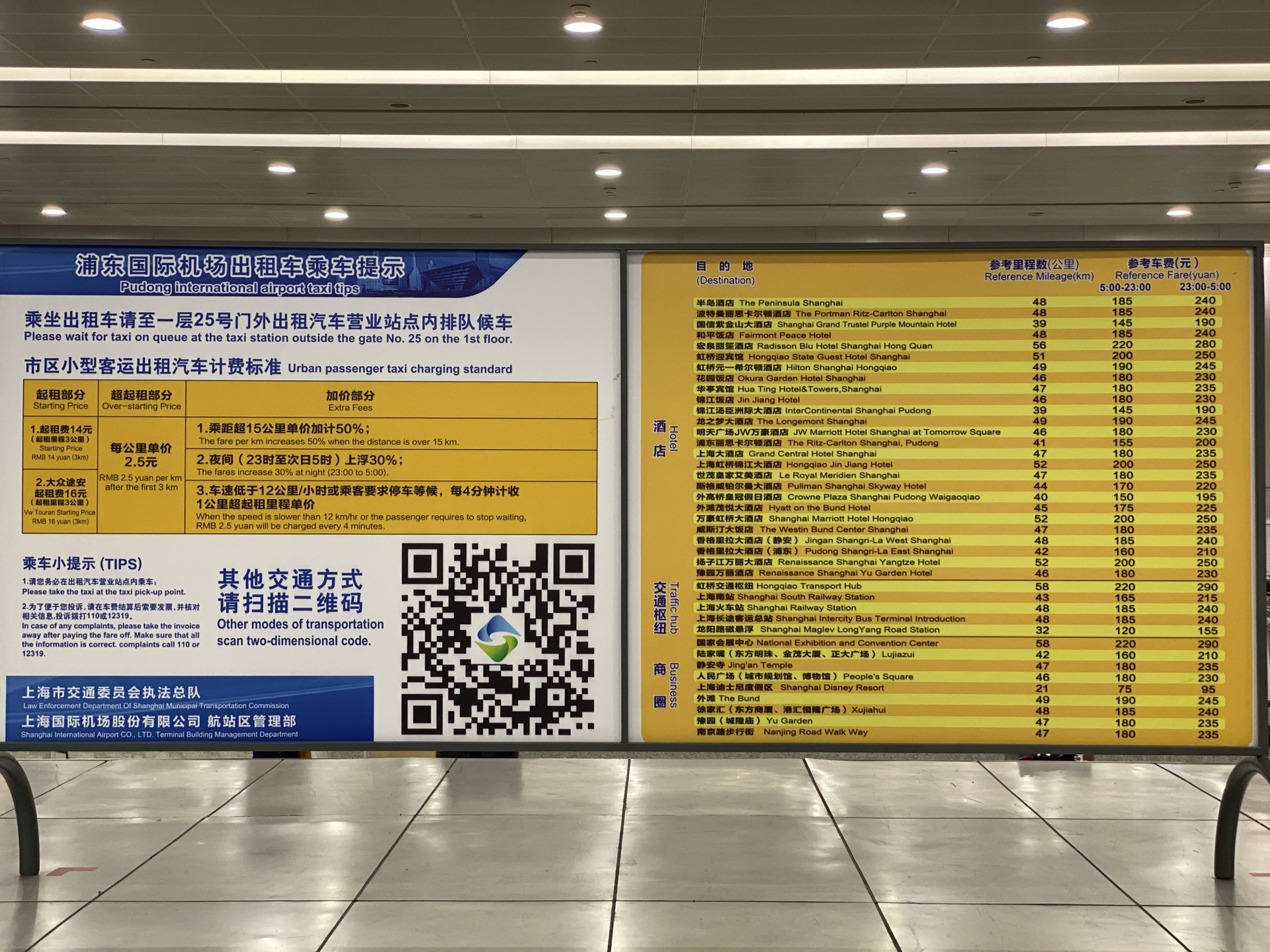

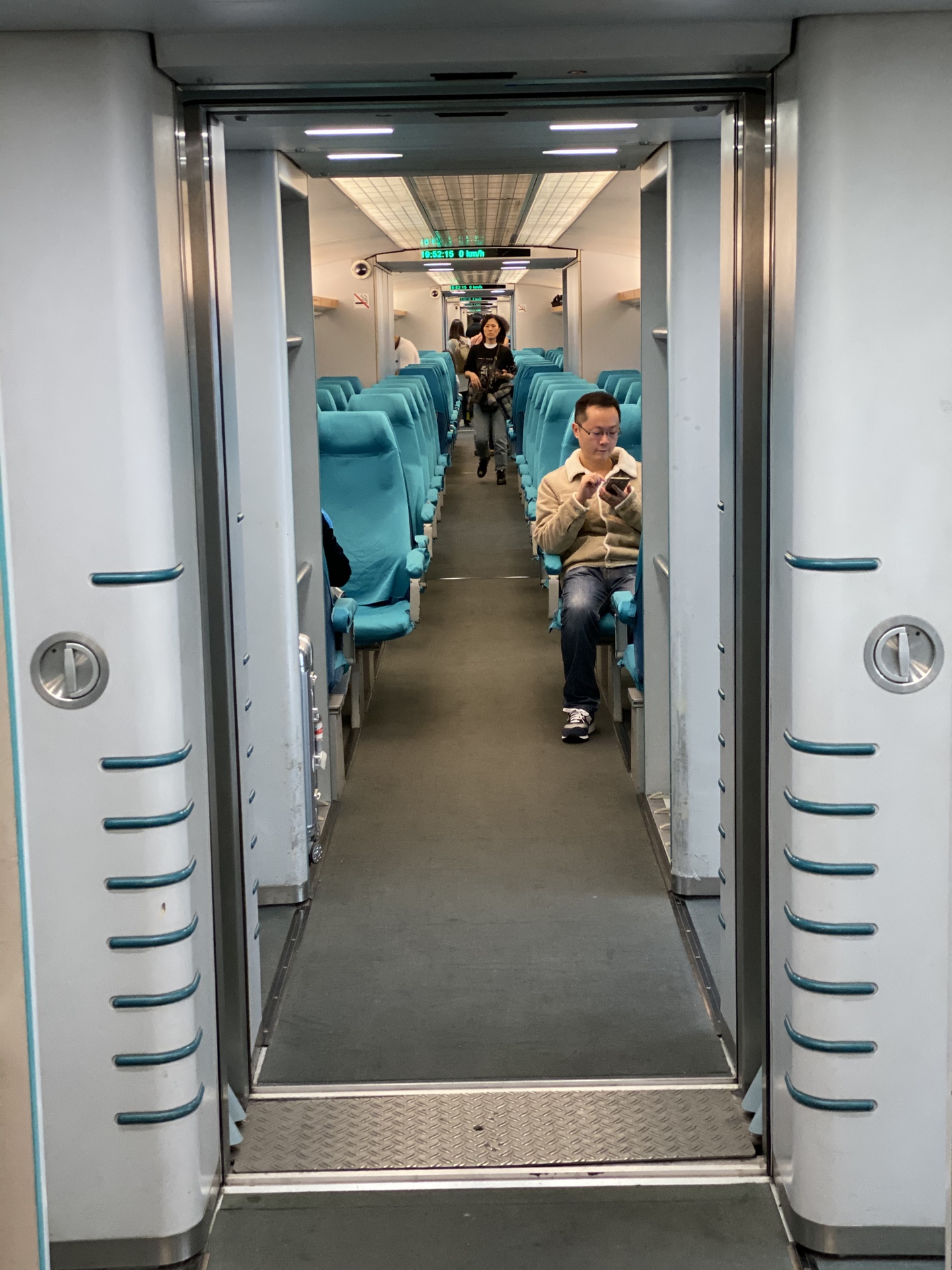
Apple Maps showed that the quickest way to central Shanghai was simply a taxi ($30 for a 45-minute drive despite the evening rush hour; note prices posted above baggage carousel), but I wanted to try the maglev (a fairly long walk from Terminal 2). If you’re on a budget, just take the Metro anywhere in the city straight from the airport for less than $1. That adds about 15 minutes compared to the maglev.

The return journey was equally smooth. My hotel was not right at a Metro station so I just jumped in a taxi for a 40-minute Sunday morning ride. Again arriving exactly two hours before the flight, I went from curb to bag check to passport control to the completion of security in about 10 minutes. China is a bit like Turkey in that passengers who can afford air travel are treated by the airport staff, even those involved with security, with a certain amount of deference and respect. As with the arrival, I did not see anyone carrying a gun. WiFi is fast, but the Great Firewall won’t let you reach Google, Facebook, or Wikipedia so you may end up sticking with roaming LTE (there does not seem to be any restriction on what can be accessed when roaming from a foreign country).
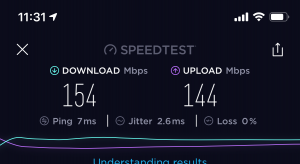
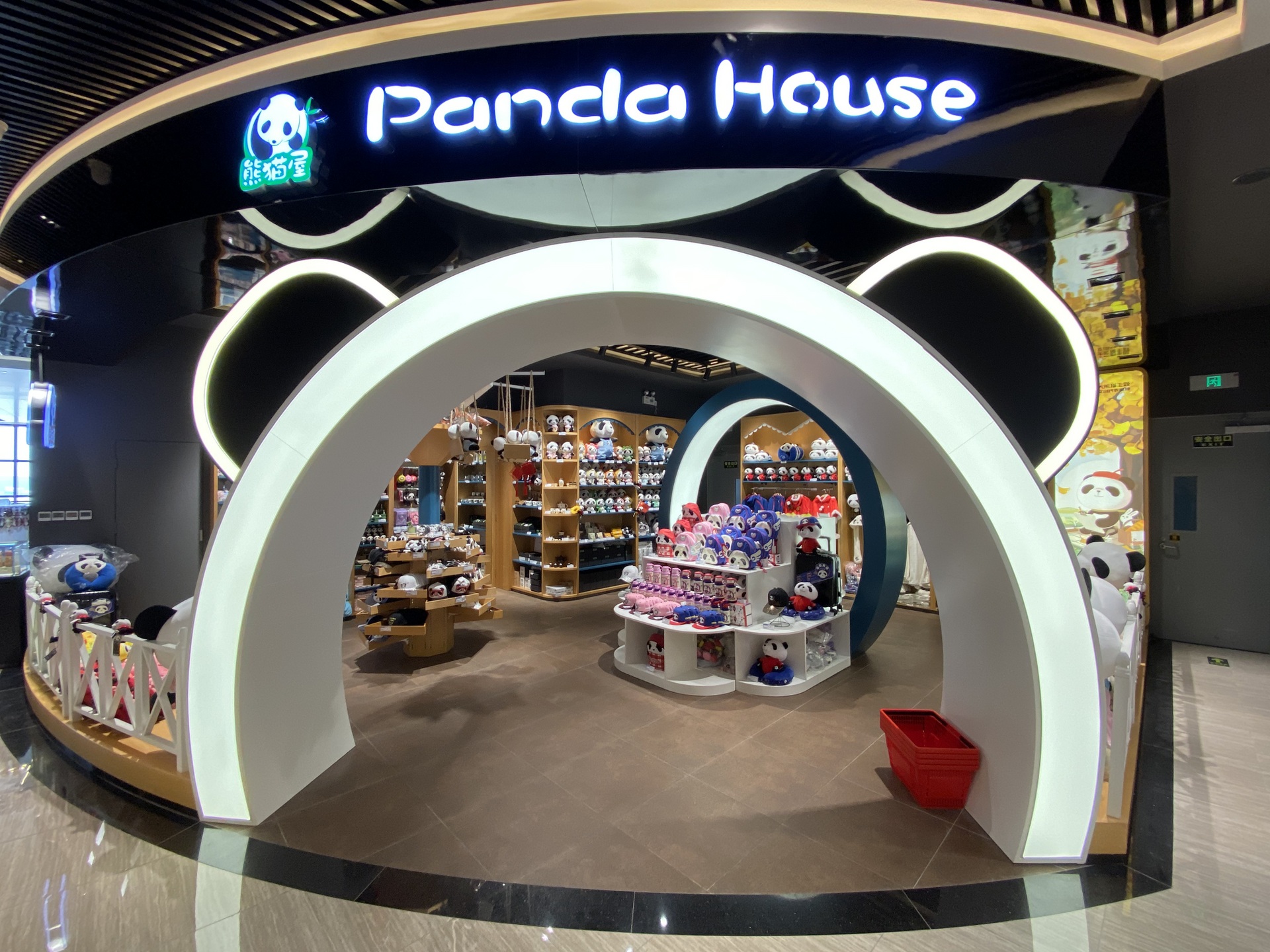
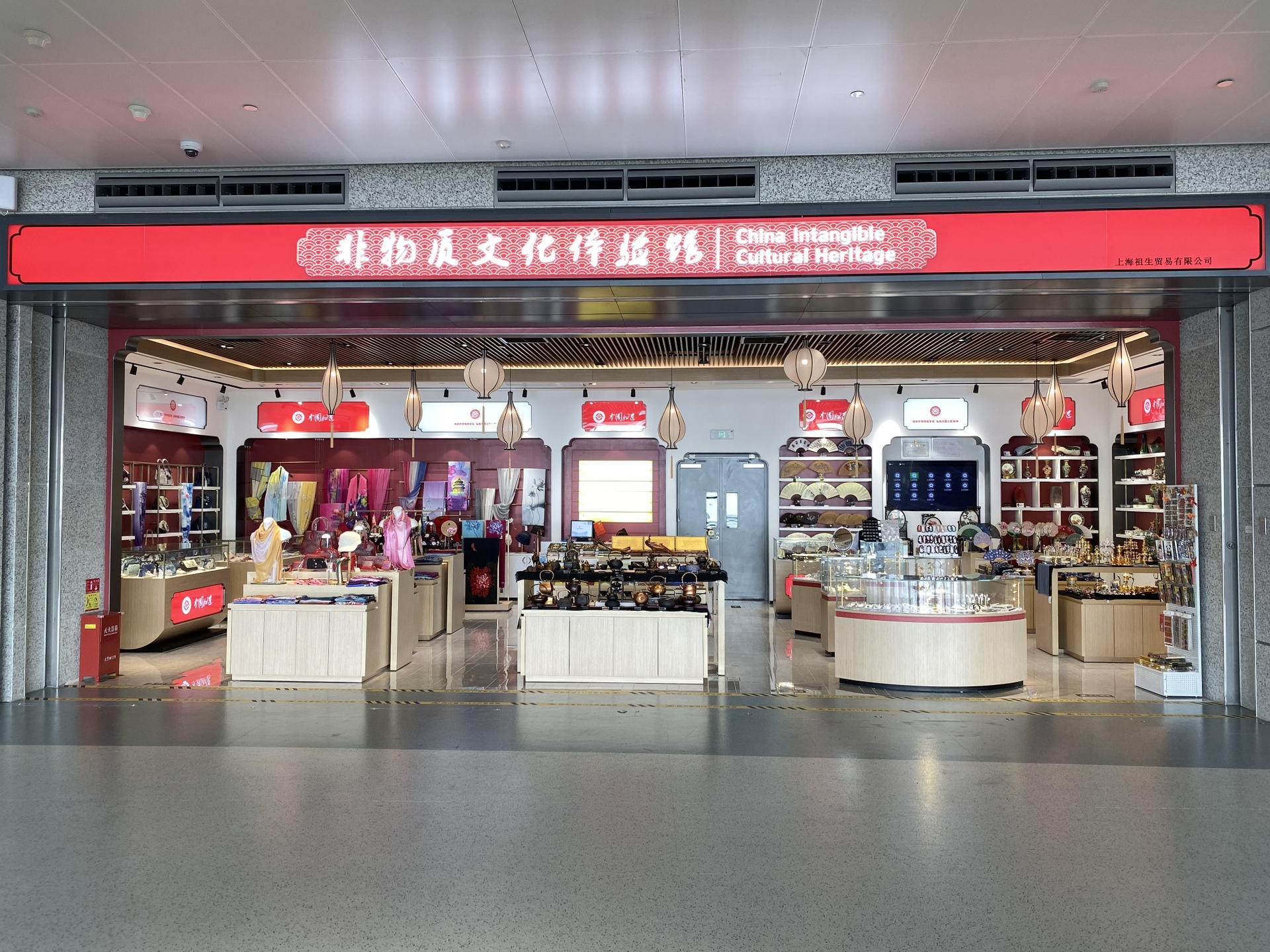
If you’re going to the G gates, accessible via train, keep in mind that there is more variety in shopping and food in the main D section of Terminal 2, i.e., before you get on the in-airport train. Most of the souvenirs that you’d want to buy, including fine silks and hand-made fans, are available at the airport and at roughly the same price as at a nice shop in the city.
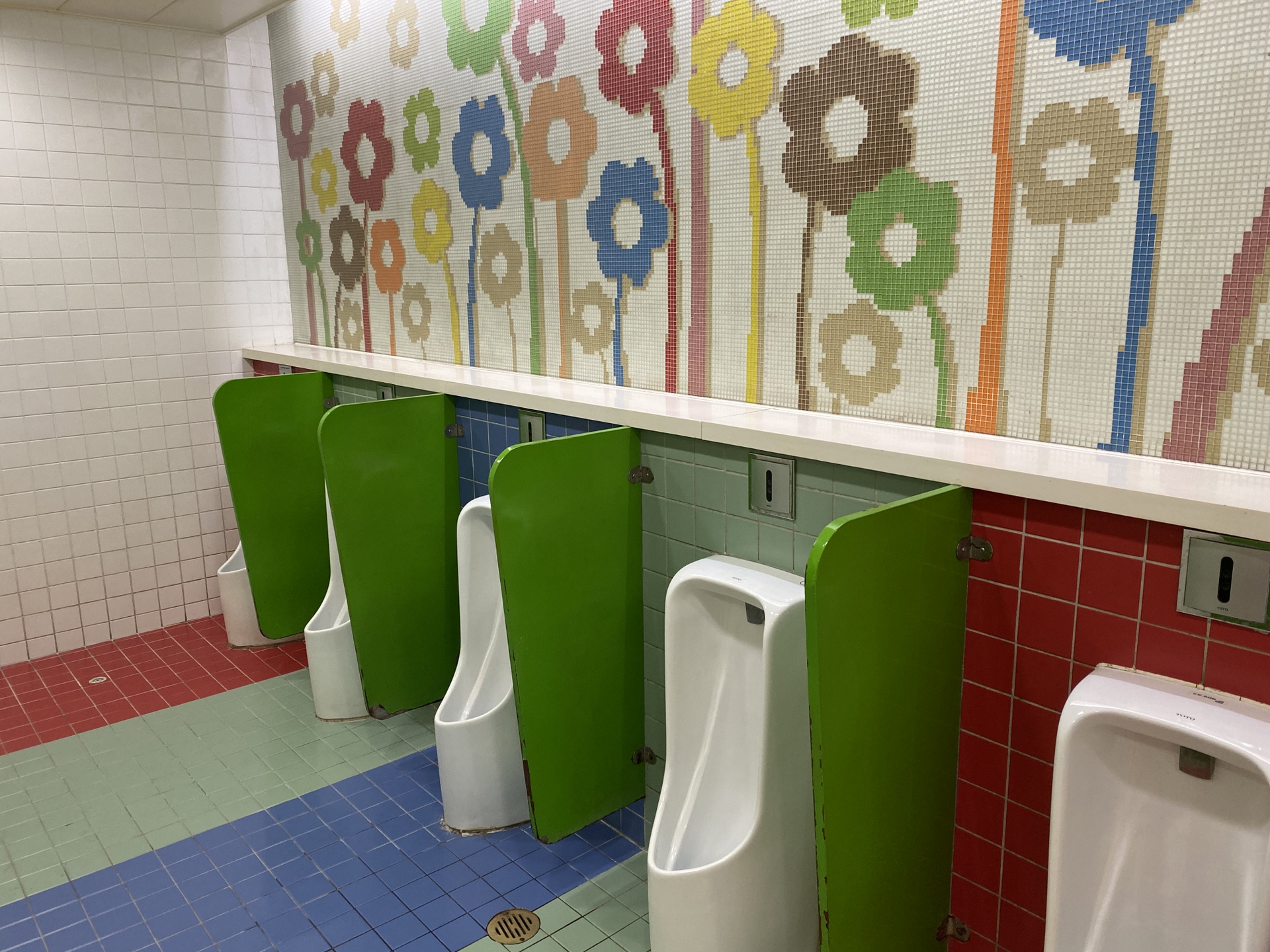
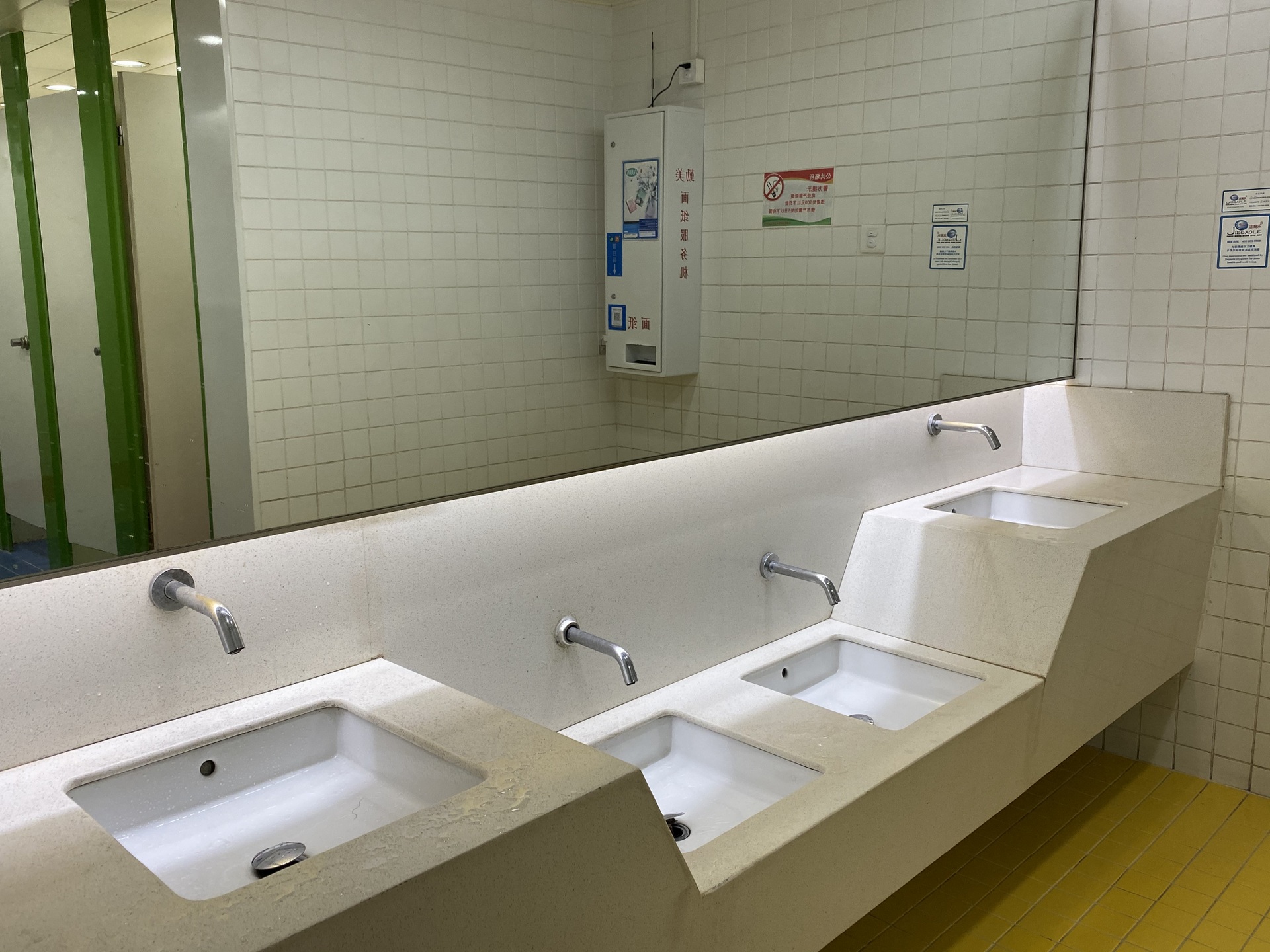
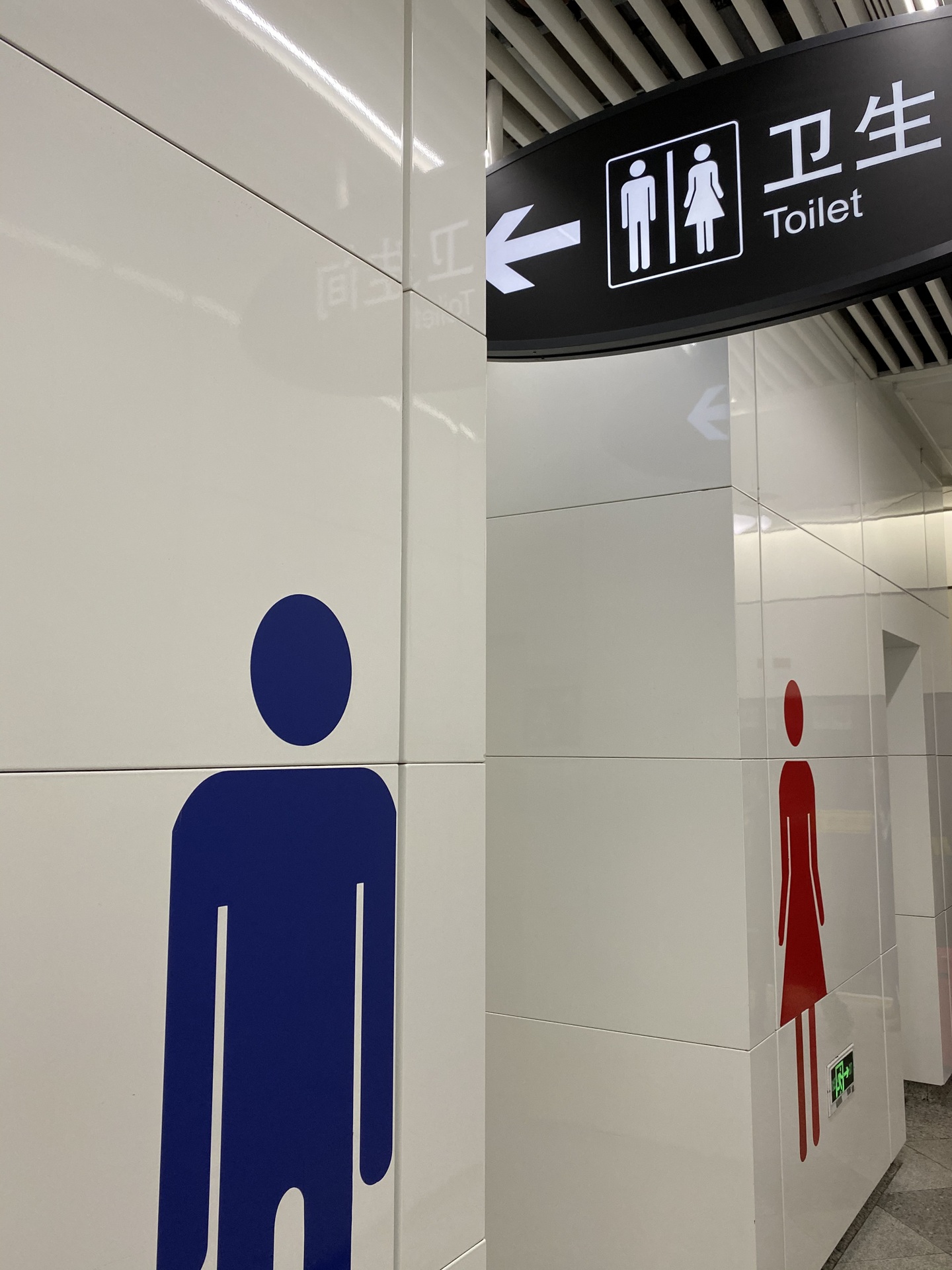
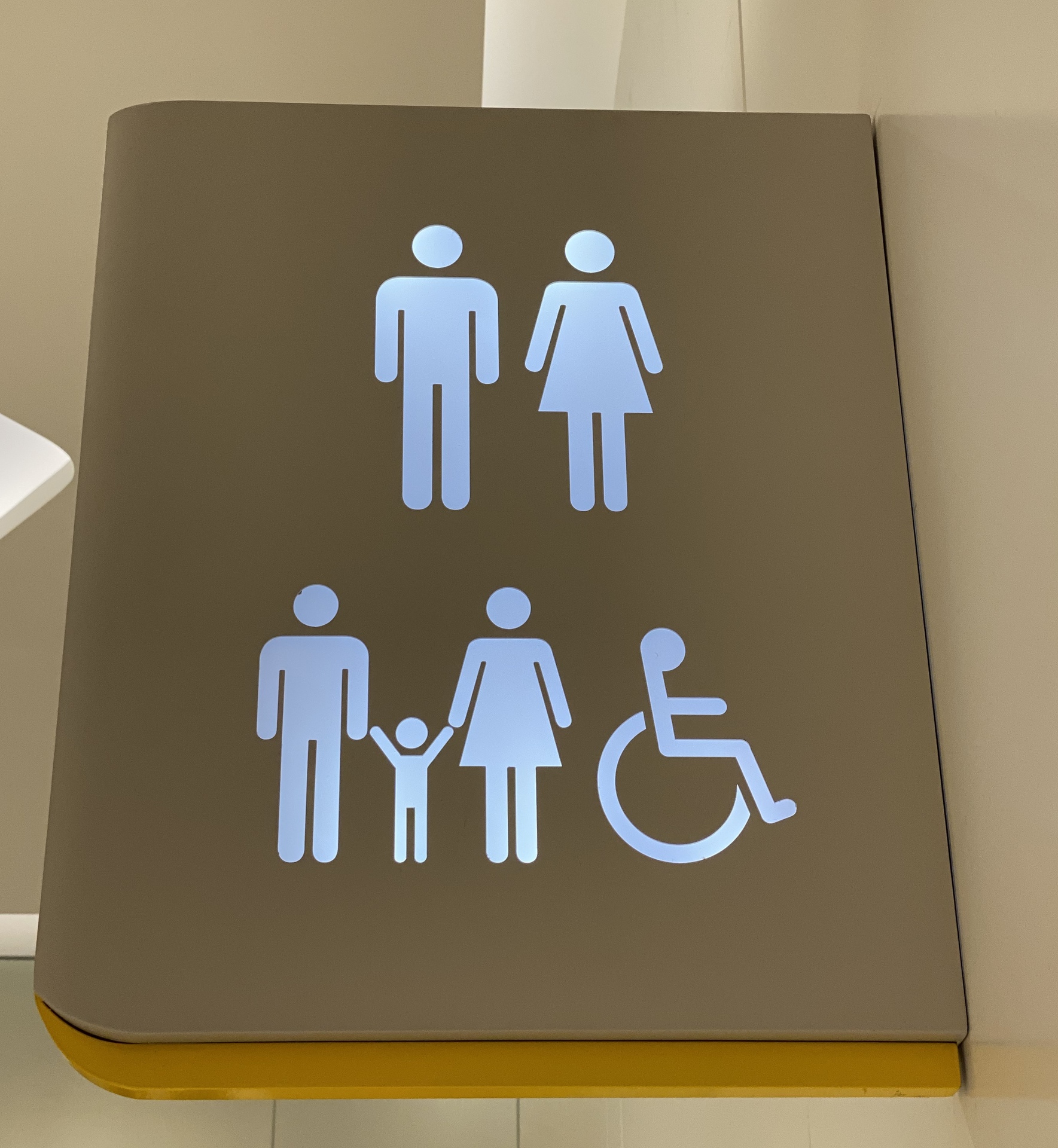
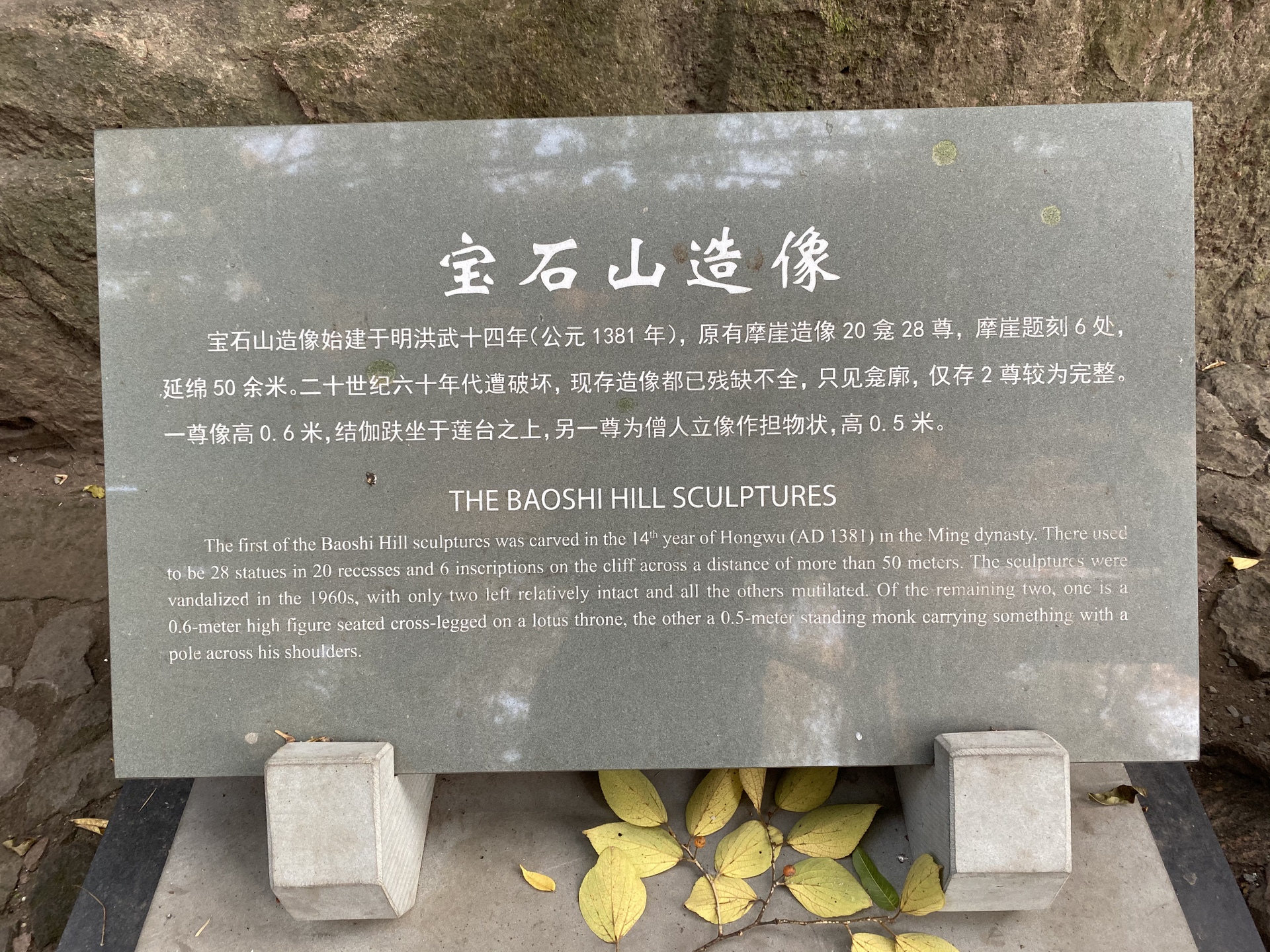
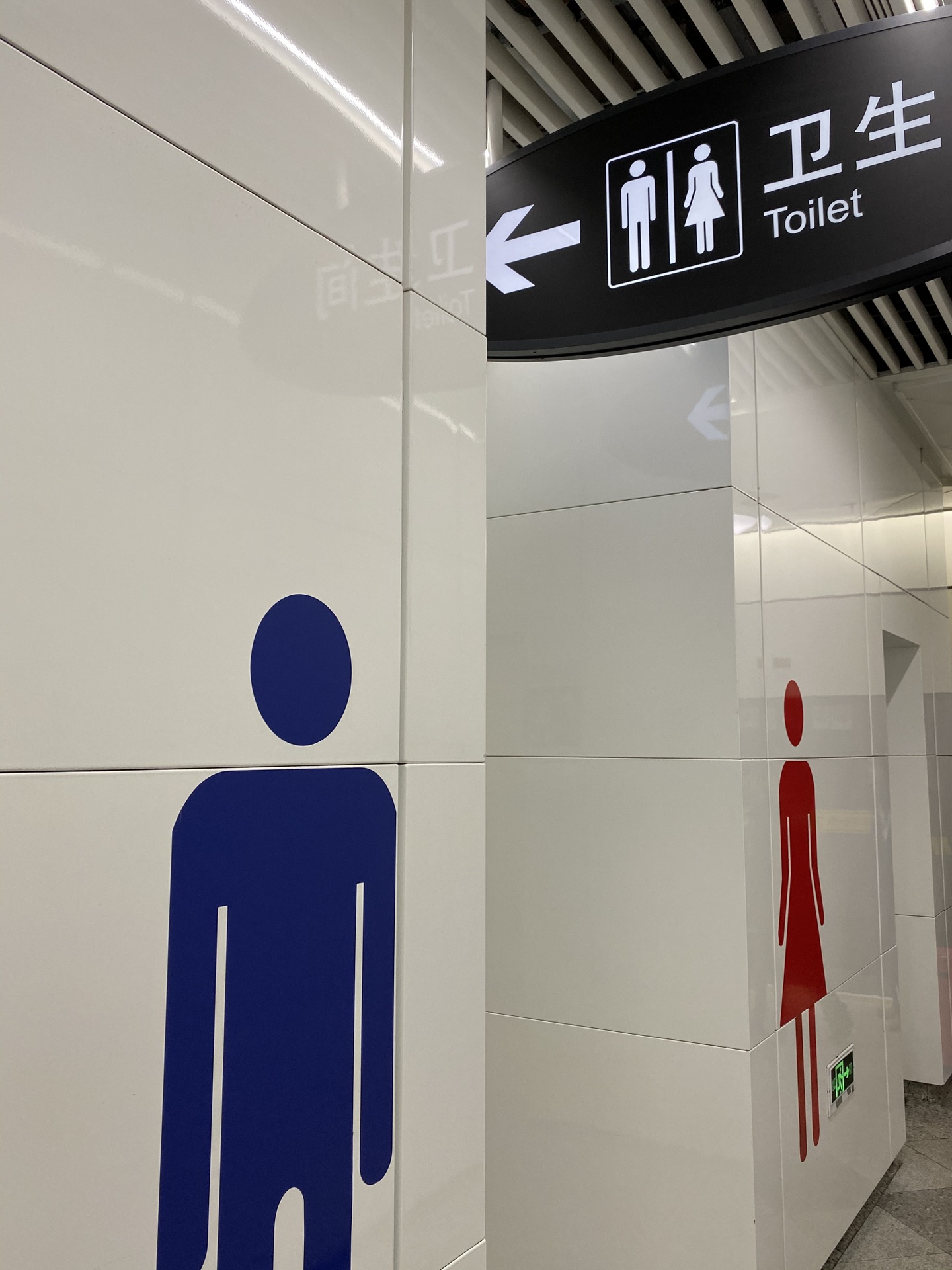
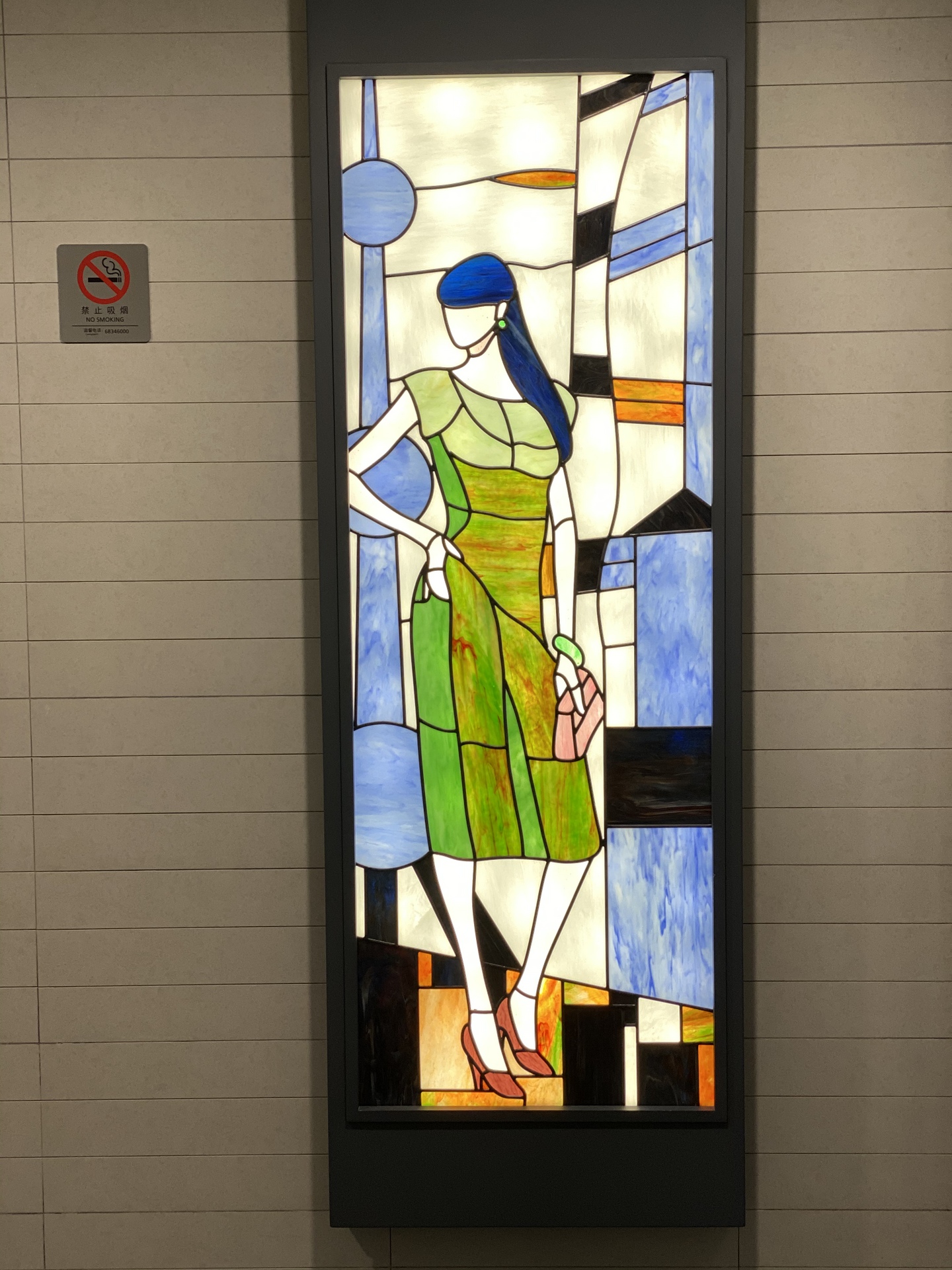
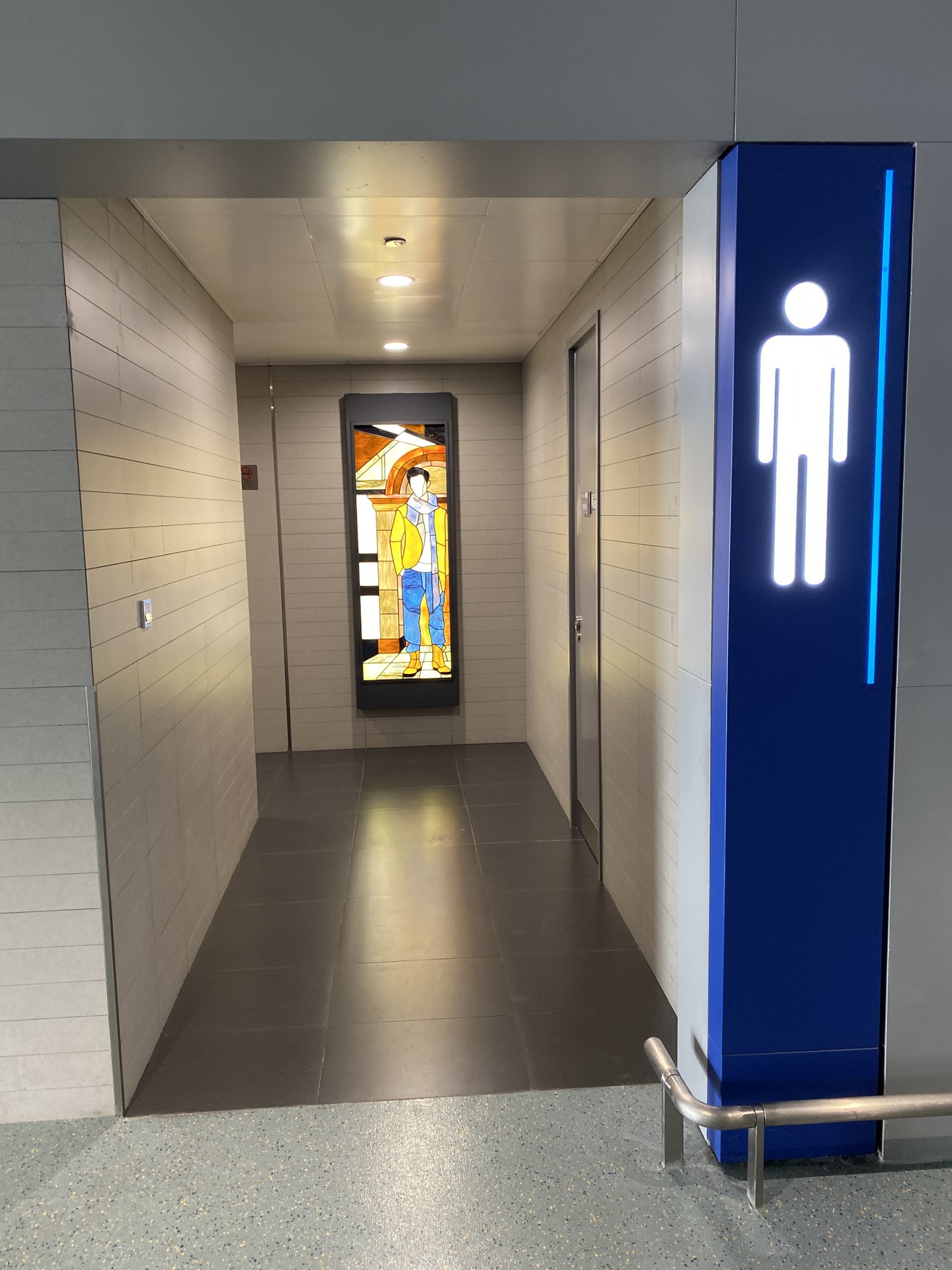
Some items to note from the photos below: “Taiwan” is classified as something other than an “International” departure; the bathroom signage is pretty clear on what a “man”, “woman”, and “family” might look like. There are no “all-gender” restrooms. Starbucks and Burger King are available. See if you can find the special lounge for PHP programmers:
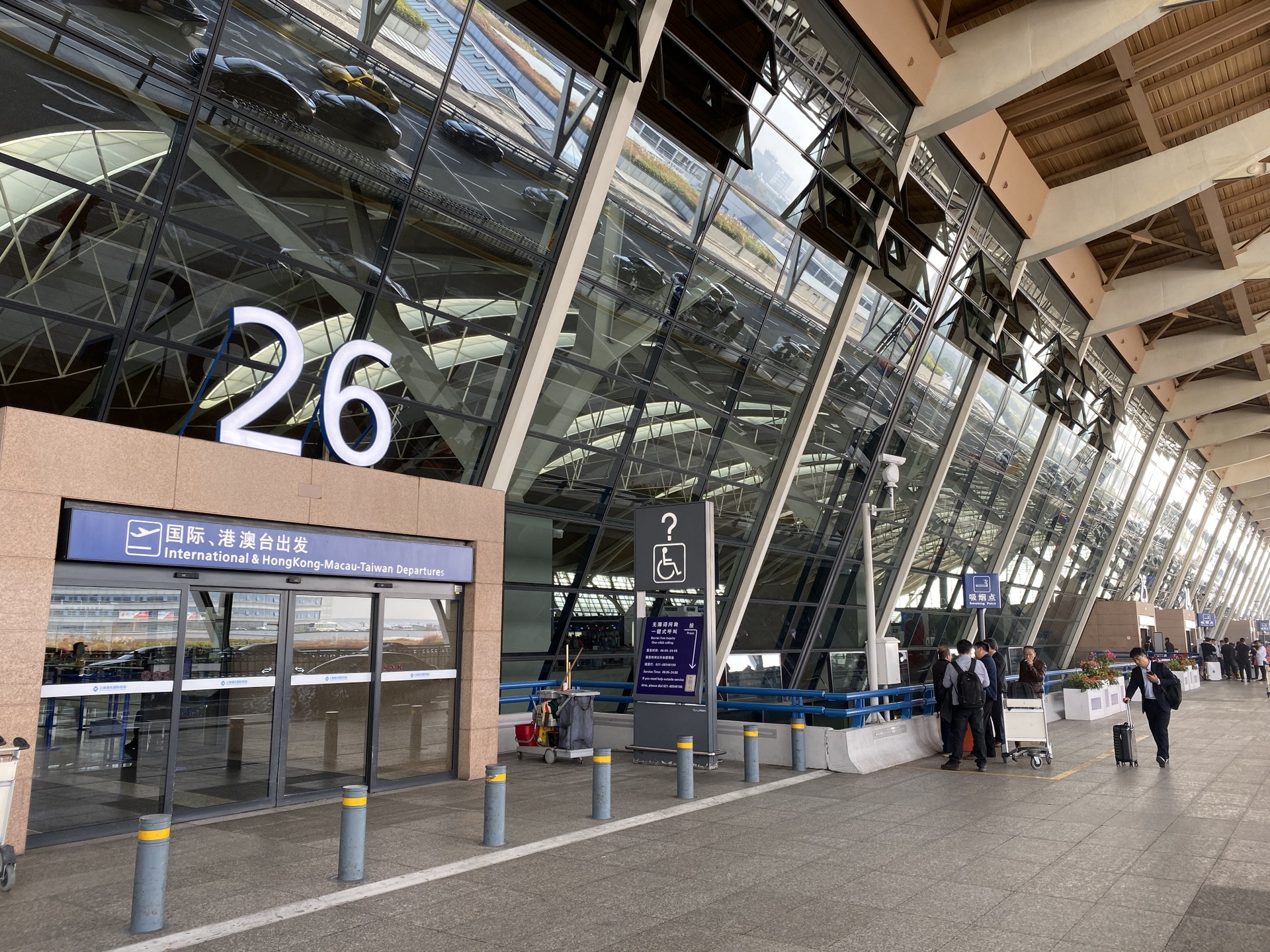
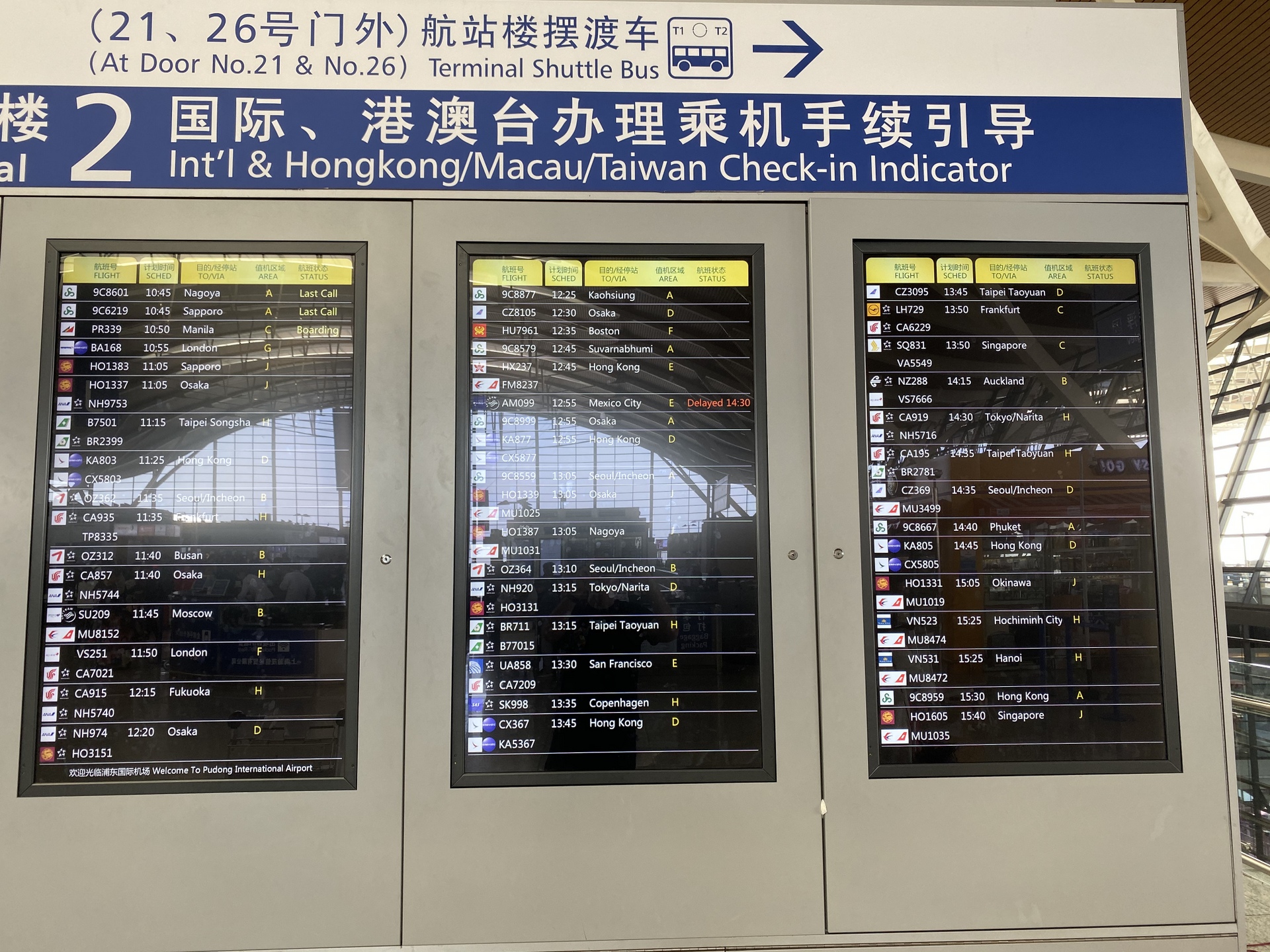


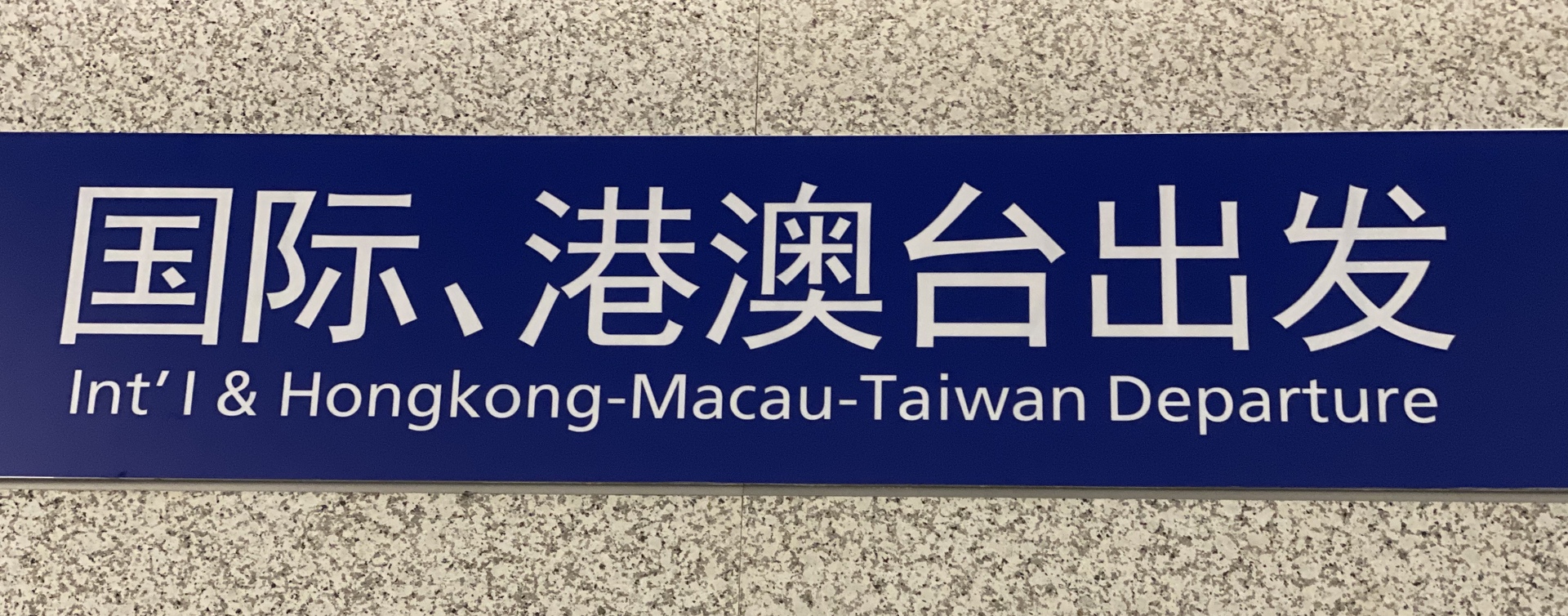


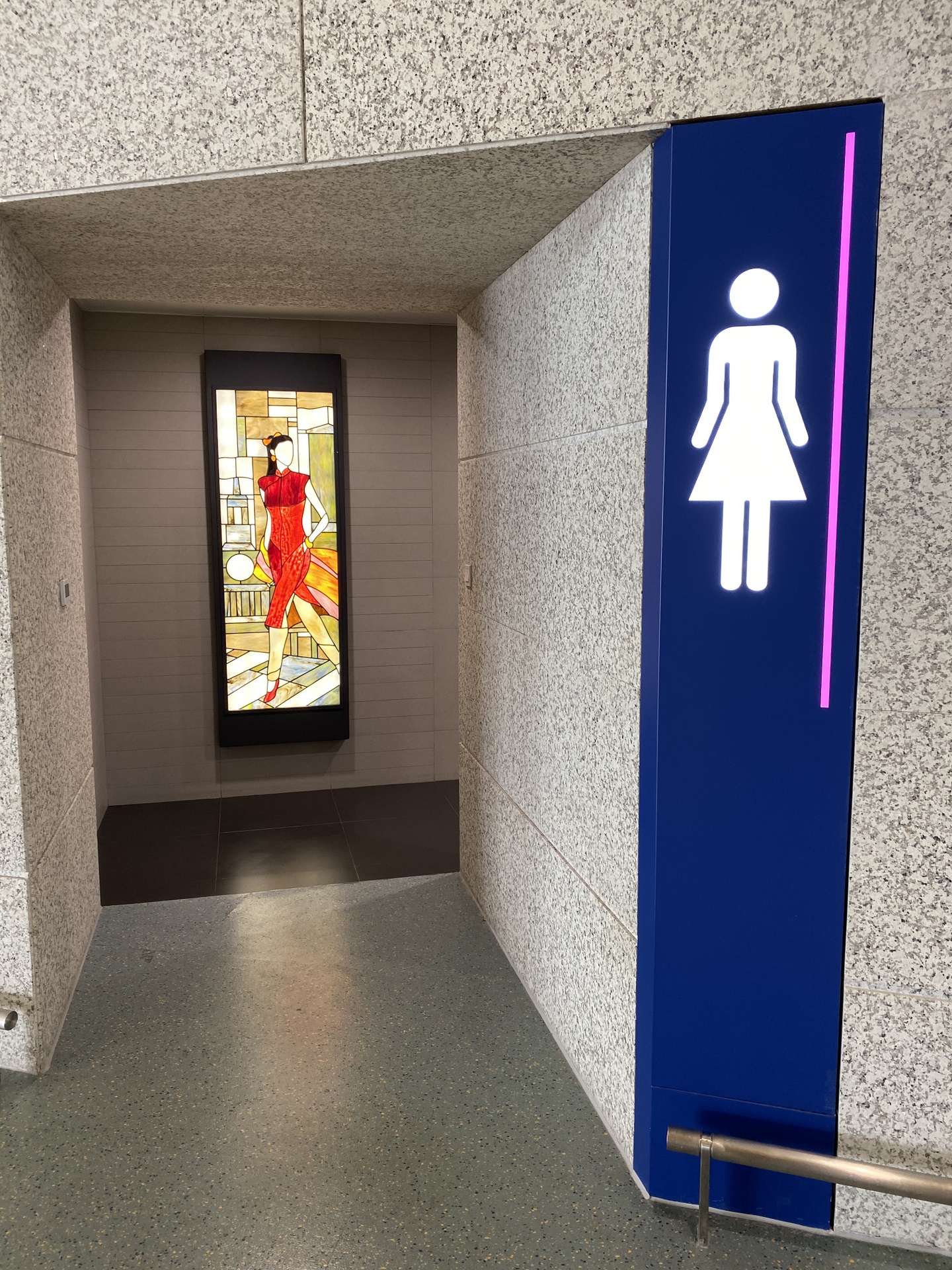
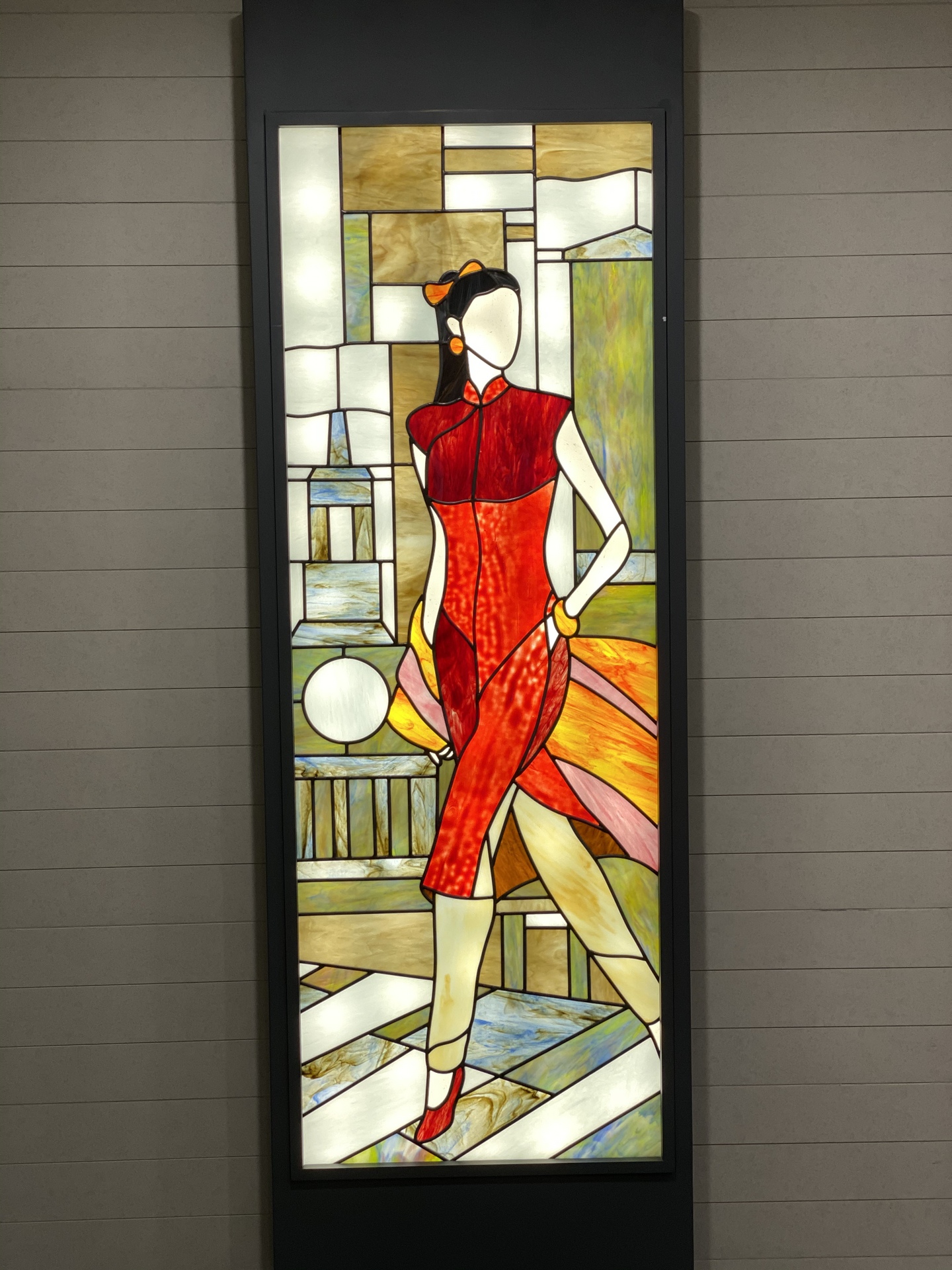
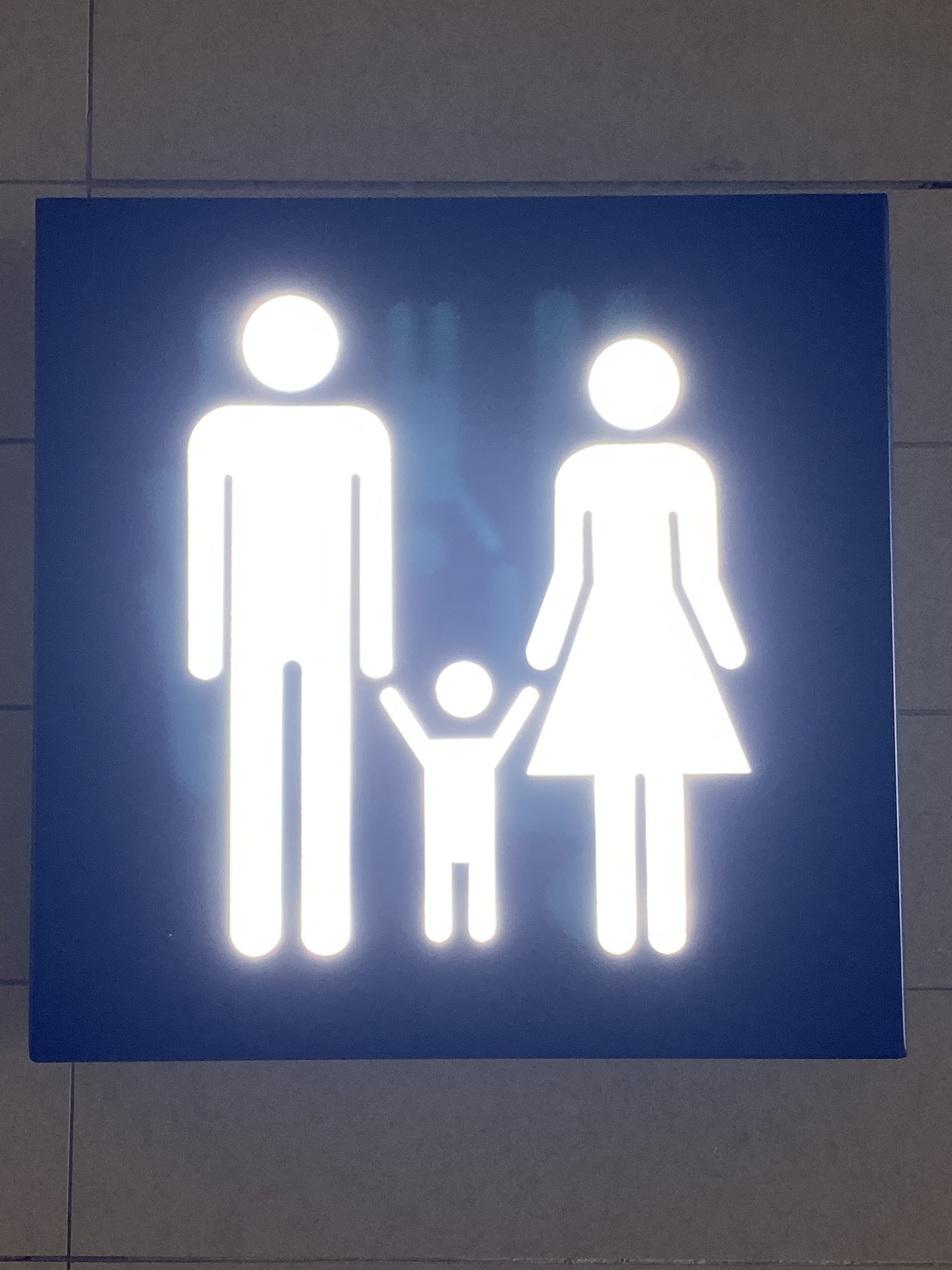
The flight back was just as good, but smoother and a bit longer. Again I had three seats to myself. The route stuck closer to the north coast of Alaska and took me back to Gjoa Haven and the heart of the Northwest Passage.
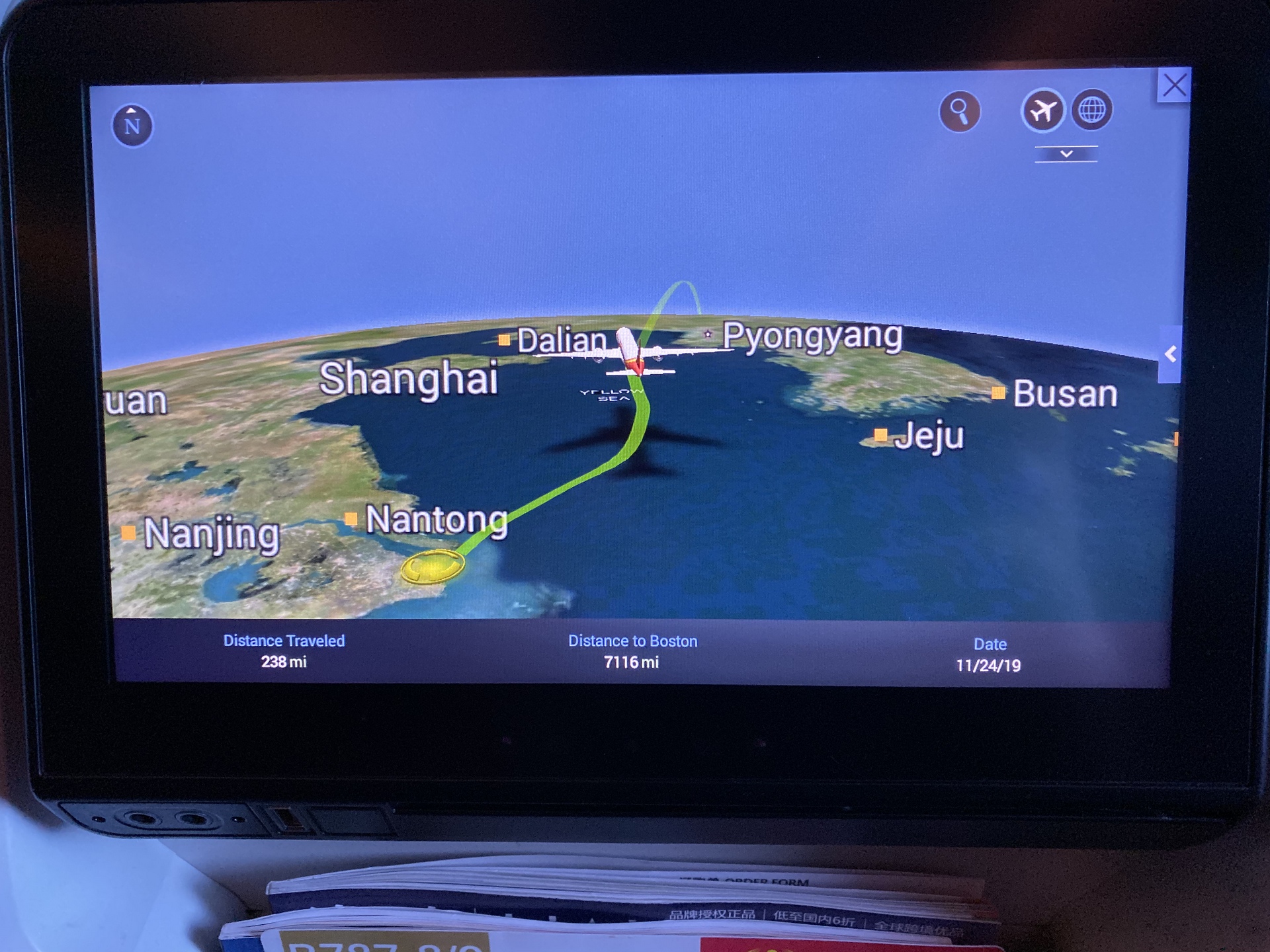
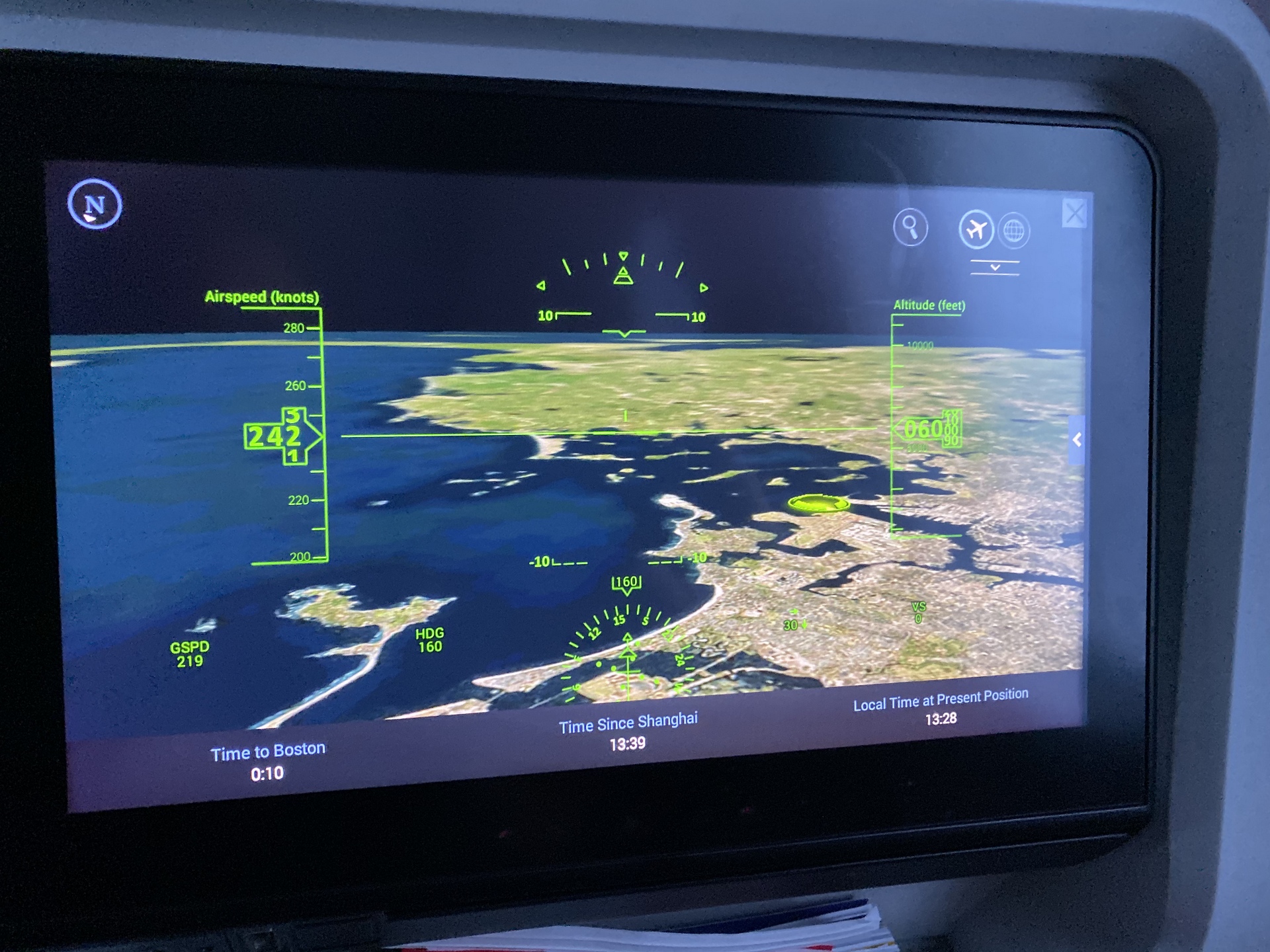
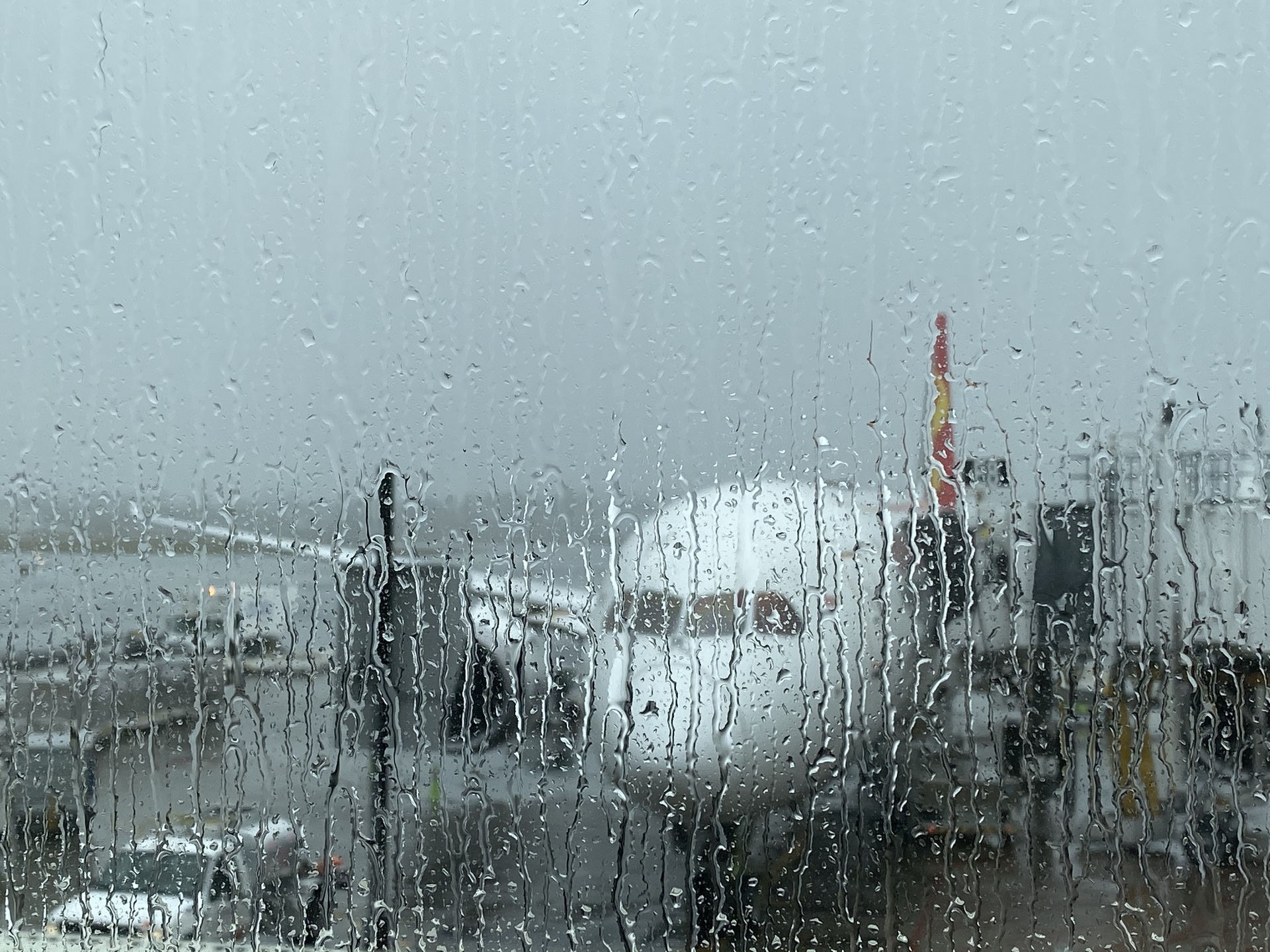
Since it had been around 70 degrees and dry every day in China I hadn’t bothered to check the weather for Boston. It turned out to be low IFR with a heavy rain cell right over Logan Airport during our scheduled arrival time. We were vectored around a bit and then, contrary to Malcolm Gladwell’s brilliant theories, the Hainan crew did a perfect smooth landing. I checked the METAR:
KBOS 241850Z 02025G37KT 3/4SM R04R/2000V5500FT +RA BR BKN009 OVC017 08/06 A2911 RMK AO2 PK WND 01037/1847 TWR VIS 1 1/2 P0018
That’s wind from the northeast (020) at 25 knots gusting 37 with 3/4 statute miles of visibility (everything else in aviation is generally nautical miles). Compare to 1/2 miles of visibility as the minimum for the standard instrument approach to Runway 4R at Boston. Runway visual range (“RVR”) was as low as 2000′, variable up to 5500′. Compare to 1200′ RVR as the minimum for a CAT II ILS 4R at Logan. There was heavy rain and a broken ceiling of clouds at 900′ above the surface (compare to 200′ for the minimum on an ordinary ILS approach to 4R). Temperature 8C, dewpoint 6C.
For the non-Global Entry masses, the immigration lines were epic. Back in the Land of Freedom (TM), there were close to 100 government agents carrying guns in the immigration and customs area. The sluggishness of clearing people through immigration meant that baggage piled up on the carousel (passengers not having emerged in time to claim it). I saw more obese people in the 10 minutes after landing than during 10 days in China.
The good news for U.S. airlines is that it would be illegal for Hainan to operate U.S. domestic routes! Certainly this would be a preferred choice for an American consumer.
(Note that if you take Hainan to Shanghai and then need to connect to a flight from the second airport on the other side of the city need to connect across airports in Shanghai, there is a direct Metro line (2) that does this for $1. This should never be necessary since both airports are international and serve most destinations, but it would not be inconvenient or expensive.)
Full post, including comments