While driving back from New York City this afternoon, I briefly listened to AOC and fellow Democrats question one of Donald Trump’s former lawyers. I learned that Trump was a successful criminal mastermind who had escaped attention from the authorities and prosecutors for decades. Then he decided that the best way to keep a low profile and avoid close scrutiny of his misdeeds would be to run for and become President.
A specific part that I remember concerned the valuation of a Trump golf course. AOC noted that the management valued the course different for investment purposes than for property tax. Yet this would apparently be true for hundreds or thousands of golf courses in the U.S. (see this article for how golf clubs may be taxed based on a low valuation due partly to a belief that it is beneficial to have some open/green space: “In Pennsylvania, for instance a golf facility can apply for inclusion in the ‘Clean and Green’ Act 515 program, which preserves open space in return for a reduction in taxes.”).
Representative reaction from my virtuous Facebook friends:
Well, I was wrong about Trump. I substantially underestimated his perfidious criminal conduct, if half of what Cohen says is true, and I suspect most of it is.
Readers: Did you watch the hearing? Learn anything new?
[Separately, if you want to see what a country looks like when it can’t support any additional people with its infrastructure, try driving Boston to New York and back during what used to be the mid-day off peak. The forecast on Monday morning was for 47-knot wind gusts at Teterboro, of which 37 knots would have been a crosswind component. It would have been 1.5 hours of moderate-to-severe turbulence to get there in the Cirrus. So it was time for the Honda Odyssey to show off its immunity to crosswinds (fairly impressive!).]
“Michael Cohen: I probably threatened people for Trump hundreds of times” (Vox): over a 10-year period, Trump needed this one lawyer to threaten people 500 times. I.e., every week the two had a meeting and Trump gave him the name of a new person to threaten. (Cohen was thus threatening more people than the book Bad Blood describes the entire firm of Boies Schiller Flexner threatening on behalf of Elizabeth Holmes and Theranos).
The Preface, typically used by authors and publishers to motivate readers to invest time in the rest of the book, seems to suggest starting by cutting back on the number of adults in the space:
Here are just a few of the testimonials I receive on a daily basis from former clients… “Your course taught me to see what I really need and what I don’t. So I got a divorce. Now I feel much happier.”
After that, the high-level sequence is
Discard
Organize (find a place for each thing that managed to justify its continued existence)
With the Discard phase, use the following sequence:
clothes
books
papers
misc. items (komono)
sentimental items
Komono may be tidied in the following subsequence:
CDs, DVDs(!)
Skincare products
Make-up (nearly all of her clients are women)
Accessories
Valuables
Electrical equipment and appliances
Household equipment (stationery, sewing)
A key to the discard phase is to put everything on the floor (this method is for people with young backs!). Kondo says that only by holding the thing can one know whether it sparks joy. This may seem absurd for books, but Kondo insists.
In the organization phase, one key is to keep similar items together so that it is easy to put things back. Kondo points out that people are a lot more motivated when they need to use something so it isn’t necessary to make retrieval super easy. Another one of Kondo’s idea is to try to use what she calls “vertical storage” (arranging things like books on a shelf).
One non-obvious idea is to try to cover up or remove extraneous text, e.g., on storage drawers, boxes, bottles of detergent, etc. Her point is that a space, even if wonderfully organized, can be “noisy” with all of the irrelevant text. (Keep the Poison Hotline number handy, though, in case you get those de-labeled bottles mixed up!)
Kondo is dismissive of the value of specialized storage gear and of the very idea of being a “storage expert.” Better to discard a lot of unneeded stuff and then use a few shoeboxes as dividers within larger spaces. So you’d think that The Container Store would try to discourage folks from reading her book. Au contraire! The company is brave enough to confront the tidying expert head-on in “A MESSAGE ON DECLUTTERING & SPARKING JOY Marie Kondo and The Container Store” (from the wife of a co-founder who is now a senior executive):
I was intrigued by the similarities to our own philosophies until I got to the part where I learned that she felt it was a bad idea to shop in stores like ours! To buy organizational products is frivolous. … I finally read the book on a plane to New York this spring. I loved it!
When we opened our store in 1978, we offered multifunctional utilitarian products that were essentially “repurposed”, much like the items Marie Kondo might use. Dairy Crates, Wire Leaf Burners, Barrels, Wooden Boxes, Dishwashing Pans, Restaurant Bus Tubs, Mailboxes, Industrial Parts Bins…all very simple concepts inspiring creative ideas and solutions for our customers.
Today, The Container Store’s offerings are more specific in use, not as esoteric, but the fundamental values of our concept still exist in the product selection. We look for multifunctional items that are versatile enough to last and be repurposed for a lifetime of use. They are beautiful and functional. They enhance our lives and make us better. They help to fulfill our Promise of an Organized Life.
This letter is one of the things that I love about the Internet. It is easy to find multiple perspectives on the same topic. (And, since Trump is not involved on either side of this debate, we need not label one side evil and the other virtuous!)
… the first place to search would be Issaquah, Washington (Costco headquarters), under the cui bono theory.
One of Kondo’s theories is that people who live in untidy environments (i.e., all of us who haven’t been her clients) buy more stuff partly because they don’t realize how much stuff they already have.
She is negative on the idea of stockpiling in Costco-style quantities, pointing out that you’re not running a retail store so it doesn’t matter if you run out.
Kondo never suggests a time period as a way of setting household stock levels. A Costco pallet of paper towels, for example, isn’t a crazy purchase because it may be used up within a month (a friend likes to use an image of an entire roll of paper towels used in a single kitchen clean-up by an au pair to illustrate what happens when people are insulated from pricing, as in health care consumption, for example). On the other hand, in the Amazon Prime age can it make sense to buy a pack of 8 toothbrushes? Or a 16-count Gillette Fusion razor cartridge pack (Dorco might be better!)?
In an American suburban home with basement and garage, why wouldn’t it be reasonable to keep two months of non-perishable consumables somewhere in the house?
Why don’t black lives matter enough for a big banner down the side of the building?
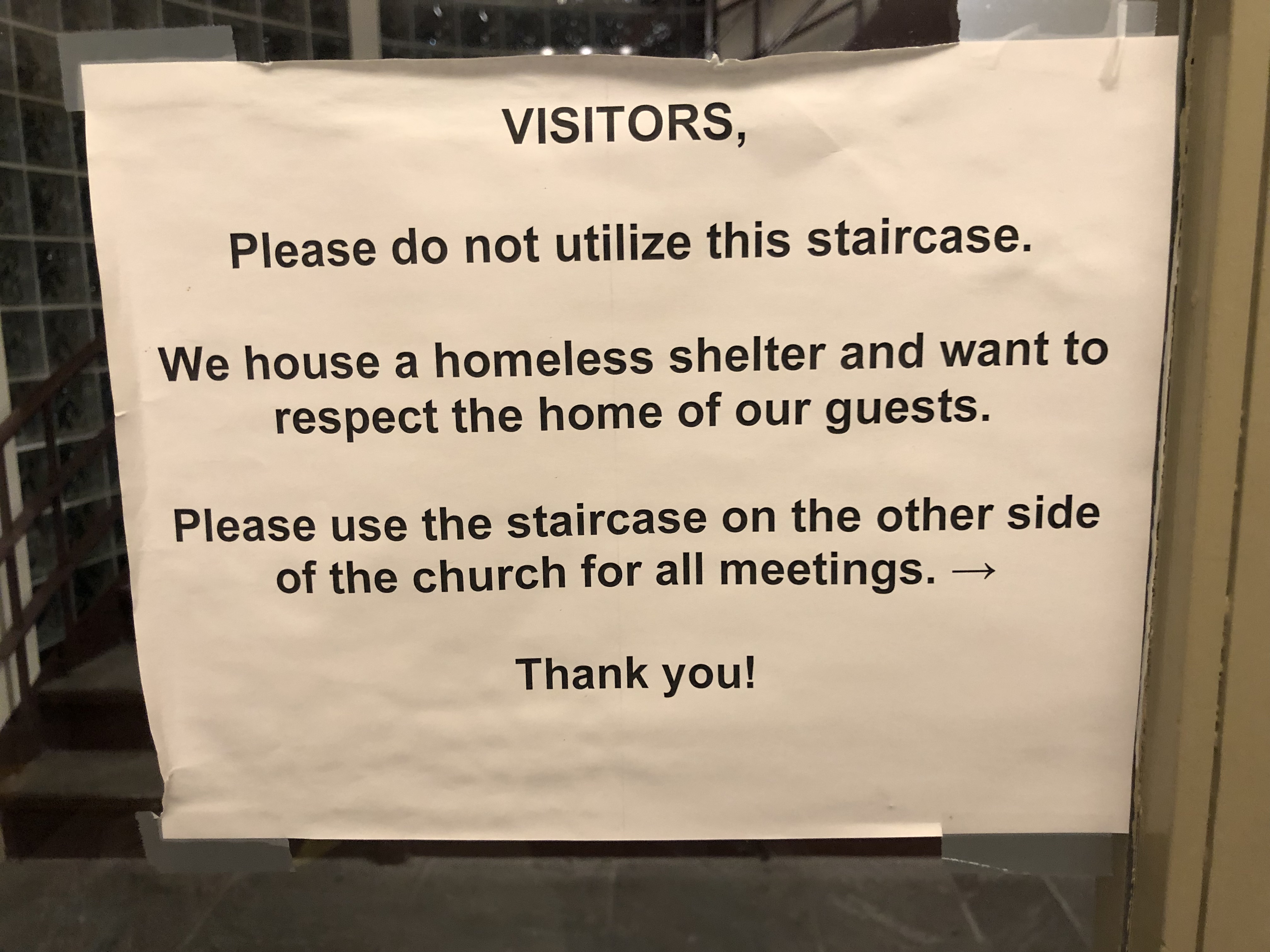
Ever wonder about the difference between “use” and “utilize”? This sign should help:
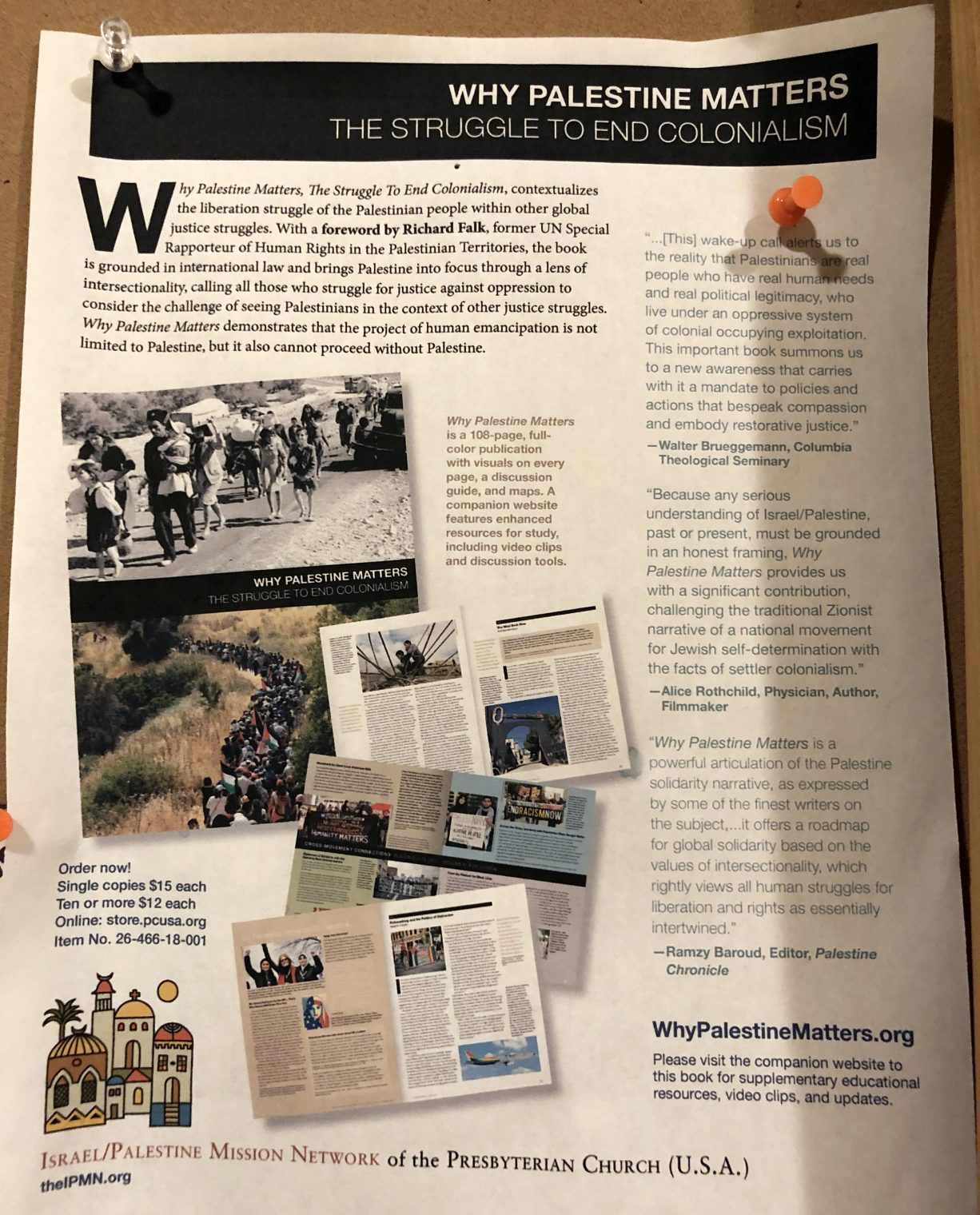
Concerned about starving Venezuelans? It is the “hundreds of thousands of federal workers” whose paychecks are delayed for whom you should worry. Also that “this President [has made] numerous statements disparaging our fellow human beings, fellow people of the faith, and all of them children of God.”
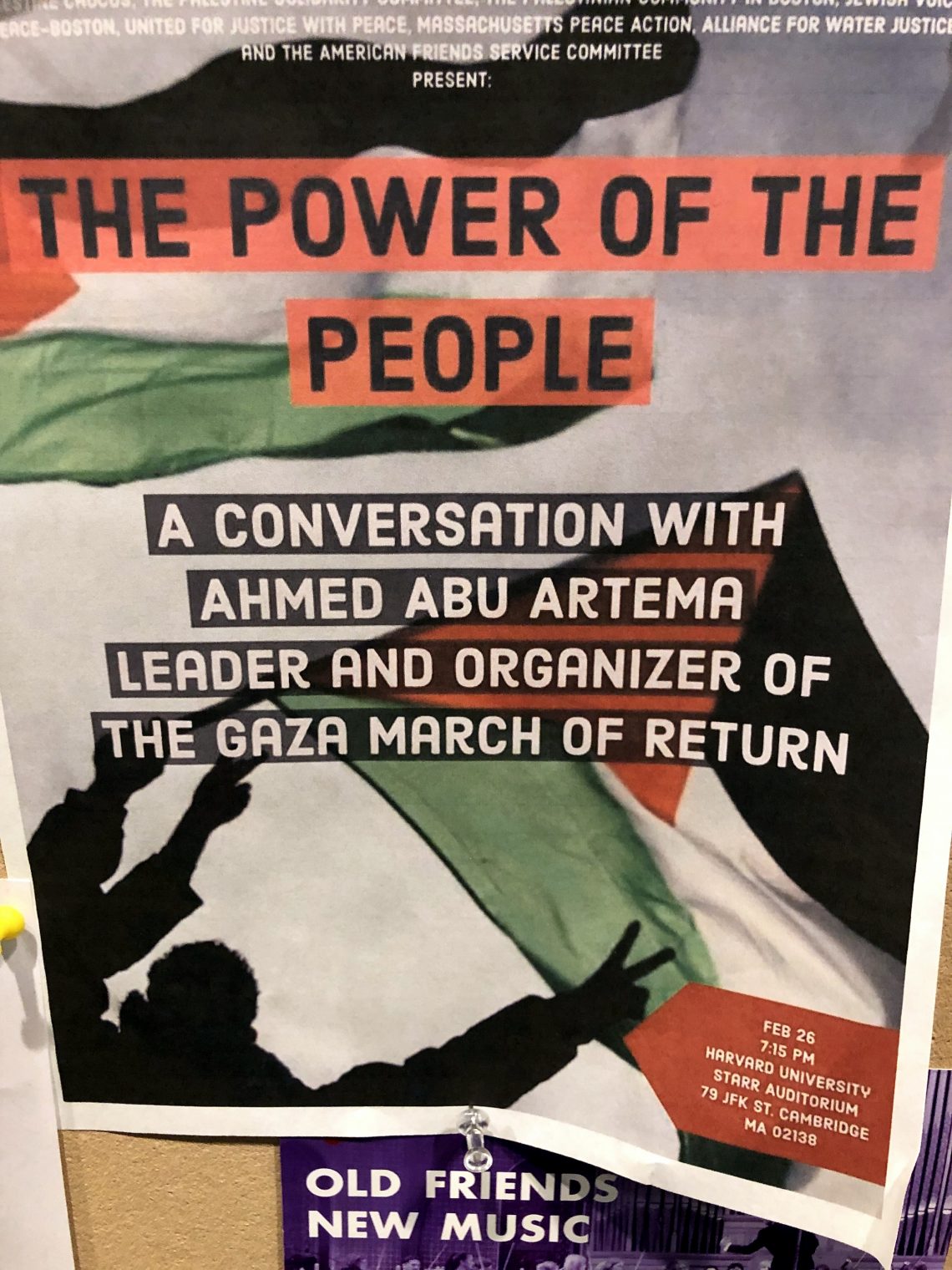
Turns out that the God’s Jewish children living in Israel (perpetrators of “colonialism”) might need to be disparaged…
[Martin Luther himself proposed “First, to set fire to their synagogues or schools … This is to be done in honor of our Lord and of Christendom, so that God might see that we are Christians …Second, I advise that their houses also be razed and destroyed. …” It seems that the majority of Lutherans were supporters of Hitler and National Socialism (not to be confused with the Democratic Socialism espoused by Bernie Sanders and AOC). This church is part of the Evangelical Lutheran Church in America, which periodically makes the news for its anti-Israel positions (example). Maybe they can’t forgive Israel for executing fellow Lutheran Adolf Eichmann?]
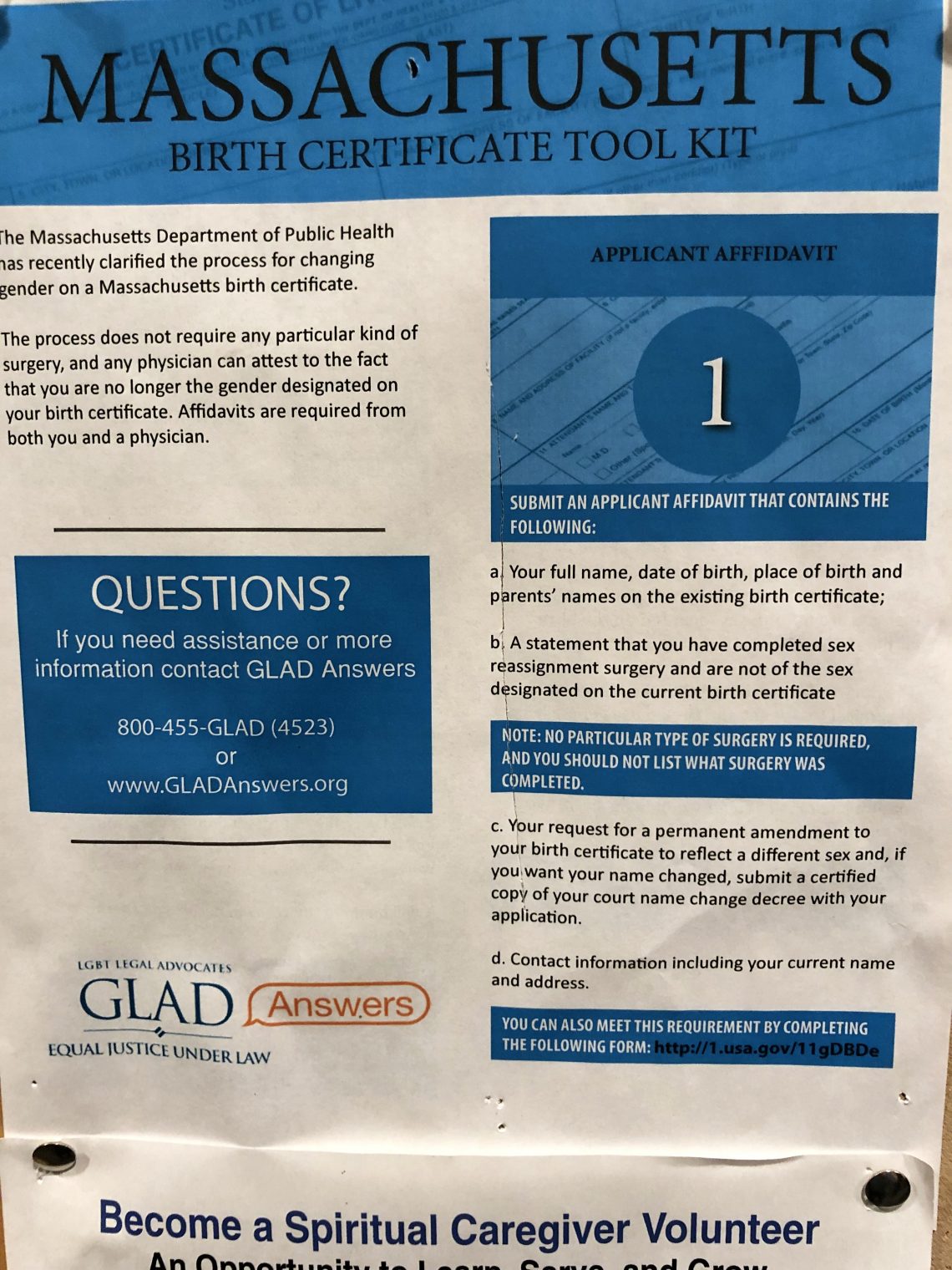
Need help changing your gender so that you can qualify as an LGBTQ (but not “IA”?) minister?
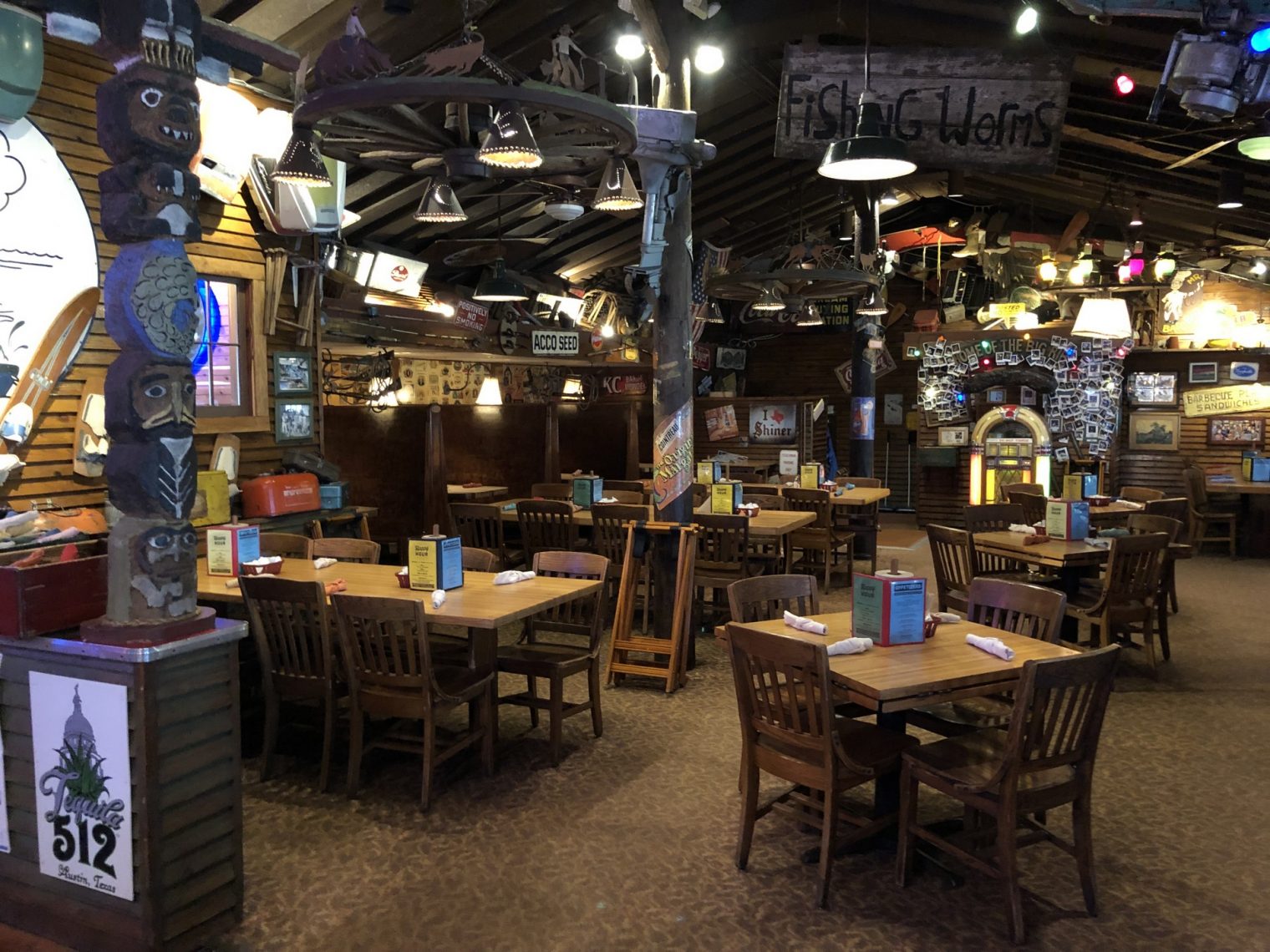
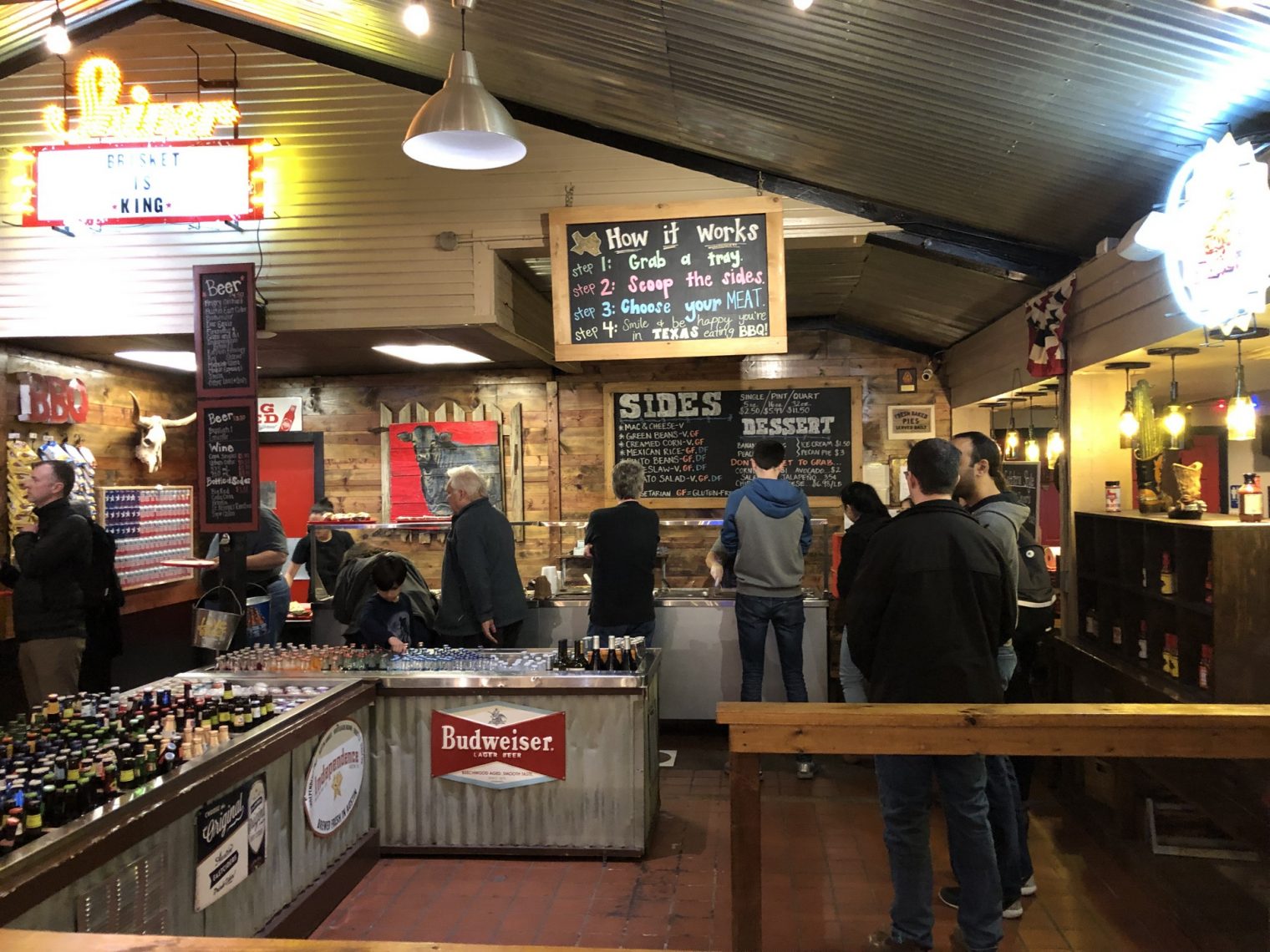
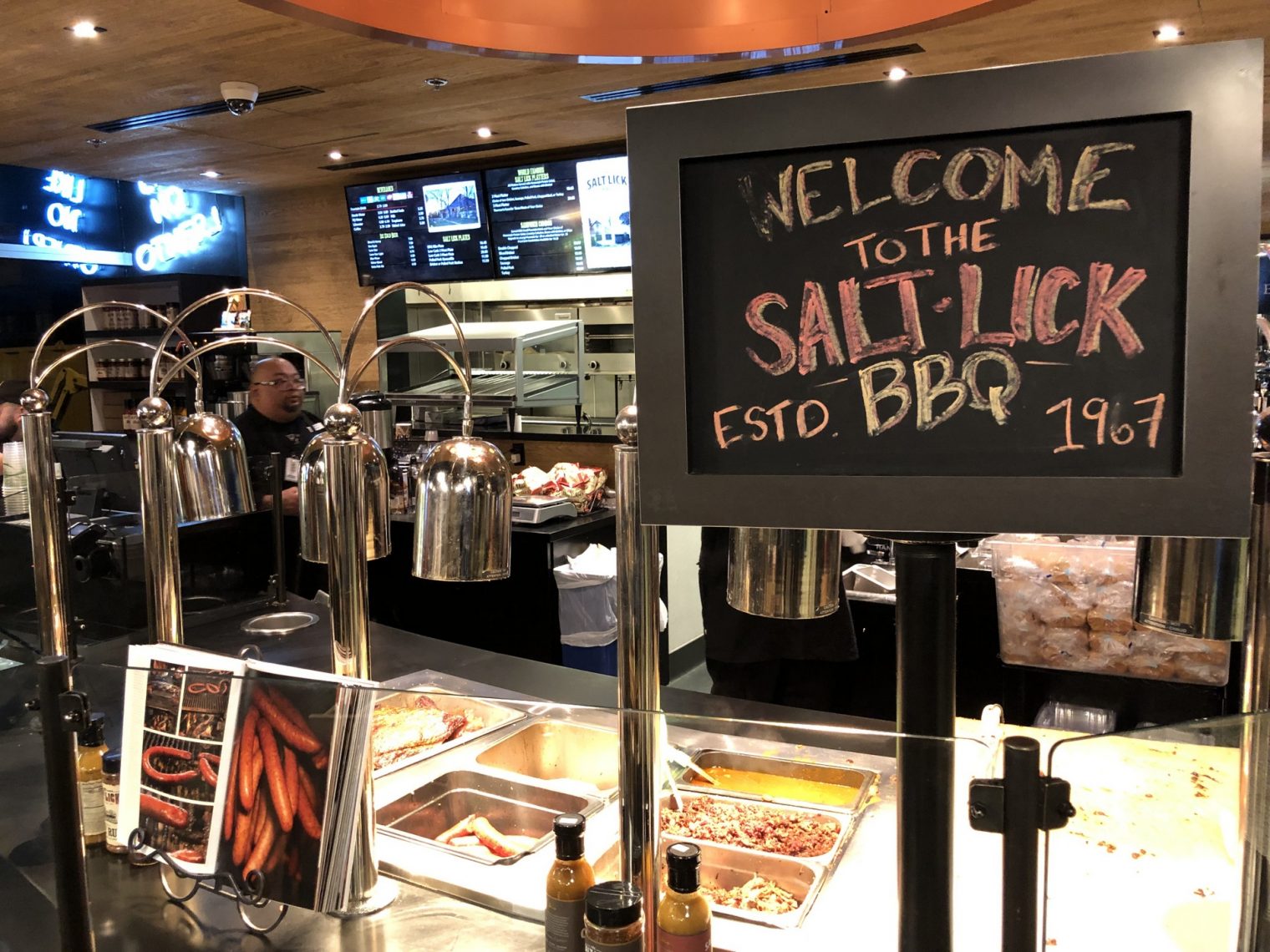
On a recent business trip to Austin I resolved to consume 100 percent of my calories at barbecue restaurants.
The trip started with an Uber ride from the airport (the city’s license raj effectively outlawed Uber, but the state legislature brought them back). Traffic was horrific reverse-commuting into the city at 6:30 pm so we had plenty of time to watch folks living under bridges operate their 1980s-style squeegee business. I asked Himmatullah whether there were more homeless in Austin or back in his hometown of Kabul. “There are way more in Austin. Nobody is homeless in Afghanistan.” (As it was a leisurely ride, I learned that Himmatullah returns to Kabul at least once per year and that tickets cost as little as $1,200 round-trip from Houston via Dubai.)
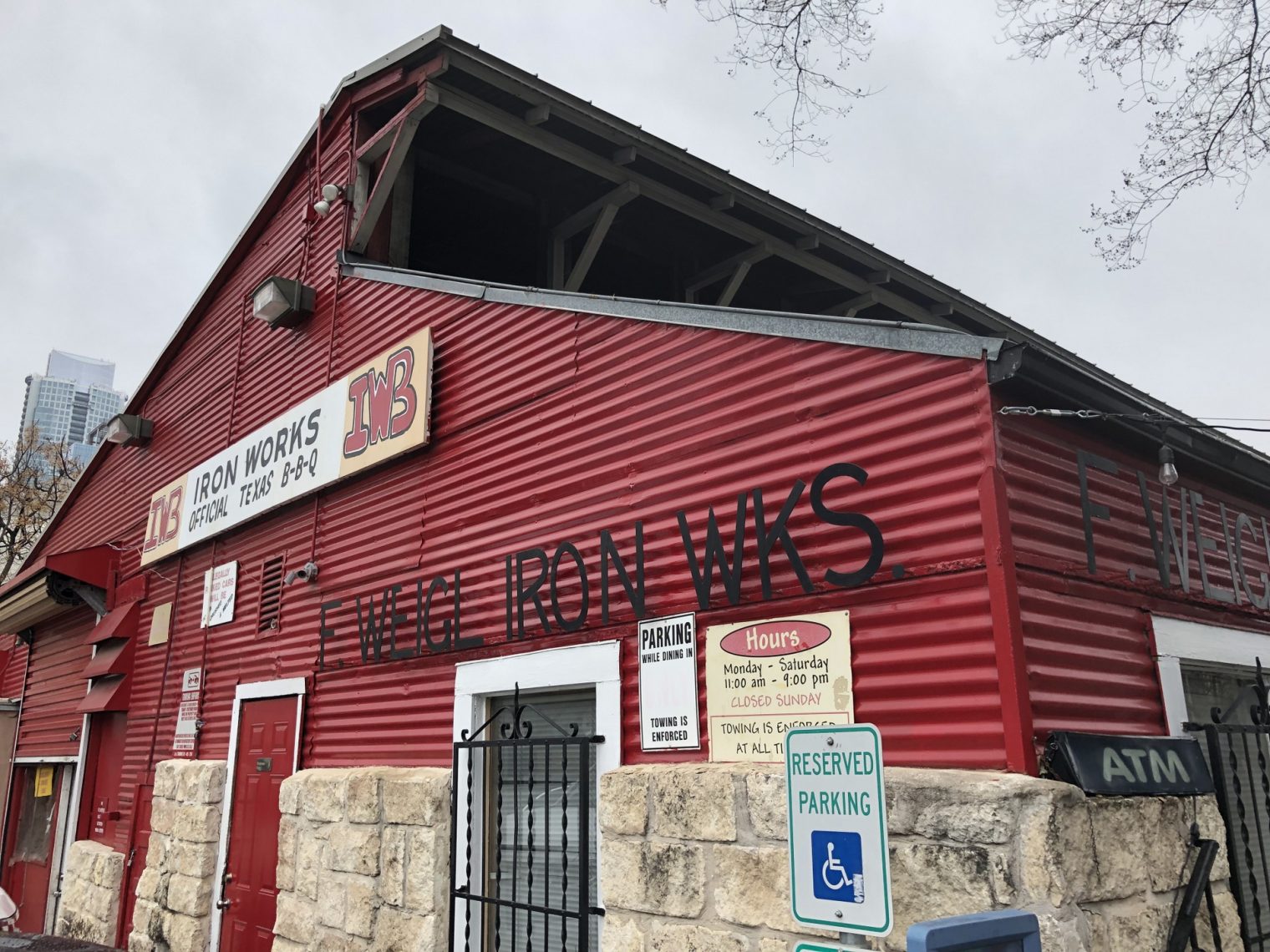
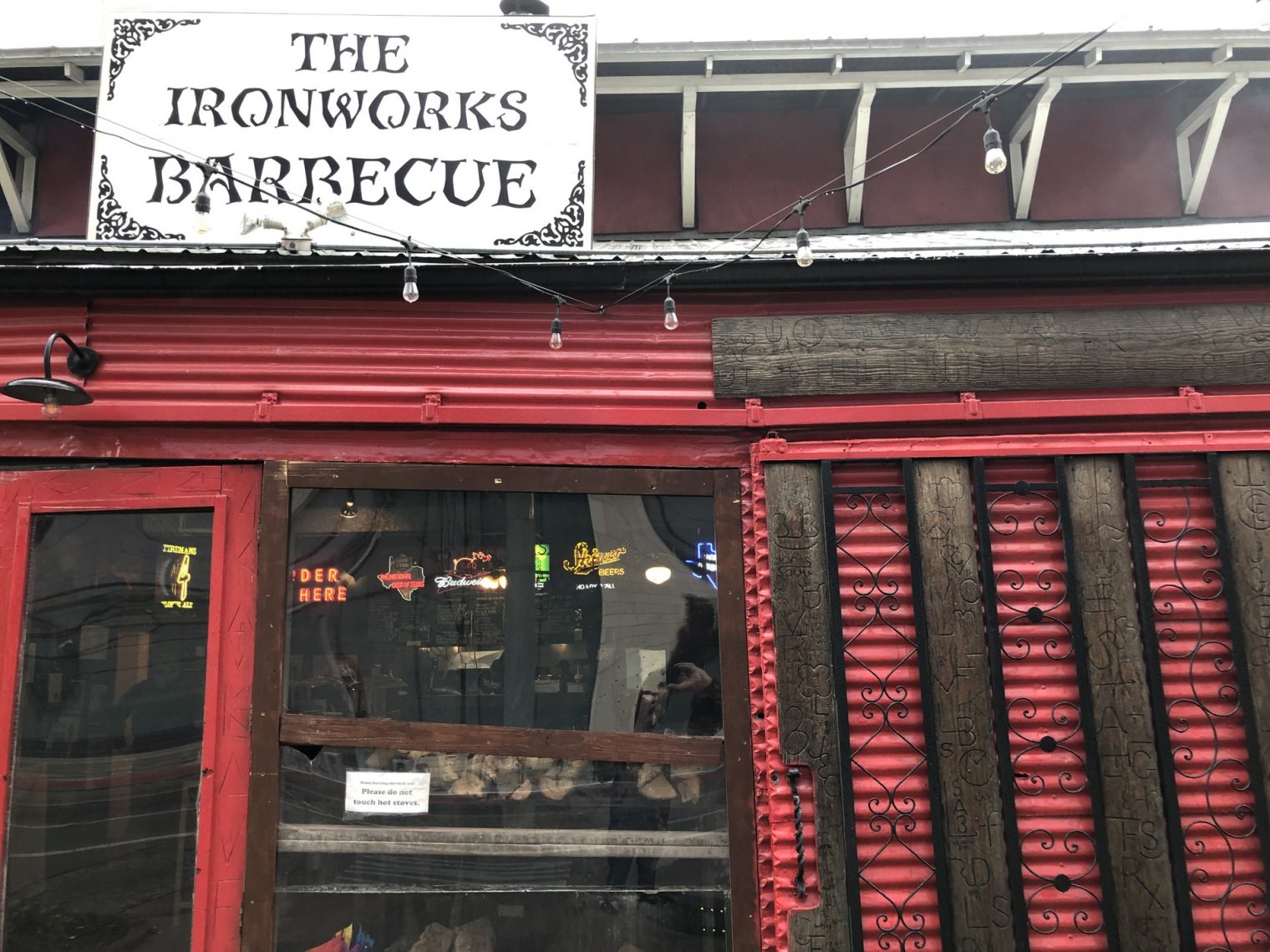
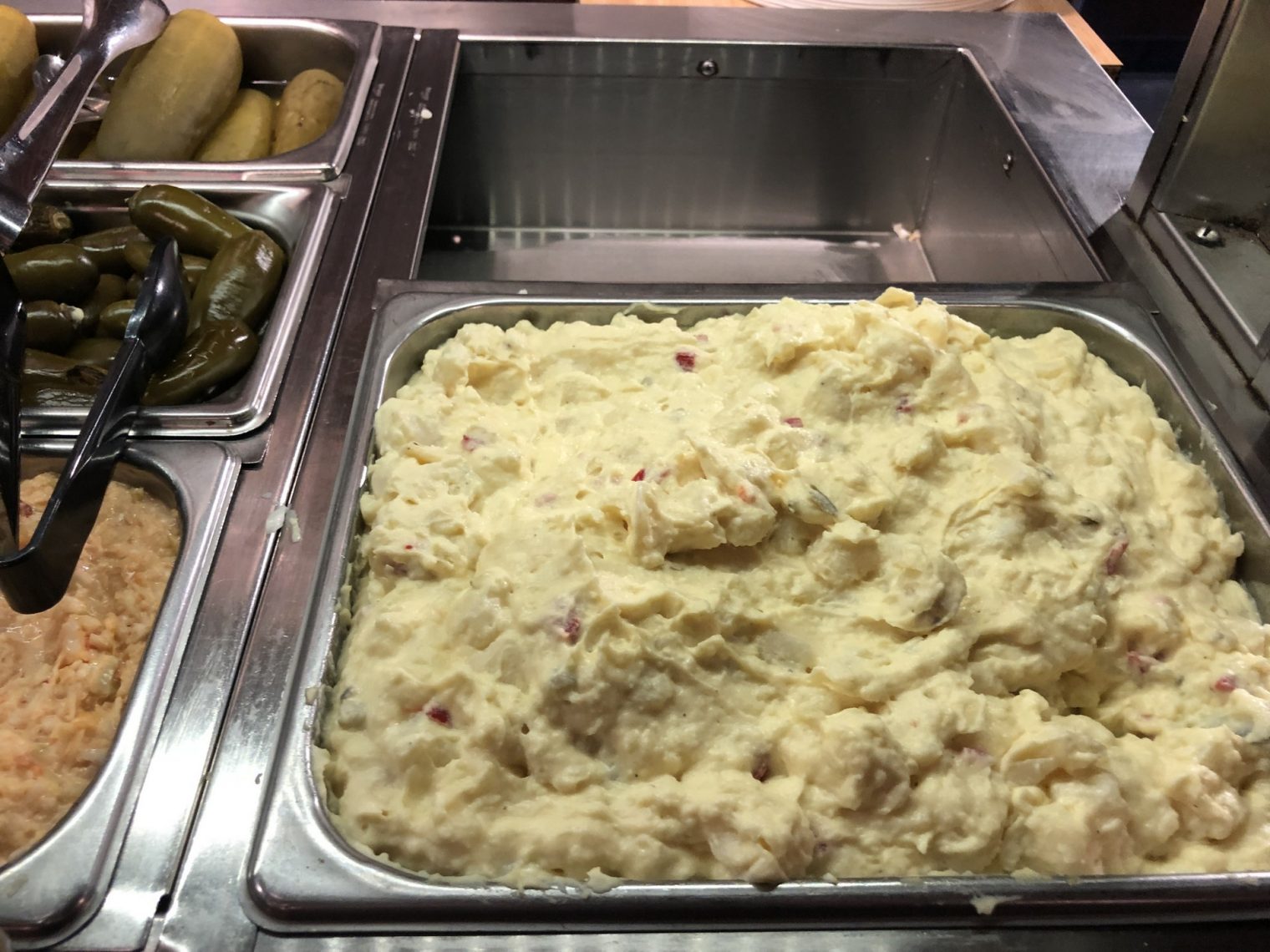
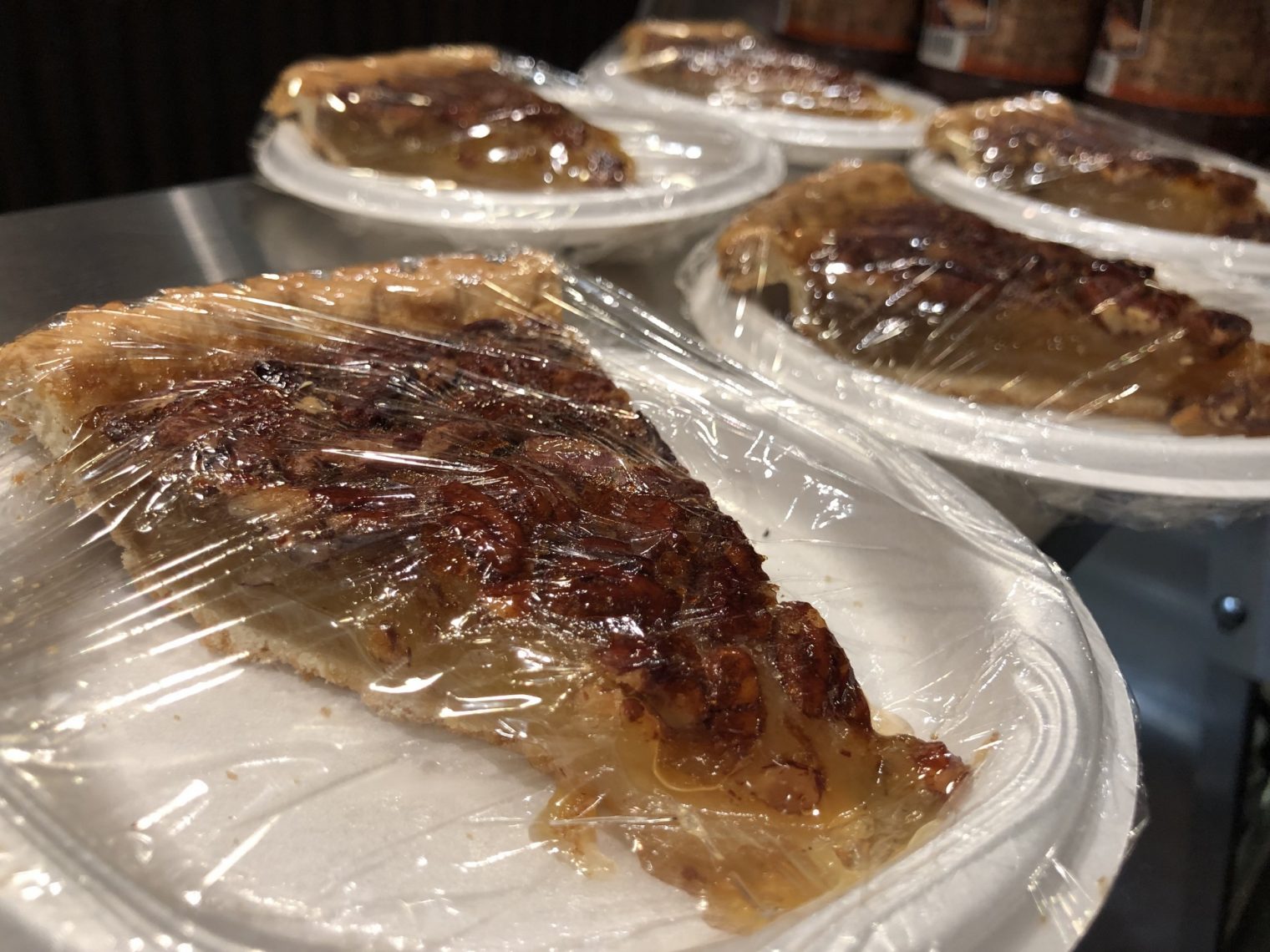
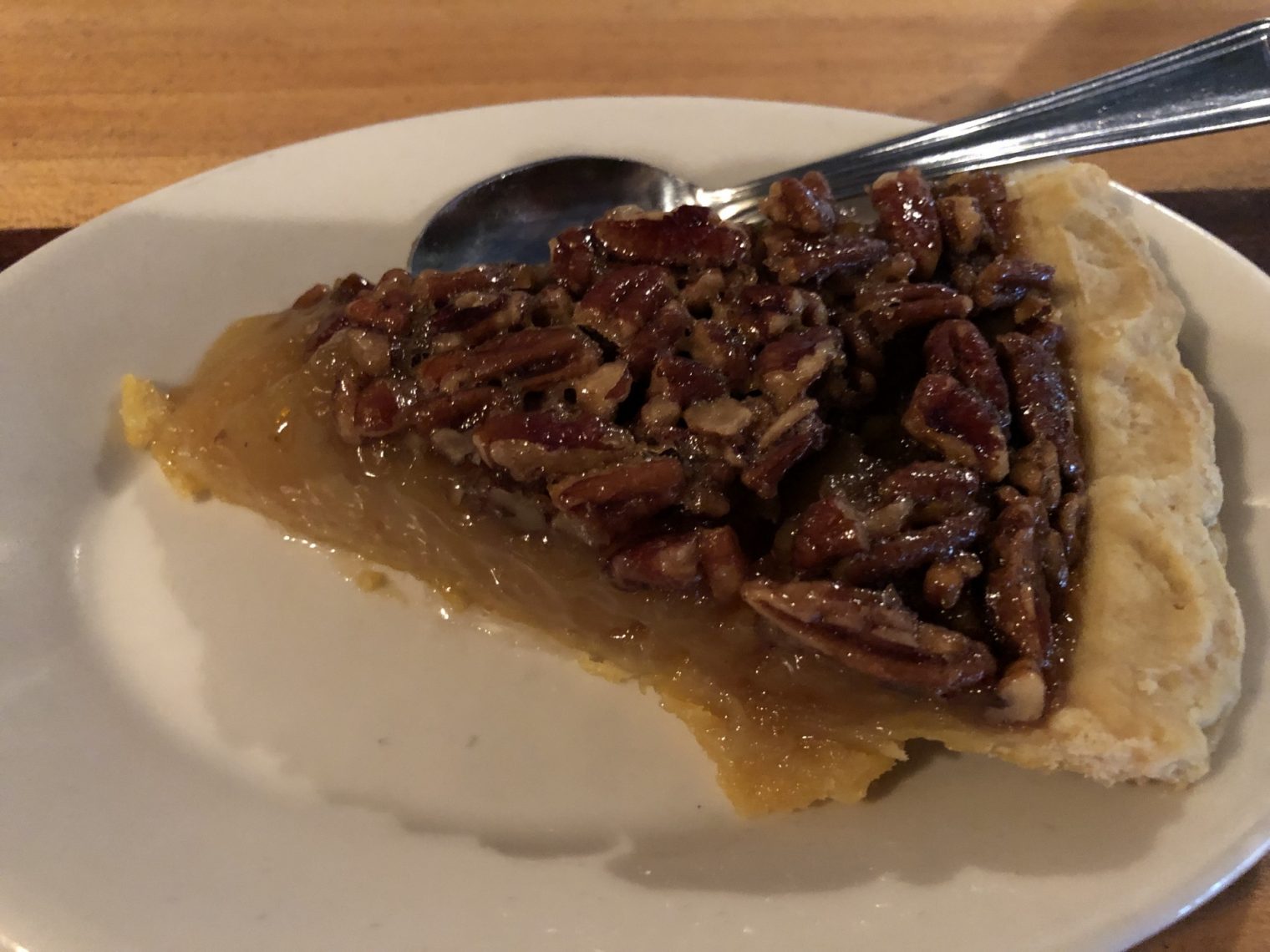
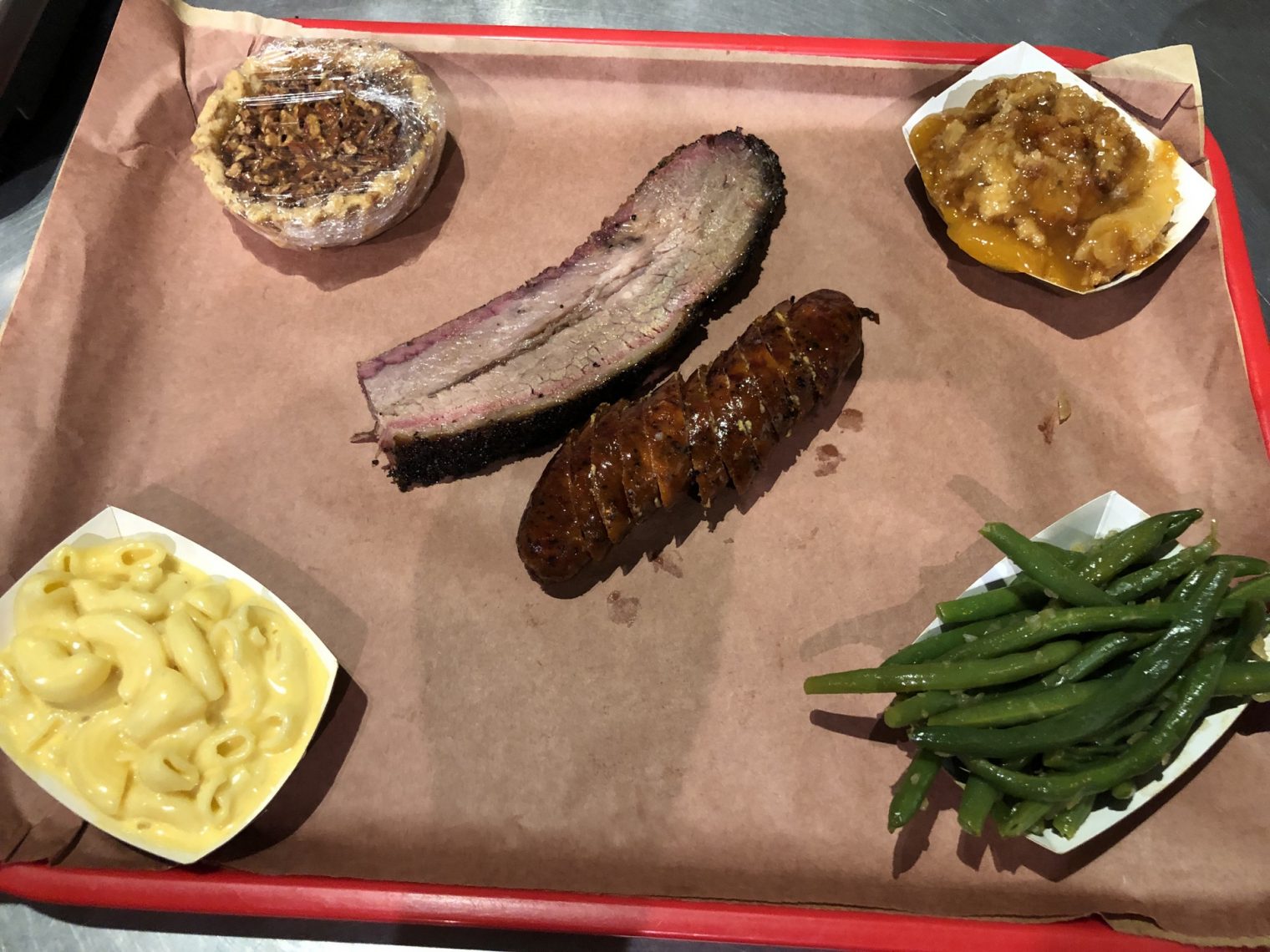
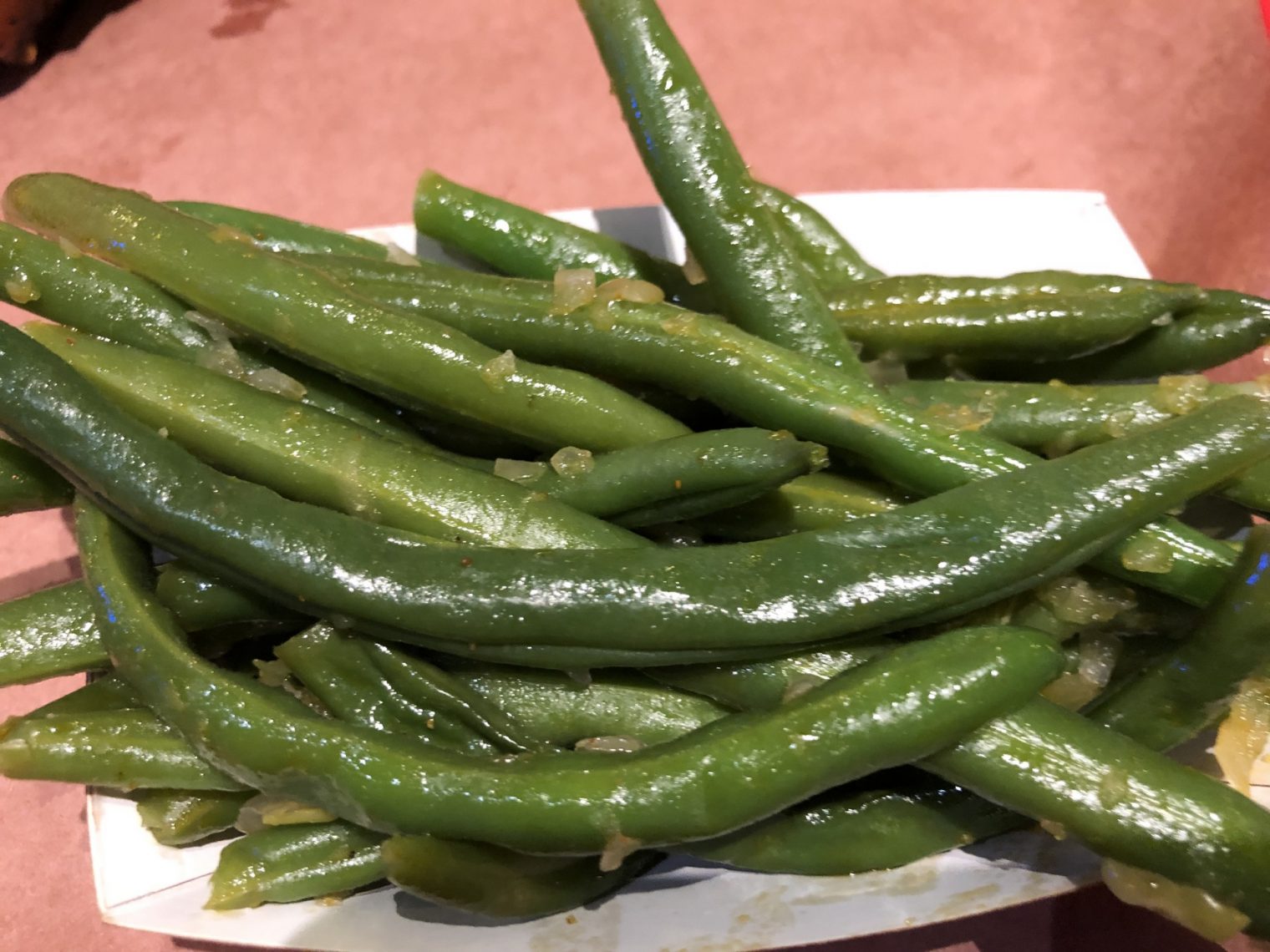
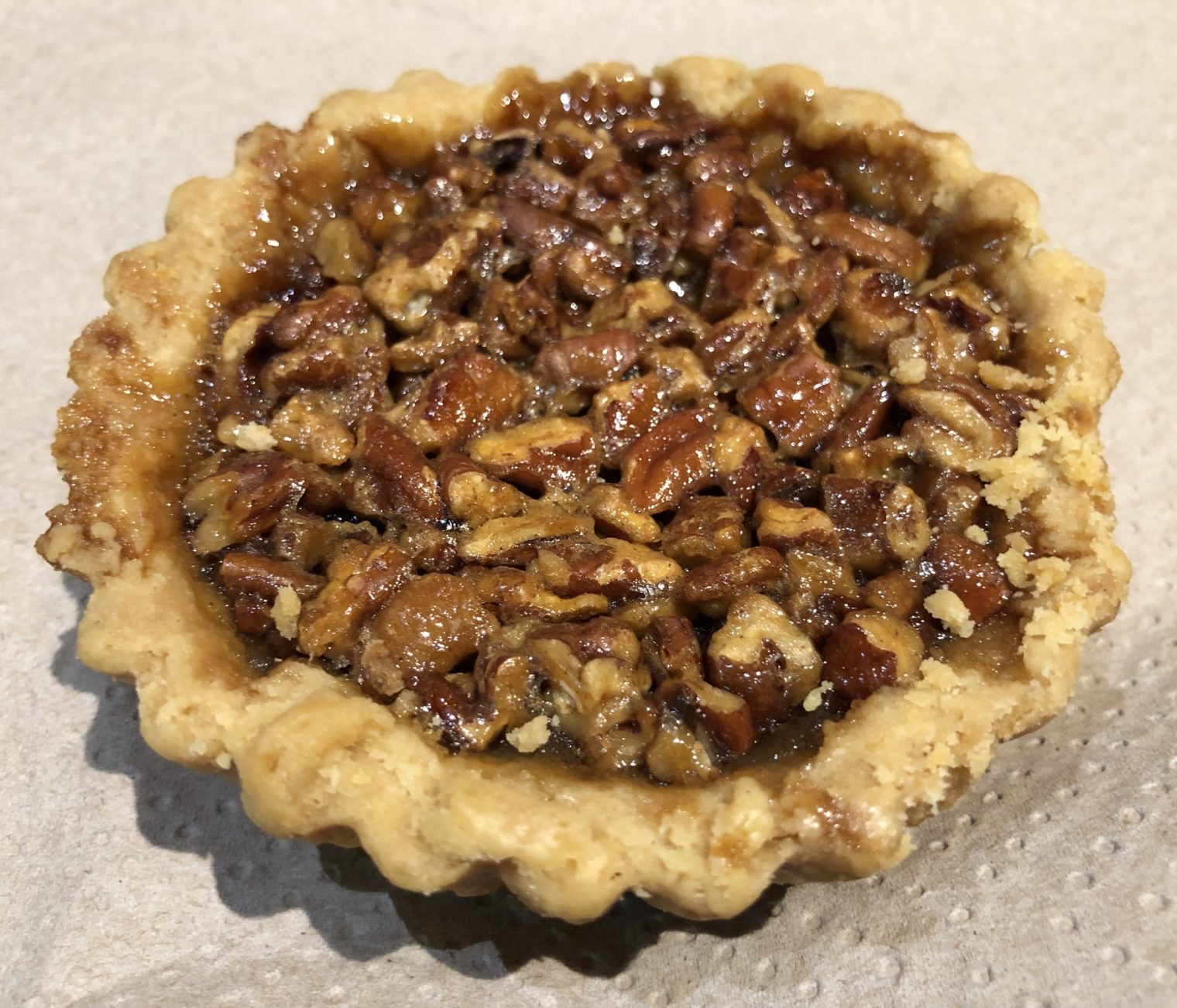
Day 1: dinner at Iron Works BBQ, right across the street from the convention center/Fairmont. Tried brisket (a bit dry), sausage (great), mac/cheese (fair), green beans (limp). The purportedly homemade pecan pie was disappointing, with no apparent connection between the sweet/gluey stuff on the bottom and the pecans on top. I hate to say this, but a local farm near my Boston suburb makes vastly better pecan pie. (See below; this style seems to be what Texans like) Employees did not seem passionate about BBQ. Overall rating: Fair.
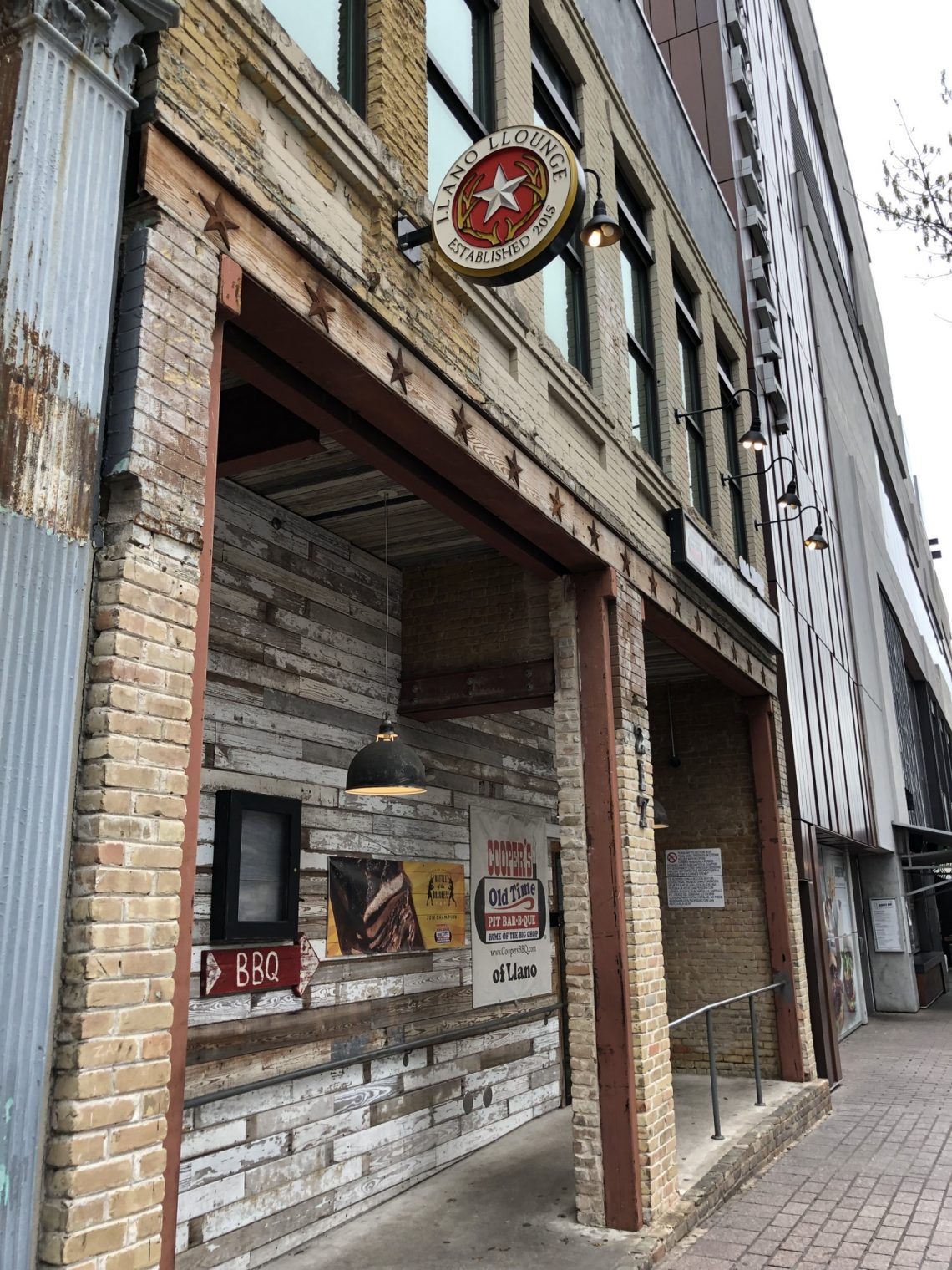
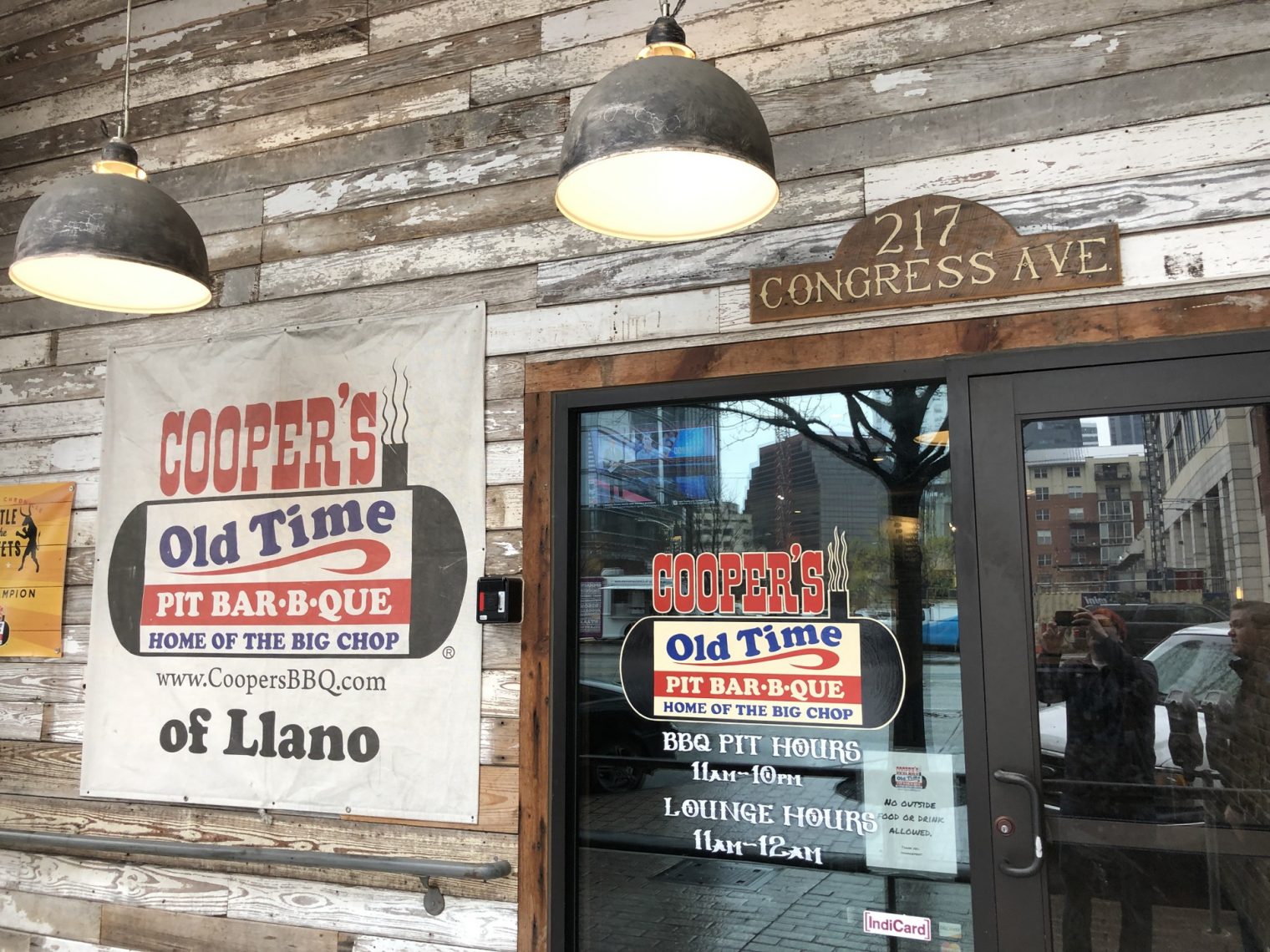
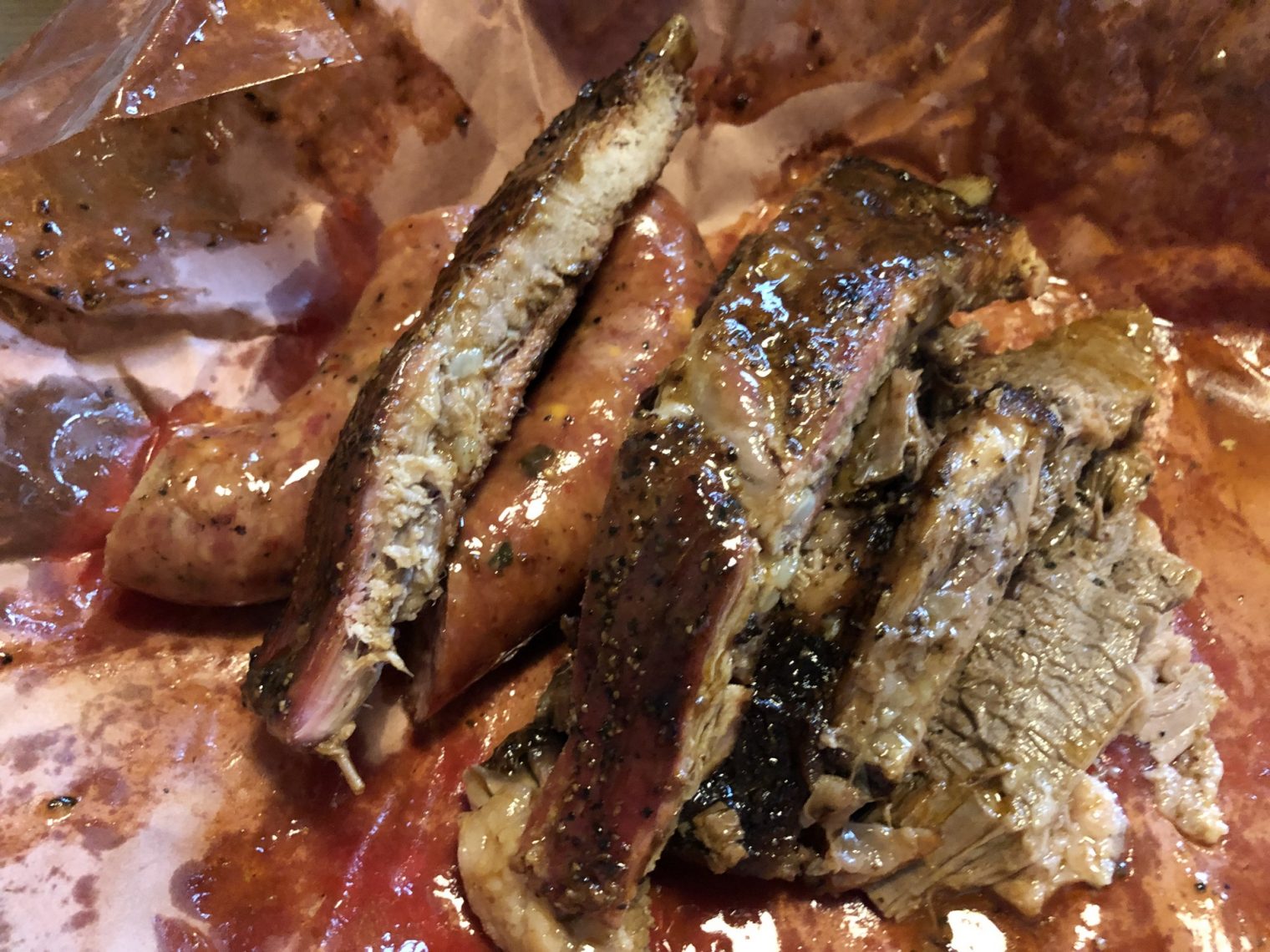
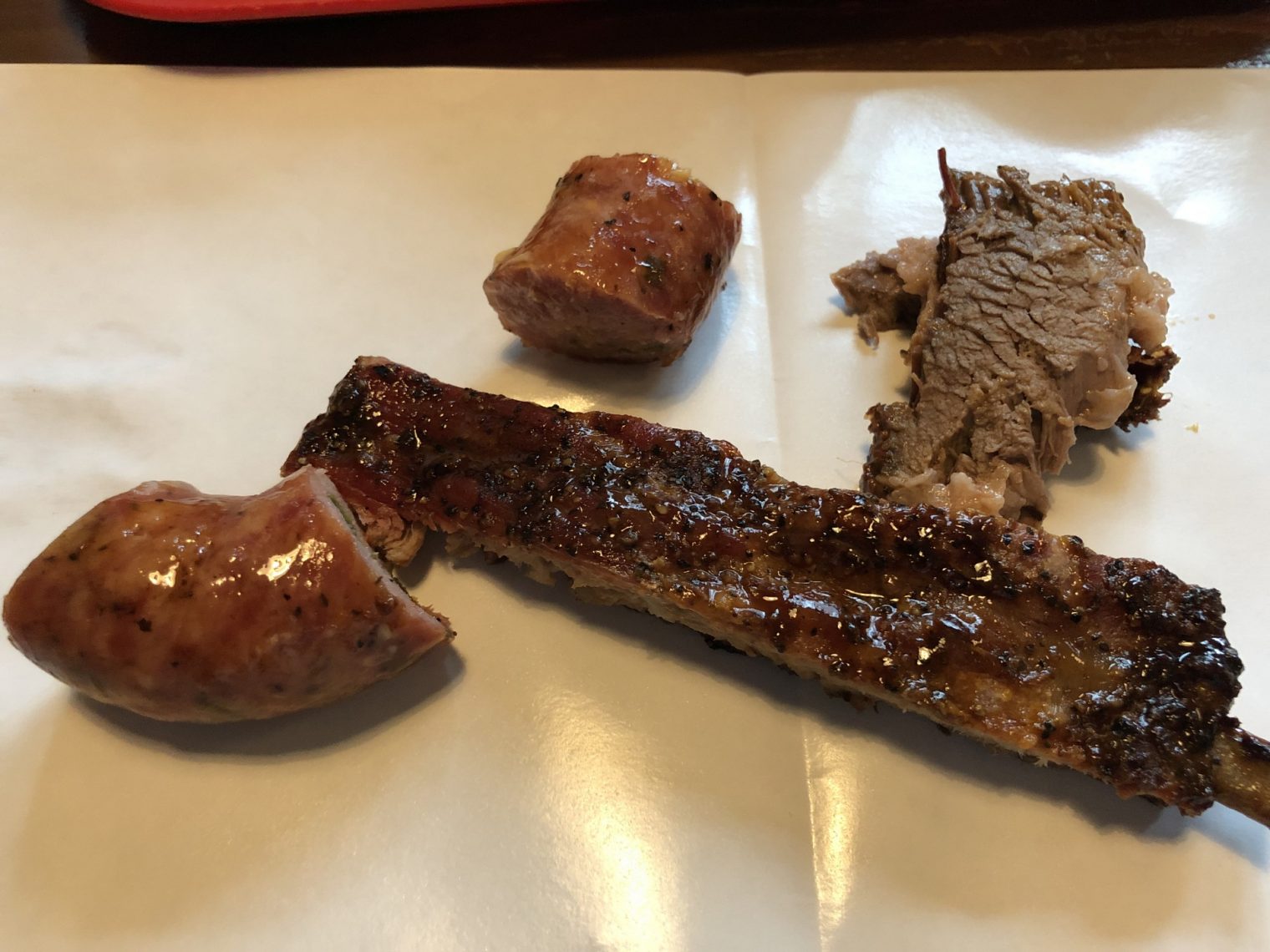
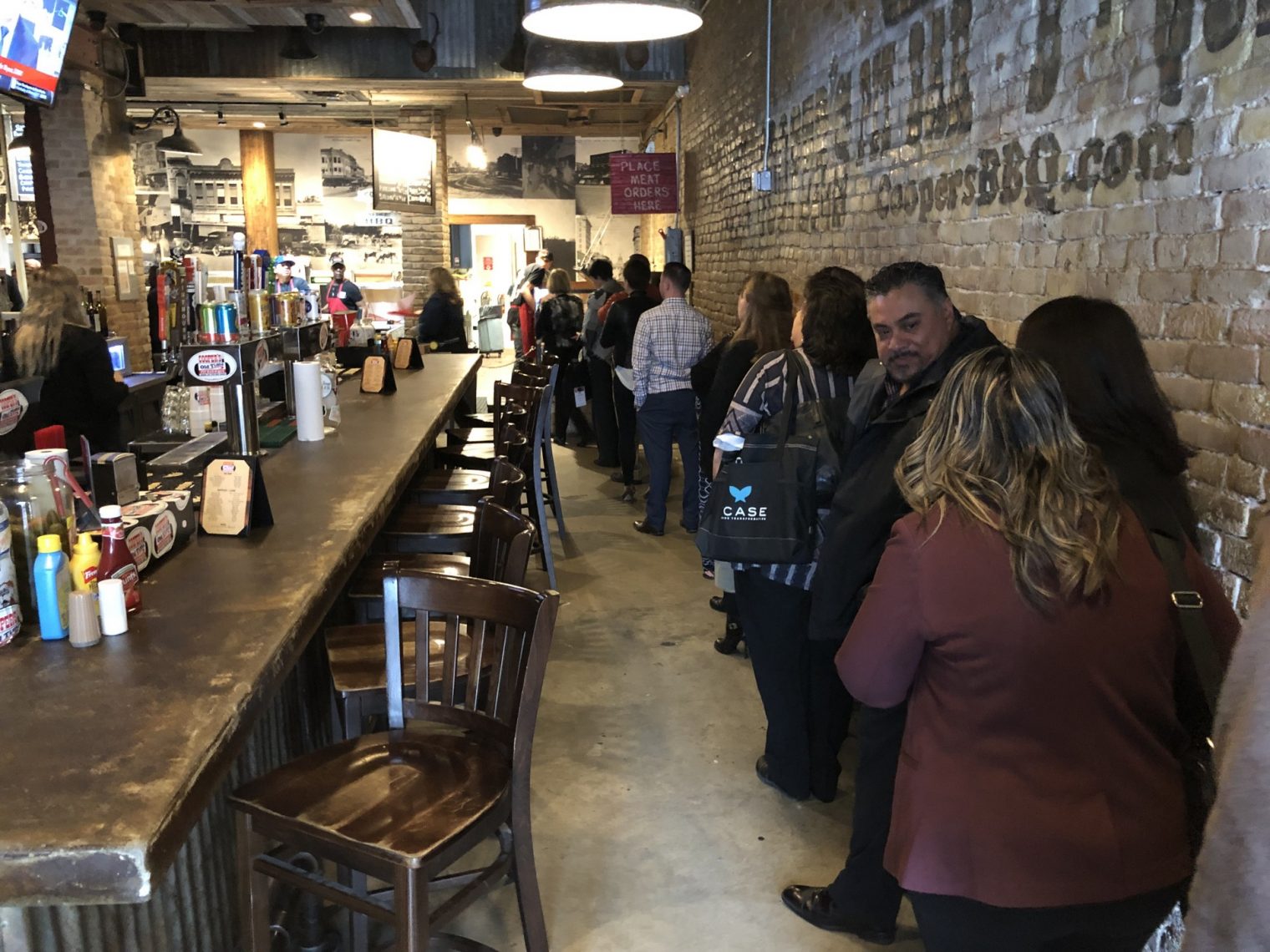
Day 2: early lunch at Cooper’s BBQ. Line that got right to the door by 12 was met by an enthusiastic pitmaster. Brisket (much better than Iron Works), Sausage (two varieties; both great), Pork Ribs (tender, not fatty), jalapeno/bacon mac/cheese (“meh” says John; Philip enjoyed it), green beans (not as mushy as at Iron Works; lots of bacon), cole slaw (excellent), salad(!). BBQ sauce is thin and vinegar-y. Pecan pie-ish cobbler: awesome. Lightyears ahead of Iron Works. Overall rating: Superb.
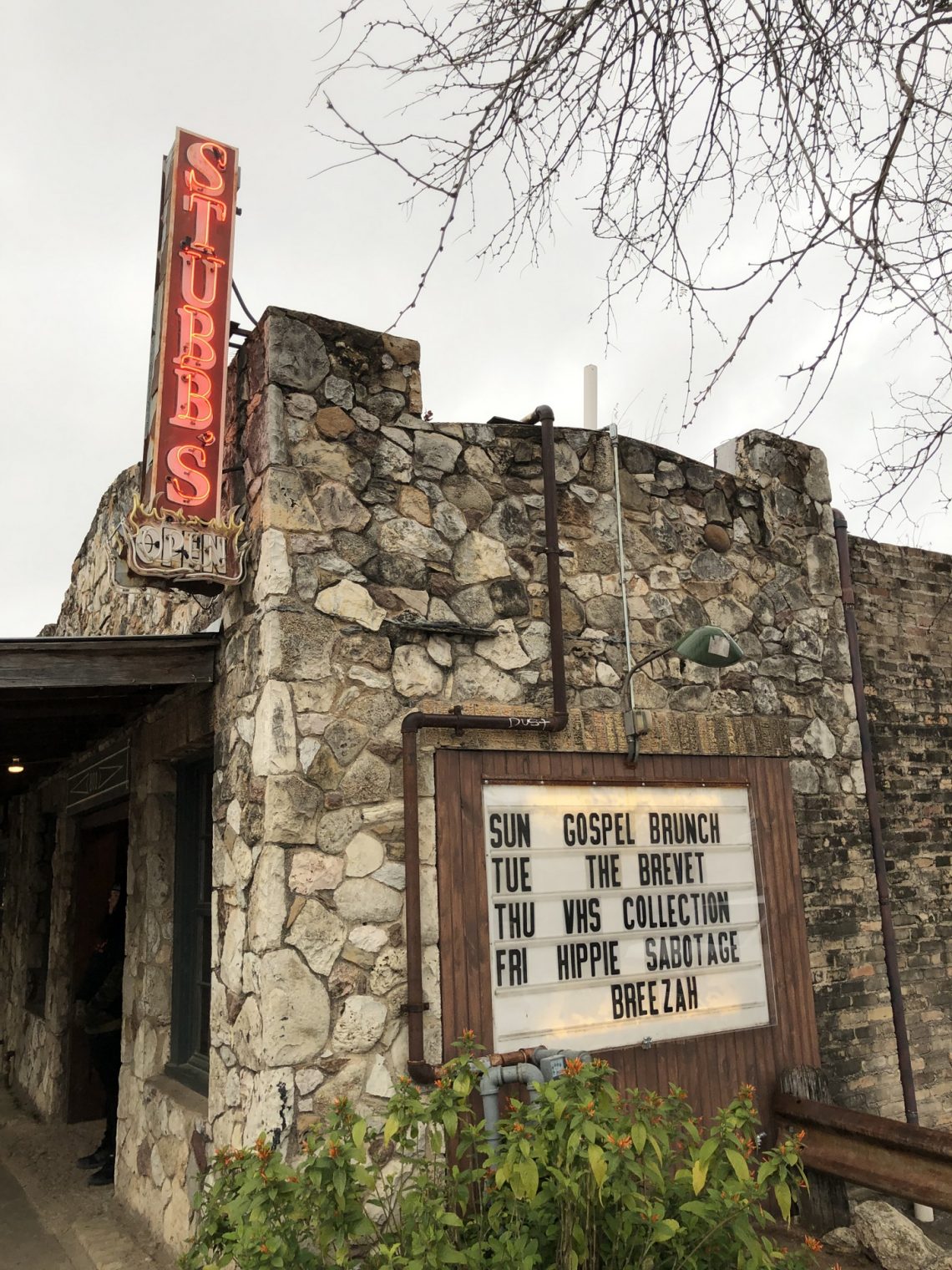
Day 2: dinner at Stubb’s BBQ. Brisket (tender, not as dry as Iron Works, not as much flavor as Cooper’s), sausage (good; Cooper’s was better, but John says “more of a toss-up), fried okra (awesome), mac/cheese (sharper than Iron Works; John preferred to Cooper’s, but Philip was less impressed), pecan pie (similar to Iron Works; pecans on top of flavorless sugar gel), banana pudding (Nilla wafers!). Overall rating: Good.
Day 3, Pilgrimage to Lockhart. Our local guide, Matt Cohen: “Historically, the best Texas BBQ was in small towns – in the days before refrigeration, the local meat market would smoke their leftover fresh cuts to sell the next day. BBQ is still generally sold by the pound for this reason.” We drove at 90 mph in a Chevy Volt down a private toll road (speed limit 85). We were joined by Chris Lamprecht, who flew a Columbia 400 (single-engine piston) from Texas to the southern tip of Argentina.
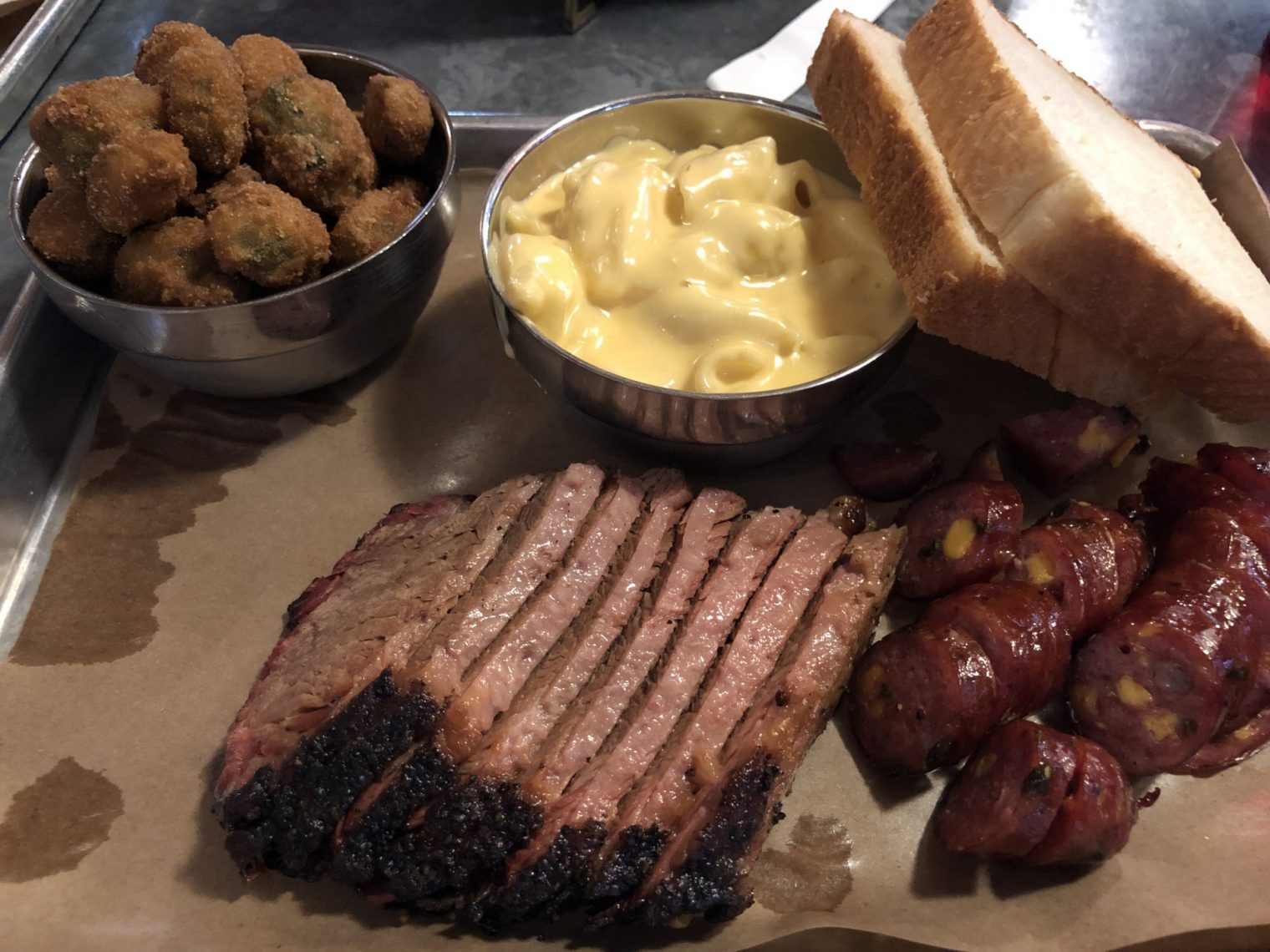
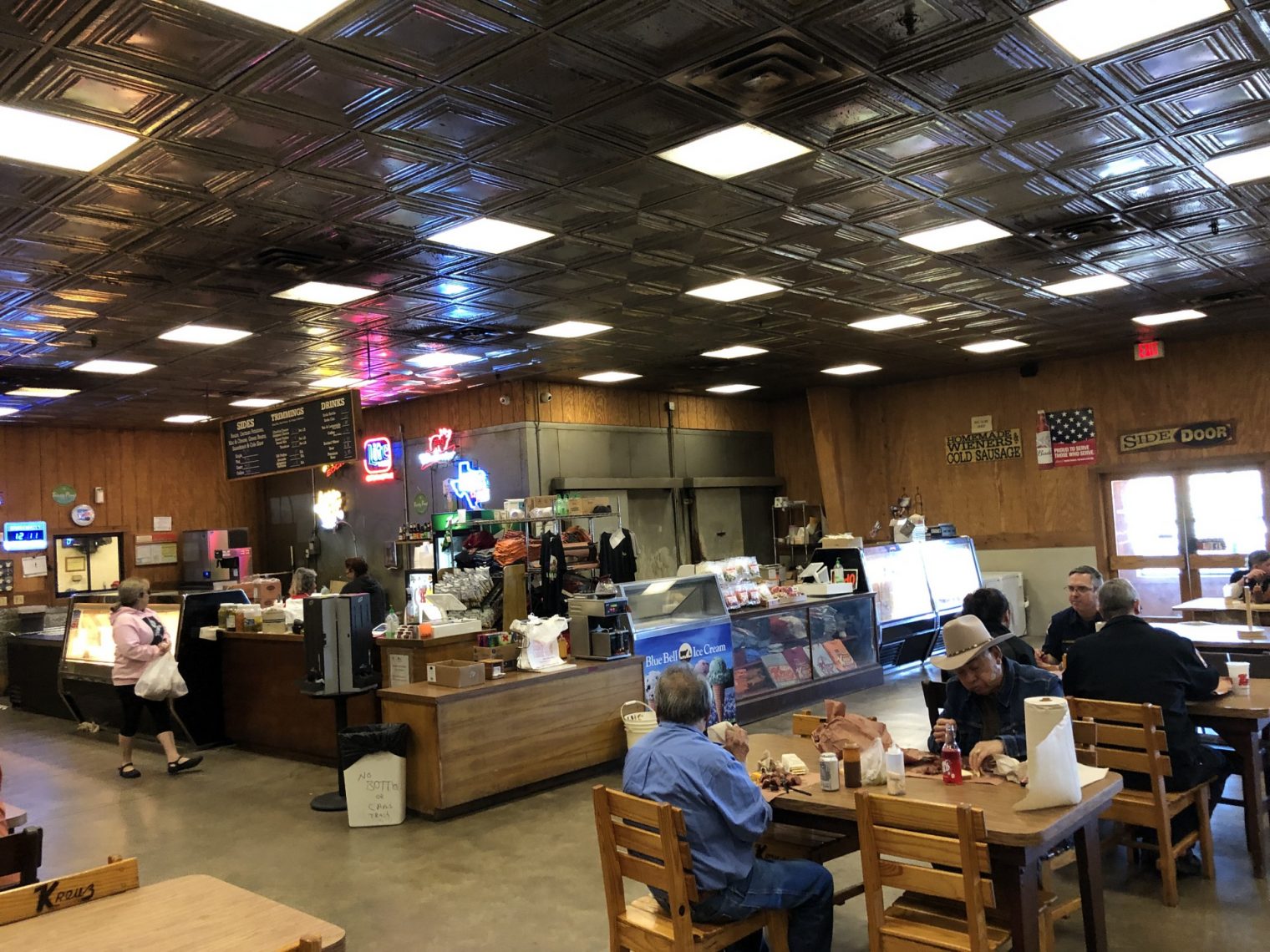
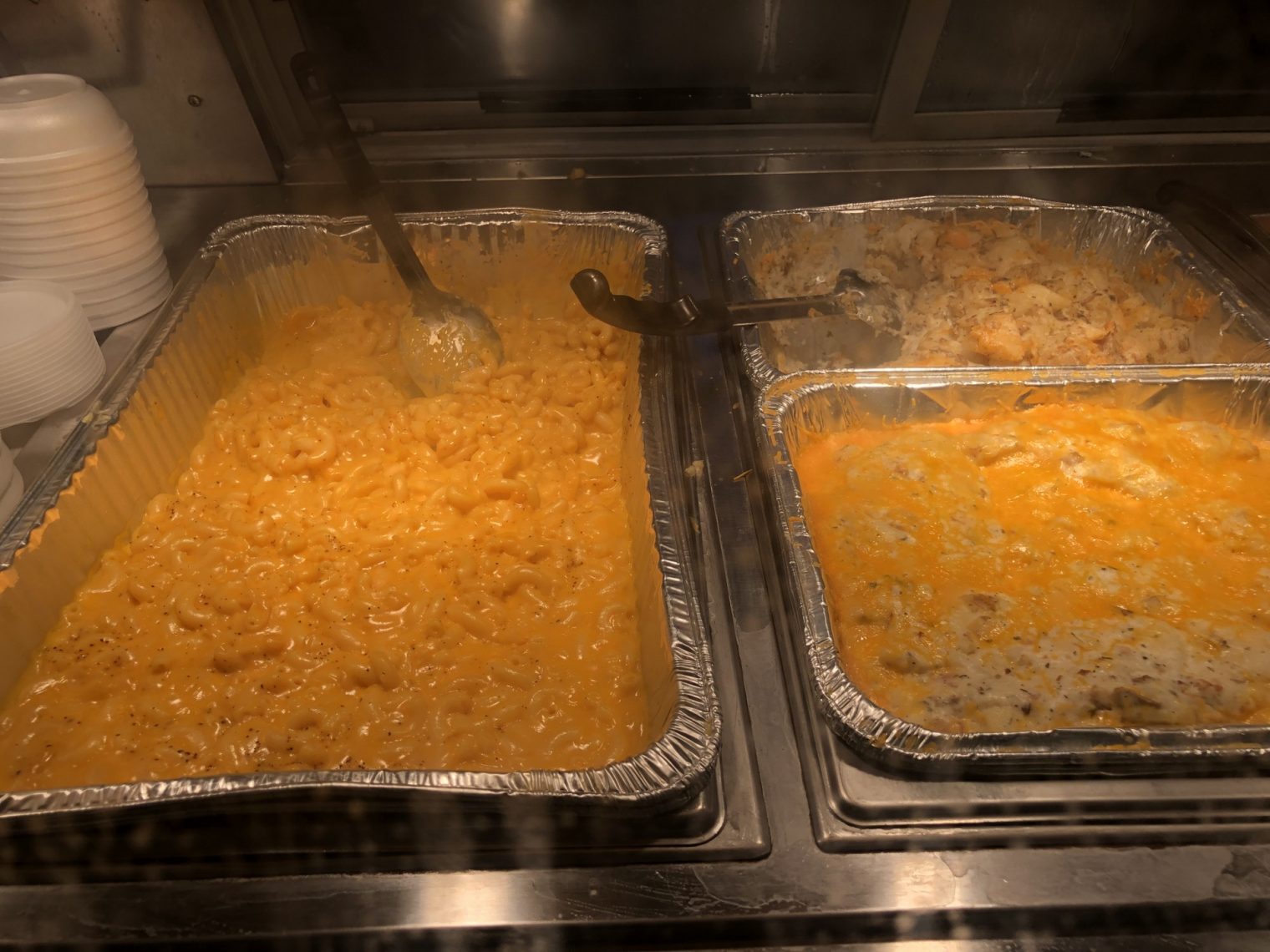
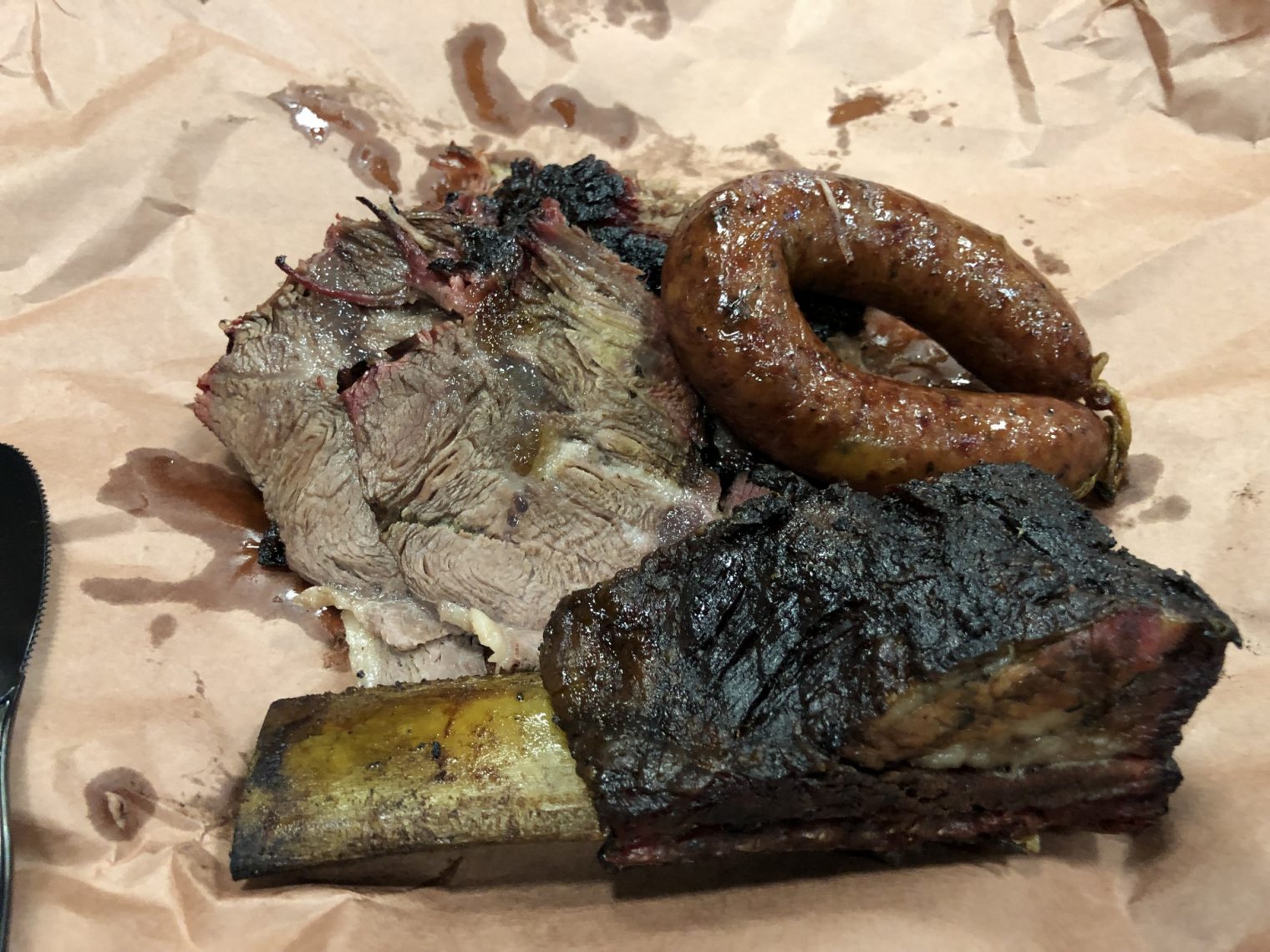
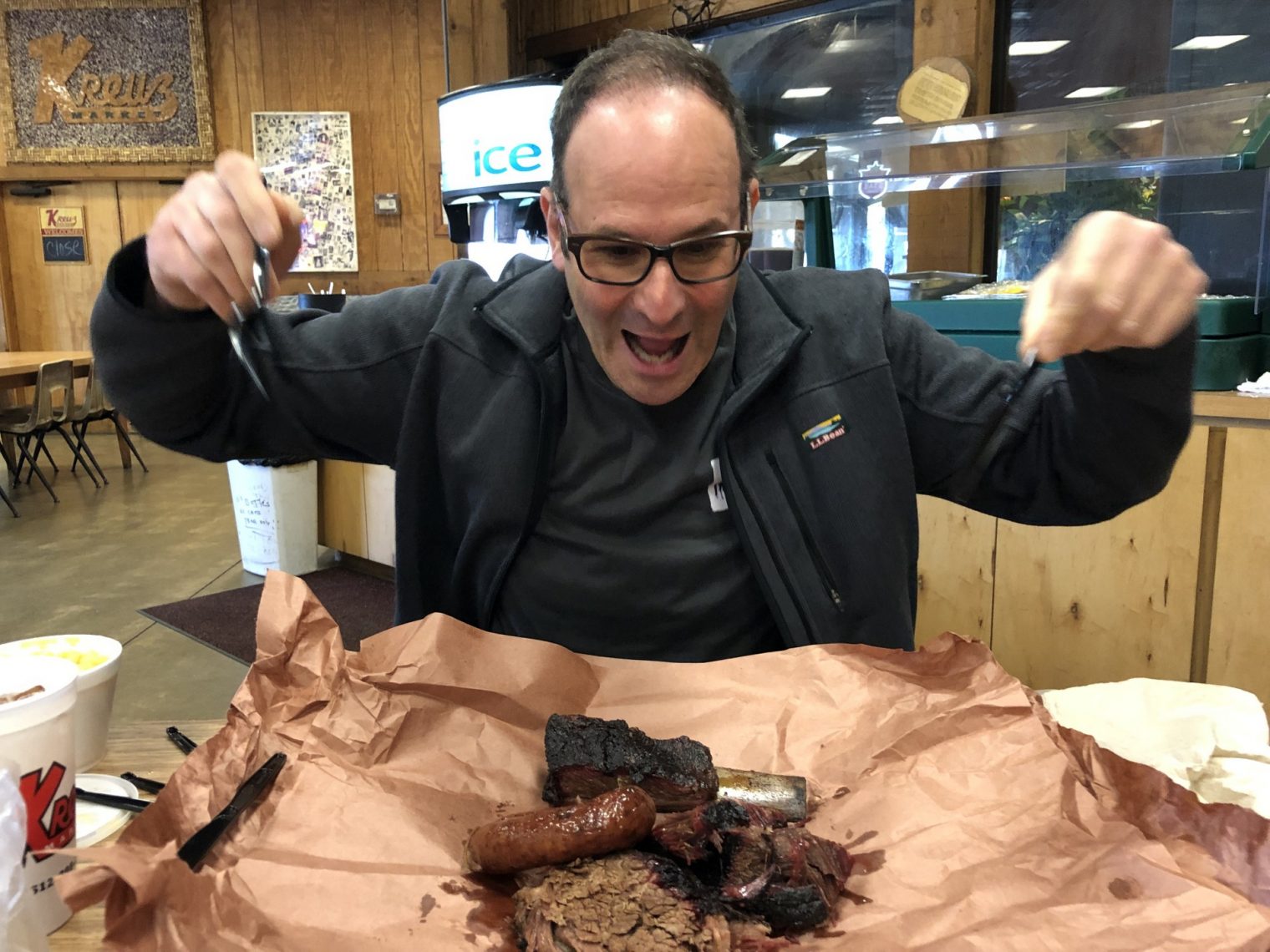
Day 3, lunch 1: Lockhart. Kreuz market. Brisket. Shoulder. Sausage (moist/soft). Beef rib (somewhat stringy). John’s favorite Mac and cheese; Philip found it bland. Boring green beans (not a lot of bacon like at coopers). Sauerkraut. Skipped dessert. Cavernous and not especially welcoming. Playing Merle Haggard’s “Mama Tried” regarding individual responsibility (I would have been more excited to get customer reaction to his 2008 “Hillary”: “And who kept her head high when it could have been down … changes need to be large / Something like a big switch of gender / Let’s put a woman in charge”). Overall: great, but uninspired barn-like dining room.
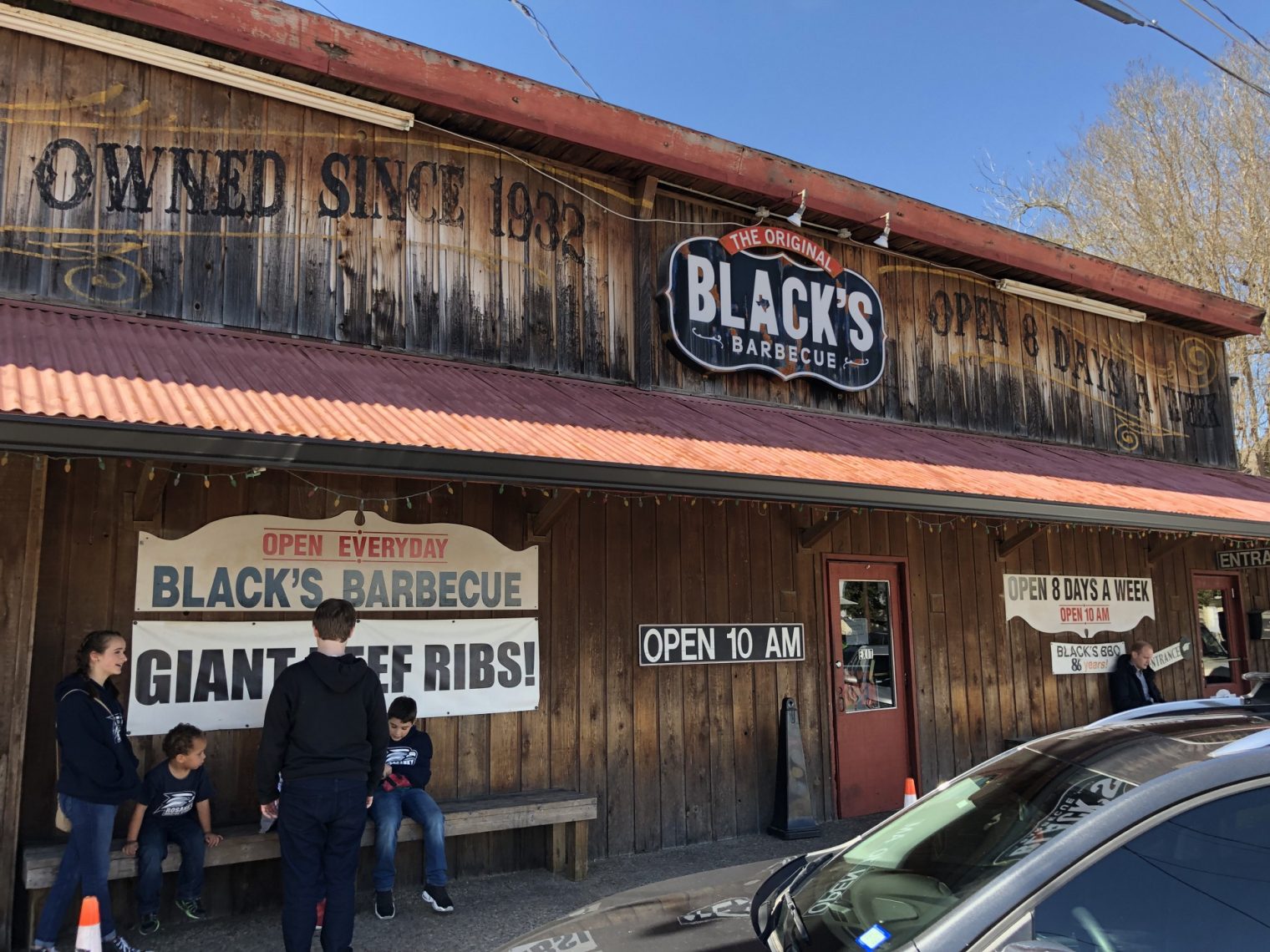
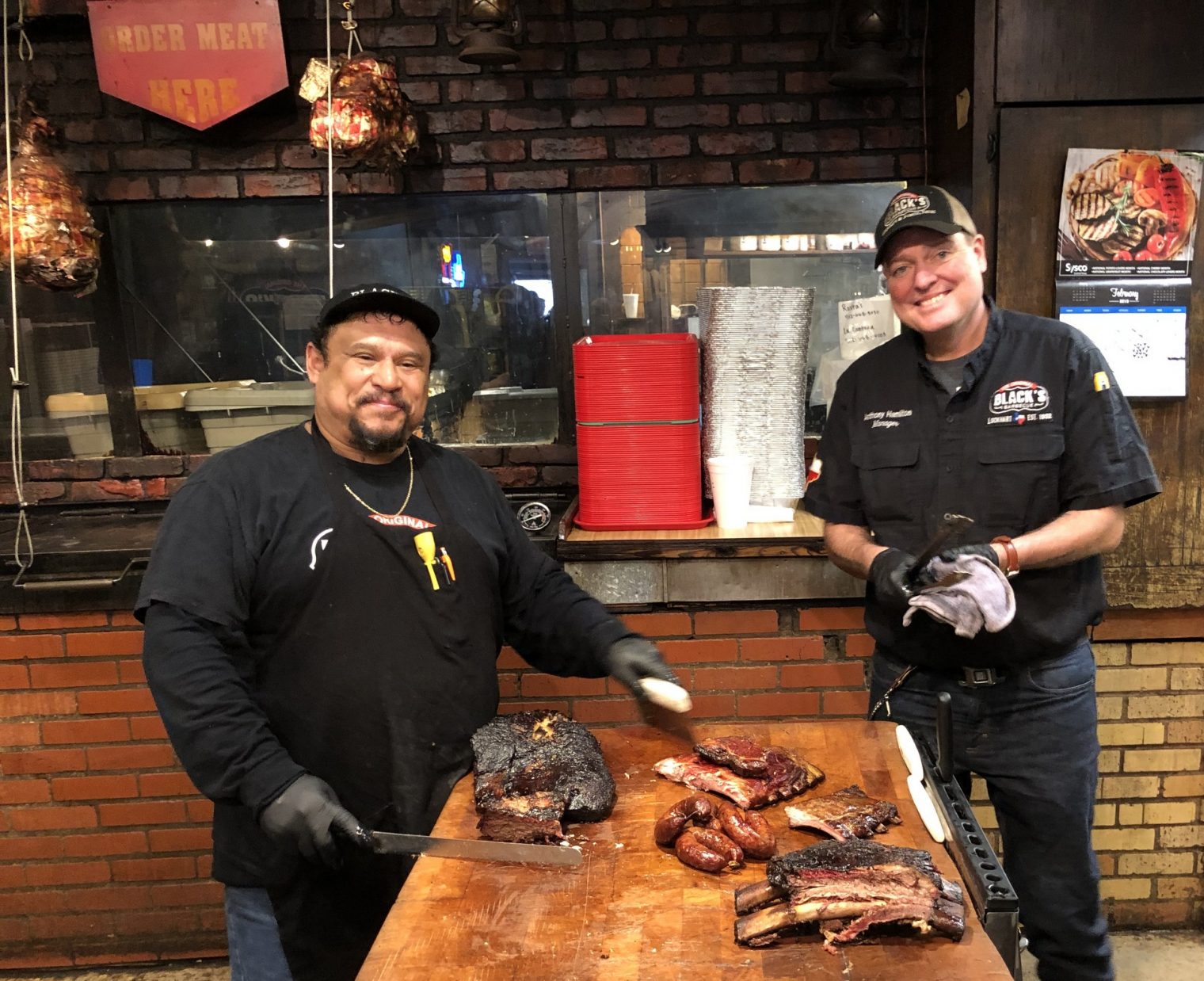
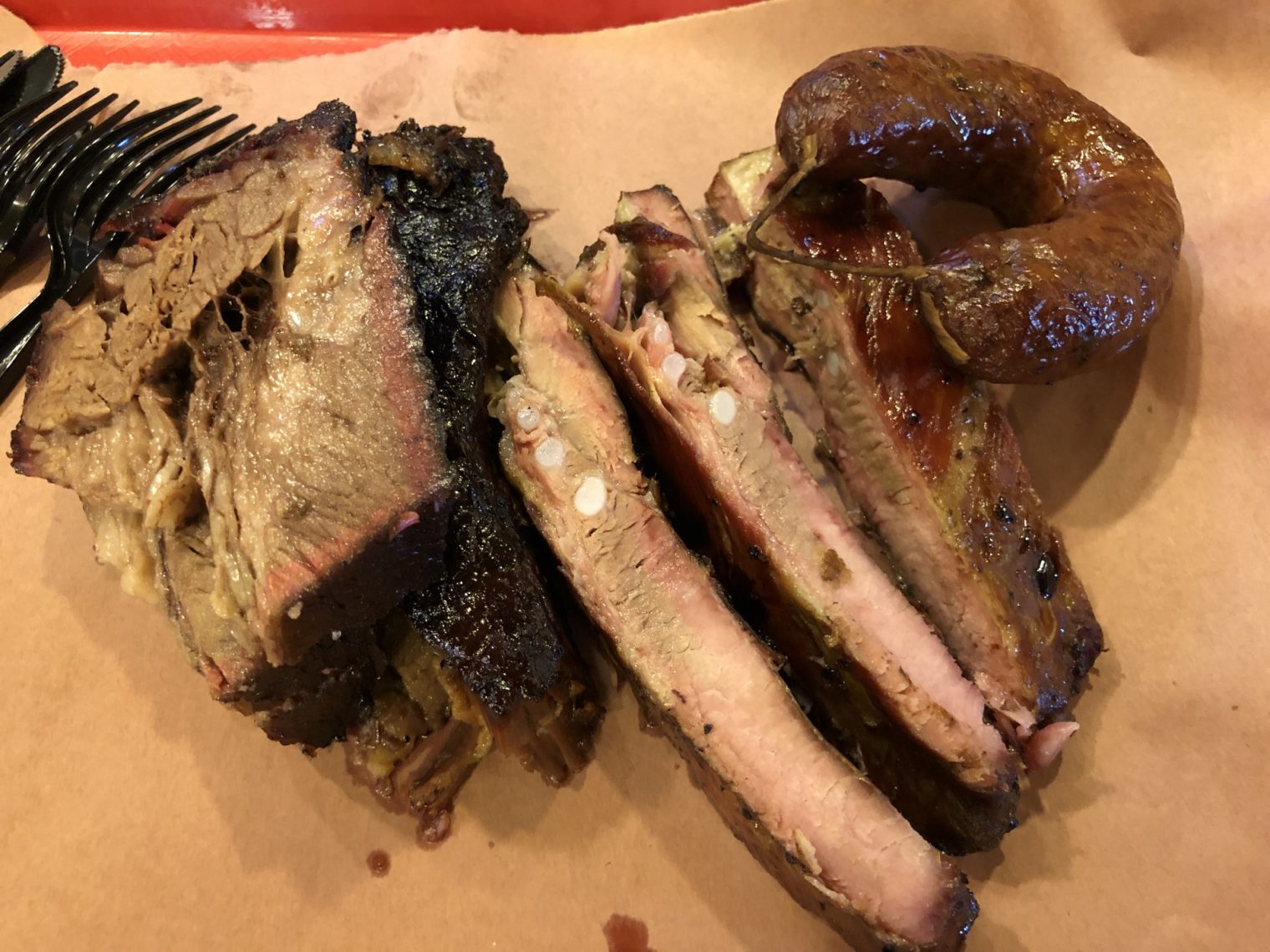
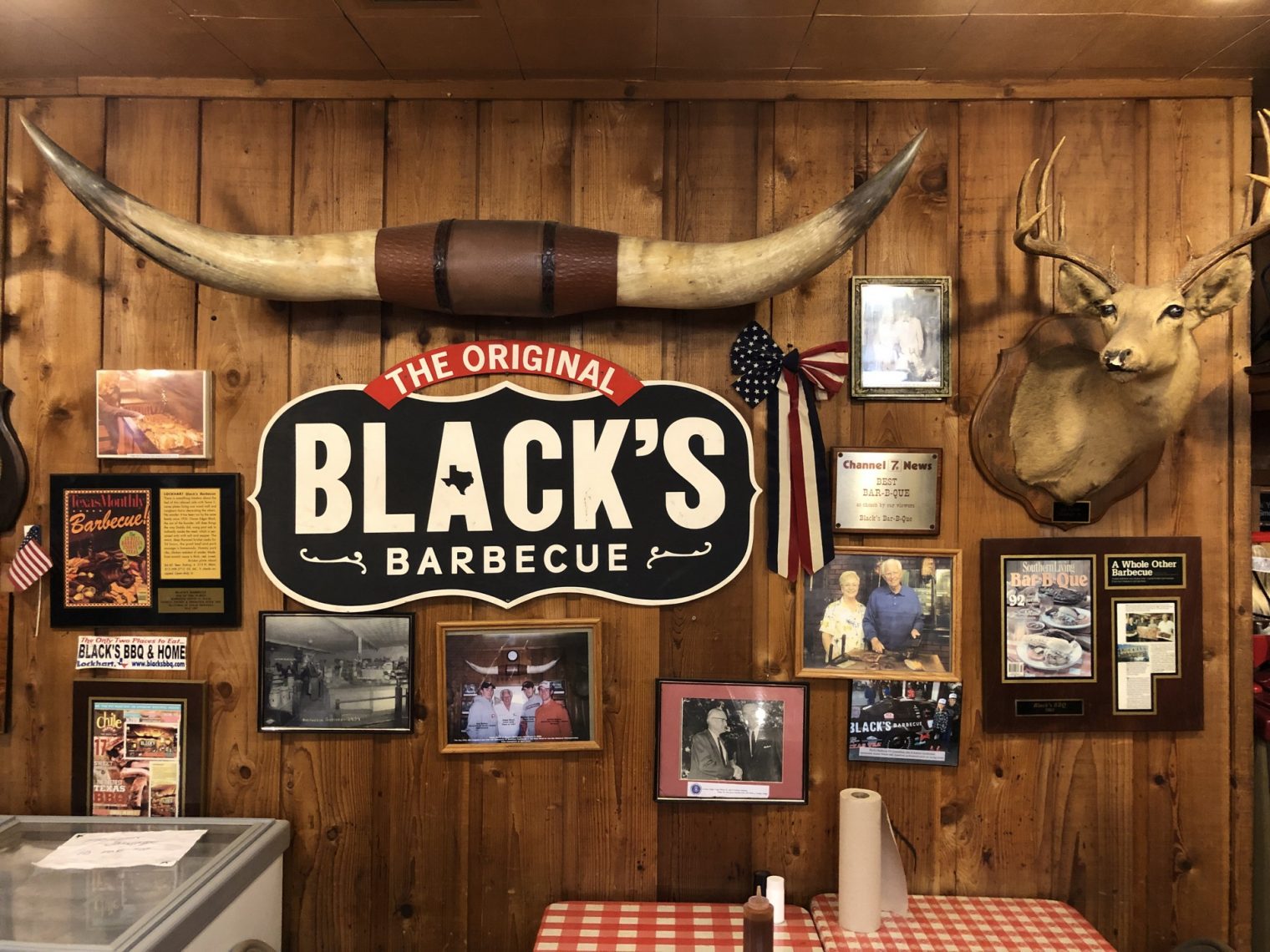
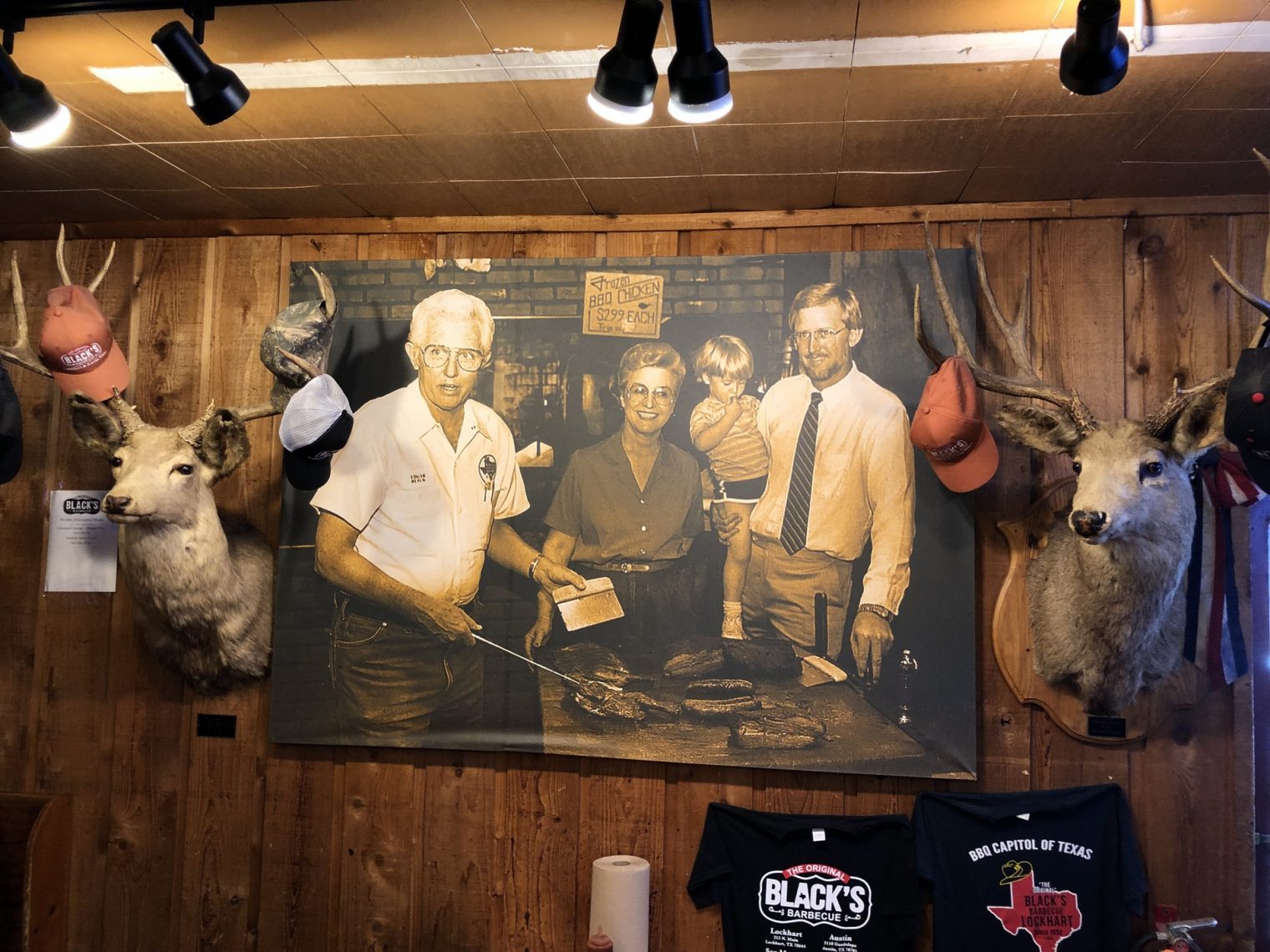
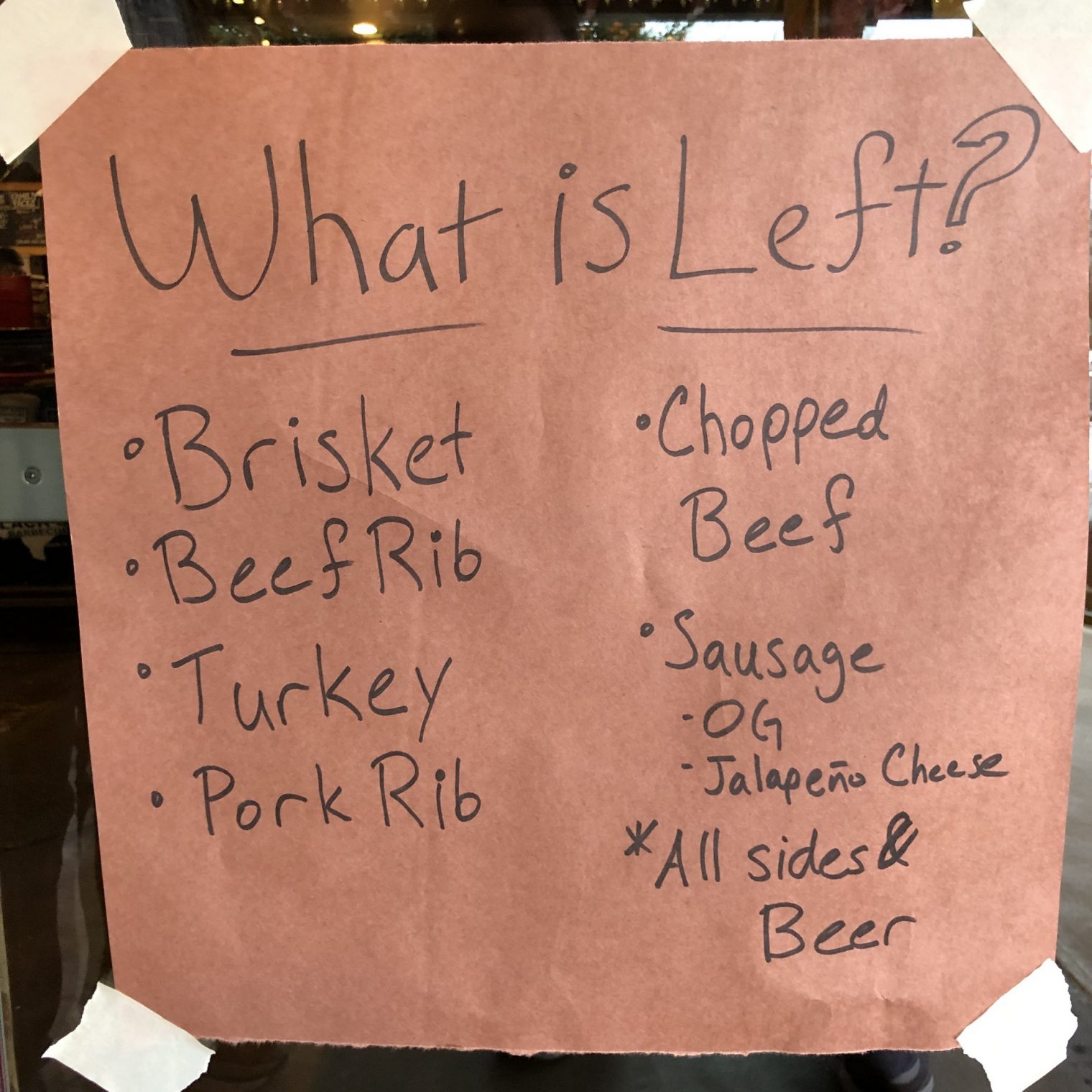
Day 3, lunch 2: Black’s in Lockhart. Pork ribs. Brisket (moist and smoky). Sausage jalapeño and cheese. A bit mushy (maybe because it was made fresh and we’re used to supermarket sausage made months earlier?). Mac and cheese (bland, but John’s new favorite) beef ribs (better than Kreuz). Cole slaw (wet). Green beans (bright green and not mushy). Sweet potato pudding. Pecan pie looks like Iron Works: pecans on top of sugar gel. Did not try. Manager, Anthony Hamilton, came out to chat, welcome, us and insist that we try beef ribs (he returned with a sample and they were awesome, much more tender than at Kreuz). Best decor. Johnny Cash and Willie Nelson. Overall rating: Superb.
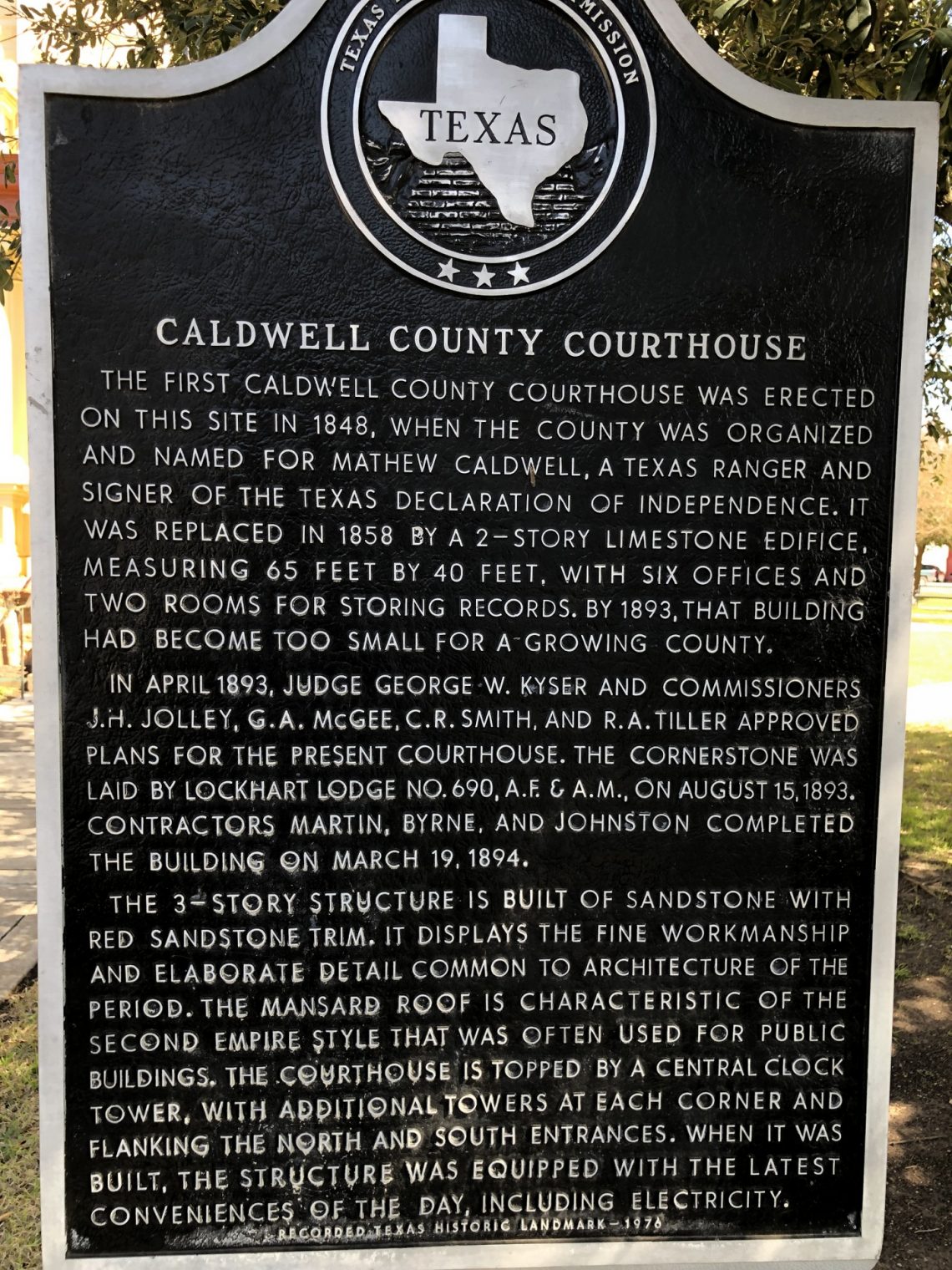
Day 3: Stroll past the central square.
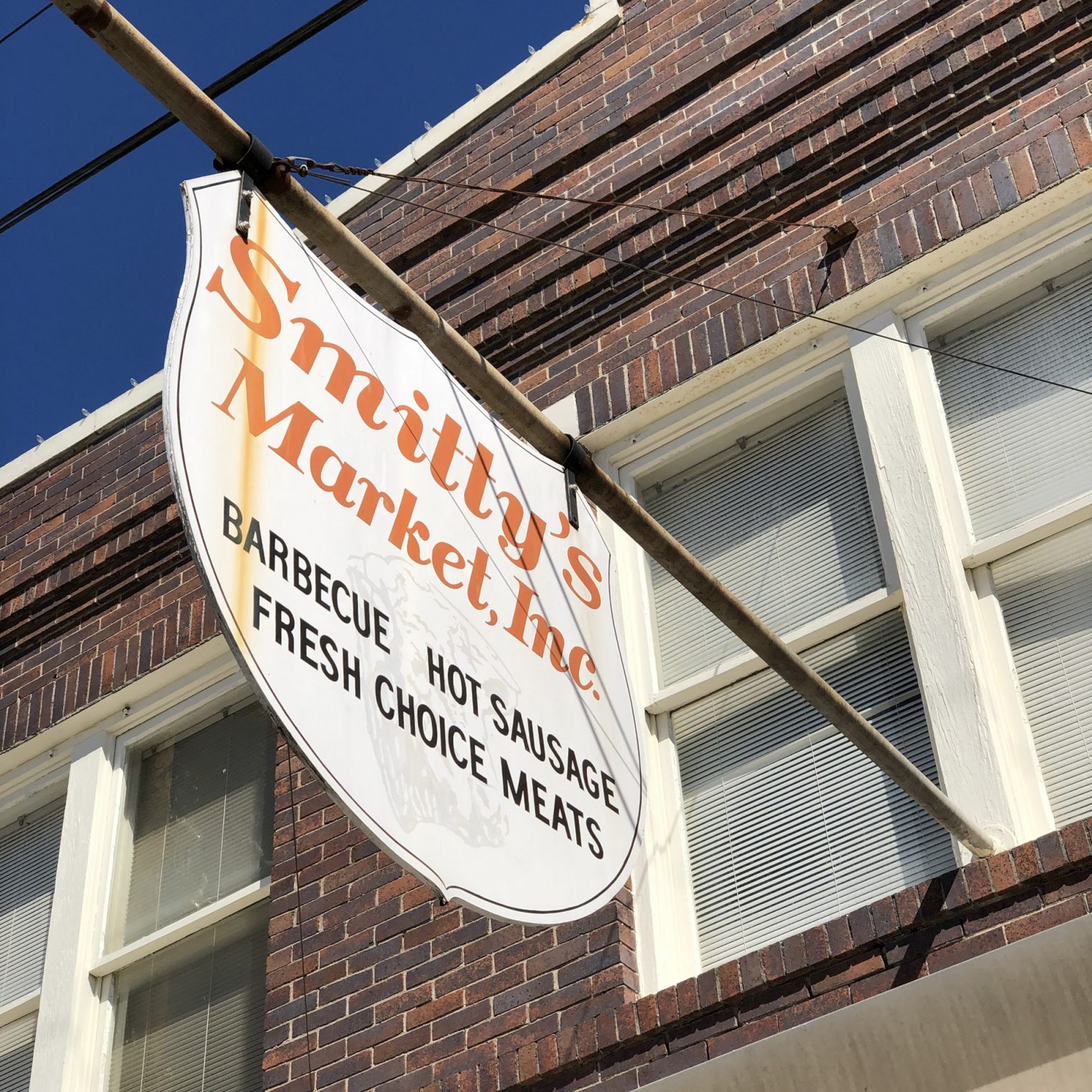
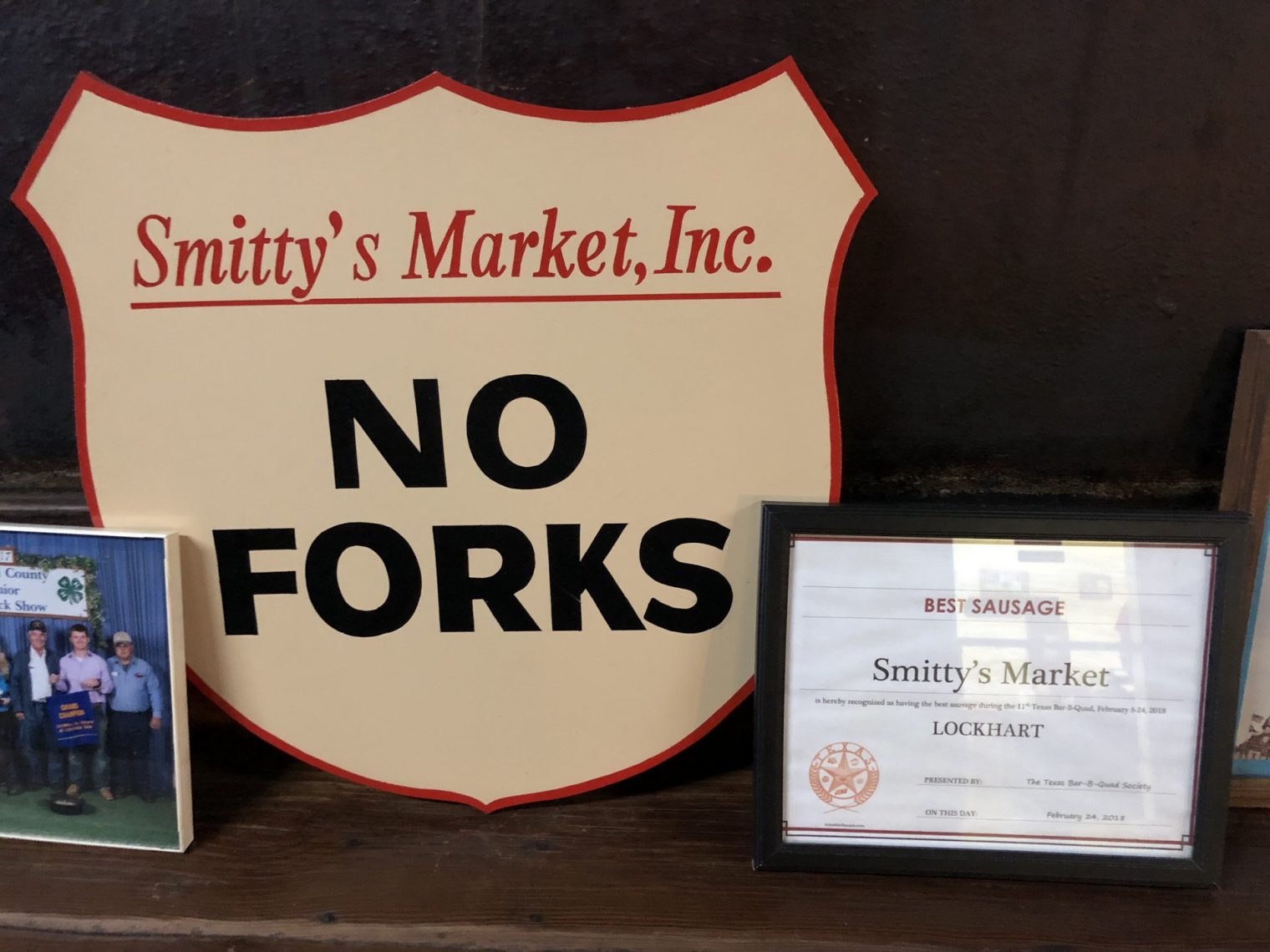
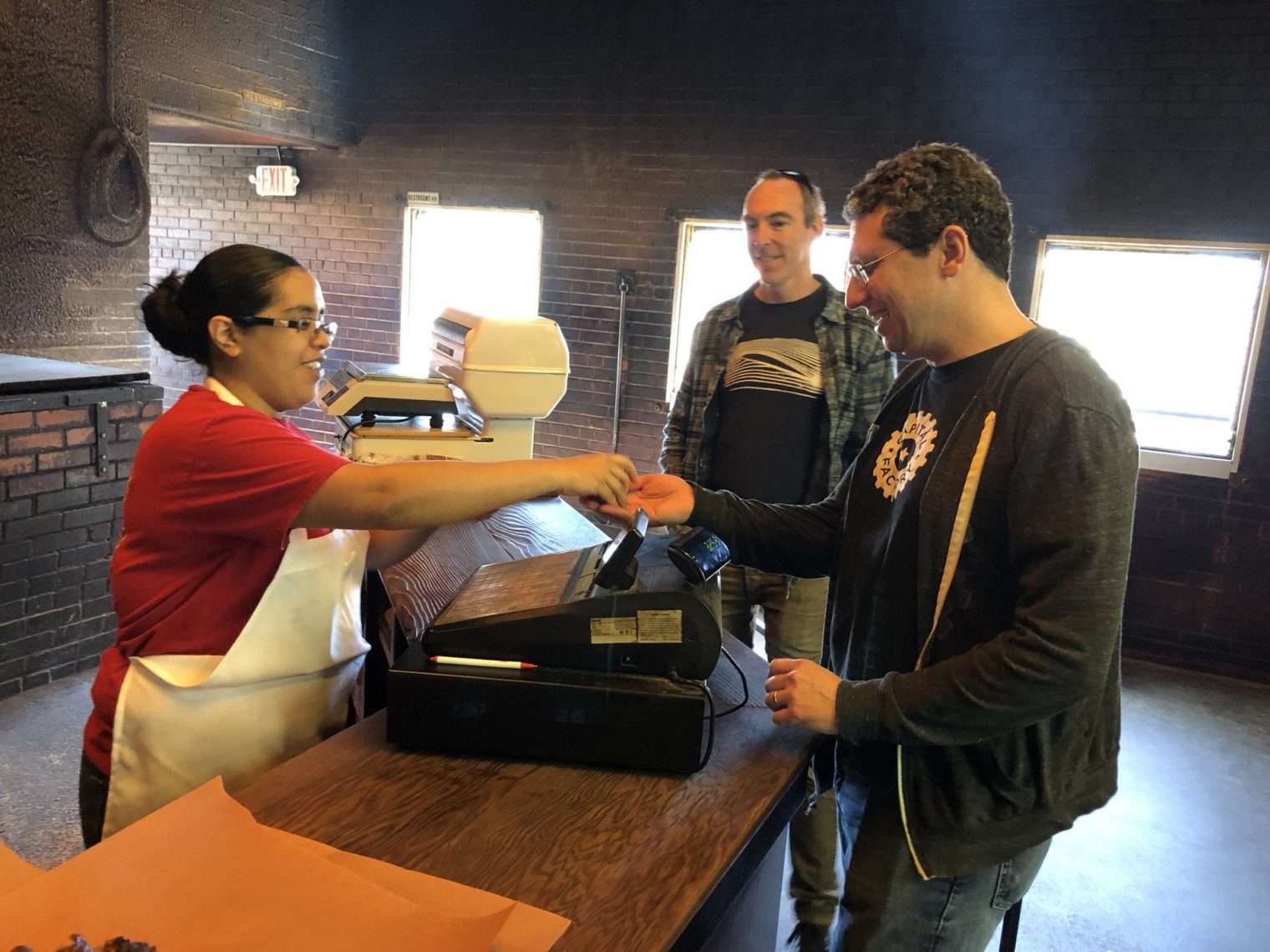
Day 3, lunch 3: Smitty’s (original Kreuz location in Lockhart). Turkey (moist!), brisket, pork ribs, prime rib, sausage (she specifically asked if we wanted a softer one, almost apologetic for the conventional firm sausage). Mac and cheese and beans. Desserts: not special. Meat and sides come from two different counters and are paid for separately. There are no forks (plastic knives are provided, though, and spoons are available at the sides/desserts counter). Dining area smelled funny. Decor: weak. Verdict: similar style/taste to Kreuz, but inferior venue. Overall rating: Good.
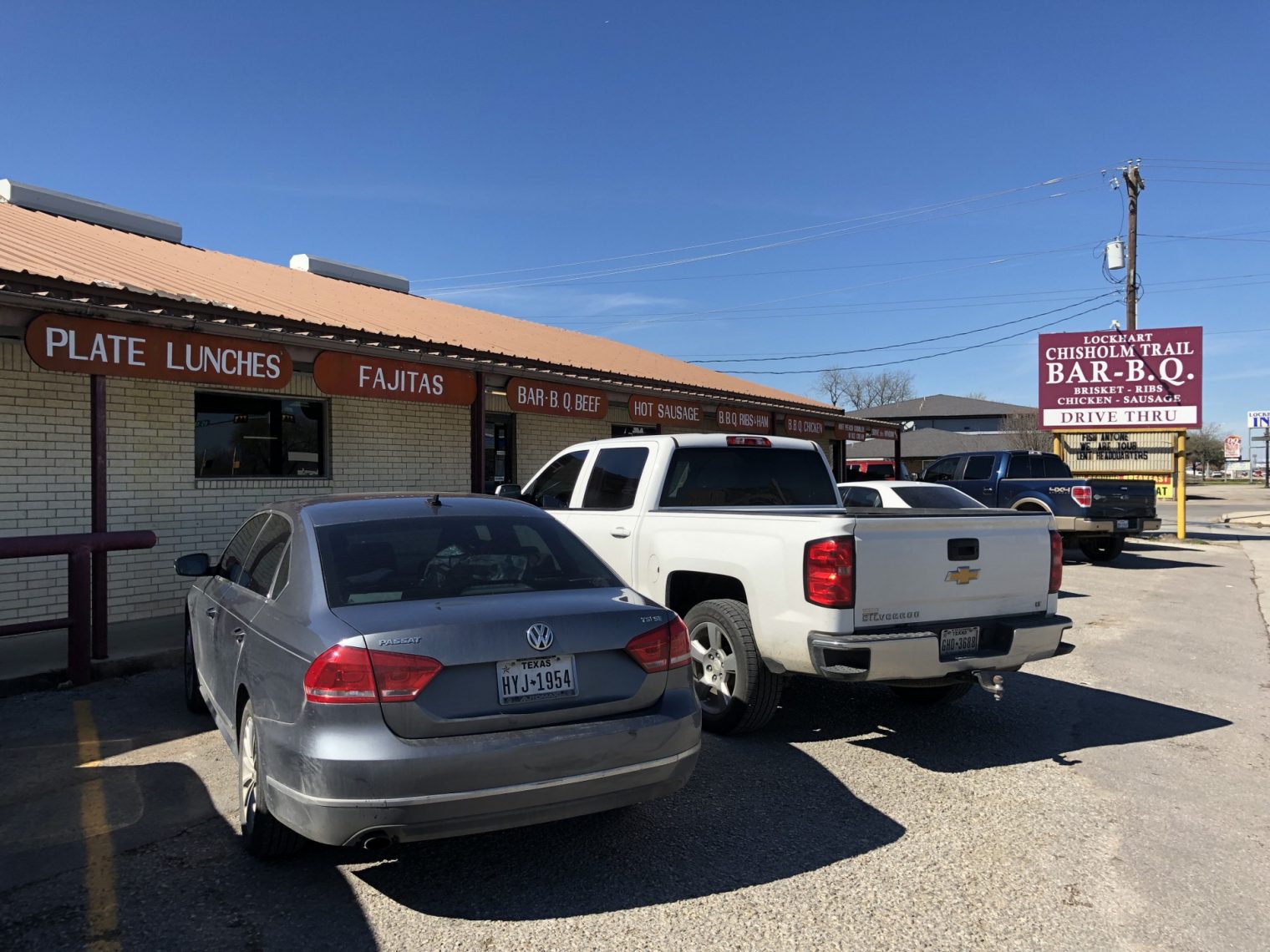
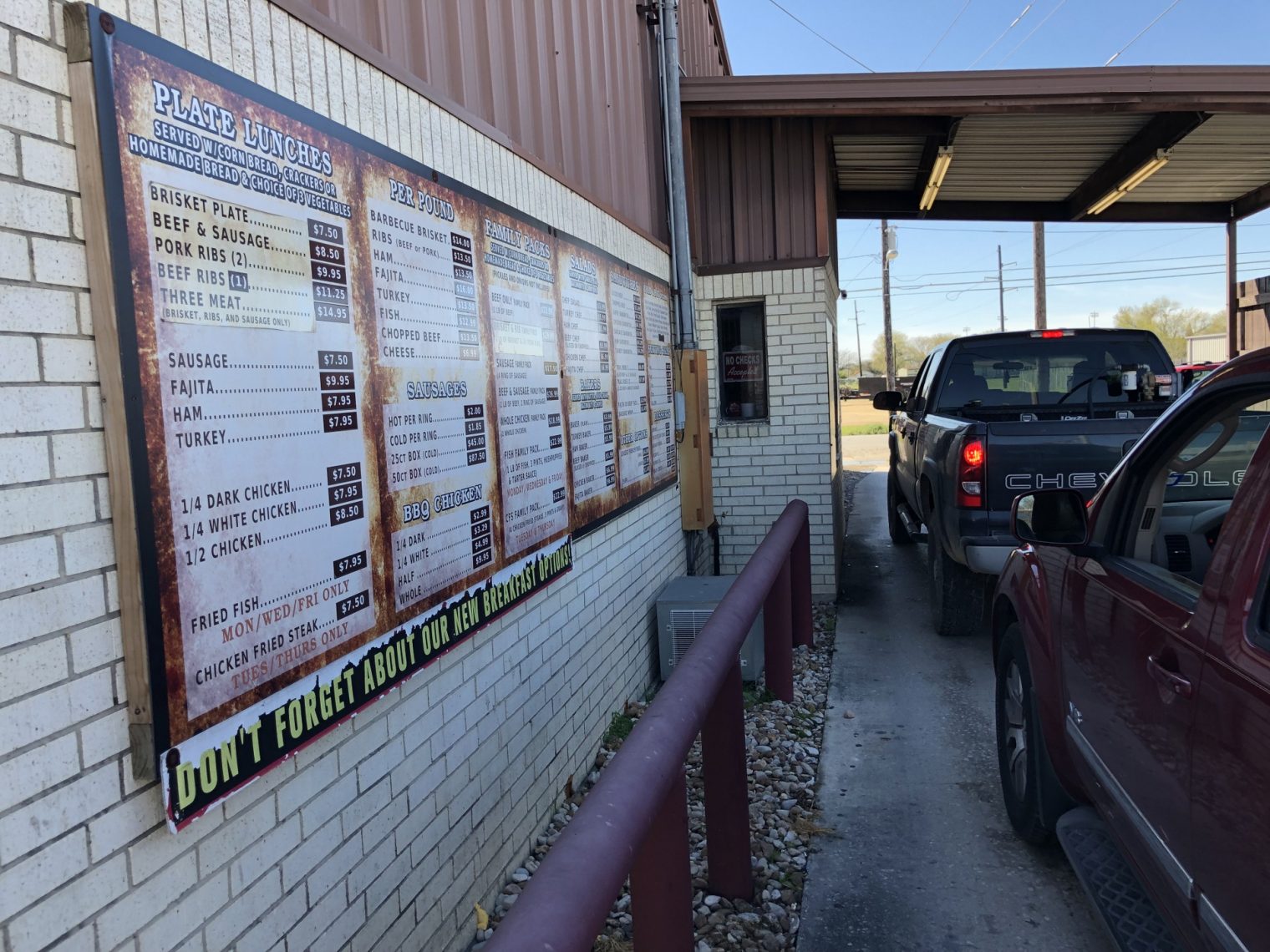
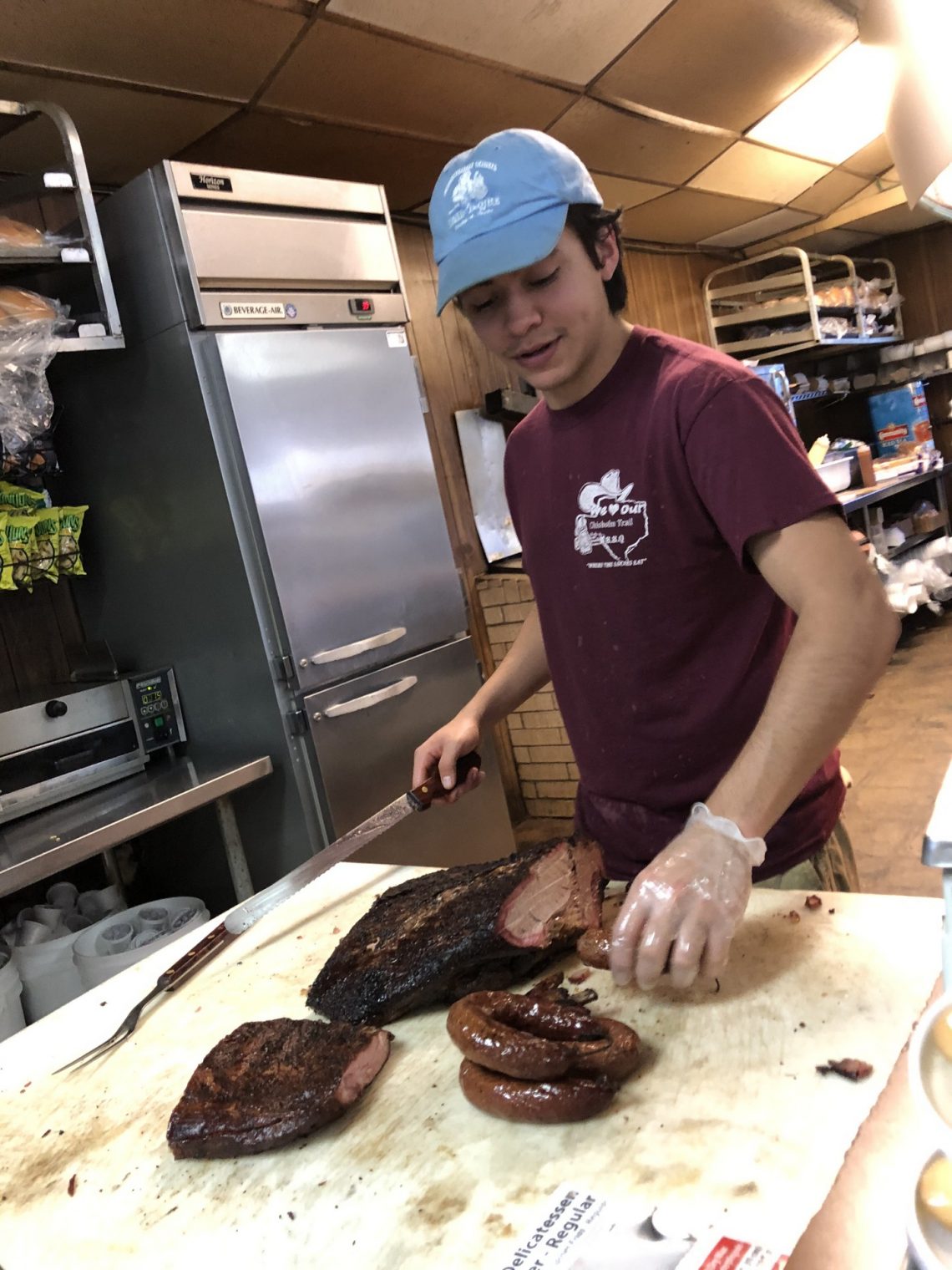
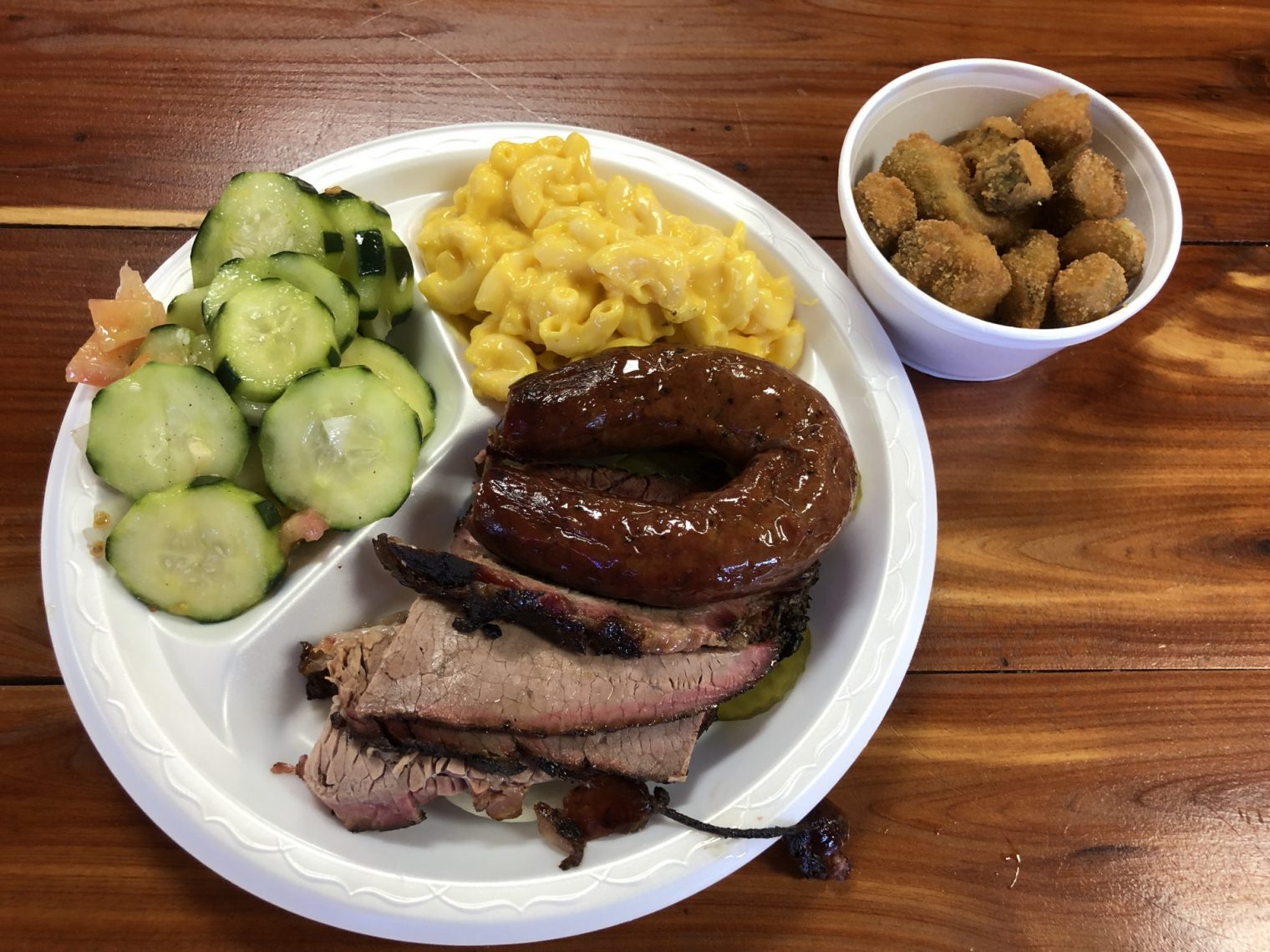
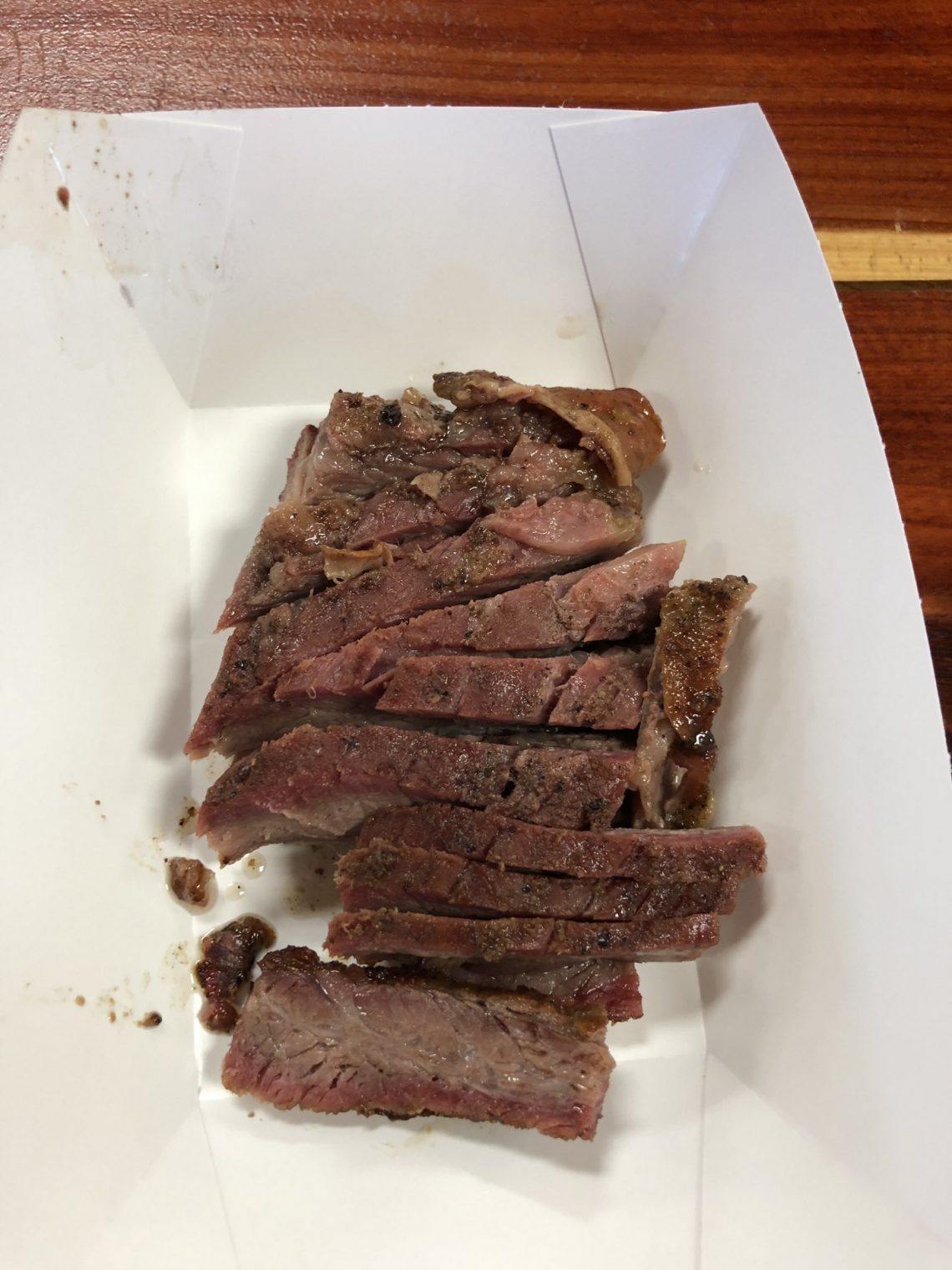
Day 3, lunch 4: Chisholm Trail BBQ in Lockhart: fajita skirt steak awesome. Brisket fair. Sausage fresh and soft. Mac cheese boring (John says not as good as Black’s). Fried okra not nearly as good as Stubb’s. Perhaps made in a batch in the morning and then left under the heat lamp? Pecan pie same style as usual; on top of gel, boring supermarket-style crust. Lemon Meringue pie: good graham cracker crust. Peach cobbler: super sweet. This is where the locals go (partly for the drive-through?) and the staff was the warmest. They also have the largest variety of food, e.g., fried catfish. Overall rating: Good.
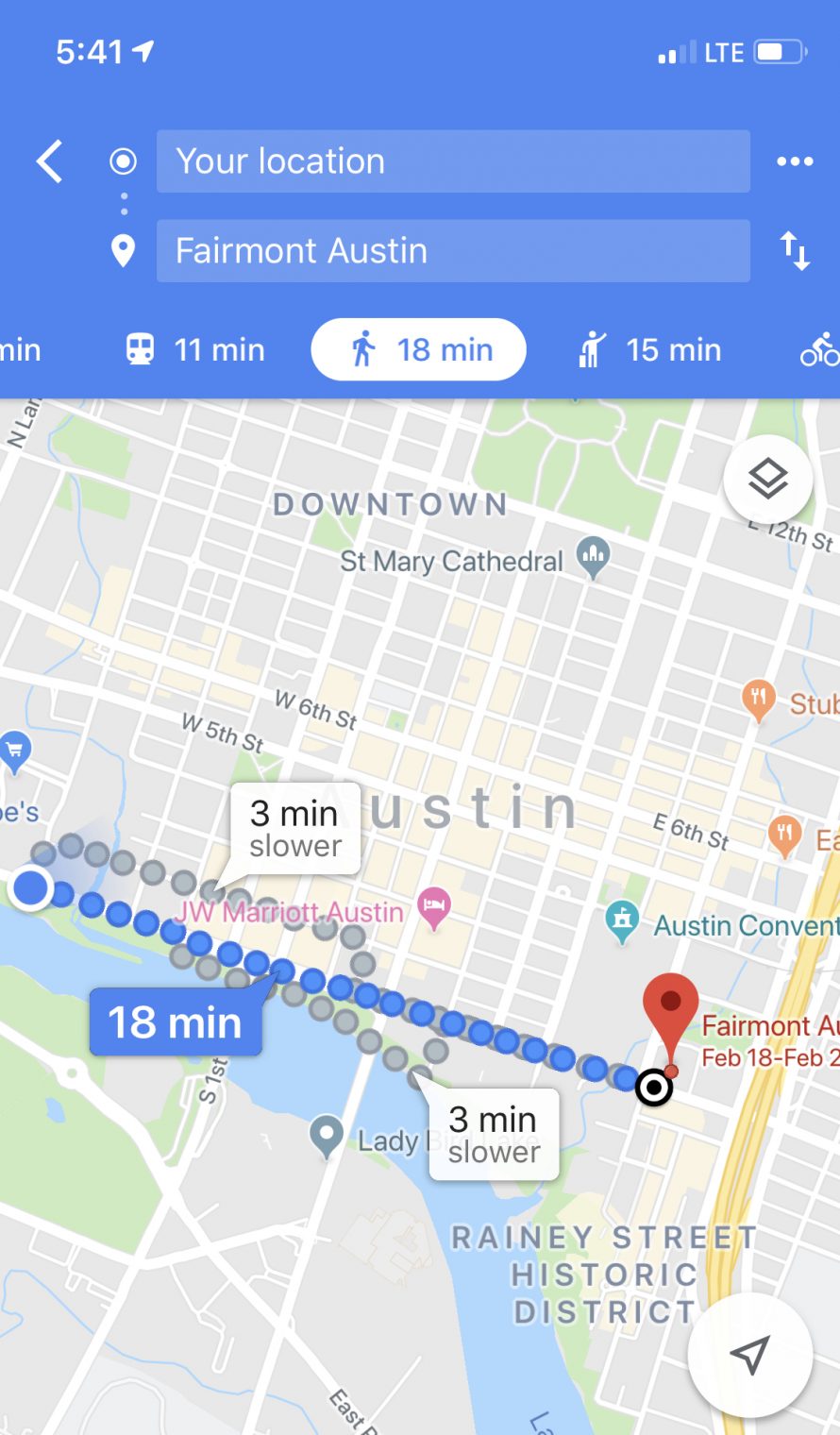
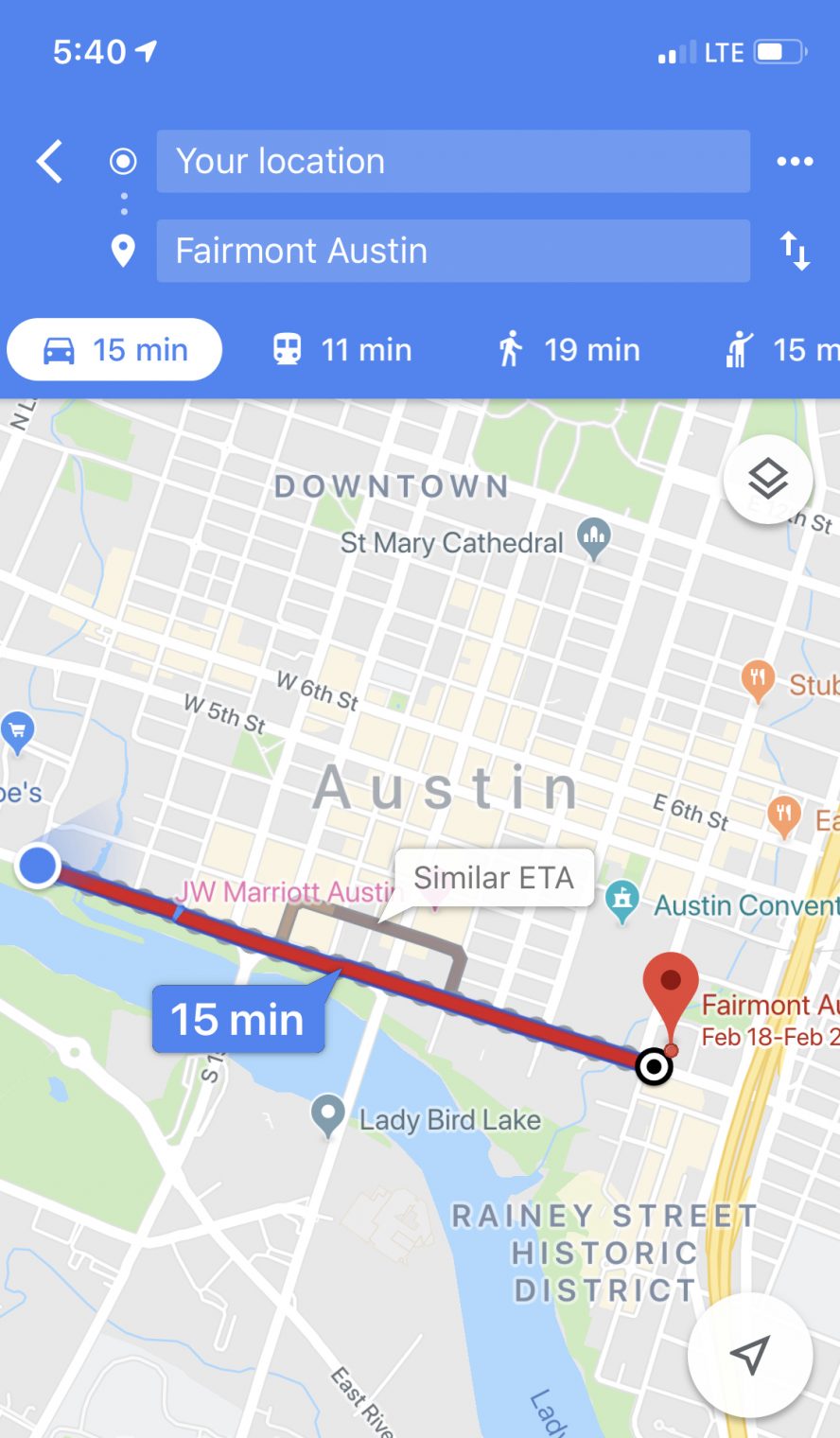
We drove back into town just after 3 pm and traffic was intense. Viewed from the hotel window, I-35 was jammed every day from 3-8 pm. We saw a single rider on one of the light rail system‘s $12.5 million cars. The system shuts down at 7 pm on most days after running a total of 18 trips (i.e., the number that the Moscow metro would run on one line in 18 minutes). After we walked up the river a bit, Google Maps showed that it would be 18 minutes to walk back to the Fairmont and 15 minutes to crawl on a surface road. Austin needs a third or fourth dimension for transportation.
Day 4: Cheat with a fruit bowl at the Fairmont and coffee (no milk or sugar) with Jack Long, veteran of three round-the-world PC-12 flights (someone should tell him about the invention of the twin-engine turbojet?).
[Blues Posse interlude, courtesy of J.J. “Jamie” Van Beek, lead singer, harmonica player, and Uber driver to County Line (he’s a fan, but also recommends brisket from the H-E-B Mueller supermarket at 51st and Berkman).]
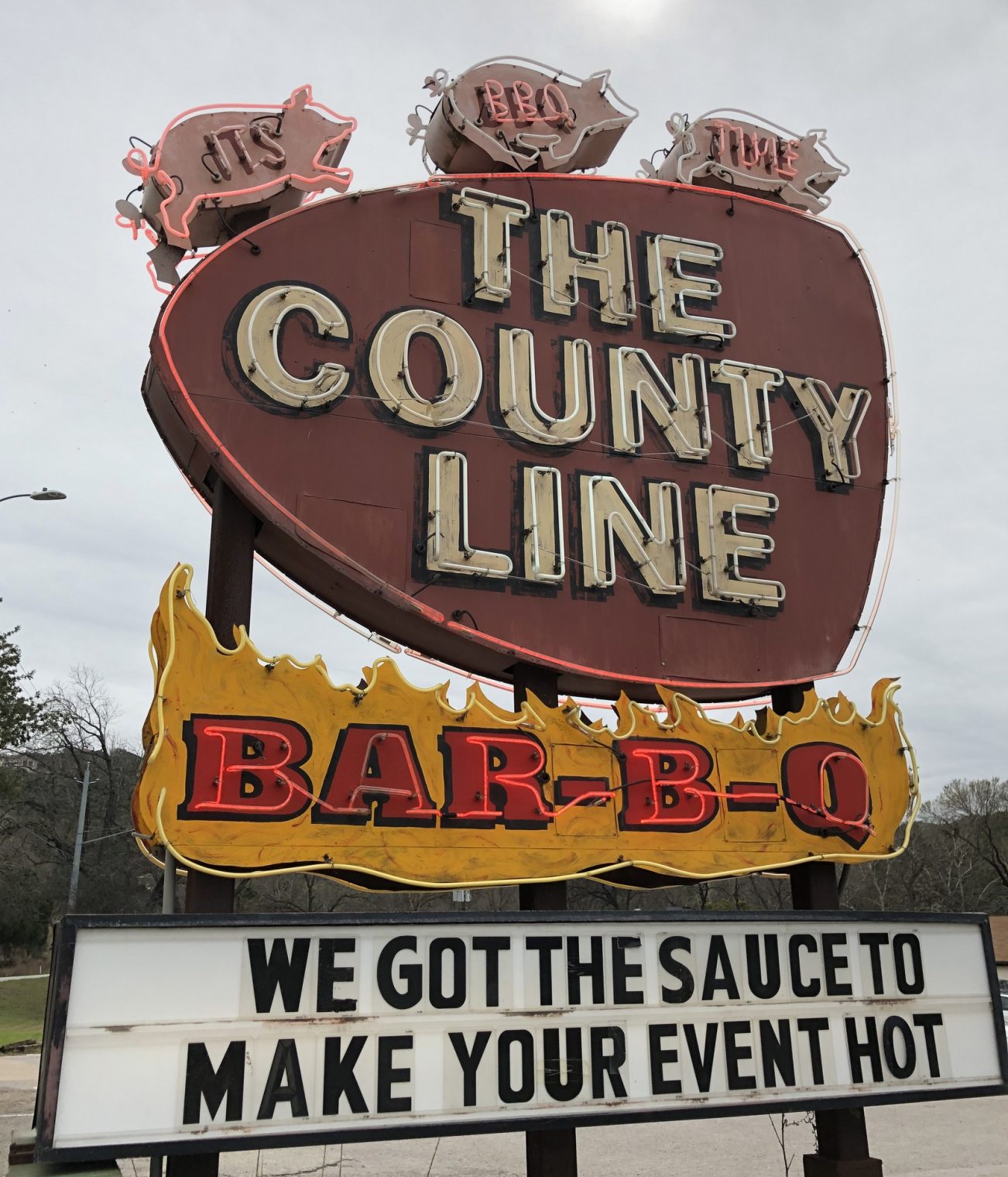
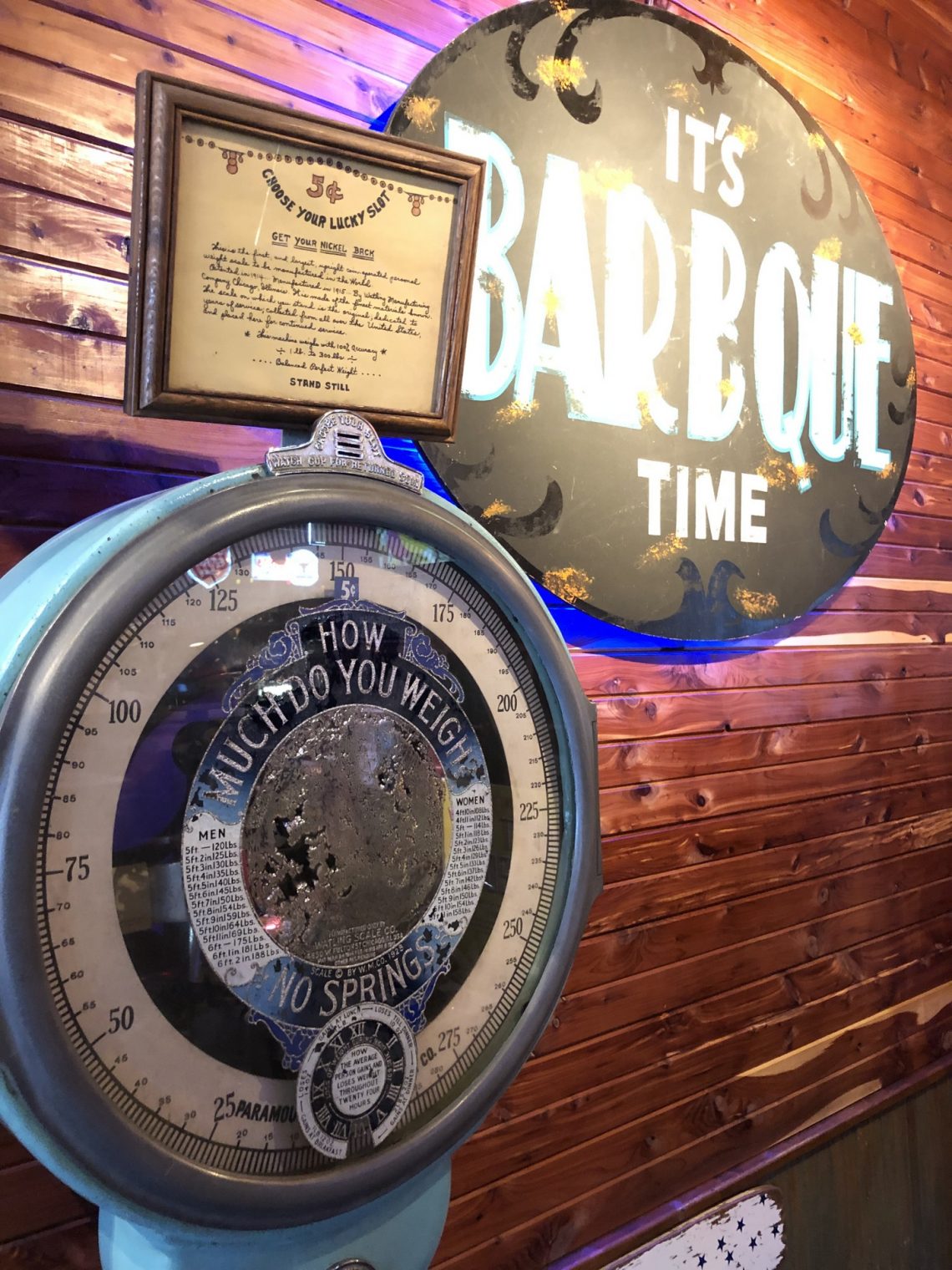
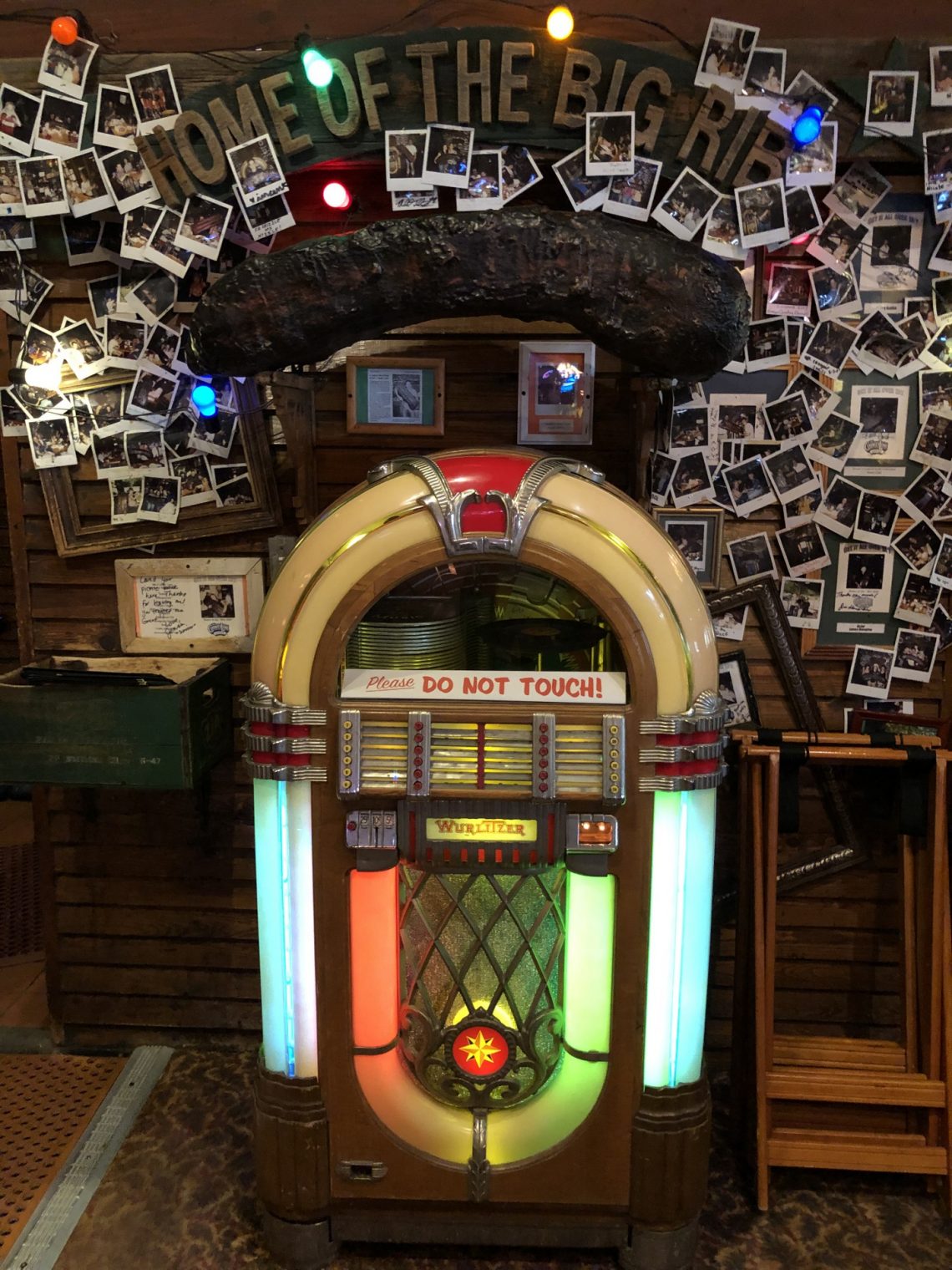
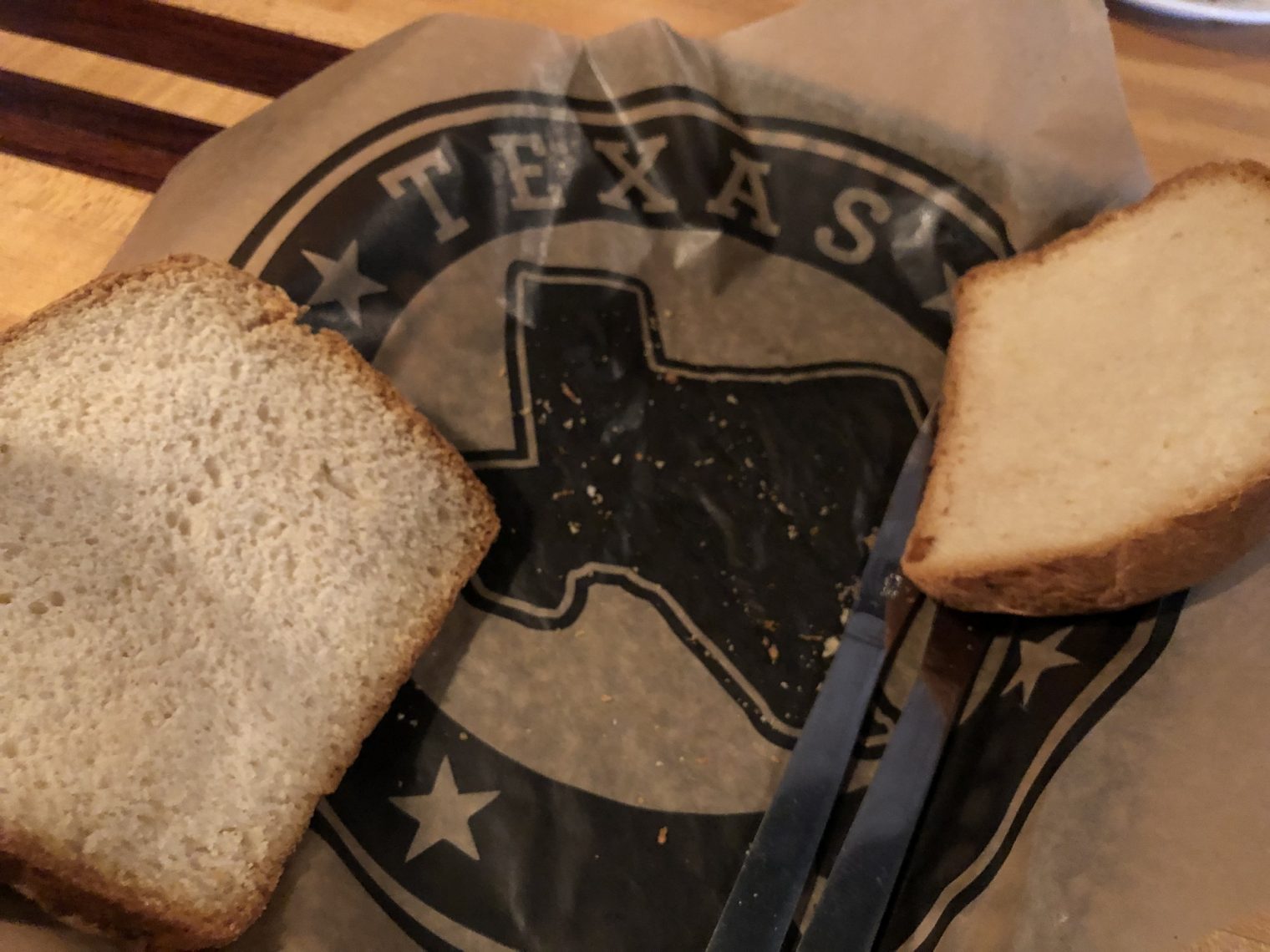
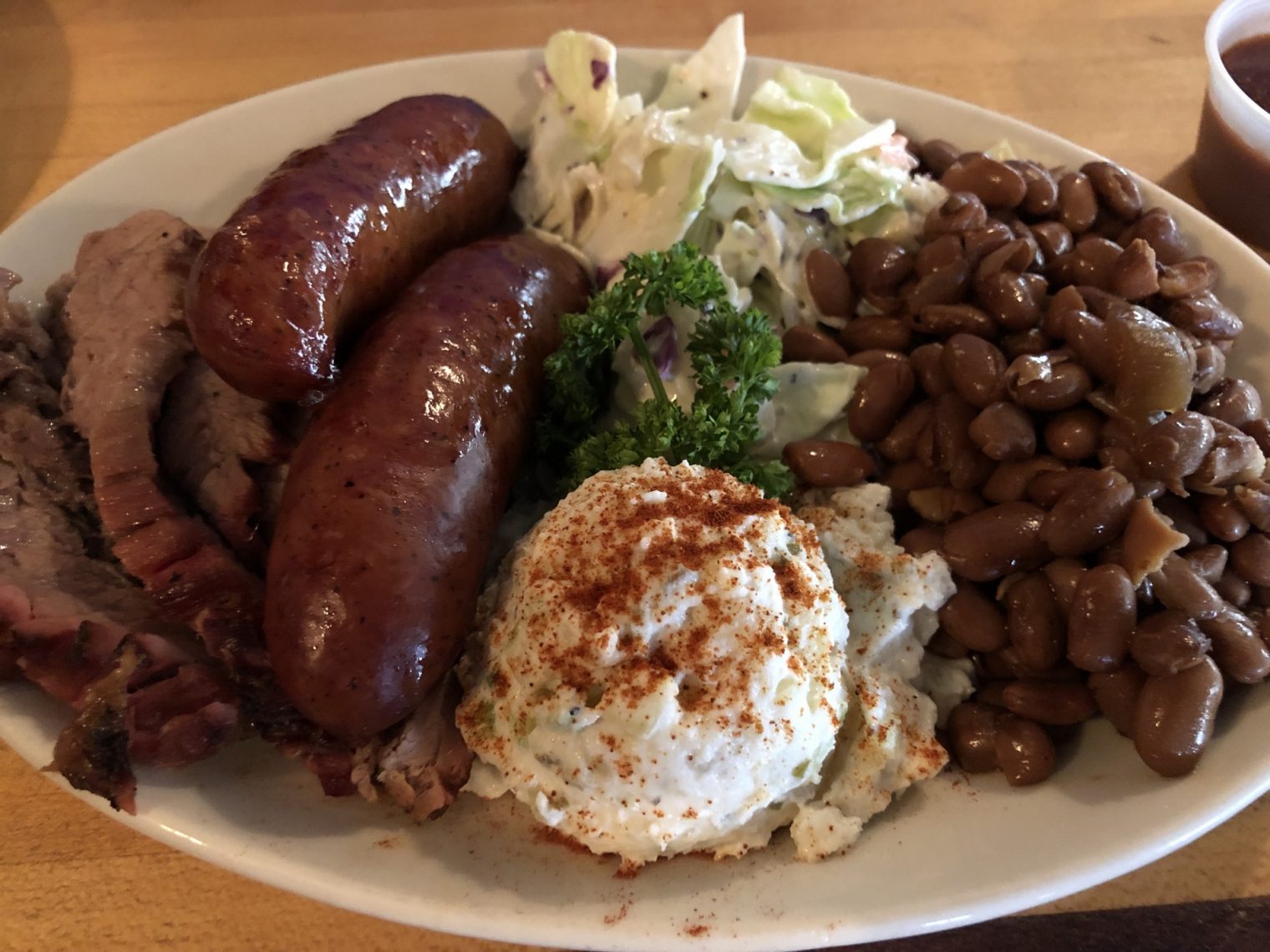
Day 4, lunch: County Line BBQ, Route 2222 in NW Austin. Homemade bread (awesome; sweet, chewy, and thick). Lean brisket (fair). 2nd cut brisket (moist and delicious). Sausage (firm, good). Beef rib (charred; not as good as Black’s Lockhart). Minimal choice of sides: potato salad, coleslaw, baked potato, beans, salad (no mac and cheese!). Peach cobbler: great and not too sweet. Pecan pie: Nuts-over-glue style, yet somehow better than the others. The gel/glue tasted nuttier and less sweet. The nuts on top were crunchier. We still preferred Cooper’s pecan cobbler. Much more elegant experience than the others: table service (excellent), interesting decor, waterfront location. John gives authenticity bonus for the well-dressed customer getting out of luxury pickup in cowboy hat open-carrying a collectible quality handgun. Overall rating: Great.
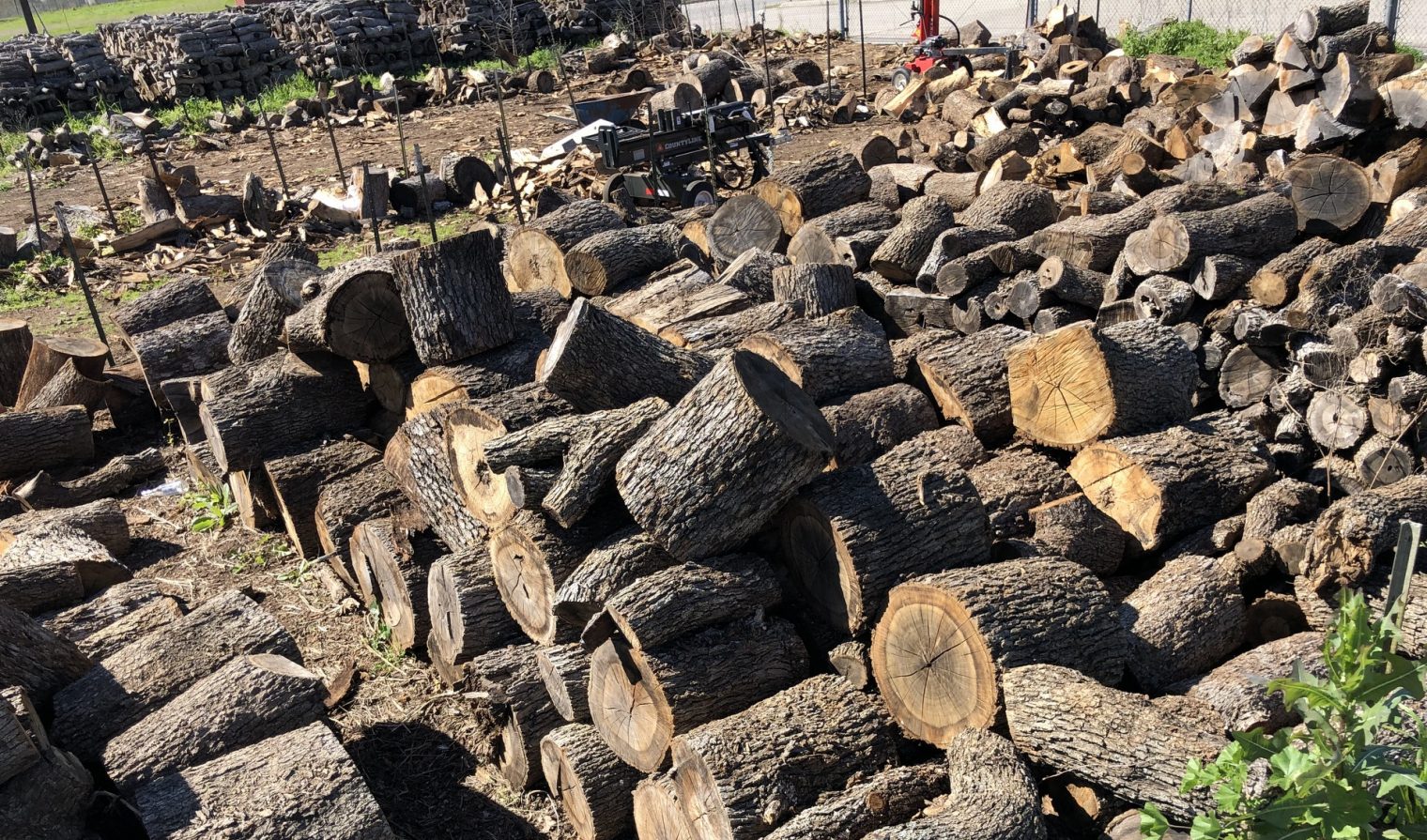
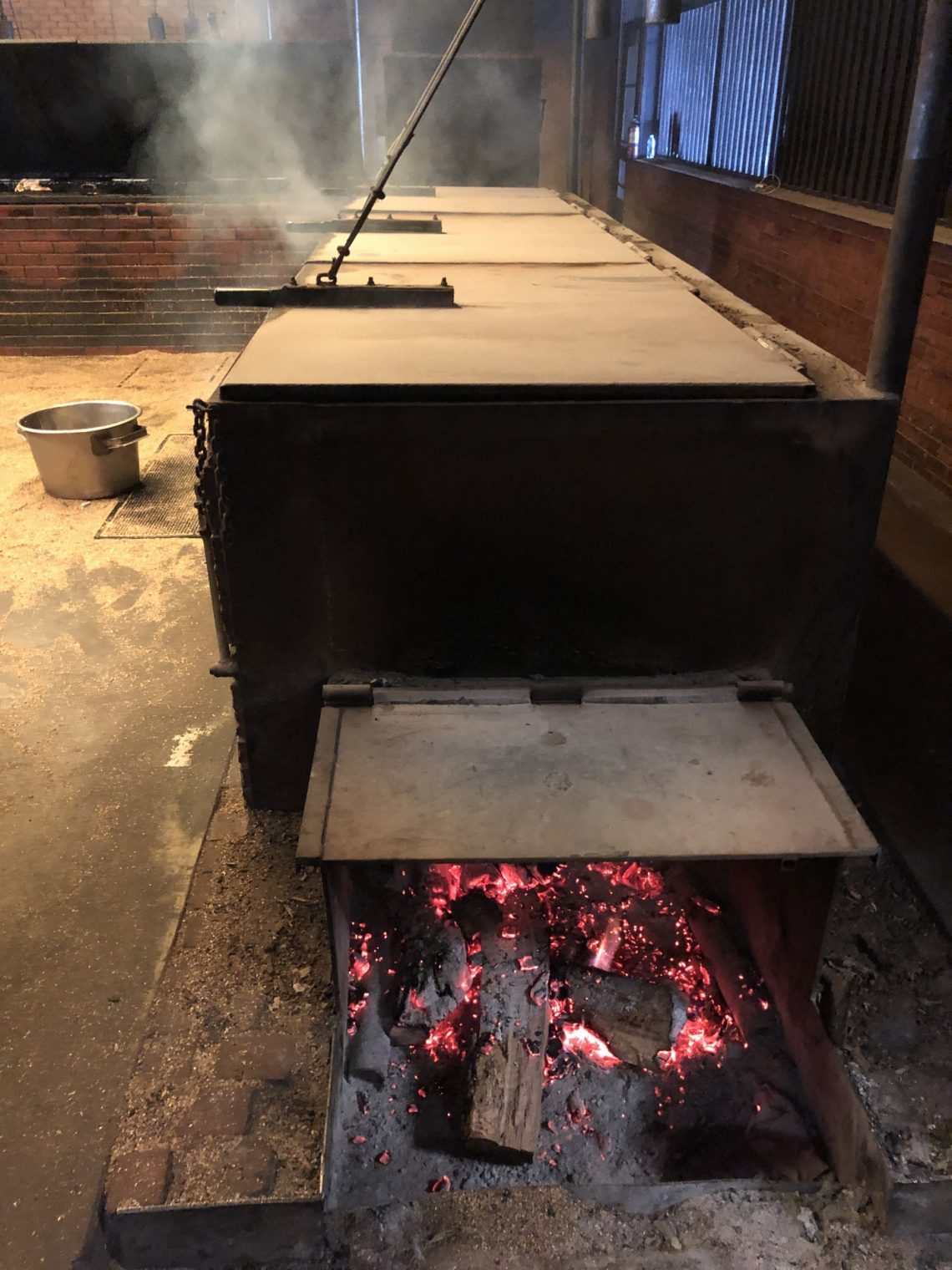
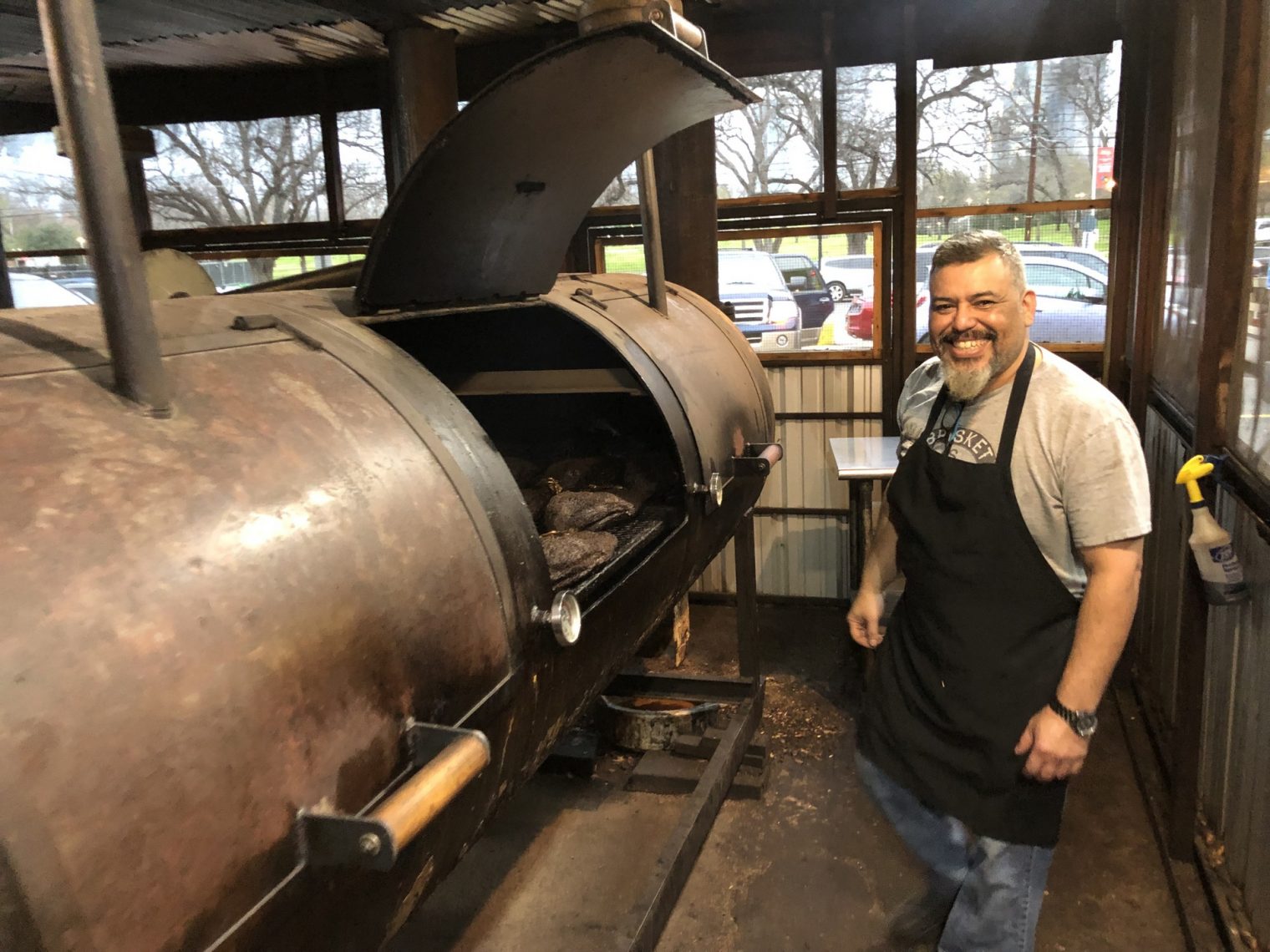
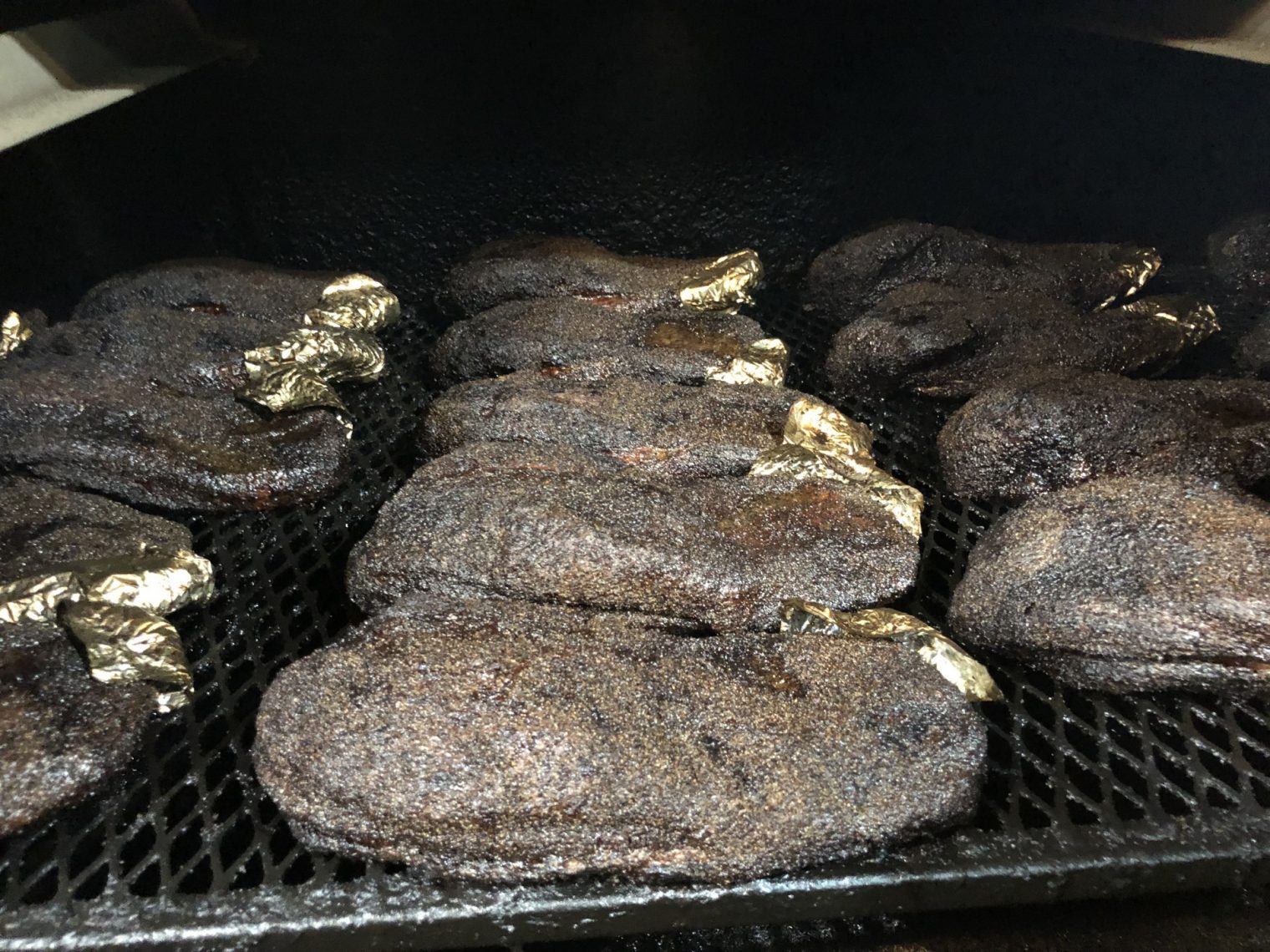
Day 4, dinner #1: Terry Black’s, just south of downtown. Superb moist brisket (see below for Ricky cooking the next batch of victims; all that you need is a big stack of wood and 14 hours of time). The most interesting and intense jalapeño cheese sausage. The best of the creamy bland-style Mac and Cheese (pasta was not overcooked, for example). Reasonably crunchy green beans. First butter crust for a pecan pie among the restaurants we tried and overall even better than Cooper’s pecan cobbler. Like a good pastry shop’s pecan pie. The peach cobbler, on the other hand, was gluey and sweet and no better than any of the others that we tried. Overall rating: Superb.
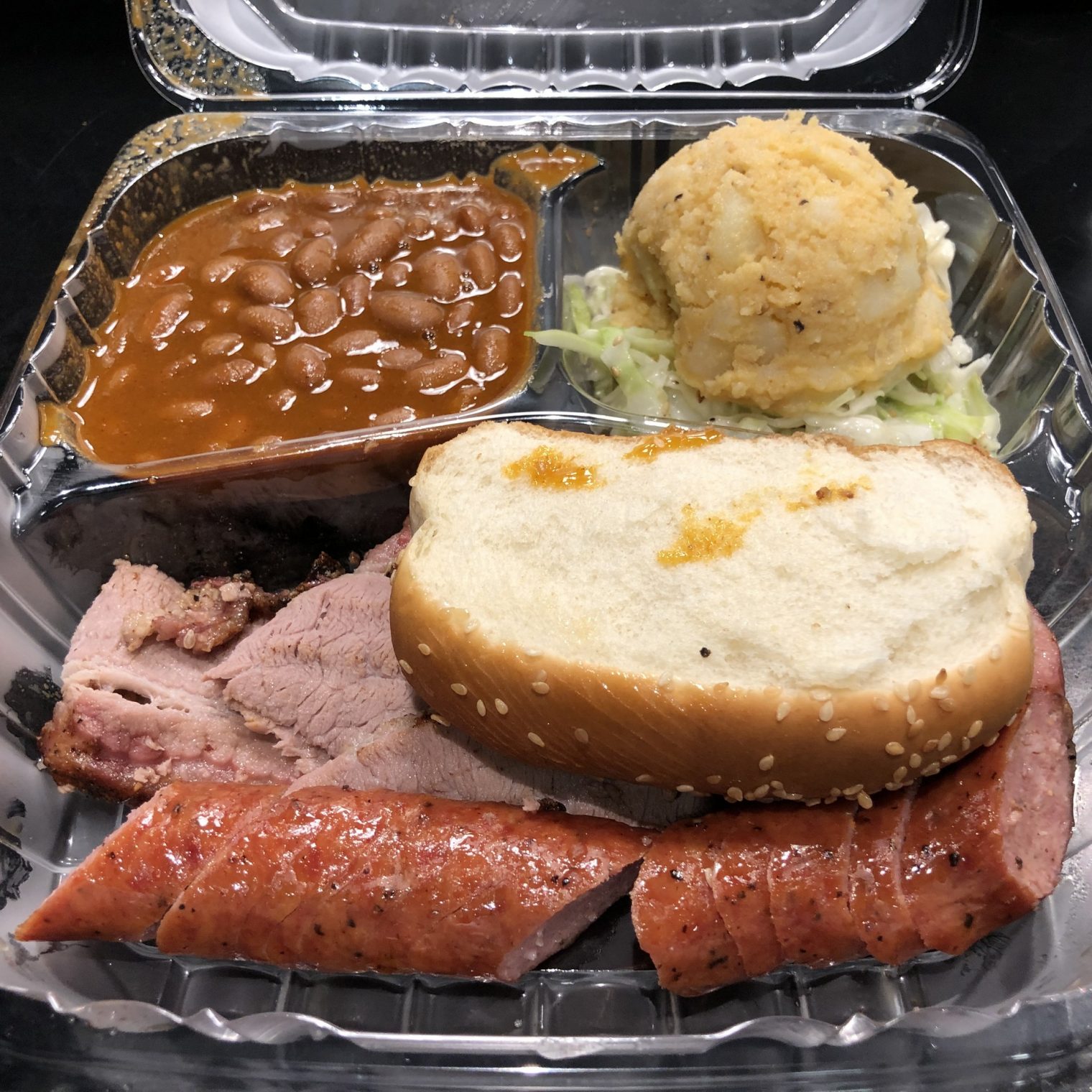
Day 4, dinner #2 (meal #10): Salt Lick BBQ’s outpost at the Austin airport. The best coleslaw so far. Good sausage, though quite peppery. Weak brisket (maybe due to reheating?). Sweet soft bread. Not competitive with County Line’s bread. Overall Rating: Poor.
Conclusion: My taste in mac/cheese is chewier and sharper than what folks in Texas like, i.e., creamy and bland. I am not a Texas BBQ dessert fan. The fruit-based desserts are not generally made with fresh fruit and they taste more like sugar than like fruit. Although we ate enough pecan pie to risk getting a nut rash, we never learned to enjoy what is apparently the classic Texas style of sugar gel topped with pecans.
Philip’s rankings: #1: tie between Black’s in Lockhart and Terry Black’s in Austin. #2: Cooper’s in Austin, with Cooper’s getting a boost for mac/cheese and dessert. #3: Kreuz Market. #4 County Line, with a boost for atmosphere, bread, and riverside location. Honorable mention: Stubb’s for fried okra.
John’s rankings, based on brisket and beef rib: #1: tie between Black’s Lockhart and Terry Black’s in Austin, #2 Kreuz Market, #3 Cooper’s, #4 Smitty’s. Honorable mention: County Line for bread and atmosphere.
Parting messages from the merchants at the airport…
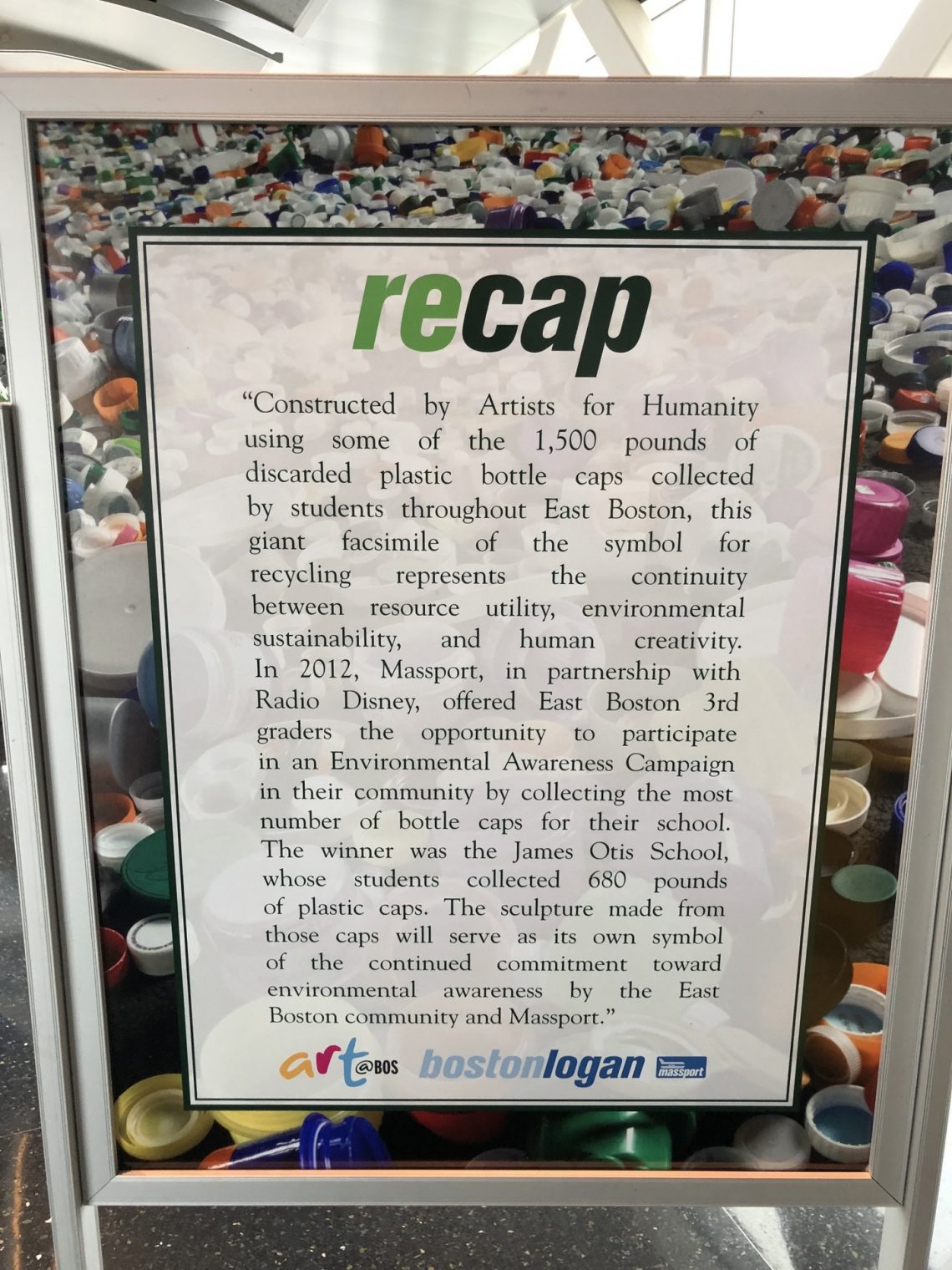
On a recent trip through Logan Airport, I found a celebration of recycling: artwork made from 1500 lbs of collected plastic. This was right in front of de-icing fluid being sprayed on aircraft that will burn 1500 lbs of jet fuel in the first 15 minutes of the climb.
(Folks who are passionate about gender equality will be dismayed to learn that 100 percent of the de-icing workers, who enjoy fresh breezes and freezing rain for much of the winter, seemed to identify as just one gender.)
First, a health inspector spotted several suitcases. Then she noticed an unusual stash of clothing, food and bedding. A young woman who was supposed to be a massage therapist spoke little English and seemed unusually nervous.
The inspector reported her findings to police. They would eventually learn that her suspicions were right: The women were not just employees: They were living in the day spa, sleeping on massage tables and cooking meals on hot plates in the back. Some of them had had their passports confiscated.
Beyond the lurid celebrity connection, however, lies the wretched story of women who police believe were brought from China under false promises of new lives and legitimate spa jobs. Instead, they found themselves trapped in the austere back rooms of strip-mall brothels — trafficking victims trapped among South Florida’s rich and famous.
“I would never consider them prostitutes — it was really a rescue operation,” the sheriff said, training his anger at the men whose demand for sex kept the massage parlors in business. “The monsters are the men,” he added.
So the male customers are “monsters”. What about the folks who actually managed the “human trafficking”? It turns out that they were neither male nor monsters:
Sheriff Snyder said investigators, who worked with Immigration and Customs Enforcement, estimated the trafficking ring to be a $20 million international operation. Men paid between $100 and $200 for sex, the sheriff said; between $2 million and $3 million have been seized in Florida, he said, including a safe stuffed with Rolex watches.
In addition to arresting men ranging in age from their 30s to at least one in his 80s, police charged several women who appeared to be overseeing the operation with racketeering, money laundering and prostitution.
What is the root of the problem?
State Attorney Dave Aronberg of Palm Beach County, whose office leads a human trafficking task force with the F.B.I., said trafficking foreigners to work in places like massage parlors can be more difficult to root out than trafficking, for example, American girls who are recruited in person or online.
So the Times would suggest that we vote for politicians who promise to make it more difficult for people to get into the U.S. (e.g., with a wall along the southern border and restrictions on via tourist and work visas for folks who arrive by air)?
[Note that immigrants in the commercial sex industry are referred to by the Times as “prostitutes,” but when American women work in this industry they are “sex workers” (example).]
Also fun from the front page today: “The Power of a $15 Minimum Wage: Research has found that a living wage is an antidepressant, a sleep aid and a stress reliever. And that’s not all.” (full article) But how is $15/hour a “living wage”? A full-time worker would need to earn closer to $45/hour to be over the income limit for subsidized public housing in NYC (family of 4) and maybe $50/hour to pay for Obamacare insurance without a taxpayer subsidy. The article opens with a young immigrant from Guatemala who has earned permanent residency (Green Card), but whose skills are insufficient to command more than minimum wage. What will happen to him when he is older and less productive and it is illegal for anyone to hire him at less than $20 or $25/hour (or whatever the minimum wage is then)? The photo shows that he is well on his way to obesity and type 2 diabetes. SSDI?
Kondo herself says that one of the best things to do with a gift is throw it out:
The true purpose of a present is to be received. Presents are not ‘things’ but a means for conveying someone’s feelings. … Just thank it for the joy it gave you when you first received it. … When you throw it away, you do so for the sake of the giver too.
I love almost everything Japanese (except dessert!) so I read the book (big print, double-spaced, so it takes only about one hour for a first read-through).
One thing that jumped out at me is that the book, first published in 2010, barely mentions the Digital Age in which we live. She talks about tidying up CDs, but does not note that 500 at a time can be ripped to a thumb drive. She talks about discarding some papers, keeping other critical ones, and putting receipts in a special place in her house. Why not scan? Is it because that just turns household clutter into C: drive clutter? Or because Marie Kondo hasn’t done any work with scanner?
Maybe she ignores the digital because Kondo is so in love with the physical. For someone who motivates people to throw out what must be millions of lbs. of usable stuff annually, she is herself far more devoted to stuff that the average person:
I began to treat my belongings as if they were alive when I was a high school student. … I can think of no greater happiness in life than to be surrounded only by the things I love. … All you need to do is get rid of anything that doesn’t touch your heart like this. There is no simpler way to contentment.
When you treat your belongings well, they will always respond in kind. For this reason, I take time to ask myself occasionally whether the storage space I’ve set aside for them will make them happy. Storage, after all, is the sacred act of choosing a home for my belongings.
[Your typical Cessna or Cirrus is probably pretty miserable, then, in its aging prefab T-hangar or merely tied down on the ramp!]
When she comes home she talks to the house, says “Thank you very much of your hard work,” to her shoes, “Good job!” to her jacket and dress, and tells her (emptied) handbag “You did well. Have a good rest.”
After a quiet drinking session one night at the Battle House Hotel in Mobile, we decided at midnight that it was time we started to wend our way back to the station, using the method by which we had come—hitch-hiking. The four of us stood on the pavement of the main street, in the direction of Pensacola, and waved our thumbs. A big open Oldsmobile cruised to a standstill. ‘Pensacola, boys? OK, climb aboard!’ The driver, a man of about 45 years of age, was cheerful—nay, downright jovial. This was not surprising considering the amount of alcohol he seemed to have put away. His joviality was somewhat blurred and his driving slightly erratic. He crawled along for a minute or two, then stopped again. ‘Hey! Any o’ you fellers want a piece of ass before we get going? On me, boys—my treat. How’s about it?’ What on earth was a ‘piece of ass’? We looked dumb—he thought so, too. ‘You Limeys don’t know what a piece of ass is? You don’t want a jump? Hell! You know! A woman! A good whore! How’s about it?’ To a man we declined. His opinion of Limeys had hit an all-time low. What sort of fellers were these? ‘Well, I’m having me a blow-through before I leave town. Only keep you waiting ten minutes, boys. Hey! Officer!’ (This to a policeman, patrolling the street.) ‘Hey! Officer! Where’s the nearest whorehouse?’ The policeman wasn’t at all put out by the request, the inflammable breath or the bleary bloodshot eyes. ‘Second left, third house on the left. Good house, too. OK?’ We drove down. He pulled up the car with a screech of brakes outside the brothel; a good-looking three-storey house in a nice enough district. ‘Sure you won’t join me in a piece of ass, boys? Round your evening off nicely.’ He leered. Then he stood up in the car. ‘Hey! Mother! Bring out your whores! Bring out your whores!’ He was bawling at the top of his voice. ‘Goddammit! Woman! Bring out them whores, for Chrissake!!’ I wondered how much longer he would create a disturbance before someone did something about it. Then suddenly a first-floor window opened. A middle-aged woman, hair in curlers, stuck out her head. Her voice was equally refined. ‘Now you just git the hell out o’ this. My girls have had a long, hard day and they’re all tuckered out! Git the hell out of it!’ ‘Ah! The hell! You just git them whores o’ yours down again and open this goddam door! I’ve bin pinin’ for a piece of ass for the last two hours and I just ain’t goin’ home!’ ‘Mister, you can just fuck off. All my gals are in bed and you ain’t gonna see one of ’em!’
Pettigrew and I were at the Villa Venice, one of the better night-clubs on the Beach, with a very good, well-dressed floor show. We had sat through two shows but Jim, whose whole world revolved round girlies, insisted on seeing the third and last performance. … The last show gave him his chance, for the girls appeared clad only in wonderful head-dresses, gauntlets, high-heeled shoes and G-strings. Jim shook me back to life. ‘They’re on.’ So they were. And Jim was right—she was a honey. Blonde, about 19; and everything came out and went back again in exactly the right places. She smiled at him and made his day. We were cold and shivering outside, despite our greatcoats. … Eventually she emerged, looking lovely enough to eat. Her hair under the lamplight was beautiful. She wore a mink coat which she must have earned the hard way. Her legs beneath it were the pride of Florida. As Jim moved towards her, she declaimed—from 20 yards, in a rasping voice which can’t have done a thing for Jim’s ego: ‘It’ll cost you 30 bucks!’ It must have been a hard life for a high-kicker in Miami. ‘Thirty bucks?’ said Jim, incredulously. ‘Thirty bucks? Jesus! I only want to borrow it, not buy it!’ She swept past us with a look of contempt. Her perfume and the swish of her mink wafted over me. Strange things, girls, I thought. And how bloody awful to be so hard at 19! Already she must be sick to death of men. She isn’t young any more. Boys, young men, have been left far behind, and the wallets of the well-to-do—men of any age, shape or colour—are her only interest.
The old white guy who led the First Parish church in our suburban town (Lincoln, Massachusetts), a union of Congregational and Unitarian, retired. The Millionaires for Obama on the church hiring committee found Manish Mishra-Marzetti, a young Indian-American (Indian from India, not Indian like Elizabeth Warren) to become the new minister (in 2015). He, his husband, and their two adopted kids (characterized as “African American” in the video link below) moved into our midst.
On paper, at least, this guy is exactly the kind of person that the residents say that they want to assist and/or get to know better. He’s the child of immigrants. His skin is nearly as dark as a Virginia Democrat headed out for a party. He identifies as LGBTQIA. He organized trips to our southern border to assist migrants. He sermonized against the evils of Trump and Trump supporters.
In a YouTube talk, he tells the story of playground interactions with the soccer moms. Spoiler alert: He bailed out on our boring suburb and moved to Ann Arbor, Michigan. This can’t be because he didn’t want to pay the 30-percent property tax increase (we are demonstrating our commitment to environmentalism by bulldozing a 140,000-square-foot school, having trailers trucked in to house students for three years, and constructing an identical-sized school on the same spot (full story); at $110 million and considered per-town-resident-student, this will be the most expensive school ever built in the United States). As pastor, he received free housing from the church and I don’t think that the church-owned house was subject to property taxation.
Watch the video (start at 8:30 if you’re pressed for time) and see what the Harvard Divinity School graduate learned!
The video made the rounds on our town’s mailing list. Some excerpts from the Millionaires Who Hate Trump (formerly the Millionaires for Obama):
Where is the outrage? The outrage each and every one of us should feel that we are the cause of this man and his family moving half way across the country so they could feel welcome!
Being black in America is dangerous, especially these days. Being a woman in America is dangerous as well. Being a Muslim is dangerous. Being any person of color… Being poor and homeless is dangerous as well – and there are homeless in the suburbs, even [Happy Valley].
When we were in our adoption classes years ago, one lesson I heard there and have learned over and over again is that if our children say they are being discriminated against, we had best believe them. For those of us that are members of the dominant society, it is not possible to fully recognize all the nuances of racism.
It’s unfortunate that the First Parish could be blamed for Manish’s unhappiness, because they extended an invitation to him and his non-traditional family, which other organizations might have denied. [i.e., because it was two daddies and two adopted children, this guy should have been grateful for the job because the rest of the country is even more hostile to gay multi-racial families? Where is the evidence that other Americans are yet more racist?]
it’s awesome how open and welcoming Ann Arbor has been, guess I need to check my own prejudgment of the general Midwest! [the minister’s new job, mentioned favorably in the video, is in Ann Arbor; folks here know so much about the rest of the U.S. that they assume Ann Arbor is solid MAGA land! (the square around Ann Arbor voted overwhelmingly for Hillary Clinton in 2016)]
He talks about his children which is a difficult issue for a male parent. [What better way to show one’s lack of prejudice than to assert that men are inferior at handling the challenge of talking about children?]
The perceived’symbolic moat around our Town should be a wake-up call that I hope our Town leaders will address. Perhaps the [Board of Selects] might consider forming a Task Force on Ethnic and Gender Diversity and Inclusion in [Happy Valley]. The enormous amount of money we are spending on a school building will not make a “school” unless we teach the values of embracing differences to both parents and children in school and outside in “playgroups”.
As a person of color [who let her in?!?], I am quite tired of “seeing the intent” of my fellow citizens, and having to assume the best of them every time I’m asked where I’m from (or even “where my people are from” if I don’t play along nicely. Even in the [Happy Valley] post office I was asked if I was from Outer Mongolia. Hey, I’m from New Jersey.) I’ve spent a lifetime of assuming the best of people when they make me feel like “other.” Maybe it’s time for the majority to take a deeper look at their own biases and presumptions. Please don’t whitesplain Manish.
Do you know how many times I’ve been asked where I’m from? Exactly zero. Because I’m white. It’s not difficult to understand how a question like that, given our society’s history, could bother a person of color who not only has to field the question frequently but recognizes that the question often comes with undertones of “do you belong here?” [You belong if you want to spend $250,000 per town-resident student on a renovated school!]
I cannot convey enough how valuable this book has been for me. Everyone can get something from it. White Fragility by Robin DiAngelo [I don’t think it addresses how whites should deal with the fact that average white IQ and income is lower than average Asian-American IQ and income]
Speaking as a woman who was an international athlete in the 70’s and who suffered greatly from the negative assumptions then prevailing about physically strong women and the privileges available to male athletes which were denied to women, I can attest that although times have changed for the better, I still see anti-female intent in events where others don’t necessarily see it. The Kavanaugh interviews were a good example.
[From a guy with an Indian-sounding name] Most (All!) immigrants are vulnerable. On some difficult circumstances they had to leave their native country. They are looking for support and help. [Maybe the U.S. could set up a program where an immigrant who wants support and help could get free housing, food, health insurance, and smarthphone from the government? To be funded by taxes on the native-born…] Hence an immigrant can feel intimidated by seemingly unfriendly questions. … The color of skin adds another layer of sensitivity. Here it is a function of profiling the person as less intelligent or of lower character. I observe this as a cultural issue in the US because of the history. Because of my own skin tone, i have faced such individuals.
On Sunday afternoon, over a hundred people gathered [at the church] for a facilitated workshop and discussion of our reactions to the video. … The First Parish, founded in the New England tradition of individual thought and conscience, is a democracy. [I wonder how long a member would last after expressing the individual thought that Donald Trump would make a better president than Hillary Clinton!] Many people who thought they had gone out of their way to welcome Manish and his family to the church and to [Happy Valley] are disappointed by their failure to make that welcome fully understood. [The white say-gooder (few actually take action and rise to the level of “do-gooder”) is doomed to be misunderstood] We do need to take a careful look at who we are and who we appear to be when we deal with newcomers and people who feel like outsiders. [i.e., the problem is mostly the appearance of white narrow-mindedness]