New York’s pied-à-terre tax vs. Florida’s homestead discount

New York City (and maybe the state as well) are generating outrage by proposing to tax residential real estate that isn’t a primary residence at a higher rate than the same property would pay if occupied by somewho who was a full-time NYC resident.

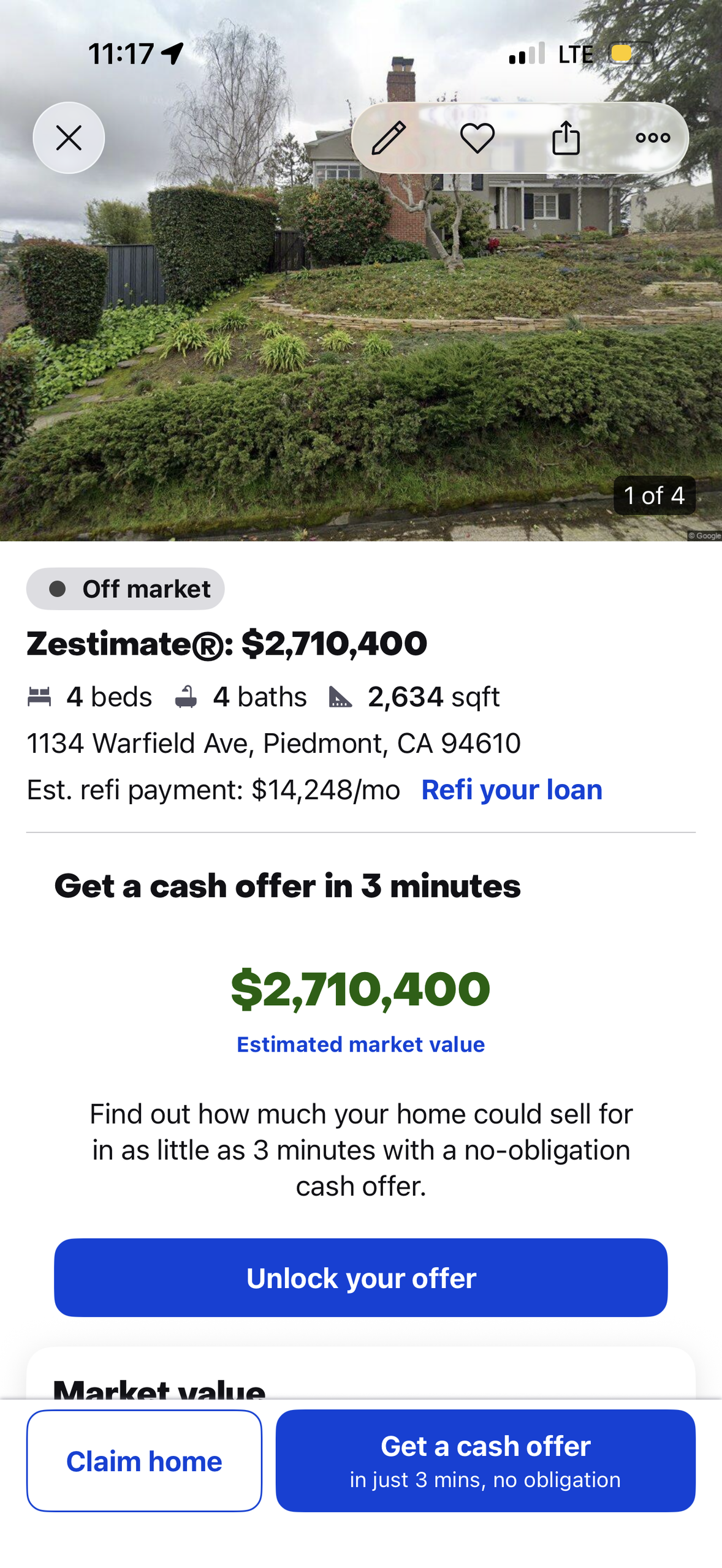
What other city or state indulges in this outrageous abuse of society’s successful? Florida! Let’s look at starter homes in Palm Beach. Here’s one that was purchased for $4.45 million in 2011 and is today worth $14.3 million (Zillow).

The tax assessment is still less than the purchase price, presumably due to the fact that the assessed value for a “homestead” (primary residence) can’t go up more than 3 percent or the increase in CPI, whichever is lower:

If there were an identical house next door and it sold for $14 million to someone who used it only 4 months per year, the town/county could collect property tax on the full value, i.e., 3X the tax rate paid by the primary resident.

A surcharge for part-time residents generates outrage. A discount for full-time residents doesn’t upset anyone. NYC could have doubled property tax rates, with state permission, and then offered a steep discount for anyone who pays resident NYC income tax.

Full post, including comments
Are air-conditioned cars the reason that we tolerate America’s jammed roads?

My April/May sojourn in Boston was plagued by traffic jams far worse than anything I remember from our pre-coronapanic life there. Mobility for the Righteous is seriously compromised by a road network that was substantially completed circa 1970 for a population of 4 million and is now being used by a population of 5 million, each of whom is more likely to own a car (registered motor vehicles per 1000 Americans has gone from 534 to about 875 today) and each of whom is more likely to use a car than to ride public transit (MBTA ridership among people who call themselves environmentalists remains roughly 25 percent below 2019 levels). I didn’t do any trips during traditional rush hour, but still was slowed to a crawl except after 8:30 pm.

Here’s a 7:14 pm 3.6-mile route that Google expects will take 27 minutes, i.e., less than 8 miles per hour.

I wasted more time in traffic during this 10-day trip that I do in a year in and around Jupiter, Florida (that includes West Palm Beach, a reasonable-sized city, and Stuart, a small city). Bostonians who experience this every day remain passionate supporters of open borders and, thus, of population growth (growth without regard for available resources is usually called “cancer”!).

I’m wonder if Americans in general and Bostonians in particular have been lulled into complacency regarding traffic jams because their cars are so much more comfortable than cars in 1970, when traffic flowed much more freely:

I couldn’t rise to the local level of traffic jam tolerance, unfortunately, because I had borrowed my neighbor’s 12-year-old Mini, which lacked functional air-conditioning. I was literally stewing while sitting in long lines at red lights. The manual transmission was occasionally fun, but was mostly an annoyance in stop-and-go 3 mph traffic.

(I don’t think traffic in Boston will be solved by robot cars. Unlike in Florida, the typical intersection lacks dedicated left and right turn lanes. Unlike in Florida, the major roads can’t be widened. Unlike in Florida, the typical urban street in Boston/Cambridge is actually getting narrower over time as four-lane roads turn into two-lane-plus-two-bike-lanes roads.)

Loosely related, people who live in Cambridge want their local government to “fight the Trump administration” rather than try to reduce traffic congestion:

Also, the MBTA is adding elevators to a subway station. It will take three years:

Three years is how long it took the Chinese to build an 800-mile 200 mph train from Beijing to Shanghai. This includes the world’s longest bridge. Up to 800,000 people per day use the train.

Full post, including comments
San Diego mosque shooting: What do Californians have in common?

California is an exemplar for what a lot of Americans want our nation to become. It is 28 percent immigrants, for example. Taxpayer-funded unlimited health care is a human right, including for the undocumented (except, bizarrely, Californians who say that they hate inequality stopped giving MediCal to undocumented new arrivals while preserving it for existing beneficiaries; of course, a newly arrived undocumented migrant disqualified from MediCal due to a completely arbitrary arrival date limit can always get taxpayer-funded care at the nearest emergency room). Any day now, California will ladle out massive quantities of taxpayer funds to those who identify as “African Americans” (a committee was formed (see below) after the legislature passed a law requiring… a committee to be formed).

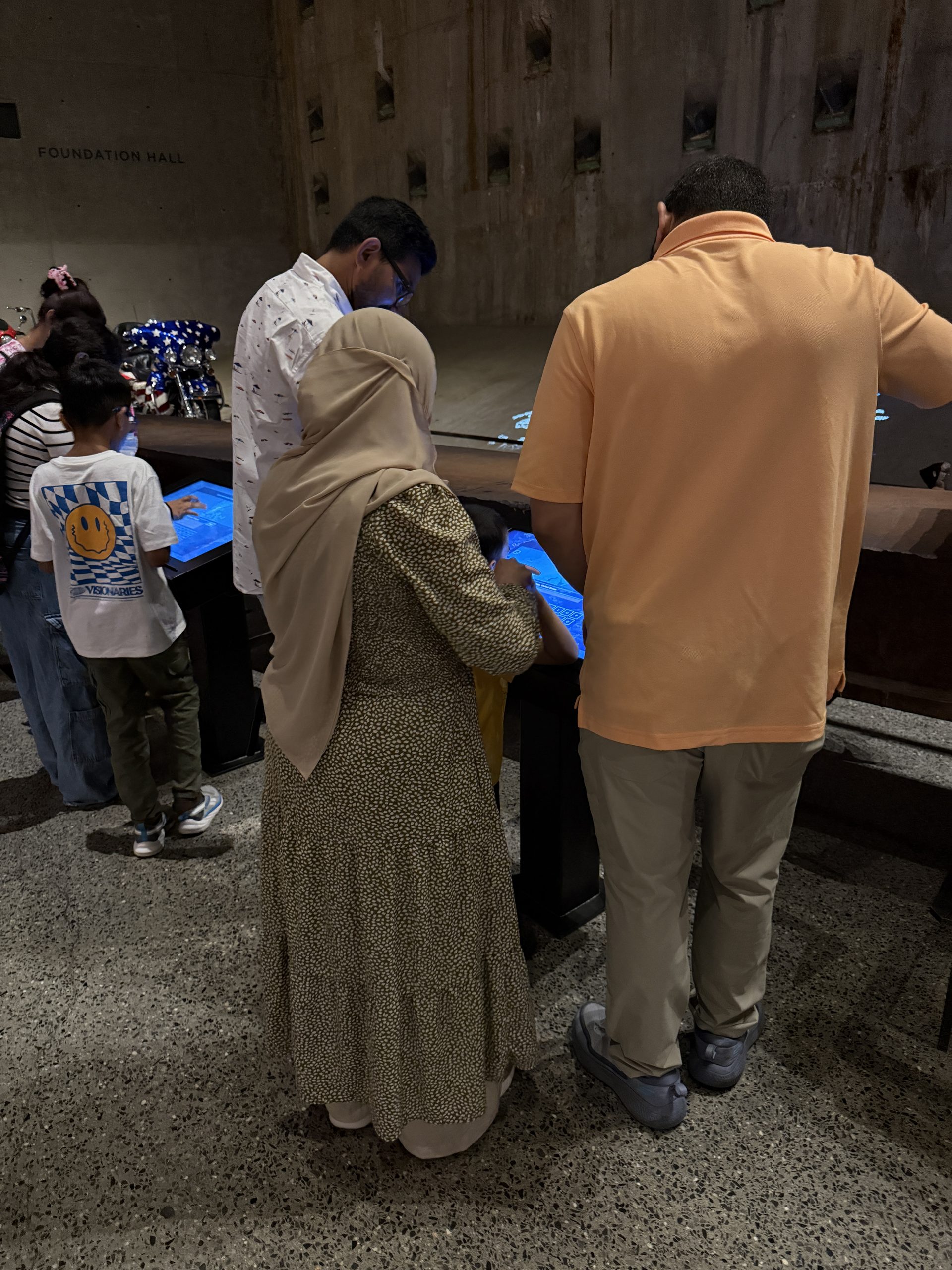
The unfortunate recent shooting at a mosque in San Diego involved a diverse group of people from different cultures and ethnicities.

Americans can’t agree on the nature of the mosque. It served an entirely peaceful group of Muslims, according to the Righteous at Wikipedia. The peaceful Muslims are mostly notable for being the victims of hatred:

The mosque was the target of an attempted bombing on January 11, 1991. The attempt occurred during a period of high tensions as part of the Gulf War, and the mosque received a large volume of hateful phone calls. The bomb was later discovered to be defective

(No culprit was ever identified or arrested, according to Google AI.)

It was the home for 2 out of 19 of the 9/11 hijackers, according to the Deplorables at the New York Post and was a center for Jew-hatred:

More recently, Imam Taha Hassane has come under fire for his comments on the Oct. 7, 2023, attacks.

“This did not start last week or on October 7. This is the result of brutal Zionist occupation and genocide,” Hassane said in a video posted to social media days after the savage Hamas attack.

“Resistance is justified when people are under occupation and don’t let them change that narrative.”

His wife, Lallia Allali, allegedly posted graphic images of a “Jewish star murdering babies with ‘the devil is killing’” scrawl in the wake of the Oct. 7 attacks

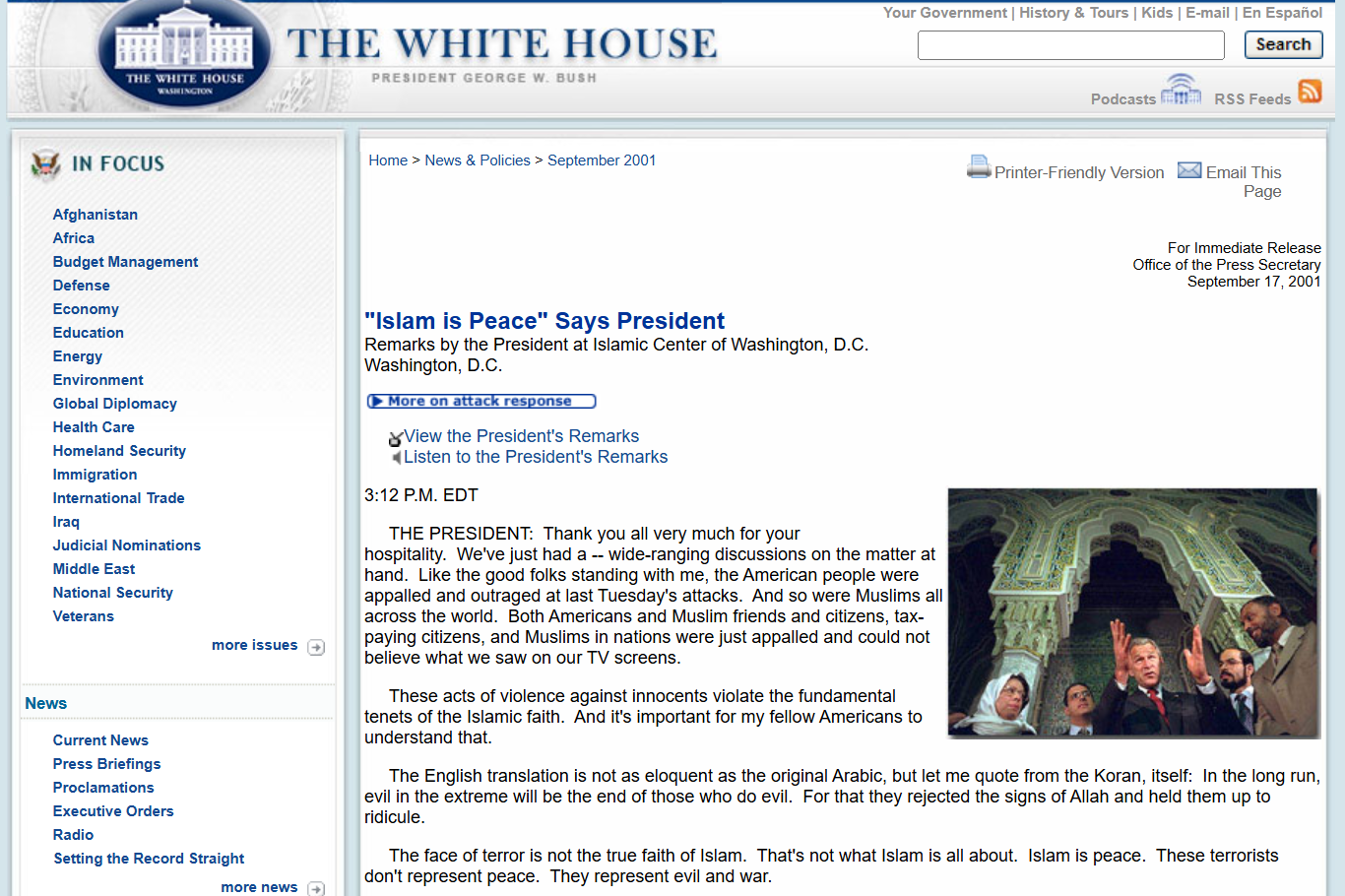
(The helpfulness of the mosque is confirmed by the National Commission on Terrorism Attacks Upon the United States (report).)

Another aspect of the shooting that we probably won’t see covered by mainstream media… “Muslim security guard killed by neo-Nazis made Facebook posts admiring Hitler, blasting Jews” (Not the Bee):

Two people who hated Jews killed another guy who hates Jews.

In other words, Californians from different backgrounds might be able to unite under an anti-Jewish political banner (perhaps, as with Zohran Mamdani, this will be styled as an “anti-Israel” banner, not too different from how German forward-thinkers rebranded crude “Jew-hatred”, offensive to middle-class Germans, to the scientific-sounding “antisemitism”, something that educated Germans could sign up for as a policy).

Except for agreement regarding the pernicious nature of Jews/Israelis, however, what do the people who currently live in California have in common? At one time, the answer might have been a shared economic interest. This was strained a bit during the early Silicon Valley boom, but the chip and electronics companies built factories in California as well as design labs. In the current AI boom, some people with IQs of 160-200 in the SF Bay Area work at desks and all of the high-value manufacturing happens in Taiwan. The data center construction and operation jobs that AI creates will nearly all be in states (and countries) other than California, which has a high cost of electric power. Absent state government confiscation and redistribution, it isn’t clear how profits from AI will reach Californians outside of the Bay Area (or even most of those who don’t work in AI and who live in the Bay Area).

Pew regarding the shift in data centers away from California:

The chart does a simple count, but because new data centers are much larger than ones built 20 or 30 years ago, California’s #3 position is misleading. ChatGPT says that California is a “legacy market” that has already been reduced to irrelevance:

If the shooters hadn’t killed themselves, in other words, they might have grown up to receive a state transfer of some wealth earned by Jensen Huang, but otherwise it is tough to see what connection or common cause they might have had with Jensen Huang or anyone else at NVIDIA. Same deal with the victim. Amin Abdullah, the security guard who perished in the attack, was a Muslim who worked at a mosque and was a father of eight children. What was his shared cultural or religious connection to a childless atheist working at a tech company and spending weekends at Pride events in San Francisco?

Note that with our asylum-based immigration system, I don’t think that the rest of the U.S. is far behind California in terms of being a random assemblage of humans with nothing in common. By design, the only thing that asylum-seekers have in common is that they didn’t like where they used to live. But California is a little ahead of the national trend.

Full post, including comments

Lack of commitment to the bachelor’s degree

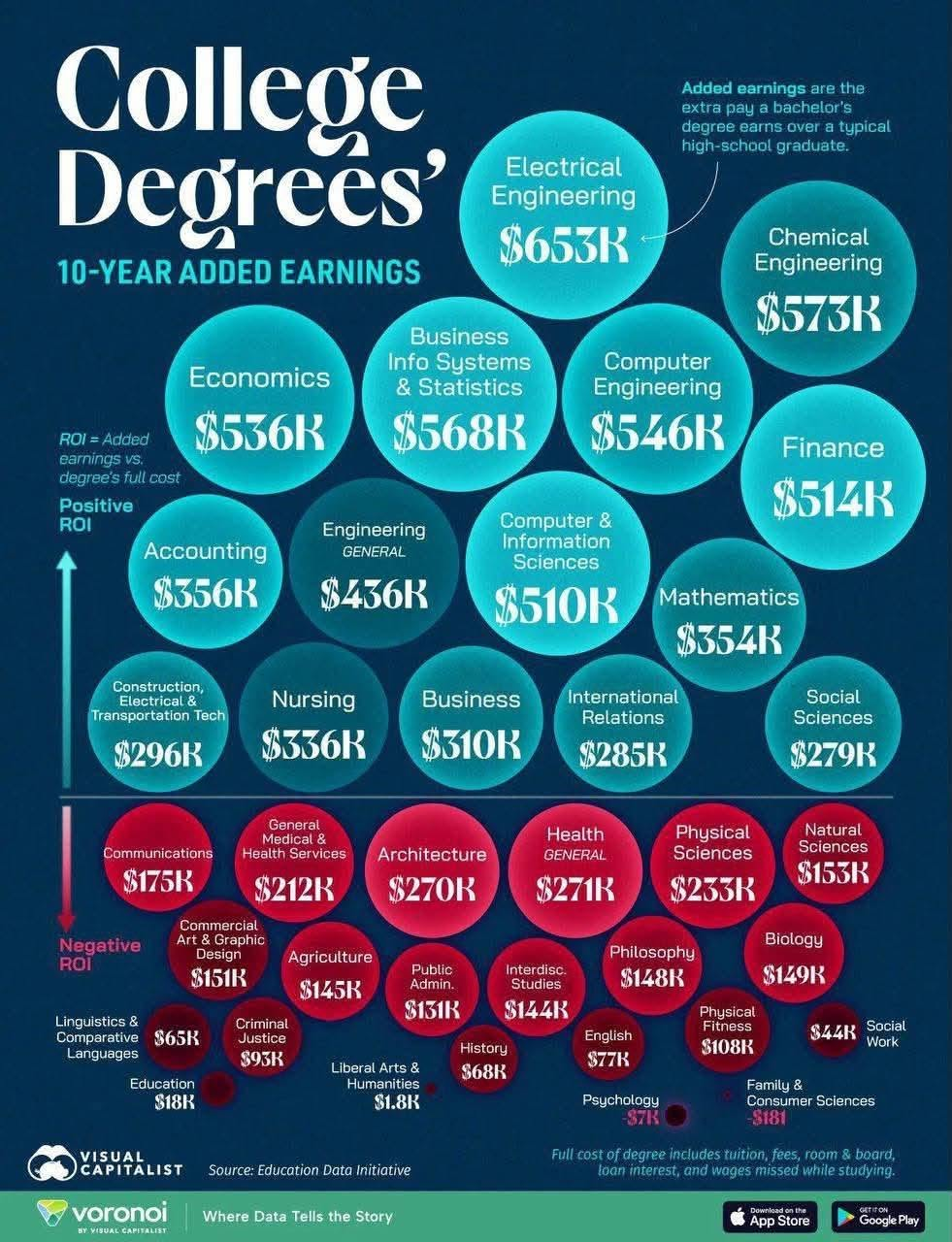
Department of Kids Today… I had dinner with a friend whose son is a freshman studying engineering. Dad has an MD/PhD so you might expect the child to put some value on credentials. “I would drop out if I were offered the right job,” he said. “After all, college is a means to an end. If the end is already available, why spend additional years on the means?”

Companies are already getting rid of old people in favor of young people who are “AI-native”. What if companies figure out that a high school graduate who is proficient with AI tools is just as productive as someone with a bachelor’s degree who is proficient with AI tools?

If I could short a basket of high-tuition private universities, minus the Ivy League, I would!

Related:

Full post, including comments

Apple, Microsoft, Amazon, Meta, Google, and NVIDIA employees meet for dinner

Employees from Apple, Microsoft, Amazon, Meta, Google, and NVIDIA meet at Protégé in Palo Alto for dinner.

The Apple COO: “My stock options are worth so much that I’m planning to buy all of the gold currently available on the world market.”

The Microsoft CFO: “My stock grants have gone up so much since Copilot launched that I’m planning to take over the diamond monopoly by purchasing DeBeers.”

The Amazon VP: “AWS Trainium has been knocking it out of the park with people trying to catch the AI wave. I’m going to use my 2025 bonus to buy all of the Class A office buildings and luxury rental high-rises in Brickell and Miami Beach so that I’ll be ready to profit as people from California and Washington continue to flee the high taxes and dysfunction.”

The Meta President: “Even though the metaverse failed, we’re still minting money from people addicted to the Like button. I’m cashing in some of my RSUs to buy all of the oil platforms that are offshore from Angola.”

The Alphabet/Google Chief Investment Officer: “The stock grants that they gave me when I was hired are worth so much that I’m picking up one of the smaller Hawaiian Islands.”

The NVIDIA branch office receptionist slowly finishes her bite of A5 Wagyu, then says, “I’m not selling.”

Happy National Stop Nausea Day to those who are sick with envy!

Full post, including comments

Packing up our parkas because of Climate Change in Alaska

Our family heads to Seattle tomorrow and then gets on Norwegian Joy for a trip up to Glacier Bay National Park and back. Pre-Climate Change, the average high temp in May was 57 for Juneau (62 in June). Here we are towards the end of May and, due to Climate Change inflicted on us by the profligate CO2-emitting policies of Donald Trump, high temps are in the 40s. It will be snowing when we reach Juneau on Sunday:

Maybe this week is an outlier?

State-sponsored public media:

Statewide, Alaska saw its coldest December-through-March in a half-century. In famously cold Fairbanks, that same period was the coldest on record. Juneau had its coldest December ever recorded and — in a place known for being snowy — its snowiest winter. And, while not as extreme, Anchorage saw its coldest-ever month of March.

Maybe Climate Change has lent some cheer to those stuck in Miami traffic? Wall Street Journal:

In his 1992 book “Earth in the Balance,” Al Gore wrote, with what would become his customary hyperbole, “the evidence of an ecological Kristallnacht is as clear as the sound of the glass shattering in Berlin.” The then-senator claimed that “according to some predictions”—no specifics were offered—“in the next few decades,” “up to 60 percent of the present population of Florida may have to be relocated.”

Florida’s population in 1992 was around 13 million. Mr. Gore’s notional Flexodus would have reduced that figure below six million. Today, the state’s population has nearly doubled instead of more than halved. More than 23 million souls now call Florida home.

How about the increased hurricane risk predicted by Professor Dr. Al Gore, Ph.D.? Homeowners’ insurance rates are falling statewide. The local NBC station regarding Stuart, Florida, directly on the Atlantic Ocean:

I’d better close this post so as to avoid tempting the hurricane gods who last visited their major hurricane wrath on Palm Beach County in 1949.

Full post, including comments

Boston’s white working-class suburbs have been transformed into multi-cultural wonderlands

As part of my April 2026 move-out-of-Cambridge experience, I went to the Home Depot in Somerville, Maskachusetts. Four “youths” were riding full-size e-bikes around the aisles. The checkout lady appeared to be a Somali and was in full Islamic attire. One of the young clerks was white and Following Science (wearing a surgical mask to protect him/her/zir/theirself against an aerosol virus), but mostly it was an environment that would have been alien to a working-class native-born American.

I remember Somerville as a white working-class suburb when I arrived at MIT in 1979 and we would head over to Somerville Lumber in Bennett’s station wagon to buy loft-building supplies for my dorm room (I don’t think MIT ever charged me for the wall damage done by the toggle bolts!). ChatGPT says that it was 95 percent white in 1980 vs. about 60 percent non-Hispanic white today.

Malden was another bastion of the white native-born working class. Today is at least 43 percent immigrant, as shown on this January 2019 PDF (perhaps Malden is up to 50% by now; MA was at 17% in 2019 (below) and today is closer to 20%).

The transformation seems to have occurred well prior to the Biden-Harris open borders period. Here’s some 2016 data on “newly diverse places” (as of 2016, non-Hispanic whites were already a minority in Malden):

Some specifics regarding Malden from the above, again using 2016 data:

Note that the newly diverse communities don’t include places where the decision-making high-income elites would be likely to live (Cambridge might appear to be an exception, but the city maintained an Underclass of Color even in the old days). It seems that the white working class in Massachusetts (voters without a college degree) actually voted against a continuation of the Biden-Harris open border policy by voting, in a narrow majority, for Donald Trump 2024. Naturalized immigrants are more likely to vote Democrat than native-born Americans. So it seems that the native-born white working class of Massachusetts voted solidly against this transformation and yet it was imposed on them.

Consider the effect on someone who grew up in Somerville or Malden and was 20 years old in 1980. This person is now 65 years old and, if still in his or her hometown, part of a literally alien society. Here’s old white guy/Senator Ed Markey at the Malden Islamic Center:

Maybe this particular old white guy wants to talk about the “victims of Gaza”, which the mosque seeks to support, but does the average native-born white person want to do that? In order to live in a society that resembles that one in which the Somerville or Malden Boomer grew up, he or she would have to move to The Villages (NW of Orlando), which is roughly 95 percent non-Hispanic white and only 5 percent foreign-born. (Moving to Florida isn’t as much of a financial win for a Maskachusetts peasant as it would be for an elite. Social Security income isn’t subject to state income tax, for example, and the state estate tax exempts the first $2 million in assets.)

Finally, a New England senator says that the U.S. is short by hundreds of hospitals for the existing population. At the same time, it makes sense to continue bringing in 1-2 million legal immigrants every year to add to the population that is facing the hospital shortage:

Related:

Full post, including comments

Why we can’t simply limit oil and gas exports to 2025 levels


For the past couple of months I’ve been wondering here why U.S. consumers are paying more for gasoline than in 2025 (albeit still less than in 2022) if the Trump administration could simply limit exports of oil and gas to 2025 levels with a simple “it’s a war” explanation. This question is answered, to some extent, in “The World Can’t Get Enough U.S. Energy, Keeping Prices High for Americans” (WSJ, yesterday):


The Trump administration is trying to tamp down rising prices, including by waiving restrictions on trade between U.S. ports and releasing oil from strategic stockpiles. Trump said last week he supports suspending the federal gasoline tax. Gasoline prices nationally averaged $4.51 a gallon on Sunday and could keep climbing into Memorial Day weekend, the starting gun to the busy summer driving season.

The administration has said it wouldn’t impose a ban on energy exports. Energy Secretary Chris Wright said on CNBC last week that the U.S.’s economic future depends on selling its energy abroad and that this was a top item on the Trump agenda.

“We can’t be a major energy exporter to the world if we decide sometimes to stop exporting our energy,” he said.

In other words, the Trump administration is allowing Democrats, previously climate change alarmists who wanted fossil fuel prices to be higher, to harp on lower-than-2022-but-higher-than-2025 gasoline prices, possibly resulting in dramatic losses of Congressional seats in November 2026, in order to preserve the U.S.’s long-term market position.

What’s the scale?

The ports of New York, Philadelphia and Albany, N.Y., exported 174,000 barrels a day of gasoline, diesel and other petroleum products last month, according to Kpler. That is 10 times the volumes they shipped over the same period last year. Halfway through May, the pace of exports is even higher, well over 200,000 barrels a day—the highest monthly pace on Kpler’s records since 2017.

These barrels so far this month are predominantly heading to Europe, including France, Belgium, the Netherlands and the U.K., Kpler’s Smith said. Analysts say that is a sign that a shortage of refined products has spread from Asia to Europe.

The U.S. exported 2.7 million barrels of U.S. diesel, gasoline and other refined products to Australia in March, according to Kpler. Before the war broke out, exports there had been sporadic. An additional 1.8 million barrels headed to Australia in April.

I wonder if the Trump administration’s policy makes sense even for those who have a long-term perspective. If Democrats can take control of Congress maybe they will obstruct the U.S. fossil fuel industry in some other ways, e.g., with a long-dreamt-of carbon tax.

Separately, why isn’t there a lot more production in response to the higher price? The current price of oil is about 15% lower than it was in 2022 (chart below), but still much higher than it was in 2025:

Maybe it is because the market is predicting a sag down to $89/barrel by October 2026 and a further sag to $75/barrel by October 2027?

The lower chart is curious. Investors have changed their opinion of the likely cost of oil in October 2027, up from about $60 to $75. Are they expecting that we’ll still be at war? That inflation will go back to the raging 2022 levels?

Full post, including comments