Most gunshot wounds are self-inflicted, coronaconomy edition (Sweden v. the Shutdown Karen Countries)

I personally don’t think economic performance is relevant when evaluating coronaplague policy. In a world where people don’t care about anything other than Covid-19 death risk, what difference does it make if they’re getting richer or poorer? That said, unemployment and poverty do lead to poor health outcomes and death. It just takes a while. So there is also a health angle to economics (see this post from March: “If All Lives Have Equal Value, why does Bill Gates support shutting down the U.S. economy?”).

“‘Striking’ Crisis Gap Exposed as Swedish Economy Stands Out” (Bloomber, June 16):

In a report on Monday, Capital Economics presented data that give Sweden an irrefutable edge. From peak to trough, Swedish GDP will shrink 8%; in the U.K. and Italy, the contraction is somewhere between 25% and 30%, according to estimates covering the fourth quarter of 2019 through to the second quarter of 2020. The U.S. is somewhere in the middle, it said.

Sweden has kept shops, gyms, schools and restaurants open throughout the pandemic. But the strategy, which the government says wasn’t shaped with the economy in mind, has resulted in one of the world’s highest mortality rates. Sweden’s state epidemiologist recently acknowledged he would have opted for a tighter lockdown with the benefit of hindsight.

(The article is written for American members of the Church of Shutdown, so the journalist points that Sweden has “one of the world’s highest mortality rates” without noting that the U.S. overall, in Month 4 of various degrees of shutdown, is only about 30 percent behind Sweden, that plenty of U.S. states have experienced higher death rates so far than Sweden, and that some countries that did shut down actually have higher mortality rates than Sweden. And, of course, Sweden is not actually planning on a “tighter lockdown” even when the inevitable second wave hits (Sweden’s latest plan).)

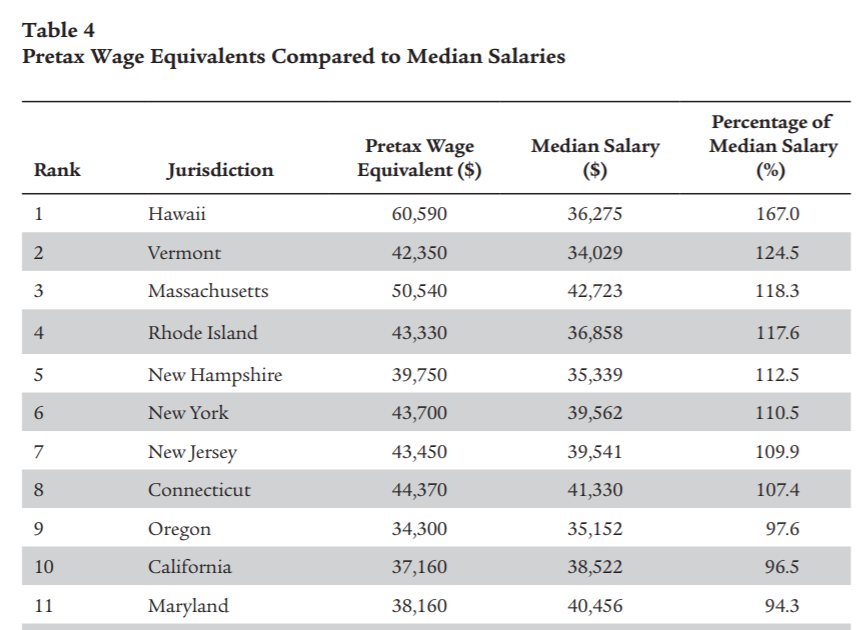
A figure from the article:

A gun enthusiast friend is able to say, in response to about 90 percent of news articles about companies or universities, “most gunshot wounds are self-inflicted.” These economic data from the Shutdown Karen countries add some ammunition to his theory!

(Again, since nobody cares about how poor they become, as long as they can be saved from the evil virus, I don’t think the self-inflicted impoverishment of the shutdown nations is relevant except that it will inevitably result in a shorter life expectancy and more deaths in the long run than any conceivable savings of Covid-19 deaths from the shutdown. See the Preston curve of life expectancy vs. per capita income.)

There might be some measurement errors for the U.S. A lot of our GDP for this quarter, for example, is going to be cleaning up cities after riots, the classic broken window fallacy. Also, people have been spending like crazy to try to adapt to the shutdown. Americans would prefer to go to a gym, but they’re buying home exercise gear as an interim stopgap. (Sweden’s gyms never closed, so they wouldn’t have as much of this type of no-added-value spending.) Americans would prefer to meet people in person, but they’re buying webcams for the Zoom sessions that they don’t enjoy. Ordinarily, Americans don’t need everything in the house or yard to be perfect, but as long as they’re locked into their houses why not fix everything up and tell the landscapers to go deluxe? (Anecdote: We had our shrubs mulched for the first time! I wanted to give Joe the Electrician some work, so we had him do a bunch of low-importance fixes (bad news for the Democrats who envision themselves as champions of the working American; like Joe the Plumber, Joe the Electrician is not easy to persuade: “The thing about Trump is that he does what he said he was going to do.”). Maybe all of this will cost $3,000 and add $500 in long-term value to the house?)

Full post, including comments

Kill them all (mosquitoes) with genetic engineering and let God sort out the mutant survivors

“Plan to release genetically modified mosquitoes in Florida gets go-ahead” (Guardian) is exciting to me since one of the best things that we could do for humanity would be to kill all of the world’s mosquitoes (in addition to the epic level of annoyance, they are responsible for killing 1 million people/year?).

Of course, the only thing more American than getting a mosquito bite is litigation. From the article:

A plan to release a horde of 750 million genetically modified mosquitoes in Florida and Texas is a step closer to fruition after a state regulator approved the idea, over the objections of many environmentalists.

Oxitec, a British biotechnology company, has targeted the US as a test site for a special version of Aedes aegypti mosquitoes. The mosquitoes contain a protein that, when passed down to female offspring, will lessen their chances of survival and, it is hoped, prevent them from biting people and spreading diseases such as dengue fever and Zika.

But the plan has caused uproar among conservation groups, which have sued the EPA for allegedly failing to ascertain the environmental impact of the scheme. Scientists have also expressed concerns about the oversight of the trial.

If this goes bad, we can blame Donald Trump and what my Facebook friends characterize as his “defunding” of the EPA (I wish someone would “defund” our household in the same way that Trump has defunded the Federal agencies that he has been accused of defunding!).

Personally, I am excited! The Mosquito book referenced below says that these insects have zero redeeming value. There are no animals, for example, that would be significantly inconvenienced if mosquitoes were eliminated. In other words, there is no animal that depends on the mosquito for its subsistence.

A tax-free resident of the Sunshine State (from the Corkscrew Swamp sanctuary):

Related:

Full post, including comments

Coronashutdown versus UN Universal Declaration of Human Rights

Let’s see what is left of the rights in the United Nations Universal Declaration of Human Rights in a world shut down by old rich people anxious to avoid their date with coronadestiny.

Everyone has the right to freedom of peaceful assembly and association.

This is gone, unless you’re protesting Black Lives Matter.

Everyone has the right to education. … Elementary education shall be compulsory.

Gone! Unless a Black Lives Matter School of Protest can be started?

Education shall be directed to the full development of the human personality and to the strengthening of respect for human rights and fundamental freedoms.

If “full development” means “sitting at the computer” and “respect for fundamental freedoms” means learning how to be a Mask Karen, I guess kids still have these rights. (My friends’ middle schoolers have not left their house/yard since mid-March. They say that they haven’t learned anything from the local public school.)

Everyone has the right to work, to free choice of employment, to just and favourable conditions of work and to protection against unemployment.

This is gone, unless the License Raj thinks you should be allowed to work.

(1) Everyone has the right to freedom of movement and residence within the borders of each state.
(2) Everyone has the right to leave any country, including his own, and to return to his country.

This is gone!

(1) Everyone has the right to seek and to enjoy in other countries asylum from persecution

Also gone? Or can asylum-seekers still walk across the U.S. border and sign up as customers for the welfare state?

No one shall be arbitrarily deprived of his property.

What if your property was a daycare business? Given the lack of evidence that young children spread coronavirus, haven’t you been arbitrarily deprived of it?

Everyone has the right to life, liberty and security of person.

Is it “liberty” for a healthy young person, whose life is not at risk, to be locked down in an apartment?

Everyone has the right freely to participate in the cultural life of the community, to enjoy the arts and to share in scientific advancement and its benefits.

What’s the “community” if everyone is stuck at home connected only by Internet?

Everyone has the right to freedom of thought, conscience and religion; this right includes freedom to change his religion or belief, and freedom, either alone or in community with others and in public or private, to manifest his religion or belief in teaching, practice, worship and observance.

Religion in “community with others” is gone, right? Facebook, Amazon, YouTube, and other enforcers of coronaplague orthodoxy have eliminated “freedom of thought”, right?

Everyone has the right to freedom of opinion and expression; this right includes freedom to hold opinions without interference and to seek, receive and impart information and ideas through any media and regardless of frontiers.

As noted above, you still have freedom of expression, but just not on any platform that contains an audience. (Maybe some Virtue-brand toilet paper will help keep the censors at bay? (from a Target near Portsmouth, New Hampshire).)

All are equal before the law and are entitled without any discrimination to equal protection of the law. All are entitled to equal protection against any discrimination in violation of this Declaration and against any incitement to such discrimination.

Hmm… coronashutdown hit the working class like a ton of bricks: unemployment, poverty, alcoholism, opioids, strife with other household members in tiny apartments. For a lot of upper-middle-class Americans, especially government workers, it meant continued paychecks, a reduced workload, zero commute time, and going for jogs in low density suburbs before turning to the spacious single family house. That’s not “discrimination”?

No one shall be subjected to arbitrary arrest, detention or exile.

Why isn’t being locked into a small apartment “detention”?

No one shall be subjected to arbitrary interference with his privacy, family, home or correspondence, nor to attacks upon his honour and reputation. Everyone has the right to the protection of the law against such interference or attacks.

Given the lack of scientific agreement on whether young children can spread the coronavirus, whether Western government lockdowns are effective at reducing the total number of infections and deaths, etc., would it be fair to say that the shutdowns are “arbitrary interference”?

In the exercise of his rights and freedoms, everyone shall be subject only to such limitations as are determined by law solely for the purpose of securing due recognition and respect for the rights and freedoms of others and of meeting the just requirements of morality, public order and the general welfare in a democratic society.

Maybe this is the escape clause. A state governor can say “I think there will be more public order and general welfare if everyone is locked down in apartments and houses, except for those whom I specifically let out.”

Full post, including comments

If masks stop coronavirus, why no discontinuity in the numbers?

Masketologists have declared victory against coronaplague. If a population of humans is ordered to wear masks, coronavirus will pack up and go home. Example: “Identifying airborne transmission as the dominant route for the spread of COVID-19” (PNAS) and one of the less hysterical popular media summaries.

[6/18 update from the Department of Coronascience is Settled: researchers from Stanford, John Hopkins, and University of Colorado say that the above PNAS paper should be retracted. “While we agree that mask-wearing plays an important role in slowing the spread of COVID-19, the claims in this study were based on easily falsifiable claims and methodological design flaws”]

I was fully prepared to believe this, since it is consistent with my idea that whatever people are doing in Japan, China, Korea, and Taiwan is probably the right thing to be doing. However… the governor of Massachusetts imposed a strict mask law that was effective on May 6. Faith in the Church of Shutdown’s Ritual of the Mask becomes a little tougher to sustain when looking at stats from the New York Times:

If masks are the way to slay the Covid-19 dragon, why isn’t there an observable discontinuity in these curves as a result of the restrictions imposed on May 6? If anything, it looks like there was a bump in cases followed by a bump in deaths roughly correlated to a change on the May 6 date.

Maybe the answer is that masks do work, but the state reopened in early May and therefore the viral spread from reopening canceled out the viral suppression from masks? Definitely not! From the License Raj:

Construction and manufacturing were allowed to reopen, “with restrictions, some capacity limitations, and a staggered start”, beginning on May 18. There was no significant change until May 25 (hair salons) and June 8 (hotels, some childcare (with masks on children older than 2; see the happy preschooler below), retail with occupancy limits).

The anti-Karen wrote:

What I don’t get: If masks work, why aren’t we back at work? If masks don’t work, why are we being asked to wear them?

This mask-loving Karen wonders:

If masks work, why don’t we see a collapse in “the curve”?

Readers: Should we believe “science” or our own eyes looking at the NYT graphs? I picked Massachusetts because that’s where I live (unwisely, it seems). Is there another state that adopted a mask law and in which the coronavirus waved a white flag and packed up?

Related:

Full post, including comments

Perfect illustration of the “Less is More” principle

“UCLA lecturer’s job in jeopardy after refusing ‘accommodations’ for black students”:

University of California-Los Angeles Lecturer Gordon Klein faces an online petition that asks UCLA to terminate his employment, following an email he allegedly sent to a student regarding “special treatment” for black students in light of the George Floyd protests.

The viral petition, signed by nearly 20,000 people, claims Klein’s “blatant lack of empathy and unwillingness to accommodate his students during a time of protests speaks to his apathetic stance on the matter.”

UCLA Anderson School of Management spokeswoman Rebecca Trounson confirmed to Campus Reform that Klein is “on leave from campus and his classes have been reassigned to other faculty.”

What the accounting expert do?

“Thanks for your suggestion in your email below that I give black students special treatment, given the tragedy in Minnesota,” Klein’s email read, according to the petition. “Do you know the names of the classmates that are black? How can I identify them since we’ve been having online classes only? Are there any students that may be of mixed parentage [sic], such as half black-half Asian? What do you suggest I do with respect to them? A full concession or just half? Also, do you have any idea if any students are from Minneapolis? I assume that they probably are especially devastated as well.”

Klein’s email continued, “I am thinking that a white student from there might be possibly even more devastated by this, especially because some might think that they’re racist even if they are not. My TA is from Minneapolis, so if you don’t know, I can probably ask her. Can you guide me on how you think I should achieve a ‘no-harm ‘outcome since our sole course grade is from a final exam only? One last thing strikes me: Remember that MLK famously said that people should not be evaluated based on the “color of their skin.” Do you think that your request would run afoul of MLK’s admonition?”

He/she/ze/they would still have a job if he/she/ze/they had followed the “less is more” principle by responding with the following:

Thanks for your suggestion.

(first four words of the above actual response)

Related:

Full post, including comments

Friend in Texas runs, but cannot hide, from coronavirus

Anecdotal evidence that my cherished hope of summertime relief from coronaplague is illusory: a friend in Austin, Texas has developed Covid-19. If the virus can survive not only summer, but the Texas summer, that is indeed sobering.

His Facebook post:

I had a 100ish fever last Thursday night/Friday, with none of the other effects I’ve read about. Got tested just in case so I didn’t increase anyone else’s risk.

No fever or anything else since then except occasional headache and maybe some fatigue. My primary care doc thinks I may have gotten a very small exposure and fought it off quickly – we’ll see. He may have me do an antibody test in a week or two to rule out a false positive.

Be safe – remember that even being very careful, wearing a KN95 mask and gloves at the grocery store with plenty of hand sanitizer, social distancing, etc are not 100%.

UPDATE 6/17: Low grade fever early this morning (100.1) but responded to ibuprofen and now I feel pretty normal. Still no other symptoms.

UPDATE 6/16 – Q from the comments: Do you have a feel for where/how you got it?

A: Not sure. I’ve mostly stayed put since early March since I work from home.

Could have been at the store – KN95 is still 5% failure rate, and even though I bought the masks at Staples, it’s hard to know the quality of the Chinese manufacturing.

We’ve seen a small number of people while socially distancing in recent weeks – that would be my bet, but none of those people (already notified) have reported symptoms so far.

My guess is I’ll never really know.

He’s in his 50s so he is not statistically invulnerable to the plague, but he is otherwise healthy as far as I know, so I am not heading down there to dig a grave for him.

A friend recently traveled on JetBlue (empty middle seats, unlike on American) and was surprised to see a fellow passenger in full Ebola doctor PPE: respirator mask plus face shield. Maybe this is the way to dress for the next 2-3 years!

Alternatively, could we be (very slowly) proving the Bishops of the Church of Sweden correct? They said that the virus would wait for us to come out of bunkers. The U.S. right now has a Covid-19 death rate roughly 30 percent lower than Sweden’s, but we have years to catch up. (And don’t forget we have all of the shutdown-related deaths, e.g., from delayed health care, from unemployment and poverty, etc., that nobody is bothering to tally.)

[Update: his fever went away by Wednesday. So it was a one-week fever with “occasional headache, fatigue, and tight chest but really nothing else.” Both children, age 6 and 11, got it (“mild” and/or “brief” fever), but not the wife. Maybe that tells us something about the typical amount of physical intimacy in an American household with children…]

Related:

Full post, including comments

American Airlines: the magic of air travel in the Age of Corona

A friend recently flew Dallas to Boston on American Airlines (AA2579). He was accompanied by his 15-year-old son.

Has American adopted my dream scheme and blocked off the middle seats except for families traveling together? Not exactly! In fact, my friend and his son were both parked in middle seats, but not in the same row. Each was seated next to two strangers. Everyone was supposed to be wearing a mask on the flight, but a guy sitting next to my friend was not wearing a mask and was, in fact, coughing. The family now has direct seat-adjacency exposure to four unrelated people (would have been 0 under my plan!).

The Boeing 737-800 was almost 100-percent full. There were no special boarding or unboarding procedures for plague-minimization. It was the usual Fall of Saigon attempt to get everyone into seats and bags into overheads. I asked if people had to raise hands to get sequenced for using the bathroom and the answer was “no”.

What about the luxurious cuisine and wine list for which American Airlines is justly renowned? “They handed everyone a bag with a bottle of water and a snack at boarding.” The flight attendants came through the aisles only towards the end to pick up trash.

The wife is a medical doctor. She decided to place both father and son into home quarantine on their return!

Readers: How much would you have been happy to pay for this experience?

Vaguely related, my most recent flight on American Airlines, Miami to DCA back in February:

Disclosure: As a former Delta Airlines (proud union) employee, American is the frenemy!

Full post, including comments

Revisiting Why don’t black lives matter?

A post from 2016, “Why don’t black lives matter?”:

I wonder if the U.S. is now simply too populated and government too centralized for us to be confident that Citizen A will care about Citizen B. As there are people suffering badly in other parts of the world and most of us don’t do much to help them it is clear that human sympathy cannot stretch to a population of 7+ billion. Thus why should we expect sympathy to stretch to 324 million (popclock)?

(in 2020, the numbers are 7.65 billion and 330 million)

Even the Black Lives Matter leaders don’t seem to care specifically about American black lives. The Guardian reports that the group is working on behalf of Palestinians (who might be surprised to learn of their “blackness”!).

Readers: What do we think? Is the U.S. population now just too large for people to genuinely care about fellow residents in the abstract?

Full post, including comments

Supreme Court spreads a big rainbow flag over the word “sex”

“Civil Rights Law Protects Gay and Transgender Workers, Supreme Court Rules” (NYT):

The Supreme Court ruled Monday that a landmark civil rights law protects gay and transgender workers from workplace discrimination, handing the movement for L.G.B.T. equality a stunning victory.

“An employer who fires an individual merely for being gay or transgender defies the law,” Justice Neil M. Gorsuch wrote for the majority in the 6-to-3 ruling.

Until Monday’s decision, it was legal in more than half the states to fire workers for being gay, bisexual or transgender. The vastly consequential decision extended workplace protections to millions of people across the nation, continuing a series of Supreme Court victories for gay rights even after President Trump transformed the court with two appointments.

Personally, I think that any law like this actually reduces employment opportunities for the category of people whom such a law purports to help. The law highlights to employers the inferior nature of workers in this category and that, if the employer is unwise enough to hire someone from this category, a lawsuit is an ever-present possibility. Absent a substantial discount, therefore, a rational employer, even one who is completely without prejudice, should thus do everything possible to avoid hiring someone who might fit into the protected category.

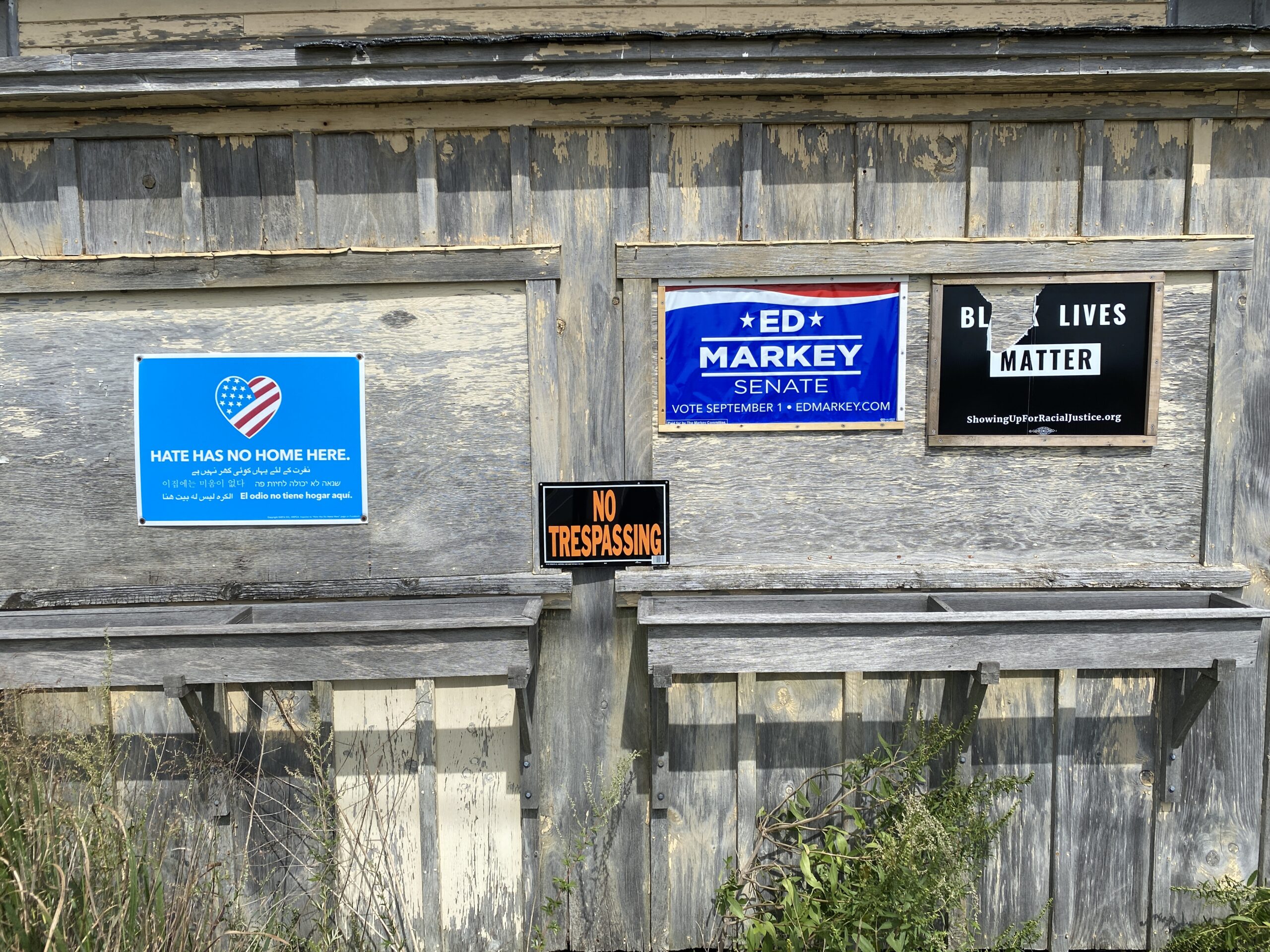
In our neighborhood… (“Love is Love” in a larger font than “Black Lives Matter”; significant?)

Gary Drescher, an MIT computer science PhD who is also interested in cognition and philosophy, posted this analysis on Facebook:

Today’s 6-3 Supreme Court ruling on sex-discrimination is encouraging, and not only because the outcome is good (and not only because Trump’s appointee Gorsuch wrote the opinion rebuking the Trump administration’s position). It’s encouraging because the legal reasoning is correct and straightforward: discrimination against someone for being gay or transgender is an instance of sex discrimination, even if Congress did not understand it as such when they banned sex discrimination in the Civil Rights Act of 1964. That is, it’s sex discrimination to fire someone for, say, wearing a dress or having a male spouse, if those same behaviors would not be penalized if the person’s own sex were different than it is.

By fanciful analogy, imagine if Congresspersons were all numerologists who in the 1960s passed a law saying that a person must pay an income-tax surcharge in any year for which the person’s taxable income was a prime number of dollars, due to some mystical property of primes. But imagine that at the time, 23,069 was widely believed to be a prime number, so Congress expected the surcharge to apply to that income. Nonetheless, upon discovery of the factorization of 23,069, a court today would have to hold that income exempt from the prime surcharge, even though the exemption contradicts Congress’s expectation when they passed the law. It’s not that Congress was using the term ‘prime’ differently back then–rather, they had a factually incorrect belief about a particular number’s primality. Even originalism regarding the meaning of a legal text does not necessarily bind us to false beliefs held by the text’s framers.

Gary has persuaded me! Readers: what about you? Is this the dawning of a great new era in American employment litigation?

(Separately, I wonder if the new interpretation of the law leads to a logical contradiction among some American religious beliefs. Transgenderism is as “real” as science, per the sign above. Belief 1: If Joe Linebacker decides to identify as a “woman” starting tomorrow, she immediately becomes a completely successful 6’3″ tall, 275 lb. woman, indistinguishable from a cisgender woman. Belief 2: Employers, being more interested in after-work sexual activities and gender IDs than in profit, will ferret out the transgendered and, as the NYT says, “fire workers for being gay, bisexual or transgender”. How can Beliefs 1 and 2 be consistent? According to Belief 1, absent a DNA kit, nobody can discern the difference between a transgender woman and a cisgender woman. If that is true, how does the prejudiced employer figure out whom to fire?)

Finally, what if the Equal Rights Amendment had been passed?

Equality of rights under the law shall not be denied or abridged by the United States or by any State on account of sex.

With this new interpretation of “sex”, what else would change had the ERA been ratified?

Finally, what is the practical effect of the righteous elites passing laws like these? Here’s a private text message from a small business owner, responding to the NYT article:

Except transgender is mental illness. Do you really think a company should be forced to hire a 6 foot tall man who thinks he is a woman?

From an immigrant physician, near the beginning of coronapanic:

We have a transgender psychiatrist health secretary. We r f**ked

(she is from a conservative culture)

Will these people (Deplorables?) be persuaded to abandon their prejudices via threat of litigation? Or will they just hide behind Silicon Valley-style “not a culture fit” (regarding an over-35 applicant) cover stories?

To sum up: I am persuaded by Gary and think the Supreme Court made the right legal decision, but I also think this decision will end making it harder for a transgender person to get a job in the U.S.

Full post, including comments

Massachusetts contact tracing system blown over by the first breeze

“Can Coronavirus Contact Tracing Survive Reopening?” (New Yorker, June 12) could be the poster child for “TL:DR”. Some high points:

Massachusetts created a pioneering program to track COVID-19 cases. Its challenges are multiplying as the state reopens

The marginal position of the Brazilian immigrants in Massachusetts represented a potential hole in the monitoring system that the C.T.C. was trying to build. Welch had come up with a characteristically P.I.H. solution, which was to fill that hole not with a protocol but with a person, Comin, whose life experience meant he might be trusted by the people he interviewed. Comin had arrived in the United States at the age of nineteen, a punk-rock enthusiast who came to Massachusetts because his aunt lived there; after his tourist visa expired, he was grateful for the older immigrants who had explained the rules of a new country to him—how, for example, when you stopped at a stop sign, you really had to stop, in order to avoid being arrested. To Comin, teaching people how to isolate at home during a pandemic, when they might not be here legally or have health insurance, was something like explaining the full and complete stop.

Throughout the spring, the Massachusetts contact-tracing program got faster. It took between three and four days for the C.T.C. to learn of a positive test, but after investigators had that information they were able to reach seventy per cent of cases, and contact tracers were then able to speak to seventy-four per cent of those cases’ contacts. This still meant that nearly half of potential contacts never spoke with anyone working for the tracing program.

But, until June, Massachusetts remained under lockdown—a temporary and highly artificial situation in which each case had, on average, about two contacts. That changed with the George Floyd protests, when crowds returned to the state’s public spaces. … Wroe, the C.T.C.’s director of implementation and design, had her eye on the protests but said that they were simply too difficult to trace. When contagious people told investigators that they had travelled on a bus, or visited a nursing home, the C.T.C.’s protocol was to alert the local Board of Health and move on. Wroe also believed that Massachusettsans did not want a program that would find ways to track their public movements. She said, “I don’t think there’s much epidemiological advantage in chasing people down in public places, versus the very real risk of losing trust.”

The core of the problem is that we don’t have enough welfare for low-skill immigrants:

The social safety net for immigrants in Boston can seem so porous that it might as well be all holes. Baez has been trying to make it airtight. “What people really want is to feel secure,” he told me when I called him one evening in May, just after his shift had ended. He began to talk through the cases he’d worked that day. All of the adults in a household had tested positive for the coronavirus, and they wanted to know how they could safely share one and a half bathrooms without infecting the children, or re-infecting one another. Another call came from a pregnant woman—who, Baez said, was “the most nervous person I spoke with today.” She and her husband, who both work at McDonald’s, had tested positive and had to stay home for two weeks. She was worried about eviction, and money for the baby, if they lost their jobs. A call came from a woman who worked as a nursing assistant at an assisted-living facility, who had just tested positive, along with many of her colleagues. “Everyone on my floor got it,” she told Baez. She was isolating at home and needed a nebulizer for her asthma, but didn’t have a hundred dollars to pay for it, so she had to figure out a way to purchase the device and then find a volunteer to pick it up at the pharmacy and drop it off on her doorstep. Baez said that this work reminded him of the challenges he has had trying to respond to emergencies overseas: “If there was equity, period, there wouldn’t be a need for us to fill these gaps.”

Fortunately, we still have a good supply of taxpayer-funded opioids:

A thousand tracers, in the middle of a pandemic, gets you somewhere, but maybe only partway. In the evenings, when Baez walks around his parents’ neighborhood, he often passes Boston Medical Center, which runs a large opioid-addiction program, and where he can see clusters of addicts on the street corners. They’ve still been getting their methadone, but their presence reminds Baez of all the vectors for transmission that might still be beyond his compass, and the gaps in care he can’t cover. Baez told me, “Obviously, we can’t promise the world.”

So… the official story back in March was that we would lock down to “flatten the curve” (same number of infections, spread out a bit). This morphed by April into a “shutdown until contact tracing is ready” plan (nytimes). By May this was no longer sufficient. We needed a long shutdown, to hire more contact tracers, and to turn the state into “Maskachusetts” (i.e., don masks at least a month after the infection had peaked).

Now it seems that, because (1) we don’t ladle out enough welfare to low-skill immigrants (who are, after all, our greatest source of economic prosperity and per-capita GDP growth!), and (2) we have the occasional mass gathering, the magic of Asian-style contact tracing will be forever out of reach.

From our neighborhood, the ponies of Maskachusetts:

Related:

Full post, including comments