Foreigners toiling in the hot Cape Cod summer

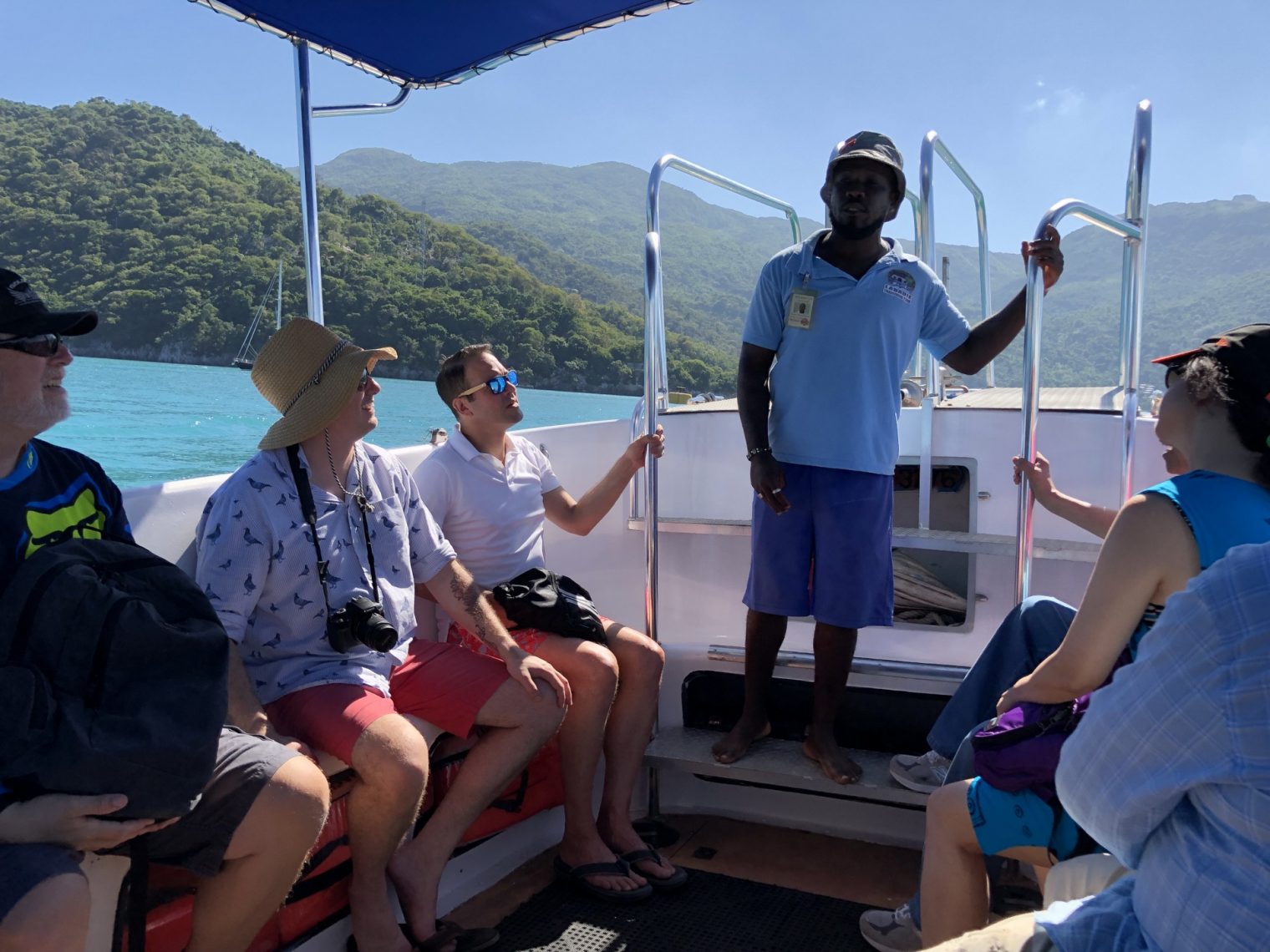
We just had a family vacation at a hotel just over the bridge into Cape Cod (“Work is the best vacation,” was Senior Management’s summary after breaking up sand fights between the 4.5- and 3-year-old). Our hotel and the restaurants in Falmouth, Massachusetts were staffed primarily with Eastern Europeans and folks from the Caribbean.

“They’re here from May through September,” explained one of the rare local waitresses. “I’ve learned all of the Serbian swear words.”

Our hotel was within a reasonable commute from the unemployment capitals of Massachusetts (Fall River and New Bedford). Rather than paying all of the bureaucrats and paper-shufflers to get these foreigners here on temporary visas, wouldn’t it make more sense to hire jobless natives to clean rooms and bus tables?

“They’re all on Section 8 [free housing] and MassHealth [Medicaid; free healthcare],” explained a manager, “so they’re happy to work for cash, but we have to pay W-2 so it doesn’t make sense for them to take a temporary job and risk losing their benefits.”

Given that the $75/night motel rooms on the Cape are now renting for $500+/night, why wouldn’t some of the foreigners seek to profit from Massachusetts’s unlimited child support system? I asked a few of the H-2B guest workers what they thought would be the maximum financial windfall from a brief interlude with a hypothetical dentist visiting from the Boston suburbs. They typically estimated annual cashflow of $5,000 per year (the correct answer for a sexual encounter in Germany), with a maximum estimate of $10,000 per year for 18 years (in fact, the guidelines provide for $40,000 per year for 23 years with additional judge-set amounts when a defendant earns more than $250,000 per year). They were aware that it was possible to collect child support without having been married, but not aware that it was possible to collect it while residing back in Eastern Europe, nor that a state-run bureaucracy existed to collect the money for them.

What did the guest workers like best about the Cape? Those from the Caribbean said “the cool dry weather.” Those from Eastern Europe said “the chance to improve my English.”

The H2-B workers seemed to be doing all of the jobs except management. There were Eastern Europeans checking guests in and out at the front desk. There were Caribbeans waiting tables as well as busing them.

While I was there a #Resisting friend posted this on Facebook:

I was going to get on Facebook to rant that we should all ignore the white supremacist march in D.C., but it seems that we (on my FB feed) are already all ignoring it. Excellent. But I will rant anyhow: 400 people wouldn’t even make the news if there were no counter-protestors (I know, from having been in marches that size). By comparison, there are probably more than 50000 tourists in D.C. right now. “Real” rallies in D.C. have at least 100000 people.

Her friends responded that it was actually only a gathering of 10 to 30 haters and thousands of righteous folks who hate the haters (plus thousands of overtime-collecting police officers?). My response, which garnered 0 “likes”:

Today I attended a gathering of roughly 200,000 white people. Traffic was slowed to a crawl and local services were overwhelmed. A handful of counter-protesters had been brought in from Eastern Europe and the Caribbean. The white supremacists said that they called their movement “Cape Cod.” (Census data regarding the 93% whiteness)

Our best tip for Falmouth with kids: Flying Bridge Restaurant, from which everyone can watch boats in the marina. If the food is slow to arrive the kids can walk up and down the edge of the marina. Maison Villatte is a great/authentic French bakery, though not a great choice for kids due to long lines in the summer (waiting to be served by an authentic Russian H2-B visa holder!).

Related:

Full post, including comments

Meet for breakfast in Denver (Golden) on Tuesday morning?

Folks:

I’ll be in Denver (Golden, actually) from Monday morning through Thursday morning. Would anyone like to meet for breakfast at the Table Mountain Inn on Tuesday morning (August 21)? 0800? Alternatively…

  • the Wings over the Rockies Museum on Monday morning
  • the Morrison Natural History Museum on Tuesday or dinner before Rodrigo y Gabriela
  • Boulder on Wednesday
  • Thursday morning breakfast at the Table Mountain Inn
  • Beaver Creek on Saturday or Sunday

Let me know! Email philg@mit.edu or text me at 617-864-6832.

Full post, including comments

Sony continues to crush Canon and Nikon

This press release from Sony says that they are now #1 in sales of full-frame digital cameras in the U.S. The Alpha mirrorless system was launched only in 2010 (photography history timeline). The first Nikon-brand camera was produced in 1948. The first Canons go back to the mid-1930s (dpreview).

Sony is not all that gracious when it comes to their competition:

As DSLRs fade into the history books of photography,

but maybe that’s because the competition was not sufficiently diverse to survive?

The “Be Alpha” campaign will also feature programs that are designed to foster growth in both the current and next generations of imaging professionals, the most notable of which being the flagship “Alpha Female” program. This multi-tiered, female exclusive program is Sony’s thoughtful response to the imaging industry’s well-documented diversity challenges. It will include a variety of grants and mentorship opportunities for female photographers and videographers, as well as the production of several large-scale industry events.

[If the program is “female exclusive” and the opportunities are limited to “female photographers and videographers”, does it exclude the gender non-conforming? (see UC Berkeley list of terms)]

How did Canon and Nikon let this market get away from them? Ford and GM were eventually able to bounce back and meet the new competition (okay, it took $70 billion in taxpayer funds to prop up GM, but Ford didn’t get a bailout).

Can it be that these companies were locked into obsolete technology? The Nikon F lens mount (1959?) has some well-known deficiencies (so they scrapped it for their own late-to-the-market mirrorless effort), but Canon’s EOS mount was new in 1987. What does it lack compared to the Sony E-mount other than the short flange focal distance? What would have stopped Canon from making a mirrorless mount (they already did a half-assed APS-C one, EF-M) and throwing in a bunch of adapters for legacy lenses?

It can’t be that these companies lacked the ability to engineer a “mirrorless” digital system. They were making “mirrorless” rangefinder cameras with interchangeable lenses back in the 1950s. The compact digital cameras that they’ve been making for nearly 20 years are essentially the same as a Sony mirrorless body plus lens, but without mount/unmount capability.

It can’t be that making high quality sensors is impossible for anyone but Sony. Toshiba makes some excellent high-dynamic range sensors. Nikon was able to buy sensors from both Sony and Toshiba. I think that Samsung makes its own sensors for cameras such as the NX500 and DxOMark testing shows that these have excellent dynamic range. Presumably Canon could have partnered with Samsung if they couldn’t figure out how to tune up their own sensor design.

Readers: What’s the answer? How does Sony walk away with it all?

Full post, including comments

My tuition-free MIT idea gets implemented… by NYU

“Surprise Gift: Free Tuition for All N.Y.U. Medical Students” (nytimes):

The New York University School of Medicine announced on Thursday that it would cover the tuition of all its students, regardless of merit or need, citing concerns about the “overwhelming financial debt” facing graduates.

N.Y.U. said that it had raised more than $450 million of the $600 million that it anticipates will be necessary to finance the tuition plan. About $100 million of that has been contributed by Kenneth G. Langone, the founder of Home Depot, and his wife, Elaine, for whom the medical school is named.

I proposed this idea for MIT back in 1998 (article), not because of a grand moral imperative but because I thought MIT wouldn’t be able to compete with Harvard for the best students. It was also an easy time to raise money due to the (first) dotcom boom/bubble that was then inflating.

Related:

Full post, including comments

With a cap on Ubers they will mostly hang out in the richest neighborhoods?

In “New York restrictions on Uber will increase inequality?” I wondered about how the profits from this new government regulation would be distributed.

Now I’m wondering about the cars themselves. Taxis were capped in NYC for decades (leading to the $1 million medallion price). The result was that taxis were plentiful in rich parts of Manhattan and scarce in poorer and outlying neighborhoods. I wonder if the same thing will happen with Ubers now that they’re capped. Manhattan and hipster Brooklyn will be packed with Ubers while folks who live elsewhere… can walk.

Readers: Does the above make sense?

Full post, including comments

Robinson R66 makes it around the world

Two pilots in a Robinson R66 (plus ferry tank!) made it around the world in 97 days:

Their motto is “Empowering People” (not to be confused with Shaesta Waiz‘s “Empowering Women” and “Inspiring Women”!). But how many people will feel “empowered” if they learn that doing this requires years of training and suitcases full of cash?

Related:

Full post, including comments

Realistic Aerobatic Excitement at Oshkosh (GB1 GameBird and L-39X)

It is great to see the Blue Angels, but how many of us have the money and connections necessary to purchase an F/A-18?

At Oshkosh 2018 there were a couple of realistic aerobatic options to which ordinary humans can aspire.

The first is the GB1 GameBird, a solid block of carbon fiber whose design and certification was funded by the Walmart family fortune. Designer Philipp Steinbach awed the crowd with a demo of this magnificent machine, which can handle unlimited aerobatics (too bad the human body can’t handle the 19Gs to which the airframe was tested) more typical of a 1-seater but has two seats and a significant cross-country fuel capacity (84 gallons).

I asked the designer how this is different than the steel-tube-and-fabric Extra 330LT, purportedly a touring aerobatic two-seater:

Main difference to a 330LT is that the GB1 is fully aerobatic up to unlimited level, and has an empty weight of a 330SC. This, other than more performance, also makes for more legal payload, which is interesting for a flight school. The acrotank holds 25 gal, so there’s no need to switch tanks or ferry to the practice area on wingtanks etc.

Front cockpit has full engine instruments, throttle, mixture and prop, and access to radio and transponder. The airplane is not more difficult to fly or land than a Super Decathlon, but it is obviously a lot more responsive.

One of our local experts looked at the GB1:

The 25 gal acro tank is a huge plus. The Extra 300 has 10.6 gal (330 has 18.2) so you are pretty much a fuel emergency when you take off in the 300. This isn’t an issue at contests, but it is when you’re training students with the ferry time to the practice area. The training flights I did in the Extra — we took off with gas in the wings and ran them as low as we could, but we were never really sure they were empty before doing acro. Apparently some Extra owners have had to do some invasive maintenance to replace fuel cells from doing acro with gas in the wings.

He is right about most advanced and unlimited aircraft not being true 2-pilot airplanes. The pitts/eagle family absolutely cannot do legal acro with two 180lb men in the aircraft. I’ve had to teach myself snap rolls and inverted spins because I can’t fly with an instructor in my Eagle. I think the extra isn’t as limited as the pitts, but still limited.

The company is certifying this VFR-only aircraft with the Garmin G3X PFD, designed for experimentals. The cost? $400,000. When you consider that the Super Decathlon, designed mostly in the 1940s, is $260,000+, you’re getting all of the design and certification for free. Another way to look at this airplane is that it cruises as fast and nearly as far as a Cirrus SR22. It holds two people rather than four, but it costs only half as much. (On the third hand, with no autopilot or IFR certification, the GB1 might arrive a week after the SR22 if the weather is not cooperative!) I’m going to try to visit the factory in Bentonville, Arkansas. (It was already on “A 48-state tour of the U.S. by light aircraft“)

The other realistic way to be the envy of everyone at the airport… the L-39 experts at Code 1 Aviation have managed to stuff a conventional bizjet engine into the Czech trainer: press release. They’ve done four of these so far and it can cost as little as $250,000 to get an as-removed Garrett/Honeywell engine from a parked bizjet, with at least 1,000 hours to go, and install it in the L-39. Considering that a decent L-39 can be purchased for as little as $200,000, the total package need not cost much more than a GameBird. The bizjet engine results in longer range, faster cruise speed, lighter weight, much faster throttle response (less spool-up time), and certainly far easier maintenance. (The L-39 Wikipedia page says that the OEM is trying to do this as well, putting a 1980s Williams FJ44 engine into the plane and calling it an “L-39NG”. Pricing will probably not be civilian-friendly!)

The L-39 was certified to only +8/-4G so it can’t do the crazy RC-style maneuvers of the GameBird. The Code 1 folks don’t recommend going beyond 7G with the civilian engine installed. However, an L-39 certainly looks cool! The full L-39X will cost $850,000 to $1 million and includes a lot of additional upgrades.

An L-39X was parked at Oshkosh and you could see a lot of folks adding it to their wishlist.

If hangar rents come down and mechanics become more available… we should buy one of each!

Related:

  • it would be nice if the Auto-GCAS system from the F-16 could be put into both of these; there have been a lot of accidents in the aerobatics world that could have been prevented by software and sensors
Full post, including comments

Dumb political question of the week: What did Paul Manafort do wrong?

I’m hoping that readers can help me out here…

The trial of Paul Manafort is basically over. When it started there were headlines saying that he had evaded taxes on $60 million of income by keeping the money in offshore accounts.

Yet the government itself presented evidence at the trial that Manafort was broke. See “Bookkeeper says Manafort was broke in 2016 and lied to banks” (CNN).

If he’d ever had $60 million in taxable income (i.e., actual profit from running his lobbying business), how could he be broke? Did he spend $60 million on personal non-deductible consumption?

Full post, including comments

Yahoo’s corporate suicide

We were restoring a bunch of old content into http://philip.greenspun.com/travel/ and had to remove every link to a Yahoo! page, e.g., their old directory or their finance service. Not a single link into any Yahoo! content or service was functional. How does a company manage to commit corporate suicide like this? How hard would it have been to put in some redirects?

Who else is this incompetent? Canon! While letting Nikon and Sony take away their customers they’ve been breaking inbound links to get rid of web site visitors. I had to remove all of the links to Canon’s site.

[Who does it better than Yahoo? 23-year-old links to Amazon still function, even if the product has been discontinued. Specialty photo gear supplier Tiffen preserved some database-driven links to its Domke camera bag pages. Digital camera review sites have preserved 18-year-old links.]

Full post, including comments
Female college professor is smarter than everyone else, but cannot find a straight man to sleep with?

“What Happens to #MeToo When a Feminist Is the Accused?” (nytimes) concerns a woman who is a college professor and therefore holds her job based on being smarter than everyone else (at least smarter than the tuition-paying students!). What happens when the super genius gets into bed?

Mr. Reitman, who is now 34 and is a visiting fellow at Harvard, says that Professor Ronell kissed and touched him repeatedly, slept in his bed with him, required him to lie in her bed, held his hand, texted, emailed and called him constantly, and refused to work with him if he did not reciprocate. Mr. Reitman is gay and is now married to a man; Professor Ronell is a lesbian.

In a metro area with a population of more than 20 million, the professor couldn’t find anyone to sleep with other than a student. Okay. She allegedly used her status as a professor to coerce a male student into bed. Unfortunate if true. But given that the professor identifies as female, how challenging would it have been for her to find a heterosexual male student?

Most Americans who lack a college degree, much less a Ph.D., are nonetheless able to find someone in roughly the correct category for sharing a bed (I share with Mindy the Crippler and we’re both happy!).

Will this cause readers to lose respect for Academia? NYU tuition is over $50,000 per year. Is it worth paying $50,000 per year to learn from someone who can’t figure out that a gay man+woman is not a great bed combination?

Full post, including comments