More than four years, I began noting on this blog that Americans in means-tested everything (not “on welfare” since that is hateful language) were getting into a wide variety of expensive “nonprofit” tourist attractions either for free or at a 90 percent discount. See, for example Why you want to be on SNAP/EBT (2022) for examples sampled near Filthadelphia in which the working-class and middle-class taxpayers got soaked for $25/adult and those on EBT paid either $2 or $0. Practical advice from 2024: How to get free museum admissions for life: sign up for food stamps (SNAP/EBT), noting that the cards don’t expire and, therefore, even one month on EBT can be worth tens of thousands of dollars in the long run. The most recent post in this genre was “Black Creativity” celebrated at the Jewish-founded/Jewish-funded Griffin Museum of Science and Industry (August 2026). Maybe the X algorithm knows of my interest in this topic, but lately I’ve been seeing posts on X where others have noticed the same pricing structure. Here’s one with over 11 million views, regarding an aquarium in Monterey, California that charges $65 per taxpayer (“chump”) for a visit (and is lame compared to the aquarium in Lisbon!).
One question that I hadn’t previously considered is “Why do museums and aquariums do this?” The answer can’t be “Because they care about poor Americans.” They don’t make a serious attempt to market the free admissions program and, in fact, often don’t post “free with EBT” signs near their entrances and ticket booths. A Californian enjoying the EBT lifestyle in Oakland probably won’t travel down to Monterey.
What if the answer is that they want to preserve their own fat salaries, which are propped up by direct government grants, tax exemptions stemming from nonprofit status, and tax deductions for donors stemming from nonprofit status (half of the money “given” by a California donor will actually be given by other taxpayers because of the taxes that the donor avoids and that have to be made up with taxes from others, just as a substantial portion of the $100+ billion that Bill Gates is shipping to Africa via his foundation is actually coming from American peasants). What’s potentially at risk? Based on the Monterey Bay Aquarium’s Form 990 from 2025, they’re paying a huge slate of individuals $250,000+ per year. Excerpts (add up all of the numbers in each row for annual comp; note that Julie Packard worked only 28 hours per week to earn nearly half a million dollars in one year):


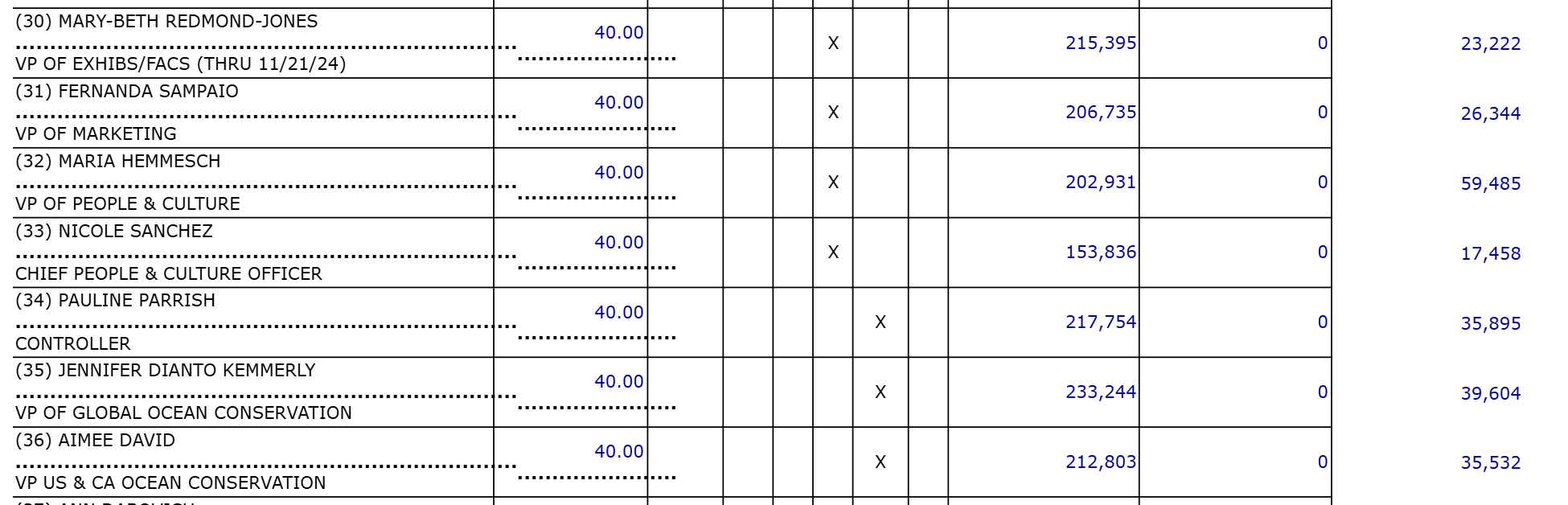
The Form 990 shows that they got $105 million in “contributions and grants”, all of which are either 100% tax dollars or about 50% tax dollars. They earned $26 million in investment income, which means they skipped on paying significant taxes on capital gains and dividends.
If everyone has to pay $65/adult to get in, eventually someone at the IRS might ask “How is this place different from Disney or SeaWorld?” The Ivy League universities faced the same challenge and got around it in kind of the same way. When the cost was $100,000 pre-Biden dollars for four years and that was considered an outrageous ripoff, the schools said “but we give out financial aid to kids from poor families and they’ll pay $0”. This turned out to be a nearly cost-free promise because they didn’t admit students from poor families who, as predicted by The Son Also Rises: economics history with everyday applications, typically lacked the grades and SAT scores required. As their prices and endowments have rise, of course, the Ivy Leagues have had to keep raising the family income threshold (now about $200,000/year) for a free ride, but the idea is that same. They give up a tiny amount of customer revenue in exchange for preserving an enormous quantity of tax dollars.
Related:
- “Harvard Endowment Soars to $68 Billion After 27 Percent Return” (Crimson): “The returns followed Harvard’s August disclosure of its $2.2 billion stake in SpaceX, which went public in June in the largest initial public offering in history. The position was worth more than all of the endowment’s other reported public holdings combined. … MIT trailed with [a return of] just over 10 percent.”