Windows or MacOS better for restricting teenager activity online?

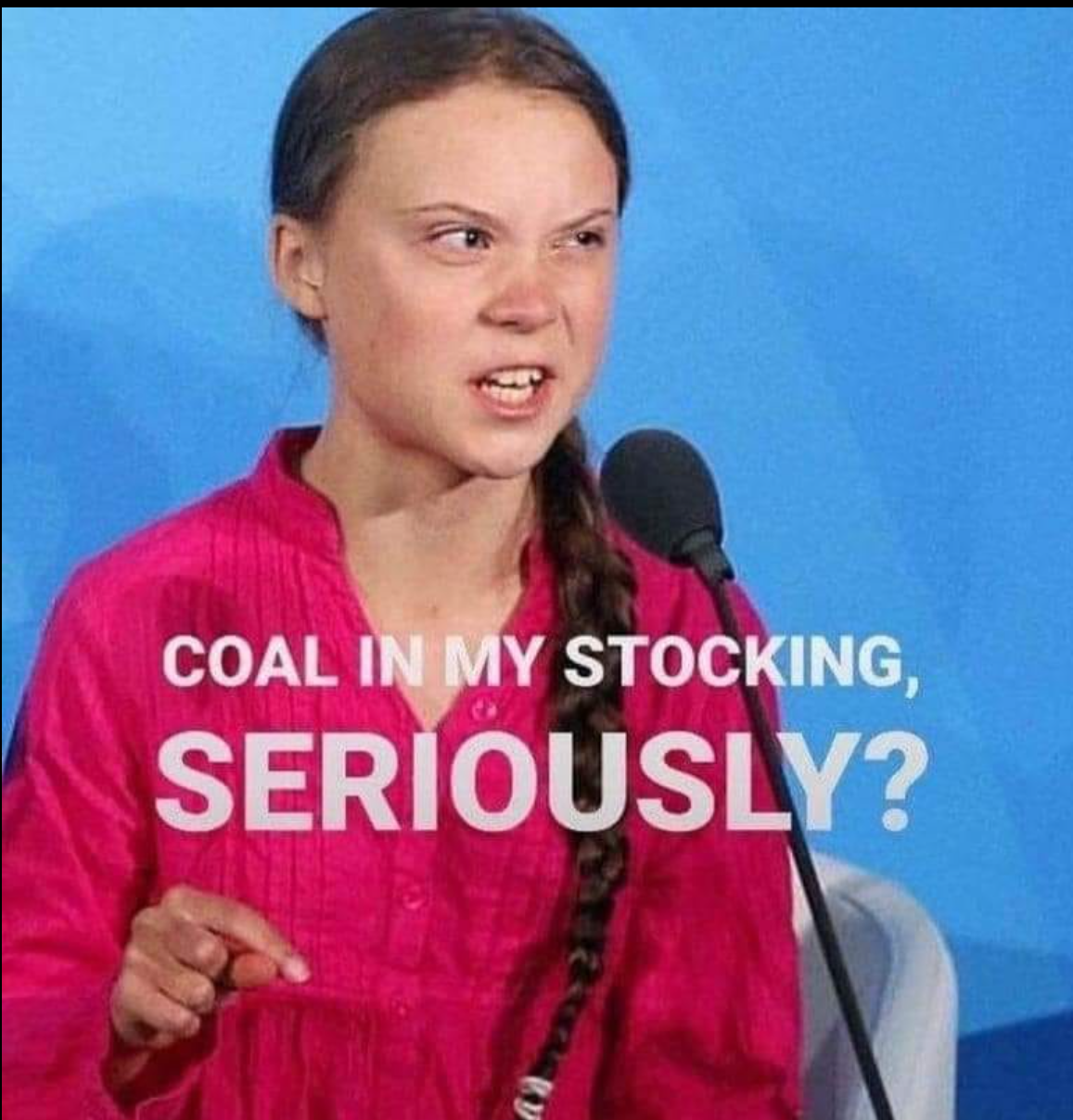
As noted in Coronapanic proved Greta Thunberg right, 2020 will go down in history as the year when adults stole the most from children (a whole year of their educational and social life in hopes that a handful of (mostly very old) adults might live a few additional years).

American children are now supposed to be focused computer users all day at home in “remote school” with no supervision. Adults in this situation will generally get distracted with online shopping, online chatting with friends, social media, etc. But we have set up a system in which a teenager who fails to resist all of these temptations will lose a year of education.

First, I’m wondering why there isn’t a service in which someone in India or the Philippines will remote desktop into the child’s computer and stay there all day. The remote proctor can then shout out “Hey, get back to your school browser. Tiktok will not help you get into Yale.” Let the remote proctor connect to a speaker in the corner of the room to do the shouting and call the monthly service Telescreen. Perhaps for a reduced monthly fee, the folks in India/Philippines could use conventional operating system controls and alert parents on a daily or weekly basis, block out new chat sites daily, etc.

For those who want to do it all themselves, but not stand over the child/teenager every day, what operating system is best? Windows has an extensive array of controls, I think, when the parent is the Admin account and the child is a User account. Some explanations:

A friend who has a history of monitoring activity within his household (see Au pair to green card) says the following:

Windows does it perfectly. There’s a browsing and search history monitor. You can restrict by host. If his chat apps are inside the browser, you can block the host name. It knows about browsers even you don’t know about. The parent can easily see that he is spending 4 hours a day on somechat.com and then go see herself what it is and then block it with one click. It can all be done remotely.

(Some of the protections on web activity may work only if the browser is Microsoft’s own Edge program.)

How about the Macintosh? This Macworld UK article suggests that it is easy to block categories of web sites, but not individual hosts. A third-party app, bark, seems to go deeper at $100/year.

Should we ask Professor Dr. Jill Biden, Ed.D. for advice in this area?

Finally, why isn’t there a good marketplace for American parents to hire teachers/tutors from foreign countries to sit virtually with their children in the sad parody that we call “remote school”? For a higher fee, instead of a proctor who can block time-wasting activities (such as blogging!), the teenager gets a qualified teacher to look at assignments, suggest references, etc. There are markets for language tutors, right? Why not a market for a remote private teacher for one’s kids? It could be useful also for parents whose children are “homeschooled”.

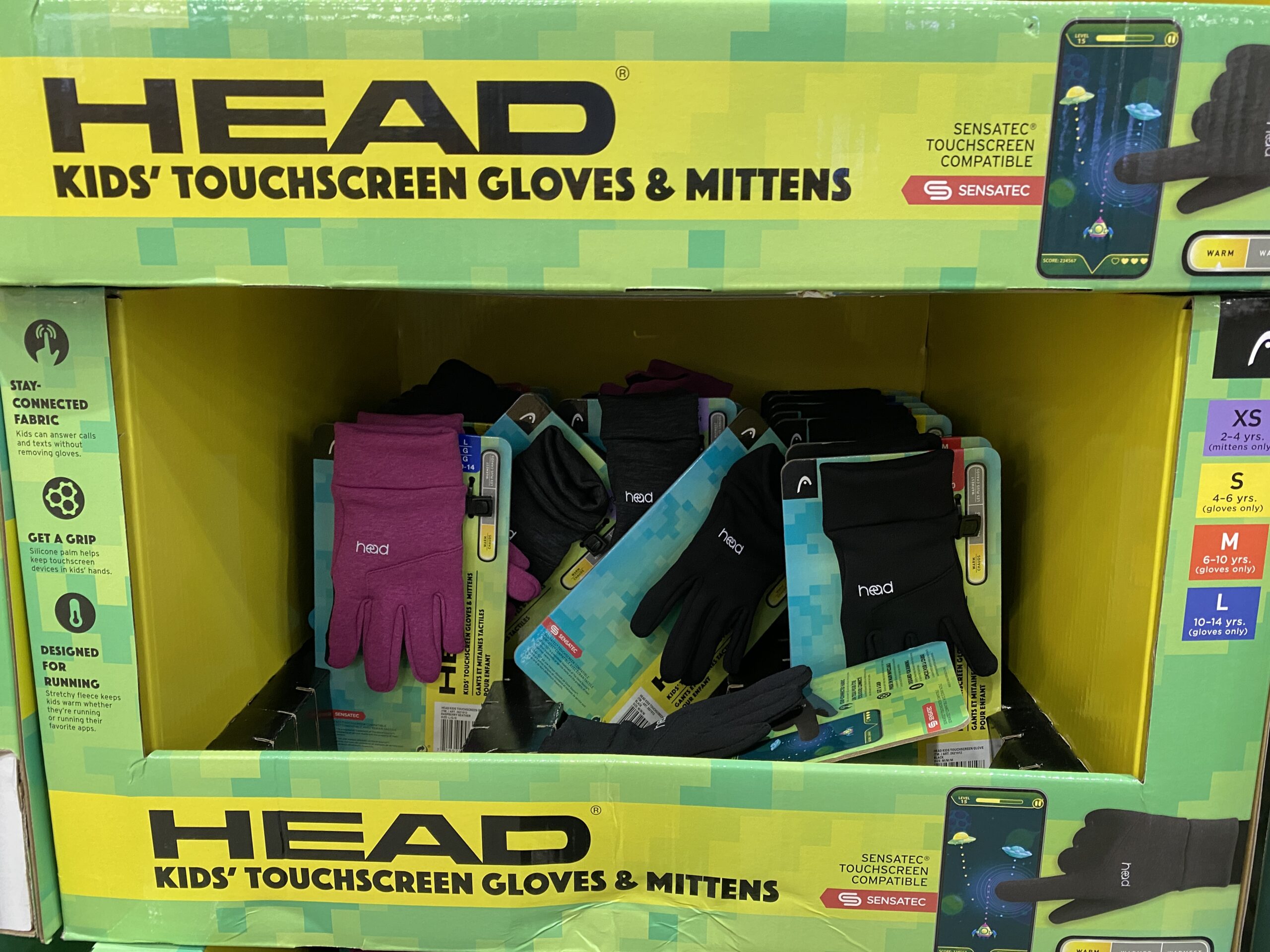
Touchscreen gloves for the child who needs to be online in the snow…

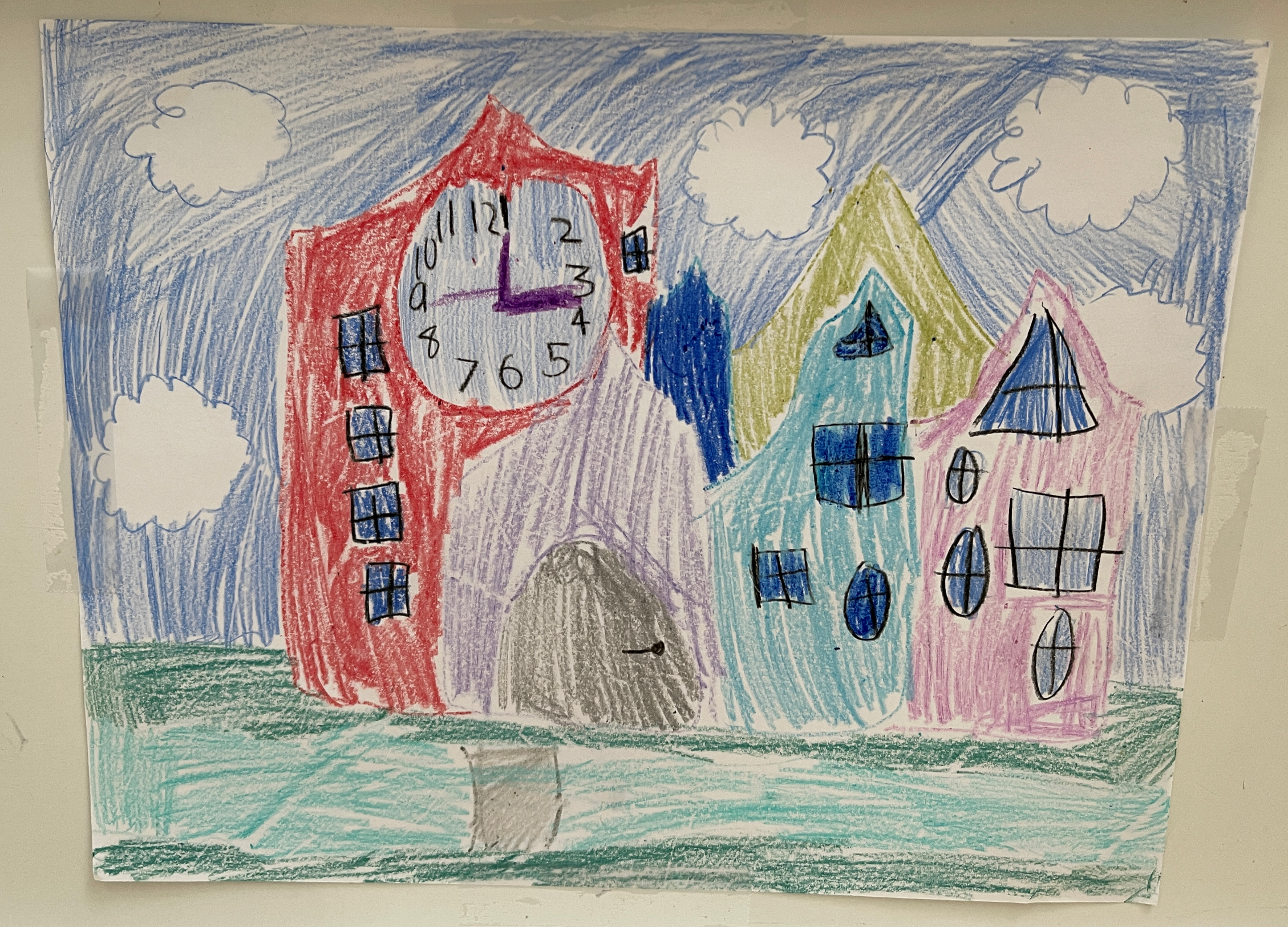
From our in-house 11-year-old artist, who is not a screen-time junkie. I wonder how much paint will be coming off with the tape that she used…

Readers: What is the technical solution? Windows, Mac, Windows+App/Service, or Mac+App/Service? And why can’t we easily pay the foreigners who might be able to help our children stay focused on their schoolwork?

Full post, including comments

Coronaplague, experts, and Prohibition

A reader sent me “THE “EXPERT CONSENSUS” ALSO FAVORED ALCOHOL PROHIBITION” (ZeroHedge):

Most people today regard America’s experiment with alcohol prohibition as a national embarrassment, rightly repealed in 1933. So it will be with the closures and lockdowns of 2020, someday.

In 1920, however, to be for the repeal of the prohibition that was passed took courage. You were arguing against prevailing opinion backed by celebratory scientists and exalted social thinkers. What you were saying flew in the face of “expert consensus.”

To sum up the “science” behind Prohibition, society had tremendous numbers of pathologies on the loose and they all traced to one dominant variable: liquor. There was poverty, crime, fatherless households, illiteracy, political alienation, social immobility, city squalor, and so on. You can look carefully at the data to find that in all these cases, there is a common element of alcohol. It only stands to reason that eliminating this factor would be the single greatest contribution to eliminating the pathologies. The evidence was incontrovertible. Do this, then that, and you are done.

Of course, my neo-Prohibitionist heart was warmed by this. Everything that we say about coronaplague goes double or 10X for alcohol! The loss of life-years from alcohol is far larger than an unmitigated coronaplague could have ever caused (since, in addition to the virus targeting the elderly/sick, eventually humans do develop immunity). Alcohol also creates a lot of misery among those whom it doesn’t kill.

So… once the COVID-19 dragon is slayed, let’s raise a glass to a renewed expert consensus around purging the U.S. of alcohol!

Full post, including comments

#MarkedSafe from Homemade Cookies and Crafts

Email from the local school:

Dear Parents and Caregivers,

As we approach the December break, it is a time of year where many families and school staff like to give homemade baked goods and crafts as gifts of appreciation. Due to the ongoing COVID-19 pandemic we are going to respectfully ask to put a hold on this practice as a part of our ongoing efforts to keep everyone safe.

We have all worked hard to keep each other safe and to keep our schools open. We appreciate your willingness to find alternative ways to express your gratitude this year. A letter to the teacher with a specific thanks would be greatly appreciated!

The journal paper practically writes itself: “The role of Toll House cookies in the spread of a respiratory virus.”

Full post, including comments

Coronapanic has taken us from virtue signaling to explicit virtue declarations?

Since April, my Facebook feed has been alive with posts of the form “I did X while social distancing.” These are from people who live in places where social distancing is required by law. Some examples:

  • Got to have an (outdoor, socially distanced) visit with my grandma today! (from someone who considers herself an independent thinker)
  • Today I attended a socially distanced picnic with the faculty at CAP DU…
  • Lovely day for socially-distanced apple-picking (above pictures of masked apple pickers)
  • Made it out for a socially distanced, masked, and peaceful demonstration re: the future livelihood of the Pt Reyes Tule Elk….
  • Socially distanced at the beach. (above pictures of children at a beach)
  • … was able to have a socially distanced dinner with him outside at a restaurant last night. (above pictures of mother and adult son, right next to each other with no masks)
  • It was a great weekend of socially distanced outdoor time…

We don’t see this in other domains where a person’s failure to comply with the law could have a statistical chance of killing others. Prior to coronapanic, people didn’t post the following, for example:

  • how do you like my new haircut? obeyed speed limit to/from the barber shop
  • cooked lasagna for friends; washed hands prior to cooking to prevent transmission of norovirus and other potentially lethal pathogens
  • wonderful meal with my cousins (served tofu and broccoli because I don’t want them to die from complications of type 2 diabetes)
  • enjoyed walk around neighborhood; held kids’ hands when crossing street so they didn’t get run over
  • nice flight to Martha’s Vineyard; made sure to fuel airplane prior to departure and ran checklists

I don’t think we can say that these folks are posting their mask and social distance virtue in order to influence others. They’ve already defriended anyone who dares to say that the W.H.O.’s advice through early June 2020 (masks for the general public won’t help) was correct. So the only people who are likely to be reading these posts are (a) living in states where masks and social distancing are required by law and disobedience is punishable via arrests, imprisonment, and fines, and (b) already in agreement with the idea of salvation through social distancing and masks.

Nearly 3 million Americans die in a typical year from various causes. Why is it only COVID-19 that motivates people to declare their virtuous attempts to reduce deaths via some sort of action?

Full post, including comments

Karen has COVID-19 (California current case rate surpasses South Dakota’s)

California can legitimately claim to be the Land of Karen. No group of Americans has ever been more active in proclaiming their own superiority on a wide range of political issues. When coronaplague hit, therefore, it was only natural that California Karens dominated Facebook with tales of their superior shutdown and greater vigilance regarding masks. Their heroic and intelligent human action kept the virus from doing what it had done in other states.

When Californians weren’t celebrating their own achievements in prevailing in their self-declared war on coronavirus, they would spend a lot of time gleefully highlighting the high rate of plague in South Dakota, whose governor dared to deny their most cherished belief, i.e., that humans are in charge of the virus and can decide how prevalent infection will be. While the plague raged in South Dakota, the Media of the Church of Shutdown was packed with articles about the stupidity of South Dakotans, Republicans in general, and Kristi Noem in particular.

Today’s plague map from the CDC (cases within the preceding week/100,000 population):

The righteous of California were the 4th most plagued Americans, with 101 daily cases per 100,000 (averaged over the preceding 7 days). Wicked mask-denying never-shut South Dakotans? 66/100k. Righteous masked-and-shut folks in Maskachusetts? 68/100,000. Trump voters in Florida? 50 cases per 100,000.

Californians, in other words, are proving the Swedish MD/PhDS right, i.e., continental non-Asian countries can shut down if they want, but they probably won’t be special when the final stats are tabulated.

Who wants to bet on the number of U.S. media articles that will point out that the California current case rate, despite more than half a year of masks, exceeds that of no-mask-order South Dakota or that of no-masks-at-all Sweden?

Related:

Full post, including comments

No pictures of convicted criminals getting the COVID-19 vaccine?

Our media and my Facebook feed are both jammed with images of health care workers getting vaccinated against COVID-19 (but a lot of them should be among the roughly one third of Americans who’ve already had the infection).

“Mass. Prisoners Among The First To Get COVID Vaccines” (WBUR):

Among those first in line for the COVID-19 vaccine in Massachusetts are correction workers and the nearly 13,000 people incarcerated in jails and prisons in the state.

Massachusetts is one of six states to specifically include prisoners in the first phase of vaccinations…

Why no photos of happy convicts?

(Separately, does this make sense? Why aren’t prisoners likely to be among the 100+ million Americans who’ve already had at least an asymptomatic infection? Would it be more efficient to find Mask Karens whose phone mobility data show that they’ve been hiding in bunkers and give them the vaccine first? (also weight the virtuousness of their Facebook posts and assume that those who’ve been promoting mask use are the least likely to have become immune the natural way))

Full post, including comments

Should fat Americans chow down in order to become obese and get the COVID-19 vaccine?

Suppose that you’re slightly fatter than the ordinarily chubby American (average BMI of 27, which is “overweight”). Maybe your BMI is 28.5, for example. Would it make sense to chow down at illegal holiday gatherings this year in hopes of hitting an “obese” BMI of 30? At that point, you could get priority for the COVID-19 vaccine.

Full post, including comments

Proof that coronapanic is specific to COVID-19?

To the Swedish MD/PhDs, e.g., Johan Giesecke and Anders Tegnell, most of the world’s reaction to coronavirus is irrational panic. To the Karens with whom I am friends on Facebook, hiding in a bunker while waiting for the next batch of governors’ orders is an entirely rational, even “scientific”, response to a disease that has killed a significant number of people.

I wonder if we can look at how Americans respond to influenza as a way to determine how much of the COVID-19 shutdown is rationally motivated.

Influenza kills 80,000 Americans, mostly elderly, in a typical “bad” year and up to 225,000 (population-adjusted) in an exceptional year, such as 1957-58. Influenza infection can also leave victims with serious long-term health effects, such as impaired heart function. From the CDC:

Sinus and ear infections are examples of moderate complications from flu, while pneumonia is a serious flu complication that can result from either influenza virus infection alone or from co-infection of flu virus and bacteria. Other possible serious complications triggered by flu can include inflammation of the heart (myocarditis), brain (encephalitis) or muscle (myositis, rhabdomyolysis) tissues, and multi-organ failure (for example, respiratory and kidney failure). Flu virus infection of the respiratory tract can trigger an extreme inflammatory response in the body and can lead to sepsis, the body’s life-threatening response to infection. Flu also can make chronic medical problems worse. For example, people with asthma may experience asthma attacks while they have flu, and people with chronic heart disease may experience a worsening of this condition triggered by flu.

So let’s says that COVID-19 is 5X as bad, for both lethality and long-term effects on survivors, as a bad flu.

What happens when the flu season arrives in the U.S.? Do we shut down schools in communities where flu is “spiking”? Do young healthy adults don masks, saying that though they aren’t at risk they want to protect the elderly? Do people work from home whenever they’re able to? Do we establish any limits on retail or restaurant capacity, ban indoor dining, or limit hours?

In my experience, the answer to all of the above is “No.” From what I have seen, Americans tape up “It’s flu season; wash your hands” signs in a few places and continue with life as usual.

A rational and consistent group of humans, therefore, would respond to COVID-19 with something like 5X the actions taken during flu season. We would see 5X as many “wash your hands” signs. Children who lost 3 minutes of schooling during flu season (time spent washing hands instead of studying) would lose 15 minutes of schooling during COVID-19. Or maybe two windows would be opened in every classroom and mixing of students in the cafeteria would be curtailed in favor of lunch at desks. Instead, the reaction is 120X. Children lose 360 minutes of schooling (school entirely shut down) per day rather than 3 minutes. Children lose their social life, playgrounds, etc.

The same analysis could be done for adults. If they’re hiding in their bunkers 5 days per week currently, that would be consistent with their flu season response if they had previously hid 1 day per week during flu season.

Our universities are always in the vanguard

From the above article, the 20th century’s best ideas are alive and well:

Typical penalties include writing letters of apology, performing community service projects, meeting with advisers, and completing educational research papers about public health—not to mention the shame most feel after having been shown to have placed their fellow students at risk.

Readers: Does the above way of looking at coronapanic make sense?

Related:

Full post, including comments

Karen frets about Swedish ICU capacity

A variety of friends on Facebook (mostly identifying as “women” and in their 50s) have been posting their concern regarding the wicked Swedes running out of ICU capacity, implicitly due to their failure to don the Church of Shutdown’s hijab and continuing to run (unmasked!) schools for everyone under 16.

(For the first time in the year since Covid-19 reached the U.S./Europe, the Swedes have some real restrictions, e.g., movie theaters and similar large “public” gatherings are shut down; our Swedish helicopter instructors says that his mom’s hair salon has been open continuously, however, and remains open. His parents still don’t own a mask. They would be discouraged from hosting a party for 30 people at their house, but it would not be illegal for them to do so. Unlike in Maskachusetts, Swedes need not tell the government when they’ve traveled or to where nor do they need to submit medical records to government authorities “on request”.)

An example post: “ICUs in Stockholm reach 99 percent capacity: report” (The Hill).

In the best American fashion, this article presents all of the information out of context. How many ICU beds are there in Sweden? How does that compare to what we have here in the U.S.? How does the number of Covid-19 patients in the ICU compare to what Sweden had back in the spring of 2020?

First, it seems that the number of ICU beds occupied by Covid-19 patients is actually only about half what it was during the April 2020 peak:

How does 259 ICU patients with Covid-19 in wicked Sweden compare to the situation in place that is a model of shutdown (9 months) and masks (7-8 months)? Maskachusetts currently has 309 Covid-19 patients in the ICU (state dashboard) or 1.7X the rate when adjusted for population.

Second, it looks as though Swedes don’t have that many hospital beds that they designated as “ICU”. Reuters, under a headline that directly contradicts the above (“ICU bends not full”):

Sweden still has 148 unoccupied beds in intensive care wards nationwide, corresponding to 22% free capacity, said Irene Nilsson-Carlsson, senior public health adviser at the National Health Board.

In other words, the entire country of more than 10 million people has about 675 hospital beds designated as “ICU”.

How does this compare to the U.S.? Here in Maskachusetts, population 7 million, we have 1,500 “ICU” beds in ordinary times and that is boosted to 2,700 for a “surge” (boston.com). Sweden would need 4,000 ICU beds to have the same number per person as Massachusetts.

How about the rest of the U.S.? It looks as though 70,000 adult ICU beds is the baseline (aha.org). That’s 212 beds per million residents of the U.S. Sweden has 66 ICU beds per million residents.

So… even without coronavirus, if the Swedes organized medicine the way that we do, 100 percent full ICU in Sweden would correspond to 31 percent full in the U.S.

See also Infidels in Sweden are refusing to die (April 21):

For True Believers in the Church of Shutdown, what Sweden is doing is merely a variant form of their own religion, just as Hinduism was for the Portuguese who spent an entire summer on the west coast of India in the late 15th century. So strong was their belief in Christianity that they believed Hindu temples to be churches (and Ganesha was Jesus with a big Jewish nose?). They attended Hindu religious rituals and believed that they were observing Christian practices.

Full post, including comments