Demand for cars is UP, not DOWN

It looks as though I actually can be wrong about everything.

From March 25, When do car makers cut prices?

Shouldn’t the car manufacturers be having coronavirus special deals? A car plainly isn’t worth as much as it was two months ago. Why are the prices mostly the same? Are people actually buying cars at a similar rate to what it was a year ago? Is the shutdown of car factories roughly balancing the collapse of demand? Even with the U.S. and Europe paralyzed, Japan and China are open for business, right? They can produce a ton of cars, can’t they?

We still don’t have that new car, but it looks as though I was dead wrong as usual: “Looking to Buy a Used Car in the Pandemic? So Is Everyone Else” (nytimes, yesterday). Excerpts:

Eager to avoid public transit and Uber, and to save money, buyers are emptying dealerships.

“Used cars are supposed to depreciate, but I’d look up the book value of a car on the lot and see it was higher than at the beginning of the month,” said Adam Silverleib, president of Silko Honda in Raynham, Mass. “I’ve never seen that before.”

Early in the pandemic, when many people avoided leaving home for all but the most pressing needs, carmakers offered no-interest loans for as long as 84 months to lure buyers. With new-car inventories low, such generous incentives have mostly disappeared.

I was only 90 percent wrong about new car demand:

Those fears might be overdone. Buying a used car does not increase the number of cars on the road, of course. And sales of new cars are not taking off. If anything, part of the sudden mania for used cars stems from the yearslong rise in the price of new cars and trucks. On average, new vehicles now sell for about $38,000, more than many consumers can afford or are willing to pay.

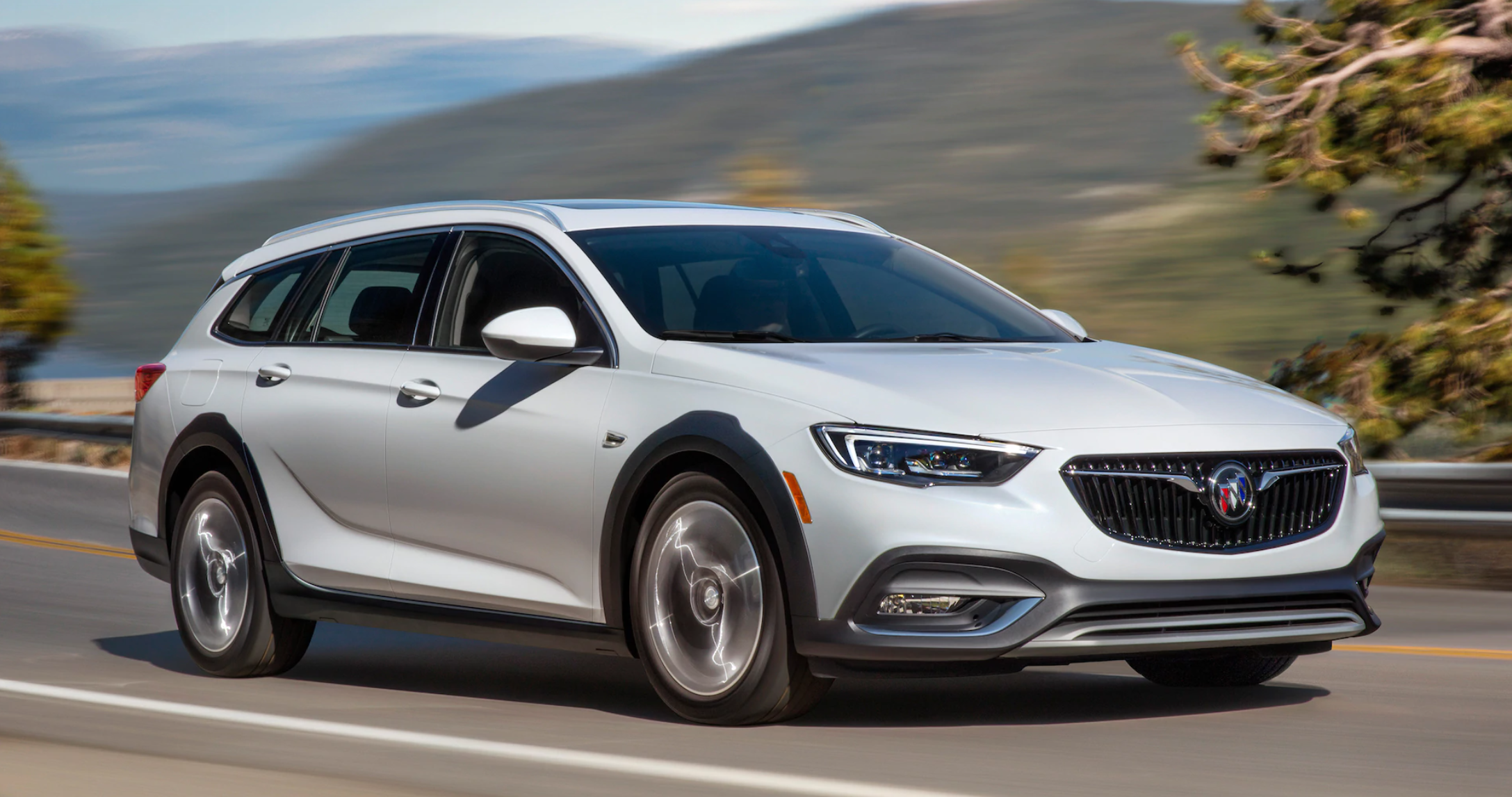
Speaking of wrong about everything, Senior Management likes the idea of a station wagon. These are rare birds on our Planet of the SUVs and I am seriously averse to the Karenmobile (Volvo). That leaves “How Subarus Came to Be Seen as Cars for Lesbians” (Atlantic: “it’s the result of a calculated, highly progressive ad campaign launched 20 years ago.”) and… what else? We saw an interesting looking car the other day, a Buick Regal TourX:

1.4 billion Chinese consumers can’t be wrong about Buick, can they?

Related:

Full post, including comments

What happens when cold season starts?

I’ve been in a bunch of masked-up environments recently. People have their masks off to take a sip of a beverage or a bite of a sandwich. What would happen if someone took off the mask in order to sneeze and wipe his/her/zer/their nose? Pandemonium, panic, and violence?

Are we going to end up with a society more like Japan, in which it is rude to be out in public while coughing or sneezing? (this does not seem to have helped with virus control there; the death rate from flu in Japan has been 2.5X the death rate in the U.S.)

Full post, including comments

What’s the coronaplague situation in Peru?

From NPR, March 24, “I’m An American Stuck In Peru — Glad To Be On Lockdown To Avoid COVID-19”:

Peruvian President Martín Vizcarra had just declared a total quarantine for 15 days, halting all air and land transportation, even taxis. With fewer than 150 cases of coronavirus identified at the time, the Andean country was immediately going into lockdown to stem the spread of the virus. … We have followed the daily White House briefings, where U.S. leaders often insisted what a great job they were doing but stopped short of announcing a national lockdown. … By contrast, on Friday in Peru, President Vizcarra addressed his nation in a speech that sent his popularity skyrocketing. He insisted on the urgency of the quarantine, then chastised those Peruvians who disregarded it and the local authorities who didn’t enforce it “with the strictness this situation requires.” … In the next few days, TV news showed images of residents on their apartment balconies cheering on police and public health enforcers in the streets. … Peru’s swift shutdown of intercity travel is likely to help reduce the spread of the virus. The government’s actions, the nation’s solidarity and seriousness of its approach have raised our hopes that the quarantine will expire as planned on March 31, and the disaster will be controlled enough to permit limited travel for folks like us to return home. … At least the measures here mesh with the lessons The New York Times drew from a study of Italy, the new epicenter of the virus: “that steps to isolate the coronavirus and people’s movement need to be put in place early, with absolute clarity, then strictly enforced.” U.S. infections have surged each day yet the federal government has remained reluctant to impose drastic actions. Other countries such as Italy and Spain have enforced quarantines, but too late to stop COVID-19 from ravaging them. … When we do get out, what scares us most is the life we may encounter when we get to the U.S.

From June, Christian Science Monitor:

Peru set a global example of quick action in the face of COVID-19, implementing a nationwide lockdown March 16, soon after its first confirmed case. The government invested in respirators and hospital beds, and offered bonuses to medical professionals. It designed an economic relief package that not only offered low-interest loans to businesses and helped employers keep workers on payrolls, but also targeted the poor, vulnerable, and self-employed with vital cash transfers.

In other words, the country did everything right thanks to effective leadership. However…

Despite Peru’s lauded response efforts, it now [in June] has one of the world’s longest lockdowns, and the second-highest tally of COVID-19 cases in Latin America, with more than 264,000 cases and more than 8,000 people killed. In the region, Peru ranks only behind Brazil, which has taken a decidedly less deliberate approach to halting the pandemic. Where things went wrong, experts say, was in misunderstanding the dynamics of poverty in a country that has gained “middle-income” status over two decades of growth.

Peru took the same kind of muscular action that was credited with keeping Covid-19 deaths in Laos, Cambodia, and Vietnam to 0. But the virus went in a different direction in Peru, suggesting that humans do not control the virus. The WHO dashboard shows Peru having the world’s highest COVID-19 death rate, having surpassed (female-led) Belgium, Spain, the UK, Chile, the wicked scoffers in Brazil, the unfortunate Italians, the wicked Swedes with their anti-lockdown anti-mask MD/PhDs, and we Americans, so sorely lacking in the national leadership that would intimidate the virus.

Peru has had a lot of problems with drug-resistant tuberculosis. Maybe it is a place where microbes infecting the lungs happens to flourish?

Readers: What do we know about Peru right now? Can it be said that the God of Shutdown is a fickle god and is punishing truly righteous Peruvians for reasons that we will never understand?

Related:

Full post, including comments

Will the post-plague world change the work-versus-welfare tradeoff?

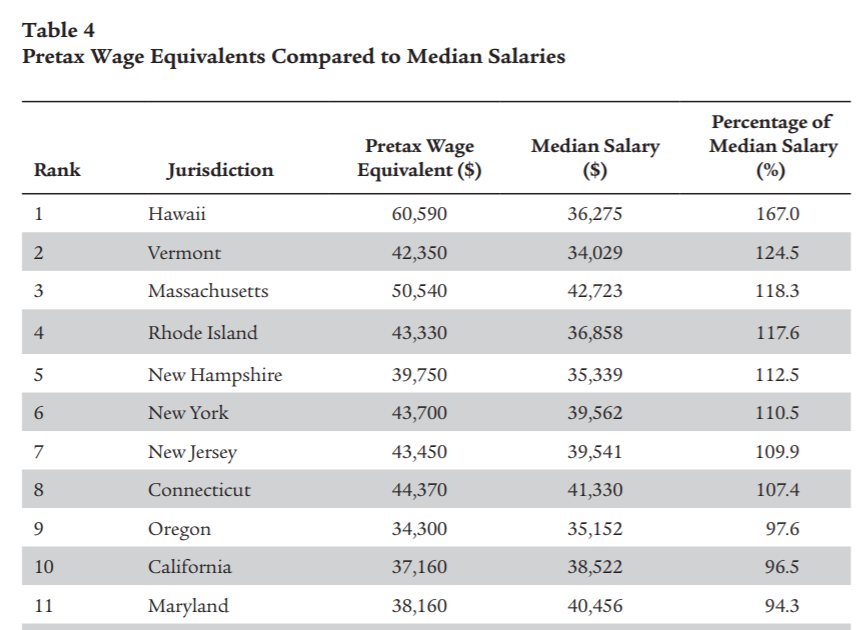
Some of my friends were discussing whether adjustments due to coronapanic will make it irrational for more Americans to work, rather than to set themselves up for welfare (means-tested public housing, Medicaid, SNAP, and Obamaphone). As with child support profits, there is a a lot of variability from state to state. From Cato’s work-versus-welfare trade-off 2013:

What’s changed with coronaplague? The desk jobs are less fun: sit at home and stare at a screen all day. The non-desk jobs are more dangerous: work in a supermarket and be exposed to hundreds of people every day, any one of whom might kill you with a breath.

What about spending? An MBA friend’s perspective:

I guess the worst-hit people will be those who earn $80-150k

They used to be able to afford a lot of “near luxury” stuff despite not being eligible for the good welfare gravy train and despite the high taxes that the government hits them with to support the welfare gravy train. but now they will be stuck at home. Near-luxury goods such as restaurant meals, airline tickets, theater tickets, and theme park tickets all go way up in price due to mandated de-crowding measures,

Everything will cost more. so the difference between their lifestyle and a welfare family will become minimal. since they won’t be able to afford meals out anymore. they would be better off not working, playing Xbox and swiping EBT card for food. do some cash labor for luxuries (if cash isn’t outlawed under the pretext that it spreads coronavirus!).

Readers: What do you think? Except for those who can earn well above the median, will working be a completely irrational choice for an American?

Full post, including comments

Rich college kids immune to coronaplague?

A friend who is a professor at NYU told me that so far they’ve found only five students who test positive for coronavirus. He says that this is a population of 24,000 undergraduates who converge from all corners of the U.S. (there are additional foreign students, ordinarily, but presumably they are being barred from entry to the U.S. due to the Trumpenfuhrer’s cruel entry bans that were imposed in February and March).

From an official NYU update:

7,772 COVID-19 PCR diagnostic tests were performed on students (including those who arrived early for quarantining) at the two NYU testing centers — Gould Plaza and 6 MetroTech — established for testing students. Five tested positive; all are in isolation, are being monitored by the COVID-19 Prevention & Response Team, and will not be permitted to enter NYU facilities until cleared.

and regarding the prison camp that they’re running…

Last week, some 2,700 students moved into residence halls to begin a two-week quarantine period, which the University sought to support by opening the residence halls early and delivering meals (both at no cost to students).

The move-in went well; the meal service less so. The food service was an unprecedentedly complex undertaking for the University and its food vendor, Chartwells, involving delivery of three meals per day to the door of each of the 2,700 students’ rooms, a substantial percentage of which were individualized, specialized meals. We fell short of the plans we had in place. Chartwells has taken a number of measures to correct the initial missteps — including doubling the food preparation and delivery staff — that have helped, and we are continuing to make efforts to improve meal service for the quarantining students in the residence halls.

So the $80,000/year “hybrid” education starts with two weeks of incarceration!

American Pravda says that the U.S. has roughly 40,000 new cases per day. That’s nearly 300,0000 per week (reasonable length of infection for a 20-year-old?). Assume that there are two people who would have tested positive, but didn’t get a test, for every actual positive test? That’s close to 1 million. Based on a U.S. population of 330 million, we should have at least 1 in 400 people currently infected with coronaplague, right? But NYU had at least 7,772 tests and only 5 positives, only 1/4 the expected rate. What can we infer from this? The U.S. actually is testing everyone who might conceivably be positive? Asymptomatic infection is less common that we thought? Families that are rich enough to pay $80,000/year for an education that is no better than what is available at the local State U are not infected? What?

(How does the $80,000/year education actually work? Roughly one third of the students show up in person to any given lecture. The teacher tries to manage a forest of newly installed Zoom monitors so as to be able to interact with the two thirds of the students who are present via Zoom. There is a tech support hotline number in case the teacher is not a desktop computer system administration wizard. Classes start today.)

Full post, including comments

Why are we still out of paper towels and spray cleaner?

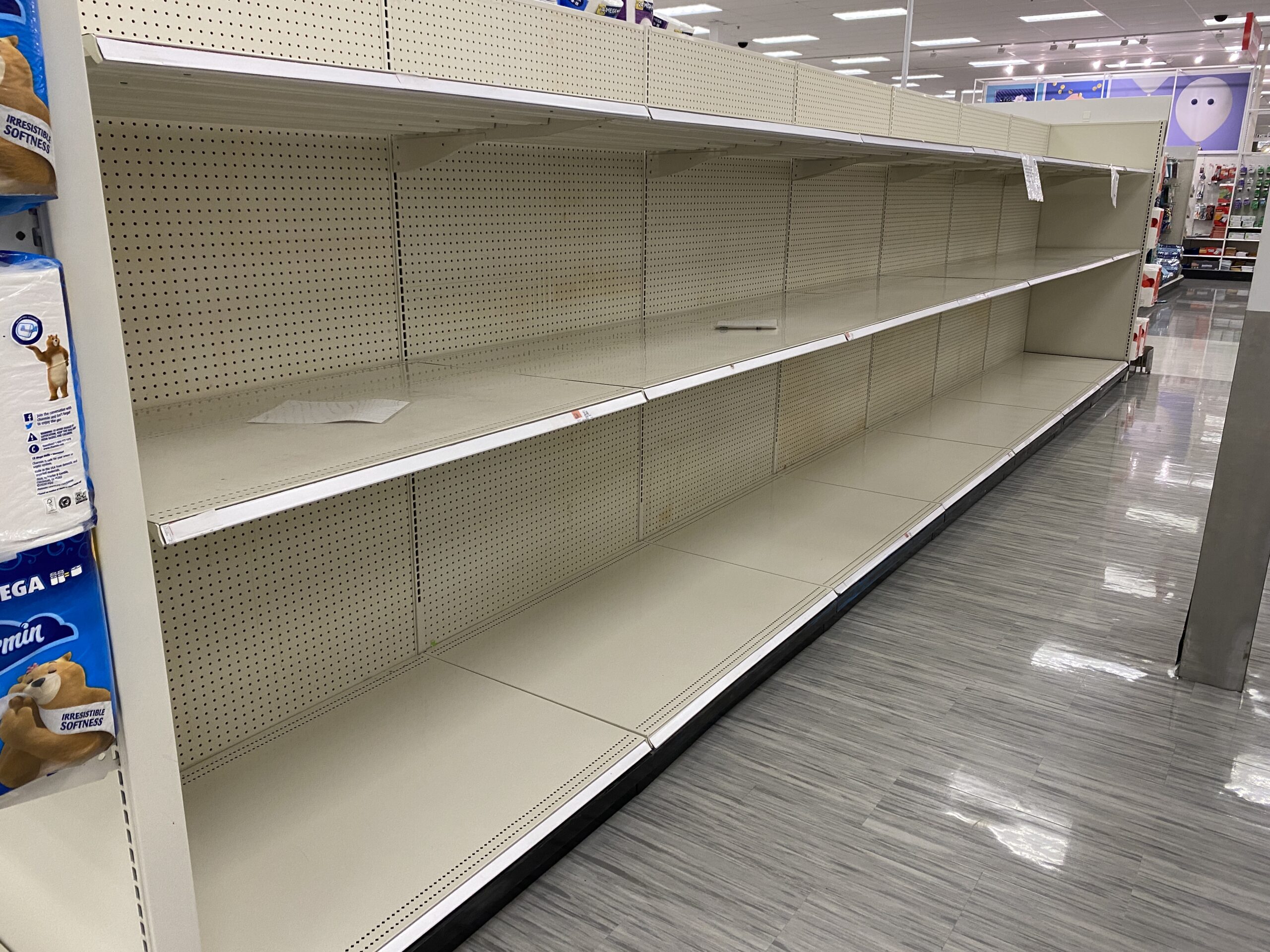
It has been six months since coronapanic started. Why is the local Target still out of paper towels, spray cleaners such as Formula 409, cleaning wipes, etc. People are actually using way more of these items? The Chinese can build a hospital for 5,000 patients in 10 days, but American factories can’t expand production in 6 months?

From August 26, 2020, the Target store in Watertown, Maskachusetts:

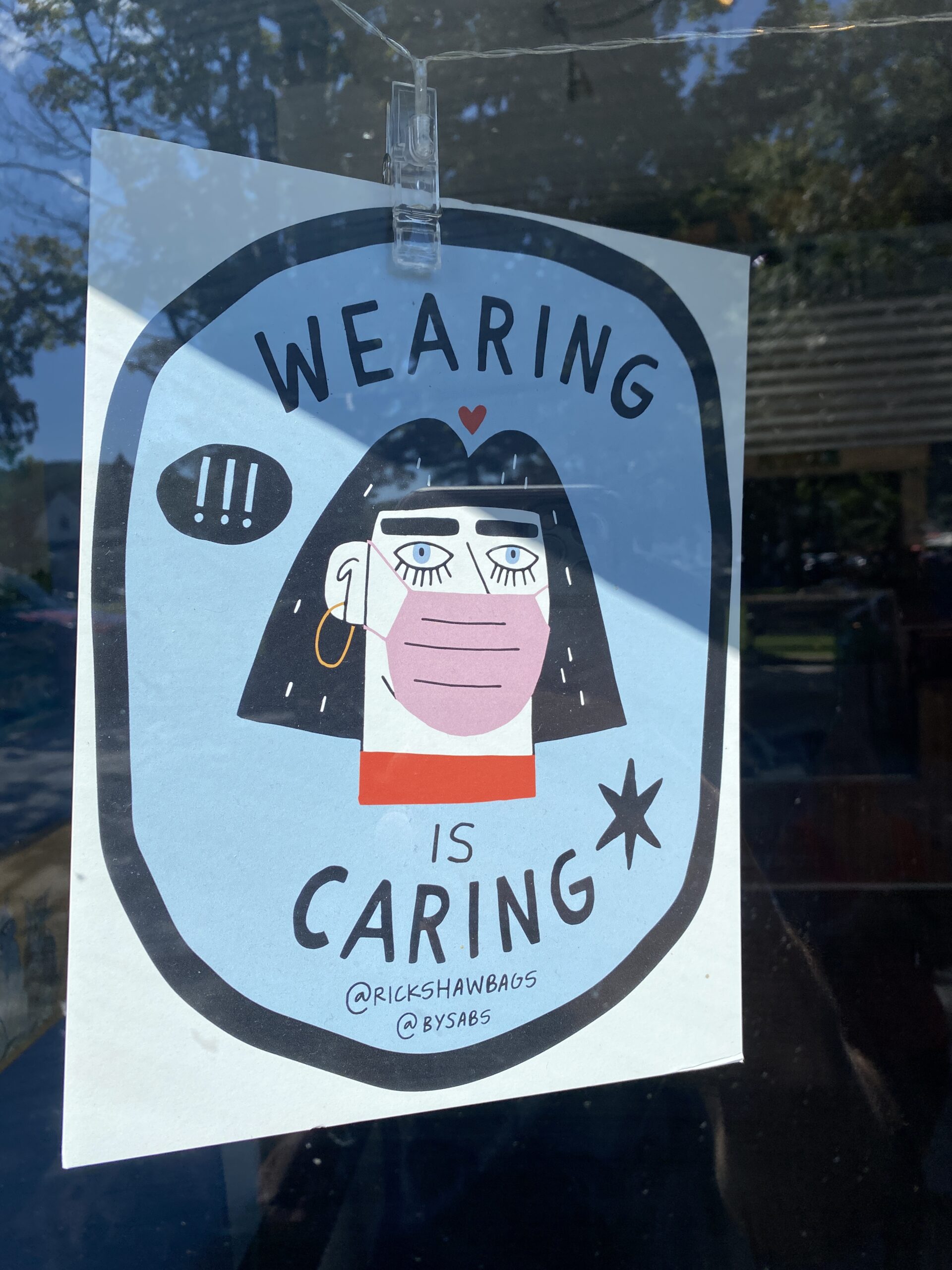
(shoppers were continuously reminded via the overhead audio system that wearing a mask was required, a bit like being at an airport and hearing warnings about unattended baggage over and over again)

Maybe AOC and Ed Markey are right? Capitalism is a failure?

Full post, including comments

U.S. retail will have permanently shorter European-style hours as a result of coronapanic?

With tens of millions of Americans on the “$600 per week and chill” plan, a lot of retailers shortened their hours. In theory, things should be getting back to normal (it was a brief shutdown to “flatten the curve,” right?), but at least our local supermarkets seem to have kept their new shorter hours.

Are we on track to become more like Europe, where if you don’t want to conform to the standard hours you won’t be able to get meals, food, etc.? (walk around Paris and see if you can find a 24-hour CVS!)

Readers: What have you seen in your regions of the country? Are hours still curtailed?

Full post, including comments

COVID-19 kills the malls

Some of our recent helicopter flying has been with a photographer tasked with getting pictures of shopping malls in the context of highways, cities, etc. What are these for? “Everything is for sale now,” he said. “They’re all going bankrupt.”

Is it actually too late for these spaces? If schools need more square footage to do in-person learning, why not rent the vast department stores to local school districts? Because the schools aren’t actually willing to pay? In Shanghai, a typical mall might have half the space devoted to after-school programs for children, e.g., dance or English-language instruction. Perhaps that can’t work in the U.S. because at any time a governor can make it illegal to operate the after-school program.

Readers: What else can be done with these spaces? If retail and most other forms of gathering are outlawed, what is the value of a lot of climate-controlled space?

Related:

Full post, including comments

Shutting universities due to plague and the Cat in the Hat

Just as the Swedes said back in March and April (interview with an MD/PhD), since coronavirus is now a permanent companion for humankind, if ye seek ye shall find. American universities have embarked on massive testing programs and are discovering that young humans can be and are infected with coronaplague. To protect our delicate society, they’re virtuously shutting down.

Does this make sense? Let’s refer to the infamous racist tract, the Cat in the Hat:

‘that is good,’ said the fish.
‘he has gone away. yes.
but your mother will come.
she will find this big mess!

and this mess is so big
and so deep and so tall,
we can not pick it up.
there is no way at all!’

If the students are sent home, yes, why won’t we find a big mess of coronaplague wherever they decide to live? Instead of gathering with fellow students at College A and possibly infecting middle-aged Professor B, they’ll gather with their high school friends and possibly infect their middle-aged parents, with whom they will be stuck living indefinitely. Is it plausible that the net result will be reduced overall plague?

Evidence in favor of shutdown: the Swedes closed their universities back in March, one of only a handful of things that they did other than simply giving the finger to the virus. But the idea there was to slow down the virus and avoid overwhelming the medical system (the Swedish government overestimated the need for ICU beds by more than 3X). The Swedes never said that closing universities would make the virus go away or keep young people from spreading it to each other within a few months.

Evidence against the effectiveness of any shutdown: “‘Do you really need to party?’ WHO asks world’s youth” (if old people are telling young people to do something “for their own good” we can almost always win by betting against, right?)

Full post, including comments

American schools will have to stay closed even after an effective COVID-19 vaccine is available

Turbine-powered Shutdown Karens: “A Vaccine That Stops Covid-19 Won’t Be Enough” (New York Times). Even if we have a vaccine that prevents coronavirus infection from turning into COVID-19 disease, it won’t be safe to leave our bunkers:

But even if one, or more, of those [vaccine development] efforts succeeds, a vaccine might not end the pandemic. This is partly because we seem to be focused at the moment on developing the kind of vaccine that may well prevent Covid-19, the disease, but that wouldn’t do enough to stop the transmission of SARS-CoV-2, the virus that causes Covid-19.

A vaccine’s ability to forestall a disease is also how vaccine developers typically design — and how regulators typically evaluate — Phase 3 clinical trials for vaccine candidates.

Yet the best vaccines also serve another, critical, function: They block a pathogen’s transmission from one person to another. And this result, often called an “indirect” effect of vaccination, is no less important than the direct effect of preventing the disease caused by that pathogen. In fact, during a pandemic, it probably is even more important.

That’s what we should be focusing on right now. And yet we are not.

Stopping a virus’s transmission reduces the entire population’s overall exposure to the virus. It protects people who may be too frail to respond to a vaccine, who do not have access to the vaccine, who refuse to be immunized and whose immune response might wane over time.

Preventing the very transmission of SARS-CoV-2, no less than stopping it from turning into Covid-19, should be a main priority of current efforts to develop the vaccines to end this pandemic.

So… the shutdowns will continue even after people stop getting sick and/or dying from COVID-19.

In other recent coronaplague news:

Full post, including comments