In response to reports of large gathering of students in off-campus apartment complexes in State College during this past weekends Penn State football game, the University announced joint planning, enforcement, and outreach measures designed to help prevent similar gatherings in the future. Large gatherings of mostly unmasked individuals not practicing social distancing are in violation of the State College Borough ordinance, which limits gatherings to no more than 10 people.
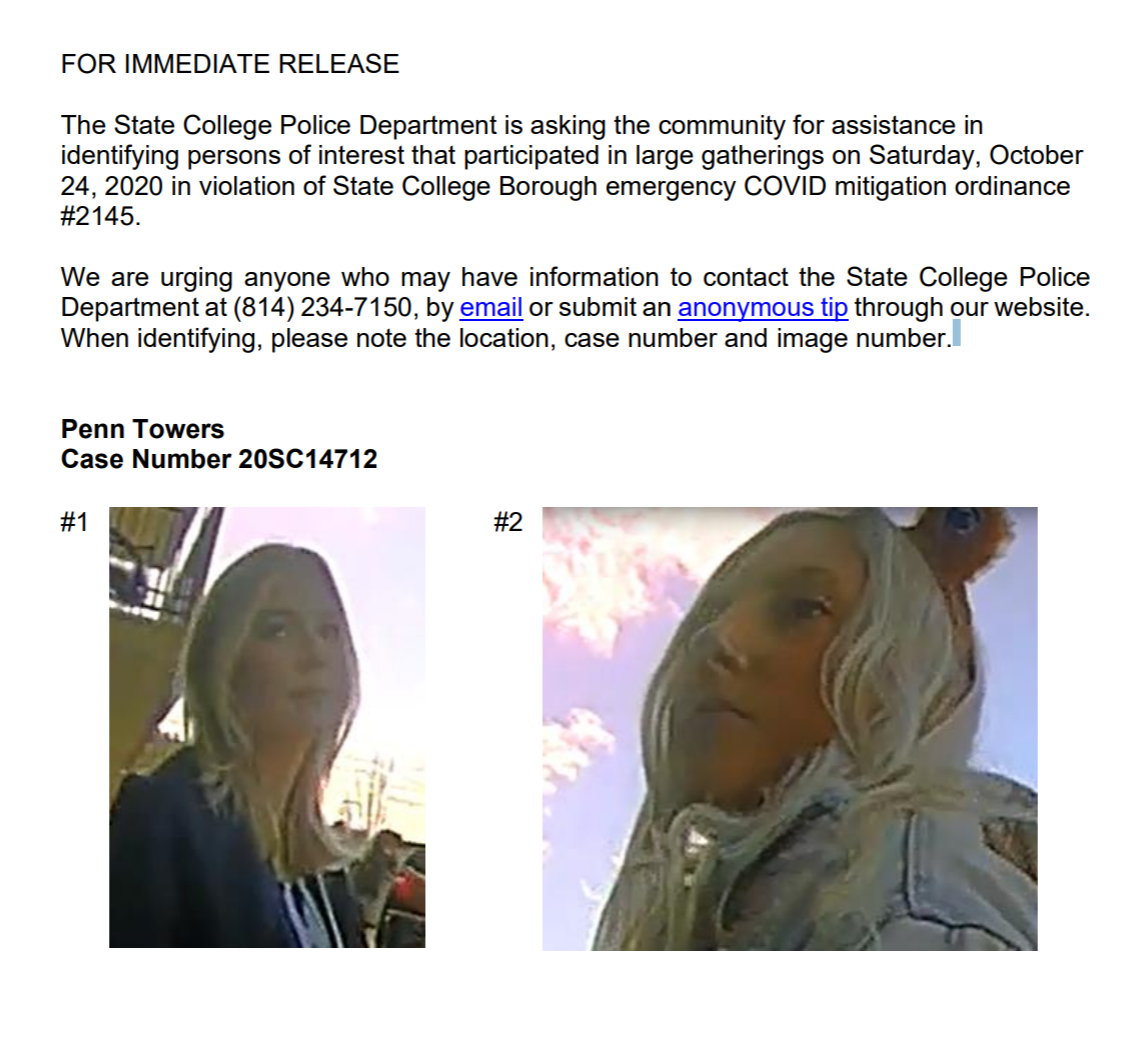
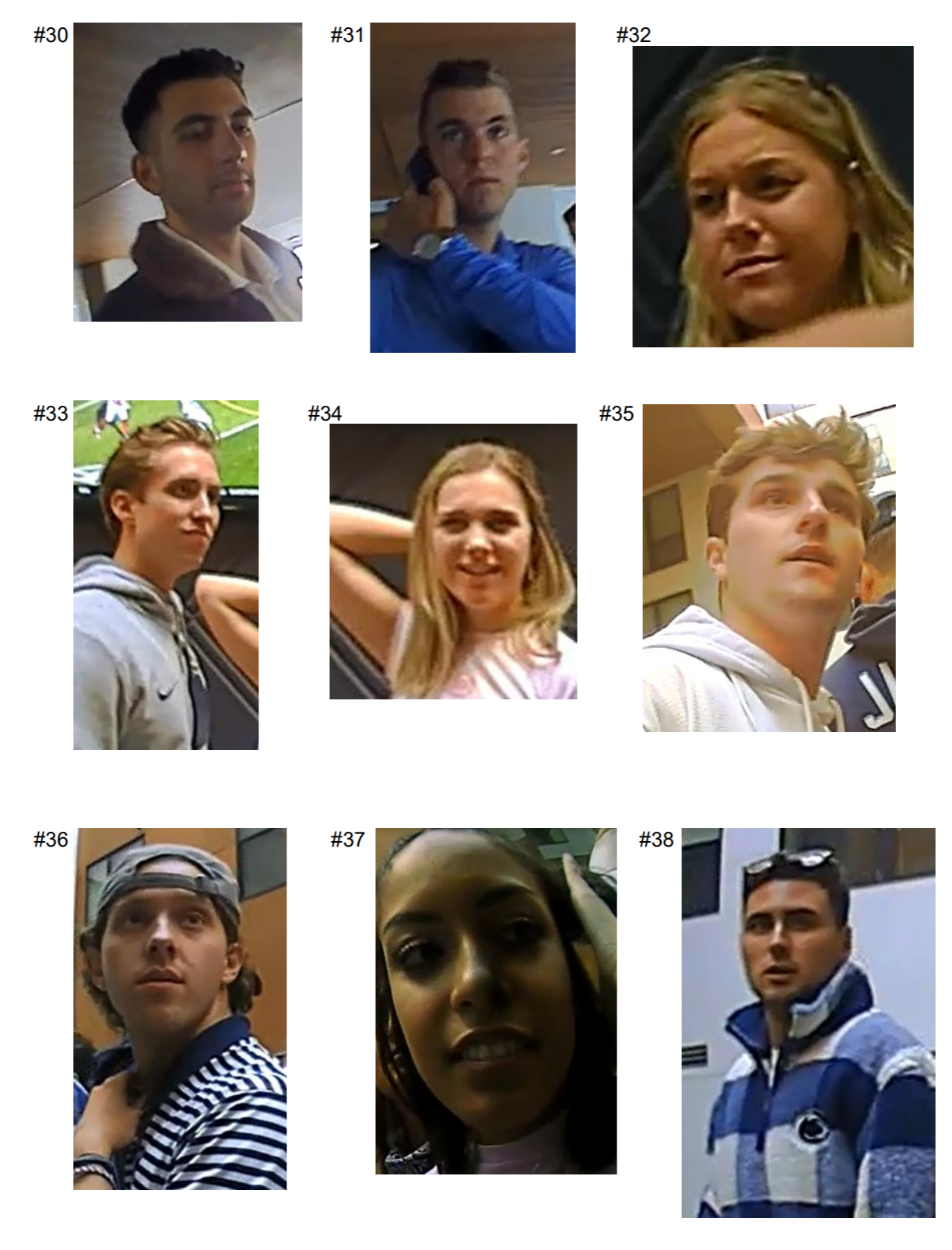
The State College Police Department is asking for help identifying 60 individuals who attended large-scale apartment parties last weekend. The individuals in question, compiled in this online document, allegedly attended parties at State College apartment complexes during Penn State footballs season opener against Indiana on Saturday, October 24. The document includes dozens of pictures that appear to have been taken from social media clips.
Anyone with information is encouraged to reach out to the department by phone (814-234-7150), by email, or through an anonymous tip line. Police ask that you note the location, case number, and image number when identifying an individual.
The dean proceeds to quote Emerson: “In the presence of nature, a wild delight runs through the man, in spite of real sorrows.” Coronavirus is part of “nature”, isn’t it? Are the 99.93 percent of us who have yet to be killed by COVID-19 experiencing “wild delight” in the presence of coronavirus?
We write to tell you that Penn State University and the Borough of State College share a deep and growing concern about activities and allegations centered around a rental property located at 329 East Prospect Avenue in State College. This rental property served as a chapter house for Sigma Alpha Mu fraternity, which was suspended by the University in April 2017 for multiple alcohol, health, and safety violations. The fraternity’s national organization subsequently revoked the chapter’s charter, and Sigma Alpha Mu no longer operates as a recognized student organization at Penn State.
Despite the fraternity’s suspension, the privately-owned house at 329 East Prospect continues to serve as a rental residence, and men living there represent themselves as a fraternity. Yet from April 2017 until this semester, residents in this facility have been accused of or found responsible for various additional violations, including hazing and sexual misconduct. In the weeks since the current semester began at Penn State, residents of this property have repeatedly hosted large gatherings in violation of the Borough’s Covid-19 ordinance. The State College Police Department has visited this property at least ten times in that period for various offenses, taking enforcement action on numerous occasions. The Borough is considering additional legal action, and the University has already suspended two students living there.
It now has been alleged that residents of this property hosted another large gathering last Halloween weekend. An underaged female Penn State student who attended this gathering was found intoxicated and unconscious on a nearby sidewalk. Residents responsible for the gathering at 329 East Prospect are accused of placing her there in the early morning hours last Saturday. Fortunately, after transport to the Mount Nittany Medical Center, where she was treated for alcohol poisoning, the student fully recovered. Most recently, there has been an allegation of a sexual assault occurring at this property over the Halloween weekend.
Neither of us has ever issued a warning of this nature, which should indicate the seriousness of the behaviors allegedly occurring at this property. We share this information out of conviction that the best protection for public safety includes individual efforts to self-guard against such threats.
In short, residents at 329 East Prospect have demonstrated a pattern of behavior that is troubling and has not stopped despite the continuing efforts of local police and University authorities. For that reason, we strongly discourage any student from affiliating with the unrecognized group living in this facility, and we urge you not to attend activities there. Anyone who has additional insight about these concerns may notify either the State College Police Department at 814-234-7150 or the Penn State Office of Student Conduct at 814-863-0342.
Sincerely,
Damon Sims Vice President for Student Affairs The Pennsylvania State University
Thomas Fountaine Borough Manager State College Borough
One of my MIT undergraduate moles shared with me a September email from the Administration:
We are writing to you regarding the important topics of sexual assault prevention and diversity, equity, and inclusion.
Two Required Trainings: Diversity, Equity, and Inclusion and Sexual Assault Prevention Ongoing: Healthy Relationships (see instructions below)
The trainings will be available starting October 1, 2020 and must be completed by November 2, 2020. Instructions to access the courses are below. You will have a registration hold placed on your account and will be unable to register for IAP and/or Spring 2021 classes if you do not complete both trainings by the November 2 deadline.
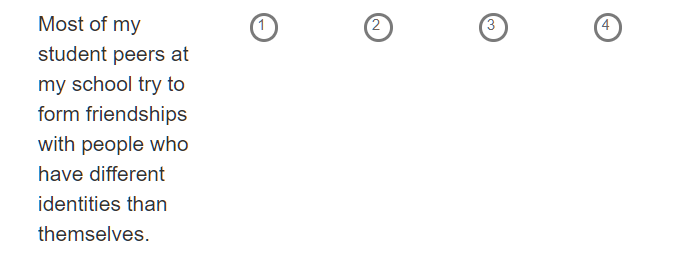
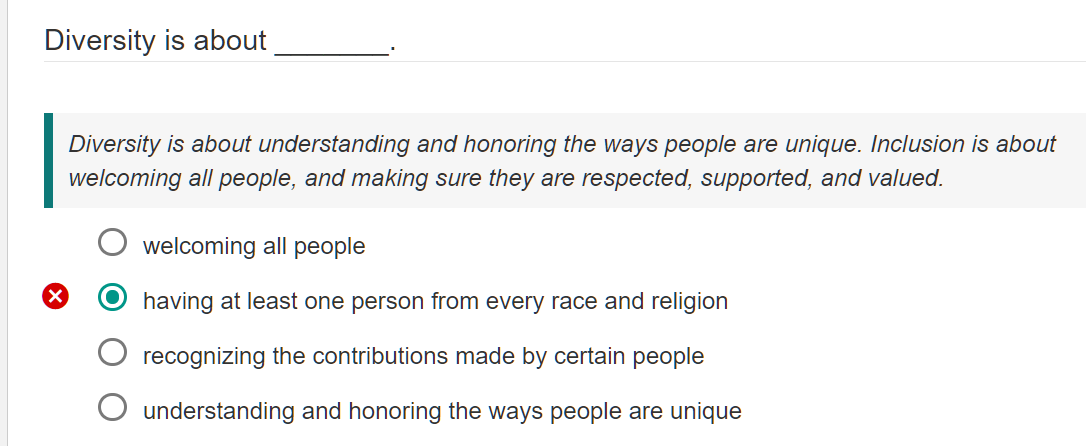
Diversity, Equity, and Inclusion starts with a survey that contains unanswerable questions:
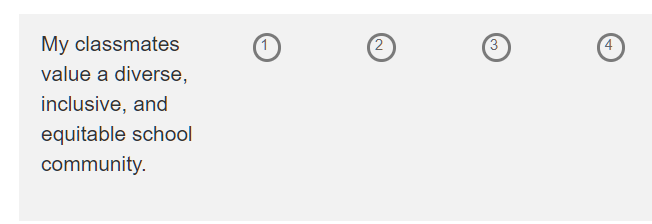
How is Student X supposed to know what Students Y and Z are trying to do in forming friendships? (especially given that everyone is dispersed and interacting only via Zoom) The student is also supposed to know what 1,000+ classmates value:
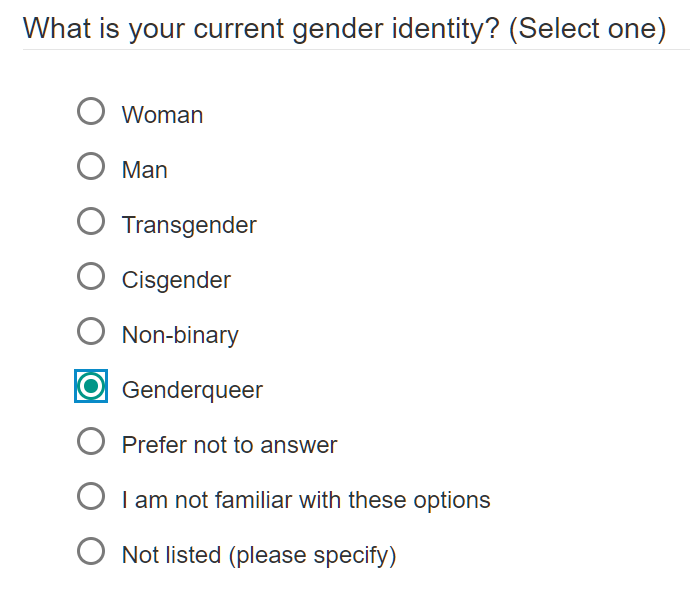
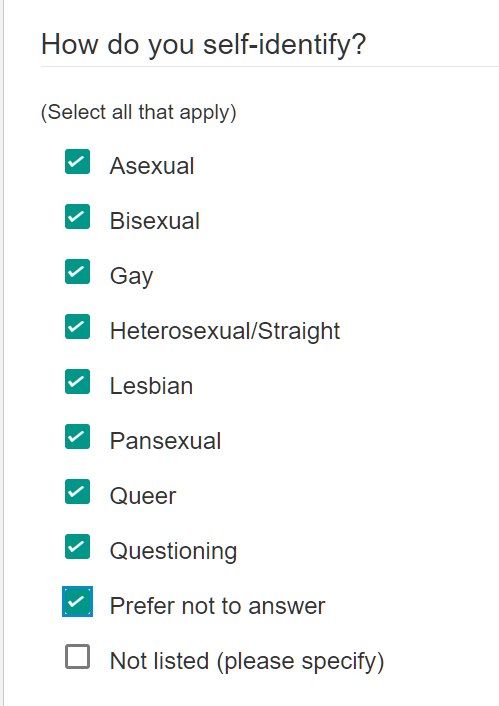
The survey is at least 40 gender IDs short of a complete list:
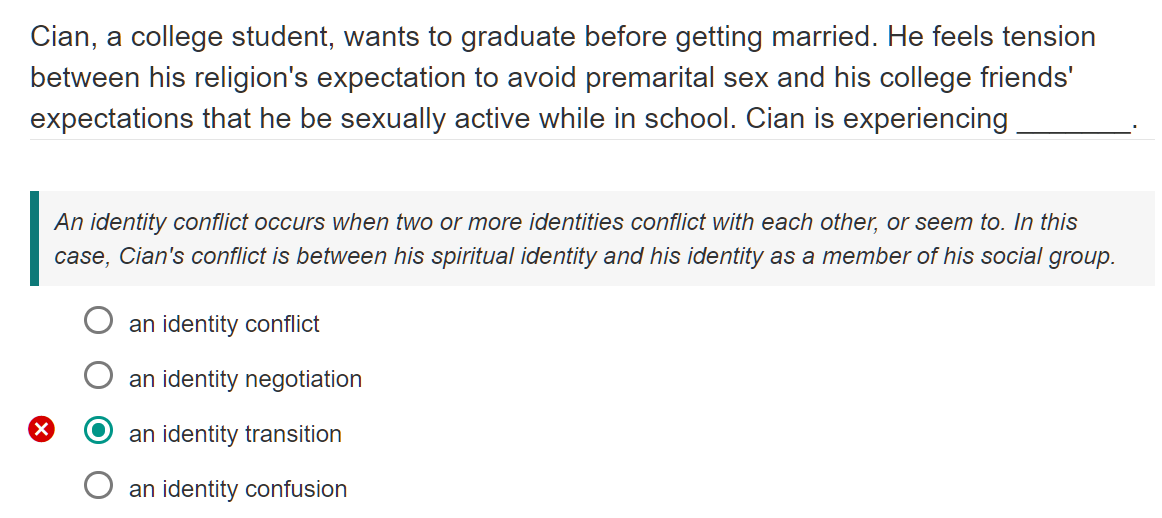
(If Cian is a student at an engineering university, why do his friends expect him to be sexually active?)
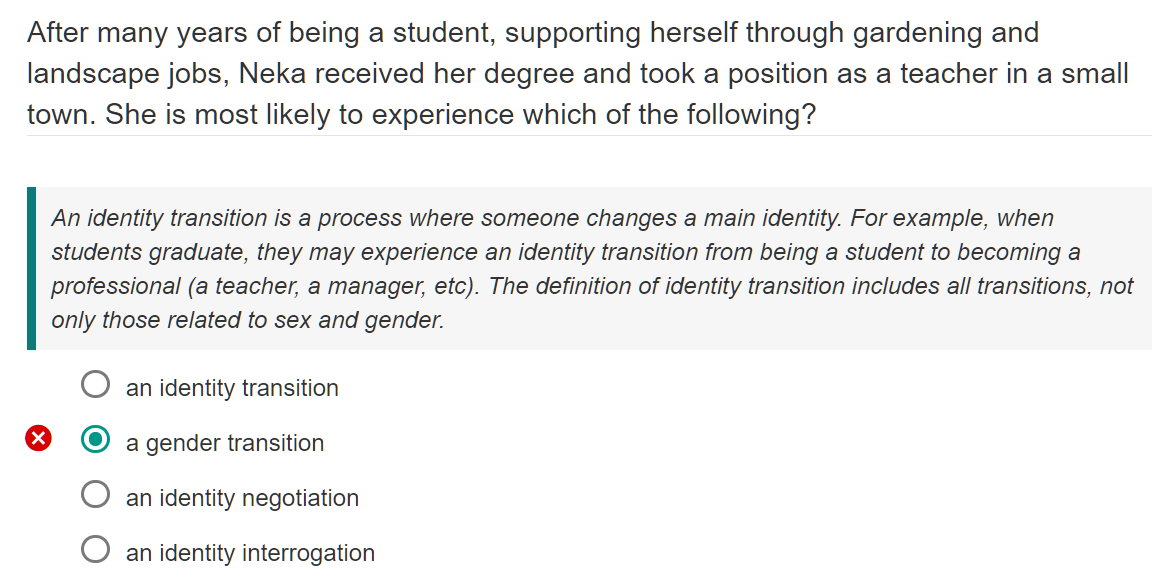
Any time is a good time for a gender transition? No!
Whoever designed this survey does not seem very familiar with the American public housing, Medicaid, SNAP, and Obamaphone programs!
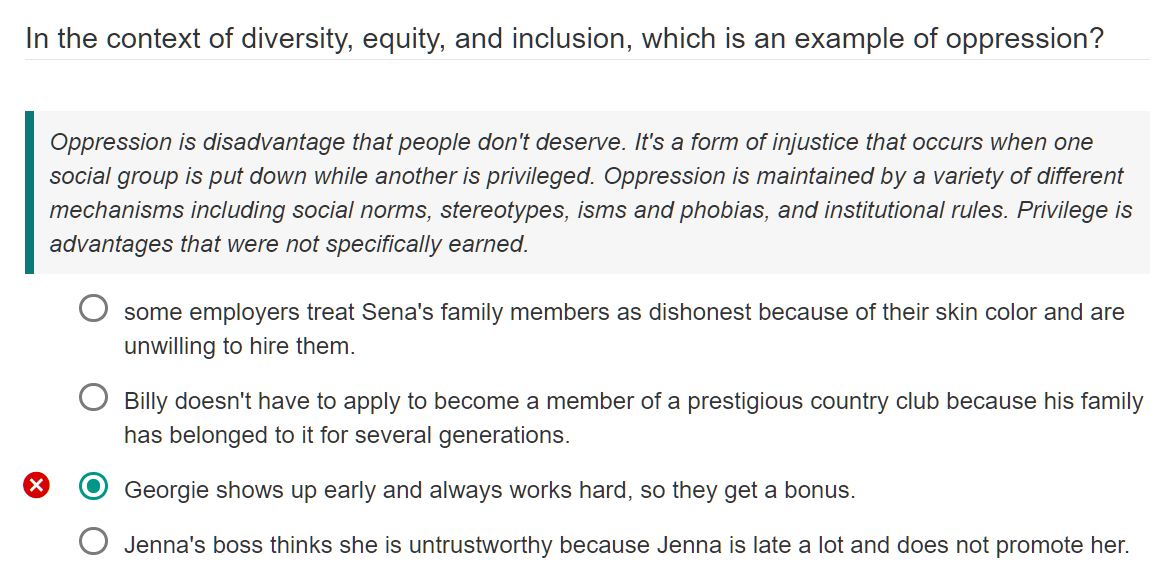
Oppression
After the baseline quiz, it is time for the welcome video, which features seven students, none of them apparently identifying as “white male,” and with no apparent age diversity.
The next video introduces José, a double-victim: Afro-Latino. He says that both of his parents are doctors and that’s why he’s pre-med: “it’s in my DNA”. Is the learner supposed to consider the possibility that academic ability, conscientiousness, and other aspects of intelligence and personality are also in students’ DNA?
“Living our Intersectionality” features the following folks:
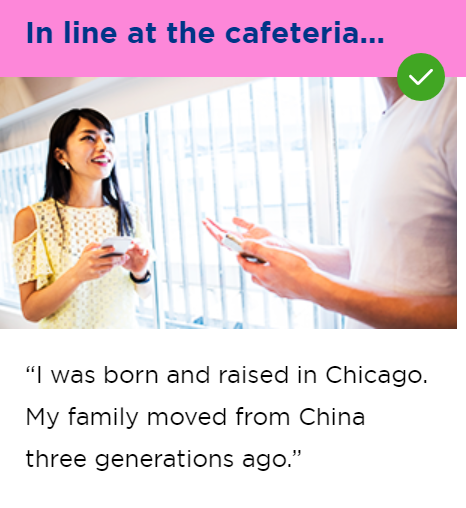
“I identify foremost as a very, like, spiritual queer person of color.” (a microaggressive person would say that this person appears to be an Asian female)
“I identify as ABC: African Black Caribbean. Female. I also have ties with the indigenous.” (She’s big enough that a chandler would likely recommend that any “ties” be at least 1/2″ in diameter, double braid, and secured with a cleat hitch.)
(nobody identifies at the intersection of “white” and “male”!)
Next slide:
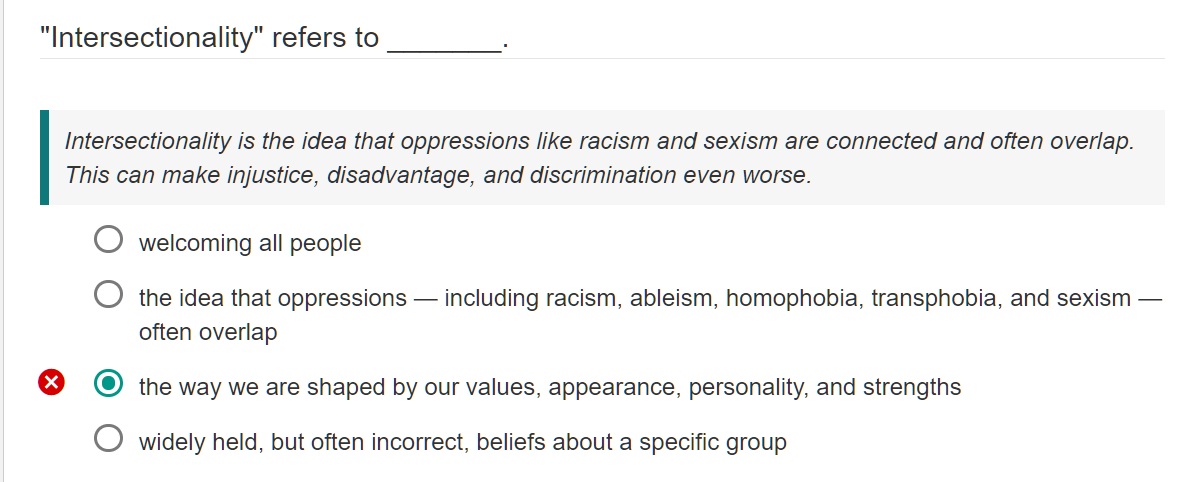
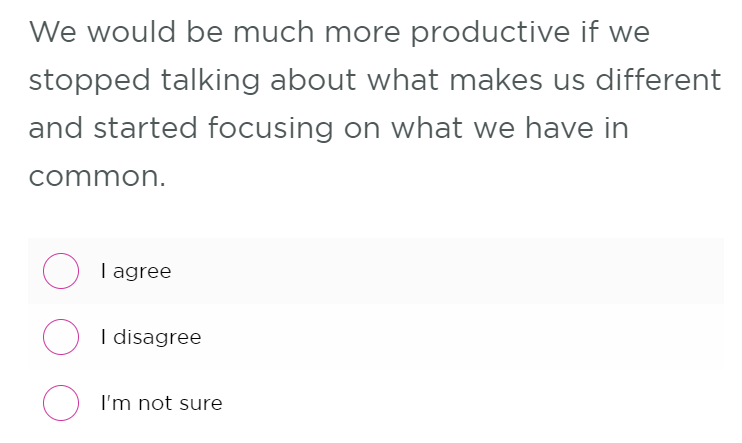
“Many of our social justice problems like racism and sexism are often overlapping, creating multiple levels of social injustice.” … We can’t just look at a person’s race or gender (or any of their individual identities) as separate categories. It’s the intersections that truly shape a person’s experience and influence both their opportunities and their challenges. This concept is especially helpful when thinking about issues of fairness and how people are treated in the world.
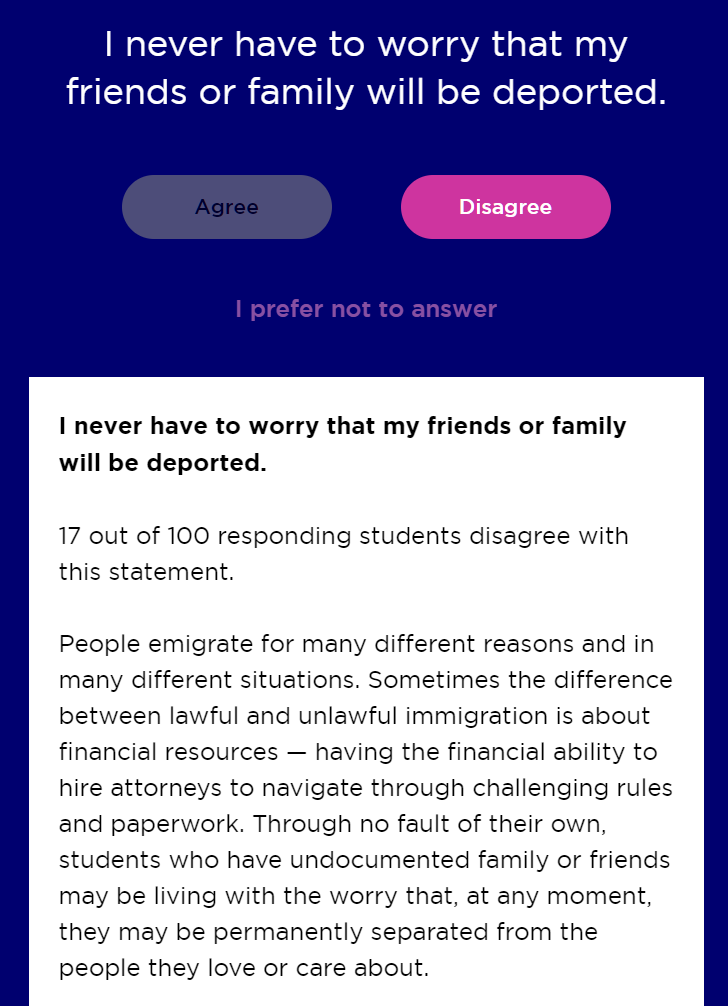
Let’s hope that President Harris deports anyone who answers “I agree”!
Heading out to exercise can be just as dangerous as sitting next to the fridge in governor-ordered shutdown for 8 months:
For example, student athletes who identify as women may face conflicts between their identities as women, athletes, and students. They may face pressures to be more aggressive and practice-focused, based on their athletic identity, more feminine and nurturing, related to gender expectations, and more studious and intellectual, based on their student identity.
Student POV: A student who identifies as black says that being black is “incredibly challenging” and “I am constantly in fear for my life”.
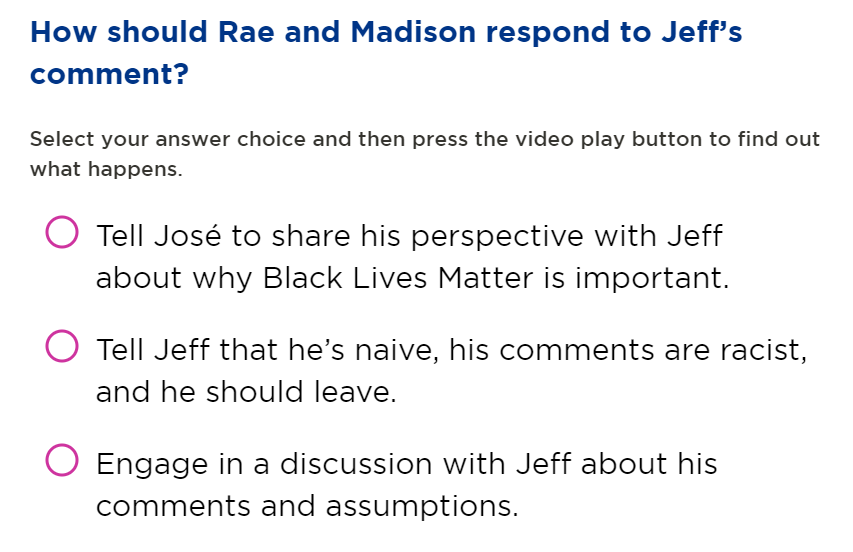
We find José again being victimized by his white roommates and their friends. The LGBTQIA+ guy with a stereotypical lisp is fine, but the white girl pressures Jose to go to the BLM rally. The white guy says he expected Jose to look different (i.e., more Latinx and less Black) and that “No offense, but it seems that All Lives Matter would be a better way to bring people together. You’re saying that your [Latinx] dad’s family matters less than your [Nigerian] mom’s?”
What to do about the near-Deplorable?
You can’t proceed until you select the last one.
White people, even those who appear to identify as “women”, make a lot of stupid assumptions:
Will this section be about charging $53,000+ for a few months of streaming video?
“Sometimes equality isn’t actually fair.”
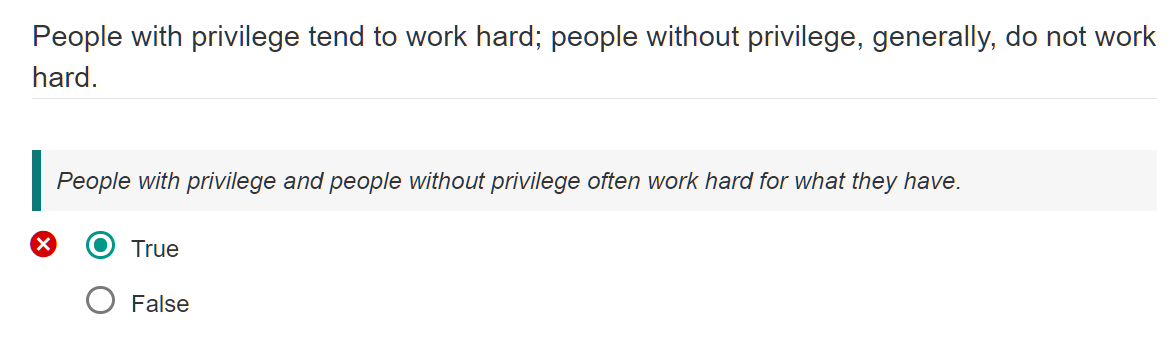
Perceptions can be misleading…
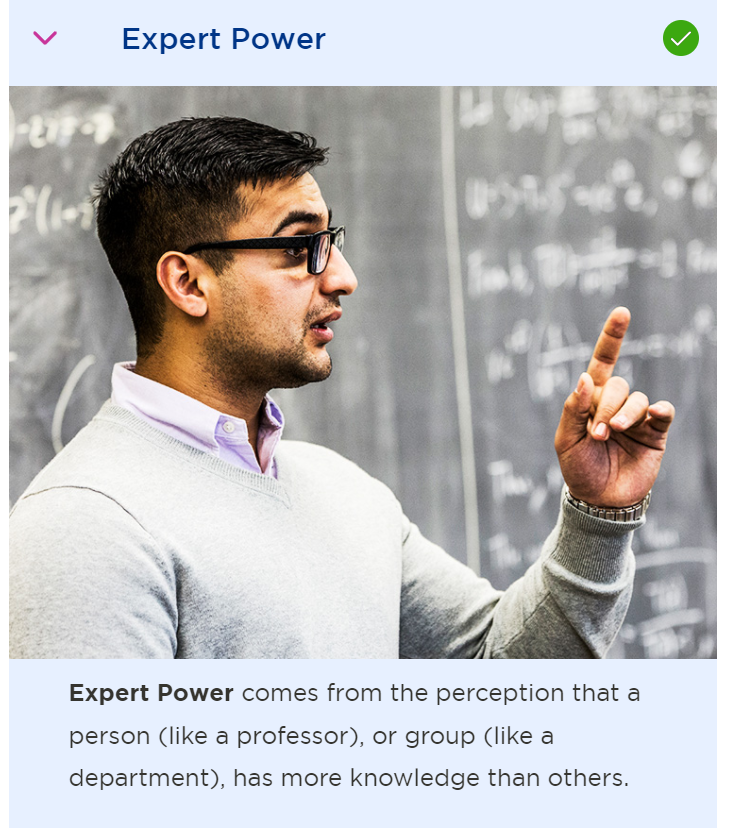
Even the lowliest worm may have power:
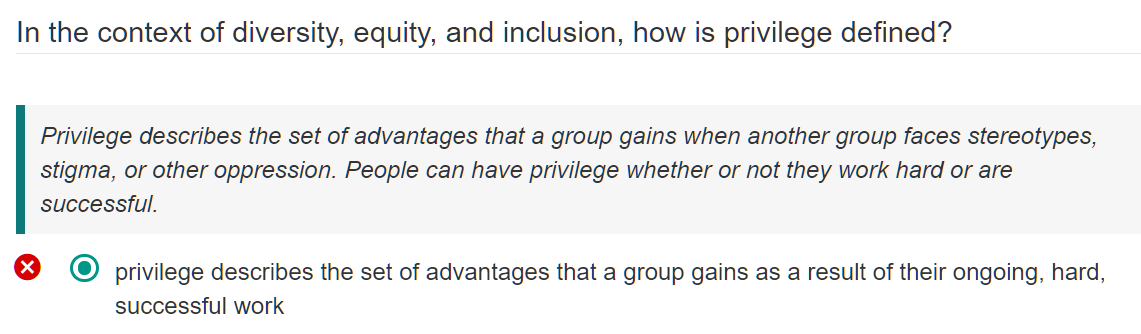
Even if you think you personally don’t have power, you may still be participating in structural systems of power where you receive advantages or are considered the norm, while others are disadvantaged or considered outside the norm.
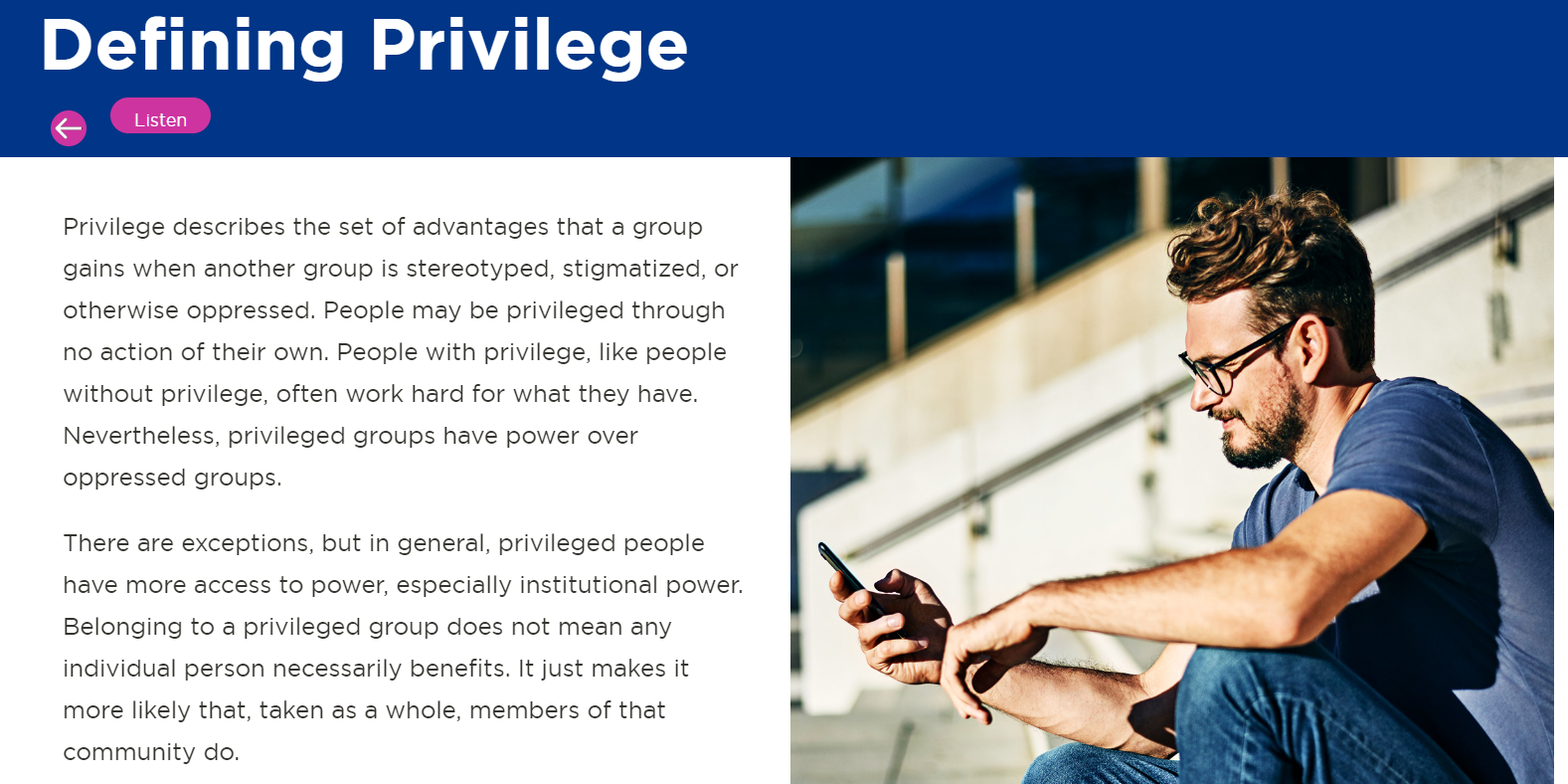
White males reappear in order to define privilege:
(Looks as though he is loving the phone that was developed for him by white and Asian engineers, but white male privilege won’t entitle him to a mobile data signal if he’s in the Boston suburbs!)
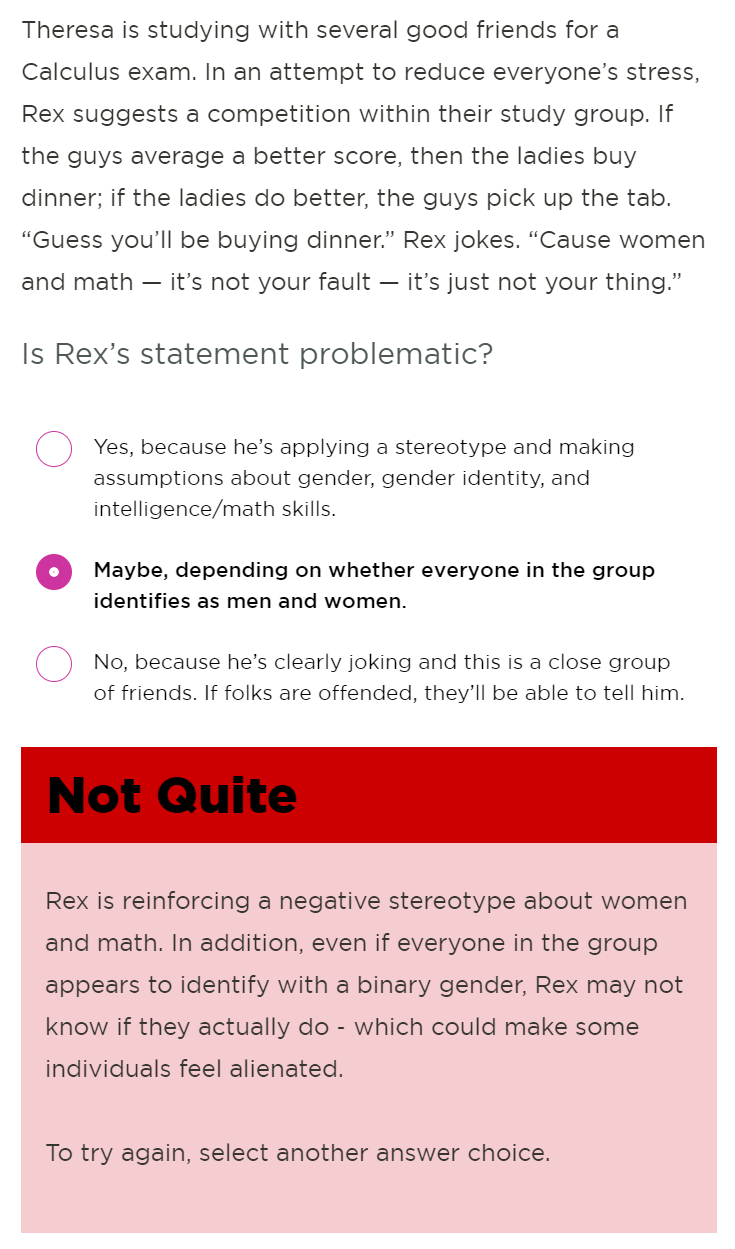
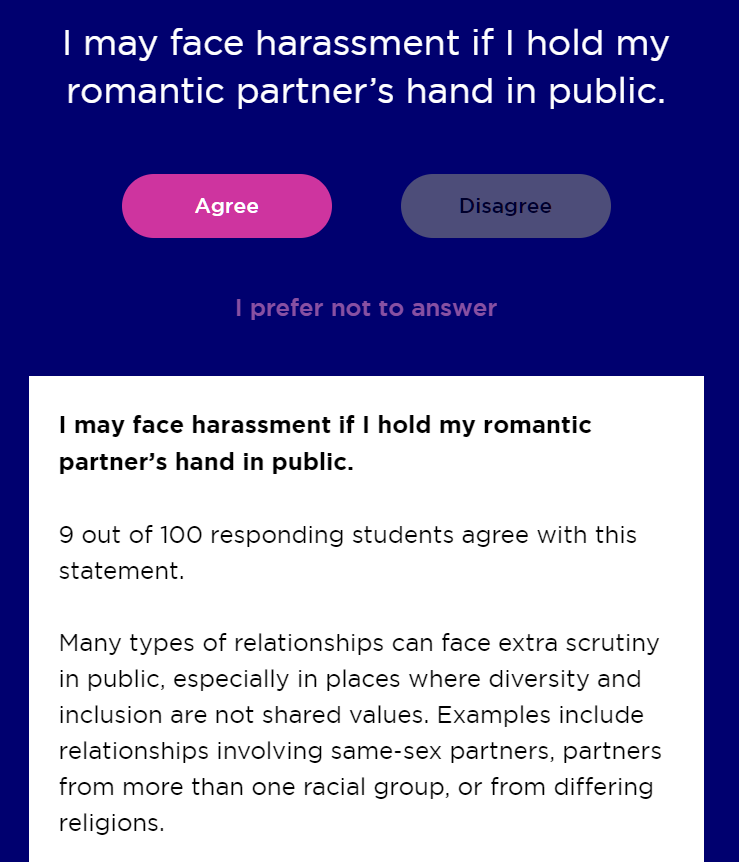
Did 9 out of 100 students go into the “wrong” bathroom by mistake or because it was actually the “right” bathroom?
But maybe the ASPCA should be called when a dog is forced to walk on three paws (the fourth being held by the human companion):
Not everyone is unhappy about our new all-virtual world:
There will be a lot of worries when students come out of Shutdown Joe’s multi-year shutdown, having raided the fridge every 15 minutes and never having exercised!
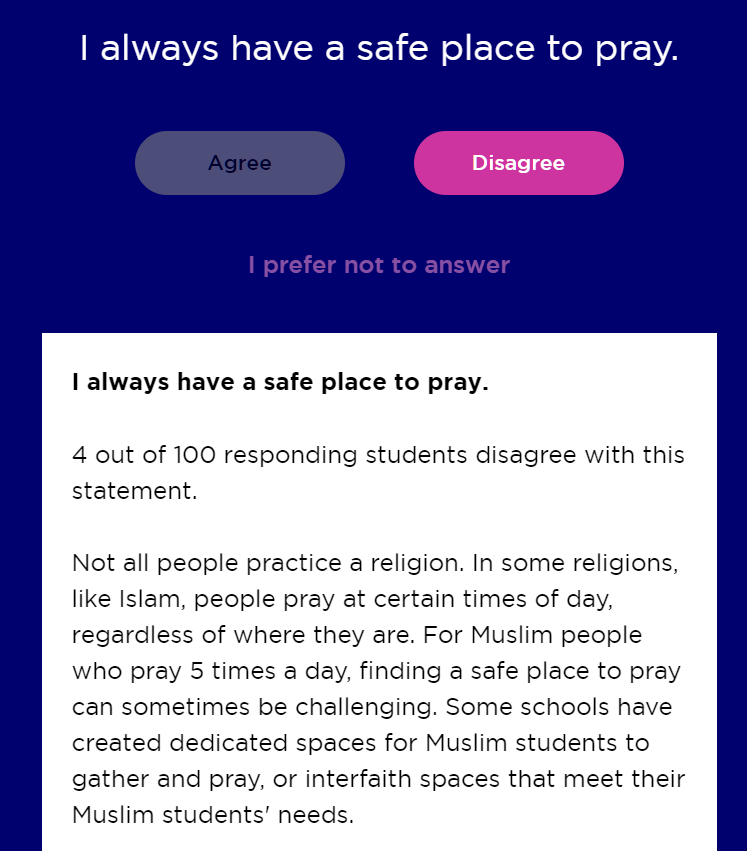
If God exists and is powerful and benevolent, why is it ever unsafe to pray?
Everyone can breathe easier starting January 20, 2021:
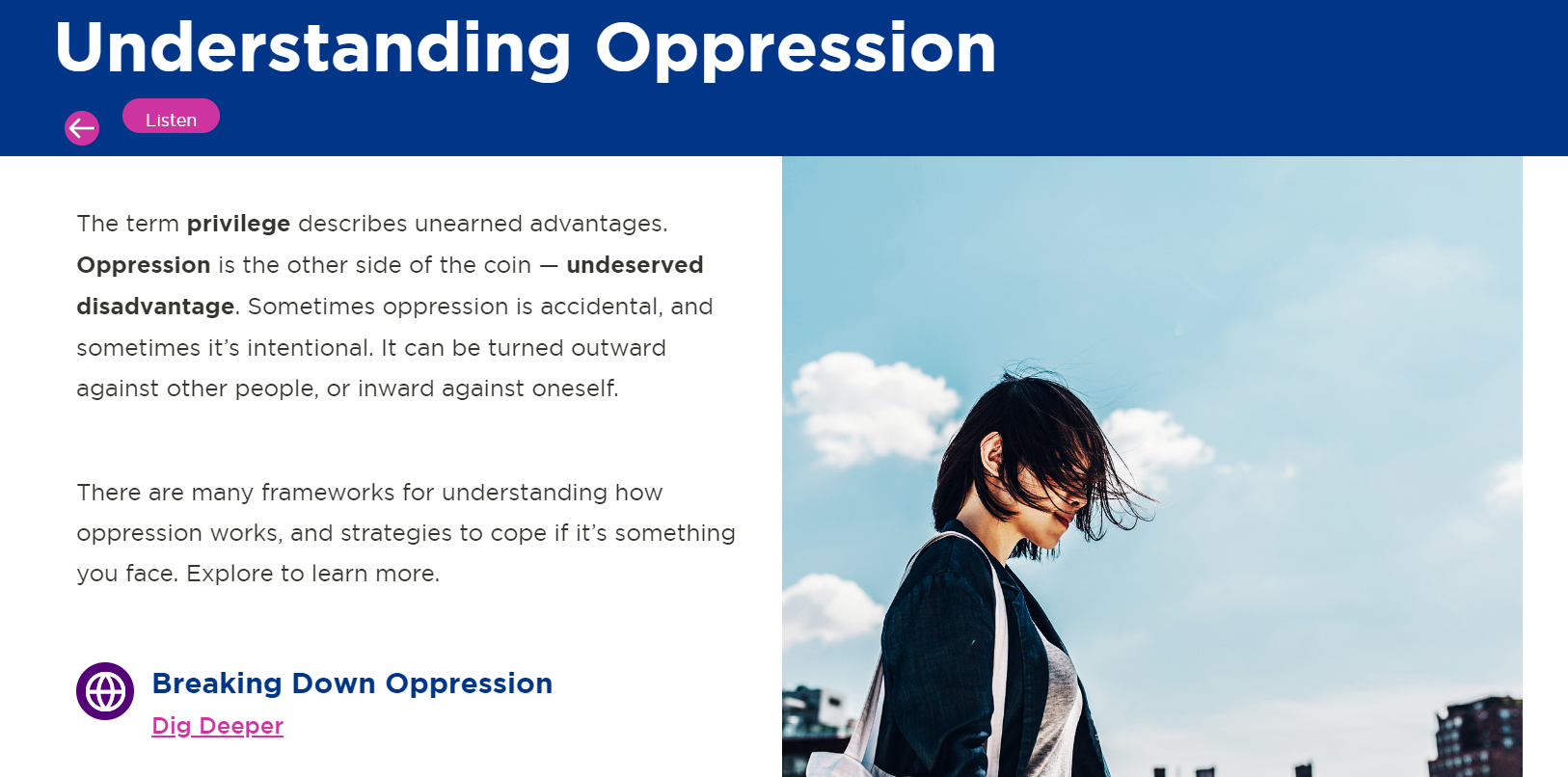
Who is oppressed? Someone who has made the mistake of not identifying as a white male…
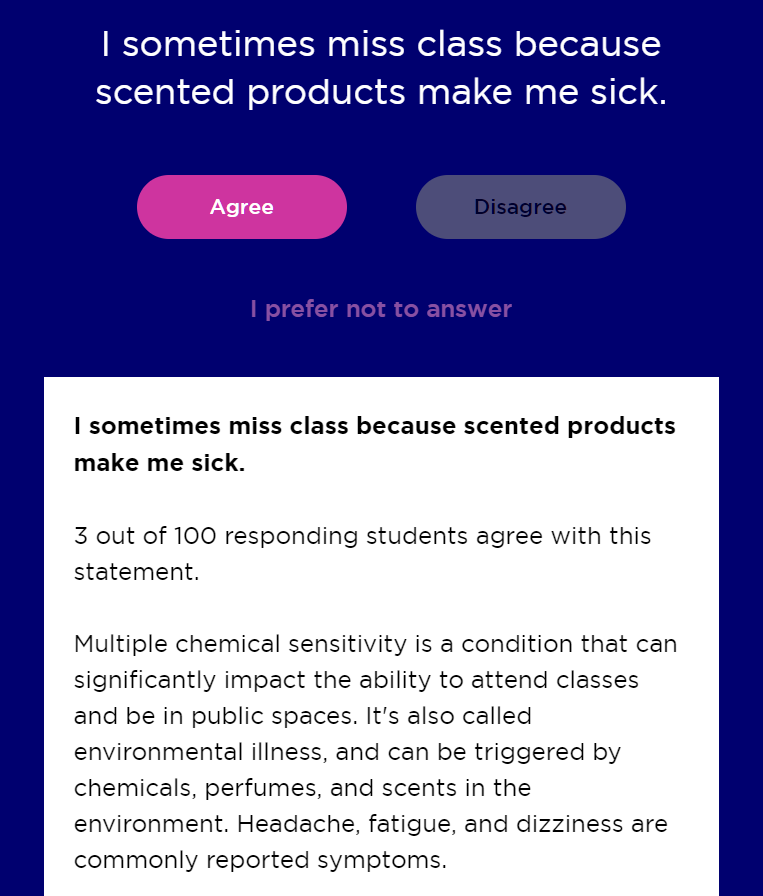
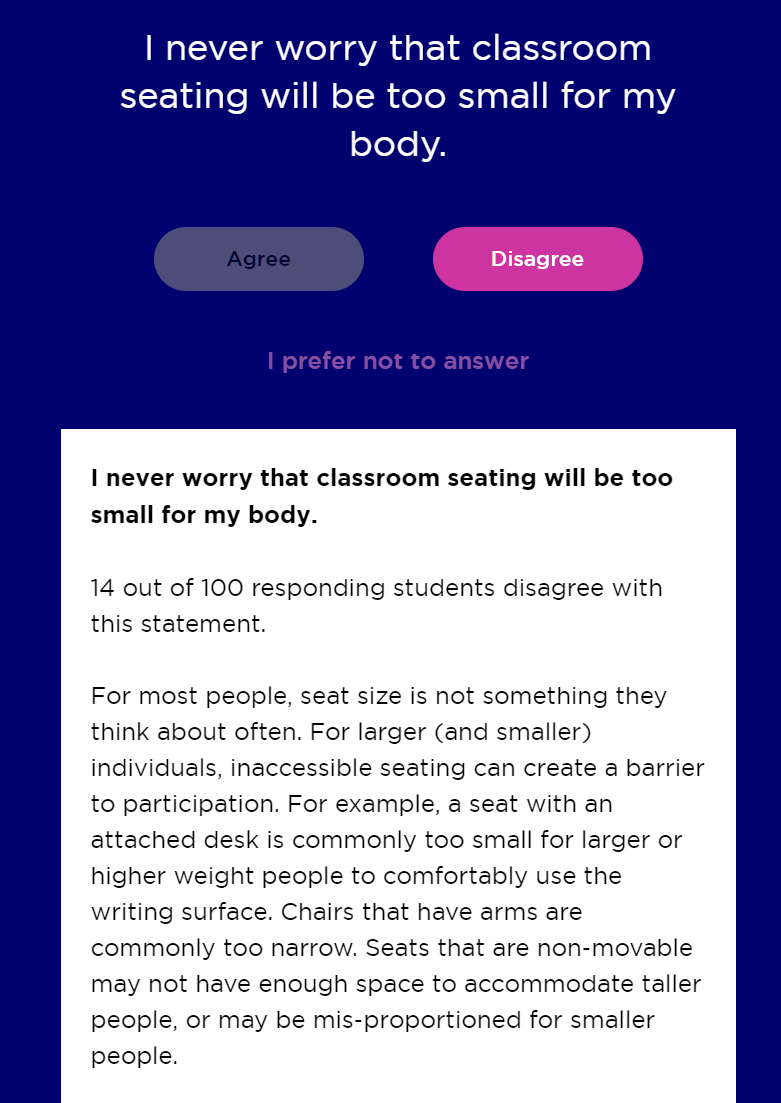
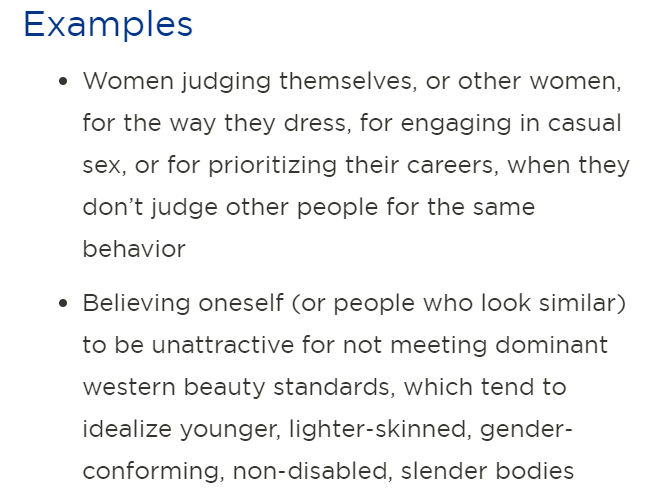
If you’re morbidly obese and have sex with a different partner every night, you’re at risk of becoming a victim of “internalized oppression”:
One example from the Isms, Phobias, and Microaggressions section:
Some definitions on the topic that has consistently enriched this blog:
Transphobia is prejudice against transsexual or transgender people. Transantagonism includes hostility, aggression and violence towards trans people. Bathroom harassment is a form of discrimination that is experienced by many trans people, gender nonconforming people, and cisgender people who don’t fit stereotypical ideas related to their gender presentation.
There is no “I” in “Team” and there is no “I” (or “T”) in “LGBTQIA+”:
Know that LGBQA+ stands for lesbian, gay, bisexual, queer, and asexual (plus many other associated identities).
Understand that asexuality is a sexual orientation. Asexual people generally do not feel a sexual attraction to others, though they may feel romantic attractions.
Be sensitive when talking with people about coming out stories. Remember that for some people these are traumatic experiences.
Language can create exclusion. Using identity-related words like “gay” to indicate that something is negative reinforces stereotypes.
If you have religious, political, or cultural objections to certain sexual orientations, remember that our community values include treating everyone with dignity and respect.
If a virtuous immigrant student follows a religion that condemns particular sexual acts, how can the community be said to be respecting this religion and the virtuous immigrant by covering hallways with posters celebrating those particular sexual acts?
The longest video is “How do you think about anti-blackness?” Maybe the problem wouldn’t exist if white people kept to themselves?
There is great diversity of experience among people of color. The term BIPOC (Black, Indigenous, and People of Color) is used to highlight some of these differences in history and experience. Respect spaces that are reserved for BIPOC people to discuss issues privately and safely.
Usually marked by a sense of disrespect or superficiality, classic examples of appropriation include wearing the traditional clothing of a racially marginalized group as a Halloween costume, or using a group’s symbols of religious or spiritual significance as decorative accessories. Inclusive spaces reject cultural appropriation.
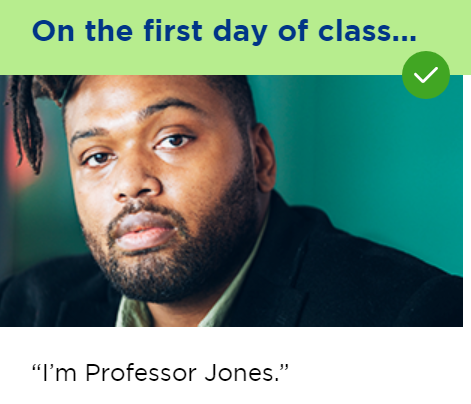
José returns to be victimized for 1:04 by a white professor who says, on the first day of class, “we don’t get many people like you in pre-med” (certainly a true statement at MIT, since there is no pre-med major!).
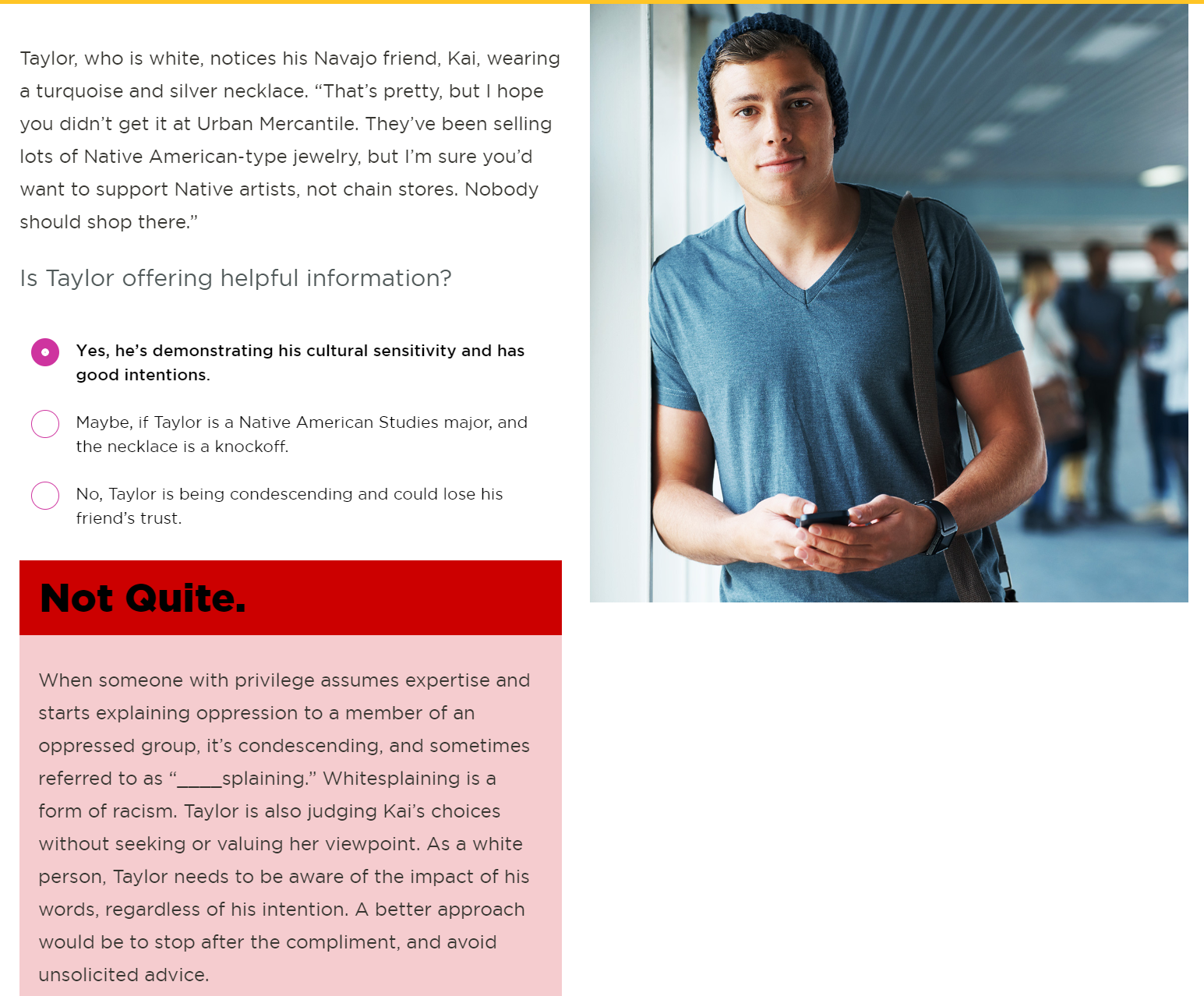
Now it is time for Communications and the Stupid White Man reappears to offer an opinion regarding Navajo jewelry:
The software won’t allow the learner to proceed until this answer is corrected. (American universities own vast amounts of land, all of it stolen from Native Americans. If they care about Native Americans, why not pay rent on the stolen land?)
The software reminds students at private universities that they don’t have a right to free speech:
Speech has a special role in higher education and in the United States. The First Amendment of the U.S. Constitution protects a person’s freedom of speech and expression from government interference (so it typically applies only to state institutions, though some states create additional legal protections that apply to private institutions).
Most colleges and universities consider freedom of speech and expression to be a critical part of the pursuit of higher education, and are also committed to creating a learning community where students from all backgrounds feel welcome and can concentrate on their studies without facing hostility and discrimination.
This is followed with a bunch of links explaining the difference between “free speech” and “hate speech”.
The next screen has some great drawings:
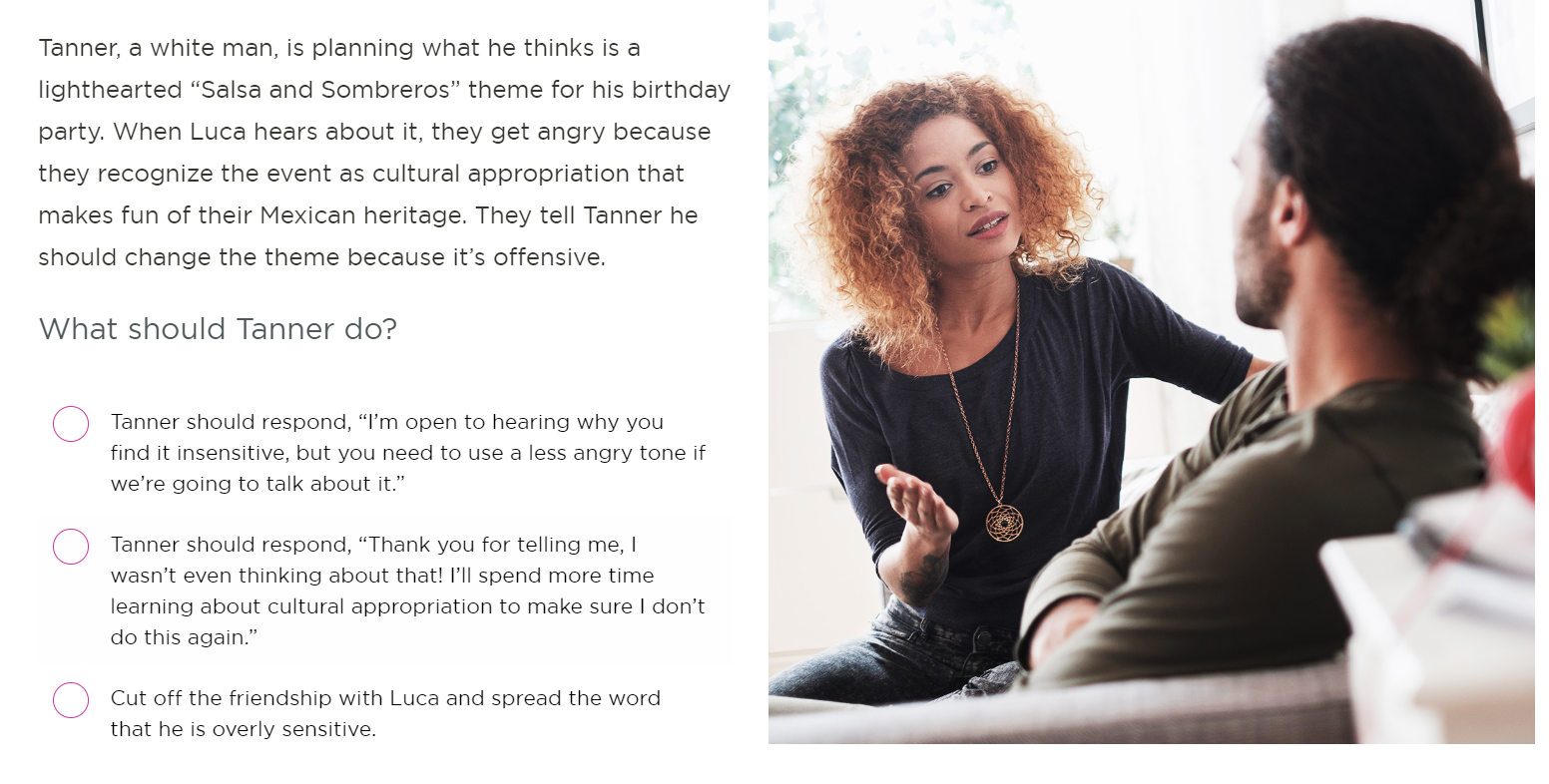
White men do bad things even before the party starts:
The learner cannot proceed without calling off the “Salsa and Sombreros” party (were Goya-brand products going to be served?). Correct answer:
By thanking Luca for calling out his behavior and dedicating himself to learning more about cultural appropriation, Tanner is respecting Luca’s perspective and behaving as an ally. Everybody makes mistakes — part of being an ally means being open to acknowledging when you’re wrong, and taking the necessary steps to continually check your privilege and your behavior in the future, even when it’s uncomfortable.
There is a video tutorial on how to apologize after using the wrong pronouns. This is followed up with some text:
Be sensitive to the situation and any histories of inequality. A great apology focuses on the harm that was done and not on the person who is apologizing.
The key to apologizing well? Remember, it’s about acknowledging your actions, not focusing on the other person’s interpretation.
Here’s the 2-minute Self-Care video:
José returns to be abused during a pickup basketball game by a white man who claims to have been fouled: “maybe that’s okay where you come from.” Bad White Man calls José a “thug.”
José considers leaving school, but he is rescued by brave student services staff and other administrators. He decides to stay and says “I’m going to make a difference.” (Like the med students that I teach! None say that they want to go into lucrative specialties and treat patients who have money and/or private insurance. It is a mystery to me where plastic surgeons and dermatologists come from.)
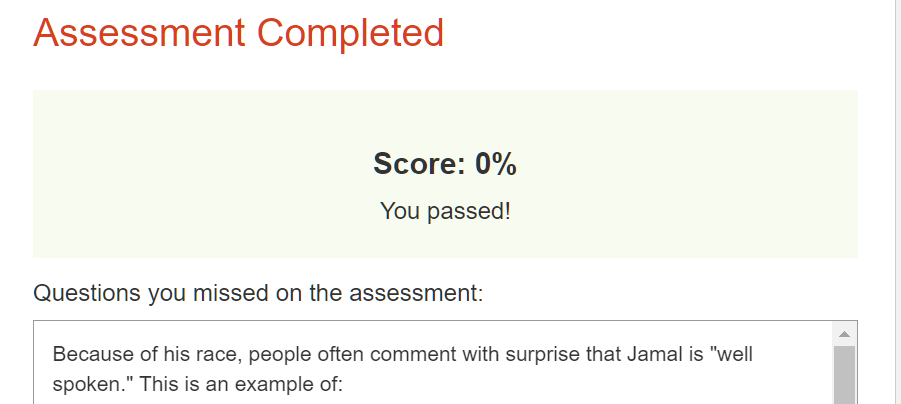
There is a final exam, with pretty much the same questions as the pre-exam:
#NotFunny
With 16 wrong answers out of 16, the undergraduate is qualified to join the Delta Tau Chi fraternity:
My children’s father recently pledged to pay $10,000 of $20,677 in child-support arrears. … he said divide it between our three adult children. Our adult children are 42, 39, and 34 years old. … If I actually receive these funds as arrears, I plan on giving about half to my children and keeping the rest
The advice columnist:
You obviously kept on the case to ensure the father of your children made recompense, and I applaud you for never giving up on that. … Children only need one good parent to love and support them, and I am sure they have benefited from having you.
Splitting the support 50/50 is generous, perhaps more than generous, even if you were not still helping out your children. This money is designed to compensate YOU. The fact that your ex does not want the money to go to you suggests that he is too big for his breeches, even after all these years. This is YOUR money. … You clearly made many sacrifices in your life to raise three children. YOU deserve every last red cent.
Canada’s child support system seems to sow discord among Canadians. We interviewed a professor at one of Canada’s top universities. She said that it irked her that her partner paid four times as much in child support to his ex-wife as she was paid for full-time employment as a PhD researcher and teacher. We interviewed a man in his 20s who said that the system via which adult child support was paid to a parent has caused friction between himself and his mother. “I was graduated from college, working, and living in my own apartment,” he recalled. “She was getting $750 per month in child support from my dad for me. I would ask her why it shouldn’t be paid to me.” What was she doing with the money? “She retired from her job in the software industry and was doing a lot of international vacation travel.”
But I am not sure that the Canadians can keep the fight going when the “child” is 42!
A high school principal in Florida whose refusal to acknowledge the Holocaust as a “factual, historical event” in an email led to a national backlash, his firing and then his rehiring has been fired for a second time.
The Palm Beach County school board on Tuesday voted 7 to 0 to fire the principal, William Latson, who was removed from his post last year at Spanish River Community High School in Boca Raton, Fla., after a 2018 email exchange with a student’s parent became public.
What did the guy say?
“I can’t say the Holocaust is a factual, historical event because I am not in a position to do so as a school district employee,” Mr. Latson stated in one of the emails, which were obtained by The Palm Beach Post. Mr. Latson said he had to stay “politically neutral” and separate his personal views about the Holocaust from his job as a public school official.
“I do allow information about the Holocaust to be presented and allow students and parents to make decisions about it accordingly,” he wrote. “I do the same with information about slavery.”
His answer would have been perfect for a deposition. He wasn’t alive in the 1940s. He is not a historian. He doesn’t have any better information regarding what happened during the 1940s than anyone else. Being a school system administrator does not qualify him to offer a history lesson. Also, he did clarify his personal beliefs regarding this period of history:
“I am not a Holocaust denier,” he says in the video. “I have never been a Holocaust denier. I am sorry that my comments caused people to think that.”
What was the point of firing this guy (twice!)? Just to show that even a hint of dissent cannot be tolerated?
What happened with the age of the average American voter in 2020 versus 2016? Was it younger due to the hourly nagging of the typical young person by various social media platforms?
Separately, is it good or bad that the voting age skews younger? I spoke with a smart 13-year-old in a coastal elite school system. What had she learned from her immersion in an all-Democrat neighborhood (many government workers!) and from all-Democrat teachers? “I’m a Democrat because of the issues that are important to me.” Such as? “Like it is legal right now to kill LGBTQ people.” I.e., she will be voting Democrat to ensure the outlawing of murder.
(Of course, I couldn’t resist asking why there were any gay people left in the U.S. “The New York Times informs us that our country is packed with people who hate the LGBTQIA+. If it is legal to kill gay people, why wouldn’t these anti-gay Americans have killed all of them?”)
Even back then, everybody wasn’t voting. You had to be 21 to vote. That means you’re in the workforce for many, many years because people generally got out of school at 12 or 13. So you had been working for many years. In many cases, you had property qualifications, you had poll taxes, you had literary tests. There were all sorts of ways that they limited the suffrage, just so it wasn’t everybody voting because they recognized the damage that you could create when you turn elections into advanced auctions on the sale of stolen goods.
If social media is, in fact, a force for reducing the age of our electorate, what should we expect these young people to vote for? Free college tuition and student loan forgiveness?
Trump and Biden are both claiming victory in the most recent election. I tend to believe Biden because this is consistent with my prediction regarding how a timid cower-in-place population would vote. But how could anyone be sure who is correct?
In most countries there is a national ID card system. Citizens show this ID in order to vote. There can be a record of which ID numbers went to the polls (or to an Internet e-voting service) in every district nationwide. With such a record, a 10-line computer program can verify that nobody voted twice, for example. (Start with Quicksort in Haskell!)
How can it work in the U.S.? Maybe we know that “Joe Smith” voted in both Florida and Pennsylvania, but how could we ever determine whether these two voters are the same person or two different people?
Also, with mail-in ballots, how do we know that they were filled out and sent back by people who were (a) alive, (b) actually resident in the state, and (c) not voting in any other state? (see “Error and Fraud at Issue as Absentee Voting Rises” (NYT, 2012))
(The working class don’t seem to be convinced that the system cannot be manipulated by the elites. I was at an airport in New Hampshire recently talking to a mechanic. A military-schemed Sikorsky S-92 was departing. The mechanic said “That was probably Joe Biden dropping off another box of ballots.”)
It happened again! The burner controls fail such that the gas is stuck on. Fortunately the burner happened to be lit so the house didn’t fill up with unburned gas and explode. It is a challenge pulling the range away from the wall while the burner burns and then turning the shutoff valve. An elderly, frail, or small person would never be able to do this.
After three calls and more than 2 hours on hold, I was able to reach someone at KitchenAid customer service. They would be able to come out and begin the diagnosis process… in 17 days. Would they pay for a new gas valve? “Your range was made in 2013. It’s out of warranty.” Did they think it might be worth looking at the engineering design of the gas valve, e.g., so that it would fail in the “gas off” position rather than the “gas on” position? Wouldn’t that make it less likely to burn houses down? “Did your house actually burn down, sir?”
(If they can’t engineer gas valves that don’t fail after 3-7 years in the ON position, they could put a consumer-accessible gas shutoff valve on the front, just before all of the valves. That would be a huge safety enhancement.)
If we regard the lead-up to the election as a Bachelor’s degree in Trump-hatred, can the post-election activity be thought of as grad school? From “Voting Trump Out is Not Enough,” by Keeanga-Yamahtta Taylor (New Yorker):
Like tens of millions of Americans, I voted to end the miserable reign of Donald J. Trump, but we cannot perpetuate the election-year fiction that the deep and bewildering problems facing millions of people in this country will simply end with the Trump Administration. They are embedded in “the system,” in systemic racism, and the other social inequities that are the focus of continued activism and budding social movements. Viewing the solution to these problems as simply electing Joe Biden and Kamala Harris both underestimates the depth of the problems and trivializes the remedies necessary to undo the damage. That view may also confuse popular support for fundamental change, as evidenced by Trump’s one-term Presidency, with what the Democratic Party is willing or even able to deliver.
The hated dictator’s name appears more than 20 times in this article.
With Trump gone, it is apparently time to listen to the scientists who said that the shutdown would cost more lives than would be saved from Covid-19:
Today, in Philadelphia, where I live, there is not a single aspect of life that the pandemic has not upended, from work and school to housing and health care, pulling poor and working-class African-Americans, in particular, deeper into debt and despair. The uncertainty of the moment, let alone the future, feeds fear, frustration, hopelessness, and dread. In Philadelphia, shootings are on the rise, and the murder rate is growing. … African-Americans make up eighty-five per cent of the city’s shooting victims. Even before the pandemic, drug overdoses in Black Philadelphia were on the rise. In the first three months of shelter-in-place orders, a hundred and forty-seven Black residents died by accidental drug overdose, forty-seven per cent of drug deaths in the city. … Job losses have overwhelmingly affected low-wage, minority workers. Since May, as many as eight million people have been pushed into poverty, with Black families overrepresented among them. … Thousands of people have already been evicted during this crisis, and nearly one out of six renters have fallen behind on their rent. Nearly one in four renters who live with children report that they are not up-to-date with the rent. The Centers for Disease Control and Prevention’s unprecedented moratorium on evictions was too good to be true: the Trump Administration recently signalled to landlords that it would allow them to challenge the eligibility of tenants. This leaves the viability of the C.D.C. moratorium up to the discretion of individual judges, who may or may not honor it. Local organizers and activists have tried to fill the gap created by federal neglect with relentless mutual-aid organizing, but it is hardly sufficient.
Our cities are actually run by good people:
It is not a Trumpian slur to observe that many of the cities where Black suffering takes place are also governed by proud members of the Democratic Party. Instead, it illuminates the depth of the bipartisan failure to address the tangled roots of racism, poverty, and inequality.
But they have been let down by the U.S. economy, which is only about half as large as it needs to be to support the subsidies that low-skill and/or non-working Americans require:
In Philadelphia, which, ignobly, has among the highest proportion of poor residents of any big city in the country, thousands stand on the cusp of eviction. Twenty-two per cent of households in the city are severely cost-burdened, meaning that they are spending half or more of their income on housing costs, which is well above the national average. Before this downturn, sixty-one per cent of households headed by Black women in Philadelphia were spending at least thirty per cent of their income on rent, compared with fifty-three per cent of households headed by white women and forty-four per cent of households headed by white men.
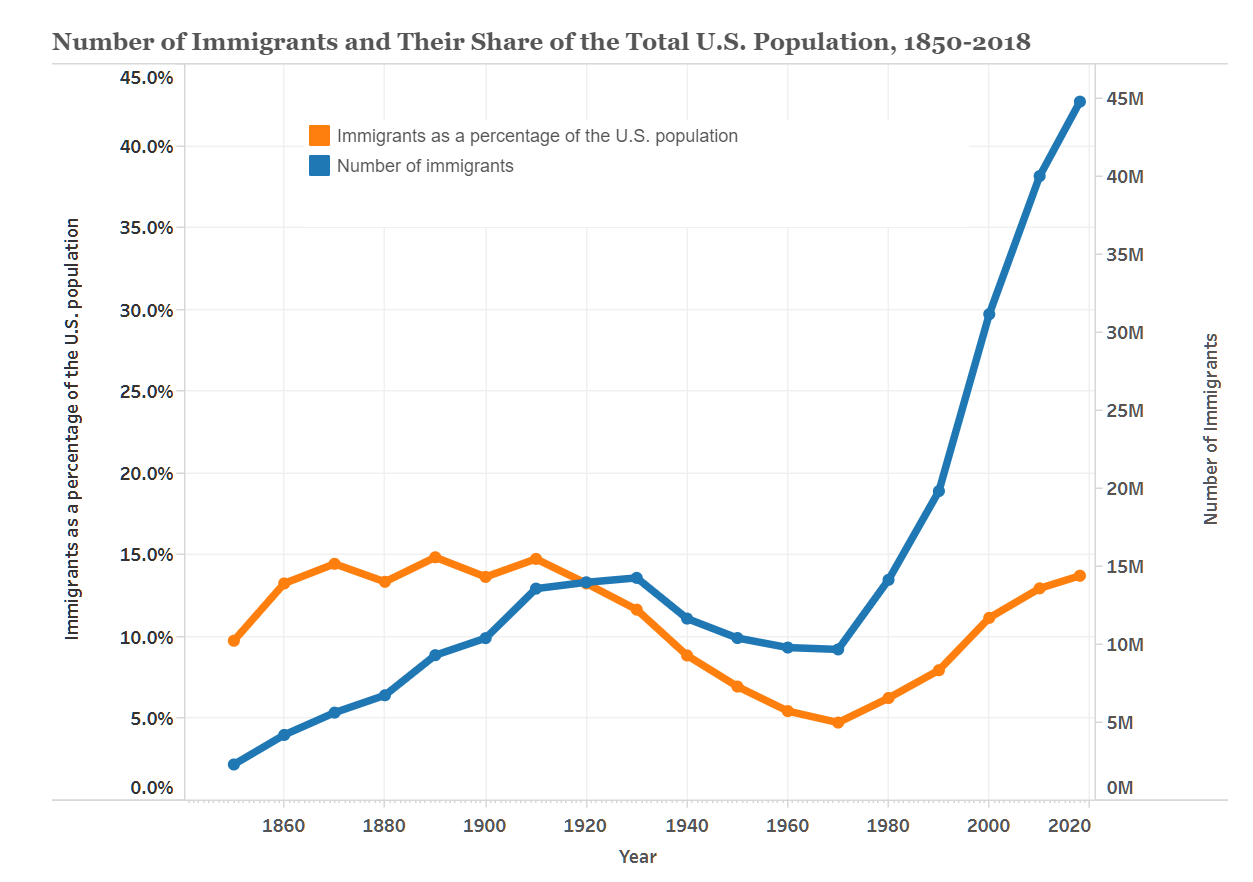
(The author doesn’t mention this, but what will really help these folks is 45 million immigrants to compete with them in the rental market:
(from Migration Policy Institute). Econ 101 tells us that when demand is boosted by 45 million, prices for scarce rentals will inevitably fall.)
Not enough money is being diverted from rural America (i.e., the counties that voted Republican) to the cities (i.e., the counties that voted Democrat):
The likely gridlock in Congress next year will lead to more stagnation in local government, as communities become hamstrung by a lack of federal funding.
(I should do a separate blog post on this. I wonder if the reason that people in low-density parts of the U.S. vote for smaller government is that big government spends nearly all of its money in cities. Hospitals, federal buildings, central post offices, community centers, concert halls, courthouses, etc. all tend to be built in downtown areas. The bigger the government, the larger the transfer from rural counties to urban counties.)
The core problem is the existence of Republicans:
That conclusion may seem to be supported by the shocking fact that upward of seventy million people voted to reëlect the most corrupt, venal, and brazenly racist President in modern American history. … The insistence on unity between the two parties almost always comes at the expense of those whose needs are greatest. How would a Biden Administration incorporate the views of a Republican Party that has supported a white-supremacist President, voted for Trump’s plutocratic tax cuts, advocated for the separation of families at the border, and facilitated the heist of a Supreme Court seat in hopes of fulfilling the right’s fantasy of ending access to abortion and destroying any hint of government-backed health insurance? We were told that this Presidential race was the most consequential of our lifetimes, that it was a contest between democracy and budding fascism. Why would Biden welcome the foot soldiers of Trump’s authoritarian politics into his coalition?
And the struggle will continue even if Trump disappears in his Boeing 757, beyond the reach of even the most vindictive Democrats:
The need in this country dwarfs the best of what Biden has put on the table for changing our current condition. But the demonstrations of the summer, the ongoing campaigns for mutual aid, and the growing movement against evictions are demonstrable proof that power is not only generated in mainstream politics but can be garnered through collective organizing and acts of solidarity. They also foretell a future in which the country does not return to a long-forgotten normal but is animated by protests, strikes, occupations, and the ongoing struggle for food, medicine, care, housing, justice, and democracy.
One reason that I voted for Bernie Sanders (twice!) was his logical consistency. In my opinion, we shouldn’t run a country that says housing is a “right” and then provide subsidized housing to only one quarter of those who qualify. At the same time, building the 7 million additional low-income housing units that are required (NLIHC) will cost roughly $5 trillion. Not only don’t we have an extra $5 trillion lying around, but every year an additional million or so low-skill immigrants arrive whose correspondingly low income would entitle them to subsidized housing (i.e., even if we got 7 million new units built by the end of 2021, we’d still have a substantial shortfall).
The Democrats actually did have control of the Presidency and Congress in the first two years of the Obama Administration, right? And they couldn’t find enough money in the U.S. economy to achieve their policy goals? If the Democrats’ huge advantage in funding is sufficient to take control of the Senate via the Georgia runoff votes, will they be able to fund their dream programs in 2021 and 2022? Or will they discover that the U.S. economy has grown at a much slower per-capita rate than their dreams?
The latest 2021 Toyota Sienna, redesigned with a grille large enough for a 400 HP diesel Freightliner truck, works this way (as does the Toyota RAV4, as a reader comment pointed out on that 2019 posting). From the press release:
Sienna uses a new kind of AWD called Electronic on-demand AWD. Instead of a heavy AWD transfer case and space-robbing driveshaft to the rear wheels, this AWD system uses a separate independent electric motor to power the rear wheels the instant additional traction is needed and at all vehicle speeds.
One bizarre feature of this brand-new-for-2021 minivan is that it has an older generation of the driver assistance technology: Toyota Safety Sense 2.0. The 2021 Toyota Camry, for example, offers “Safety Sense 2.5+” (why not just “2.5”? Is this like “LGBTQIA” where it isn’t complete without the plus sign?) and can perhaps drive itself in a stop-and-go highway situation.
From our brief time with this preproduction Sienna, it feels as if the van is no longer playing second fiddle to the polished Honda Odyssey. The van is responsive to steering inputs and happy to hustle along winding roads.
Yes, the Sienna is quiet and composed at low speeds when running on electric-only power. But when the Sienna transitions from electric power to the gas engine as a result of added throttle inputs, the engine comes on with a roar. The four-cylinder engine is loud when the driver tries to hurry the Sienna along, particularly on the highway. Sienna owners who are used to the V6 engine’s refinement may find this experience a bit of a letdown.
One of the best arguments in favor of this Toyota is fuel economy. After a good ol’ thrashing on a wide variety of roads, I averaged just shy of 35 miles per gallon in my Platinum-trim, all-wheel-drive tester. That’s practically economy-car efficiency, plus it’s right in line with this Toyota’s window sticker. According to the EPA, it should return 35 mpg city, 36 mpg highway and 35 mpg combined. Front-drive models are rated at 36 mpg across the board, and all-wheel drive is available across the lineup.
I’m wondering if there will be so much competition in the coronaplague vaccine market that this ends up being only moderately profitable.
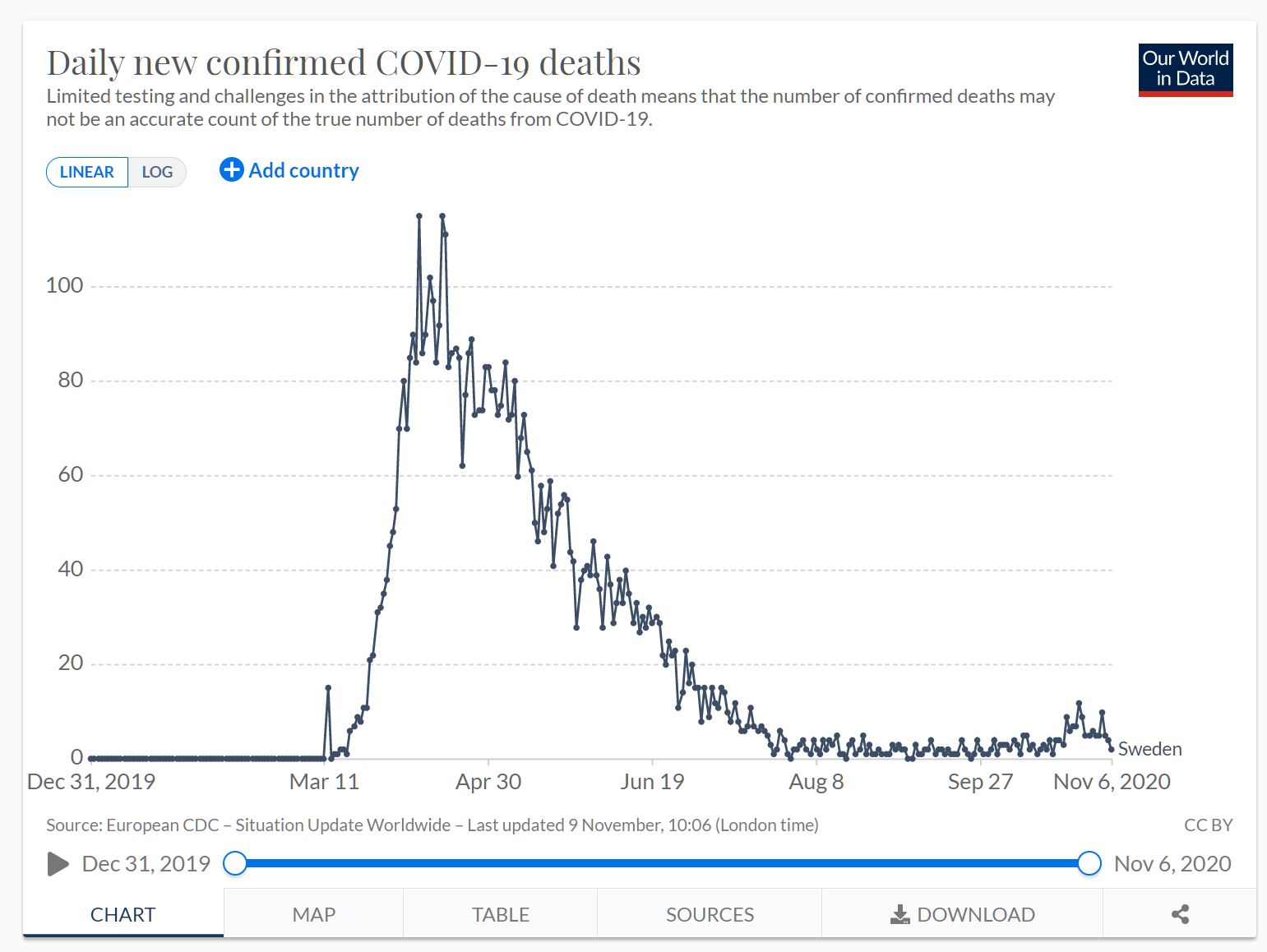
First, maybe it isn’t that difficult to create immunity to coronavirus. Here’s a curve of COVID-19-tagged deaths in Sweden.
After a few months of mixing in schools, workplaces, restaurants, gyms, etc., it would appear that a lot of Swedes became immune (otherwise, how to explain the drop in deaths? The Swedes didn’t change their laws or behavior after mid-March. From the IHME prophets:
If it was that easy for Sweden to build immunity, maybe most of the current vaccine candidates from all around the world will work fairly well (WHO report on 47 currently in clinical trials, which also mentions 155 in preclinical evaluation). Except in the U.S., therefore, competition should work to drive down the price.