Art Institute of Chicago reenacts Glengarry Glen Ross

“Art Institute of Chicago Ends a Docent Program, and Sets Off a Backlash” (NYT):

Museum officials decided that one area in need of an overhaul was its 60-year-old program of volunteer educators, known as docents, who greet school groups and lead tours.

So last month the board overseeing the program sent a letter to the museum’s 82 active docents — most of whom were white older women — informing the volunteers that their program was being ended. The letter said that the museum would phase in a new model relying on paid educators and volunteers “in a way that allows community members of all income levels to participate, responds to issues of class and income equity, and does not require financial flexibility to participate.”

The new plan calls for hiring paid educators — Ms. Stein invited the volunteers to apply for those positions — and then developing a new program over the next few years. In 2023, she wrote, “unpaid volunteer educators will be reintroduced via a redesigned model” that includes updated protocols for “recruitment, application, training, and assessment.” She offered the departing docents museum memberships.

A number of museums have been trying to address how to get more people of color into the hiring pipeline, in part by removing financial barriers. Organizations like the Minnesota Alliance for Volunteer Advancement encourage nonprofit and government organizations “to engage volunteers who reflect the racial and ethnic diversity of the communities they serve.” And there have been widespread calls for salary reforms, since systems that rely on unpaid volunteers and interns tend to favor those who can afford to work for little to nothing.

And a 2020 article in Slate headlined “Museums Have a Docent Problem” described what it called “the struggle to train a mostly white, unpaid tour guide corps to talk about race.”

(i.e., Karen is fired)

It might sound bizarre for an institutional that is constantly asking for donations to fire a huge volunteer staff, thus giving the appearance of having money to burn. On the other hand, David Mamet is from Chicago, so it makes sense that a Chicago institution would re-enact the famous Alec Baldwin scene from Glengarry Glen Ross in which the real estate salesmen are required to reapply for their jobs. “Put. That. Coffee. Down. Coffee’s for closers. … The good news is you’re fired. The bad news is all of you have just one week to regain your jobs. … First prize is a Cadillac Eldorado. Second prize is a set of steak knives. Third prize is you’re fired.” (If the parallels are not obvious, see highlighted sections above where docents can re-apply and also where museum memberships (“steak knives”) are offered.)

Here’s the clip, in case you’re wondering about how to resolve any HR issues within our own enterprise …

Remember: “A loser is a loser.”

(I wrote the above post just before Alec Baldwin shot and killed Halyna Hutchins on the set of Rust.)

Full post, including comments
My most recent Obama moment

An acquaintance who is a Hilton Platinum member was able to give an unworthy person Hilton Gold status and she selected me. At the time, I said “Now I know how Barack Obama felt when he was awarded the Nobel Peace Prize.”

Here’s a more recent example of unearned status/credit:

Dear Philip,

I am seeking permission to use your quote from a Schinn article as an epigraph in my upcoming book, [title regarding children, climate change, and their tender feelings]

Thank you in advance for all you do,

[author]

“Children can be frightened if they don’t know there are adults who care about climate change and are trying to fix problems. It can help battle the sense of helplessness and powerlessness.” -Philip Greenspun (Shinn, 2020)

Regular readers of this blog know how important I think it is when a frenetically consuming American speaks sincerely about his/her/zir/their pure intention to “fix problems” and heal our beloved planet. The best way to raise critical awareness is to apply a climate change bumper sticker on a 6,000 lb. pavement-melting SUV.

The quote seems to originate in “Your Guide to Talking With Kids of All Ages About Climate Change”:

Wendy Greenspun, a New York–based clinical psychologist engaged in climate issues. … Children can be frightened if they don’t know there are adults who care about climate change and are trying to fix problems,” notes Greenspun. “It can help battle the sense of helplessness and powerlessness.” Let them know that there are, in fact, millions of adults who are working to protect kids, to answer our own questions about climate change, and to figure out the steps we will take to get to where we need to be, together.

Millions of adults working to protect kids and billions of adults working to burn fossil fuels as fast as time and budget permit!

I thought that readers would appreciate my moment of Climate Sensitivity Glory!

Full post, including comments

Florida now has the lowest COVID-19 risk of all mainland U.S. states

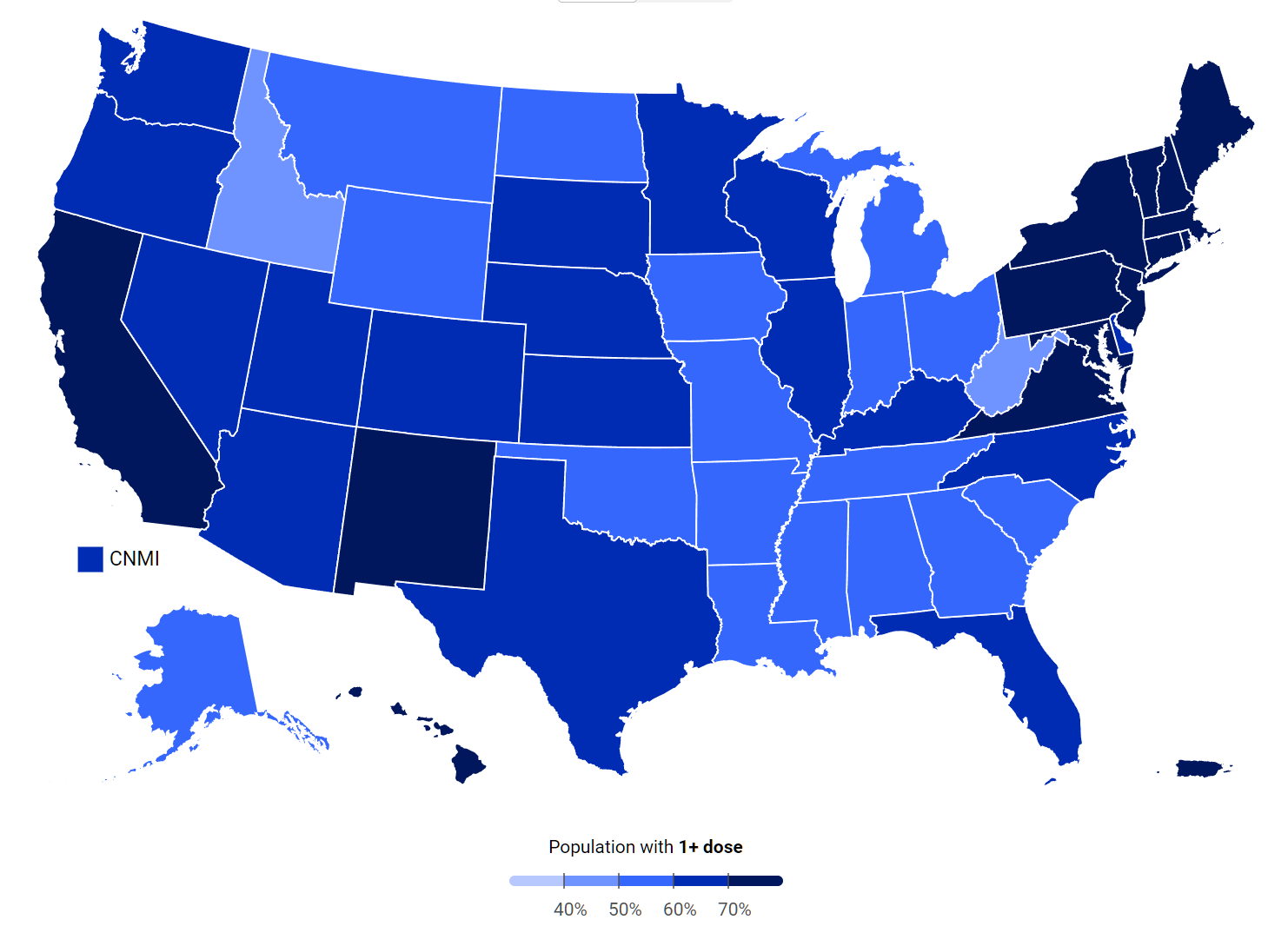
CovidActNow, a Web site for Shutdown Karens (‘We support data- and science-backed policies and decision-making’), starts with a map of “Vaccination progress” by state:

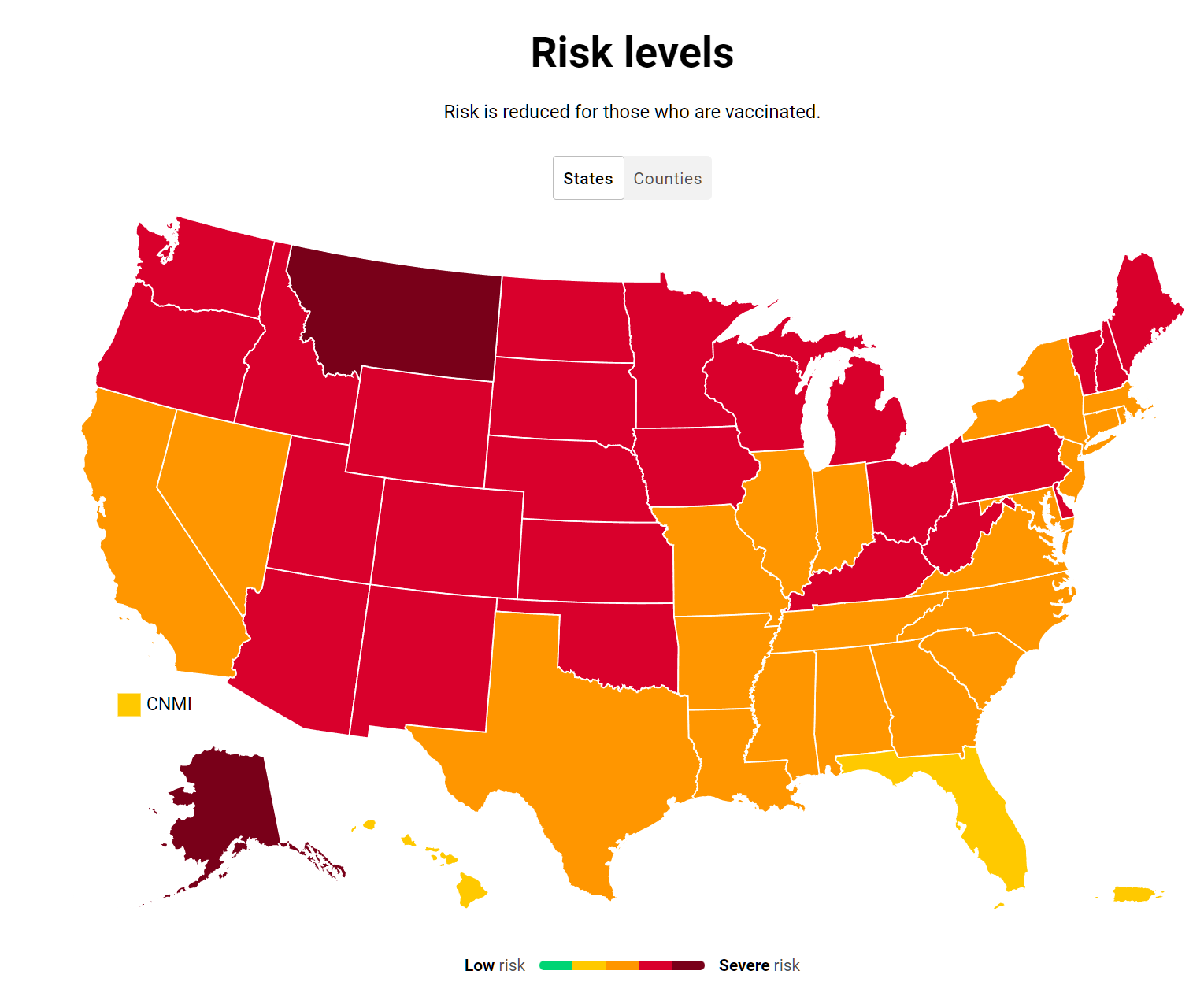
The primacy accorded the vaccine percentage is a good reflection of where America’s Shutdown Karens are mentally right now. The virus itself is no longer that interesting, even if it manages to kill someone (“Thank Fauci he/she/ze/they was vaccinated and therefore died in a state of grace” will become part of our standard eulogy for anyone killed by Covid?). If the reader is interested enough to scroll down, the page includes a map of states color-coded by risk:

The map reminds us to stay in our bunkers because, of course, nowhere is safe. There is no “low risk” state to be found (“risk” is a function of “daily new cases per 100K (incidence), infection rate (Rt), and test positivity”). But there is one state that is only “medium” risk: Florida! The state that explicitly rejects science (at least according to the NYT) has the lowest current COVID-19 risk (if we go beyond the mainland, Hawaii has a slightly lower daily new case rate and soon-to-be-a-state Puerto Rico (Senator AOC!) is substantially lower).

Separately, who can see a correlation between vaccine virtue and risk level? Pennsylvania, for example, has a high vaccination rate and also a “very high” risk level. Is this a Paging Dr. Ioannidis situation? (current COVID-19 vaccines are somewhat effective, but vaccinated people will go out and party more, thus eliminating most or all of the benefit, at least when it comes to infection and transmission; see “Benefit of COVID-19 vaccination accounting for potential risk compensation”)

Related:

  • states ranked by COVID-19 death rate (the Florida Free State now tied with fully-masked and often-shut Maskachusetts, but these data are not adjusted for percentage of population over 65, in which case FL would look much better (not that Floridians would care; they don’t measure the overall success of a society by the COVID-19 death rate))
Full post, including comments

Tesla store as installation art

From the imaginatively named The Gardens Mall in Palm Beach Gardens, Florida, the Tesla store:

Answers the question, “What if you asked an artist to create a car dealer installation for Chinati in Marfa, Texas?”

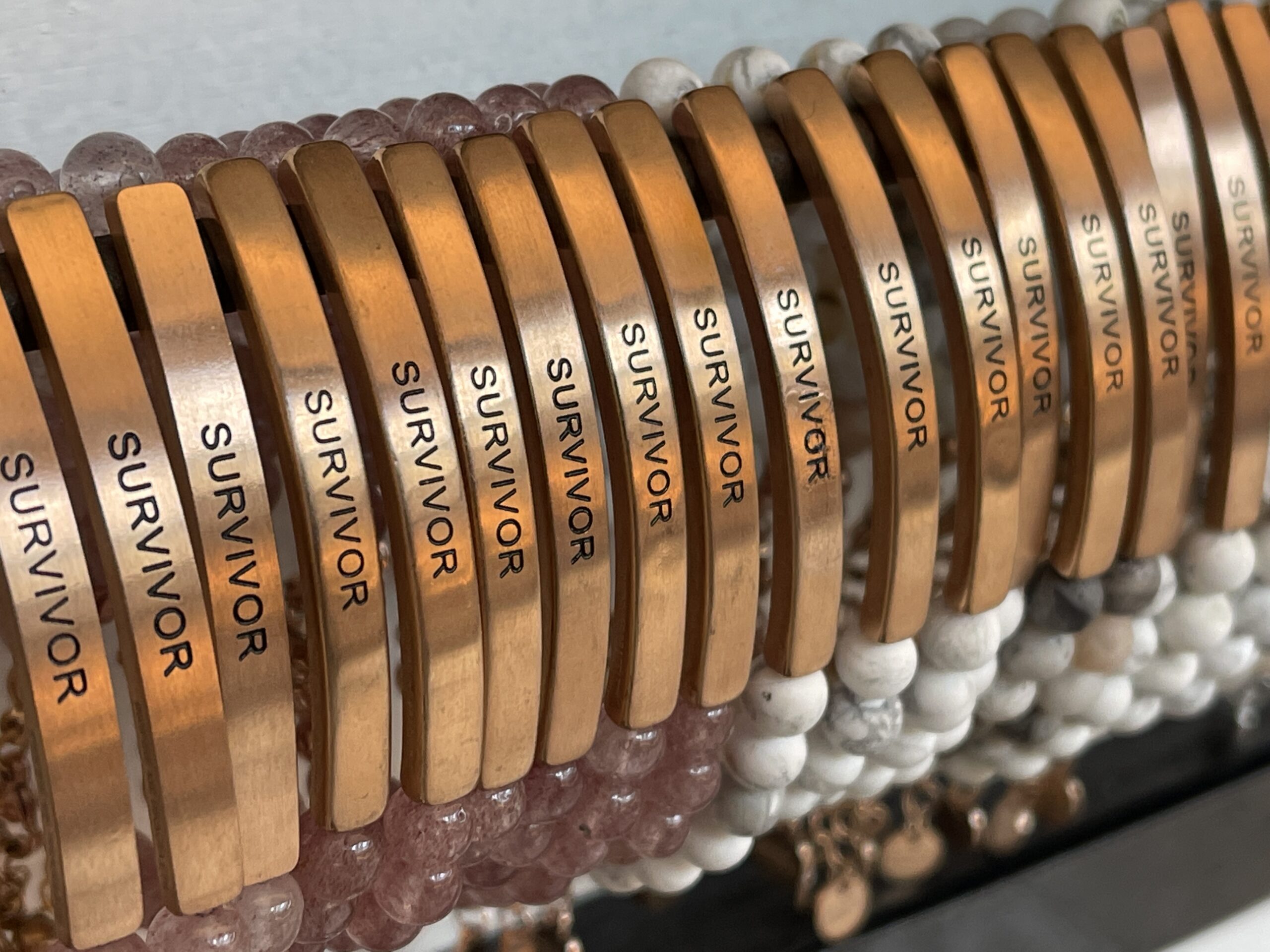
A couple of doors down, a shop offered bracelets with inspirational messages. What were the two most inspiring messages, meriting a featured location just outside the shop door? “Survivor” and “I Am Enough”:

Perhaps my students will get together and give me an “I am way more than enough” bracelet to commemorate their time with me this semester! (And, of course, “Survivor” bracelets for themselves!)

What do Americans love to do most these days? According to the Amazon 4-star store, play Xbox and Nintendo Switch:

The mall doesn’t have quite the burned-out apocalyptic feeling of a Boston-area mall, but there were some vacancies and the place was fairly empty on a weekday afternoon:

I don’t know why U.S. malls can’t go in the Chinese direction and rent space to after-school programs (upper floors of all the malls in Shanghai that I visited).

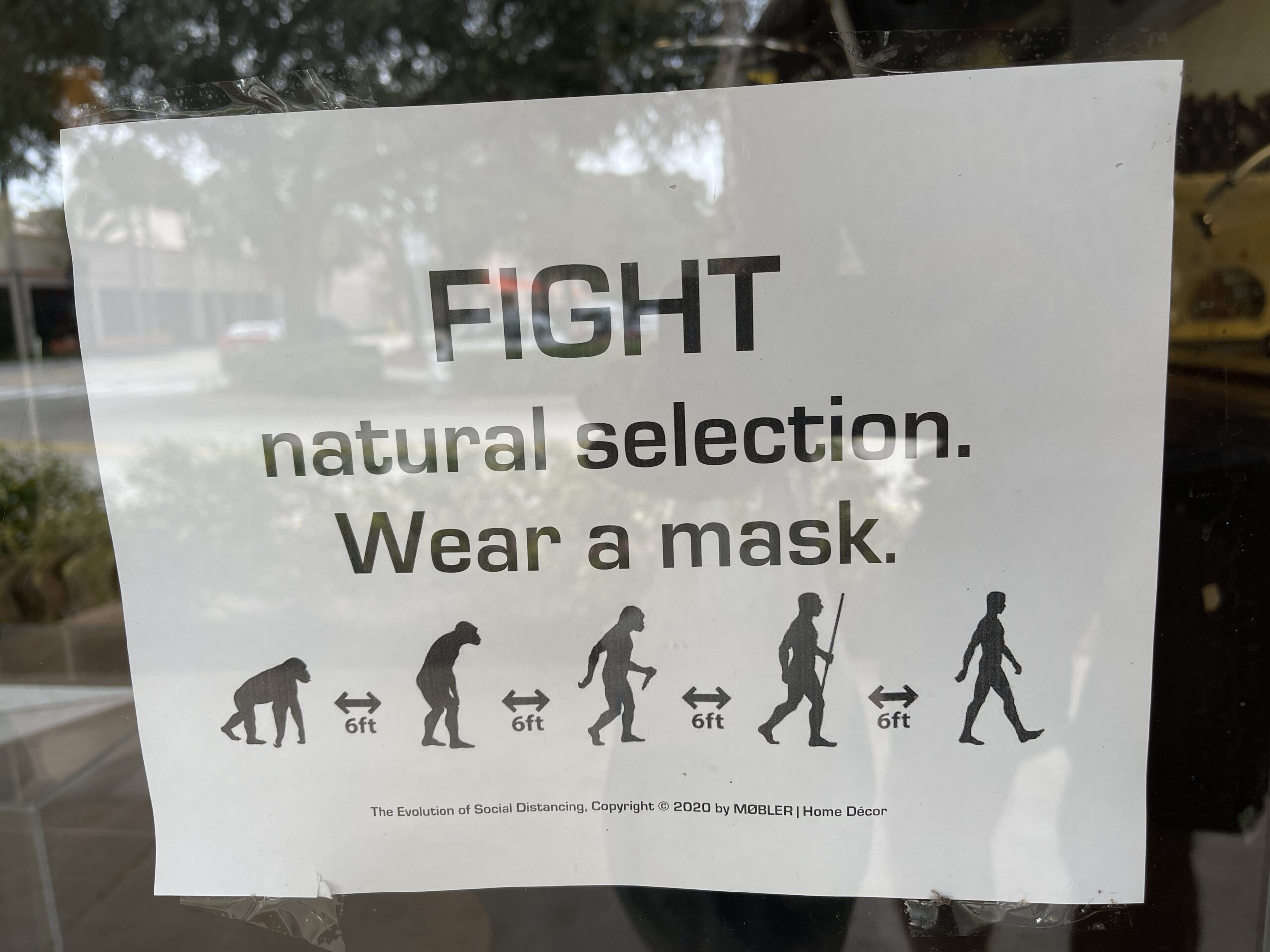
Loosely related, a sign in a shopfront at a strip mall 10 minutes south:

But wouldn’t a much better way to fight natural selection, rather than wearing a mask that is about 11 percent effective (surgical; population-wide; “In the intervention group, 7.62% of people had COVID-19-like symptoms, compared with 8.62% in the control group.”) or 0 percent effective (cloth), be to stay home and/or restrict one’s in-person shopping to outdoor kiosks? If avoiding COVID-19 is our priority and we are going to #FollowScience by wearing a non-N95 mask, why not #FollowScience all the way by staying home?

Full post, including comments

Social justice and vaccination crusaders meet IEEE floating point arithmetic (Facebook)

For several years I’ve been a member of “Airplanes for Sale” on Facebook. The software at Facebook apparently thinks that an airplane is a car and therefore tries to display the mileage. The result is “NaN“, a value in the IEEE floating point arithmetic standard used for the result of dividing by zero and similar outrages against Mathematical Justice. Here’s an example: “1999 Cessna 172 R · Driven NaN miles”

With all of humanity’s money (except for the cash that Google and Apple have harvested) and a healthy fraction of the world’s best programmers, you might think that Facebook would have noticed that it was displaying this internal value from IEEE floating point to end-users. The company’s software is smart enough to flag anyone who has questioned the idea that a COVID-19 vaccine is in the best interest of a 20-year-old. The company had the energy to kick Donald Trump off the platform (to keep us safe from another insurrection, was the justification). But they don’t have anything left over to catch this error that occurs literally millions of times per day (87,000 members in this group times lots of ads that show NaN).

Full post, including comments

One bad thing about Florida: fences around the schools and their athletic fields

Most comparisons of Florida to our former home in Maskachusetts are positive. The infrastructure here is new, shiny, and smooth. The landscaping in higher income parts of Florida is beautiful (palm trees, flowers, etc.) and that includes our neighborhood of Abacoa, the campus of Florida Atlantic University, the sidewalk behind the beach in Jupiter, etc.

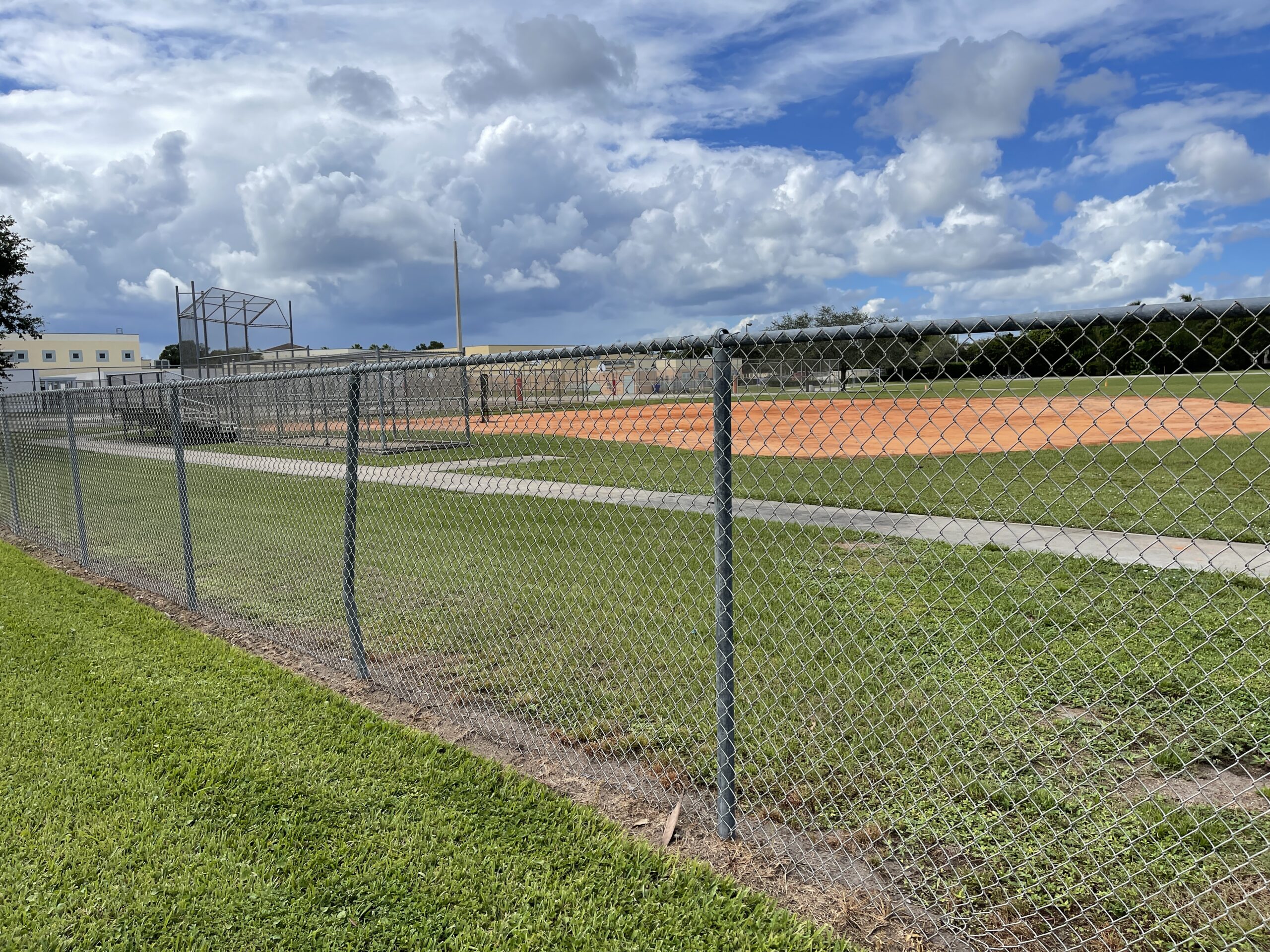
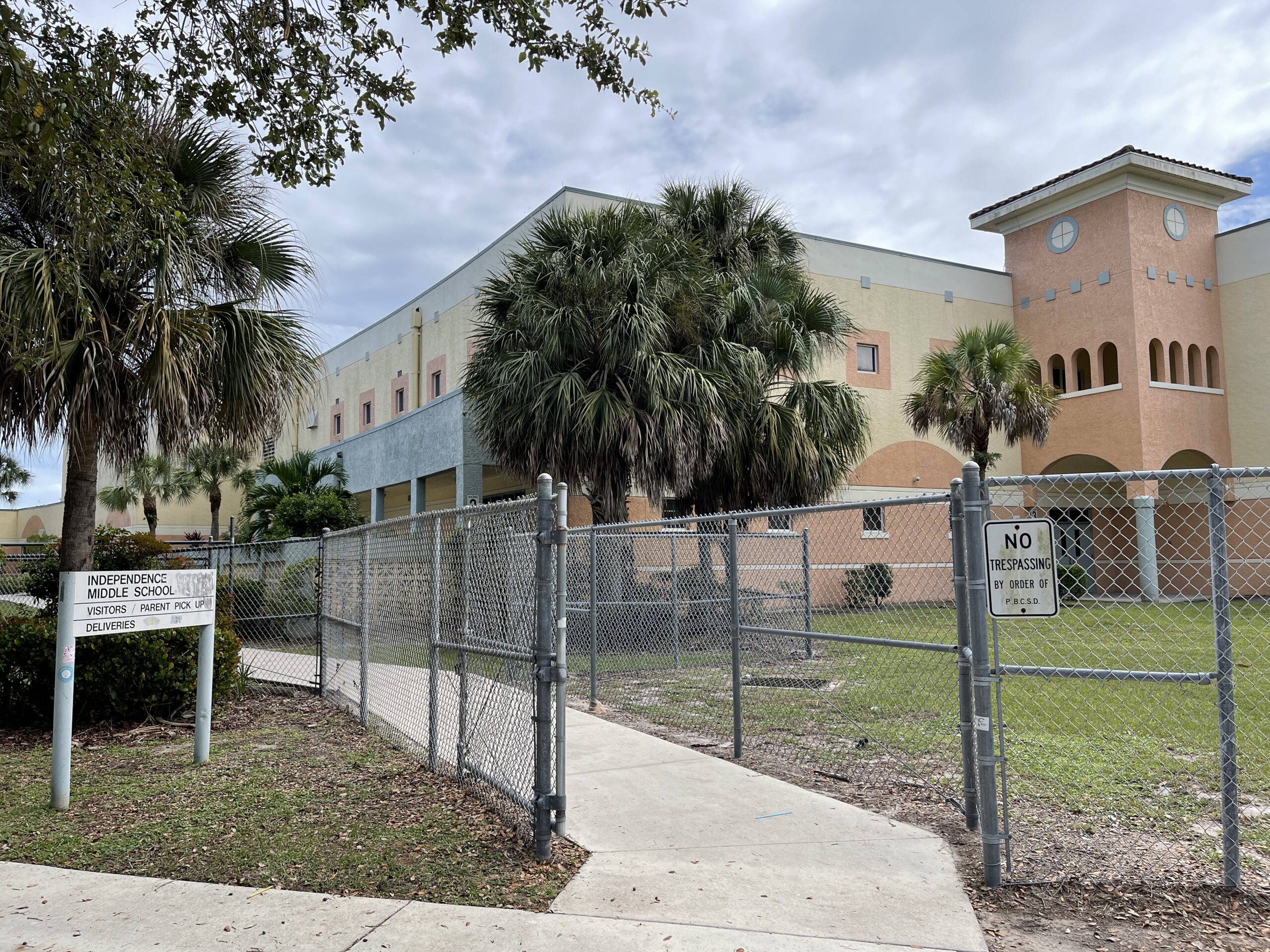
One serious disfigurement of the landscape, however, is that every public school is surrounded in chainlink fence. Where a neighborhood would once have had a nice community feature, i.e., some grass fields on which to stroll or cut across, there is now a big no-go zone that looks like a medium-security prison. You never realized how many public schools a typical town has until you visit a place where schools and their grounds are entirely fenced!

It seems that this is a relatively recent disfigurement… “Fencing among school safety upgrades” (July 7, 2019):

One of the many safety measures school districts must implement to protect school children under a new Florida law is putting fencing up around their schools.

Florida lawmakers passed strict measures after one of the deadliest school shootings in Amercian history when 17 students were gunned down and 17 others were wounded at Marjory Douglas Stoneman High School in Parkland on Feb. 14, 2018.

Charlie Morse, safety director for the Walton County School District, said two schools this summer will get fencing but, “We don’t want it to look like a correctional facility.

Well… Guess what? When you have a big two-story building surrounded by grass that is then surrounded by 6′-high chainlink fence, it looks exactly like a correctional facility!

The U.S. always had prisons, but now in Florida you can own a $2 million house that is right next to what looks like a prison. (I wonder if these hideous new creations have devalued houses that formerly got a boost from being near the greenspace of a school.)

I’m not sure what the convention/custom was before the fencing went up, but currently it seems that the taxpayers are barred from any access to the school fields at any time. There are a couple of chokepoints where cars can drive through the fence, but I think these are closed after school hours. In any case, I have never seen anyone on a school field after school hours.

Even if the Second Amendment were repealed, and President Harris confiscated all privately owned guns, the fences would stay up forever, right? There might still be someone with a gun in the basement and there is no price too high to pay for children’s safety, I am sure everyone will agree.

At the very least, Florida proves that this is truly a horrible idea for suburban/urban planning. In addition to being ugly, the fenced schools present an obstacle to getting around on foot (essential in a country that will soon have a population 400+ million and no congestion pricing for the roads).

Related:

  • “Nikolas Cruz’s birth mom had a violent, criminal past. Could it help keep him off Death Row?” (Miami Herald), regarding the perpetrator of the shooting that led to the above rule: His birth mother, Brenda Woodard, was sometimes homeless, and panhandled for money on a highway exit ramp. His adoptive mother, Lynda Cruz, stayed home to manage a 4,500-square-foot, five-bedroom house in the suburbs, with a two-car garage and a sprawling yard. A career criminal, Woodard’s 28 arrests include a 2010 charge for beating a companion with a tire iron; she also threatened to burn the friend’s house down. Lynda Cruz had a clean record. Conventional wisdom suggests that Nikolas Cruz should have taken after the woman who raised him from birth, rather than the one who shared only his DNA. But little of Cruz’s story is conventional. While, by most accounts, Lynda Cruz was thoughtful and disciplined, her adoptive son was violent and impulsive — characteristics he seems to share with the birth mother he never knew. (i.e., follow the science, except when science tells you that criminality is heritable; see also The Son Also Rises and this scholarly article regarding Nikolas Cruz’s sister)
Full post, including comments

Bad news for children, but good news for schools in Maskachusetts

I received a letter from the Massachusetts Department of Elementary and Secondary Education. Jeffrey Riley, the Commissioner, shared some bad news for the children whom the state putatively serves. Their test scores fell. He didn’t say by how much, but Boston Magazine reported on this last month:

According to the Department of Elementary and Secondary Education, 33 percent of students in third through eighth grade met or exceeded grade-level expectations on their math scores, compared to 49 percent in 2019 (the 2020 spring MCAS exam was canceled due to the pandemic). In English language arts, 46 percent of students scored Meeting Expectations or higher, compared to 53 percent in 2016.

Apparently it is possible to learn English by watching TV and playing Xbox, but those are not the best ways to learn mathematics.

Where’s the good news in this, other than school system bureaucrats and teachers having been paid in full for every day that the schools were closed (a full year in Boston!)? “Fortunately, both our state and federal government have recognized the need for additional resources to meet the challenges before us,” says Mr. Riley. “Massachusetts school districts are receiving state and federal pandemic relief money for an extended period of time, and the money can be spent by districts on a wide range of priorities to meet students’ academic, social, emotional, and mental health needs resulting from the COVID-19 pandemic.” (note that the virus itself is to blame for the schools having been shut; it was not a human or political decision to keep “essential” marijuana and liquor stores open and allow adults to party on Tinder during the 12-month Boston school shutdown that protected 10-year-olds from a virus that killed 82-year-olds in Maskachusetts)

Full post, including comments

New England versus Florida (“wear a mask at your discretion”)

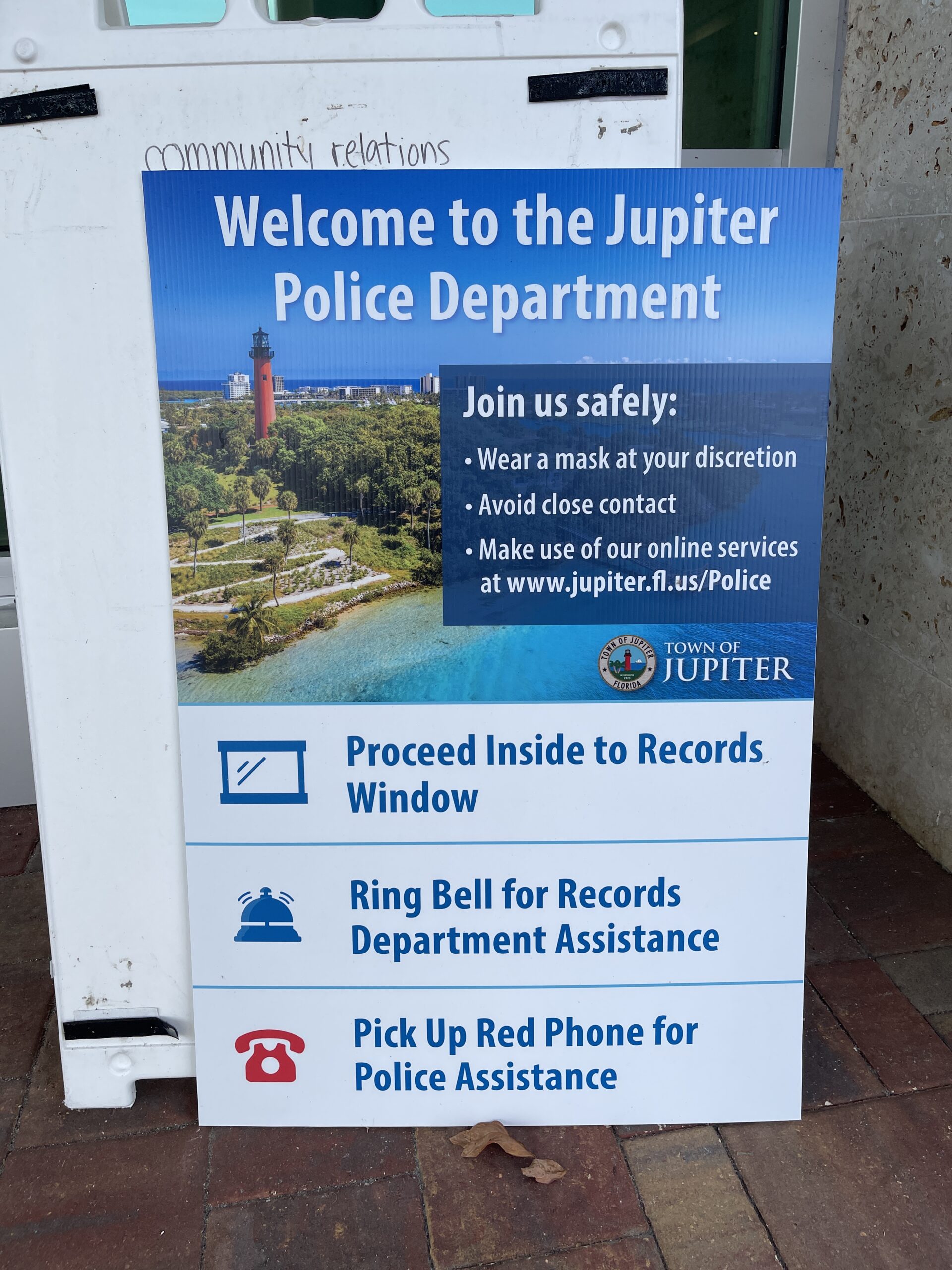
The police in New England will drive out to hassle kids playing soccer outdoors and arrest the unmasked for disorderly conduct (example).

What about their counterparts in the Florida Free State? I went to the Jupiter (Florida) Police Department (brand new palatial building; let’s be grateful to the folks who pay property tax on $10 million houses!) to get fingerprints that I could send to the FBI for a background check that is required for the Portuguese golden visa/passport program (seemingly a better investment every day given the proposals we’re hearing from our rulers in D.C.!). Visitors are told to “Wear a mask at your discretion”. I went into a small room with a guy about my age (i.e., prime target for Delta variant!). He was not wearing a mask.

Related:

Full post, including comments

The former Soviet explains his decision to vaccinate his children

An immigrant friend has slender athletic children in high school. Their statistical risk from COVID-19 is negligible, possibly smaller than the risk of being injured or dying in a car accident on the way to the vaccine clinic (a handful of children are harmed by COVID-19, of course, but most were vulnerable due to obesity or previously identified disease). He vaccinated his children, despite his belief that they were not at risk and that the vaccine had no value to them. They live in Maskachusetts so they still have to wear masks at school. If they want to travel internationally, they’re still subject to testing hassles.

How about altruism? Maybe the former Soviet wants to help Joe Biden shut down coronavirus as promised during his election campaign? That’s can’t be the explanation. He doesn’t believe that the currently available vaccines have any public health benefit due to the fact that people who are vaccinated can still get infected and be contagious and also due to the fact that SARS-CoV-2 will evolve its way around the current vaccines (potentially mutating into something wildly more deadly, as happened with the Marek’s Disease vaccine). So he didn’t inject his children with the idea that their stimulated immune system would be helpful to an 82-year-old somewhere in Massachusetts.

Earlier this year I asked him to explain his decision and he responded with the following:

Because I know how collectivists think and act. Back in the USSR, we had this saying roughly translated as “Don’t separate yourself too far from the collective, or the collective will separate you.”

This week he has been vindicated. A text message:

The United States Fencing Federation voted for a vaccine mandate for everyone at national events, including kids.

(Said kids still have to wear coronarags under their fencing masks, despite everyone in the arena having been injected with a vaccine that is advertised as miraculously effective.)

Full post, including comments
Movie review: Outbreak

I don’t know how I missed Outbreak during the first 18 months of 14 days to flatten the curve, but the 1995 movie is fun to watch to see what they got right.

The virus in the movie is Ebola, essentially, and it kills previously healthy people of all ages (not at a median age of 82, as COVID-19 kills in Maskachusetts).

The film anticipates my idea of protection camps for the unvaccinated and then asks the reasonable question “Wouldn’t it make sense to kill everyone in the protection camp in order to prevent the virus from spreading?” (How are we going to deal with the unvaccinated, whom we currently blame for all of our woes?)

The remedy for the virus anticipates Florida governor Ron DeSantis’s decision to go big on antibody treatment. It’s a movie, so of course the brilliant Army physician (Cuba Gooding Jr.) is able to develop the treatment and manufacture thousands of doses within hours.

If you love helicopters (and who doesn’t?), you’ll appreciate their central role towards the end of the movie, though you might be doubtful that a guy with 60 hours of training can fly as well as Cuba Gooding Jr. does.

What the film gets completely wrong is the level of resistance to expect from the American people. When the government locks people down they don’t go meekly back to their houses, but have to be forced at gunpoint by an Army battalion. The small-town Californians don’t welcome having their First Amendment rights terminated, but instead insist on what they claim are their rights.

Good News: the movie stars a Biden-supporting actor (for a change!); Bad News: “All the women who have accused Dustin Hoffman of sexual misconduct” (Business Insider, 2017).

Readers: What did you think of Outbreak and what are the differences and similarities between the movie and the U.S. response to SARS-CoV-2?

Related:

  • Contagion (I saw it, but don’t remember it that well)
Full post, including comments