Coronavirus will make the suburbs cool again?
A friend has a beautiful house, decorated to a museum standard, here in our boring suburb of Boston (Zillow). I thought that it would be snapped up by an eager buyer, but it has been on the market for a while.
I’m wondering if coronaplague will push a rich Back Bay condo dweller to say “If we’re going to have lockdowns every few years, I want to live in 6,000+ square feet on 2+ acres.”
“The End of New York: Will the pandemic push America’s greatest city over the edge?” (Tablet):
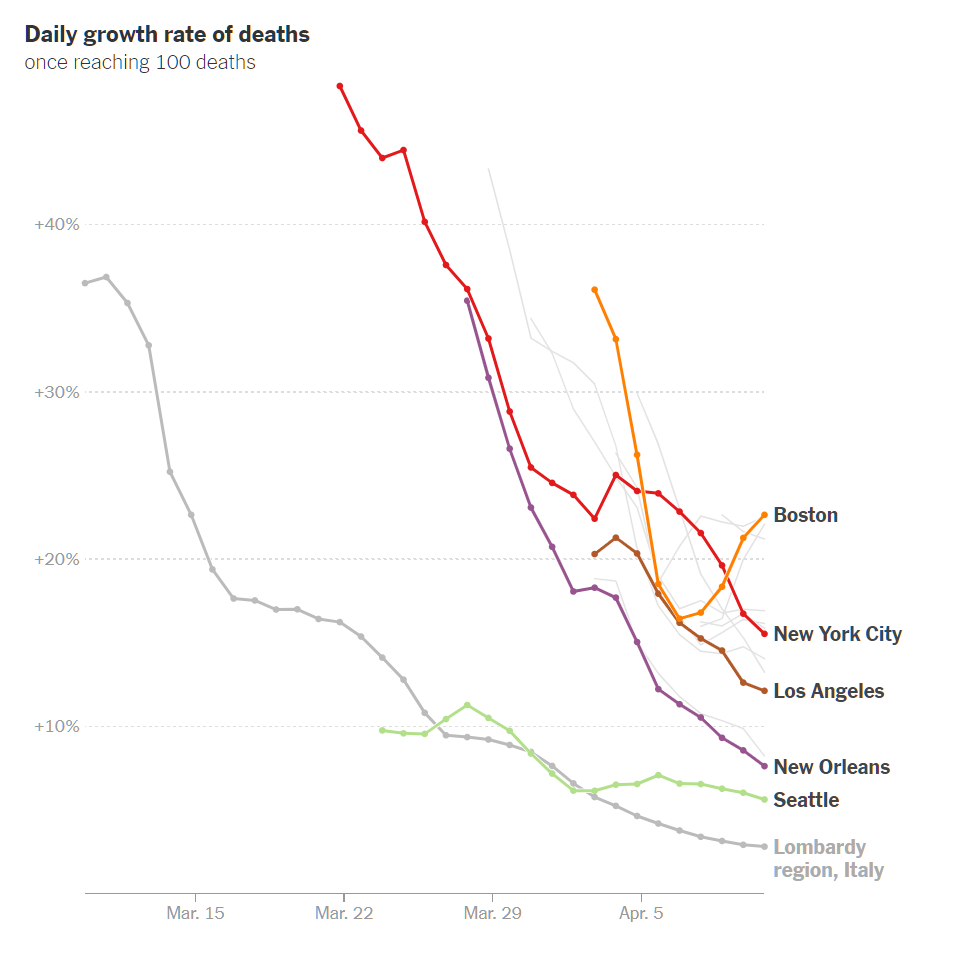
Cities like New York pay a price for being both dense and cosmopolitan. As a new study from Heartland Forward reveals, the prime determinants of high rates of infection include such things as density, percentage of foreign residents, age, presence of global supply chains, and reliance on tourism and hospitality. Globally, the vast majority of cases occur in places that are both densely populated and connected to the global economy. Half of all COVID-19 cases in Spain, for example, have occurred in Madrid, while the Lombardy region in Italy, which includes the city of Milan, accounts for roughly half of all cases in the country and over 60% of the deaths.
In the long run, the extraordinary concentration of COVID-19 cases in New York threatens an economy and a social fabric that were already unraveling before the outbreak began. The city’s job growth rate has slowed and was slated to decline further, noted the New York City Independent Budget Office. Critically, New York’s performance in such high wage fields as business services, finance, and tech was weakening compared to other American metros. Half of all the city’s condos built since 2015 lie unsold as oligarchs, drug lords, celebrities, and others lose interest in luxury real estate now that cash, much of it from China, is drying up.
What happens when folks who say that the deplore inequality all get together in one big city?
Today the top 1% in New York are taking in over 40% of the city’s income—about double the top 1-percenter income share nationally in the United States—while much of the city’s population find themselves left behind. Even the epicenter of gentrification, Brooklyn, actually got poorer in the first decade of the new millennium.
This reflected in large part a precipitous fall in middle income jobs—those that pay between 80% and 200% of the median income. Over the past 20 years, such jobs barely grew in New York, while such employment soared 10 times as quickly in Texas cities and throughout much of the South and Intermountain West. Of the estimated 175,000 net new private sector jobs created in the city since 2017, fewer than 20% are paying middle-class salaries. Amid enormous wealth, some 40% of working families now basically live at or near the poverty line.
(Let’s hope AOC will reverse this trend!)
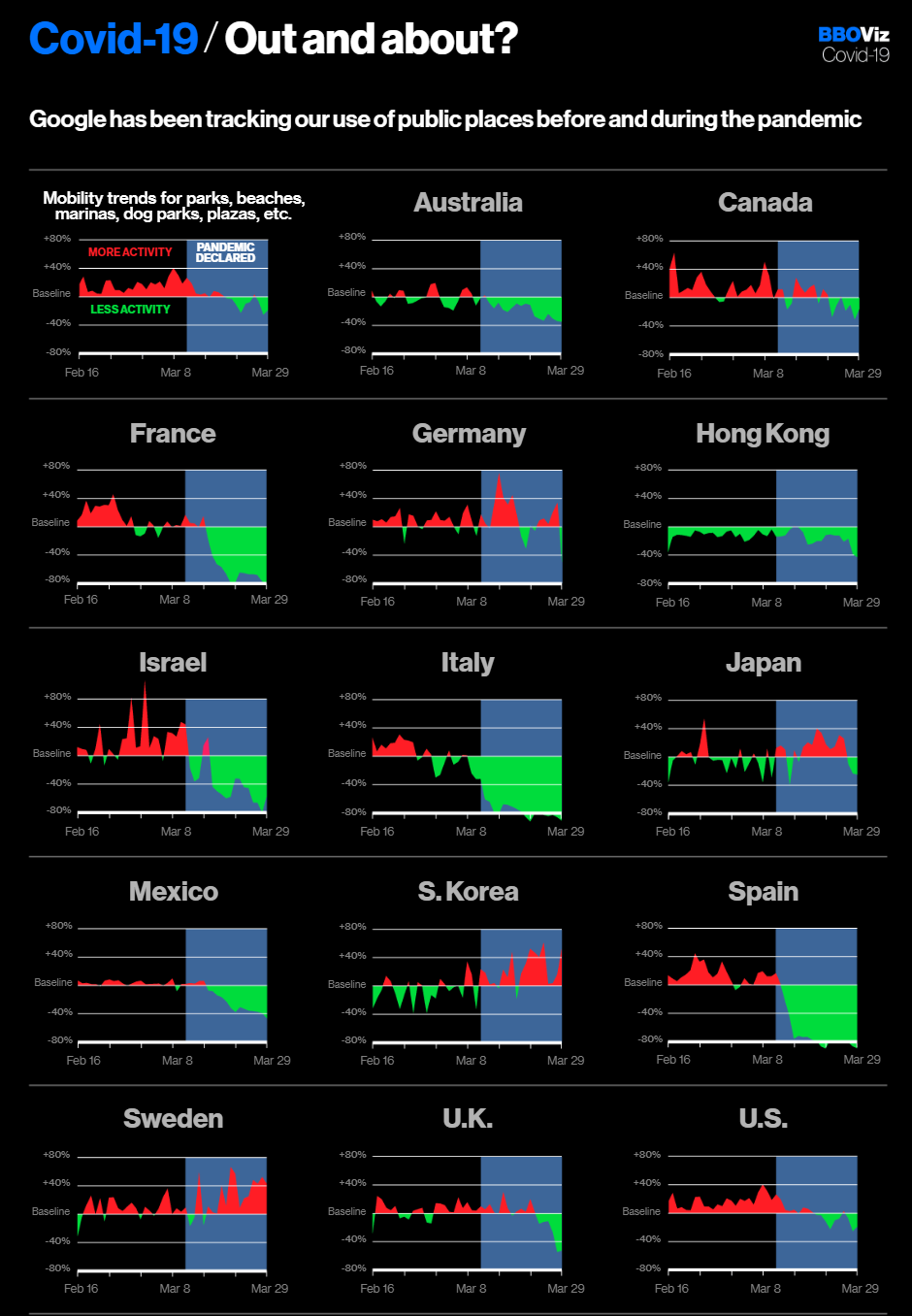
Readers: Is it possible that virtual socialization tools and habits honed during the coronaplague will make the suburbs cool (again?)? My pet idea would be a video wall in every home that would let a family’s best friends visit virtually (similar to my pet idea for a video wall that can show a life-sized co-worker). At a minimum, will coronaplague help the suburban real estate market? (At least here in the Boston area, downtown real estate has performed much better in recent years.)
Full post, including comments