Did American love of process doom Champlain Towers South?

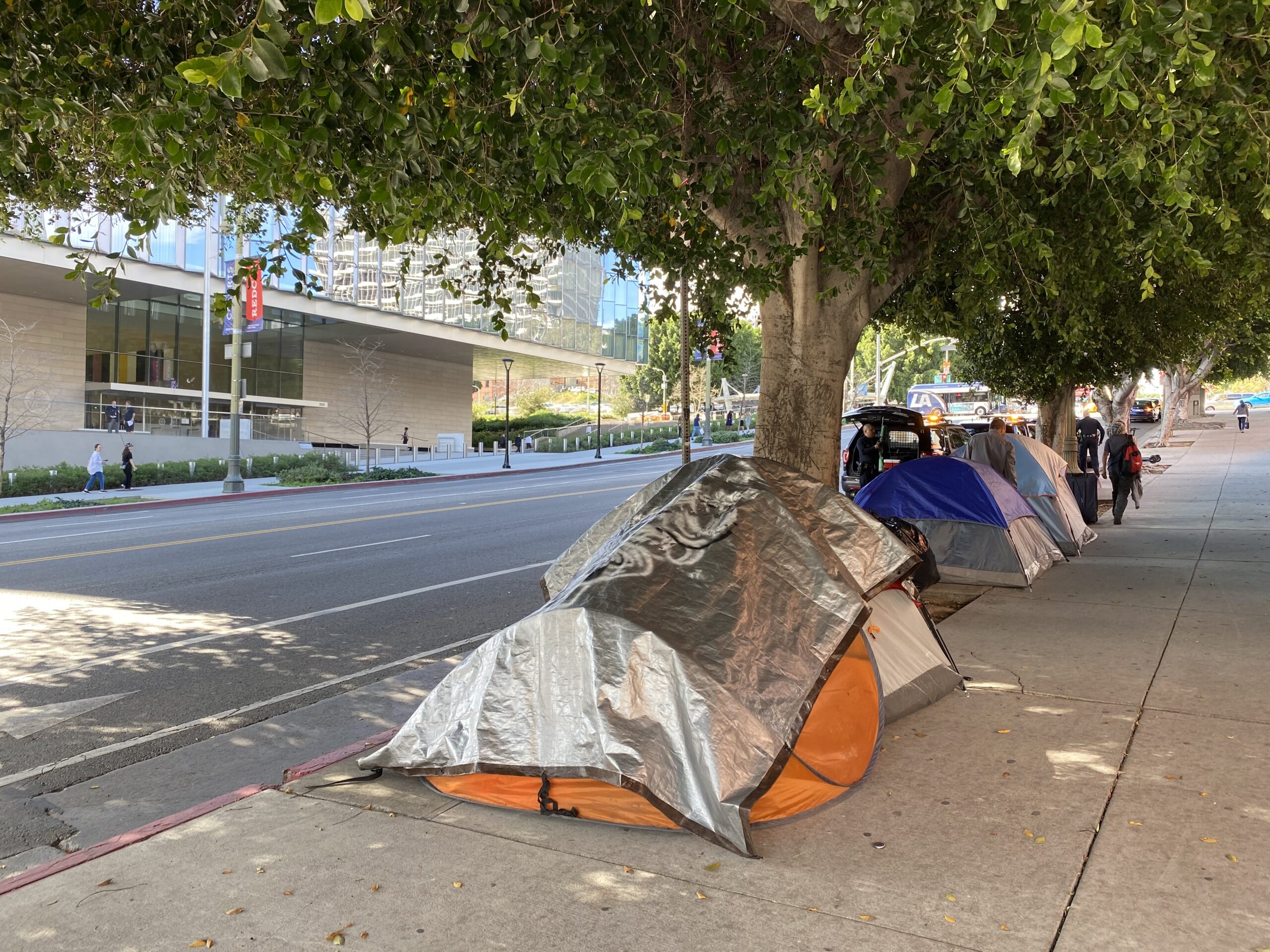
Owners at Champlain Towers South were told in 2018 that their building needed structural repairs, but the repairs weren’t scheduled to begin until later this year, i.e., a three-year interval. That’s enough time for the Chinese to build an entire city. I’m wondering if our love of process, which sometimes results in more durable structures, is a double-edged sword. If a structure is discovered not to be durable, a multi-year process before repairs can begin results in multiple years of vulnerability.

How much do we love process? Here’s a recent letter regarding what would have been an in-person meeting tonight. There will be deliberate consideration regarding the installation of a hand rail outside a bathroom:

(On Zoom, of course, because Coronapanic continues.)

Related:

  • “Miami-Area Condo Owners Pushed Town for Construction Approvals Days Before Collapse” (WSJ): ‘This is holding us up,’ the Champlain Towers South property manager emailed Surfside officials; town manager said no indication of need for emergency action
  • “Ten Thousand Commandments 2021” (CEI): “An Annual Snapshot of the Federal Regulatory State … Regulatory costs of $1.9 trillion amount to 9 percent of U.S. gross domestic product… If it were a country, U.S. regulation would be the world’s eighth-largest economy.. If one assumed that all costs of federal regulation flowed all the way down to households, U.S. households would “pay” $14,368 annually on average in a regulatory hidden tax.”
Full post, including comments

How rich would we be if God had told us about coronapanic in November 2019?

Suppose that you got a letter from God in November 2019 saying that coronapanic would start in March 2020, with unprecedented shutdowns of schools, factories, retail, restaurants, etc. God would have told you that China, Japan, and Taiwan would experience relatively minor shutdowns, that Sweden would have no shutdown, that everyone would try to meet by videoconference, and that most countries and U.S. states would have lengthy shutdowns.

The most obvious response to this as an investor would have been (1) buy China, Japan, and Taiwan, (2) short the U.S., (3) short Europe, (4) buy some individual stocks such as Zoom, and (5) maintain the strategy until a vaccine authorization (not “approval”!) was announced (not because of a belief that COVID-19 vaccines will eliminate COVID-19, but because of a belief that other investors would believe that COVID-19 vaccines will eliminate COVID-19 and therefore coronapanic-related shutdowns).

Let’s see how that would have done. We’ll say that we started the strategy on November 15, 2019 and closed it out on November 10, 2020 a day after Pfizer celebrated the defeat of Big Pharma’s nemesis (Donald J. Trump) by finally disclosing Phase 3 vaccine trial results. We would use 40 percent weight on Asia, 40 percent on the US/Europe short, and a remaining 20 percent on individual stocks.

Let’s first benchmark this against a not-favored-by-God person buying and holding the S&P 500. SPX went from 3120 to 3360 (up 7%).

Element 1 (buy Asia): SSE (Shanghai Index) went from 2911 to 3330 (up 14%). The Nikkei (Japan) went from 23160 to 25087 (up 8%, but this would be called the largest move by far by the journalists writing about COVID in India!). TWSE (Taiwan) went from 52.20 to 61.60 (up 18%).

Element 2 (short the U.S.): as noted above, this would have lost roughly 7% (we’ll ignore dividends since the stuff we bought long would have paid dividends as well).

Element 3 (short Europe): Let’s use the MSCI Europe index. It went from 136 to 127 (down 7%).

Element 4 (buy Zoom, et al): ZM from 68 to 433 (up 536%!), AMZN from 1760 to 3231 (up 83%)

So we’d be up roughly 12% on Asia, flat on the U.S. and Europe (assume equal weight between these two and they moved in opposite directions), and up about 250% on the individual stocks. After transaction costs, given the assumed weights, we’d be up 50-55% for the year.

That’s a lot less than I would have expected!

Above: God creates a Robinhood user.

Full post, including comments

I love AOC even more now

Some folks have harsh words for AOC, plainly America’s greatest living political philosopher. Even if you don’t agree with her economic and social plans for the United States, you will, I hope, agree with me that she is a huge success as an electrical engineer.

The AOC 1601FWUX makes it easy for those fleeing the COVID-plagued Northeast to work from a laptop computer. For only $180, the device doubles the amount of screen space available when working from a laptop. The 15.6″ IPS display gets both power and signal from the laptop’s USB-C port, which means that you don’t need to carry another power brick. It worked immediately with my 2017 Dell XPS 13, which has been a spectacularly crummy laptop in nearly every respect.

The included magnetic stand lets you position this second monitor in either landscape or portrait mode (ideal for reading a PDF while typing at a word processing document on the main laptop screen).

This is the perfect gift for anyone who travels.

Readers: Who has used a similar device? I think that ASUS pioneered the segment, but their current product is compromised in brightness due to a desire to have it work from legacy USB-A ports that can’t supply as much power.

Related:

Full post, including comments
Reinterpreting MLK’s ideas of freedom for the Age of COVID

Today we celebrate our traitorous rebellion from the legitimate rule of Great Britain, carried out in the name of “freedom.” The rebellion enabled us to continue chattel slavery and stealing land from Native Americans west of the Proclamation Line. Let’s consider our current state of “freedom” as we all take a break from cashing our unemployment checks on this holiday of July 4th.

From Martin Luther King, Jr., whose first book was titled Stride Toward Freedom:

Freedom is never voluntarily given by the oppressor; it must be demanded by the oppressed.

The ultimate measure of a man is not where he stands in moments of comfort and convenience, but where he stands at times of challenge and controversy.

If you can’t fly then run, if you can’t run then walk, if you can’t walk then crawl, but whatever you do you have to keep moving forward.

All we say to America is, ‘Be true to what you said on paper.’ If I lived in China or even Russia, or any totalitarian country, maybe I could understand the denial of certain basic First Amendment privileges, because they hadn’t committed themselves to that over there. But somewhere I read of the freedom of assembly. …

MLK, Jr. was one of our greatest thinkers, but even his mind could not stretch to the idea that people in Massachusetts, California, and New York would actually welcome being locked down for more than a year:

Oppressed people cannot remain oppressed forever. The yearning for freedom eventually manifests itself.

(When exactly?)

Reasonable people, of course, would point out that healthy young people in these states were denied what had formerly been considered their rights for only 16 months or so. And maybe this coming fall or winter too, depending on what the public health technocrats recommend.

A right delayed is a right denied.

Let’s see how the ideas of our greatest thinker on the subject of freedom have been reinterpreted during the ongoing coronapanic…. some photos from an April 2021 trip to Atlanta and the Martin Luther King, Jr. National Historical Park. The “Freedom Hall” was closed “out of an abundance of caution regarding the COVID-19 virus”:

How about the Freedom Walkway? That’s now a “Restricted Area”:

Even before coronapanic, the architect’s original vision for the reflecting pool had been disfigured with plastic barriers, which I was told were essentially permanent fixtures, to keep the public away:

Compare to my photo from the summer of 1994:

What words were important enough to be on MLK, Jr.’s grave?

“Free at last! Free at last! thank God Almighty, we are free at last!”

At least as of June 16, according to the web site, all of the park buildings remained closed.

Full post, including comments
COVID-19 policy is more like the Vietnam War or more like the Penicillin miracle drug euphoric stage?

Averros’s comment on The English decide to stay in their foxholes (COVID surge despite vaccination):

The main lesson of this quasi-pandemic is that public experts are, by and large, idiots and/or charlatans.

Any actual scientist given the facts as following: quickly mutating kind of viruses, vaccine tech producing very specific immune response and incapable of conferring sterilizing immunity, widespread community transmission will immediately figure out that mass immunization creates strong selective pressure on the virus thus rapidly creating new strains which not only avoid vaccines but also re-infect people who did get the cooties before.

With these givens the correct strategy is to vaccinate only those at risk of severe illness so as to protect them while minimizing generation of new strains.

But, no, the over-educated idiots and vaccine salesmen never think about anything further than immediate results of their actions. It’s like antibiotic overuse take 2 – only faster moving. The EYIs [Educated Yet Idiots] learned nothing from the previous bouts of medically-induced pathogen evolution.

My personal view for most of the past year has been that the best analogy to the typical Church of Shutdown state’s War on COVID-19 is the American side of the Vietnam War. Our best and brightest (e.g., Dr. Fauci, state governors flanked by their public health officials) present charts and statistics showing that, in any given month, the war against coronavirus is being won. The population is assured that just a little more sacrifice will yield massive dividends. Sometimes the Priests of Shutdown will draw on mathematical models from Whiz Kids. Month after month of winning battles leads to… a lost war (e.g., Maskachusetts having 3X the death rate of Florida, adjusted for population over 65, but the population still has faith in Robert S. McNamara (Governor Charlie Baker)).

But I wonder if averros has a better analogy. Circa 1950, the typical layperson thought that we were done with bacterial infection, despite the fact that #Science had already seen evolved resistance in action. See “Penicillin’s Discovery and Antibiotic Resistance: Lessons for the Future?” (Yale J. Biol Med):

2016 marks the 75th anniversary of the first systemic administration of penicillin in humans, and is therefore an occasion to reflect upon the extraordinary impact that penicillin has had on the lives of millions of people since. This perspective presents a historical account of the discovery of the wonder drug, describes the biological nature of penicillin, and considers lessons that can be learned from the golden era of antibiotic research, which took place between the 1940s and 1960s.

More than 150 antibiotics have been found since the discovery of penicillin, and for the majority of antibiotics available, resistance has emerged. Moreover, the recent rise of multi/pan-drug resistant strains has correlated with enhanced morbidity and mortality. Overall, ineffectiveness of the antibiotic treatments to “superbug” infections has resulted in persistence and spread of multi-resistant species [42] across the globe. This represents a serious worldwide threat to public health [41].

In early 1945, Fleming predicted that the high public demand of antibiotics would determine an “era of abuse”; this eventually became a reality [43-45]. No sooner had the miraculous effects of penicillin become apparent to the general public, then the antibiotic started to be overused. This triggered selective pressure for the emergence of penicillin-resistant strains, which over a few years spread across different countries. The discovery of each new generation of antibiotic quickly followed the same trend.

(How long it will be before American K-12ers are taught to celebrate the pioneering efforts of BIPOC American women in developing penicillin and the 1945 Nobel Prize won by Alexa Fleming, Ernestine Chain, and Heather Walter Florey?)

From the Journal of Popular Studies:

Related:

Full post, including comments

Helicopter snaphots

We’re flying with the doors off the Robinson R44 in order to avoid being baked to death in the recent weather (over 90 degrees in God’s chosen system of units). That enables your humble instructor to snap a few iPhone 12 Pro Max photos from the left seat.

On the ramp at our local airport (KBED), the F-18s that Joe Biden recommends for personal ownership (try to get a friend to pay for fuel, though!):

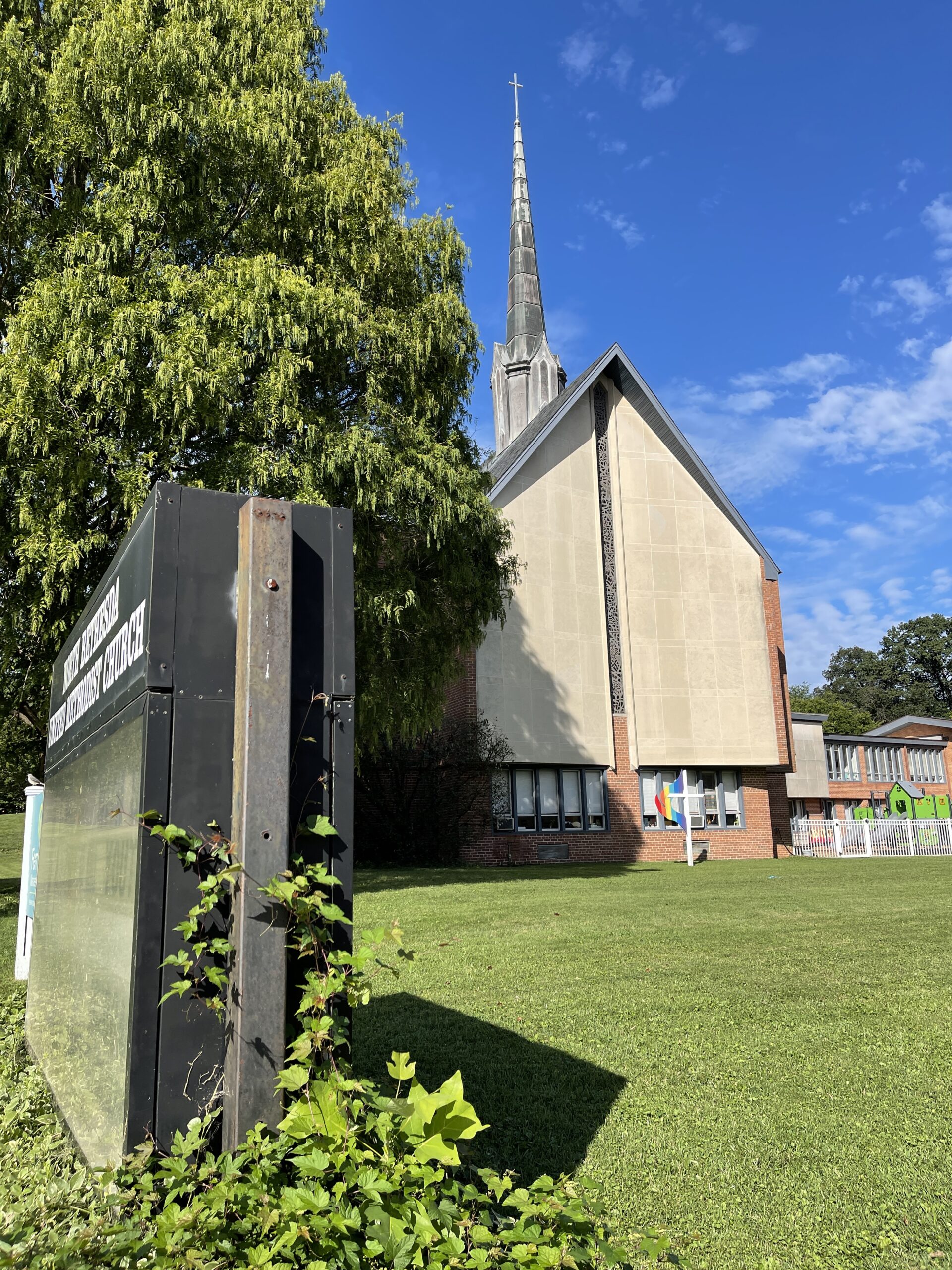
See if you can spot the Black Lives Matter banner on the all-white church in the all-white town of Concord, Maskachusetts:

The Concord-Carlisle High School, a $93 million project (about $71,000 per student, half paid for by the state) that taxpayers wisely decided not to use for a year (#AbundanceOfCaution; it was closed entirely for 6 months and then students were able to start attending half time):

The Lincoln K-8 school, a $110 million project, including the solar panels that were borrowed against in an off-books accounting maneuver, ($250,000 per student, 100 percent paid for by the town):

(This is being done as an in-place renovation, with students displaced to trailers for three years, because the campus supposedly does not have enough room for the usual “build new building in parking lot or on soccer field, then demolish old one” process.)

One of the families whose next 30 years of property taxes will fund the bond for the above. #InThisTogether:

(Imagine the legal fees if the “dependent” spouse “pulls a Melinda” and sues the spouse who earned enough money to build the above house! The happy plaintiff can beat the heat with Tinder dates by the pool.)

Mitt Romney’s legacy, the Mormon Temple in Belmont, MA:

Put on a mask and let your cows and sheep graze for free on Cambridge Common:

MIT Lincoln Lab:

Scroll to 1970 on the timeline and you’ll see that the Mode S transponder that is the building block for ADS-B was developed here.

Why can’t you get a seat on the Red Line trains that run every 10 minutes starting at Alewife? Check out everything that has been built recently near the station (center right of frame):

(the three red brick towers in the foreground are public housing (777 units for the worthy poor: “the towers—like many high-rise housing projects of the era—quickly became associated with crime… the complex is still a focus for law enforcement activity, and in 2008 the Cambridge Police opened a substation at the towers”) and, until a few decades ago, were the only significant buildings)

The Gropius House in Lincoln (cost about 4X/square foot to build as a typical house of the time):

A helicopter CFI gets current. We went to downtown Boston to get away from some light rain showers at Bedford:

It is a little unnerving to be using one’s phone as a camera through the open door of a helicopter. Lean out too far into the 90 mph breeze and it will be time to visit the Apple Store (don’t forget to make a COVID appointment, buy a mask, and get temperature-screened!). Maybe a case with a strap?

Full post, including comments

Did we ever figure out whether Vitamin D and Hydroxychloroquine were helpful against COVID-19?

One of the great things about medicine is that convincing conclusions are seldom reached. COVID-19, on the other hand, has been of such tremendous interest to humans worldwide that it doesn’t seem unreasonable to hope for answers.

We were told that vitamin D might protect us against coronavirus, e.g., in “Study suggests high vitamin D levels may protect against COVID-19, especially for Black people” (University of Chicago, March 19, 2021). But has the correlation/causation situation been worked out? People who are healthier and more robust will tend to spend more time outdoors and therefore have higher vitamin D levels. These same people will be harder for coronavirus to kill, but maybe it is because they are strong and healthy, which is why they were outdoors instead of inside watching TV, not because they happen to have high vitamin D levels.

Similarly, the debate over hydroxychloroquine does not seem to be settled. “Observational Study on 255 Mechanically Ventilated Covid Patients at the Beginning of the USA Pandemic” (medRxiv from Saint Barnabas Medical Center in New Jersey) was published on May 31, 2021 describing what happened to patients who were admitted prior to May 1, 2020 (i.e., it took more than a year to crunch the numbers). The paper certainly proves that ventilators are not very helpful. 78.8 percent of the ventilated patients died. Only 3.5 percent were “discharged to home without any cognitive or motor deficits and off oxygen therapy” (i.e., “walked out of the hospital”):

We found that when the cumulative doses of two drugs, HCQ and AZM, were above a certain level, patients had a survival rate 2.9 times the other patients. By using causal analysis and considering of weight-adjusted cumulative dose, we prove the combined therapy, 3 g HCQ and 1g AZM greatly increases survival in Covid patients on IMV and that HCQ cumulative dose 80 mg/kg works substantially better.

With so many people around the world supposedly afflicted with COVID-19 and so many $trillions of dollars being thrown at this medical problem, how is it possible that we don’t have the seemingly simplest questions answered?

Full post, including comments
When the stability of a nation is in danger, the only solution is, unfortunately, to imprison the leaders of the opposition.

The NYT today (Democrats in New York are prosecuting the Trump Organization):

A 2007 post on this blog, “Idi Amin’s advice to Richard Nixon”:

My friend here in California has Talk of the Devil, Encounters with Seven Dictators by Riccardo Orizio.  The first interview is with Idi Amin.  Orizio reminds us that Amin sent a letter to Richard Nixon during the Watergrate crisis:  “When the stability of a nation is in danger, the only solution is, unfortunately, to imprison the leaders of the opposition.”

Related:

Full post, including comments
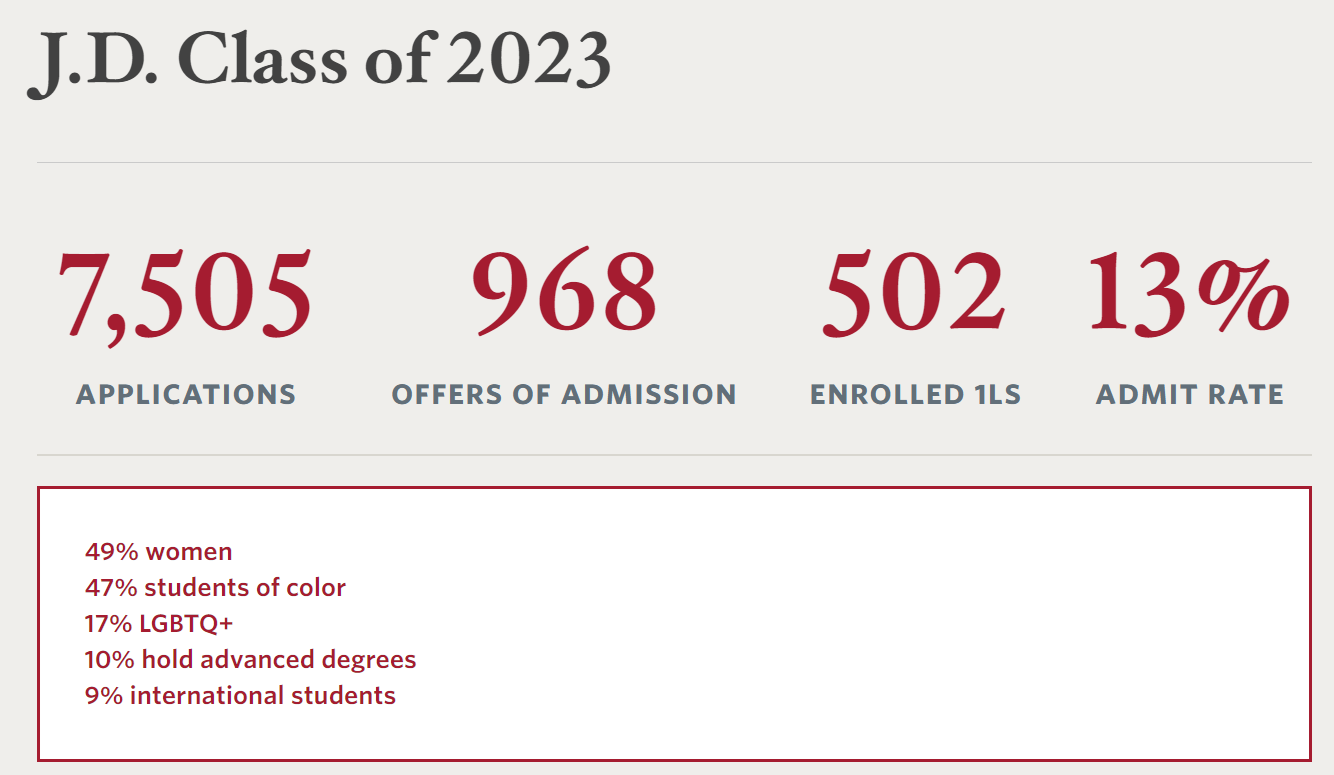
Order your aviation stuff now (13 percent price increase from Lycoming)

“LYCOMING ANNOUNCES MAJOR MID-YEAR PRICE HIKE” (Rotorcorp, a distributor):

On Friday, June 24th 2021 aircraft engine Manufacturer Lycoming announced a significant mid-year price hike to take effect next month on 24 July, 2021. The company cited “inflation costs associated with components, surcharge increases, and ongoing availability” as the primary drivers for the sudden increase which was made even more unexpected by the timing of the increase well ahead of the company’s usual annual price increases made each December. Communication from Lycoming attached below.

Rotorcorp has conducted a thorough analysis of the new prices on O-320-B2C, O-360-J2A, O-540-F1B5 and IO-540-AEA5 engines utilized in Robinson R22 and R44 helicopter models. It would appear that the July pricing will represent an additional 13% cost to owners and operators requiring Lycoming Factory new, rebuilt “zero time” and overhaul exchange engine options. It also appears that the price increase (roughly 13%) has been added to all small parts and cylinder kits. In real numbers an Lycoming Rebuilt “Zero Time” Exchange O-540-F1B5 Engine will spike by more than $5500 from the current retail price of $48,303 to $53,879.

The rest of the industry won’t be far behind, presumably. So order everything now if you think that you might need it within the next year or two!

(in the 20 years that I’ve been keeping up with aviation, this is the first time that I have seen this occur. Each manufacturer typically has a date on which the next year’s prices are announced. They don’t issue price increases at mid-points)

Full post, including comments
No Gulfstream parking

Department of First World Problems, email from today:

What to do when you get there?

Charter Yacht Market Preps for Record Season – … Some yachts that normally would be heading across the Atlantic are staying back in the Caribbean to maximize booking there. Others are being repositioned to the Eastern Med where countries like Greece and Croatia have less uncertainty right now than France and Spain. And Costa Rica is predicted to be a new hot yacht destination.

The U.S. government is bigger and more heavily funded than ever, but government employees prefer not to work:

U.S. CBP is still on reduced hours at many airports vs pre-pandemic, so don’t assume an airport that used to have 24-hour customs still does.

(I’m going to guess that the hours reduction did not come with a paid staff reduction.)

Full post, including comments