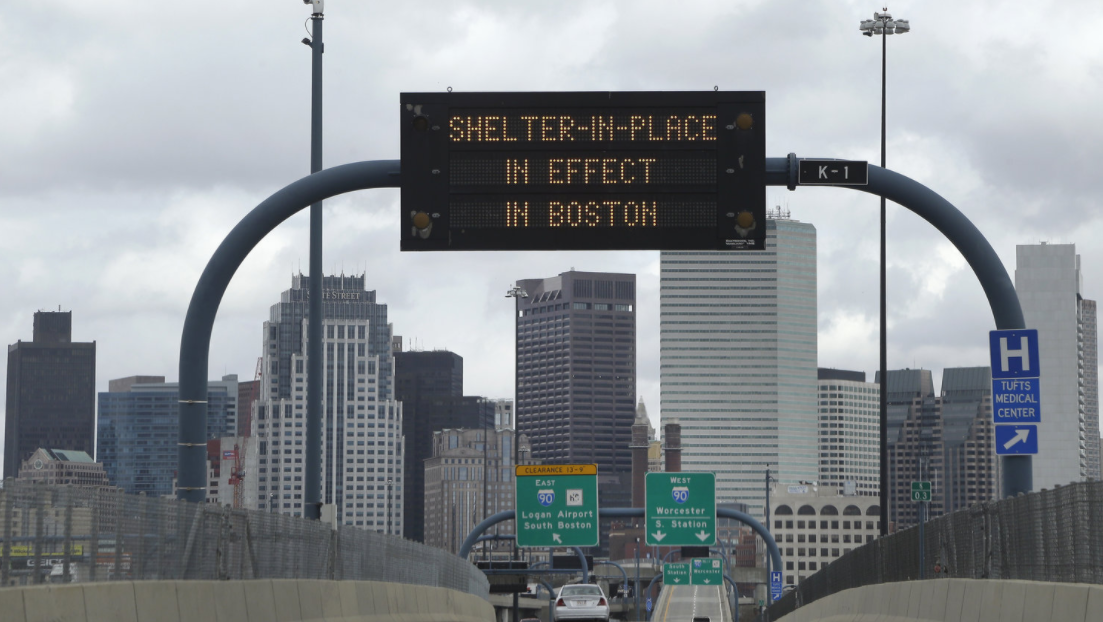
Infidels in Sweden are refusing to die

Journalists around the world love to condemn the Swedes for their refusal to attend the Orthodox Church of Shutdown while instead following the false prophet (former chief scientist of the European CDC). Example: “Graph shows Sweden’s coronavirus death toll rapidly increasing compared to other countries” (Independent). (When writing this kind of story, it is best to avoid comparing Sweden with shut-down Massachusetts!)

Today’s New York Times, however, gives us the data that are least likely to be subject to variation from recording: total deaths by country. From “28,000 Missing Deaths: Tracking the True Toll of the Coronavirus Crisis”:

Sweden actually seems to over-reported their COVID-19 deaths (see “Sweden may be recording COVID-19 deaths differently than other countries”), the only country in the survey to have done so.

The reporters and editors who worked on this story somehow neglect to mention that the country with the smallest increase in deaths is still running its schools, restaurants, offices, nightclubs, gyms, etc.! (Maybe this didn’t seem significant to them, despite the 12% versus 298% discrepancy. For True Believers in the Church of Shutdown, what Sweden is doing is merely a variant form of their own religion, just as Hinduism was for the Portuguese who spent an entire summer on the west coast of India in the late 15th century. So strong was their belief in Christianity that they believed Hindu temples to be churches (and Ganesha was Jesus with a big Jewish nose?). They attended Hindu religious rituals and believed that they were observing Christian practices.)

[How did New York City get to be such an outlier? A friend’s wife’s theory is that it was the three shopping days between when the governor announced a lockdown and when the lockdown actually began (Friday morning to Sunday at 8 pm). “I have never seen stores so crowded in Manhattan,” she explained. “People were panic-buying everything that they thought they might need over the next three months. Bed, Bath, and Beyond was so jammed you could barely move. Nobody was wearing a mask. I think most of the infections in New York City happened during those three days.”]

Related:

Full post, including comments

#StayHomeSaveLives or #StayHomeTradeLives? (Clinical trials for new drugs are on hold)

One of my Facebook friends, a guy closing in on Medicare eligibility:

I was almost 13, standing before my temple congregation, and I still remember reading these words from my Torah (bible) portion, “Choose life — if you and your offspring would live” It was somewhat random that of all the dates for me to be born and selected for my Bar Mitzvah, this would be my portion to read. If you know me, you know I don’t preach, I do think people should make their own choices. So these days, I can’t stop thinking about these words, and the choice we all make every day. Choose life over the alternative.

In other words, we can choose to stay home and save lives or go out and party (where, exactly?) and kill people via covidiocy.

In a previous post, I pointed out that, even if the Swedes are wrong and our quasi-lockdown has some effect on transmission rate, we can’t “save lives” by shutting down the U.S. economy because the resulting poverty will kill Americans (2011 NYT article) and kill poor people in trading partner countries, e.g., some of the hungry among the 200 million in Nigeria now that we’ve driven the price of oil below their production cost. The Earth can sustain a population of 8 billion only with a functioning modern economy of trade. If that weren’t necessary, the human population would have hit 8 billion before the birth of Jesus. The best that we can do is “save older richer American lives” by trading them for deaths among the poor. (But probably we won’t succeed in saving any rich old Americans.)

So we don’t have a choice to save lives, only, if the Swedes are wrong, whom to kill.

A physician friend said, “I agree with you on the poverty. That’s the biggest single determinant of clinical outcomes. However, you’re missing two big factors.” He pointed out that all clinical trials are currently shut down. If you were hoping to survive heart disease, diabetes, or cancer with the assistance of a new drug, you’d better come up with a way to survive an extra 6-24 months with the old pharmacopoeia. Any innovations will now be delayed by however long the coronapanic lasts.

He also directed me to “The Untold Toll — The Pandemic’s Effects on Patients without Covid-19” (Lisa Rosenbaum, M.D., New England Journal of Medicine, Apri 17). The author points out that a postponed “elective” treatment may result in death:

Although canceling procedures such as elective hernia repairs and knee replacements is relatively straightforward, for many interventions the line between urgent and nonurgent can be drawn only in retrospect. As Brian Kolski, director of the structural heart disease program at St. Joseph Hospital in Orange County, California, told me, “A lot of procedures deemed ‘elective’ are not necessarily elective.” Two patients in his practice whose transthoracic aortic valvular replacements were postponed, for example, died while waiting. “These patients can’t wait 2 months,” Kolski said. “Some of them can’t wait 2 weeks.” Rather than a broad moratorium on elective procedures, Kolski believes we need a more granular approach. “What has been the actual toll on some of these patients?” he asked.

[Note that NEJM makes this article available for free because it is COVID-19-related. Consistent with “Why do we care about COVID-19 deaths more than driving-related deaths?”, they want to make sure that all doctors worldwide have access to information that could save a COVID-19 patient, but they don’t care if a patient dies from some other preventable cause because the doc couldn’t afford a subscription!]

This death toll is in addition to deaths from patients who try to avoid going to the hospital in the first place because they’ve read that it will be a Fall of Saigon situation and they will get coronavirus during their 14 hours in the ED waiting room.

Finally, if you were hoping to be cured by a well-trained physician a few years from now, you might be disappointed to learn that all medical student clinical training has been suspended (and classroom training for years 1 and 2 has become a less effective virtual experience). It doesn’t matter to that our future doctors will miss 3-6 months of training? If so, why not cut medical school to 3.5 years?

Separately, but also on Facebook, there seems to be a rich vein of social distancing scolding. Here’s one from a nowhere-near-old-enough-to-be-at-risk guy who married the daughter of a rich guy and thus lives in a big beautiful custom-built home on a large suburban lot:

As of yesterday, 4.2% of Massachusetts residents who contracted Covid 19 died.

Today on my solo bike ride, I observed PACKED parks, with zero social distancing measures.

We can do better than this. I’m beyond ready to get back to work.

(He doesn’t have a W-2, 9-5 job, thanks to the father-in-law’s success, so “work” is creative, rather than oppressive.)

From a nurse in the Bay Area, regarding an outbreak in Truckee:

Wtf?!! What don’t people get? Stay the F* home!! Do not go to your 2nd or 3rd homes/ski leases!!! They don’t have the medical facilities/ICU capabilities for Bay Area people going back and forth and potentially spreading the virus!! All of us Bay Area/ SC/ Monterey 2nd homeowners are SIP at our PRIMARY homes… not escaping to our 2nd/3rd homes (Kirkwood) to “get away into the high altitude wilderness”. It’s ABSOLUTELY F**** selfish!!!!

Here’s one posted by a friend, in which the Seattle Parks & Rec folks tell the rabble “Enjoy Your Backyard”:

Image may contain: outdoor and nature

Nobody on either coast seems to be thinking about Americans who aren’t rich enough to have a backyard!

Related:

Full post, including comments

We haven’t been using our car that much lately…

Perhaps we can get another year or two out of it?

(above vehicle is right next to the Minute Man National Historical Park’s Battle Road)

Meanwhile, I wonder if all of the bailout money has left the car dealers and manufacturers so flush that they don’t need to offer discounts. We still haven’t seen any “coronavirus offers” on new cars. Is that because factories are mostly closed around the world, except for Chinese factories making cars for the Chinese market? (Japanese factories could run, but they’re closed due to lack of demand? (and the lack of demand is partly due to the lack of any price cuts?))

Related:

Full post, including comments

Sweden may be recording COVID-19 deaths differently than other countries

Department of Lies, Damned lies, and Statistics: “In Sweden, Will Voluntary Self-Isolation Work Better Than State-Enforced Lockdowns in the Long Run?” (Reason).

As noted previously in this blog, despite having access to schools, restaurants, gyms, and offices, Swedes have been dying at a lower rate than residents of shut-down Massachusetts (latest). But there are some European countries in shutdown that have yet lower official COVID-19 death rates. Almost nobody in Germany or Norway dies from COVID-19. Are they exceptionally lucky, doing something better, or using a different standard to attribute death to the evil coronavirus?

(Summary: Swedes automatically count anyone who has tested positive for COVID-19 as a COVID-19 death; the Norwegians require that a doctor assess that an ancient person has specifically died because of COVID-19, rather than one of 3 pre-existing conditions, and then take time from his/her/zer/their day to report that to the authorities.)

From the article:

There are also reasons to think that Sweden is doing better than these comparisons suggest. Many countries don’t count COVID-19 deaths outside of hospitals. When people die at home, in nursing homes, or in prisons, they don’t show up in the coronavirus death count.

In the Stockholm region of Sweden, 42 percent of deaths took place in nursing homes for the elderly. In many countries, and some U.S. states, those deaths would not show up in the data.

According to Johns Hopkins University, Belgium has twice as many COVID-19 deaths per capita as the Netherlands. But in Belgium, almost half of those deaths are from nursing homes, while testing is more rare in Dutch nursing homes so fewer deaths there are attributed to the disease.

After France started to include nursing homes in the statistics, the total number of French COVID-19 deaths jumped by almost a third.

During the present pandemic, Sweden systematically checks the list of people who have tested positive for the virus against the population register. Every time the government discovers that someone who had the virus has died, that person is registered as a COVID-19 death if it happened within 30 days of the diagnosis—even if the cause of death was cancer or a heart attack.

It means that Sweden reports the number of people who die with COVID-19, not of COVID-19.

Even in a culturally and geographically similar country like Norway—celebrated for its low death rate—they do things differently. The Norwegians only count something as a COVID-19 death if a doctor concludes that someone was killed by the disease and decides to report it to the country’s public health authority.

The article confirms what I posted earlier, i.e., that Swedes are not running out of ICU capacity:

The Swedes who have died from the coronavirus did not die due to lack of hospital beds or ventilators. Thanks to a rapid increase in intensive care unit capacity, 20 percent of Sweden’s ICUs are unoccupied. Stockholm has built a new field hospital, already equipped to receive hundreds of COVID-19 patients, including 30 ICU beds. So far it has not had to open. The average age of the dead has been 81, which is close to our average life expectancy.

Why didn’t Swedes drop dead like the models said they would?

For example, the influential Imperial College model estimates a higher reproduction rate of the disease in Sweden than in other countries, “not because the mortality trends are significantly different from any other country, but as an artefact of our model…because no full lockdown has been ordered.”

In other words, the model could only handle two scenarios: an enforced national lockdown or zero change in behavior. It had no way of computing Swedes who decided to socially distance voluntarily.

[Believers in the Church of Shutdown, of course, will say that Swedes are completely different from Americans (note that 25 percent of people living in Sweden have no genetic, cultural, or linguistic connection to stuff we might consider “Swedish”; one quarter of the population was born somewhere else or has two parents born somewhere other than Sweden; Swedish 15-year-olds actually scored slightly lower than Americans in the science section of the PISA test (though they did a lot better in math)). Had at-risk Americans not been able to tap into strong leadership (from epidemiology professor Donald Trump in the White House!), they would have read media reports of mass deaths and not changed their behavior in any way. No American would have switched to work-from-home. No American would have decided to cook at home rather than spend an hour in a jammed restaurant. No American would have invested in a mask or Clorox wipes. Due to universal stupidity among Americans (or at least the nearly half who voted for Donald Trump), a Swedish approach of shutting down mass gatherings and trying to isolate the vulnerable could never have changed behavior or epidemic velocity in the U.S.]

Of course, we probably won’t be able to evaluate the success or failure of any country’s policy until early 2021 (otherwise we risk celebrating a country for preventing deaths when all that happened was that the country either postponed the death or classified it differently). But I think it is interesting that already we’re getting a glimpse into why apparently similar countries should have such different death rates.

Related:

Full post, including comments

Medical doctors stopped meeting in huge conventions on March 10

A friend in medical research and I were joking about people who claim to have hindsight regarding coronavirus. I said that I alternate between bragging about my garage full of N95 masks and ventilators and, if someone else says that it should have been trivial for Donald Trump to foresee, if I can come over to his/her/zer/their house to borrow some of the stockpiled N95 masks and ventilators.

He said “We were actually the worst.” What could that mean? “We [doctors] were still holding huge conventions, flying on packed airline flights, meeting by the thousands in hotels, and then returning home with whatever we’d caught to our patients, often some of the sickest and most immune-compromised people in the U.S.” Until when? “March 10.”

(note that the typical school system in Massachusetts shut down on the afternoon of March 12 or 13 and a lot of companies went to work-from-home after March 13)

Full post, including comments

If you thought you’d get masks and ventilators faster through the Defense Production Act

When friends on Facebook expressed anger that Donald Trump had not used the Defense Production Act to expedite production of N95 masks and ventilators, I would endear myself to them by linking to “The Navy spent $30B and 16 years to fight Iran with a littoral combat ship that doesn’t work” (Australian-designed high-speed ferry with some guns on the deck).

I think that I might have a new favorite article regarding military speed… “The 9/11 Trial: Why Is It Taking So Long?” (nytimes):

The trial of five men accused of plotting the attacks had been scheduled for early next year — almost 20 years after the hijackings. Now even that schedule won’t be met. Here are the reasons.

But they have yet to come to trial. The military’s legal proceedings at Guantánamo Bay, Cuba, have lurched from setback to setback, disappointing the families of the victims who have watched in frustration and dismay. Then over the summer, a military judge finally set a timetable toward a trial that envisioned a start date early next year.

Now, that schedule has suffered a one-two punch that promises more delay. First, the coronavirus crisis has cut off most access to Guantánamo Bay, complicating the work of the prosecutors, defense teams, judiciary and support staff who shuttle between the base and the mainland. Then the judge abruptly announced last month that he was retiring from the Air Force and would leave the case next week.

The crude court compound the Pentagon built at Guantánamo as a temporary outpost of the war on terrorism turned out to be expensive and inadequate.

Everyone but the men accused of the crime commute to Guantánamo from Washington, and points beyond for one- to three-week hearing sessions that have been plagued by flight delays, cancellations, mold-damaged offices and communications failures.

Judges have also canceled hearings because of hurricanes, health issues, higher court challenges and, recently, the coronavirus.

Maybe we can convince Joe Biden to promise to close Gitmo!

Full post, including comments

Swedes #persist in refusing to overwhelm ICU capacity (Massachusetts has a higher overall death rate)

Today’s numbers are out. From my big tracking post:

4/17 comment: Sweden at 613 cases/130 deaths; Denmark at 321/12; Massachusetts at 2,221/159. It is getting tougher to argue that the Danish shutdown was ineffective (but maybe Denmark will suffer its infections starting in a few weeks; kids in Denmark went back to school on Wednesday). And it is getting tougher to argue that the Massachusetts shutdown was effective (but maybe we won’t have a second wave since we were so incompetent at slowing down the first wave?). Sweden has had 1,333 total deaths without shutting down. Massachusetts shut down and has had 1,404 deaths (1.5X the rate).

American journalists and the Facebook righteous are sure that, just as it was in March, disaster is just around the corner for Sweden. The hospitals will be overwhelmed. People who could be trivially saved with a ventilator will drop dead in the street. (Example from fivethirtyeight.com hero Nate Silver.)

How is that going? The Swedes make their hospital situation public: https://www.icuregswe.org/en/data–results/covid-19-in-swedish-intensive-care/. It looks as though they have roughly 500 people in the ICU, up from 450 on April 8:

About 50 COVID-19 patients go into the ICU every day, but, if we interpreted the above chart correctly, nearly 50 are also coming out (unfortunately quite a few will be dead when they emerge, since there is no cure for COVID-19).

How do Americans maintain their faith in the face of these data. And in the refusal of God to smite the Swedes with a full ICU or a higher-than-Massachusetts death rate? One professor (of computer science, not epidemiology) simply asserted his sincerely held belief that Sweden would suffer an explosion of disease and ICU demand in the next week. Therefore, we had obviously saved lives by shutting down. Couldn’t Massachusetts have saved a lot more lives by continuing to operate our economy, maybe with a few more COVID-19 patients that had to be shuffled to a mostly-empty hospital, and sending the extra few $billion of wealth created (by the open economy) to Africa for clean water projects? No! Without a shutdown, the death toll in Massachusetts would have been staggering.

Related:

Full post, including comments

Coronavirus will make the suburbs cool again?

A friend has a beautiful house, decorated to a museum standard, here in our boring suburb of Boston (Zillow). I thought that it would be snapped up by an eager buyer, but it has been on the market for a while.

I’m wondering if coronaplague will push a rich Back Bay condo dweller to say “If we’re going to have lockdowns every few years, I want to live in 6,000+ square feet on 2+ acres.”

“The End of New York: Will the pandemic push America’s greatest city over the edge?” (Tablet):

Cities like New York pay a price for being both dense and cosmopolitan. As a new study from Heartland Forward reveals, the prime determinants of high rates of infection include such things as density, percentage of foreign residents, age, presence of global supply chains, and reliance on tourism and hospitality. Globally, the vast majority of cases occur in places that are both densely populated and connected to the global economy. Half of all COVID-19 cases in Spain, for example, have occurred in Madrid, while the Lombardy region in Italy, which includes the city of Milan, accounts for roughly half of all cases in the country and over 60% of the deaths.

In the long run, the extraordinary concentration of COVID-19 cases in New York threatens an economy and a social fabric that were already unraveling before the outbreak began. The city’s job growth rate has slowed and was slated to decline further, noted the New York City Independent Budget Office. Critically, New York’s performance in such high wage fields as business services, finance, and tech was weakening compared to other American metros. Half of all the city’s condos built since 2015 lie unsold as oligarchs, drug lords, celebrities, and others lose interest in luxury real estate now that cash, much of it from China, is drying up.

What happens when folks who say that the deplore inequality all get together in one big city?

Today the top 1% in New York are taking in over 40% of the city’s income—about double the top 1-percenter income share nationally in the United States—while much of the city’s population find themselves left behind. Even the epicenter of gentrification, Brooklyn, actually got poorer in the first decade of the new millennium.

This reflected in large part a precipitous fall in middle income jobs—those that pay between 80% and 200% of the median income. Over the past 20 years, such jobs barely grew in New York, while such employment soared 10 times as quickly in Texas cities and throughout much of the South and Intermountain West. Of the estimated 175,000 net new private sector jobs created in the city since 2017, fewer than 20% are paying middle-class salaries. Amid enormous wealth, some 40% of working families now basically live at or near the poverty line.

(Let’s hope AOC will reverse this trend!)

Readers: Is it possible that virtual socialization tools and habits honed during the coronaplague will make the suburbs cool (again?)? My pet idea would be a video wall in every home that would let a family’s best friends visit virtually (similar to my pet idea for a video wall that can show a life-sized co-worker). At a minimum, will coronaplague help the suburban real estate market? (At least here in the Boston area, downtown real estate has performed much better in recent years.)

Full post, including comments

What should we stockpile for the next flu-like epidemic?

I am informed by the New York Times and friends on Facebook that coronaplague was easily foreseeable and every intelligent person (i.e., not Donald Trump) saw it coming. Regrettably, in our own household we thought that coronavirus might be like the H7N9 avian influenza, about which WHO raised the alarm during 2013, 2014, 2015, and 2016 outbreaks (that later fizzled).

Because I like to be awesome at fighting the last war, what should be in our garage to prepare for a flu-like epidemic?

Here’s the beginning of a kit:

  • masks (50 per household member?)
  • gloves (100 pair)
  • pulse oximeter
  • ear thermometer
  • infrared forehead thermometer (how are these different from grill thermometers, if at all?)
  • hand sanitizer
  • Clorox Multi-Surface Cleaner
  • Clorox wipes (will these dry out between plagues?)
  • toilet paper (still can’t figure out why!)
  • paper towels (ditto)
  • high quality webcam for any desktop computer
  • high quality USB headset
  • Facebook Portal or Google Nest Max for keeping in touch with friends and family from the living room? (which one is better?) Also have a similar device already set up inside the homes of any older relatives.
  • ordinary cold/flu remedies

Readers: What else?

Full post, including comments