Saudi Arabia banned anyone from leaving for 14 months
I was chatting with a petroleum engineer who has lived for much of his career in Saudi Arabia (and sent three children to the Aramco school there, then on to boarding school in the U.S.). He mentioned that, as an expat, he was allowed to exit the kingdom, but Saudis were not free to leave for fear that they would return with coronaplague. His return to Saudi Arabia won’t be simple. He must spend two weeks in a country that the Saudis consider safe (i.e., not the U.S.!) and then transit only through airline hubs in countries that the Saudis consider safe. Once home in Saudi Arabia he must quarantine for two weeks with COVID-19 tests every five days.
See also “Saudi Arabia Eases Travel Ban for Vaccinated Citizens” (AP in USA Today):
Vaccinated Saudis are being allowed to leave the kingdom for the first time in more than a year as the country eases a ban on international travel aimed at containing the spread of the coronavirus and its new variants.
For the past 14 months, Saudi citizens have mostly been banned from traveling abroad out of concerns that international travel could fuel the outbreak of the virus within the country of more than 30 million people. The ban, in place since March 2020, has impacted Saudi students who were studying abroad, among others.
With limited exception, foreigners from 20 countries, including the U.S., U.K, UAE and France, remain banned from directly entering the kingdom.
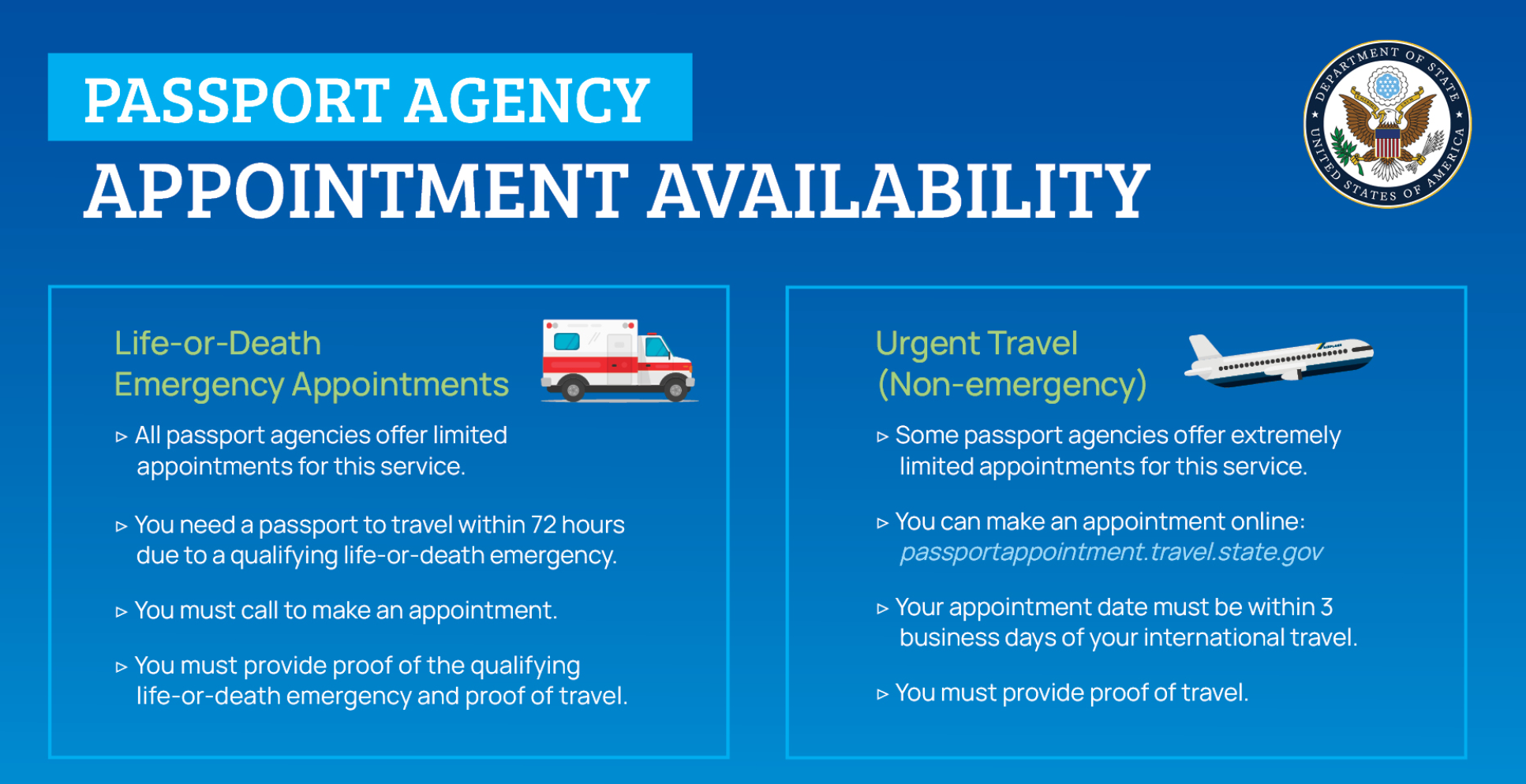
I mentioned that a friend had been similarly restricted from leaving the U.S. He lost his passport shortly before coronashutdown (a First World Problem… he has three houses and they’re all huge so the passport could be hiding anywhere within about 20,000 square feet). Getting a replacement passport requires an in-person interview, but the federal government shut down all in-person interviews except for family emergencies. As of this month, it looks as though the government has still not developed an alternative procedure (e.g., via videoconference) and appointments are “extremely limited” for “urgent travel” and “limited” for “LIfe-or-death emergencies” (like Ted Cruz going to Cancun?):
Related:
- “Passports Were a “Temporary” War Measure” (FEE): “In 1914, warring states of France, Germany, and Italy were the first to make passports mandatory, a measure rapidly followed by others, including the neutral states of Spain, Denmark, and Switzerland.”