In a Clubhouse discussion back in February, an immigrant to the U.S. from China said that, in her opinion, our roughly nine months (so far) of #BLM and #SocialJustice was the primary driver behind people perniciously identifying as “white”. As far as she was concerned, prior to all of the efforts in “anti-racism”, people who happened to be white would primarily identify as “Italian” or “German-American” or “New Yorker” or “Dentist” or whatever. But with the constant media drumbeat of Black vs. white, Asian vs. white, and Pacific Islander vs. white, the former “Anglo-Scotch-American” now identifies as “white”.
Speaking of Pacific Islanders, how many white Americans know what a “Pacific Islander” is? Is there an organized group of white Americans who hate people from the Marquesas and Kiribati? Amazon thinks that there is. This look at my Amazon Prime app on launch, punctuated by a “We stand in solidarity with Asian and Pacific Islander communities. #StopAsianHate”, should give you a good idea of what life is like in our household….
Or maybe Amazon’s Artificial Intelligence has figured out that people who watch Foghorn Leghorn are haters of Melanesians? There are quite a few problematic Foghorn Leghorn quotes:
“He’s so dumb he thinks a Mexican border pays rent”
“Hmmm, bare, I say bare as a cooch dancers midriff” (Hunter Biden?)
“That dog’s like taxes, he just don’t know when to stop”
“Gal reminds me of a highway between Forth Worth and Dallas – no curves”
Foghorn Leghorn : Let me guess, dearie. You’re looking for a husband.” Miss Prissy : Yes! Foghorn Leghorn : “Well, you’re going about it the wrong way, sister. You don’t bat ’em on the bean with a rolling pin. That comes later.”
but none of these bash our brothers, sisters, and binary resisters spread out on the other side of the International Date Line.
(The #StopAsianHate signs have begun to sprout in the Boston suburbs, incidentally, sometimes displacing #BLM signs and LGBTQIA+ rainbow symbols.)
Related:
“I Am Not Ready to Reenter White Society” (The Nation): As the pandemic wanes, and I have to leave the safety of my whiteness-free castle, I know that racism is going to come roaring back into my daily life. … Going out into white society for me is a little bit like a beekeeper going to get honey. I know what I’m doing: If I put on the right protection and blow enough smoke, most of the bees will leave me alone and the ones who don’t won’t really cause me that much pain. But I’ve got to put on the suit and the hat with the mesh and carry the smoke machine and be careful every time I want some goddamn honey. … With vaccination (I get my second shot next week) comes reentry into the larger society. I’ve been the “default” skin color in my personal life for a year, but as I open back up, I’ll be thrust again into a world where I’m treated like an “other,” one where white people feel empowered to just walk around like they own the place.
“Captain Underpants author withdraws book over ‘passive racism'” (Guardian): The Adventures of Ook and Gluk: Kung-Fu Cavemen from the Future, first published in 2010, follows two cavemen who travel to the year 2222 and meet Master Wong, a martial arts instructor. Last week, publisher Scholastic announced that it would stop distributing the book and remove all mention of it from its website, saying it had “the full support” of Pilkey. “Together, we recognise that this book perpetuates passive racism,” Scholastic said. “We are deeply sorry for this serious mistake.” (From Amazon, where the not-banned book was offered at $680, a 2017 review: “but what got to me about this book was Master Wong and his granddaughter Lan. Omg talk about drawing stereotypical Asian people! When master wong first appeared with his thin, line eyes (I’m not kidding, he literally has lines for eyes) I gritted my teeth and just continued reading. Sure, some Asians have small eyes, nothing wrong with that. But then Lan, Master Wong’s granddaughter also has the same damn line eyes! Like seriously bruh! You gonna draw Asians using this ancient ass stereotype? I would have deducted from the name Wong, the kung fu shop, and master Wong’s traditional Chinese outfit that he was Asian. I know it’s a kids book and people may say, don’t take it so seriously. But it’s micro aggressions like this that children who read this book will learn! Kids DO pick up on this stuff. Trust me, I’ve seen too many kids while I was growing up making pulling their eyes to make the slanted ‘Asian eyes.‘ It wasn’t funny then, and it’s not funny now, as it appears in this Pilkey book.” (a good barometer of social change; the book was universally acclaimed in 2011 and was too racist to sell in 2021)
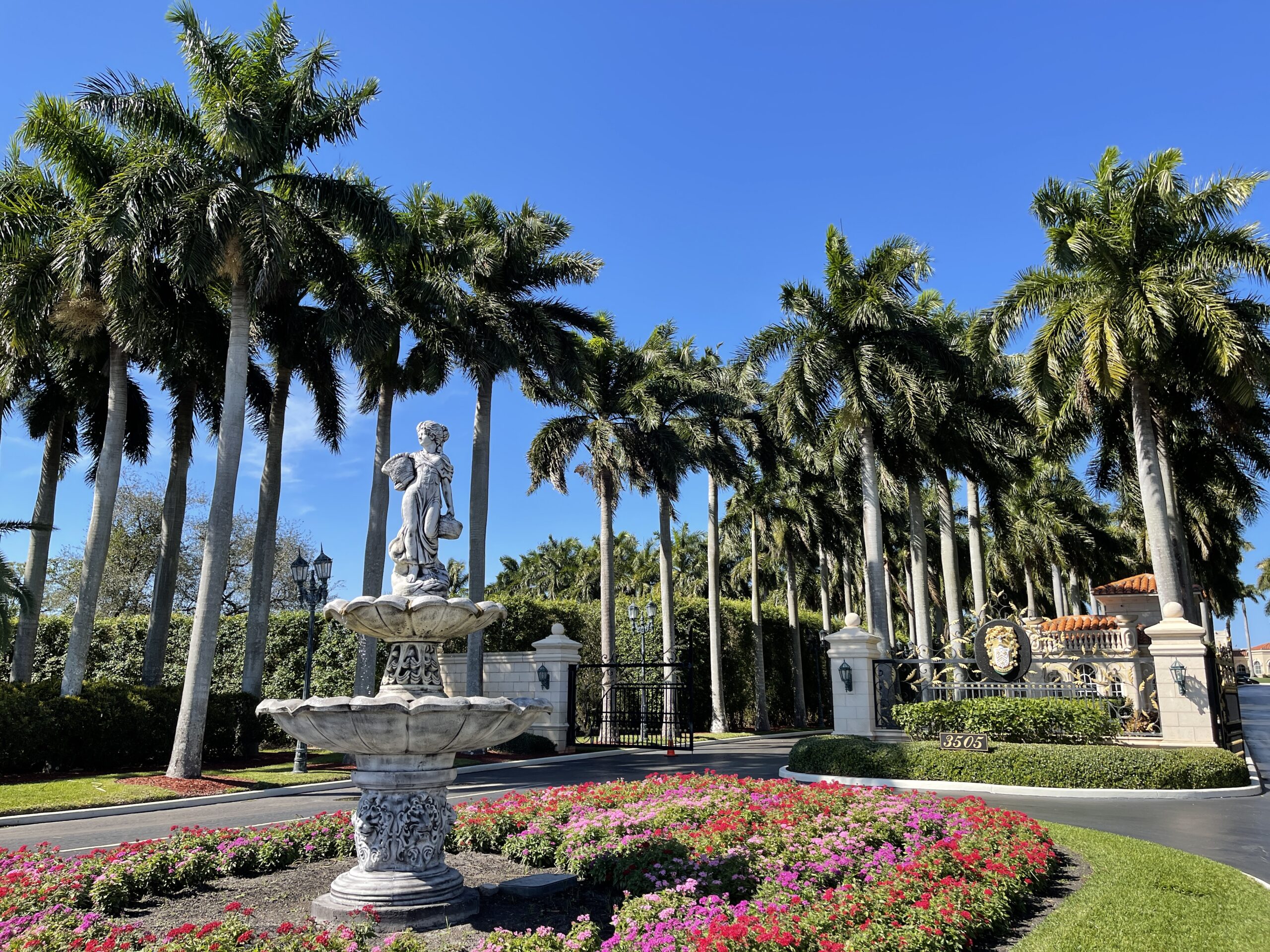
TL;DR: We decided that the west coast was too old, that Miami was too congested, and that Jupiter, Florida, specifically the MacArthur Foundation-planned Abacoa section, was perfect.
Prior to 2020 the political control of a state or town had little impact on day-to-day life, with the exception of custody, alimony, and child support law. Republicans and Democrats might disagree regarding tax rates, government spending, zoning regulations, etc., but not about whether it should be legal to leave one’s house, go to work, attend school, breathe without a mask, interact with other humans without getting an injection, etc. After 2020, however, it is unclear why anyone would choose to be part of a political minority. For a Democrat, being in a Republican-run state means risking death from respiratory viruses that aren’t being controlled with Science (lockdowns, mask orders, coerced vaccination, 12-18-month school closure). For a Republican, being in a Democrat-run state means that one’s children aren’t guaranteed an education (though they might get surgery and show up at the breakfast table sporting a different gender), that one might lose what had been First Amendment rights, e.g., freedom of assembly, and that one will be surrounded by virtuous yard signs and bumper stickers.
For a Republican escaping a Democrat-run state, it doesn’t make sense to move to a place with a state income or estate tax (see Effect on children’s wealth when parents move to Florida). So the search process starts with intersecting the states that remained relatively free during coronapanic and income-tax-free states, which yields South Dakota, Alaska, Florida, and Tennessee. South Dakota is an awesome state for domestic asset protection trusts (along with Nevada, this is where America’s billionaires keep their trusts, but the ultimate protection may not work unless you live in SD or NV) and thus is a good place to preserve wealth from potential plaintiffs. It is a lovely place to spend the summer, but if you have school-age children you might not enjoy being stuck there December through February. With apologies to friends in Anchorage, that goes double for Alaska! Now we’re down to Florida and Tennessee. Nashville, for example, is reasonably nice in January, with average highs of 48 degrees, but Tennessee is more of a working state than a fun/retirement state. If you’re going to move, why not move to a playground? And Miami, oddly enough, despite being much warmer in winter is actually slightly cooler in the summer than Nashville. The WalletHub ranking of Coronafreedom may not give the full picture for Tennessee, whose governor declined the Central Tyrant job and did not order everyone to wear masks. However, unlike in Florida, where the governor forbade local tyrants from imposing mask laws with fines, the Tennessee governor simply delegated tyranny to counties: “Since the beginning of the COVID-19 pandemic, there has not been a statewide mask mandate in place in the state of Tennessee, however, local authorities were given the authority to issue mask mandates within their own jurisdictions.” A state with empowered local tyrants is not exactly free! Thus, as so many fleeing Wall Streeters have discovered, it all comes down to Florida.
This is a report on my own January/February exploration trip to Florida in the Cirrus SR20...
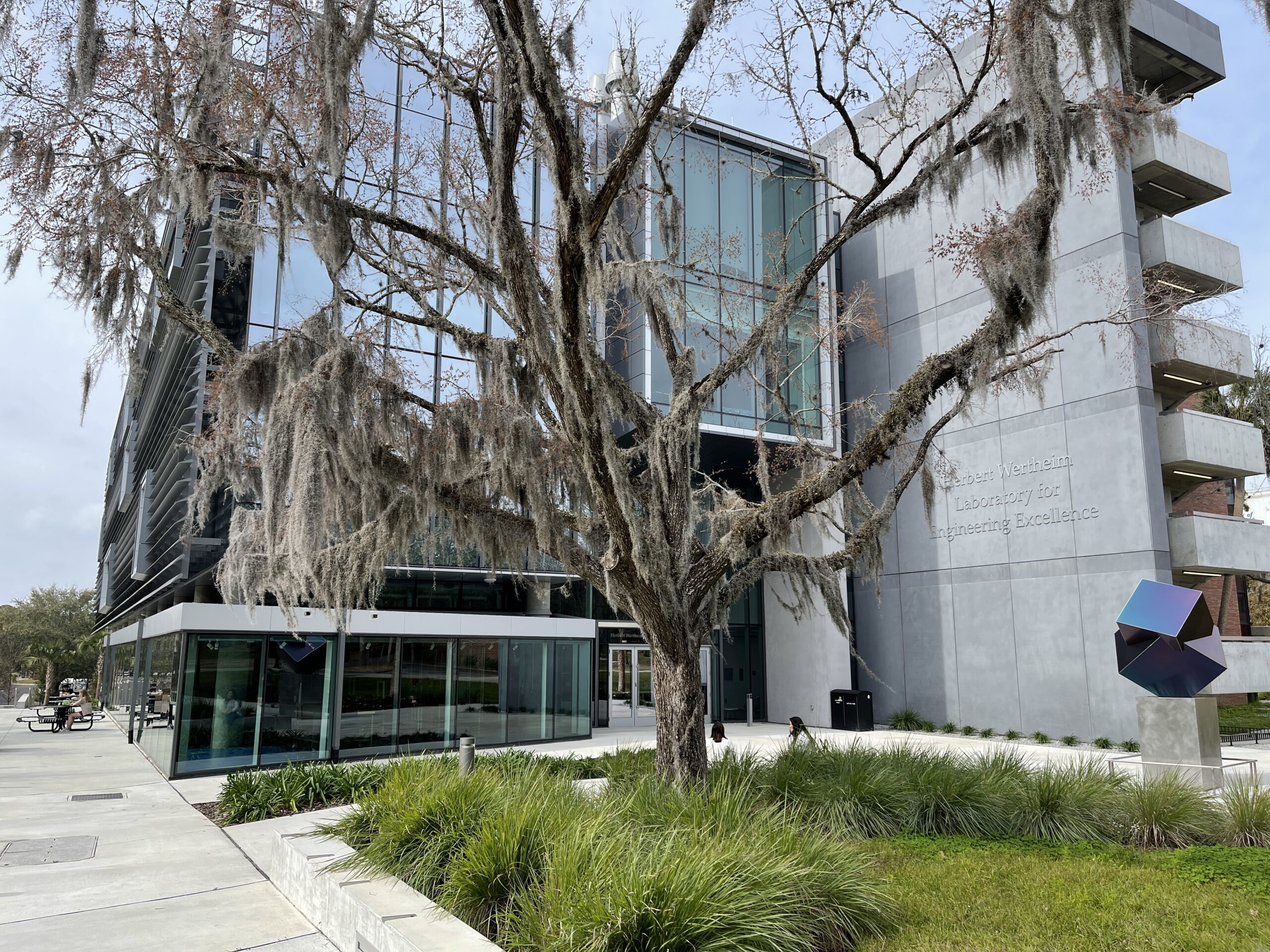
Gainesville. Beautiful campus for University of Florida, but not a beautiful or vibrant town. Apparently when the smart young people graduate they go somewhere else. Particularly unsuitable for aviation enthusiasts as the (great) airport is on the opposite side of town from the nicer real estate (tucked away in suburban developments that have a minimal relationship to Gainesville). At least with respect to Covid-19, the students seem smarter than the (cowering out of personal fear) Ivy League to whom I’ve talked recently. “We’d behave differently,” one sophomore said, “if we lived with our grandparents, but we don’t. There is no reason for us to be afraid of getting the virus and we live more than 100 miles away from our older relatives. Classes are mostly remote, so the only people that we interact with are other young people who aren’t at risk.”
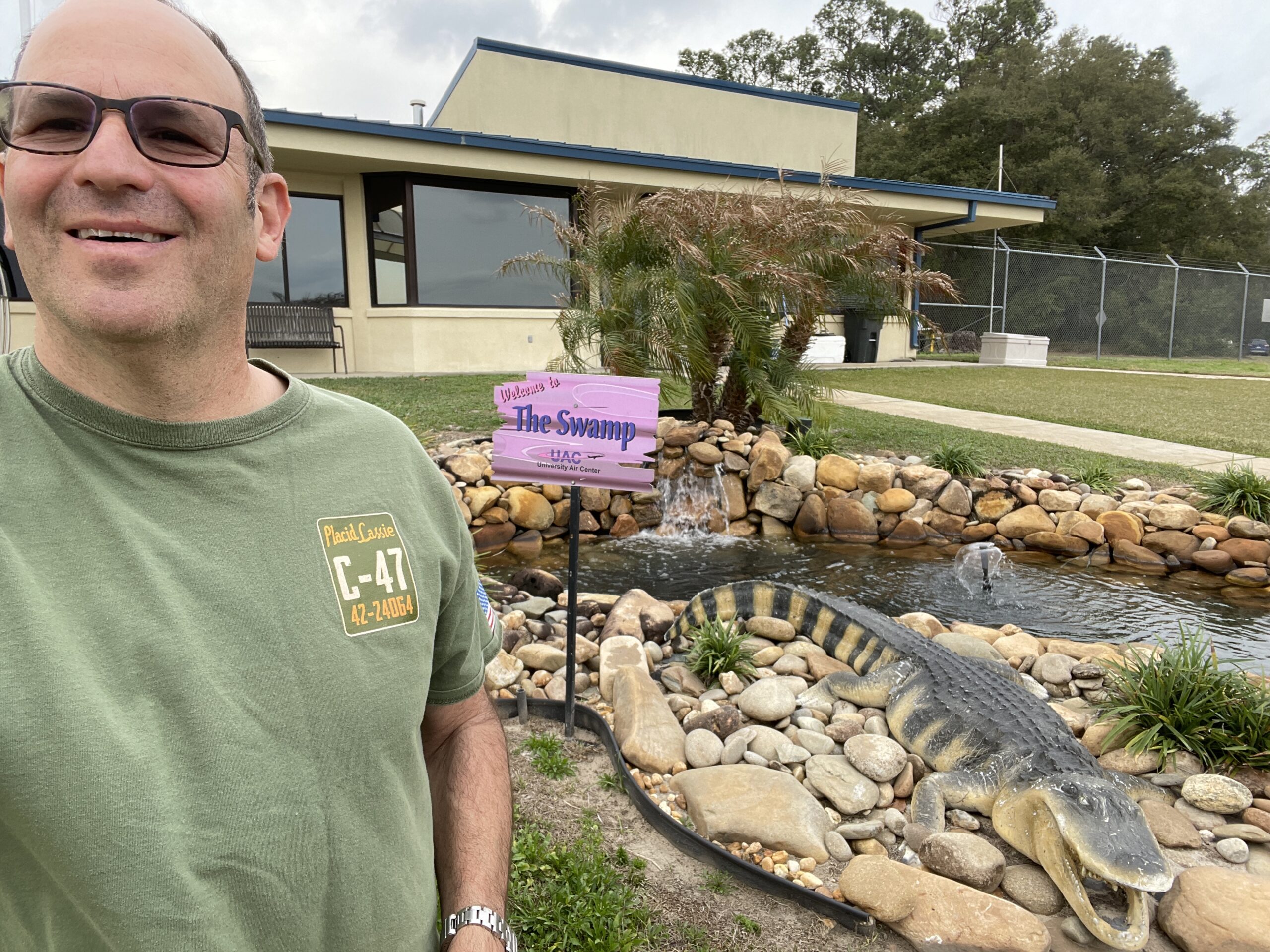
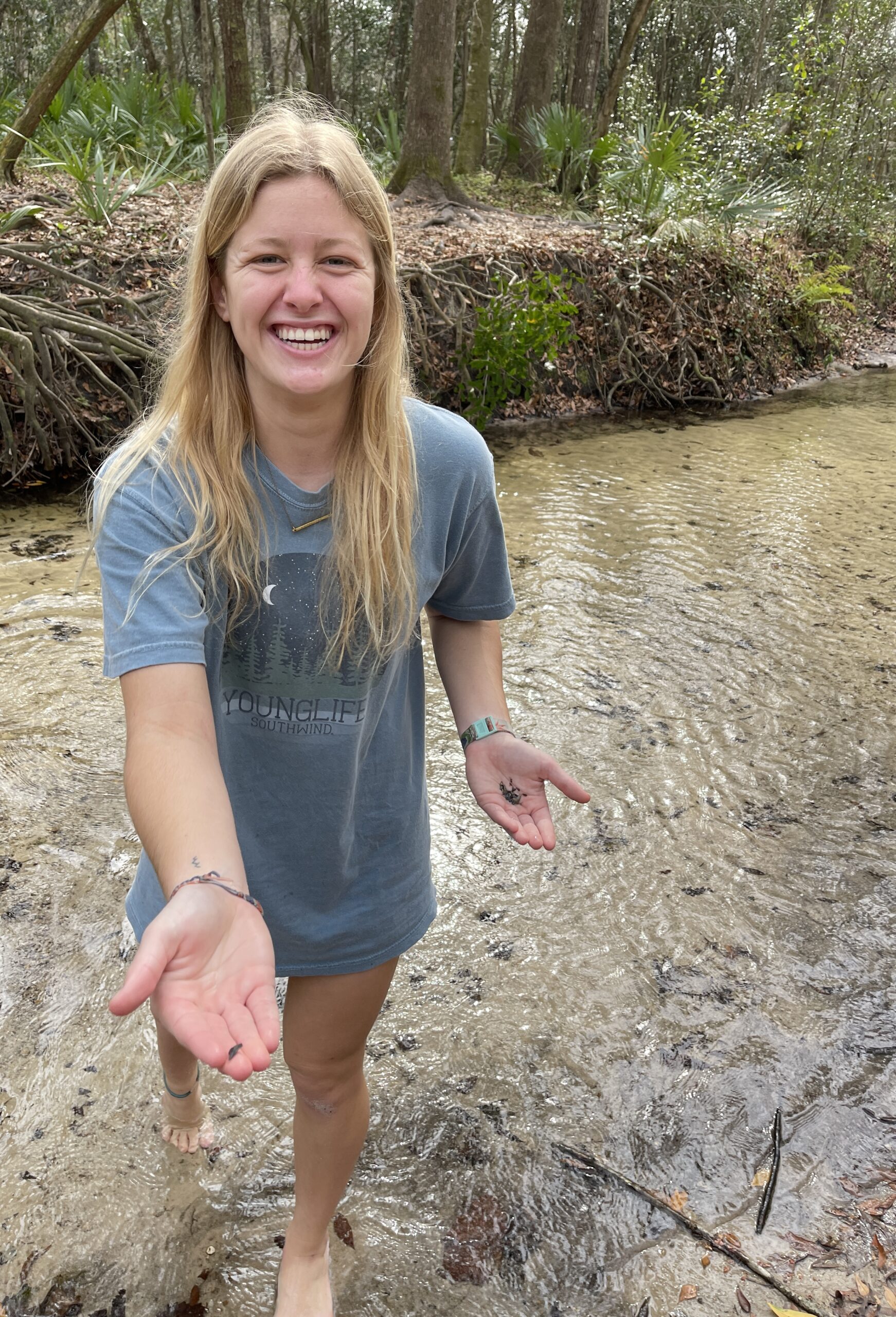
Guess which department has the ugliest building? Note the students hunting for shark’s teeth in a nearby park and the selfie park at the FBO.
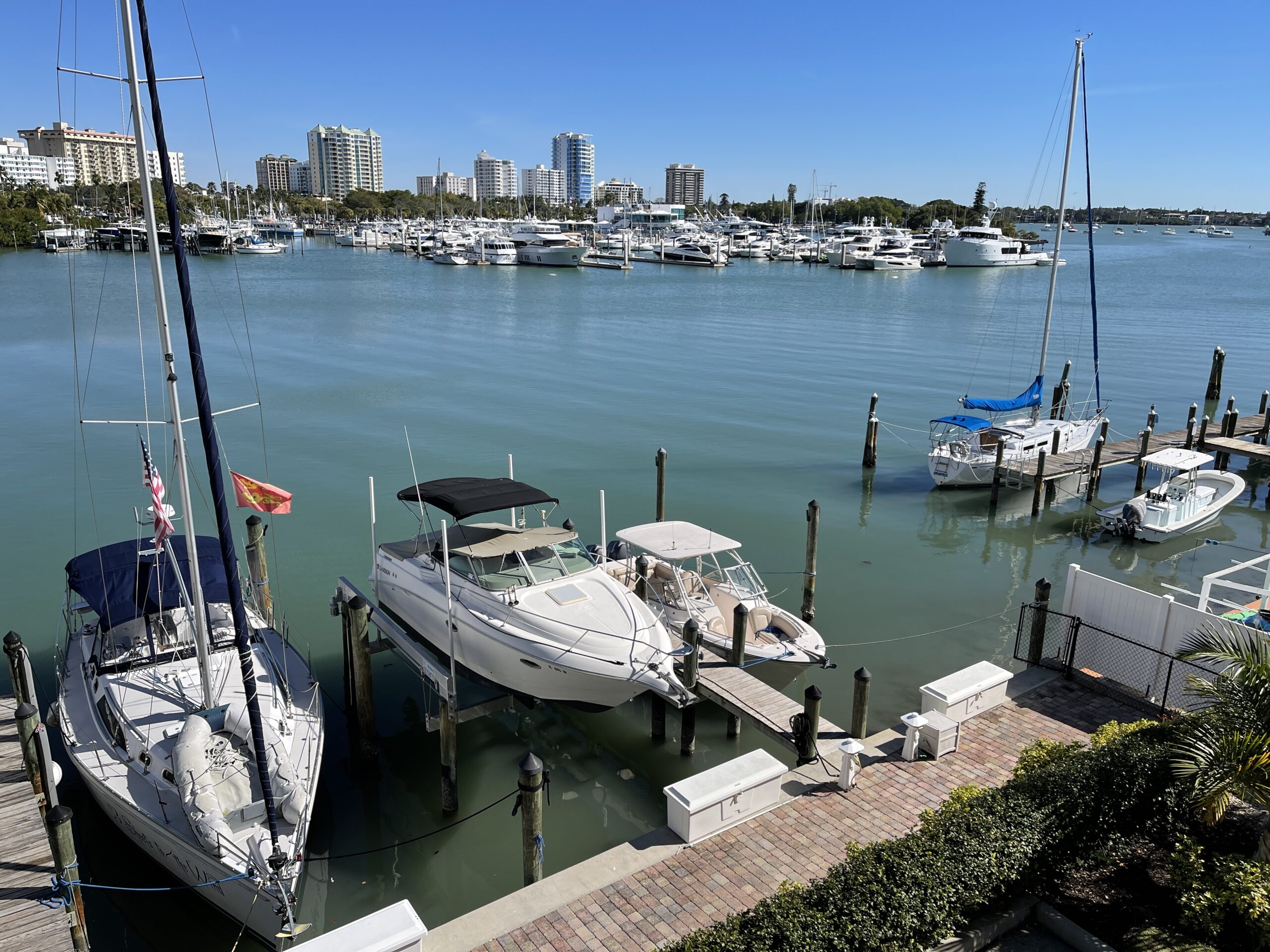
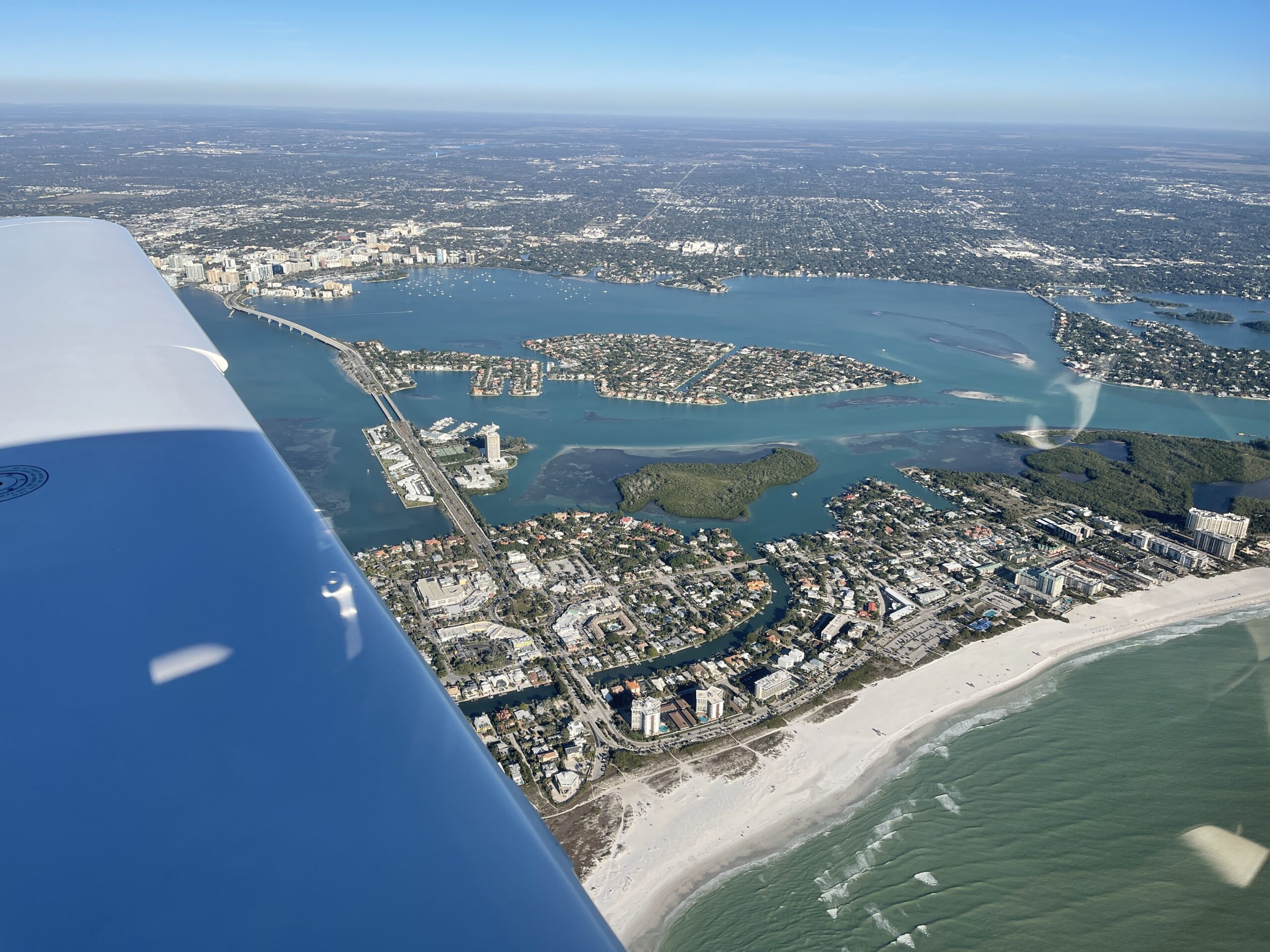
Sarasota. Folks with kids will want to live on the mainland rather than one of the islands (great for beach access, but the traffic can be slow getting on/off for the various services and activities that kids need). The neighborhood around the Southside Elementary School is probably the most desirable, with Camino Real being the best street and anything east of the Tamiami Trail being cheaper. Overall, however, Sarasota is more geared around the retired than those of school age. Great airport shared by air carriers and general aviation, about 13 minutes from the Southside school.
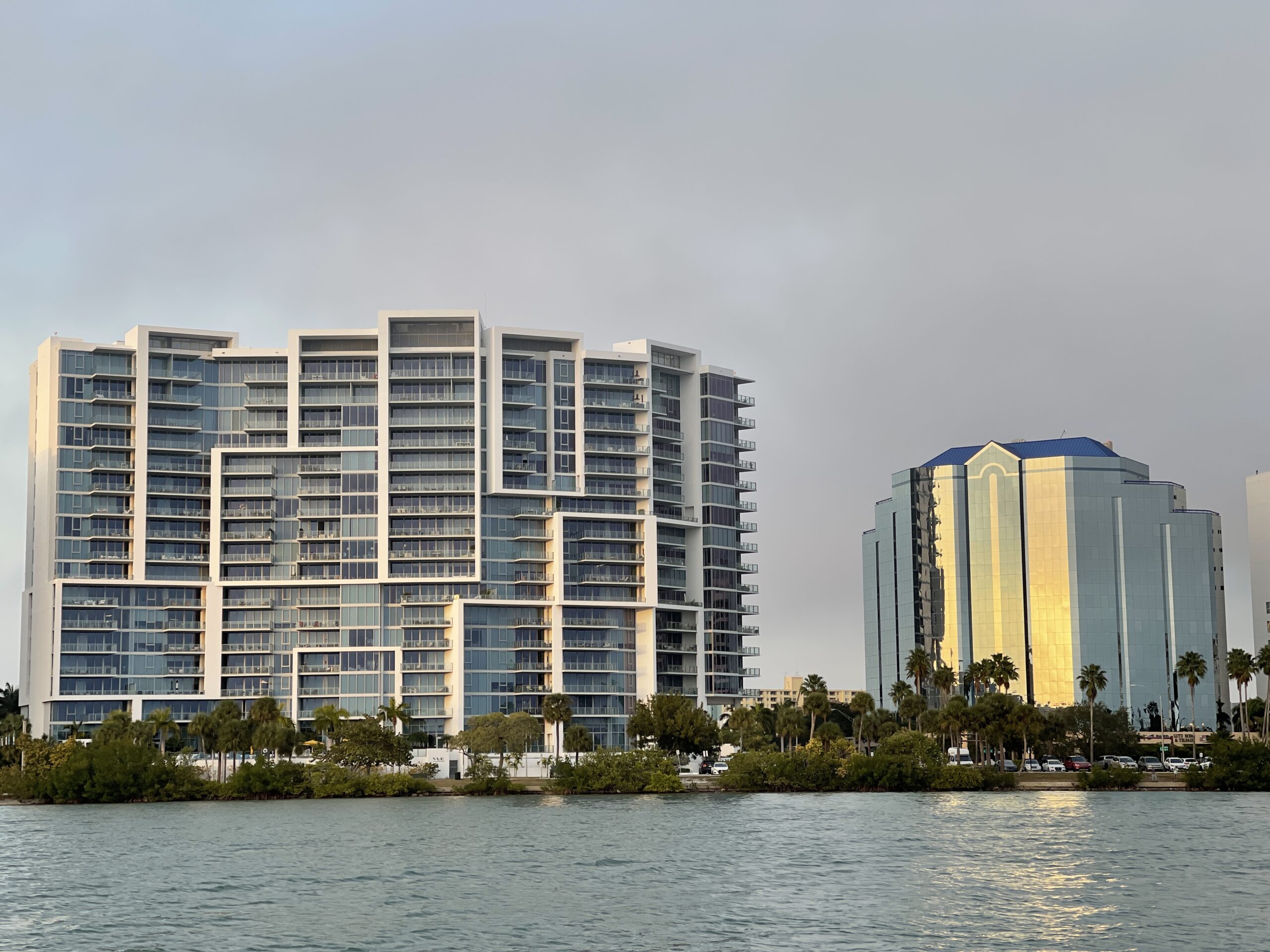
The Ringling (world’s only fine art and circus museum!) and the latest condo development for oligarchs (from my friend’s boat).
View from my friend’s apartment and his neighborhood from the air on departure…
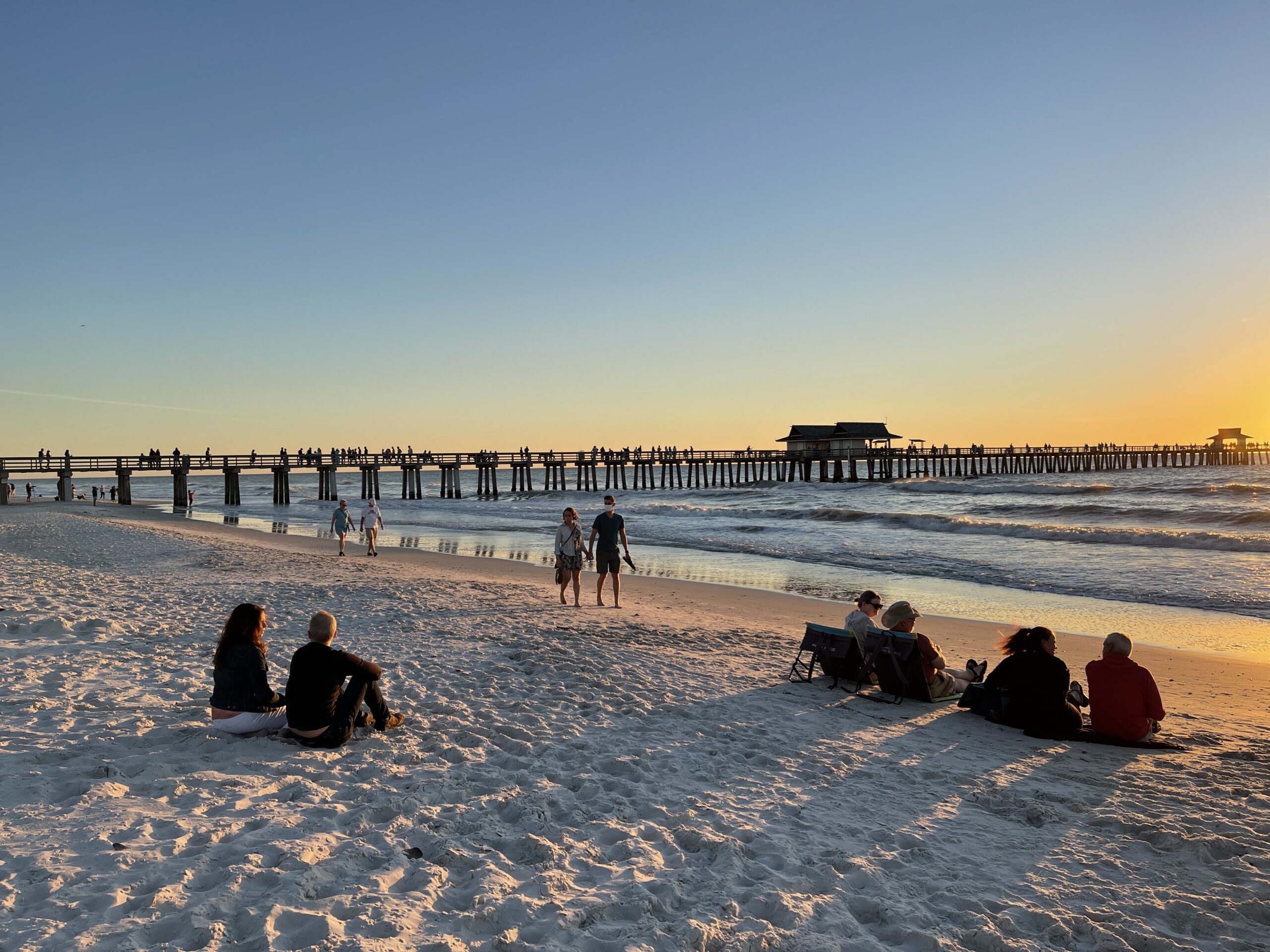
Naples. A nice walkable downtown area. Attractive architecture. World-class restaurants at Manhattan prices (if restaurants in Manhattan were open!). There are some young people in town, but they’re apparently mostly tourists. As with Sarasota, dominated by the retired. In fact, the saying goes that “People retire to Sarasota so that they can visit their parents in Naples.” Great airport, 10 minutes from downtown, that is used only for general aviation. It was so busy in late January that jets parked on the ramp were interlaced like jets in a hangar (i.e., it wouldn’t have been possible to get one out of the middle without an hour or two of tugging).
Miami. The ultimate party town now that Los Angeles and New York have locked themselves out of the running and probably even before. “I can never get any work done here,” said one of the private equity guys I was with. KTMB is the preferred airport and it is a long haul from Miami Beach (nearly 40 minutes without traffic). KOPF is a little closer, but nobody seems to like it. If you aren’t going to hit the clubs and don’t have to be in the city for work, why put up with the congestion, traffic, and high real estate prices?
The Wynwood Walls (decluttered now that they’re charging $10 to get in), breakfast cereals for the Age of Coronapanic (Franken Fat, Cap’n Corn Starch, Obesie Os from Killkidds), transportation on which it would be good to get Dr. Fauci’s opinion regarding safety, and a group of #ScienceDeniers gathering at a rooftop club.
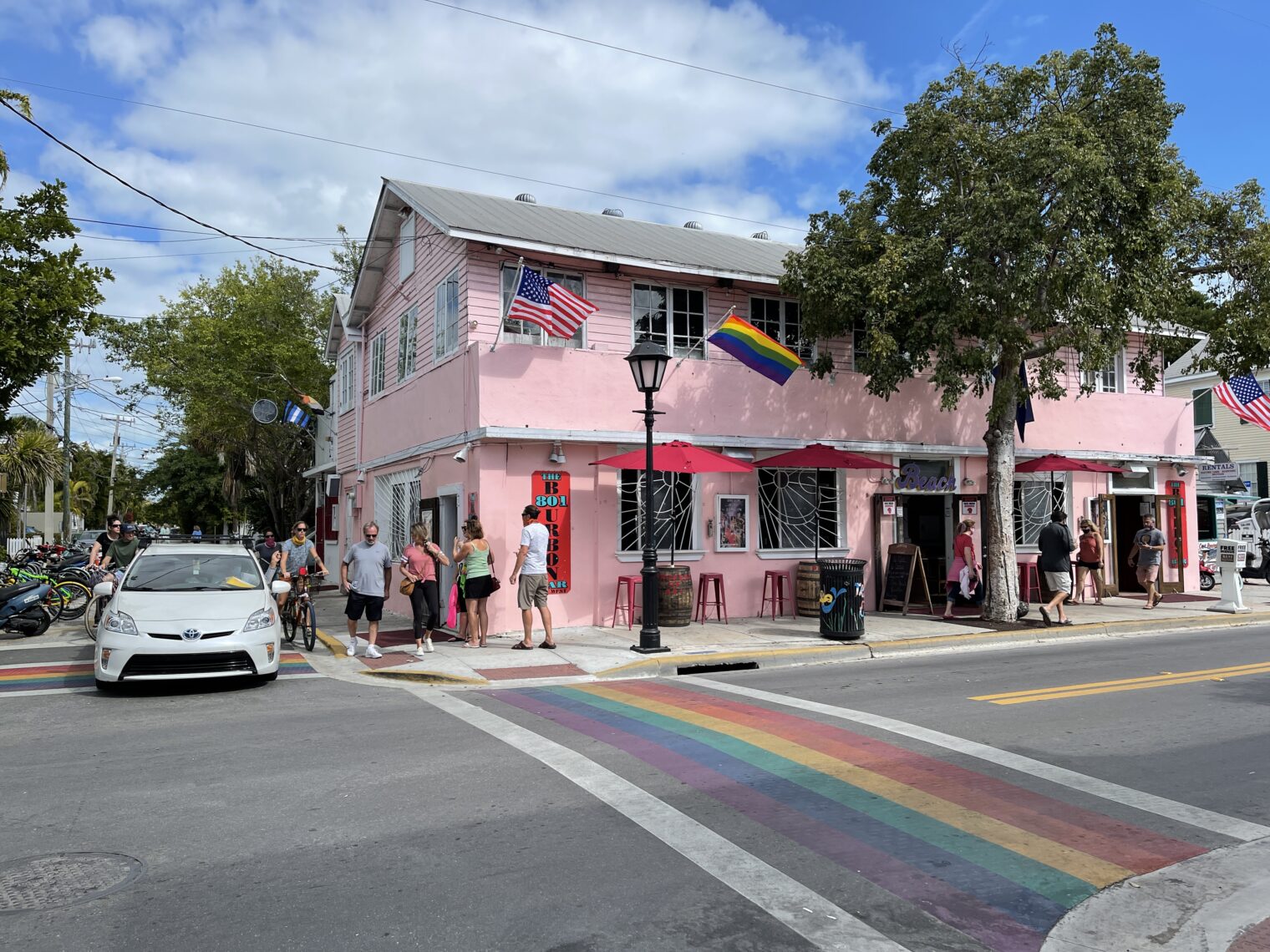
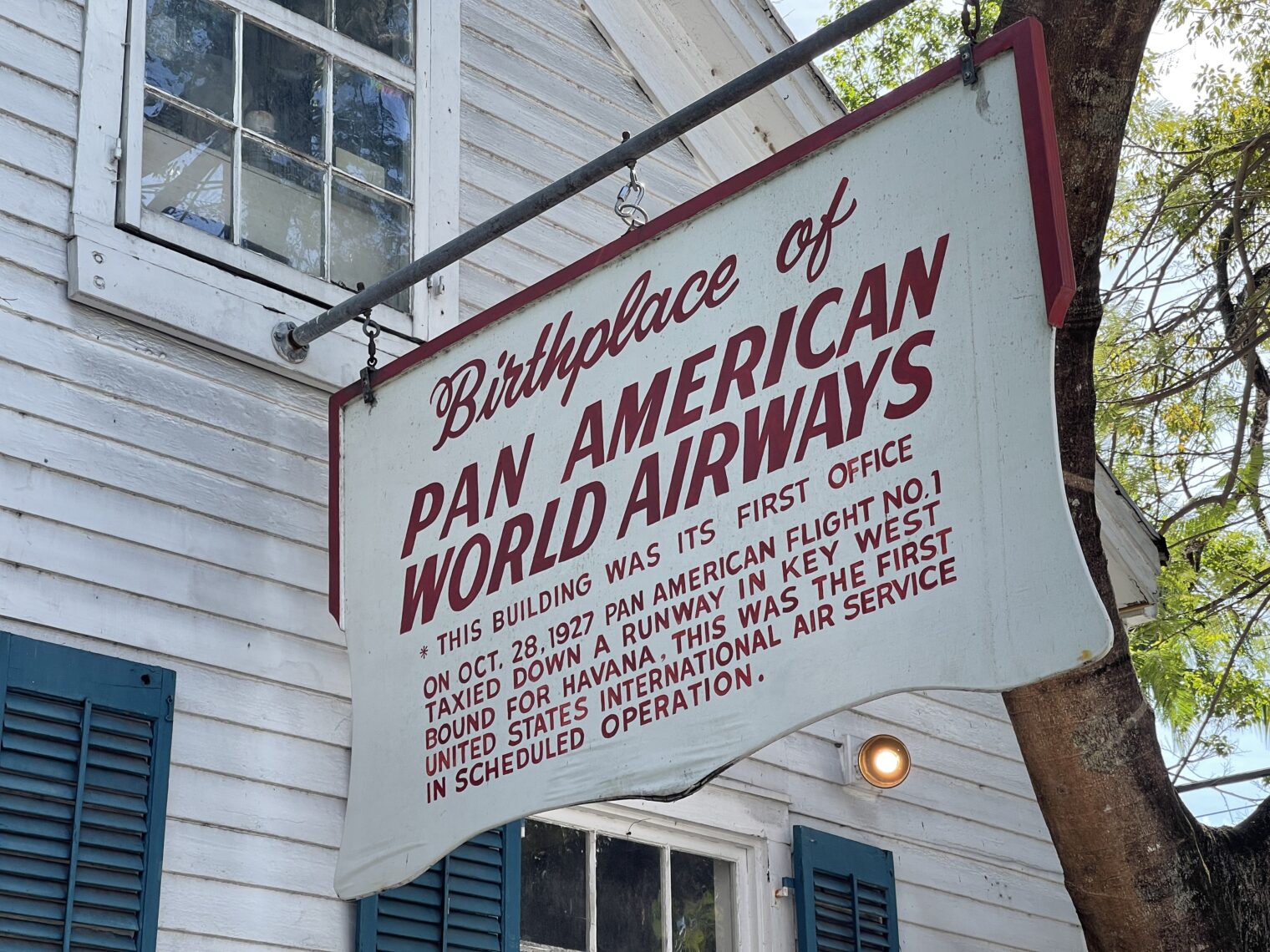
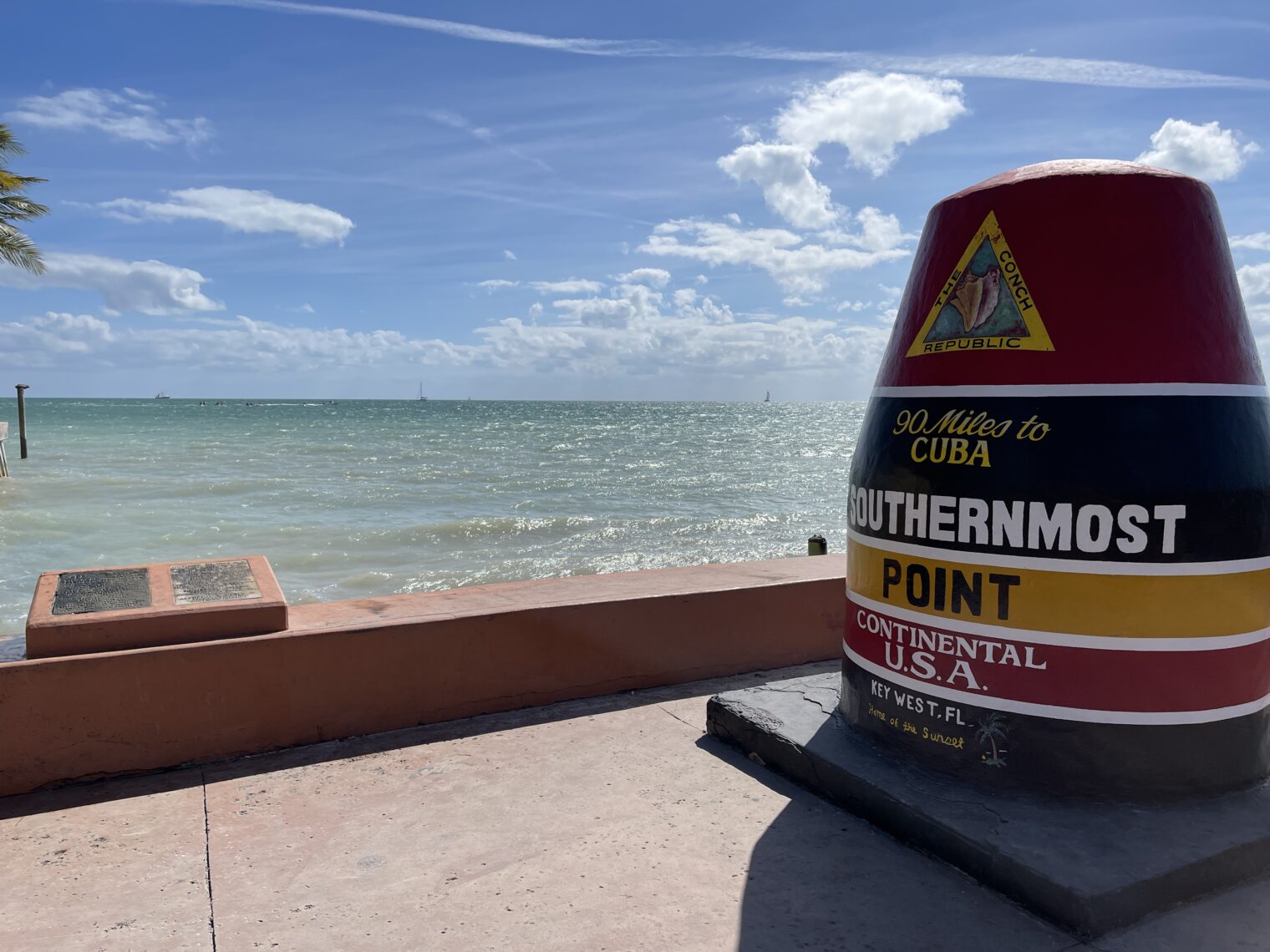
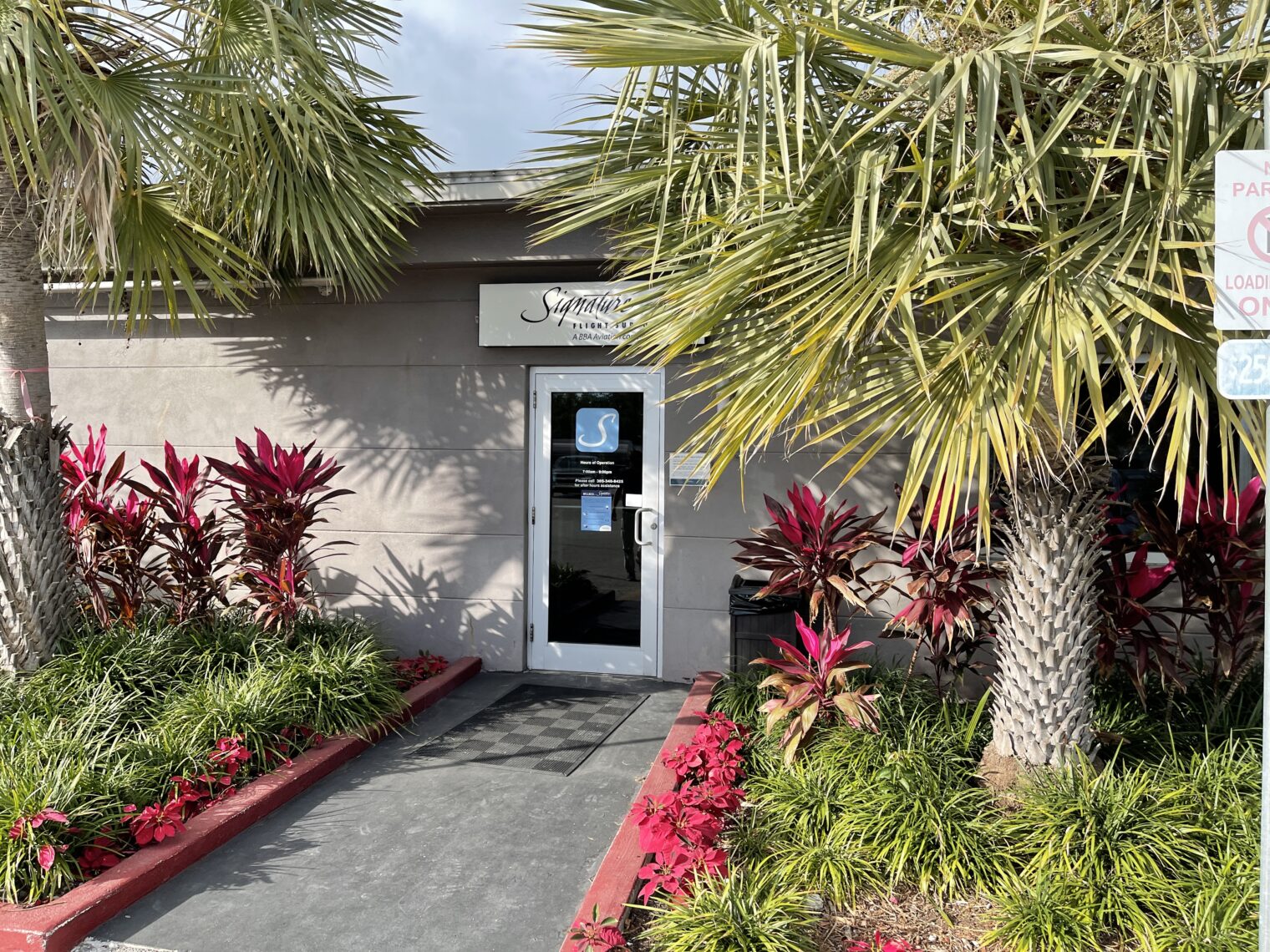
Key West. We went there in a Cirrus Vision Jet to visit a Massachusetts friend who is passionate about kiteboarding and expanding government so that wise Democrats can accomplish more. As it happens, however, he lives in Key West 183 days per year and thus escapes Massachusetts state income and estate taxes. It will be folks other than him who pay for the bigger government that he advocates. Key West is so small that I think it would be tough to find specialized teachers, coaches, doctors, etc. for the modern-day helicopter parented child. The airport has a short-ish runway (5,000′) and is monopolized, with associated monopoly rates, by Bill Gates’s Signature Flight Support (jet fuel for private jet owners who are as concerned as Bill G about climate change).
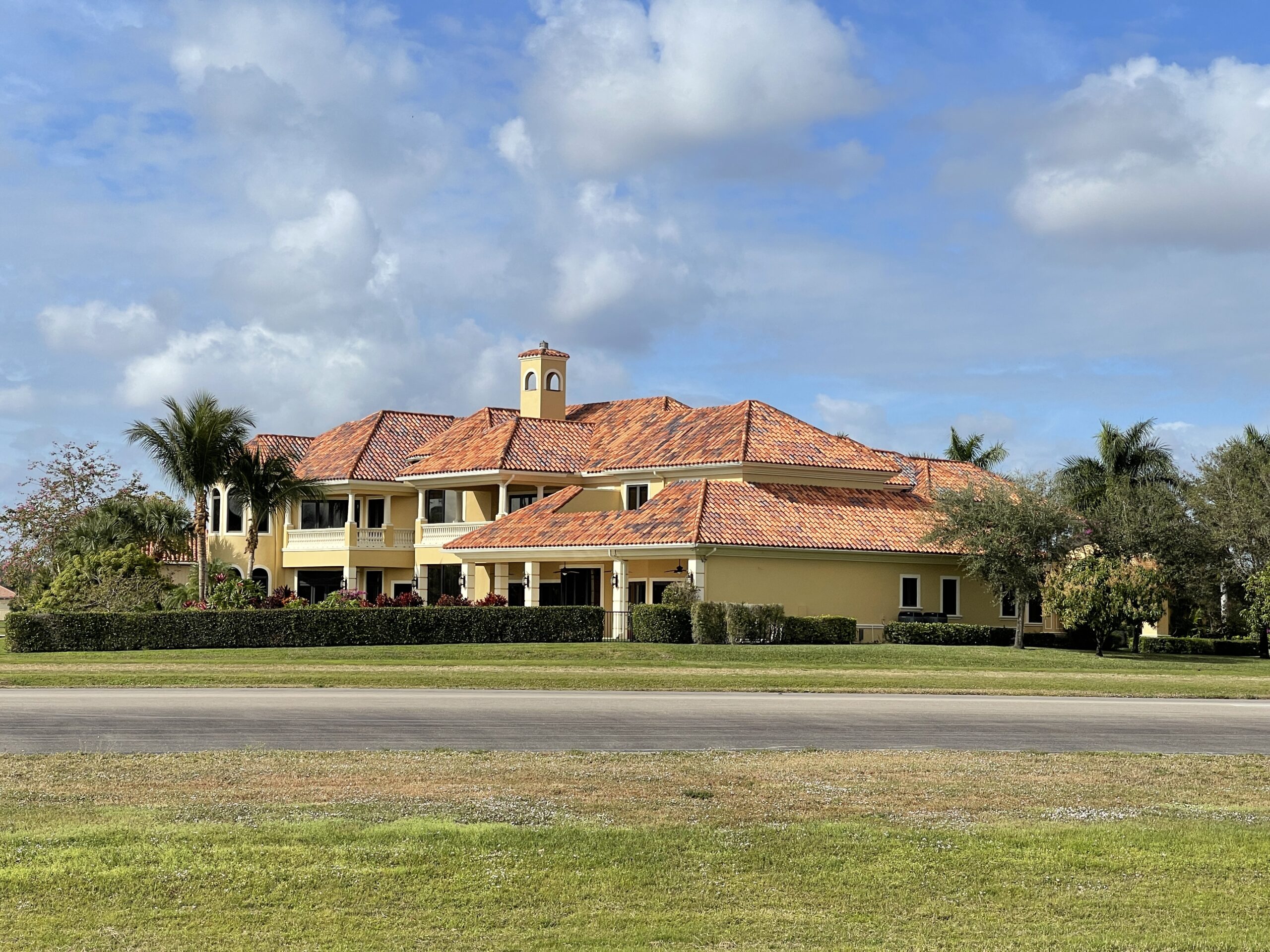
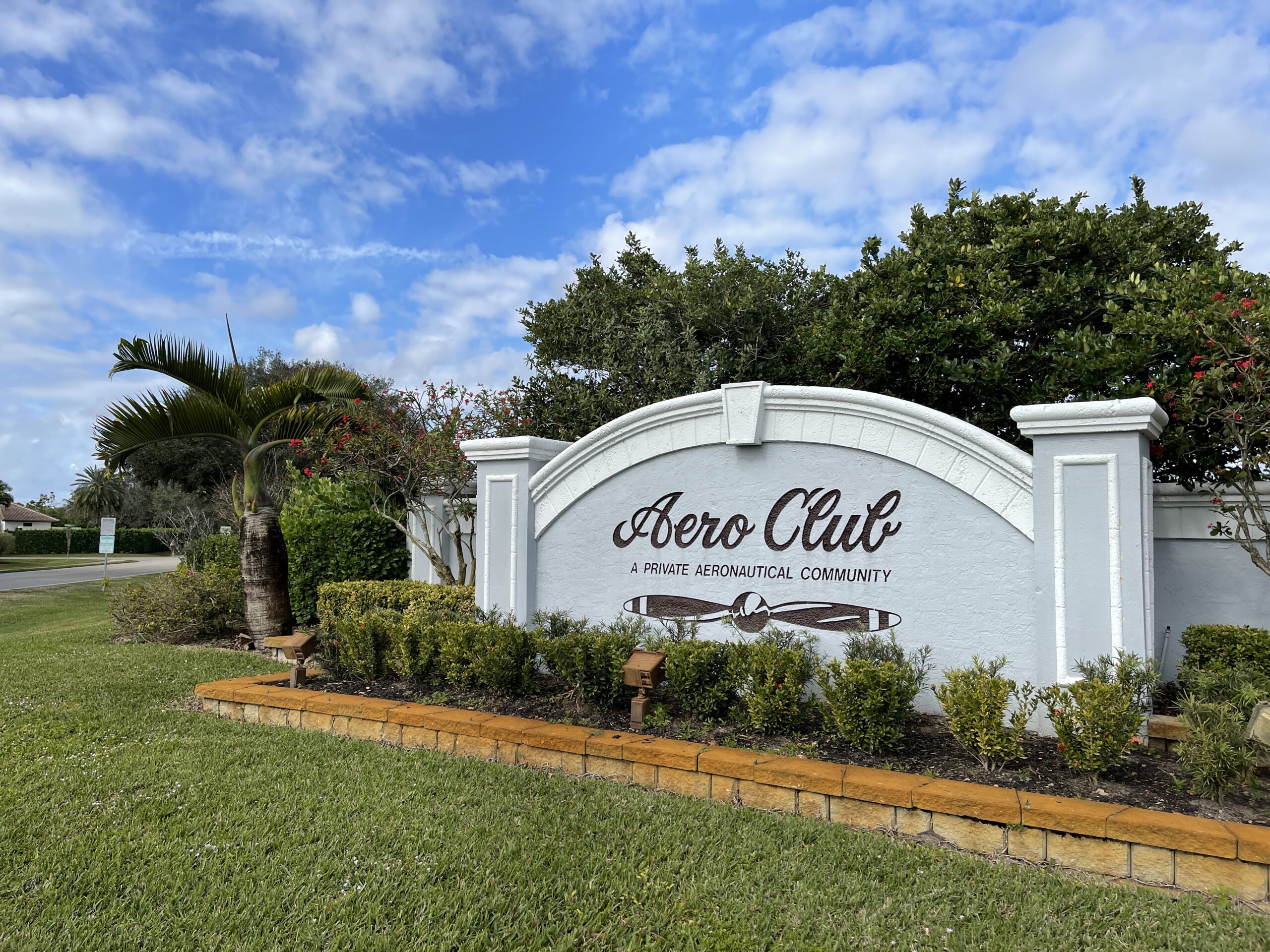
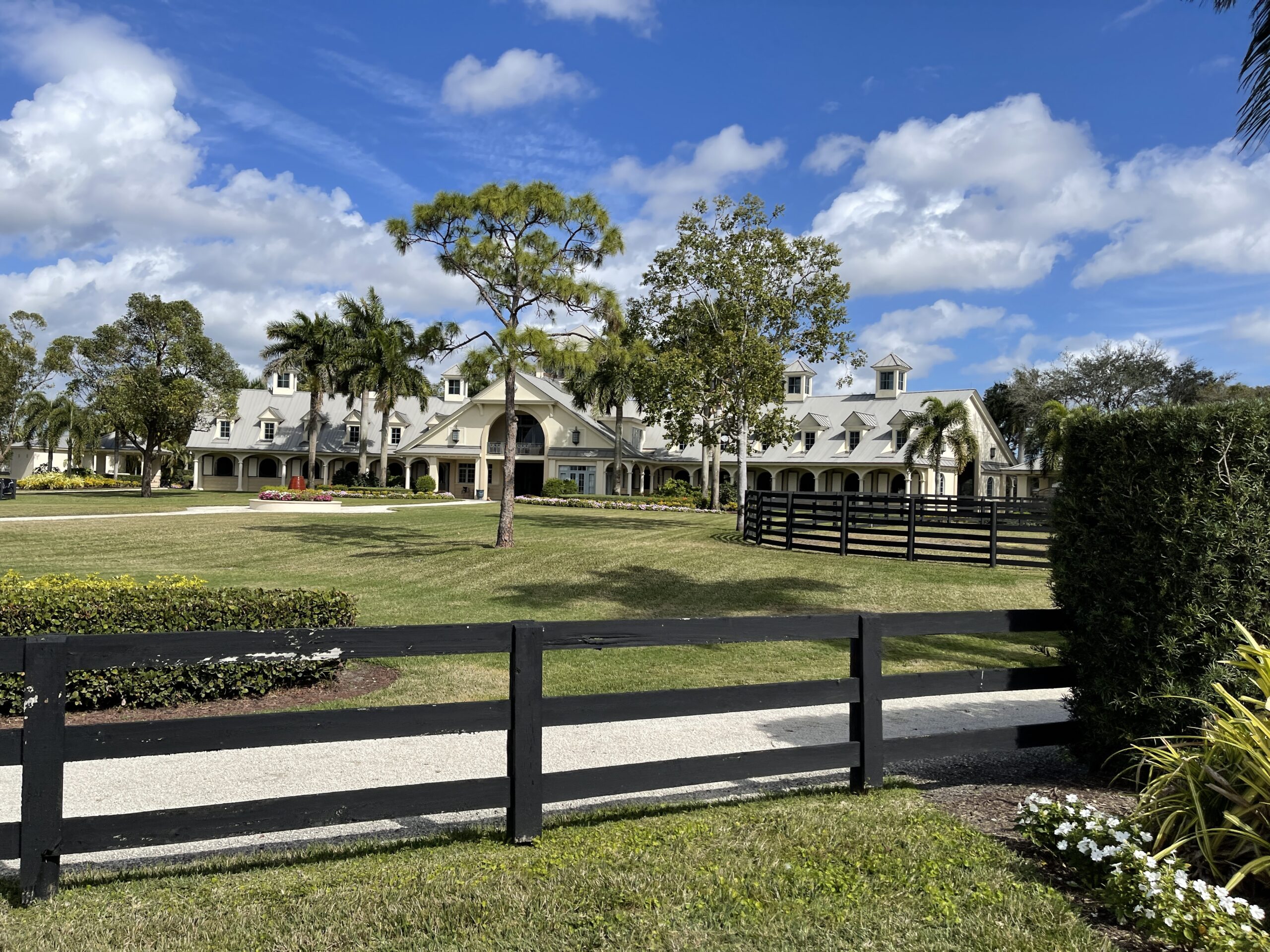
Wellington Aero Club. West of Palm Beach, right up against the $25 million horse barns of America’s billionaires, you can open your garage door and taxi your twin-engine turbojet out to the 4,000′ private runway (FD38). Good public schools. Great country club for golf and tennis next door. I had a nice time here visiting a friend whose wife is a serious horse rider, but I wouldn’t want to be this far from the beach (30-40 minutes, depending on the specific beach). (See “How a Sleepy Florida Town Became the Horse Riding Capital of the World” and the 30-horse single-family stable below) My friend in Wellington (also a passionate advocate of bigger government who is careful to spend 183 days in the tax-free Land of the Deplorables!) suggested Abacoa, within Jupiter, Florida, as the best family location.
Jupiter: Palm Beach-Fort Lauderdale-Miami can be thought of as a single city, completely jammed, and with the automobile as the primary means of transportation. Juno Beach and Jupiter are the first communities on the north side of this megacity (though the Census Bureau considers them still part of the Miami metro area). The smartest folks in Germany, i.e., those who run the Max Planck Institute, picked Jupiter as the location for their one and only U.S. research lab (in neuroscience). If you’re in Jupiter you’re within a 1.5-hour drive of almost anything that you might need, e.g., the Miami International Airport and a nonstop flight to Europe, but 99 percent of needs can be handled locally. (Disney World is 2:20 away by car.) A tennis coach at the Jupiter Ocean & Racquet Club, a world class facility for (unmasked!) young learners and also great for adults, echoed my friend in Wellington regarding Abacoa, a MacArthur Foundation-created New Urbanism planned-but-not-gated community. “The schools for Abacoa are better than for the wealthier/closer-to-the-beach areas of Jupiter,” he said. [We later learned that the neighborhoods near the beach tend to be older and seasonal; not good for kids looking to play after school.] He pointed out that many of the nation’s most successful people, who could live anywhere they chose, had chosen to live in and around Jupiter. In a state that is blessed with magnificent airports, Abacoa/Jupiter got the short end of the stick. Palm Beach International is about 20 minutes away and the prices are almost reasonable due to the fact that there are three FBOs on the field. On the other hand, nobody is ever going to build T-hangars at KPBI. The North Palm Beach airport, F45, is roughly the same driving distance and it does have T-hangars, but the runway is a little short (4,300′), there is no control tower, and it is a monopoly Signature location (Jet A at $7.21/gallon; compare to $3.70 at Fort Lauderdale Executive (KFXE))
If you didn’t think inequality was as bad as the media tells you… (on the ramp at KPBI; 1960 Debonair and a newly certified Gulfstream G600):
Just south of the airport…
Abacoa. This is a planned “new urbanism” community, a bit like what you might have seen in the Truman Show movie (Seaside, Florida). It is an artificial town in that it is possible to walk/bike to a “town center”, which does have some good restaurants and a coffee shop, but the critical services, such as supermarket and Home Depot, are in strip malls on the edges or across a major road from Abacoa itself. Without traffic, it is an 11-minute drive to a beautiful dog-friendly beach.
That’s what I was able to learn in a two-week trip (including flying the Cirrus up and down the East Coast, which takes about 13 days, depending on the weather…). Measured by whether it is legal to walk out your door without a mask on, go to work, open the doors of your business to customers, send your children to school, let you children enjoy an unmasked after-school activity, etc., every part of Florida offers more freedom than New York, Massachusetts, or California. For someone accustomed to the suburban Northeast, the small yards and tightly packed houses seem like the biggest negative. In the parts of
As noted in Testing the first jets, the early jet engines were designed to last 25-35 hours (Germany’s) or 125 hours (England’s). Today’s jet engines rely on exotic materials and precision manufacturing so that they are almost 100% guaranteed to run 5000+ hours between major service events and the components will usually last at least 12,000 hours. Great for airlines and busy charter operators, but the typical private pilot with a family airplane flies only about 100 hours per year. Why does he/she/ze/they want to pay $500,000 to $1 million for an engine that is good for 50+ years of flying?
I wonder what would happen to the cost if we relaxed the reliability and service life specifications to be comparable to what we expect from a high-power piston engine, i.e., about 2,000 hours of operation and a failure every 50,000 hours. We can use parachutes for backup, like the Cirrus Vision Jet already does, or a second engine, if we’re making a “new Baron.”
Weekend pseudo-warriors of the sky who fly the L-39 are accustomed to overhauling the Ivchenko AI-25 engine every 1000 hours ($220,000, so about $220/hour, which would not completely change the economics of flying a Baron or a Cirrus). So that might be an example of what I’m talking about, but at a much higher level of power (blast a 10,000+ lb. aircraft to 400 knots).
I wonder if what we have now is an example of the best being the enemy of the good, leaving us with Wright Brothers-style piston engines in any aircraft that costs less than $1 million. Even a crummy turbine would have many advantages in terms of weight, smoothness, and, probably, reliability.
If the Germans could make a 35-hour jet engine at a reasonable cost in the early 1940s, with all of our modern technologies for machining, 3D printing, ceramics, etc., shouldn’t we be able to make a 2,000-hour turbine engine at a reasonable cost today?
From Oshkosh, 2003, a Sikorsky S-39, one of 21 built (1930s) and ripe for a turboprop conversion!
Jet Central, a Mexican company that makes similar 25-hour turbines for the RC world.
Someone who wouldn’t like the reduced reliability goal… “Pilot Sues Airline For Emotional Distress After Mechanical Failure Led To PTSD” (Plane & Pilot): A former QantasLink pilot is suing the regional carrier to the tune of $780,000 for suffering and damages from a case of PTSD she says was caused by a 2018 mechanical failure of one of the Boeing 717’s engines, which resulted in the shutdown of the engine and an emergency landing. … The plane landed without incident, and no one was injured. … She’s the first woman of color to wear a Qantas uniform, and she has received numerous awards for her work in aviation. She said recently, acknowledging the recognition she had earned for her historic place in Australian airline history, that her advice for younger Australians was, “People still stop me to congratulate me at how proud they are to see female pilot, let alone one of colour. My response is the same ‘Action Inspires Action’—you can achieve your dreams, too. Be the best possible human you can be.”
Lenox Hill, one of the city’s oldest and best-known hospitals, repeatedly billed patients more than $3,000 for the routine nasal swab test, about 30 times the test’s typical cost.
“It was shocking to see a number like that, when I’ve gotten tested before for about $135,” said Ana Roa, who was billed $3,358 for a test at Lenox Hill last month.
Ms. Roa’s coronavirus test bill is among 16 that The New York Times reviewed from the site. They show that Lenox Hill arrives at its unusually high prices by charging a large fee for the test itself — about six times the typical charge — and by billing the encounter as a “moderately complex” emergency room visit.
In one case, a family accrued $39,314 in charges for 12 tests this winter, all taken to fulfill requirements for returning to work or school. In another, an asymptomatic patient walked in because she saw the banner outside and wanted a test after traveling. Her insurance was charged $2,963.
Patient bills show that at least one additional hospital owned by Lenox Hill’s parent group, Northwell Health, has charged emergency room fees to patients at a mass testing site.
As the crisis crushed smaller providers, some of the nation’s richest health systems thrived, reporting hundreds of millions of dollars in surpluses after accepting huge grants for pandemic relief
Last May, Baylor Scott & White Health, the largest nonprofit hospital system in Texas, laid off 1,200 employees and furloughed others as it braced for the then-novel coronavirus to spread. The cancellation of lucrative elective procedures as the hospital pivoted to treat a new and less profitable infectious disease presaged financial distress, if not ruin. The federal government rushed $454 million in relief funds to help shore up its operations.
But Baylor not only weathered the crisis, it thrived. By the end of 2020, Baylor had accumulated an $815 million surplus, $20 million more than it had in 2019, creating a 7.5 percent operating margin that would be higher than most hospitals’ profits in the flushest of eras, a KHN examination of financial statements shows.
Like Baylor, some of the nation’s richest hospitals and health systems recorded hundreds of millions of dollars in surpluses after accepting a substantial share of the federal health-care bailout grants, their records show. Those included the Mayo Clinic, Pittsburgh’s UPMC and NYU Langone Health. But poorer hospitals — many serving rural and minority populations — got a tinier slice of the pie and limped through the year with deficits, downgrades of their bond ratings and bleak fiscal futures.
Wealthy hospitals also benefited because HHS used a broad definition of lost revenue. If a hospital earned less than in the year before, or simply less revenue than it had budgeted for, it could chalk up that difference to the pandemic and apply the relief funds to it.
When government gets bigger, only the big can thrive? If so, that’s a good argument for buying the S&P 500. If Congress adopts all of Presidents Biden and Harris’s proposals, government is on track to consume more than 50 percent of GDP. A big publicly traded company is going to be able to tap into the new veins of taxpayer gold much more effectively than a small business. Even if the U.S. economy stagnates, the big companies can thrive as they get a larger share of the fixed or shrinking pie.
An event planner whom we know says that she’s been super busy late. “People had planned backyard weddings, but they’re illegal so they’re going to pay to hold them here.” Her venue is a McMansion-sized house and a big tent with sides that come down during inclement weather. “I can have up to 150 people in the tent. It doesn’t make sense to me since a lot of these people have yards that are huge, but it is good for business.”
Marie Antoinette of Covid: “Why is it a maximum of 10 people,” our hostess wondered, “regardless of the size of the house? Shouldn’t it be adjusted for square footage?”
Iterate: use the results to make new hypotheses or predictions.
As previously documented here in this weblog, the “scientists” on whose advice politicians have ordered lockdowns, masks, etc. have consistently failed at Step 4 (making predictions). This failure, though, has been mostly invisible to the public due to the lack of media interest in going back a few weeks or months and comparing prediction to reality. In the rare cases when a false prediction, e.g., that the Czech Republic would have a low death rate due to masks and shutdown (in fact, the country ended up at #1 in the Covid death rate Olympics), is revisited it will be a “scientist” explaining how someone did something during the intervening period and that this action (or inaction) explains the current situation.
Is it Science when you can’t make accurate predictions, but you can tell a convincing tale? Yes! We just have to go back to 350 B.C. and Aristotelian physics. A lifted rock falls toward the earth because it is seeking its natural level. Air bubbles rise because the air seeks its natural place around the earth.
For concreteness (and remember that concrete seeks its natural level underneath highways!), let’s look at the official newspaper of those who #FollowScience. In “‘Life Has to Go On’: How Sweden Has Faced the Virus Without a Lockdown” (New York Times, April 28, 2020), the obvious comparison countries to Sweden were Ireland, Britain, and France. Once additional data are received, and it turns out Britain and France have higher COVID-19-tagged death rates than Sweden while Finland, Norway, and Denmark are outliers, the same scientifically minded folks will assert that Finland, Norway, and Denmark are the only sensible countries to which to compare Sweden and that it would be absurd to use France or Britain as a comparison. We did the same thing domestically. In March 2020, the experts predicted that locked-down Massachusetts would end up with a far lower death rate than Florida (and we should have, since only 14 percent of our population is over 65, compared to 20 percent in Florida). Now that data are available and Florida has suffered only 62 percent of the MA death rate, it is plain to scientists that comparing MA to FL would be nonsensical.
(The article has a funny-in-retrospect section:
From the first signs of the pandemic, the Swedish Public Health Authority decided that a lockdown would be pointless. “Once you get into a lockdown, it’s difficult to get out of it,” the country’s state epidemiologist, Anders Tegnell, said. “How do you reopen? When?”
The story of the coronavirus in the state is one of government inaction in the name of freedom and personal responsibility.
“In a lot of ways, Iowa is serving as the control group of what not to do,” Eli Perencevich, an infectious-disease doctor at the University of Iowa Hospitals and Clinics, told me. Although cases dropped in late November—a possible result of a warm spell in Iowa—Perencevich and other public-health experts predict that the state’s lax political leadership will result in a “super peak” over the holidays, and thousands of preventable deaths in the weeks to come. “We know the storm’s coming,” Perencevich said. “You can see it on the horizon.”
Experts expect to see a spike in COVID-19 cases in the state roughly one week from now [December 10], two weeks after the Thanksgiving holiday. That spike will likely precede a surge in hospitalizations and, eventually, a wave of new deaths—maybe as many as 80 a day, Perencevich, the infectious-disease doctor, estimates. Add Christmas and New Year’s to the mix, and Iowans can expect to see nothing less than a tsunami, Perencevich says.
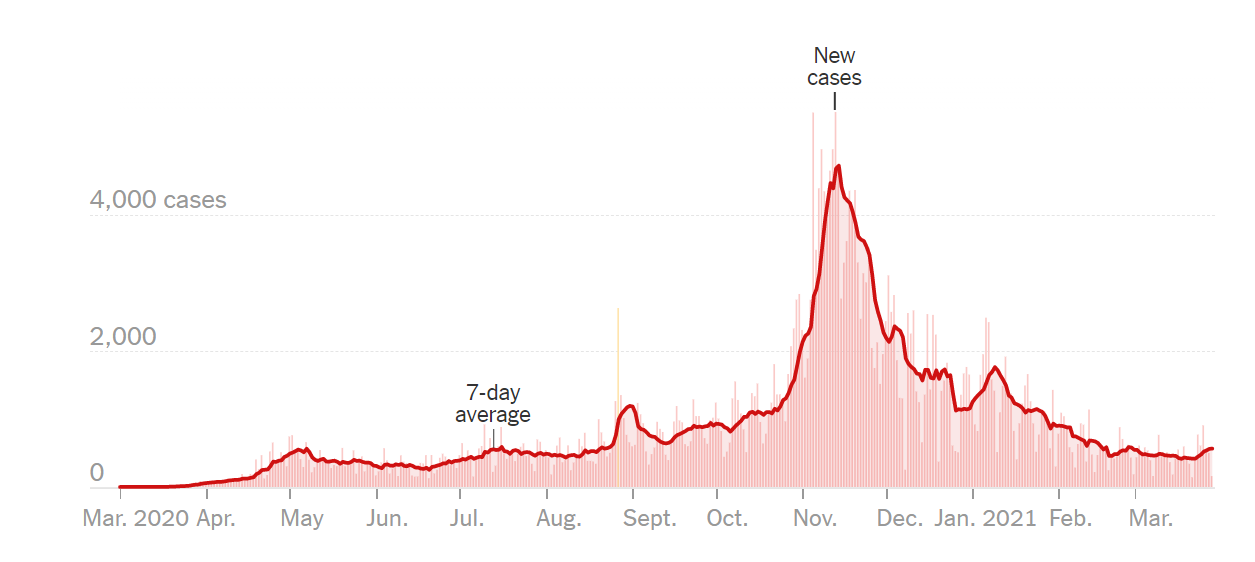
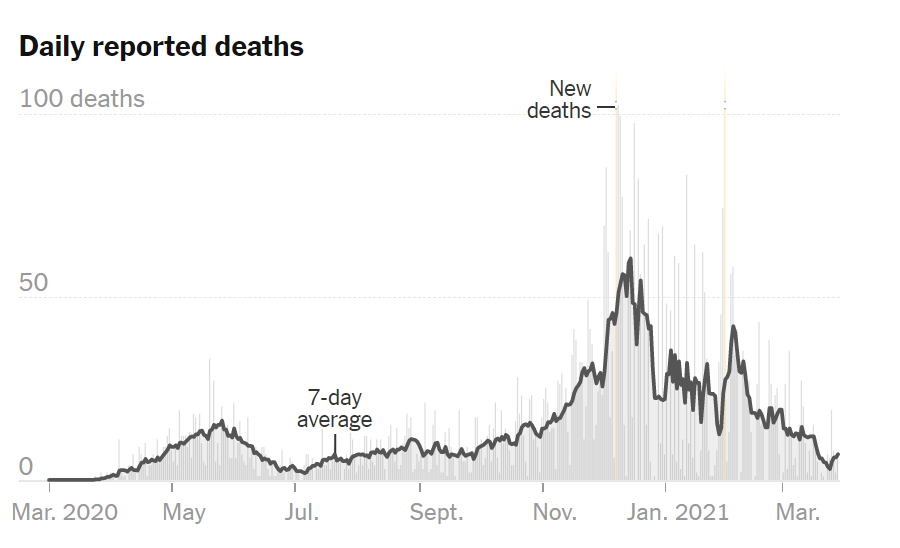
Cases peaked on November 13. Given that “cases” are subject to much human whim, e.g., whether people are fed into PCR machines or not, let’s look at deaths:
What happened to the predicted “tsunami” of death after Christmas and New Year’s gatherings? Deaths peaked on December 15. a month after the “case” peak and, thus far, have failed to reach that level again.
Readers: What do you think? If Aristotle can be a great “scientist” despite an inability to predict projectile trajectories or planetary orbits, is it also reasonable to call the coronascientists great despite their inability to predict the likely impact of coronavirus?
A year of masks and lockdowns in Slovakia (expert predictions regarding the importance of superior political leadership and mask-wearing; compare to result of higher COVID-tagged death rate than the U.S.)
What is the most sensible scientifically informed response to a virus that attacks the obese and unfit? Sit at home next to the fridge for a year. Could this kill us? “Inactivity Drives 1 in 14 Deaths Globally, New Data Suggest” (Medscape, March 31):
The high cost of a sedentary lifestyle just became a bit more evident ― a new global study shows that inactivity drives up to 8% of noncommunicable diseases and mortality.
Physical inactivity, defined as engaging in less than 150 minutes of moderate-intensity or 75 minutes of vigorous-intensity physical activity per week, is estimated to have caused 7.2% (95% CI, 5.4 – 9.0) of all-cause deaths and 7.6% (95% CI, 6.1 – 9.3) of cardiovascular disease (CVD) deaths, according to investigators led by Peter T. Katzmarzyk, PhD, associate executive director for population and public health sciences, Pennington Biomedical Research Center, Baton Rouge, Louisiana.
Two-thirds of radiation oncologists said new patients more often have advanced-stage disease at their initial clinic visit as compared with prior years. Consistent with data from multiple other sources, three-fourths of respondents said patients have skipped routine cancer screening, and two-thirds said COVID has interrupted treatment for existing patients.
“What we have learned one year into the COVID-19 pandemic is that radiation oncologists continue to see the harmful effects of the pandemic on our patients,” said Thomas J. Eichler, MD, chair of ASTRO’s board of directors, during a webinar to discuss the survey findings. “The data are clear that people with cancer are facing additional burdens in these difficult times.”
(bonus points to this doc for including the phrase “in these times”)
Small steps to support transgender patients go a long way in their healthcare
I recently saw a new patient seeking help addressing substance abuse issues. It was our first time meeting, so when I entered the exam room, I introduced myself with my name and my pronouns, as I always do. Before I even offered any advice or asked a question, the patient’s face lit up with a smile. She explained that she was a transgender woman, and hearing me introduce myself with my pronouns was a huge relief, because it showed her that I would treat her with respect.
She quickly opened up to me, describing how she was grappling with a host of challenges and stresses that were made even worse because other people in her life — including other doctors — didn’t understand, didn’t respect, or outright rejected her identity.
Something as simple as including your pronouns when you introduce yourself can indicate that you are an ally and contribute to a sense of safety and inclusion.
I say that I provide abortions, prenatal care, birth control or other resources to pregnant people, not just pregnant women, because all people deserve the right to make their own decisions about if, when, or how they want to have children, without facing judgement.
Separately, if there is a person on this planet who can get through a winter in Bangor, Maine without drinking heavily, consuming drugs, and considering a gender change, I would love to meet him/her/zir/them.
To the extent that winning a pandemic is possible, Florida seemed to be winning the pandemic.
(the author does not consider the possibility that Floridians did not enter the COVID Olympics)
Governor Ron DeSantis bragged that Florida drew a straight flush of pandemic outcomes: “open schools, comparatively low unemployment, and per capita COVID mortality below the national average.”
But the closer I looked, the more holes I found in the simple pro-Florida narrative.
Yes, Florida is seeing falling COVID-19 cases and hospitalizations. But so is just about everywhere else. And its overall pandemic performance is just about typical.
As far as I can tell, though, it didn’t. At 4.8 percent, its unemployment rate is 18th in the country, and not meaningfully different from that of the median states, South Carolina and Virginia, at 5.3 percent. Real-time data tracking state spending and employment show that Florida is doing, again, no better than average. Compared with January 2020, its consumer spending is down 1 percent, which is right in line with the national average. Its small-business revenue is down about 30 percent—again, almost exactly the national average. These statistics may be missing something. But the national narrative of an exceptionally white-hot Florida economy doesn’t match the statistical record of its performance.
What this nation desperately needs is low-skill immigration so that we have lots more people to house:
Since 2012, Miami home prices have increased by 94 percent, nearly the exact same as those in Los Angeles in that time. Prices are soaring as inventory melts away; Florida’s active listings fell by 50 percent last year, and it’s not doing enough to keep up with demand.
A rare moment of checking to see whether coronascience has any predictive value:
In 2020, smart media figures and scientists predicted that COVID-19 would especially ravage Florida, given its open economy and elderly population. They were wrong. Why? Did Florida just get lucky? Is this mostly about the salutary benefits of the outdoors, or the coronavirus’s sensitivity to heat and humidity? Do strict lockdowns simply fail the cost-benefit analysis? The answer to all three questions may be yes.
What’s most interesting to me is that the author implicitly values the freedoms to walk out of one’s door, walk outside without a mask, meet friends at a restaurant, host a party at one’s house, etc. at $0. If two people, one confined to his/her/zir/their home by a governor’s executive order and one free to send children to school, go to work, play a sport, socialize, have the same amount of money they are equally well off. So it makes sense to look at the statistics gathered by economists and pronounce a state (or a society) a success or failure based on those statistics. (We also see this applied to Sweden; people will look at a list of countries ranked by COVID-19-tagged deaths per capita and note Sweden’s position without pointing out that it avoided the lockdowns, masquerades, etc.)
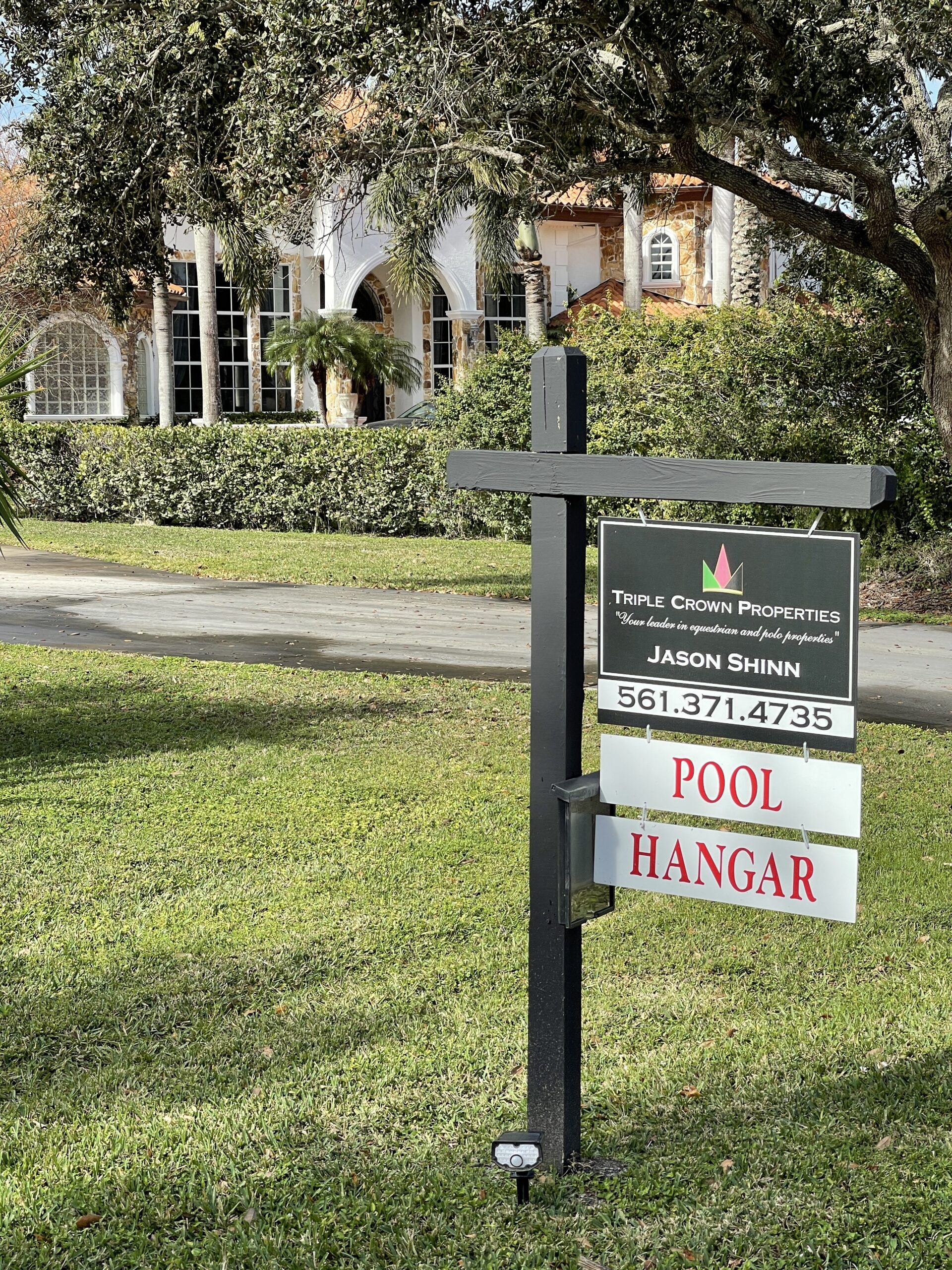
From Wellington, Florida… (Why does the realtor rank “Pool” above “Hangar”?!?!)
If you or anyone in your household identifies as Black, Indigenous, or a person of color (BIPOC), including anyone with Abenaki or other First Nations heritage, all household members who are 16 years or older can sign up to get a vaccine.
Only 10 percent of the USPS’s new delivery vehicles will be election (Green Car Reports):
U.S. Postmaster General Louis DeJoy confirmed to lawmakers Wednesday that electric versions of the trucks will make up only 10% of the next-generation fleet and claimed that a fully electric contract would have cost up to $4 billion more for the whole contract.
They won’t even be delivered until 2023. Given the generally short routes, slow speeds, and guaranteed overnight idle time for recharging, how is it possible that electric can’t be more cost-effective than gasoline-powered?
If electric isn’t the smart choice for USPS local delivery, how could it ever be the smart choice for a family that wants to take some evening/nighttime trips, some intercity trips, etc.?
Loosely related:
a comment on a Tesla article: Every time I ask a Tesla owner to list the tech that makes some kind of difference they can’t come up with anything meaningful. What is it? Dog mode? Cheetah mode? Flush-mount door handles? A big tablet stuck to the dash looking like a high school shop project?